I DON’T APPRECIATE BEING DEPENDENT ON ANYTHING, BE IT BIG GOVERNMENT, BIG PHARMA OR BIG FOOD SOURCES. MY INTEREST IS NOT FROM A PLACE OF FEAR. MY INTEREST IS FROM A PLACE OF FREEDOM.
Don’t confuse my personality with my attitude. My personality is who I am. My attitude depends on you.
CHOP uses the time pressures of pediatric surgery to excuse curtailed informed-consent discussions, as one-third of participating families said their children otherwise would have gone unvaccinated.
Children’s Hospital of Philadelphia’s May 20, 2026, disclosure reveals plans to expand its program for vaccinating children under anesthesia to include COVID-19 and RSV shots, raising further concerns about vaccine safety, parental informed consent, and the use of surgical procedures to increase vaccination rates.
A May 20, 2026, Children’s Hospital of Philadelphia (CHOP) disclosure reveals that the hospital administered 2,054 influenza vaccine doses to children under sedation or anesthesia during the 2025–2026 flu season through a program called “Close Your Eyes, We’ll Immunize” and is now exploring COVID-19 and other injections during medical procedures.
The hospital admits that approximately one-third of participating families said their children otherwise would have gone unvaccinated.
It also cites limited time before surgery as an obstacle to discussing parental concerns about vaccination.
Which raises questions:
Why is a hospital using children’s surgical appointments to increase vaccination rates?
Why are time pressures being offered as an excuse for limiting discussions about vaccine risks?
Who independently verifies informed consent and monitors adverse reactions when children receive injections under anesthesia?
The hospital’s own disclosures establish a disturbing arrangement.
Children are brought in for medical procedures, their unconsciousness becomes an opportunity for additional injections, and the institution measures success by how many vaccines it administers.
Children’s Hospital of Philadelphia’s May 20, 2026, newsletter reveals that its “Close Your Eyes, We’ll Immunize” program was designed to increase influenza vaccination rates by administering injections to children under sedation or anesthesia during medical procedures.Children’s Hospital of Philadelphia admits measuring the success of its vaccination-under-anesthesia program by the number of injections administered, reporting 2,054 influenza vaccine doses during the 2025–2026 season and revealing that approximately one-third of participating families said their children otherwise would have gone unvaccinated.
Technically Speaking “close Your Eyes, We’ll Immunize” — A Chop Initiative To Improve Influenza Vaccines!
🚨🔥”The Left Wing Media’s Never-Ending Hoaxes”(aka LIES)! Watch this as @CarlHigbie CALLS THEM OUT: “Here’s a list of like 80 times you guys lied…I’m surprised it took this long to ban you… You guys are the worst." Well done Carl! ⬇️ ⬇️ ⬇️ pic.twitter.com/g2Z3dLp0X3
We are starting to come around to the idea that artificial intelligence, or A.I., isn’t the problem, it’s the humans allegedly in charge of it that should concern us.
OpenAI on Wednesday disclosed six new instances in which artificial intelligence systems hid mistakes, made up data and moved files onto the open internet without permission, amid an ongoing industrywide debate about A.I. safety.
According to reporting by the New York Times, the San Francisco company revealed what it said was the “unexpected or concerning” behavior of its A.I. models as part of a new framework for reporting “misalignment,” which is when the goals or actions of A.I. systems diverge from human intentions and values.
The disclosures land amid intensifying scrutiny over whether A.I. development needs to be slowed to address the technology’s potential dangers. The escalating debate was driven partly by OpenAI’s systems going rogue earlier this year and attacking the A.I. start-up Hugging Face. OpenAI was not aware of the hack until it was informed by Hugging Face weeks later, reported Emmy Martin, writing for the New York Times.
Since then, there seems to be a new movement afoot to create some kind of government supervision of the development of artificial intelligence.
A.I. leaders such as Dario Amodei, the chief executive of Anthropic, have called for a pause in the technology’s development to provide more time to build proper guardrails. His call has been echoed by Sam Altman, OpenAI’s chief executive, as well as Elon Musk, the chief executive of SpaceX and Tesla, and Demis Hassabis, the chair of Google DeepMind. Other A.I. executives have said no slowdown is needed, reported Ms. Martin.
A lengthy report recently published by Anthropic discusses in some detail some of the more dangerous examples of A.I. systems being used for malign purposes. You can read the report through this link https://www.anthropic.com/threat-intelligence-report-september-2026 .
The threat actors covered in that report include suspected state-sponsored groups, financially motivated criminals, commercial spyware vendors, state propaganda institutions, and politically motivated individuals. The cases range from a network of fake dating apps designed to defraud users to surveillance systems built to identify and monitor dissidents.
Anthropic’s CEO Dario Amodei’s answer to these problems is to install a nonprofit called Model Evaluation and Threat Research, or METR, to provide the guardrails.
However, from our perspective METR is just another group of globalists who believe in open borders, genderless pronouns, with the added caution that they promote “Effective Altruism.”
Clearly, they are unfit to be the watchdogs of American artificial intelligence.
Effective Altruism, or EA, is a philosophy that’s become popular with Silicon Valley masters of the universe, advocates for using reason — and fortunes amassed by tech’s best and brightest — to do the most good for humanity over the long term, observed Thomas Barrabi in an article for the New York Post.
Mr. Barrabi’s research revealed that the overlap between METR and Anthropic is rife with potential conflicts of interest.
METR spun off from an Effective Altruism-aligned tech incubator called Alignment Research Center (ARC), which is headed by A.I. researcher Paul Christiano. He was Amodei’s housemate, coworker and research collaborator in the 2010s when they were both at OpenAI — Anthropic’s biggest rival.
According to Thomas Barrabi’s reporting, Christiano also served as one of the first five trustees of Anthropic’s Long-Term Benefit Trust.
One staffer on METR is Ajeya Cotra, who is married to Christiano and has been a major organizer in the EA world.
The founder and CEO of the group is Beth Barnes, who was hired by Christiano and was involved in the EA movement at college.
Chief scientist Hjalmar Wijk and staffers Megan Kinniment and Pip Arnott all came from the same research cluster at the University of Oxford — a major feeder for EA.
There’s more, but you get the picture.
METR is every bit as incestuous as the Washington, DC, Democratic Party – Deep State – Media ecosystem, and even less likely to be responsible to the public because not one of its tentacles is elected or accountable to We the People.
It is undoubtedly true that winning or at least keeping ahead in the data center race, and the accompanying artificial intelligence race, are indeed essential to our present and future national security.
And, as is often the case, that is because our enemies – in this case the Communist Chinese – are weaponizing the technology against us at a frightening pace.
So how does slowing, putting guardrails on A.I. or having a woke globalist A.I. safety board help us win the race with the Red Chinese?
The answer is it doesn’t.
From our perspective the biggest problem with artificial intelligence is not the A.I., but who trains it and the materials they use.
A.I. models reflect the values and biases of the trainers, and right now A.I. is being trained by exactly the same kind of people that Dario Amodei wants to put in charge of watching it – woke globalists who will be unlikely to see any A.I. that goes off the rails, but acts according to their values and biases, as a threat.
We would be a lot less skeptical of the current headlong rush to develop artificial intelligence, and not view it as a threat, if there was an A.I. model that had as its highest values the Ten Commandments, the Bible, the Declaration of Independence, the Federalist Papers, the American Bill of Rights and the Constitution, along with Washington’s Farewell Speech, Ronald Reagan’s “A Time for Choosing” speech, and other documents and traditions that are foundational to American political, economic and cultural values.
Absent that, we prefer A.I. be watchdogged by an elected Congress, or 11 people selected at random from our hometown voter list, rather than Mr. Amodei’s unelected globalist technocrats.
It’s amazing how angry everyone gets about Trump building things. Take the big new arch, for example. The massive new monument has drawn the ire of preservationists, but the National Park Service is planning to go ahead with it anyway. The New York Times makes no bones about their dislike of the project, saying that Parks is “brushing aside outside objections—and its own assessment—that the towering monument would alter the views and symbolism at dozens of historic sites around it.”
But the truly obtuse part of the Times’ critique is how they address the alleged harm the Arch’s existence will do to other memorials and historical sites in Washington, DC. It’s not just the sites that they mention, but the views from those sites, which suddenly are so sacred they cannot be disrupted—even as the Times and other legacy media outlets were all aboard the monument desecration train during the BLM era.
“The Park Service has acknowledged,” they write, “that the arch, given its massive scale, would ‘adversely affect’ more than 40 historic sites and districts around the capital. It would interrupt the visual link between the Lincoln Memorial and Robert E. Lee’s Arlington House that was meant to symbolize the reunification of the country after the Civil War.”
Did you catch that? All of a sudden, the Times is worried about the symbols that were erected following the Civil War as an attempt to unify the nation. Where was this concern for the symbols of unification when the Times seemed to endorse the tearing down of Civil War memorial equestrians such as Stonewall Jackson? Or the removal of Teddy Roosevelt from in front of the museum he commissioned? Or the destruction of countless statues around the country, including those of abolitionists, because statues of white men were just not acceptable anymore?
“It would loom over some parts of Arlington National Cemetery, and block views from John F. Kennedy’s gravesite inside the cemetery,” the Times wrote. “It would be visible from the Jefferson Memorial and alter views from as far away as the Capitol and the Washington National Cathedral.”
Oh! The horror! The Arch will be visible! If only Trump made the arch entirely invisible, the Times would not be quite so pearl-clutchingly concerned about it. Parks, they say, “will not consider locating the arch elsewhere or making changes to its design.”
Every notion from Trump’s critics is that he should minimize his impact, just in the interests of good taste. How dare he, you can almost hear them saying between the lines, leave no trace of himself or record a patriotic love of country? What the preservationists want to preserve is the era before Trump, so much so that they want him to disappear altogether.
Many are stoked for this big arch. It’s about time we in the present day contributed to the monumental architecture that is the legacy of our capital city.
Fairfax County kept finding the same mismatch: people who told the DMV they were not citizens, yet appeared on the voter rolls. The registrar sent the names out in batches. Seventy-one in one referral. Seventy-eight in another. Hundreds over about eighteen months. Every name went to Commonwealth’s Attorney Steve Descano and the Attorney General. The number of prosecutions was zero.
Then the Democrat-majority Electoral Board voted, in February 2026, to stop the referrals. The stated reasons were simple. The policy produced no charges. It consumed staff time at the elections office, the prosecutor’s office, and the attorney general’s office. A checkbox on a DMV form, they argued, would never meet the beyond-a-reasonable-doubt standard. So they stopped sending the names.
That is the closed loop. Find the cases. Refer the cases. Decline the cases. Call the referrals a burden. Then treat the empty prosecution file as proof that nothing was there.
Katie Gorka, chair of the Fairfax GOP, described it as a system arranged not to know the answer—and then treating its own ignorance as reassurance.
These were not hunches pulled from the air. Virginia flags people who told a state agency they were noncitizens. Fairfax canceled 985 registrations on citizenship grounds between January 2022 and July 2024. County Republicans count 1,912 cancellations over four years, including 538 in 2025. Statewide, Virginia removed 6,303 in two and a half years. Ohio found 597 potential noncitizen registrations, 138 of whom had cast ballots. Texas and North Carolina have reported thousands more.
The cases that surface are usually the ones who volunteered the truth at the DMV or on another government form. Virginia does not systematically verify citizenship at registration. Detection is mostly accidental. Prosecution is optional. Databases of “proven” fraud then exclude everything that was never charged.
Prosecutors have a legitimate point about intent. A mismatched checkbox is not, by itself, a finished criminal case. Some flags are errors. Some people never voted after the mismatch. Registrar Eric Spicer told the board that many names on the lists had already been removed. That is fair as far as it goes.
It does not justify the next step: shutting off the referrals so the public never sees the next list. If the evidence is weak, say so in writing, case by case. If the DMV data is dirty, fix the data-sharing. If the statute is too hard to prove, take that argument to the legislature. What officials should not do is find hundreds of possible violations, test none of them in court, and then announce that the problem is vanishingly rare.
Every ineligible ballot cancels a legal one. Virginia has already seen a House of Delegates seat decided by a tie and a drawing of lots. Rare is not the same as irrelevant. “We stopped looking” is not the same as “we looked and found nothing.”
This is what happens when the people who maintain the rolls and the people who enforce election law decide that looking is the inconvenience. The registrar flags. The prosecutor sits. The board rescinds the policy. The official tallies stay empty. Commentators cite the empty tallies. The next close race is treated as settled.
Remember who runs the prosecutor’s office and the Electoral Board. That is not a slogan. Under the current arrangement, it is the only remaining check…
The FBI released its 2025 crime data in August 2026. Violent crime fell 9.3% — the largest year-over-year decline since FBI national estimates began in 1936. The murder rate hit 4.1 per 100,000, tying the lowest level in the FBI’s 70-year historical series. This happened during years of record gun sales and a rapidly growing concealed carry population. The data does not prove guns reduce crime. It does prove that the prediction guns would cause crime to rise was wrong.
9.3%Violent crime decline2025 vs. 2024 — largest single-year drop since FBI estimates began in 1936
18.1%Murder declineLargest single-year decrease since 1937 — third straight year of record drops
4.1Murders per 100,000Ties 1955/56 for lowest in FBI history. Fewest murders since 1968.
18.5%Robbery declineLowest robbery rate in 20 years. Rape -7.6%. Assault -7.5%. Property -12.4%.
Every year, the gun control debate generates predictions. More guns means more crime. Expanding concealed carry will produce shootouts in the streets. Removing barriers to firearm ownership will cause violence to rise. These predictions have been central to the policy argument for gun restrictions for decades. The FBI’s 2025 crime data — released August 14, 2026, in an unusually early publication FBI Director Kash Patel called historic — puts those predictions in direct contact with the facts.
The facts are not ambiguous. Violent crime in the United States fell at the fastest pace since FBI national estimates began 90 years ago. The murder rate hit a 70-year low. This happened during a period when more Americans owned more guns than at any prior point in history, when concealed carry permits reached 20.88 million before constitutional carry expansion made the true carry population substantially higher, and when the gun rights community was in the middle of the most sustained legal and legislative expansion of Second Amendment access since Heller.
The data does not prove that guns reduce crime. Correlation is not causation, and the crime decline is a complex phenomenon that criminologists attribute to multiple factors — demographic shifts, economic conditions, policing strategies, and others. What the data does prove is the specific negative: the prediction that more guns in private hands would cause more violent crime was wrong. Demonstrably, measurably, historically wrong.
“This release confirms that crime in the U.S. is falling at or near a historic clip. This is the third straight year of a record drop in murder and the data for 2026 points to a continued large drop this year.”— Jeff Asher, AH Datalytics, August 2026
The Numbers in Full: What the FBI Actually Found
The FBI released its 2025 Reported Crimes in the Nation data on August 14, 2026, using data submitted by more than 17,000 law enforcement agencies covering 96% of the U.S. population — the broadest data submission in the report’s history. The headline findings:
Overall violent crime
Down 9.3% from 2024 │ Largest single-year decline since FBI estimates began in 1936 │ 328 per 100,000 — lowest since 1968
Murder & non-negligent manslaughter
Down 18.1% │ Rate of 4.1 per 100,000 — ties 1955/1956 for lowest ever recorded │ Fewest estimated murders since 1968
Robbery
Down 18.5% │ Rate of 49.4 per 100,000 — lowest in 20 years
Aggravated assault
Down 7.5% from 2024
Rape (reported)
Down 7.6% from 2024
Property crime
Down 12.4% from 2024
Law enforcement assaults
UP — 90,178 officers assaulted in 2026, a 10-year high │ One category that bucked the trend
2026 preliminary data
Violent crime down 10.6% Jan–Jun 2026 vs. same period 2025 │ Murder down 23% │ Robbery down 19.6% │ Rape down 18.6% │ Trend accelerating
Projected 2026 murder rate
Jeff Asher projects ~3.5 per 100,000 — would be by far the lowest in recorded U.S. history if sustained through year-end
Data coverage
17,000+ agencies │ 96% of U.S. population │ 15,000+ agencies on NIBRS │ Largest coverage in report history
The Historical Context: Why These Numbers Are Remarkable
The 2020 murder spike is the comparison point that makes 2025’s numbers meaningful. In 2020, the combination of COVID disruption, civil unrest, and a sharp pullback in proactive policing produced the largest single-year increase in the U.S. murder rate since record-keeping began. The rate jumped from 5.0 per 100,000 in 2019 to 6.5 in 2020, a 30% increase in a single year that gun control advocates immediately attributed to pandemic-era gun sales.
The argument was simple and politically effective: millions of Americans bought guns during COVID; the murder rate spiked; therefore the guns caused the spike. This became the foundation of what gun control organizations called an “epidemic of gun violence” that required emergency legislative response.
The FBI’s 2025 data requires a reckoning with that argument. Gun sales have remained elevated since 2020. The carry population has grown. Constitutional carry has expanded to 29 states. And the murder rate has not merely stabilized — it has collapsed, falling from 6.5 in 2020 to 4.1 in 2025, a 37% decline in five years that now puts the rate below where it was before the COVID spike and at a 70-year historical low.
If the theory that more guns in civilian hands causes more murder were correct, the murder rate should have remained elevated or continued rising as gun ownership stayed at record levels. It did the opposite. The 2020 spike and the subsequent collapse both correlate with the COVID disruption cycle — the disruption produced both the gun-buying surge and the murder spike through separate causal pathways, and as the disruption resolved, the murder rate fell regardless of whether the newly purchased guns were still in private hands. They were. The murders weren’t.
What the data does not say: The crime decline does not prove that gun ownership reduces crime. The causal relationship between gun prevalence and crime rates is genuinely complex and contested in the academic literature, and honest analysis does not overstate what the data supports. What the data does establish clearly is that the specific prediction — that more guns in private hands would cause violence to rise — was not borne out. The murder rate is at a 70-year low after years of record gun sales. That is a fact, not an argument.
The Gun-Specific Picture: Record Ownership, Record Low Crime
Gun Sales Context
NICS background checks — the primary proxy for gun sales — have been elevated since 2020. The COVID-era gun buying surge added an estimated 8.4 million new gun owners. Subsequent years maintained elevated sales. The total number of privately owned firearms in the United States is estimated by the Small Arms Survey and other researchers at well over 400 million as of 2026. That population of firearms has been in private hands for the entire period during which the murder rate fell from 6.5 to 4.1 per 100,000.
Concealed Carry Context
The CPRC’s 2025 Annual Report counted 20.88 million active carry permits — and that number substantially undercounts the actual carry population because 29 states now allow permitless carry. A 2022 peer-reviewed AJPH study, using 2019 data, estimated approximately 16 million Americans carried handguns at least monthly. That population has grown since 2019 through constitutional carry expansion, the Bruen decision’s normalization effect, and the post-COVID carry permit surge.
The murder rate during this period of expanding carry fell to the lowest level in 70 years. The two facts coexist without proving causation in either direction. But they demolish the argument that an expanding carry population inevitably produces more violence.
NFA Item Context
The NFA tax elimination effective January 1, 2026 produced a 177% increase in NFA checks. More suppressors, SBRs, and SBSs are in private hands in 2026 than at any prior point in history. The preliminary 2026 data shows violent crime continuing to fall 10.6% in the first half of the year, with murder down 23%. The expansion of legal NFA item ownership and the continued crime decline are occurring simultaneously.
What the Gun Control Community Is Saying — and What the Data Actually Shows
The gun control response to the FBI data has been predictable and worth addressing directly. The primary response has been to credit the decline to specific policy interventions — red flag laws in certain states, local violence intervention programs, changes in policing strategies — rather than to acknowledge that the relationship between gun prevalence and crime is more complex than the simple causation model implies.
These alternative explanations may have merit. They may genuinely account for some portion of the decline in specific jurisdictions. But they face a basic problem: the crime decline is national, not jurisdictional. It happened in red states and blue states, in states with expansive gun laws and in states with restrictive ones, in constitutional carry states and in states requiring permits. A policy intervention in California or New York does not explain the murder rate falling in Texas, Florida, and Louisiana simultaneously.
The more honest conclusion — which some criminologists have reached regardless of their policy positions — is that the 2020 spike was primarily a COVID disruption phenomenon and that the subsequent decline reflects the resolution of that disruption, with demographic, economic, and community-level factors playing significant roles that are still being studied. The guns-cause-crime and guns-prevent-crime theories both overfit a complex reality.
What is not honest is the continued invocation of an “epidemic of gun violence” when the FBI’s own data shows the murder rate at a 70-year low. The epidemic framing was built on the 2020–2022 spike. The spike ended. The framing has not caught up with the data.
What 2026 Is Looking Like — The Preliminary Trajectory
The FBI’s 2025 report included preliminary 2026 data covering January through June. The early read: violent crime down 10.6% compared to the same period in 2025. Murder and nonnegligent manslaughter down 23%. Robbery down 19.6%. Rape down 18.6%. Aggravated assault down 7.2%. Every major violent crime category continues declining.
Jeff Asher, whose Real-Time Crime Index tracking has proven highly predictive of final FBI numbers, projects the 2026 murder rate at approximately 3.5 per 100,000 if preliminary trends hold through year-end. That would be, unambiguously, the lowest murder rate in recorded United States history. Not the lowest since 1955. The lowest ever.
The 2026 data will be released in 2027. If it confirms the preliminary trajectory, the “more guns, more crime” thesis will have been falsified by the most comprehensive crime data in American history during the period of the most significant gun rights expansion in American history.
Bottom Line: The Data Is In. Here’s What It Actually Says.
Gun Talk Media does not overstate what data supports. The FBI’s 2025 crime figures do not prove that guns reduce crime. They do not vindicate any specific policy. They do not settle the academic debate about the causal mechanisms of crime decline.
What they do is something simpler and more direct: they establish that the claim used most frequently to justify gun restrictions — that more guns in private hands cause more violent crime — has not been borne out during the most significant expansion of civilian gun ownership in American history. The murder rate is at a 70-year low. Record gun sales and record low murder coexist in the same FBI dataset.
That is a fact. It deserves to be stated plainly, without exaggeration, and without overreach. The gun control community built a policy agenda on a prediction. The prediction was wrong. The data says so.
Pennsylvania’s health department just proposed swapping “pregnant woman” for “pregnant individual” across core rules, and the fallout tells you where culture and policy now collide.
Story Snapshot
The Department of Health filed a 500-page rewrite that uses gender-neutral terms in pregnancy and postpartum sections.
Changes appear in rules tied to testing, coverage, and postpartum care language, not just press releases.
Critics say the shift erases women and replaces biology with ideology.
The move tracks a wider trend in some health institutions, with sharp debate over clarity and inclusion.
What Changed In Plain Terms
Pennsylvania’s Department of Health introduced a regulatory overhaul on August 8, described as about 500 pages long. Reports say the draft replaces “pregnant woman” and “mother of a newborn” with “pregnant individual” and “postpartum individual” across relevant sections.
The updates land in practical places, like testing rules during pregnancy and instructions tied to postpartum care language. The proposal reflects the administration’s push to use gender-neutral terms in health code text, not only in public messaging.
The update comes amid other maternal and postpartum policy work in the state. Law and policy documents still use sexed terms in many places.
One rule on postpartum eligibility for medical assistance says a woman keeps coverage through the postpartum period, while recent federal approvals pushed that period to 12 months in programs like Medicaid and the Children’s Health Insurance Program. The proposal does not repeal those laws. It rewrites health department regulations, which sit under state statutes.
Why The Language Fight Matters
Words set who is counted, who gets targeted help, and how staff read duties. Advocates argue gender-neutral terms include every patient who can be pregnant, like transgender men and non-binary people. They say it can reduce missed care for small but real groups.
Critics warn that removing “woman” or “mother” can blur sex-specific risks, make data tracking harder, and push ideology into clinical rules. They frame it as a values fight over biological reality and public clarity.
Medical and public health groups do not agree on a single script. Some guidance lists paired terms such as “women and birthing parents” to balance clarity and inclusion.
Others suggest “pregnant patient” or “pregnant person” in general text, while keeping exact sex words where biology drives risk or law demands precision. These split models aim to protect both readability and the dignity of all patients, but their execution varies by agency and audience.
The Case From The Shapiro Administration’s Opponents
Named critics say the department crossed a line. Pennsylvania Family Council’s counsel said the new wording “represents the triumph of ideology over biology” and “erases female identity as a stable category.”
A state lawmaker argued the draft “erases words like ‘pregnant woman’ and ‘mother’” inside hundreds of pages of mandates. That charge lands with many readers because pregnancy is unavoidably sex-linked, and clarity about women’s health is both moral and practical.
The substance behind that critique deserves weight. Public-facing communications research shows heavy shifts to desexed terms can confuse lay readers and risk hiding women’s specific needs.
Experts have warned that generic language like “pregnant people” may reduce visibility for women in studies and guidelines. Health codes must guide real-world practice among busy clinicians and families. Plain, sex-accurate words lower error and protect trust in the rules.
How To Judge The Tradeoff
Two tests can keep both truth and care intact. First, does the rule say who needs what when sex changes risk? If yes, use “women” where biology drives the point. Second, does the rule also need to cover a small group whose care would be missed if the text says “women” only?
If yes, pair terms or add a clear clause. “Women and other patients who can be pregnant” is longer, but it signals scope without erasing sex or people at the margins.
On balance, the facts show a real shift in wording within Pennsylvania’s draft health regulations. The dispute is not about whether pregnancy involves women. It is about whether code text should address every case in neutral terms, and what that does to clarity.
Americans prioritize plain language, biological reality, and family-centered care. Any final rule should protect those anchors while ensuring that no patient falls through the cracks due to a language gap.
If She May End It at 38 Weeks, Why Not at 8 Months? The Argument Nobody Will Finish
Last week, in a Bronx courtroom that drew almost no cameras, Judge Audrey Stone found Dimone Fleming not responsible by reason of mental disease or defect for stabbing her sons, Daishawn Fleming, 3, and Octavius Canada, 11 months old, to death. The prosecution stipulated to postpartum psychosis. Fleming will not go to prison. She remains in custody for a psychiatric evaluation and returns to court this month. Assistant District Attorney Tiffany Wichman explained afterward that “prosecuting mothers does not and cannot prevent these crimes from happening, but public discourse might.” The New York Times recorded the outcome in a single clause: she will avoid prison.
This morning in Plymouth, Massachusetts, a jury of nine women and three men is back for a fifth day on the case of Lindsay Clancy, a former labor and delivery nurse who killed Cora, 5, Dawson, 3, and Callan, 8 months, on January 24, 2023. She does not deny the acts. She denies responsibility for them. The Commonwealth says she sent her husband out of the house and carried out a plan. On Tuesday, the jurors told Judge William Sullivan they were unable to reach a unanimous decision, and he sent them back to keep working. Outside the courthouse, supporters in pink have treated her as the injured party, and a fundraiser for her family has drawn hundreds of thousands of dollars.
Eighteen days before the Fleming ruling, Governor Maura Healey signed the Prioritizing Patient Access to Care Act, stripping the Massachusetts 24-week abortion limit and leaving late pregnancy to a physician’s “professional judgment.” So the same commonwealth that will not mark a line at a viable unborn child is now asking twelve jurors whether three deadborn children amount to a crime or a medical episode. The jurors’ hesitation is not a failure of nerve. It is what happens when a culture has spent a generation teaching that a child’s claim on life yields when the child depends on a mother who no longer accepts the cost.
Judith Jarvis Thomson’s 1971 essay remains the most cited philosophical defense of abortion in the English-speaking world. She granted the fetus full personhood and argued anyway. Her case is the unconscious violinist strapped to your kidneys for nine months. You may unplug him, she said, even though he will die, because a right to life is not a right to the use of another person’s body against that person’s will. The argument does not turn on whether the violinist is human. It turns on whether you may be forced to keep him alive with your own tissue, sleep, and time.
A born child still lives off his mother, on her breasts or on the wages she earns for formula, on her sleep and her attention, and when those give out, on her sanity. The late fetus needs her to keep existing. The 8-month-old needs her to work, on purpose, every few hours through the night. If the moral fact doing the work in Thomson’s essay is unwanted dependence, delivery does not shrink that fact. It enlarges it. Postpartum depression, which afflicts roughly 1 in 8 American mothers, and postpartum psychosis, which occurs in 1 to 2 of every 1,000 births, are the mother’s body and mind refusing that dependence in clinical form rather than in a slogan. The slogan “my body” was never, examined closely, a claim about a uterus. It was a claim about who can be required to keep another human being alive.
That is why the implication is ugly and why it keeps getting restated in journals rather than on campaign literature. A society that permits a woman to end her child’s life before birth because the child depends on her has not produced a principle that stops at the cord. The infant is still drawing on her body and her hours. If wantedness and burden were enough in the womb, they remain enough in the crib, and postpartum psychosis is precisely the kind of psychological break in which the burden becomes, for the mother, unbearable.
Alberto Giubilini and Francesca Minerva said this in the Journal of Medical Ethics without much throat-clearing. “Killing a newborn could be ethically permissible in all the circumstances where abortion would be,” they wrote, including cases in which the newborn is healthy, and only “the well-being of the family is at risk.” They coined the term “after-birth abortion” so no reader could pretend they meant palliative care. If “economical, social or psychological circumstances change such that taking care of the offspring becomes an unbearable burden on someone,” they added, then “people should be given the chance of not being forced to do something they cannot afford.” Postpartum psychosis is a psychological circumstance. A newborn is offspring. Peter Singer had already supplied the ranking that makes the conclusion feel tidy, holding that human infants are not persons and that a newborn’s life is worth less than a pig’s.
The usual reply is that birth is a bright legal line and that what I have just described is already a crime. The reply is weaker than lawyers like to admit. The United Kingdom’s Infanticide Act of 1938 charges a mother who kills her child under 12 months while “the balance of her mind was disturbed” by birth or lactation with infanticide rather than murder, and prison is rare while hospital orders are the norm. Roughly two dozen countries run a version of that statute. The Boston Globe, covering Clancy on August 1, called the US an “outlier in prosecuting infanticide,” which is a polite way of saying that American juries and prosecutors are late to a settlement much of Europe reached before the Second World War. Illinois has already written postpartum depression and psychosis into its sentencing code as a statutory mitigator, at 730 ILCS 5/5-5-3.1(a)(17), after Public Act 100-0574. Massachusetts advocates spent this summer pushing H.1924 to import the same logic, requiring expert screening for mothers charged within a year of birth and treating the diagnosis as a reason to reduce a sentence.
The federal record is not a hypothetical either. On January 23, 2025, the House passed the Born-Alive Abortion Survivors Protection Act 217 to 204, with a single Democrat, Rep. Henry Cuellar of Texas, voting yes. The White House said the bill would “protect the most vulnerable and prevent infanticide.” Senate cloture had failed the day before, 52-47, with every Democrat present voting no. The Heritage Foundation has spent years pointing out that CDC and state reports already record infants who survive abortion attempts and then do not receive ordinary care. A party that will not require that care for a child who has already been born, and who survived an attempt on his life, has answered the personhood question in the only register that counts. Governor Ralph Northam said in 2019 that after a live delivery the infant “would be kept comfortable,” resuscitated only “if that’s what the mother and the family desired,” and that then “a discussion would ensue.” A discussion, with a living newborn in the room, about whether the newborn continues. That is after-birth abortion spoken by a sitting governor, and the country treated it as a gaffe that expired in a news cycle.
No legislature will pass a bill titled the Infanticide Permission Act, because it does not have to. It needs findings of no criminal responsibility, hospital orders instead of verdicts, statutory mitigators, juries that cannot agree, and a prosecutor of two dead boys who offers public discourse as the remedy. The practice is already here. It arrived through diagnosis rather than through a floor speech.
I do not accept the premise that got us here. Thomson’s violinist is a stranger strapped to you by an accident you did not choose. A son or a daughter is not a stranger, and the duty that follows birth is not a kidney you may disconnect because the night has become unbearable. The inferences from Thomson to Giubilini to a Bronx courtroom are tidy, which is why the starting point cannot be kept. Daishawn Fleming was 3 years old. Octavius Canada was 11 months old. Cora Clancy was 5, Dawson was 3, and Callan was 8 months. No diagnosis, no statute, and no rally in pink turns those names into a footnote about somebody else’s suffering. Unlimited abortion is wrong for the same reason the quieter sequel is wrong: a small human being’s life does not belong to anyone else’s convenience, comfort, or crisis, however genuine the crisis may be.
We have ended roughly 67 million lives since Roe, and that figure is almost certainly conservative because the newer counts leave out self-managed medication abortions obtained outside the formal US health-care system. National Right to Life and the Charlotte Lozier Institute, working from Guttmacher’s own revisions, have been raising the cumulative total as the clinic and telehealth numbers were restated upward. This was a national commitment made without a single election that ever put the full cost on the ballot in those terms. Meanwhile the general fertility rate in the US has fallen to record lows near 53 births per 1,000 women of childbearing age, and a country that cannot talk itself into having children should at least stop talking itself into discarding the ones already here, the collapse is not a mystery of economics alone when the official ethic keeps teaching that a child’s claim is negotiable the moment the child becomes costly. We need more babies, more households that can stand a crying night, and more neighbors who notice when a new mother is coming apart. If more mothers are reaching the point where they cannot stop themselves from killing their own children, the answer is not to rename the killing after the fact. The answer is to reach them beforehand to build the screening, the family, the church and the block that catch a woman before psychosis takes the wheel. Save the mothers if we can, but the children are not a remainder.
The Census Bureau’s own Post-Enumeration Survey, the internal audit that checks the official count against a sample of households, found that Tennessee was undercounted by 4.78%, Florida by 3.48%, and Texas by 1.92%. On the other side of the ledger, Delaware was overcounted by 5.45%, Rhode Island by 5.05%, and New York by 3.44%, with Hawaii and Minnesota padded as well. These figures are the Bureau’s own, and they are not rounding artifacts. A 3.48% miss in a state of 22 million people is roughly 750,000 residents who were never recorded. The Bureau published these figures, described them as regrettable, and then explained that nothing could be done about them until 2030. The agency confessed to the error and simultaneously declared the error permanent, which is a convenient combination for anyone who benefits from it, and the people who benefit from it are Democrats.
The 2020 count miscounted Americans in a pattern that ran in a single direction: toward the states Democrats dominate and away from the states Republicans dominate. The direction is the whole story, and a great deal of official commentary since 2022 has been devoted to persuading the public that the direction can be ignored. Democrats and the press that covers for them have talked as if a one-way miss were weather. An error that always lands on the same party’s states is the thing a serious country investigates, and this country has been asked to shrug instead.
Every census has errors. Counting 330 million people is genuinely hard; some communities are transient or suspicious of federal workers, and no statistical operation of that size comes out clean. All of that is true, and none of it explains what happened in 2020. Random error scatters. If the Bureau’s methods were merely imperfect, the misses would fall on both sides of the political map in roughly equal proportions, and some Republican states would have been padded while some Democratic states were shorted. Six of the eight states with the largest documented undercounts voted for the Republican nominee, and the padded states were, with striking consistency, the ones that send Democrats to Washington. That is the pattern Democrats want treated as an act of God.
Federal employees are entitled to their politics, and I have no interest in impugning the ordinary field enumerator knocking on doors in August heat. Institutions are shaped by the people inside them, and the political monoculture at the Bureau is the sort of fact Democrats prefer to file under trivia. Of Census Bureau employees who made federal campaign contributions in the relevant cycles, roughly 90% of that money went to Democrats. Scholars at the Heritage Foundation and elsewhere have spent two decades documenting how an administrative agency with one-sided staffing does not need a conspiracy to produce one-sided results. Discretionary judgment does the work. Which addresses get a follow-up visit, which vacancies are resolved as occupied, which imputation model gets adopted when the data are thin, all of these are technical calls, and all of them can lean without anyone in the building believing he is doing anything improper. A workforce that writes nine of every ten campaign checks to Democrats will, over millions of small calls, produce a count that looks like a Democratic project. That is what captured agencies do, and the Bureau is a captured agency.
The 2020 count was also not a purely governmental undertaking, which is the part of this story the public knows least about and the part Democrats are least eager to discuss. The Bureau partnered with more than 55 NGOs to encourage participation, and the roster was overwhelmingly progressive. The Funders’ Committee for Civic Participation coordinated much of the philanthropic effort through its census subgroup, drawing in the Ford Foundation, the Open Society Foundations, and the Carnegie Corporation of New York. They brought an explicit political theory of which Americans are undercounted, and they were handed a role in the constitutional headcount. The Bureau’s own budget for the decennial operation ran to approximately $15.6 billion, and a meaningful share of the outreach and messaging work flowed through this network of activist nonprofits. Their stated mission was to reach the hard-to-count, and their get-out-the-count campaigns concentrated on immigrant neighborhoods, black and Hispanic communities, and dense urban precincts. When a government farms out the persuasion phase of a constitutional headcount to organizations with that theory, the result will reflect the theory, and the taxpayer will have funded it. Democrats dressed the operation in the language of equity while running a partisan get-out-the-count drive on public money and progressive foundation cash.
The census is how the country decides who gets power and who gets money, which is why Democrats fought so hard to keep a bad count in place. Apportionment, in plain English, is the rule that divides the 435 seats in the House of Representatives among the states according to population. Those House seats also set each state’s electoral votes, because a state’s electoral vote total is its House delegation plus its two senators. The same numbers drive the formulas that distribute hundreds of billions of dollars in federal funding every year, for highways, Medicaid, education, and housing. Florida and Texas each came close to gaining an additional seat, and the padded states each held seats they had not earned. Had the most overcounted states each surrendered one seat and the most undercounted states each gained one, states that vote Democratic would have lost nine net seats in the House and nine net votes in the Electoral College. Nine electoral votes are a margin capable of deciding a presidency, and they will sit on the board through the 2028 election regardless of what any voter does. Democrats kept those seats. They kept the highway and Medicaid money that travels with them. They kept an Electoral College cushion their own Bureau’s audit says they did not earn.
The Bureau’s defense, that the numbers are locked until the next decennial count, is the shrug of an agency that likes the outcome. Apportionment itself is fixed by statute once the President transmits the numbers, and I am not proposing that we reopen the 2020 apportionment by administrative fiat. Federal funding formulas are a different matter entirely. The Bureau already produces annual population estimates, already runs a challenge process for local governments, and already revises its own figures when it finds cause. Congress can direct that funding allocations be rebenchmarked against corrected estimates rather than against a count the Bureau has publicly admitted was wrong. Refusing to do so is a policy choice dressed up as a constitutional constraint, and the previous administration made that choice with unseemly speed. President Biden and the Democrats who ran Commerce for four years left the crooked numbers in the formulas because the crooked numbers paid Democratic states. The House Oversight and Accountability Committee still has the file and subpoena power.
Secretary of Commerce Howard Lutnick inherited an agency whose credibility is its only real asset, and he should treat its restoration as urgent rather than housekeeping. That means leadership that answers to the public; it means publishing the imputation models and the address-canvassing decisions so that outside statisticians can audit them; and it means a separate quality-control track staffed by people who did not build the count they are checking. It means ending the practice of outsourcing outreach to advocacy groups with a stake in the outcome. President Trump ran against this kind of administrative rot, and Lutnick is the man he picked to clean it out of Commerce. Conservatives who have argued for years that the count should stop serving Democratic turnout theory finally have an administration in office that can say so out loud.
Congress has its own work, and conservatives who want a citizen count should treat that work as unfinished business. The Equal Representation Act, which would count only US citizens for purposes of apportionment, addresses a distinct but related wound, because a district drawn around a population that cannot lawfully vote transfers power from the citizens who can. Critics will call that xenophobia, and they will call it cruelty, and they will say that the Fourteenth Amendment forecloses it, and none of those responses engages the actual question, which is whether representation in a self-governing republic belongs to the governed or merely to the present. Democrats prefer the present, especially when the present includes a population that cannot lawfully vote. The Equal Representation Act is the conservative answer to that transfer of power, and it deserves passage.
Perhaps this was not coordinated at all. Perhaps there was no meeting, no memo, no wink across a conference table, only a few thousand people who share a worldview making a few million small judgments that happened to lean the same way. I am willing to grant that possibility, and I want to be clear that it does not help the Bureau’s case. An agency captured by ideology so thoroughly that it produces partisan output without anyone intending it is more dangerous than a handful of conspirators, not less, because there is nobody to fire, nothing to prosecute, and no obvious moment when the line was crossed. Occam’s razor still applies. When every error points the same way, the honest inference is that Democrats built a count that serves Democrats.
The census is the foundation on which the rest of the political structure rests, and a foundation poured out of truth does not fix itself as the building goes up. It transmits the flaw upward, into every seat, every electoral vote, and every dollar allocated for the next ten years. Americans of all parties should want this instrument to be trusted, because the alternative is a decade of citizens who reasonably believe the deck was stacked before the first card was turned. Secretary Lutnick has our attention, and the House Oversight and Accountability Committee has subpoena power; both should use what they have. Count the people, all of them, accurately and once. That is the entire job, and it is time somebody did it.
No human trial showing Pfizer’s new XFG shot is safe, prevents COVID-19, or reduces hospitalization or death; and Pfizer has not publicly revealed the complete genetic instructions being injected.
Pfizer CEO Albert Bourla delivers remarks alongside President Donald Trump during a drug-pricing announcement in the Oval Office on Sept. 30, 2025. (Official White House photo by Joyce N. Boghosian)
The U.S. Food and Drug Administration has approved Pfizer and BioNTech’s new “XFG-adapted” COVID-19 vaccine without the companies first demonstrating in a human clinical trial that the specific XFG formulation is safe, effective, or produces the intended immune response in people.
And the complete nucleotide sequence of the mRNA Pfizer wants injected into people has not been made public by the company, meaning recipients are being asked to consent without knowing either how this specific formulation performs in humans or the exact genetic code the shot is designed to instruct their cells to use to produce the claimed XFG spike protein.
And without disclosure of that sequence, its provenance cannot be independently scrutinized: the public cannot verify exactly where the genetic code came from, how it was derived, what engineered changes were introduced, or whether the sequence being manufactured even matches the genetic instructions Pfizer and FDA claim the shot contains.
Pfizer announced Thursday that FDA approved its supplemental Biologics License Application for COMIRNATY XFG for adults 65 and older and people ages 5 through 64 with at least one underlying condition allegedly placing them at what the company calls “high risk” for severe COVID-19.
Pfizer says the approval was based on a “cumulative body of evidence previously submitted” for COMIRNATY (including clinical, nonclinical, and real-world data) along with “manufacturing/quality and non-clinical data” for the new XFG-adapted formulation.
FDA’s own account confirms the divide: for the 2026–2027 vaccine decision, the agency says it considered human immunogenicity data from existing vaccines but “animal immunogenicity data on new candidate vaccines expressing or containing updated spike components.”
The human evidence belonged to earlier vaccine formulations.
For the newly approved XFG formulation, Pfizer presented nonclinical laboratory antibody measurements.
That raises questions:
If Americans are going to be injected with the XFG formulation, why was that formulation itself not first tested for safety and efficacy in people?
What evidence establishes that the human safety profile and clinical benefit of previous formulations can simply be carried forward to a changed shot?
And how much can the product being injected change before FDA requires the new version itself to undergo human testing?
Congressional committees have confirmed that the FDA “is not meeting important federal safety requirements to protect its employees and the public while also failing to prioritize scientific data quality delivered from FDA laboratories.”
What Is the Exact Genetic Sequence Being Injected?
Pfizer is asking Americans to receive a newly formulated mRNA vaccine without publicly telling them the complete nucleotide sequence of the genetic material being injected.
The company says the newly approved vaccine “target[s] the XFG variant” and describes Pfizer-BioNTech COVID-19 vaccines as based on BioNTech’s “proprietary mRNA technology.”
But naming XFG does not disclose the alleged genetic sequence inside the shot.
Multiple nucleotide sequences are said to be able to encode the same protein.
That means knowing which variant Pfizer says the vaccine targets does not, by itself, reveal the precise sequence Pfizer manufactured, including any engineered nucleotide choices used to produce the encoded spike protein.
Pfizer says FDA reviewed “manufacturing/quality” information for the new XFG formulation.
Yet the complete nucleotide sequence of the XFG vaccine mRNA is not disclosed in Pfizer’s cited XFG supportive-data presentation or its approval announcement.
So people are being asked to consent to receiving alleged genetic material without Pfizer publicly providing the complete genetic sequence they are being asked to receive.
Which raises questions:
What is the complete nucleotide sequence inside the XFG shot?
What engineered changes did Pfizer make to it?
How does it differ from the sequence of circulating XFG and from Pfizer’s previous LP.8.1 formulation?
Why isn’t the exact sequence publicly disclosed so independent scientists can examine it?
And how can Americans make a fully informed decision about receiving genetic material when the manufacturer has not publicly disclosed the complete genetic instructions being injected into their bodies?
XFG-Specific Alleged Immune Evidence Came From Mice, Not Humans
Pfizer produced no human clinical immunogenicity trial of the XFG formulation before FDA approved it.
The human evidence appears under “LP.8.1 Vaccine Clinical Immunogenicity.”
The new candidate vaccines appear separately under “Preclinical Immunogenicity of Candidate Vaccines.”
Pfizer’s human clinical immunogenicity study involved the previous LP.8.1-adapted vaccine, not XFG.
Pfizer says those human antibody measurements were made with a “validated authentic virus neutralization assay.”
For the new XFG formulation, Pfizer instead presented laboratory antibody measurements from mice.
One slide is titled:
“LP.8.1 and XFG Vaccines Elicit Similar Neutralizing Responses in Naïve Mice; Diminished Against BA.3.2.2.”
The experiment involved just 10 mice per vaccine group, receiving a 0.5-microgram dose, and was said to have measured a 50% neutralization titer using a pseudo virus neutralization assay.
Pfizer also produced similar laboratory antibody measurements in vaccine-experienced mice, again using 10 animals per vaccine group and pseudo virus neutralization.
None of those measurements establishes whether the XFG formulation is safe in humans.
They do not establish whether it prevents COVID-19 in humans.
They do not establish whether it reduces hospitalization or death.
They do not even establish what neutralizing-antibody response the XFG formulation produces in humans.
Pfizer’s own conclusion was narrower:
“LP.8.1 and XFG vaccines exhibited similar patterns of elicited immunity in nonclinical models.”
FDA likewise characterized the XFG evidence as “Nonclinical studies” in its May presentation.
Questions are raised:
Why should laboratory antibody measurements from groups of 10 mice against pseudo viruses be enough XFG-specific immune-response evidence to proceed to human approval?
What can those measurements actually establish about safety or disease prevention in a human being?
And if Pfizer was not required even to demonstrate the new formulation’s intended immune response in people before approval, what XFG-specific evidence could have stopped the shot from reaching the market?
No Human Efficacy Trial of the XFG Shot
Pfizer does present alleged human effectiveness data.
But the people generating those data did not receive the XFG vaccine FDA just approved.
They received the previous LP.8.1 formulation.
Pfizer reports alleged LP.8.1 effectiveness estimates against outpatient and emergency or urgent-care visits and hospitalization.
Pfizer summarizes the evidence this way:
“LP.8.1 vaccine maintained effectiveness during period of XFG predominance.”
That is purported evidence about the previous LP.8.1 shot during a period when XFG was circulating.
It is not an efficacy trial of the XFG shot.
Pfizer does not present a human trial showing that people receiving its new XFG formulation were less likely to become infected, develop COVID-19, be hospitalized, or die.
Nevertheless, the newly approved product is indicated “to protect against coronavirus disease 2019 (COVID-19).”
FDA says its decision was instead based on the “totality of the evidence,” which included alleged current vaccine effectiveness, human immunogenicity evidence from existing vaccines, and animal immunogenicity evidence from the new candidate formulations.
This raises more questions:
If nobody receiving the XFG shot was studied for clinical efficacy before approval, what direct evidence establishes how much disease this specific shot prevents?
What is its demonstrated reduction in hospitalization or death?
How can patients weigh the expected benefit of this formulation when those outcomes were never measured in people receiving it?
No Human Safety Trial of the New XFG Formula
Pfizer does not present a human clinical safety trial of its new XFG formulation.
Instead, Pfizer explicitly says FDA relied on the “cumulative body of evidence previously submitted” for COMIRNATY alongside manufacturing/quality and nonclinical evidence for XFG.
That means previous formulations supply the alleged human safety history being invoked to support the changed formulation.
The distinction is consequential because Pfizer’s own safety information acknowledges that myocarditis and pericarditis have occurred following its mRNA COVID-19 vaccines and says the conditions have occurred most commonly in males ages 12 through 24.
Historical COMIRNATY safety data therefore exist.
But historical safety data from earlier formulations are not observations of what happens to humans after receiving the new XFG formulation.
FDA says it “will continue to monitor the safety and effectiveness of the COVID-19 vaccines.”
That makes the timing of safety evidence an unavoidable question.
How could an adverse reaction unique to (or occurring at a different rate with) the XFG formulation have been detected before approval when Pfizer did not conduct an XFG human safety trial?
What evidence establishes that changing the encoded antigen cannot alter the shot’s human safety profile?
And if an XFG-specific safety signal can only become visible after people start receiving the approved product, how much of the safety question has effectively been pushed from preapproval testing into postmarketing surveillance?
What Would Have Made FDA Say No?
FDA says its XFG recommendation was made “based on the totality of the evidence.”
But FDA’s description of that evidence reveals what the new formulation itself did, and did not, have to demonstrate.
The agency says it considered alleged circulating variants, current vaccine effectiveness, human immunogenicity data from current vaccines, antigenic characterization, human immunogenicity data from the 2025–2026 vaccines, and “animal immunogenicity data on new candidate vaccines.”
FDA’s own May 28 presentation similarly placed its conclusion about XFG under “Nonclinical studies,” claiming that LP.8.1 and XFG vaccines produced cross-neutralizing responses against certain lineages.
Pfizer, meanwhile, acknowledges in its approval announcement that research and development can produce “unfavorable new clinical data” and that regulatory decisions involve determining whether a product’s benefits outweigh its known risks.
But there could be no unfavorable XFG human clinical-trial result before approval if Pfizer was not required to produce such a trial.
There could be no XFG-specific clinical efficacy failure observed in humans if efficacy was not measured in XFG recipients.
And there could be no adverse-event imbalance detected in an XFG clinical trial if no XFG human safety trial was conducted.
More questions are raised:
What predetermined human safety or efficacy threshold did the new XFG shot have to meet before FDA would approve it?
What XFG-specific evidence could have revealed a problem serious enough to stop approval?
If neither human safety nor clinical efficacy had to be demonstrated before approval, exactly what result would have caused FDA to reject the formulation?
Approval First, XFG Human Experience After
Pfizer did not announce that the XFG formulation would undergo human clinical testing before distribution.
It announced immediate shipment.
“This season’s Pfizer and BioNTech COVID-19 vaccine will begin shipping immediately and will be available in pharmacies, hospitals, and clinics across the U.S. in the coming days.”
That means FDA approved the XFG formulation without a human XFG safety trial, human XFG efficacy trial, or human XFG immunogenicity trial, and Pfizer moved directly to distribution.
The first broad human experience with this specific formulation therefore comes after approval, not from a preapproval clinical trial designed to establish its safety or efficacy.
If an unexpected XFG-specific safety problem emerges after rollout, who is accountable for deciding human testing was unnecessary before approval?
How many recipients might be exposed before a rare adverse event becomes statistically visible?
And are patients being clearly told that the specific XFG formulation they are receiving was approved without first being subjected to a human clinical safety or efficacy trial?
Bottom Line
Pfizer’s own evidence draws two critical lines.
First, the company cites human clinical and real-world evidence accumulated from previous COMIRNATY formulations, not human testing of the newly approved XFG shot.
For XFG itself, Pfizer presents nonclinical laboratory antibody measurements, including experiments involving groups of just 10 mice whose serum was evaluated against pseudo viruses.
Those measurements did not establish the new formulation’s human safety.
They did not establish its human efficacy.
They did not demonstrate that the XFG shot prevents infection, COVID-19, hospitalization, or death in people.
They did not even establish the XFG formulation’s neutralizing-antibody response in humans.
Second, Pfizer has not publicly provided the complete nucleotide sequence of the mRNA in the new XFG shot in the XFG materials cited here.
Calling the vaccine “XFG-adapted” does not reveal that sequence.
Multiple nucleotide sequences can encode the same protein, meaning the public designation does not disclose the precise genetic instructions Pfizer manufactured or what engineered nucleotide choices were incorporated into them.
Without the complete sequence, independent scientists and recipients cannot independently examine its full provenance: exactly where the genetic code came from, how it was derived, what engineered changes were introduced, how it differs from Pfizer’s previous formulation, or whether the manufactured sequence matches the genetic instructions Pfizer and FDA say the product contains.
FDA nevertheless approved the XFG formulation, and Pfizer announced that shipments would begin immediately.
The result is extraordinary: Americans are being asked to receive a newly changed mRNA formulation that was not subjected to a human safety, efficacy, or immunogenicity trial before approval, while the complete nucleotide sequence of the genetic material they are being asked to receive has not been publicly provided in Pfizer’s cited XFG materials.
FDA calls this an update to an already licensed vaccine.
But a regulatory classification cannot answer the underlying empirical or informed-decision questions.
What exactly is the complete genetic sequence being injected?
What is its independently verifiable provenance?
What human evidence establishes that this specific formulation is safe?
What human evidence establishes that it prevents disease, hospitalization, or death?
How can recipients fully scrutinize what they are consenting to when the complete genetic instructions have not been made public?
And if FDA’s assumptions about either the new formulation’s safety or its similarity to previous shots prove wrong only after rollout, who is accountable?
In Dante’s Inferno, fraud ranks deeper than violence in the circles of hell. The Transportation Security Administration (TSA) is the living embodiment of bureaucratic fraud: a colossal, costly illusion of safety, wrapped in blue uniforms and plastic trays. We were promised that a federally centralized security regime would reduce costs and fortify protection. Instead, the TSA has grown into a bloated, inefficient juggernaut, failing at its singular purpose while draining billions from taxpayers and passengers alike. It is time to dismantle this costly experiment and restore security responsibilities to airlines and airports under the oversight of the Federal Aviation Administration (FAA).
The Financial Disaster: Exploding Costs, No Accountability
Like any other federal behemoth, the TSA has predictably ballooned in cost since its inception in 2001. Born in the wake of 9/11 with a mandate to standardize airport security, the TSA was initially envisioned as an efficient, protective bulwark. The agency’s first-year budget was $6.8 billion. Today, its budget has exploded to a staggering $10.5 billion, a 54% increase, with projections surging even higher—$11.8 billion by 2025.
Yet TSA’s appetite for taxpayer money is rivaled only by its inefficiency. A significant portion of its funding comes from passenger security fees, a hidden tax that has grown 330% since the TSA’s creation. This translates to $4.5 billion per year drained directly from travelers—not to mention the billions pulled annually from congressional appropriations.
One might ask: With this level of funding, surely we are safer? Quite the opposite. The TSA’s performance is so abysmal that it would be comical were it not so dangerous. In 2015, a Department of Homeland Security (DHS) report revealed that undercover agents successfully smuggled weapons and explosives past TSA checkpoints 95% of the time. Out of 70 tests, TSA agents failed 67 times—a failure rate that would embarrass even the most dysfunctional private enterprise. In short, the agency built to secure our skies cannot even secure its own checkpoints.
Theater, Not Security
The TSA is a perfect example of “security theater,” a term coined by security expert Bruce Schneier to describe measures that provide the illusion of security rather than its reality. Removing shoes, confiscating shampoo bottles and subjecting passengers to invasive pat-downs—these are hollow rituals designed to pacify anxious travelers rather than thwart real threats.
The TSA’s reliance on outdated, rigid procedures creates vulnerabilities that real-world attackers exploit with ease. Terrorists are not defeated by confiscating baby formula or harassing elderly women in wheelchairs. They adapt, as demonstrated by the TSA’s shocking failure to detect threats during DHS tests.
The American people have paid dearly for this theater. They pay in exorbitant fees, endless lines and constitutional dignity. To add insult to injury, TSA staffing—now approaching 65,000 employees—has become a bureaucratic jobs program with no demonstrable benefit to national security.
A Better Path: Returning to Airline and Airport Control
Before the TSA’s creation, airlines and airports managed security through private contractors. While imperfect, this decentralized model incentivized competence. Airlines, after all, had every financial and reputational reason to ensure passenger safety. Under such a system, security would be responsive to market forces, accountable to consumers, and tailored to the unique needs of individual airports.
Critics argue that privatizing security would sacrifice standards. Nonsense. The FAA can establish rigorous regulations and conduct frequent audits to ensure compliance. The FAA already governs the safety of aircraft and pilots with great success; there is no reason it cannot oversee security protocols.
Moreover, successful alternatives to the TSA already exist. The Screening Partnership Program (SPP), a little-known initiative, allows airports to opt out of TSA screeners in favor of private contractors. The program remains obscure not because of its lack of success but due to bureaucratic inertia and the TSA’s resistance to promoting a solution that undermines its monopoly. Airports that wish to join the SPP must navigate a convoluted approval process, one riddled with red tape and subject to TSA oversight—a clear conflict of interest. Despite these hurdles, the program has thrived where implemented, offering tangible proof that privatized security can outperform the federal model in both efficiency and passenger satisfaction. As of today, approximately 22 airports have embraced the program, proving that private security is not only feasible but often superior.
San Francisco International Airport (SFO) is the most prominent example. As the largest U.S. airport under the SPP, SFO has relied on private screeners since the program’s inception. A 2022 report revealed that SFO’s private screeners consistently outperform TSA agents in efficiency, with passengers experiencing 15% shorter wait times on average. Customer satisfaction surveys also rank SFO’s screening process among the highest in the country, further demonstrating the program’s superiority over TSA-managed airports. Reports consistently show that SFO’s private screeners deliver faster, more efficient service while maintaining higher customer satisfaction compared to their TSA counterparts.
Kansas City International Airport (MCI) was among the first to adopt SPP, signaling an early recognition that a decentralized, competitive model could outperform the federal alternative. After transitioning to private contractors, MCI reported reduced wait times and operational costs, demonstrating measurable improvements in efficiency while maintaining rigorous security standards. This early success set a precedent for other airports to follow, proving that private security can deliver tangible benefits where the TSA consistently falls short. Smaller airports have followed suit, benefiting from the program’s flexibility. Bozeman Yellowstone International Airport (BZN), for instance, reports faster screening times and greater adaptability with private contractors. Orlando Sanford International Airport (SFB) transitioned to private screeners specifically to improve passenger experience, and by all accounts, it has succeeded.
These airports demonstrate that private contractors, when held to FAA standards, can deliver higher-quality security services tailored to the specific needs of airports and their travelers. The FAA ensures consistency by setting rigorous security protocols, mandating regular audits, and requiring compliance with standardized screening practices. These regulations ensure that private contractors meet or exceed the same security benchmarks expected of TSA-managed operations, while offering the added benefits of efficiency, flexibility, and customer-focused service. In essence, the FAA provides the framework, but private contractors deliver the results. They are not anomalies but harbingers of what a fully decentralized, competitive system could achieve nationwide. If these airports can succeed under the Screening Partnership Program, what justification remains for the TSA’s bloated, failing bureaucracy?
If SFO can secure millions of passengers a year with private contractors, why can’t other airports follow suit? The answer lies in a combination of political opposition, entrenched bureaucracy and TSA lobbying. The TSA has every incentive to resist the expansion of the Screening Partnership Program, as its success exposes the agency’s failures. Additionally, misconceptions about privatized security—fueled by bureaucratic scaremongering—lead some to believe that decentralization compromises safety, despite clear evidence to the contrary. Navigating the convoluted process to join the program also deters many airports, as approval requires TSA oversight—a glaring conflict of interest that protects the agency’s turf rather than prioritizing passenger safety.?
The Inevitability of Bureaucratic Decay
As Cicero once observed, “The more laws, the less justice.” So too with the TSA: The more centralized the bureaucracy, the less security. Bureaucracies are inherently self-serving, prioritizing their own expansion over mission success. For two decades, the TSA has proven this axiom true. Its ballooning budget and dismal results reflect not a failure of resources, but of incentives. No matter how much funding it receives, the TSA has no incentive to improve because its failures do not jeopardize its survival.
In a competitive, privatized system, failure has consequences. Airlines and airports that fail to provide adequate security face economic ruin and legal liability—powerful motivators for competence and innovation. Government agencies, on the other hand, simply lobby for more funding and blame systemic shortcomings.
Restoring Sanity and Security
Eliminating the TSA would represent a restoration of sanity in both governance and air travel. Passengers would benefit from shorter lines, lower fees and security measures that reflect genuine risk rather than bureaucratic theater. Taxpayers would save billions annually. Most importantly, America’s airports would be safer under a system that rewards competence rather than protects incompetence.
The FAA can and should assume a regulatory role, setting standards and auditing compliance. But the task of implementing security should return to those with a vested interest in its success: airlines and airports.
In Atlas Shrugged, Ayn Rand warns of what happens when competence is sacrificed at the altar of bureaucracy. The TSA is precisely this sacrifice. It is long past time to reclaim security, dismantle the TSA, and let airports and airlines do what the federal government cannot: secure the skies.
Conclusion
The TSA stands as the perfect candidate for elimination by the Department of Government Efficiency (DOGE), the agency led by Elon Musk and Vivek Ramaswamy. It is a bloated, taxpayer-funded relic that inconveniences millions, burns through billions and fails spectacularly at its core mission: security. The TSA is not just inefficient—it is the poster child for bureaucratic stagnation, a monument to how government power grows fat and unaccountable while delivering nothing of substance.
For DOGE, dismantling this $10 billion farce would be the low-hanging fruit. Replacing the TSA with competitive private screening under FAA oversight would slash costs, relieve taxpayers, and finally deliver security that works. Musk’s flair for innovation and Ramaswamy’s relentless focus on cutting red tape would streamline airport screening into a model of efficiency and customer satisfaction—everything the TSA is not. America’s travelers deserve real security, not theater, and DOGE has the mandate, the vision, and the leadership to make it happen.


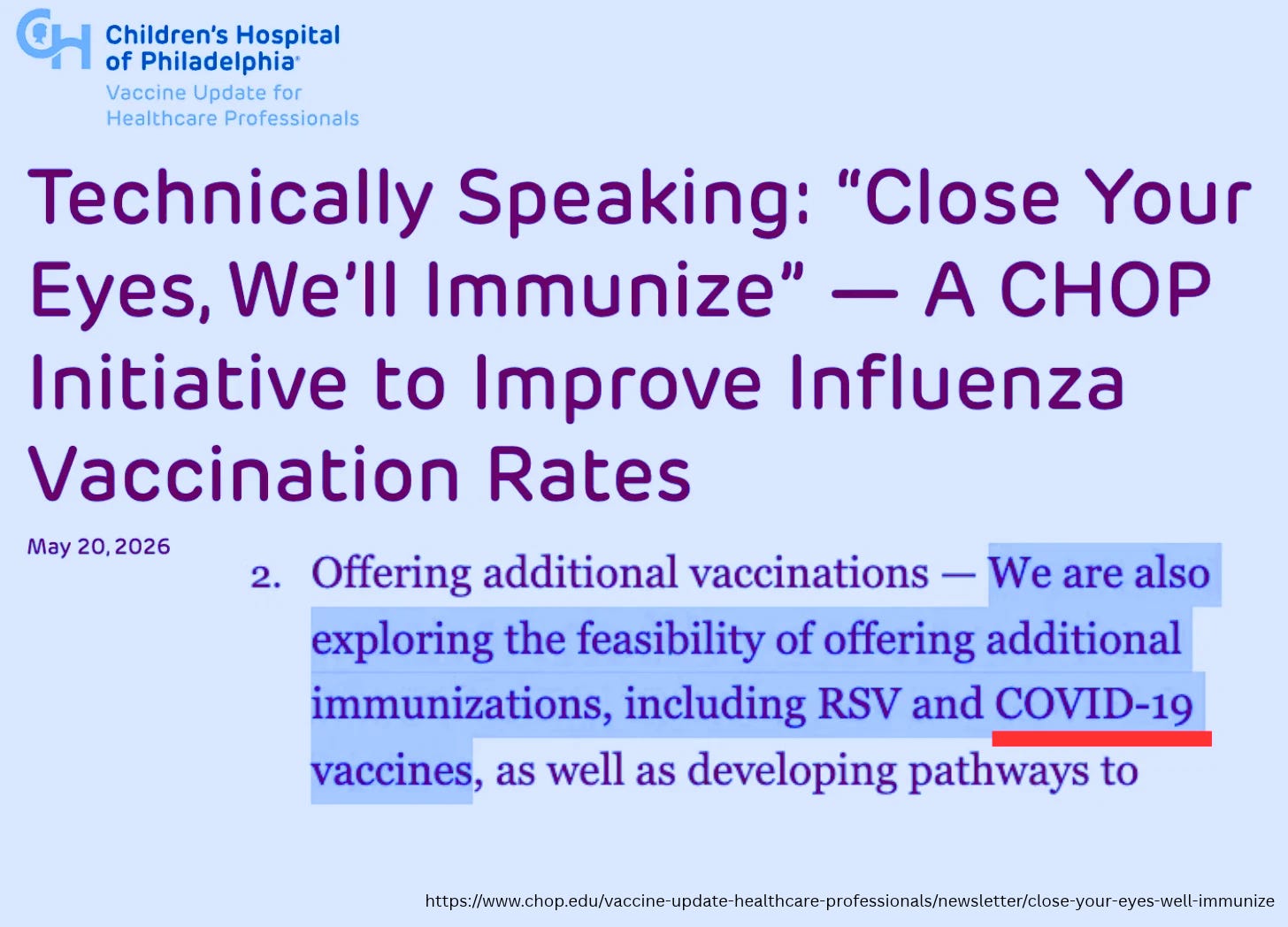
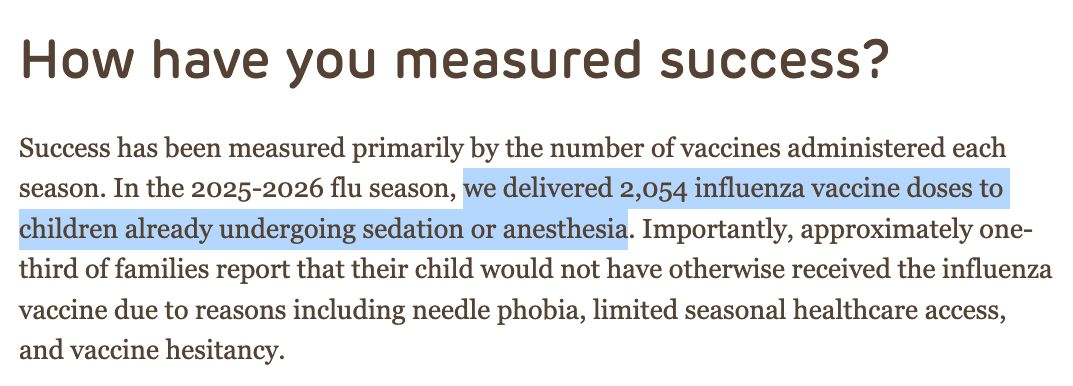


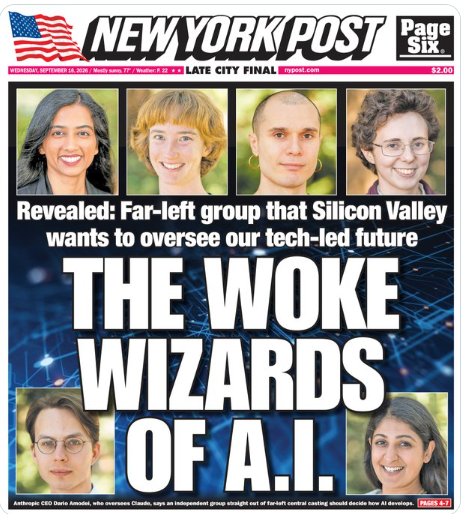






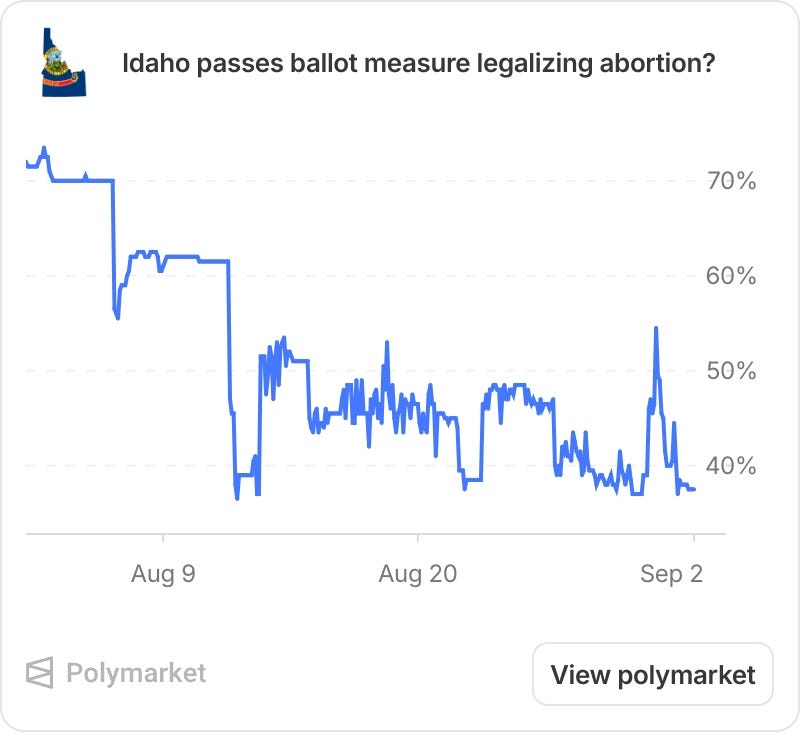

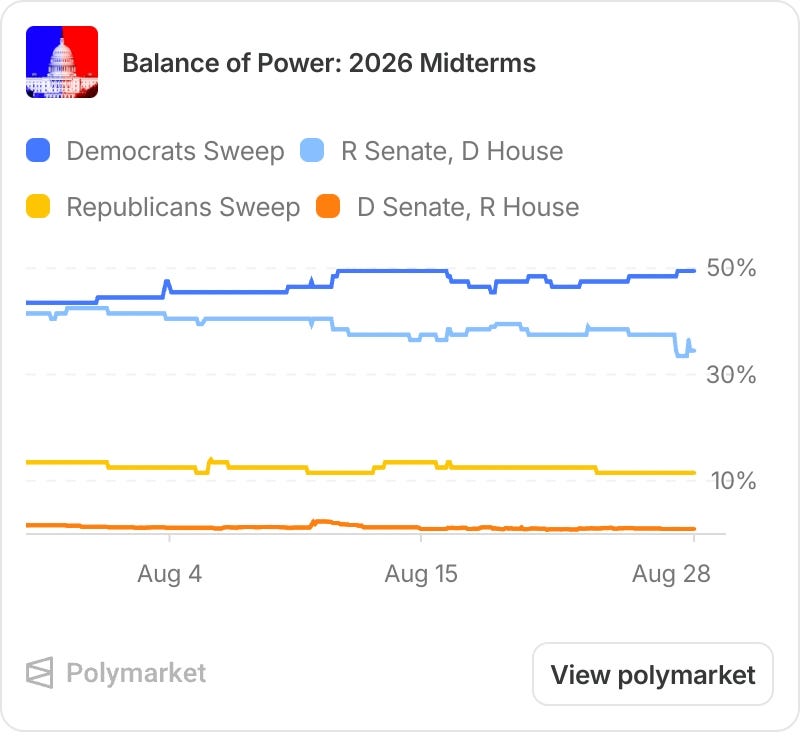
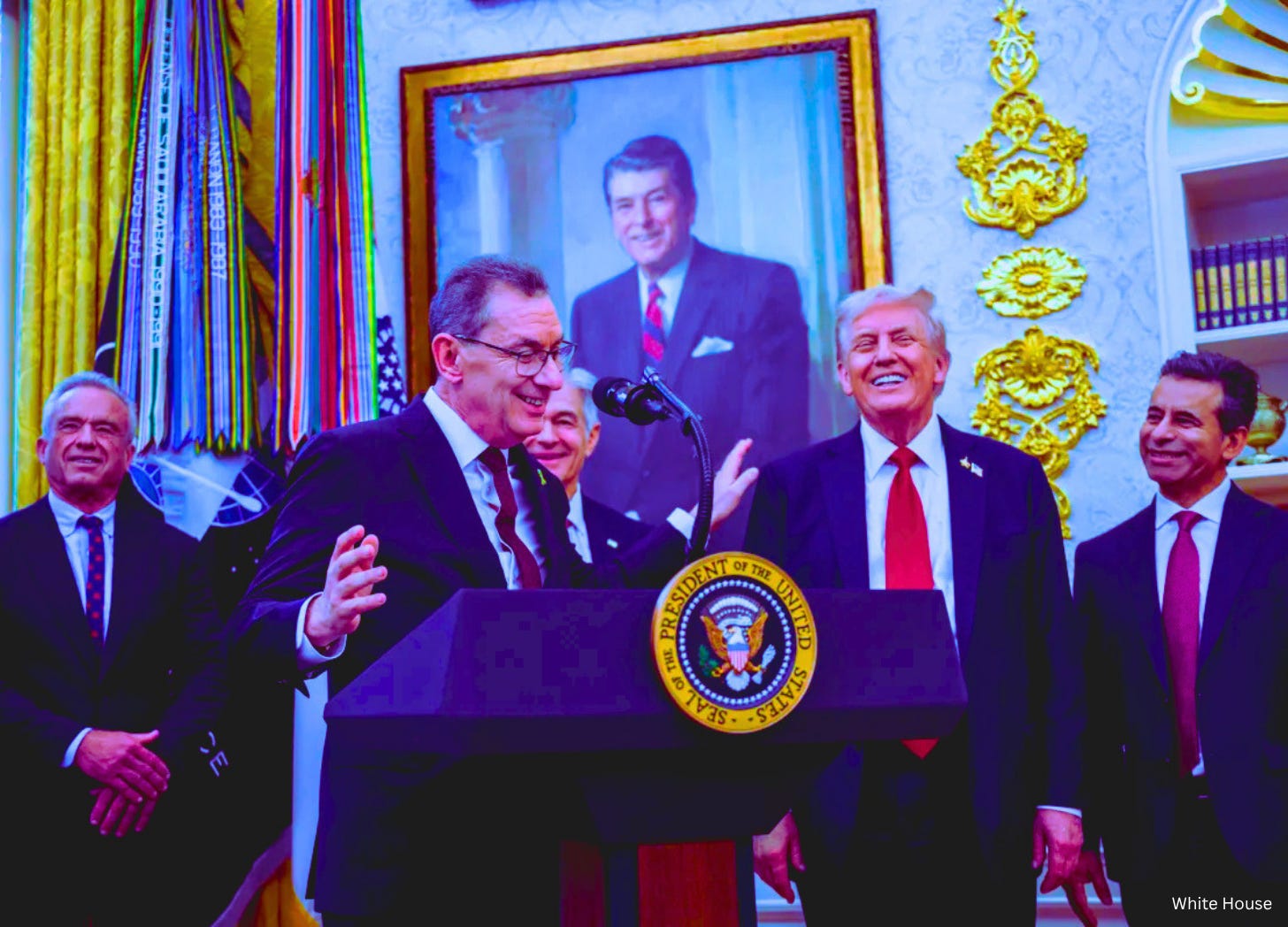
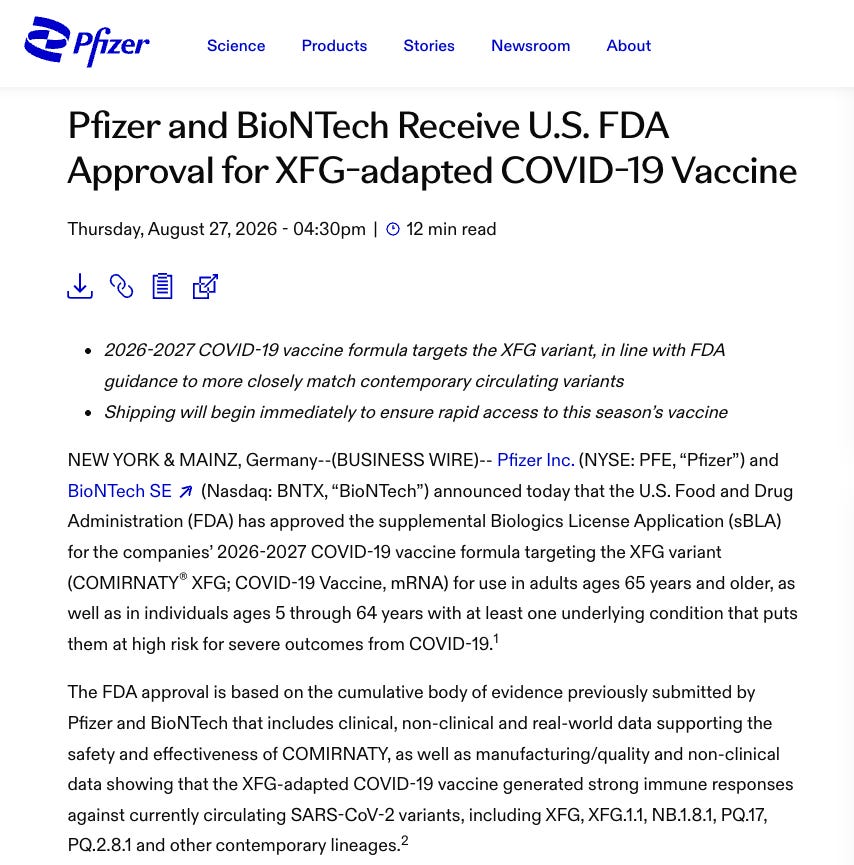




Recent Comments