Loren Merchan, owner of Authentic Campaigns, nearly doubled her business from this same time two years ago. Having daddy preside over the New York trial of Donald Trump sure does help!
Democrats have paid the company owned by the politically active daughter of compromised Judge Juan Merchan at least $12.7 million in the first half of this year.
Federal election reports show Authentic Campaigns, the consulting firm owned by Loren Merchan, raked in the windfall between January 1 and July 1, 2024. Her father currently presides over Manhattan District Attorney Alvin Bragg’s case against Donald Trump in New York City.
Declassified with Julie Kelly is a reader-supported publication. To receive new posts and support my work, consider becoming a free or paid subscriber.
The sum represents an 86 percent increase in Authentic Campaigns receipts from the same time period in 2022. Democratic elected officials, candidates, and PACs reported $6.8 million in payments to Merchan between January 1 and July 1, 2022, the last general election cycle.
The boom in business coincided with Trump’s six-week trial in Merchan’s Manhattan courtroom, which began on April 15. Prior to the start of the jury trial, Merchan repeatedly sided with Bragg while demonstrating open hostility to the former president. Merchan imposed a gag order early on and then proceeded to deny nearly every defense motion.
Two weeks into the trial, Merchan held Trump in contempt for violating the gag order.
Merchan, of course, should never have been near the case but he thwarted every legal attempt to get him removed.
Last year, amid details of Loren Merchan’s financial ties to top Democrats including Joe Biden and Kamala Harris and the judge’s own small donations to Democrats, Trump asked Merchan to step aside. “Your Honor’s daughter’s close connection to President Trump’s political adversaries and her work at, and financial interest in, a firm which is deeply engrained with Democratic politics raises real and legitimate concerns about this Court’s impartiality,” Trump’s attorneys wrote in May 2023 shortly after Merchan was assigned to handle the case. “The financial well-being of Your Honor’s daughter depends at least in part on the success of Authentic. And Authentic’s business model is one that requires it to attack President Trump and support individuals and causes in direct competition with President Trump.”
A few months later, Merchan denied Trump’s request to recuse himself. Accusations his daughter stood to profit off the case, Merchan stated, was “speculative and hypothetical.”
Once again, the Columbian-born Merchan was wrong.
A Client List or Trump Enemies List—or Both?
Some of the former president’s biggest foes are on Merchan’s growing client list. Representative Adam Schiff’s campaign has paid Merchan’s firm roughly $8 million so far this year; the Trump-Russia collusion hoaxster currently is running against former MLB player Steve Garvey to replace the late Dianne Feinstein in the U.S. Senate.
Schiff arguably is Merchan’s most lucrative client dating back to the start of Authentic Campaigns in 2019. During his role in leading the impeachment of Trump in 2019 and 2020, Schiff paid Merchan’s firm $4 million for digital consulting and various services.
Freshman New York Congressman Dan Goldman has paid Authentic Campaigns $57,000 this year to place digital ads. Goldman, an heir to the Levi Strauss fortune, in November 2023 said Trump “has to be eliminated” and “cannot see public office again.” Before winning his seat in Congress, Goldman served as a lawyer on the first impeachment trial of Trump.
Other big-name clients include Democratic senators Jon Tester, Corey Booker, Tina Smith, and Tammy Baldwin; all have paid Merchan at least six figures so far this year.
After a jury convicted Trump in May on 34 counts of falsifying business records in the case, Booker called the verdict, “a moment of justice.”
It appears fake kidnapping victim and Trump antagonist Gretchen Whitmer is a new Authentic Campaigns client. “Fight Like Hell,” the PAC the Michigan governor launched in 2023, is paying Merchan’s firm an $8,000 per month retainer for “digital consulting.” The first recorded payment in the amount of $76,035 from Whitmer’s PAC to Merchan is dated July 2023, three months after Judge Merchan got the case.
Another Bite of the Apple?
Trump’s sentencing was originally scheduled for this month, but Merchan postponed that proceeding until September pending consideration of a motion to vacate the conviction based on the Supreme Court’s ruling on presidential immunity.
While the move may appear magnanimous, no doubt Merchan has ulterior motives in delaying the historic event until the height of the 2024 campaign season.
After all, another appearance before Trump a few months
I saw that the AP Stylebook was urging us not to use the word “Popsicle,” because “Popsicle” is “a trademark for a brand of flavored ice on a stick. Use ice pop or frozen pop as the generic.”
Sure, AP Stylebook. Sure.
“Hey, kids, want a frozen pop?”
Yeah, that’s not happening.
But then it occurred to me: I’ll bet the AP Stylebook is unsound on more than just popsicles. And having looked through its Twitter account, I can report that the old man’s instincts were once again sound.
Several years ago, for example, we were treated to this little gem:
“We now say not to use the archaic and sexist term ‘mistress’ for a woman in a long-term sexual relationship with, and financially supported by, a man who is married to someone else. Instead, use an alternative like companion or lover on first reference. Provide details later.”
Well, alrighty, then.
Then we learn that we really ought to avoid the words “riot” and “rioting.” Why, you ask? Here’s why:
Focusing on rioting and property destruction rather than underlying grievance has been used in the past to stigmatize broad swaths of people protesting against lynching, police brutality or for racial justice, going back to the urban uprisings of the 1960s.
Unrest is a vaguer, milder and less emotional term for a condition of angry discontent and protest verging on revolt.
Super.
So you can call something a riot as long as the AP disapproves of the motivations of the people involved.
I did recall the AP Stylebook taking a unpopular but very sound stance back in 2012 when it removed words like “homophobia” and “Islamophobia.”
The suffix “-phobia” refers to “an irrational, uncontrollable fear, often a form of mental illness,” and thus should not be used “in political or social contexts,” said the Stylebook.
“Homophobia especially — it’s just off the mark,” said AP Deputy Standards Editor Dave Minthorn. “It’s ascribing a mental disability to someone.” My thoughts exactly. Someone who disagrees with you or dislikes you does not have a clinical disorder, even if the left likes to treat dissidents as if they do.
Well, that didn’t last long. By 2017 the Stylebook was saying that “homophobia” and “homophobic” were “acceptable in broad references or in quotations to the concept of fear or hatred of gays, lesbians and bisexuals.”
Now of course it’s normal for new words to come into use, or older words to acquire new shades of meaning over time. This is all part of the organic development of a language. But there is nothing organic about what the political class wants to do to the English language.
Just think of what’s been done to the word “violence.” We’re told that unkind words are “violence.” We’re told that “silence is violence.” Or bigotry is “violence.”
“White supremacy” doesn’t mean anything at all at this point. Punctuality, professionalism, eating breakfast, lunch, and dinner, and dozens of other positive goods have been condemned as white supremacist or racist.
How can we talk to each other when crucial words we need to use carry weird and ever-changing ideological baggage? Will the word ‘weird’ be next? Stay tuned guys and gals. Stay tuned!
For the fourth time in the past year, a team of leading scientists has proven that the theory of manmade climate change is completely fake. The “science” that underpins the unproven theory of global warming is deeply flawed and cannot be replicated in any laboratory. If you believe that global warming is real, you should start seeing a cult deprogrammer; you have been brainwashed by a religious movement that does not have your family’s best interests at heart. If you’re interested in real science as it applies to the contained atmosphere on planet Earth and you’re open to the possibility that global warming is fake, keep reading.
A team of physicists at the Institute of Optoelectronics at the Military University of Technology in Warsaw just published their latest research in the journal Science Direct. Their published and peer-reviewed study is titled, “Climatic consequences of the process of saturation of radiation absorption in gases.”
The scientists looked at the addition of manmade carbon dioxide (CO2 emissions) and analyzed the effects of the gas on radiation (heat) absorption within a contained atmosphere. What they found is that CO2 blocks heat on a spectrum. After a certain point, CO2 reaches a saturation limit and is incapable of trapping any heat beyond that.
A simple example of the saturation effect is the insulation in your home’s attic. When you apply one layer of insulation, it helps to trap heat in your home and keep it warmer during the winter. If you apply a second layer of insulation, it might make a small bit of additional difference. If you apply five, ten, or more layers of insulation, it eventually doesn’t trap any more heat because it has reached the saturation point.
This is exactly how the researchers say that carbon dioxide functions in the atmosphere. It reaches a saturation point when carbon dioxide is around 300 parts per million (ppm) in the atmosphere. What this means in practical terms is that if we dug up every last ounce of coal and sucked every last drop of oil from the earth, put them in a big pile, and lit them on fire, the CO2 emissions could not cause the temperature of the Earth to increase one iota.
The Earth’s atmosphere reached 300 ppm of carbon dioxide way back in 1950—around 74 years ago. Today, the CO2 level in the atmosphere is around 430 ppm. None of the carbon pumped into the atmosphere since 1950 has made any difference in global temperatures.
This is the fourth time in the past year that physicists have applied their principles to carbon dioxide to determine whether it is impacting global temperatures or climate. All four independent teams of physicists have reached the same conclusion, meaning that this research is replicable and therefore is most likely scientifically true.
One of the main principles of science is that your hypothesis must be able to withstand rigorous scrutiny from other researchers. If they conduct the same experiments and come to the same conclusion, your theory (hypothesis) is likely true. No prediction that has ever been made by the climate alarmists has ever come true. Research into the saturation effect of CO2 has come to the same conclusion every time. CO2 is not a greenhouse gas and CO2 emissions cannot impact global temperatures or the Earth’s climate.
The theory of manmade global warming is fake. Check your child’s science textbook at school. It likely says that CO2 is a greenhouse gas and that if we do not “act now,” we’ll all die from hot weather at some mysterious point in the future. Parents should demand that school districts teach real science to their kids, which is that CO2 cannot impact temperatures and that global warming is fake.
A whirlwind of conjecture continues to swirl around the circumstances of the assassination attempt on former President Donald Trump during a July 13 campaign rally at the Butler Farm Show Grounds near Butler, Pennsylvania.
Official reports indicate that twenty year old Thomas Matthew Crooks, killed by a Secret Service sniper immediately after firing the shots, was the sole gunman involved in the failed assassination attempt, and that he apparently acted alone.
Yet the precise details of the case remain prohibitively hazy and are likely to remain so, even as law enforcement, professional journalists, and citizen investigators probe the scant body of information presently available on the planning, motivations, and potential associations of the perpetrator.
A host of troubling irregularities around the conduct of law enforcement and Secret Service agents prior to the shooting have naturally generated a large amount of plausible but still tenuous conspiracy theories in which shadowy deep state actors prominently feature.
The ostensible involvement of the CIA in the Kennedy assassination offers the most obvious precedent for the framing of emergent theories on the recent attempt on Trump’s life. Even so, the historical involvement of the American intelligence community in political assassinations, particularly of American citizens and most especially of high profile American politicians, is unsurprisingly shrouded in a high degree of secrecy. The very nature of political assassinations by intelligence agencies by definition necessitates as many degrees of separation as possible between state actors and the perpetrators of said killings, such that we cannot and should not expect to find a clear body of evidence, much less a paper trail, linking high level conspirators with the actual assassination.
Yet we are not entirely without documentation of assassination protocols originating from the official records of intelligence agencies. A 1953 CIA document titled “A Study of Assassination” helps illuminate the long history of the involvement of the intelligence agency in political killings.
Authored in the broader context of the CIA’s covert operations in Guatemala between 1952 and 1954 (under the codenames PBFORTUNE and PBSUCCESS), which culminated in a coup against Guatemalan president Juan Jacobo Arbenz Guzman, “A Study of Assassination” details protocols for the assassination of political targets by intelligence operatives and their associates.
While the document does not explicitly reference assassinations carried out against targets in the US, the protocols detailed therein could apply equally to the elimination of foreign and domestic targets alike. Let’s delve into the details of the document:
“A Study of Assassination” opens with an etymology of assassination, tracing the linguistic origins of the word to the hashshashin, agents of medieval Islamic military leader Hasan-Dan-Sabah who were reputed to use intoxicants to enhance their ability to kill surreptitiously:
“Assassination is a term thought to be derived from ‘hashish,’ a drug similar to marijuana, said to have been used by Hasan-Dan-Sabah to induce motivation in his followers, who were assigned to carry out political and other murders, usually at the cost of their lives.” (p1)
The next section of the document introduces crucial distinctions between types of assassination, classifying modes of political killings along three axes.
The first distinction is between “simple,” “chase,” and “guarded” assassination:
“[A]ssassinations in which the subject is unaware [of his danger] will be termed “simple”; those where the subject is aware but unguarded will be termed “chase”; those where the victim is guarded will be termed “guarded.” (p2)
The second distinction is made between “lost” and “safe” assassination:
If the assassin is to die with the subject, the act will be called “lost.” If the assassin is to escape, the adjective will be “safe.” It should be noted that no compromises should exist here. The assassin must not fall alive into enemy hands. (p2)
Finally, the document distinguishes between “secret,” “open,” and “terroristic” assassination:
A further type division is caused by the need to conceal the fact that the subject was actually the victim of assassination, rather than an accident or natural causes. If such concealment is desirable the operation will be called “secret” ;; if concealment is immaterial, the act will be called “open”; while if the assassination requires publicity to be effective it will be termed “terroristic.”
If we grant, for argument’s sake, that the July 13 assassination attempt on Donald Trump was not the work of a lone wolf but was executed in service of a broader conspiracy by malicious state actors, the circumstances surrounding the failed assassination compel us to classify the attempt as “guarded,” “lost,” and “terroristic.”
Considering recent events, perhaps the most pertinent part of the document is the fate of the assassin described for “lost” assassinations. Several questions present themselves:
How is such an assassin to be recruited? What is the nature of the communications between the assassin and high level conspirators, and of the relationship between the high level conspirators behind the killing and the assassin himself? And finally, who are the parties responsible for eliminating the assassin after the deed is done?
The document specifies in no unclear terms that “no assassination instructions should ever be written or recorded” and states that “decision[s] and instructions should be confined to an absolute minimum of persons […] ideally, only one person will be involved.” (p1) It is also recommended that the perpetrator of the assassination
“[…] should have an absolute minimum of contact with the rest of the organization and his instructions should be given orally by one person only […] It is preferable that the person issuing instructions also conduct any withdrawal or covering action which may be necessary.” (p3)
In “lost” assassinations, moreover, it becomes even more vital that any contact between the assassin and the broader conspiracy is kept to an absolute minimum. This is doubly important due to the ideal profile specified for a perpetrator who is recruited to carry out a “lost” assassination. The document states:
“In lost assassination, the assassin must be a fanatic of some sort. Politics, religion, and revenge are about the only feasible motives. Since a fanatic is unstable psychologically, he must be handled with extreme care. He must not know the identities of the other members of the organization, for although it is intended that he die in the act, something may go wrong.” (p3)
In such a case, the psychological profile of the assassin clearly makes him a liability. But on a deeper level, the “unstable” psychology of the assassin can also be seen as an asset, since an unstable individual can more easily be recruited to carry out political violence at risk of their own life, and the neurotic character of the assassin serves as an effective cover for the broader operation. Consider that media coverage of Thomas Matthew Crooks quickly pegged him as something of an awkward loner and a social outcast who had been bullied throughout his childhood – essentially, a profile matching that of notorious school shooters. In the absence of a clear picture of Crooks’ personal ideologies, confounded by his seemingly contradictory political alignments, the subtle implication is that his motivations were more akin to those of a neurotic than those of a political radical. Whatever profile of Crooks’ political leanings emerges in the days and weeks to come, the initial insinuation that he acted as a mentally unstable “lone wolf” serves well to distract from the question of whether the shooting was part of a broader conspiracy. Furthermore, in light of the well-documented history of the use of psychotropics by intelligence agencies for mind control purposes, we cannot discount the possibility that Crooks’ apparent psychological profile made him a prime target of brainwashing by malicious factions trying to turn him into a sort of Manchurian candidate. If Crooks was in fact recruited to be the perpetrator of a “lost” assassination, it would follow that the party responsible for his subsequent killing could be connected to the party responsible for recruiting him as an assassin initially.
“A Study of Assassination” goes on to explore in detail various methods and strategies for the killing of political targets. Techniques considered range from hand-to-hand combat and edge weapons to improvised bludgeoning devices, drugs and poisons, explosives, automobile accidents, and even orchestrated falls into bodies of water or open elevator shafts. (p5-20)
The preferred method, and that given the most extensive consideration, is the use of different firearms at various ranges. Crucially, the document states that “public figures or guarded officials may be killed with great reliability and some safety if a firing point can be established prior to an official occasion” (p11) and advises “the subversion of a unit of an official guard at a ceremony.” (p12)
Close scrutiny of the conduct of Secret Service and law enforcement agents charged with protecting Donald Trump strongly suggests that the assassination attempt may in fact have involved such a subversion. By any standard it was a patently disastrous security failure for which no satisfactory explanation has been given.
More details will surely emerge on the assassination attempt, but the information available thus far clearly points toward the likelihood of a broader conspiracy. Because the high level conspirators are likely to remain hidden in the shadows, we will likely remain hard pressed to identify a particular faction of the deep state responsible for the incident. Yet it is hard to deny that the attempt on Trump’s life resembles something straight out of the CIA assassination playbook.
The left’s view of slavery as a uniquely Western evil is a product of deep historical ignorance.
Modern histories tend to rely heavily on the new ideological pieties of left-wing activists. First among these is the belief that we live in a totally corrupt and oppressive society – in fact, in the world’s most oppressive and corrupt society. Feeding this belief is the widely accepted claim – at least, within the modern Western world – that slavery is the United States’ ‘original sin’ and alleged to be uniquely evil as practiced within the US.
One major American textbook, Traditions and Encounters, appears to describe the Western-dominated slave trade as the largest and most brutal in history, calling even the full sweep of Arab / Islamic slavery ‘smaller than the Atlantic slave trade of modern times’. Elsewhere, the 1619 Project’s Nikole Hannah-Jones argues bluntly: ‘America’s brutal system of slavery [was] unlike anything that had existed in the world before. Enslaved people were… property that could be mortgaged, traded, bought, sold, used as collateral, given as a gift and disposed of violently.’
This take has become increasingly prominent within the modern American educational environment. The 1619 Project – which insists that 1619, the year that 20 Africans arrived in the English colonies, and not 1776, was ‘the true founding’ of America – has a formal curriculum. Underpinning this view that slavery in America and the West was uniquely brutal are several unexamined assumptions. Modern Americans tend to project our positive values back into the past while thinking that our sins are uniquely bad. What we don’t understand is that contemporary Western beliefs about human dignity, inalienable rights, a right to freedom, etc, are the exception, not the norm. If they seem like the norm today, that is largely because we have remade much of the world in our image. In reality, as conservative éminence grise Thomas Sowell writes in Black Rednecks and White Liberals (2005), it is probably fair to say that most Westerners think of historical slavery almost entirely in the context of Western white oppression of blacks during what is technically known as the Atlantic Slave Trade. Almost nothing could be further from empirical truth: American slavery was not unprecedented, it was not uniquely brutal and it did not invent any new oppressive systems. It was terrible, but talking about it as if it came out of nowhere means we understand less about history and about global norms. Slavery was ubiquitous throughout the ancient and historical world – often the step of human ‘development’ after simply killing and eating one’s defeated foemen.
Slavery in historical perspective
Leaving aside Rome, Greece and Babylon as examples of the horrors of historical slavery, we find that the more familiar African slave trade also stretched back over millennia, involving conflicts and emancipations that have often been forgotten for centuries in the West. Roughly 1,200 years ago, for example, the Zanj wars were fought (largely) between Arabs and slaves from civilised regions of West Africa and devastated much of modern-day Iraq. Broadly speaking, the Zanj rebels were members of Black African tribes who had been captured in Africa following military defeats or raids by Arab slave traders and who were subsequently forced to labour for Arab masters in blistering southern Iraq.
Even by Mississippi standards, a plantation in the Iraqi south was a miserable place to work shirtless in the summer. Zanj workers were frequently given Sisyphean tasks like removing and replacing all the over-salinized topsoil on large farms; others worked in 110-to-120-degree conditions to drain the salt marshes near the modern city of Basra. Contemporary sources, along with historical Arab ones, state the obvious: ‘Their conditions were extremely bad. Their labor was hard and exacting, and they received only a bare and inadequate keep consisting of – according to the Arabic sources – flour, semolina and dates.’ (1) Under a variety of charismatic and soon-dead leaders, the captured African warriors tried to rebel against these ‘appalling conditions’ at least twice (via organized raids from AD 688 to 690, and a more organized rebellion under ‘the Lion of the Zanj’ in 694) before the conflict generally called the Zanj War but were broken and shoved back into the salt marshes on both occasions.
The Zanj War caused destruction on a truly epic, modern scale. Contemporary estimates of the death toll during the 14-year conflict generally range between 500,000 and 2.5million. There seems general agreement that the war devastated much of the countryside through which it was fought: ‘Its consequences must long have continued to be felt, and it can hardly be doubted that the cities and regions of the lower Tigris never entirely recovered from the injuries which they at that time suffered’, reads one summary (2).
Remarkably, the story of this massive and bloody war, which lasted more than 14 years and killed perhaps a million human beings, is little more than a footnote to the full tale of the millennium-long Arab slave trade. As one academic puts it, the Arab trade in enslaved Africans ‘can be traced back to antiquity’. The trade became widespread in the 7th century as Islamic power grew in the Middle East and North Africa, ‘seven centuries before Europeans explored [Africa] and 10 centuries before West Africans were sold across the Atlantic to America’, and it endured until the modern era.
By almost every metric, the Arab slave trade was larger in scale than the white-dominated Atlantic slave trade. The well-regarded Senegalese scholar, Tidiane N’Diaye, has argued that at least 17million Africans were sold into Arab slavery, with eight million or so shipped from Eastern Africa to the Islamic world ‘via the Trans-Saharan route to Morocco or Egypt’, and nine million more ‘deported to regions on the Red Sea or the Indian Ocean’ – then both largely Arab lakes.
While it is difficult and a bit tasteless to compare these things, the Arab trade was by all accounts as brutal or more so than its Western counterpart. Academics have concluded that ‘about three out of four slaves died’ before ever reaching their destination and being sold into bondage, from causes including starvation, sickness and plain ‘exhaustion after long journeys’. It was also longer lasting than Western slavery, with slavery not being (formally) banned in the fairly typical Arab port of Zanzibar until 1873 and not abolished across Muslim East Africa until 1909.
Some Arab and Afro-Asiatic slave traders achieved legendary status during their eras and are remembered today. Probably most notable among these merchants of life was Hamad ibn Muhammad ibn Jum‘ah ibn Rajab ibn Muhammad ibn Sa‘īd al Murjabī – better known as Tippu Tip. A black man himself, in any normal sense of that term, Tip was also the most powerful and widely known slave trader in Africa for most of the period between his birth in 1832 and death in 1905, supplying much of the world with black slaves.
Tippu Tip (far right) sits besides Arab dignitaries and a colonial official. (Date unknown).
Born in Zanzibar to parents of Arab and Bantu heritage, and later nicknamed after the ‘tip-u-tip-u-tip’ sound that his guns made during a war against the Chungu tribe, Tip began raiding into the African interior as a young man – by the 1850s at latest. Living a full and adventurous life, if not a good one, he became one of Africa’s most notable historical figures. The famous trader met explorers Dr Livingstone and Henry Stanley, and built up a private army that included thousands of men and drew frequent allegations of cannibalism. At one point he conquered the entire eastern Congo region in his own name and that of the sultan of Zanzibar.
Tip had no particular problem doing business with, fighting, or indeed selling Europeans as well as blacks: no bigot, he. Following an agreement between his own Sultan – Barghash bin Said of Zanzibar – and the mad European king Leopold of Belgium, he served briefly as governor of the Stanley Falls sub-district in Belgium’s Congo Free State. He was also involved in the bloody Congo-Arab War, where Europeans and Arabs fought primarily by means of African proxy forces. When he finally retired, he wrote a darkly hilarious autobiography: one of the first prominent African examples of that genre and apparently the first ever written in Swahili. By 1895, Tip had already come to control seven large plantation farms and thousands of slaves, in addition to his force of fighting men. He died in 1905 in the ‘Stone Town’ core of Zanzibar – old, famous, very rich, evil and beloved.
The ‘Tippu Tip’ story of powerful whites and blacks working together to sell less powerful people of all shades would have struck almost no one as unusual for the large majority of the history of the slave trade. There was in fact – for centuries – a regional slave trade focussed entirely on the sale of white battle captives to Arab and black Muslim masters: the Barbary slave trade. Ohio State’s Robert Davis estimates that Muslim ‘Barbary’ raiders from the North African coast enslaved ‘about 850,000 captives over the century from 1580 to 1680’, and ‘easily’ as many as 1.25million between 1530 and 1780 (3).
Interestingly, these figures probably represent significant underestimates of the white slave population in the Near East. Davis analyses primarily the impact of slave raiding from modern Algeria, Libya and Tunisia, and his numbers apparently do not include Europeans seized in the Mediterranean or Black Seas by other Muslim naval powers. Using imperial Turkish customs records, The Cambridge World History of Slavery estimates that between two and three million mostly European slaves were shipped into the Ottoman Empire from the Black Sea region alone between the mid-1400s and the start of the 18th century. In this context, it is hard to avoid agreeing with Davis that – for whatever reason – many historians today ‘minimise the impact of Barbary slaving… [and] the scope of corsair piracy’.
Barbary slavers were famously ruthless and daring – launching military-scale raids on European cities on more than one occasion. In 1544, legendary Caucasian Muslim Hayreddin Barbarossa (‘the Red Beard’) captured both the sizable island town of Ischia and the city of Lipari, enslaving approximately 1,500 Christian Europeans in the first strike and between 2,000 and 3,000 in the second. Just seven years later, in 1551, another Muslim raider – Dragut or ‘Turgut Reis’ – conquered the island of Gozo and sold the entire population as slaves: shipping 5,000 to 6,000 Europeans into the Ottoman Empire as chattels.
During just the years 1609 to 1616, ‘no fewer than 466’ British merchant vessels were boarded and taken over by Barbary pirates during maritime battles or slashing longshore raids, with almost all captured sailormen and passengers sold as slaves. Even the US, half a world away, suffered at the hands of these slavers: the phrase ‘to the shores of Tripoli’ in the Marine Corps Hymn refers to a punitive mission launched by President Jefferson following repeated and brutal North African attacks on Yankee shipping.
The totals from the Barbary era represent only a small percentage of those white Europeans enslaved by Muslim or African oppressors throughout history. Even leaving racially diverse Rome and her hordes of unfree people and the million-plus western European victims of Barbary raiders aside, the very word ‘slave’ derives from ‘Slav’ – the ethnic demonym for proud but historically ‘backward’ whites occupying eastern Europe, millions of whom were sold into bondage over the centuries by Muslims and others. Across the sweep of time, from Athens to Istanbul, it is far from impossible that more whites than blacks have been enslaved.
Slavery in America
Even inside the future US in, say, the year 1619, the picture of human bondage was more complex than is generally recognised. Importantly, slave ownership was not a vice confined to Old World peoples (of whatever colour). Native North American and Mesoamerican tribes also all enslaved captured Native opponents – and later came to extend the same courtesy to white battle captives and purchased African Americans. While some of these individuals were treated almost as replacement members of the tribe, others were tortured to death after a few months or years of brutal captivity. Further, plain chattel slavery of a variety more recognisable to Westerners existed across today’s Alaska, most of Canada and the Pacific Northwest states, practised by powerful tribes like the warlike Haida.
When captured Africans began to arrive in North America, many tribes – notably the ‘Five Civilised Tribes’ of the American Southeast – transitioned rapidly from intra-Indigenous to black slavery. The US’s preeminent Native slaveholders were probably the members of the powerful Cherokee (Keetoowah) Nation, which increased its slave population from 600 in 1809 to 1,600 in 1835 and roughly 4,000 by 1860-61. While these numbers might strike a casual observer as low, it is worth recalling that the population of the US was below 5.5million people in the census year of 1800, and that the same-year figures for the entire Cherokee population were respectively 12,400 (1809), 16,400 (1835) and 21,000 (1860). It seems fair to describe the Cherokee Nation as having been at least as much of a slave state as the white-led Confederacy: 19 per cent of all persons living in Cherokee territory by 1860 were enslaved blacks, and approximately 10 per cent of all families there ‘held others in slavery’.
Even the official Constitution of the Cherokee Nation, ratified in 1827, mentions black slavery several times and imposed harsh restrictions on enslaved people. According to scholar Tony Seybert, ‘the 1827 Cherokee Constitution disallowed [among other things] the ownership of property by the enslaved’ or their multiracial children, ‘the buying of goods from enslaved people’, and allowing slaves to consume alcohol (masters were fined heavily when this happened). It also forbade all marriages between black slaves and whites or Natives, and barred even free black residents of Cherokee lands from voting in any local or national election. It seems that these Native North Americans understood human bondage quite well.
The Cherokee were hardly alone. The other mighty Civilised Tribes exploited the slave system to nearly the same extent, with the Choctaw and their Chickasaw allies alone ‘hold[ing] over 5,000 blacks in slavery by 1860’. This plain historical fact of common, brutal Native American slaveholding is so undisputed that some writers have argued it ‘complicates’ the standard narratives around anti-Native atrocities like the Trail of Tears. ‘When you think of the Trail’, says Smithsonian magazine’s Ryan P Smith, in a piece on a symposium at the National Museum of the American Indian, you probably envision ‘a long procession of suffering Cherokee Indians forced westward by a villainous Andrew Jackson’. The symposium, which focussed on ‘intersectional African-American and Native American history’, posited that this imagined vision was too simplistic. A historically literate observer of the same imaginary tableau might guess that the Indian removal policy ‘was not simply the vindictive scheme of [then president] Andrew Jackson, but rather a popularly endorsed, congressionally sanctioned campaign spanning the administrations of nine separate presidents’.
What you most likely do not imagine, the Smithsonian summarised, ‘are Cherokee slaveholders… [and] the numerous African-American slaves, Cherokee-owned, who made the brutal march themselves, or else were shipped en masse to what is now Oklahoma… by their wealthy Indian masters’. However, that ugly latter image would have depicted one of the most obvious and striking realities of the Trail of Tears: Civilised Tribes Natives owned tens of thousands of slaves, and most of them were frog-marched to the Middle West by their owners. Comanche author and museum curator Paul Chaat Smith, quoted in the Smithsonian piece, points out that the ‘tribes were deeply committed to slavery, established their own racialised black codes, immediately reestablished slavery when they arrived in Indian territory, rebuilt their nations with slave labour and enthusiastically sided with the Confederacy in the Civil War’.
John Ross, a Cherokee chief. Lithograph by John T Bowen and published by Daniel Rice and James G Clark in 1843.
That last line is worth repeating, for the 1619-educated innocents of today: at least part of the reason the US government was so ruthless with the great Southeastern Native nations during the 1850s and 1860s was that many of them spoke openly in support of the Southern cause – and fought with the Confederacy when the Civil War began. Given the earlier removal campaigns, the Natives of the Five Civilized Tribes somewhat understandably hated the US government, so any revolt against it would have struck many of them as good. But they also probably aligned with the Confederacy’s pro-slavery goals. And while the highly intelligent chiefs of these tribes had few illusions about the Confederacy, all sources so far indicate that they saw this much smaller and less cohesive potential nation as easier to manipulate and work within.
Human behavior of this kind is often driven by complex amoral motives, a point that the experts cited in the Smithsonian piece make over and over again. They note that Native slaveholding was not generally accompanied by complex rationalizations or agonies of guilt. Native masters owned slaves for the same reasons white ones did: because they could, and they thought they would gain a practical advantage from doing so. Cherokee slave buyers were not somehow confused or misled: ‘They were willful and determined oppressors of blacks they owned, enthusiastic participants in a global economy driven by cotton.’
Following this point, the Smithsonian piece goes on to make an absolutely essential observation about history and historical analysis: ‘American history is explained poorly by modern morality but effectively by simple economics and power dynamics.’ This thesis, while true, often seems nearly taboo to express in public. However, as Paul Chaat Smith points out, it is indisputable that human beings have been imperfect and incentive-driven in every era of history and that the generally accepted ‘moral’ rules in the past were very different from those today. This makes it not merely silly but bizarre to judge rationally behaving historical figures by the standards of today.
‘Andrew Jackson had a terrible Indian policy and radically expanded American democracy’, Smith points out. Similarly, the great Cherokee chief John Ross ‘was a skillful leader… but also a man who deeply believed in and practiced the enslavement of black people’. For almost all of history, an understanding of rather brutal rules of engagement governed the behavior of virtually all human beings alive on Earth – and Arabs, West Africans, East Africans, Asians and Native Americans were no more an exception to this than were white Europeans.
So what made the modern Western world unique when it came to slavery? The simple if unpopular answer is: ending the practice of slavery. It was not keeping captured enemies or plantation serfs in bondage that made the West stand out historically – those practices were universal – but rather letting them go.
With all due respect to the brave slave rebels of Haiti or the occasional philosopher within the long Chinese and Indian intellectual traditions, ’emancipation’ – the widespread belief that people who are not themselves enslaved should vigorously oppose the entire institution of slavery – seems to have been a distinctively and almost uniquely Western idea. Whether it reflected relatively early European industrialization or a rare but genuine escape from human amorality, the freeing of most of the slave population of the Earth was a Western (and Christian) triumph. As historian Philip D Morgan puts it:
‘Unlike other previous forms of slavery, the New World version did not decline over a long period but came to a rather abrupt end. The age of emancipation lasted a little over one hundred years: beginning in 1776 with the first anti-slavery society in Philadelphia, through the monumental Haitian Revolution of 1792, and ending with Brazilian emancipation in 1888. An institution that had been accepted for thousands of years disappeared in about a century.‘
While US history is today often described as an essentially unending sequence of white abuses of blacks, an American abolitionist movement dates back literally to the nation’s founding. By the late 1770s, black American veterans of the Revolutionary War – and more than a few of their white former bunkmates – began a petition-writing campaign that targeted Northern state legislatures and demanded an end to slavery. This and similar techniques were essentially successful: by 1795, 10 US states and soon-to-be-state territories, including Connecticut, the Indiana Territory, Maine, Massachusetts, New Hampshire, New York, all of the Northwest Territory, Pennsylvania, Rhode Island and Vermont, were free land by law. Combined, these contained well over 50 per cent of the free population of the US. And what I and others have called the anti-slavery upswell continued from there. In 1794, Congress formally barred all American ships from participating in the Atlantic slave trade.
Just 14 years later, in 1808, the same body passed the Act Prohibiting Importation of Slaves, which made it illegal for any ship from any country to bring enslaved people into the US for sale. Finally, following some fascinating incremental steps and a big war, slavery was formally declared illegal throughout the US in 1865.
It is well worth remembering the price we paid to reach that point: the shockingly bloody American Civil War – where men and boys not infrequently charged dug-in cannon manned by their brothers – killed 360,222 lads in Union blue, and another 258,000 or so in Confederate Feldgrau. Roughly one in every 10 American men of fighting age died during the war: 23 per cent of Southern white men in their twenties were killed. In some Southern states, the majority of buildings over two stories high were burned; one Union soldier died for every nine to 10 slaves who were set free. The war also boosted the national debt of the US from less than $70million to $2.77 billion – an increase of many tens of billions in 2022 dollars. As I have noted elsewhere: ‘If the US owed a bill for slavery, we have quite arguably already paid it in blood.’
While a bit less drastic, the history of the abolitionist movement across the early modern Western world reads similarly. Following the 1787 establishment of the Society for Effecting the Abolition of the Slave Trade, Britain moved along with the US to outlaw international slave trading in 1807 to 1808 and then deployed the British Navy around the world to sink slave ships and blockade notorious trading hubs. Not long after, slavery was eliminated across the British Empire (notably excepting India) by the Slavery Abolition Act of 1833.
On the continent, France abolished the practice of slavery throughout the French Empire in 1794, briefly brought it back under Napoleon in 1802, but then permanently re-abolished it throughout the colonial system in 1848 – and sent slaver-hunting French warships to patrol the oceans alongside England’s. Between France’s abolition of the practice in 1794 (or Haiti’s in 1804, if you prefer) and Brazil’s in 1888, every major Western nation legally barred slavery.
Many other nations did not. While it is considered wildly politically incorrect to point this out, in powerful Muslim and black African countries where the writ of the West never ran, chattel slavery quite often still exists today. A 2017 report from the International Labour Organization recently found that, ‘as of 2016’, more than 40million people currently ‘perform involuntary servitude of some kind’ in situations that they cannot leave. In other words, they are slaves. Per one widely read commentary on the report: ‘Today, there could be more people enslaved than at any time in human history. Chattel bondage still happens today – particularly in Africa.’
The details provided by the ILO and the scholars analyzing its data are striking. According to one standard estimate, ‘between 529,000 and 869,000’ human beings – most of them black Africans – are currently ‘bought, owned, sold and traded by Arab and black [masters]’ within just five countries in Africa. Global sources estimate that there are currently 700,000 to one million desperate black African migrants living in Libya alone, and that roughly 50,000 of them have been forced into physical or sexual slavery by Arab Libyans.
An African migrant with his hands chained, protesting in Brussels against the slavery of migrants in Libya, 2 December 2017
Even a few open slave societies continue to exist today. In the Islamic republic of Mauritania, ‘the very structure of society reinforces slavery’. A racialized caste system still exists, where – in roughly this order – Berbers, lighter-skinned Arabs known as ‘beydanes’, and Islamized free blacks called ‘haratin’ completely dominate a group of black chattel slaves referred to as ‘abid’ or ‘abeed’. This, like ‘Slav’, is an old Arabic word used to denote a slave – in this case, generally a black one.
Mauritania’s slave population is sizable: the US State Department has estimated it at ‘just’ 30,000 to 90,000 people, but deep-cover research by CNN in 2011 placed the real number at between four and seven times the highest estimate. CNN reporters and analysts claimed that between ’10 per cent to 20 per cent of the [Mauritanian] population lives in slavery’.
Mauritanian slaves live very much as slaves always have: their yoke is not a light one. Perhaps because of the backlash to this practice in Libya or Algeria, few if any open markets exist, but all slaves are held as chattels, and most are born out of forced intercourse (read: rape). Slaves are often used as a crude form of currency, serving as substitutes for money to settle gambling debts, being privately traded between masters in exchange for other people or goods like rice, and often being available for short-term rental for whatever purpose. Like unfree people everywhere, they have no say in any of this, and can be (and often are) beaten or killed for attempting to escape their state of bondage.
Interestingly, sources almost invariably describe Mauritania as one of the countries in the world furthest from the West, an ‘endless sea of sand dunes’ where the cuisine, dominant religion and daily patterns of life show little if any European influence. And that may be the problem. When analyzed by serious people, across the sweep of history, slavery is revealed to have been not a ‘Western’ practice but rather a universal one largely ended by Western arms. Where those arms reached never, or only briefly, it often continues to this day.
A primary warning indicator of impending disaster is the emergence of “zombie” businesses. These firms, also called “zombie companies,” are failing to pay even the interest on their loans due to their overwhelming debt.
According to recent Associated Press research, there are now roughly 7,000 of these financially troubled businesses worldwide, with 2,000 of them based in the U.S.
This trend indicates that a severe crisis is coming, as it highlights the possibility of widespread economic disruption.
The Retail Apocalypse and the Rise of Zombie Companies!
Businesses that haven’t made enough money to pay their interest during the last three years are known as zombie corporations.
The ten years of low-cost debt combined with persistently high inflation have caused borrowing costs to soar to levels not seen in many years, which is the cause of this increase.
According to the data, these financially troubled businesses have risen by more than 30% in several significant economies, including the U.K., Australia, Canada, Japan, South Korea, and the United States. The nation as a whole is losing retail locations at an alarming rate. Should we maintain our current trajectory, the total number of closed stores in 2024 will surpass that of 2023 by about forty percent.
You would refer to that as a crisis! Meanwhile, a “restaurant apocalypse” is occurring nationwide, and banks are closing hundreds of branches nationwide.
Signs reading “space available” appear on once-prime commercial real estate buildings around us. Present this story to anyone who attempts to convince you that the U.S. economy is doing well and ask them why so many once-thriving companies are closing.
After that, it goes without saying that they will lose the argument.
According to the Daily Mail, around 2,600 store closures were announced in the first four months of 2024. Prominent brands such as Macy’s, Walmart, Walgreens, Foot Locker, and 7-Eleven have all announced store closures.
However, pharmacies like CVS and Rite Aid and bargain retailers like Family Dollar and the defunct 99 Cents Only have taken the brunt of the damage.
If this rate holds steady for the remainder of the year, we might reach 7,800 shop closure notices by the end of 2024. This is a glaring sign that our economy is having significant problems, not simply a minor bump on the map.
An Impending Financial Reckoning?
Numerous of these zombie businesses are about to face financial consequences. These corporations might be unable to repay hundreds of billions of dollars in due loans. The managing director of Valens Securities, Robert Spivey, issues a warning, stating that the most vulnerable of these businesses will probably be “crushed” by their debt.
The number of U.S. corporations declaring bankruptcy has reached a 14-year high, a spike usually associated with recessions rather than economic expansions.
Corporate bankruptcies in Canada, the United Kingdom, France, and Spain have reached near-decade highs, indicating that the situation in other nations is similarly grave.
The True Price for Me and You…
The possible demise of these zombie businesses would affect hardworking individuals in the real world and be a financial concern.
These companies employ almost 130 million people in twelve different nations. Massive layoffs brought on by a spate of bankruptcies might further burden already fragile economies.
It’s not only a money problem; an impending economic catastrophe may cause mass layoffs and civil turmoil.
Local businesses that rely on the employees of these enterprises will experience a decrease in consumers and revenue, causing communities to suffer as well.
These closures may have a knock-on impact, resulting in additional bankruptcies and a decrease in the number of vital public services paid for by local taxes.
The psychological toll that families and individuals take and the possibility of a rise in crime and societal unrest emphasize how critical it is to be prepared.
There is a need to stress the importance of being aware of the impending financial catastrophe and acting quickly to safeguard your loved ones and yourself.
Wall Street’s Perilous Bet
Wall Street investors blindly invest in zombie companies, buying up their stocks and “junk bonds” as if there were no tomorrow despite the apparent warning signs.
“One stock market insider stated, “These motherf*@kers are playing with fire, gambling with massive risks, and turning a blind eye to the ticking time bombs they’re fueling.”
This capital infusion may provide these faltering companies with a short-term lifeline. Still, it’s really a band-aid solution for a deep wound.
An investment research firm source calls this unprecedented degree of gambling on the public markets insane.
By ignoring the ingrained financial instability of zombie organizations, these careless behaviors are preparing us all for the inevitable and disastrous collapse.
The Part Central Banks Play in Breeding Zombies
The origins of this zombie plague are the acts of central banks during the 2009 financial crisis and the 2020–21 pandemic.
Central banks reduced interest rates to almost zero to avert an economic catastrophe, encouraging an excessive borrowing spree. This tactic may have prevented a worldwide depression.
Still, it also gave rise to a credit bubble that is much more widespread than zombie businesses. Governments, consumers, and even healthier enterprises have piled up debt.
Increasing Interest Rates: A Lethal Strike
Rising loan rates are the leading issue zombie companies are currently facing. In contrast to more stable businesses, zombies frequently have shallow financial reserves, and many of their loans have changeable interest rates.
Their financial difficulties are made worse by the fact that interest payments rise along with interest rates. Zombies’ debt was mainly utilized for stock buybacks, which have depleted their cash reserves and made them susceptible, rather than for expansion or innovation.
Bed Bath & Beyond: A Word of Warning
Bed Bath & Beyond is one such instance. The retail firm, which had 1,500 locations and was once a booming enterprise, struggled to shift to digital sales and spent $7 billion on stock buybacks during a decade-long debt accumulation.
This tactic and the large executive compensation packages that accompanied it ultimately caused its demise and the loss of tens of thousands of jobs.
The More Wide-ranging Economic Effect
Wide-ranging consequences could result from a zombie company collapse, particularly if several companies fail simultaneously.
This situation might create a chain reaction that would bring down more stable companies and cause general economic turmoil.
Widespread financial collapse is possible because severely indebted households, governments, and even healthier firms are all involved.
The emergence of zombie businesses is a glaring indicator of the underlying financial instability in the economy.
As these corporations prepare for their day of reckoning, widespread economic disruption becomes more likely.
As Americans observe the 12-year anniversary of the implementation of the Deferred Action for Childhood Arrivals (DACA) program, the Biden Administration is celebrating with another mass amnesty.
The White House is set to replicate the Obama Administration‘s executive amnesty, this time by creating a DACA-style program for illegal alien spouses of American citizens, which includes over a million people. The program, known as Parole in Place, would allow these illegal aliens to obtain green cards, work permits, and ultimately a pathway to citizenship. Similar to DACA, Parole in Place appears to be an attempt by the executive branch to bypass Congress in order to place illegal aliens above the law. Much like DACA, this appears to be brazenly unlawful and will be challenged in court. However, despite the illegality of DACA, it has stood the test of time, and remained in place for a dozen years. It is a sobering reminder that just because a program is unlawful doesn’t mean it won’t succeed in its goal to grant amnesty to hundreds of thousands of people in the country illegally.
While DACA set a new watermark for immigration lawlessness, this latest program is arguably even more ill-timed considering the historic crisis of illegal immigration the country has faced in recent years. Over the past three and a half years, more than 10 million illegal aliens from 177 countries have entered the U.S. These numbers demand a response from the federal government that prioritizes the sovereignty and security of the American people, not another amnesty program. In fact, support amongst the American public for a crackdown on illegal immigration has never been higher.
A poll conducted earlier this month by CBS News found that 62 percent of Americans support deporting all illegal aliens. This suggest that attempts by anti-borders activists and politicians to highlight sympathetic stories in their efforts to grant amnesty to certain illegal aliens won’t work on a public that is clearly exasperated by the endless border crisis.
The team at the Oval Office is aware that the American people are revolting against its anti-border policies, so they’ve attempted to present a tougher posture on the issue. Earlier this month, the administration announced an executive order that would shut down the border once a threshold of 2,500 illegal crossings a day was reached. Unsurprisingly, the executive order carved out enough grey area to drive a truck through, explicitly exempting children for example. The Department of Homeland Security has released 72 percent of illegal aliens in the San Diego sector—currently the busiest sector for illegal crossings—since the executive order was announced, according to The New York Post. Despite the recent tough talk emanating from 1600 Pennsylvania Avenue, it seems to be business as usual at the border, and illegal aliens who simply claim asylum are continuing to be released.
The true agenda of the anti-borders movement and their allies in the executive branch are revealed by programs like Parole in Place. Even as the country continues to be invaded daily by foreign nationals, this administration continues to look for creative ways to legalize illegal immigration instead of doing their jobs and stopping the flow.
The public case for Parole in Place will likely be similar to the one made for DACA. Opponents of the program will be smeared and accused of wanting to separate families and break up marriages. There will be individual stories told that will be intended to tug on the heartstrings of the American people in order to distract from the overall lawlessness of the program, but all of it will be part of a façade to normalize and legalize illegal immigration.
The true victims of illegal immigration are not the illegal aliens themselves, but Americans who are suffering because their government refuses to execute its most basic responsibility to secure the border and uphold the rule of law. In recent years, we’ve heard too many horrifying stories of young women brutally murdered by illegal aliens who should not have been in the country in the first place. As the illegal immigration lobby talks about family separation at the border, these American murder victims have been permanently separated from their families because their government refused to police the border for ideological reasons. These victims and their families are the ones who deserve to be prioritized by their government, not people who have broken our laws and entered our country illegally.
A dozen years after the creation of DACA, the precedent of executive amnesty has been expanded to include countless illegal aliens at the expense of the American people. This latest amnesty program is a slap in the face of American citizens, who have made clear their desire for the federal government to restore law-and-order in our immigration system.
The 4th of July is a great time to consider the concepts of liberty and freedom. In fact, I don’t think there’s ever been a better time to retrace our steps. We are in danger of losing what so many fought and died for. Submitted for your consideration.
Freedom needs a definition… it needs boundaries. Absolute freedom (anarchy) is simply chaos and necessarily ends in the triumph and tyranny of the guys with the most guns and control of the media. Yep, true freedom requires order, but an order that respects the image of God in man and does not coerce private opinion or conscience. In other words, true freedom requires the boundaries of law.
But the big question is always: Which law? Or rather whose law? By what standard should we… or can we… measure out freedom and limit anarchy? Which law order, if any, is truly compatible with liberty?
Once again, we’re forced back to the concept of ontology or “being.” If reality is, at bottom, undifferentiated spirit or impersonal atomistic matter as Classical thought posited, then any talk of what’s right or of “rights” proper is meaningless. “What is, is right” according to the Marquis de Sade. There is no transcendent standard by which right and wrong may be measured, no absolute beyond earthly existence by which we might legitimately say, “This is right, and this is wrong.”
Flatly stated… in the absence of any applicable moral absolutes, the concept of human rights is roadkill. We can talk about “rights” granted by society or the State, but this is a chimera. Just another dialectically mythical mix of concepts in eternal tension. Such “rights,” then, are nothing but existential “permissions” for a time and can be taken away as easily as they were granted.
This flag, flown by order of George Washington, commander in chief of the Continental Army in October 1775, is a symbol of solidarity, conviction and was meant to be a theological reminder in the fight for liberty. It was an appeal to a transcendent God for justice.
Only on the basis of a transcendent Absolute can there be any real talk of right and wrong or of human rights. Liberty, to be anything more than bare, momentary permission from the existing State, must be rooted in an Absolute that stands outside of and beyond all human social order and all created reality. Hence, our Founders’ appeal represented in the flag above.
Liberty is meaningful only on the presupposition of the personal Creator God, who both transcends creation and is immanent within it.
Bottom Line: A meaningful concept of liberty presupposes the Triune God of Scripture as Author and Creator.
Exercising the right, and the duty, to reform and to even abolish government when it no longer serves us, is how the united States of America began 248 years ago.
In Congress, July 4, 1776
The unanimous Declaration of the thirteen united States of America, When in the Course of human events, it becomes necessary for one people to dissolve the political bands which have connected them with another, and to assume among the powers of the earth, the separate and equal station to which the Laws of Nature and of Nature’s God entitle them, a decent respect to the opinions of mankind requires that they should declare the causes which impel them to the separation.
We hold these truths to be self-evident, that all men are created equal, that they are endowed by their Creator with certain unalienable Rights, that among these are Life, Liberty and the pursuit of Happiness.–That to secure these rights, Governments are instituted among Men, deriving their just powers from the consent of the governed, –That whenever any Form of Government becomes destructive of these ends, it is the Right of the People to alter or to abolish it, and to institute new Government, laying its foundation on such principles and organizing its powers in such form, as to them shall seem most likely to effect their Safety and Happiness. Prudence, indeed, will dictate that Governments long established should not be changed for light and transient causes; and accordingly all experience hath shewn, that mankind are more disposed to suffer, while evils are sufferable, than to right themselves by abolishing the forms to which they are accustomed. But when a long train of abuses and usurpations, pursuing invariably the same Object evinces a design to reduce them under absolute Despotism, it is their right, it is their duty, to throw off such Government, and to provide new Guards for their future security.
The Constitution provides that an amendment may be proposed by the Congress with a two-thirds majority vote in both the House of Representatives and the Senate. The Congress proposes an amendment in the form of a joint resolution. Since the President does not have a constitutional role in the amendment process, the joint resolution does not go to the White House for signature or approval. The original document is forwarded directly to NARA’s Office of the Federal Register (OFR) for processing and publication.
A proposed amendment becomes part of the Constitution as soon as it is ratified by three-fourths of the States (38 of 50 States).
According to the Declaration of Independence, the people have the right and duty to abolish any government that has committed a long train of abuses and usurpations.
The Declaration of Independence listed 27 items of complaint, constituting what they believed was a long train of abuses and usurpations.
Below are just some of the abuses and usurpations committed by our Presidents, Congress, Supreme Court and government.
The President has appointed numerous officials to new offices or positions not authorized by Congress.
The President has legislated from the Oval Office by issuing rules and regulations for the general public by executive fiat.
The President has decided which laws he will enforce or not and refuses to enforce those laws ow which he does not personally approve when he has no discretion in the matter.
The President has refused to secure our national borders or enforce existing valid immigration laws.
Congress has passed burdensome laws without knowing what was in them and openly mocked the requirement to read aloud and debate legislation prior to passage.
Congress has farmed out the writing of major pieces of legislation to private interest groups and then adopted the same as their own work product.
Congress has placed many burdensome requirements on the people which Congress exempts its own members and their staffs from sharing.
Congress has failed to pass annual budgets as required by law or to restrain its own spending habits.
Congress has authorized unprecedented increases in the national debt limit which have endangered the national economy.
Congress has failed to hold the Federal Reserve accountable or to reign in its inexcusable printing of fiat currency in large quantities.
Congress has established phony courts such as the FISA court which operate in secrecy.
Congress has violated the separation of powers and usurped judicial power by taking testimony, administering oaths and using subpoenas to compel testimony in non-judicial hearings.
Congress has used the tax laws to achieve a coercive redistribution of wealth under the guise of social welfare programs and individual tax subsidies.
Congress has created a sizable fourth branch of government and has delegated legislative authority (rule-making) to so-called independent agencies which have no accountability to the people.
The Supreme Court has allowed Congress and the President to expand the scope of federal powers well beyond anything envisioned by the Constitution and has failed to act as guardians of the rights of the people.
The Supreme Court has colluded with Congress to deprive the states of their proper spheres of sovereignty and to defeat the will of the people.
The government has used national security as an excuse to deprive individuals of the due process of law in interrogations.
The government has engaged in intrusive government tracking of individual movements, electronic activities and transactions which are private in nature.
The government has limited the time, place and manner of free speech based on the content of that speech.
The government has restricted and regulated parents in the discharge of their natural rights and duties to educate their children in any manner they see fit.
The government has deprived or subverted the rights of private property by telling people what crops they can or cannot grow on their own land.
The government has deprived or subverted the rights of private property by taking private property in the name of a ‘public use’ but in reality turning such property over to another private owner.
The government has deprived or subverted the rights of private property by designating various agricultural crops which God has made as contraband, making it illegal to grow, sell or possess them.
The government has deprived or subverted the rights of free enterprise by using taxpayer monies to fund the bailout of private enterprises.
The government has deprived the rights of private employers by involuntarily conscripting every private employer as a tax collection agent by making them collect, pay and account for taxes owed by others, namely, their employees.
The government has deprived the rights of private employers by regulating business endeavors, by imposing fees, licensing requirements, as well as time, place and manner restrictions, arbitrarily making illegal what is inherently lawful by natural right.
The government has further deprived or subverted the rights of free association and contract by requiring individuals to enter into private contracts for the purchase of auto or health insurance under penalty of law and dictating the terms of those policies.
Whatever people have the right to institute among men by the consent of the governed, they also have the right to alter or abolish by consent. These two great powers are two sides of the same coin, for one cannot possibly exist without the other.
People not only have the right or ability to do these things, they have the duty or obligation to do them. It is just as irresponsible to fail to correct the situation when government gets so out of whack that the justice it administers is no longer just, and the individual rights of the people are no longer secure.
We as a people cannot do nothing. If not for ourselves, we owe it to our children – our posterity – to provide new guards for their future security when the existing ones have failed. This power is not to be taken lightly.
The struggle we are now facing is not about tweaking the government so that it can run better. It is about significantly paring back the size and scope of government. The government is simply doing too many things it shouldn’t be doing at all. Eliminating fraud, excess and corruption isn’t the issue. It’s about eliminating usurpation and setting the people free from their governmentally imposed chains.
All the jousting between political parties (Republican, Democrat, Independent) and philosophical camps (progressive, establishment, tea party) is just a distraction. If there’s one thing we should recognize by now, the problems we face with our government’s excesses and tyrannization of the people cannot be solved by any election, or series of elections. Merely getting “our” people in and “their” people out isn’t the solution if the entrenched interests and bureaucratic machinery currently in place remain intact.
Ultimately, we as a nation must reject the idea that the state (i.e., civil government in general) is the supreme achievement of mankind. Instead, we must embrace the ideal that the true foundation of every society is self-government, and those people are most free who have learned how to effectively stop the growth of civil power. Progressivism holds that progress is measured by an increased centralization of power. But I say the real progress of history is the ability to limit tyranny. That is the goal we must press toward.
The constitutions of the 16 states listed below clearly state that the people of those states have the right to ABOLISH their state government whenever the people deem it to be appropriate. (Maine’s constitution states that the people may “totally change” their government.)
The people in the remaining 34 states clearly have the right to reform their government by amending their state constitutions or by holding state constitutional conventions to completely reform their state government.
I am not suggesting violence or rebellion.
We the People are fed up with state government controls and actions, and the normal processes like public testimony, initiatives, referenda, elections, and recall efforts have failed to make any of the changes that the public wants. We are left with no other recourse.
We the People have the right right to dramatically reform or abolish state governments by adopting several amendments at the same time.
We the People have the right to call a state-wide constitutional convention and dramatically reform their state government.
The government would be simultaneously replaced by something that was still a republican form of government.
All processes will follow pre-abolishment laws.
The new constitution will still be legal under federal laws.
The state name will not change.
Colorado
Article II, Bill of Rights
Bill of Rights
In order to assert our rights, acknowledge our duties, and proclaim the principles upon which our government is founded, we declare:
Section 1. Vestment of political power. All political power is vested in and derived from the people; all government, of right, originates from the people, is founded upon their will only, and is instituted solely for the good of the whole.
Section 2. People may alter or abolish form of government proviso.
The people of this state have the sole and exclusive right of governing themselves, as a free, sovereign and independent state; and to alter and abolish their constitution and form of government whenever they may deem it necessary to their safety and happiness, provided, such change be not repugnant to the constitution of the United States.
SECTION 2. POLITICAL POWER INHERENT IN THE PEOPLE.
All political power is inherent in the people. Government is instituted for their equal protection and benefit, and they have the right to alter, reform or abolish the same whenever they may deem it necessary;
Section 2. Power inherent in people. All power is inherent in the people; all free governments are founded in their authority and instituted for their benefit; they have therefore an unalienable and indefeasible right to institute government, and to alter, reform, or totally change the same, when their safety and happiness require it.
That all Government of right originates from the People, is founded in compact only, and instituted solely for the good of the whole; and they have, at all times, the inalienable right to alter, reform or abolish their Form of Government in such manner as they may deem expedient.
SECTION 6. Regulation of government; right to alter.
The people of this state have the inherent, sole, and exclusive right to regulate the internal government and police thereof, and to alter and abolish their constitution and form of government whenever they deem it necessary to their safety and happiness; Provided, Such change be not repugnant to the constitution of the United States.
Article I, Section 3. Powers of the people over internal affairs, constitution and form of government.—
That the people of this state have the inherent, sole and exclusive right to regulate the internal government and police thereof, and to alter and abolish their constitution and form of government whenever they may deem it necessary to their safety and happiness, provided such change be not repugnant to the Constitution of the United States.
The people have the exclusive right of governing themselves as a free, sovereign, and independent state. They may alter or abolish the constitution and form of government whenever they deem it necessary.
The people of this State have the inherent, sole, and exclusive right of regulating the internal government and police thereof, and of altering or abolishing their Constitution and form of government whenever it may be necessary to their safety and happiness; but every such right shall be exercised in pursuance of law and consistently with the Constitution of the United States.
Section 2: Right to alter, reform, or abolish government, and repeal special privileges
All political power is inherent in the people. Government is instituted for their equal protection and benefit, and they have the right to alter, reform, or abolish the same, whenever they may deem it necessary; and no special privileges or immunities shall ever be granted, that may not be altered, revoked, or repealed by the general assembly.
We declare that all men, when they form a social compact are equal in right: that all power is inherent in the people, and all free governments are founded on their authority, and instituted for their peace, safety, and happiness; and they have at all times a right to alter, reform, or abolish the government in such manner as they may think proper.
All power is inherent in the people, and all free governments are founded on their authority and instituted for their peace, safety and happiness. For the advancement of these ends they have at all times an inalienable and indefeasible right to alter, reform or abolish their government in such manner as they may think proper.
That all power is inherent in the people, and all free governments are founded on their authority, and instituted for their peace, safety, and happiness; for the advancement of those ends they have at all times, an unalienable and indefeasible right to alter, reform, or abolish the government in such manner as they may think proper.
Section 2. INHERENT POLITICAL POWER; REPUBLICAN FORM OF GOVERNMENT.
All political power is inherent in the people, and all free governments are founded on their authority, and instituted for their benefit. The faith of the people of Texas stands pledged to the preservation of a republican form of government, and, subject to this limitation only, they have at all times the inalienable right to alter, reform or abolish their government in such manner as they may think expedient.
Section 3. Government instituted for common benefit
That government is, or ought to be, instituted for the common benefit, protection, and security of the people, nation, or community; of all the various modes and forms of government, that is best which is capable of producing the greatest degree of happiness and safety, and is most effectually secured against the danger of maladministration; and, whenever any government shall be found inadequate or contrary to these purposes, a majority of the community hath an indubitable, inalienable, and indefeasible right to reform, alter, or abolish it, in such manner as shall be judged most conducive to the public weal.
Government is instituted for the common benefit, protection and security of the people, nation or community. Of all its various forms that is the best, which is capable of producing the greatest degree of happiness and safety, and is most effectually secured against the danger of maladministration; and when any government shall be found inadequate or contrary to these purposes, a majority of the community has an indubitable, inalienable, and indefeasible right to reform, alter or abolish it in such manner as shall be judged most conducive to the public weal.
Power inherent in the people. All power is inherent in the people, and all free governments are founded on their authority, and instituted for their peace, safety and happiness; for the advancement of these ends they have at all times an inalienable and indefeasible right to alter, reform or abolish the government in such manner as they may think proper.
I read the Supreme Court’s opinion in Trump v. United States– the case resolving the issue of Presidential immunity.
Let’s get to it. For background, Chief Justice John Roberts, in writing for the majority, answered the following question:
“Whether and if so to what extent does a former President enjoy presidential immunity from criminal prosecution for conduct alleged to involve official acts during his tenure in office.”
The Court provided three answers based on the classifications of the President’s conduct:
A President has absolute immunity when he exercises his core constitutional powers: “Congress may not criminalize the President’s conduct in carrying out the responsibilities of the Executive Branch under the Constitution.”
A President has presumptive immunity from criminal prosecution for his acts within the outer perimeter of his official responsibility. This covers actions “so long as they are not manifestly or palpably beyond his authority.”
A President has no immunity for his unofficial acts.
With the basics of immunity being established, the Court then had to distinguish Trump’s official acts from his unofficial acts. The first part of that inquiry was to assess “the President’s authority to take that action.” This assessment must be made at the “outset of a proceeding.”
The President’s duties, as Chief Justice Roberts observed, “are of unrivaled gravity and breadth,” and include serving as the Commander in Chief, conducting foreign policy and diplomacy, managing matters relating to terrorism, trade, and immigration, and faithfully executing this nation’s laws.
While a President is without the power to act unlawfully or to exceed his constitutional authority, courts “have no power to control the President’s discretion when he acts pursuant to the powers invested exclusively in him by the Constitution.” If a President acts “within the scope of his exclusive authority, his discretion in exercising such authority cannot be subject to further judicial examination.”
Likewise, Congress cannot restrict the President’s “actions on subjects within his conclusive and preclusive constitutional authority.” Congress “may not criminalize the President’s actions within his exclusive constitutional power.”
With the doctrine of the separation of powers and the responsibilities of the President in mind, the Court placed boundaries on this official/unofficial determination. We’ll focus on two in particular. First, courts may not “deem an action unofficial merely because it allegedly violates a generally applicable law.” Second, “in dividing official from unofficial conduct, courts may not inquire into the President’s motives.” Without this limitation, the Executive would be crippled and even his undoubtedly constitutional acts would be subject to criminalization and judicial review.
As the Court explained:
“Such an inquiry would risk exposing even the most obvious instances of official conduct to judicial examination on the mere allegation of improper purpose, thereby intruding on the Article II interests that immunity seeks to protect.”
Immunity Applied to the Indictment: Interactions with DOJ Officials
The Court next had to apply these principles to the DC indictment, which charges Trump for conduct during his Presidency: (1) conspiracy to defraud the United States in violation of 18 USC § 371; (2) conspiracy to obstruct an official proceeding in violation of § 1512(k); (3) obstruction of, and attempt to obstruct, an official proceeding in violation of § 1512(c)(2), § 2; and (4) conspiracy against rights in violation of § 241.
The Court began with the indictment’s allegations that Trump unlawfully threatened or otherwise attempted to influence his Acting Attorney General and other DOJ officials:
“According to the indictment, Trump met with the Acting Attorney General and other senior Justice Department and White House officials to discuss investigating purported election fraud and sending a letter from the Department to those States regarding such fraud. The indictment further alleges that after the Acting Attorney General resisted Trump’s requests, Trump repeatedly threatened to replace him.”
Chief Justice Roberts observed that the President’s “management of the Executive Branch requires him to have unrestricted power to remove the most important of his subordinates — such as the Attorney General — in their most important duties.” This is part of his Constitutional mandate to “take Care that the Laws be faithfully executed.”
This conduct, therefore, implicates “conclusive and preclusive Presidential authority.” Special Counsel Smith’s allegations that the requested DOJ investigations were “shams or proposed for an improper purpose” were immaterial and could not divest the President of his “exclusive authority over the investigative and prosecutorial functions of the Justice Department and its officials.”
For those reasons, the Court concluded that “Trump is therefore absolutely immune from prosecution for the alleged conduct involving his discussions with Justice Department officials.”
Immunity Applied to the Indictment: Interactions with VP Pence
The Court then considered the indictment’s allegations that Trump “attempted to enlist the Vice President to use his ceremonial role at the January 6 certification proceeding to fraudulently alter the election results, and “several conversations in which Trump pressured the Vice President to reject States’ legitimate electoral votes or send them back to state legislatures for review.”
Special Counsel Smith was dealt another blow: “Presiding over the January 6 certification proceeding at which Members of Congress count the electoral votes is a constitutional and statutory duty of the Vice President,” and Trump’s discussions with Pence concerning his role at the certification involves official conduct. Thus, “Trump is at least presumptively immune from prosecution for such conduct.”
But that doesn’t stop the inquiry. This is a presumption that can be rebutted on remand to District Court Judge Tayna Chutkan:
“It is ultimately the Government’s burden to rebut the presumption of immunity. We therefore remand to the District Court to assess in the first instance, with appropriate input from the parties, whether a prosecution involving Trump’s alleged attempts to influence the Vice President’s oversight of the certification proceeding in his capacity as President of the Senate would pose any dangers of intrusion on the authority and functions of the Executive Branch.”
Immunity Applied to the Indictment: Other Communications
The Court also looked to other allegations in the indictment that involved “Trump’s interactions with persons outside the Executive Branch: state officials, private parties, and the general public.” Much of this has to do with the certification of electors or challenges of elections in the states of Arizona, Georgia, Michigan, Pennsylvania, and Wisconsin.
This conduct was assessed as not being “neatly categorized as falling within a particular Presidential function.” The Court noted that this was due to the “lack of factual analysis by the lower courts, and the absence of pertinent briefing by the parties” – issues caused by the lower courts expediting the case. For these reasons, the Court remanded the case to the District Court to determine “whether Trump’s conduct in this area qualifies as official or unofficial.”
Immunity Applied to the Indictment: January 6
Finally, the Court assessed the indictment’s “various allegations regarding Trump’s conduct in connection with the events of January 6” – including Trump’s Tweets and his public address at the Capitol.
And again, the Court had insufficient information, such as the organization of the January 6 rally and the context of Trump’s tweets, to classify each communication. It therefore remanded to the District Court “to determine in the first instance whether this alleged conduct is official or unofficial.”
Admissible Evidence
Special Counsel Smith contended that jury should be able to consider evidence concerning a President’s official acts “for limited and specified purposes,” and that such evidence would “be admissible to prove, for example, Trump’s knowledge or notice of the falsity of his election-fraud claims.”
The Supreme Court shot that down, concluded that this “threatens to eviscerate” Presidential immunity” and that “it would permit a prosecutor to do indirectly what he cannot do directly—invite the jury to examine acts for which a President is immune from prosecution to nonetheless prove his liability on any charge.” It further raises “a unique risk that the jurors’ deliberations will be prejudiced by their views of the President’s policies and performance while in office.”
Justice Thomas on the Appointment of Special Counsel Smith
In his concurring opinion, Justice Clarence Thomas highlighted “another way in which this prosecution may violate our constitutional structure:
“I am not sure that any office for the Special Counsel has been established by law as the Constitution requires.”
To summarize, the basis for his concurrence is that, by the Constitution, only Congress can “create federal office by Law.” Thus, if there “is no law establishing the office that the Special Counsel occupies,” then Special Counsel Smith is not “duly authorized” and “he cannot proceed with this prosecution.”
Justice Thomas recommended that the lower courts should “answer these questions concerning the Special Counsel’s appointment before proceeding.” This very issue is before Judge Cannon in the Southern District of Florida – Trump’s attorneys will certainly put Judge Thomas’s views on her radar. We note that no other Justice joined Thomas’s concurring opinion.
The DC Case: what does Special Counsel Smith do next?
It’s most likely that Special Counsel Smith filed a superseding indictment which pares down the indictment to remove the allegations and alleged criminal violations (if any) concerning Trump’s official acts as President. This possibility has been discussed for weeks by Special Counsel Smith’s allies.
For the remainder of the unresolved issues – the Tweets and the J6 rally, the communications outside the Executive concerning alternative electors – Smith still charges that conduct and leaves Judge Tanya Chutkan to resolve those immunity issues. There’s little doubt that Judge Chutkan, who has been consistently hostile to Trump and, after briefing and hearings and examination (and cross) of witnesses, will rule in Special Counsel Smith’s favor and conclude that the presumption of immunity has been overcome and that other conduct at issue is not “official conduct.” But that is a time consuming process and Judge Chutkan’s decisions can be appealed. Trump won’t be going to trial in DC before the election.
The Florida Case
How does Presidential immunity apply to Trump’s case pending in the Southern District of Florida?
The charges in the Florida case relate to conduct that occurred after Trump’s presidency: January 20, 2021 through the summer of 2022 for Counts 1-32 (Willful Retention of National Defense Information); May 11, 2022 through August 2022 for Counts 33-37; June 3, 2022 for Count 38; and June 22, 2022 through August 2022 for Counts 40-41. Materials may have been moved while he was still President, but the charges themselves focus on time periods after he left office.
As we discussed earlier, however, Justice Thomas’s concurring opinion may have some weight as Judge Cannon considers the challenge to Special Counsel Smith’s appointment.
The New York Case
Concluding with the New York case.
Today, Judge Juan Merchan rescheduled Trump’s sentencing from July 11, 2024 to September 18, 2024 so that the parties can brief the Court on the Supreme Court’s opinion in Trump v. United States.
Important to the New York case is the Supreme Court’s discussion that a prosecutor cannot “invite the jury to examine acts for which a President is immune from prosecution to nonetheless prove his liability on any charge.” A prosecutor may not “admit testimony or private records of the President or his advisers probing the official act itself,” as this presents a “unique risk” that the jury’s deliberations would be prejudiced.
During the trial, Judge Merchan allowed evidence of then-President Trump’s Tweets, public statements, and oval office meetings. As Trump’s attorneys argued yesterday, “this official-acts evidence should never have been put before the jury.” This is no mere harmless error. While it’s doubtful that Judge Merchan agrees (he’s almost anti-Trump as Judge Chutkan), this is solid grounds for appeal.
Addendum:
The Georgia case is worth discussing. Trump is alleged to have violated Georgia’s RICO statute and a number of other Georgia laws, including solicitation of violation of oath by public officer, conspiracy to commit forgery, conspiracy to commit false statements/writings, conspiracy to file false documents, and filing false statements and writings.
The Fulton County indictment is nearly 100 pages and we won’t go through it line by line. But we will provide a brief example of the issues that indictment now faces with the Supreme Court’s ruling.
There are 161 alleged acts relating to the RICO conspiracy, many of which relate to acts or comments he made during his Presidency. These include: alleged “false statements” about voter fraud; meetings with Michigan politicians at the Oval Office concerning election fraud; a White House meeting with Pennsylvania politicians regarding election fraud; meetings with Sidney Powell and others at the White House to determine next steps; and Tweets concerning election fraud in Georgia (not to mention Tweets about TV programming and live public hearings).
All of these “acts” are at least debatably covered by Presidential immunity under Trump v. United States, and the trial court will have to make determinations on whether immunity applies to each. Fulton County’s case against Trump could be significantly reduced, though outright dismissal is a challenge based on the broadness of Georgia’s RICO statute.






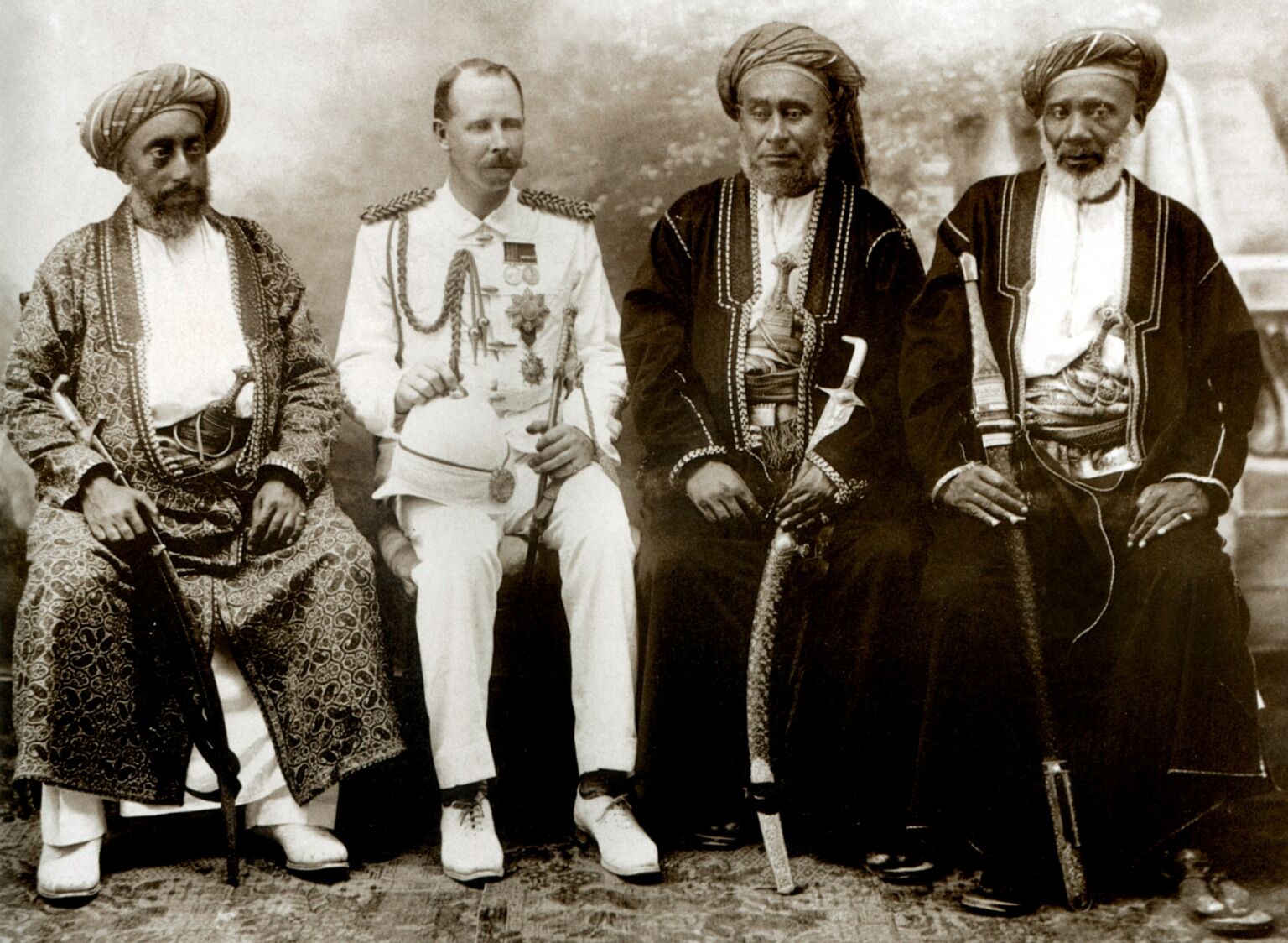
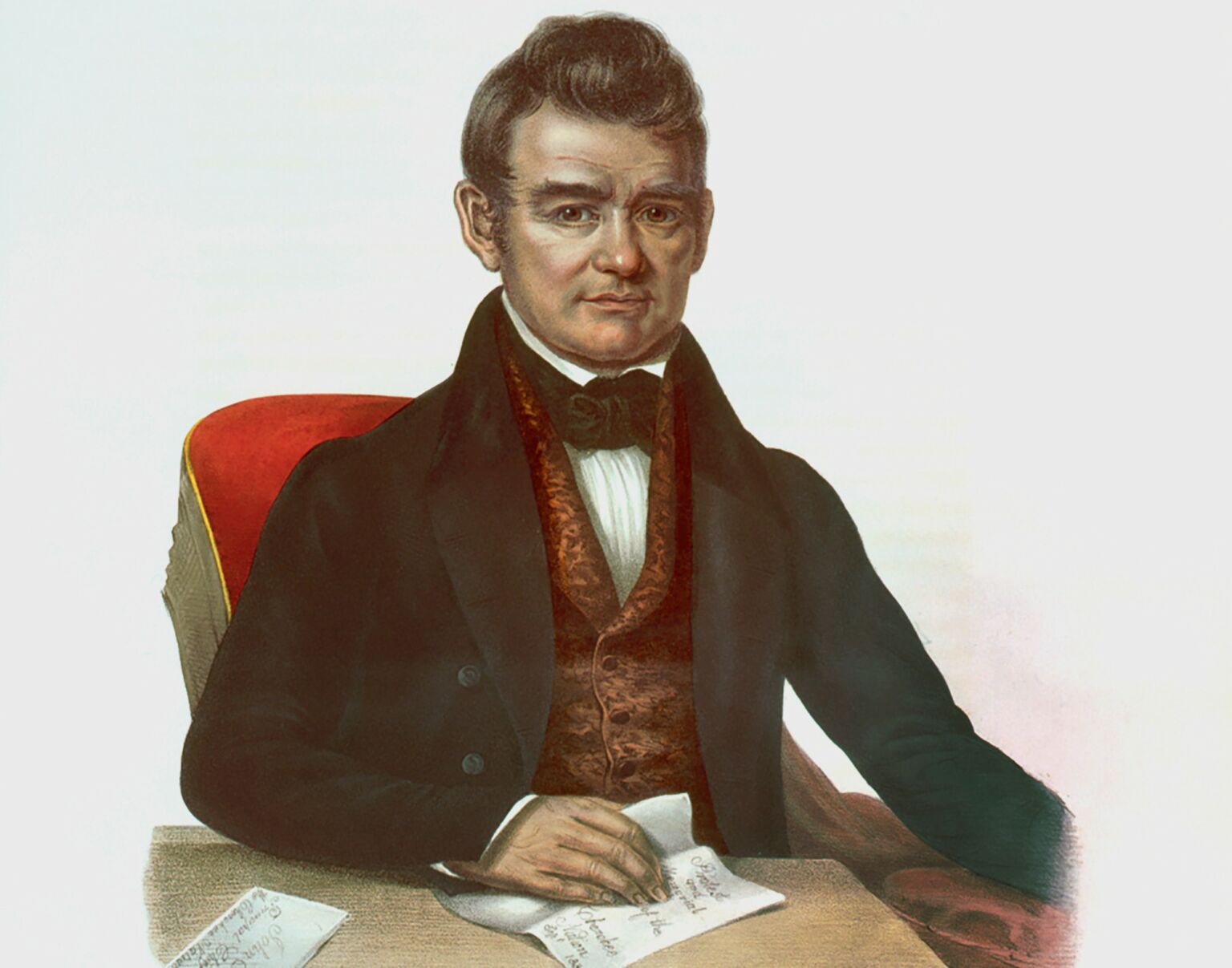
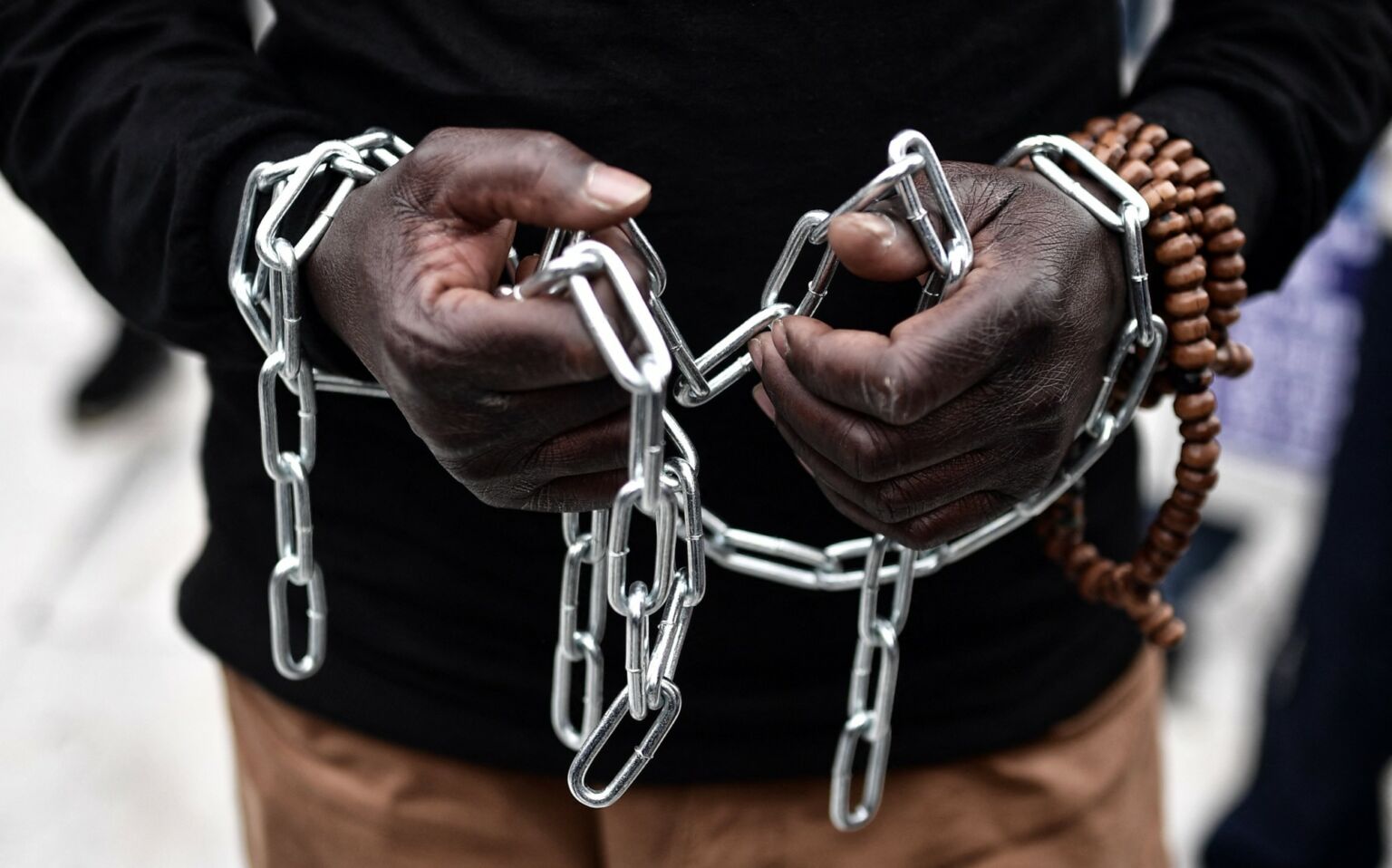


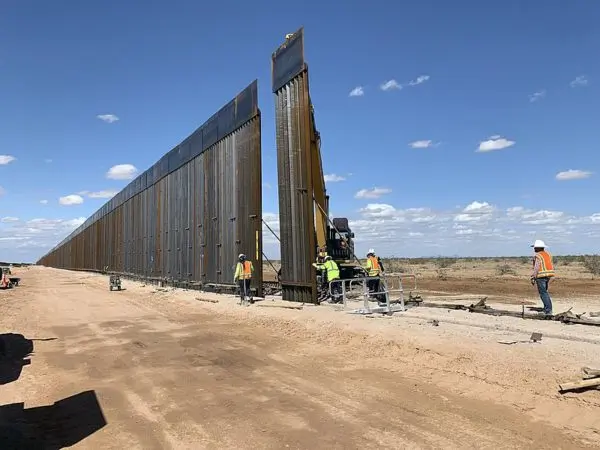





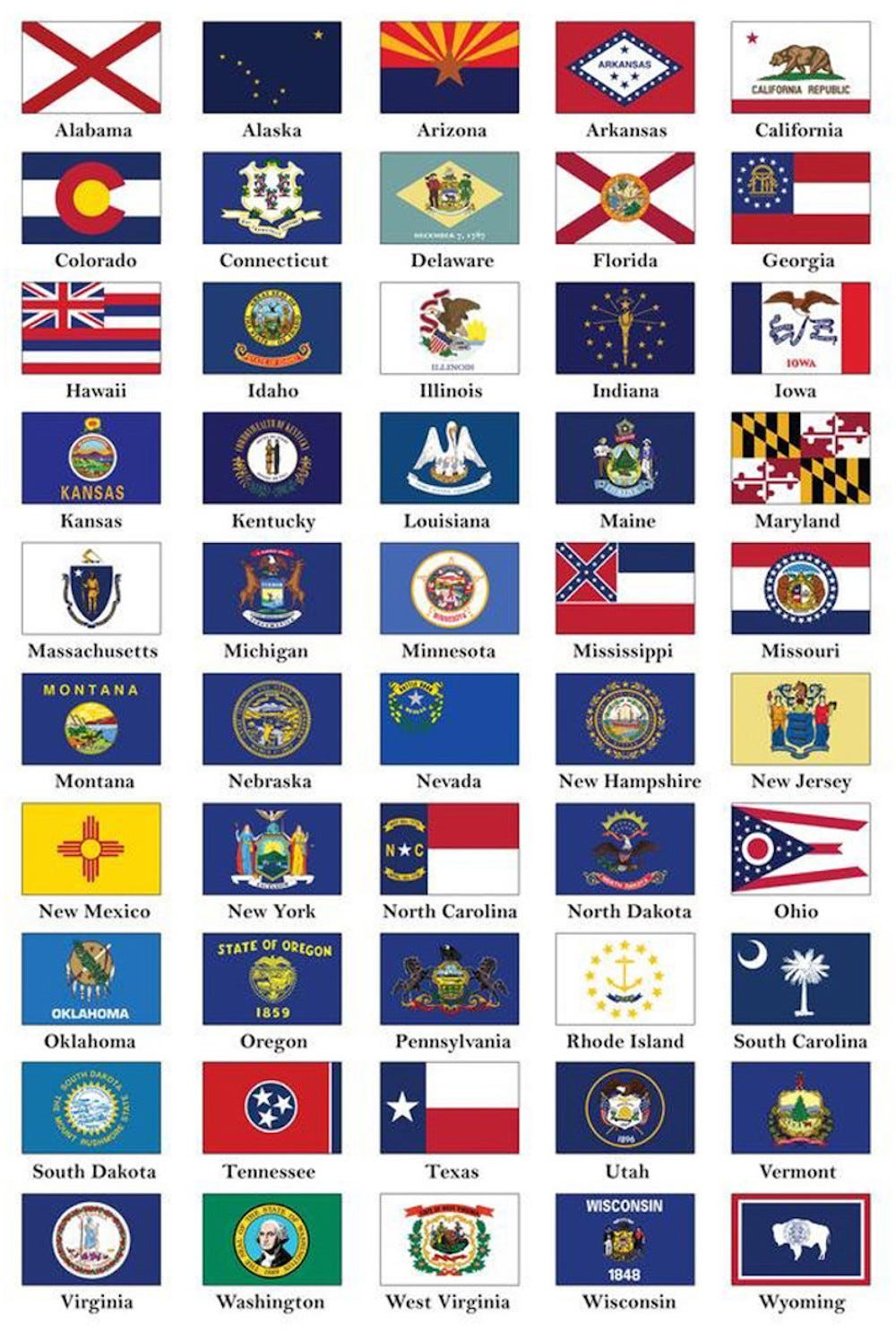




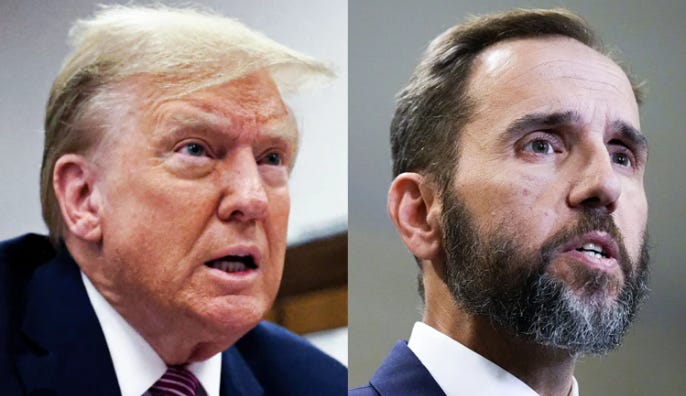

 fox files
Recent Comments