
St. Jude’s Dr. Richard Webby supplies genetic engineering platform for generating never-before-seen H5N1 avian influenza Frankenviruses in Southern Asia.

A Veterinary Research Forum study published in October confirms that Vietnamese researchers have engineered a new generation of chimeric H5N1 bird flu viruses by fusing avian and human influenza genes—enhancing the virus’s replication efficiency more than eight-fold using U.S.-origin reverse-genetics technology.
The generation of new H5N1 pathogens comes as bird flu research is expected to surge 1,000% by 2030.
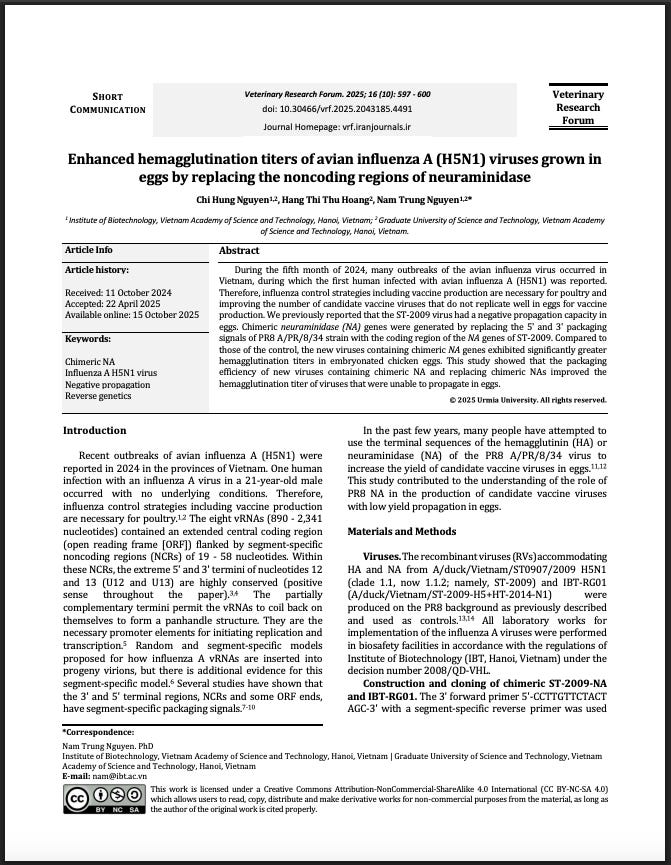
The 2025 study, titled “Enhanced hemagglutination titers of avian influenza A (H5N1) viruses grown in eggs by replacing the noncoding regions of neuraminidase,” describes the construction of what the authors call recombinant viruses, which are viruses are viruses genetically engineered to carry genes from different sources.
The recombinant viruses in the study combine H5N1 neuraminidase (NA) genes from a Vietnamese strain with the non-coding terminal sequences of A/Puerto Rico/8/1934 (PR8)—a human influenza strain commonly used as a vaccine seed virus.
“Chimeric neuraminidase (NA) genes were generated by replacing the 5’ and 3’ packaging signals of PR8 A/PR/8/34 strain with the coding region of the NA genes of ST-2009,” the authors wrote, adding that the resulting hybrids “exhibited significantly greater hemagglutination titers in embryonated chicken eggs” than the control virus.


 fox files
Leave a comment