
New 27-page paper examines how the 2020 Wuhan-Hu-1 spike sequence fits into the documented research and patent architecture that preceded the pandemic.
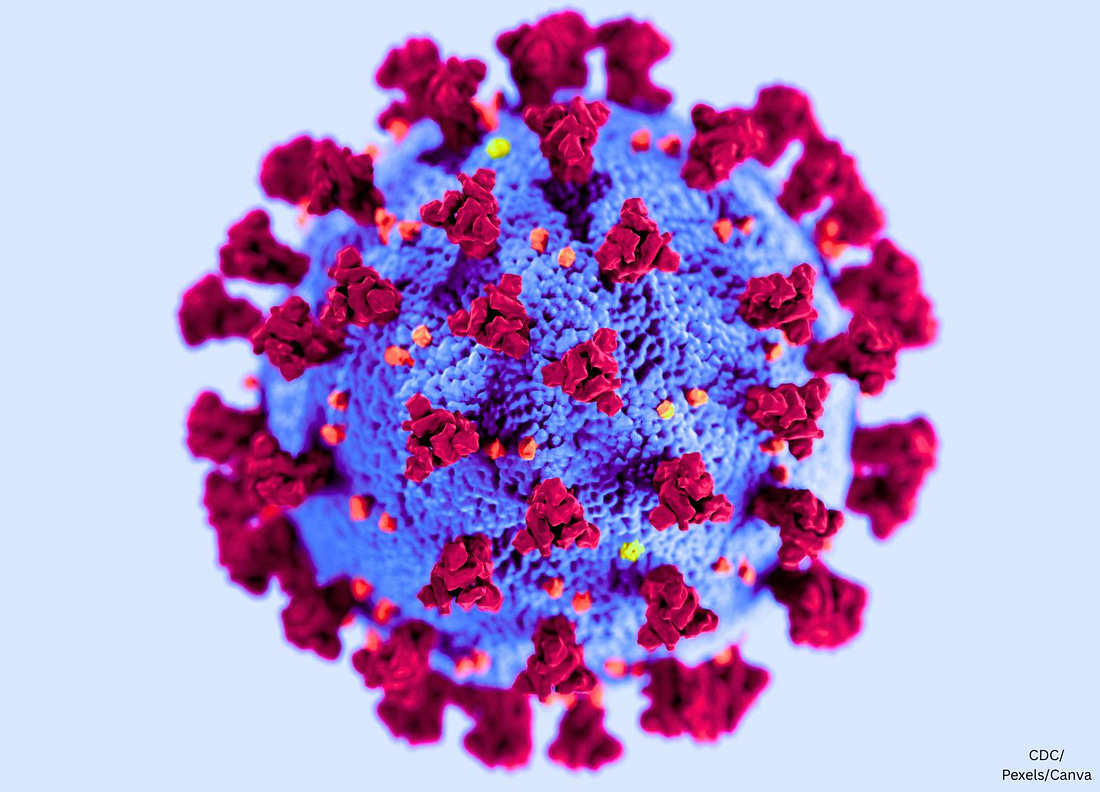
John Fleetwood’s latest research article asks a simple but uncomfortable question: What does the SARS-CoV-2 reference spike—the digital sequence published by Wu et al. in January 2020—actually resemble when its structure is compared against the known scientific record?
The goal was not to make sweeping claims or draw premature conclusions, but to examine the spike in light of:
- 15 years of NIH-funded chimeric coronavirus research,
- documented modular spike-swapping systems,
- the domain structure described in US Patent 9,884,895 B2 (Baric, 2018),
- and the metagenomic assembly method used by Wu et al. (Trinity → MEGAHIT).
The results raise several scientific questions that warrant further investigation.
Taken together, the data indicate that the architecture of the Wuhan spike is difficult to separate from the modular design frameworks developed in the years leading up to the pandemic.
The 27-page paper, The SARS-CoV-2 Reference Spike (Wuhan-Hu-1): A 32% Human-Derived Mosaic Built on a 15-Year NIH-Funded Chimeric Coronavirus Platform and Patented Modular Design (US9884895B2), is published on Zenodo under the DOI 10.5281/zenodo.17634331.
You can download it below:
 | The Sars Cov 2 Reference Spike (wuhan Hu…343KB ∙ PDF file |
| Download | |
What the Paper Shows
The work centers on one observation: When you align the Wuhan-Hu-1 spike to the pre-2020 scientific literature, its six major functional domains mirror the same positions repeatedly engineered, swapped, or humanized in earlier NIH-funded chimeric coronavirus projects.
The paper documents:
1. Domain-by-domain correspondence with the Baric modular spike platform
Between 2005–2020, Baric’s team published at least 16 papers demonstrating:
- full-length spike swaps
- NTD replacements
- RBD grafts
- furin-site insertions
- S2′ fusion peptide manipulation
- HR1/HR2 structural remodeling
- and cytoplasmic-tail trafficking optimization
In the Wuhan spike, each of these regions contains extended human-protein homology segments, including HERV-K, ZAP-L, MSH3, collagen-like motifs, and AP2/clathrin elements.
The paper does not claim this proves intent—only that the pattern aligns with the known modular framework.
2. The 2018 Baric patent describes a spike architecture similar to the one Wu et al. assembled
US9884895B2 defines a spike composed of four interchangeable regions arranged around:
- an NTD-like segment
- an RBD region
- an S1/S2 hinge
- and a fusion-through-tail S2 block
The paper notes that the Wuhan-Hu-1 spike fits this architecture, with human-sequence homology appearing inside each of those same boundaries.
The similarity does not automatically imply engineering, but the correspondence is documented and reproducible.
3. Bieniasz’s retroviral work provides a plausible origin for the specific human motifs found in S2
The study identifies homology between the Wuhan spike’s fusion-domain region and the immunosuppressive loop of human endogenous retrovirus HERV-K—a sequence Bieniasz’s lab had reconstructed, revived, and functionally validated years earlier.
This does not prove a connection between the two programs.
It simply highlights that the human-derived motifs located in the spike’s S2 fusion domain resemble known, functional human retroviral glycoproteins.
4. The metagenomic workflow used in January 2020 could plausibly incorporate human transcripts into a long open reading frame
Wu’s assembly pipeline:
- did not filter out human sequences
- used 56+ million BALF reads (the majority human)
- and selected the longest viable open reading frame as the putative spike
My paper examines how this methodological choice could allow human-protein segments to appear in the final construct—especially when the downstream protein has a modular, domain-swappable structure similar to those used in chimeric coronavirus research.
This makes incorporation plausible, not proven.
5. The convergence of these factors raises specific questions—not conclusions
The paper explicitly avoids asserting that the spike was deliberately engineered.
Instead, it identifies four scientific questions that emerge naturally from the pattern:
- Is a modular human–coronavirus chimera a more parsimonious explanation than purely natural evolution?
- Did the assembly method used by Wu et al. increase the probability of integrating human transcripts?
- Can the 32% human-mosaic spike be distinguished from the chimeras produced in pre-2020 NIH-funded research?
- Why was an in silico sequence — never purified from a physical virion — used as the global vaccine antigen?
These are not political questions.
They are technical questions that have not been addressed publicly.
Why This Matters
The spike sequence produced by Wu et al. became:
- the antigen for Pfizer and Moderna
- the template for PCR assays
- the reference for monoclonal antibody development
- and the sequence used to screen diagnostics worldwide
If the reference spike was shaped—even partially—by pre-existing modular design principles or by human transcript incorporation during metagenomic assembly, then the assumptions underlying the entire global response to COVID-19 deserve re-examination.
My paper does not try to fill in motivations, intentions, or mechanisms.
It simply documents the structural, historical, and methodological context that surrounds the Wuhan-Hu-1 spike sequence.
That context includes two decades of NIH-funded chimeric coronavirus research, a patent describing the same modular architecture observed in the spike, and a metagenomic assembly method known to merge fragments from whichever transcripts dominate a sample.
Together, these factors form a pattern that has not yet been fully acknowledged.
Bottom Line
The Wuhan-Hu-1 spike is a digital construct assembled from patient lung fluid using a metagenomic workflow that did not exclude human transcripts, yet it displays a domain layout and sequence pattern that closely parallels the modular spike-engineering systems developed in NIH-funded coronavirus programs for more than a decade.
Human-derived motifs appear in the same regions that were repeatedly modified, swapped, or optimized in pre-2020 chimeric spike research, including the architecture described in US9884895B2.
None of this establishes intent or fully explains how these elements came together.
What it does show is that the reference spike sequence used for global diagnostics, vaccines, and countermeasures emerges from a context where the structure of the molecule aligns with known engineered frameworks as well as with plausible in silico incorporation of human RNA.
These findings justify a more direct re-examination of how the spike was assembled, what influenced its final sequence, and why its defining features resemble documented research platforms that long pre-dated the pandemic.


 fox files
Leave a comment