
Did Congress Just Pull Off A Shocking Financial Coup Without Anyone Noticing? The GENIUS Act: A Trojan Horse For Financial Control Disguised As Consumer Protection.

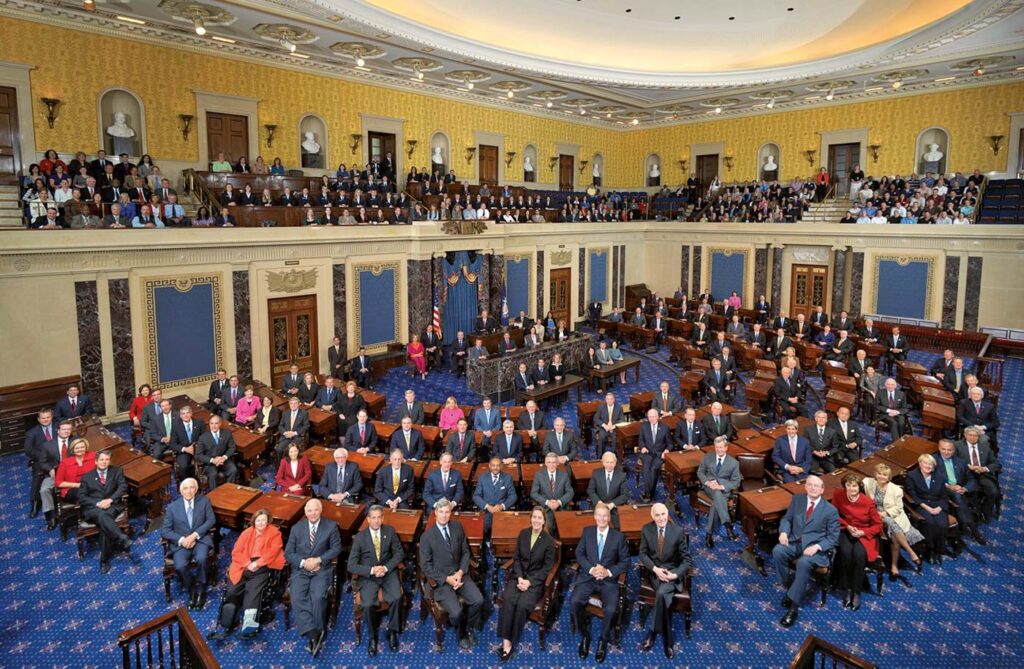
On June 17, 2025, the U.S. Senate passed the so-called GENIUS Act (Guiding and Establishing National Innovation for U.S. Stablecoins) in a 68-30 bipartisan vote. Stablecoins, digital assets designed to maintain a stable value relative to a fixed asset like the U.S. dollar, have emerged as a pivotal component of the burgeoning digital economy, offering the promise of faster, cheaper, and more accessible financial transactions.
However, while marketed by its proponents as a consumer protection bill and a safeguard for financial stability, a closer examination reveals its true intent. The GENIUS Act appears less concerned with protecting American consumers and more with entrenching the power of incumbent financial institutions, stifling genuine cryptocurrency innovation, and laying the groundwork for unprecedented government overreach into individual financial lives.
The seemingly broad bipartisan support, often touted by proponents as a sign of its necessity, masks deeper concerns from critics who argue that the bill’s provisions disproportionately benefit established financial giants, many of whom have heavily lobbied Congress on crypto legislation. This coalition of interests raises fundamental questions about whose protection the bill truly prioritizes.
The full bill text can be found here: GENIUS Act – S.1598.
A Closer Look at the Bill’s Restrictive Provisions
The GENIUS Act’s core mechanism for control lies in its severe restrictions on stablecoin issuance. The bill limits the ability to issue stablecoins to only three types of entities: subsidiaries of insured depository institutions, federally qualified nonbank payment stablecoin issuers, or state-qualified payment stablecoin issuers.
This narrow definition of “permitted issuers” creates an almost insurmountable barrier to entry for smaller, innovative DeFi projects, and startups. The stringent licensing requirements, high capital reserves, and ongoing compliance costs associated with becoming an “insured depository institution subsidiary” or a “federally qualified nonbank issuer” are prohibitively expensive and bureaucratically complex for new entrants.
Instead of fostering a competitive ecosystem, the Act effectively creates a cartel, consolidating control over the future of digital payments within the existing financial infrastructure — the very institutions that crypto was designed, in part, to decentralize.
This framework effectively hands the reins of the stablecoin future to established players like JPMorgan Chase, Citibank, and other large commercial banks, many of whom have publicly expressed interest in issuing their own stablecoins. The result is not innovation from the ground up, but rather a top-down control by entities comfortable with the status quo.
In the name of “consumer safety,” the bill also bans interest payments on stablecoin holdings. Historically, stablecoins have offered users the potential to earn yield through various DeFi protocols, such as lending platforms or liquidity pools. This ability to generate passive income has been a significant draw for many, especially in an era of near-zero interest rates in traditional banking.
By banning interest payments, the GENIUS Act eliminates a key incentive for stablecoin adoption, undermining a core benefit that digital currencies offer over traditional fiat. Consequently, Americans who might otherwise earn yield through digital currencies are instead pushed back into the traditional banking system, where interest rates on standard savings accounts are notoriously low.
This prohibition, framed as “consumer protection” to prevent “run risks” seen in past crypto failures, is more accurately described as protectionism for legacy financial institutions. By eliminating the competitive advantage of yield-bearing stablecoins, the Act forces consumers back into conventional banking products, where their capital remains within the walled gardens of large banks, earning minimal returns for them while the banks profit from relending those funds.
Additionally, the Act requires all stablecoins to be backed one-to-one with U.S. dollars or similar liquid assets. While seemingly prudent to ensure stability, this rule, by strictly limiting the types of backing assets and prohibiting fractional reserves, effectively limits capital efficiency and reduces monetary velocity — the rate at which money is exchanged in an economy.
This impairs the ability of stablecoins to support dynamic lending markets and foster small business growth within the digital ecosystem. In traditional finance, banks operate on a fractional reserve system, allowing them to lend out a portion of their deposits, thereby increasing the money supply and facilitating economic activity.
While the crypto space has seen failures from under-collateralized stablecoins, a complete ban on any form of capital efficiency means stablecoins cannot be re-hypothecated or used in a way that generates new economic value through lending, which is a cornerstone of a healthy financial system.
The irony is stark: while stablecoins are mandated to hold 100% reserves, traditional banks operate on a fractional reserve system, lending out the vast majority of their deposits. This double standard suggests that the true aim is not merely stability, but control, preventing stablecoins from ever truly competing with the established financial order.
This rigid 1:1 backing, while ensuring safety, also ensures stagnation, effectively freezing innovation and thus propping up a financial status quo that has demonstrably failed many through inflationary policies and limited access to capital.

Regulatory Capture in Action
Supporters, including prominent figures like Senator Cynthia Lummis (R-Wyo.) and Senator Kirsten Gillibrand (D-N.Y.), champion the GENIUS Act as a necessary framework to bring regulatory clarity to the nascent stablecoin market.
Senator Lummis, a co-sponsor and known advocate for digital assets within a regulated framework, insisted on X, the Act “preserves the dual banking system, protects consumers, [and] secures our financial future.” Senator Gillibrand echoed similar sentiments, asserting that the bill would “protect consumers from the risks seen in recent crypto market volatility” while safeguarding “the dominance of the U.S. dollar” in the rapidly evolving digital landscape.
They often point to past failures, such as the collapse of algorithmic stablecoins or unregulated crypto exchanges like FTX, as justification for these stringent measures, arguing that strict guardrails are essential to prevent systemic risk and illicit financial activity.
However, for a growing chorus of critics, these claims are nothing more than elaborate window dressing. Senators Rand Paul (R-Ky.) and Josh Hawley (R-Mo.), a vocal opponent of what he perceives as corporate cronyism, didn’t mince words.

Known for his libertarian leanings and skepticism towards increased government intervention, Senator Paul argued the legislation would add needless federal regulations. Senator Hawley’s concerns focus on the potential for the bill to empower tech giants at the expense of ordinary citizens and existing financial institutions.
The Missouri legislator argued that the Act, as written, could allow tech giants to create digital currencies that would compete with the dollar and incentivize these companies to collect even more user financial data. Hawley even went so far as to call the bill “a huge giveaway to Big Tech.” He also expressed concerns that the bill’s safeguards against the risks of letting tech companies issue their own digital currencies had been weakened.
Other criticisms stem from the bill’s foundational design: by limiting issuance to heavily regulated and often large financial entities, and by stifling the very mechanisms (like yield) that make stablecoins attractive alternatives, the Act creates an uneven playing field designed to favor existing banking infrastructure rather than fostering genuine innovation from independent developers or smaller fintech companies.
Robust opposition also comes from Peter Van Valkenburgh, director of Research at Coin Center, a leading nonprofit advocacy group dedicated to the policy issues facing cryptocurrency and decentralized computing technologies.
Van Valkenburgh, a respected voice in the crypto policy space, offered a stinging critique of a amendment granting the president and the Office of Foreign Assets Control (OFAC) expansive authority to ban Americans from using certain blockchain technologies, including open-source smart contracts, without due process.
His argument focuses on ensuring that legislation does not infringe upon the rights of developers and users of decentralized technologies and highlights that the ban on yield doesn’t safeguard consumers from risk so much as it removes a compelling reason for consumers to opt for stablecoins over traditional bank accounts, thereby protecting the revenue streams and market dominance of established financial institutions.
This is, quite simply, regulatory capture in its purest form. Regulatory capture occurs when a regulatory agency, created to act in the public interest, instead advances the commercial or political concerns of special interest groups that dominate the industry or sector it is charged with regulating.
In this case, legacy financial institutions, through aggressive lobbying and influence — with reports indicating banking associations and major financial conglomerates have spent millions in recent years lobbying Congress on digital asset legislation — appear to have directly shaped legislation that serves their interests by limiting competition and solidifying their market position, rather than truly fostering a healthy, open financial ecosystem.
They are not merely playing the game; they are quite literally writing the rules for a game they want to win without any meaningful competition.
Surveillance Disguised as Security
Beyond its profound economic implications, the GENIUS Act raises significant red flags concerning civil liberties and individual financial privacy. The Act mandates strict Know Your Customer (KYC) and Anti-Money Laundering (AML) requirements for all stablecoin issuers.
In practice, this means that every user interacting with a regulated stablecoin would be subject to extensive identity verification — providing names, addresses, Social Security numbers, and potentially even biometric data — and continuous transaction monitoring by regulated entities.
While proponents argue such measures are essential to combat illicit finance and terrorism, critics contend they pave the way for unprecedented federal surveillance.
Given documented instances where government agencies have leveraged financial institutions to deplatform individuals or organizations based on political or social views — often under vague pretexts — granting Washington a direct pipeline into every digital wallet should be an immediate non-starter for any advocate of civil liberties.
For example, critics point to actions taken during the Canadian trucker protests, where authorities ordered financial institutions to freeze accounts of protestors without due process. Similarly, there have been reports of certain politically active groups in the U.S. having their banking services terminated without clear justification.
Under the expansive pretext of “national security,” the GENIUS Act grants the federal government broad, unchecked authority to track, freeze, or even seize stablecoin assets, effectively transforming financial freedom from a fundamental right into a revocable privilege dependent on government approval.
The bill explicitly mandates that stablecoin issuers “maintain the technical ability to freeze and burn wallets to ensure compliance with lawful orders” and “coordinate with law enforcement as a condition of participating in U.S. secondary markets.”
This means that the technology itself will be designed with a kill switch, allowing federal agencies to unilaterally halt transactions or confiscate funds in digital wallets, bypassing traditional judicial processes or requiring minimal legal hurdles.
This capability transforms stablecoins from a tool for economic empowerment into a potential instrument of state control, undermining the very ethos of decentralized, permissionless finance.Should House Republicans demand major changes to the GENIUS Act — including ending the surveillance powers and restoring interest payments — even if it means tanking the bill entirely? *
- Yes — kill it if it doesn’t protect liberty
- Maybe — fix the worst parts, but don’t start over
- No — pass it now to bring crypto under control
Special Carve-Outs and Hypocrisy
One of the most alarming and ethically questionable details unearthed in the bill is a specific exemption that reportedly shields certain government officials and their families from prohibitions on personally profiting from stablecoin ventures.
This glaring conflict of interest has ignited fierce criticism, particularly in light of recent public disclosures, for example, that President Donald Trump has personally profited from stablecoin-related investments. Reports from major news outlets have highlighted that entities tied to President Trump have engaged in ventures involving stablecoins, raising questions about the timing and nature of such exemptions within legislation that heavily regulates the very market he might benefit from.
Senator Jeff Merkley (D-Ore.) reportedly criticized the outcome, accusing Republicans of rubberstamping “Trump-style crypto corruption” and stating that GOP lawmakers refused to hold a vote on an ethics clause that would have closed this loophole.
This apparent double standard fundamentally undermines the entire premise of the bill as a “consumer protection” measure. If the very lawmakers crafting the regulations can carve out exceptions for themselves or their associates to profit, it suggests the legislation is less about public interest and more about maintaining a system where the politically connected can leverage new markets while restricting access and innovation for the general public.
Even Senator Elizabeth Warren (D-Mass.), a vocal critic of the broader cryptocurrency industry often dubbed “no friend of crypto” due to her consistent warnings about its potential for illicit finance and systemic risk, has found reason to criticize the GENIUS Act.
While her concerns typically center on expanding regulatory authority and consumer safeguards, she notably argued that the bill, as written would leaves the door wide open for another FTX-style collapse by massively expands the marketplace for stablecoins while failing to address the basic national security risks posed by them.
She also pointed to “glaring loopholes that would allow Tether, a notorious foreign stablecoin issuer, access to U.S. markets.” Her critique, predictably, aligns with a desire for even more stringent oversight rather than a defense of innovation, yet it highlights the bill’s perceived shortcomings even from within the regulatory camp, suggesting it fails to achieve its stated goals even for some of its theoretical allies.
This illustrates a peculiar alliance of opposition: free-market conservatives who decry government overreach and stifle innovation find common ground with progressive regulators like Warren, albeit for vastly different reasons.
For conservatives, the bill is an assault on financial freedom and an example of corporate capture. For Warren, it’s not restrictive enough to prevent perceived dangers, highlighting a shared concern about the bill’s fundamental design, despite differing philosophies on regulation itself.

Where Things Stand
The GENIUS Act has successfully passed the Senate and now moves to the House of Representatives, where it is currently under consideration by the House Financial Services Committee.
Prospects for its passage appear strong, largely due to its bipartisan Senate support and the significant backing it has received from powerful banking and certain fintech interests who stand to gain from the established regulatory framework.
However, the House Financial Services Committee has been working on its own stablecoin legislation, the “STABLE Act,” which, while conceptually similar, contains some key differences regarding foreign stablecoin issuers, the requirements for transitioning from state to federal oversight, and specific phase-in timelines.
This means the two chambers will likely need to reconcile their versions, potentially in a conference committee, before a final bill can be sent to the president’s desk.

However, not all within Congress are ready to rubber-stamp the Senate’s version. A vocal group of House conservatives, including members of the House Freedom Caucus, is actively pushing for significant amendments.
Their proposed changes include a repeal of the controversial interest ban, a mandate for far greater transparency in reserve audits (beyond the current disclosure requirements), and crucially, efforts to strip out the expansive “national security” provisions that they argue constitute excessive government overreach into private financial affairs.
These amendments represent a last-ditch effort to salvage some semblance of financial freedom and competitive market dynamics within the bill. Repealing the interest ban would restore a key incentive for stablecoin use, while enhanced transparency in audits could build genuine consumer trust rather than relying on centralized control.
Stripping out the national security overreach is seen by these conservatives as vital to protecting civil liberties and preventing the potential for a “social credit system” where financial access is tied to government compliance.
Whether the House will serve as a check or a rubber stamp remains to be seen.
Conclusion
The GENIUS Act, far from being a “genius” solution, stands exposed as a sophisticated Trojan Horse. It is a calculated, strategic maneuver by entrenched financial powers and their well-placed allies in Washington to co-opt a truly transformative technology — decentralized digital currencies — and forcibly bring it under their centralized control.
Cloaked in the language of “consumer protection” and “financial stability,” this legislation systematically restricts economic freedom, stifles genuine competition from innovative startups, and dangerously empowers unelected bureaucrats with unprecedented control over individual financial activity.
For anyone who values economic liberty, technological innovation, and protection against governmental overreach, this legislation demands strong opposition. Financial freedom is not merely an economic concept; it is foundational to individual liberty itself.
The GENIUS Act, by design and by consequence, represents a profound attack on both, threatening to turn a promising digital future into a regulated, surveilled extension of a failing financial past.
Citizens concerned about this pivotal legislation should contact their representatives in the House, urging them to critically examine the bill’s true implications, support amendments that protect innovation and privacy, and resist the push to consolidate financial power in the hands of a few.
You can read the full legislative text of the GENIUS Act (S.1598) on Congress.gov here: 👉 GENIUS Act – S.1598 (Congress.gov).

 fox files
Recent Comments