

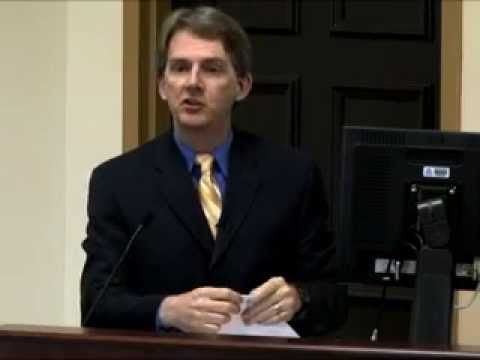
James Duane, a professor at Regent University School of Law, once gave a lecture with a deliberately provocative title, “Don’t Talk to the Police.” The title sounds extreme, even antisocial. It seems to counsel guilt, evasion, or hostility to lawful authority. Yet the argument Duane develops is none of these things. It is instead a sober analysis of how modern criminal procedure actually works, not how we wish it worked. When examined carefully, the conclusion he reaches is not merely defensible but compelling. Under current U.S. law, the rational course of action for any person, guilty or innocent, is to decline to answer police questions and to request a lawyer. This is not a loophole. It is the logic of the Fifth Amendment taken seriously.
Begin with the most basic misconception. Many people believe that talking can help them avoid arrest. They imagine that if they can just explain themselves, the officer will see their innocence and let them go. But police encounters do not begin in a neutral epistemic posture. Officers approach because they already suspect wrongdoing or because they are tasked with finding it. Their professional incentive is not to be persuaded by your narrative but to establish probable cause. This is not a moral criticism. It is a description of the job. As officers themselves openly acknowledge, a strong case is one with admissions. Confessions are not a bonus; they are the objective. Talking does not remove suspicion; it supplies material with which suspicion is formalized.
Even if arrest could theoretically be avoided through explanation, the structure of evidence law makes talking a one-way bet. Statements you make to police can almost always be used against you. Statements that help you are usually inadmissible in your favor. This is not intuitive to laypeople, but it is fundamental. Your exculpatory remarks are typically classified as your own out-of-court statements and, therefore, hearsay if you later attempt to introduce them. The prosecution, by contrast, can introduce your incriminating statements through the officer who heard them. The asymmetry is stark. Speaking hands the state admissible evidence while preserving nothing comparable for you. Silence preserves the status quo. Talking degrades it.
Consider next the case of actual guilt. Here, moral intuition often overwhelms strategic reasoning. People say one should confess for the sake of conscience or closure. But criminal law is not a sacrament. It is an adversarial system in which leverage matters. Almost all cases resolve through plea negotiations. That process is precisely where responsibility, remorse, restitution, and cooperation can be weighed in exchange for concessions. An immediate confession forfeits that leverage for nothing. Worse, even partial admissions can rescue a weak case. Evidence degrades. Witnesses disappear. Officers retire or relocate. Uncertainty is the defendant’s only bargaining chip, and confessing gives it away.
The harder and more unsettling point concerns innocence. It feels perverse to say that innocent people should fear talking more than guilty ones. Yet the data on wrongful convictions shows exactly this. A substantial portion of exonerated defendants made incriminating statements, confessed, or pled guilty. These are not abstract statistics. They reflect predictable psychological pressures. Interrogations are long. They are stressful. They exploit fatigue, confusion, and the human desire to cooperate. Suspects are fed details, assured that honesty will help, and persuaded that they are assisting in identifying the real culprit. Juries, meanwhile, treat confessions as uniquely probative. Once a confession exists, other evidence is interpreted through it. Innocence becomes an uphill argument.
Even without outright coercion, the risk of error is enormous. Perfect recall under pressure is a fantasy. Innocent people misremember times, distances, and sequences. They speak too broadly. They fill gaps. They guess. When any detail later turns out to be wrong, the narrative shifts from mistake to deception. A small inconsistency becomes evidence of consciousness of guilt. The problem is not lying. It is being human. The law, however, is unforgiving of ordinary cognitive limits when they are narrated by an officer in uniform reading from notes.
Truth itself can incriminate. This is perhaps the most philosophically important point, and it explains why the Fifth Amendment protects the innocent. You can answer every question honestly and still help complete the prosecution’s puzzle. Admitting dislike can supply motive. Describing a prior argument can establish intent. Placing yourself near a location can narrow opportunity. None of this requires falsehood. It requires only that your truthful statements be combined with other evidence you may not even know exists. The privilege against self-incrimination is not a license to lie. It is a recognition that truth can be dangerous when the state controls the narrative.
That narrative control is institutional, not personal. Police notes and testimony carry structural credibility. In court, the defendant sits beside a lawyer, already marked as someone who needs defending. The officer appears as a professional witness. When the officer recounts the defendant’s own words, recorded and framed through official notes, the story acquires an aura of objectivity. Even when no one lies, the system privileges one version over the other. Disputes about what was said rarely end in the defendant’s favor.
Talking also creates new crimes. When investigators cannot prove the underlying allegation, they often pursue charges for false statements, obstruction, or inconsistency. High-profile examples are not anomalies. They illustrate a rule. Once you speak, you are exposed to liability not only for what you did but for how accurately you recount it. Police are legally permitted to deceive during questioning. You are not permitted to be wrong. This is not an even exchange.
All of this occurs against the backdrop of an unlevel playing field by design. Modern criminal law is vast. Ordinary citizens routinely violate technical rules without knowing it. Silence is uncomfortable. People want to tell their story. Officers are trained to exploit that impulse. Time favors the state. The suspect wants to leave. The officer is content to wait. The environment is engineered to extract statements, not to neutrally discover truth.
Perhaps the most counterintuitive danger arises with alibis. A truthful alibi seems like the strongest form of exculpation. Yet if any evidence later contradicts it, even mistakenly, the alibi becomes a lie in the eyes of the jury. The prosecution gains a powerful narrative of deception layered on top of the original charge. What would have been a thin case becomes a compelling one, built largely from the defendant’s own words.
The conclusion follows with uncomfortable clarity. Speaking to police is volunteering to play an away game under rules you did not write and cannot change. Your helpful statements are unlikely to help you later. Your harmful statements can be used immediately. Your memory will be imperfect. The officer’s notes will be authoritative. Even truth can be weaponized. The rational response is not defiance but restraint.
Identify yourself if required by law. Then say you are invoking your right to remain silent and that you want a lawyer. Then stop talking. This advice is not cynical. It is constitutional realism. The Fifth Amendment is not an admission of guilt. It is an acknowledgment of how power, incentives, and human cognition actually operate. Taking it seriously means using it or facing the ugly consequences of ignoring it and not putting it into practice. Period. End of story. Full stop already. You have preciously been warned.


 fox files
Leave a comment