The Truth Is Out There

Posts tagged ‘news’

The FBI’s 2025 Crime Data Just Demolished the ‘More Guns, More Crime’ Argument. Here’s What the Numbers Actually Show.


September 10, 2026

The FBI released its 2025 crime data in August 2026. Violent crime fell 9.3% — the largest year-over-year decline since FBI national estimates began in 1936. The murder rate hit 4.1 per 100,000, tying the lowest level in the FBI’s 70-year historical series. This happened during years of record gun sales and a rapidly growing concealed carry population. The data does not prove guns reduce crime. It does prove that the prediction guns would cause crime to rise was wrong.

9.3%Violent crime decline2025 vs. 2024 — largest single-year drop since FBI estimates began in 1936

18.1%Murder declineLargest single-year decrease since 1937 — third straight year of record drops

4.1Murders per 100,000Ties 1955/56 for lowest in FBI history. Fewest murders since 1968.

18.5%Robbery declineLowest robbery rate in 20 years. Rape -7.6%. Assault -7.5%. Property -12.4%.

Every year, the gun control debate generates predictions. More guns means more crime. Expanding concealed carry will produce shootouts in the streets. Removing barriers to firearm ownership will cause violence to rise. These predictions have been central to the policy argument for gun restrictions for decades. The FBI’s 2025 crime data — released August 14, 2026, in an unusually early publication FBI Director Kash Patel called historic — puts those predictions in direct contact with the facts.

The facts are not ambiguous. Violent crime in the United States fell at the fastest pace since FBI national estimates began 90 years ago. The murder rate hit a 70-year low. This happened during a period when more Americans owned more guns than at any prior point in history, when concealed carry permits reached 20.88 million before constitutional carry expansion made the true carry population substantially higher, and when the gun rights community was in the middle of the most sustained legal and legislative expansion of Second Amendment access since Heller.

The data does not prove that guns reduce crime. Correlation is not causation, and the crime decline is a complex phenomenon that criminologists attribute to multiple factors — demographic shifts, economic conditions, policing strategies, and others. What the data does prove is the specific negative: the prediction that more guns in private hands would cause more violent crime was wrong. Demonstrably, measurably, historically wrong.

“This release confirms that crime in the U.S. is falling at or near a historic clip. This is the third straight year of a record drop in murder and the data for 2026 points to a continued large drop this year.”— Jeff Asher, AH Datalytics, August 2026

The Numbers in Full: What the FBI Actually Found

The FBI released its 2025 Reported Crimes in the Nation data on August 14, 2026, using data submitted by more than 17,000 law enforcement agencies covering 96% of the U.S. population — the broadest data submission in the report’s history. The headline findings:

Overall violent crimeDown 9.3% from 2024 │ Largest single-year decline since FBI estimates began in 1936 │ 328 per 100,000 — lowest since 1968
Murder & non-negligent manslaughterDown 18.1% │ Rate of 4.1 per 100,000 — ties 1955/1956 for lowest ever recorded │ Fewest estimated murders since 1968
RobberyDown 18.5% │ Rate of 49.4 per 100,000 — lowest in 20 years
Aggravated assaultDown 7.5% from 2024
Rape (reported)Down 7.6% from 2024
Property crimeDown 12.4% from 2024
Law enforcement assaultsUP — 90,178 officers assaulted in 2026, a 10-year high │ One category that bucked the trend
2026 preliminary dataViolent crime down 10.6% Jan–Jun 2026 vs. same period 2025 │ Murder down 23% │ Robbery down 19.6% │ Rape down 18.6% │ Trend accelerating
Projected 2026 murder rateJeff Asher projects ~3.5 per 100,000 — would be by far the lowest in recorded U.S. history if sustained through year-end
Data coverage17,000+ agencies │ 96% of U.S. population │ 15,000+ agencies on NIBRS │ Largest coverage in report history

The Historical Context: Why These Numbers Are Remarkable

The 2020 murder spike is the comparison point that makes 2025’s numbers meaningful. In 2020, the combination of COVID disruption, civil unrest, and a sharp pullback in proactive policing produced the largest single-year increase in the U.S. murder rate since record-keeping began. The rate jumped from 5.0 per 100,000 in 2019 to 6.5 in 2020, a 30% increase in a single year that gun control advocates immediately attributed to pandemic-era gun sales.

The argument was simple and politically effective: millions of Americans bought guns during COVID; the murder rate spiked; therefore the guns caused the spike. This became the foundation of what gun control organizations called an “epidemic of gun violence” that required emergency legislative response.

The FBI’s 2025 data requires a reckoning with that argument. Gun sales have remained elevated since 2020. The carry population has grown. Constitutional carry has expanded to 29 states. And the murder rate has not merely stabilized — it has collapsed, falling from 6.5 in 2020 to 4.1 in 2025, a 37% decline in five years that now puts the rate below where it was before the COVID spike and at a 70-year historical low.

If the theory that more guns in civilian hands causes more murder were correct, the murder rate should have remained elevated or continued rising as gun ownership stayed at record levels. It did the opposite. The 2020 spike and the subsequent collapse both correlate with the COVID disruption cycle — the disruption produced both the gun-buying surge and the murder spike through separate causal pathways, and as the disruption resolved, the murder rate fell regardless of whether the newly purchased guns were still in private hands. They were. The murders weren’t.

What the data does not say: The crime decline does not prove that gun ownership reduces crime. The causal relationship between gun prevalence and crime rates is genuinely complex and contested in the academic literature, and honest analysis does not overstate what the data supports. What the data does establish clearly is that the specific prediction — that more guns in private hands would cause violence to rise — was not borne out. The murder rate is at a 70-year low after years of record gun sales. That is a fact, not an argument.

The Gun-Specific Picture: Record Ownership, Record Low Crime

Gun Sales Context

NICS background checks — the primary proxy for gun sales — have been elevated since 2020. The COVID-era gun buying surge added an estimated 8.4 million new gun owners. Subsequent years maintained elevated sales. The total number of privately owned firearms in the United States is estimated by the Small Arms Survey and other researchers at well over 400 million as of 2026. That population of firearms has been in private hands for the entire period during which the murder rate fell from 6.5 to 4.1 per 100,000.

Concealed Carry Context

The CPRC’s 2025 Annual Report counted 20.88 million active carry permits — and that number substantially undercounts the actual carry population because 29 states now allow permitless carry. A 2022 peer-reviewed AJPH study, using 2019 data, estimated approximately 16 million Americans carried handguns at least monthly. That population has grown since 2019 through constitutional carry expansion, the Bruen decision’s normalization effect, and the post-COVID carry permit surge.

The murder rate during this period of expanding carry fell to the lowest level in 70 years. The two facts coexist without proving causation in either direction. But they demolish the argument that an expanding carry population inevitably produces more violence.

NFA Item Context

The NFA tax elimination effective January 1, 2026 produced a 177% increase in NFA checks. More suppressors, SBRs, and SBSs are in private hands in 2026 than at any prior point in history. The preliminary 2026 data shows violent crime continuing to fall 10.6% in the first half of the year, with murder down 23%. The expansion of legal NFA item ownership and the continued crime decline are occurring simultaneously.

What the Gun Control Community Is Saying — and What the Data Actually Shows

The gun control response to the FBI data has been predictable and worth addressing directly. The primary response has been to credit the decline to specific policy interventions — red flag laws in certain states, local violence intervention programs, changes in policing strategies — rather than to acknowledge that the relationship between gun prevalence and crime is more complex than the simple causation model implies.

These alternative explanations may have merit. They may genuinely account for some portion of the decline in specific jurisdictions. But they face a basic problem: the crime decline is national, not jurisdictional. It happened in red states and blue states, in states with expansive gun laws and in states with restrictive ones, in constitutional carry states and in states requiring permits. A policy intervention in California or New York does not explain the murder rate falling in Texas, Florida, and Louisiana simultaneously.

The more honest conclusion — which some criminologists have reached regardless of their policy positions — is that the 2020 spike was primarily a COVID disruption phenomenon and that the subsequent decline reflects the resolution of that disruption, with demographic, economic, and community-level factors playing significant roles that are still being studied. The guns-cause-crime and guns-prevent-crime theories both overfit a complex reality.

What is not honest is the continued invocation of an “epidemic of gun violence” when the FBI’s own data shows the murder rate at a 70-year low. The epidemic framing was built on the 2020–2022 spike. The spike ended. The framing has not caught up with the data.

What 2026 Is Looking Like — The Preliminary Trajectory

The FBI’s 2025 report included preliminary 2026 data covering January through June. The early read: violent crime down 10.6% compared to the same period in 2025. Murder and nonnegligent manslaughter down 23%. Robbery down 19.6%. Rape down 18.6%. Aggravated assault down 7.2%. Every major violent crime category continues declining.

Jeff Asher, whose Real-Time Crime Index tracking has proven highly predictive of final FBI numbers, projects the 2026 murder rate at approximately 3.5 per 100,000 if preliminary trends hold through year-end. That would be, unambiguously, the lowest murder rate in recorded United States history. Not the lowest since 1955. The lowest ever.

The 2026 data will be released in 2027. If it confirms the preliminary trajectory, the “more guns, more crime” thesis will have been falsified by the most comprehensive crime data in American history during the period of the most significant gun rights expansion in American history.

Bottom Line: The Data Is In. Here’s What It Actually Says.

Gun Talk Media does not overstate what data supports. The FBI’s 2025 crime figures do not prove that guns reduce crime. They do not vindicate any specific policy. They do not settle the academic debate about the causal mechanisms of crime decline.

What they do is something simpler and more direct: they establish that the claim used most frequently to justify gun restrictions — that more guns in private hands cause more violent crime — has not been borne out during the most significant expansion of civilian gun ownership in American history. The murder rate is at a 70-year low. Record gun sales and record low murder coexist in the same FBI dataset.

That is a fact. It deserves to be stated plainly, without exaggeration, and without overreach. The gun control community built a policy agenda on a prediction. The prediction was wrong. The data says so.

A Rigged Deal: The Census Errors That Somehow Only Ever Helped Democrats


The Census Bureau’s own Post-Enumeration Survey, the internal audit that checks the official count against a sample of households, found that Tennessee was undercounted by 4.78%, Florida by 3.48%, and Texas by 1.92%. On the other side of the ledger, Delaware was overcounted by 5.45%, Rhode Island by 5.05%, and New York by 3.44%, with Hawaii and Minnesota padded as well. These figures are the Bureau’s own, and they are not rounding artifacts. A 3.48% miss in a state of 22 million people is roughly 750,000 residents who were never recorded. The Bureau published these figures, described them as regrettable, and then explained that nothing could be done about them until 2030. The agency confessed to the error and simultaneously declared the error permanent, which is a convenient combination for anyone who benefits from it, and the people who benefit from it are Democrats.

The 2020 count miscounted Americans in a pattern that ran in a single direction: toward the states Democrats dominate and away from the states Republicans dominate. The direction is the whole story, and a great deal of official commentary since 2022 has been devoted to persuading the public that the direction can be ignored. Democrats and the press that covers for them have talked as if a one-way miss were weather. An error that always lands on the same party’s states is the thing a serious country investigates, and this country has been asked to shrug instead.

Every census has errors. Counting 330 million people is genuinely hard; some communities are transient or suspicious of federal workers, and no statistical operation of that size comes out clean. All of that is true, and none of it explains what happened in 2020. Random error scatters. If the Bureau’s methods were merely imperfect, the misses would fall on both sides of the political map in roughly equal proportions, and some Republican states would have been padded while some Democratic states were shorted. Six of the eight states with the largest documented undercounts voted for the Republican nominee, and the padded states were, with striking consistency, the ones that send Democrats to Washington. That is the pattern Democrats want treated as an act of God.

Federal employees are entitled to their politics, and I have no interest in impugning the ordinary field enumerator knocking on doors in August heat. Institutions are shaped by the people inside them, and the political monoculture at the Bureau is the sort of fact Democrats prefer to file under trivia. Of Census Bureau employees who made federal campaign contributions in the relevant cycles, roughly 90% of that money went to Democrats. Scholars at the Heritage Foundation and elsewhere have spent two decades documenting how an administrative agency with one-sided staffing does not need a conspiracy to produce one-sided results. Discretionary judgment does the work. Which addresses get a follow-up visit, which vacancies are resolved as occupied, which imputation model gets adopted when the data are thin, all of these are technical calls, and all of them can lean without anyone in the building believing he is doing anything improper. A workforce that writes nine of every ten campaign checks to Democrats will, over millions of small calls, produce a count that looks like a Democratic project. That is what captured agencies do, and the Bureau is a captured agency.

The 2020 count was also not a purely governmental undertaking, which is the part of this story the public knows least about and the part Democrats are least eager to discuss. The Bureau partnered with more than 55 NGOs to encourage participation, and the roster was overwhelmingly progressive. The Funders’ Committee for Civic Participation coordinated much of the philanthropic effort through its census subgroup, drawing in the Ford Foundation, the Open Society Foundations, and the Carnegie Corporation of New York. They brought an explicit political theory of which Americans are undercounted, and they were handed a role in the constitutional headcount. The Bureau’s own budget for the decennial operation ran to approximately $15.6 billion, and a meaningful share of the outreach and messaging work flowed through this network of activist nonprofits. Their stated mission was to reach the hard-to-count, and their get-out-the-count campaigns concentrated on immigrant neighborhoods, black and Hispanic communities, and dense urban precincts. When a government farms out the persuasion phase of a constitutional headcount to organizations with that theory, the result will reflect the theory, and the taxpayer will have funded it. Democrats dressed the operation in the language of equity while running a partisan get-out-the-count drive on public money and progressive foundation cash.

The census is how the country decides who gets power and who gets money, which is why Democrats fought so hard to keep a bad count in place. Apportionment, in plain English, is the rule that divides the 435 seats in the House of Representatives among the states according to population. Those House seats also set each state’s electoral votes, because a state’s electoral vote total is its House delegation plus its two senators. The same numbers drive the formulas that distribute hundreds of billions of dollars in federal funding every year, for highways, Medicaid, education, and housing. Florida and Texas each came close to gaining an additional seat, and the padded states each held seats they had not earned. Had the most overcounted states each surrendered one seat and the most undercounted states each gained one, states that vote Democratic would have lost nine net seats in the House and nine net votes in the Electoral College. Nine electoral votes are a margin capable of deciding a presidency, and they will sit on the board through the 2028 election regardless of what any voter does. Democrats kept those seats. They kept the highway and Medicaid money that travels with them. They kept an Electoral College cushion their own Bureau’s audit says they did not earn.

The Bureau’s defense, that the numbers are locked until the next decennial count, is the shrug of an agency that likes the outcome. Apportionment itself is fixed by statute once the President transmits the numbers, and I am not proposing that we reopen the 2020 apportionment by administrative fiat. Federal funding formulas are a different matter entirely. The Bureau already produces annual population estimates, already runs a challenge process for local governments, and already revises its own figures when it finds cause. Congress can direct that funding allocations be rebenchmarked against corrected estimates rather than against a count the Bureau has publicly admitted was wrong. Refusing to do so is a policy choice dressed up as a constitutional constraint, and the previous administration made that choice with unseemly speed. President Biden and the Democrats who ran Commerce for four years left the crooked numbers in the formulas because the crooked numbers paid Democratic states. The House Oversight and Accountability Committee still has the file and subpoena power.

Secretary of Commerce Howard Lutnick inherited an agency whose credibility is its only real asset, and he should treat its restoration as urgent rather than housekeeping. That means leadership that answers to the public; it means publishing the imputation models and the address-canvassing decisions so that outside statisticians can audit them; and it means a separate quality-control track staffed by people who did not build the count they are checking. It means ending the practice of outsourcing outreach to advocacy groups with a stake in the outcome. President Trump ran against this kind of administrative rot, and Lutnick is the man he picked to clean it out of Commerce. Conservatives who have argued for years that the count should stop serving Democratic turnout theory finally have an administration in office that can say so out loud.

Congress has its own work, and conservatives who want a citizen count should treat that work as unfinished business. The Equal Representation Act, which would count only US citizens for purposes of apportionment, addresses a distinct but related wound, because a district drawn around a population that cannot lawfully vote transfers power from the citizens who can. Critics will call that xenophobia, and they will call it cruelty, and they will say that the Fourteenth Amendment forecloses it, and none of those responses engages the actual question, which is whether representation in a self-governing republic belongs to the governed or merely to the present. Democrats prefer the present, especially when the present includes a population that cannot lawfully vote. The Equal Representation Act is the conservative answer to that transfer of power, and it deserves passage.

Perhaps this was not coordinated at all. Perhaps there was no meeting, no memo, no wink across a conference table, only a few thousand people who share a worldview making a few million small judgments that happened to lean the same way. I am willing to grant that possibility, and I want to be clear that it does not help the Bureau’s case. An agency captured by ideology so thoroughly that it produces partisan output without anyone intending it is more dangerous than a handful of conspirators, not less, because there is nobody to fire, nothing to prosecute, and no obvious moment when the line was crossed. Occam’s razor still applies. When every error points the same way, the honest inference is that Democrats built a count that serves Democrats.

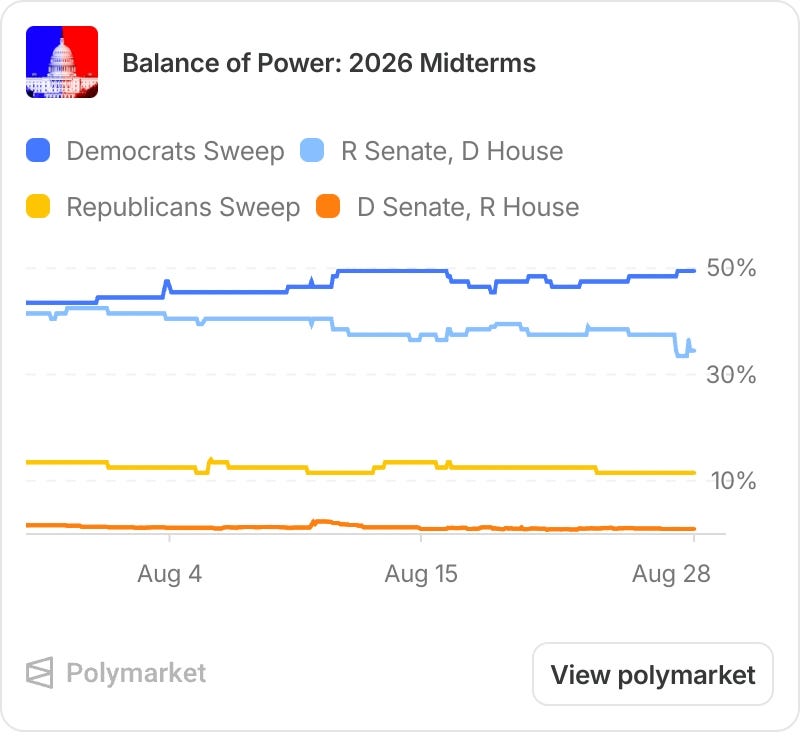
Polymarket prediction market

The census is the foundation on which the rest of the political structure rests, and a foundation poured out of truth does not fix itself as the building goes up. It transmits the flaw upward, into every seat, every electoral vote, and every dollar allocated for the next ten years. Americans of all parties should want this instrument to be trusted, because the alternative is a decade of citizens who reasonably believe the deck was stacked before the first card was turned. Secretary Lutnick has our attention, and the House Oversight and Accountability Committee has subpoena power; both should use what they have. Count the people, all of them, accurately and once. That is the entire job, and it is time somebody did it.

Time To Cut The Cord: Why Public Broadcasting No Longer Deserves Our Tax Dollars


The Public Broadcasting Act of 1967 should be repealed. Why should American taxpayers continue funding a relic of the past when today we have unlimited access to diverse media options at our fingertips? With more than 1,000 television channels, streaming services and endless online content, is there really a need for publicly funded broadcasting in this modern landscape? What was once seen as a necessary initiative for diversifying the media landscape has devolved into a relic of an earlier age—a $2 billion handout benefiting only a small, elite audience. When Lyndon B. Johnson signed the legislation, Americans faced a scarcity of options: four television channels and limited radio programming, often constrained by corporate interests or regional limitations. There was an argument to be made that there was a public need for diversified and educational content. Fast forward to today, the notion of scarcity is laughable. Americans enjoy an overwhelming array of choices, from the internet and streaming services to podcasts, YouTube channels and digital news outlets—all of which have replaced the once-venerated public broadcasting model.

And yet, here we are, funding a bloated Corporation for Public Broadcasting (CPB) that receives approximately $525 million annually from the federal government, sending most of it down the bureaucratic chain to National Public Radio (NPR), the Public Broadcasting Service (PBS) and roughly 1,500 local affiliates. For instance, local stations often receive funding that must then be funneled back to NPR or PBS to cover the costs of syndicated content, leaving little room for truly local programming or innovation. This results in a top-heavy structure where national priorities overshadow community needs and creativity is stifled by bureaucratic constraints. These taxpayer funds support an organization that’s become little more than a publicly subsidized echo chamber for liberal ideas—a taxpayer-funded sandbox for the rich, white liberal elite who can comfortably afford alternative sources of information. Statistically, the audience for public broadcasting is disproportionately affluent, overwhelmingly white and markedly liberal, with fewer than 17% of viewers identifying as Republicans. This means that 80% of America—including those struggling to make ends meet, those from minority communities and those who don’t share a progressive worldview—are effectively subsidizing the content consumption of a privileged minority.

The “public” spirit behind public broadcasting has clearly eroded. As audience demographics shifted over the decades, so too did the programming, drifting away from the balanced ideals that once defined it. This shift starts at the top, with leadership steering the ideological course. Take for example NPR’s CEO Katherine Maher, who has previously stated that “her biggest obstacle in her fight against disinformation is the First Amendment in the United States, which makes it a little bit tricky to censor bad information and the influence peddlers who spread it.” Such perspectives from top leadership reflect and perpetuate the current direction of public broadcasting. During the ’70s, ’80s and ’90s, shows like The McLaughlin GroupFiring Line and MacNeil/Lehrer Report actively cultivated an environment of political balance. William F. Buckley Jr. debated liberals with eloquence and vigor, while Jim Lehrer ensured his news programming gave equal weight to both sides of every political coin. This was public broadcasting at its finest: genuine dialogue, real debate and a respect for the full spectrum of American thought. Fast forward to today, and that ideal has been abandoned. Conservative voices are persona non grata in the public broadcasting realm. The transformation culminated with the election of Donald Trump in 2016, which seemed to shatter the public broadcasting model’s already fragile pretense of impartiality. Republican perspectives were deemed dangerous, and even the mere platforming of a Trump supporter was anathema. Public broadcasting became, and remains, an exclusive club for ideological uniformity.

Consider the case of Uri Berliner, a veteran journalist who dedicated 25 years to NPR, serving as a senior business editor. In April 2024, Berliner authored an essay titled “I’ve Been at NPR for 25 Years. Here’s How We Lost America’s Trust,” where he criticized NPR for adopting a progressive worldview and lacking viewpoint diversity. He cited instances such as the handling of the Hunter Biden laptop story and the origins of COVID-19 as evidence of bias. Following the publication of his essay, Berliner was suspended for five days without pay for failing to secure approval for outside work. Subsequently, he resigned, stating he could not work in a newsroom where he felt disparaged by the new CEO. This incident underscores the intolerance for internal dissent within public broadcasting. The message was clear: there is no room for dissent. If public broadcasting cannot uphold even the pretense of ideological diversity, why should it continue to be funded by taxpayers who don’t share its worldview?

Moreover, let’s scrutinize the opaque and convoluted way in which federal dollars flow through public broadcasting. The CPB receives around $525 million from the government, and this is merely the tip of the iceberg. Additional funding filters in through the Departments of Commerce and Education—amounting to another $500 million. These funds then disperse across various entities, obfuscating the total expenditure. What eventually trickles down to the American viewer is a complex web of grants, subsidies, and donations that ensures NPR, PBS, and their affiliates remain flush with cash. Yet, even with this largesse, their ratings remain woefully anemic, with only about 20% of Americans tuning in. Of those, the majority belong to the same cohort of wealthy, liberal and overwhelmingly white individuals who already have the means to afford premium news subscriptions. This isn’t public service; it’s public indulgence.

We must address the crux of the issue: why should taxpayers continue to fund a platform that serves such a narrow slice of America, particularly when that slice doesn’t represent the nation’s full diversity—neither demographically nor ideologically? Public broadcasting could easily adapt, were it forced to stand on its own two feet. It could charge subscription fees like HBO or Peacock. It could run more advertising, sell more memberships or, heaven forbid, even trim its bloated budget. Defunding public broadcasting doesn’t spell the end of NPR, PBS or their affiliates. It simply removes the unfair burden from those who receive nothing in return. In a market-driven landscape, those who value the service could sustain it, and those who don’t wouldn’t be compelled to pay for it.

Public broadcasting defenders often argue that this is about protecting the cultural commons—ensuring that educational and high-quality content is accessible to all. But this argument is no longer tenable. In today’s digital age, there is no shortage of educational content. If anything, the challenge is sorting through the deluge of material available at our fingertips. Podcasts, YouTube channels, MOOCs and countless other platforms offer educational programming across every conceivable discipline. If you want to learn, you can, and without a government handout.

I speak not from ignorance or disdain but from disappointment. I once supported my local public broadcasting station. I contributed to my PBS affiliate, valuing the balance and thoughtfulness that public broadcasting promised. But that promise has been broken. Now, each time I tune in, I’m met with bias, with narrative-driven content that caters not to truth but to ideology. The federal government should not be in the business of funding media—especially not media that functions as an arm of a single political faction. The Public Broadcasting Act of 1967 had its moment in history, and it served its purpose. But times have changed, and so must we. Public broadcasting as we know it today is unworthy of the American taxpayer’s dollar. Let the marketplace decide its fate.

Jeffrey Tucker Found The Motive That Five Years Of Fauci Investigations Missed


On July 29th, Anthony Fauci sat in a Senate hearing room, surrounded by lawyers, and invoked his Fifth Amendment right 111 times. He had been subpoenaed by Senator Rand Paul, who two days earlier had released 1,141 pages of Fauci’s pandemic diaries. The man who spent three years telling Americans that questioning him was questioning science declined to answer questions about what he had done. That image is arresting on its own. But it does not explain anything, and explanation is what has been missing.

Consider the strange shape of the Fauci controversy. For five years, investigators have accumulated an enormous quantity of material. There are grant documents, emails, inspector general findings, congressional depositions, failed predictions, guidance that reversed itself without acknowledgment, and evidence of pressure on dissenting scientists. What there has not been is a coherent account of why. Critics have generally settled for one of two stories, neither satisfying. Either Fauci was an ordinary bureaucrat who made ordinary errors under pressure, which fails to explain the pattern in those errors, or he was a cartoon villain executing a plot, which fails because no document shows anyone planning anything of the kind. Jeffrey Tucker has now supplied the missing piece, and it is worth understanding why his account deserves attention.

Tucker is not a newcomer to this subject. He is the founder and president of the Brownstone Institute, a research organization he established in 2021 specifically to document the consequences of pandemic policy. Before that, he spent decades in economics publishing, working closely with Murray Rothbard, running the Mises Institute’s book program, and writing for the Epoch Times. In 2020, he helped organize the signing of the Great Barrington Declaration at the American Institute for Economic Research, which put him in the room with the scientists Fauci’s circle set out to destroy. He has ten books to his name. More to the point, he spent nearly a full week reading all 1,141 pages of the diaries before writing about them, which is more than most commentators managed, and it shows.

His thesis is stated plainly. Fauci, Tucker argues, was “trying to turn himself from villain to hero in the story of manufactured pathogens should it ever be revealed.” The awards, the media saturation, the lockdowns, the hostility toward cheap therapeutics, the vaccine absolutism, all of it functioned as cover. Fauci made himself the indispensable solution to a problem his own institutional world almost certainly helped create.

Now, a reader might reasonably object that this is a claim about a man’s inner life, and inner lives are not observable. That objection deserves a serious answer, and the answer is that Tucker’s thesis does not require mind reading. It requires only four propositions, each of which rests on the documentary record.

The first is that Fauci was a longtime advocate of research that deliberately enhances dangerous viruses. This is not an inference. In December 2011, Fauci wrote in the Washington Post, together with Francis Collins and Gary Nabel, that “important information and insights can come from generating a potentially dangerous virus in the laboratory.” That was his considered public position, defended under his own name. The federal government found the underlying risks serious enough to pause funding for such work in 2014 and to impose a new oversight framework in 2017.

The second is that his agency carried real institutional exposure. In 2023, the HHS Office of Inspector General audited three NIH awards to EcoHealth Alliance totaling roughly $8 million, including $1.8 million in subawards to eight recipients, among them the Wuhan Institute of Virology. The audit found that NIH identified potential risks and then failed to monitor the awards effectively. A critical progress report arrived nearly two years late. EcoHealth could not obtain full scientific documentation from its Wuhan partner. In January 2025, HHS formally debarred both EcoHealth and Peter Daszak for five years. Whatever one believes about the virus itself, the government’s own auditors concluded the oversight had failed.

The third is that Fauci helped organize the scientific response to the origin question at the exact moment that exposure mattered most. On February 1st, 2020, he joined a private call about the virus’s origins. Kristian Andersen, writing to a Nature editor days later, described the resulting project as “prompted by Jeremy Farrar, Tony Fauci, and Francis Collins.” The paper that emerged, “The Proximal Origin of SARS-CoV-2,” declared flatly that the virus was not a laboratory construct. NIH promoted it. When it failed to end the discussion, Collins asked Fauci whether NIH could do more to put down the lab theory. The next day Fauci cited the paper from the White House podium as though it were an independent finding rather than something his own circle had concocted.

Here is where the argument acquires real force. Privately, the authors were nowhere near as certain as the paper sounded. In June 2020, Andersen wrote that there was “no hard evidence one way or the other,” that deliberate insertion could not be ruled out, and that the paper had been too strong. He noted that Wuhan had cultured bat coronaviruses under BSL-2 conditions and that he considered natural and laboratory scenarios roughly equally probable. In May, Edward Holmes worried about how to warn people about gain-of-function risk without helping the lab leak camp, and Andersen replied, “Exactly, that’s why I haven’t said anything.” Ralph Baric, who knows this research better than almost anyone alive, told Senate investigators this year that he disagreed with the idea that a lab leak could be completely ruled out.

Public certainty, private doubt. That gap is precisely what a reputation management project predicts and what honest inquiry does not.

The fourth proposition is where the diaries earn their keep. They show a man consumed by status. Tucker documents a single day containing 11 media appearances. The pages are thick with celebrity contacts, tributes, awards, and elite access, and thin to the point of absence on the human wreckage below. Fauci records calling the Great Barrington authors, credentialed scientists from Harvard, Stanford, and Oxford, the “3 stooges.” Collins, in a separate email, wanted a “quick and devastating published takedown” of their declaration. These are not the reactions of men weighing evidence. They are the reactions of men defending a franchise.

Put the four together, and the motive is not mysterious at all. Fauci did not need to know the virus came from a laboratory. He needed only to grasp that a serious investigation into that possibility would threaten his agency, his research philosophy, his standing, and his place in history. That recognition alone is sufficient to explain everything that followed.

The thesis also explains something the ordinary-error story cannot: why failure produced escalation instead of humility. The diaries show Fauci knew by January 2021 that mutations were outrunning the formulas. By mid-2021, he acknowledged that the vaccinated were getting infected, then publicly blamed the unvaccinated days later. By July 2022, he noted that Americans were being told to get boosted with a shot that did not cover the circulating variant, with a matched booster five weeks away. A leader whose authority rested on evidence adjusts when the evidence moves. A leader whose identity has fused with the solution treats every disappointment as proof that compliance was insufficient, and so the mandates continued and the messaging hardened and the children who had never been at meaningful risk were enrolled anyway, and none of it can be understood as adaptive public health because it was never adaptive and it was never really about health.

Fauci himself gave the game away in November 2021 when he told CBS that people criticizing him were “really criticizing science because I represent science.” That sentence is the whole era compressed. It is also, as it happens, the clearest confirmation of Tucker’s reading that anyone could have asked for, because it shows the fusion had already occured in Fauci’s own mind.

None of this requires believing that Fauci engineered a virus or ordered its release. Tucker does not claim that, and the case does not need it. What it requires is recognizing that we allowed one man to fund the research, oversee the research, define whether the research was risky, convene the scientists who assessed the origin, promote their conclusion, set the policy response, and serve as the sole authorized interpreter of all of it. No serious system of accountability permits that concentration. A bank does not audit its own books after the crash.

Tucker’s closing judgment is that Fauci “sought immortality through power and fame,” and that his immortality is now earned in infamy. That reads like literary flourish until you sit with the record, and then it reads like a finding. The diaries were assembled, Tucker suspects, as raw material for an autobiography, a monument to a great career. They have become the primary evidence against him. He was preemptively pardoned by Joe Biden. He pleaded the Fifth anyway, 111 times.

Just think about that now.

HHS Funds Experiments Determining How to Make H5 Influenza More Pathogenic: Journal ‘Science’


Bird flu study carried out by infamous gain-of-function virologist Ron Fouchier.

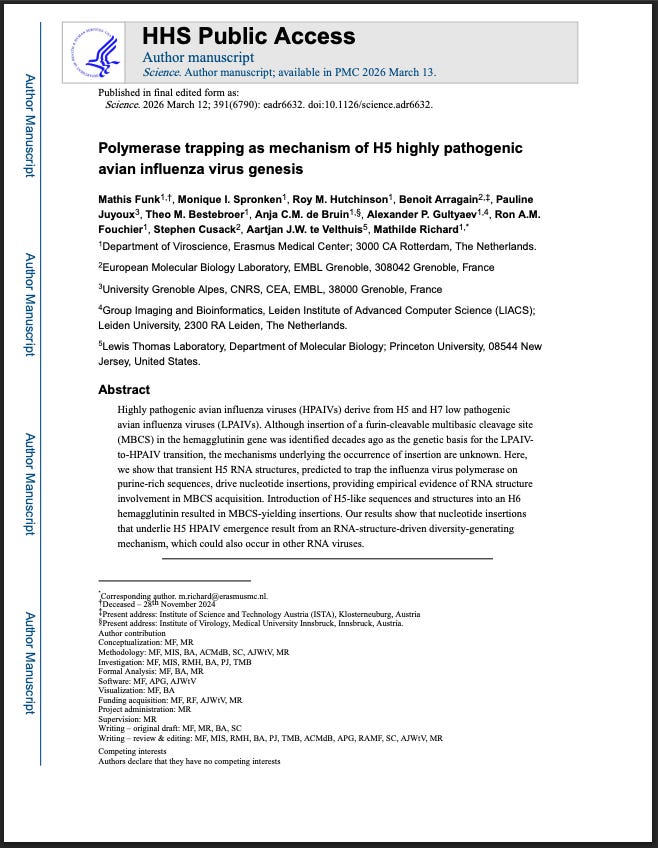
Scientists funded by the U.S. Department of Health and Human Services (HHS) say they have identified the molecular mechanism that allows low-pathogenic H5 avian influenza to acquire the defining genetic feature of highly pathogenic bird flu, according to a study published March 12 in Science.

Pathogenicity is the ability of a microorganism or agent to cause disease in a host.

Americans are paying for experiments that determine the molecular steps said to make H5 influenza more dangerous.

The study was carried out by Dr. Ron Fouchier of Erasmus Medical Center—best known for his controversial H5N1 bird flu gain-of-function experiments—along with researchers from Erasmus Medical Center, EMBL Grenoble, University Grenoble Alpes, Leiden University, and Princeton University.

The controversial experiments come as Congress asks for $3.3 billion for a future influenza pandemic, including the construction of new influenza vaccine manufacturing facilities, in a newly introduced House bill.

They also come as the FDA’s Vaccines and Related Biological Products Advisory Committee (VRBPAC) clears the way for approval of Moderna’s new mRNA influenza vaccine, despite the shot claiming to offer less than 1% absolute benefit.


The study centered on the multibasic cleavage site (MBCS), which the authors describe as the genetic basis for the transition from low-pathogenic avian influenza viruses (LPAIVs) to highly pathogenic avian influenza viruses (HPAIVs).

To determine that mechanism, the researchers claim to have engineered influenza RNA sequences and structures and measured how frequently the virus acquired the nucleotide insertions that generate the multibasic cleavage site.

According to the paper:

“We show that transient H5 RNA structures, predicted to trap the influenza virus polymerase on purine-rich sequences, drive nucleotide insertions.”

The researchers then say they experimentally altered those RNA structures.

When they disrupted the structures, the frequency of pathogenicity-generating insertion events fell sharply.

When they strengthened them, the insertion events increased dramatically.

In one engineered construct, heteropolymer insertion frequencies increased approximately eightfold over the parental construct.

Meaning the engineered virus was said to have become about eight times more likely to acquire the genetic change that turns low-pathogenic H5 influenza into highly pathogenic bird flu.

The scientists also transferred H5 RNA features into H6 influenza, creating chimeric “Frankenstein” genetic hybrids.

According to the paper:

“Introduction of H5-like sequences and structures into an H6 hemagglutinin resulted in MBCS-yielding insertions.”

The study further reported that the insertions generated by the engineered system produced multibasic cleavage site sequences that were “similar or identical” to those observed in naturally emerging highly pathogenic H5 influenza viruses.

The authors concluded they had identified the mechanism responsible for generating the multibasic cleavage site.

They wrote:

“We show that the trapping of the influenza virus RdRp on A/U-rich sequences by transient RNA structures formed by the template is the mechanism by which nucleotide insertions occur at the H5 cleavage site.”

You can contact NIAID hereNIH here, and HHS here to voice opposition to taxpayer-funded research on pandemic pathogens—particularly after Congress, the White House, the Department of Energy, the FBI, the CIA, and Germany’s Federal Intelligence Service (BND) all acknowledged that the COVID-19 pandemic was “likely” the result of a laboratory incident involving engineered pathogens.

Mutant Drug-Resistant Ebola Created by U.S., China, U.K., Germany Just Before Africa Outbreak: Journal ‘npj Viruses’


Gain-of-function experiments that mutate pathogens to resist drugs are baked into virological drug development.

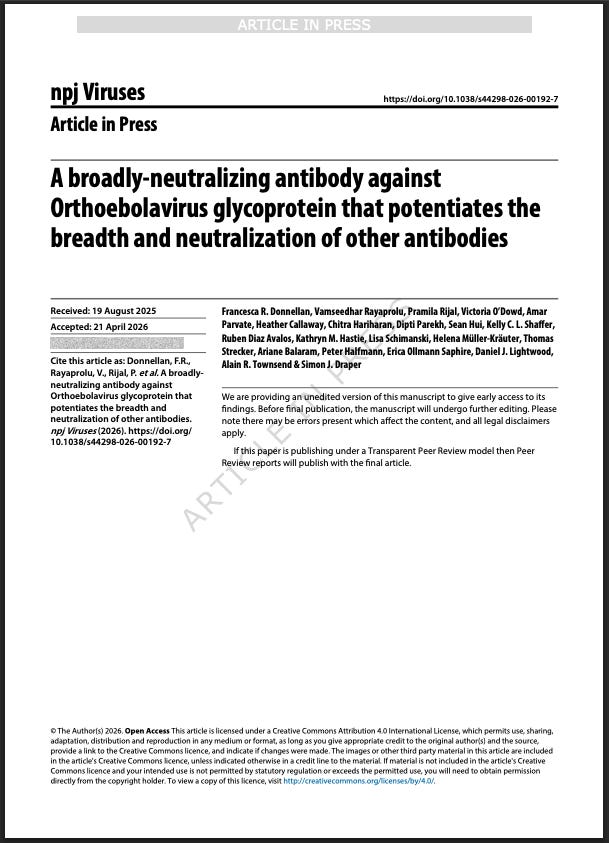
An international research consortium involving major institutions from the United States, China, the United Kingdom, and Germany claims to have successfully created mutant strains of Orthoebolavirus that are resistant to the neutralizing effects of the monoclonal antibody mAb 11886.

They published their work in npj Viruses on May 7, just days before the 2026 Ebola outbreak was first officially reported by the Democratic Republic of the Congo’s Ministry of Public Health.

These Ebola experiments, which were conducted under BSL-4 conditions at Philipps University Marburg, involved the intentional generation and selection of purported viral variants that bypass therapeutic neutralization.

The experiments align with published gain-of-function (GOF) definitions.

According to a 2022 review published in Advances in Applied Microbiology:

“Gain-of-Function research on viruses is enhancing transmissibility, virus replication, virulence, host range, immune evasion or drug and vaccine resistance to get insights into the viral mechanisms, to create and analyze animal models, to accelerate drug and vaccine development and to improve pandemic preparedness.”

The new Ebola study was said to have resulted in the generation of mutated, drug-resistant Ebola pathogens in the name of drug development.

It raises international security concerns, as Congress, the White House, the Department of Energy, the FBI, the CIA, and Germany’s Federal Intelligence Service (BND) all acknowledged that the COVID-19 pandemic was “likely” the result of a laboratory incident involving engineered pathogens.

You can contact NIAID hereNIH here, and HHS here to voice opposition to taxpayer-funded research on pandemic pathogens.

Multiple U.S. government Ebola preparedness and response programs were administratively updated on the federal Assistance Listings database in mid-January 2026—roughly three to four months before health authorities in the Democratic Republic of the Congo announced the latest Ebola outbreak.

The Trump administration is now seeking more than $1.4 billion in Ebola funding from Congress, just after the CDC activated $107 million in emergency funding for Ebola response.

U.S. taxpayers are now paying for both the creation of mutated, drug-resistant Ebola pathogens while also paying for the government’s expensive response to Ebola.


Researchers Force the Virus to Become Resistant

To produce these drug-resistant mutants, researchers claim to have used a replication-competent version of the virus known as EbolaΔVP30.

The team says they forced the evolution of the virus by subjecting it to three consecutive 6-day passage cycles.

During these cycles, the virus was said to be exposed to increasing concentrations of the antibody mAb 11886, starting at 0.63 µg/mL and escalating to 5.0 µg/mL to drive the selection of mutations that could survive the treatment.

After this process, the team isolated individual plaques that were able to survive in the presence of 10 µg/mL of the antibody.

Finally, the researchers claim they extracted viral RNA and sequenced the glycoprotein gene to identify the specific genetic mutations responsible for the acquired resistance.

The Experiments Identified Two Specific Genetic Mutations That Resist Drugs

The sequencing analysis was said to have identified two specific genetic mutations that directly negated the effectiveness of the antibody.

The first mutation, known as V505I, is located in the GP2 N-terminus and was identified as the primary driver of resistance against mAb 11886.

The second mutation, known as T402I, is said to be located in the mucin-like domain and contributed to resistance through indirect effects on how the virus processes its purported surface proteins.

Experimental data from the study confirmed that each of these mutations, when present individually, was sufficient for the virus to evade neutralization at a concentration of 10 µg/mL.

Research Supported by an International Network of Funding & Institutions

The creation of these drug-resistant Ebola variants was made possible by a global network of funding agencies and academic-industry partnerships.

In the United Kingdom, the research was supported by the UK Medical Research Council through an iCASE PhD studentship to FRD (MR/N01796X/1), and the Wellcome Trust through a Senior Fellowship to SJD (106917/Z/15/Z).

In Germany, the work was supported by the German Research Foundation via a grant to TS (197785619/SFB1021).

In China, funding was provided by the Chinese Academy of Medical Sciences Innovation Fund for Medical Science grants to PR and AT (2024-12M-2-001-1 and 2018-12M-2-002).

In the United States, the research was supported by the National Institutes of Health through grant U19 AI109762 to EOS.

AI Data Centers: The Real Reason They’re Going Up Everywhere


Who’s paying for them. Why it’s happening this fast. What the buildout is actually for. Why you should care.

May 27, 2026

AI Data Centers: The Real Reason They’re Going Up Everywhere Who’s paying for them. Why it’s happening this fast. What the buildout is for. Why you should care.

I live in Montana but I am from Pennsylvania so I follow a Facebook page called I live In Pa. I kept seeing AI data centers on this channel split-screened against the farmland and covered bridges they’re replacing. Larry Fink’s picture and shareholder letter, where he said the quiet part out loud about how they get paid for. So I sat down and pulled the threads.

This is what came out of it. It’s longer than I usually publish. Every cut lost something the rest needed, so here it is at full length. By the time everyone agrees on what this buildout is for, the concrete will already be poured. Right now is the window — the language is still being decided, the legal challenges are still possible, and the public memory of similar buildouts is still warm.

What an AI Data Center Actually Is

“AI data center” sounds like a server room — abstract, technical, somebody else’s business. The vagueness is doing work. You can’t organize against something you can’t picture.

So here’s what one is. A massive industrial facility, typically half a million to several million square feet. Tens of thousands of specialized processors in dense racks, each rack drawing more power than an average home. A full center can draw 100 to over 1,000 megawatts — the largest rival the power use of a mid-sized city. Cooling the heat takes water, sometimes millions of gallons a day, pulled from local aquifers, rivers, or municipal supply. Featureless buildings. No windows. Razor wire. A facility that uses a city’s worth of electricity might employ thirty to a hundred people. It exists to host computation, not workers.

What that computation is for is the question.

The Argument This Piece Makes

Let me be straight about what’s documented and what’s my read.

The documented, boring use of these buildings is commercial: training and running AI models, cloud services. That’s real. But I’m going to make the case that the strategic reason for a buildout this fast, this coordinated, and this heavily financed is bigger than chatbots — that these facilities are becoming the physical substrate for surveillance, digital identity, and behavioral data systems, and that the people funding them have said as much in public. Where I’m citing a fact, I’ll source it. Where I’m drawing a conclusion, I’ll say so. You can take the facts and disagree with my conclusion. That’s fair. But the facts are the facts.

Start with one thread you can verify yourself.

The UN’s 2030 Agenda does not say “digital ID.” Target 16.9 says “provide legal identity for all, including birth registration” by 2030 — clean, humanitarian, nothing to object to.¹ The word “digital” lives one layer down. The World Bank’s ID4D program — the body operationalizing 16.9 — states in its own materials that it’s delivering that legal identity as digital identification systems.² That’s the pattern worth understanding: the mandate is written in language no one can attack, and the machinery is built somewhere you have to go looking. You need both documents to see the whole picture. That’s not me connecting dots that aren’t there — that’s how the structure is built.

I want to be careful here, because this is where these arguments usually overreach. The 2030 Agenda is mostly seventeen goals about poverty, water, health, education, and labor — and most of it is exactly what it says. I’m not claiming the whole framework is a surveillance plot. My claim is narrower: one target inside it is the on-ramp for population-scale digital ID, and that earns scrutiny even if the other sixteen goals are benign.

The broader thing to watch isn’t a single master document. It’s convergence. Digital identity (UN/World Bank), central bank digital currencies (central banks and the BIS), behavioral data systems (the ad-tech and surveillance industry), smart-city programs — these come from different bodies, not one blueprint. What they share is that every one of them needs enormous compute to run at scale. The data centers are that compute. That’s the connection I’m asking you to hold: not one conspiracy, but a set of systems converging on the same physical requirement.

¹ UN, SDG Target 16.9 — https://www.un.org/sustainabledevelopment/peace-justice/

² World Bank ID4D — https://id4d.worldbank.org/guide/good-id-supports-multiple-development-goals

The Pattern You Might Remember

If you lived through the fracking boom of the late 2000s and 2010s, you’ve seen this script.

Fracking was sold to rural communities in Pennsylvania, Ohio, West Virginia, North Dakota, and Texas as salvation. Jobs. Tax revenue. Energy independence. Outside companies signed leases, fast-tracked permits before community input could complete, drilled, extracted, and left. What stayed was the externalities — contaminated wells, methane migration, earthquakes, road damage on the local tax base, gutted property values. The jobs were mostly temporary. The tax revenue mostly got abated.

The data center buildout is the same playbook, different commodity. Same target communities — rural, semi-rural, eroded tax bases, thin local government. Same fast permits. Same outside money. Same promises. Same externalities about to land on the same people.

The fracking generation remembers. That memory is one of the few advantages this round of resistance has, and it won’t last forever.

Who’s Actually Paying

Larry Fink runs BlackRock, the world’s largest asset manager — $13.9 trillion under management as of its Q1 2026 filing. A significant portion is American retirement money: pensions, 401(k) allocations, target-date funds that auto-allocate to whatever the managers point them at.

In his April 2026 letter to investors, Fink argued AI leadership would require sustained, large-scale investment. At a BlackRock event in Waco, Texas — Texas State Technical College, alongside Governor Greg Abbott, part of BlackRock’s “Future Builders” initiative — he predicted where the money comes from: trillions, from “savings accounts and pension accounts.” (BlackRock later clarified he meant long-term retirement-type investment accounts, not bank savings.) He estimated the buildout could total around $10 trillion over ten years. A fact-check confirmed the quote; it was a prediction of the plan, not a slip — which is exactly why it matters. He’s telling you how it gets paid for.

BlackRock founded the AI Infrastructure Partnership (AIP) in September 2024 with Global Infrastructure Partners, MGX (an Abu Dhabi sovereign-wealth vehicle), Microsoft, and NVIDIA. In October 2025, AIP’s first deal was the roughly $40 billion acquisition of Aligned Data Centers — the largest data-center transaction on record, with a target of $30 billion in equity and up to $100 billion including debt. American retirement capital, pooled with Gulf sovereign wealth, building the AI backbone.

If you hold a 401(k), an IRA, a pension, or any retirement vehicle run by a major asset manager, some portion of your money is likely funding this right now. You didn’t consent to this specifically. You consented to “diversified investment.” The managers decide what that means. You can opt out only by accepting financial damage most working people can’t absorb. That’s not force in the obvious sense. It’s force in the structural sense.

That’s who’s paying. You are — through retirement vehicles, tax dollars, utility bills as the grid is upgraded for data center demand, and water bills as the aquifers draw down.

Newspeak

Before going further, look at the language. It’s not a detour — the language is the architecture.

Watch the inversions running in everyday coverage. Surveillance becomes data collection. Censorship becomes content moderation. Coercion becomes nudging. Dissent becomes misinformation. Forced reallocation becomes investment. Land grabs become development. Aquifer depletion becomes resource utilization. Each one collapses the space where the accurate word used to live. By the time you reach for the word you need, the preferred one is the only one left.

Watch the law titles too. The Patriot Act expanded domestic surveillance. The pattern of naming a bill for the thing it erodes is old, and once a law like the Patriot Act exists, it rarely gets repealed — it gets renewed, quietly, repeatedly. We’re still living under emergency powers from September 2001.

This isn’t new. In nearly every modern authoritarian turn, the same move shows up first: reclassify dissent into a category that strips it of protection, then deploy force against the category instead of against speech. Weimar Germany used Reichsfeinde — enemies of the Reich; the 1933 Reichstag Fire Decree suspended civil liberties on the threat of terrorism. Stalin’s USSR ran on “enemies of the people.” Apartheid South Africa’s Terrorism Act of 1967 defined terrorism broadly enough that organizing qualified — Nelson Mandela was officially designated a terrorist, and the U.S. kept him on a terrorism watch list until 2008. Post-9/11 America widened the domestic-terrorism framework under the Patriot Act, and that category has crept outward ever since.

The reframe is the prerequisite. When a system starts reclassifying citizens into the language of terrorism, the clampdown isn’t theoretical — it’s the next phase. A document called Silent Weapons for Quiet Wars described economic and informational pressure as a substitute for open warfare on a domestic population. Its origin is disputed — possibly authentic, possibly satire — but the playbook it describes is recognizable.

Why It’s Happening This Fast

My read: the speed isn’t organic market demand. AI consumer demand barely existed five years ago. The buildout is racing a timeline.

The financing and the framing both point to a deadline. The 2030 Agenda set targets for 2030. The systems that depend on compute — digital ID first among them — matured faster than the physical infrastructure to carry them. Fink saying the U.S. is “not moving fast enough” reads less like a market comment and more like a project status update. They’re behind on a schedule they set, and the window for installing the infrastructure without resistance is closing.

That’s interpretation, not proven fact — but it fits the financing, the public statements, and the documented deadlines better than “everyone suddenly wanted chatbots.”

The Historical Lock

IG Farben was the German chemical and pharmaceutical conglomerate that backed the Third Reich — synthetic fuel, synthetic rubber, the Zyklon B used in the camps, and its own slave-labor facility at Auschwitz-Monowitz. After the war the Allies broke it into Bayer, BASF, Hoechst, and Agfa. The names changed; the personnel, patents, and relationships largely survived. The cartel reconstituted within years of Nuremberg.

That’s the pattern: the financial and industrial scaffolding behind authoritarian projects rarely gets dismantled when the regime fails. It gets renamed, restructured, and reattached to whatever comes next. Hold that lens.

The Apparatus

In mid-May 2026, Fink publicly raised the prospect of civilians using inexpensive drones to attack AI data centers, framing it as a security risk his firm is planning around.

Read the framing, not just the worry. The most powerful asset manager in the world doesn’t float hardware-store drones in public unless his security team has already war-gamed civilian resistance. He’s not a tactical operator — what he said in public is what advisors briefed him to say, which means the internal assessment reached the level of a public statement. And notice how short the distance is between “civilian security threat to critical infrastructure” and “domestic terrorism” in the policy language. Once that reclassification happens, force doesn’t need to be threatened. It becomes automatic.

Set this beside the buildout of detention capacity. The One Big Beautiful Bill Act (H.R. 1), signed July 4, 2025, directed more than $75 billion to ICE over four years — including roughly $45 billion for new detention centers, family detention included — and funds an expansion of detention capacity from about 56,000 beds toward 100,000 or more. The stated target population is immigration enforcement. But detention infrastructure has no target-population filter built into it. Once it exists, it holds whoever the regime in power decides it holds. The bed doesn’t know who’s in it.

There’s also a quieter move worth naming: the push for “data embassies” — arrangements that would treat data centers as quasi-sovereign territory, partially exempt from local jurisdiction. Saudi Arabia, Estonia, and others have floated versions of it; industry likes it. Industrial sites granted sovereign-style exemption from local law is not a hypothetical — it’s an active proposal.

On the First Amendment: speech is still protected by the text. What’s been thinned is the procedural protection around speech that touches what the regime defines as security. You can still say what you want. What changes is the category you become when you say it.

The infrastructure doesn’t deploy in one dramatic event. The old dissident prediction — one big roundup — never panned out. What comes instead is the metered rollout: slow, episodic, normalized through repetition, each wave widening who qualifies.

What the Buildout Is For

Pulling it together — and this is my thesis, stated as a thesis: the data centers are the physical substrate that surveillance, digital ID, behavioral scoring, and predictive systems all run on. The reclassification of pushback as a security threat is the legal lever. The detention capacity is the physical one. The language operation is the cultural one. All three are being installed at once, and all three depend on the compute the data centers provide.

That’s the case. Not chatbots. The backbone of a control architecture that’s been planned, in pieces, by different bodies, and is now being installed in the open.

Where the Resistance Is Working

The framework has to land somewhere physical, and physical places have laws — some not yet captured.

Tucson, Arizona rejected Project Blue after sustained organizing. Chesterfield County, Virginia has delayed builds through zoning. Communities in Oregon and Arizona forced water-use disclosure that didn’t exist before. Utah passed legislation requiring large data centers to report water usage to the state engineer.

In Montana, where this is written, the legal scaffolding for water-rights fights has been building for over a decade — CSKT compact litigation, Flathead watershed disputes, ranch-versus-development tension. When data centers try to land here, they walk into an environment that already has antibodies.

And every enforcement system depends on the bottom of the pyramid showing up to work. Soldiers, cops, guards, mid-level bureaucrats — also citizens, with rent and family and eyes. When Ceaușescu gave his final speech in Bucharest in December 1989, his own security stopped defending him and the crowd that always applauded started booing. The apparatus collapsed in a week. The pyramid doesn’t get pushed over from outside. It collapses from the middle when the people inside stop believing what they’re enforcing.

What You Can Actually Do

This doesn’t end with “call your senator.” That door is mostly closed. The open ones:

Read what your retirement money is actually buying, and pull what you can out of target-date funds that auto-allocate into AI infrastructure indexes.

Show up to zoning meetings before the build is announced, not after. The fight is won or lost at the permit stage.

File public records requests on water-use agreements and tax-abatement deals while they’re still being negotiated. Once signed, they’re nearly impossible to reverse.

Document everything. The case studies cited five years from now are being built right now by people taking notes.

What won’t work: petitions to BlackRock, appeals to the FTC, waiting for an administration to fix it. The mechanism is engineered to be unreachable through those channels. Naming the dead ends saves your energy for where the leverage is.

The Project That Cannot Finish

In nearly every case, authoritarian projects attempt the same impossible thing: freeze a complex society into a fixed configuration. None have managed to hold it. The thousand-year Reich lasted twelve years. The Soviet system, designed as the endpoint of history, lasted seventy. Mao’s Cultural Revolution was unwound by his own party within a decade of his death. The British Empire dissolved in two generations. Each looked unstoppable at its peak. Each had apparatus that seemed total. Each came undone faster than its planners or its critics predicted.

That’s not coincidence. Total control requires perfect coordination among the people implementing it — and they can’t fully trust each other once they understand what total control means. The faction that wins absolute power becomes a threat to every other faction, so no faction can be allowed to win absolutely. The project stays permanently undermined from within. That’s the structural ceiling, and the current configuration will hit it too.

The damage between here and there will be real. The transition will be hard. But the totality the planners are aiming at is not reachable, because the coordination it requires doesn’t survive contact with the people who’d have to maintain it.

Here’s what they haven’t absorbed: the cultural permission slip they depend on has already thinned. The audience has stopped pretending. The Berlin Wall fell in 1989 with the Stasi holding files on a third of the East German population — the most comprehensive surveillance of its time. It didn’t matter. The system collapsed in weeks once attention rerouted away from compliance. The apparatus was a stage set. When the actors stopped performing, the set came down.

The vault is being built in your county while your retirement pays for it. The fracking generation knew something was wrong but didn’t have the framework. You do. The work isn’t victory — it’s witness, organization, refusal of the language they hand you, and refusal to treat the project as the permanent reality it claims to be.

That’s why you should care. Not because the analysis is interesting. Because what’s being built is being built with your money, for use against your category of person, on a timeline that closes before the end of this decade.

They don’t need camps when they have cloud regions. They also don’t get to keep them.

Sources

  • UN SDG Target 16.9 — un.org/sustainabledevelopment/peace-justice
  • World Bank ID4D — id4d.worldbank.org/guide/good-id-supports-multiple-development-goals
  • BlackRock Q1 2026 AUM ($13.9T) — BlackRock Q1 2026 earnings release (SEC 8-K)
  • Fink “savings and pension accounts” — Snopes fact-check, May 2026; 25 News KXXV (Waco)
  • AI Infrastructure Partnership / Aligned Data Centers $40B — Global Infrastructure Partners press release, Oct 2025
  • ICE detention funding — One Big Beautiful Bill Act (H.R. 1, July 2025); American Immigration Council, Brennan Center analyses

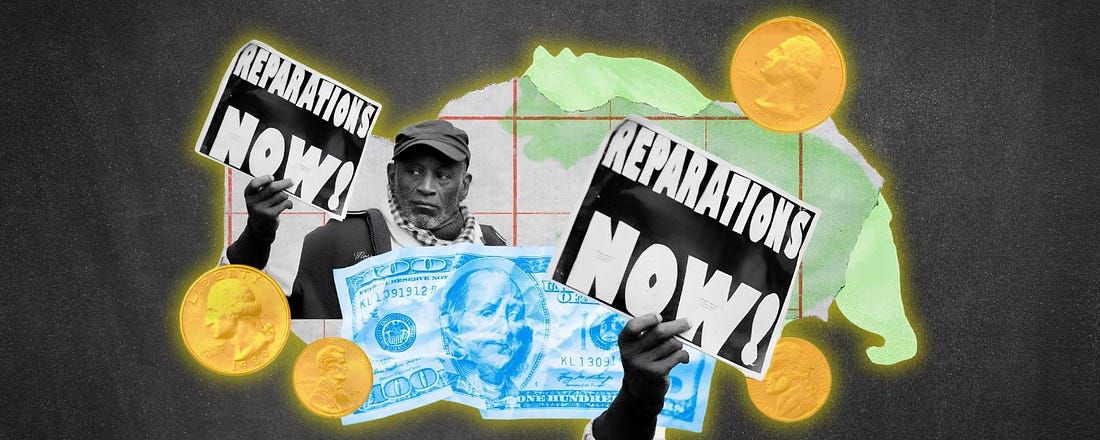
Reparations by Race Do Not Repair a Nation. They Divide One.


Harmeet Dhillon Just Said What the Constitution Has Said Since 1868

Begin with a simple picture, because the law in this case is finally as simple as the picture. Two families lived on the same Evanston street in 1955. They shared a fence, a school district, and very likely a set of grievances against the city that zoned and policed them. Today the city of Evanston will write one of those families a check for $25,000 and turn the other away at the door. The families are identical in every particular the law has ever cared about, with one exception. One family is black and the other is not. That single fact, and nothing else, decides who is paid and who is refused.

When a government sorts its citizens that way, it is doing the precise thing the Fourteenth Amendment was ratified to forbid. This is the heart of the matter, and it is worth stating plainly before the lawyerly fog rolls in. The Equal Protection Clause protects persons, not races. It was written after a war fought over racial caste, and it was written to abolish caste, not to license a friendlier version of it. A program that pays citizens according to the color of their skin, or the color of their parents’ and grandparents’ skin, does not repair the old hierarchy. It rebuilds it with the beneficiaries rearranged.

X avatar for @AAGDhillonAAGHarmeetDhillon @AAGDhillon Evanston’s “first in the nation” reparations program is discriminatory and illegal. @CivilRights sued the city today challenging the program. Other cities are on notice: discriminate against residents — you’ll

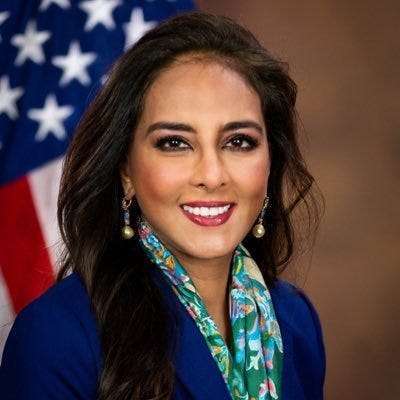
On June 16, the Department of Justice said so, formally and on the record. Assistant Attorney General Harmeet Dhillon, who leads the Civil Rights Division, moved to intervene in the lawsuit against Evanston’s program and put the point with a clarity that the courts have spent 30 years approaching. There are sound ways for a city to help its poorest neighborhoods, she said, but simply handing out money based on race is not the answer. It is race discrimination, pure and simple, and it is illegal. That is the government of the United States adopting as its litigating position what an honest reading of the Constitution has required all along. Dhillon deserves credit for it. For decades the federal civil rights apparatus enforced the colorblind command in one direction only, against discrimination that injured minorities, while averting its eyes from racial sorting dressed up as benevolence. To enforce the rule evenhandedly, against a city that discriminates by race for reasons it calls noble, is not a betrayal of the civil rights tradition. It is the fulfillment of it.

Consider the doctrine the city must overcome, because it is not some recent conservative invention. The Supreme Court has held for more than three decades that every racial classification by government, at every level, must survive strict scrutiny, the most demanding test in constitutional law. In City of Richmond v. J.A. Croson Co., decided 6 to 3 in 1989 and written by Justice Sandra Day O’Connor, the Court struck down a minority contracting set-aside in a majority-black city governed by a majority-black council. Richmond had a real statistical disparity to point to, minority firms receiving under 1% of contracts in a city half black, and the Court still said no. General societal discrimination, however genuine, cannot justify a racial remedy. The government must identify a specific instance of unlawful discrimination and tailor the remedy narrowly to it. O’Connor warned that the alternative was a future in which the dream of a nation of equal citizens would dissolve into a mosaic of shifting preferences based on inherently unmeasurable claims of past wrongs. That sentence reads today like a prophecy of Evanston.

The Court only sharpened the rule afterward. Adarand Constructors v. Peña in 1995 closed the supposed loophole for federal programs and applied strict scrutiny to every level of government. Students for Fair Admissions v. Harvard in 2023, again 6 to 3, ended race-conscious admissions and reminded the country that distinctions drawn solely by ancestry are odious to a free people. Then, just this past April, the Court decided Louisiana v. Callais, a 6 to 3 opinion by Justice Alito holding that a congressional map could not use race as its organizing principle absent a compelling justification the state did not have. Callais matters here for a reason that has nothing to do with voting maps. It restated, in the freshest possible terms, the two conditions any remedial racial classification must meet. The government must identify the specific past discrimination and the precise scope of the injury, and it must possess a strong basis in evidence that the race-based remedy is necessary. And it reaffirmed the disqualifier directly. There is no compelling interest in generally remedying the effects of societal discrimination across a region or an era. A century-old, generalized grievance is entitled, in the Court’s words, to much less weight. One struggles to imagine a sentence more precisely fitted to Evanston’s case if it had been drafted for the occasion.

Here a careful reader will pause and ask the natural question. Surely Evanston has done its homework. Surely a city would not stake millions of dollars and its moral reputation on a program without first identifying the specific discrimination it claims to remedy. The honest answer, drawn from the federal complaint and from the city’s own documents, is that it did not. The enabling resolutions contain only boilerplate acknowledging harm to black residents. They identify no specific unlawful act, name no precise injury, and rest on no strong basis in evidence. The city’s own policy report, the nearest thing to a factual foundation, is a working document whose authors expressly declared themselves neutral and disclaimed any responsibility for how it would be used. A government does not build a constitutional defense on a paper its own authors refuse to stand behind.

It is worse than an absence of proof. While the program was being written, former White House Counsel C. Boyden Gray submitted a detailed warning that it would be unconstitutional and that the city had given only perfunctory thought to race-neutral options like income-based housing aid. The city adopted the program unchanged. Later, when officials added the unrestricted cash payment, the city’s own Corporation Counsel conceded on the record that they did not have the research to show a cash benefit would be a narrowly tailored remedy. The defendant’s own lawyer admitted the fatal flaw before the plaintiffs ever had to prove it. And the program’s nominal escape hatch, a provision for people who can document post-1969 housing discrimination, turns out to be gated by race as well, because such claimants must first submit proof of race and then wait until every race-qualified ancestor and descendant has been paid. The fig leaf is itself a racial classification.

Look at the mechanics and the figures, which the city funds, fittingly, from its cannabis tax. Eligibility runs entirely on bloodline. An ancestor is a black adult who lived in Evanston between 1919 and 1969, and a direct descendant is that person’s child, grandchild, or great-grandchild. The city has paid at least 141 ancestors a total of $3.525 million, identified at least 454 descendants for payment, distributed well over $5 million already, and would owe more than $11 million to the descendants alone, against a $10 million pledge it has effectively blown past. Now widen the lens, because Evanston is a pilot, not an endpoint. California’s reparations task force, drawing on its own economists, priced a statewide program at figures reaching $800 billion, more than 2.5 times the state’s entire annual budget, with per-person estimates running past $1 million. Those are not a critic’s numbers. They are the proponents’ own arithmetic, and they vindicate O’Connor’s warning that once race becomes the measure of who gets paid there is no logical stopping point and no end date.

The deepest objection is not fiscal. A nation is held together by a shared idea of who its members are to one another. The American idea, the one Justice Harlan defended alone in 1896 when he wrote that our Constitution is colorblind and tolerates no classes among citizens, is that we meet the state as individuals, equal before the law, and not as delegates of our ancestry. Reparations by race quietly replaces that idea with another. It tells citizens that their standing before the government is fixed by descent, that the relevant fact about a man is the color of his great-grandfather, and that public money flows along the channels of blood. Whatever its authors intend, the program teaches the citizenry to see one another as members of racial classes with competing claims on the treasury. That is not repair. It is the manufacture of division, the conversion of neighbors into rival castes, and it is precisely the hierarchy the Equal Protection Clause exists to dismantle.

Chief Justice Roberts gave us the rule in a single unforgettable line. The way to stop discrimination on the basis of race is to stop discriminating on the basis of race. The conservative legal tradition, from Heritage to Cato to the Pacific Legal Foundation, has insisted on this for a generation, not as a partisan slogan but as the plain command of equal citizenship. Two-thirds of Americans agree, including majorities in deep-blue California. Evanston placed itself on the wrong side of the Constitution, the wrong side of the Court, and the wrong side of the public. The Justice Department has now placed the United States on the right side of all three. That is worth celebrating, and it is worth defending until the last race-keyed check is voided.

AI-Designed Needle-Free DNA COVID Vaccine Trial Records 148 Adverse Events Among Just 39 Vaccinated Participants: ‘Journal of Infection’


All participants had already received prior COVID vaccinations, making it impossible to determine whether observed immunity came from the experimental shot, prior vaccines, or natural infection.

Researchers behind an experimental AI-designed “pan-Sarbecovirus” COVID vaccine recorded 148 separate adverse events among just 39 vaccinated participants during a first-in-human clinical trial published last month in the Journal of Infection.

The vaccine, known as pEVAC-PS, was developed using “Digitally Immune Optimised Synthetic Vaccine” (DIOSynVax) technology and was computationally engineered to target not only SARS-CoV-2, but a broad family of purportedly related bat coronaviruses.

The vaccine was delivered through a needle-free intradermal injection system using the PharmaJet Tropis device.

The mainstream is celebrating the drug as a “world-first.”

However, according to the paper, researchers documented:

  • 121 unsolicited adverse events,
  • 15 adverse events of special interest (AESIs),
  • and 12 clinically significant laboratory adverse events

across only 39 vaccinated participants.

That’s roughly 3.8 total recorded adverse-event entries per vaccinated participant in the small phase I trial.


The study further states that 23 of the unsolicited adverse events were considered “possibly,” “probably,” or “definitely” related to the vaccine.

The paper nevertheless repeatedly describes the vaccine as “well tolerated.”

The paper downplays the severity of the adverse events, but the raw numbers remain notable relative to the tiny sample size—especially given the vaccine failed to demonstrate broad or robust neutralizing activity.

“No serious adverse reactions (SARs), suspected unexpected adverse reactions (SUSARs) or serious adverse events (SAEs) occurred. There were 15 adverse events of special interest, all of which were COVID-19 episodes which were of grade one or two severity and did not require medical attention. There were 121 unsolicited adverse events, all of which were grade one or two severity and 23 were deemed possibly, probably or definitely related to the vaccine. There were 12 laboratory adverse events considered clinically significant, all of which were grade one or two severity and self-resolved without intervention during the study.”

“All four dose concentrations of pEVAC-PS were generally well tolerated.”

Adverse-event burden is being generated in a trial so small that even a modest number of reactions changes the overall safety picture.

The authors do not provide a detailed breakdown of the specific unsolicited adverse events, raising questions about whether the paper’s reassuring “well tolerated” framing would hold up under full public disclosure of the actual reactions recorded during the trial.

Without a transparent symptom-by-symptom breakdown, readers are largely being asked to accept the authors’ safety characterization at face value.

Vaccinated Received Previous COVID Shots, Making Cause of Immunity Impossible to Determine

The trial was conducted between December 2021 and September 2023 and involved healthy adults between ages 18 and 50 who had already received two or three prior COVID-19 vaccine doses.

Since the participants were already heavily pre-immunized before receiving the experimental vaccine, the researchers themselves acknowledge they could not cleanly isolate what immune responses actually came from the new vaccine.

“Interpretation of immunogenicity outcomes was influenced by high baseline antibody levels and heterogeneous exposure histories due to ongoing waves of Omicron variant infections during recruitment, which differed across dose-escalation cohorts and introduced unavoidable immune bias,” the study reads.

The study cannot determine whether any observed immunity came from:

  • the new AI-designed vaccine,
  • prior COVID shots,
  • prior natural infections,
  • or combinations of all three.

That is why the paper ultimately falls back to cautious language like:

  • “modest immunogenicity,”
  • “limited boosting,”
  • and merely “supporting the underlying design concept” rather than demonstrating clear protective efficacy.

The authors acknowledged the findings did “not support a robust vaccine-induced increase in antibody responses beyond pre-existing levels.”

The paper further admits the vaccine failed to produce the intended broad coronavirus immune-boosting effect:

“Although pEVAC-PS was designed to elicit cross-reactive responses against both SARS-CoV-2 and SARS-CoV-1, this intended boosting effect was not observed.”

Researchers additionally acknowledged the vaccine did not demonstrate “broad or robust neutralizing activity.”

Researchers from the University of Cambridge, University of Southampton, Imperial College London, DIOSynVax Ltd, and other institutions participated in the study.

China Engineers Mutant H5N1 Influenza Viruses 560,000 Times More Lethal in Mammals: Journal ‘Emerging Microbes & Infections’


As the U.S. simultaneously performs similar gain-of-function lab experiments.

Chinese state-backed scientists claim to have engineered multiple mutant H5N1 bird flu viruses and experimentally infected mammals to identify genetic combinations that dramatically increased lethality and enhanced the virus’s compatibility with human cellular machinery, according to a new peer-reviewed paper published yesterday in Emerging Microbes & Infections.

The revelation about China comes as a recent HHS-funded study says that U.S. scientists have also lab-engineered brand-new reassortant “Frankenstein” bird flu viruses with enhanced immune-evasion potential in humans.

The back-to-back disclosures represent an accelerating international effort by government-backed scientists to engineer and characterize bird flu strains with enhanced mammalian adaptation, immune evasion, and pandemic potential.

Congress, the White House, the Department of Energy, the FBI, the CIA, and Germany’s Federal Intelligence Service (BND) all claim that the deadly COVID-19 pandemic was “likely” the result of a laboratory incident involving engineered pathogens.

The creation of pandemic pathogens raises international security and informed consent concerns.

The new Chinese study was conducted at the Harbin Veterinary Research Institute (HVRI), part of the Chinese Academy of Agricultural Sciences (CAAS), using ABSL3 high-containment laboratories approved for work with highly pathogenic avian influenza viruses.

Using an eight-plasmid reverse genetics system, researchers generated reassortant and mutant (“Frankenstein”) H5N1 viruses carrying specific polymerase mutations associated with mammalian adaptation.

The purported engineered viruses were then administered intranasally into BALB/c mice to measure tissue spread, replication efficiency, and lethality.

According to the paper, one engineered strain replicated throughout the body, spreading into the lungs, nasal turbinates, brain, spleen, and kidneys.

Researchers reported that the highly pathogenic strain displayed at least a “560,000-fold” difference in lethality compared to a genetically similar H5N1 virus.

The paper identified three mutations in the PB2 polymerase protein—384L, 443R, and 460M—that together dramatically increased virulence in mammals.

The authors say the mutations allowed the virus to more efficiently exploit human ANP32A/B proteins, which are said to be critical host factors required for influenza replication in human cells under the mainstream virological model.

In plain terms, the researchers are claiming to have identified mutational combinations that helped bird flu function more effectively inside human biological systems.

The experiments align with published gain-of-function definitions involving enhanced pathogen lethality, mammalian adaptation, and viral replication in human cellular systems.

According to a 2022 review published in Advances in Applied Microbiology:

“Gain-of-Function research on viruses is enhancing transmissibility, virus replication, virulence, host range, immune evasion or drug and vaccine resistance to get insights into the viral mechanisms, to create and analyze animal models, to accelerate drug and vaccine development and to improve pandemic preparedness.”

The Chinese study qualifies because the researchers engineered mutant H5N1 viruses that became more lethal in mammals while also enhancing the virus’s ability to replicate and adapt inside human cellular systems.

The study was funded by:

  • China’s National Key Research and Development Program,
  • the National Natural Science Foundation of China,
  • the Natural Science Foundation of Heilongjiang Province,
  • and the Chinese Academy of Agricultural Sciences.

China’s Fifth Column Doesn’t Require Troops Or Missiles


Screenshot via X [Credit: @amuse]

A jury is a modest institution. Twelve citizens sit in a box. They listen. They deliberate. They apply the law as instructed. Then they render a verdict. The jury is not a legislature. It is not an executive. It is not a protest movement. It is a fact-finding body embedded in a constitutional structure that presupposes something simple and fragile: that law governs us all.

That modest picture is now under strain. In recent months, a small but organized network of progressive NGOs has begun to train potential jurors to view their service not as a duty of fidelity to enacted law but as an opportunity for resistance. The pitch is explicit. Jury duty is described as a political tool. Jurors are encouraged to “influence outcomes” in order to protect targeted communities from the agenda of a democratically elected President. Trainings and teach-ins are advertised in Washington, D.C. Toolkits circulate nationally. Immigration enforcement is a focal point. The idea is clear enough. If you disapprove of the law, you may block its application by refusing to convict.

To understand why this development is alarming, one must begin with a neutral point. Jury nullification is not new. Anglo-American legal history contains episodes in which juries refused to convict under laws they regarded as unjust. English juries declined to punish seditious libel in the 18th century. American juries sometimes resisted enforcement of the Fugitive Slave Act. During Prohibition, acquittals were common in certain jurisdictions. Advocates cite these episodes as evidence that nullification is a democratic safety valve. They describe it as the conscience of the community made visible.

That is the romantic picture. It imagines isolated acts of moral courage, rare, and spontaneous. A jury confronts an egregious prosecution and quietly refuses to cooperate. The act is bounded, contextual, and exceptional. The system absorbs the anomaly and moves on.

The present movement is different. It is organized. It is replicable. It is taught. It is explicitly partisan. That difference matters.

Consider the structure. Democrat NGOs in D.C. host recurring “juror information” sessions. They frame jury service as a means to judge the administration’s agenda. A separate project publishes a reusable jury nullification module, complete with presentations and handouts, and invites activists to run their own workshops. In Minneapolis, an anti-ICE organization schedules a nullification training and directs participants to those materials. Professional defense networks host webinars on “the power of jury nullification.” The infrastructure resembles a franchise model. A core toolkit is produced. Local chapters adapt it. The message is consistent. Jury service is leverage.

If this were merely theoretical, it would be troubling enough. But there are signs that the strategy is bearing fruit in particular jurisdictions. Nationally, between 90% and 95%+ of federal defendants are convicted, whether by plea or trial. The system, whatever its flaws, overwhelmingly produces guilty verdicts when charges are brought. Yet in Los Angeles, in cases involving anti-ICE protesters accused of attacking federal officers, the pattern diverges sharply.

In the Central District of California, U.S. Attorney Bill Essayli charged 18 anti-ICE protesters with offenses arising from confrontations with federal agents. None of those cases has led to a conviction. In every case that proceeded to trial, Los Angeles juries refused to convict. If even a fraction of those acquittals reflects jurors who entered the box primed to treat enforcement itself as illegitimate, then the shift from abstract training to concrete outcome is complete. The jury ceases to be a neutral arbiter of fact and becomes a localized veto point against federal law.

One might object. Is this not merely civic education? Citizens have a right to learn about the history and power of juries. That is true. The First Amendment protects general discussion. But the line between abstract civics and strategic influence is thin. When trainings are timed and located to coincide with high-profile prosecutions, when organizers speak of protecting communities from political persecution, when jury duty is described as a way to stop federal enforcement, the message is not neutral. It is tactical. The funding streams behind these efforts underscore the point. These NGOs are not merely sustained by small donor enthusiasm or even by Soros-linked funding networks that have long backed progressive legal activism. They are also connected to transnational financial networks associated with Neville Roy Singham, who is based in Shanghai, China, and who is married to Jodie Evans, the founder of Code Pink. When organizations training jurors to obstruct federal enforcement are supported by money flowing through networks tied to a Chinese Communist Party-aligned ecosystem, the issue ceases to be parochial. It becomes a question of whether domestic adjudication is being strategically sabotaged by actors whose interests are openly hostile to the current administration and, in some cases, aligned with foreign power structures.

The rule of law depends on a simple principle, that legal outcomes track legal standards rather than factional identity. A criminal statute is enacted by representatives elected by the people. It is interpreted by courts. It is applied to facts found by juries. Each institution has a role. When jurors are urged to substitute their partisan commitments for the law as instructed, they cease to function as fact finders. They become ad hoc legislators.

Imagine a sculptor holding a finished statue. If we reject the possibility that both the statue and the lump of clay exist, we must choose one description. Likewise, if we reject the idea that juries both find facts and make policy, we must choose which function defines them. The constitutional design chooses the former. It assigns policymaking to Congress and the president. It assigns fact-finding to juries. To collapse those roles is to blur the structure.

Defenders of organized nullification will reply that juries have always possessed the power to acquit against the evidence. That is correct. Power is not the same as right. The system cannot easily punish acquittals. Double jeopardy prevents retrial. Deliberations are secret. Appellate review is limited. This opacity is part of the jury’s independence. It is also its vulnerability. Because partisan nullification is structurally unreviewable, even a small number of motivated activists can produce effects that are difficult to detect and impossible to correct.

Suppose a single activist juror, trained to see her role as resistance, enters deliberations in an immigration related prosecution. The evidence is clear. The law is clear. She refuses to convict, not because the facts are in doubt but because she opposes the statute. A mistrial results. The government must decide whether to retry the case. Resources are limited. Witnesses are fatigued. Over time, prosecutors may decline to bring similar cases in that jurisdiction. The statute remains on the books. Its practical force evaporates. This is not legislative repeal. It is functional nullification.

Scale that dynamic. If trainings proliferate, if sympathetic jurors are seeded across multiple venues, if acquittals cluster in ideologically aligned jurisdictions, the result is nonuniform enforcement. The same federal law yields convictions in one district and routine acquittals in another. Citizens are no longer equal before the law in practice. They are subject to a patchwork shaped by local activism.

This is the anti democratic core. Democracy is not mere headcount. It is a system in which laws are made through elections and legislative deliberation. If 12 randomly selected citizens can override a duly enacted statute in application, without changing it and without accountability to voters, they exercise a veto outside the constitutional channels. That veto is not reviewable. It is not transparent. It is not deliberated in public. It is exercised in a closed room.

Some will object that juries themselves are democratic because they are composed of citizens. But the analogy is misleading. Jurors are not elected to represent constituencies. They are selected to apply law impartially. Their legitimacy depends on neutrality. When they are trained to act as partisans, that neutrality erodes. The institution ceases to function as designed.

There is a further risk. The movement does not arise in isolation. In recent years, well-funded activists have supported prosecutors who decline to enforce certain categories of crime. In some jurisdictions, district attorneys announced policies of categorical non-prosecution for offenses they regarded as unjust. Critics warned that this amounted to executive nullification. Judges in certain venues adopted lenient practices that, in the eyes of opponents, failed to hold defendants accountable. Now the focus shifts to juries. If prosecutors can refuse to prosecute and juries can be trained to refuse to convict, the cumulative effect is a multi-layered strategy of non-enforcement.

One may dismiss such concerns as exaggerated. Sympathetic journalists often downplay the scale. They describe the trainings as small gatherings of a few dozen activists. They emphasize the lack of direct evidence linking workshops to specific verdicts. They stress the historical pedigree of nullification. But absence of public data is not proof of absence of impact. The mechanism is inherently hidden. If even 5% of jurors in a contested category of cases are influenced by partisan training, the effect on close cases could be substantial. The problem is not that every jury will nullify. It is that some will, unpredictably and selectively.

The rule of law is often described in abstract terms. But its core is simple. It means that we resolve disputes and enforce norms through general rules applied consistently, rather than through ad hoc exercises of power. It means that if you dislike a statute, you seek to change it through elections, legislation, and litigation, not by quietly refusing to apply it when summoned to a jury box. It means that even when your preferred candidate loses, you respect the legal framework that governs the polity.

The jury is a noble institution when it does its proper work. It protects defendants from overreach. It demands proof beyond a reasonable doubt. It brings community judgment into the administration of justice. But like any institution, it can be repurposed. When NGOs teach citizens to view jury service as a partisan weapon, they do not merely expand civic knowledge. They reengineer the function of the jury.

Will the republic collapse tomorrow because of a handful of teach-ins? Probably not. Institutions are resilient. But resilience is not invulnerability. The move from spontaneous conscience acquittal to organized partisan strategy marks a threshold. Once crossed, it is difficult to retreat. The choice before us is stark. Either juries remain bodies that apply law, or they become venues for factional veto. We cannot have both.

There is an additional danger that few are willing to articulate plainly. Political communities do not tolerate vacuums for long. If confidence in the western system of laws and courts erodes, if citizens come to believe that verdicts reflect faction rather than principle, alternative sources of authority will present themselves. Our enemies in China know that when secular legal orders weaken, religious legal systems often expand to fill the space. It is not far-fetched to imagine pressures for adjudication rooted not in constitutional text and representative enactment, but in religious codes such as Sharia, which derive their authority from theological command rather than democratic consent. Whatever one’s view of comparative legal traditions, the American constitutional order rests on law made by elected representatives and applied by neutral courts. If that structure fails, it will not be replaced by nothing. It will be replaced by something. And that something may be far less accountable to the people than the system we now risk destabilizing.

Bill Gates-Funded CEPI Gives Moderna $50 Million for mRNA Ebola Jab


After WHO—also funded by Gates—declares Ebola a “public health emergency of international concern” and calls for vaccine development, raising conflict-of-interest concerns.

The Bill Gates-funded Coalition for Epidemic Preparedness Innovations (CEPI) will “urgently accelerate development of three investigational vaccines targeting the Bundibugyo Ebola virus that has caused a rapidly spreading epidemic in the Democratic Republic of the Congo (DRC) and neighboring Uganda,” according to a Sunday press release from the organization.

The move comes as the World Health Organization (WHO), also funded by Bill Gates, just weeks ago declared Ebola currently represents a “public health emergency of international concern (PHEIC)” and that there is a need to “[i]mplement clinical trials to advance the development and use of candidate therapeutics and vaccine, supported by partners.”

CEPI now believes there is a “critical need to produce tools to help curtail the outbreak, complementing ongoing public health interventions by affected countries.”

The arrangement raises obvious conflict-of-interest concerns, as Bill Gates-funded transnational health organizations are simultaneously framing the outbreak response, declaring international emergency status, and accelerating the development and deployment of the very vaccine platforms their aligned networks support and finance.


The three vaccine candidates include those developed by the International AIDS Vaccine Initiative (IAVI), Moderna, and the University of Oxford.

CEPI has committed $50 million to Moderna (mRNA platform), $8.6 million to the University of Oxford (adenoviral vector platform), and $3.2 million to IAVI (rVSV vaccine platform).

The press release confirms Moderna’s Ebola formulation will be based on mRNA, like its COVID-19 jab:

“CEPI has committed up to US$50 million for preclinical testing and Phase 1 clinical trials. CEPI will support simultaneous manufacturing of doses to enable large-scale Phase 2/3 trials to begin immediately if Phase 1 data supports progression. This candidate uses the same fast, flexible, scalable mRNA technology validated during COVID-19 and builds upon Moderna’s existing R&D on related Ebola viruses. The collaboration leverages CEPI’s existing strategic partnership with Moderna.”

The same Gates-funded global health network shaping international Ebola messaging, emergency declarations, and government outbreak response is also funding and accelerating the vaccines being presented as the solution to the crisis.

The arrangement raises obvious conflict-of-interest concerns, as the organizations influencing public fear, policy, and emergency infrastructure are financially and operationally tied to the very pharmaceutical platforms being advanced in response.