The Truth Is Out There

Posts tagged ‘covid-19’

NIAID/NIH Claims to Engineer Chimeric Bird Flu That Replicates at 104°F Despite Trump’s Gain-of-Function Crackdown: ‘Journal of Virology’


Federal scientists claim to overcome a fever-related defense, exempt their own experiments from dangerous gain-of-function restrictions, and use the findings to justify more pandemic surveillance.
An October 13, 2026, study published in the Journal of Virology by scientists at the National Institutes of Health (NIH) and the University of Oxford claims researchers engineered experimental chimeric influenza material to replicate at 104°F (40°C) using genetic components they identified with bird flu and the 1918 pandemic, despite the Trump administration’s crackdown on dangerous gain-of-function research.

The study, titled Avian influenza A virus polymerase gene leads to temperature-resistant genome replication, describes laboratory experiments that the researchers interpret as allowing purported influenza viruses to overcome a temperature-related barrier associated with the body’s response to illness.

The researchers claim to have enhanced influenza replication, yet disclose that NIH’s own reviewers believed the experiments did not qualify as dangerous gain-of-function research.

They then suggest using those findings to improve government surveillance and pandemic preparedness.

The sequence raises two central concerns:

  1. NIH scientists are reporting experiments designed to enhance a purported disease-causing agent while the administration claims to restrict dangerous gain-of-function research.
  2. And their laboratory findings are being used to justify additional government efforts against the threats those experiments supposedly reveal.

The findings raise immediate questions:

  • Why is NIH conducting experiments intended to enhance purported influenza replication after the Trump administration ordered dangerous gain-of-function research stopped?
  • Who independently reviewed NIH’s decision that the experiments were permissible?
  • What direct physical evidence establishes that the laboratory materials possess the biological identities and genetic properties the researchers attribute to them?
  • Why should claims generated through federally funded laboratory manipulation justify additional pandemic surveillance, vaccine development, and public spending?
  • What safety measures protected laboratory personnel and the public, and what informed-consent protections would apply to any medical interventions justified by these findings?

NIH scientists claim to have made flu more dangerous, cleared their own experiments from government restrictions, and used their findings to justify more pandemic surveillance and government intervention.

You can contact NIAID here, the NIH here, and HHS here to voice opposition to taxpayer-funded chimeric research on pandemic pathogens—particularly after Congress, the White House, the Department of Energy, the FBI, the CIA, and Germany’s Federal Intelligence Service (BND) all acknowledged that the deadly COVID-19 pandemic was “likely” the result of a laboratory incident involving GOF.
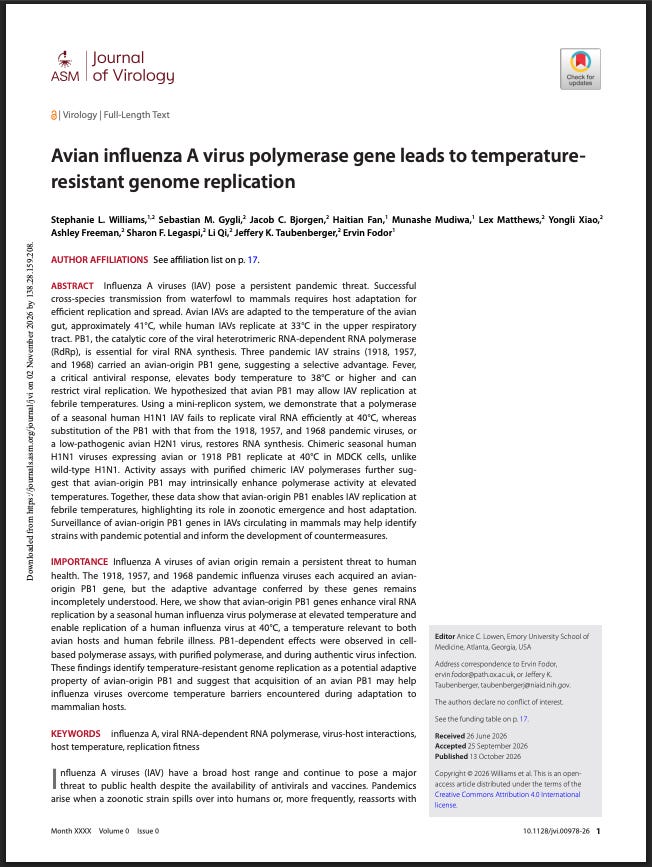
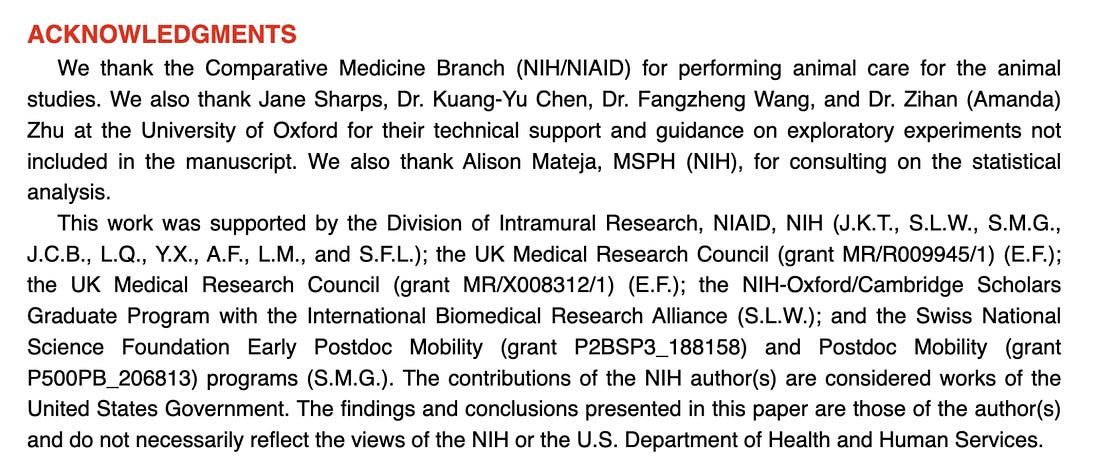
The October 13, 2026, Journal of Virology study acknowledges direct support from NIH’s National Institute of Allergy and Infectious Diseases (NIAID), two UK Medical Research Council grants, and Swiss National Science Foundation fellowships. The authors also acknowledge NIH animal-study support and Oxford scientists who assisted with “exploratory experiments not included in the manuscript,” raising questions about what additional experiments were conducted and why their results were excluded from the published study.

Williams Et Al 2026 Avian Influenza A Vi…3.13MB ∙ PDF file
Download

NIH Claims Its Experiments Overcame a Fever-Related Defense

The NIH-Oxford researchers, including NIH scientist Jeffery K. Taubenberger and Oxford scientist Ervin Fodor, reported manipulating laboratory material they classified as influenza.

They used genetic components that they identified as originating from avian influenza and historical pandemic strains.

The authors state:

“avian-origin PB1 genes enhance viral RNA replication”

They reported increased laboratory measurements interpreted as replication at 40°C, equivalent to 104°F.

Their interpretation was explicit:

“acquisition of an avian PB1 may help influenza viruses overcome temperature barriers”

In plain English, the scientists claim their experimental modifications allowed purported influenza material to maintain replication activity under temperature conditions that impaired the comparison material.

Their evidence consisted of laboratory procedures, cultured-cell experiments, and instrument measurements interpreted through genetic and virological models.

Those measurements are the physical experimental record.

Claims that the material was an influenza virus, possessed a particular genetic identity, or demonstrated a mechanism relevant to natural disease are the researchers’ interpretations of that record.

The watchdog significance is straightforward: NIH researchers deliberately sought a biological enhancement and reported obtaining it, later using it to justify government interventions.
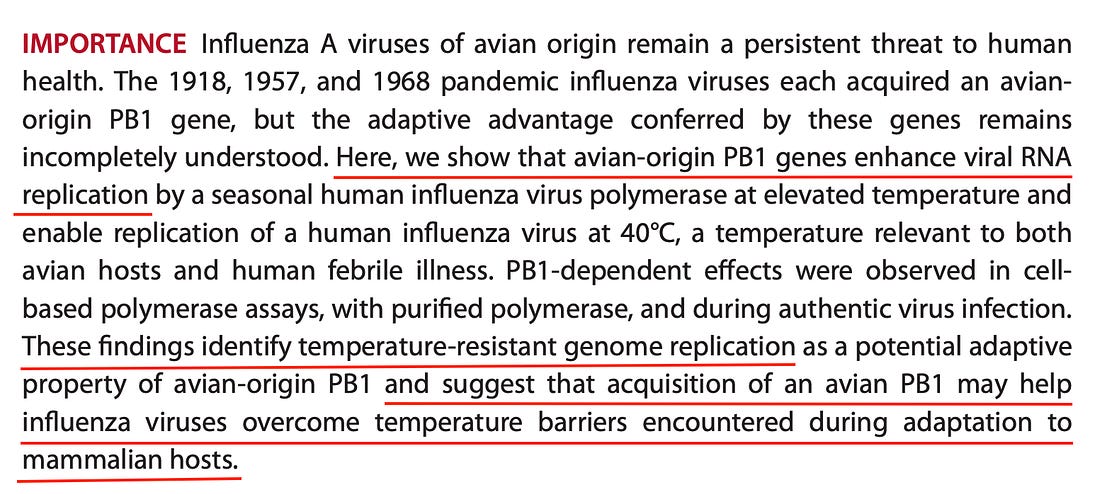
NIH researchers claim that genetic components identified with bird flu and past pandemic strains enhanced influenza replication at 104°F (40°C), potentially allowing purported influenza viruses to overcome temperature barriers in mammals. The October 13, 2026, Journal of Virology study presents these laboratory findings as evidence of a potential pandemic threat. Red underlining highlights the researchers’ claims.

NIH Clears Its Own Chimeric Research From Dangerous Gain-of-Function Restrictions

The paper alleges that NIH’s institutional review entity evaluated experiments involving chimeric influenza material that researchers claimed to have created by combining genetic components from different influenza strains, including components attributed to bird flu and the 1918 pandemic.

The researchers reported that these laboratory-created hybrids exhibited enhanced replication at 104°F (40°C).

They also claim that the project did not require additional review under the federal P3CO framework.

The authors wrote:

“All work with the chimeric IAVs was performed in enhanced biosafety level 3 (BSL-3) laboratory conditions at the National Institutes of Health (NIH). Biosafety practices were aligned with NIH and the Centers for Disease Control and Prevention Biosafety in Microbiological and Biomedical Laboratories (BMBL) 6th ed., the Federal Select Agent program, and the NIH Guidelines for Research Involving Recombinant and Synthetic Nucleic Acids, as well as NIH policies and requirements set forth by the NIH Division of Safety and the NIH Institutional Biosafety Committee. This project was periodically reviewed by the NIH Dual Use Research of Concern Institutional Review Entity (IRE), and the manuscript was reviewed and approved by the IRE before submission. The IRE determined that this research did not meet the definition of dual-use research of concern or dangerous gain of function and that the work did not require elevation as part of the P3CO framework.”

NIH researchers claimed to create chimeric influenza material with enhanced replication capabilities, but NIH’s own reviewers apparently determined that the experiments did not qualify as dangerous gain-of-function research.

Yet NIH’s own published definition of gain-of-function research, reproduced in the House Select Subcommittee on the Coronavirus Pandemic’s December 2024 final report, page 59, states:

“a type of research that modifies a biological agent so that it confers a new or enhanced activity to that agent.”
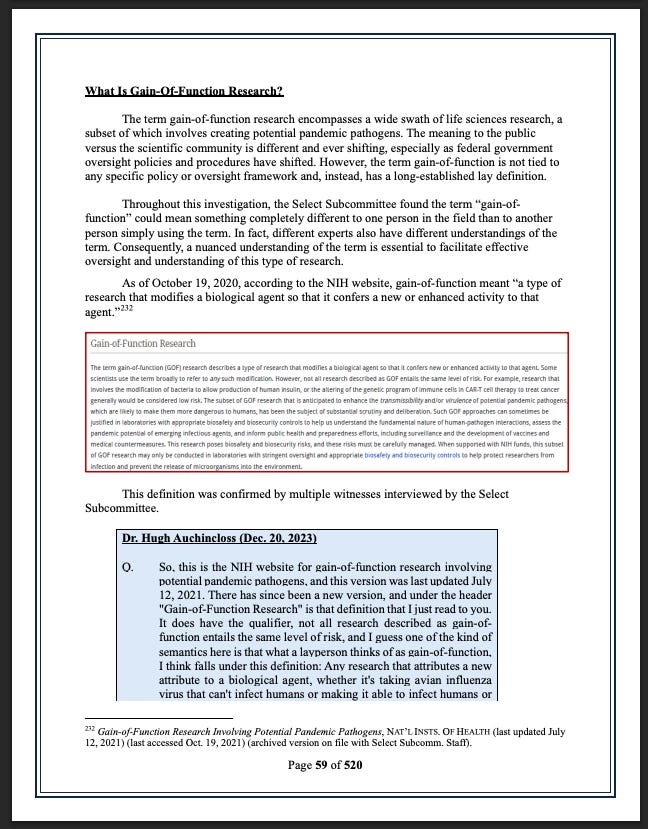
The House Select Subcommittee on the Coronavirus Pandemic’s December 2024 final report, page 59, reproduces NIH’s own definition of gain-of-function research as modifying a biological agent to give it a “new or enhanced activity.” The report also documents testimony from former NIH official Hugh Auchincloss confirming the definition. The language is relevant to NIH’s October 2026 study, whose researchers claim their chimeric influenza experiments enhanced replication at 104°F (40°C). Source: After Action Review of the COVID-19 Pandemic, page 59.

NIH’s own definition of gain-of-function research, reproduced on page 59 of the House Select Subcommittee on the Coronavirus Pandemic’s December 2024 final report, describes research that modifies a biological agent to give it a “new or enhanced activity.” The definition, published on NIH’s website as of October 19, 2020, directly applies to the reported enhancements in NIH’s October 2026 chimeric influenza experiments.

An earlier NIH Office of Science Policy presentation independently gives the same definition.

By NIH’s own broad definition, the experiments qualify as gain-of-function research: scientists reported modifying experimental material to produce enhanced replication under specified laboratory conditions.

President Trump’s May 5, 2025, Executive Order 14292 separately defines dangerous gain-of-function research as:

“scientific research on an infectious agent or toxin with the potential to cause disease by enhancing its pathogenicity or increasing its transmissibility.”

The order identifies additional covered outcomes, including increased harmful consequences, stability, transmissibility, and altered host range.

The July 2026 U.S. Government Policy for Stopping High-Risk Life Sciences Research, Section 6, further defines dangerous gain-of-function research according to specified experimental outcomes and the possibility of significant negative societal consequences.

The central oversight issue is that NIH’s researchers reported creating chimeric influenza material with enhanced biological activity, meeting NIH’s broad gain-of-function definition, while its internal reviewers declared that the work did not meet the government’s narrower dangerous gain-of-function definition.

That decision carries consequences beyond laboratory oversight.

The researchers presented their experimental findings as evidence of purported capabilities relevant to pandemic risk, generating new threat claims that could support additional government surveillance and countermeasure development.

  • Who authorized these chimeric experiments?
  • What written risk assessment justified NIH’s decision that they were not dangerous gain-of-function research?
  • Who independently reviewed that determination?
  • And why should government-funded experiments generating purported pandemic threats become grounds for further government intervention?

NIH Uses Its Findings to Justify More Pandemic Surveillance

The study’s implications extend beyond the laboratory.

After reporting enhanced replication in their experiments, the researchers described their findings as relevant to identifying purported influenza strains that could threaten humans.

They then connected the findings to government surveillance and preparedness.

The authors wrote:

“Insights from this study and further research could inform IAV surveillance efforts and preparedness”

In plain English, NIH-supported researchers conducted experiments, interpreted their laboratory measurements as evidence of a potential pandemic threat, and proposed using those findings to improve pandemic surveillance and preparedness.

This is the central threat-predicate concern.

The government finances experiments involving materials classified as dangerous biological agents.

Researchers then interpret their experimental results as evidence of biological capabilities that warrant additional government attention.

Those conclusions can become scientific support for further surveillance, vaccine research, and biodefense spending.

The sequence is:

  1. Government-funded experiments: Scientists deliberately manipulate laboratory materials associated with purported pandemic threats.
  2. Government-supported threat claims: Researchers interpret the results as evidence of capabilities relevant to future disease outbreaks.
  3. Government preparedness justifications: Researchers recommend that the findings inform further surveillance and countermeasures.

The research establishes that its authors advocated the third step.

Whether particular agencies subsequently used this study to authorize additional spending or interventions requires a separate funding or policy record.

The accountability question is whether experimentally generated claims are being treated as independent evidence of threats to the public.

  • Who verifies those claims before they influence government policy?
  • What direct evidence links the laboratory findings to real-world disease?
  • And what protections ensure the public is not subjected to medical interventions merely because researchers produced new laboratory threat scenarios?

Bottom Line

NIH scientists claim to have created chimeric influenza material using genetic components attributed to bird flu and the 1918 pandemic, producing enhanced replication at 104°F (40°C).

By NIH’s own published definition, the experiments qualify as gain-of-function research.

Yet NIH’s internal reviewers determined that the work did not qualify as dangerous gain-of-function research, despite the Trump administration’s crackdown on such experiments.

The researchers then presented their laboratory findings as evidence of potential pandemic threats requiring additional surveillance and preparedness.

This is pandemic threat-predicate generation: federally funded scientists claim to create enhanced biological capabilities, use their experimental findings to establish new pandemic threats, and provide justification for expanding government surveillance, vaccine research, and biodefense programs.

The sequence is especially concerning following the House COVID Subcommittee’s findings that major pandemic interventions were imposed without adequate scientific justification.

  • Why is NIH conducting chimeric gain-of-function experiments after the administration’s crackdown, allowing its own reviewers to determine whether the work is prohibited, and generating new pandemic threat claims that could justify further government intervention?

NIH Pays East Carolina University to Mutate Plague Bacteria: ‘One of the Deadliest Pathogens Known to Man’


$223,957 federal grant explicitly funds Yersinia pestis bacterial mutants and experimental infections involving the mechanisms allowing plague to overcome immune defenses and contribute to virulence.

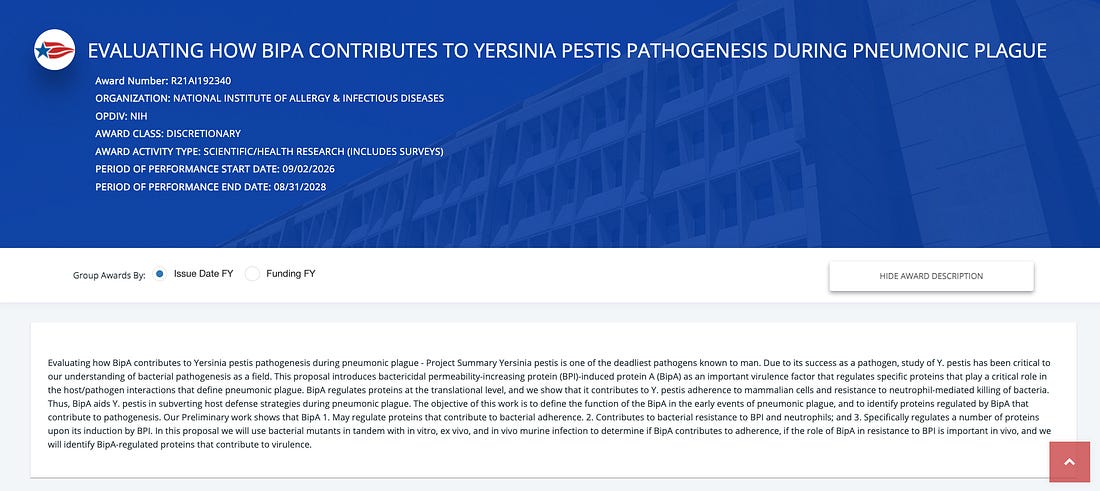
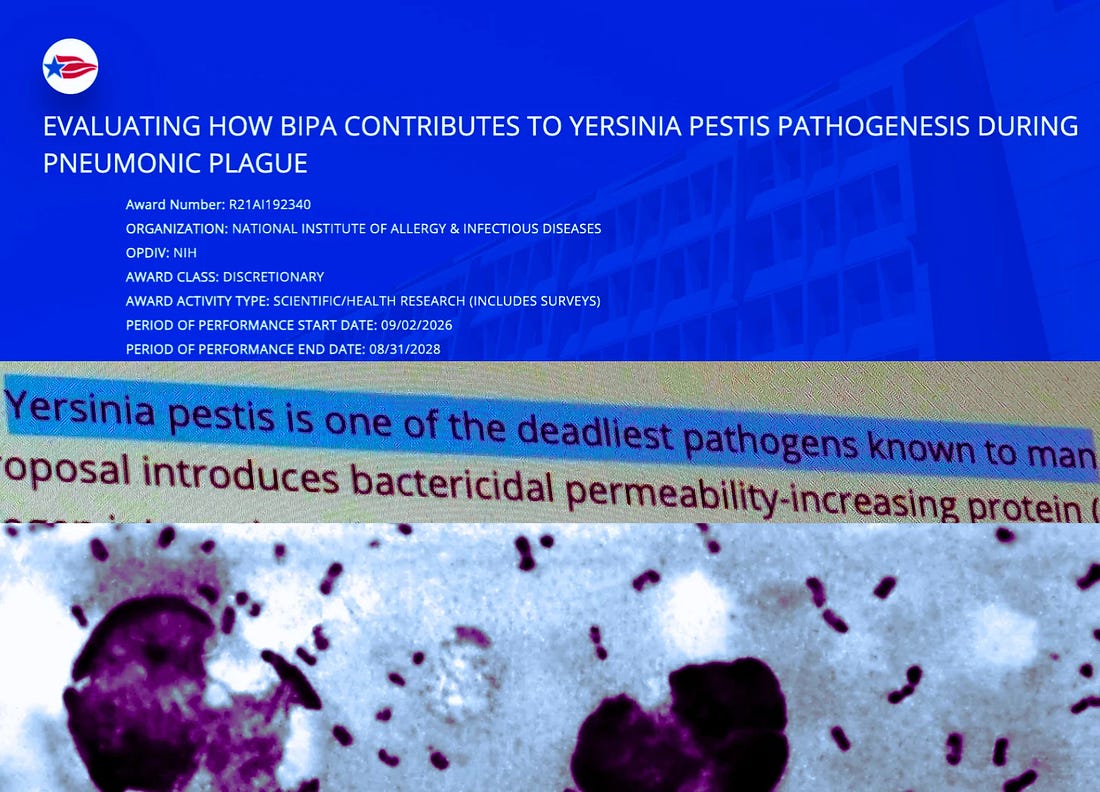
Composite image showing the National Institutes of Health’s September 2, 2026, plague-research grant R21AI192340, its description of Yersinia pestis as “one of the deadliest pathogens known to man,” and microscopy imagery of bacteria identified as Y. pestis alongside immune cells.

The National Institutes of Health (NIH) awarded East Carolina University $223,957 on September 2, 2026, for experiments using mutant plague bacteria to investigate mechanisms of immune resistance and virulence, according to federal grant R21AI192340, administered by the National Institute of Allergy and Infectious Diseases (NIAID).

The agency explicitly acknowledges:

“Yersinia pestis is one of the deadliest pathogens known to man.”

Yet the same federal award declares:

“we will use bacterial mutants”

The grant authorizes research through August 31, 2028, involving laboratory experiments and experimental infections in mice to investigate how plague bacteria resist immune defenses and contribute to disease.

The federal government is financing experiments involving mutant plague bacteria while acknowledging that its research subject is among the deadliest pathogens known to humanity.

The award raises urgent questions:

  • What plague-bacteria mutants will researchers create or use, and what biological changes could result?
  • Could any mutants exhibit increased resistance to immune defenses or greater virulence?
  • Who independently evaluates the risks of experiments involving an organism NIH itself describes as exceptionally deadly?
  • What containment safeguards, emergency procedures, and informed-consent protections apply to laboratory personnel?
  • What independent oversight protects surrounding communities from accidental exposure?

The findings come after JonFleetwood.com reported on October 16 that NIH awarded Stanford University $782,082 to develop experimental influenza vaccine formulations that activate TLR4, the immune receptor stimulated by bacterial endotoxin (LPS), including a formulation containing a synthetic compound modeled on the inflammatory component of endotoxin.

You can contact NIH here.

Screenshot of NIH grant R21AI192340, awarded September 2, 2026, to East Carolina University for $223,957, showing the federal agency’s description of Yersinia pestis as “one of the deadliest pathogens known to man” and its proposal to use bacterial mutants in experiments investigating immune resistance and virulence.

Children’s Hospital of Philadelphia Injected 2,054 Children With Flu Vaccines Under Anesthesia—Now Eyes COVID Shots. This Is Absolutely Disgusting.


CHOP uses the time pressures of pediatric surgery to excuse curtailed informed-consent discussions, as one-third of participating families said their children otherwise would have gone unvaccinated.


Children’s Hospital of Philadelphia’s May 20, 2026, disclosure reveals plans to expand its program for vaccinating children under anesthesia to include COVID-19 and RSV shots, raising further concerns about vaccine safety, parental informed consent, and the use of surgical procedures to increase vaccination rates.

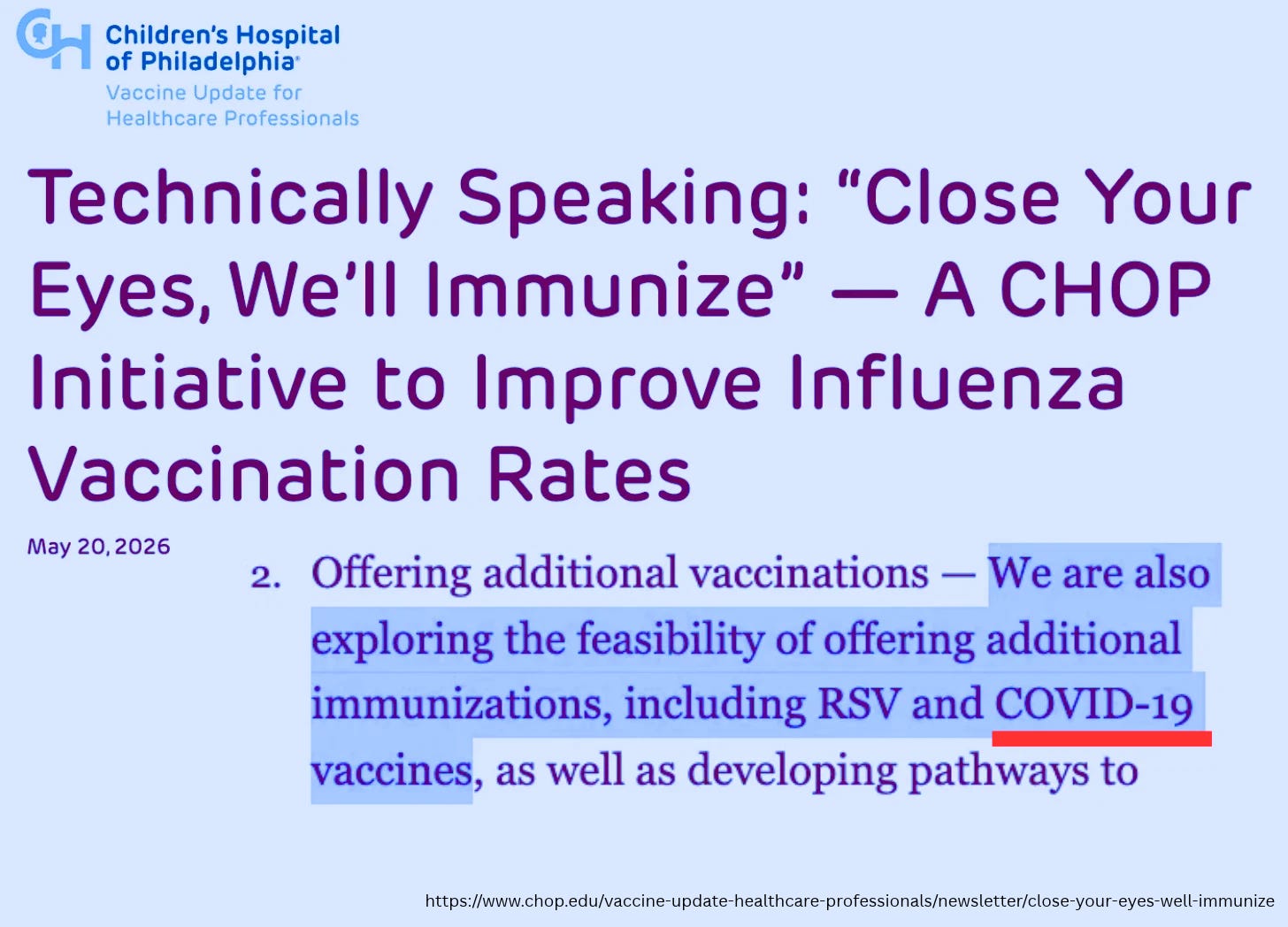
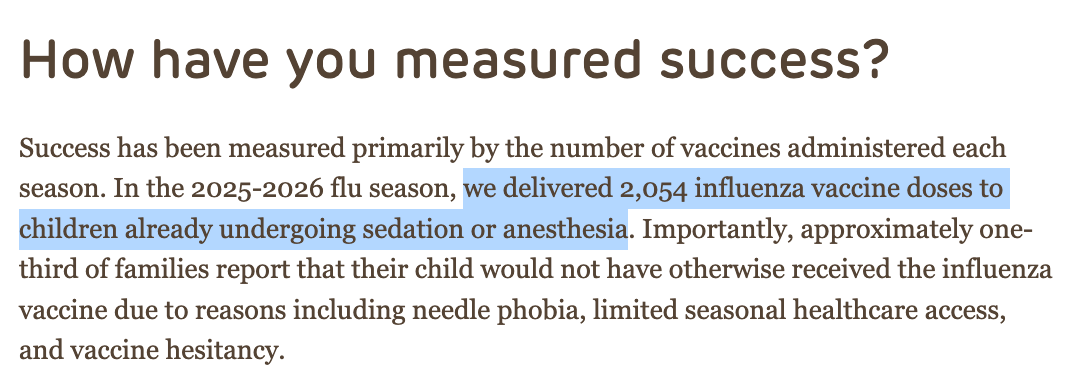
A May 20, 2026, Children’s Hospital of Philadelphia (CHOP) disclosure reveals that the hospital administered 2,054 influenza vaccine doses to children under sedation or anesthesia during the 2025–2026 flu season through a program called “Close Your Eyes, We’ll Immunize” and is now exploring COVID-19 and other injections during medical procedures.

The hospital admits that approximately one-third of participating families said their children otherwise would have gone unvaccinated.

It also cites limited time before surgery as an obstacle to discussing parental concerns about vaccination.

Which raises questions:

  • Why is a hospital using children’s surgical appointments to increase vaccination rates?
  • Why are time pressures being offered as an excuse for limiting discussions about vaccine risks?
  • Who independently verifies informed consent and monitors adverse reactions when children receive injections under anesthesia?

The hospital’s own disclosures establish a disturbing arrangement.

Children are brought in for medical procedures, their unconsciousness becomes an opportunity for additional injections, and the institution measures success by how many vaccines it administers.

You can contact CHOP here.

Children’s Hospital of Philadelphia’s May 20, 2026, newsletter reveals that its “Close Your Eyes, We’ll Immunize” program was designed to increase influenza vaccination rates by administering injections to children under sedation or anesthesia during medical procedures.
Children’s Hospital of Philadelphia admits measuring the success of its vaccination-under-anesthesia program by the number of injections administered, reporting 2,054 influenza vaccine doses during the 2025–2026 season and revealing that approximately one-third of participating families said their children otherwise would have gone unvaccinated.

Technically Speaking “close Your Eyes, We’ll Immunize” — A Chop Initiative To Improve Influenza Vaccines!

Jeffrey Tucker Found The Motive That Five Years Of Fauci Investigations Missed


On July 29th, Anthony Fauci sat in a Senate hearing room, surrounded by lawyers, and invoked his Fifth Amendment right 111 times. He had been subpoenaed by Senator Rand Paul, who two days earlier had released 1,141 pages of Fauci’s pandemic diaries. The man who spent three years telling Americans that questioning him was questioning science declined to answer questions about what he had done. That image is arresting on its own. But it does not explain anything, and explanation is what has been missing.

Consider the strange shape of the Fauci controversy. For five years, investigators have accumulated an enormous quantity of material. There are grant documents, emails, inspector general findings, congressional depositions, failed predictions, guidance that reversed itself without acknowledgment, and evidence of pressure on dissenting scientists. What there has not been is a coherent account of why. Critics have generally settled for one of two stories, neither satisfying. Either Fauci was an ordinary bureaucrat who made ordinary errors under pressure, which fails to explain the pattern in those errors, or he was a cartoon villain executing a plot, which fails because no document shows anyone planning anything of the kind. Jeffrey Tucker has now supplied the missing piece, and it is worth understanding why his account deserves attention.

Tucker is not a newcomer to this subject. He is the founder and president of the Brownstone Institute, a research organization he established in 2021 specifically to document the consequences of pandemic policy. Before that, he spent decades in economics publishing, working closely with Murray Rothbard, running the Mises Institute’s book program, and writing for the Epoch Times. In 2020, he helped organize the signing of the Great Barrington Declaration at the American Institute for Economic Research, which put him in the room with the scientists Fauci’s circle set out to destroy. He has ten books to his name. More to the point, he spent nearly a full week reading all 1,141 pages of the diaries before writing about them, which is more than most commentators managed, and it shows.

His thesis is stated plainly. Fauci, Tucker argues, was “trying to turn himself from villain to hero in the story of manufactured pathogens should it ever be revealed.” The awards, the media saturation, the lockdowns, the hostility toward cheap therapeutics, the vaccine absolutism, all of it functioned as cover. Fauci made himself the indispensable solution to a problem his own institutional world almost certainly helped create.

Now, a reader might reasonably object that this is a claim about a man’s inner life, and inner lives are not observable. That objection deserves a serious answer, and the answer is that Tucker’s thesis does not require mind reading. It requires only four propositions, each of which rests on the documentary record.

The first is that Fauci was a longtime advocate of research that deliberately enhances dangerous viruses. This is not an inference. In December 2011, Fauci wrote in the Washington Post, together with Francis Collins and Gary Nabel, that “important information and insights can come from generating a potentially dangerous virus in the laboratory.” That was his considered public position, defended under his own name. The federal government found the underlying risks serious enough to pause funding for such work in 2014 and to impose a new oversight framework in 2017.

The second is that his agency carried real institutional exposure. In 2023, the HHS Office of Inspector General audited three NIH awards to EcoHealth Alliance totaling roughly $8 million, including $1.8 million in subawards to eight recipients, among them the Wuhan Institute of Virology. The audit found that NIH identified potential risks and then failed to monitor the awards effectively. A critical progress report arrived nearly two years late. EcoHealth could not obtain full scientific documentation from its Wuhan partner. In January 2025, HHS formally debarred both EcoHealth and Peter Daszak for five years. Whatever one believes about the virus itself, the government’s own auditors concluded the oversight had failed.

The third is that Fauci helped organize the scientific response to the origin question at the exact moment that exposure mattered most. On February 1st, 2020, he joined a private call about the virus’s origins. Kristian Andersen, writing to a Nature editor days later, described the resulting project as “prompted by Jeremy Farrar, Tony Fauci, and Francis Collins.” The paper that emerged, “The Proximal Origin of SARS-CoV-2,” declared flatly that the virus was not a laboratory construct. NIH promoted it. When it failed to end the discussion, Collins asked Fauci whether NIH could do more to put down the lab theory. The next day Fauci cited the paper from the White House podium as though it were an independent finding rather than something his own circle had concocted.

Here is where the argument acquires real force. Privately, the authors were nowhere near as certain as the paper sounded. In June 2020, Andersen wrote that there was “no hard evidence one way or the other,” that deliberate insertion could not be ruled out, and that the paper had been too strong. He noted that Wuhan had cultured bat coronaviruses under BSL-2 conditions and that he considered natural and laboratory scenarios roughly equally probable. In May, Edward Holmes worried about how to warn people about gain-of-function risk without helping the lab leak camp, and Andersen replied, “Exactly, that’s why I haven’t said anything.” Ralph Baric, who knows this research better than almost anyone alive, told Senate investigators this year that he disagreed with the idea that a lab leak could be completely ruled out.

Public certainty, private doubt. That gap is precisely what a reputation management project predicts and what honest inquiry does not.

The fourth proposition is where the diaries earn their keep. They show a man consumed by status. Tucker documents a single day containing 11 media appearances. The pages are thick with celebrity contacts, tributes, awards, and elite access, and thin to the point of absence on the human wreckage below. Fauci records calling the Great Barrington authors, credentialed scientists from Harvard, Stanford, and Oxford, the “3 stooges.” Collins, in a separate email, wanted a “quick and devastating published takedown” of their declaration. These are not the reactions of men weighing evidence. They are the reactions of men defending a franchise.

Put the four together, and the motive is not mysterious at all. Fauci did not need to know the virus came from a laboratory. He needed only to grasp that a serious investigation into that possibility would threaten his agency, his research philosophy, his standing, and his place in history. That recognition alone is sufficient to explain everything that followed.

The thesis also explains something the ordinary-error story cannot: why failure produced escalation instead of humility. The diaries show Fauci knew by January 2021 that mutations were outrunning the formulas. By mid-2021, he acknowledged that the vaccinated were getting infected, then publicly blamed the unvaccinated days later. By July 2022, he noted that Americans were being told to get boosted with a shot that did not cover the circulating variant, with a matched booster five weeks away. A leader whose authority rested on evidence adjusts when the evidence moves. A leader whose identity has fused with the solution treats every disappointment as proof that compliance was insufficient, and so the mandates continued and the messaging hardened and the children who had never been at meaningful risk were enrolled anyway, and none of it can be understood as adaptive public health because it was never adaptive and it was never really about health.

Fauci himself gave the game away in November 2021 when he told CBS that people criticizing him were “really criticizing science because I represent science.” That sentence is the whole era compressed. It is also, as it happens, the clearest confirmation of Tucker’s reading that anyone could have asked for, because it shows the fusion had already occured in Fauci’s own mind.

None of this requires believing that Fauci engineered a virus or ordered its release. Tucker does not claim that, and the case does not need it. What it requires is recognizing that we allowed one man to fund the research, oversee the research, define whether the research was risky, convene the scientists who assessed the origin, promote their conclusion, set the policy response, and serve as the sole authorized interpreter of all of it. No serious system of accountability permits that concentration. A bank does not audit its own books after the crash.

Tucker’s closing judgment is that Fauci “sought immortality through power and fame,” and that his immortality is now earned in infamy. That reads like literary flourish until you sit with the record, and then it reads like a finding. The diaries were assembled, Tucker suspects, as raw material for an autobiography, a monument to a great career. They have become the primary evidence against him. He was preemptively pardoned by Joe Biden. He pleaded the Fifth anyway, 111 times.

Just think about that now.

Bill Gates-Funded CEPI Gives Moderna $50 Million for mRNA Ebola Jab


After WHO—also funded by Gates—declares Ebola a “public health emergency of international concern” and calls for vaccine development, raising conflict-of-interest concerns.

The Bill Gates-funded Coalition for Epidemic Preparedness Innovations (CEPI) will “urgently accelerate development of three investigational vaccines targeting the Bundibugyo Ebola virus that has caused a rapidly spreading epidemic in the Democratic Republic of the Congo (DRC) and neighboring Uganda,” according to a Sunday press release from the organization.

The move comes as the World Health Organization (WHO), also funded by Bill Gates, just weeks ago declared Ebola currently represents a “public health emergency of international concern (PHEIC)” and that there is a need to “[i]mplement clinical trials to advance the development and use of candidate therapeutics and vaccine, supported by partners.”

CEPI now believes there is a “critical need to produce tools to help curtail the outbreak, complementing ongoing public health interventions by affected countries.”

The arrangement raises obvious conflict-of-interest concerns, as Bill Gates-funded transnational health organizations are simultaneously framing the outbreak response, declaring international emergency status, and accelerating the development and deployment of the very vaccine platforms their aligned networks support and finance.


The three vaccine candidates include those developed by the International AIDS Vaccine Initiative (IAVI), Moderna, and the University of Oxford.

CEPI has committed $50 million to Moderna (mRNA platform), $8.6 million to the University of Oxford (adenoviral vector platform), and $3.2 million to IAVI (rVSV vaccine platform).

The press release confirms Moderna’s Ebola formulation will be based on mRNA, like its COVID-19 jab:

“CEPI has committed up to US$50 million for preclinical testing and Phase 1 clinical trials. CEPI will support simultaneous manufacturing of doses to enable large-scale Phase 2/3 trials to begin immediately if Phase 1 data supports progression. This candidate uses the same fast, flexible, scalable mRNA technology validated during COVID-19 and builds upon Moderna’s existing R&D on related Ebola viruses. The collaboration leverages CEPI’s existing strategic partnership with Moderna.”

The same Gates-funded global health network shaping international Ebola messaging, emergency declarations, and government outbreak response is also funding and accelerating the vaccines being presented as the solution to the crisis.

The arrangement raises obvious conflict-of-interest concerns, as the organizations influencing public fear, policy, and emergency infrastructure are financially and operationally tied to the very pharmaceutical platforms being advanced in response.

HHS Funds Gain-of-Function Influenza–COVID ‘Frankenvirus’ Combining Influenza Entry Machinery With SARS-CoV-2 Human Cell–Binding Domain


HHS-backed research produced chimeric influenza viruses carrying SARS-CoV-2’s ACE2-binding interface—introducing a higher-affinity human receptor-binding mechanism into an influenza pathogen.

HHS-funded researchers are claiming to have engineered influenza-based chimeric “Frankenstein” viruses that combine influenza’s hemagglutinin (HA) with the SARS-CoV-2 receptor-binding domain (RBD)—a high-affinity human ACE2-binding interface.

Introducing a fundamentally different and stronger human cell–binding mechanism into an influenza viral system is a modification that fits longstanding U.S. gain-of-function definitions involving altered receptor usage and host range.

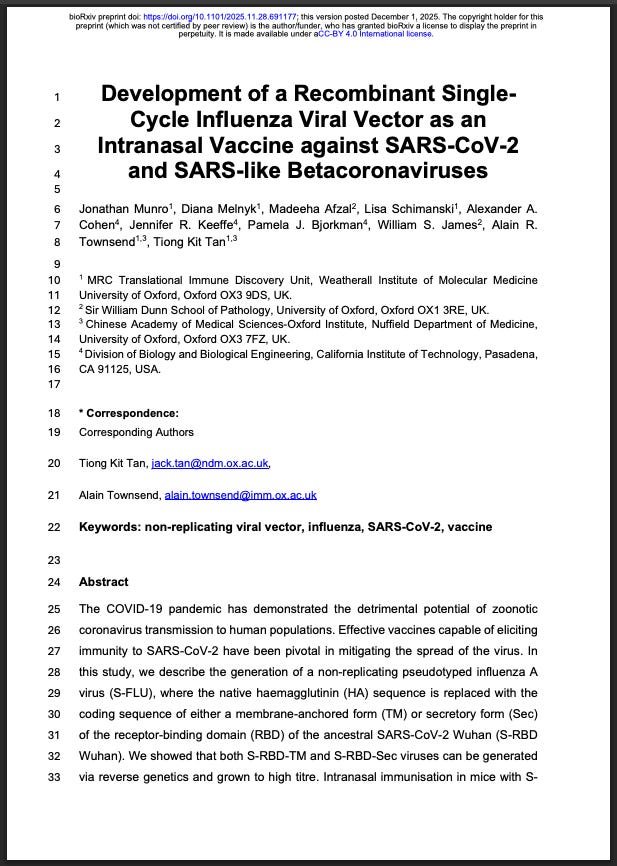
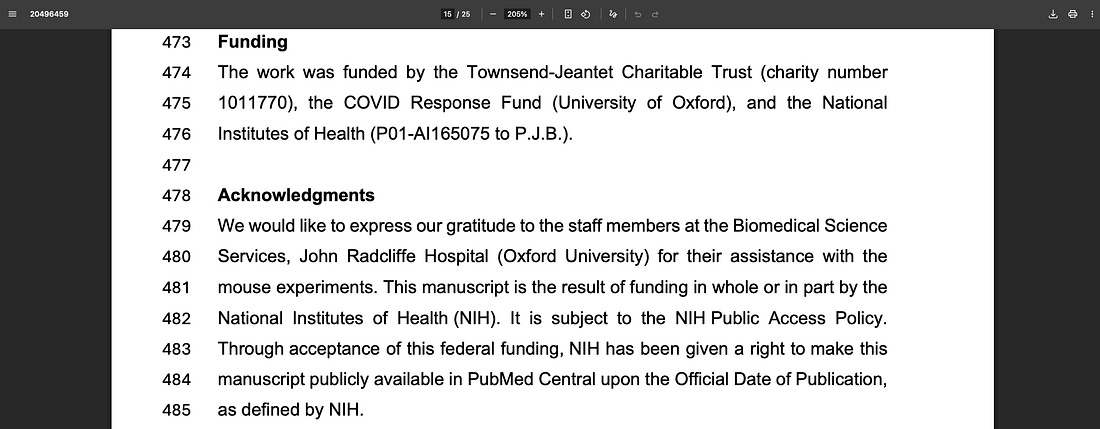
A December 2025 bioRxiv preprint confirms the work, supported in part by the National Institutes of Health (NIH)—an agency within the U.S. Department of Health and Human Services (HHS)—was funded under grant P01-AI165075:

“This work was funded by… National Institutes of Health… P01-AI165075”

and involved replacing influenza’s native HA gene with the SARS-CoV-2 RBD while producing virus particles coated with HA in the laboratory, resulting in viral constructs that physically contain both influenza’s entry protein and the SARS-CoV-2 optimized human cell–binding interface.

The study was conducted by Jonathan Munro, Diana Melnyk, Madeeha Afzal, Lisa Schimanski, Alexander A. Cohen, Jennifer R. Keeffe, Pamela J. Bjorkman, William S. James, Alain R. Townsend, and Tiong Kit Tan, with affiliations including the University of Oxford’s Weatherall Institute of Molecular Medicine and Sir William Dunn School of Pathology (here), the Chinese Academy of Medical Sciences–Oxford Institute (here), and the California Institute of Technology (here).

The head of HHS is Secretary Robert F. Kennedy Jr., while NIH is led by Director Jay Bhattacharya and NIAID is headed by Director Jeffery Taubenberger.

You can contact NIAID here, the NIH here, and HHS here to voice opposition to taxpayer-funded chimeric research on pandemic pathogens—particularly after Congress, the White House, the Department of Energy, the FBI, the CIA, and Germany’s Federal Intelligence Service (BND) all acknowledged that the deadly COVID-19 pandemic was “likely” the result of a laboratory incident involving GOF.

Meanwhile, President Donald Trump recently signed legislation into law allocating at least $5.5 billion in taxpayer funding for a future influenza pandemic.

At the same time, the Trump administration has advanced a $500 million “next-generation, gold-standard” combination influenza-COVID vaccine platform—positioning federal agencies to simultaneously fund the development of pandemic-capable influenza-COVID pathogens while building the mass vaccination infrastructure designed to respond to the very outbreak those systems could enable.


Engineered Virus Introduces High-Affinity Human Receptor Binding Into Influenza Backbone

The study explicitly confirms that influenza’s native receptor-binding gene was removed and replaced:

“the native haemagglutinin (HA) sequence is replaced with the coding sequence of… the receptor-binding domain (RBD) of the… SARS-CoV-2”

Influenza viruses naturally infect human cells using hemagglutinin, which binds sialic acid receptors with relatively low individual affinity and relies on multivalent interactions across many HA proteins.

By contrast, the SARS-CoV-2 receptor-binding domain binds directly to the human ACE2 receptor through a high-affinity protein–protein interaction, enabling efficient attachment to human airway cells.

By inserting the SARS-CoV-2 RBD into an influenza backbone, the researchers introduced a human ACE2-binding interface into a virus that does not naturally use that receptor system.

Chimeric Particles Combine Influenza HA and SARS-CoV-2 RBD

The study explicitly states that the influenza virus was genetically modified by replacing its HA coding sequence with the SARS-CoV-2 receptor-binding domain:

“we replaced the native HA coding sequence”

and:

“In this study, we describe the generation of a non-replicating pseudotyped influenza A virus (S-FLU), where the native haemagglutinin (HA) sequence is replaced with the coding sequence of either a membrane-anchored form (TM) or secretory form (Sec) of the receptor-binding domain (RBD) of the ancestral SARS-CoV-2 Wuhan (S-RBD Wuhan).”

At the same time, the study makes clear that HA function is not eliminated at the particle level, but instead supplied externally:

“Inactivation of the native haemagglutinin (HA) signal sequence means that S-FLU can only replicate in cell lines transfected to express HA that provide the surface protein for budding viral particles.”

The authors also confirm that the resulting engineered virus retains the ability to enter cells:

“Notably, S-FLU exhibits the capacity to infect host cells but is replication-incompetent.”

Study Confirms Infection & Expression of SARS-CoV-2 Binding Domain

The researchers confirmed that the engineered virus successfully infected cells and expressed the inserted RBD:

“both S-RBD-TM and S-RBD-Sec led to expression of RBD in the infected cells”

This demonstrates that the chimeric virus delivers and expresses the SARS-CoV-2 receptor-binding domain inside host cells following infection.

Bottom Line

HHS-funded researchers say they have engineered influenza-based viruses that combine influenza’s hemagglutinin (HA) with the SARS-CoV-2 receptor-binding domain (RBD).

They replaced the HA gene with the RBD.

But they still produced virus particles coated with HA.

The result is a chimera that physically carries both influenza’s entry machinery and a high-affinity human ACE2-binding interface.

The study confirms these viruses infect cells and express the RBD.

That is a direct change in receptor usage, consistent with longstanding U.S. gain-of-function definitions.

The work was funded under NIH grant P01-AI165075.

At the same time, the federal government is allocating at least $5.5 billion for an influenza pandemic and advancing a $500 million influenza-COVID vaccine platform—building both the engineered viral systems and the mass-response infrastructure in parallel.

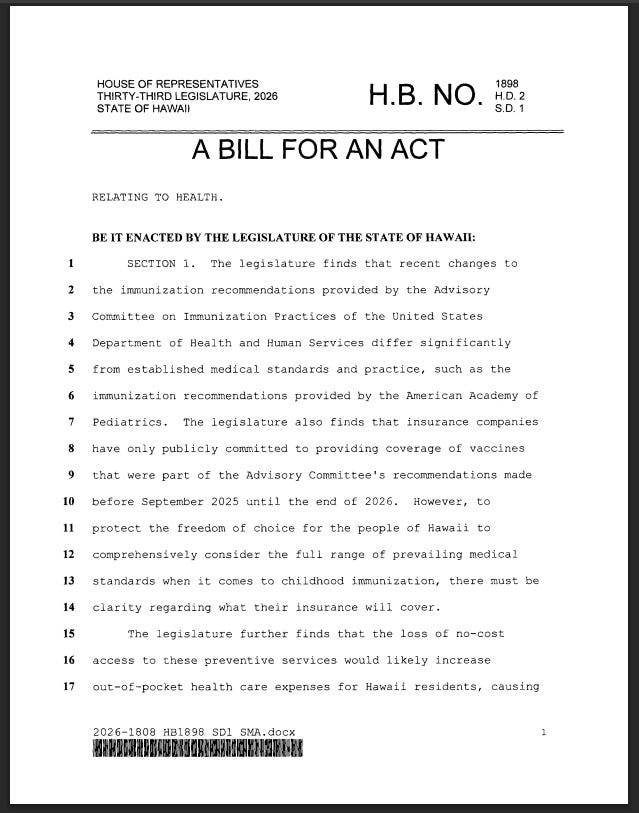
Hawaii Bill Shields State-Directed Medical Interventions Like Vaccines From Lawsuits: HB1898


After state’s vaccine passport era, Hawaii lawmakers want to give Department of Health final authority over medical decisions while blocking lawsuits and discipline against those who enforce them.

Hawaii lawmakers are advancing a bill that gives the state’s Department of Health decisive control over which vaccines and preventive services count as medically valid—and then protects anyone who carries them out from nearly all legal consequences.

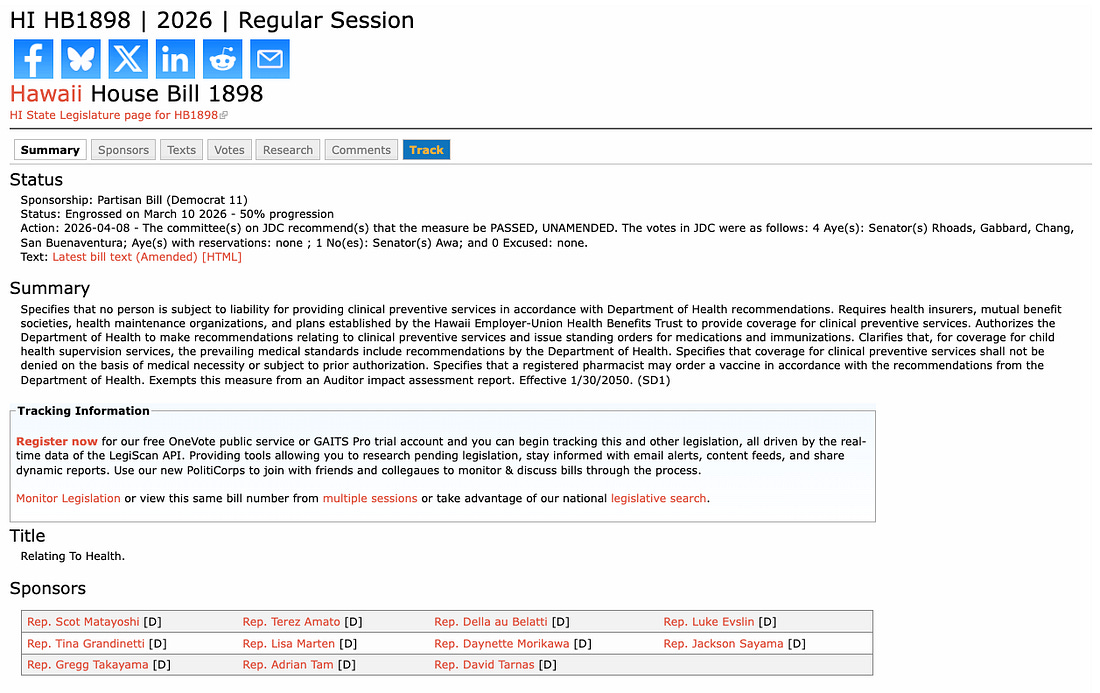
House Bill 1898 (S.D. 1) creates immunity from civil lawsuits, criminal liability, and professional discipline for providers who follow DOH recommendations on “clinical preventive services.”

If harm occurs later, the main legal question becomes whether the provider obeyed state guidance.

During the next outbreak or pandemic, when the DOH again requires vaccination to work, attend school, travel, or participate in society, anyone injured by the shot could have no one to hold accountable—because the bill grants legal immunity to every doctor, pharmacist, and facility that simply followed state orders.

Watchdog groups actively monitoring the CDC’s Vaccine Adverse Event Reporting System (VAERS) data confirm 2.7 million adverse events have been linked to vaccines since 1990 (~204 adverse events per day)—though a Harvard Pilgrim Health Care report found that fewer than 1% of adverse events are ever reported, suggesting the true number could be in the hundreds of millions (~20,360 adverse events per day).

The accountability-erasing bill is backed by Democrat lawmakers, including Reps. Scot Matayoshi, Terez Amato, Della Au Belatti, Luke Evslin, Tina Grandinetti, Lisa Marten, Daynette Morikawa, Jackson Sayama, Gregg Takayama, Adrian Tam, and David Tarnas.

HB1898 is in the final stage in the Senate, one step away from passage before being sent to the Governor.

You can contact Hawaii senators here and voice your opinion of the bill and how they should vote on it.

Health-Freedom Principles Violated by the Bill

The bill directly undermines several longstanding health-freedom principles:

  1. Bodily Autonomy and Informed Consent: Full insurance coverage and legal protection are available only for DOH-approved interventions. Families who prefer a different schedule or approach must pay out of pocket for alternatives that carry no such protections.
  2. Medical Accountability: The bill states that “[n]o person shall be subject to civil or criminal liability or professional disciplinary action” for providing services in accordance with DOH recommendations. Professional organizations, hospitals, and licensing boards are barred from disciplining, suspending, or penalizing providers who follow the state line.
  3. Independent Medical Judgment: Doctors who disagree with the DOH’s final decision on immunizations risk professional repercussions, while those who comply are shielded.
  4. Parental Rights in Child Health Decisions: The bill rewrites child health supervision rules so that “prevailing medical standards” now mean whatever the DOH says. Insurance must cover the DOH-chosen immunizations at no cost to the family, leaving parents who want a different schedule to pay full price.
  5. Separation of Medicine and State: Standing orders, mandatory insurance coverage with no cost-sharing, pharmacy administration, and legal immunity combine to create a single state-directed pipeline for preventive care.

Department of Health Given Final Authority

The bill makes the Hawaii Department of Health the tie-breaker when national medical groups disagree.

It states that if recommendations from the Advisory Committee on Immunization Practices and the American Academy of Pediatrics differ, “the department of health shall determine which recommendations shall apply.”

It also gives the DOH new power to issue standing orders for medications and immunizations, allowing them to be given without an individual doctor’s prescription.

Legal Protection Tied to Following State Guidance

The immunity language is clear:

“No professional organization or association, health care provider, or health care facility shall subject any person to discipline, suspension, loss of license, loss of privileges, loss of membership, or other penalty for providing clinical preventive services in accordance with recommendations made pursuant to section 321-31.”

Insurance Must Cover DOH-Approved Services at No Cost

For policies issued after January 1, 2027, insurers must provide coverage “without any deductible, copayment, coinsurance, or other cost-sharing requirements” for anything the DOH recommends.

Every Hawaii policyholder will likely pay higher premiums to subsidize the DOH’s choices—while families who want a different schedule get zero coverage and pay 100% out of pocket.

Pharmacies Can Administer Vaccines Under DOH Rules

HB1898 expands who can give vaccines by allowing pharmacists, pharmacy interns, and registered pharmacy technicians to administer them when ordered in line with DOH recommendations or standing orders.

What This Means in a Future Outbreak

If the DOH issues new recommendations during the next public-health emergency, those shots or treatments can be rolled out quickly through pharmacies, must be covered by insurance, and anyone administering them is protected from lawsuits or discipline as long as they followed DOH guidance.

Negligence Exception Exists, But Standard Is Compliance

The bill still allows claims for injury “arising from negligence.”

In practice, however, the legal test will center on whether the provider followed the Department of Health’s recommendations.

Bottom Line

HB 1898 gives the Department of Health the power to decide which preventive medical interventions are covered and protected by law.

It forces insurers to pay for the state’s choices with no patient cost-sharing and removes meaningful accountability for providers who follow those choices.

Hawaii families who want options outside the official schedule will face higher costs and fewer willing providers.

When the state controls the definition of medical truth and shields its enforcers from consequences, bodily autonomy and informed consent become conditional on government approval rather than individual rights.

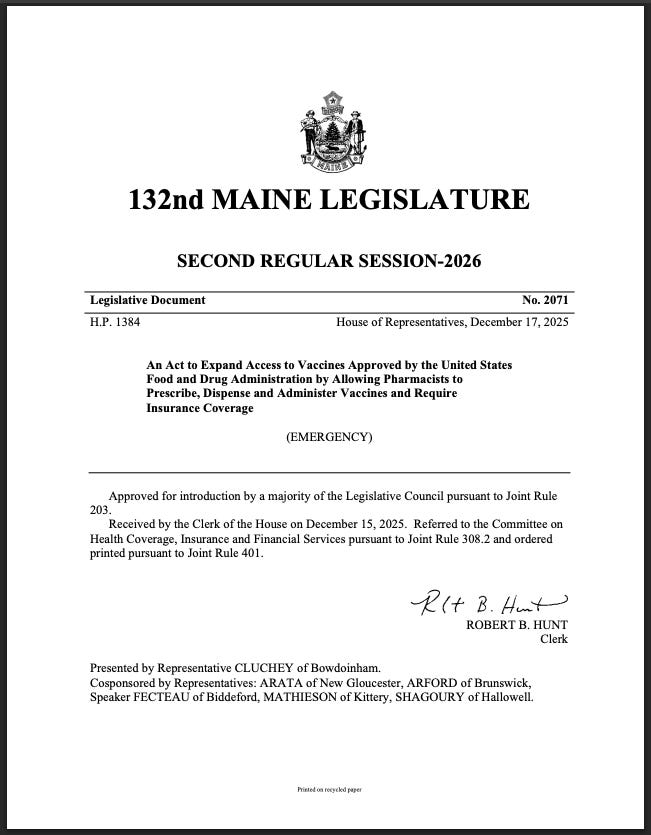
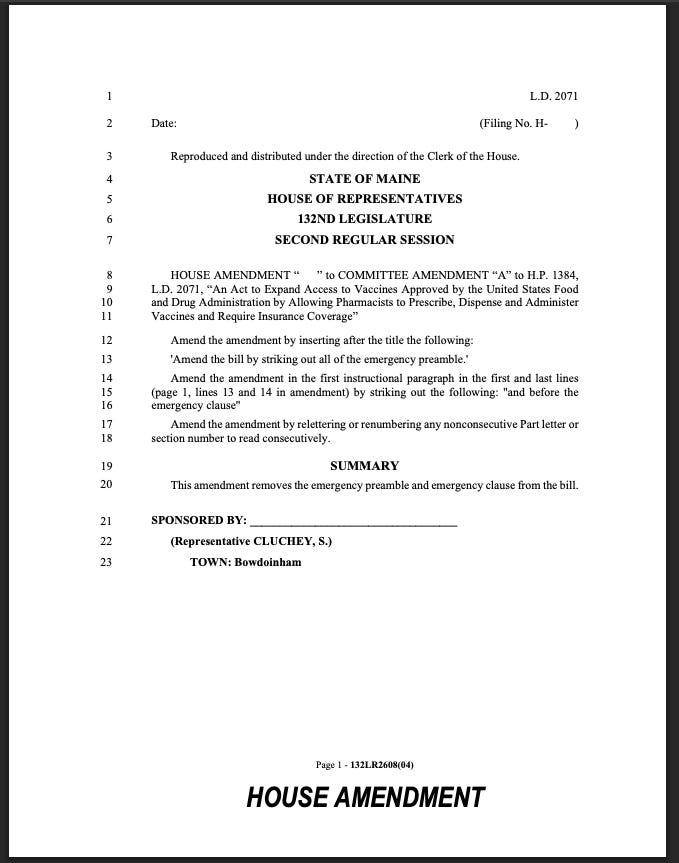
Maine Builds Rapid Influenza Vaccine Deployment and Tracking System—Pharmacists Granted Full Authority for Statewide Rollout ‘Without a Prescription’


L.D. 2071 requires pharmacists to report each vaccine within 72 hours to a centralized state system, enabling real-time monitoring of vaccination across the population.

Maine lawmakers have passed legislation that fundamentally restructures how influenza vaccines can be deployed across the state—establishing a system capable of rapid, large-scale distribution to the general population without relying on physicians.

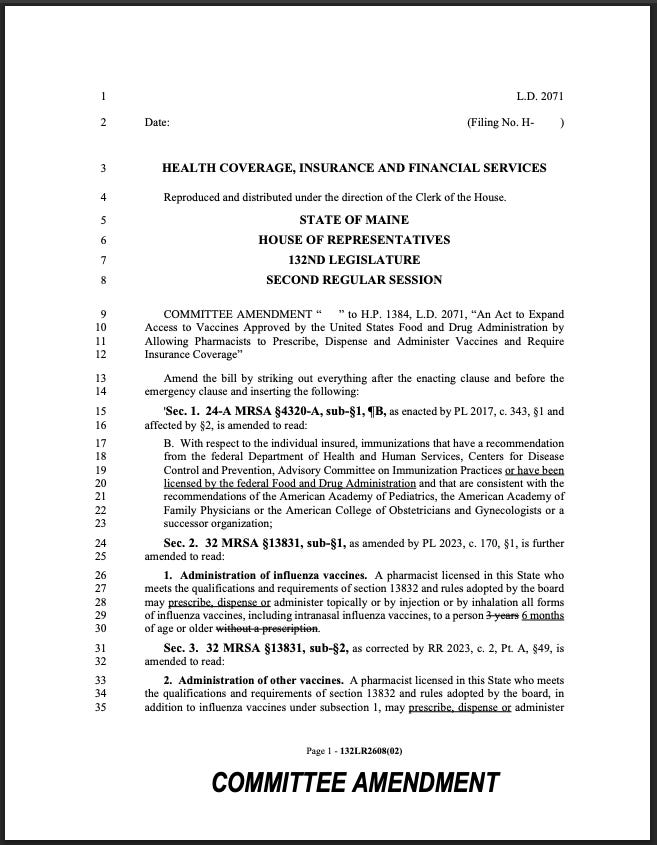
The final version of L.D. 2071 gives pharmacists full independent authority to prescribe, dispense, and administer influenza vaccines to individuals as young as 3 years and 6 months old—without a prescription or prior medical approval.

This structure removes physician oversight, concentrates vaccination authority in retail pharmacies, and pairs rapid, population-wide access with centralized state reporting—raising concerns about informed consent, medical autonomy, and the state’s ability to execute a fast, large-scale influenza vaccination campaign if another public health emergency is declared.

As of April 7, 2026, the bill has passed both chambers in identical final form and has been ordered sent to the Governor’s desk for signature.

The bill will take effect 90 days after the Legislature adjourns, which is scheduled for April 15, 2026—meaning the new pharmacist authority would become law on July 14, 2026.

The legislation’s advancement comes amid state, federal, and international influenza outbreak orchestration.

It is sponsored by Democrat Representatives Sally Cluchey, Poppy Arford, Ryan Fecteau, Kristi Mathieson, Daniel Shagoury, and Republican Rep. Amy Arata.

You can contact Governor Janet Mills office here.


Pharmacists Become Frontline Vaccination Authority

Under the amended statute:

“A pharmacist… may prescribe, dispense or administer… all forms of influenza vaccines… to a person 3 years 6 months of age or older without a prescription.”

This language removes the traditional requirement that a physician authorize vaccination—transferring full control over influenza vaccine delivery directly to retail pharmacies.

Pharmacists are no longer limited to administering a doctor’s order.

They can now initiate vaccination themselves.

That shift transforms pharmacies from passive distribution points into independent vaccination hubs capable of operating at scale.

Statewide Retail Network Activated for Mass Deployment

By design, the system leverages the existing pharmacy network as the backbone of vaccine delivery.

Instead of relying on:

  • clinics
  • hospital systems
  • scheduled appointments

The law enables:

  • walk-in access
  • immediate administration
  • decentralized distribution

Pharmacies—already embedded in nearly every community—function as a ready-made infrastructure for rapid statewide rollout.

Influenza Singled Out for Broadest Authority

The legislation treats influenza differently from all other vaccines.

  • Influenza vaccines:
    • pharmacist can prescribe, dispense, and administer
    • applies down to age 3 years 6 months
  • Other vaccines:
    • independent pharmacist authority limited to adults 18+
    • minors require a doctor’s prescription

This makes influenza the only vaccine category granted full pharmacist-controlled access across both adults and young children.

Real-Time State Tracking Built In

The bill also requires that every administered vaccine be reported:

Pharmacists must report vaccine administration to the state immunization information system within 72 hours.

This creates a centralized system capable of:

  • tracking vaccination rates
  • monitoring geographic uptake
  • identifying gaps in coverage

The result is near real-time visibility into how widely vaccines are being administered across the population.

Insurance Language Opens the Door—Without Mandating Coverage

While earlier versions of the bill proposed mandatory no-cost vaccine coverage, the final version stops short of requiring it.

Instead, the amended law clarifies that insurers are authorized to cover vaccines without cost-sharing if they choose, rather than mandating it.

Even without a mandate, the structure aligns financial incentives with expanded access.

What the Structure Reveals

The bill establishes:

  • Immediate, walk-in vaccination access
  • No physician gatekeeping
  • A statewide pharmacy-based delivery network
  • Rapid reporting into a centralized tracking system
  • Inclusion of young children in the rollout model

This represents a complete redesign of how influenza vaccines can be deployed at scale.

Bottom Line

Maine legislators have constructed a system that allows influenza vaccines to be distributed quickly, broadly, and with minimal friction across the entire population.

If activated, the infrastructure enables any individual to walk into a pharmacy, receive an influenza vaccine on the spot, and have that dose logged into a statewide tracking system within days—without ever interacting with a physician.

$2.46 Billion ‘Momnibus’ Bill Targets Pregnant Women for Vaccination—Builds $715 Million Real-Time Surveillance System Activated During Pandemics. THIS IS EXACTLY HOW IT BEGINS GETTING 100% OF THE POPULATION JABBED WITH THEIR EVIL INJECTION. STARTING WITH THE NEWBORNS!


H.R. 7973, with 203 cosponsors, would create a closed-loop federal system to identify pregnant women by race and demographics, boost their vaccination rates, and track them in real time.

Jon Fleetwood

Apr 06, 2026

A federal bill introduced in Congress would create a system where pregnant women are not only targeted for increased vaccination but also tracked through a federally coordinated surveillance network that activates during pandemics.

H.R. 7973—the “Momnibus Act”—authorizes a staggering $2.46 billion overall, with $715 million of that specifically allocated to build this structure: combining mass vaccination initiatives with a real-time data tracking system designed to monitor health status, outcomes, and demographic characteristics during declared public health emergencies.

The bill constructs a pipeline to identify the population, increase medical intervention, and track the results—continuously, at scale, and under federal coordination.

From a health freedom standpoint, this represents a shift away from individual consent-driven care and toward a system where specific populations are identified, targeted, and monitored during crises.

Introduced by Rep. Lauren Underwood—Backed by Industries Positioned to Benefit

The legislation was introduced on March 18, 2026 by U.S. Representative Lauren Underwood (D-IL-14) and immediately routed to multiple House committees, including Energy and Commerce.

It remains at the earliest stage of the legislative process, with no hearings or votes.

Campaign finance data shows support from healthcare systems, insurance networks, and pharmaceutical-aligned interests—industries that would directly benefit from:

  • expanded vaccination programs
  • increased federal funding streams
  • long-term surveillance infrastructure

The same entities positioned to carry out the bill’s mandates are among those funding its sponsor.

You can contact Rep. Underwood here and the rest of the bill’s 203 cosponsors here to voice your opposition to the expansion of federally directed vaccination targeting, real-time health surveillance during public health emergencies, demographic-based population profiling, centralized control over medical data and response, and the erosion of informed consent and individual medical autonomy.

Federal Government Moves to Identify & Increase Vaccination in Targeted Populations

The bill directs federal agencies to “increase vaccination rates of pregnant and postpartum individuals… and their children.”

Funding is explicitly tied to expanding these efforts, with hundreds of millions authorized specifically for awareness and equity campaigns that prioritize populations with “low rates of vaccination” and “racial and ethnic minority groups.”

The federal government is authorized to identify which groups are not complying with recommended vaccination schedules and focus massive resources on increasing uptake in those populations.

That is a shift from informed consent at the individual level to behavioral targeting at the population level.

$715 Million Surveillance & Vaccine Apparatus Designed for Pandemic Activation

Of the bill’s $2.46 billion total authorizations, $715 million goes directly to the combined maternal vaccine push and surveillance system:

  • $190 million for CDC maternal surveillance system, expanded mortality/morbidity tracking, national pregnancy risk monitoring, and NIH emergency research.
  • The remaining hundreds of millions are dedicated to the maternal vaccination awareness and equity campaign (including the updated $73.4 million per year authorization for 2027–2032).

The system will be used for “data collection, surveillance, and research… as a result of public health emergencies and infectious diseases.”

Real-Time Monitoring of Medical Status During Emergencies

The system tracks “diagnostic testing, confirmed cases, hospitalizations, deaths…” with updates required “at least on a monthly basis.”

This creates continuous, rolling surveillance of a defined population during a declared emergency.

In practical terms, once an emergency is declared, the federal system gains ongoing visibility into who is infected, who is hospitalized, and how individuals are progressing.

That is real-time population monitoring tied directly to health status.

Nationwide Data Integration—From Lab to Federal Database

The bill requires “capacity building… to collect and transmit… demographic data” and mandates that laboratories receive “race, ethnicity, pregnancy status… and other demographic data.”

This creates a standardized data pipeline: data originates at testing sites and hospitals, moves through state systems, and is centralized at the federal level.

Mandatory Demographic Profiling of Health Data

All collected data must be categorized by “race, ethnicity, gender, primary language, geography, socioeconomic status.”

Rather than just tracking disease, the bill would allow tracking of mothers who have the disease, where they are, and what demographic group they belong to.

That enables targeted interventions and creates a framework for population-level categorization tied to medical status.

Centralized Data Collection Before Public Release

The bill requires public reporting on the CDC website while stating “all data collected is deidentified.”

The key distinction is timing.

Data is collected in detailed individual form first, then anonymized before public release.

Federal Authority Expands Immediately After Emergency Declaration

Within 30 days of a public health emergency, “the Secretary shall issue guidance.”

This allows federal officials to control how states collect data, categorize individuals, and manage reporting systems.

A Closed-Loop System: Identify, Intervene, Track

The structure of the bill connects three functions into one system:

  • Identify populations through demographic data
  • Increase vaccination rates within those populations
  • Track outcomes during infectious disease events

This creates a feedback loop where data identifies targets, programs drive intervention, surveillance measures compliance and outcomes.

All operating under federal coordination during a public health emergency.

Bottom Line

H.R. 7973 establishes a federally coordinated $715 million system (within a $2.46 billion bill) that:

  • identifies specific populations of pregnant and postpartum women for increased vaccination
  • tracks their medical status in real time during pandemics
  • categorizes individuals by demographic characteristics
  • integrates data across labs, hospitals, and government systems
  • centralizes authority during declared emergencies

The bill lays the groundwork for a model where medical decisions are no longer purely individual—but increasingly shaped by population-level targeting, centralized guidance, and continuous monitoring during crises.

Missouri Senate Passes Bill Blocking WHO, UN, WEF Authority—’No Foreign Laws Act’ Declares Global Bodies Have ‘No Jurisdiction or Power’ in State

Apr 5

Read full story

Maryland Bill Lets Pharmacists Order Vaccines for You—Logging Your Name in State Tracking System Without Any Patient-Request Requirement

Apr 3

Read full story

NIAID/NIH and USDA Fund Bioengineered Chimeric Influenza Viruses Built Using Pandemic H1N1 Components: Journal ‘Science Advances’

Jon Fleetwood

·Read full story

West Virginia Bill Forces Vaccine History Into Every Sudden Death Under 30: HB4915

Jon Fleetwood

Apr 2

Read full story

Illinois Bill Turns Hospitals Into Mass Influenza Shot Intake Points for Every Adult, Mandates Universal Identification and Targeting System

Mar 30

Read full story

WHO Influenza Plan Orchestrates Global mRNA-Based ‘Next-Generation’ Pandemic Vaccine System Through 2050—46 Vaccines Already Underway

Jon Fleetwood

Mar 27

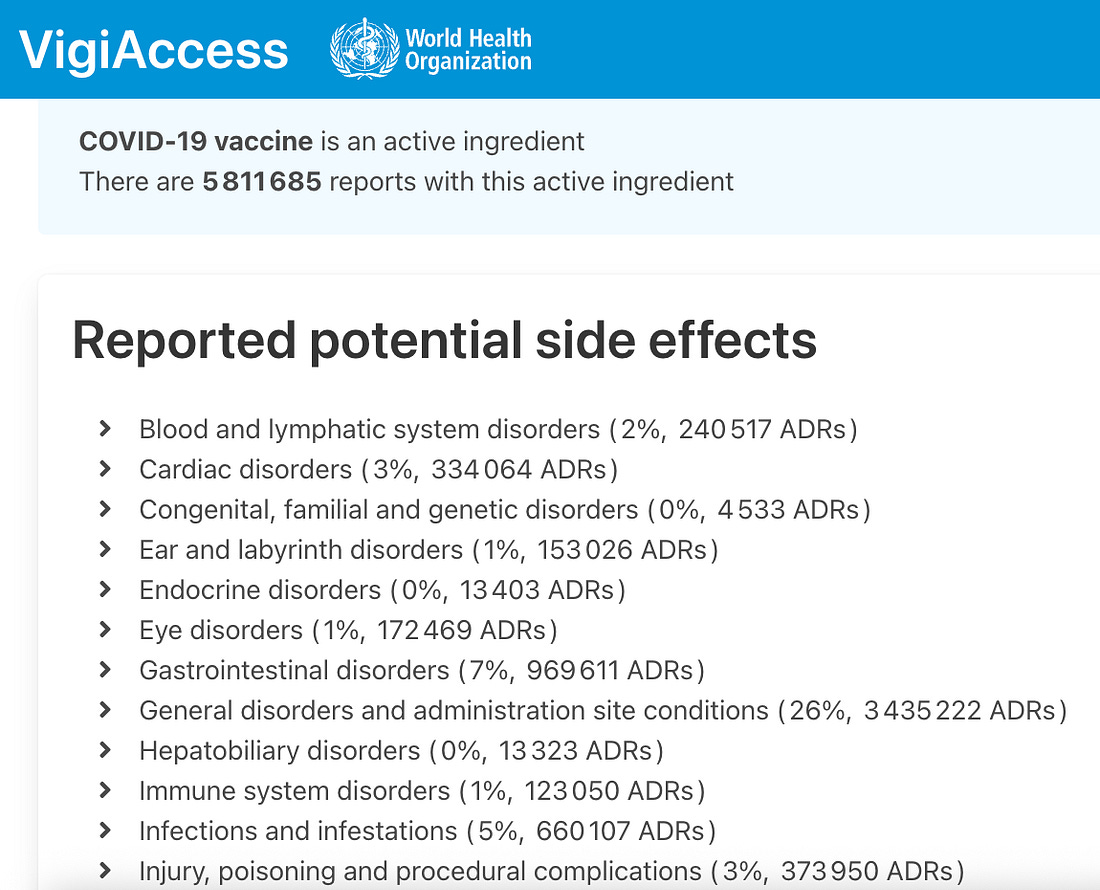
WHO VigiAccess Lists 5.8 Million COVID-19 Vaccine Adverse Event Reports


World Health Organization data show system-wide adverse event reports spanning neurological, cardiac, immune, gastrointestinal, and reproductive categories.

The World Health Organization’s VigiAccess pharmacovigilance database currently lists 5,811,685 individual adverse drug reaction (ADR) reports associated with COVID-19 vaccines as an active ingredient.

A Harvard Pilgrim Healthcare/HHS study confirms fewer than 1% of vaccine adverse events are reported, meaning the number could be closer to half a billion.

These reports are submitted by national drug regulators worldwide and categorized by affected body system.

Below is the full numerical breakdown exactly as listed in the database.


Reported Potential Side Effects by System Category

  • General disorders and administration site conditions
    3,435,222 reports (26%)
  • Nervous system disorders
    2,162,680 reports (16%)
  • Gastrointestinal disorders
    969,611 reports (7%)
  • Investigations (laboratory abnormalities, diagnostic findings)
    807,850 reports (6%)
  • Infections and infestations
    660,107 reports (5%)
  • Respiratory, thoracic, and mediastinal disorders
    559,163 reports (4%)
  • Skin and subcutaneous tissue disorders
    643,195 reports (5%)
  • Injury, poisoning, and procedural complications
    373,950 reports (3%)
  • Cardiac disorders
    334,064 reports (3%)
  • Psychiatric disorders
    253,443 reports (2%)
  • Blood and lymphatic system disorders
    240,517 reports (2%)
  • Vascular disorders
    245,846 reports (2%)
  • Reproductive system and breast disorders
    280,795 reports (2%)
  • Musculoskeletal and connective tissue disorders
    1,419,363 reports (11%)
  • Immune system disorders
    123,050 reports (1%)
  • Surgical and medical procedures
    121,374 reports (1%)
  • Metabolism and nutrition disorders
    103,797 reports (1%)
  • Eye disorders
    172,469 reports (1%)
  • Ear and labyrinth disorders
    153,026 reports (1%)

Lower-Frequency Categories Still Numerically Significant

  • Renal and urinary disorders
    47,767 reports
  • Endocrine disorders
    13,403 reports
  • Hepatobiliary disorders
    13,323 reports
  • Pregnancy, puerperium, and perinatal conditions
    14,180 reports
  • Congenital, familial, and genetic disorders
    4,533 reports
  • Neoplasms (benign, malignant, unspecified)
    17,770 reports
  • Product issues
    10,919 reports
  • Social circumstances
    47,909 reports

These figures represent submissions from national health authorities participating in the WHO’s global drug-safety monitoring program.

As of March 2025, 182 health authorities (national pharmacovigilance centers) participate in the WHO Program for International Drug Monitoring.

Each report may include multiple symptoms, meaning totals by category exceed the number of individual reports.

The scale and system-wide distribution of these reports are unprecedented for a single pharmaceutical product class in the VigiBase system.

Only 14% of Positive PCR Tests Meet Study’s Definition of Infection: Journal ‘Frontiers in Epidemiology’


“A PCR-positive test alone can by no means confirm infection,” study authors confirm—yet the test is currently being used to justify government response to bird flu.

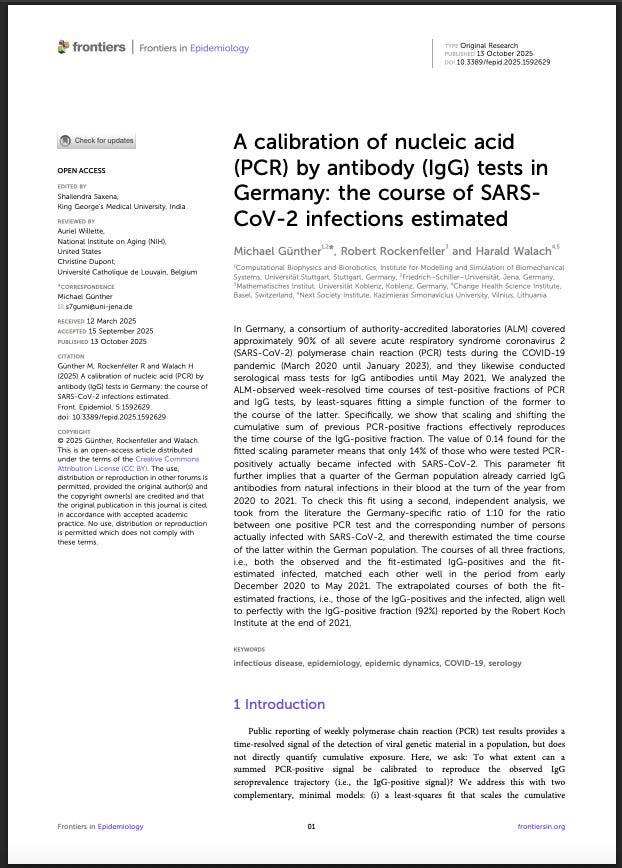
Only a small fraction of people who tested positive for COVID-19 by PCR in Germany met researchers’ criteria for infection, according to an October peer-reviewed study published in Frontiers in Epidemiology.

The findings come as PCR tests are being used to justify government response to avian influenza “bird flu,” including animal culling, countermeasures (vaccine) development, and gain-of-function experiments.

After analyzing nationwide laboratory data from March 2020 through mid-2021, the authors of the new study concluded that only 14% of PCR-positive individuals showed evidence of true infection, which they measured by later antibody development.

The remaining majority did not.

“Only approximately 14% of those who tested PCR-positive were actually infected.”

That means 86% of PCR-positive tests did not meet the authors’ definition of infection, calling into question the use of PCR positivity to count disease cases.


The study was conducted by researchers from multiple European universities and research institutes, examining data from Akkreditierte Labore in der Medizin (ALM), a laboratory consortium that conducted roughly 90% of all PCR testing in Germany during the period analyzed.

Rather than attempting to confirm individual infections through culture (showing evidence of physical, growing live virus in lab cells), the researchers compared weekly PCR-positive fractions with subsequent IgG antibody positivity, which they describe as the accepted biological marker of past infection.

“Since 1942, the detection of virus-specific antibodies has been regarded as the methodological gold standard for confirming infection.”

The logic of the analysis was straightforward.

If PCR-positive results were reliably identifying infected individuals, then PCR positivity should closely track the rise in IgG antibodies over time, given the mainstream virological and immunological model.

Instead, the researchers found that the PCR signal had to be scaled down dramatically to match observed antibody levels.

“Fitting the scaled cumulative PCR-positive fraction … yields PPCR ≈ 0.14 … This implies that roughly only one in seven German individuals with a PCR-positive test later had detectable IgG antibodies, that is, was actually infected with SARS-CoV-2.”

The article further notes that this 14% figure may still be an overestimate.

When accounting for possible testing biases, they state that the proportion of PCR positives representing real infections could be even lower.

“A more conservative interpretation of our results suggests that as few as one in eight or even in nine PCR-positive individuals … may have actually been infected.”

In other words, between 86% and 90% of PCR-positive results did not correspond to confirmed infection.

The paper emphasizes that PCR testing does not, by itself, diagnose infection.

“PCR tests merely detect the presence of fragments of viral genetic material, not necessarily an active infection.”

The study also identifies known sources of false-positive PCR results, including laboratory artifacts and statistical effects that become pronounced during mass testing.

“It is therefore important to highlight two known sources of false-positive PCR results.”

One cited example involves PCR-positive signals detected in water-only samples containing no virus at all.

“The Charité’s PCR assay produced positive results on water controls at cycle threshold (CT) values between 36 and 38.”

Beyond laboratory artifacts, the authors explain that even tests designed to be highly accurate at ruling out uninfected people can still produce large numbers of false positives when true infection levels are low.

In this context, “specificity” refers to how often a test correctly returns a negative result in someone who is not infected.

If specificity is less than 100%, some uninfected people will inevitably test positive.

“According to Bayes’ theorem, the rate of false positives increases when disease prevalence declines, owing to test specificity below 100%.”

Using observed positivity rates and their fitted infection estimate, the authors calculate that PCR specificity alone can explain the discrepancy between PCR positives and confirmed infections.

“Assuming 1% of tested individuals were true positives, a specificity of 94% explains the remaining 6% of PCR-positive results as false positives among the 99% who were not infected.”

The study’s findings have direct implications for how COVID-19 “cases” were counted and used in public policy.

Throughout the pandemic, PCR-positive test results were treated as proxies for infection and were used to justify restrictions and emergency measures.

PCR-positive test results are not being used to justify bird flu containment measures around the world.

The article argues this approach lacks biological grounding.

“A PCR-positive test alone can by no means confirm infection at the individual level.”

The paper concludes that Germany’s reliance on raw PCR positivity substantially overstated infection levels and distorted the understanding of the pandemic’s actual course.

“The principal finding from our analysis … is this: only 14%—and possibly even fewer, down to 10%—of individuals identified as SARS-CoV-2-positive via PCR testing were actually infected, as evidenced by detectable IgG antibodies.”

The article argues that PCR positivity was treated as infection when the data showed it overwhelmingly not.

By analysis, PCR positivity does not reliably indicate infection, raising questions about its continued use as a case-defining tool in current and future disease responses.

Gates Pours $3.3M Into mRNA Purification Tech—Admitting COVID Vaccine Impurity Problem as Platform Becomes Permanent


Press release admits current mRNA-based vaccine are not effective enough and contain too many impurities.

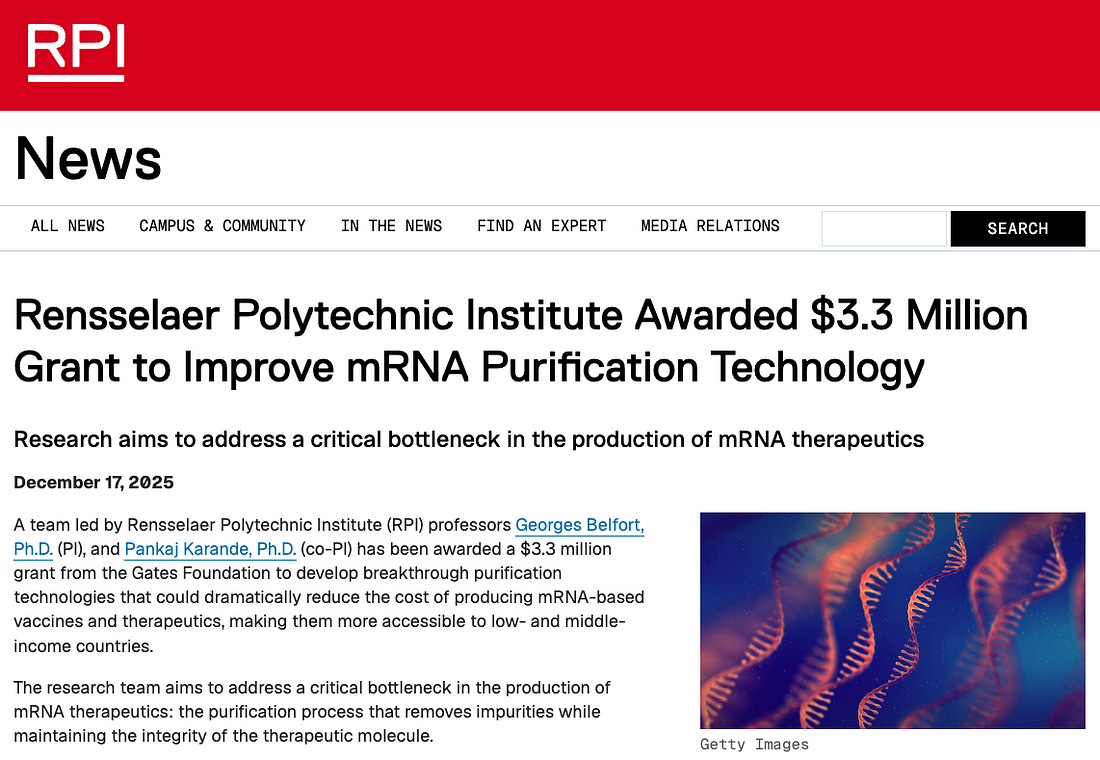
Despite mainstream attempts to downplay the alarming contamination problem plaguing COVID-19 vaccines, the Gates Foundation has awarded $3.3 million to a team of scientists at New York’s Rensselaer Polytechnic Institute (RPI) to develop “breakthrough purification technologies” for producing mRNA-based vaccines.

A September Autoimmunity study confirms that both Pfizer-BioNTech and Moderna’s mRNA COVID-19 injections contain many hundreds of times more contamination than the FDA and WHO limit.

The grant is an implicit admission that contamination is in fact a problem posed by mRNA vaccines, as well as a sign that the platform is here to stay.


Gates is funding the project because of the “impurities” and “inefficien[cy]” related to mRNA vaccines.

According to an RPI announcement:

The research team aims to address a critical bottleneck in the production of mRNA therapeutics: the purification process that removes impurities while maintaining the integrity of the therapeutic molecule.

“This project represents a paradigm shift in how we think about mRNA purification,” Belfort said. “Current technologies are prohibitively expensive and inefficient, creating barriers to access for the populations that need them most. Our goal is to develop a purification platform that is not only more cost-effective but also more productive and scalable.”

The researchers aim to accomplish this by “replacing conventional resin-based purification systems with advanced membrane technologies and innovative binding molecules.”

The RPI announcement also admits that current mRNA-based vaccine impurities are linked to side effects and that the injectables are not effective enough, more revelations that cut against mainstream counterclaims.

Higher purity mRNA vaccines with lower immunogenic impurities could lead to improved clinical outcomes, including reduced side effects and enhanced therapeutic efficacy.

The announcement predicts the rise of self-replicating vaccine technology, which this website was the first to warn about in December 2023.

Additionally, the technology being developed could prove particularly valuable for self-amplifying RNA (saRNA) therapeutics, which require lower doses than traditional mRNA vaccines and represent the next generation of RNA-based medicines.

Gates has been developing self-copying mRNA vaccines for COVID (here, here) as well as for bird flu (here), which is the pathogen this website has been predicting will fuel the next orchestrated pandemic.

The billionaire’s latest investment is made in the name of strengthening Big Pharma infrastructure, as well as “equity” and “pandemic preparedness.”

If successful, this technology could enable local production of mRNA vaccines in regions that currently lack access to affordable biomanufacturing infrastructure, supporting global health equity and pandemic preparedness.

Despite the disease, hospitalizations, and deaths linked to mRNA jabs, the technology isn’t going anywhere.