
Hantavirus Genome Was Built from Human Blood at U.S. Military Biolab Fort Detrick Using Incomplete Computer Assembly and Reference Genome ‘Fill-Ins’
Fort Detrick hantavirus genome manufacturing project operated through HHS/NIAID-linked high-containment biodefense contracts worth up to $387.5 million combined.
May 13, 2026
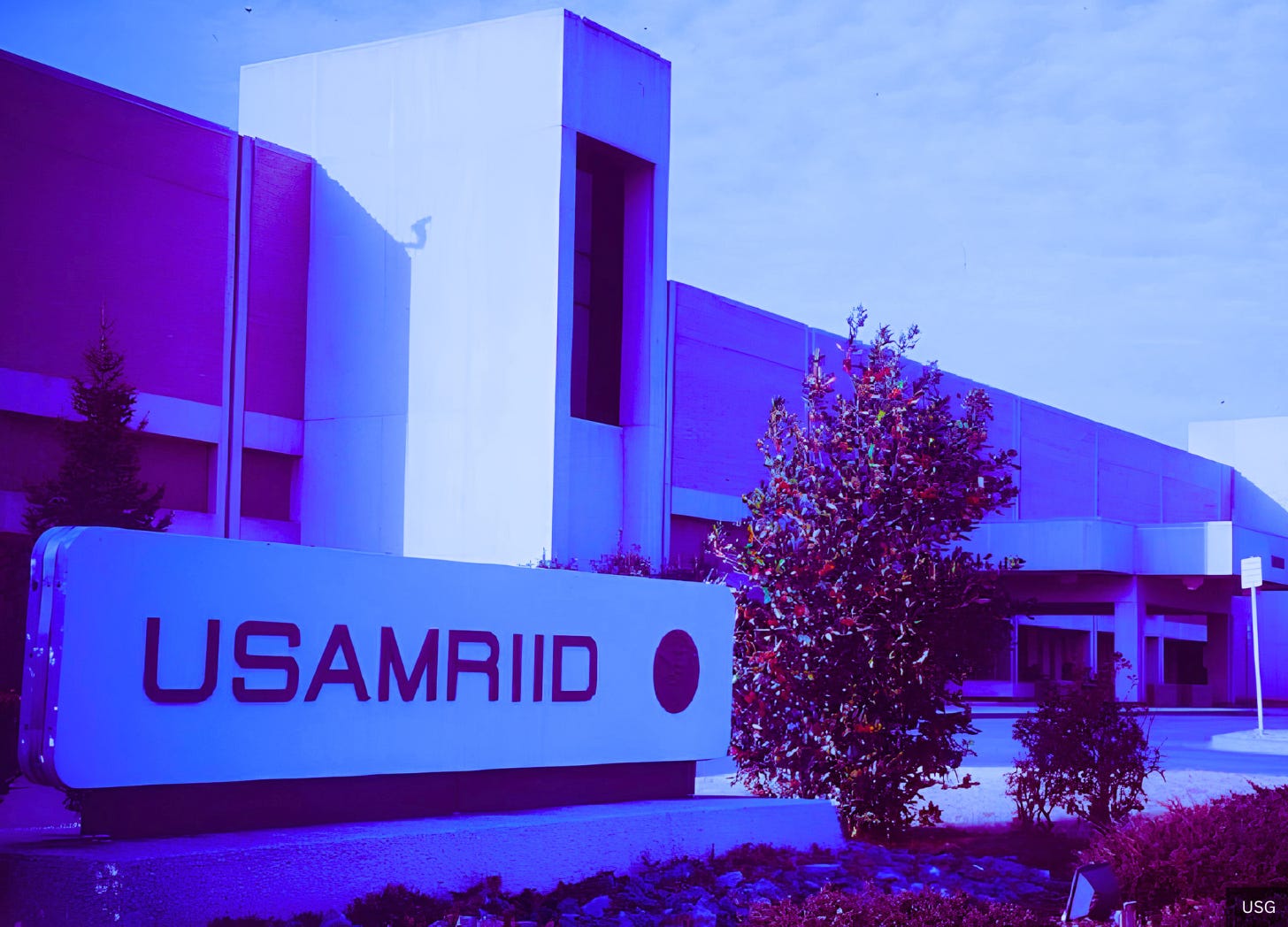
The published Andes hantavirus genome sequence was built at the infamous U.S. military biolab Fort Detrick from fragmented sequencing reads extracted from human blood using computer assembly software and reference genome fill-ins, according to supplementary appendix documents and GenBank records tied to a 2020 New England Journal of Medicine (NEJM) paper.
The paper’s funding disclosure shows the Fort Detrick hantavirus genome reconstruction work was supported through U.S. government biodefense and infectious disease funding channels tied to HHS/NIAID (HHSN272201800013C and HHSN272200700016I), including contracts involving Battelle Memorial Institute and Laulima Government Solutions.
The total potential funding allocated to the two Fort Detrick/NIAID contracts together is approximately $387.5 million.
The records show scientists at the United States Army Medical Research Institute of Infectious Diseases (USAMRIID) were said to have physically received blood samples from purported hantavirus patients and used those samples to generate the genome sequence now stored in GenBank and cited throughout the scientific literature.
That same Fort Detrick-built Andes hantavirus genome sequence is now being used by researchers as a reference genome for analyzing and comparing sequences tied to the recent 2026 hantavirus outbreak aboard the cruise ship MV Hondius.
The connection raises major questions about whether modern outbreak detection, genomic surveillance, and authoritarian pandemic-response systems are increasingly being built around computer-reconstructed reference sequences generated inside military and biodefense research pipelines rather than directly sequenced purified viral isolates.
If the foundational genome sequences driving PCR testing, outbreak tracking, quarantine policies, surveillance systems, and vaccine development are themselves heavily dependent on computer reconstruction, statistical modeling, and reference-sequence fill-ins rather than direct uninterrupted sequencing of purified viral isolates, it raises profound questions about whether the entire pandemic-response framework is becoming increasingly circular and self-referential.
Which makes the system potentially weaponizable, because whoever controls the reference sequences, computational pipelines, and diagnostic standards effectively controls the foundation upon which outbreaks are detected, modeled, declared, and responded to.
Fort Detrick Received Human Blood Samples
The NEJM paper supplementary appendix explicitly states:
“Whole-blood samples from 28 (82% of 34) laboratory-confirmed cases from the Epuyén ANDV-caused hantavirus pulmonary syndrome outbreak were included in the genomic analysis.”
Researchers further wrote:
“RNA was extracted from 400 µl of whole blood…”
The appendix also says the samples were physically transferred into the Fort Detrick military biodefense system:
“Samples were shipped to USAMRIID under material transfer agreement (MRMC control number: W81XWH-18-0469)…”
Meaning the published hantavirus genome was generated from fragmented RNA sequencing reads extracted directly from mixed human blood samples handled inside a U.S. military biolab pipeline.
Scientists Say They Removed Human Genetic Material Before Building the Genome
The records show Fort Detrick scientists did not directly sequence one complete uninterrupted hantavirus genome from purified viral particles.
Instead, the workflow involved:
- extracting mixed genetic material from human blood,
- computationally removing human sequences,
- assembling fragmented sequencing reads into partial genome pieces called contigs,
- and filling missing genomic gaps using previously published reference sequences from GenBank.
The appendix explicitly states:
“Human genome and human transcriptome read removal was subsequently performed by aligning quality-trimmed reads to the human genome reference GRCh38…”
Meaning Fort Detrick scientists claim to have first filtered out human genetic material from the blood-derived sequencing data before assembling the remaining fragments into what became the published Andes hantavirus genome.
But because the original material consisted of mixed human blood-derived sequencing fragments rather than a directly sequenced purified viral isolate, the final published genome still depended on computational interpretation, reconstruction decisions, and reference-guided fill-ins to determine what ultimately counted as the “hantavirus” sequence.
The final published genome was not simply “read” directly from a purified viral particle.
It emerged through multiple layers of computer-driven filtering, reconstruction, statistical consensus calling, and reference-sequence patching performed inside the Fort Detrick bioinformatic pipeline.
The Published Genome Was Patched Together Using Reference Sequences
The appendix explains how the genome was assembled:
“To generate ANDV consensus genomes, cleaned reads were assembled de novo using SPAdes…”
However, the sequencing data did not produce complete uninterrupted genomes directly from patient blood samples.
Instead, researchers acknowledged that missing regions of the genome had to be filled using previously published genome sequences:
“Gaps and ends of incomplete contigs were filled in with sequences from close complete genomic segments from GenBank…”
Meaning portions of the final published hantavirus genome were patched together using older reference genome sequences where direct sequencing data was missing or incomplete.
The appendix additionally states:
“Only bases with a Phred quality score >Q20 and a minimum of 3X coverage were used for consensus calling.”
Consensus calling is a computer process that generates a “best-fit” genome sequence from fragmented sequencing reads after filtering, alignment, and reconstruction.
If parts of the published hantavirus genome were missing and had to be filled in using older reference sequences, then how much of the final genome was directly sequenced from patient blood and how much was computer-generated reconstruction?
Some Genome Segments Were More Than Half Missing
The records further reveal that some genome assemblies were substantially incomplete before reconstruction and reference fill-ins were applied.
Table S3 shows one patient’s L segment achieved only:
“3080/6562 [46.94%]” coverage
Meaning more than half of that genome segment was missing before additional reconstruction and reference-genome fill-ins were used to complete the published sequence.
Other patient samples achieved much higher coverage, with many approaching 99%, but the appendix confirms incomplete contigs and missing genomic regions were a recurring part of the assembly workflow.
This means portions of the published hantavirus genome were not directly sequenced from patient material, but instead were computationally reconstructed and patched together where the original genomic data was missing.
This raises major questions about the precision and reliability of the final published genome, since significant portions of some sequences were missing and later reconstructed through computer-based reference fill-ins rather than directly sequenced from patient material.
PCR Primers Also Matched Human Genetic Material
The significance of the findings becomes even greater when viewed alongside recent BLAST analyses showing that published hantavirus PCR primers and fluorescent probes repeatedly matched human genetic material.
According to the analysis:
“portions of the genetic sequences used by the PCR test to supposedly detect hantavirus also directly match human DNA sequences.”
The report documented repeated:
- 19/19 exact matches,
- 20/20 exact matches,
- 18/18 exact matches,
- and numerous 17/17 exact matches between hantavirus PCR components and human genomic regions.
The fluorescent detection probe itself—the component responsible for generating the “positive” PCR signal—also produced repeated exact and near-exact human DNA matches.
The findings become especially significant in light of the Fort Detrick workflow, which itself began with mixed human blood samples and required computational subtraction of human genetic material before the genome was assembled.
The overlap raises obvious questions about how confidently the PCR system could distinguish purported hantavirus genetic material from human genetic material when the published reference genome itself was reconstructed from mixed human blood-derived sequencing data.
DARPA Documents Reveal Pentagon Framework for Digital-Only Viral Sequences
The Fort Detrick hantavirus reconstruction workflow also aligns with previously released DARPA documents describing Pentagon-backed systems designed to operate even when:
“only electronic viral sequence information may be available.”
The DARPA records describe systems designed to:
- take digital genome sequences,
- synthesize infectious clone genomes,
- propagate viruses in cell systems,
- and rapidly convert uploaded genetic sequences into mRNA countermeasures.
The platform is meant to work even when no physical virus exists, only a computer file.
The files state:
“Because we recognize the potential that during a pandemic outbreak only electronic viral sequence information may be available…”
GenBank Entry Confirms Human Blood Origin of Hantavirus Genome
The GenBank entry tied to the outbreak independently confirms the biological source material used to generate the published genome.
The entry states:
/isolation_source=“whole blood”
The GenBank metadata also lists the computer assembly pipeline used to generate the genome:
- Ray
- Bowtie2
- Picard
- Prinseq-lite
- Cutadapt
- Illumina sequencing
The NEJM appendix and GenBank records do not describe:
- purification of intact viral particles,
- plaque isolation,
- viral culture purification before sequencing,
- or direct sequencing of purified virions.
Instead, the records show the published Andes hantavirus genome was assembled at Fort Detrick from fragmented sequencing reads extracted from human blood after human genetic material was computationally removed and missing genomic regions were filled using previously published reference genome sequences.
Bottom Line
The records show a biodefense and outbreak-response framework increasingly centered around computationally reconstructed genome sequences generated from fragmented mixed biological material and supplemented through reference-guided assembly pipelines rather than direct uninterrupted sequencing of purified viral particles.
Those computer-assembled consensus genomes then become the foundation for:
- PCR testing,
- phylogenetic modeling,
- transmission mapping,
- reproductive-number calculations,
- outbreak tracking,
- quarantine policies,
- surveillance systems,
- and vaccine or mRNA countermeasure development.
In other words, the same computer-generated genomic constructs assembled through filtering algorithms, reference-sequence fill-ins, and statistical consensus modeling are later treated as the authoritative biological basis for the entire outbreak-response infrastructure itself.
Now, that framework is being used to justify mainstream media messaging and authoritarian quarantine measures imposed by governments on passengers of the Hondius.



Recent Comments