Gain-of-function experiments that mutate pathogens to resist drugs are baked into virological drug development.
An international research consortium involving major institutions from the United States, China, the United Kingdom, and Germany claims to have successfully created mutant strains of Orthoebolavirus that are resistant to the neutralizing effects of the monoclonal antibody mAb 11886.
They published their work in npj Viruses on May 7, just days before the 2026 Ebola outbreak was first officially reported by the Democratic Republic of the Congo’s Ministry of Public Health.
These Ebola experiments, which were conducted under BSL-4 conditions at Philipps University Marburg, involved the intentional generation and selection of purported viral variants that bypass therapeutic neutralization.
The experiments align with published gain-of-function (GOF) definitions.
According to a 2022 review published in Advances in Applied Microbiology:
“Gain-of-Function research on viruses is enhancing transmissibility, virus replication, virulence, host range, immune evasion or drug and vaccine resistance to get insights into the viral mechanisms, to create and analyze animal models, to accelerate drug and vaccine development and to improve pandemic preparedness.”
The new Ebola study was said to have resulted in the generation of mutated, drug-resistant Ebola pathogens in the name of drug development.
Multiple U.S. government Ebola preparedness and response programs were administratively updated on the federal Assistance Listings database in mid-January 2026—roughly three to four months before health authorities in the Democratic Republic of the Congo announced the latest Ebola outbreak.
The Trump administration is now seeking more than $1.4 billion in Ebola funding from Congress, just after the CDC activated $107 million in emergency funding for Ebola response.
U.S. taxpayers are now paying for both the creation of mutated, drug-resistant Ebola pathogens while also paying for the government’s expensive response to Ebola.
Researchers Force the Virus to Become Resistant
To produce these drug-resistant mutants, researchers claim to have used a replication-competent version of the virus known as EbolaΔVP30.
The team says they forced the evolution of the virus by subjecting it to three consecutive 6-day passage cycles.
During these cycles, the virus was said to be exposed to increasing concentrations of the antibody mAb 11886, starting at 0.63 µg/mL and escalating to 5.0 µg/mL to drive the selection of mutations that could survive the treatment.
After this process, the team isolated individual plaques that were able to survive in the presence of 10 µg/mL of the antibody.
Finally, the researchers claim they extracted viral RNA and sequenced the glycoprotein gene to identify the specific genetic mutations responsible for the acquired resistance.
The Experiments Identified Two Specific Genetic Mutations That Resist Drugs
The sequencing analysis was said to have identified two specific genetic mutations that directly negated the effectiveness of the antibody.
The first mutation, known as V505I, is located in the GP2 N-terminus and was identified as the primary driver of resistance against mAb 11886.
The second mutation, known as T402I, is said to be located in the mucin-like domain and contributed to resistance through indirect effects on how the virus processes its purported surface proteins.
Experimental data from the study confirmed that each of these mutations, when present individually, was sufficient for the virus to evade neutralization at a concentration of 10 µg/mL.
Research Supported by an International Network of Funding & Institutions
The creation of these drug-resistant Ebola variants was made possible by a global network of funding agencies and academic-industry partnerships.
In the United Kingdom, the research was supported by the UK Medical Research Council through an iCASE PhD studentship to FRD (MR/N01796X/1), and the Wellcome Trust through a Senior Fellowship to SJD (106917/Z/15/Z).
In Germany, the work was supported by the German Research Foundation via a grant to TS (197785619/SFB1021).
In China, funding was provided by the Chinese Academy of Medical Sciences Innovation Fund for Medical Science grants to PR and AT (2024-12M-2-001-1 and 2018-12M-2-002).
In the United States, the research was supported by the National Institutes of Health through grant U19 AI109762 to EOS.
Who’s paying for them. Why it’s happening this fast. What the buildout is actually for. Why you should care.
May 27, 2026
AI Data Centers: The Real Reason They’re Going Up EverywhereWho’s paying for them. Why it’s happening this fast. What the buildout is for. Why you should care.
I live in Montana but I am from Pennsylvania so I follow a Facebook page called I live In Pa. I kept seeing AI data centers on this channel split-screened against the farmland and covered bridges they’re replacing. Larry Fink’s picture and shareholder letter, where he said the quiet part out loud about how they get paid for. So I sat down and pulled the threads.
This is what came out of it. It’s longer than I usually publish. Every cut lost something the rest needed, so here it is at full length. By the time everyone agrees on what this buildout is for, the concrete will already be poured. Right now is the window — the language is still being decided, the legal challenges are still possible, and the public memory of similar buildouts is still warm.
What an AI Data Center Actually Is
“AI data center” sounds like a server room — abstract, technical, somebody else’s business. The vagueness is doing work. You can’t organize against something you can’t picture.
So here’s what one is. A massive industrial facility, typically half a million to several million square feet. Tens of thousands of specialized processors in dense racks, each rack drawing more power than an average home. A full center can draw 100 to over 1,000 megawatts — the largest rival the power use of a mid-sized city. Cooling the heat takes water, sometimes millions of gallons a day, pulled from local aquifers, rivers, or municipal supply. Featureless buildings. No windows. Razor wire. A facility that uses a city’s worth of electricity might employ thirty to a hundred people. It exists to host computation, not workers.
What that computation is for is the question.
The Argument This Piece Makes
Let me be straight about what’s documented and what’s my read.
The documented, boring use of these buildings is commercial: training and running AI models, cloud services. That’s real. But I’m going to make the case that the strategic reason for a buildout this fast, this coordinated, and this heavily financed is bigger than chatbots — that these facilities are becoming the physical substrate for surveillance, digital identity, and behavioral data systems, and that the people funding them have said as much in public. Where I’m citing a fact, I’ll source it. Where I’m drawing a conclusion, I’ll say so. You can take the facts and disagree with my conclusion. That’s fair. But the facts are the facts.
Start with one thread you can verify yourself.
The UN’s 2030 Agenda does not say “digital ID.” Target 16.9 says “provide legal identity for all, including birth registration” by 2030 — clean, humanitarian, nothing to object to.¹ The word “digital” lives one layer down. The World Bank’s ID4D program — the body operationalizing 16.9 — states in its own materials that it’s delivering that legal identity as digital identification systems.² That’s the pattern worth understanding: the mandate is written in language no one can attack, and the machinery is built somewhere you have to go looking. You need both documents to see the whole picture. That’s not me connecting dots that aren’t there — that’s how the structure is built.
I want to be careful here, because this is where these arguments usually overreach. The 2030 Agenda is mostly seventeen goals about poverty, water, health, education, and labor — and most of it is exactly what it says. I’m not claiming the whole framework is a surveillance plot. My claim is narrower: one target inside it is the on-ramp for population-scale digital ID, and that earns scrutiny even if the other sixteen goals are benign.
The broader thing to watch isn’t a single master document. It’s convergence. Digital identity (UN/World Bank), central bank digital currencies (central banks and the BIS), behavioral data systems (the ad-tech and surveillance industry), smart-city programs — these come from different bodies, not one blueprint. What they share is that every one of them needs enormous compute to run at scale. The data centers are that compute. That’s the connection I’m asking you to hold: not one conspiracy, but a set of systems converging on the same physical requirement.
If you lived through the fracking boom of the late 2000s and 2010s, you’ve seen this script.
Fracking was sold to rural communities in Pennsylvania, Ohio, West Virginia, North Dakota, and Texas as salvation. Jobs. Tax revenue. Energy independence. Outside companies signed leases, fast-tracked permits before community input could complete, drilled, extracted, and left. What stayed was the externalities — contaminated wells, methane migration, earthquakes, road damage on the local tax base, gutted property values. The jobs were mostly temporary. The tax revenue mostly got abated.
The data center buildout is the same playbook, different commodity. Same target communities — rural, semi-rural, eroded tax bases, thin local government. Same fast permits. Same outside money. Same promises. Same externalities about to land on the same people.
The fracking generation remembers. That memory is one of the few advantages this round of resistance has, and it won’t last forever.
Who’s Actually Paying
Larry Fink runs BlackRock, the world’s largest asset manager — $13.9 trillion under management as of its Q1 2026 filing. A significant portion is American retirement money: pensions, 401(k) allocations, target-date funds that auto-allocate to whatever the managers point them at.
In his April 2026 letter to investors, Fink argued AI leadership would require sustained, large-scale investment. At a BlackRock event in Waco, Texas — Texas State Technical College, alongside Governor Greg Abbott, part of BlackRock’s “Future Builders” initiative — he predicted where the money comes from: trillions, from “savings accounts and pension accounts.” (BlackRock later clarified he meant long-term retirement-type investment accounts, not bank savings.) He estimated the buildout could total around $10 trillion over ten years. A fact-check confirmed the quote; it was a prediction of the plan, not a slip — which is exactly why it matters. He’s telling you how it gets paid for.
BlackRock founded the AI Infrastructure Partnership (AIP) in September 2024 with Global Infrastructure Partners, MGX (an Abu Dhabi sovereign-wealth vehicle), Microsoft, and NVIDIA. In October 2025, AIP’s first deal was the roughly $40 billion acquisition of Aligned Data Centers — the largest data-center transaction on record, with a target of $30 billion in equity and up to $100 billion including debt. American retirement capital, pooled with Gulf sovereign wealth, building the AI backbone.
If you hold a 401(k), an IRA, a pension, or any retirement vehicle run by a major asset manager, some portion of your money is likely funding this right now. You didn’t consent to this specifically. You consented to “diversified investment.” The managers decide what that means. You can opt out only by accepting financial damage most working people can’t absorb. That’s not force in the obvious sense. It’s force in the structural sense.
That’s who’s paying. You are — through retirement vehicles, tax dollars, utility bills as the grid is upgraded for data center demand, and water bills as the aquifers draw down.
Newspeak
Before going further, look at the language. It’s not a detour — the language is the architecture.
Watch the inversions running in everyday coverage. Surveillance becomes data collection. Censorship becomes content moderation. Coercion becomes nudging. Dissent becomes misinformation. Forced reallocation becomes investment. Land grabs become development. Aquifer depletion becomes resource utilization. Each one collapses the space where the accurate word used to live. By the time you reach for the word you need, the preferred one is the only one left.
Watch the law titles too. The Patriot Act expanded domestic surveillance. The pattern of naming a bill for the thing it erodes is old, and once a law like the Patriot Act exists, it rarely gets repealed — it gets renewed, quietly, repeatedly. We’re still living under emergency powers from September 2001.
This isn’t new. In nearly every modern authoritarian turn, the same move shows up first: reclassify dissent into a category that strips it of protection, then deploy force against the category instead of against speech. Weimar Germany used Reichsfeinde — enemies of the Reich; the 1933 Reichstag Fire Decree suspended civil liberties on the threat of terrorism. Stalin’s USSR ran on “enemies of the people.” Apartheid South Africa’s Terrorism Act of 1967 defined terrorism broadly enough that organizing qualified — Nelson Mandela was officially designated a terrorist, and the U.S. kept him on a terrorism watch list until 2008. Post-9/11 America widened the domestic-terrorism framework under the Patriot Act, and that category has crept outward ever since.
The reframe is the prerequisite. When a system starts reclassifying citizens into the language of terrorism, the clampdown isn’t theoretical — it’s the next phase. A document called Silent Weapons for Quiet Wars described economic and informational pressure as a substitute for open warfare on a domestic population. Its origin is disputed — possibly authentic, possibly satire — but the playbook it describes is recognizable.
Why It’s Happening This Fast
My read: the speed isn’t organic market demand. AI consumer demand barely existed five years ago. The buildout is racing a timeline.
The financing and the framing both point to a deadline. The 2030 Agenda set targets for 2030. The systems that depend on compute — digital ID first among them — matured faster than the physical infrastructure to carry them. Fink saying the U.S. is “not moving fast enough” reads less like a market comment and more like a project status update. They’re behind on a schedule they set, and the window for installing the infrastructure without resistance is closing.
That’s interpretation, not proven fact — but it fits the financing, the public statements, and the documented deadlines better than “everyone suddenly wanted chatbots.”
The Historical Lock
IG Farben was the German chemical and pharmaceutical conglomerate that backed the Third Reich — synthetic fuel, synthetic rubber, the Zyklon B used in the camps, and its own slave-labor facility at Auschwitz-Monowitz. After the war the Allies broke it into Bayer, BASF, Hoechst, and Agfa. The names changed; the personnel, patents, and relationships largely survived. The cartel reconstituted within years of Nuremberg.
That’s the pattern: the financial and industrial scaffolding behind authoritarian projects rarely gets dismantled when the regime fails. It gets renamed, restructured, and reattached to whatever comes next. Hold that lens.
The Apparatus
In mid-May 2026, Fink publicly raised the prospect of civilians using inexpensive drones to attack AI data centers, framing it as a security risk his firm is planning around.
Read the framing, not just the worry. The most powerful asset manager in the world doesn’t float hardware-store drones in public unless his security team has already war-gamed civilian resistance. He’s not a tactical operator — what he said in public is what advisors briefed him to say, which means the internal assessment reached the level of a public statement. And notice how short the distance is between “civilian security threat to critical infrastructure” and “domestic terrorism” in the policy language. Once that reclassification happens, force doesn’t need to be threatened. It becomes automatic.
Set this beside the buildout of detention capacity. The One Big Beautiful Bill Act (H.R. 1), signed July 4, 2025, directed more than $75 billion to ICE over four years — including roughly $45 billion for new detention centers, family detention included — and funds an expansion of detention capacity from about 56,000 beds toward 100,000 or more. The stated target population is immigration enforcement. But detention infrastructure has no target-population filter built into it. Once it exists, it holds whoever the regime in power decides it holds. The bed doesn’t know who’s in it.
There’s also a quieter move worth naming: the push for “data embassies” — arrangements that would treat data centers as quasi-sovereign territory, partially exempt from local jurisdiction. Saudi Arabia, Estonia, and others have floated versions of it; industry likes it. Industrial sites granted sovereign-style exemption from local law is not a hypothetical — it’s an active proposal.
On the First Amendment: speech is still protected by the text. What’s been thinned is the procedural protection around speech that touches what the regime defines as security. You can still say what you want. What changes is the category you become when you say it.
The infrastructure doesn’t deploy in one dramatic event. The old dissident prediction — one big roundup — never panned out. What comes instead is the metered rollout: slow, episodic, normalized through repetition, each wave widening who qualifies.
What the Buildout Is For
Pulling it together — and this is my thesis, stated as a thesis: the data centers are the physical substrate that surveillance, digital ID, behavioral scoring, and predictive systems all run on. The reclassification of pushback as a security threat is the legal lever. The detention capacity is the physical one. The language operation is the cultural one. All three are being installed at once, and all three depend on the compute the data centers provide.
That’s the case. Not chatbots. The backbone of a control architecture that’s been planned, in pieces, by different bodies, and is now being installed in the open.
Where the Resistance Is Working
The framework has to land somewhere physical, and physical places have laws — some not yet captured.
Tucson, Arizona rejected Project Blue after sustained organizing. Chesterfield County, Virginia has delayed builds through zoning. Communities in Oregon and Arizona forced water-use disclosure that didn’t exist before. Utah passed legislation requiring large data centers to report water usage to the state engineer.
In Montana, where this is written, the legal scaffolding for water-rights fights has been building for over a decade — CSKT compact litigation, Flathead watershed disputes, ranch-versus-development tension. When data centers try to land here, they walk into an environment that already has antibodies.
And every enforcement system depends on the bottom of the pyramid showing up to work. Soldiers, cops, guards, mid-level bureaucrats — also citizens, with rent and family and eyes. When Ceaușescu gave his final speech in Bucharest in December 1989, his own security stopped defending him and the crowd that always applauded started booing. The apparatus collapsed in a week. The pyramid doesn’t get pushed over from outside. It collapses from the middle when the people inside stop believing what they’re enforcing.
What You Can Actually Do
This doesn’t end with “call your senator.” That door is mostly closed. The open ones:
Read what your retirement money is actually buying, and pull what you can out of target-date funds that auto-allocate into AI infrastructure indexes.
Show up to zoning meetings before the build is announced, not after. The fight is won or lost at the permit stage.
File public records requests on water-use agreements and tax-abatement deals while they’re still being negotiated. Once signed, they’re nearly impossible to reverse.
Document everything. The case studies cited five years from now are being built right now by people taking notes.
What won’t work: petitions to BlackRock, appeals to the FTC, waiting for an administration to fix it. The mechanism is engineered to be unreachable through those channels. Naming the dead ends saves your energy for where the leverage is.
The Project That Cannot Finish
In nearly every case, authoritarian projects attempt the same impossible thing: freeze a complex society into a fixed configuration. None have managed to hold it. The thousand-year Reich lasted twelve years. The Soviet system, designed as the endpoint of history, lasted seventy. Mao’s Cultural Revolution was unwound by his own party within a decade of his death. The British Empire dissolved in two generations. Each looked unstoppable at its peak. Each had apparatus that seemed total. Each came undone faster than its planners or its critics predicted.
That’s not coincidence. Total control requires perfect coordination among the people implementing it — and they can’t fully trust each other once they understand what total control means. The faction that wins absolute power becomes a threat to every other faction, so no faction can be allowed to win absolutely. The project stays permanently undermined from within. That’s the structural ceiling, and the current configuration will hit it too.
The damage between here and there will be real. The transition will be hard. But the totality the planners are aiming at is not reachable, because the coordination it requires doesn’t survive contact with the people who’d have to maintain it.
Here’s what they haven’t absorbed: the cultural permission slip they depend on has already thinned. The audience has stopped pretending. The Berlin Wall fell in 1989 with the Stasi holding files on a third of the East German population — the most comprehensive surveillance of its time. It didn’t matter. The system collapsed in weeks once attention rerouted away from compliance. The apparatus was a stage set. When the actors stopped performing, the set came down.
The vault is being built in your county while your retirement pays for it. The fracking generation knew something was wrong but didn’t have the framework. You do. The work isn’t victory — it’s witness, organization, refusal of the language they hand you, and refusal to treat the project as the permanent reality it claims to be.
That’s why you should care. Not because the analysis is interesting. Because what’s being built is being built with your money, for use against your category of person, on a timeline that closes before the end of this decade.
They don’t need camps when they have cloud regions. They also don’t get to keep them.
Sources
UN SDG Target 16.9 — un.org/sustainabledevelopment/peace-justice
World Bank ID4D — id4d.worldbank.org/guide/good-id-supports-multiple-development-goals
Harmeet Dhillon Just Said What the Constitution Has Said Since 1868
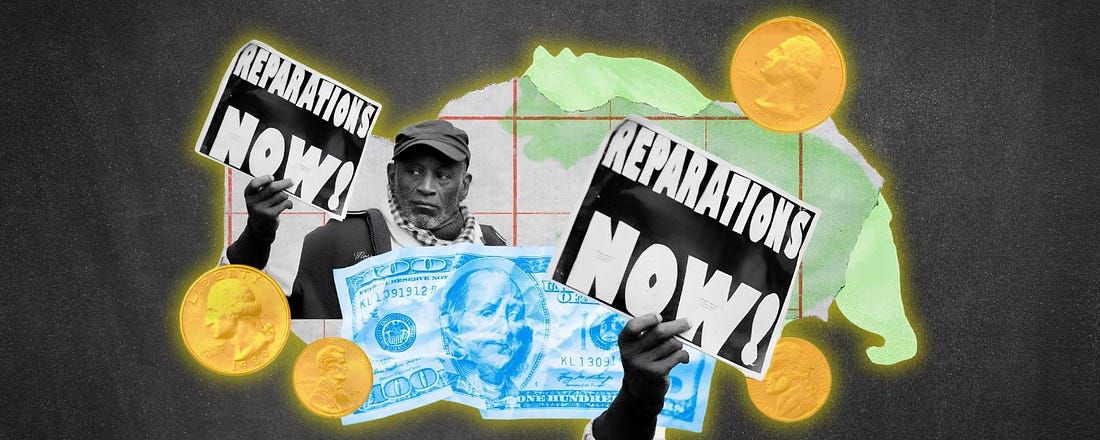
Begin with a simple picture, because the law in this case is finally as simple as the picture. Two families lived on the same Evanston street in 1955. They shared a fence, a school district, and very likely a set of grievances against the city that zoned and policed them. Today the city of Evanston will write one of those families a check for $25,000 and turn the other away at the door. The families are identical in every particular the law has ever cared about, with one exception. One family is black and the other is not. That single fact, and nothing else, decides who is paid and who is refused.
When a government sorts its citizens that way, it is doing the precise thing the Fourteenth Amendment was ratified to forbid. This is the heart of the matter, and it is worth stating plainly before the lawyerly fog rolls in. The Equal Protection Clause protects persons, not races. It was written after a war fought over racial caste, and it was written to abolish caste, not to license a friendlier version of it. A program that pays citizens according to the color of their skin, or the color of their parents’ and grandparents’ skin, does not repair the old hierarchy. It rebuilds it with the beneficiaries rearranged.
On June 16, the Department of Justice said so, formally and on the record. Assistant Attorney General Harmeet Dhillon, who leads the Civil Rights Division, moved to intervene in the lawsuit against Evanston’s program and put the point with a clarity that the courts have spent 30 years approaching. There are sound ways for a city to help its poorest neighborhoods, she said, but simply handing out money based on race is not the answer. It is race discrimination, pure and simple, and it is illegal. That is the government of the United States adopting as its litigating position what an honest reading of the Constitution has required all along. Dhillon deserves credit for it. For decades the federal civil rights apparatus enforced the colorblind command in one direction only, against discrimination that injured minorities, while averting its eyes from racial sorting dressed up as benevolence. To enforce the rule evenhandedly, against a city that discriminates by race for reasons it calls noble, is not a betrayal of the civil rights tradition. It is the fulfillment of it.
Consider the doctrine the city must overcome, because it is not some recent conservative invention. The Supreme Court has held for more than three decades that every racial classification by government, at every level, must survive strict scrutiny, the most demanding test in constitutional law. In City of Richmond v. J.A. Croson Co., decided 6 to 3 in 1989 and written by Justice Sandra Day O’Connor, the Court struck down a minority contracting set-aside in a majority-black city governed by a majority-black council. Richmond had a real statistical disparity to point to, minority firms receiving under 1% of contracts in a city half black, and the Court still said no. General societal discrimination, however genuine, cannot justify a racial remedy. The government must identify a specific instance of unlawful discrimination and tailor the remedy narrowly to it. O’Connor warned that the alternative was a future in which the dream of a nation of equal citizens would dissolve into a mosaic of shifting preferences based on inherently unmeasurable claims of past wrongs. That sentence reads today like a prophecy of Evanston.
The Court only sharpened the rule afterward. Adarand Constructors v. Peña in 1995 closed the supposed loophole for federal programs and applied strict scrutiny to every level of government. Students for Fair Admissions v. Harvard in 2023, again 6 to 3, ended race-conscious admissions and reminded the country that distinctions drawn solely by ancestry are odious to a free people. Then, just this past April, the Court decided Louisiana v. Callais, a 6 to 3 opinion by Justice Alito holding that a congressional map could not use race as its organizing principle absent a compelling justification the state did not have. Callais matters here for a reason that has nothing to do with voting maps. It restated, in the freshest possible terms, the two conditions any remedial racial classification must meet. The government must identify the specific past discrimination and the precise scope of the injury, and it must possess a strong basis in evidence that the race-based remedy is necessary. And it reaffirmed the disqualifier directly. There is no compelling interest in generally remedying the effects of societal discrimination across a region or an era. A century-old, generalized grievance is entitled, in the Court’s words, to much less weight. One struggles to imagine a sentence more precisely fitted to Evanston’s case if it had been drafted for the occasion.
Here a careful reader will pause and ask the natural question. Surely Evanston has done its homework. Surely a city would not stake millions of dollars and its moral reputation on a program without first identifying the specific discrimination it claims to remedy. The honest answer, drawn from the federal complaint and from the city’s own documents, is that it did not. The enabling resolutions contain only boilerplate acknowledging harm to black residents. They identify no specific unlawful act, name no precise injury, and rest on no strong basis in evidence. The city’s own policy report, the nearest thing to a factual foundation, is a working document whose authors expressly declared themselves neutral and disclaimed any responsibility for how it would be used. A government does not build a constitutional defense on a paper its own authors refuse to stand behind.
It is worse than an absence of proof. While the program was being written, former White House Counsel C. Boyden Gray submitted a detailed warning that it would be unconstitutional and that the city had given only perfunctory thought to race-neutral options like income-based housing aid. The city adopted the program unchanged. Later, when officials added the unrestricted cash payment, the city’s own Corporation Counsel conceded on the record that they did not have the research to show a cash benefit would be a narrowly tailored remedy. The defendant’s own lawyer admitted the fatal flaw before the plaintiffs ever had to prove it. And the program’s nominal escape hatch, a provision for people who can document post-1969 housing discrimination, turns out to be gated by race as well, because such claimants must first submit proof of race and then wait until every race-qualified ancestor and descendant has been paid. The fig leaf is itself a racial classification.
Look at the mechanics and the figures, which the city funds, fittingly, from its cannabis tax. Eligibility runs entirely on bloodline. An ancestor is a black adult who lived in Evanston between 1919 and 1969, and a direct descendant is that person’s child, grandchild, or great-grandchild. The city has paid at least 141 ancestors a total of $3.525 million, identified at least 454 descendants for payment, distributed well over $5 million already, and would owe more than $11 million to the descendants alone, against a $10 million pledge it has effectively blown past. Now widen the lens, because Evanston is a pilot, not an endpoint. California’s reparations task force, drawing on its own economists, priced a statewide program at figures reaching $800 billion, more than 2.5 times the state’s entire annual budget, with per-person estimates running past $1 million. Those are not a critic’s numbers. They are the proponents’ own arithmetic, and they vindicate O’Connor’s warning that once race becomes the measure of who gets paid there is no logical stopping point and no end date.
The deepest objection is not fiscal. A nation is held together by a shared idea of who its members are to one another. The American idea, the one Justice Harlan defended alone in 1896 when he wrote that our Constitution is colorblind and tolerates no classes among citizens, is that we meet the state as individuals, equal before the law, and not as delegates of our ancestry. Reparations by race quietly replaces that idea with another. It tells citizens that their standing before the government is fixed by descent, that the relevant fact about a man is the color of his great-grandfather, and that public money flows along the channels of blood. Whatever its authors intend, the program teaches the citizenry to see one another as members of racial classes with competing claims on the treasury. That is not repair. It is the manufacture of division, the conversion of neighbors into rival castes, and it is precisely the hierarchy the Equal Protection Clause exists to dismantle.
Chief Justice Roberts gave us the rule in a single unforgettable line. The way to stop discrimination on the basis of race is to stop discriminating on the basis of race. The conservative legal tradition, from Heritage to Cato to the Pacific Legal Foundation, has insisted on this for a generation, not as a partisan slogan but as the plain command of equal citizenship. Two-thirds of Americans agree, including majorities in deep-blue California. Evanston placed itself on the wrong side of the Constitution, the wrong side of the Court, and the wrong side of the public. The Justice Department has now placed the United States on the right side of all three. That is worth celebrating, and it is worth defending until the last race-keyed check is voided.
All participants had already received prior COVID vaccinations, making it impossible to determine whether observed immunity came from the experimental shot, prior vaccines, or natural infection.
Researchers behind an experimental AI-designed “pan-Sarbecovirus” COVID vaccine recorded 148 separate adverse events among just 39 vaccinated participants during a first-in-human clinical trial published last month in the Journal of Infection.
The vaccine, known as pEVAC-PS, was developed using “Digitally Immune Optimised Synthetic Vaccine” (DIOSynVax) technology and was computationally engineered to target not only SARS-CoV-2, but a broad family of purportedly related bat coronaviruses.
The vaccine was delivered through a needle-free intradermal injection system using the PharmaJet Tropis device.
The mainstream is celebrating the drug as a “world-first.”
However, according to the paper, researchers documented:
121 unsolicited adverse events,
15 adverse events of special interest (AESIs),
and 12 clinically significant laboratory adverse events
across only 39 vaccinated participants.
That’s roughly 3.8 total recorded adverse-event entries per vaccinated participant in the small phase I trial.
The study further states that 23 of the unsolicited adverse events were considered “possibly,” “probably,” or “definitely” related to the vaccine.
The paper nevertheless repeatedly describes the vaccine as “well tolerated.”
The paper downplays the severity of the adverse events, but the raw numbers remain notable relative to the tiny sample size—especially given the vaccine failed to demonstrate broad or robust neutralizing activity.
“No serious adverse reactions (SARs), suspected unexpected adverse reactions (SUSARs) or serious adverse events (SAEs) occurred. There were 15 adverse events of special interest, all of which were COVID-19 episodes which were of grade one or two severity and did not require medical attention. There were 121 unsolicited adverse events, all of which were grade one or two severity and 23 were deemed possibly, probably or definitely related to the vaccine. There were 12 laboratory adverse events considered clinically significant, all of which were grade one or two severity and self-resolved without intervention during the study.”
“All four dose concentrations of pEVAC-PS were generally well tolerated.”
Adverse-event burden is being generated in a trial so small that even a modest number of reactions changes the overall safety picture.
The authors do not provide a detailed breakdown of the specific unsolicited adverse events, raising questions about whether the paper’s reassuring “well tolerated” framing would hold up under full public disclosure of the actual reactions recorded during the trial.
Without a transparent symptom-by-symptom breakdown, readers are largely being asked to accept the authors’ safety characterization at face value.
Vaccinated Received Previous COVID Shots, Making Cause of Immunity Impossible to Determine
The trial was conducted between December 2021 and September 2023 and involved healthy adults between ages 18 and 50 who had already received two or three prior COVID-19 vaccine doses.
Since the participants were already heavily pre-immunized before receiving the experimental vaccine, the researchers themselves acknowledge they could not cleanly isolate what immune responses actually came from the new vaccine.
“Interpretation of immunogenicity outcomes was influenced by high baseline antibody levels and heterogeneous exposure histories due to ongoing waves of Omicron variant infections during recruitment, which differed across dose-escalation cohorts and introduced unavoidable immune bias,” the study reads.
The study cannot determine whether any observed immunity came from:
the new AI-designed vaccine,
prior COVID shots,
prior natural infections,
or combinations of all three.
That is why the paper ultimately falls back to cautious language like:
“modest immunogenicity,”
“limited boosting,”
and merely “supporting the underlying design concept” rather than demonstrating clear protective efficacy.
The authors acknowledged the findings did “not support a robust vaccine-induced increase in antibody responses beyond pre-existing levels.”
The paper further admits the vaccine failed to produce the intended broad coronavirus immune-boosting effect:
“Although pEVAC-PS was designed to elicit cross-reactive responses against both SARS-CoV-2 and SARS-CoV-1, this intended boosting effect was not observed.”
Researchers additionally acknowledged the vaccine did not demonstrate “broad or robust neutralizing activity.”
Researchers from the University of Cambridge, University of Southampton, Imperial College London, DIOSynVax Ltd, and other institutions participated in the study.
As the U.S. simultaneously performs similar gain-of-function lab experiments.
Chinese state-backed scientists claim to have engineered multiple mutant H5N1 bird flu viruses and experimentally infected mammals to identify genetic combinations that dramatically increased lethality and enhanced the virus’s compatibility with human cellular machinery, according to a new peer-reviewed paper published yesterday in Emerging Microbes & Infections.
The revelation about China comes as a recent HHS-funded study says that U.S. scientists have also lab-engineered brand-new reassortant “Frankenstein” bird flu viruses with enhanced immune-evasion potential in humans.
The back-to-back disclosures represent an accelerating international effort by government-backed scientists to engineer and characterize bird flu strains with enhanced mammalian adaptation, immune evasion, and pandemic potential.
The creation of pandemic pathogens raises international security and informed consent concerns.
The new Chinese study was conducted at the Harbin Veterinary Research Institute (HVRI), part of the Chinese Academy of Agricultural Sciences (CAAS), using ABSL3 high-containment laboratories approved for work with highly pathogenic avian influenza viruses.
Using an eight-plasmid reverse genetics system, researchers generated reassortant and mutant (“Frankenstein”) H5N1 viruses carrying specific polymerase mutations associated with mammalian adaptation.
The purported engineered viruses were then administered intranasally into BALB/c mice to measure tissue spread, replication efficiency, and lethality.
According to the paper, one engineered strain replicated throughout the body, spreading into the lungs, nasal turbinates, brain, spleen, and kidneys.
Researchers reported that the highly pathogenic strain displayed at least a “560,000-fold” difference in lethality compared to a genetically similar H5N1 virus.
The paper identified three mutations in the PB2 polymerase protein—384L, 443R, and 460M—that together dramatically increased virulence in mammals.
The authors say the mutations allowed the virus to more efficiently exploit human ANP32A/B proteins, which are said to be critical host factors required for influenza replication in human cells under the mainstream virological model.
In plain terms, the researchers are claiming to have identified mutational combinations that helped bird flu function more effectively inside human biological systems.
The experiments align with published gain-of-function definitions involving enhanced pathogen lethality, mammalian adaptation, and viral replication in human cellular systems.
According to a 2022 review published in Advances in Applied Microbiology:
“Gain-of-Function research on viruses is enhancing transmissibility, virus replication, virulence, host range, immune evasion or drug and vaccine resistance to get insights into the viral mechanisms, to create and analyze animal models, to accelerate drug and vaccine development and to improve pandemic preparedness.”
The Chinese study qualifies because the researchers engineered mutant H5N1 viruses that became more lethal in mammals while also enhancing the virus’s ability to replicate and adapt inside human cellular systems.
The study was funded by:
China’s National Key Research and Development Program,
the National Natural Science Foundation of China,
the Natural Science Foundation of Heilongjiang Province,
A jury is a modest institution. Twelve citizens sit in a box. They listen. They deliberate. They apply the law as instructed. Then they render a verdict. The jury is not a legislature. It is not an executive. It is not a protest movement. It is a fact-finding body embedded in a constitutional structure that presupposes something simple and fragile: that law governs us all.
That modest picture is now under strain. In recent months, a small but organized network of progressive NGOs has begun to train potential jurors to view their service not as a duty of fidelity to enacted law but as an opportunity for resistance. The pitch is explicit. Jury duty is described as a political tool. Jurors are encouraged to “influence outcomes” in order to protect targeted communities from the agenda of a democratically elected President. Trainings and teach-ins are advertised in Washington, D.C. Toolkits circulate nationally. Immigration enforcement is a focal point. The idea is clear enough. If you disapprove of the law, you may block its application by refusing to convict.
To understand why this development is alarming, one must begin with a neutral point. Jury nullification is not new. Anglo-American legal history contains episodes in which juries refused to convict under laws they regarded as unjust. English juries declined to punish seditious libel in the 18th century. American juries sometimes resisted enforcement of the Fugitive Slave Act. During Prohibition, acquittals were common in certain jurisdictions. Advocates cite these episodes as evidence that nullification is a democratic safety valve. They describe it as the conscience of the community made visible.
That is the romantic picture. It imagines isolated acts of moral courage, rare, and spontaneous. A jury confronts an egregious prosecution and quietly refuses to cooperate. The act is bounded, contextual, and exceptional. The system absorbs the anomaly and moves on.
The present movement is different. It is organized. It is replicable. It is taught. It is explicitly partisan. That difference matters.
Consider the structure. Democrat NGOs in D.C. host recurring “juror information” sessions. They frame jury service as a means to judge the administration’s agenda. A separate project publishes a reusable jury nullification module, complete with presentations and handouts, and invites activists to run their own workshops. In Minneapolis, an anti-ICE organization schedules a nullification training and directs participants to those materials. Professional defense networks host webinars on “the power of jury nullification.” The infrastructure resembles a franchise model. A core toolkit is produced. Local chapters adapt it. The message is consistent. Jury service is leverage.
If this were merely theoretical, it would be troubling enough. But there are signs that the strategy is bearing fruit in particular jurisdictions. Nationally, between 90% and 95%+ of federal defendants are convicted, whether by plea or trial. The system, whatever its flaws, overwhelmingly produces guilty verdicts when charges are brought. Yet in Los Angeles, in cases involving anti-ICE protesters accused of attacking federal officers, the pattern diverges sharply.
In the Central District of California, U.S. Attorney Bill Essayli charged 18 anti-ICE protesters with offenses arising from confrontations with federal agents. None of those cases has led to a conviction. In every case that proceeded to trial, Los Angeles juries refused to convict. If even a fraction of those acquittals reflects jurors who entered the box primed to treat enforcement itself as illegitimate, then the shift from abstract training to concrete outcome is complete. The jury ceases to be a neutral arbiter of fact and becomes a localized veto point against federal law.
One might object. Is this not merely civic education? Citizens have a right to learn about the history and power of juries. That is true. The First Amendment protects general discussion. But the line between abstract civics and strategic influence is thin. When trainings are timed and located to coincide with high-profile prosecutions, when organizers speak of protecting communities from political persecution, when jury duty is described as a way to stop federal enforcement, the message is not neutral. It is tactical. The funding streams behind these efforts underscore the point. These NGOs are not merely sustained by small donor enthusiasm or even by Soros-linked funding networks that have long backed progressive legal activism. They are also connected to transnational financial networks associated with Neville Roy Singham, who is based in Shanghai, China, and who is married to Jodie Evans, the founder of Code Pink. When organizations training jurors to obstruct federal enforcement are supported by money flowing through networks tied to a Chinese Communist Party-aligned ecosystem, the issue ceases to be parochial. It becomes a question of whether domestic adjudication is being strategically sabotaged by actors whose interests are openly hostile to the current administration and, in some cases, aligned with foreign power structures.
The rule of law depends on a simple principle, that legal outcomes track legal standards rather than factional identity. A criminal statute is enacted by representatives elected by the people. It is interpreted by courts. It is applied to facts found by juries. Each institution has a role. When jurors are urged to substitute their partisan commitments for the law as instructed, they cease to function as fact finders. They become ad hoc legislators.
Imagine a sculptor holding a finished statue. If we reject the possibility that both the statue and the lump of clay exist, we must choose one description. Likewise, if we reject the idea that juries both find facts and make policy, we must choose which function defines them. The constitutional design chooses the former. It assigns policymaking to Congress and the president. It assigns fact-finding to juries. To collapse those roles is to blur the structure.
Defenders of organized nullification will reply that juries have always possessed the power to acquit against the evidence. That is correct. Power is not the same as right. The system cannot easily punish acquittals. Double jeopardy prevents retrial. Deliberations are secret. Appellate review is limited. This opacity is part of the jury’s independence. It is also its vulnerability. Because partisan nullification is structurally unreviewable, even a small number of motivated activists can produce effects that are difficult to detect and impossible to correct.
Suppose a single activist juror, trained to see her role as resistance, enters deliberations in an immigration related prosecution. The evidence is clear. The law is clear. She refuses to convict, not because the facts are in doubt but because she opposes the statute. A mistrial results. The government must decide whether to retry the case. Resources are limited. Witnesses are fatigued. Over time, prosecutors may decline to bring similar cases in that jurisdiction. The statute remains on the books. Its practical force evaporates. This is not legislative repeal. It is functional nullification.
Scale that dynamic. If trainings proliferate, if sympathetic jurors are seeded across multiple venues, if acquittals cluster in ideologically aligned jurisdictions, the result is nonuniform enforcement. The same federal law yields convictions in one district and routine acquittals in another. Citizens are no longer equal before the law in practice. They are subject to a patchwork shaped by local activism.
This is the anti democratic core. Democracy is not mere headcount. It is a system in which laws are made through elections and legislative deliberation. If 12 randomly selected citizens can override a duly enacted statute in application, without changing it and without accountability to voters, they exercise a veto outside the constitutional channels. That veto is not reviewable. It is not transparent. It is not deliberated in public. It is exercised in a closed room.
Some will object that juries themselves are democratic because they are composed of citizens. But the analogy is misleading. Jurors are not elected to represent constituencies. They are selected to apply law impartially. Their legitimacy depends on neutrality. When they are trained to act as partisans, that neutrality erodes. The institution ceases to function as designed.
There is a further risk. The movement does not arise in isolation. In recent years, well-funded activists have supported prosecutors who decline to enforce certain categories of crime. In some jurisdictions, district attorneys announced policies of categorical non-prosecution for offenses they regarded as unjust. Critics warned that this amounted to executive nullification. Judges in certain venues adopted lenient practices that, in the eyes of opponents, failed to hold defendants accountable. Now the focus shifts to juries. If prosecutors can refuse to prosecute and juries can be trained to refuse to convict, the cumulative effect is a multi-layered strategy of non-enforcement.
One may dismiss such concerns as exaggerated. Sympathetic journalists often downplay the scale. They describe the trainings as small gatherings of a few dozen activists. They emphasize the lack of direct evidence linking workshops to specific verdicts. They stress the historical pedigree of nullification. But absence of public data is not proof of absence of impact. The mechanism is inherently hidden. If even 5% of jurors in a contested category of cases are influenced by partisan training, the effect on close cases could be substantial. The problem is not that every jury will nullify. It is that some will, unpredictably and selectively.
The rule of law is often described in abstract terms. But its core is simple. It means that we resolve disputes and enforce norms through general rules applied consistently, rather than through ad hoc exercises of power. It means that if you dislike a statute, you seek to change it through elections, legislation, and litigation, not by quietly refusing to apply it when summoned to a jury box. It means that even when your preferred candidate loses, you respect the legal framework that governs the polity.
The jury is a noble institution when it does its proper work. It protects defendants from overreach. It demands proof beyond a reasonable doubt. It brings community judgment into the administration of justice. But like any institution, it can be repurposed. When NGOs teach citizens to view jury service as a partisan weapon, they do not merely expand civic knowledge. They reengineer the function of the jury.
Will the republic collapse tomorrow because of a handful of teach-ins? Probably not. Institutions are resilient. But resilience is not invulnerability. The move from spontaneous conscience acquittal to organized partisan strategy marks a threshold. Once crossed, it is difficult to retreat. The choice before us is stark. Either juries remain bodies that apply law, or they become venues for factional veto. We cannot have both.
There is an additional danger that few are willing to articulate plainly. Political communities do not tolerate vacuums for long. If confidence in the western system of laws and courts erodes, if citizens come to believe that verdicts reflect faction rather than principle, alternative sources of authority will present themselves. Our enemies in China know that when secular legal orders weaken, religious legal systems often expand to fill the space. It is not far-fetched to imagine pressures for adjudication rooted not in constitutional text and representative enactment, but in religious codes such as Sharia, which derive their authority from theological command rather than democratic consent. Whatever one’s view of comparative legal traditions, the American constitutional order rests on law made by elected representatives and applied by neutral courts. If that structure fails, it will not be replaced by nothing. It will be replaced by something. And that something may be far less accountable to the people than the system we now risk destabilizing.
After WHO—also funded by Gates—declares Ebola a “public health emergency of international concern” and calls for vaccine development, raising conflict-of-interest concerns.
The Bill Gates-funded Coalition for Epidemic Preparedness Innovations (CEPI) will “urgently accelerate development of three investigational vaccines targeting the Bundibugyo Ebola virus that has caused a rapidly spreading epidemic in the Democratic Republic of the Congo (DRC) and neighboring Uganda,” according to a Sunday press release from the organization.
The move comes as the World Health Organization (WHO), also funded by Bill Gates, just weeks ago declared Ebola currently represents a “public health emergency of international concern (PHEIC)” and that there is a need to “[i]mplement clinical trials to advance the development and use of candidate therapeutics and vaccine, supported by partners.”
CEPI now believes there is a “critical need to produce tools to help curtail the outbreak, complementing ongoing public health interventions by affected countries.”
The arrangement raises obvious conflict-of-interest concerns, as Bill Gates-funded transnational health organizations are simultaneously framing the outbreak response, declaring international emergency status, and accelerating the development and deployment of the very vaccine platforms their aligned networks support and finance.
The three vaccine candidates include those developed by the International AIDS Vaccine Initiative (IAVI), Moderna, and the University of Oxford.
CEPI has committed $50 million to Moderna (mRNA platform), $8.6 million to the University of Oxford (adenoviral vector platform), and $3.2 million to IAVI (rVSV vaccine platform).
The press release confirms Moderna’s Ebola formulation will be based on mRNA, like its COVID-19 jab:
“CEPI has committed up to US$50 million for preclinical testing and Phase 1 clinical trials. CEPI will support simultaneous manufacturing of doses to enable large-scale Phase 2/3 trials to begin immediately if Phase 1 data supports progression. This candidate uses the same fast, flexible, scalable mRNA technology validated during COVID-19 and builds upon Moderna’s existing R&D on related Ebola viruses. The collaboration leverages CEPI’s existing strategic partnership with Moderna.”
The same Gates-funded global health network shaping international Ebola messaging, emergency declarations, and government outbreak response is also funding and accelerating the vaccines being presented as the solution to the crisis.
The arrangement raises obvious conflict-of-interest concerns, as the organizations influencing public fear, policy, and emergency infrastructure are financially and operationally tied to the very pharmaceutical platforms being advanced in response.





 AAGHarmeetDhillon @AAGDhillon Evanston’s “first in the nation” reparations program is discriminatory and illegal. @CivilRights sued the city today challenging the program. Other cities are on notice: discriminate against residents — you’ll









Recent Comments