The Truth Is Out There

Archive for July, 2026

Moderna Injects First Participant With Experimental mRNA-4200 Cancer Shot That Forces the Body to Produce Seven Undisclosed Tumor Proteins


Unanswered questions about long-term expression, shedding jab components onto others through exosomes and extracellular vesicles, and what participants are being told before enrollment.
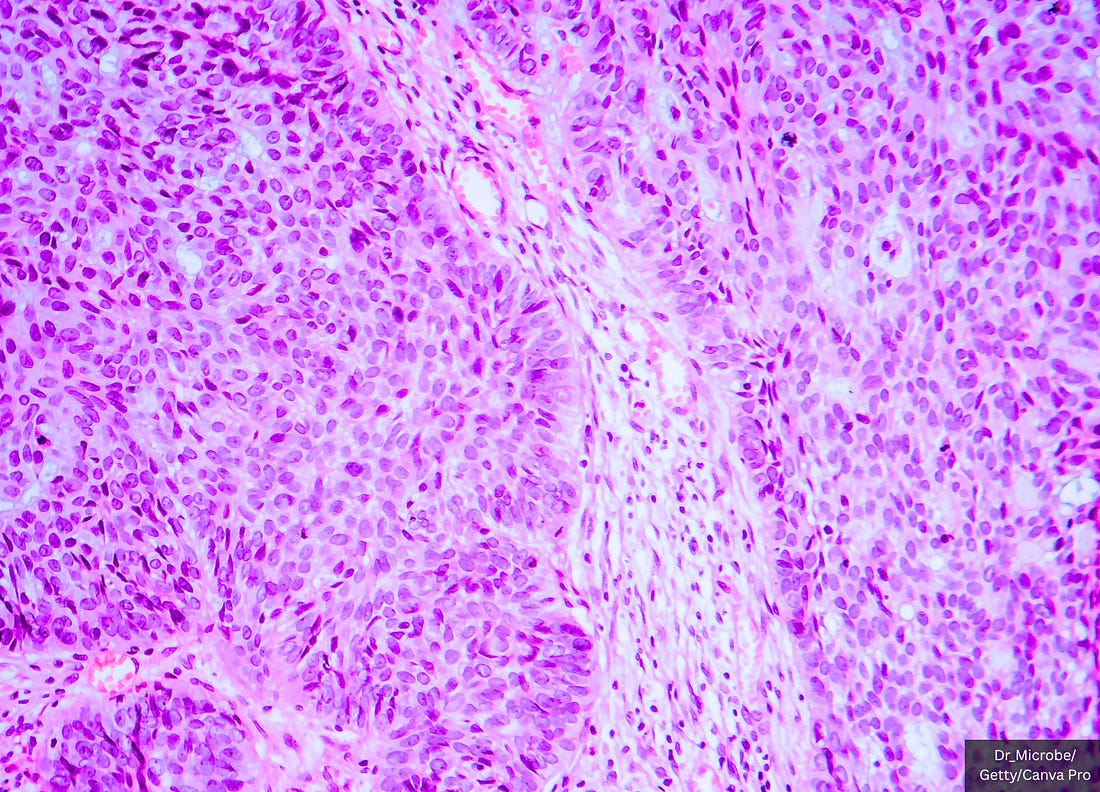
On Thursday, Moderna announced that it has injected the first participant in a Phase 1 clinical trial of mRNA-4200 (NCT06880549), an experimental mRNA product that causes the body to produce seven undisclosed tumor proteins following administration.

In other words, the product does not merely introduce tumor proteins into the body—it uses the body itself to manufacture them.

On purpose.

The study raises obvious safety and informed-consent questions about how long the body produces the purportedly encoded tumor proteins, what their long-term biological effects may be, and whether the product or its outputs could be shed from the original recipient onto others through exosomes or extracellular vesicles in excreted bodily fluids.

A 2021 Journal of Extracellular Vesicles study found that cells expressing a target protein can release extracellular vesicles that “carry” that protein, demonstrating that what is produced inside the body can be exported outside the cell in membrane-bound particles.

A separate 2023 Pharmaceutics review explains that exosomes are natural transport vesicles that carry proteins and nucleic acids throughout the body and are present in bodily fluids including blood, saliva, and other secretions—meaning they are not confined to the original cell or even the original location in the body.

You can contact Moderna here and the FDA here.


The company says it’s evaluating the product in patients with advanced solid tumors, including melanoma, non-small cell lung cancer, esophageal cancer, gastric cancer, ovarian cancer, cervical cancer, endometrial cancer, bladder cancer, and colorectal cancer.

Participants receive the injections either alone or in combination with pembrolizumab, a monoclonal antibody marketed as Keytruda.

Unlike Moderna’s “personalized” cancer vaccine programs, which are said to be tailored to an individual patient’s tumor characteristics, mRNA-4200 is described as an “off-the-shelf” product intended for use across multiple cancer types.

According to Moderna’s public statements, the product works by delivering mRNA instructions that result in the production of seven shared tumor proteins inside the body after injection.

The press release reads:

“Moderna, Inc. (NASDAQ:MRNA) today announced the dosing of the first U.S. participant in its Phase 1 study evaluating mRNA-4200, a tumor-targeted cancer antigen therapy candidate, in patients with advanced or metastatic solid tumors. mRNA-4200 encodes for seven antigens commonly shared across patients and tumor types and is designed to help induce and expand T-cell responses against selected tumor targets.”

However, Moderna has not publicly disclosed the identities of those proteins.

As a result, we are currently unable to independently evaluate which proteins are being produced, whether they are full proteins or fragments, whether they are found elsewhere in the body, or what biological effects may accompany their expression.

The trial is expected to enroll approximately 42 participants and is being conducted at sites in Michigan, Texas, and Utah.

Other Moderna cancer products have encoded immune signaling proteins including OX40L, IL-23, and IL-36γ, and have similarly been paired with monoclonal antibodies targeting immune checkpoint pathways.

Bottom Line

An experimental product that works by causing the body to manufacture tumor proteins inside itself has now moved into human testing.

Not proteins administered from a vial.

Not proteins manufactured in a laboratory.

Proteins manufactured inside the recipient’s own body.

On purpose.

Moderna says there are seven of them.

The company has not publicly disclosed what they are.

That raises questions that should be self-evident.

  • What happens when the body is instructed to produce tumor proteins over time?
  • For how long are they produced?
  • Where are they produced?
  • What happens if those proteins are expressed in tissues beyond their intended targets?
  • And if proteins and nucleic acids produced inside the body can be transported through extracellular vesicles and exosomes found throughout bodily fluids, what does informed consent look like for the people receiving the injections—and for everyone around them?

Those are not peripheral questions.

They are the first questions that should be answered before turning human beings into production sites for undisclosed tumor proteins.

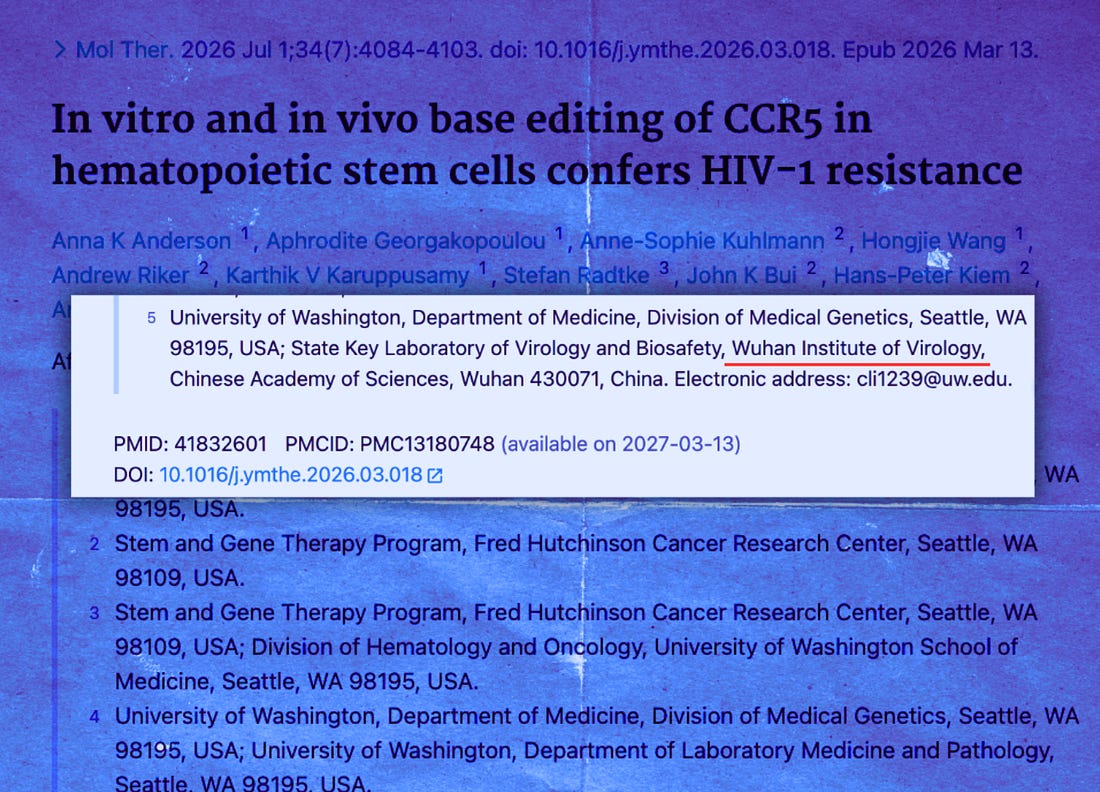
HHS, Gates Foundation Fund U.S.-Wuhan Team to Engineer Virus Designed to Edit Human DNA: Journal ‘Molecular Therapy’


American tax dollars finance human body-altering pathogens in collaboration with Wuhan Institute of Virology scientists.

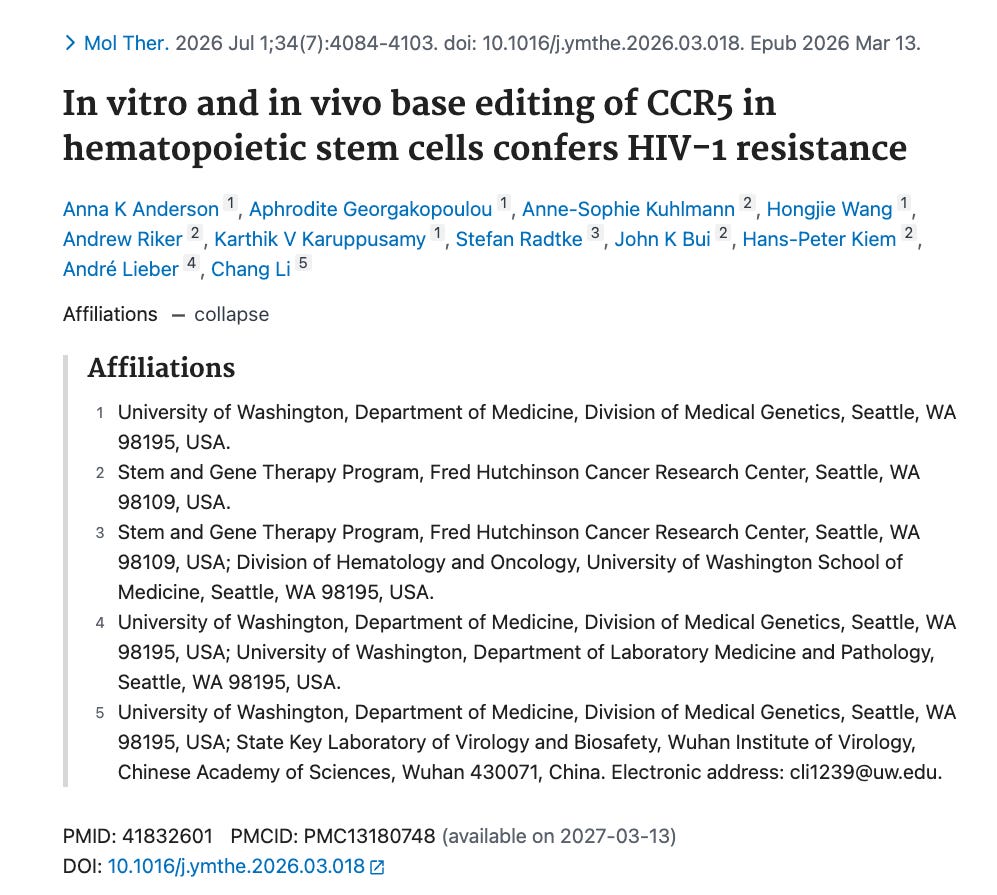
The U.S. Department of Health and Human Services (HHS) and the Bill & Melinda Gates Foundation helped fund a U.S.-Wuhan research team that engineered an adenovirus designed to deliver DNA-editing machinery into human blood-forming stem cells, according to a study published July 1 in Molecular Therapy.

The stated purpose of the study was to genetically engineer human stem cells to resist HIV infection.

But the experiments raise broader questions about the risks of funding purported viral systems designed to permanently alter the human body.

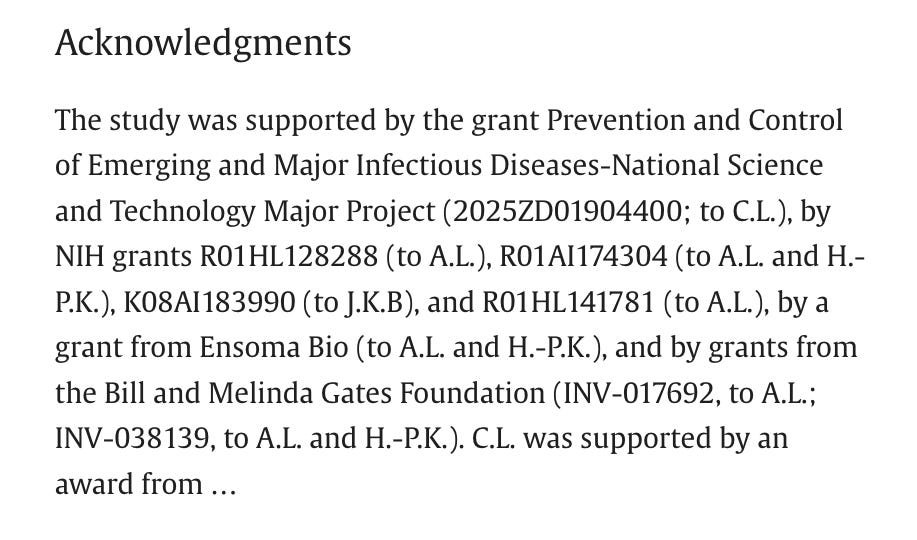
The research was funded by multiple National Institutes of Health (NIH) grants under HHS, grants from the Bill & Melinda Gates Foundation, and support from biotechnology company Ensoma Bio.

The author affiliations include the University of Washington, Fred Hutchinson Cancer Center, and the State Key Laboratory of Virology and Biosafety at the Wuhan Institute of Virology, Chinese Academy of Sciences.

The study acknowledges support from NIH grants R01HL128288, R01AI174304, K08AI183990, and R01HL141781, along with grants INV-017692 and INV-038139 from the Bill & Melinda Gates Foundation.

Additional support came from China’s Prevention and Control of Emerging and Major Infectious Diseases–National Science and Technology Major Project and Ensoma Bio.


According to the paper, the researchers claim to have engineered modified helper-dependent adenoviral (HDAd) vectors to carry CRISPR-derived base editors programmed to alter the human CCR5 gene.

Rather than editing cells outside the body before transplanting them back into a patient, the researchers say they designed the adenovirus to deliver the gene-editing machinery directly into blood-forming stem cells inside a living subject.

Hematopoietic stem cells continually produce new blood and immune cells throughout a person’s life.

By altering the DNA of those stem cells, the researchers say they sought to create a continuing supply of immune cells lacking a functional CCR5 receptor, which HIV is said to commonly use to infect cells.

The study claims that the engineered adenovirus produced “near-complete target site editing” in an HIV-permissive cell line.

The researchers also reported efficient editing in human CD34+ blood-forming stem cells obtained from mobilized donors and umbilical cord blood.

The experiments extended beyond laboratory cell cultures.

Researchers injected the engineered adenoviral vector into humanized mice, enriched the purportedly genetically modified cells, and then exposed the animals to HIV.

According to the paper, approximately 50% of the targeted CCR5 sites were edited in bone marrow cells, and the treated animals had roughly 12-fold lower HIV plasma titers than untreated controls following HIV challenge.

The paper describes the work as part of a broader effort to move human gene editing from ex vivo procedures—where cells are removed, genetically modified, and reinfused—to in vivo editing performed directly inside the body using purported viral delivery systems.

The researchers write that helper-dependent adenoviral vectors can carry large genetic payloads, be manufactured at relatively low cost, and be adapted to deliver different genome-editing systems into hematopoietic stem cells

Bottom Line

American taxpayer dollars and Gates Foundation funding helped finance a U.S.-Wuhan collaboration that engineered a virus to carry purportedly human DNA-editing machinery into living cells.

The study illustrates continued government investment in purported viral delivery systems designed to make permanent changes inside the body.

You can contact NIAID hereNIH here, and HHS here to voice opposition to taxpayer-funded research on pathogens—particularly after Congress, the White House, the Department of Energy, the FBI, the CIA, and Germany’s Federal Intelligence Service (BND) all acknowledged that the COVID-19 pandemic was “likely” the result of a laboratory incident involving engineered pathogens.

Hear the Patriotic Anthem Written Especially for America’s 250


Hear the Patriotic

Anthem Written Especially for America’s 250

Hear the Patriotic

Anthem Written Especially for America’s 250

Anthem Written Especially for America’s 250

HHS Funds Experiments Determining How to Make H5 Influenza More Pathogenic: Journal ‘Science’


Bird flu study carried out by infamous gain-of-function virologist Ron Fouchier.

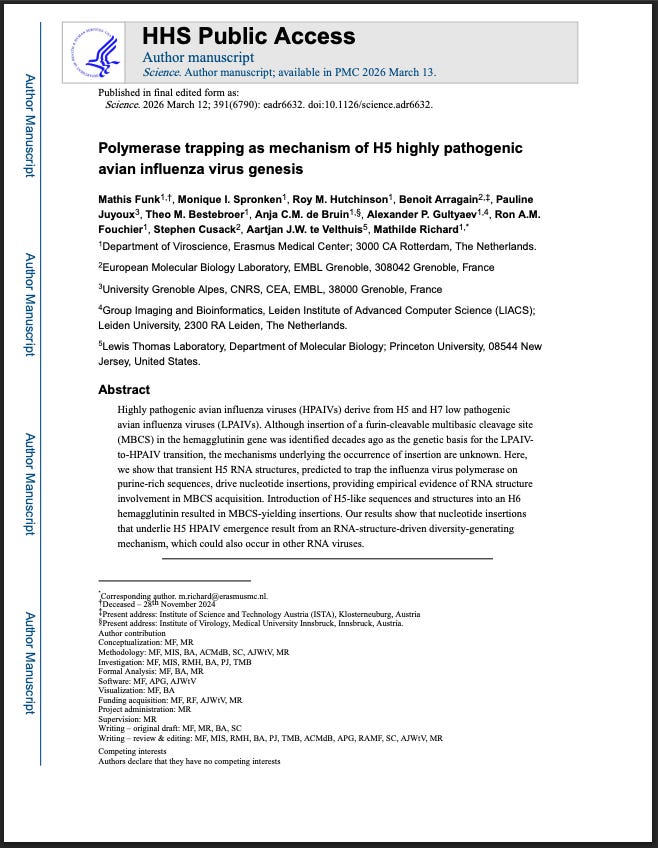
Scientists funded by the U.S. Department of Health and Human Services (HHS) say they have identified the molecular mechanism that allows low-pathogenic H5 avian influenza to acquire the defining genetic feature of highly pathogenic bird flu, according to a study published March 12 in Science.

Pathogenicity is the ability of a microorganism or agent to cause disease in a host.

Americans are paying for experiments that determine the molecular steps said to make H5 influenza more dangerous.

The study was carried out by Dr. Ron Fouchier of Erasmus Medical Center—best known for his controversial H5N1 bird flu gain-of-function experiments—along with researchers from Erasmus Medical Center, EMBL Grenoble, University Grenoble Alpes, Leiden University, and Princeton University.

The controversial experiments come as Congress asks for $3.3 billion for a future influenza pandemic, including the construction of new influenza vaccine manufacturing facilities, in a newly introduced House bill.

They also come as the FDA’s Vaccines and Related Biological Products Advisory Committee (VRBPAC) clears the way for approval of Moderna’s new mRNA influenza vaccine, despite the shot claiming to offer less than 1% absolute benefit.


The study centered on the multibasic cleavage site (MBCS), which the authors describe as the genetic basis for the transition from low-pathogenic avian influenza viruses (LPAIVs) to highly pathogenic avian influenza viruses (HPAIVs).

To determine that mechanism, the researchers claim to have engineered influenza RNA sequences and structures and measured how frequently the virus acquired the nucleotide insertions that generate the multibasic cleavage site.

According to the paper:

“We show that transient H5 RNA structures, predicted to trap the influenza virus polymerase on purine-rich sequences, drive nucleotide insertions.”

The researchers then say they experimentally altered those RNA structures.

When they disrupted the structures, the frequency of pathogenicity-generating insertion events fell sharply.

When they strengthened them, the insertion events increased dramatically.

In one engineered construct, heteropolymer insertion frequencies increased approximately eightfold over the parental construct.

Meaning the engineered virus was said to have become about eight times more likely to acquire the genetic change that turns low-pathogenic H5 influenza into highly pathogenic bird flu.

The scientists also transferred H5 RNA features into H6 influenza, creating chimeric “Frankenstein” genetic hybrids.

According to the paper:

“Introduction of H5-like sequences and structures into an H6 hemagglutinin resulted in MBCS-yielding insertions.”

The study further reported that the insertions generated by the engineered system produced multibasic cleavage site sequences that were “similar or identical” to those observed in naturally emerging highly pathogenic H5 influenza viruses.

The authors concluded they had identified the mechanism responsible for generating the multibasic cleavage site.

They wrote:

“We show that the trapping of the influenza virus RdRp on A/U-rich sequences by transient RNA structures formed by the template is the mechanism by which nucleotide insertions occur at the H5 cleavage site.”

You can contact NIAID hereNIH here, and HHS here to voice opposition to taxpayer-funded research on pandemic pathogens—particularly after Congress, the White House, the Department of Energy, the FBI, the CIA, and Germany’s Federal Intelligence Service (BND) all acknowledged that the COVID-19 pandemic was “likely” the result of a laboratory incident involving engineered pathogens.