The catastrophic mismanagement of Hurricane Helene relief is a showing sign to the American people that Washington is not only dysfunctional, but worse, it doesn’t even seem to be trying to serve the people.
Instead, the people serve it. Like livestock.
So how did we get here?
The Long March of Bureaucracy
As with the economy, the seeds of our political crisis began a hundred years ago in the Progressive era.
The Progressives big year for taking over the economy was 1913, with income tax and the Federal Reserve Acts.
But the political takeover was earlier — according to historian Murray Rothbard, it began precisely 30 years earlier with something called the Pendleton Act of 1883.
The Act made bureaucrats professionals who are independent of politicians. This was allegedly to fight corruption, but note that a bureaucracy that’s independent of politicians is also independent of voters.
After all, politicians are the only part of the government who answers to voters. So if bureaucrats don’t answer to them, then who do they answer to?
Simple: they answer to nobody. The government bureaucracy becomes a self-serving occupying army. By design.
Bureaucrats and Angels
Progressives did this because they’ve convinced themselves that government workers are omniscient angels — that the act of collecting a government paycheck is a kind of purifying bath that washes away the greed and malice of the unwashed masses over whom the government lords over as if the people are parasites.
This may sound goofy, but talk to a Progressive.
Of course, after Covid, anybody who thinks bureaucrats are omniscient angels needs a lobotomy.
The Union of Bureaucrats and Socialists
Once installed with Pendleton, this independent bureaucracy was, of course, captured by the left — socialists, because they both wanted the same thing: increased government control.
They began in the Progressive Era with widespread regulations that were billed as ‘reining in’ Big Business, but were of course, written by Big Business, marketed by their paid socialist activists, then implemented by bureaucrats whose funding came from politicians on the payroll — well, the donor lists — of Big Business.
And so was born our Corporatist system — of course, there’s another word for it that begins with F and ends in -ism, but then I’m not trying to get censored.
Socialism’s “Inevitability”
This capture is why it feels the world is grinding ever more socialist: the bureaucracy partners with socialists to a common end: government control over the people.
They then use government money — your money — to propagate the takeover through academia, media and corporations who are punished if they don’t toe the line. Elon Musk’s regulatory harassment being just one example.
It can feel intimidating: Covid showed us there is essentially no institution in the country that has not been infiltrated by this toxic combination of government money and intimidation.
The cartels call it plata o plombo. Silver or lead. And the socialist Deep State uses both.
Crisis and the Deep State
Over the past century, every crisis grew this Deep State: world wars, Great Depression. Even made-up crises like global warming and, of course, Covid.
Covid was their dream come true: total control.
The problem, of course, is that once a wild animal tastes human blood you can never trust it again.
That’s exactly what happened in a moment that I believe is very close to today: The wartime socialism of World War I.
The men who pushed World War I — men like Herbert Hoover — imposed Soviet-style economic and social control during the war.
Once the war ended, they were very reluctant to hand that power back, and they spent the rest of their careers trying to get it again.
Unfortunately, the stock market crash of 1929 was the excuse they needed. They used it to seize the commanding heights of the economy — the administrative state, and, 100 years later, they still run it.
So that all takes us to today: a totalitarian Deep State that progressively seizes economic, social, and political power. Enslaving us with debt, mandates, taxes, and surveillance.
The administrative state can be defeated, but not by fighting the hydra head by head. That only works with single head snakes and make no mistake about it, our government has no single head. Rather, you go to the source: the independent bureaucracy.
To end the totalitarian deep state, politicians must have the ability to fire and hire anybody they like. Because the people must have that power, and until we abolish governments, politicians are their only voice.
The only alternative is progressive enslavement by bureaucratic commissars until the people rise up and fix it by other means that few will enjoy.
The suburbs, once considered safe havens from urban chaos, are rapidly becoming ground zero for a new wave of danger. The growing presence of violent criminal gangs, many of whom are migrants flooding into the country as part of a government plot to punish suburban communities, is turning these once-peaceful areas into lawless zones. It’s not just anecdotal anymore—it’s happening right in front of our eyes.
One clear example of this suburban decay is the situation at Moreno Valley Mall in California. This mall, like many others across the country, has been overrun by unruly teens causing chaos. And this is not an isolated incident. Malls in places like New Jersey and Pittsburgh are enacting curfews, banning teenagers from being inside after certain hours unless accompanied by an adult, and creating “waiting zones” for teens needing rides after curfew. These measures are a direct response to a spree of looting and violence that began during the so-called “summer of love” in 2020—and has only escalated since.
The result? Shopping malls, once symbols of suburban prosperity, are now unsafe. Stores like CVS and Target are locking up basic goods, and violent confrontations in malls have become a regular occurrence. And this isn’t just a problem in the cities anymore. It’s spreading to the suburbs, where liberal district attorneys refuse to prosecute criminals, emboldening bad actors to strike with little fear of consequences.
The influx of migrants into suburban areas is accelerating this decline. These individuals, often without proper vetting or legal status, are being funneled into these communities, causing a dramatic increase in crime. This isn’t a random consequence—it’s part of a deliberate government plan to punish the suburbs for their political leanings. Many of these areas, traditionally conservative and resistant to progressive policies, are being flooded with people who have no ties to the community and no respect for its laws.
This shift is part of a broader strategy to destabilize the suburbs and break down their resistance to government overreach. The Biden-Harris administration, along with far-left radicals in local governments, seems intent on punishing suburban families by placing violent criminal invaders right on their doorsteps. It’s not enough for them to watch inner cities crumble—they want the same chaos to engulf the suburbs, too.
The lamentations of media personalities like Angela Poe Russell, who mourn the loss of “safe” places for teens to hang out, only underscore how dangerous things have become. Russell reflects nostalgically on the time she spent at malls in her youth—working her first job, meeting her first boyfriend, and making memories. But here’s the cold, hard truth: the key word she uses is “safe.” And malls, like the communities they serve, are no longer safe.
The reality is that the same forces driving up crime in inner cities—government-sanctioned lawlessness, soft-on-crime policies, and unchecked migration—are now infiltrating the suburbs. The same liberal DAs who refuse to prosecute criminals in urban areas are ensuring that the criminals feel emboldened to move into suburban areas, knowing they won’t face serious repercussions there either. And with every new wave of migrants being transported into suburban communities, the threat only grows.
Suburban families must face a hard truth: the government is not interested in protecting them. In fact, they seem intent on putting you in harm’s way. The influx of violent criminals, the collapse of local law enforcement, and the increase in property crimes are not random developments. They are part of a coordinated effort to punish the suburbs for resisting the progressive agenda.
So what can you do? First and foremost, be aware that your community is changing—and not for the better. Prepare your home and your family for the increasing likelihood of violence. Lock your doors, invest in home security, and stay informed about what’s happening in your area. Don’t expect the police or the government to save you. They’ve made it clear that they have other priorities.
The suburbs are no longer a refuge from the dangers of the world. The threat is here, and it’s growing. It’s time to wake up, be vigilant, and understand that the days of peaceful, suburban living are rapidly fading away.
What are you doing to prepare your family for suburban decay?
Virtually all climate policy discussions assume that climate science compels us to make large and rapid reductions in greenhouse gas emissions. But any realistic policy must balance the hazards, risks, and benefits of a changing climate against the world’s growing demand for reliable, affordable, and clean energy. To strike that balance, climate policymakers will consider society’s values and priorities, its tolerance for risk, equities among generations and geographies, and the efficacy, costs, and collateral impacts of any policy. This paper reviews some of the scientific, techno-economic, and societal facts and circumstances that should inform those policy decisions and draws some straightforward conclusions from them.
CLIMATE IMPACTS
Projections of the impacts of future climate changes rely on assumptions about future greenhouse gas emissions fed into large computer models of the ocean and atmosphere. Although those models can give a hazy picture of what lies before us at the global scale, their deficiencies on smaller scales are legion. For example, two senior climate researchers firmly within the scientific mainstream have said this:
For many key applications that require regional climate model output or for assessing large-scale changes from small-scale processes, we believe that the current generation of models is not fit for purpose.1
That’s particularly important because adaptation measures depend upon regional model projections. One of the same senior researchers noted the following:
It is difficult, and in many places impossible, to scientifically advise societal efforts to adapt in the face of unavoidable warming. Our knowledge gaps are frightful because they make it impossible to assess the extent to which a given degree of warming poses existential threats.2
Users of the model output similarly caution about being overly credulous:
The use of these [climate] models to guide local, practical adaptation actions is unwarranted. Climate models are unable to represent future conditions at the degree of spatial, temporal, and probabilistic precision with which projections are often provided, which gives a false impression of confidence to users of climate change information.3
Even if we can’t rely on unvalidated climate models, we can get some sense of how the world has fared under a changing climate by looking back to 1900. Since that time, the globe warmed 1.3°C, about as much as the Intergovernmental Panel on Climate Change (IPCC) predicts will occur in the next century under moderate future emissions. But even as the globe warmed and the population quintupled, humanity prospered as never before. For example, global average lifespan went from thirty-two years to seventy-two years, economic activity per capita grew by a factor of seven, and the death rate from extreme weather events plummeted by a factor of fifty! Any assertion that a similar warming over the next century will be catastrophic is implausible and finds little support in either IPCC science assessments or the underlying scientific literature and data.
Although climate varies a lot on its own, many still allege that we’ve broken the climate in the past few decades. Yet table 12.12 of the most recent IPCC report (AR6 WG1) shows it’s hard to find long-term global trends in most types of extreme weather events, including storms, droughts, and floods. And economic loss rates have declined slightly over the past thirty years, averaging about 0.2 percent of global GDP.4 A wealthier world is a more resilient world.
Perhaps future climates will be a lot worse. But the United Nations (UN) projects substantial economic growth, even for an emissions-heavy future. The IPCC’s 2014 Fifth Assessment Report said the following in chapter 10:
For most economic sectors, the impact of climate change will be small relative to the impacts of other drivers (medium evidence, high agreement). Changes in population, age, income, technology, relative prices, lifestyle, regulation, governance, and many other aspects of socioeconomic development will have an impact on the supply and demand of economic goods and services that is large relative to the impact of climate change.5
Subsequent research has confirmed that warming is expected to be a minor hinderance to growth—a few degrees of warming by the end of the century would make the growing economy a few percent smaller than it might have been.6 For example, if the US economy were to grow at an average annual rate of 2 percent, it would be four times larger seventy years from now. A climate impact of, say, 4 percent would reduce the growth from 400 percent to 384 percent, a change much smaller than our ability to project that quantity. Of course, there are uncertainties in these projections, GDP is not the only measure of well-being, and the rich will fare better than the poor. But the term ‘existential crisis’ is hardly justified.7
Another form of “climate impact” is the disruption caused by large and rapid reductions in greenhouse gas emissions. William Nordhaus’s work showed that there is an optimal pace to reduce emissions: moving too quickly causes turmoil and deploys immature technologies. His 2018 Nobel lecture stated that an economically optimal decarbonization could let the global temperature rise in 2100 exceed 6°C (quadruple the Paris Accord guardrail of 1.5°C!). Of course, that’s based on assumptions that can be, and have been, challenged, but Nordhaus’s main takeaway is “don’t panic”—take the time to reduce emissions gracefully.8
MORAL CONSIDERATIONS
To paraphrase the best climate science can tell us, something very bad might happen—but we do not know exactly what, or precisely when, or just how bad it is going to be. Developed countries fret about that “climate threat” and therefore urge prompt, large-scale action to reduce global emissions. But that vague, uncertain, and distant threat is hardly compelling for most of the world, which has many more certain, immediate, and soluble problems.
The 1.5 billion people in the developed world enjoy abundant and affordable energy. But the globe’s other 6.5 billion don’t have enough energy. The inequalities are astounding. Americans consume thirty times more energy per capita than Nigerians. And 3 billion of the world’s 8 billion people use less electricity every year than does the average US refrigerator. Energy poverty also means cooking with wood and dung, and smoke in the kitchen kills some 2 million people each year.
Global energy demand is predicted to increase 50 percent by midcentury as most of the world develops. Fossil fuels are the most reliable and convenient way for developing nations to get that energy, as they long have been for everyone; coal, oil, and natural gas providing about 80 percent of the word’s energy today. And so global emissions will persist in coming decades, even as the developed world’s emissions decline slowly. Just to stabilize, let alone reduce, humanity’s warming influences at an allegedly safe level, emissions must vanish in the latter half of this century.
Reliable and affordable energy is the overwhelming priority for developing nations. So, when they’re told that the science compels us, their clear response is What do you mean by “us”? We hear the Indian prime minister protest that the path for development is being closed to developing nations, while Niger’s former president says Africa is being punished by Western decisions and will fight to exploit the fossil fuels it has.9
There are moral issues when the developed world seeks to deny developing nations the energy they need, restraining economic progress by mandating costly and ineffective energy systems, particularly if the developed countries are not going to pay a “green premium” for low-emission technology from their already stretched budgets.
A very different immorality arises from continued exaggerations like science compels, which induce eco-anxiety. Some 60 percent of young people globally are very worried about climate change, and many are reluctant to have children.10
•••
The facts and figures about climate and energy that I have laid out show that the world will not get to net zero emissions by midcentury and that net zero by 2100 would be a heroic achievement. But they also show that the world isn’t facing climate catastrophe. If advocates continue to exaggerate the importance and urgency of reducing emissions at the expense of more immediate and tangible societal needs, what will the public think as the world continues to fall short of its emissions goals yet continues to prosper?
TECHNO-ECONOMIC REALITIES
Energy systems are recalcitrant for good reasons. These systems involve massive investments in assets that last decades, their parts need to work together (for example, cars, fuel, and the fueling infrastructure must all be compatible), and there are many stakeholders whose interests don’t often align. It also takes time to refine the hardware and operating procedures that ensure high reliability. So, energy systems are best changed slowly and steadily over decades—more like orthodontics than the tooth extraction implied by large and rapid reductions.
Reducing emissions from energy systems will involve electrifying most transportation and heat while transitioning to a zero-emissions electrical grid. Although electric vehicles and industrial heat pose their own challenges, this paper focuses on the linchpin of the strategy, decarbonizing the grid.
The electrical grid must reliably deliver electricity. The wind turbines and solar panels so much in vogue are indeed today’s cheapest ways of producing electricity. Unfortunately, they are unreliable: solar panels don’t produce at night, and the wind comes and goes hourly. So there has to be a reliable backup system for when the renewables fail—technologies such as natural gas with carbon capture or nuclear power or some form of storage (like giant batteries).
Reliable backup isn’t too expensive in day-to-day operations. But there are infrequent occasions, up to two weeks long, when neither wind nor solar will generate much. Those times are so important the Germans coined a word for them: dunkelflaute—a dark stillness. Dunkelflauten are documented in all locales with significant deployment of renewables, including the UK, Germany, Texas, and California.
To ride through those long dunkelflauten, the backup grid must be at least as capable as the wind and solar alone, and hence at least as expensive. In other words, the most expensive part of a renewables-heavy grid is reliability, and it becomes more and more expensive as the reliability requirement becomes more stringent.
The cost of reliability can be estimated by models that subject different grids (i.e., mixes of storage, gas, nuclear, wind and solar generation) to historical hour-by-hour weather and demand data. One such study of the US grid demanding >99.99 percent reliability (roughly today’s federal standard) showed that natural gas with or without carbon capture would be the cheapest, and that grids with only wind and solar generation and various forms of storage would be at least two or three times more costly.11
So, it is incorrect, and entirely misleading, to assert that a renewables-heavy grid will be cheap—unless you’re okay with poor reliability. And it’s reasonable to ask, If the backup system needs to be so capable, why have renewables at all? In short, wind and solar can never be more than an ornament to more reliable technologies.
Solar and wind generation have other drawbacks. They need a lot more land because sunlight and wind are much less concentrated than fossil or nuclear energy.12 To produce the same electricity, wind takes four times as much land as gas, seven times as much as coal, and thirty times as much as nuclear. And you need to cover that land with enormous structures. To produce the same amount of electricity, wind takes ten times as much concrete and steel as nuclear.13
Renewable energy technologies also use a lot more high-value materials, such as copper, molybdenum, and dysprosium, because they need to be very efficient.14 An electric car uses almost seven times as much high-value materials as a conventional car, while onshore wind generation uses almost nine times as much as natural gas.
Unfortunately, those high-value materials and their processing are concentrated in inconvenient countries. The Democratic Republic of the Congo produces 75 percent of the world’s cobalt, while China is a major player in extracting rare earths and graphite and in processing an array of critical minerals.
And although China uses less than 40 percent of the world’s solar panels, it makes 75 percent of all panels, 97 percent of the wafers, 85 percent of the cells, and 79 percent of the polysilicon.15 Chinese manufacturing costs are lower due to cheap (coal-fired) electricity, loose environmental standards, and forced labor.16 The US government has imposed sanctions on some Chinese material for solar panels, which has driven up costs.17 And the Inflation Reduction Act begins an effort to onshore or “friend shore” the supply chains for critical minerals.18
But some of the drawbacks of fossil fuels that disturb many people would still be there in a high-renewables world—there will still be international trade to lower commodities costs. And there will still be pollution from extracting and processing the enormous quantities of materials that renewables require. However, since critical minerals are input to the manufacture of energy equipment, disruption of one of those supply chains would not have the immediate impact that disruption of a fossil fuel would entail.
In addition, renewables may not remain the cheapest form of generation. If wind, solar, electric vehicles (EVs), and the like are deployed at the envisioned pace, mineral supplies will have a hard time keeping up. For example, by the middle of the next decade, copper demand is expected to double, but the supply will be 20–25 percent short because new mines will have lower quality ore and take sixteen years to start up.19
SUMMARY
A dispassionate look at trends in demographics, development, and energy technology shows that global net zero by 2050 is a fantasy and that it’s quite unlikely even by 2100. But also, the consequences of missing that goal will hardly be catastrophic. That doesn’t mean the world, or we in the United States, shouldn’t do anything. But it does undermine claims of urgency. Here’s what I think we should do.
Sustain and improve climate science. Our knowledge of the climate system is not what it should be. Paleoclimate studies tell us how and why climate has changed in the past; current observations with improved coverage, precision, and continuity tell us what the climate system is doing today; and models give a sense of what might happen in the future. There is a particular need for greater statistical rigor in the analyses and for more focused modeling efforts to reduce uncertainties.
Improve communications to the public. We need to cancel the alleged climate crisis even as we acknowledge that human influences on the climate are growing and that we should be working to reduce them. The public must have an accurate view of both climate and energy that gets beyond sound bites like We are on a highway to climate hell with our foot still on the accelerator. 20 Such alarmism is counterproductive, since many people are savvy enough to dismiss unsupported scare stories.
Acknowledge that energy reliability and affordability take precedence over emissions reductions. A good start was President Joe Biden’s recent admission that oil and gas will be necessary in the United States for at least a decade. (Actually, it will be far longer than that.) Europe’s current energy crisis is self-inflected: fossil fuel investments and domestic production were abandoned in favor of unreliable import partners and unreliable wind and solar generation. It was easy to see that this would lead to trouble, but mitigation was deemed more important than reliability and affordability.
Pursue thoughtful decarbonization. Governments should embark on programs that aim to reduce emissions by productively coordinating technology development, private sector activity, regulation, and behavior change. It will also be important to estimate costs, timescales, and any actual impacts on the climate (i.e., will it make a difference?). An essential element is research, development, and demonstration (RD&D) of emissions-lite technologies to reduce the so-called green premium. Small fission reactors, grid storage and management, batteries, noncarbon chemical fuels, and carbon capture and storage should be high on the list of today’s most promising early-stage technologies.
But programs that go beyond RD&D to meaningful deployment should not scattershot mandates and incentives currently popular. Energy is delivered by complex systems that touch—to borrow from a recent movie title—“everything, everywhere, all the time.” Those systems are recalcitrant for fundamental reasons, so they are best changed slowly. Precipitous climate action is far more disruptive than any plausible impact of climate change. Recent events in Germany, the UK, and the Netherlands show how overly severe emissions regulations can destabilize the political landscape.
Acknowledge developing world energy needs. Most of the world today is energy starved, and fossil fuels are currently the most convenient and reliable way of meeting that demand. Without costly backup systems, weather-dependent wind and solar generation cannot provide appropriate energy access for the people of developing countries. Most advocates of rapid global decarbonization never say what they would do to meet the developing world’s energy needs. And for those who do say, It has yet been answered that respects technical, economic, demographic, and political realities.
Place a greater focus on alternative strategies for dealing with a changing climate. The most important is adaptation. It’s autonomous; adaptation is what humans do, it is effective, it is proportional, and it is local and hence achievable. If nothing else, governments should work to facilitate adaptation.
•••
Policymakers need to realize that large and rapid reductions in emissions are overkill—they risk far more damage to humanity than any conceivable impact from climate change itself. But there is a sensible path forward that will moderate human influences on the climate while responding to the growing demand for reliable and affordable energy. The policy challenge is to identify that path and begin to follow it.
NOTES
Tim Palmer and Bjorn Stevens, “The Scientific Challenge of Understanding and Estimating Climate Change,” Proceedings of the National Academy Sciences 116, no. 49 (December 2, 2019): 24390–95, https://www.pnas.org/doi/10.1073/pnas.1906691116.
Bjorn Stevens, “What We Don’t Know About Climate Change and Why It Matters,” 8th Annual Michio Yanai Distinguished Lecture, May 5, 2022, https://atmos.ucla.edu/yanai-lectures/8th-annual -michio-yanai-distinguished-lecture/.
Hannah Nissan, Lisa Goddard, Erin Coughlan de Perez, John Furlow, Walter Baethgen, Madeleine C. Thomson, and Simon J. Mason, “On the Use and Misuse of Climate Change Projections in International Development,” WIREs Climate Change 10, no. 3 (May/June 2019), https://wires.onlinelibrary.wiley.com/doi/full/10.1002/wcc.579.
Douglas J. Arent, Richard S.J. Tol, Eberhard Faust, Joseph P. Hella, Surender Kumar, Kenneth M. Strzepek, Ferenc L. Tóth, and Denghua Yan, “Key Economic Sectors and Services,” in Climate Change 2014: Impacts, Adaptation, and Vulnerability. Part A: Global and Sectoral Aspects. Contribution of Working Group II to the Fifth Assessment Report of the Intergovernmental Panel on Climate Change, ed. Christopher B. Field et al. (Cambridge, UK: Cambridge University, 2014), 659–708, https://www.ipcc.ch/report/ar5/wg2/.
Richard S.J. Tol, “A Meta-Analysis of the Total Economic Impact of Climate Change,” Tinbergen Institute Discussion Paper (TI 2022-056/VIII), August 25, 2022, https://papers.tinbergen.nl/22056.pdf.
One might still fret about severe but unlikely climate events such as the slowing of the Atlantic circulation or the outgassing of the permafrost, although these have also been judged to have a few percent impact on the economy. Simon Dietz, James Rising, Thomas Stoerk, and Gernot Wagner, “Economic Impacts of Tipping Points in the Climate System,” PNAS 118, no. 34 (August 16, 2021), https://www.pnas.org/doi/10.1073/pnas.2103081118.
Jacqueline A. Dowling, Katherine Z. Rinaldi, Tyler H. Ruggles, Steven J. Davis, Mengyao Yuan, Fan Tong, Nathan S. Lewis, and Ken Caldeira, “Role of Long-Duration Energy Storage in Variable Renewable Electricity Systems,” Joule 4, no. 9 (September 16, 2020): 1907–28, https://www.sciencedirect.com/science/article/pii/S2542435120303251.
At this point, China’s declining economic situation is well documented. The damage is too large to cover up with propaganda, and the Chinese people know it. Even the Chinese Communist Party’s (CCP’s) 75th anniversary was austere. Negative economic factors have been building for years.
China was already having problems in 2018 and 2019 with the Trump administration’s imposition of steep tariffs on Chinese goods. But the COVID-19 pandemic and the CCP’s extreme “zero-COVID” three-year lockdown period made China’s economic downturn much worse.
China Is Being Tested
As we approach the last quarter of 2024, the CCP is being tested by unprecedented domestic economic conditions. As a result, civil unrest is 18 percent higher than last year. The slowdown has many facets, of course. We’ll name just a few in this space.
One big factor is the real estate sector, which is about 30 percent of GDP. It continues to crater, and at the time of this writing, there is no recovery in sight. Home prices and sales continue to decline. What’s more, Chinese consumers are buying less, with consumer spending making up just 38 percent of GDP. By contrast, that figure is 60–70 percent in developed countries.
Sloth and Disillusion
Not unexpectedly, unemployment among China’s youth (ages 16–24) had been at least 21 percent and likely higher when the CCP stopped publishing unemployment figures in June 2023. Then, in December of that year, the CCP released new statistics from a new method of measuring youth unemployment, which did not include students. That new approach dropped that figure down to 14.9 percent, but that’s still almost three times higher than China’s national rate of 5.1 percent.
High jobless rates for young people hinder future growth potential and have added to the “lie flat” trend amongst many in China’s new generation, who have little hope of or ambition to obtain the lifestyle that their parents enjoyed.
Sloth and disillusion are hardly the stuff that strong economies are made of. The risks and dangers of disaffected youth movements are not unknown in China. The ghost of Tiananmen still haunts Chinese authorities, even though the surveillance and control that the CCP has over its people is now light years ahead of the Tiananmen Square era of 1989.
Embedded Political and Industrial Policies
Still, there are embedded economic realities that can’t easily be changed. Party doctrine dictates that China’s top economic advantage is found in its low levels of domestic consumption and high savings rate. These two factors mean domestic capital flows directly into the state-controlled banking system, which it can then allocate to specific industries. This gives the Party tremendous control over industrial policy and private capital.
For instance, China’s economic and development structures are geared toward high levels of industrial output. That may seem fine, but because China’s political organization and industrial arrangements within the Party are focused on large production capacity and not innovation or differentiation, the outcomes are massive overproduction that is often well beyond global demand and unprofitable factories.
Constant oversupplies, from electric vehicle batteries to electronics, result in Chinese manufacturers dumping massive amounts of cheap products into foreign markets, triggering trade friction such as tariffs and other retaliation, which also make conditions worse in China.
In short, China’s distorted industrial policies tied to a graft-loyalty political system have made it incapable of changing without disrupting the CCP structure and the loyalties that come with it.
No Stopping the Downward Spiral
For these reasons and others, over the past several years, China has found itself in a downward spiral of deflation, falling domestic consumption, and declining confidence in the CCP. What’s more, there are few real options that won’t threaten the CCP’s grip over the country. It must be made clear, however, that with its surveillance capabilities, the Party can handle a loss of confidence in the eyes of the people, but it can’t survive a loss of power. The two are not one and the same.
What the CCP will do is continue to support some critical areas of the economy, such as artificial intelligence, robotics, and military enhancements, while letting other sectors flail without little or no bailouts. Some sectors will eventually return, but not in the near future. This is clear to many within and outside of China, as billions of dollars in investment and capital continue to exit China.
Wolf Warrior Diplomacy Is Alive and Well
This brings us to China’s so-called wolf warrior diplomacy approach toward other nations, which it adopted in 2019 on the cusp of the COVID-19 outbreak and global criticism of Beijing’s disastrous handling of the pandemic. China was already under economic duress due to the rising trade war with the United States. Some observers attribute this approach to personal ambition among China’s diplomatic personnel and/or an attempt to improve the perceived investment environment in China.
Neither makes any sense when it’s understood that Xi Jinping is not allowing diplomats to make their own rules and policies, and pre-wolf warrior investment levels were high. Why would the CCP authorities imagine that increasing aggression on the global stage would make more countries want to invest there? They don’t.
A more realistic rationale for China’s rising aggression on the world stage is that Beijing feels the need to control the narrative at home and intimidate the rest of the world. The spillover between a declining economy and rising unrest is clear. At home, the CCP needs to blame the West and other foreigners for its blatant economic failures not only for exculpatory purposes but also to whip up nationalism and justify further aggressions as economic conditions continue to deteriorate.
Some observers have concluded that Beijing’s days of wolf warrior diplomacy are now over. Current events, however, defy such a conclusion. These include the Chinese regime’s provocative incursions with military planes and boats into or near territorial waters or air space of the United States, Taiwan, and the Philippines, border battles with India, as well as a desire to expand control of the South China Sea. On the global stage, as the return to bullets over diplomacy rises, Beijing sees an opportunity to influence and/or intimidate other nations.
By now, most of you reading, are familiar with the United Nations’ Sustainable Development Goals (SDGs). If not, the Goals are in a set of 17 different topics which spearhead every part of our lives, governments & economies. The over-reaching goal is complete compliance of every member-state country to adhere to these ‘set in stone’ goals.
(SDG 1-No poverty; SDG 2- Zero hunger, SDG 3-Good Health & Well-being, SDG 4-Quality Education, SDG 5-Gender Equality, SDG 6-Clean Water/Sanitation, SDG 7-Affordable/Clean Energy, SDG 8-Decent Work/Economic Growth, SDG 9-Industry/Innovation/Infrastructure, SDG 10- Reduced Inequalities, SDG 11- Sustainable Cities/Communities, SDG 12- Responsible Consumption/Production, SDG 13- Climate Action, SDG 14- Life Below Water, SDG 15- Life on Land, SDG 16, Peace/Justice/Strong Institutions, SDG 17- Partnerships for the Goals)
This begs the question, however, about the power these SDGs have over or above the US Constitution, as well as any other member-state’s national governing framework. Does the US Constitution remain America’s supreme framework in the coming days, weeks & years?
Our US Constitution was severely weakened with the creation of the USMCA (US-Mexico-Canada Agreement) and the subsequent passage (by Congress) of laws to fully implement USMCA mandates. We the People did not ask for, nor vote for this Agreement or to be bound by it under federal law.
However, USMCA did set up regionalism which adheres more to the United Nations than to the US Constitution. The USMCA, much like the SDGs, split everything which impacts our lives, government & economies into commission governed by appointed individuals, not elected ones.
USMCA was/is a key component to adhering to the SDGs, not American values, attitudes or beliefs.
The USMCA is much like the European Union’s regionalism.
What does this mean? People living within the region (not necessarily in your country) decide what your country will do, or not do. The UN cannot fully survive in its plans for total control without regionalism throughout our world! (*Note, if you’ve ever studied a FEMA map of the USA, the regions are carbon copies of those from the United Nations. Similar maps of the world show the compliance by grouping nations/countries into regions.)
This past month, September 2024, the United Nations hosted its “Summit of the Future” in New York City. In brief detail the Summit was to further cement not only the SDGs in our lives, but to expand the UN’s power (via a new charter). In doing this, the UN’s Universal Declaration of Human Rights gained even more power.
Among the ‘rights’ assigned in that Universal Declaration, every aspect of how we live, what we do, how we do it, etc. are defined. These assigned rights seek to put government as our god and not respect our God-given rights (which no government or international entity can remove). These God-given rights are inherent, as they should be.
Government, in its truest form should protect those inherent rights, not remove or seek to somehow improve them. For example, freedom is among our God-given rights. There’s no improvement possible by any government which can assign or guarantee freedom. Why not?
Freedom should be at 100 percent, all the time, for each of us. It’s mathematically impossible to improve it to any percent over 100. Governments CAN and do, seek to reduce our freedoms of 100 percent.
Why This Matters:
So, imagine the shock, horror and gasping that occurs when you discover that the SDGs seek to use the Holy Bible to oversee your worship? If you don’t read the Holy Bible, that’s okay, the UN has thought of that and included EVERY religion in its quest to totally control us! If you’re not a believer of any religion, you, too, are being assimilated among these religions, as an ‘outreach project’ to encompass agnostics and atheists. (*Note: in the US, the Church of Satan is also among the government recognized religions.)
Enter SDG Zero!
According to the blog article from ‘listeninginspires’, 1 SDG 0 (Sustainable Development Goal Zero) is the ‘foundation and ULTIMATE goal of Agenda 2030’. What does this really mean?
It means a private conversation between 2 globalists has been taken out of context and applied to every human being! Much like the private exchange of a letter by Thomas Jefferson where “separation of church and state” has been falsely credited to the U.S. Constitution!
By taking this one comment, “There is an unwritten 18th Sustainable Development Goal. It is about love and joy, and it infuses all the others.”, the United Nations has just encroached on every member-state nation (United States included) an ‘activor’ called ‘joy’.
If you look at the textbook definition of ‘joy’ you will not see ‘activor’. If you look up the Holy Bible’s references to ‘joy’ you can learn that being in a state of joy is a gift, not an emotion to be manipulated to fit a government’s plan OR an unelected global governing group! However, if you continue to read the blog article you’ll see that ‘joy’ is being used as a way to create a false narrative for change. After all, if you don’t do what you do with love and joy in your heart, what ARE you doing to further the SDGs and Agenda 2030?!
One of the last points in the blog article is simply blasphemous. “SDG Zero is the ‘alpha and omega’ of Agenda 2030”!
The U.N.’s Satanic Roots:
Since education research is my main focus, back in 2014, I wrote an article 2 on the luciferian roots of the United Nations. If you have not learned about this before, take the time to access the article. You’ll learn that while God is mentioned, it’s in a new world order way where creation becomes the god the UN uses to manipulate the SDGs. (For more on that my article 3 from 2020 will have much more for you.)
A Religious Backdoor:
Have you ever heard of the Lausanne Covenant? It was an agreement made decades ago to unite the world’s major religions in being the hands and feet of Christ. Rev. Billy Graham was one of the main spearheading leaders. Since then, the churches still abiding by the Covenant have aligned to the UN’s Sustainable Development Goals with the justification it’s “What Jesus would do.” The entire effort is led by the Lausanne Movement (The Movement is governed by a Congress, where a plethora of public-private partnerships, especially in the faith based capacity are included)
“If you aren’t catching the connection, it’s this: because the UN has the A21/2030 in place and the SDGs (Sustainable Development Goals) are entrenched in our schools, communities, and churches; the gaia/satanic portions are attached, but as GOOD and helpful ways to live!
Woven into every bit of this is ‘social justice’. Sadly, the 3rd point of the Lausanne Covenant is ‘holistic living’ which uses social justice as a platform!”4
If you need further proof that the Lausanne Covenant is still focused on Christ, please visit their ‘action’ page “Following Jesus Globally”. 5 Be sure to scroll down and see the SDGs in living color. (Note: No mention of SDG Zero will be evident.)
Action Steps:
It’s been my goal to show you just how stealthily the United Nations has compromised one of our most sacred parts of our being: our faith and worship. To them, it’s a mockery that must be homogenized into walking away from our faith and worship of God and express our faith and worship of their leadership as they supposedly have our best interests at heart. NOTHING could be further from the truth about the SDGS or Agenda 2030! So, what can you do?
1) Follow the trail from the UN to the White House (regardless of which mainstream party is in power). Currently, as with every Administration, is a nationwide effort to purposefully BLEND church and state (it’s called ‘faith based partnerships’). These partnerships are sold to us, the taxpayer as community improvement or neighborhood services. 6 While the effort is to counter hate, buried in the fourth pillar of the plan is ‘collective action’. In SDG language, ‘collective’ means you are expected and demanded to comply.
2) Learn more about the URI 7 (United Religions Initiative) it’s an arm of the United Nations.
Their goal? Creating globally minded peacekeepers. Of all their target areas, every one of them is rooted in the UN’s SDGs, not the Word of God. (Be sure to look for the URI’s 26 page pdf called “Faith Action on the United Nations SDGs”. In it you’ll find that Christian, Buddist, pagan, atheist or other religious backgrounds are all included.)
Bottom line: The UN is determined that no one will escape their global grasp of control. Going after your faith and belief system should be off the table, COMPLETELY!
The argument argues that law and regulation have never diagnosed and prevented social, political, and economic ills of new technology. AI is no different. AI regulation poses a greater threat to democracy than AI, as governments are anxious to use regulation to censor information. Free competition in civil society, media, and academia will address any ill effects of AI as it has for previous technological revolutions, not preemptive regulation.
“AI poses a threat to democracy and society. It must be extensively regulated.” Or words to that effect, are a common sentiment. They must be kidding.
Have the chattering classes—us—speculating about the impact of new technology on economics, society, and politics, ever correctly envisioned the outcome? Over the centuries of innovation, from moveable type to Twitter (now X), from the steam engine to the airliner, from the farm to the factory to the office tower, from agriculture to manufacturing to services, from leeches and bleeding to cancer cures and birth control, from abacus to calculator to word processor to mainframe to internet to social media, nobody has ever foreseen the outcome, and especially the social and political consequences of new technology. Even with the benefit of long hindsight, do we have any historical consensus on how these and other past technological innovations affected the profound changes in society and government that we have seen in the last few centuries? Did the industrial revolution advance or hinder democracy?
Sure, in each case one can go back and find a few Cassandras who made a correct prediction—but then they got the next one wrong. Before anyone regulates anything, we need a scientifically valid and broad-based consensus.
Have people ever correctly forecast social and political changes, from any set of causes? Representative democracy and liberal society have, in their slow progress, waxed and waned, to put it mildly. Did our predecessors in 1910 see 70 years of communist dictatorship about to envelop Russia? Did they understand in 1925 the catastrophe waiting for Germany?
Society is transforming rapidly. Birth rates are plummeting around the globe. The U.S. political system seems to be coming apart at the seams with unprecedented polarization, a busting of norms, and the decline of our institutions. Does anyone really know why?
“The history of millenarian apocalyptic speculation is littered with worries that each new development would destroy society and lead to tyranny, and with calls for massive coercive reaction. Most of it was spectacularly wrong.”
The history of millenarian apocalyptic speculation is littered with worries that each new development would destroy society and lead to tyranny, and with calls for massive coercive reaction. Most of it was spectacularly wrong. Thomas Malthus predicted, plausibly, that the technological innovations of the late 1700s would lead to widespread starvation. He was spectacularly wrong. Marx thought industrialization would necessarily lead to immiseration of the proletariat and communism. He was spectacularly wrong. Automobiles did not destroy American morals. Comic books and TV did not rot young minds.
Our more neurotic age began in the 1970s, with the widespread view that overpopulation and dwindling natural resources would lead to an economic and political hellscape, views put forth, for example, in the Club of Rome report and movies like Soylent Green. (2) They were spectacularly wrong. China acted on the “population bomb” with the sort of coercion our worriers cheer for, to its current great regret. Our new worry is global population collapse. Resource prices are lower than ever, the U.S. is an energy exporter, and people worry that the “climate crisis” from too much fossil fuel will end Western civilization, not “peak oil.” Yet demographics and natural resources are orders of magnitude more predictable than whatever AI will be and what dangers it poses to democracy and society.
“Millenarian” stems from those who worried that the world would end in the year 1000, and people had better get serious about repentance for our sins. They were wrong then, but much of the impulse to worry about the apocalypse, then to call for massive changes, usually with “us” taking charge, is alive today.
Yes, new technologies often have turbulent effects, dangers, and social or political implications. But that’s not the question. Is there a single example of a society that saw a new developing technology, understood ahead of time its economic effects, to say nothing of social and political effects, “regulated” its use constructively, prevented those ill effects from breaking out, but did not lose the benefits of the new technology?
There are plenty of counterexamples—societies that, in excessive fear of such effects of new technologies, banned or delayed them, at great cost. The Chinese Treasure fleet is a classic story. In the 1400s, China had a new technology: fleets of ships, far larger than anything Europeans would have for centuries, traveling as far as Africa. Then, the emperors, foreseeing social and political change, “threats to their power from merchants,” (what we might call steps toward democracy) “banned oceangoing voyages in 1430.” (3) The Europeans moved in.
Genetic modification was feared to produce “frankenfoods,” or uncontrollable biological problems. As a result of vague fears, Europe has essentially banned genetically modified foods, despite no scientific evidence of harm. GMO bans, including vitamin A-enhanced rice, which has saved the eyesight of millions, are tragically spreading to poorer countries. Most of Europe went on to ban hydraulic fracking. U.S. energy policy regulators didn’t have similar power to stop it, though they would have if they could. The U.S. led the world in carbon reduction, and Europe bought gas from Russia instead. Nuclear power was regulated to death in the 1970s over fears of small radiation exposures, greatly worsening today’s climate problem. The fear remains, and Germany has now turned off its nuclear power plants as well. In 2001, the Bush administration banned research on new embryonic stem cell lines. Who knows what we might have learned.
Climate change is, to many, the current threat to civilization, society, and democracy (the latter from worry about “climate justice” and waves of “climate refugee” immigrants). However much you believe the social and political impacts—much less certain than the meteorological ones—one thing is for sure: Trillion dollar subsidies for electric cars, made in the U.S., with U.S. materials, U.S. union labor, and page after page of restrictive rules, along with 100% tariffs against much cheaper Chinese electric cars, will not save the planet—especially once you realize that every drop of oil saved by a new electric car is freed up to be used by someone else, and at astronomical cost. Whether you’re Bjorn Lomborg or Greta Thunberg on climate change, the regulatory state is failing.
We also suffer from narrow-focus bias. Once we ask “what are the dangers of AI?” a pleasant debate ensues. If we ask instead “what are the dangers to our economy, society, and democracy?” surely a conventional or nuclear major-power war, civil unrest, the unraveling of U.S. political institutions and norms, a high death-rate pandemic, crashing populations, environmental collapse, or just the consequences of an end to growth will light up the scoreboard ahead of vague dangers of AI. We have almost certainly just experienced the first global pandemic due to a human-engineered virus. It turns out that gain-of-function research was the one needing regulating. Manipulated viruses, not GMO corn, were the biological danger.
I do not deny potential dangers of AI. The point is that the advocated tool, the machinery of the regulatory state, guided by people like us, has never been able to see social, economic, and political dangers of technical change, or to do anything constructive about them ahead of time, and is surely just as unable to do so now. The size of the problem does not justify deploying completely ineffective tools.
Preemptive regulation is even less likely to work. AI is said to be an existential threat, fancier versions of “the robots will take over,” needing preemptive “safety” regulation before we even know what AI can do, and before dangers reveal themselves.
Most regulation takes place as we gain experience with a technology and its side effects. Many new technologies, from industrial looms to automobiles to airplanes to nuclear power, have had dangerous side effects. They were addressed as they came out, and judging costs vs. benefits. There has always been time to learn, to improve, to mitigate, to correct, and where necessary to regulate, once a concrete understanding of the problems has emerged. Would a preemptive “safety” regulator looking at airplanes in 1910 have been able to produce that long experience-based improvement, writing the rule book governing the Boeing 737, without killing air travel in the process? AI will follow the same path.
I do not claim that all regulation is bad. The Clean Air and Clean Water Acts of the early 1970s were quite successful. But consider all the ways in which they are so different from AI regulation. The dangers of air pollution were known. The nature of the “market failure,” classic externalities, was well understood. The technologies available for abatement were well understood. The problem was local. The results were measurable. None of those conditions is remotely true for regulating AI, its “safety,” its economic impacts, or its impacts on society or democratic politics. Environmental regulation is also an example of successful ex post rather than preemptive regulation. Industrial society developed, we discovered safety and environmental problems, and the political system fixed those problems, at tolerable cost, without losing the great benefits. If our regulators had considered Watt’s steam engine or Benz’s automobile (about where we are with AI) to pass “effect on society and democracy” rules, we would still be riding horses and hand-plowing fields.
“If our regulators had considered Watt’s steam engine or Benz’s automobile (about where we are with AI) to pass “effect on society and democracy” rules, we would still be riding horses and hand-plowing fields.”
Who will regulate?
Calls for regulation usually come in the passive voice (“AI must be regulated”), leaving open the question of just who is going to do this regulating.
We are all taught in first-year economics classes a litany of “market failures” remediable by far-sighted, dispassionate, and perfectly informed “regulators.” That normative analysis is not logically incorrect. But it abjectly fails to explain the regulation we have now, or how our regulatory bodies behave, what they are capable of, and when they fail. The question for regulating AI is not what an author, appointing him or herself benevolent dictator for a day, would wish to see done. The question is what our legal, regulatory, or executive apparatus can even vaguely hope to deliver, buttressed by analysis of its successes and failures in the past. What can our regulatory institutions do? How have they performed in the past?
Scholars who study regulation abandoned the Econ 101 view a half-century ago. That pleasant normative view has almost no power to explain the laws and regulations that we observe. Public choice economics and history tell instead a story of limited information, unintended consequences, and capture. Planners never have the kind of information that prices convey. (4) Studying actual regulation in industries such as telephones, radios, airlines, and railroads, scholars such as Buchanan and Stigler found capture a much more explanatory narrative: industries use regulation to get protection from competition, and to stifle newcomers and innovators. (5) They offer political support and a revolving door in return. When telephones, airlines, radio and TV, and trucks were deregulated in the 1970s, we found that all the stories about consumer and social harm, safety, or “market failures” were wrong, but regulatory stifling of innovation and competition was very real. Already, Big Tech is using AI safety fear to try again to squash open source and startups, and defend profits accruing to their multibillion dollar investments in easily copiable software ideas. (6) Seventy-five years of copyright law to protect Mickey Mouse is not explainable by Econ 101 market failure.
Even successful regulation, such as the first wave of environmental regulation, is now routinely perverted for other ends. People bring environmental lawsuits to endlessly delay projects they dislike for other reasons.
The basic competence of regulatory agencies is now in doubt. On the heels of the massive failure of financial regulation in 2008 and again in 2021, (7) the obscene failures of public health in 2020–2022, do we really think this institutional machinery can artfully guide the development of one of the most uncertain and consequential technologies of the last century?
And all of my examples asked regulators only to address economic issues, or easily measured environmental issues. Is there any historical case in which the social and political implications of any technology were successfully guided by regulation?
“Studying actual regulation in industries such as telephones, radios, airlines, and railroads, scholars such as Buchanan and Stigler found capture a much more explanatory narrative: industries use regulation to get protection from competition, and to stifle newcomers and innovators.”
It is AI regulation, not AI, that threatens democracy.
Large Language Models (LLMs) are currently the most visible face of AI. They are fundamentally a new technology for communication, for making one human being’s ideas discoverable and available to another. As such, they are the next step in a long line from clay tablets, papyrus, vellum, paper, libraries, moveable type, printing machines, pamphlets, newspapers, paperback books, radio, television, telephone, internet, search engines, social networks, and more. Each development occasioned worry that the new technology would spread “misinformation” and undermine society and government, and needed to be “regulated.”
The worriers often had a point. Gutenberg’s moveable type arguably led to the Protestant Reformation. Luther was the social influencer of his age, writing pamphlet after pamphlet of what the Catholic Church certainly regarded as “misinformation.” The church “regulated” with widespread censorship where it could. Would more censorship, or “regulating” the development of printing, have been good? The political and social consequences of the Reformation were profound, not least a century of disastrous warfare. But nobody at the time saw what they would be. They were more concerned with salvation. And moveable type also made the scientific journal and the Enlightenment possible, spreading a lot of good information along with “misinformation.” The printing press arguably was a crucial ingredient for democracy, by allowing the spread of those then-heretical ideas. The founding generation of the U.S. had libraries full of classical and enlightenment books that they would not have had without printing.
More recently, newspapers, movies, radio, and TV have been influential in the spread of social and political ideas, both good and bad. Starting in the 1930s, the U.S. had extensive regulation, amounting to censorship, of radio, movies, and TV. Content was regulated, licenses given under stringent rules. Would further empowering U.S. censors to worry about “social stability” have been helpful or harmful in the slow liberalization of American society? Was any of this successful in promoting democracy, or just in silencing the many oppressed voices of the era? They surely would have tried to stifle, not promote, the civil rights and anti-Vietnam War movements, as the FBI did.
Freer communication by and large is central to the spread of representative democracy and prosperity. And the contents of that communication are frequently wrong or disturbing, and usually profoundly offensive to the elites who run the regulatory state. It’s fun to play dictator for a day when writing academic articles about what “should be regulated.” But think about what happens when, inevitably, someone else is in charge.
“Regulating” communication means censorship. Censorship is inherently political, and almost always serves to undermine social change and freedom. Our aspiring AI regulators are fresh off the scandals revealed in Murthy v. Missouri, in which the government used the threat of regulatory harassment to censor Facebook and X. (8) Much of the “misinformation,” especially regarding COVID-19 policy, turned out to be right. It was precisely the kind of out-of-the-box thinking, reconsidering of the scientific evidence, speaking truth to power, that we want in a vibrant democracy and a functioning public health apparatus, though it challenged verities propounded by those in power and, in their minds, threatened social stability and democracy itself. Do we really think that more regulation of “misinformation” would have sped sensible COVID-19 policies? Yes, uncensored communication can also be used by bad actors to spread bad ideas, but individual access to information, whether from shortwave radio, samizdat publications, text messages, Facebook, Instagram, and now AI, has always been a tool benefiting freedom.
Yes, AI can lie and produce “deepfakes.” The brief era when a photograph or video provided by itself evidence that something happened, since photographs and videos were difficult to doctor, is over. Society and democracy will survive.
“Regulation is, by definition, an act of the state, and thus used by those who control the state to limit what ideas people can hear. Aristocratic paternalism of ideas is the antithesis of democracy.”
AI can certainly be tuned to favor one or the other political view. Look only at Google’s Gemini misadventure. (9) Try to get any of the currently available LLMs to report controversial views on hot-button issues, even medical advice. Do we really want a government agency imposing a single tuning, in a democracy in which the party you don’t support eventually might win an election? The answer is, as it always has been, competition. Knowing that AI can lie produces a demand for competition and certification. AI can detect misinformation, too. People want true information, and will demand technology that can certify if something is real. If an algorithm is feeding people misinformation, as TikTok is accused of feeding people Chinese censorship, (10) count on its competitors, if allowed to do so, to scream that from the rafters and attract people to a better product.
Regulation naturally bends to political ends. The Biden Executive Order on AI insists that “all workers need a seat at the table, including through collective bargaining,” and “AI development should be built on the views of workers, labor unions, educators, and employers.” (11) Writing in the Wall Street Journal, Ted Cruz and Phil Gramm report: “Mr. Biden’s separate AI Bill of Rights claims to advance ‘racial equity and support for underserved communities.’ AI must also be used to ‘improve environmental and social outcomes,’ to ‘mitigate climate change risk,’ and to facilitate ‘building an equitable clean energy economy.’” (12) All worthy goals, perhaps, but one must admit those are somewhat partisan goals not narrowly tailored to scientifically understood AI risks. And if you like these, imagine what the likely Trump executive order on AI will look like.
Regulation is, by definition, an act of the state, and thus used by those who control the state to limit what ideas people can hear. Aristocratic paternalism of ideas is the antithesis of democracy.
Economics
What about jobs? It is said that once AI comes along, we’ll all be out of work. And exactly this was said of just about every innovation for the last millennium. Technology does disrupt. Mechanized looms in the 1800s did lower wages for skilled weavers, while it provided a reprieve from the misery of farmwork for unskilled workers. The answer is a broad safety net that cushions all misfortunes, without unduly dulling incentives. Special regulations to help people displaced by AI, or China, or other newsworthy causes is counterproductive.
But after three centuries of labor-saving innovation, the unemployment rate is 4%. (13) In 1900, a third of Americans worked on farms. Then the tractor was invented. People went on to better jobs at higher wages. The automobile did not lead to massive unemployment of horse-drivers. In the 1970s and 1980s, women entered the workforce in large numbers. Just then, the word processor and Xerox machine slashed demand for secretaries. Female employment did not crash. ATM machines increased bank employment. Tellers were displaced, but bank branches became cheaper to operate, so banks opened more of them. AI is not qualitatively different in this regard.
One activity will be severely disrupted: Essays like this one. ChatGPT-5, please write 4,000 words on AI regulation, society, and democracy, in the voice of the Grumpy Economist…(I was tempted!). But the same economic principle applies: Reduction in cost will lead to a massive expansion in supply. Revenues can even go up if people want to read it, i.e., if demand is elastic enough. (14) And perhaps authors like me can spend more time on deeper contributions.
The big story of AI will be how it makes workers more productive. Imagine you’re an undertrained educator or nurse practitioner in a village in India or Africa. With an AI companion, you can perform at a much higher level. AI tools will likely raise the wages and productivity of less-skilled workers, by more easily spreading around the knowledge and analytical abilities of the best ones.
AI is one of the most promising technical innovations of recent decades. Since social media of the early 2000s, Silicon Valley has been trying to figure out what’s next. It wasn’t crypto. Now we know. AI promises to unlock tremendous advances. Consider only machine learning plus genetics and ponder the consequent huge advances coming in health. But nobody really knows yet what it can do, or how to apply it. It was a century from Franklin’s kite to the electric light bulb, and another century to the microprocessor and the electric car.
A broad controversy has erupted in economics: whether frontier growth is over or dramatically slowing down because we have run out of ideas. (15) AI is a great hope this is not true. Historically, ideas became harder to find in existing technologies. And then, as it seemed growth would peter out, something new came along. Steam engines plateaued after a century. Then diesel, electric, and airplanes came along. As birthrates continue to decline, the issue is not too few jobs, but too few people. Artificial “people” may be coming along just in time!
“It’s fun to play dictator for a day when writing academic articles about what “should be regulated.” But think about what happens when, inevitably, someone else is in charge.”
Conclusion
As a concrete example of the kind of thinking I argue against, Daron Acemoglu writes,
We must remember that existing social and economic relations are exceedingly complex. When they are disrupted, all kinds of unforeseen consequences can follow…
We urgently need to pay greater attention to how the next wave of disruptive innovation could affect our social, democratic, and civic institutions. Getting the most out of creative destruction requires a proper balance between pro-innovation public policies and democratic input. If we leave it to tech entrepreneurs to safeguard our institutions, we risk more destruction than we bargained for. (16)
The first paragraph is correct. But the logical implication is the converse—if relations are “complex” and consequences “unforeseen,” the machinery of our political and regulatory state is incapable of doing anything about it. The second paragraph epitomizes the fuzzy thinking of passive voice. Who is this “we”? How much more “attention” can AI get than the mass of speculation in which we (this time I mean literally we) are engaged? Who does this “getting”? Who is to determine “proper balance”? Balancing “pro-innovation public policies and democratic input” is Orwellianly autocratic. Our task was to save democracy, not to “balance” democracy against “public policies.” Is not the effect of most “public policy” precisely to slow down innovation in order to preserve the status quo? “We” not “leave[ing] it to tech entrepreneurs” means a radical appropriation of property rights and rule of law.
What’s the alternative? Of course AI is not perfectly safe. Of course it will lead to radical changes, most for the better but not all. Of course it will affect society and our political system, in complex, disruptive, and unforeseen ways. How will we adapt? How will we strengthen democracy, if we get around to wanting to strengthen democracy rather than the current project of tearing it apart?
The answer is straightforward: As we always have. Competition. The government must enforce rule of law, not the tyranny of the regulator. Trust democracy, not paternalistic aristocracy—rule by independent, unaccountable, self-styled technocrats, insulated from the democratic political process. Remain a government of rights, not of permissions. Trust and strengthen our institutions, including all of civil society, media, and academia, not just federal regulatory agencies, to detect and remedy problems as they occur. Relax. It’s going to be great.
Footnotes
(1) Angela Aristidou, Eugene Volokh, and an anonymous reviewer for helpful comments.
(2) Donella Meadows, Dennis Meadows, Jørgen Randers, and William Behrens, Limits to Growth: A Report for the Club of Rome’s Project on the Predicament of Mankind (New York: Universe Books, 1972), https://www.donellameadows.org/wp-content/userfiles/Limits-to-Growth-digital-scan-version.pdf; Soylent Green, directed by Richard Fleischer (1973; Beverly Hills, CA: Metro-Goldwyn-Mayer).
(4) See Friedrich Hayek, “The Use of Knowledge in Society,” American Economic Review 35 (September 1945): 519–30, https://www.jstor.org/stable/1809376.
(5) See George J. Stigler, “The Theory of Economic Regulation,” Bell Journal of Economics and Management Science 2, no. 1 (Spring 1971): 3–21, https://doi.org/10.2307/3003160.
(13) “Unemployment Rate [UNRATE], May 2024” U.S. Bureau of Labor Statistics, retrieved from FRED, Federal Reserve Bank of St. Louis, July 5, 2024, https://fred.stlouisfed.org/series/UNRATE.
(15) See the excellent, and troubling, analysis in Robert J. Gordon, The Rise and Fall of American Growth: The U.S. Standard of Living since the Civil War (Princeton: Princeton University Press, 2017) and Nick Bloom, John Van Reenen, Charles Jones, and Michael Webb, “Are Ideas Getting Harder to Find?,” American Economic Review, 110, no. 4 (April 2020): 1104–1144, https://www.aeaweb.org/articles?id=10.1257/aer.20180338
You’re Not Crazy: Study Proves Legal Gun Owners Are the Sane Ones, ‘Gun Crime’ is the Fault of Psychopaths File Photo IMG NRA-ILA
If you only get your news from the biased mainstream media, you might think that gun owners, especially those who carry concealed, are one step away from being labeled a “crazy gun nut.”
It’s practically guaranteed that after every new concealed carry law is passed, there’s no shortage of headlines warning us that the sky is about to fall, violence will run rampant, and “law-abiding gun owners” will soon be indistinguishable from dangerous criminals.
But what if I told you the truth is far less dramatic? According to a recent study, it’s not legal gun owners we should be worried about—it’s the psychopaths.
That’s right, a new study titled Psychopathy, Gun Carrying, and Firearm Violence by Sophie L. Kjærvik and Nicholas D. Thomson turns the tables on this narrative. Contrary to what mainstream media would have you believe, the study found that psychopaths—not your average law-abiding citizen—are far more likely to be involved in gun violence and illegal gun carrying.
The “Crazy Gun Nut” Stereotype
Before we dive into the facts, let’s talk about how mainstream media loves to sensationalize anything related to guns. According to a McLaughlin survey, “71.9 percent of Americans are concerned that the national media and news organizations such as ABC, CBS, and NBC are biased when it comes to reporting about gun violence and Second Amendment issues.” And honestly, who could blame them?
From labeling semi-automatic rifles as “assault weapons” to making wild predictions about the chaos concealed carry laws will unleash, the media has a long history of misleading the public about gun ownership. But as AmmoLand News has pointed out before, Careful CNN, Your Bias is Showing. The media doesn’t really care about accuracy as long as they can connect gun sales to rising violence—even when the truth is far more nuanced.
Psychopathy, Not Legal Gun Owners, Drives Gun Violence
Now, let’s get to the meat of the study that flies in the face of all the mainstream media’s fearmongering. Kjærvik and Thomson found that “firearm violence was positively related to the affective and antisocial facets of psychopathy.” In plain English, people with emotional coldness and a disregard for social norms are far more likely to commit acts of gun violence. But here’s the kicker—none of those psychopathic traits were linked to legal gun ownership.
In fact, “gun carrying with a concealed permit was not related to any of the facets” of psychopathy. Legal gun carriers, the ones who follow the law and obtain permits, are not driven by the same impulses as those who commit violent crimes with guns. In other words, legal gun owners are, as the title suggests, not crazy.
This study slams the door on the idea that expanding concealed carry laws will somehow lead to widespread violence. The researchers found that “only the antisocial facet statistically predicted gun carrying without a concealed permit” (KJÆRVIK AND THOMSON Page 6), and not a single psychopathy trait was associated with those who carry guns legally.
The ones causing the chaos are those who break the law—not law-abiding gun owners.
The Media’s Obsession with Fear-Mongering
Yet, despite the clear evidence that psychopaths are the driving force behind unlawful gun use, the mainstream media continues to conflate all gun ownership with gun violence. As highlighted in AmmoLand News’ article New Media Group Has Formed to Push the Anti-Gun Narrative, there are now entire organizations dedicated to framing guns as a systemic problem, ignoring the fact that responsible gun owners exist.
Groups like the Association of Gun Violence Reporters (AGVR) are out to “shift public perception about firearms,” framing the conversation in a way that makes legal gun ownership seem dangerous. This is the kind of narrative the media latches onto, painting every gun owner as a ticking time bomb while conveniently leaving out research that contradicts their bias.
Concealed Carry Laws: The Reality vs. The Hype
Every time new concealed carry laws are passed, the media goes into full-blown “the sky is falling” mode. But what does the study say about those who legally carry guns? Absolutely nothing alarming. Legal gun owners who carry with a permit are not prone to violence or psychopathy.
This is in stark contrast to the portrayal in the media, which—as AmmoLand News pointed out in Where Stupid Meets Phobia: A Finger-Gun Update—loves to blow things out of proportion. Finger guns, pastry guns, and even kids playing cops and robbers are treated as threats, while real threats, like people with antisocial tendencies who carry guns illegally, go largely unnoticed.
The Real Problem: Psychopathy & Illegal Gun Use
Psychopathy Gun Carrying, and Firearm Violence by Sophie L Kjrvik and Nicholas D Thomson
The real issue here is that the media’s obsession with fear-mongering is clouding the facts. The study found that “firearm violence was positively related to the antisocial and affective facets” (KJÆRVIK AND THOMSON Page 1) of psychopathy. Those with these traits are more likely to engage in illegal gun behavior and violence.
American Gun owners who obtain permits and follow the law? They’re not part of the problem.
But don’t expect to hear that on the evening news. Instead, you’ll get stories that link rising gun sales to violence, ignoring the fact that gun purchases have surged because people are worried about protecting themselves from crime—a crime committed by the very psychopaths the media doesn’t talk about.
The Irony of It All
In the end, this study proves what many gun owners already knew: legal gun carriers aren’t the problem. It’s ironic, really, that the media spends so much time vilifying law-abiding citizens when the real focus should be on identifying and addressing the mental health issues that drive unlawful gun violence. But, as the McLaughlin Poll reveals, a vast majority of Americans have already caught on to the media’s bias.
So, next time you hear someone rant about “crazy gun nuts,” just remember: the real threat isn’t concealed carry permit holders—it’s the psychopaths committing crimes while the media continues to push its tired, inaccurate narratives.
The Department of Justice Inspector General Michael Horowitz has not yet issued a report on the DOJ’s role in the events of January 6. Horowitz announced on January 15, 2021 that he would conduct the inquiry; the DOJ is the only government agency that hasn’t published the findings of an internal investigation.
Now we know why. Or at least the official excuse.
Horowitz informed the House Weaponization subcommittee on September 25 that he had paused his investigation for an unspecified amount of time so as to not interfere in the department’s “ongoing criminal cases” into January 6. “We reinitiated it last year and I’m in the process of reviewing a draft report,” Horowitz told Representative Thomas Massie (R-Ky) during a hearing on FBI retaliation against whistleblowers.
Setting aside the dubious explanation—the DOJ’s criminal investigation continues to this day with new arrests announced each week—Horowitz used the delay to explain why the report won’t be released before Election Day.
But the legitimate reason why the report will be more than four years in the making represents another example of election interference by the Justice Department. Promoting the false narrative about the “insurrection” and placing blame at the feet of Donald Trump is central to the Democrats’ winning election strategy this year. The Biden/Harris regime and their bootlickers in the corporate media consistently portray suspicions that the federal government played an animating if not lead role in the Capitol protest as the stuff of “conspiracy theories.”
So thanks to Horowitz’s foot dragging, arguably the biggest unanswered question of January 6—how many FBI informants were involved—will remain a mystery until after Americans vote this fall and possibly until after Inauguration Day.
Hints and Clues Amid the Subterfuge
Horowitz, however, did tip his hand in terms of whether his report will address the role of FBI informants. Under further questioning by Massie, Horowitz said he intends to reveal the number of FBI informants, officially known as confidential human sources, on Capitol grounds that day. His report may also disclose expenses paid to informants by the FBI:
Horowitz’s comments finally caught the attention of media outlets and lawmakers who’ve ignored this scandal for nearly four years. During a segment on Fox News, which largely stopped covering January 6 following the departure of Tucker Carlson in April 2023, legal analyst Kerri Kupec called Horowitz’s testimony “the sleeper story of the day.”
Kupec told reporter John Roberts that “so many lawmakers and pundits were decried as crazy for suggesting that there could be confidential human sources involved in January 6th and it looks like there might just have been.”
Roberts responded: “A lot of us were told if you think this you’re crazy, you’re a tin foil hat conspiracy theorist but a lot of it turned out to be true so we’ll see how this goes.”
Perhaps more telling than the coverage at Fox News is the lack of coverage by regime media. Neither the Washington Post, CNN, or MSNBC reported on Horowitz’s testimony; the New York Times, which in a 2022 article confirmed the government’s acknowledgement that at least eight FBI informants were planted inside the Proud Boys, also failed to cover Horowitz’s comments.
Where Ya’ Been, Guys?
GOP leaders in Congress also took note. Calling Horowitz’s testimony about FBI informants an “alarming bit of information,” House Speaker Mike Johnson claimed his office will push for answers. “I’ll be requesting classified briefings,” Johnson told Fox News congressional correspondent Chad Pergram after the hearing.
One could commend Johnson for finally speaking out. A classified briefing will likely yield the same non-answers by the FBI that Director Christopher Wray offers in public. But at least such a briefing generates headlines and keep the story alive.
Pergram then posted a lengthy response from Weaponization Subcommittee Chairman James Jordan (R-Ohio):
How [Horowitz] answered Mr. Massie’s questions, sounds like there were confidential human sources at the Capitol that day. Sounded like it was plural. Like he said, sources. But the part that bothers me is, does it sound like they’re going to be a report on what actually happened? How many? What they were doing. We’re not going to have a report…until after the election. This seemed like news that the American people [have] been seeking for almost four years.
Based on Mr. Horowitz’s testimony, based on the work the committee has done over the last couple years, looks like there were confidential human sources at the Capitol on January 6, 2021. We want to know what took place. We want to know what they were doing. We want to know all the answers to the key questions, and we’d like that information soon.
While Republican interest in the matter is welcome albeit long overdue, there simply is no question FBI informants were involved before and on January 6. It is well known that the FBI embedded informants in both the Proud Boys and Oath Keepers prior to the events of January 6; some participated in pre-planning meetings as well as the protest itself.
During a transcribed interview with the House Judiciary Committee last year, former Washington FBI chief Steven D’Antuono also appeared to confirm multiple FBI offices sent informants to the nation’s capital for January 6. D’Antuono told House Republicans last year that he polled all 56 field offices in 2021 to determine how many FBI informants were involved.
And it is quite possible informants were not the only FBI assets at the Capitol on January 6. Former Capitol Police Chief Steven Sund estimates “multiple” FBI undercover agents tracked suspected “domestic terrorists” in the city that day. Sund told Tucker Carlson in an August 2023 interview that deploying FBI undercover employees, which are different from informants, represented “regular standard police work.” Sund, however, expressed concern the bureau did not share any information with his office about the use of FBI informants or undercover agents.
None of this passes the smell test. And it never did. Which is why it’s long past time for Republican leaders in Congress to pressure the inspector general to release his report immediately.
If the report is in draft form as Horowitz stated, Republicans must demand an immediate classification review and instruct Attorney General Merrick Garland to post the report by November 1. All demands will be ignored but that should not stop Congressional leaders from doing so. If anything, it will make it harder for the rest of the GOP in Washington—and the regime media—to keep ignoring this major scandal.
Inclusion: a person or thing that is included within a larger group or structure.
Go try to find a definition of diversity that doesn’t include all the Critical Race Theory terms. Unless you have an old dictionary that you must leaf through the pages of, you won’t find an uncorrupted definition.
Supposedly, DEI is the antidote to the gross discrimination we are observing today in most mainstream media (MSM). Regretfully, it is thanks to MSM that there are even such aberrations called WOKE, Critical Race Theory, Environment, Social, Governance (ESG), an investing principle that prioritizes environmental issues, social issues, and corporate governance, and every other Social Justice issue you can name. AND it encompasses every aspect of your life. And DEI is based on Critical Race Theory.
For those who need a bit of background on the birth of the Marxist problem developed to spur a hopeful but impossible resolution – (Hegelian Dialectic) read Herbert Marcuse And CRT: A Solution Looking For A Problem by Scott Sturman, MD, USAFA ’72.
The crux: Critical Race prophet Herbert Marcuse, a German-born Marxist and “Father of the New Left,” evolved from an obscure academic to a formative figure in Critical Race Theory. His many books and articles, filled with abstruse prose and revolutionary terminology, served as a template and validating authority for the perpetrators of violence and social unrest in the 1960s.
Despite Marcuse’s lifetime of publishing nuanced commentary that attempted to explain and understand the failure of Marxism, his personal boogeyman was capitalism. He spent a career exploring its oppressive and repressive elements and was aghast that workers did not share his disdain and revolt against their masters.
Since Marxism is tantamount to perfection, then any variance must necessarily be the fault of the workers. Flummoxed by this irrationality, the members of the Frankfurt School, of which Marcuse was a member, employed psychotherapy to discern why those who would benefit most from revolution eschewed it.
Confronted with the dilemma, the Critical Theorists deduced that workers had not developed a suitable level of consciousness regarding their plight. Essentially, they did not grasp their misery.
Revolution required the introduction of radical subjectivity to foment discontent and the realization that labor represented enslavement that was economically and socially intolerable. This dynamic represents Marcuse’s concept of alienation, which was made possible by concealment, a process of intrinsic domination within capitalist societies whereby these contradictions are purposefully hidden.
Thus,only by arousing the workers’ consciousness can problems be solved by revolution.
At this point, Marcuse departs from orthodox Marxist dogma, which is wedded to proletarian revolt, and proposes countless marginalized, oppressed groups seeking radical change.
The “inner history of the individual” stipulates that all human differences are a potential source of conflict.
Marcuse’s insights came to fruition in 1964 with the publication of the book “One-Dimensional Mind”. Here he covers his bases and points out that domination is no longer dependent on force or an authority figure but one-dimensional thinking, the antithesis of critical thinking, which relies on two-dimensional thinking. One-dimensional thinking subverts its better by:
The system makes people feel freer than they are in actuality.
The system provides just enough goods to pacify the citizen.
The citizen identifies with his oppressor. (Stockholm Syndrome)
Political discourse is eliminated.
Once again, a tidy, contrived, circular argument places all the blame on capitalism and exonerates Marxism and its reinterpretations.
Fragmentation of society into component groups is the sine qua non of revolution, and like CRT founder Richard Delgado, Marcuse paid special tribute to radical feminism, which offered in his view “the most important and potentially the most radical political movement we have.” This movement offered a vehicle for all oppressed classes.
Understanding the usefulness of division to achieve revolutionary goals, Marcuse professed androgyny – what better way to stir the pot and disrupt societal norms?
Liberation was useful only to a point, however. According to Marcuse, too much individuality impedes the freedom of others, so freedom and happiness must be limited for coexistence.
The desires of the individual must conform and identify with the apparatus, which in turn defines humanity.
ONCE AGAIN, THE PROMISE OF UTOPIA DESCENDS TO ANARCHY AND RESURRECTS AS OLIGARCHY, WITH FREEDOM AS THE MAJOR CASUALTY.
Back to DEI.
DEI is basedJust recently, the Inclusion at Work Panel, an independent U.K. organization, published a report that found little evidence “DEI efforts such as mandatory anti-bias training and corporate policy overhauls have any positive effect on corporate culture.” In fact, as we are seeing companies fleeing from DEI, the truth – the fallacies of DEI – are coming home to roost. And a lot of people and pension funds are out of a lot of $$$.
As Tennessee Senator Marsha Blackburn stated: “DEI is an initiative that has been co-opted by the radical Left to lead Americans to believe it will reduce discrimination and quell bias. In reality, the Left has hijacked DEI as part of their hidden agenda to pit Americans of different races, religions, and genders against each other. But studies show that DEI programs accomplish the exact opposite of what the Left wants Americans to believe they do – a report by Harvard Business Review details how most diversity programs fail to increase diversity, and studies indicate that DEI can activate bias or spark a harmful backlash against workers.”
The U.S. Equal Employment Opportunity Commission reported a 20% rise in discrimination charges in FY22. In cases related to K-12 education, there was a 144% increase in complaints since 2021. Hmmmmm. Gee Whiz, we have DEI working overtime, and things are getting worse, not better? What can possibly be wrong with this picture?
DEI is based on Critical Race Theory. Unlike many philosophical works on race that demand a more enriched and critical conversation with whites about race, CRT is adamant about its radical activism, which challenges not only the idea of white privilege but the property rights that whites maintain. CRT’s skepticism to the commonsensical approaches of liberalism and integrationist thought reverses many of the issues philosophical investigations of race aim to achieve. Rather than creating a world of peaceful racial co-existence, CRT works from that premise that, in America, such a world is impossible, and as a consequence, racism cannot be studied with its eye on that illusory promise. In short, CRT maintains that race and racism are inextricable manifestations of the American ethos and, as such, cannot be cured by a constructive engagement with whites.
Or as Tommy J. Curry says in an essay Will the Real CRT Please Stand Up, “… within Critical Race Theory, racism is not something to be overcome or dispelled because it is a permanent part of the United States culture.” (emphasis added)
So even though we face the difficulties of today and tomorrow, I still have a dream. It is a dream deeply rooted in the American dream. I have a dream that one day, this nation will rise up and live out the true meaning of its creed: We hold these truths to be self-evident, that all men are created equal.
I have a dream that my four little children will one day live in a nation where they will not be judged by the color of their skin but by the content of their character. I have a dream today.
That speech was in 1963. The Civil Rights Act, written the next year, was to fulfill King Jr.’s dream. And it was. We had been coming out of segregation, and people all over this country were accepting that it would be erased from our laws and behaviors. And we were well on the way until the Global Elite decided to ignite false prejudices in the
We can thus conclude that no matter how many statistics show there is, at most, systemic anti-Black racism in the United States is marginal. Yet, MSM, government, and schools will be pushing the lie of Critical Race Theory as a must to rectify the almost negligible race issue. Many institutions of higher education are the focus of antisemitism today.
… University of California, Berkeley’s hiring rubric for the grant’s funds, which has been adopted by many other universities, including Northwestern University and the University of Southern California, “penalizes job candidates for espousing colorblind equality and gives low scores to those who say they intend to ‘treat everyone the same,’” according to John Sailer’s opinion piece in the Wall Street Journal.
“The NIH, perhaps most notably, has begun rolling out mandatory ‘Plans for Enhancing Diverse Perspectives.’ The NIH BRAIN initiative upholds the diverse teams working together and capitalizing on innovative ideas and distinct perspectives outperform homogeneous teams. The BRAIN initiative is firmly committed to fostering diversity, inclusivity, and accessibility in the research community.” Don’t worry, be happy. Those researchers and doctors at NIH may not be the best and brightest, but they will be WOKE. So if you ain’t white, male, and heterosexual, you will be fine if you enter those hallowed doors or “benefit” from some of their recent research.
STARRS — Stand Together Against Racism and Radicalism in the Services – an organization that understands the difference between discrimination and social justice states: DEI, at its core, minimizes merit-based, objective value systems and promotes the widespread use of quotas and discrimination based on sex and race. STARRS also notes that “record-high suicide rates in the armed forces, estrangement from fellow service members, and the current recruitment crisis reflect poor morale. ; The pool of Americans from which the military has drawn upon (sic) since the country’s beginnings is alienated by leftist DOD doctrines. Comments from military service members, veterans, and their families indicate that they are no longer recommending military service due to the pervasiveness of CRT and DEI policies throughout the armed forces.
Title VII of the Civil Rights Act of 1964, as amended, protects employees and job applicants from employment discrimination based on race, color, religion, sex, and national origin. “Nuff said.
Those pushing DEI, ESG, and CRT are mostly stakeholders (non-governmental organizations [NGOs] attached to the United Nations and doing the bidding of the global elite. They have skin in the game; their job is to be useful idiots, fodder in the asymmetrical war being fought (without guns, so far).
Finally, we are seeing some common sense (or fear of lawsuits for not following the Civil Rights Act) in a number of big businesses and some universities saying adios to DEI and ESG. Molson Coors, Ford Motor Co., John Deere, Lowe’s, Harley-Davidson, and Tractor Supply Co. are just the first to wake up and get out. This should be the beginning of the end – even if it is just one of the illegal, abhorrent tools of asymmetric warfare. Some universities are also showing common sense on this issue.
If the Civil Rights Act wasn’t functioning, I could see a need for other options, but that is not the case. And, regretfully, DEI is not what it’s being sold as – a panacea for a non-functional Act; it is, instead, a repugnant tool to cancel our culture – with we Americans doing the canceling.
It’s time to slay the dragon and get back to good ol’ basic values, attitudes, and beliefs.
Back in June, there was encouraging news that the World Health Organization’s (WHO) pandemic agreement failed to pass. This agreement would have surrendered American sovereignty to unaccountable and unelected international bureaucrats operating at the behest of special interests. Thankfully, this agreement failed to pass.
But the WHO isn’t giving up. It is continuing its march for power.
The issue was brought up to members of Congress for a press conference on the Hill to raise awareness about the ongoing power grab attempt by the United Nations (UN) and the WHO.
The globalists at the UN and the WHO want power over America’s public health policy. If they are successful, their proposed pandemic agreement will irreparably harm American national sovereignty. Family Research Council Action (FRC Action) has been working on this matter and keeping you updated over the past year. Would you consider supporting our work by making a donation today?
This past weekend, the UN hosted a conference called “Summit of the Future” where certain international agreements, including the Pact for the Future, were discussed. The Pact would give the WHO power over the response to future pandemics, large-scale climate events, major events in space, and much more.
During the press conference, Rep. Eli Crane (R-Ariz.) told reporters there were “enough examples and enough reasons” listed in the Pact for the Future’s emergency platform “for them to get involved pretty much whenever and wherever they want to.”
He later said on Washington Watch, “They want authority. They want global governance. And they’ll do whatever they can to achieve that. This agreement that we’re trying to stop would give them authority, global authority, in multiple categories of catastrophic events that might happen around the world.”
Congressman Crane also pointed out that Americans will not be able to vote the WHO’s bureaucrats out of office, meaning they will not be held accountable to we the people. This would be a terrible infringement upon American sovereignty, which is why FRC Action has been sounding the alarm for quite some time.
Recently, the U.S. House passed the No WHO Pandemic Preparedness Treaty Without Senate Approval Act. This important bill would require the Senate to ratify the WHO’s pandemic agreement since it would function as a legally binding treaty. The Senate should also pass this measure to protect American sovereignty.
That’s one reason why the upcoming election is so important. Our nation needs leaders who will protect American sovereignty, not those who will hand it over to bureaucrats overseas. After all, our elected members of Congress are supposed to be the ones who represent the people of the United States.
Also discussed during the UN conference was the UN’s Global Digital Compact, which would require member states to control misinformation and disinformation. Under said Compact, even communications critical of the WHO could be characterized as “misinformation.” The UN’s Common Agenda document would provide “accountability criteria for discrimination and misleading content.”
We cannot allow this dangerous power grab to go unchallenged. I am convinced that the UN and the WHO think we are not paying attention to what they are trying to do. They would be mistaken.
Tens of thousands of you have already signed petitions to Congress urging them not to allow Washington to cede American sovereignty to the WHO.
The United States should defund the UN and the WHO, and any pandemic agreement or treaty should be submitted to the Senate for ratification.
While many ignore the WHO’s continual march for power, actions will continue sounding the alarms and work to stop it. Our members of Congress must act to protect American sovereignty from the WHO.
In the wake of the 2008 Financial Crisis, former chief economist of the IMF Simon Johnson warned that the same dysfunctional policies he saw in his basket case banana republics had taken hold in the United States.
Johnson warned that if America didn’t act fast, we would plunge into a “Quiet Coup” as the American financial system effectively captures the government, bailing itself out until we run out of money. Well, we didn’t act fast. In fact, we got worse.
And here we are.
Our Bankrupt Financial System
In recent videos I’ve talked about the trillion of distress in the financial system, the common thread being that you, the taxpayer, will be bailing them all out — we saw this in the 2023 bank bailouts, pre-paid in the dark.
Of course, given our $35 trillion in national debt we can’t afford it. But pay it we will, driving that 35 trillion to, according to the CBO, 50 trillion plus.
At some point, it gets too big to bail out. Meaning either hard default — they stop paying interest. Or the more likely soft default — they let inflation rip, melting away the national debt along with our life savings. And between here and there is a wholesale fleecing of the middle class and the working class who relies on them for a job.
The Ignored Warning
So, first, the ignored warning by Simon Johnson. I’m no fan of the IMF — their role is essentially feeding their client dictators fresh drugs at massive taxpayer expense. But one thing the IMF does know is dysfunctional governments.
In his warning, Johnson detailed the typical pattern when countries collapse — when they come in desperation to the IMF.
First, a small group of powerful elites takes over policy. This is typically financial elite, or large companies when the country has them.
Because these elites know they’ll be bailed out, they take excessive risks in good times. An iron law of finance is that risk pays reward. Meaning if you know you’re going to get bailed out, you’d be a moron not to take on too much risk.
If every hand at the poker game is all-in, inevitably you lose. You pass your losses to the taxpayer, and start over with fresh chips, courtesy of the suckers.
The Quiet Coup
Johnson lays out his numbers: from 1973 to 1985, America’s financial sector never earned more than 16% of domestic corporate product. But by the early 2000s, it was earning 41%.
It turned a chunk of these profits into lobbying, repealing Depression-era prudential regulations separating banking and investment banking. In other words, freeing banks to gamble with taxpayer-guaranteed funds.
Then it lobbied to raise leverage — meaning how much the financial sector could borrow. So it could make large gambles with a small amount of money — again, all taxpayer guaranteed. The end result was the 2008 crisis, where banks made trillions in risky loans to people with no income, no assets, and no credit.
The leverage meant they had bet the farm and then some — keeping all the profits. Then when it turned south, they sicced lobbyists on Washington to line up bailouts, using the real economy as a hostage to wring out yet more lobbyist favors.
The Washington-Wall Street Racket
In return, they gave politicians and their staff plum positions or even outright bribes. Ben Bernanke got $250,000 for a single speech at a financial conference.
Janet Yellen was paid *$7 million in speaking fees by Goldman Sachs and other Wall Street banks — hedge fund Citadel paid Yellen $292,500 for a single speech.
London-based Standard Chartered paid $270,000 for one speech — interesting for a foreign bank when we can only imagine what favors were done in return.
Johnson sums it up: the American financial system is “desperately ill,” kept alive only by an endless series of bailouts, like the ones that headed off bank failures last year.
He says the only solution is forced recognition of bank losses — which would bankrupt them — then selling them to new management that will not have access to bailouts.
What’s Next
Given their lobbying power, the odds of breaking up America’s megabanks are slim to none. Meaning unless Washington reins in the banks, we’re in store for more existential financial crises, more bailouts and national debt, more running out the clock to financial catastrophe.
We missed our chance in 2008, and in all likelihood, it will take an even bigger crisis before politicians turn on their lobbyists and the financial coup that has seized our republic.
In the aftermath of SCOTUS ruling that overturned DOJ’s most common felony against J6ers, the Department of Justice is using an antiquated law to keep punishing Trump supporters.
This is a guest post by David W. Fischer, a Maryland and D.C.-based criminal defense attorney and the senior partner at Fischer & Putzi, P.A. Most recently, Fischer defended January 6 defendant Thomas Caldwell, who was acquitted on seditious and other conspiracy charges.
If at first you don’t succeed, try, try again.
That’s what Attorney General Merrick Garland’s Department of Justice (DOJ) is doing in their over-zealous prosecution of January 6 defendants. In June, the Supreme Court in United States v. Fischer effectively nuked hundreds of “obstruction” of Congress charges against January 6 defendants, ruling that a post-Enron statute, 18 U.S.C. §1512, designed to punish document destruction, did not apply to a Capitol Hill protest “gone wild.”
Nonetheless, obsessed with targeting Trump supporters, the DOJ is now charging multiple defendants with a Civil War-era statute—18 U.S.C. § 372—which punishes (up to 6 years in prison) those who intimidate “officers of the United States” from their posts. The DOJ charges that J6ers conspired to chase Members of Congress from Capitol Hill in violation of Section 372. Once again, the DOJ is unfairly prosecuting J6ers under a statute that does not apply to their conduct.
Title 18 U.S.C. § 372 punishes conspiracies “to prevent, by force, intimidation, or threat, any person from accepting or holding any office, trust, or place of confidence under the United States, or from discharging any duties thereof, or to induce by like means any officer of the United States to leave the place, where his duties as an officer are required to be performed[.]” The DOJ’s position is that Members of Congress hold the “offices” and are the “officers of the United States” that are covered by Section 372 and, accordingly, that J6ers can be prosecuted for allegedly causing their evacuation from Capitol Hill. The DOJ is obviously wrong from both a historical and statutory construction standpoint.
Enacted During the Civil War
In April 1861, confederate soldiers and sympathizers began forcibly seizing federal property within the southern and border states, chasing Union soldiers (Fort Sumpter), postmasters, custom house managers, and other federal officials from their posts. Congress quickly responded by passing a series of laws that included what is now Section 372. The obvious purpose of Section 372 was to protect “officers of the United States,” a term of art used in the Constitution, which applies to those individuals who hold federal jobs in the government thanks to the “Appointments Clause,” Art. II, § II, cl. II. Members of Congress, however, are not constitutional “officers of the United States.”
Members of Congress are not ‘Officers of the United States’ Under the Constitution
That Members of Congress are not “officers of the United States” is widely accepted among constitutional scholars. As the Supreme Court observed in Bowsher v. Synar, which struck down portions of the 1980s Gramm-Rudman Act, “[N]o person who is an officer of the United States may serve as a Member of the Congress.” Additionally, Members of Congress do not hold an “office, trust, or place of confidence” as that term is used in Section 372.
In fact, this phrase is boilerplate language used in ubiquitous commissions given to presidential appointees, e.g., military officers, federal judges, etc., since the days of President George Washington. Presidential commissions of “trust and confidence” are issued to “officers” pursuant to the Commissions Clause of the Constitution, Art. II, § 3, cl. 4 (“[The President] shall commission all the officers of the United States.”). A Member of Congress does not receive a “commission” because he or she, unlike federal judges, executive branch appointees, and military officers, is not an “officer of the United States” and, hence, does not hold an “office, trust, or place confidence.”
The DOJ’s Counter-Argument is Baseless
In court filings, the DOJ has not disputed that, under the Constitution, Members of Congress are not “officers of the United States.” Instead, the DOJ argues that the 1861 Congress that enacted Section 372 used the term “officer of the United States” in a sense broader than the technical, constitutional definition. According to the DOJ, because Members of Congress “hold office,” they are covered by Section 372’s use of the term “officers of the United States.” This argument, however, is baseless.
In fact, binding Supreme Court precedent from the 19th century holds that, when used in federal criminal statutes, the terms “office,” “officer,” and “officer of the United States,” absent unambiguous language to the contrary, refer to individuals who received positions via the Appointments Clause of the Constitution.
In one of those cases decided in 1878, United States v. Germaine, a surgeon hired by the Commissioner of Pensions was indicted for extortion while serving as, in the words of the statute, an “officer of the United States.” Arguing for the indictment’s dismissal, the surgeon argued that because he was not appointed to his position pursuant to the Appointments Clause, he could not be convicted of violating a statute, which applied only to “officers of the United States.” The Supreme Court agreed, ruling that absent unambiguous language to the contrary, the term “officer of the United States,” when used in criminal statutes, is limited to individuals appointed pursuant to the Appointments Clause. In 1925, the Supreme Court in Steele v. United States summarized its numerous 19th century: “It is quite true that the words ‘officer of the United States,’ when employed in the statutes of the United States, is to be taken usually to have the limited constitutional meaning.”
Other Language in Section 372 Supports the J6ers
Section 372’s wording, moreover, proves that Members of Congress are not covered by the statute. This statute punishes conspiracies aimed at preventing individuals “from accepting or holding any office, trust, or place of confidence under the United States[.]” Members of Congress, obviously, do not “accept” their positions—instead, they assume or take office. A person “accepting” an “office, trust, or place of confidence” presupposes that someone offered that person position they accepted.
Members of Congress, by contrast, run for their offices and are elected by the voters. They do not “accept” government job “offers.” Accordingly, the phrase “office, trust, or place of confidence” in § 372—which lists stations that can be “accepted,” obviously does not include Members of Congress
Additionally, Congress’s use of the phrase “any person . . . holding any office . . . under the United States” in Section 372 further proves that Members of Congress are not covered by the statute’s language. This language, tellingly, appears to have been lifted from the Constitution’s “Ineligibility Clause,” pursuant to which Members of Congress are prohibited from simultaneously holding “offices”: “[N]o Person holding any Office under the United States, shall be a Member of either House during his Continuance in Office.” (Art. I, § 6, cl. 2). It is beyond belief that Congress intended to include itself in Section 372 by using verbatim language from the Constitution’s Ineligibility Clause, which actually bars Members of Congress from holding “offices.”
More Abuses of the Law
One of the unfortunate aspects of the lawfare that has been unleashed against Donald Trump and his supporters has been the misuse of federal criminal statutes. Section 372 was enacted with a very specific purpose: to protect commissioned officers in charge of various federal outposts throughout the United States, especially in southern states. Additionally, the Supreme Court has made clear that criminal statutes that use the terms “office” or “officer of the United States” do not apply to individuals other than commissioned, presidential appointees.
As Members of Congress were not covered in Section 372’s language, the DOJ’s use of this statute against J6ers is a total and complete miscarriage of justice just as everything else this bully agency is.

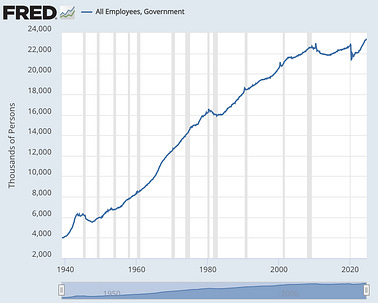
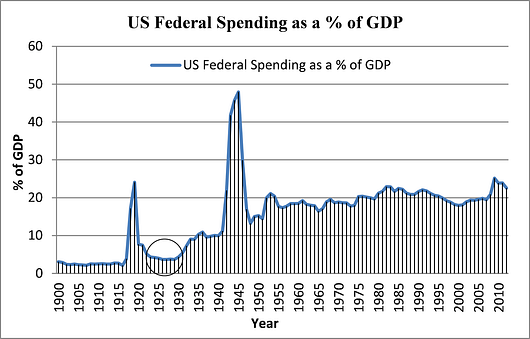
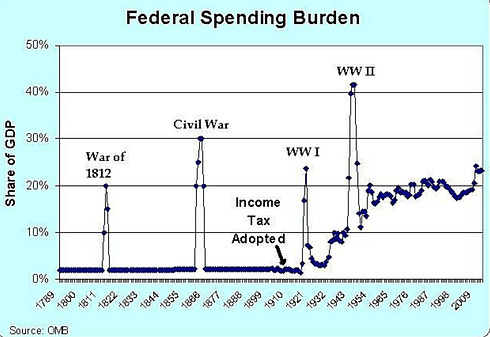






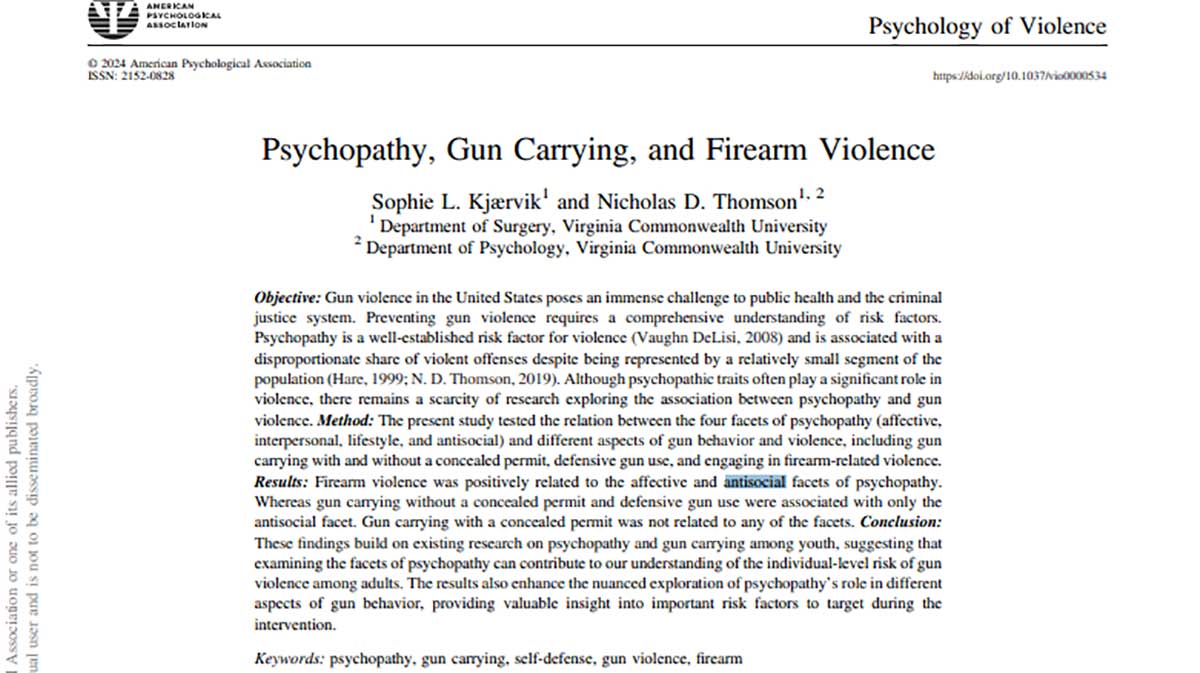

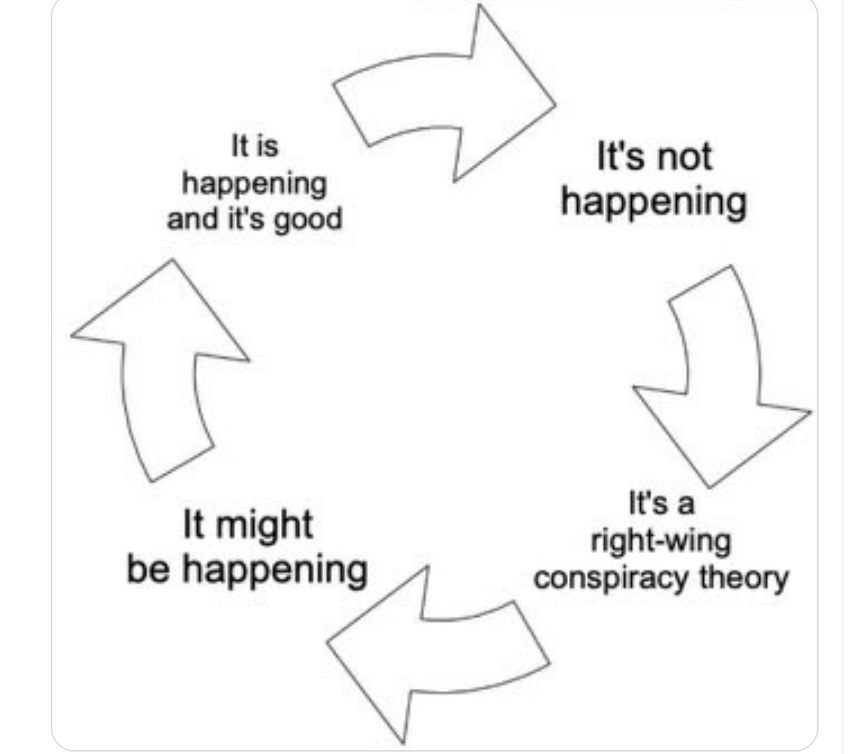



 fox files

Recent Comments