The Truth Is Out There


Spread the love


“Fear is a primitive impulse, brainless as hunger, and because the aim of horror fiction is the production of the deepest kinds of fears, the genre tends to reinforce some remarkably uncivilized ideas about self-protection. In the current crop of zombie stories, the prevailing value for the beleaguered survivors is a sort of siege mentality, a vigilance so constant and unremitting that it’s indistinguishable from the purest paranoia.”— Terrence Rafferty, New York Times

What do zombies have to do with the U.S. government’s plans for dealing with a coronavirus outbreak?

Read on, and I’ll tell you.

The zombie narrative was popularized by the hit television series The Walking Dead, in which a small group of Americans attempt to survive in a zombie-ridden, post-apocalyptic world where they’re not only fighting off flesh-eating ghouls but cannibalistic humans.

For a while there, zombies could be found lurking around every corner: wreaking havoc at gun shows, battling corsets in movies such as Pride and Prejudice and Zombies, and running for their lives in 5K charity races.

Understandably, zombie fiction plays to our fears and paranoia, while allowing us to “envision how we and our own would thrive if everything went to hell and we lost all our societal supports.” Yet as journalist Syreeta McFadden points out, while dystopian stories used to reflect our anxieties, now they reflect our reality, mirroring how we as a nation view the world around us, how we as citizens view each other, and most of all how our government views us.

Indeed, the U.S. government has spent a lot of time and energy in recent years using zombies as the models for a variety of crisis scenarios not too dissimilar from what we are currently experiencing.

For instance, back in 2015, the Centers for Disease Control and Prevention put together a zombie apocalypse preparation kit “that details everything you would need to have on hand in the event the living dead showed up at your front door.” The CDC, in conjunction with the Dept. of Defense, even used zombies to put government agents through their paces in mock military drills.

Fear the Walking Dead—AMC’s spinoff of its popular Walking Dead series—drove this point home by dialing back the clock to when the zombie outbreak first appears and setting viewers down in the midst of societal unrest not unlike our own experiences of recent years (“a bunch of weird incidents, police protests, riots, and … rapid social entropy”). Then, as Forbes reports, “the military showed up and we fast-forwarded into an ad hoc police state with no glimpse at what was happening in the world around our main cast of hapless survivors.”

Forbes found Fear’s quick shift into a police state to be far-fetched, but anyone who has been paying attention in recent years knows that the groundwork was laid long ago for the government—i.e., the military—to intervene and lock down the nation in the event of a national disaster.

We’re seeing this play out now as the coronavirus contagion spreads.

What we have yet to experience (although it may only be a matter of time) is that the government through the imposition of martial law could pose a greater threat to our safety (and our freedoms) than any virus.

As the Atlantic noted about Fear the Walking Dead: “The villains aren’t the zombies, who rarely appear, but the U.S. military, who sweep into an L.A. suburb to quarantine the survivors. Zombies are, after all, a recognizable threat—but Fear plumbs drama and horror from the betrayal by institutions designed to keep people safe.”

Indeed, zombie fiction perfectly embodies the government’s paranoia about the citizenry as potential threats that need to be monitored, tracked, surveilled, sequestered, deterred, vanquished and rendered impotent.

Why else would the government feel the need to monitor our communications, track our movements, criminalize our every action, treat us like suspects, and strip us of any means of defense while equipping its own personnel with an amazing arsenal of weapons?

For years now, the government has been carrying out military training drills with zombies as the enemy. In 2011, the DOD created a 31-page instruction manual for how to protect America from a terrorist attack carried out by zombie forces. In 2012, the CDC released a guide for surviving a zombie plague. That was followed by training drills for members of the military, police officers and first responders.

RELATED:  A Conspiracy Theory About An Actual Conspiracy

As journalist Andrea Peyser reports:

Coinciding with Halloween 2012, a five-day national conference was put on by the HALO Corp. in San Diego for more than 1,000 first responders, military personnel and law enforcement types. It included workshops produced by a Hollywood-affiliated firm in…overcoming a zombie invasion. Actors were made up to look like flesh-chomping monsters. The Department of Homeland Security even paid the $1,000 entry fees for an unknown number of participants…

“Zombie disaster” drills were held in October 2012 and ’13 at California’s Sutter Roseville Medical Center. The exercises allowed medical center staff “to test response to a deadly infectious disease, a mass-casualty event, terrorism event and security procedures”…

[In October 2014], REI outdoor-gear stores in Soho and around the country are to hold free classes in zombie preparedness, which the stores have been providing for about three years.

The zombie exercises appeared to be kitschy and fun—government agents running around trying to put down a zombie rebellion—but what if the zombies in the exercises were us, the citizenry, viewed by those in power as mindless, voracious, zombie hordes?

Consider this: the government started playing around with the idea of using zombies as stand-ins for enemy combatants in its training drills right around the time the Army War College issued its 2008 report, warning that an economic crisis in the U.S. could lead to massive civil unrest that would require the military to intervene and restore order.

That same year, it was revealed that the government had amassed more than 8 million names of Americans considered a threat to national security, to be used “by the military in the event of a national catastrophe, a suspension of the Constitution or the imposition of martial law.” The program’s name, Main Core, refers to the fact that it contains “copies of the ‘main core’ or essence of each item of intelligence information on Americans produced by the FBI and the other agencies of the U.S. intelligence community.”

Also in 2008, the Pentagon launched the Minerva Initiative, a $75 million military-driven research project focused on studying social behavior in order to determine how best to cope with mass civil disobedience or uprisings. The Minerva Initiative has funded projects such as “Who Does Not Become a Terrorist, and Why?” which “conflates peaceful activists with ‘supporters of political violence’ who are different from terrorists only in that they do not embark on ‘armed militancy’ themselves.”

In 2009, the Dept. of Homeland Security issued its reports on Rightwing and Leftwing Extremism, in which the terms “extremist” and “terrorist” were used interchangeably to describe citizens they perceived to be disgruntled or anti-government.

Meanwhile, a government campaign was underway to spy on Americans’ mail, email and cell phone communications. News reports indicate that the U.S. Postal Service has handled more than 150,000 requests by federal and state law enforcement agencies to monitor Americans’ mail, in addition to photographing every piece of mail sent through the postal system.

Fast forward a few years more and local police were being transformed into extensions of the military, taught to view members of their community as suspects, trained to shoot first and ask questions later, and equipped with all of the technology and weaponry of a soldier on a battlefield.

The Obama administration then hired a domestic terrorism czar whose job is to focus on anti-government American “extremists” who have been designated a greater threat to America than ISIS or al Qaeda. As part of the government’s so-called war on right-wing extremism, the Obama administration agreed to partner with the United Nations to take part in its Strong Cities Network program, which is training local police agencies across America in how to identify, fight and prevent extremism.

Nothing has changed for the better under the Trump Administration.

Those who believe in and exercise their rights under the Constitution (namely, the right to speak freely, worship freely, associate with like-minded individuals who share their political views, criticize the government, own a weapon, demand a warrant before being questioned or searched, or any other activity viewed as potentially anti-government, racist, bigoted, anarchic or sovereign), continue to be promoted to the top of the government’s terrorism watch list.

“We the people” or, more appropriately, “we the zombies” are the enemy in the eyes of the government. This coronavirus merely ups the ante.

So when presented with the Defense Department’s battle plan for defeating an army of the walking dead, you might find yourself tempted to giggle over the fact that a taxpayer-funded government bureaucrat actually took the time to research and write about vegetarian zombies, evil magic zombies, chicken zombies, space zombies, bio-engineered weaponized zombies, radiation zombies, symbiant-induced zombies, and pathogenic zombies.

RELATED:  Hillary’s Fingerprints are All Over Kavanaugh Inquisition

However, in an age of extreme government paranoia, this is no laughing matter.

The DOD’s strategy for dealing with a zombie uprising, outlined in “CONOP 8888,” is for all intents and purposes a training manual for the government in how to put down a citizen uprising or at least an uprising of individuals “infected” with a dangerous disease or dangerous ideas about freedom.

Rest assured that the tactics and difficulties outlined in the “fictional training scenario” are all too real, beginning with martial law.

As the DOD training manual states: “zombies [stand-ins for “we the people”] are horribly dangerous to all human life and zombie infections have the potential to seriously undermine national security and economic activities that sustain our way of life. Therefore having a population that is not composed of zombies or at risk from their malign influence is vital to U.S. and Allied national interests.”

So how does the military plan to put down a zombie (a.k.a. citizen) uprising?

The strategy manual outlines five phases necessary for a counter-offensive: shape, deter, seize initiative, dominate, stabilize and restore civil authority. Here are a few details:

Phase 0 (Shape): Conduct general zombie awareness training. Monitor increased threats (i.e., surveillance). Carry out military drills. Synchronize contingency plans between federal and state agencies. Anticipate and prepare for a breakdown in law and order.

Phase 1 (Deter): Recognize that zombies cannot be deterred or reasoned with. Carry out training drills to discourage other countries from developing or deploying attack zombies and publicly reinforce the government’s ability to combat a zombie threat. Initiate intelligence sharing between federal and state agencies. Assist the Dept. of Homeland Security in identifying or discouraging immigrants from areas where zombie-related diseases originate.

Phase 2 (Seize initiative): Recall all military personal to their duty stations. Fortify all military outposts. Deploy air and ground forces for at least 35 days. Carry out confidence-building measures with nuclear-armed peers such as Russia and China to ensure they do not misinterpret the government’s zombie countermeasures as preparations for war. Establish quarantine zones. Distribute explosion-resistant protective equipment. Place the military on red alert. Begin limited scale military operations to combat zombie threats. Carry out combat operations against zombie populations within the United States that were “previously” U.S. citizens.

Phase 3 (Dominate): Lock down all military bases for 30 days. Shelter all essential government personnel for at least 40 days. Equip all government agents with military protective gear. Issue orders for military to kill all non-human life on sight. Initiate bomber and missile strikes against targeted sources of zombie infection, including the infrastructure. Burn all zombie corpses. Deploy military to lock down the beaches and waterways.

Phase 4 (Stabilize): Send out recon teams to check for remaining threats and survey the status of basic services (water, power, sewage infrastructure, air, and lines of communication). Execute a counter-zombie ISR plan to ID holdout pockets of zombie resistance. Use all military resources to target any remaining regions of zombie holdouts and influence. Continue all actions from the Dominate phase.

Phase 5 (Restore civil authority): Deploy military personnel to assist any surviving civil authorities in disaster zones. Reconstitute combat capabilities at various military bases. Prepare to redeploy military forces to attack surviving zombie holdouts. Restore basic services in disaster areas.

Notice the similarities?

Surveillance. Military drills. Awareness training. Militarized police forces. Martial law.

As I point out in my book, Battlefield America: The War on the American People, if there is any lesson to be learned, it is simply this: whether the threat to national security comes in the form of imaginary zombies, actual terrorists, American citizens infected with the coronavirus, or disgruntled American citizens infected with dangerous ideas about freedom, the government’s response to such threats remains the same: detect, deter and annihilate.

Article posted with permission from John Whitehead


John Whitehead

Constitutional attorney and author John W. Whitehead is founder and president of The Rutherford Institute. He is the author of A Government of Wolves: The Emerging American Police State and The Change Manifesto.


Investors and clients of the facial recognition start-up freely used the app on dates and at parties — and to spy on the public.

The billionaire John Catsimatidis used Clearview to surveil shoppers at a grocery store he owns, and to identify a man he saw on a date with his daughter.
Credit…Krista Schlueter for The New York Times

One Tuesday night in October 2018, John Catsimatidis, the billionaire owner of the Gristedes grocery store chain, was having dinner at Cipriani, an upscale Italian restaurant in Manhattan’s SoHo neighborhood, when his daughter, Andrea, walked in. She was on a date with a man Mr. Catsimatidis didn’t recognize. After the couple sat down at another table, Mr. Catsimatidis asked a waiter to go over and take a photo.

Mr. Catsimatidis then uploaded the picture to a facial recognition app, Clearview AI, on his phone. The start-up behind the app has a database of billions of photos, scraped from sites such as Facebook, Twitter and LinkedIn. Within seconds, Mr. Catsimatidis was viewing a collection of photos of the mystery man, along with the web addresses where they appeared: His daughter’s date was a venture capitalist from San Francisco.

“I wanted to make sure he wasn’t a charlatan,” said Mr. Catsimatidis, who then texted the man’s bio to his daughter.

Ms. Catsimatidis said she and her date had no idea how her father had identified him so quickly. “I expect my dad to be able to do crazy things. He’s very technologically savvy,” Ms. Catsimatidis said. “My date was very surprised.”

Clearview was unknown to the general public until this January, when The New York Times reported that the secretive start-up had developed a breakthrough facial recognition system that was in use by hundreds of law enforcement agencies. The company quickly faced a backlash on multiple fronts. Facebook, Google and other tech giants sent cease-and-desist letters. Lawsuits were filed in Illinois and Virginia, and the attorney general of New Jersey issued a moratorium against the app in that state.

In response to the criticism, Clearview published a “code of conduct,” emphasizing in a blog post that its technology was “available only for law enforcement agencies and select security professionals to use as an investigative tool.”

The post added: “We recognize that powerful tools always have the potential to be abused, regardless of who is using them, and we take the threat very seriously. Accordingly, the Clearview app has built-in safeguards to ensure these trained professionals only use it for its intended purpose: to help identify the perpetrators and victims of crimes.”

The Times, however, has identified multiple individuals with active access to Clearview’s technology who are not law enforcement officials. And for more than a year before the company became the subject of public scrutiny, the app had been freely used in the wild by the company’s investors, clients and friends.

Those with Clearview logins used facial recognition at parties, on dates and at business gatherings, giving demonstrations of its power for fun or using it to identify people whose names they didn’t know or couldn’t recall.

“As part of the ordinary course of due diligence, we provided trial accounts to potential and current investors, and other strategic partners, so they could test the technology,” said Hoan Ton-That, the company’s co-founder.

Mr. Catsimatidis first heard about Clearview from his friend Richard Schwartz, another founder of the company, who served as an aide to Rudolph W. Giuliani when Mr. Giuliani was mayor of New York. Last summer, Mr. Catsimatidis ran a trial project with Clearview at an East Side Gristedes market. The company used the system to identify known “shoplifters or people who had held up other stores,” Mr. Catsimatidis said.

“People were stealing our Häagen-Dazs. It was a big problem,” he said. He described Clearview as a “good system” that helped security personnel identify problem shoppers.

BuzzFeed News has reported that two other entities, a labor union and a real estate firm, also ran trials with a surveillance system developed by Clearview to flag individuals they deemed risky. The publication also reported that Clearview’s software has been used by Best Buy, Macy’s, Kohl’s, the National Basketball Association and numerous other organizations.

When Clearview first developed its facial recognition service in 2017, Mr. Ton-That and Mr. Schwartz were uncertain about who might pay for it, and they courted a range of clients including real estate firms, banks and retailers. At the same time, Clearview was seeking outside investment. Many of the individuals the company approached got personal logins to the app.

Clearview received a seed investment round of about $1 million in July 2018. Its backers included the billionaire investor Peter Thiel, the venture capitalist David Scalzo and Hal Lambert, an investor in Texas who runs an exchange-traded fund with the ticker symbol “MAGA,” which tracks companies that align with Republican politics.

“I have the app,” Mr. Lambert said in an interview. “I’ve used it to talk about what we’re doing in the space. I show it to friends of mine, potential investors.

“They thought it was amazing,” he added. “They say, ‘How do I get that?’ And I say, ‘You can’t.’”

Mr. Scalzo, the founder of the investment firm Kirenaga Partners, said in an interview that his school-aged daughters enjoyed playing with the app.

“They like to use it on themselves and their friends to see who they look like in the world,” he said. “It’s kind of fun for people.”

A spokesman for Mr. Thiel did not respond to a request for comment.

When Clearview was seeking its Series A round of funding, which was completed in 2019, the start-up contacted a number of venture capital firms, including Sequoia Capital and Khosla Ventures. Access to the app was offered as a perk, according to people familiar with the company’s fund-raising attempts.

Doug Leone, a billionaire partner at Sequoia, was given a login, according to three people with knowledge of Clearview’s operations. But his account was revoked when Sequoia declined to invest. A spokeswoman for Sequoia declined to comment.

In September, Ashton Kutcher, the actor turned venture capitalist, described an app much like Clearview during a YouTube series called “Hot Ones,” in which guests are interviewed while eating spicy chicken wings.

“I have an app in my phone in my pocket right now. It’s like a beta app,” Mr. Kutcher said. “It’s a facial recognition app. I can hold it up to anybody’s face here and, like, find exactly who you are, what internet accounts you’re on, what they look like. It’s terrifying.”

Mr. Kutcher did not respond to a request for comment.


“Independently verified for accuracy.”

“An independent panel of experts reviewed and certified Clearview for accuracy and reliability.”

So WHO EXACTLY, in detail, is this independent panel of experts  that certified Clearview then?

If you’re going to be open and transparent, then do so the full and complete route.

What is the method and model for how the company scrapes images?

How is it that Clearview can bend consumer privacy acts to appear legal?

How is it that Clearview provides and  explains that its collection is shared to law enforcement, security and anti-human trafficking professionals and yet doesn’t explain how it intends to comply with consumer privacy acts laws?

How is it that Clearview is also allowing third-party providers use of their search tools?

And don’t tell me that it’s a temporary addendum or similar suggestion that Clearview is going through a security penetration testing for their ability to assess their own accuracy and verification of cybersecurity performance because that’s a load and it will personally insult me.

And also don’t ‘enlighten’ me by way of informing via response that Clearway collects no data, information, names, cross-reference, etc., because that’s NOT what I’ve mentioned or touched bases on here.  But only God and Clearview would really know that information anyway and Clearview is not about to EVER acknowledge that.

What appears clear to me is that the database Clearview is building is available to far more people than It is acknowledging and that there are future, as-yet-announced plans for that photo collection.

What about other bits of code that hint at features under development that references voice search options, apps that will allow police to take photos of those run through the database and private search modes through surface-level access, all of which Clearview provides absolutely no further detail or descriptions about with Clearview providing faceprints to police departments and elsewhere through sales for profits pinpoints?

EXACTLY why the need for privacy laws like the Illinois Biometric Information Privacy Act, which requires consent, have been instituted and need to be instated everywhere else.  Because of greedy people like the owners of Clearview who have absolutely NO regard for people’s privacy and the state to which such enterprises will help to usher in future dystopian societies.  Period.

Clearview is patently SECRETLY collecting all this through retaining a mass surveillance database to be used, disclosed and analyzed at the whims of an unaccountable company.  The threat to Constitutional rights and the Republic is too great.

The public’s unauthorized participation in this should not come with the price tag of their privacy.

And remember you big wig attorneys for the company, because of course you will twist and tilt everything said here, that devil you bring in today will be the same devil your children, grandchildren and great-grandchildren will also have to deal with.  NOTHING comes free brainiacs.  NOTHING.

If Clearview is so honest, self-serving and good for society, then why has it not ever released a full list of agencies that use its product?

Just face the truth Clearview and attorneys.  Clearview represents a breach of privacy more extreme than anything any technology company has ever produced.  Again.  PERIOD.

You’re all children of satan and you will all kneel before God in the future and be forced to answer for these atrocities, and atrocities they are, and be judged to that exact accountability.  Third time.  PERIOD.


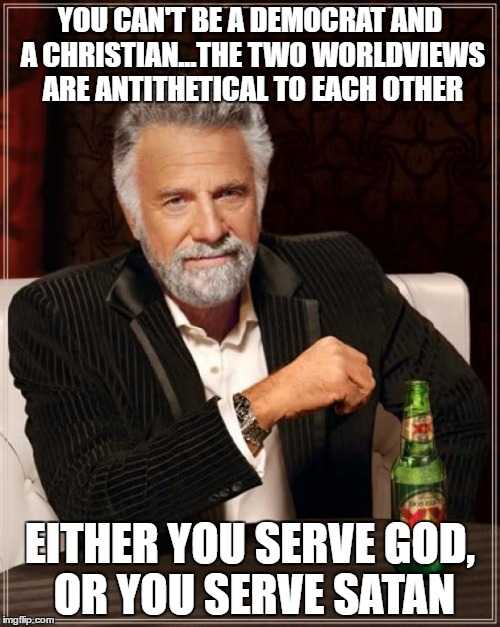
CantBademonrat


Whaat? I'm a Slave? | Sovereign Serf - Sayles

We have gone from freedom to slavery, from sovereign to serf on the great Federal Manor via the 14th Amendment. All due in large measure to the treachery and deception of words by the United States Supreme Court.

If you have wondered why all of your “patriot friends” continually warn you about being a slave, but were afraid to ask — this post is for you. And while you old-timers won’t learn anything new from reading this article, you’ll appreciate the simplicity and clarity of the author’s explanation.
 

You Don’t Own Yourself — the Federal Reserve Does

For a while I have been receiving e-mails from a good friend who has asked me to investigate something weird about the Birth Certificates. He wanted me to take a look at them because they have certain numbers and other things printed on them that need an explanation.

When I looked at my own Birth Certificate, I noticed it was a copy of the original. So I went through old boxes and baby books that my Mom had saved before she died and found what I was looking for — my original Birth Certificate. It was brittle and yellowed with decades of age but — wow — it was NOT the original!

What I have learned since is kind of like discovering that you are part of the Matrix. It seems none of us have our original Birth Certificates — they are all copies. And the copies have a serial number on them, issued on special Bank Bond paper and authorized by “The American Bank Note Company.” Huh?

The truth is stranger than fiction. But here it is:

It seems that back in 1913 the United States was short of cash. World War I had depleted the treasury and there were several really bad financial panics — in 1907 especially — so the country needed to print more money than it had as equity to restore confidence in the money supply and get the economy back on its feet.

President Enacts Currency Law | From SOVEREIGN to SERF - SERFS-UP.NETWhen you or I need more money, we use something as collateral and go to a bank for a loan. When a country needs more money it has to go somewhere also. But in 1913 there wasn’t anywhere to go. So the US created the Federal Reserve Act. This established a private central bank (The Federal Reserve Bank) that would regulate the amount of money the US government was allowed to borrow and put in circulation. It also would expect to be repaid, like any bank, with interest.

After only 20 years things went from bad to worse. During Franklin D. Roosevelt’s presidency, in 1933, the US was unable to pay its debt. The county was bankrupt. The private banks that made up the Federal Reserve demanded their money and Roosevelt responded. He had to use the only thing left of any value to pay the banks and continue doing business with them — the citizens of our country. Us!

Exactly how all this was orchestrated is too lengthy to be addressed here, but this much can be told. The original birth or naturalization record for every U.S. Citizen is on file in the official records in Washington, D.C. (you get to keep a copy!) and the property and assets of every living U.S. Citizen is pledged as collateral for the National Debt!

Within two weeks and three days each Certificate of Live Birth is to be filed in Washington D.C. Evidence reveals that there is even a Federal Children Department established by the Shepherd/Townsend Act of 1922 under the Department of Commerce that appears to be involved in this process in some way. Every citizen is given a number (the red number on the Birth Certificate) and each live birth is valued at from 650,000 to 750,000 Federal Reserve dollars in collateral from the Fed.

This kind of makes you feel a little different when you look at Federal Reserve Chairman, Bernanke, doesn’t it?

OK. Let’s take a pause to look at the Birth Certificates [below.] You will see the red numbers and you will see the fact that it is, in reality, a “Bank Note.” Congratulations — you and I are commodities!

Birth Certificate | From SOVEREIGN to SERF - SERFS-UP.NET

Names in “ALL CAPS” on Birth Certificates

Since the early 1960s, State governments have issued Birth Certificates to “persons” with legal fictional names using “ALL CAPS” names. This is not a lawful record of your physical birth, but rather the acknowledgement of the “birth” of the juristic, all-caps name. It may appear to be your true name, but since no proper name is ever written in all caps (either lawfully or grammatically) it does not identify who you are. The Birth Certificate is the government’s self-created document of title for its new property — you and me! In a way, it makes us a kind of corporation whose company name is the same as our real name, but written in ALL CAPS. This “corporation” then generates taxes and wealth over its lifetime and in this way repays the collateral that Uncle Sam borrowed from the Federal Reserve.

Remember that “Bond” thing printed on the bottom of the certificate?

Bond. I a: A usually formal written agreement by which a person undertakes to perform a certain act (as fulfill the obligations of a contract) . . with the condition that failure to perform or abstain will obligate the person . . to pay a sum of money or will result in the forfeiture of money put up by the person or surety. lb: One who acts as a surety. 2: An interest-bearing document giving evidence of a debt issued by a government body or corporation that is sometimes secured by a lien on property and is often designed to take care of a particular financial need. — Ibid. — Merriam-Webster Dictionary of Law (1996).

Banknote. A kind of negotiable instrument, a promissory note made by a bank payable to the bearer on demand, used as money, and in many jurisdictions is legal tender. Along with coins, banknotes make up the cash or bearer forms of all modern money.

Birth certificates are a form of securities called “warehouse receipts.” The items included on a warehouse receipt, as described at §7-202 of the Uniform Commercial Code, the law which governs commercial paper and transactions, which parallel a birth certificate are:

  • the location of the warehouse where the goods are stored…(residence)
  • the date of issue of the receipt…..(“Date issued”)
  • the consecutive number of the receipt…(found on back or front of the certificate, usually in red numbers)
  • a description of the goods or of the packages containing them…(name, sex, date of birth, etc.)
  • the signature of the warehouseman, which may be made by his authorized agent…(municipal clerk or state registrar’s signature)

Birth certificates now appear to at least qualify as “warehouse receipts” under the Uniform Commercial Code. Black’s Law Dictionary, 7th ed. defines:

Warehouse Receipt. …A warehouse receipt, which is considered a document of title, may be a negotiable instrument and is often used for financing with inventory as security.

It is not difficult to see that a state-created Birth Certificate, with an ALL CAPS name is a document evidencing debt the moment it is issued.

Once a state has registered a birth document with the U.S. Department of Commerce, the Department notifies the Treasury Department, which takes out a loan from the Federal Reserve. The Treasury uses the loan to purchase a bond (the Fed holds a purchase money security interest in the bond) from the Department of Commerce, which invests the sale proceeds in the stock or bond market. The Treasury Department then issues Treasury securities in the form of Treasury Bonds, Notes, and Bills using the bonds as surety for the new securities.

This cycle is based on the future tax revenues of the legal person whose name appears on the Birth Certificate. This also means that the bankrupt, corporate U.S. can guarantee to the purchasers of their securities the lifetime labor and tax revenues of every citizen of the United States/American with a Birth Certificate as collateral for payment. This device is initiated simply by converting the lawful, true name of the child into a legal, juristic name of a person.

Legally, you are considered to be a slave or indentured servant to the various Federal, State and local governments via your STATE-issued and STATE-created Birth Certificate in the name of your all-caps person. Birth Certificates are issued so that the issuer can claim exclusive title to the legal person created thereby.

Sleep well, fellow slaves.

SOURCE: http://www.viewzone.com/collateral.html


Follow us: @PatriotsPaulies on Twitter | From Sovereign to Serf on Facebook

FROM SOVEREIGN TO SERF, a book by Roger S. Sayles Read a FREE preview of FROM SOVEREIGN TO SERF by Roger S. Sayles Order FROM SOVEREIGN TO SERF in paperback ($24.95 USD) FROM SOVEREIGN TO SERF E-book Download ($14.95 USD)


leader image

By Rick Gordon

China is one of the Worlds oldest Nations, and slavery has been part an integral aspect of its culture since the first Emperor at the very least. As a legal institution, in pre-Communist China, it was abolished in 1909, but is believed to have continued clandestinely for many decades thereafter.

In modern Communist China, it is believed that slavery is a way of life for many. As of 2016 The Global Slavery Index estimated that over 3.8 million people lived as ‘slaves’ in China. [1] A good portion of it is not Government sanctioned.

In 2016 the Chinese Ministry of Public Security investigated over 1,000 cases and arrested over 2,000 suspects. Some slaves were sex slaves, others were forced laborers. Non Government forced labor in China is from time to time exposed. Vietnamese workers are exploited as de facto slaves in the sugarcane industry in Southern China. They are smuggled in by Vietnamese gangs and Chinese human smuggling syndicates across China’s southern border, in much the same fashion that Mexicans and central Americans come across America’s southern border.

Human smuggling syndicates in China profit by claiming much of the workers’ meager wages while also charging factory and plantation owners a fee.

The estimated 2.9 million people in modern slavery in China “includes the forced labour of men, women and children in many parts of the economy, including domestic servitude and forced begging, the sexual exploitation of women and children, and forced marriage” [2]

In the summer of 2007, it became public knowledge that young people were being kidnapped and forced into slavery in kilns in China’s Shanxi province. The expose was initiated by parents who banded together in search of their missing children. These families scoured the countryside and, some, but not all found their children working in the kilns. [6]

Government Sanctioned Slavery – Forced Labor

The Chinese government claims to have abolished their “Re-education through Labour” [RTL] program , or ‘work will set you free” as of 2013. Under the RTL system prisoners were subjected to years of forced labor. The abolition of RTL was probably a semantic gesture because as of 2017 a report by the US-China Economic and Security Review Commission alleged that China still had an extensive network of state run prisons that used slave labor.

Messages From Slaves

In December 2019 a British newspaper reported that a schoolgirl in London found a message written inside a Christmas card claiming to be from inmates at Chinas Qingpu Prison in Shanghai. “We are foreign prisoners in Shanghai Qingpu prison China. Forced to work against our will. Please help us and notify human rights organization.” The card was purchased from Tesco supermarket which claims to have stopped production at that particular factory.

The Tesco fiasco is not isolated, other major retailers in the UK, US and elsewhere have dealt with similar incidents from comparable notes discovered in all types of products sold in their stores.

China denied that they have foreign prisoners “I can tell you responsibly that, after seeking clarification from relevant departments, Shanghai Qingpu prison does not at all have … forced labor by foreign convicts,” said foreign ministry spokesman Geng Shuang at a regular press briefing in Beijing. [3]

A paper shopping bag from Saks Fifth Avenue contained a letter begging, “HELP HELP HELP.” The message was a desperate cry from a man who claimed he made the bag while being held as a slave in a Chinese prison factory. The note was signed Tohnain Emmanuel Njong and was accompanied by a small photoraph purporting to be the man who wrote the note.

“Harry Wu, the founder of Laogai Research Foundation , spent 19 years in a Chinese prison factory, known as laogai. He said he took steps to verify the letter and believes that Njong took a huge risk in writing and sending it. “There would be solitary confinement until you confess and maybe later they increase your sentence — or even death,” Wu said.” [4]

In 2012, a note was foumd inside a pack of Halloween decorations bought at a Kmart in Oregon, The New York Times reported.

“Sir: If you occasionally buy this product, please kindly resend this letter to the World Human Right Organization,” said the note, which was tucked between two ersatz tombstones and fell out when the woman, Julie Keith, opened the box in her living room last October. “Thousands people here who are under the persicution of the Chinese Communist Party Government will thank and remember you forever.”

Similar incidents have been reported at Walmart as well as Primark, a major retailer in the UK and Ireland and Zara, a clothing retailer in Turkey, all claiming to have been made using slave labor. So enjoy your cheap dollar store merchandise and even your ‘upscale’ greeting cards, handbags and clothing knowing full well that another human beings literal blood, sweat and tears helped bring it to you.


The Laogai Foundation


The Laogai system is the Chinese network of prisons, factories and farms designed to reform prisoners through forced labor. The Chinese government uses the laogai to persecute political dissidents and maintain its dictatorship.

Much of the treatment of Laogai prisoners violates Internationally accepted norms of detention.

The mission of the Laogai Research Foundation is to shine a spotlight on the brutal and exploitative prison system historically known as Laogai in the People’s Republic of China. Through the collection and dissemination of evidence confirming personal testimonies about the horrors of the Laogai system, the LRF hopes to expose and examine the Laogai prison system and thereby spur international pressure on the Chinese Communist regime to bring the Laogai and other human rights abuses to a final end. – LAOGAI RESEARCH FOUNDATION

“You may choose to look the other way but you can never say again that you did not know.” ― William Wilberforce


I AM NOT SAYING THE POLICE WERE WRONG, BUT WHAT I AM ASKING IS IF ANYONE DOESN’T SEE A PROBLEM HERE WITH THE CURRENT MODEL IN PLACE THAT ALLOWS POLICE TO ENTER SOMEONE’S OWN HOME, IN THEIR PRIVATE BEDROOM WHILE THE PERSON IS STILL ASLEEP AND THEN THAT PERSON ENDS UP DEAD? ANYONE?

ON TOP OF THAT, CONCEALED CARRY CIVILIANS ARE NOT EVER, EVER FORGIVEN IF A SHOOTING TAKES PLACE WITH A PERSON HAVING A TOY GUN. THEY JUST ARE NOT, AND IF THEY EVER ARE, THOSE CASES ARE THE RARE EXCEPTIONS RATHER THAN THE RULE.

SO THE SECOND PART OF MY QUESTION IS WHY THE LAW PLACES LOWER STANDARDS FOR THE S0-CALLED PROFESSIONALLY TRAINED BUT FIDGETY FINGER READY POLICE THAN IT DOES FOR THE CIVILIAN INDIVIDUALS?

IT’S A SIMPLE QUESTION, BUT THE MATTER STILL CURRENTLY EXISTS AND NO ONE NOTICES OR EVEN CARES. WHY?

https://www.tmz.com/2020/03/03…./er-actress-vanessa-


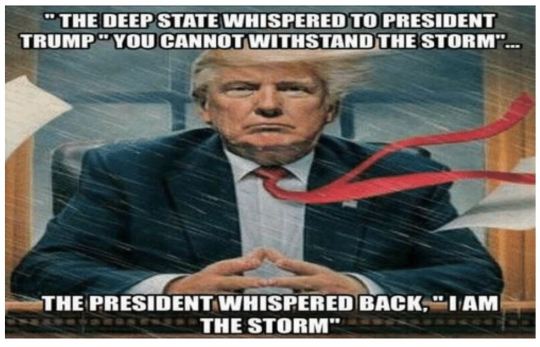
HeIStheStorm


The correct response to the news that a private citizen has stopped a would-be mass murderer is: “Thank you.”

It is not to lament that the citizen’s “split-second heroism has been turned into a PR tool by gun advocates.” Alas, that is precisely how The Arizona Republic’s Elvia Diaz responded in an op-ed that, having been picked up and reprinted by USA Today, quickly went viral on social media.

One struggles to imagine what Diaz—or the legions of people who shared and echoed the piece—could have been thinking. Of course “gun advocates” pointed to the incident as evidence that their policies are in fact the correct ones:

The incident is, well, evidence that their policies are the correct ones as they always are of course

After the massacre in Sutherland Springs, Texas, in 2017, “gun advocates” suggested that it would have been much better had licensed parishioners been allowed to carry firearms in their church as they did elsewhere. Texas’ government agreed with this suggestion and changed the law accordingly. Two years later, in White Settlement, that changed law saved countless lives. What is the correct response from its advocates if not: “We were right”?

Embedded in Diaz’s reaction is a chronic mistrust of her fellow Americans that, sadly, is shared by far too many major politicians. Commenting on the new law when it came into effect, Joe Biden said it was “irrational.”

“With all due respect to the governor of Texas,” Biden said, “it’s irrational what they’re doing.”

Does Biden genuinely believe that laws prohibiting guns in churches prevent those who would do harm from carrying guns into churches? If so, he is obliged to explain why the vast majority of mass murders occur in places where guns are verboten. Or perhaps Biden believes that if licensed carriers begin carrying in church, they will be unable to prevent themselves from opening fire like Yosemite Sam—a strange conviction, given that the data shows the precise opposite to be true.

In her piece, Diaz suggested that while the man who took down the murderer—the hero in this case being 71-year-old Jack Wilson—may certainly have been a hero, but yet “we know absolutely nothing about the at least six other parishioners who also appeared to draw their handguns at West Freeway Church of Christ in White Settlement, Texas.” She described this as “terrifying.”

This isn’t remotely true to any rational person. We know a great deal about these people, and none of what we know is “terrifying.” We know that they all tried to help. We know that they conducted themselves responsibly, even amid a firefight. We know that they grasped immediately who the bad guy was and who the good guys were. We know, more broadly, that licensed carriers in Texas are up to six times more law-abiding than even the police. Permitting these people to carry in church is rational.

The American gun-control movement has a bad habit of trying to “do something” only if those measures are things it approves of. This habit was summed up well by Beto O’Rourke, who tweeted, “Clearly what we are doing in Texas, what we are doing in this country, when it comes to guns is not working.”

Isn’t it? Because, from where I’m sitting, it looks as if the change in the law worked. As one might expect, the man who attacked the church had multiple prior convictions that prohibited him from buying, owning and carrying a gun. Naturally, he didn’t care. What changed was that the good guys in the church—the ones who care about the law—were given the chance to fight back.

Again: The correct response is, “Thank you.”


Don’t Let Bloomberg Buy America!


A 2015 tape has emerged clarifying “Megabucks Mike” Bloomberg’s gun/crime policy.

Describing what Bloomberg views as a profile of murderers, Megabucks Mike argued that killers “… fit one M.O. You can just take the description, Xerox it, and pass it to all the cops.  They are male, minorities, 16 to 25.”

Michael Bloomberg:  His solution? According to Megabucks Mike:

The way you get the guns out of the kids’ hands [that is, those who are 16-25] is to throw them up against the walls and frisk them.

Welcome to Megabucks Mike’s Orwellian future, where people are seized without probable cause for the purpose of gun confiscation on the basis of stereotypes.

Yesterday, it was black youths, but tomorrow it will be pro-gun “bitter clingers.”

And what does “Megabucks Mike” have to say about this?

After increasing warrantless searches by 7-fold during his administration, Bloomberg supposedly renounced his entire record — about one second before he announced his run for the presidency.

You may remember that Bloomberg has aggressively tried to bring his anti-gun fascism not only to New York City, but also to pro-gun states:

  • He sent scam artists to states like Virginia, for the sake of entrapping gun dealers.
  • He pushed massive gun bans and middle-of-the-night “red flag” SWAT Team raids — again, without any due process whatsoever.
  • He spent millions of dollars buying entire state legislatures, such as in Virginia, for the purpose of destroying the Second Amendment.

And now Bloomberg is trying to use his $64 billion fortune in order to buy America — so that he can use the Constitution for toilet paper, as he sits on his golden toilet.

Well, America is not for sale. The Constitution is not for sale.  And the Second Amendment is not for sale so go crawl back from under that rock which you came Mike.

ABSOLUTELY AMAZING! LOL


https://www.msn.com/en-us/lifestyle/lifestyle-buzz/people-reveal-the-very-bizarre-places-theyve-come-across-their-doppelgangers/ss-BB10fwup?li=BBnb7Kz#image=1


BIG PROBLEM, BIG BUSINESS, BIG HYPE

First, some basic facts to convey the scale of the problem. Cancer is the second most lethal disease in the U.S., behind only heart disease. More than 1.7 million Americans were diagnosed with cancer in 2018, and more than 600,000 died. Over 15 million Americans cancer survivors are alive today. Almost four out of ten people will be diagnosed in their lifetime, according to the National Cancer Institute.

Cancer has spawned a huge industrial complex involving government agencies, pharmaceutical and biomedical firms, hospitals and clinics, universities, professional societies, nonprofit foundations and media. The costs of cancer care have surged 40 percent in the last decade, from $125 billion in 2010 to $175 billion in 2020 (projected).

Research funding has also surged. The budget of the National Cancer Institute, a federal agency founded in 1937, now totals over $6 billion/year. That is a fraction of the total spent on research by nonprofit foundations ($6 billion a year, according to 2019 study), private firms and other government agencies. Total research spending since Richard Nixon declared a “war on cancer” in 1971 exceeds a quarter trillion dollars, according to a 2016 estimate.

Cancer-industry boosters claim that investments in research, testing and treatment have led to “incredible progress” and millions of “cancer deaths averted,” as the homepage of the American Cancer Society, a nonprofit that receives money from biomedical firms, puts it. A 2016 study found that cancer experts and the media often describe new treatments with terms such as “breakthrough,” “game changer,” “miracle,” “cure,” “home run,” “revolutionary,” “transformative,” “life saver,” “groundbreaking” and “marvel.”

There are more than 1,200 accredited cancer centers in the U.S. They spent $173 million on television and magazine ads directed at the public in 2014, according to a 2018 study, and 43 of the 48 top spenders “deceptively promot[ed] atypical patient experiences through the use of powerful testimonials.” A 2014 study concluded that cancer centers “frequently promote cancer therapy with emotional appeals that evoke hope and fear while rarely providing information about risks, benefits, costs, or insurance availability.”

LITTLE NET PROGRESS AFTER 90 YEARS, BESIDES ANTI-SMOKING EFFORTS

What’s the reality behind the hype? “No one is winning the war on cancer,” Azra Raza, an oncologist at Columbia, asserts in her 2019 book The First Cell: And the Costs of Pursuing Cancer to the Last. Claims of progress are “mostly hype, the same rhetoric from the same self-important voices for the past half century.” Trials have yielded improved treatments for childhood cancers and specific cancers of the blood, bone-marrow and lymph systems, Raza notes. But these successes, which involve uncommon cancers, are exceptions among a “litany of failures.”

The best way to measure progress against cancer is to look at mortality rates, the number of people who succumb to cancer per unit of population per year. The risk of cancer grows with age. (Although childhood cancer gets a lot of attention, Americans under 20 years old account for less than 0.3 percent of all U.S. cancer deaths.) Hence as the average life span of a population grows (because of advances against heart and respiratory disorders, infectious disease and so on), so does the cancer mortality rate. To calculate mortality trends over time, therefore, researchers adjust for the aging of the population.

With this adjustment—which, keep in mind, presents cancer medicine in a more favorable light–mortality rates have declined almost 30 percent since 1991. This trend, according to cancer-industry boosters, shows that investments in research, tests and treatments have paid off. What boosters often fail to mention is that recent declines in cancer mortality follow at least 60 years of increases. The current age-adjusted mortality rate for all cancers in the U.S., 152.4 deaths per 100,000 people, is just under what it was in 1930, according to a recent analysis.

The rise and fall of cancer deaths track the rise and fall of smoking, with a lag of a couple of decades. Cigarette consumption in the U.S. more than doubled between 1930 and the early 1970s and has fallen steadily since then, according to the nonprofit site Our World in Data. Smoking raises the risk of many cancers but especially of lung cancer, which is by far the biggest killer, accounting for more deaths than colon, breast and prostate cancer combined.

Over the past two decades lung-cancer mortality has dropped, but it still remains higher than it was in the 1960s, especially among women, according to Our World in DataA 2006 analysis concluded that without reductions in smoking “there would have been virtually no reduction in overall cancer mortality in either men or women since the early 1990s.”

NEW TREATMENTS YIELD SMALL BENEFITS, BIG COSTS

Research has linked cancer to many internal and external factors, notably oncogenes, hormones, viruses, carcinogens (such as those in cigarettes) and random cellular replication errors, or “bad luck.” But with the notable exception of the smoking/cancer link, which led to effective anti-smoking measures, that knowledge has not translated into significantly improved preventive measures or treatments. Clinical cancer trials “have the highest failure rate compared with other therapeutic areas,” according to a 2012 paper.

Pharmaceutical companies keep bringing new drugs to market. But one study found that 72 new anticancer drugs approved by the FDA between 2004 and 2014 prolonged survival for an average of 2.1 months. A 2017 report concluded that “most cancer drug approvals have not been shown to, or do not, improve clinically relevant end points,” including survival and quality of life. The authors worried that “the FDA may be approving many costly, toxic drugs that do not improve overall survival.”

Costs of cancer treatments have vastly outpaced inflation, and new drugs are estimated to cost on average more than $100,000/year. Patients end up bearing a significant proportion of costs. More than 40 percent of people diagnosed with cancer lose their life savings within 2 years, according to one estimate.

Immune therapies, which seek to stimulate immune responses to cancer, have generated enormous excitement. Two researchers won the 2018 Nobel Prize for work related to immune therapies, and a new book, The Breakthrough: Immunotherapy and the Race to Cure Cancer, claims that they represent a “revolutionary discovery in our understanding of cancer and how to beat it.”

According to a 2018 report in Stat News, drugs firms aggressively market immune therapies, and patients are “pushing hard to try them, even when there is little to no evidence the drugs will work for their particular cancer.” A 2017 analysis by oncologists Nathan Gay and Vinay Prasad estimated that fewer than 10 percent of cancer patients can benefit from immune therapies, and that is a “best-case scenario.”

Immune therapies trigger severe side effects, and they are also extremely expensive, costing hundreds of thousands of dollars a year, oncologist Siddhartha Mukherjee, author of The Emperor of All Maladies, a bestselling history of cancer, reported in the New Yorker last year. “Subsequent hospital stays and supportive care can drive the total costs to a million dollars or more,” he writes. “If widely prescribed, immune therapies “could bankrupt the American health-care system.”

TESTS LEAD TO OVERDIAGNOSIS AND OVERTREATMENT

The cancer industry, aided by celebrities who claim that tests saved their lives, has convinced the public that screening for cancer is beneficial. The earlier we can detect cancerous cells, the more likely it is that treatment will succeed. Right? Wrong. One of the most significant findings of the past decade is that many people have cancerous or pre-cancerous cells that, if left untreated, would never have compromised their health. Autopsies have revealed that many people who die of unrelated causes harbor cancerous tissue.

Tests cannot reliably distinguish between harmful and harmless cancers. As a result, widespread testing has led to widespread overdiagnosis, the flagging of non-harmful cancerous cells. Overdiagnosis leads in turn to unnecessary chemotherapy, radiation and surgery. Gilbert Welch, a physician whose 2011 book Overdiagnosed: Making People Sick in Pursuit of Health helped bring overdiagnosis to light, recently called it “an unfortunate side effect of our irrational exuberance for early detection.” Overdiagnosis is more insidious than false positives, when tests erroneously indicate the presence of cancer. Biopsies can overturn false positives but not overdiagnoses.

Mammograms and prostate-specific antigen (PSA) tests have led to especially high rates of overdiagnosis and overtreatment for breast and prostate cancer. A 2013 meta-analysis by the Cochrane Collaboration, an international association of experts that assesses medical procedures, estimated that if 2,000 women have mammograms over a period of 10 years, one woman’s life will be saved by a positive diagnosis. Meanwhile 10 healthy women will be treated unnecessarily, and more than 200 “will experience important psychological distress including anxiety and uncertainty for years because of false positive findings.”

Another nonprofit medical group, theNNT.com, has spelled out a disturbing implication of these data. (NNT stands for “number needed to treat,” which refers to the number of people who must receive a treatment for one person to receive any benefit. Ideally, the number is 1.) The NNT notes that some overdiagnosed women might “die due to aggressive therapies such as chemotherapy and major surgery.” Thus any benefit from screening “is balanced out by mortal harms from overdiagnosis and false-positives.” Breast-cancer specialist Michael Baum, who helped found the United Kingdom’s breast-screening program, has advocated abandoning such programs, which he believes might cut short more lives than they extend.

As for PSA tests, a federal task force of medical experts estimates that 1.3 deaths may be averted for every 1,000 men between the ages of 55 and 69 tested for 13 years. But for every man whose life is extended, many more will experience “false-positive results that require additional testing and possible prostate biopsy; overdiagnosis and overtreatment; and treatment complications, such as incontinence and erectile dysfunction.” A 2017 analysis by the task force estimated the ratio of beneficial PSA tests to false positives and overdiagnosis to be as high as 1/240.

A 2013 meta-analysis by Cochrane Group found “no significant reduction” in mortality resulting from PSA tests. “The strategy of routinely screening all men with PSA tests leads to interventions that are not saving lives and may be causing harm,” the NNT stated. The discoverer of the prostate-specific antigen, pathologist Richard Ablin, has called the PSA test a “profit-driven public health disaster.”

ALL-CAUSE VERSUS SPECIFIC MORTALITY AND “TORTURING THE DATA”

Studies of tests for a specific cancer generally look at mortality attributed to that cancer. Mammograms are thus deemed effective if women who get mammograms die less often from breast cancer than women who do not get mammograms. This method can overstate the benefits of tests, because it might omit deaths resulting, directly or indirectly, from the diagnosis. After all, surgery, chemotherapy and radiation can have devastating iatrogenic effects, including heart disease, opportunistic infections, other forms of cancer and suicide.

Therefore some studies measure “all-cause” mortality.  A 2015 meta-analysis by epidemiologist John Ioannidis (renowned for bringing the scientific replication crisis to light) and others found no reductions in all-cause mortality from tests for cancer of the breast, prostate, colon, lung, cervix, mouth or ovaries for asymptomatic patients.

In a recent editorial in the European Journal of Clinical Investigation, Ioannidis and four co-authors argue that cancer screening (especially mammograms and PSA tests) does more harm than good and should be abandoned. They expect this proposal to be met with “fierce opposition.” Screening they note, “is big business: more screening means more patients, more clinical revenue to diagnostic and clinical departments, and more survivors in need of care and follow‐up.”

Cancer boosters commonly point to improvements in survival rates, the length of time between diagnosis and death. Survival rates for some cancers have indeed grown as a result of more widespread and higher-resolution testing, which detects cancer earlier. But as a 2015 analysis points out, in general people do not live longer as a result of early detection. They simply live longer with a diagnosis of cancer, with all its harmful emotional, economic and physiological consequences.

Using survival rates to promote tests is an example of what critics of mammography have called “tortur[ing] the data to make it confess to what one knows to be the real truth.” What the data on screening actually suggest is that millions of men and women have endured the trauma of cancer diagnoses and treatments unnecessarily. That strikes me as a case of monstrous malpractice.

CORRUPTION IN THE CANCER INDUSTRY

The aggressive, can-do American approach to health care isn’t working when it comes to medicine in general and cancer medicine in particular. The U.S. spends far more per capita on health care, including cancer care, than any other country, but higher expenditures have not led to longer lives. Quite the contrary. Europe, which spends much less on cancer care than the U.S., has lower cancer mortality rates, according to a 2015 study. So do countries such as Mexico, Italy and Brazil, according to Our World in Data.

The American approach fosters corruption. According to a 2019 essay in Stat News by oncologist Vinay Prasad, many cancer specialists accept payments from firms whose drugs they prescribe. This practice “leads us to celebrate marginal drugs as if they were game-changers,” Prasad argues. “It leads experts to ignore or downplay flaws and deficits in cancer clinical trials. It keeps doctors silent about the crushing price of cancer medicines.”

Last year The New York Times and ProPublica reported that top officials at Sloan Kettering Cancer Center “repeatedly violated policies on financial conflicts of interest, fostering a culture in which profits appeared to take precedence over research and patient care.” Sloan Kettering’s chief medical officer, Jose Baselga, “failed to disclose millions of dollars in payments from drug and health care companies in dozens of articles in medical journals.” Baselga left Sloan Kettering to become head of cancer research at the drug firm AstraZeneca.

The desire of oncologists to produce monetizable findings might also compromise the quality of their research. A 2012 examination of 53 “landmark” cancer studies found that only six could be reproduced. The so-called Reproducibility Project: Cancer Biology has examined 14 more recent highly cited studies, and has confirmed only five without qualification.

SOLUTION: GENTLE CANCER MEDICINE?

So what’s the solution to all these problems? Some health-care experts espouse “conservative medicine” as a way to reduce health-care costs and improve outcomes. In “The Case for Being a Medical Conservative,” a manifesto published last year, four physicians (including the aforementioned Vinay Prasad) urge colleagues to recognize the human body’s “inherent healing properties” and to acknowledge “how little effect the clinician has on outcomes.” Physicians will thus protect themselves “against our greatest foe—hubris.”

Medical conservatives happily adopt new therapies “when the benefit is clear and the evidence strong and unbiased,” the authors emphasize, but many alleged advances “offer, at best, marginal benefits.” Conservative cancer medicine, as I envision it, would engage in less testing, treatment, fear-mongering, military-style rhetoric and hype. It would recognize the limits of medicine, and it would honor the Hippocratic oath: First, do no harm.

Physicians cannot bring about a shift toward conservative cancer medicine on their own. We consumers must help them. We must recognize the limits of medicine and the healing capacities of our bodies. We must resist tests and treatments that have marginal benefits, at best. We may never cure cancer, which stems from the collision of our complex biology with entropy, the tendency of all systems toward disorder. But if we can curtail our fear and greed, our cancer care will surely improve.

A final note: I’d like to thank experts I’ve cited above—John Ioannidis, Siddhartha Mukherjee, Vinay Prasad, Azra Raza and Gilbert Welch—as well as Cochrane and theNNT.com for their blunt, courageous assessments of cancer medicine. People and groups like these represent our best hope for health-care reform. We just have to listen to them.