With Donald Trump’s nomination of Kash Patel, the FBI appears to be in panic mode. Chris Wray is the first to fall but not before giving a fantastical account of his seven-year stint as FBI director.
Confirming reports he planned to step down before Donald Trump’s inauguration next month, FBI Director Christopher Wray today announced he will retire at the official end of the Biden administration. Wray, appointed by then-President Trump in 2017, delivered the news during an all-hands-on-deck virtual meeting of more than 38,000 FBI employees.
In typical oleaginous fashion, Wray touted the bureau’s alleged achievements under his leadership—fighting the trafficking of illegal drugs, protecting children from predators, thwarting cybercrime, blah blah—by “abiding by the rule of law and adhering to our core values.” Whatever that means.
The FBI, Wray claimed, is immune to the whimsy of American politics: “Unfortunately, all too often in today’s world, people’s standard for whether something was fair or objective—a Supreme Court decision, a verdict in a high-profile case, the investigation we brought, or the one we didn’t bring—is whether they liked the result, whether their side won or lost. But that’s not how independence and objectivity work. We’re not on any one side. We’re on the American people’s side, the Constitution’s side.”
That, of course, is not true; in fact, it is demonstrably false. While former FBI Director James Comey initiated the partisan weaponization of the FBI against Trump in 2016 with the opening of “Crossfire Hurricane,” Wray accelerated the effort while expanding the FBI’s political hit list. The “side” Wray chose time and again was the side of the Democratic Party—the Bidens in particular—while subjecting Trump supporters and other conservatives to the crushing boot of the most powerful law enforcement agency in the world.
What, No Bragging About Jan 6 and Whitmer Kidnapping Plot?
For example, one day before Wray’s “we don’t take no sides” speech, agents with the FBI Counterterrorism Task Force arrested a man from Florida for his participation in the events of January 6 as the caseload for the FBI’s biggest criminal investigation in history reaches 1,600 total defendants. Wray’s FBI continues to execute military-style SWAT raids of J6 protesters; the FBI just issued a “Most Wanted” poster for a 60-ish man from California who fled his home right before a pre-dawn armed raid on October 17.
Oddly, however, Wray did not brag about the J6 investigation during his scripted remarks today. He did not boast about how the FBI saved America from the threat of Indiana meemaws or decorated veterans pissed off about a rigged presidential election. Wray omitted mentioning the FBI’s extensive use of geofence warrants for cell data and subpoenas for banking records and Amazon purchases and the interrogation of family members and co-workers to hunt down J6 trespassers.
Why so humble all of a sudden, Mr. Wray?
He also failed to mention the greatest unsolved crime related to a day Wray himself designated an act of domestic terror: the identity of the J6 pipe bomber. Wray’s FBI still offers a $500,000 reward for anyone who helps nab the individual who allegedly planted explosives—devices Wray’s FBI insist were “viable” and “lethal”—outside the headquarters of the RNC and DNC the night of January 5. Surely the fact the MAGA bomber, who almost assassinated Kamala Harris that day, is still on the loose must keep Wray up at night. Isn’t that open case something Wray would want to encourage his presumed successor, Kash Patel, to pursue?
Wray also overlooked the FBI’s “success” in foiling the plot to kidnap and kill Michigan Governor Gretchen Whitmer in 2020, which was considered the FBI’s biggest domestic terror investigation prior to January 6. Why didn’t Wray take credit for saving Whitmer from the guy living in the basement of a vacuum repair shop in a Grand Rapids strip mall?
Which leads to one reason why Wray may have abruptly announced his resignation today: the long-awaited release of an internal DOJ investigation into the FBI’s role in January 6, which could happen by the end of the week. As I reported here, the report by DOJ Inspector General Michael Horowitz is expected to at least partially confirm the number of FBI confidential human sources, commonly known as informants, before and on January 6.
In many ways, the Whitmer fednapping hoax—which involved dozens of FBI informants, undercover employees, and handling agents working out of numerous FBI field offices—represented a dress rehearsal for January 6.
And Wray’s Congressional testimony over the past few years related to his knowledge about the presence of informants may contradict the official findings, possibly prompting perjury charges against him after he vacates the J. Edgar Hoover building next month.
Watch his shifting testimony here:
At the same time Wray’s FBI concocted the Whitmer fednapping hoax to make it appear that rightwing gun crazies wanted to take out one of Trump’s biggest political foes in 2020, Wray’s FBI created a coverup operation for Hunter Biden’s incriminating laptop. Despite possessing the device, loaded with proof that the “Big Guy” was directly involved in his addicted son’s international racket, since 2019, Wray’s FBI refused to launch an investigation.
To the contrary, Wray’s FBI colluded with Big Tech to ban reporting of the laptop’s contents just weeks before Election Day 2020. Photos, emails, and other correspondence directly contradicted Joe Biden’s public denials of his knowledge about Hunter Biden’s “business” deals, facts that could have swayed the already rigged election results.
One Armed Raid, One Voluntary Search
But nothing comes close to the disparity between the FBI’s handling of Trump’s alleged possession of so-called classified documents versus Joe Biden’s longtime hoarding of similar files. Wray’s FBI, over the objection of lower-level FBI officials, executed a search warrant of Mar-a-Lago on August 8, 2022. At least 30 armed FBI agents from two field offices rummaged through Trump’s residence for nine hours. The private suite of Melania Trump and bedroom of Barron Trump were ransacked despite no evidence classified papers were hidden in either place. The FBI raid plan included the bureau’s “use of lethal force” policy.
But the FBI’s search for classified files at the Biden home did not require armed agents with authorization to shoot-to-kill if necessary. Two “voluntary” searches yielded national security documents, material Biden was never authorized to take as vice president. And while Trump faced a 40-count federal criminal indictment in southern Florida, Biden’s condition as an “elderly man with a poor memory” allowed him to evade prosecution.
There are of course many other examples of Wray’s brazen politicking: arresting pro-life activists, spying on parents protesting woke policies at school board meetings, abusing warrantless surveillance tools for partisan purposes.
This represents the shameful legacy of Christopher Wray. A recent Gallup poll showed the FBI has the lowest approval rating in history; less than one-quarter of Republicans trust the FBI, a stunning figure from the party of law and order.
And all of the self-aggrandizing bloviating in the world can’t cover Wray’s disgraceful performance as director of the FBI. I hope the Cretin burns in eternal rotting hell.
Special Counsel Jack Smith moves to dismiss his four-count criminal indictment against President Trump related to January 6, adding to his long list of failures at the DOJ.
Pour one out for Jack Smith.
Declassified with Julie Kelly is a reader-supported publication. To receive new posts and support my work, consider becoming a free or paid subscriber.
After two years of fawning press coverage and promises that the international war-crimes prosecutor would finally put Donald Trump behind bars, the special counsel today hammered the final nail in his own battered coffin by dropping his four-count J6-related indictment in Washington against the incoming president.
The move represents yet another failure by the Democratic apparatchik who once ran the Department of Justice’s public integrity unit under the Obama administration. Since then, Smith has been on a losing streak unmatched in DOJ history, suffering one loss after another before the Supreme Court and trial courts; in 2016, SCOTUS unanimously overturned the bribery conviction of Bob McDonnell, the former Republican governor of Virginia, a case Smith brought in 2014. Smith also failed to secure convictions in his prosecutions of former Senator John Edwards in 2012 and former Senator Robert Menendez in 2015.
This year, the highest court rebuked Smith on three separate occasions. First, the court rejected Smith’s rarely-used and desperate request to bypass the D.C. appellate court in considering the presidential immunity question and decide the matter quickly in an attempt to get the J6 case to trial before the election. The court a few months later reversed how the DOJ applied 18 USC 1512(c)(2), the post-Enron document destruction statute that represented two of the four counts in the J6 indictment against Trump. And on July 1, the court issued its landmark opinion in Trump v US, which gutted the J6 case by concluding most of the conduct cited in the indictment represented official acts protected by presidential immunity.
If the DOJ had a Hall of Shame, it would be named after Jack Smith.
But being the dirty Democratic operative that he is, Smith had to take a few parting shots at the man who defeated him both in court and at the ballot box. Smith asked Judge Tanya S. Chutkan to dismiss the indictment “without prejudice,” suggesting the matter could be reconsidered once Trump leaves the White House. The case needed to be dropped for now, Smith argued, based on two Office of Legal Counsel opinions—one related to President Richard Nixon and one related to President Bill Clinton—determining a sitting president cannot be prosecuted under separation of powers provisions in the Constitution.
“And although the Constitution requires dismissal in this context, consistent with the temporary nature of the immunity afforded a sitting President, it does not require dismissal with prejudice,” Smith wrote in his six-page motion. “This outcome is not based on the merits or strength of the case against the defendant.”
That, of course, is another lie. Even if Trump had lost the election, the J6 indictment would not have survived another immunity test before the Supreme Court, which criticized Chutkan and the D.C. appellate court for fast-tracking the denial of presidential immunity without first conducting necessary due diligence.
Chutkan, like Smith, hasn’t demonstrated an ounce of contrition since the smackdown by SCOTUS. And remaining true to form, Chutkan in her order this afternoon granting Smith’s motion to dismiss also warned the case could be revisited in four years. “Dismissal without prejudice is also consistent with the Government’s understanding that the immunity afforded to a sitting President is temporary, expiring when they leave office,” Chutkan wrote.
Bye bitch.
Smith also filed a closing brief in the classified documents case, which was tossed by Judge Aileen Cannon in July after concluding Smith’s appointment violated the Constitution. The DOJ appealed her order; Smith today dismissed the appeal in the charges against Trump but not his two co-defendants, Mar-a-Lago employees Waltine Nauta and Carlos De Oliveira. One must safely assume Trump’s attorney general will move quickly to dismiss those charges as well.
Republican lawmakers flocked to social media to celebrate Smith’s demise. “The Jack Smith cases will be remembered as a dark chapter of weaponization,” Senator Tom Cotton (R-AR) wrote. “They never should have been brought. Our elections are decided by voters–not by fanatical, deranged liberal lawyers like Jack Smith.”
“This lawfare was always politically-motivated. And this lawfare MUST NEVER HAPPEN AGAIN,” Rep. Byron Donalds posted.
But the time for tough talk is over and the time for tough action is now. With control of the executive branch, House, and Senate, Republicans must now exercise political power in the same way Democrats do: open investigations, hold public hearings, and pursue criminal charges where appropriate.
After all, plenty of evidence exists to support conspiracy charges against Smith and his team, particularly in the classified documents case which revealed collaboration between the National Archives, the DOJ, and the Biden White House to concoct a documents crime against Trump as early as spring of 2021. Court proceedings in Florida also disclosed examples of evidence tampering, destruction of evidence, and witness intimidation not to mention the selective nature of bringing a documents case against a former president for the first time in history while at the same time other public officials including Joe Biden and Mike Pence were found to have unlawfully kept classified files after leaving office.
The armed raid of Mar-a-Lago alone is worth a separate investigation.
So, it remains to be seen if social media bravado translates into real accountability. But for now, a moment of celebration is in order.
The Emotional Aftershock How the Left Reacted to Trump’s Election
In the wake of the 2024 election, many leftists are so distraught that they anticipate leaving the country. Never at a loss for a catchphrase, some in the media call it the “Great Trump Diaspora.”
Capitalizing on the demand for leaving, International Living (IL), without mentioning Mr. Trump, sent a promotional offer to the readers of the leftist site Mother Jones. The company says the Caribbean, Thailand, Ireland, Italy, Greece and others lie open to Jacobin readers, even those of limited means.
Escaping the Craziness
Thus, IL throws in the idea that, for some, may be the clincher. “If you’re dreading the craziness of this election season… if you’re thinking: What if I could just get away (even if only for a while)… we have the solutions you need.”
Paul Starobin in Business Insider, himself the recent purchaser of a home in Italy, points out that this tendency is nothing new.
“Every four years, as Americans gird themselves to choose a president, there’s talk, mainly among Democrats, of leaving the country. I’m off for Canada if unacceptable candidate Xwins! And every four years, the promised exodus fails to materialize. It’s mostly just therapeutic venting.”
But, Mr. Starobin assures his current readers, “This time is different.”
“This Dystopian Country”
Such sentiments echo throughout the mainstream press and many Internet news sources.
Yahoo Finance reports, “Immigration attorneys report a surge in relocation inquiries following Donald Trump’s presidential victory.”
About a week after the polls closed, The Hill shared the ruminations of actress Eva Longoria. She has already left but “says she’s anxious and nervous for Americans who can’t ‘escape’ their ‘dystopian country’ following President-elect Trump’s White House win.”
However, Miss Longoria showed her compassion by adding, “I get to escape and go somewhere. Most Americans aren’t so lucky. They’re going to be stuck in this dystopian country, and my anxiety and sadness is for them.”
Ever accommodating, the folks at Newsweek provided a “Full List of Celebrities Moving Abroad.” Their “Senior Pop Culture and Entertainment Reporter” explained that “Donald Trump’s presidential election win over Kamala Harris has sparked ire among a host of celebrities, with some going as far as to declare they will leave the U.S. rather than live under his rule for the next four years.”
Its “full list” was amazingly short, only including Barbra Streisand, Cher and Sharon Stone.
Frustrations, Fears and Disappointments
The same day Newsweek published its list, Reuters provided statistics. “Google searches for ‘move to Canada’ surged 1,270% in the 24 hours after U.S. East Coast polls closed on Tuesday, company data shows. Similar searches about moving to New Zealand climbed nearly 2,000% while those for Australia jumped 820%.”
Some of this speculation has been going on for months. On March 9, the financial site Benzinga posited that “Americans are increasingly considering relocation to escape the potential re-election of former President Donald Trump.”
In early September, The New York Times said, “Thousands of readers shared frustrations, fears and disappointments with American politics, and how they are able to live and work in another country.”
A Tale of Woe
CNBC noted four days before election day, “A growing number of wealthy Americans are making plans to leave the country in the run-up to Tuesday’s election, with many fearing political and social unrest regardless of who wins, according to immigration attorneys.”
Perhaps the most poignant tales of woe came from one-time cable news giant CNN. Opinion writer David Andelman poured out his laments.
“We were never really forced to make a choice whether [France] should become our home, permanently. Now, along with hordes of our fellow Americans, we are considering just such a move. In a growing number of cases, that reason can be traced to one proximate source—former PresidentDonald Trump. Or, more precisely—how he has torn apart America and our democracy that, for my nearly 80 years on this planet, I have cherished.”
Mr. Andelman is no recent journalism school graduate with lots of opinions and no experience. Indeed, he has quite an impressive biography. He served as The New York Times bureau chief in Europe and Asia. He was CBS’s man in Paris—back when networks could still afford such luxuries. He was made a chevalier of the French Legion of Honor. For an American, that is no small feat.
Protecting the Left’s Victory
Leftists present Mr. Trump’s comeback election as an unparalleled disaster. In many minds, he is so evil that their only option is to leave the country.
They believe the election will mean the destruction of the causes to which they have dedicated themselves: wokism, the socialist economic policies (that provoked inflation), immigration, the LGBTQ agenda and similar issues.
They do not feel they can live in traditional settings where even slightly Christian values are affirmed.
Thus, many leftists are not taking any chances. One of the most basic physiological reactions is the “fight or flight” response. When in danger, animals—including humans—reach a point where they can only see two options: to flee from the threat or confront it. Ironically, many leftists are fleeing to a kind of reverse Benedict Option offered by companies like International Living. In these comfortable settings, they think they can ride out the storm.
In a twist that only our brave new timeline could produce, Elon Musk and Vivek Ramaswamy have been handed the reins of the Department of Government Efficiency (DOGE), a yet to be created agency created to identify and eliminate bureaucratic inefficiencies, reducing waste and ensuring effective government operations. If there’s a lesson to be gleaned from Reagan—and really, when isn’t there?—it’s that sometimes the best way to fix a bureaucracy is to let it idle itself into oblivion. The Community Services Administration (CSA), which Reagan successfully eliminated in 1981, provides a the perfect case study for Elon and Vivek, as they try to steer the DOGE in their quest to bring efficiency, or perhaps glorious chaos, to Washington.
Back in the Reagan era, the CSA, once a symbol of LBJ’s idealistic but clunky War on Poverty, found itself in an interesting predicament. After Reagan set his sights on reducing government bloat, the CSA’s employees went through a “Close-down Period,” a bureaucratic purgatory in which they were explicitly instructed to do absolutely nothing. They came to work, they sat at their desks, they stared at blank pages and empty desks, and they weren’t even allowed to pass the time with a good book. You could almost hear them counting ceiling tiles, one at a time, while contemplating the meaning of “government service.”
This quaint episode—the ultimate bureaucratic version of “hurry up and wait”—lasted several months. It’s a sobering, yet oddly hilarious reminder of the absurdity that unfolds when an inefficient entity is left to its own devices in a fog of political deadlock. It’s also a great pointer for Elon and Vivek: if you want to get rid of an agency, you might not need a wrecking ball. Sometimes all it takes is to turn off the metaphorical engine and let the government workers ponder existence under florescent lights for a few months until the inefficiency becomes unbearable.
Elon, with his ironical embrace of memes and Vivek, the voice of the pragmatic outsider, could both take a page out of Reagan’s playbook—the one marked, “Don’t dismantle it; just let it collapse under its own weight.” Instead of battling the machine with flamethrowers—though let’s be honest, Elon would probably love to—they could just lean back, let the department grind to a halt, and watch the gears seize up from a lack of purpose. Bureaucracy is like a shark; it has to keep swimming—keep moving, producing reports, holding meetings, filing forms—or it dies. Force it to tread water and, like the CSA in 1981, it will eventually succumb to its inherent pointlessness.
Reagan’s journey wasn’t without its detractors. Congressional opponents, mostly Democrats, fought tooth and nail against his plan to shrink the federal apparatus, fearing what would become of their beloved CSA programs. In the end, it was simply a matter of waiting them out—for every bureaucratic warrior on Capitol Hill, there is only so much political capital they’re willing to spend keeping idle desk-sitters afloat. Reagan waited, and the CSA folded, and before you knew it, funds were redirected, employees reassigned, and the bureaucracy vanished—not with a bang, but with an extended whimper.
For Elon and Vivek, leading the DOGE, the trick isn’t just to swing a hammer; it’s about bringing a sense of showmanship while convincing the public that trimming the fat is in the national interest. Imagine Vivek walking into a press conference, his sleeves rolled up, with Elon beaming in from Starship, to announce, “Ladies and gentlemen, today we ask every member of this office to ponder the existential question—’Why am I here?’” Cue a month-long suspension of work assignments, while DOGE employees contemplate Kafkaesque nothingness.
The ultimate goal here is something like a bureaucratic Détente: Make the inefficiency so palpable, so obvious to all—including those in the inefficient roles—that Congress can’t help but take action, even if they’re loath to give Musk and Vivek a political victory. After all, political calculus always trumps actual governance. Perhaps Elon can convince one of his X engineers to make a “DOGE Work Efficiency Tracker”, an app that tracks the number of productive hours per employee in each division of the government—real-time transparency in bureaucratic stasis.
They should also take note of Reagan’s use of executive orders to clear the bureaucratic underbrush. Executive Order 12301—designed to promote efficiency—could serve as inspiration, or at the very least, as a historic precedent when critics inevitably scream that you can’t simply shut off the spigot of government work. Sure, the left will shout about Trump’s autocratic tendencies, the horror of which they’ll compare to Reagan’s supposed “legislative wizardry.” But, in truth, there’s little difference between leveraging executive power to make government more efficient, and allowing it to reveal, on its own, that its perpetual self-expansion is inherently self-defeating.
And let’s not forget the humor angle—Elon, after all, has a certain genius for trolling, and Vivek’s charisma makes him the perfect foil. While government employees across Washington sit idle, Musk could flood X with memes: an empty office captioned, “Government hard at work!” paired with Reagan’s iconic grin. Nothing exposes the farce of over-governance quite like a well-placed meme.
The Reagan model, a true paradox of action through inaction, is perhaps the best-case study for this Musk-Vivek experiment in government efficiency. Elon’s techno-libertarian zeal, paired with Vivek’s wonky outsider flair, is ideally suited for an exercise in controlled chaos, with an underlying nod to the inefficiencies that have plagued our republic for generations. They might just get to a point where, like Reagan, they have the satisfaction of seeing an entire segment of the federal machinery implode by virtue of its own pointlessness, brought on by an expertly orchestrated slowdown.
Joe Scarborough, left, and Mika Brzezinski, right, speak onstage during the “Morning Joe” panel during the 2012 Winter TCA Tour in Pasadena, California, on Jan. 7, 2012.
Establishment shills masquerading as journalists must now make role-defining choices.
Either they can openly acknowledge that President-elect Donald Trump’s landslide victory in the 2024 election amounts to a repudiation of their incessant lies and therefore requires a new approach, or they can make an indirect acknowledgement of that repudiation by doubling and tripling down on the unhinged behavior that explains why the vast majority of Americans regard them with contempt.
Monday on the social media platform Bluesky, Washington Post opinion writer and MSNBC contributor Jen Rubin opted for the latter approach when she hinted that outraged viewers should boycott MSNBC’s “Morning Joe” after longtime co-hosts Joe Scarborough and Mika Brzezinski admitted on-air to having recently met with Trump at the president-elect’s Mar-a-Lago estate in Palm Beach, Florida.
“The market works great. You can stop watching Morning Joe anytime,” Rubin wrote on Monday evening.
Earlier in the day, Scarborough and Brzezinski had announced their surprise meeting with Trump, which took place on Friday.
In what felt like a hostage video, the husband-and-wife co-hosts tried to have it both ways.
Completing this poll entitles you to The Western Journal news updates free of charge via email. You may opt out at anytime. You also agree to our Privacy Policy and Terms of Use.
On one hand, they expressed a desire to “restart communications” with the victorious president-elect. On the other hand, they pledged to their audience of rabid Trump-haters that they would not “defend or normalize Donald Trump.”
In the end, their spiel probably convinced no one of their sincerity. Trump supporters have no reason to trust Scarborough, Brzezinski or anyone else in the establishment media. And judging by Rubin’s response, some unhinged liberals appear poised to abandon “Morning Joe.”
“On MJ: If you don’t appreciate the audience you have, betray that audience and lose their trust you are ging to lose lots of them. i have seen this movie,” Rubin wrote Monday.
Rubin’s string of “Morning Joe”-related comments followed another Bluesky user’s denunciation of the co-hosts as opportunists.
“Sold us out for access,” the user wrote.
“Disgusting,” Rubin replied.
Happily, the unfolding civil war among anti-Trump liberals will help us distinguish between two different categories of establishment shills.
By meeting with Trump, Scarborough and Brzezinski showed that they belong in the first category. This group includes, for instance, President Joe Biden, Vice President Kamala Harris, and anyone else whose post-election behavior suggests that he or she never actually believed the inflammatory and dangerous anti-Trump rhetoric with which they filled their angry and impressionable supporters’ heads on a near-daily basis for the last nine years.
In other words, when they likened Trump to Nazi dictator Adolf Hitler, they knowingly lied.
Meanwhile, Rubin and other seething bigots of her ilk will accept no narrative except the one that dehumanizes Trump. She, therefore, belongs to the second category: those who appear to believe the lies they have peddled or absorbed.
Indeed, the very fact that Rubin and others have taken refuge in Bluesky’s liberal echo chamber shows that they prefer intellectual incest to the sort of open dialogue that might “humanize” Trump or his supporters, whose ubiquitous presence on Elon Musk’s social media platform X has left establishment liberals pining for the days when they could censor anyone whose ideas annoyed them.
In the bigger picture, of course, Rubin and her second-category compatriots personify the imminent demise of the establishment media.
In October, for instance, Gallup once again reported “record-low trust” in that once-trusted institution.
Thus, whereas Scarborough and Brzezinski performed what amounted to a cosmetic and rear-guard action designed to give the appearance of preserving what very little remained of their journalistic integrity, they have at least openly acknowledged that they must pursue a different course.
Rubin, on the other hand, encouraged her fellow Trump-hating liberals to burn the proverbial boats. By continuing to perpetuate nine years of lies and thereby embracing her unofficial role as pro-establishment activists, she seems to think that she and others like her will have a future in media, which, as she rightly indicated, operates on “market” principles.
Unfortunately for Rubin, she does not seem to understand that the “market” doomed MSNBC in the first place.
In other words, Trump won in part by exposing the lies peddled by phony journalists like Scarborough, Brzezinski and Rubin.
Now, Rubin thinks that angry liberals’ way forward involves excommunicating her fellow liars who do not hate Trump enough. That, of course, amounts to a recipe for more complete marginalization of unhinged establishment shills like Rubin.
With that in mind, I wish her absolutely NO good luck what-so-ever.
If they did nothing wrong, what are they afraid of? After all, that’s what they said about Donald Trump for years. Now that the script flipped, their tune has changed–dramatically.
As reported last week, former and current apparatchiks for the Department of Justice are making plans to resign in advance of Donald Trump’s return to the White House in January.
Those headed for exits include Special Counsel Jack Smith and his top team of prosecutors, who just withdrew their appeal of Judge Aileen Cannon’s order dismissing the classified documents indictment in Florida and asked for a halt to the proceedings in the January 6-related case pending in Washington.
The resume-burnishing appears to extend to main Justice, the Federal Bureau of Investigations (housed under the DOJ), and the U.S. Attorney for the District of Columbia office, which oversees the government’s ongoing prosecution of January 6 protesters. Anonymous “sedition hunters” who have aided the FBI in targeting and identifying hundreds of J6ers deleted their social media accounts over the weekend for fear of reprisal; the FBI reportedly paid the “sedition hunters” as FBI informants to help their pursuit of Trump supporters.
But the corrupt operatives in the DOJ are doing more than just looking for new jobs—some are looking for attorneys. The surprising nomination of former Representative Matt Gaetz as attorney general sent terror waves throughout the DOJ; Gaetz resigned his Florida House seat last week to prepare for a nasty confirmation fight and avoid release of a House Ethics report into debunked allegations about Gaetz’s conduct.
“Inside the Justice Department, some employees who had braced for the possibility of other names that had surfaced early in the transition were appalled when Trump made the Gaetz announcement,” CNN reported on Sunday. “One career official described hearing audible cries of ‘oh my God’ echoing down the hallway inside DOJ’s headquarters.”
NBC News also revealed that DOJ officials “wept” over Trump’s resounding victory. Why? Because they know their turn under the harsh lights of federal interrogators is coming next. “Multiple current and former senior Justice Department and FBI officials have begun reaching out to lawyers in anticipation of being criminally investigated by the Trump administration. The selection of former Rep. Matt Gaetz…to lead the department has sharply increased the sense of alarm.” One unnamed former top DOJ official admitted he “is bracing for a potentially long and costly legal battle, as well as the possibility of protracted congressional investigations.”
Creepy Never Trumper and faux conservative Matt Lewis told MSNBC this morning reports that DOJ/FBI staffers are lawyering up demonstrates Trump’s desire to “weaponize” the department. “I think it’s real,” Lewis said about the likelihood of charges against corrupt government officials.
In fact, their criminal exposure is so serious that one longtime Democratic operative is advising top targets to leave the country. Mark Zaid, an attorney who represented self-described Ukrainian “whistleblower” Eric Ciaramella, prompting the first impeachment of Trump in 2019, just told both CNN and Politicomagazine that government officials worried they will be pursued by a Trump DOJ or Republican Congress should travel “outside of the country” right around Inauguration Day.
That appears to be the advice Zaid also is giving to Ciaramella, now a fellow at the Carnegie Endowment for International Peace in Washington.
Further, anyone dismissing Trump’s threat to bring criminal elements inside the federal bureaucracy to justice are “naive and foolish,” Zaid said. Other retaliatory measures aside from prosecution, Zaid speculated, could include the revocation of security clearances or transfers to undesirable outposts such as Alaska.
The fear is so intense that Zaid also recommends that his clients seek mental health and other related services to deal with the stress of a potential prosecution. His team is “making sure we have lawyers, CPAs, psychiatrists and other experts in their fields ready and willing to volunteer their time for free to represent anyone who faces retaliation directly.”
Watching the Inauguration from The Hague? How Appropriate
So, who might flee the country? Smith and his top prosecutor, David Harbach, could return to the Hague in the Netherlands under the ruse of rejoining the war crimes trial against former Kosovo President Hashim Thaci. Attorney General Merrick Garland tapped Smith in November 2022 to leave that case and take on the special counsel’s role.
But why would anyone else leave the country around Inauguration Day? To wait and see if Trump signs an executive order authorizing an investigation of everything from the Russian collusion hoax and the Ukrainian impeachment operation to the coverup of the Biden family corruption ring? To wait and see if the acting attorney general appoints a special counsel to investigate Smith’s team as well as the events of January 6?
And therein lies the justified panic within the DOJ and national security state. The ground is fertile for multiple investigations with legitimate criminal liability for top officials including Smith, FBI Director Christopher Wray, and DC US Attorney Matthew Graves in addition to line prosecutors and investigators.
On the flip side, the same officials and talking heads who’ve insisted Trump should not have feared going to trial for any one of his politically motivated indictments if he did nothing wrong certainly are singing a different tune now and it’s about damned time too.
America’s brave rejection of globalism will go down in history
While the public’s desire for lower prices at the grocery store and gas pump and a secure border were at the heart of President Donald Trump’s sweeping victory last week, the election was also an absolute rejection of the left-wing globalist agenda that has wreaked havoc on our country at every level for decades.
On a majority of the top issues for Americans – inflation, immigration, trade, jobs, war, and even guns – Americans were largely aligning with Trump and Republicans for months leading up to this election.
This included a growing number of groups that supported President Joe Biden in 2020, from independents and minorities to young people and suburbanites. It also included the broad, white working-class coalition that got Trump elected the first time in 2016.
And yet, according to most national polls, Trump was within two to three points of Harris, often a few points behind her. Although conservatives hoped for the best, many were tempering their expectations after the nightmare election of 2020.
Yet, on Wednesday morning it became abundantly clear that the so called ‘nonpartisan’ polls had once again, skewed predictions in Democrats’ favor, underestimated Trump, and failed to capture vast swathes of the electorate.
A red wave began to descend across counties in every single state as Trump secured not only the electoral college but won the popular vote for the first time for a Republican candidate in 20 years. Republicans also swept the Senate and maintained their leadership in the House. Something flipped Tuesday, from the suburbs to cities and small towns, as Americans stood up and said, ‘enough’.
The Nov. 5, 2024, election served as a powerful referendum on the crippling and outright evil clutch of globalism that has held the American economy and culture hostage for decades.
Not only did Democrats lose power at virtually every level of government, but the greedy, destructive ideology of globalism was vehemently rejected in one of the strongest rebukes of centralized power since our nation became a nation.
The United States is still a new country compared to much of the Western world, and last century exploitative forces sank their teeth into the country at every level of government, media, academia, and culture. The Democrat Party, once branding itself as a party of the working-class, abandoned all pretense that it stood for anything other than the enrichment of wealthy elites.
Globalists sold out the middle-class through nefarious schemes like importing cheap foreign labor to undermine American wages, allowing greedy companies to utilize slave labor overseas while benefiting from the infrastructure American taxpayers paid to keep running, and allowing our country to be taken advantage of by enemies and even allies in global affairs and trade.
They hollowed out our middle class, destroyed any attempt at energy independence, and furthered racist admissions policies that punished our own citizens.
They controlled the press, ensuring that endless streams of propaganda painted a constant smear campaign of President Donald Trump and his allies, including any Democrats who crossed over to join him such as Rep. Tulsi Gabbard and candidate Robert F. Kennedy Jr.
They formed a ruthless cancel culture that encouraged the general public to terrorize and ‘cancel’ conservatives for daring to defer to science over radical gender ideology or question if the United States should continue to remain heavily involved in the Russia-Ukraine conflict.
Americans who had concerns with, or even simply questions for, the current administration and the radical ideology of gender hysteria, open borders, and globalist foreign policy, were bullied, belittled, and threatened with job loss and violence.
Many Americans decided to stay silent about politics. Suburbanites in liberal hubs like Los Angeles and Boston, moderates, independents, Hispanic and Black voters, young people, groups who could suffer social ostracization, or worse, were bullied into silence.
Still, all over the country, supposedly deep blue pockets are showing cracks in the system, with Americans breaking for Trump in larger proportions than last time.
According to existing exit polls, Trump made a sweeping eleven-point gain with our youngest voters – those under age 25 – going from just 31 percent of their vote four years ago to 42 percent on Tuesday.
Among the broader coalition of young people under age 30, Trump gained seven points, going from 36 percent of their vote in 2020 to 43 percent last week. A bulk of Trump’s support came from young men under age 30, with Trump outright securing their vote by two points, 49 percent to 47 percent.
However, Trump also gained with young women compared to four years ago, despite running against Harris, who targeted her campaign specifically at young women. Harris beat Trump by only 24 percentage points among young women, after Biden beat Trump by 35 points in 2020.
Another sweeping victory for Trump was his support among minorities, specifically Latino men and women and Black men. According to exit polls, Trump gained fourteen points with Latinos, going from 32 percent in 2020 to 46 percent on Tuesday.
Trump gained a stunning 19 percentage points with Latino men, going from 36 percent in 2020 to 55 percent this year. This number is very close to the share of white men Trump earned this cycle – 60 percent.
Among Latino women, Trump also gained, but by less. He is sitting at a sizeable eight-point gain with Latino women compared to 2020, going from 30 percent to 38 percent, just seven points shy of his share of white women this cycle.
Black voters dropped slightly as a share of the electorate this year, indicating possible reduced interest in supporting Harris. Trump did make some stunning victories with Black men – for example he gained sixteen points with Black men in Pennsylvania – but his share of the Black vote moved up by only a percentage point nationwide compared to 2020. Broken down by gender, Trump gained three points with Black men, winning one in five, and lost two points with Black women.
Trump also gained with independents, securing 46 percent of their vote this year compared to 41 percent in 2020. Moderates moved six points toward Trump as well, going from 34 percent for Trump in 2020 to 40 percent Tuesday.
Trump also made slim but important gains among suburbanites, a three point gain compared to 2020, and lost no ground against Harris among urbanites according to CNN’s exit polls.
Trump also gained five points with union households, going from 40 percent of their vote in 2020 to 45 percent this year.
Even in densely blue states, Trump made tangible inroads. As exit polling stands now Trump lost California by 21 points this year after losing it by 29 in 2020. He also gained in the liberal bastion of Massachusetts, which he lost by 25 points this year after losing it to Biden by 33 points in 2020.
The 2024 election also put possible future battleground states into play, with Trump adding enough points in liberal certain states that if the GOP continues to make inroads these states could become battleground states in the next few years.
One example is New Jersey, which Trump lost by a mere six points this year after surrendering it by sixteen points in 2020. Another is New Mexico, which he lost by six points this year, after losing it by eleven in 2020.
By all accounts, a vast number of Americans simply refused to share with pollsters who they intended to vote for, which goes part of the way in explaining the vast gap between pre-election polls and reality.
A groundswell of new voters also entered the voter pool, encouraged by Trump to reject globalism and put America First again. This strong rejection will go down in history as the voice of the people, and generations to come will benefit from Americans who decided that regardless of an entire political and cultural matrix stacked against them, the Republic was worth it.
The scales of justice have a chance to recalibrate following Donald Trump’s resounding victory and the departure of key figures at the Biden/Harris Department of Justice
The New York Times today confirmed Special Counsel Jack Smith and his team of prosecutors plan to resign before Donald Trump takes office in January. In what must have been a painful article to write, Devlin Barrett and Glenn Thrush, two reliable mouthpieces for the Department of Justice, said Smith’s office is “drawing up its plan for how to end the cases” against the incoming president. It is also unclear whether Smith will file a confidential report summarizing the special counsels’ work, a requirement under the DOJ special counsel rules.
Smith further “finds himself on the defensive,” according to the Times, as House Republicans prepare to investigate the investigators. “Republican lawmakers told Justice Department officials who had worked on the Trump cases to preserve all of their communications for investigators,” Barrett and Thrush wrote. “That is a sure sign that a new balance of power in Washington will make Mr. Smith among those being hunted by congressional investigators and others.”
Declassified with Julie Kelly is a reader-supported publication. To receive new posts and support my work, consider becoming a free or paid subscriber.
Smith’s double-barreled pursuit of Trump—he filed unprecedented federal indictments against the incoming president in Washington for the events of January 6 and in southern Florida related to Trump’s alleged hoarding of national defense secrets—ends with a whisper not a bang, a result the regime media and Democrats in Washington never envisioned. For two years, cable news hosts and self-described “legal experts” hung on Smith’s every move in court, salivating over the vision of the war-crimes prosecutor hauling their longtime nemesis off to the gulag in handcuffs and an orange jumpsuit.
Not only did that scenario never come to fruition, Smith himself is now the target of a potential criminal investigation. Representatives James Jordan (R-Ohio) and Barry Loudermilk (R-Ga.) sent a letter to Smith last week demanding the preservation of all records; Jordan further indicated during a recent interview that as chairman of the House Judiciary Committee, he may ask Smith to publicly testify.
That, of course, is a no-brainer. The tight-lipped Smith—who insisted he would do all his talking through court documents, only speaking twice when announcing both indictments—must be forced to explain himself to the American people. It won’t be a pretty sight; in contrast to the confused almost sympathetic Congressional appearance by former Special Counsel Robert Mueller in 2019, Smith instead will lay bare his sense of superiority and air of imperviousness for all the world to see.
All the Way Down the Line
Smith, however, should not testify alone. Jay Bratt, who has been accused of threatening a defense attorney in the classified documents case in an attempt to get his client to flip on Trump among other instances of misconduct, should explain his involvement in the matter from the beginning. Bratt’s tiny fingerprints are all over the bogus case dating back to 2021 when he visited the Biden White House at least twice. Bratt also joined three FBI agents during a voluntary search of Mar-a-Lago in June 2022 for government papers then fought “aggressively,” as one former FBI official described it, behind the scenes to pursue the armed FBI raid of Mar-a-Lago in August 2022.
Bratt, it appears, also plans a hasty exit from the DOJ, where he has served in top positions for decades.
But panic at the DOJ isn’t contained just to the special counsel’s office. Politico’s Josh Gerstein reports that DOJ employees are “terrified” over Trump’s return to the White House; one DOJ attorney told Gerstein the department’s prosecutors “are losing their minds.”
“The fear is that career leadership and career employees everywhere are either going to leave or they’re going to be driven out,” the unnamed attorney told Gerstein.
Savor that sweetness for just a moment
Even rank-and-file prosecutors involved in high-profile January 6 cases appear distraught at the possibility they might be held accountable for their conduct.
“One Justice employee told CNN that people inside the department are ‘safety planning.’ Another told CNN that some are considering whether they should hire lawyers. A third official told CNN that there is a ‘general sense of depression’ among attorneys who worked on legal cases that some Republican lawmakers have spoken out against, saying those attorneys are concerned their years of work will be ‘flushed down the drain.’”
Their fear is justified. In case after case, defense attorneys determined prosecutors had withheld exculpatory evidence, required under the Brady rule, and violated due process rights of J6 defendants. Prosecutors also systematically misused a post-Enron document-shredding statute to turn otherwise nonviolent protesters into lifelong felons. In June, the Supreme Court concluded the DOJ unlawfully applied 18 USC 1512(c)(2), obstruction of an official proceeding, in J6 cases but not before hundreds were charged and over 100 sent to prison.
In fact, the entire “Capitol Siege” investigation, as the DOJ calls it, represents an egregious example of selective prosecution since no other group of political protesters in U.S. history has been subjected to the type of federal charges levied against J6ers.
Barbarians at the Gaetz
One can only assume the exodus from the DOJ will accelerate after Trump announced he will nominate Florida Representative Matt Gaetz as attorney general. The nomination appeared to shock even Trump insiders; Gaetz’s name never surfaced as a possible contender.
Gaetz is a Pitbull with a long record of confronting bad actors in the DOJ including FBI Director Christopher Wray. (He also reportedly will resign before he is fired on January 20.) He has been an outspoken defender of J6ers and likely will champion the cause to pardon them next year.
If anyone can chase more rats out of the DOJ, it is Gaetz.
Buyer’s remorse or something more sinister? That’s the question hanging in the air as we examine the peculiar and stunning pattern of refunds issued by the Harris campaign. In contrast to the Trump campaign, which issued a mere 31 refunds, the Harris campaign processed an astonishing 10,821 refunds. These contributions were all handled through the Democrats’ preferred fundraising platform, ActBlue, which has a glaring lack of KYC (Know Your Customer) protocols. The absence of any real verification raises serious concerns: were these donations genuine, manipulated or something even more troubling?
Consider the curious case of Lane MacWilliams, who tops the charts with an astounding 101 refunds. Lane, a California resident, engaged in a peculiar cycle of giving and requesting money back—often on the same day. On November 30, 2023, Lane received multiple refunds, a pattern that continued into early 2024, culminating in the final set of refunds on February 25, 2024. What could explain this behavior? Is it an indecisive donor, or is it something more calculated? Lane isn’t alone. Diane Gregory from Texas (91 refunds) and Donald Matteson from Washington (85 refunds) also demonstrated similar patterns. Something here just doesn’t add up.
In total, $5,234,305.33 was refunded by the Harris campaign, with an average refund of approximately $483.72. The largest single refund? $21,700, sent back to Joseph Boyle of Oregon. Compare that with the smallest positive refund of just $1, refunded to Jim Wendelken of Massachusetts. The scale and range of these transactions are both impressive and unsettling. Refunds spanned from one dollar to tens of thousands, yet the system facilitating these transactions lacks any robust donor identity checks. ActBlue, unlike other platforms, has no mechanism for verifying the legitimacy of donations—meaning anyone with a pre-paid debit card can make a contribution using whatever name, address or employer they choose.
Revisorweb, CC BY-SA 3.0 , via Wikimedia Commons
With over 5,478 unique individuals receiving refunds, and some receiving massive amounts, one must wonder why so many people supposedly had a change of heart—if that’s even what happened. No one, least of all ActBlue, can definitively say whether these donations came from actual American citizens or were funneled through by foreign entities or wealthy domestic players breaking campaign finance limits. Lane MacWilliams alone received $183,633.88 in refunds. This is not an isolated issue or an anomaly—it’s a systemic pattern that raises serious questions about the integrity of campaign financing.
When comparing refunds state by state, California (Lane’s home) unsurprisingly takes the lead with 2,261 refunds, followed by New York (837) and Texas (752). The widespread nature of these refunds, both geographically and numerically, demands answers. In an era when we can track even the most mundane transactions, how is ActBlue allowed to operate as if it’s still the Wild West of campaign finance? The need for reform in ActBlue’s practices is urgent to prevent what seems to be an open invitation for fraud.
The potential ramifications are serious. There are currently no specific laws requiring Know Your Customer (KYC) protocols for political fundraising platforms like ActBlue. This absence presents a glaring loophole that undermines the credibility of campaign finance regulations. Without mandatory KYC, the system can easily be exploited by wealthy donors exceeding contribution limits using false names and pre-paid debit cards—or worse, by foreign powers wishing to interfere in American democracy. As it stands, a foreign actor could contribute to a campaign without anyone knowing. How can we ensure our elections are secure when our fundraising systems lack fundamental checks on donor identity? The need for regulation to impose KYC standards on platforms like ActBlue is urgent. By closing this loophole, we could bring much-needed accountability and transparency to campaign finance.
This isn’t simply partisan conjecture; the sheer volume of data tells a different story. The Trump campaign, in stark contrast, issued only 31 refunds, while the Harris campaign issued an astonishing 10,821 refunds. To put this into perspective, Harris processed over 34,800% more refunds than Trump. Are we to believe that Harris supporters had buyer’s remorse at such an astronomical rate, or is something more sinister at play?
In dollar terms, the disparity is equally striking. The Harris campaign refunded a total of $5 million, whereas the Trump campaign refunded $74,608.64. That’s over 6,600% more refunded dollars from Harris compared to Trump. Moreover, when considering the total amounts raised—$1 billion for Harris versus $400 million for Trump—the Harris campaign still refunded a significantly higher proportion of contributions. Approximately 0.5% of Harris’s funds were refunded compared to just 0.019% for Trump. The contrast could not be more stark, raising serious questions about what is really happening behind these numbers.
While no one is directly accusing the Harris campaign of fraud, the questions beg asking. Who were these contributors? Why so many refunds? And why does ActBlue—a platform that processes millions in political donations—have no mechanism for ensuring the legitimacy of these donations? The Federal Election Commission’s rules are supposed to prevent improper influence, but when campaigns rely on a platform with zero accountability, those rules become meaningless and easily circumvented.
At day’s end, the campaign likely recognized that these donors had exceeded their legal contribution limits for the cycle and refunded the excess—nothing nefarious there. However, this incident underscores a major flaw in how ActBlue operates: the lack of meaningful safeguards to protect election integrity. Reform is urgently needed.
The very fundraising platform that the Democrats use so effectively may be enabling illegal activities, either by laundering excessive contributions from wealthy donors or by accepting foreign money—all while maintaining plausible deniability. The FEC must address this, and ActBlue must reform. If American elections are to retain their integrity, this cannot continue.
The American public deserves transparency in campaign finance, not a black hole of questionable transactions. Whether it’s genuine buyer’s remorse or something far more sinister, we need answers—because democracy depends on it.
As we enter President Trump’s second term, we have a rare chance to make real, lasting changes to the federal government. Since Trump isn’t running for reelection, he has the freedom to take bold action without worrying about political fallout. The Department of Government Efficiency (DOGE), potentially led by Elon Musk, could be a game-changing initiative. Just as he transformed Twitter (now X), Elon can cut through the bloated inefficiencies of federal agencies. Imagine Elon and a team of sharp minds—Vivek Ramaswamy, Ron Paul, David Sacks and others—teaming up to eliminate waste and make the government work better for its citizens. This is our moment to do more than trim excess—we have the opportunity to overhaul the way the executive branch operates. We need to grab this chance to strip away what doesn’t work and create a government that genuinely serves the people.
The Problem of Federal Bloat: A Historic and Present Crisis
Under the Biden administration, the federal workforce has ballooned, possibly reaching three million non-military employees. Many of these workers are more focused on perpetuating bureaucratic red tape than delivering real results, while others openly work against the president’s agenda, as they did during Trump’s first term. The irony is that these very employees are the ones who write the rules that make it nearly impossible to fire them, creating a significant conflict of interest. Biden and the Democrats have bolstered public sector unions, making many federal jobs nearly untouchable. Even though the courts have weakened Chevron deference, it’s clear that we need more than just legal tweaks to address this—it’s time for a complete overhaul, starting with Schedule F.
Streamlining Government with Schedule F: The Key to Efficient Governance
To truly tackle bureaucratic inertia, reinstating Schedule F is not just desirable—it is essential for reclaiming efficiency and accountability in the federal workforce. Schedule F, which could impact up to 500,000 federal positions, reclassifies policy-making jobs, putting them back under direct executive control. By strategically reclassifying these roles, the President can cut through bureaucratic red tape and remove the procedural barriers that have historically made it nearly impossible to fire underperforming or obstructive personnel. This reclassification allows the president to appoint officials who align with his vision, ensuring that policy-making roles are filled by those committed to delivering on the administration’s goals rather than preserving the status quo.
The modern federal government is bloated, with overlapping responsibilities and positions that often obstruct reform rather than serve the American people. Schedule F would directly address these inefficiencies by giving the president the authority to make impactful, strategic downsizing decisions—eliminating redundant roles and focusing on merit rather than tenure. The goal is not simply to reduce the workforce but to streamline operations, restore accountability, and align the federal body with the elected mandate.
This alignment is crucial because one of the biggest obstacles to effective governance is the ideological resistance entrenched within the bureaucracy. Federal employees often outlast any single administration, creating an environment inherently resistant to change. Schedule F allows the president to ensure that influential roles are filled by those who support the administration’s vision, eliminating entrenched barriers to reform. Critics argue that this could politicize the workforce, but in reality, it depoliticizes policy implementation by removing ideologically-driven obstructionism. The result is a government that functions as intended—an extension of the president’s vision, responsive, efficient and focused on achieving tangible results.
Beyond ensuring ideological alignment, Schedule F can help foster a culture of accountability similar to that of the private sector. Federal employees in key positions would be subject to performance standards, and incompetence or resistance to reform could be addressed without bureaucratic delays. Imagine a federal workforce where job security is based on performance—not outdated protections—where high performers are rewarded and those who fail to deliver are replaced. This shift is essential for fostering a culture that values effectiveness, transparency, and purpose, ultimately making the government accountable to taxpayers. By reinstating Schedule F, the president can take meaningful steps to dismantle a bloated bureaucracy and create a leaner, more responsive government that delivers real results for the American people.
Cutting bureaucratic fat through Schedule F ensures that each role within federal employment serves a purpose. It eliminates redundant positions, aligns the workforce with executive priorities, and reinstates accountability, making federal jobs subject to performance reviews rather than bureaucratic immunity. Such a change would restore taxpayer confidence and dismantle the entrenched bureaucracy—a legacy of the unchecked growth of the administrative state since World War II.
Another crucial tactic is reasserting presidential power over federal spending through impoundment, a power that was severely weakened by the Impoundment Control Act (ICA) of 1974. In response to President Nixon’s bold use of impoundment to control federal spending, Congress passed the ICA to limit the president’s ability to withhold or delay funding, effectively stripping future Presidents of this essential authority. Before the ICA, presidents from Jefferson to Kennedy exercised impoundment to prevent wasteful spending, aligning expenditures with their executive priorities. The ICA’s restrictions transformed the president from a steward of taxpayer funds into a mere bookkeeper, obligated to spend every dollar as Congress dictates, regardless of necessity or effectiveness.
The Unitary Executive Theory provides the constitutional basis for reclaiming impoundment authority. At its core, this theory emphasizes that all executive power rests solely with the president, as articulated in Article II of the Constitution. This authority allows the president to execute laws with judgment, including managing federal funds prudently. Without this discretion, the president’s ability to effectively oversee the executive branch is compromised. The Supreme Court’s decision in Zivotofsky v. Kerry (2015) further reinforces this idea, asserting that certain powers belong exclusively to the president, especially in areas central to executive function.
By embracing the Unitary Executive Theory, President Trump could argue for the restoration of impoundment authority as a legitimate tool for ensuring fiscal discipline. This move would allow the president to halt unnecessary spending and rein in agency budgets that have far exceeded their original scope, such as the Environmental Protection Agency (EPA). It’s about prioritizing the efficient use of taxpayer dollars and aligning federal spending with the administration’s vision, rather than letting bureaucratic inertia dictate national priorities. Reclaiming this power is not only practical governance but a necessary reassertion of constitutional authority to prevent Congress from overreaching into executive responsibilities.
A Trump administration committed to impoundment could curtail unnecessary spending within federal agencies, using judicial precedents such as Zivotofsky v. Kerry (2015) to assert that Congress cannot micromanage executive action, especially in managing government resources. Reclaiming impoundment not only saves taxpayer money but ensures that every federal dollar spent reflects executive intent—an essential step in reversing the unchecked expansion of regulatory agencies that stifles both liberty and efficiency.
One of the most effective strategies for shrinking the federal workforce within the first 100 days is through budget reconciliation—a powerful legislative tool that allows budget-related bills to pass the Senate with a simple majority, bypassing the 60-vote filibuster threshold. Given that the Democrats have enough votes to block almost all legislation through a filibuster, budget reconciliation is the only realistic way for President Trump to get major workforce reduction legislation through the Senate, as it allows the GOP to pass bills with just 51 votes. The budget reconciliation process, established by the Congressional Budget Act of 1974, was specifically designed to facilitate adjustments to federal spending, revenue and deficits, removing barriers to enact changes efficiently. By framing a workforce reduction bill to focus strictly on budgetary impacts, the Trump administration can navigate the Byrd Rule, which prevents non-budgetary provisions from being included, and thus avoid partisan gridlock.
To comply with reconciliation guidelines, the proposal would need to focus exclusively on reducing personnel-related costs, such as payroll, benefits, and administrative expenses. Structuring the legislation around specified cuts to agency budgets or mandatory percentage reductions in headcount would ensure compliance with reconciliation’s fiscal parameters. This approach would avoid challenges under the Byrd Rule, which blocks provisions where the budgetary impact is deemed ‘merely incidental’ to broader policy changes.
Historically, reconciliation has been used to enact substantial fiscal reforms, and leveraging it to reduce the federal workforce would underscore a commitment to fiscal discipline. This strategy aligns perfectly with Trump’s promise to streamline government, reduce unnecessary spending, and rein in bureaucratic overreach—an endeavor that resonates strongly with his supporters. The early days of Trump’s term are ideal for implementing such bold action, as the momentum of a new administration provides a political advantage, allowing for swift passage of priority legislation. Utilizing budget reconciliation to reduce the workforce would set a powerful precedent and demonstrate the administration’s determination to achieve meaningful change without the burden of partisan obstruction.
Mandating the Return to Office: Enforcing Accountability
The pandemic brought about a shift to remote work that persists across the federal government, with less than 30% of federal workers attending the office five days a week and many working far fewer than 40 hours. To restore accountability, we must require federal workers to return to their desks—five days a week, eight hours a day. It is estimated that enforcing such a requirement could lead as many as 20% of federal employees to quit. With an estimated 2.5 million workers, a 20% resignation rate could see 500,000 federal employees voluntarily leave their posts, resulting in massive savings in payroll, benefits and operational costs. Over 10 years, the potential savings would be monumental, freeing billions that could be redirected toward paying down the national debt or reinvested in infrastructure.
Decentralizing Federal Agencies: Moving Agencies Outside of D.C.
Washington, D.C. has become an entrenched power center, far removed from the people it is supposed to serve. One effective method of reducing federal workforce size—while simultaneously breaking the culture of bureaucratic stagnation—would be to decentralize federal agencies, moving them to other states. The Department of Agriculture in Kansas City, or the Bureau of Land Management in Utah, would not only make the federal government more responsive to regional needs but would likely see many employees unwilling to relocate, thereby effectively reducing the workforce. Additionally, decentralization creates significant cost reductions by utilizing cheaper office space outside of the D.C. bubble while fostering a workforce more attuned to the needs of the nation as a whole, rather than the self-contained interests of the capital.
Other Ideas
Conservative think tanks offer no shortage of innovative approaches to assist the Trump administration in achieving workforce reduction goals. One key strategy involves reducing regulatory duplication—streamlining agencies with overlapping mandates. By consolidating their operations, administrative overhead can be reduced while enhancing overall effectiveness. Instituting zero-based budgeting across all federal departments would force agencies to justify every dollar of proposed spending rather than relying on previous budgets as a baseline. This ensures each agency is scaled efficiently to its current mission, rather than simply expanding year after year.
Another approach suggests prioritizing private sector outsourcing where appropriate. By transferring non-critical services to private firms, the Trump administration could introduce competition, thereby driving down costs and improving service quality—a win-win for taxpayers. Finally, creating a personnel database of vetted, trained, and ideologically aligned staff would allow for rapid deployment to ensure alignment in critical roles from day one.
Conclusion: A Call to Action for Lean Government
The first 100 days of the Trump administration must be bold, determined, and focused on reshaping the federal government into a leaner, more efficient body. With Elon Musk as the unofficial czar of the Department of Government Efficiency (DOGE), this transformative effort has the potential to deliver real results. Musk’s history with ventures like Tesla, SpaceX and his rapid restructuring of Twitter (now X) demonstrates his ability to disrupt inefficient systems and optimize operations. He has repeatedly shown that he is willing to make tough decisions and push for bold restructuring—exactly what is needed to overhaul the federal bureaucracy.
The DOGE initiative, with Musk and a team of sharp reformers like Vivek Ramaswamy, Ron Paul and David Sacks, is uniquely positioned to bring the same level of disruptive innovation to the federal government that they have successfully brought to the private sector. By applying principles of accountability, performance metrics and efficiency, Musk and his team can help transform the DOGE initiative into a vehicle for real, lasting government reform.
To achieve these reforms, the administration can implement several key strategies: reinstating Schedule F to streamline bureaucracy, reclaiming impoundment to regain presidential control over runaway spending, using budget reconciliation to reduce workforce size, mandating a return to in-office work and decentralizing agencies. The DOGE team, under Musk’s leadership, can be instrumental in this transformation. Musk’s success with SpaceX, which revolutionized the stagnant and costly government-run space program, exemplifies how private-sector innovation can breathe new life into outdated government structures. Before SpaceX, launching rockets was a bureaucratic, slow and incredibly expensive government monopoly. Musk changed that by implementing cost-saving measures, promoting rapid innovation and prioritizing efficiency.
The same principles that drove SpaceX’s success—accountability, performance-driven metrics and relentless innovation—can be applied to federal operations to create a lean, agile government focused on serving the American people. By leveraging expertise from outside reformers and private-sector leaders, President Trump’s efforts to reduce the federal bureaucracy will ensure that the government serves the people efficiently, transparently and effectively. This is a unique opportunity to shape a government that reflects its founding principles—lean, responsive and truly accountable to the citizens it serves.
With the fires of war raging in Europe and the Middle East and an invasion of illegal immigrants swamping the American homeland, it might look like the new presidency will have enough on its plate.
But Americans looking at the future of President-elect Donald Trump’s incoming administration have already gotten a preview of his plan to overhaul the federal bureaucracy.
And it’s the deep state’s deepest fear.
In March 2023, when his return to office was still just a dream for his millions of supporters, Trump released a video detailing a 10-point plan to tame the leviathan of the United States’ sprawling federal government.
The words are clear — free of bureaucratic jargon and likely to resonate with Americans who are furious with being treated like subordinate spectators to the government they are supposed to control.
And they should be terrifying to the kind of arrogant operatives who bedeviled Trump’s first term in office.
Conservative commentator Colin Rugg resurfaced the video in a post on the social media platform X published Friday.
What’s notable is that No. 1 on the list is an item relatively few Americans, even among Trump supporters, would consider the No. 1 problem facing the country.
But Trump’s announcement that he would bring back his executive order from October 2020 to make it easier to rid the government of employees pursuing their own political agenda versus carrying out the orders of the administration elected by the American people.
This is no minor matter of job reorganization — it will shake Washington, D.C. to its core.
As the first Trump administration showed, the federal government is rife with personal fiefdoms — from high-profile high priests of pomposity like former FBI Director James Comey and his successor, Christopher Wray — to the activist faceless moles buried in the offices of the Environmental Protection Agency or the Department of Education.
The self-described “resistance” operated as a fifth column inside the Trump administration, aiming to foil the duly elected president of the American people, running out the clock on his years in office until the rightful rule — in their view — of regulators and progressive pencil pushers could be restored.
Trump’s order, known as “Schedule F” is aimed right in their direction. It wouldn’t solve all of the government’s problems. It wouldn’t address leadership at the FBI for instance, for instance, but it would go a long way toward restoring some sanity to the situation.
As the swelling of the federal government in the decades since World War II has shown, there may be no greater threat to the republic envisioned by the Founders than the metastatic multiplication of petty tyrants empowered by offices they hold without accountability to the people who are paying their salaries.
Virtually all of the rest of Trump’s plan is a variation on No. 1, in that he’s aiming to tame a government that has become ruinously powerful over the citizenry — from law enforcement and intelligence offices that have become blatantly politicized (see Trump impeachment No. 1) to the courts established by the Foreign Intelligence Surveillance Act, which are supposed to protect Americans but made a mockery of that role in the “Russia collusion” hoax.
That goal is included with No. 10 on the list, in which Trump vows to push for a constitutional amendment to impose (the Rugg X post incorrectly uses the word “oppose”) term limits on members of Congress.
Regardless of whether term limits are a good idea — their adoption is well beyond the powers of a presidency.
It would require amending the Constitution, which would need a two-thirds majority vote in both houses of Congress (the very men and women whose government careers could be cut short by the proposal) or the convocation of a constitutional convention. And while a constitutional convention isn’t impossible, it hasn’t happened since ratification.
And while there’s little doubt that the sclerotic nature of the federal government is fed by the fact that election to federal office in many cases amounts to a lifetime appointment for an undeserving hack (e.g. Waters, Maxine: 33 years and counting), there’s plenty of reason to doubt term limits are ever going to happen.
And it’s no small thing to note that Founders could have included term limits in the Constitution if they’d thought it necessary. If James Madison & Co. didn’t think so, contemporary conservatives should at least have their doubts about the wisdom of it. (Messing with Madison is more of a leftist idea.)
Trump and his advisers clearly know all of that. But they’re making a bigger point.
The goal here is to restore the government to its constitutional role as a servant of the people and not their master.
The goals is making federal agencies accountable to the administration elected by the people, not to their own political agendas.
The goal, in short, is to bring the leviathan to heel.
For Europeans who find themselves “shocked” and “surprised” by President-elect Donald Trump‘s sweeping victory alongside Republican gains, allow me to explain. Much of this reaction stems from European media coverage, which has often painted Trump as unelectable and his policies as extreme. Political attitudes in Europe, shaped by a preference for consensus politics and a skepticism towards populism, further contributed to the surprise at his success. My explanation draws from both personal observation and the raw truth of hard data. This analysis is inspired by Konstantin Kisin’s insightful ten-point summary of the current American political landscape—a summary I find not only persuasive but foundational. With his structure as a starting point, I will provide expanded commentary enriched with the viewpoint of a Trump-supporting Texan.
The American Love for Strength and Winning
Konstantin rightly emphasizes that Americans love their country with a fervor that defies cynicism. This love is deeply rooted in the nation’s history. In contrast, European national sentiment often emphasizes a cautious pride shaped by historical challenges and a preference for collective unity. Leaders like Angela Merkel and Emmanuel Macron, for example, have often spoken of European strength in terms of unity and reconciliation rather than triumphalism, reflecting a different approach to national identity that is less about conquest and more about managing the legacy of past conflicts. From the pioneers moving westward during the era of Manifest Destiny, to the Apollo missions that extended American ingenuity beyond Earth’s confines, there exists an innate drive to conquer and excel. Unlike the often self-effacing tone of many European leaders, American leaders like Trump, who exude confidence and speak in triumphalist terms, find a ready audience. When Trump speaks of “Making America Great Again,” he taps into an elemental instinct—the rejection of decline and a yearning for resurgence. This spirit of innovation is reflected in America’s unmatched investment in startups and technology. In 2023 alone, the United States saw over 72,000 early-stage startups founded, while Europe lagged behind with only about 27,000, primarily concentrated in countries like Germany, the United Kingdom and France. Investors in the U.S. poured more than $330 billion into these startups, compared to Europe’s $80 billion. The wealth generated by American innovation dwarfs that of Europe—with companies like Apple, Amazon and Google leading global markets. Furthermore, the U.S. consistently welcomes more legal immigrants than any European nation, admitting over one million legal immigrants annually, compared to Germany, the largest recipient in Europe, which accepted roughly 300,000 in 2023. This combination of robust innovation, investment and an open approach to legal immigration has allowed the United States to maintain its dynamism and national pride while Europe contends with post-national ideologies that have left many feeling detached and disempowered. America’s enduring national pride refuses to let such sentiments prevail.
Rejecting Managed Decline and Embracing Energy Independence
Europe has adopted a policy of “managed decline,” a notion embodied in their relentless pursuit of Net Zero policies, often at odds with economic survival. Meanwhile, Americans—led by Trump—rebuffed this notion in favor of energy independence. Under Trump’s leadership, America became a net energy exporter for the first time in over sixty years. The U.S. produces vastly more natural resources than Europe, including oil, natural gas and coal, with significant contrasts between the U.S. and specific European countries like Germany, France and the United Kingdom, which rely heavily on imports for their energy needs. In 2023, the United States produced approximately 18.9 million barrels of oil per day, compared to Europe’s production of under 3 million barrels per day. Natural gas output also starkly contrasts, with the U.S. producing over 934 billion cubic meters annually, while Europe remains heavily dependent on imports, producing less than 300 billion cubic meters. The shale revolution, particularly driven by advancements in fracking technology, unlocked massive reserves in the U.S., such as the Permian Basin, which alone contains more recoverable oil than all of Europe. The shale boom created millions of jobs and reduced energy costs across the country. While Europe succumbed to reliance on Russian energy and was left vulnerable, Trump’s doctrine of “energy dominance” made economic growth and national security two sides of the same coin. American voters instinctively understand that prosperity and sovereignty are intertwined—a lesson Europe seems to have forgotten.
Under the Biden-Harris administration, inflation surged, with basic grocery prices increasing by over 20% between 2021 and 2024. The Federal Reserve’s initial characterization of this inflation as “transitory” was a significant misjudgment. Americans witnessed their savings diminish and purchasing power decline. Trump and the Republicans, rather than merely assigning blame, acknowledged this reality—a reality many voters were experiencing firsthand. In a nation where the cost of the American Dream—the house, the car, the kids—is closely tied to economic stability, this message resonated deeply. Americans will not abide by leaders who dismiss their struggles or fail to safeguard the basic aspirations of the middle class.
A Culture of Merit, Not Envy
Elvert Barnes from Baltimore, Maryland, USA, CC BY-SA 2.0
Konstantin draws a clear distinction between American and European perspectives on wealth. Unlike Europe’s turn towards socialist ideals and the promotion of egalitarianism at any cost, America remains fundamentally a meritocracy. Americans celebrate the drive to succeed, no matter how high the ambition. In 2023, private wealth per adult in the U.S. averaged around $580,000, while in Europe, it averaged significantly less, at approximately $230,000. This disparity highlights the immense individual wealth Americans enjoy compared to Europeans. Moreover, Americans have far greater access to credit and debt markets; the total household debt in the U.S. reached over $16 trillion in 2023, indicating a robust financial system that allows for significant borrowing to fuel growth and entrepreneurship. In contrast, European households have more limited access to debt, which restricts economic mobility. Additionally, the tax burden on individuals in the U.S. is generally lower compared to most European countries. In the United States, the top marginal income tax rate stands at around 37%, whereas in many European nations like France and Germany, it exceeds 45%. The combination of greater wealth, access to credit and a relatively lower tax burden underpins a culture that not only values success but provides the means to achieve it. Trump’s own wealth served as an aspirational symbol—proof that success is within reach for anyone willing to seize it. His policies, aimed at tax reduction and deregulation, sought to preserve and enhance these opportunities for all.
Pro-Immigration, But Pro-Law
Americans are, as Konstantin points out, pro-immigration. This nation was built by immigrants who sought a better life, and its mythology is one of welcoming the “huddled masses.” From 2000 to the present, the United States consistently accepted significantly more legal immigrants than Europe. In the 20-year period from 2000 to 2020, the U.S. admitted over 20 million legal immigrants, averaging about one million per year. By contrast, Europe, even including its most open countries, admitted less than half that number annually, with around 10 million immigrants in total during the same period. Economically, these legal immigrants have been instrumental in driving U.S. growth. Between 2000 and 2020, immigrants added approximately $2 trillion to the U.S. GDP, boosting entrepreneurship and filling critical roles in industries like technology, healthcare and agriculture. In Europe, while immigrants contributed to the economy, the overall economic impact was more modest—estimated at around $600 billion over the same period—due to higher unemployment rates among immigrants and more restrictive labor markets. Americans also cherish the rule of law. The chaos unleashed by the Biden-Harris regime’s open border policies, which saw over 7 million illegal crossings between 2021 and 2024, was intolerable to a populace that believes in both compassion and order. Trump’s insistence on “building the wall” was never about anti-immigrant sentiment—it was about ensuring that America remains a place of opportunity, not lawlessness. For instance, the strain on social services in border states like Texas and Arizona has been immense, with local hospitals and schools struggling to accommodate the surge of undocumented immigrants. The cost of providing emergency health care, education and law enforcement in these areas has placed a significant burden on state budgets, illustrating the economic impact of unchecked illegal immigration. Legal immigration enriches the nation; illegal immigration undermines it, threatening both security and cohesion.
Konstantin rightly identifies the discomfort many Americans feel toward DEI (Diversity, Equity and Inclusion) initiatives. The American historical narrative, with its chapters of slavery, Jim Crow and the Civil Rights Movement, underscores the necessity of equality. But DEI—by enforcing quotas and obsessing over racial identity—is a huge step backward. Americans fought a Civil War to end race-based discrimination, and they find it difficult to accept policies that institutionalize racism. The American ethos celebrates individual merit, not group identity. Trump’s rejection of these policies spoke to a broad swath of Americans who see DEI as an ill-conceived attempt to correct past wrongs by inflicting new ones.
Evidence of the negative impact of DEI policies is apparent in recruitment struggles faced by the U.S. military. Recent reports indicate that the Army and Navy both failed to meet their recruitment goals in 2023. In fiscal year 2023, the Army achieved only 76.6% of its recruitment goal, enlisting 50,181 individuals out of a target of 65,500. Similarly, the Navy and Air Force fell short of their objectives, while the Marine Corps and Space Force met theirs. The implementation of DEI initiatives played a significant role in these recruitment challenges. According to documents obtained by The Daily Caller in 2024, the Air Force explicitly aimed to reduce the number of white male candidates joining officer ranks, instead seeking to prioritize minority and female officers. This intentional shift has made it increasingly difficult for qualified white men to be accepted into officer candidacy programs. Such directives have exacerbated the perception that the military is more concerned with meeting diversity quotas than maintaining operational excellence, leading to decreased morale and recruitment struggles.
In the corporate world, backlash against DEI policies has also gained traction. Boeing, for example, dismantled its DEI department this year, citing a desire to refocus on performance-based hiring and reduce unnecessary bureaucracy. Other companies, such as Disney and Netflix, have similarly scaled back their DEI initiatives in response to shareholder concerns and declining employee satisfaction. This trend illustrates a growing sentiment that DEI, rather than fostering inclusiveness, has become a divisive force within organizations. Americans value fairness and opportunity for all, but the enforcement of DEI policies is increasingly viewed as antithetical to the meritocratic principles upon which American success is built.
The Memory of 9/11 and the Rejection of Jihad
Americans are among the most pro-Israel people on Earth, and Konstantin underscores this point effectively. The events of October 7, 2023—when Hamas launched a coordinated attack on Israel involving rocket barrages and incursions into civilian areas—were a jarring reminder of the ongoing threats posed by jihadist ideologies. This attack resulted in significant loss of life and highlighted the persistent dangers faced by Israel from militant groups. For Americans who vividly recall September 11, 2001, the face of jihad is unmistakable, and there is no equivocating between aggressor and victim. Trump’s unflinching support for Israel, coupled with his willingness to call out radical Islam, resonated with voters who were tired of politically correct platitudes in the face of genuine evil. The pro-Hamas rallies that swept European capitals following the attacks left many Americans incredulous, but what was even more shocking was the apparent division within the Democrat Party itself. Roughly half of the Democratic leadership seemed to side with narratives that were sympathetic to the terrorists, which stood in stark contrast to the overwhelming condemnation from both the American right and much of the left, who united against radical Islam. This only served to make Trump’s strong stance more appealing to voters seeking unambiguous leadership in the fight against terror.
Pragmatism Over Rhetoric
As Konstantin notes, Americans are far less concerned with political niceties than their European counterparts. Trump’s rhetoric, often bombastic and blunt, lacks the polish that European voters might expect. European leaders like Emmanuel Macron, who has often presented polished but ultimately deceptive narratives around issues such as pension reform—such as his controversial handling of the 2023 pension protests, which saw widespread strikes while Macron downplayed the unrest—and Olaf Scholz, who has used vague reassurances while avoiding concrete actions on energy dependency, particularly during the 2022 energy crisis when Germany struggled to reduce reliance on Russian gas, exemplify this difference. But Americans are results-oriented. Under Trump, the economy grew, energy prices fell, and America’s adversaries knew where they stood. Voters value effectiveness over elegance. The genteel debates and theoretical musings so cherished by European intellectuals are less appealing when juxtaposed with the practical concerns of putting food on the table, securing the border, and deterring foreign adversaries. To Americans, Trump’s brand of directness signals sincerity—they would rather have an honest fighter than a well-mannered deceiver.
Conclusion
Trump’s sweeping victory and the Republican gains can largely be attributed to a resurgence of traditional American values—strength, independence and a staunch defense of meritocracy. These values were reinforced by policies promoting energy independence, economic growth, lower taxes and a strong stance on immigration control. Trump’s success is a reflection of American voters seeking leadership that emphasizes pragmatic solutions over empty promises, champions national pride and remains steadfast in defending the core tenets of opportunity and merit. Unlike Europe, America refuses to accept managed decline, focusing instead on growth, energy independence and preserving the American Dream. The failures of the Biden-Harris regime, exemplified by inflation, chaotic immigration policies and divisive DEI initiatives, created fertile ground for Trump’s return. The American people, driven by a desire for pragmatic leadership, have chosen a path that rejects empty rhetoric and demands results. This election was not merely about party loyalty; it was about a vision for America that champions opportunity, security and unapologetic national pride. The message from American voters is clear: they are ready for a leader who will stand strong for their values, protect their interests and restore their confidence in the future of the nation.
Konstantin Kisin is a British-Russian comedian, author and social commentator known for his sharp critiques of political correctness and his insightful analyses of cultural and political issues. He gained prominence as co-host of the podcast ‘TRIGGERnometry,’ where he engages in discussions on free speech, politics, and societal trends. Kisin has also authored books exploring the nuances of Western society and has become a prominent voice in debates around culture and immigration, offering perspectives that blend humor with serious commentary. His background gives him a unique vantage point to understand the cultural and political dynamics at play in both Europe and America. This essay was based on a thread he posted on X on November 6th, 2024.



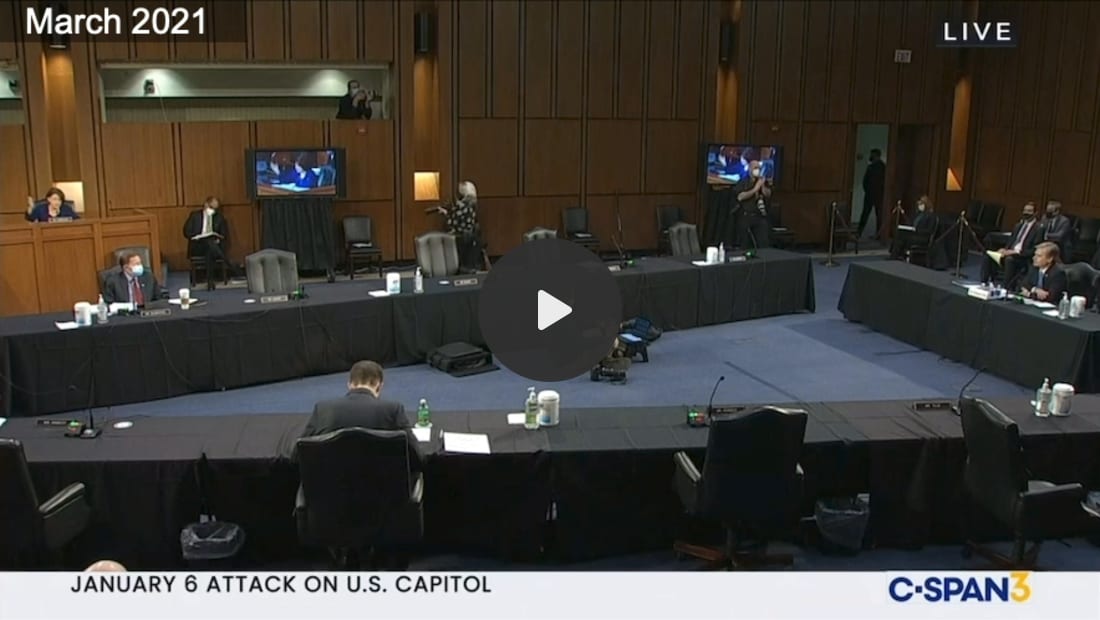

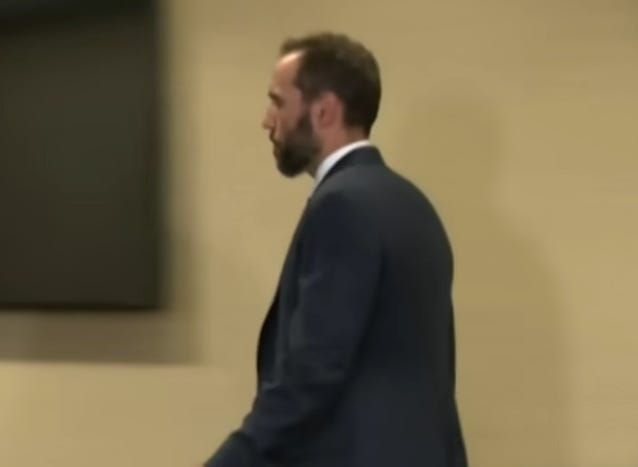





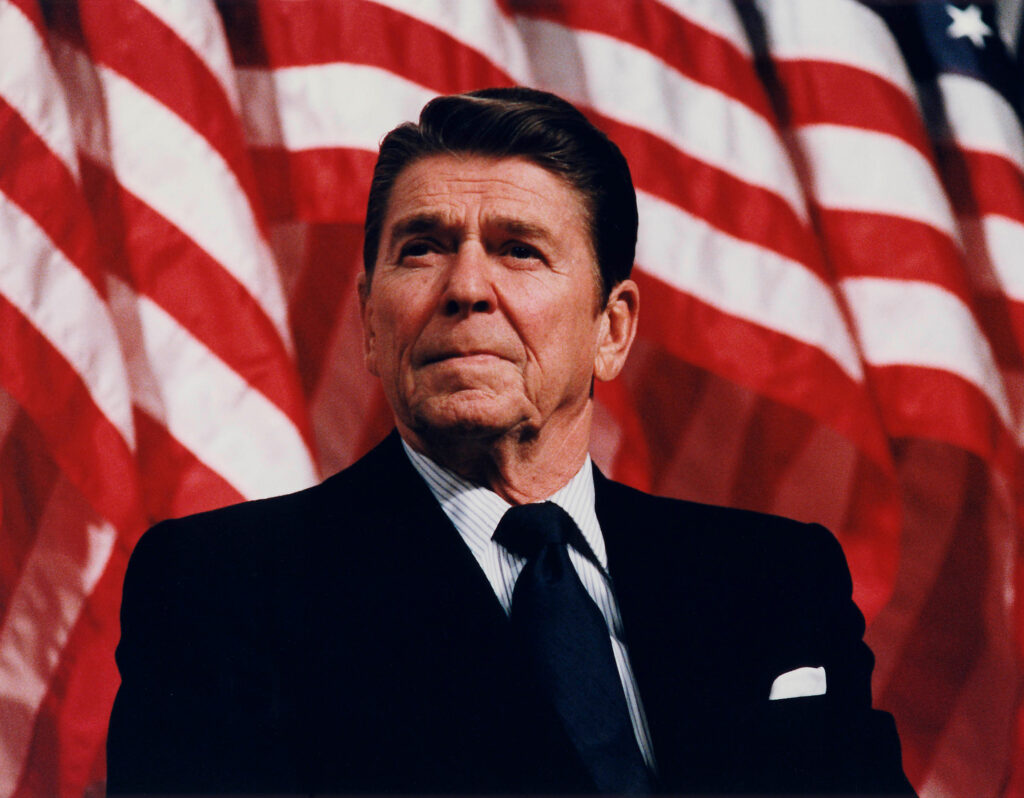


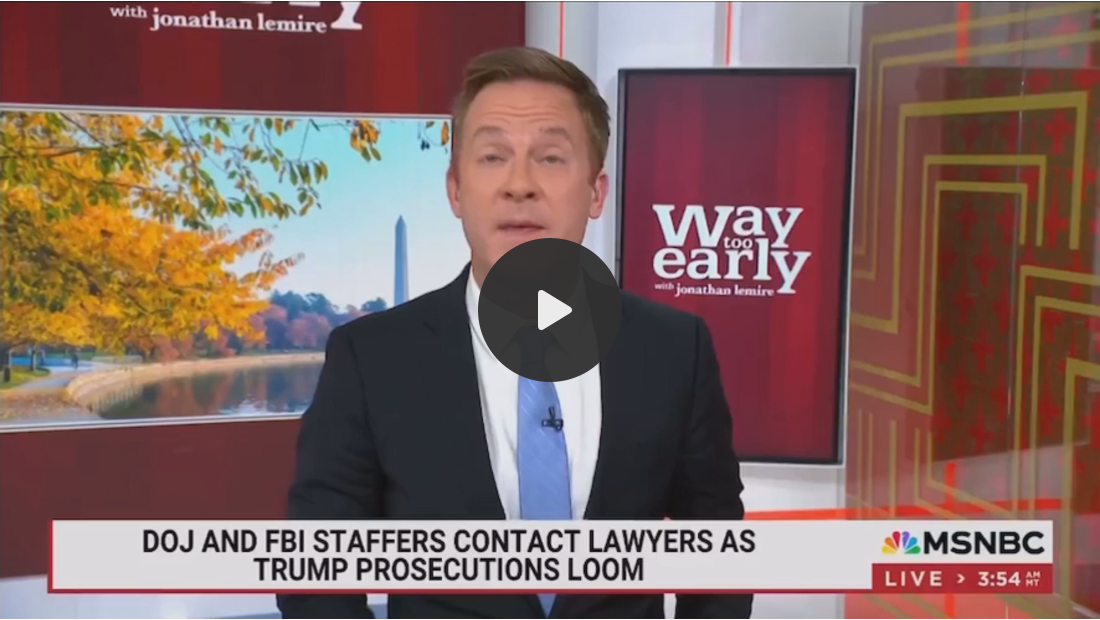
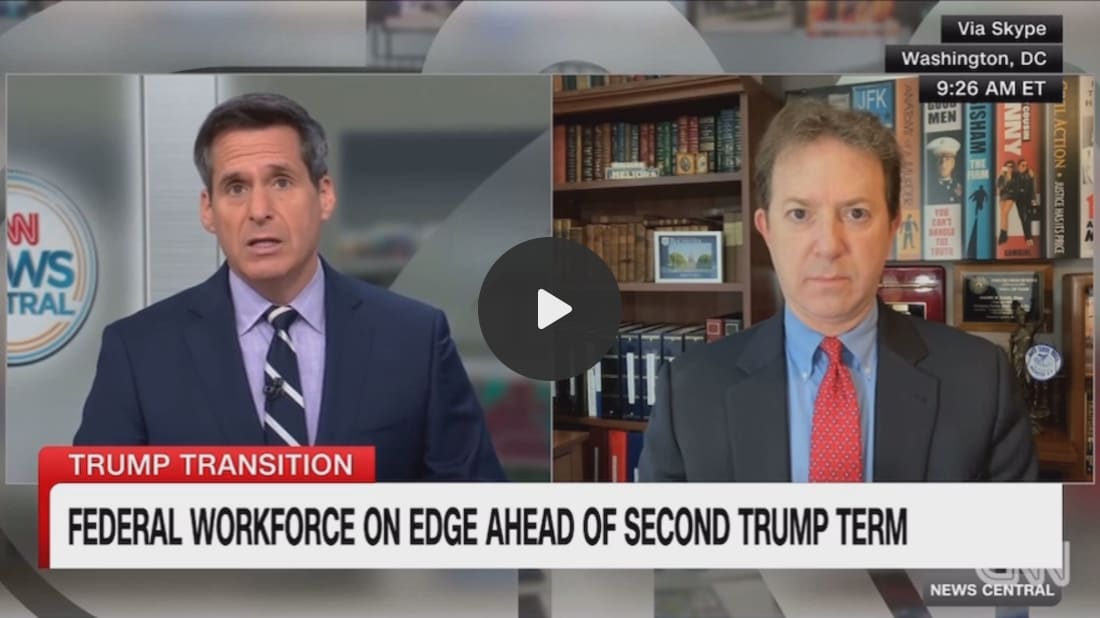

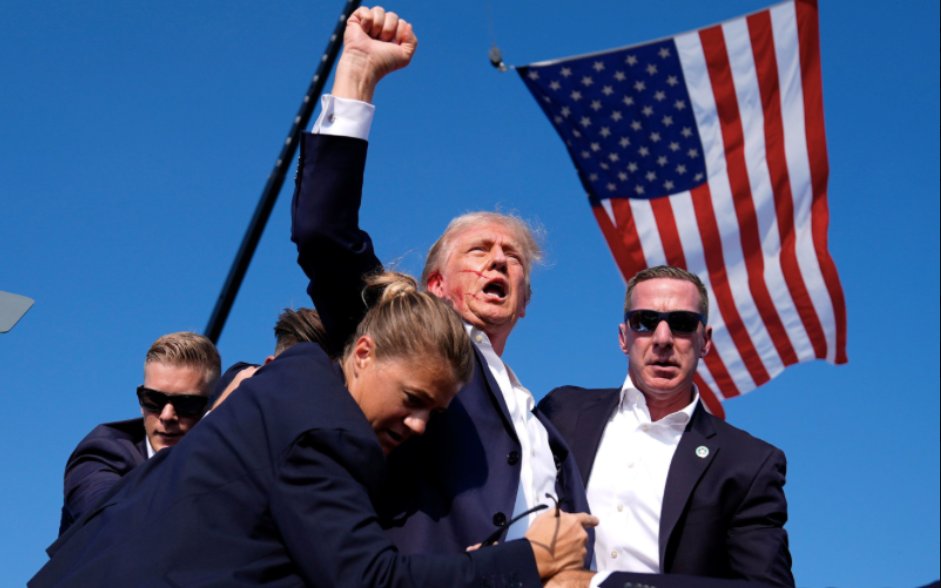

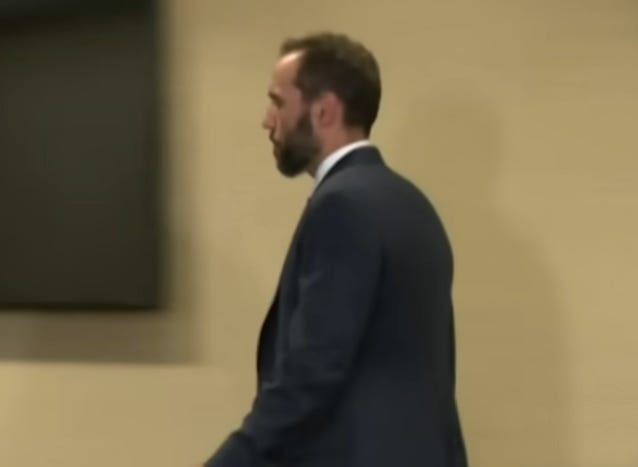



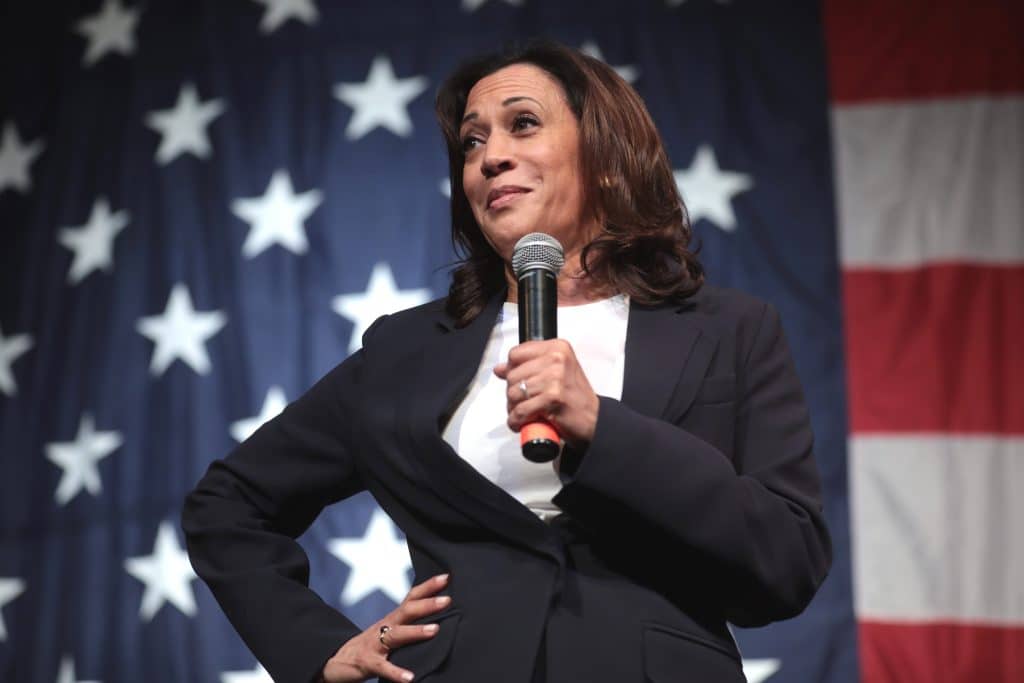











 fox files
Recent Comments