Events over the past months have exposed a very stark divide between the globalist, collectivist, “woke” authorities of Europe and the Make America Great Again (MAGA) patriot movement here in the United States. To be frank, it is almost as if the snide, effete elitists who control the nations of the European continent want to rub our noses in their horror show.
Let’s be frank. Europe would be a total basket case without American taxpayers, American troops, and American subservience to their ever more bizarre “culture.” Since Woodrow Wilson first fell for the globalist-line that somehow “the better people” could build a world government free of popular input, the citizens of the United States have been played as fools. Churchill’s constant pushing and cajoling led to the so-called “special relationship” that has come to mean Uncle Sucker picks up the tab, does the dirty work and then allows others to make decisions.
And today, the outdated, “ticking time bomb without a mission” called NATO has become an anchor around the necks of the American people that can only draw us into a war that serves the territorial interests of European elites, not that of the United States.
All of this was made clear when a recent article by Giovanna De Maio and Célia Belin in the publication, Foreign Affairs, appeared entitled Europe’s America Problem. To set the record straight, the magazine is owned and operated by the Council on Foreign Relations (CFR). CFR has been the leading voice for globalist ambitions since its founding in 1921. It is the voice of the very people the MAGA movement has identified as those working to destroy American sovereignty and submerge us into a swamp.
Europe as advanced by the globalists at CRF, NATO, the Atlantic Council and the European Union (EU) is unalterably opposed to the core principles of the United States. Even a cursory review shows them to outright enemies of liberty.
The suppression of free speech is now rampant. People in Britain are being jailed for prayer, at least Christian prayer. The government of Germany is moving to outlaw the second largest party in the country in order to eliminate competition, exactly as the Nazis and the Communists did in the not so distant past.
The EU is claiming the right to prosecute citizens outside their nations — the United States or any other non-European country — if that individual publishes something the thought police in Brussels oppose. National laws and sovereignty mean nothing to them.
We are admonished that steps to defend and protect the U.S. economy will be regarded as hostile and that efforts at retaliation will be considered.
As evidence mounts that the so-called “climate crisis” is at best not true — and more likely will eventually be exposed as a total fraud — Europe is demanding that the United States continue to surrender all its advantages to “international cooperation.” What this means is that the United States refrains from developing the massive energy resources that would give our manufacturing and development a clear advantage so that energy-starved Europe can “compete.” The Foreign Affairs article is blunt — “Europe will need to define its collective interests in the transatlantic partnership, deciding what it wants to protect and what it expects from the United States.” [emphasis added]
“What it expects” from the United States? To paraphrase one of their prominent green-freaks, “How dare they?”
Why are we spending hundreds of billions of dollars we do not have to defend the borders of Ukraine when we should be defending our own borders? Why? Because Europe couldn’t last a week in combat and demand that we continue to defend them like we have for nearly 80 years. Why should we be afraid of Russia?
From the end of World War II the entire game for the Europeans has been to soak America. Get us to pay for their defense. Get us to subsidize their economies. Get us to incur the wrath of newly formed nations of Africa, Asia and the Middle East — have them direct their righteous rage at us instead of the Imperial masters who continue to this day to loot the former colonies.
The entire model was stated clearly by the first Secretary-General of NATO in 1952 when Lord Hastings “Pug” Ismay (1887-1965), outlined the entity’s strategic objectives with his famous tripartite formula: “to keep the Russians out, the Americans in, and the Germans down.” No better description of British foreign policy has ever been written for the past 100 years.
A cold-eyed review shows that Europe has near-zero natural resources that America needs. On the other hand, Latin America and Africa are rich in them, they just need to be developed. China has proven to be a less than reliable partner for these nations. We should make the advance.
Europe supplies next to nothing in a military sense. Yes, we have great bases in Italy and Germany. But we only need them to defend Europe. If we could walk away from billions in weapons and a state-of-the-art air base in Afghanistan, why not do it in Europe? Just hand those bases over and let the Europeans fight over them.
Politically, who really cares if we get “their votes” at the United Nations or any of the other globalist’ strait jackets. Better to tell those entities to fend for themselves, make our annual blackmail payments contingent on not making us angry, and at the first appropriate moment walk away entirely.
On the “net zero” suicide pact, they need to be told to forget it. The U.S. is going to drill and refine all we can as nuclear plants are built. What they do is up to them but finding sources of energy should be their top priority. Winters can get very cold in much of Europe.
Finally, the perverse culture that has infected us from Europe needs to be returned to sender. The “critical theory” treason of Michel Foucault and his cohorts in academia need to be excised like a tumor. We need nothing of their totalitarian poison. The dedication to family and community so valued in Africa and Latin America are far more vital to the U.S. than anything from the smut-dens of Berlin or Paris.
It is time for renewal in America, a restoration of our values and principles of self-reliance and independence. All we can get from Europe is a drain on our resources and resolve. The rest of the world wants our leadership — not through force of arms as latter-day colonial powers but from a commitment to enduring principles of liberty, a liberty not found anywhere in Europe today. It is time to move on and dump Europe. They are leeches sucking America dry. Time to cut them off.
Most Americans tend to think of private property simply as a home – the place where the family resides, stores their belongings, and finds shelter and safety from the elements. It’s where you live. It’s yours because you pay the mortgage and the taxes. Most people don’t give property ownership much more thought than that.
There was a time when property ownership was considered to be much more. Property, and the ability to own and control it, was life itself.
John Adams said, “The moment the idea is admitted into society that property is not as sacred as the law of God, and that there is not a force of law and public justice to protect it, anarchy and tyranny commence.”
The great economist John Locke, whose writings and ideas had a major influence on the nation’s founders, believed that “life and liberty are secure only so long as the right of property is secure.”
Locke warned that human civilization would be reduced to the level of a pack of wolves and cease to exist because lack of control over your own actions caused fear and insecurity. Private property ownership, Locke argued, brought stability and wealth to individuals, leading to a prosperous society of man. That’s because legal ownership of property is the key to productive development.
Private property ownership is the reason the United States became the wealthiest nation on earth almost overnight. Free individuals, using their own land to create commerce and build personal wealth through the equity of their property, are the root of American success. Sixty percent of early American businesses were financed through the equity of property ownership. And sixty percent of American jobs were created through those successful businesses. That’s how a free-market economy is built. Private property ownership is the source of personal individual wealth for the average American.
John Locke advocated that if property rights did not exist, then the incentive for an industrious person to develop and improve property would be destroyed; that the industrious person would be deprived of the fruits of his labor; that marauding bands would confiscate, by force, the goods produced by others; and that mankind would be compelled to remain on a bare-subsistence level of hand-to-mouth survival because the accumulation of anything of value would invite attack.
One must only look to the example of the former Soviet Union to see clearly what happens to society when an outlaw government exercises brute force to take control of private property. Under that tyrannical government, each of Locke’s predictions came true. Throughout its history, the Soviet government excused its every action under the banner of equality for all. There were no property rights, no freedom of enterprise, and no protections for individual actions. Instead, the Soviet government enforced redistribution of wealth schemes, confiscating homes from the rich and middle class. Shelves were bare, freedom of choice was non-existent, and personal misery ruled the day.
The same basic redistribution schemes of the Soviets were later used by Zimbabwe’s former dictator, Robert Mugabe, to destroy that agriculturally rich African nation. Mugabe confiscated farmland owned by white farmers and gave it to friends of his corrupt government – most of whom had never even seen a farm. The result was economic disaster, widespread poverty, and hunger in a land that had once fed the continent. The nation of South Africa is now following in the murderous footsteps of Robert Mugabe as it attacks white farmers, taking their property and again putting it in the hands of those who know nothing about running a farm.
Clearly, John Locke’s warnings have been vindicated. Private property ownership is much more than a house. It is the root of a prosperous, healthy, human society based on the individual’s freedom to live a life of his own, gaining from the fruits of his own labor. Take that option away, and people will always react the same way. They stop producing.
THE LOST DEFINITION OF PRIVATE PROPERTY RIGHTS
In the 1990s, an all-out assault on property rights was well underway, led by a radical environmental movement, resulting in massive federal land grabs in the name of conservation. As one can imagine, courts across the nation were flooded with cases of people attempting to defend their property rights from government takings.
In the state of Washington, one of the major targets for such programs, the state Supreme Court realized it didn’t have an adequate definition of property rights to use in considering such cases. That’s when State Supreme Court Justice Richard B. Sanders wrote a “Fifth Amendment Treatise”, which included the following definition of property rights:
“Property in a thing consists not merely in its ownership and possession, but in the unrestricted right of use, enjoyment, and disposal. Anything which destroys any of the elements of property, to that extent, destroys the property itself. The substantial value of property lies in its use. If the right of use be denied, the value of the property is annihilated, and ownership is rendered a barren right.”
“Use” of the land is the key. Using the land in a productive way that is beneficial to the owner is what gives the land value. According to Justice Sanders, paying the taxes and mortgage while some undefined government entity can rule and regulate how the property is used, is a “barren right” that annihilates its value.
When you purchase property, how much of the land do you own? What is the depth of the soil? Do you own the water on the land? Do you own the air above it? As property rights expert Dr. Timothy Ball wrote, “All these questions speak to political issues that transcend private, regional, and national boundaries. Nationally and internationally, lack of this knowledge is being exploited by those who seek control…”
HOW TO FIGHT BACK?
For several decades, the radical Left has been dedicated in its efforts to organize at every level of government while advocates of limited government failed to do the required “dirty work” of local organization and activism to protect our freedoms. We gave the Left a pretty clear playing field to organize and seize control, and now we are suffering under the result.
For the dedicated Left, no position is too small. No appointed board is ignored. When was the last time local Conservative activists cared about positions like City Attorney? Yet these are the very officials who enforced the COVID-19 lockdown policies. Local government is now infested with Planners, NGOs, and federal agencies dictating policies. And the only reason they have power and influence now is because the Left fought to elect representatives who then gave it to them.
Today, too many elected officials, even the honest ones, fail to understand the roots and goals of the “Sustainable” policies they are enforcing. In their ignorance they respond to critics, saying, “well, that’s just the way it’s done.” As they surrender their elective powers to appointed boards, do they even think of asking themselves, “Who do they actually represent – the voters or the NGOs and appointed boards?”
The threat of man-made climate change is the center of the Deep State’s hold on power. That’s the unrelenting fear tactic that claims the earth will become uninhabitable in ten years unless massive government power controls every human action. Power for the state!
Yet there is ample scientific proof that such claims about man’s effect on the environment are basically non-existent. However, many leaders of the freedom movement wrongly assume that all we need to do to counter the misinformation from the climate alarmists is to simply write a scholarly paper disproving it and set the record straight. It doesn’t work because few will understand it, fewer still will ever attempt to read it. In short, we badly overestimate the knowledge, intelligence and attention span of the average citizen and government official whom we are trying to convince. Emotions tend to decide debates rather than facts.
The first step in fighting back is to stop depending on one person, one icon, one president to lead us forward. We must take responsibility ourselves to ensure that the government does not move forward unattended. We need to be directly involved at every level, especially on the local level.
Change the debate to attack anti-freedom policies and expose non-governmental (NGO) carpetbaggers hiding in the shadows dictating policy. You can change the debate by making private property protection the key to your local fight. Sustainable policy cannot be enforced if private property is protected. Challenge local elected officials to stand with you in protection of private property. If they refuse – expose them. Force elected officials to be personally responsible for their actions.
Picture how different our nation would be if we dug in to elect a majority of governors across the nation who understood and operated under the Tenth Amendment, which acknowledges the States’ power to stand against Federal overreach. What if you had a county commission that refused to participate in non-elected regional government? How would your life change if your city council was made up of individuals who guided your community under the three pillars of freedom, including protection of private property, encouragement and support for local businesses, and the lifting of rules and regulations that stifled personal choices in your individual life? How do we make all of that a reality?
Set a goal to turn your local community into a Freedom Pod. Simply focus on making these goals a reality in your community and if successful, as prosperity spreads, the idea will certainly spread to a neighboring community and then to the next. The challenge is to create a successful blueprint and a cadre of dedicated elected representatives that will begin to move from the local to the state level of government.
That will set the stage for effecting a federal government as conceived by our forefathers. The result will be the growth of Freedom Pods across the nation. Here is the end game for the forces of freedom. No matter who is president, we must take control of our cities, counties, state legislatures, and governors. Only then can we stand up to the potential tyranny from Washington, DC. To live your life as YOU choose, start right there in your community – build that Freedom Pod. Act Local and Stop Global!
How do you do that? The American Policy Center (APC) is now working with organizations nationwide to train and motivate local residents to take action in their own communities to push back and restore American freedom. APC has created a Local Activists Handbook and a Tool Kit with all the details you need to start organizing, training, and improving communications between activists and organizations, to share tactics, ideas, and successes. Learn more at www.americanpolicy.org.
The House Oversight Select Subcommittee on the Coronavirus Pandemic released a 520-page report yesterday, detailing the findings of the subcommittee’s investigation concluded after its two-year investigation into the COVID-19 pandemic. It is the most thorough review of the pandemic conducted to date. This report ensures COVID-19 accountability and serves as a roadmap for the U.S. to prepare for and respond to future pandemics.
It is beyond damning, names names and references criminal acts. People are calling for a Nuremberg-type trial to prosecute the main players for crimes against humanity.
The final report is titled, “After Action Review of the COVID-19 Pandemic: The Lessons Learned and a Path Forward.” (Below)
This final report will serve as a road map for Congress, the Executive Branch, and the private sector to prepare for and respond to future pandemics. Since February 2023, the Select Subcommittee has sent more than 100 investigative letters, conducted more than 30 transcribed interviews and depositions, held 25 hearings and meetings, and reviewed more than one million pages of documents. Members and staff have exposed high-level corruption in America’s public health system, confirmed the most likely origin of the pandemic, held COVID-19 bad actors publicly accountable, fostered bipartisan consensus on consequential pandemic-era issues, and more. This 520-page final report details all findings of the Select Subcommittee’s investigation.
“This work will help the United States, and the world, predict the next pandemic, prepare for the next pandemic, protect ourselves from the next pandemic, and hopefully prevent the next pandemic. Members of the 119th Congress should continue and build off this work, there is more information to find and honest actions to be taken,” wrote Chairman Wenstrup in a letter to Congress. “The COVID-19 pandemic highlighted a distrust in leadership. Trust is earned. Accountability, transparency, honesty, and integrity will regain this trust. A future pandemic requires a whole of America response managed by those without personal benefit or bias. We can always do better, and for the sake of future generations of Americans, we must. It can be done.”
On Wednesday, December 4, 2024, at 10:30am, the Select Subcommittee will hold a markup of the final report and officially submit the report to the Congressional record. Ahead of the markup, the Select Subcommittee will also release additional supporting materials and recommendations.
The full, 520-page final report can be found here and below. Here’s a summary of the staggering information contained within:
The Origins of the Coronavirus Pandemic, Including but Not Limited to the Federal Government’s Funding of Gain-of-Function Research
COVID-19 ORIGIN: COVID-19 most likely emerged from a laboratory in Wuhan, China. The FIVE strongest arguments in favor of the “lab leak” theory include:
The virus possesses a biological characteristic that is not found in nature.
Data shows that all COVID-19 cases stem from a single introduction into humans. This runs contrary to previous pandemics where there were multiple spillover events.
Wuhan is home to China’s foremost SARS research lab, which has a history of conducting gain-of-function research at inadequate biosafety levels.
Wuhan Institute of Virology (WIV) researchers were sick with a COVID-like virus in the fall of 2019, months before COVID-19 was discovered at the wet market.
By nearly all measures of science, if there was evidence of a natural origin it would have already surfaced.
PROXIMAL ORIGIN PUBLICATION: “The Proximal Origin of SARS-CoV-2” publication — which was used repeatedly by public health officials and the media to discredit the lab leak theory — was prompted by Dr. Fauci to push the preferred narrative that COVID-19 originated in nature.
GAIN-OF-FUNCTION RESEARCH: A lab-related incident involving gain-of-function research is most likely the origin of COVID-19. Current government mechanisms for overseeing this dangerous gain-of-function research are incomplete, severely convoluted, and lack global applicability.
ECOHEALTH ALLIANCE INC. (ECOHEALTH): EcoHealth — under the leadership of Dr. Peter Daszak — used U.S. taxpayer dollars to facilitate dangerous gain-of-function research in Wuhan, China. After the Select Subcommittee released evidence of EcoHealth violating the terms of its National Institutes of Health (NIH) grant, the U.S. Department of Health and Human Services (HHS) commenced official debarment proceedings and suspended all funding to EcoHealth.
New evidence also shows that the Department of Justice (DOJ) has opened an investigation into EcoHealth’s pandemic-era activities.
NIH FAILURES: NIH’s procedures for funding and overseeing potentially dangerous research are deficient, unreliable, and pose a serious threat to both public health and national security. Further, NIH fostered an environment that promoted evading federal record keeping laws — as seen through the actions of Dr. David Morens and “FOIA Lady” Marge Moore.
The Efficacy, Effectiveness, and Transparency of the Use of Taxpayer Funds and Relief Programs to Address the Coronavirus Pandemic, Including Any Reports of Waste, Fraud, or Abuse
COVID-19 RELIEF FUNDING: Federal and state governments had significant lapses in coordination, were unprepared to oversee the allocation of COVID-19 relief funds, and failed to sufficiently identify waste, fraud, and abuse of taxpayer dollars during the pandemic.
PAYCHECK PROTECTION PROGRAM: The Paycheck Protection Program — which offered essential relief to Americans in the form of loans that could be forgiven if the funds were used to offset pandemic-era hardships — was rife with fraudulent claims resulting in at least $64 billion of taxpayers’ dollars lost to fraudsters and criminals.
FRADULENT UNEMPLOYMENT CLAIMS: Fraudsters cost the American taxpayer more than $191 billion dollars by taking advantage of the federal government’s unemployment system and exploiting individuals’ personally identifiable information.
SMALL BUSINESS ADMINISTRATION (SBA) FAILURES: $200 million of taxpayers’ dollars were lost as a result of the SBA’s inability to conduct proper oversight, implement internal controls, and ensure fraud protection measures were enacted.
TRANSNATIONAL FRAUD: At least half of the taxpayer dollars lost in COVID-19 relief programs were stolen by international fraudsters.
COVID-19 RELIEF FUNDING OVERSIGHT: Expanding relief programs that lacked proper oversight functions exposed severe vulnerabilities in the system and paved the way for fraudsters, international criminals, and foreign adversaries to take advantage of taxpayers.
The Implementation or Effectiveness of Any Federal Law or Regulation Applied, Enacted, or Under Consideration to Address the Coronavirus Pandemic and Prepare for Future Pandemics
WORLD HEALTH ORGANIZATION (WHO): The WHO’s response to the COVID-19 pandemic was an abject failure because it caved to pressure from the Chinese Communist Party and placed China’s political interests ahead of its international duties. Further, the WHO’s newest effort to solve the problems exacerbated by the COVID-19 pandemic — via a “Pandemic Treaty” — may harm the United States.
SOCIAL DISTANCING: The “6 feet apart” social distancing recommendation — which shut down schools and small business across the country — was arbitrary and not based on science. During closed door testimony, Dr. Fauci testified that the guidance, “sort of just appeared.”
MASK MANDATES: There was no conclusive evidence that masks effectively protected Americans from COVID-19. Public health officials flipped-flopped on the efficacy of masks without providing Americans scientific data — causing a massive uptick in public distrust.
LOCKDOWNS: Prolonged lockdowns caused immeasurable harm to not only the American economy, but also to the mental and physical health of Americans, with a particularly negative effect on younger citizens. Rather than prioritizing the protection of the most vulnerable populations, federal and state government policies forced millions of Americans to forgo crucial elements of a healthy and financially sound life.
NEW YORK PANDEMIC FAILURES: Former New York Governor Andrew Cuomo’s March 25 Order — which forced nursing homes to accept COVID-19 positive patients — was medical malpractice. Evidence shows that Mr. Cuomo and his Administration worked to cover up the tragic aftermath of their policy decisions in an apparent effort to shield themselves from accountability.
Evidence suggests Mr. Cuomo knowingly and willfully made false statements to the Select Subcommittee on numerous occasions about material aspects of New York’s COVID-19 nursing home disaster and the ensuing cover-up. The Select Subcommittee referred Mr. Cuomo to the DOJ for criminal prosecution.
TRAVEL RESTRICTIONS: President Trump’s rapidly implemented travel restrictions saved lives. During Dr. Fauci’s transcribed interview, he unequivocally agreed with every travel restriction issued by the Trump Administration. This testimony runs counter to the public narrative that the Trump Administration’s travel restrictions were xenophobic.
COVID-19 MISINFORMATION: Public health officials often spread misinformation through conflicting messaging, kneejerk reactions, and a lack of transparency. In the most egregious examples of pervasive misinformation campaigns, off-label drug use and the lab leak theory were unjustly demonized by the federal government.
The Biden Administration even employed undemocratic and likely unconstitutional methods — including pressuring social media companies to censor certain COVID-19 content — to fight what it deemed misinformation.
The Development of Vaccines and Treatments, and the Development and Implementation of Vaccination Policies for Federal Employees and Members of the Armed Forces
OPERATION WARP SPEED: President-elect Trump’s Operation Warp Speed — which encouraged the rapid development and authorization of the COVID-19 vaccine — was highly successful and helped save millions of lives.
COVID-19 VACCINE: Contrary to what was promised, the COVID-19 vaccine did not stop the spread or transmission of the virus.
RUSHED COVID-19 VACCINE APPROVAL: The FDA rushed approval of the COVID-19 vaccine in order to meet the Biden Administration’s arbitrary mandate timeline. Two leading FDA scientists warned their colleagues about the dangers of rushing the vaccine approval process and the likelihood of adverse events. They were ignored, and days later, the Biden Administration mandated the vaccine.
VACCINE MANDATES: Vaccine mandates were not supported by science and caused more harm than good. The Biden Administration coerced healthy Americans into compliance with COVID-19 vaccine mandates that trampled individual freedoms, harmed military readiness, and disregarded medical freedom to force a novel vaccine on millions of Americans without sufficient evidence to support their policy decisions.
NATURAL IMMUNITY: Public health officials engaged in a coordinated effort to ignore natural immunity — which is acquired through previous COVID-19 infection — when developing vaccine guidance and mandates.
VACCINE INJURY REPORTING SYSTEM: Vaccine injury reporting systems created confusion, failed to properly inform the American public about vaccine injuries, and deteriorated public trust in vaccine safety during the COVID-19 pandemic.
VACCINE INJURY COMPENSATION: The government is failing to efficiently, fairly, and transparently adjudicate claims for the COVID-19 vaccine injured.
The Economic Impact of the Coronavirus Pandemic and Associated Government Response on Individuals, Communities, Small Businesses, Health Care Providers, States, and Local Government Entities
BUSINESS IMPACTS: Federal and state governments imposed mandatory lockdowns that were the primary cause of temporary and permanent business closures. More than 160,000 businesses closed due to the pandemic — with 60% of those closures classified as permanent. For the businesses that stayed or re-opened, the lack of supply chain diversity exacerbated pandemic-era challenges and deepened existing disparities.
HEALTHCARE IMPACTS: America’s healthcare system was severely damaged by the COVID-19 pandemic. Patients experienced a decreased quality-of-care, longer wait times, shorter medical appointments, and missed diagnoses.
WORKER IMPACTS: Unemployment rates surged to levels not seen since the Great Depression. Overly broad mitigation measures — including the now debunked “6 feet apart” guidance — disproportionately impacted sectors with low wage earners.
FEDERAL RESERVE: The Federal Reserve’s aggressive, early, and unprecedented response to the COVID-19 pandemic prevented a severe economic downturn. This continued approach also contributed to staggering inflation.
The Societal Impact of Decisions to Close Schools, How the Decisions Were Made and Whether There is Evidence of Widespread Learning Loss or Other Negative Effects as a Result of These Decisions
COVID-19 SCHOOL CLOSURES: The “science” never justified prolonged school closures. Children were unlikely to contribute to the spread of COVID-19 or suffer severe illness or mortality. Instead, as a result of school closures, children experienced historic learning loss, higher rates of psychological distress, and decreased physical well-being.
CENTERS FOR DISEASE CONTROL AND PREVENTION (CDC) INFLUENCE: The Biden Administration’s CDC broke precedent and provided a political teachers organization with access to its scientific school reopening guidance. Former CDC Director Rochelle Walensky asked the American Federation of Teachers (AFT) to provide specific language for the guidance and even went so far as to accept numerous edits made by AFT.
AFT INFLUENCE: Schools remained closed longer than necessary because of AFT’s political interference in the CDC’s school reopening guidance. AFT is a political union, not a scientific organization, that advocated for mitigation efforts that prolonged school closures — including an automatic closure “trigger.”
Testimony revealed that AFT President Weingarten had a direct telephone line to contact former CDC Director Walensky.
LONGTERM IMPACTS: Standardized test scores show that children lost decades worth of academic progress as a result of COVID-19 school closures. Mental and physical health concerns also skyrocketed — with suicide attempts by 12-17 year-aged girls rising 51%.
Cooperation By the Executive Branch and Others with Congress, the Inspectors General, the Government Accountability Office, and Others in Connection with Oversight of the Preparedness for and Response to the Coronavirus Pandemic
HHS OBSTRUCTION: The Biden Administration’s HHS engaged in a multi-year campaign of delay, confusion, and non-responsiveness in an attempt to obstruct the Select Subcommittee’s investigation and hide evidence that could incriminate or embarrass senior public health officials. It appears that HHS even intentionally under-resourced its component that responds to legislative oversight requests.
ECOHEALTH OBSTRUCTION: EcoHealth President Dr. Peter Daszak obstructed the Select Subcommittee’s investigation by providing publicly available information, instructing his staff to reduce the scope and pace of productions, and doctoring documents before releasing them to the public. Further, Dr. Daszak provided false statements to Congress.
DR. DAVID MORENS: Dr. Fauci’s Senior Advisor, Dr. David Morens, deliberately obstructed the Select Subcommittee’s investigation, likely lied to Congress on multiple occasions, unlawfully deleted federal COVID-19 records, and shared nonpublic information about NIH grant processes with EcoHealth President Dr. Peter Daszak.
NEW YORK OBSTRUCTION: New York’s Executive Chamber — led presently by Governor Kathy Hochul — redacted documents, offered numerous illegitimate privilege claims, and withheld thousands of documents without an apparent legal basis to obstruct the Select Subcommittee’s investigation into former Governor Cuomo’s pandemic-era failures.
According to the New York Post, transgender activists are “reconsidering their abrasive approach as public support slips.”
Citing a New York Times piece (itself titled “Transgender Activists Question the Movement’s Confrontational Approach”), it seems that some members of the LGBT community are none too pleased with the more hysterical fringes of the “trans” movement.
Rodrigo Heng-Lehtinen, executive director of Advocates for Transgender Equality, told the Times that shaming people into embracing transgenderism appeared to be backfiring.
“We have to make it OK for someone to change their minds,” Heng-Lehtinen told the Times. “We cannot vilify them for not being on our side.
“No one wants to join that team.”
The director added: “No one wants to feel stupid or condescended to.”
It’s at this point that I simply must interject. Heng-Lehtinen has the unmitigated gall to claim that “no one wants to feel stupid,” and yet the Times has to refer to Heng-Lehtinen as “they”? Pronoun nonsense is literally a huge part of the problem.
Mara Keisling, another transgender activist, similarly made a bizarre plea.
“We looked unreasonable,” Keasling told the Times. “We should be talking about the 7-year-old who just wants to play soccer with her friends.”
There’s just no other way to put this: It’s impossible to take just one “part” of transgenderism, make it friendlier, and then sell it to the masses. And that’s because transgenderism is rotten to the core, full tilt.
Any ideology that disrespects biblical truth (which is all we truly have at the end of the day) by suggesting God is mistake-prone is not an ideology worth entertaining in any way, shape, or form.
But even if you’re an atheist, allow this writer to appeal to your rigorous scientific method: In what world is it okay to chop off a perfectly healthy girl’s breasts because she’s going through a tomboy phase?
That’s really the long and short of it.
Transgenderism — ironically enough — can dress itself up however it wants. It can be nicer and more coddling, like Heng-Lehtinen and Keasling want. Heck, transgenderism could cut $1,200 checks for every American, cure the common cold, and figure out how to keep your pillow cool through the night.
And it still wouldn’t sway public opinion.
That’s because, no matter how “nice” or “demure” transgenderism presents itself, the entire movement is still predicated on the idea that boys can become girls, and vice versa, with little more than bodily mutilation and an endless cocktail of monthly prescription hormonal drugs.
That core conceit will never jive with most Americans — as the Gallup poll cited by both the Post and the Times attests to. Transgender issues, across the board, just didn’t hold much water with Americans.
No, we don’t care about your “Xe/Xim” hogwash when we have (actual) real-world problems to deal with, like putting food on our family’s table or keeping a roof over everyone’s head.
I suppose it’s nice that some of these activists are reconsidering their shaming, aggro tactics.
But until they realize it’s the trans issue itself — and not the approach to it — the left will truly never get it and my belief is that they never will because they just don’t want to either.
For the first time in history, a Chinese president has openly delivered clear red lines to an American president, delineating Beijing’s non-negotiable core interests. When Chinese President Xi Jinping met with President Joe Biden at the 31st APEC Economic Leaders’ Meeting in Lima, Peru, the world’s attention was drawn to Xi’s blunt articulation of China‘s “four red lines.” Unlike previous APEC meetings, which often emphasized cooperative economic growth, this meeting was starkly different in tone, as Xi chose to lay down firm boundaries. Xi delivered these red lines with a strategic calculation: he saw Biden as weak—a perfect target for asserting China’s boundaries—preferring to establish these limits before Donald Trump, a leader with a much stronger and more combative stance on China, takes office again in January. These red lines were issued as a stark warning to Washington: do not cross boundaries concerning Taiwan, democracy and human rights, China’s path and system and its rights to economic development. Xi’s delivery of these red lines marks a critical turning point in global power dynamics, reflective of an increasingly confident China testing the resolve of a U.S. president they perceived as pliable.
The Four Red Lines: Setting Ground Rules for Engagement
Xi Jinping’s decision to articulate these red lines at the presidential level marked a significant departure from the traditionally indirect and often veiled language used by Beijing in diplomatic settings. The core components of these red lines reflect the deep sensitivities China has about its sovereignty, ideological integrity and developmental trajectory:
Taiwan: Beijing sees Taiwan as an inalienable part of its territory. Xi emphasized that any U.S. support for Taiwanese independence or actions that embolden the island’s efforts to solidify its separation from China would be unacceptable. The language was a firm reminder that Washington’s increased engagements with Taiwan would be seen as a direct challenge to China’s national unity.
Democracy and Human Rights: China demanded an end to external interference concerning human rights and democracy, both of which Beijing deems to be domestic matters. U.S. criticism over China’s treatment of Uyghurs and actions in Hong Kong has been seen by China as interference designed to undermine the ruling Communist Party.
China’s Path and System: Xi underscored that the United States must respect China’s governance and its chosen socialist path. Any attempts to influence or undermine the authority of the Communist Party would be viewed as an existential threat.
Rights to Development: Finally, China asserted its right to pursue economic development and technological advancement without external obstruction. Restrictions on trade, technology transfers, or economic development would be seen as direct infringements on China’s core rights.
These four areas define what China perceives as fundamental to its sovereignty, stability and growth. Their articulation marks a new era in U.S.-China relations—one where Beijing is not just reacting to American actions but also preemptively setting boundaries for what it considers unacceptable.
Trump and Biden: A Tale of Policy Overlaps and Red Line Violations
Both Donald Trump and Joe Biden have adopted policies that, in various ways, challenge China’s new red lines. However, while there are some commonalities between their approaches, there are also notable differences in tone, methods and strategic emphasis.
Trump’s Policies: A Bold Stand Against China
Donald Trump’s first term was marked by a courageous and unapologetic stance against China, emphasizing economic measures and national security concerns. His administration launched a trade war, imposing significant tariffs on Chinese goods—a move that crossed China’s “right to development” red line but was absolutely necessary to correct decades of unfair trade practices and reduce American reliance on Chinese manufacturing. This marked a significant departure from previous U.S. administrations’ approaches to China, such as Obama’s “Pivot to Asia” strategy, which aimed to contain China’s influence through diplomatic and military alliances, or the Nixon-era opening to China, which sought engagement to balance Soviet power. Trump’s approach, in contrast, was more confrontational and focused on economic decoupling and direct confrontation. While Beijing saw it as a deliberate attempt to stymie China’s economic rise, Trump saw it as a means to protect American jobs and secure economic independence.
Trump’s unwavering support for Taiwan also crossed Beijing’s sensitivities, but it sent a powerful message of American resolve. The Trump administration sold billions in arms to Taiwan, fostered increased diplomatic engagements and openly spoke about Taiwan as a partner, which was interpreted by Beijing as support for Taiwanese separatism—a direct challenge to its sovereignty. This support was built on the foundation of the Taiwan Relations Act of 1979, which committed the United States to assist Taiwan in maintaining its defense capabilities. The Taiwan Relations Act was a significant turning point that ensured continued U.S. support for Taiwan after formal diplomatic ties were severed in favor of China. Yet, Trump’s policy took this support further, demonstrating his commitment to defending democracies against authoritarian expansion.
In the arena of human rights, Trump did not shy away from challenging China. He sanctioned Chinese officials involved in abuses in Xinjiang and Hong Kong, directly confronting China’s demands for non-interference. His administration’s labeling of China’s actions in Xinjiang as genocide represented a principled stand for human dignity and freedom, a rare boldness in modern American foreign policy. Trump’s actions demonstrated a consistent willingness to confront injustice head-on, setting a precedent that Biden has struggled to follow.
Biden’s Policies: Weakness Disguised as Diplomacy
President Biden has largely maintained a confrontational stance toward China, but his approach lacks the clear resolve and strength that defined Trump’s policies. Biden continued the tariffs and expanded on export controls, particularly targeting high-tech sectors that China views as critical to its future growth. While this could have been a positive continuation of Trump’s policy of economic decoupling, Biden’s implementation has been lackluster and hesitant, failing to bring about significant leverage against Beijing’s ambitions. Xi Jinping saw in Biden an opportunity—a chance to confront an administration that might talk tough but lacks the backbone to deliver.
On Taiwan, Biden’s actions have been somewhat more ambiguous and inconsistent, sending mixed signals to both Taiwan and China. His administration has allowed additional arms sales to Taiwan and fostered stronger diplomatic ties, but his off-the-cuff remarks suggesting a U.S. commitment to Taiwan’s defense have lacked the clarity and decisiveness needed in such a critical area. Unlike Trump, who openly supported Taiwan with strength and conviction, Biden’s approach has been marred by ambiguity, undermining the potential deterrent effect. This vacillation has done little to reassure allies and only emboldened adversaries.
Biden has also been vocal about human rights abuses in China, but his actions have often been more about rhetoric than substance. His administration has called for international alliances to pressure Beijing, emphasizing democracy and human rights, but this coalition-building approach lacks the teeth of Trump’s direct sanctions and blunt confrontations. Biden’s multilateralism has often resulted in diluted measures that fail to produce tangible consequences for Beijing’s actions. For Xi Jinping, Biden’s focus on diplomacy over direct action was a welcome reprieve, allowing China greater latitude to assert its global ambitions without fear of real repercussions.
Compare and Contrast: Trump vs. Biden on China’s Red Lines
總統府, CC BY 2.0
While Trump and Biden both crossed China’s newly defined red lines, their approaches reflect starkly different philosophies and tactics. Trump’s method was characterized by unilateral action, economic leverage and a willingness to escalate tensions openly. His trade war, strong public rhetoric and transactional foreign policy painted U.S.-China relations in clear, adversarial terms. Trump crossed China’s red lines in dramatic and overt ways, making it clear that he was willing to challenge Beijing directly on all fronts, including trade, technology and military engagement with Taiwan. This directness was precisely what the U.S. needed to counterbalance an increasingly aggressive China.
In contrast, Biden’s approach has focused on coalition-building, aligning allies to confront China collectively rather than through unilateral actions. However, this has often resulted in weaker responses and a lack of coherent strategy. Although Biden’s actions have largely continued to cross China’s red lines—particularly regarding Taiwan, human rights and technology—his diplomatic channels and international alliances have often been more about appearances than genuine pressure. Biden’s emphasis on the ideological battle between democracy and authoritarianism lacks the concrete actions that Trump took, and his attempts at diplomacy have often been interpreted as a sign of weakness by Beijing. In this scenario, Xi Jinping saw an opportunity to deliver these red lines directly to Biden, sensing a lack of the firm resolve that had characterized Trump’s tenure.
Conclusion: A Need for Strength in Navigating Red Lines
The clear articulation of red lines by Xi Jinping to Joe Biden has set a new tone in U.S.-China relations, one that is based on Beijing’s growing assertiveness and willingness to define its boundaries openly. Xi chose to deliver these red lines to Biden, seeing him as a weaker and more malleable target, preferring to establish these limits before Trump, a leader unafraid to challenge Beijing, takes office in January. Both Trump and Biden have ignored these lines in their own ways—Trump with his boldness and economic confrontation, and Biden with his indecisive coalition-building and lackluster diplomatic approach. The difference, however, lies in the impact: Trump’s policies were aimed at decisively countering China and protecting American interests, while Biden’s approach has often resulted in mixed signals and ineffective pressure.
Special Counsel Jack Smith moves to dismiss his four-count criminal indictment against President Trump related to January 6, adding to his long list of failures at the DOJ.
Pour one out for Jack Smith.
Declassified with Julie Kelly is a reader-supported publication. To receive new posts and support my work, consider becoming a free or paid subscriber.
After two years of fawning press coverage and promises that the international war-crimes prosecutor would finally put Donald Trump behind bars, the special counsel today hammered the final nail in his own battered coffin by dropping his four-count J6-related indictment in Washington against the incoming president.
The move represents yet another failure by the Democratic apparatchik who once ran the Department of Justice’s public integrity unit under the Obama administration. Since then, Smith has been on a losing streak unmatched in DOJ history, suffering one loss after another before the Supreme Court and trial courts; in 2016, SCOTUS unanimously overturned the bribery conviction of Bob McDonnell, the former Republican governor of Virginia, a case Smith brought in 2014. Smith also failed to secure convictions in his prosecutions of former Senator John Edwards in 2012 and former Senator Robert Menendez in 2015.
This year, the highest court rebuked Smith on three separate occasions. First, the court rejected Smith’s rarely-used and desperate request to bypass the D.C. appellate court in considering the presidential immunity question and decide the matter quickly in an attempt to get the J6 case to trial before the election. The court a few months later reversed how the DOJ applied 18 USC 1512(c)(2), the post-Enron document destruction statute that represented two of the four counts in the J6 indictment against Trump. And on July 1, the court issued its landmark opinion in Trump v US, which gutted the J6 case by concluding most of the conduct cited in the indictment represented official acts protected by presidential immunity.
If the DOJ had a Hall of Shame, it would be named after Jack Smith.
But being the dirty Democratic operative that he is, Smith had to take a few parting shots at the man who defeated him both in court and at the ballot box. Smith asked Judge Tanya S. Chutkan to dismiss the indictment “without prejudice,” suggesting the matter could be reconsidered once Trump leaves the White House. The case needed to be dropped for now, Smith argued, based on two Office of Legal Counsel opinions—one related to President Richard Nixon and one related to President Bill Clinton—determining a sitting president cannot be prosecuted under separation of powers provisions in the Constitution.
“And although the Constitution requires dismissal in this context, consistent with the temporary nature of the immunity afforded a sitting President, it does not require dismissal with prejudice,” Smith wrote in his six-page motion. “This outcome is not based on the merits or strength of the case against the defendant.”
That, of course, is another lie. Even if Trump had lost the election, the J6 indictment would not have survived another immunity test before the Supreme Court, which criticized Chutkan and the D.C. appellate court for fast-tracking the denial of presidential immunity without first conducting necessary due diligence.
Chutkan, like Smith, hasn’t demonstrated an ounce of contrition since the smackdown by SCOTUS. And remaining true to form, Chutkan in her order this afternoon granting Smith’s motion to dismiss also warned the case could be revisited in four years. “Dismissal without prejudice is also consistent with the Government’s understanding that the immunity afforded to a sitting President is temporary, expiring when they leave office,” Chutkan wrote.
Bye bitch.
Smith also filed a closing brief in the classified documents case, which was tossed by Judge Aileen Cannon in July after concluding Smith’s appointment violated the Constitution. The DOJ appealed her order; Smith today dismissed the appeal in the charges against Trump but not his two co-defendants, Mar-a-Lago employees Waltine Nauta and Carlos De Oliveira. One must safely assume Trump’s attorney general will move quickly to dismiss those charges as well.
Republican lawmakers flocked to social media to celebrate Smith’s demise. “The Jack Smith cases will be remembered as a dark chapter of weaponization,” Senator Tom Cotton (R-AR) wrote. “They never should have been brought. Our elections are decided by voters–not by fanatical, deranged liberal lawyers like Jack Smith.”
“This lawfare was always politically-motivated. And this lawfare MUST NEVER HAPPEN AGAIN,” Rep. Byron Donalds posted.
But the time for tough talk is over and the time for tough action is now. With control of the executive branch, House, and Senate, Republicans must now exercise political power in the same way Democrats do: open investigations, hold public hearings, and pursue criminal charges where appropriate.
After all, plenty of evidence exists to support conspiracy charges against Smith and his team, particularly in the classified documents case which revealed collaboration between the National Archives, the DOJ, and the Biden White House to concoct a documents crime against Trump as early as spring of 2021. Court proceedings in Florida also disclosed examples of evidence tampering, destruction of evidence, and witness intimidation not to mention the selective nature of bringing a documents case against a former president for the first time in history while at the same time other public officials including Joe Biden and Mike Pence were found to have unlawfully kept classified files after leaving office.
The armed raid of Mar-a-Lago alone is worth a separate investigation.
So, it remains to be seen if social media bravado translates into real accountability. But for now, a moment of celebration is in order.
The Emotional Aftershock How the Left Reacted to Trump’s Election
In the wake of the 2024 election, many leftists are so distraught that they anticipate leaving the country. Never at a loss for a catchphrase, some in the media call it the “Great Trump Diaspora.”
Capitalizing on the demand for leaving, International Living (IL), without mentioning Mr. Trump, sent a promotional offer to the readers of the leftist site Mother Jones. The company says the Caribbean, Thailand, Ireland, Italy, Greece and others lie open to Jacobin readers, even those of limited means.
Escaping the Craziness
Thus, IL throws in the idea that, for some, may be the clincher. “If you’re dreading the craziness of this election season… if you’re thinking: What if I could just get away (even if only for a while)… we have the solutions you need.”
Paul Starobin in Business Insider, himself the recent purchaser of a home in Italy, points out that this tendency is nothing new.
“Every four years, as Americans gird themselves to choose a president, there’s talk, mainly among Democrats, of leaving the country. I’m off for Canada if unacceptable candidate Xwins! And every four years, the promised exodus fails to materialize. It’s mostly just therapeutic venting.”
But, Mr. Starobin assures his current readers, “This time is different.”
“This Dystopian Country”
Such sentiments echo throughout the mainstream press and many Internet news sources.
Yahoo Finance reports, “Immigration attorneys report a surge in relocation inquiries following Donald Trump’s presidential victory.”
About a week after the polls closed, The Hill shared the ruminations of actress Eva Longoria. She has already left but “says she’s anxious and nervous for Americans who can’t ‘escape’ their ‘dystopian country’ following President-elect Trump’s White House win.”
However, Miss Longoria showed her compassion by adding, “I get to escape and go somewhere. Most Americans aren’t so lucky. They’re going to be stuck in this dystopian country, and my anxiety and sadness is for them.”
Ever accommodating, the folks at Newsweek provided a “Full List of Celebrities Moving Abroad.” Their “Senior Pop Culture and Entertainment Reporter” explained that “Donald Trump’s presidential election win over Kamala Harris has sparked ire among a host of celebrities, with some going as far as to declare they will leave the U.S. rather than live under his rule for the next four years.”
Its “full list” was amazingly short, only including Barbra Streisand, Cher and Sharon Stone.
Frustrations, Fears and Disappointments
The same day Newsweek published its list, Reuters provided statistics. “Google searches for ‘move to Canada’ surged 1,270% in the 24 hours after U.S. East Coast polls closed on Tuesday, company data shows. Similar searches about moving to New Zealand climbed nearly 2,000% while those for Australia jumped 820%.”
Some of this speculation has been going on for months. On March 9, the financial site Benzinga posited that “Americans are increasingly considering relocation to escape the potential re-election of former President Donald Trump.”
In early September, The New York Times said, “Thousands of readers shared frustrations, fears and disappointments with American politics, and how they are able to live and work in another country.”
A Tale of Woe
CNBC noted four days before election day, “A growing number of wealthy Americans are making plans to leave the country in the run-up to Tuesday’s election, with many fearing political and social unrest regardless of who wins, according to immigration attorneys.”
Perhaps the most poignant tales of woe came from one-time cable news giant CNN. Opinion writer David Andelman poured out his laments.
“We were never really forced to make a choice whether [France] should become our home, permanently. Now, along with hordes of our fellow Americans, we are considering just such a move. In a growing number of cases, that reason can be traced to one proximate source—former PresidentDonald Trump. Or, more precisely—how he has torn apart America and our democracy that, for my nearly 80 years on this planet, I have cherished.”
Mr. Andelman is no recent journalism school graduate with lots of opinions and no experience. Indeed, he has quite an impressive biography. He served as The New York Times bureau chief in Europe and Asia. He was CBS’s man in Paris—back when networks could still afford such luxuries. He was made a chevalier of the French Legion of Honor. For an American, that is no small feat.
Protecting the Left’s Victory
Leftists present Mr. Trump’s comeback election as an unparalleled disaster. In many minds, he is so evil that their only option is to leave the country.
They believe the election will mean the destruction of the causes to which they have dedicated themselves: wokism, the socialist economic policies (that provoked inflation), immigration, the LGBTQ agenda and similar issues.
They do not feel they can live in traditional settings where even slightly Christian values are affirmed.
Thus, many leftists are not taking any chances. One of the most basic physiological reactions is the “fight or flight” response. When in danger, animals—including humans—reach a point where they can only see two options: to flee from the threat or confront it. Ironically, many leftists are fleeing to a kind of reverse Benedict Option offered by companies like International Living. In these comfortable settings, they think they can ride out the storm.
In the chaotic era of the Biden presidency, confusion and manipulation were the only constants. Despite their relentless drive to craft a favorable reality for the 2024 election, the American people saw through the facade. This involved the core issue of public safety: homicide statistics. The administration’s disturbing revisions to murder statistics, stretching as far back as 2003, revealed a troubling willingness to manipulate both current narratives and historical realities to suit their political agenda.
The FBI’s Revisionist Approach to Murder Statistics
Agresti’s investigation reveals that during the Biden administration, the FBI engaged in sweeping revisions of murder data from 2003 onward without providing any explanation, footnotes or clarifications. Where the normal procedure might see a minor adjustment and appropriate annotation, the Biden-era FBI saw fit to rewrite entire years. In some cases, the murder count was increased significantly, by up to 7%, and these modifications came without any of the usual footnoted disclosures that have typically accompanied data revisions. These alterations paint an alarming picture of data obfuscation.
To fully grasp the magnitude of these changes, consider this: the FBI raised the 2003 murder estimate from 16,528 to 17,716—an increase of 1,188 murders, or 7%. Such a revision suggests not just a simple clerical oversight but the rewriting of the historical record itself. Even in the Trump and Obama eras, where revisions occasionally occurred, changes were neither so drastic nor so frequent. Yet under Biden, the trend of such revisions has exploded. The data gathered by Agresti illustrate this rising gap—from 2003 to today, discrepancies between FBI data and death certificates widened into a gulf, growing to an average of 3,711 uncounted homicides per year under Biden—each of the edits designed to make Biden’s record look better than it was.
One of the key points here is the differential between the number of homicides recorded on death certificates and those reported by the FBI. Death certificates are not aspirational; they represent a grim and immutable finality—a dead body, a life lost. Despite their reliability, death certificates have always been more complete than FBI murder reports, simply because they capture every death and categorically classify it. The gap between these figures has always existed, but it has widened considerably under the Biden administration, suggesting foul play, either in local law enforcement reporting, state compilations, or FBI aggregation. In any case, it reeks of political calculation.
Disguising the Reality of Rising Crime
Why would this administration want to downplay murder statistics? The answer is simple: politics. Crime is not an abstract issue; it is viscerally felt by voters, and it reflects the state of the nation’s social contract. As crime rates surged during Biden’s term, public safety became a significant electoral liability for the Democrats. Therefore, downplaying homicide numbers—even if it meant tinkering with historic records—serves a political end. It creates the illusion of competence where none exists.
President Biden and his Department of Justice have taken cues from Orwell’s 1984, where history is continuously rewritten to serve the party’s ends. In 2023, for instance, the FBI reduced the previously reported 2021 murder estimate from 22,536 to 21,462—a reduction of over 1,000 murders, or about 5%. No explanation accompanied this drastic change, leaving Americans to wonder if we’re witnessing bureaucratic incompetence, political manipulation or both.
This level of deceit is not simply a matter of misrepresentation; it represents a violation of the public trust. How can we properly address the crime issue in this country if we cannot trust the very numbers that inform policy? If the numbers can be revised and manipulated so easily, how can the public hold anyone accountable? As Agresti stated, “The FBI has been burying its crime data since the first year of the Biden administration.”
Bureaucratic Subterfuge: Hiding Data from Public Scrutiny
The manipulation of crime data is compounded by the Biden administration’s calculated effort to bury access to FBI crime statistics. Since 2021, the traditional “Crime in the United States” report, which had served as a straightforward, easily accessible source for annual crime data, has been buried under layers of bureaucracy. Now, these datasets are scattered across an array of dropdown menus, vague descriptions and expiring hyperlinks, reducing transparency and, perhaps more importantly, concealing the shocking rise in crime.
Consider the scenario Agresti describes: in 2022, NewsNation reported that 14,677 murders occurred in 2021 based on the FBI’s convoluted and confusing presentation of its data. In reality, the actual estimate was 22,900—8,000 more deaths than reported. These obfuscations serve to mislead the public, downplaying the scope of violent crime and providing a convenient shield for political leaders.
A Crisis in Accountability
The heart of the issue lies not just in the manipulation of data but in the erosion of accountability it represents. The leaders of the FBI and DOJ are appointed by the president, and their actions clearly reflect the priorities of the administration. Instead of serving the American public through transparent reporting, these institutions have twisted the facts to fit a narrative—one that paints the Biden administration as capable and competent while hiding the realities faced by everyday citizens.
Such conduct should concern every American, regardless of political leanings. When the government manipulates data—whether it’s economic statistics like job growth or, as in this case, life-and-death metrics like murder rates—it breaks the fundamental trust that exists between a government and its citizens. Without trust, governance itself falters, giving way to conspiracy theories, paranoia and unrest. The Biden administration is playing with fire by attempting to shape reality to fit its narrative. The consequences will inevitably be felt not only in public safety but in the very fabric of democracy itself.
The Biden Administration: A Legacy of Revisionism
As Agresti has demonstrated, the revisions during Biden’s presidency are unprecedented in scope and audacity. Beyond the murder statistics, it is worth noting that this penchant for deception extends into other areas of governance. One notable example involves the employment numbers, which were overestimated month after month and then quietly revised down—at one point by nearly a million jobs. The administration’s strategy is transparent: make a good first impression and hope the correction goes unnoticed.
In a broader historical context, this kind of manipulation is not new. The Democratic Party has a storied history of deception, stretching back to its opposition to civil rights movements, school integration and its manipulative approach to social issues like immigration. Today, as in the past, the party is willing to rewrite history to maintain power. However, unlike earlier times when information took months or years to spread, today’s digital age has made this duplicity more transparent—if the public is willing to look.
Conclusion: The Need for Vigilance and Transparency
The Biden administration’s alterations to the nation’s murder statistics are emblematic of a deeper, systemic issue within our government—one that prioritizes political expediency over the truth. James D. Agresti, through his Freedom of Information Act requests and diligent research, has shown us that what we face is not just a statistical anomaly but a deliberate attempt to deceive the American people.
As citizens, we must demand better. We must demand transparency, accountability and, above all, honesty from those we entrust with power. The manipulation of murder statistics is not just a question of bureaucratic procedure—it is a fundamental breach of public trust, one that demands scrutiny, outrage and, ultimately, reform. The Biden administration might be able to manipulate the present, but the truth—painful, immutable and ultimately liberating—will prevail.
The establishment of a presidential press pool was once a hallmark of transparency, an assurance to the American people that, no matter where the president was, a fair group of journalists would be there, ready to inform the nation of every development. Yet, today we face a situation where that trusted system has been deeply undermined, as evidenced by the panic triggered by the so-called “unofficial” press pool stationed outside Mar-a-Lago Thursday afternoon. The events of yesterday serve as an alarming reminder of how far the mainstream media has fallen from the role of a responsible communicator to that of a hapless panic-monger. And, simultaneously, they underscore why President Trump’s vision of including independent journalists and outlets in the press pool may be not just warranted but essential.
The chaos began Thursday afternoon when two ambulances, several vans and a helicopter were seen leaving Mar-a-Lago. An overzealous CBS producer, watching from afar, decided to put forth an explosive theory—President Trump had been taken away by an ambulance. The message was sent out into the pool, stoking speculation among mainstream networks about the president’s health. “Was he dead? Had he suffered a heart attack? Was this an assassination attempt?” The breathless, barely contained eagerness with which the mainstream media spread these unverified claims is revealing. They were more than happy to shout fire in a crowded theater, and today, the crowded theater was the entire world.
This situation could have been easily avoided if that so-called “press pool” had simply exercised some restraint, some patience, or—most importantly—some journalistic integrity. The reality? President Trump was very much alive, sitting comfortably in a meeting inside Mar-a-Lago, while the motorcade seen leaving belonged to Vice President-elect J.D. Vance. The rush to publish sensationalist headlines was exacerbated by the utter lack of official channels and coordination. In fact, as Steven Cheung, Trump’s incoming White House Communications Director, noted: the mainstream press created their own “fake, unofficial ‘pool’ because they want to feel important.”
This moment underscores a growing reality—**X **has eclipsed traditional media as the source of accurate, up-to-the-minute information. While CBS and other mainstream media outlets were setting the world on edge, independent journalists on X were the first to debunk the misinformation amplifying the truth from officials inside Mar-a-Lago. Dan Scavino Jr., Trump’s incoming deputy, immediately took to X to clarify: “I am currently at Mar-a-Lago, and 45-47 is in a meeting… the movements being reported by the unofficial ‘pool’… are that of Vice President-elect J.D. Vance’s motorcade.” Within minutes, independent voices and Community Notes on X corrected the course, whereas the mainstream networks were still tripping over themselves, searching for a nonexistent scoop.
The History of the Presidential Press Pool: From Roosevelt to Today
The incident today also offers an interesting reflection on the historical evolution of the presidential press pool. It wasn’t always this way—the concept of the press pool, after all, began with good intentions. Theodore Roosevelt was the first president to establish regular relationships with journalists, fostering direct communication between the White House and the American people. Franklin D. Roosevelt institutionalized press briefings, holding biweekly conferences that ensured coverage was grounded in firsthand accounts. These presidents recognized the importance of transparency—not for the sake of a headline, but for the sake of democratic legitimacy.
During the post-World War II era, the press pool took on a more structured form, beginning with Dwight D. Eisenhower. The necessity of having a rotating group of journalists who could travel with and report directly on the president was evident—it balanced the logistical challenges of security with the growing demand for media coverage. By the time of John F. Kennedy, the press pool had become an established mechanism, one meant to serve as a conduit between the highest office in the land and the public. Over the decades, with the advent of 24-hour news cycles and increasing scrutiny during administrations such as Bill Clinton’s and Ronald Reagan’s, the need for an ever-watchful, organized press pool became the norm.
However, today’s debacle shows us that the press pool is broken. The WHCA, which once coordinated pool coverage, has been sidelined, and in its place is a chaotic gaggle of mainstream networks trying to outdo each other for a moment of sensationalism. This has turned what was once a serious journalistic responsibility into an embarrassing frenzy, with major networks relying on unverified iPhone footage and second-hand assumptions. Their priorities seem less about providing the American people with truth and more about scoring cheap points against a president they disdain.
The Need for Independent Voices: Trump’s Vision for the Future
President Trump has spoken about including independent journalists and new media outlets in the press pool when he returns to office, and after today, it is clear why this must happen. Legacy media has long lost the trust of the American people—its coverage tainted by bias, its reporters more interested in making a splash than in representing the truth. The fake press pool’s handling of Thursday’s Mar-a-Lago incident is yet another mark against a mainstream media that has failed its most basic responsibility.
On the other hand, independent journalists, many of whom operate primarily on platforms like X, have proven to be more agile, more transparent and, crucially, more aligned with the truth. They do not have corporate overlords with a political agenda, nor do they require the validation of the cocktail circuit in Washington, D.C. They are beholden only to their readers and viewers—the people—and it shows in the accuracy and urgency of their work. These journalists are willing to engage directly, answer questions, provide immediate updates and debunk rumors in real time using tools like Community Notes.
By including independent media in the White House Briefing Room and the presidential press pool, the Trump administration can ensure that news is not filtered through layers of establishment bias. The truth will not be drowned out by sensationalism or lost in a sea of half-truths and assumptions. Instead, it will be broadcast directly, efficiently, and with integrity. Yesterday’s panic over the supposed medical emergency at Mar-a-Lago would never have occurred if those responsible for communicating news to the American public were grounded in facts rather than fantasies.
X is the News Now: The Shift Away from MSM
Today marks an important moment for anyone still placing their faith in the mainstream media. Platforms like X have completely overtaken the old-guard media when it comes to providing accurate, reliable information. While CBS was fueling a global panic, independent voices on X were speaking directly to members of Trump’s team, cutting through the noise and getting the facts straight. It’s an example of precisely why social media platforms are now trusted far more than any legacy network. They provide a platform for immediate, unfiltered communication, unlike the slow, bureaucratic response of old-school media outlets.
This shift is also reflective of a deeper, more fundamental change in how the public consumes news. People no longer want carefully curated narratives delivered by talking heads with obvious biases. They want real-time updates, and they want to hear from the sources directly—not via a game of media telephone. In today’s digital age, where every smartphone can record history in real time, the power has shifted away from the elite circles of network newsrooms to the hands of those who simply want to share the truth.
Conclusion: Moving Toward Real Transparency
The events at Mar-a-Lago today served as a reminder of the pressing need for change. The legacy press, once entrusted with holding those in power accountable, now seems more concerned with power plays of its own. As the “unofficial pool” tripped over itself in its desperate bid for a sensational headline, independent journalists did what the mainstream media would not—they provided clarity, honesty and truth.
President Trump’s commitment to bringing these independent voices into the press pool is a promise of real transparency. It is a commitment to breaking away from the stranglehold of legacy networks, to ensure that the American people receive accurate, timely and trustworthy information. Today, X showed us what the future of news looks like—a direct, unfiltered line to the truth—and it is time that the White House press pool reflects this new reality. It could not have come too soon either!
In a twist that only our brave new timeline could produce, Elon Musk and Vivek Ramaswamy have been handed the reins of the Department of Government Efficiency (DOGE), a yet to be created agency created to identify and eliminate bureaucratic inefficiencies, reducing waste and ensuring effective government operations. If there’s a lesson to be gleaned from Reagan—and really, when isn’t there?—it’s that sometimes the best way to fix a bureaucracy is to let it idle itself into oblivion. The Community Services Administration (CSA), which Reagan successfully eliminated in 1981, provides a the perfect case study for Elon and Vivek, as they try to steer the DOGE in their quest to bring efficiency, or perhaps glorious chaos, to Washington.
Back in the Reagan era, the CSA, once a symbol of LBJ’s idealistic but clunky War on Poverty, found itself in an interesting predicament. After Reagan set his sights on reducing government bloat, the CSA’s employees went through a “Close-down Period,” a bureaucratic purgatory in which they were explicitly instructed to do absolutely nothing. They came to work, they sat at their desks, they stared at blank pages and empty desks, and they weren’t even allowed to pass the time with a good book. You could almost hear them counting ceiling tiles, one at a time, while contemplating the meaning of “government service.”
This quaint episode—the ultimate bureaucratic version of “hurry up and wait”—lasted several months. It’s a sobering, yet oddly hilarious reminder of the absurdity that unfolds when an inefficient entity is left to its own devices in a fog of political deadlock. It’s also a great pointer for Elon and Vivek: if you want to get rid of an agency, you might not need a wrecking ball. Sometimes all it takes is to turn off the metaphorical engine and let the government workers ponder existence under florescent lights for a few months until the inefficiency becomes unbearable.
Elon, with his ironical embrace of memes and Vivek, the voice of the pragmatic outsider, could both take a page out of Reagan’s playbook—the one marked, “Don’t dismantle it; just let it collapse under its own weight.” Instead of battling the machine with flamethrowers—though let’s be honest, Elon would probably love to—they could just lean back, let the department grind to a halt, and watch the gears seize up from a lack of purpose. Bureaucracy is like a shark; it has to keep swimming—keep moving, producing reports, holding meetings, filing forms—or it dies. Force it to tread water and, like the CSA in 1981, it will eventually succumb to its inherent pointlessness.
Reagan’s journey wasn’t without its detractors. Congressional opponents, mostly Democrats, fought tooth and nail against his plan to shrink the federal apparatus, fearing what would become of their beloved CSA programs. In the end, it was simply a matter of waiting them out—for every bureaucratic warrior on Capitol Hill, there is only so much political capital they’re willing to spend keeping idle desk-sitters afloat. Reagan waited, and the CSA folded, and before you knew it, funds were redirected, employees reassigned, and the bureaucracy vanished—not with a bang, but with an extended whimper.
For Elon and Vivek, leading the DOGE, the trick isn’t just to swing a hammer; it’s about bringing a sense of showmanship while convincing the public that trimming the fat is in the national interest. Imagine Vivek walking into a press conference, his sleeves rolled up, with Elon beaming in from Starship, to announce, “Ladies and gentlemen, today we ask every member of this office to ponder the existential question—’Why am I here?’” Cue a month-long suspension of work assignments, while DOGE employees contemplate Kafkaesque nothingness.
The ultimate goal here is something like a bureaucratic Détente: Make the inefficiency so palpable, so obvious to all—including those in the inefficient roles—that Congress can’t help but take action, even if they’re loath to give Musk and Vivek a political victory. After all, political calculus always trumps actual governance. Perhaps Elon can convince one of his X engineers to make a “DOGE Work Efficiency Tracker”, an app that tracks the number of productive hours per employee in each division of the government—real-time transparency in bureaucratic stasis.
They should also take note of Reagan’s use of executive orders to clear the bureaucratic underbrush. Executive Order 12301—designed to promote efficiency—could serve as inspiration, or at the very least, as a historic precedent when critics inevitably scream that you can’t simply shut off the spigot of government work. Sure, the left will shout about Trump’s autocratic tendencies, the horror of which they’ll compare to Reagan’s supposed “legislative wizardry.” But, in truth, there’s little difference between leveraging executive power to make government more efficient, and allowing it to reveal, on its own, that its perpetual self-expansion is inherently self-defeating.
And let’s not forget the humor angle—Elon, after all, has a certain genius for trolling, and Vivek’s charisma makes him the perfect foil. While government employees across Washington sit idle, Musk could flood X with memes: an empty office captioned, “Government hard at work!” paired with Reagan’s iconic grin. Nothing exposes the farce of over-governance quite like a well-placed meme.
The Reagan model, a true paradox of action through inaction, is perhaps the best-case study for this Musk-Vivek experiment in government efficiency. Elon’s techno-libertarian zeal, paired with Vivek’s wonky outsider flair, is ideally suited for an exercise in controlled chaos, with an underlying nod to the inefficiencies that have plagued our republic for generations. They might just get to a point where, like Reagan, they have the satisfaction of seeing an entire segment of the federal machinery implode by virtue of its own pointlessness, brought on by an expertly orchestrated slowdown.
Joe Scarborough, left, and Mika Brzezinski, right, speak onstage during the “Morning Joe” panel during the 2012 Winter TCA Tour in Pasadena, California, on Jan. 7, 2012.
Establishment shills masquerading as journalists must now make role-defining choices.
Either they can openly acknowledge that President-elect Donald Trump’s landslide victory in the 2024 election amounts to a repudiation of their incessant lies and therefore requires a new approach, or they can make an indirect acknowledgement of that repudiation by doubling and tripling down on the unhinged behavior that explains why the vast majority of Americans regard them with contempt.
Monday on the social media platform Bluesky, Washington Post opinion writer and MSNBC contributor Jen Rubin opted for the latter approach when she hinted that outraged viewers should boycott MSNBC’s “Morning Joe” after longtime co-hosts Joe Scarborough and Mika Brzezinski admitted on-air to having recently met with Trump at the president-elect’s Mar-a-Lago estate in Palm Beach, Florida.
“The market works great. You can stop watching Morning Joe anytime,” Rubin wrote on Monday evening.
Earlier in the day, Scarborough and Brzezinski had announced their surprise meeting with Trump, which took place on Friday.
In what felt like a hostage video, the husband-and-wife co-hosts tried to have it both ways.
Completing this poll entitles you to The Western Journal news updates free of charge via email. You may opt out at anytime. You also agree to our Privacy Policy and Terms of Use.
On one hand, they expressed a desire to “restart communications” with the victorious president-elect. On the other hand, they pledged to their audience of rabid Trump-haters that they would not “defend or normalize Donald Trump.”
In the end, their spiel probably convinced no one of their sincerity. Trump supporters have no reason to trust Scarborough, Brzezinski or anyone else in the establishment media. And judging by Rubin’s response, some unhinged liberals appear poised to abandon “Morning Joe.”
“On MJ: If you don’t appreciate the audience you have, betray that audience and lose their trust you are ging to lose lots of them. i have seen this movie,” Rubin wrote Monday.
Rubin’s string of “Morning Joe”-related comments followed another Bluesky user’s denunciation of the co-hosts as opportunists.
“Sold us out for access,” the user wrote.
“Disgusting,” Rubin replied.
Happily, the unfolding civil war among anti-Trump liberals will help us distinguish between two different categories of establishment shills.
By meeting with Trump, Scarborough and Brzezinski showed that they belong in the first category. This group includes, for instance, President Joe Biden, Vice President Kamala Harris, and anyone else whose post-election behavior suggests that he or she never actually believed the inflammatory and dangerous anti-Trump rhetoric with which they filled their angry and impressionable supporters’ heads on a near-daily basis for the last nine years.
In other words, when they likened Trump to Nazi dictator Adolf Hitler, they knowingly lied.
Meanwhile, Rubin and other seething bigots of her ilk will accept no narrative except the one that dehumanizes Trump. She, therefore, belongs to the second category: those who appear to believe the lies they have peddled or absorbed.
Indeed, the very fact that Rubin and others have taken refuge in Bluesky’s liberal echo chamber shows that they prefer intellectual incest to the sort of open dialogue that might “humanize” Trump or his supporters, whose ubiquitous presence on Elon Musk’s social media platform X has left establishment liberals pining for the days when they could censor anyone whose ideas annoyed them.
In the bigger picture, of course, Rubin and her second-category compatriots personify the imminent demise of the establishment media.
In October, for instance, Gallup once again reported “record-low trust” in that once-trusted institution.
Thus, whereas Scarborough and Brzezinski performed what amounted to a cosmetic and rear-guard action designed to give the appearance of preserving what very little remained of their journalistic integrity, they have at least openly acknowledged that they must pursue a different course.
Rubin, on the other hand, encouraged her fellow Trump-hating liberals to burn the proverbial boats. By continuing to perpetuate nine years of lies and thereby embracing her unofficial role as pro-establishment activists, she seems to think that she and others like her will have a future in media, which, as she rightly indicated, operates on “market” principles.
Unfortunately for Rubin, she does not seem to understand that the “market” doomed MSNBC in the first place.
In other words, Trump won in part by exposing the lies peddled by phony journalists like Scarborough, Brzezinski and Rubin.
Now, Rubin thinks that angry liberals’ way forward involves excommunicating her fellow liars who do not hate Trump enough. That, of course, amounts to a recipe for more complete marginalization of unhinged establishment shills like Rubin.
With that in mind, I wish her absolutely NO good luck what-so-ever.
If they did nothing wrong, what are they afraid of? After all, that’s what they said about Donald Trump for years. Now that the script flipped, their tune has changed–dramatically.
As reported last week, former and current apparatchiks for the Department of Justice are making plans to resign in advance of Donald Trump’s return to the White House in January.
Those headed for exits include Special Counsel Jack Smith and his top team of prosecutors, who just withdrew their appeal of Judge Aileen Cannon’s order dismissing the classified documents indictment in Florida and asked for a halt to the proceedings in the January 6-related case pending in Washington.
The resume-burnishing appears to extend to main Justice, the Federal Bureau of Investigations (housed under the DOJ), and the U.S. Attorney for the District of Columbia office, which oversees the government’s ongoing prosecution of January 6 protesters. Anonymous “sedition hunters” who have aided the FBI in targeting and identifying hundreds of J6ers deleted their social media accounts over the weekend for fear of reprisal; the FBI reportedly paid the “sedition hunters” as FBI informants to help their pursuit of Trump supporters.
But the corrupt operatives in the DOJ are doing more than just looking for new jobs—some are looking for attorneys. The surprising nomination of former Representative Matt Gaetz as attorney general sent terror waves throughout the DOJ; Gaetz resigned his Florida House seat last week to prepare for a nasty confirmation fight and avoid release of a House Ethics report into debunked allegations about Gaetz’s conduct.
“Inside the Justice Department, some employees who had braced for the possibility of other names that had surfaced early in the transition were appalled when Trump made the Gaetz announcement,” CNN reported on Sunday. “One career official described hearing audible cries of ‘oh my God’ echoing down the hallway inside DOJ’s headquarters.”
NBC News also revealed that DOJ officials “wept” over Trump’s resounding victory. Why? Because they know their turn under the harsh lights of federal interrogators is coming next. “Multiple current and former senior Justice Department and FBI officials have begun reaching out to lawyers in anticipation of being criminally investigated by the Trump administration. The selection of former Rep. Matt Gaetz…to lead the department has sharply increased the sense of alarm.” One unnamed former top DOJ official admitted he “is bracing for a potentially long and costly legal battle, as well as the possibility of protracted congressional investigations.”
Creepy Never Trumper and faux conservative Matt Lewis told MSNBC this morning reports that DOJ/FBI staffers are lawyering up demonstrates Trump’s desire to “weaponize” the department. “I think it’s real,” Lewis said about the likelihood of charges against corrupt government officials.
In fact, their criminal exposure is so serious that one longtime Democratic operative is advising top targets to leave the country. Mark Zaid, an attorney who represented self-described Ukrainian “whistleblower” Eric Ciaramella, prompting the first impeachment of Trump in 2019, just told both CNN and Politicomagazine that government officials worried they will be pursued by a Trump DOJ or Republican Congress should travel “outside of the country” right around Inauguration Day.
That appears to be the advice Zaid also is giving to Ciaramella, now a fellow at the Carnegie Endowment for International Peace in Washington.
Further, anyone dismissing Trump’s threat to bring criminal elements inside the federal bureaucracy to justice are “naive and foolish,” Zaid said. Other retaliatory measures aside from prosecution, Zaid speculated, could include the revocation of security clearances or transfers to undesirable outposts such as Alaska.
The fear is so intense that Zaid also recommends that his clients seek mental health and other related services to deal with the stress of a potential prosecution. His team is “making sure we have lawyers, CPAs, psychiatrists and other experts in their fields ready and willing to volunteer their time for free to represent anyone who faces retaliation directly.”
Watching the Inauguration from The Hague? How Appropriate
So, who might flee the country? Smith and his top prosecutor, David Harbach, could return to the Hague in the Netherlands under the ruse of rejoining the war crimes trial against former Kosovo President Hashim Thaci. Attorney General Merrick Garland tapped Smith in November 2022 to leave that case and take on the special counsel’s role.
But why would anyone else leave the country around Inauguration Day? To wait and see if Trump signs an executive order authorizing an investigation of everything from the Russian collusion hoax and the Ukrainian impeachment operation to the coverup of the Biden family corruption ring? To wait and see if the acting attorney general appoints a special counsel to investigate Smith’s team as well as the events of January 6?
And therein lies the justified panic within the DOJ and national security state. The ground is fertile for multiple investigations with legitimate criminal liability for top officials including Smith, FBI Director Christopher Wray, and DC US Attorney Matthew Graves in addition to line prosecutors and investigators.
On the flip side, the same officials and talking heads who’ve insisted Trump should not have feared going to trial for any one of his politically motivated indictments if he did nothing wrong certainly are singing a different tune now and it’s about damned time too.


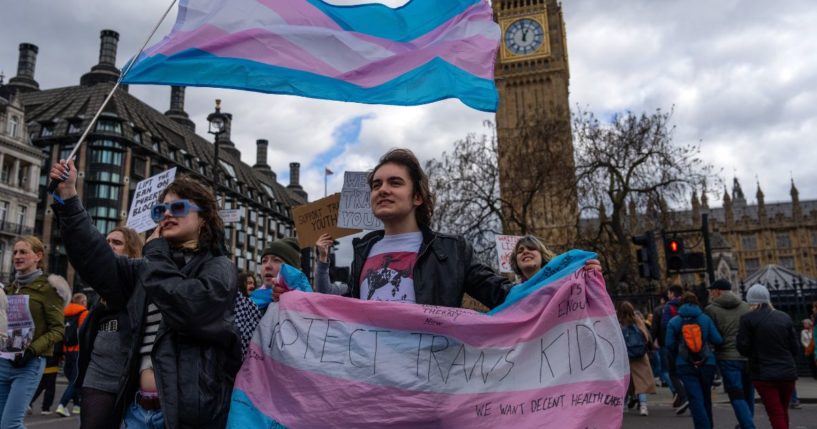


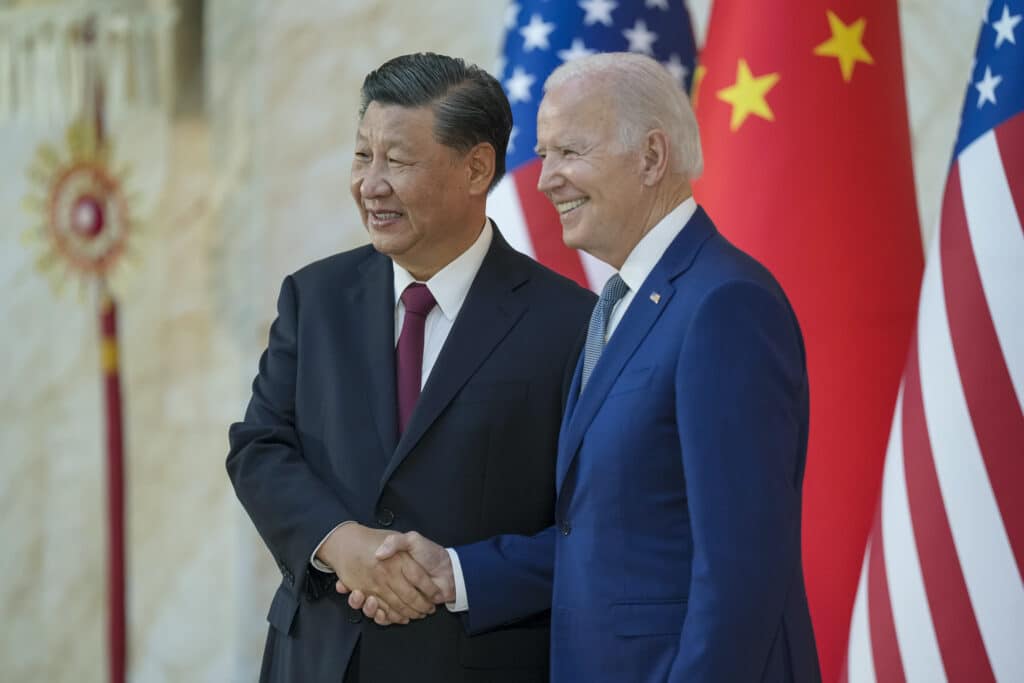

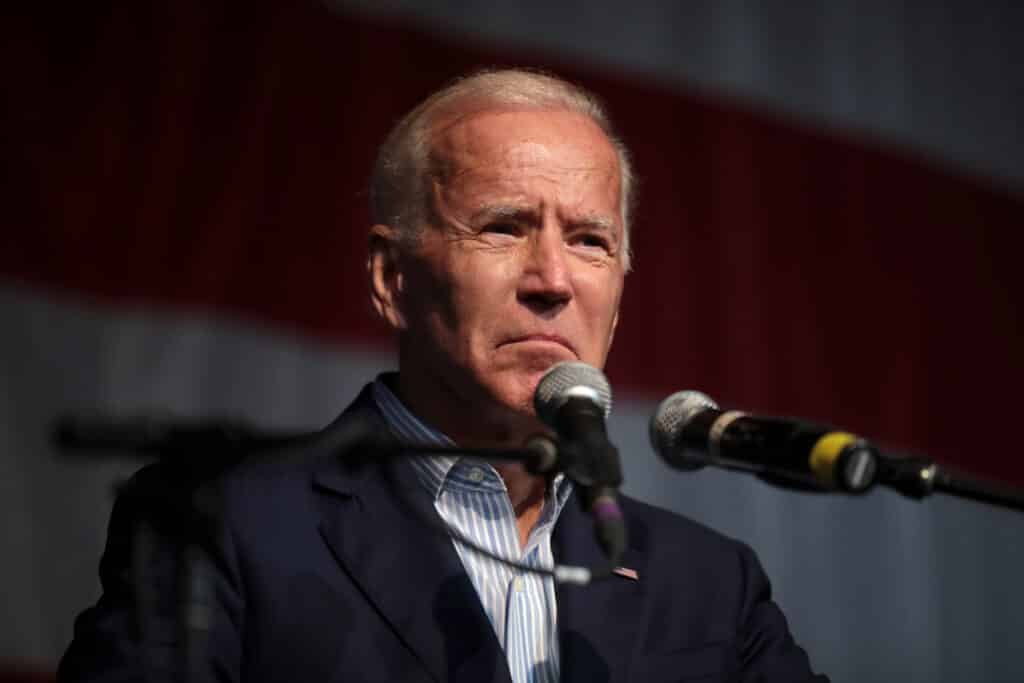

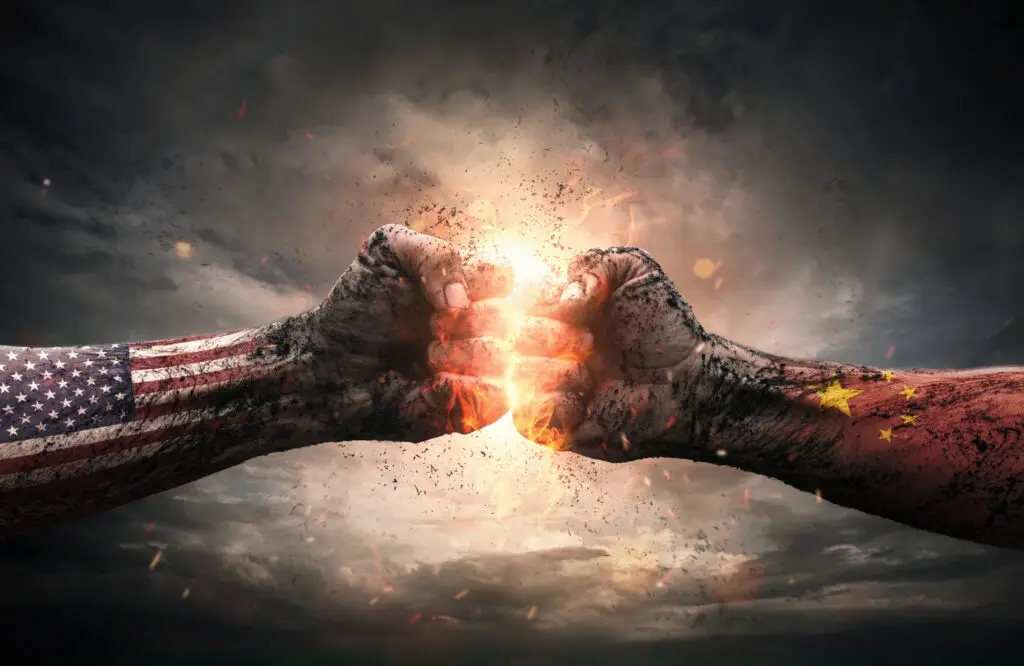

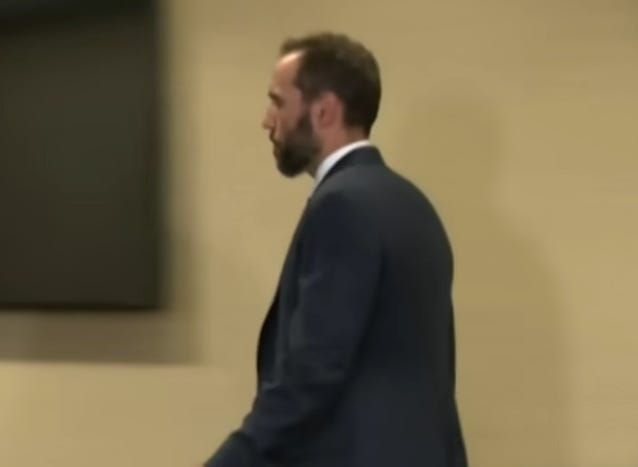




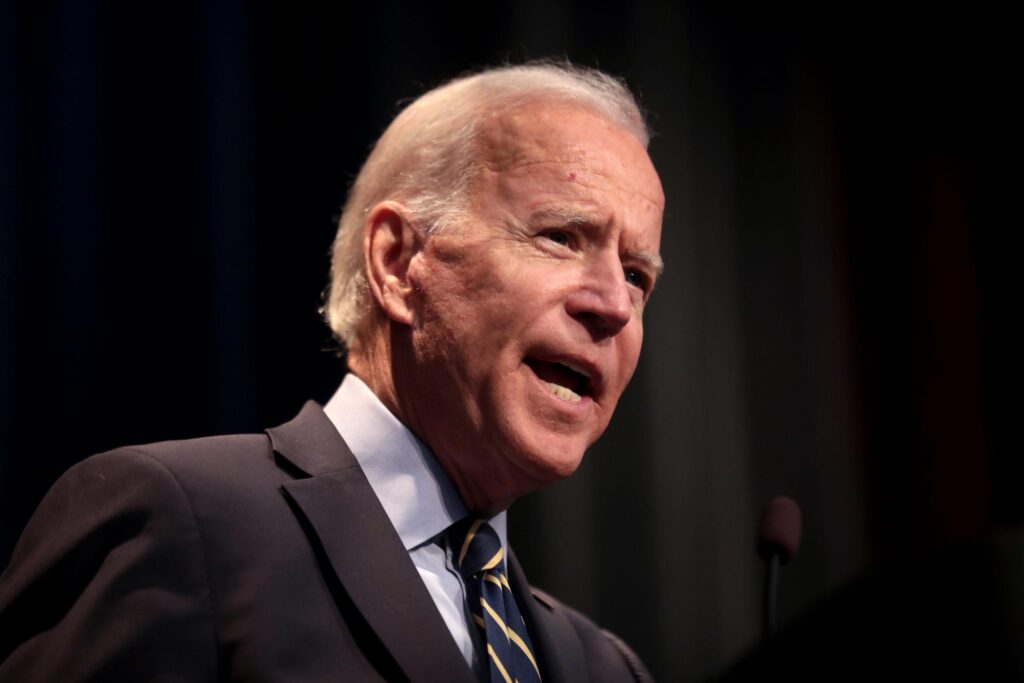



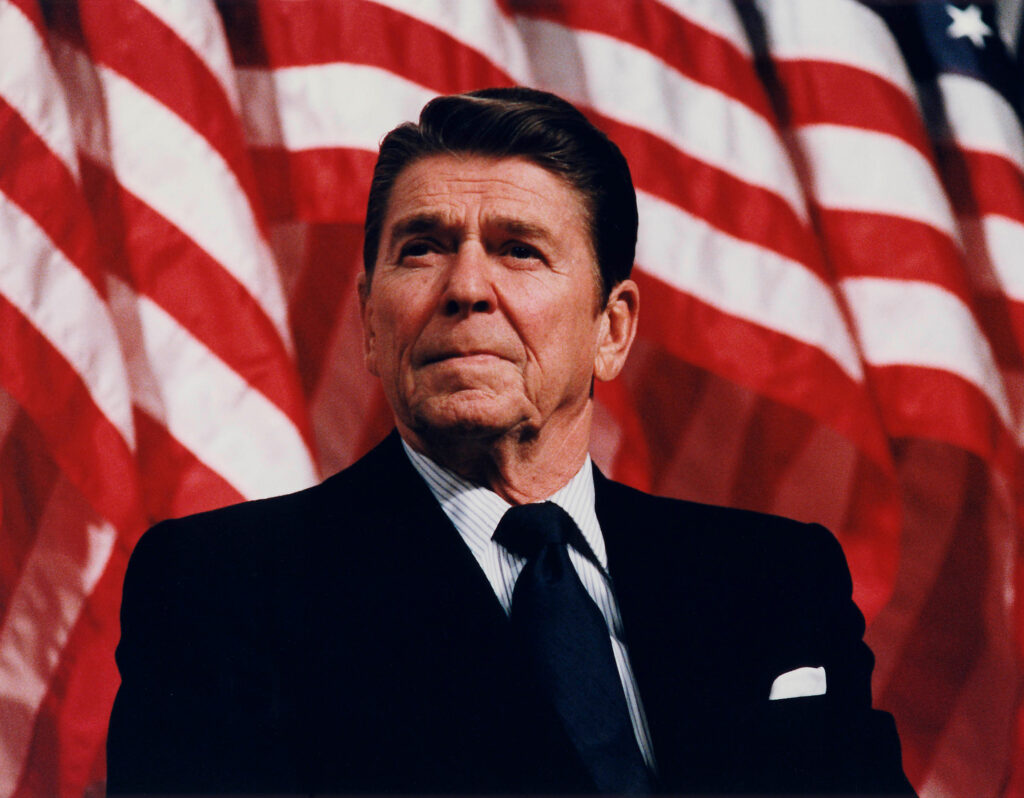



 fox files
Recent Comments