The Truth Is Out There

Posts tagged ‘donald-trump’

The Colorado Voting Machine Fiasco: A Case For Paper Ballots and Same-Day Voting


The Colorado voting machine security breach under Secretary of State Jena Griswold‘s watch is an epic in incompetence and deceit, a calamity born not out of malice but sheer, unchecked ineptitude. This debacle is yet another compelling reason for the United States to move to paper ballots and same-day voting, at least for federal elections, to ensure the integrity and security of our electoral process. Four months. Four full months of a ticking time bomb, and yet no one seemed to notice the system BIOS passwords posted online for all to see. It was like a “Help Yourself” buffet for anyone with an internet connection.

This isn’t merely a local administrative error. It is a significant threat to the very foundation of electoral integrity—a threat fostered by a combination of bureaucratic negligence, lax security protocols and Griswold’s dogged refusal to take meaningful action. Not only was the BIOS password exposed, but it was maintained unencrypted, sitting vulnerably in an Excel spreadsheet stored on state network drives. One might think these officials were desperate to be hacked. And when it comes to passwords—let’s just say their approach violated even the most basic CISA guidelines, rules that have been around for more than fifteen years. Apparently, securing voting systems is a task too advanced for those in charge.

Contrary to Griswold’s initial reassurances that this was a minor, isolated error, it later emerged—through the admissions of Deputy Secretary of State Christopher Beall—that more than half of Colorado’s counties were affected. One cannot help but marvel at the level of ineptitude required to let a disaster like this go unnoticed for so long. If you leave your house door wide open for a few minutes, you should assume that something may have happened inside. Griswold and her merry band of public servants managed to leave the door open for four months and then acted surprised when people noticed.

If there is one thing clear about basic cybersecurity, it is that you cannot be this reckless without consequences. Any compromise of BIOS passwords in a critical infrastructure computer requires assuming that the entire system has been compromised unless proven otherwise. We are talking about passwords that give direct access to the foundational layer of a voting machine—and by extension, the very process by which we select our representatives. If that isn’t the definition of critical infrastructure, then what is?
And it wasn’t just the BIOS passwords. Once one voting system component is compromised, anything connected to it—LAN cables, HDMI cables, even air-gapped systems using removable media—must be assumed compromised as well. It’s Cybersecurity 101. CISA, the lead federal agency for election infrastructure security, lays out clear standards and procedures for handling such incidents. The very least Colorado could have done is follow them. Instead, they opted for a comedic routine of denial, delay, and deception.

The immediate actions taken by Griswold’s office can best be described as an exercise in performative futility. Day 1: they found out (through their vendor, no less), scrambled to remove the .xlsx file from the web after a leisurely four-month gap, and reported it—to CISA, naturally. Did they bother telling Colorado election officials or the public? Of course not. Why trouble the plebeians with such trivialities?

Days passed, and when the state GOP learned of the breach and the media caught wind, Griswold finally came out of her bunker. Her strategy? A classic: evade, obfuscate and pretend everything was under control. Griswold claimed that each voting machine required two separate passwords, with different people or groups entrusted with only one password each, making it supposedly impossible for the machines to be compromised. This claim was false. Even if it were true, the group not supposed to have the BIOS passwords could have simply downloaded them from the internet, meaning that multiple individuals certainly had complete and unfettered access to the machines. They dispatched people to change a handful of passwords, and Griswold went on a media blitz, making a futile attempt to gloss over the enormity of the breach. Day 9 saw Governor Jared Polis attempt his own desperate act of damage control, ordering a broader, albeit equally ineffective, response to ensure password changes. Apparently, it takes helicopters to change passwords in Colorado.

But what Griswold and Polis both failed to do was address the real danger: the integrity of the voting systems themselves. The affected machines were still in use, election officials continued to tabulate votes with them, and—most damningly—no real forensic analysis was ever conducted to determine the scope and impact of the compromise. At no point did anyone pause and take a breath to say, “Maybe we should actually stop using these machines until we’re absolutely sure they’re safe.”

A proper response would have been as follows: first, halt the use of all affected systems; second, image the compromised machines to preserve the evidence; third, bring in qualified cyber forensic experts to determine if, when, and how the systems were breached; fourth, address the timing and impact of any compromise, especially since this breach was active during the Colorado primary election. And fifth—and only after all other steps were satisfactorily completed—remove any malicious influence, if possible, and restore functionality. None of this happened.

White House

What did happen, instead, was a spectacle of bureaucratic incompetence that would be almost humorous if it weren’t undermining the sanctity of Colorado’s elections. The public was told, “Nothing to see here, folks, move along,” as if we’re all too stupid to understand the ramifications of a four-month breach that affected a majority of the state’s counties. Anyone insisting today that Colorado’s voting systems are secure, or that citizens can rest assured their votes have been accurately counted, is either woefully ignorant or has a vested interest in upholding the false narrative of a “swift response.”

Consider, for comparison, the case of Tina Peters. The former Mesa County Clerk, convicted in October 2024 for allowing access to her county’s voting systems to a security consultant in 2021, received a nine-year prison sentence. Nine years for trying to determine if voting machines were secure—yet Griswold’s office escapes unscathed after spilling the keys to half the state for four months. How is it that Peters is demonized while Griswold and her team, despite being blatantly negligent, get a pass? It seems there are different rules for those in power, especially if they have the right political connections.

In the wake of the breach, the Libertarian Party of Colorado filed a lawsuit against Griswold, demanding she step aside from her election responsibilities, remove compromised devices from service and order ballots to be hand-counted in affected counties. Yet Griswold’s lawyers, in a performance of unrepentant arrogance, argued that such actions would create “chaos” with Election Day looming. It’s always chaos that’s to be avoided, never accountability.

During the subsequent court hearing, it became clear just how deep the rot went: 46 counties had systems with the passwords exposed, and 34 of those still had active passwords. The court dismissed the testimony of expert Clay Parikh, an election systems analyst for nearly a decade, because—wait for it—he supposedly wasn’t qualified to discuss Colorado’s specific voting systems. The absurdity of the objection would be laughable if it didn’t have real-world consequences. It’s akin to saying an automotive engineer couldn’t testify about a car because it was built in a different state. Yet this is where we are: justice obstructed, integrity compromised and those responsible for safeguarding democracy performing nothing but a hollow pantomime of action.

The Colorado voting machine breach reveals a deeper problem than just passwords. It is a vivid illustration of an administration that is either grossly incompetent or willfully misleading—a regime more concerned with optics and PR than with the actual mechanics of secure elections. It is an indictment of a system where a blatant error can go ignored, where citizens are left in the dark, and where those tasked with protecting democracy seem more interested in protecting themselves.

Griswold and Polis’ swift action? Hardly. This was no more a “swift response” than a glacier moving to the sea. It was, at its heart, a lesson in deception, designed to mask the fact that those entrusted to secure our democracy were asleep at the wheel, dreaming of positive headlines, while anyone with half a brain could see the road to disaster unfolding right in front of them. And disaster it was—for the integrity of Colorado’s election system, for the voters who depend on it, and for anyone who still believes in a modicum of accountability in government. This entire failure underscores the necessity of adopting paper ballots and same-day voting for federal elections, eliminating the vulnerabilities inherent in electronic voting systems and restoring confidence in our democratic processes.

*Thanks given to Amuse and Shawn Smith @ShawnSmith1776 on X as sources

Explaining Trump’s Victory To Europe: The Values That Defined The Election


For Europeans who find themselves “shocked” and “surprised” by President-elect Donald Trump‘s sweeping victory alongside Republican gains, allow me to explain. Much of this reaction stems from European media coverage, which has often painted Trump as unelectable and his policies as extreme. Political attitudes in Europe, shaped by a preference for consensus politics and a skepticism towards populism, further contributed to the surprise at his success. My explanation draws from both personal observation and the raw truth of hard data. This analysis is inspired by Konstantin Kisin’s insightful ten-point summary of the current American political landscape—a summary I find not only persuasive but foundational. With his structure as a starting point, I will provide expanded commentary enriched with the viewpoint of a Trump-supporting Texan.

The American Love for Strength and Winning

Konstantin rightly emphasizes that Americans love their country with a fervor that defies cynicism. This love is deeply rooted in the nation’s history. In contrast, European national sentiment often emphasizes a cautious pride shaped by historical challenges and a preference for collective unity. Leaders like Angela Merkel and Emmanuel Macron, for example, have often spoken of European strength in terms of unity and reconciliation rather than triumphalism, reflecting a different approach to national identity that is less about conquest and more about managing the legacy of past conflicts. From the pioneers moving westward during the era of Manifest Destiny, to the Apollo missions that extended American ingenuity beyond Earth’s confines, there exists an innate drive to conquer and excel. Unlike the often self-effacing tone of many European leaders, American leaders like Trump, who exude confidence and speak in triumphalist terms, find a ready audience. When Trump speaks of “Making America Great Again,” he taps into an elemental instinct—the rejection of decline and a yearning for resurgence. This spirit of innovation is reflected in America’s unmatched investment in startups and technology. In 2023 alone, the United States saw over 72,000 early-stage startups founded, while Europe lagged behind with only about 27,000, primarily concentrated in countries like Germany, the United Kingdom and France. Investors in the U.S. poured more than $330 billion into these startups, compared to Europe’s $80 billion. The wealth generated by American innovation dwarfs that of Europe—with companies like Apple, Amazon and Google leading global markets. Furthermore, the U.S. consistently welcomes more legal immigrants than any European nation, admitting over one million legal immigrants annually, compared to Germany, the largest recipient in Europe, which accepted roughly 300,000 in 2023. This combination of robust innovation, investment and an open approach to legal immigration has allowed the United States to maintain its dynamism and national pride while Europe contends with post-national ideologies that have left many feeling detached and disempowered. America’s enduring national pride refuses to let such sentiments prevail.

Rejecting Managed Decline and Embracing Energy Independence

Europe has adopted a policy of “managed decline,” a notion embodied in their relentless pursuit of Net Zero policies, often at odds with economic survival. Meanwhile, Americans—led by Trump—rebuffed this notion in favor of energy independence. Under Trump’s leadership, America became a net energy exporter for the first time in over sixty years. The U.S. produces vastly more natural resources than Europe, including oil, natural gas and coal, with significant contrasts between the U.S. and specific European countries like Germany, France and the United Kingdom, which rely heavily on imports for their energy needs. In 2023, the United States produced approximately 18.9 million barrels of oil per day, compared to Europe’s production of under 3 million barrels per day. Natural gas output also starkly contrasts, with the U.S. producing over 934 billion cubic meters annually, while Europe remains heavily dependent on imports, producing less than 300 billion cubic meters. The shale revolution, particularly driven by advancements in fracking technology, unlocked massive reserves in the U.S., such as the Permian Basin, which alone contains more recoverable oil than all of Europe. The shale boom created millions of jobs and reduced energy costs across the country. While Europe succumbed to reliance on Russian energy and was left vulnerable, Trump’s doctrine of “energy dominance” made economic growth and national security two sides of the same coin. American voters instinctively understand that prosperity and sovereignty are intertwined—a lesson Europe seems to have forgotten.

Inflation and the Price of the American Dream

Under the Biden-Harris administration, inflation surged, with basic grocery prices increasing by over 20% between 2021 and 2024. The Federal Reserve’s initial characterization of this inflation as “transitory” was a significant misjudgment. Americans witnessed their savings diminish and purchasing power decline. Trump and the Republicans, rather than merely assigning blame, acknowledged this reality—a reality many voters were experiencing firsthand. In a nation where the cost of the American Dream—the house, the car, the kids—is closely tied to economic stability, this message resonated deeply. Americans will not abide by leaders who dismiss their struggles or fail to safeguard the basic aspirations of the middle class.

A Culture of Merit, Not Envy

Elvert Barnes from Baltimore, Maryland, USA, CC BY-SA 2.0

Konstantin draws a clear distinction between American and European perspectives on wealth. Unlike Europe’s turn towards socialist ideals and the promotion of egalitarianism at any cost, America remains fundamentally a meritocracy. Americans celebrate the drive to succeed, no matter how high the ambition. In 2023, private wealth per adult in the U.S. averaged around $580,000, while in Europe, it averaged significantly less, at approximately $230,000. This disparity highlights the immense individual wealth Americans enjoy compared to Europeans. Moreover, Americans have far greater access to credit and debt markets; the total household debt in the U.S. reached over $16 trillion in 2023, indicating a robust financial system that allows for significant borrowing to fuel growth and entrepreneurship. In contrast, European households have more limited access to debt, which restricts economic mobility. Additionally, the tax burden on individuals in the U.S. is generally lower compared to most European countries. In the United States, the top marginal income tax rate stands at around 37%, whereas in many European nations like France and Germany, it exceeds 45%. The combination of greater wealth, access to credit and a relatively lower tax burden underpins a culture that not only values success but provides the means to achieve it. Trump’s own wealth served as an aspirational symbol—proof that success is within reach for anyone willing to seize it. His policies, aimed at tax reduction and deregulation, sought to preserve and enhance these opportunities for all.

Pro-Immigration, But Pro-Law

Americans are, as Konstantin points out, pro-immigration. This nation was built by immigrants who sought a better life, and its mythology is one of welcoming the “huddled masses.” From 2000 to the present, the United States consistently accepted significantly more legal immigrants than Europe. In the 20-year period from 2000 to 2020, the U.S. admitted over 20 million legal immigrants, averaging about one million per year. By contrast, Europe, even including its most open countries, admitted less than half that number annually, with around 10 million immigrants in total during the same period. Economically, these legal immigrants have been instrumental in driving U.S. growth. Between 2000 and 2020, immigrants added approximately $2 trillion to the U.S. GDP, boosting entrepreneurship and filling critical roles in industries like technology, healthcare and agriculture. In Europe, while immigrants contributed to the economy, the overall economic impact was more modest—estimated at around $600 billion over the same period—due to higher unemployment rates among immigrants and more restrictive labor markets. Americans also cherish the rule of law. The chaos unleashed by the Biden-Harris regime’s open border policies, which saw over 7 million illegal crossings between 2021 and 2024, was intolerable to a populace that believes in both compassion and order. Trump’s insistence on “building the wall” was never about anti-immigrant sentiment—it was about ensuring that America remains a place of opportunity, not lawlessness. For instance, the strain on social services in border states like Texas and Arizona has been immense, with local hospitals and schools struggling to accommodate the surge of undocumented immigrants. The cost of providing emergency health care, education and law enforcement in these areas has placed a significant burden on state budgets, illustrating the economic impact of unchecked illegal immigration. Legal immigration enriches the nation; illegal immigration undermines it, threatening both security and cohesion.

Rejecting DEI as Racist, Not Progressive

Konstantin rightly identifies the discomfort many Americans feel toward DEI (Diversity, Equity and Inclusion) initiatives. The American historical narrative, with its chapters of slavery, Jim Crow and the Civil Rights Movement, underscores the necessity of equality. But DEI—by enforcing quotas and obsessing over racial identity—is a huge step backward. Americans fought a Civil War to end race-based discrimination, and they find it difficult to accept policies that institutionalize racism. The American ethos celebrates individual merit, not group identity. Trump’s rejection of these policies spoke to a broad swath of Americans who see DEI as an ill-conceived attempt to correct past wrongs by inflicting new ones.

Evidence of the negative impact of DEI policies is apparent in recruitment struggles faced by the U.S. military. Recent reports indicate that the Army and Navy both failed to meet their recruitment goals in 2023. In fiscal year 2023, the Army achieved only 76.6% of its recruitment goal, enlisting 50,181 individuals out of a target of 65,500. Similarly, the Navy and Air Force fell short of their objectives, while the Marine Corps and Space Force met theirs. The implementation of DEI initiatives played a significant role in these recruitment challenges. According to documents obtained by The Daily Caller in 2024, the Air Force explicitly aimed to reduce the number of white male candidates joining officer ranks, instead seeking to prioritize minority and female officers. This intentional shift has made it increasingly difficult for qualified white men to be accepted into officer candidacy programs. Such directives have exacerbated the perception that the military is more concerned with meeting diversity quotas than maintaining operational excellence, leading to decreased morale and recruitment struggles.

In the corporate world, backlash against DEI policies has also gained traction. Boeing, for example, dismantled its DEI department this year, citing a desire to refocus on performance-based hiring and reduce unnecessary bureaucracy. Other companies, such as Disney and Netflix, have similarly scaled back their DEI initiatives in response to shareholder concerns and declining employee satisfaction. This trend illustrates a growing sentiment that DEI, rather than fostering inclusiveness, has become a divisive force within organizations. Americans value fairness and opportunity for all, but the enforcement of DEI policies is increasingly viewed as antithetical to the meritocratic principles upon which American success is built.

The Memory of 9/11 and the Rejection of Jihad

Americans are among the most pro-Israel people on Earth, and Konstantin underscores this point effectively. The events of October 7, 2023—when Hamas launched a coordinated attack on Israel involving rocket barrages and incursions into civilian areas—were a jarring reminder of the ongoing threats posed by jihadist ideologies. This attack resulted in significant loss of life and highlighted the persistent dangers faced by Israel from militant groups. For Americans who vividly recall September 11, 2001, the face of jihad is unmistakable, and there is no equivocating between aggressor and victim. Trump’s unflinching support for Israel, coupled with his willingness to call out radical Islam, resonated with voters who were tired of politically correct platitudes in the face of genuine evil. The pro-Hamas rallies that swept European capitals following the attacks left many Americans incredulous, but what was even more shocking was the apparent division within the Democrat Party itself. Roughly half of the Democratic leadership seemed to side with narratives that were sympathetic to the terrorists, which stood in stark contrast to the overwhelming condemnation from both the American right and much of the left, who united against radical Islam. This only served to make Trump’s strong stance more appealing to voters seeking unambiguous leadership in the fight against terror.

Pragmatism Over Rhetoric

As Konstantin notes, Americans are far less concerned with political niceties than their European counterparts. Trump’s rhetoric, often bombastic and blunt, lacks the polish that European voters might expect. European leaders like Emmanuel Macron, who has often presented polished but ultimately deceptive narratives around issues such as pension reform—such as his controversial handling of the 2023 pension protests, which saw widespread strikes while Macron downplayed the unrest—and Olaf Scholz, who has used vague reassurances while avoiding concrete actions on energy dependency, particularly during the 2022 energy crisis when Germany struggled to reduce reliance on Russian gas, exemplify this difference. But Americans are results-oriented. Under Trump, the economy grew, energy prices fell, and America’s adversaries knew where they stood. Voters value effectiveness over elegance. The genteel debates and theoretical musings so cherished by European intellectuals are less appealing when juxtaposed with the practical concerns of putting food on the table, securing the border, and deterring foreign adversaries. To Americans, Trump’s brand of directness signals sincerity—they would rather have an honest fighter than a well-mannered deceiver.

Conclusion

Trump’s sweeping victory and the Republican gains can largely be attributed to a resurgence of traditional American values—strength, independence and a staunch defense of meritocracy. These values were reinforced by policies promoting energy independence, economic growth, lower taxes and a strong stance on immigration control. Trump’s success is a reflection of American voters seeking leadership that emphasizes pragmatic solutions over empty promises, champions national pride and remains steadfast in defending the core tenets of opportunity and merit. Unlike Europe, America refuses to accept managed decline, focusing instead on growth, energy independence and preserving the American Dream. The failures of the Biden-Harris regime, exemplified by inflation, chaotic immigration policies and divisive DEI initiatives, created fertile ground for Trump’s return. The American people, driven by a desire for pragmatic leadership, have chosen a path that rejects empty rhetoric and demands results. This election was not merely about party loyalty; it was about a vision for America that champions opportunity, security and unapologetic national pride. The message from American voters is clear: they are ready for a leader who will stand strong for their values, protect their interests and restore their confidence in the future of the nation.

Konstantin Kisin is a British-Russian comedian, author and social commentator known for his sharp critiques of political correctness and his insightful analyses of cultural and political issues. He gained prominence as co-host of the podcast ‘TRIGGERnometry,’ where he engages in discussions on free speech, politics, and societal trends. Kisin has also authored books exploring the nuances of Western society and has become a prominent voice in debates around culture and immigration, offering perspectives that blend humor with serious commentary. His background gives him a unique vantage point to understand the cultural and political dynamics at play in both Europe and America. This essay was based on a thread he posted on X on November 6th, 2024.

Trump Just Curb-Stomped the Uniparty


Donald Trump just curb-stomped the uniparty.

Because the GOP is now on an irreversible path to populism.

Meaning the uniparty is no longer a done deal. Its schemes are now out in the open for democratic debate.

Where they will lose.

Libertarian economist Murray Rothbard actually dreamed of this 30 years ago: A pro-freedom firebrand populist who skips the elite and speaks directly to the people.

Donald Trump pulled it off.

Trump’s Revolution

Donald Trump has just pulled off one of the greatest upsets in American political history, facing an assembled army of nearly every institution, every corporation, every lever of power and public opinion from Big Tech to Hollywood to the news media.

He won because he masterfully converted an elite-dominated GOP into a grassroots populist movements that finally speaks to the American people.

In contrast, Dems stuck with the uniparty script, appealing to donors, corporations, the financial elite, and our ruling bureaucracy.

Voters were ready. Because when the pendulum swings a little bit and you’ve got controlled opposition, the reaction is regime apologists like Mitt Romney and John McCain.

But when the pendulum swings a lot and you’ve built a grassroots movement, you get Donald Trump.

Rothbard’s Grassroots Populism

My favorite economic historian Murray Rothbard actually dreamed of this 30 years ago in an essay called A Strategy for the Right.

Rothbard goes through the effete opposition of post-FDR establishment conservatives, who wasted decades doing cleanup for the left’s revolution.

As Michael Malice put it, establishment conservatives were progressives going the speed limit.

This, of course, is the famous uniparty.

According to Rothbard, instead of cleanup, we need a populist firebrand who can unite small-government economic and social conservates to hack the federal government to oblivion — what they take, what they spend, what they control.

For Rothbard, this means engagement in the culture wars, in kitchen-table economic issues, reaching out to form alliances with fellow travelers of either party.

Rothbard stressed intellectual guerilla warfare, talking directly to the people. Not using universities to influence the elite but going directly to voters on issues they actually care about, demystifying and delegitimizing state power.

Above all, talking to the working-class, who are both the most patriotic and the most skeptical of faculty-lounge leftism.

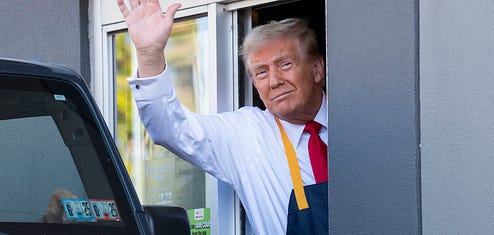
Trading the Bowtie for the McDonald’s Apron

In short, Rothbard advocated trading the pipe and bowtie of elite engagement for the McDonald’s apron.

That is Trump.

The firebrand style. The war on woke. Alliances with fellow travelers from RFK to Tulsi to former Democrats Elon Musk and Joe Rogan.

Trump treated the universities — indeed, the entire left-wing intellectual elite — with utter disdain.

And they still hate him for it.

Contrast with a Mitt Romney who deeply cares about getting invited to the good cocktail parties.

Trump, instead, gave them the middle finger.

And he loved every minute of it.

Trump has converted Republicans forever into exactly what Rothbard dreamed of: A grassroots, people-first movement, not an errand-boy for the left-wing elite.

Republican *politicians, of course, are a work in progress: Congress rigs the rules so once you’re in you stay in. So it’s a slow process replacing obsolete RINO’s with America-First Republicans.

Still, politics is the art of finding a parade and getting in front of it, and 95% of Republicans just chose Trump.

So the politicians will evolve or they’ll be replaced

What’s Next

Donald Trump has vindicated Rothbard’s dream of a grassroots populist movement speaking directly to both economic and cultural conservatives.

He has forever transformed the Republican electorate into populists who will, with time, transform the entire party.

Over time, that new populist GOP will cripple the elite uniparty that’s spent a century crippling America.

This would transform our elections from uniparty play-fight into true contests of people versus elite. As they used to be before the Progressives seized both parties in the 1910’s.

Dare we dream, if the new populist GOP succeeds, even the Democrat party will question its loyalty to an elite rather than the people they serve.

That means we could be on the first steps towards liberating both parties — and therefore the nation — from the elites who have tried their best to gut this country.

Kamala Harris Admits That Everything She Said About Trump Was A Lie


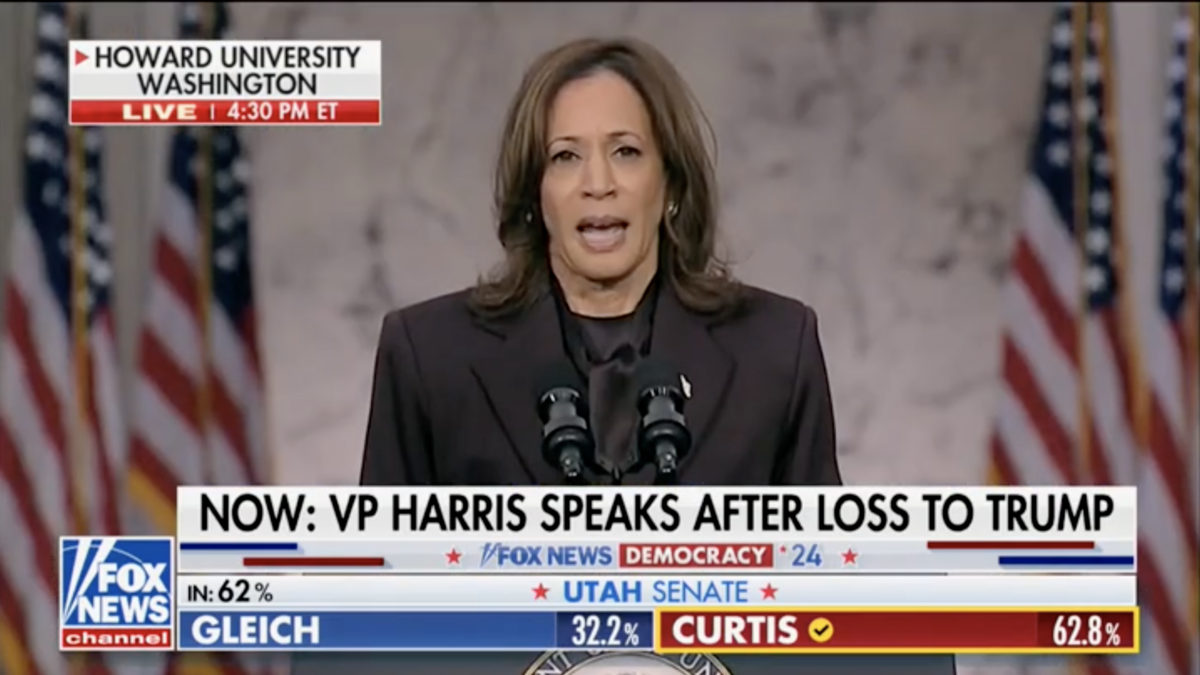
Vice President Kamala Harris concedes

Failed presidential candidate Kamala Harris admitted on Wednesday that she knew every single attack she launched against President-Elect Donald Trump and his presidency was a bald-faced lie.

More than twelve hours after Trump delivered a stunning blow to the regime and swept both the popular vote and Electoral College, Harris took the stage at Howard University to begrudgingly concede. She could have conceded in the wee hours of the morning, but that would have required showing up when it mattered — something she clearly doesn’t do (see her disastrous handling of Afghanistan).

But it wasn’t her hollow speech about “unity” and “joy” that stood out. It was the moment she openly confessed to spreading egregious falsehoods about Trump for months, all in a desperate attempt to sway the election.

“To the young people that are watching, it is okay to feel sad and disappointed,” Harris said. “But please know it’s going to be okay.”

It’s going to be okay?

How can it be okay when Harris told us that her opponent is a fascist? She said a Trump victory would be “dangerous” and a “huge risk for America.” Harris claimed that Trump “wants to send the military after American citizens” and that “he is out for unchecked power.” She painted him as an existential threat to “democracy” itself.

But now it’s “going to be okay”?

The truth is, it’s easy for her to say that “it’s going to be okay” because it will be okay. And it will be okay because everything Harris said was just a lie. The attacks, the smears, the fearmongering — it was nothing more than a political stunt designed to scare voters into supporting her because her policy positions weren’t enough to drag her across the finish line.

Harris banked her entire electoral victory on her supporters being ignorant about who Trump really is and what his presidency could achieve. And now, after losing, she can admit the truth — but it’s too little too late. Her divisive rhetoric, alongside the hate-filled narrative pushed by her party and the propaganda press, did more than just tarnish Trump’s reputation — it demonized half the country. It fostered an atmosphere of hate that contributed to the first two assassination attempts against Trump.

But now she wants to say it’s “going to be okay”?

Sure, things will be okay — thanks to Trump’s leadership and America-first policies. But the damage Harris did by stoking division, fear, and hatred for political gain will never be “okay.”

Hit the Road, Jack. But Don’t Go Too Far


After spending at least $50 million in tax dollars to bring two unprecedented indictments against Donald Trump, Special Counsel Jack Smith should get his turn under prying eyes.

Jack Smith lurched into a Washington courtroom in September, fully aware all eyes had turned to him.

Declassified with Julie Kelly is a reader-supported publication. To receive new posts and support my work, consider becoming a free or paid subscriber.

Surrounded by a team of federal prosecutors and guarded by a government-paid security detail, Smith, a lanky man with a scruffy beard and ill-fitting suit, stood behind the government’s table with arms folded. He slowly turned around with a partial scowl to appraise the audience—mostly reporters and D.C. residents eager to watch the restart of his January 6-related case against Donald Trump—to make sure he was noticed. He did not speak during the proceedings.

That appearance, perhaps unbeknownst to him at the time, looks like Smith’s last time in a federal courtroom as the special counsel prosecuting Trump. Citing Department of Justice rules that prohibit the prosecution of a sitting president, Smith reportedly is working with his bosses at the DOJ to figure out how to drop both the D.C. case and the classified documents in case in Florida; Smith has appealed Judge Aileen Cannon’s order dismissing the indictment based on the special counsel’s unconstitutional appointment.

The move represents another political fatality tied to Trump’s resounding victory on Tuesday. It also represents another humiliating defeat for the man the media portrayed as a steely war-crimes prosecutor plucked off a high profile international trial at the Hague by Attorney General Merrick Garland in November 2022 to finally realize a longtime DOJ dream: put Donald Trump behind bars.

Stone Cold Loser Loses Again

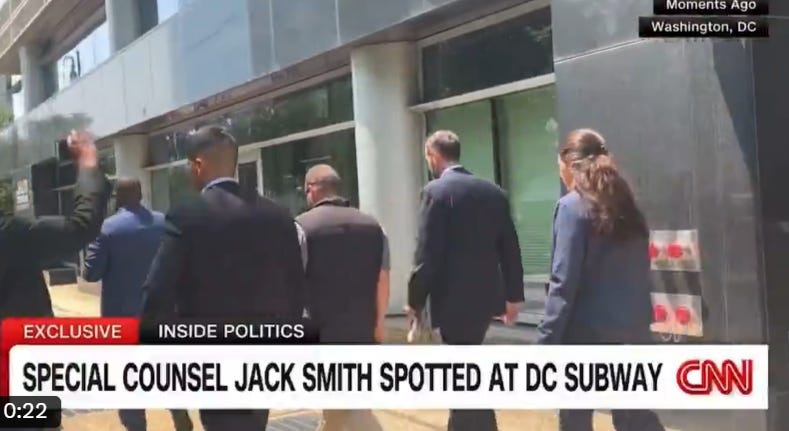
But the hagiography about Smith—reporters swooned over the silent-type injured triathlete, even covering his stop at a DC sandwich shop in 2023 as “breaking news”—never matched his record. The Supreme Court in 2016 unanimously vacated the bribery conviction of former Virginia Governor Robert McDonnell, a case brought by Smith when he led the DOJ’s public corruption office during the Obama administration. Following Smith’s appointment, McDonnell told Mark Levin that Smith would “rather win than get it right.”

Smith, however, usually does neither. In fact, his prosecutorial resume is a long list of courtroom losses, which makes one wonder why Garland chose him for the job. (More here).

Smith failed to win a single conviction in his prosecution of former Senator John Edwards on campaign finance charges in 2012. One DOJ watchdog group slammed Smith for using an “overly aggressive approach” in pursuing Obama’s 2008 Democratic primary rival and for relying on a “novel interpretation of campaign finance laws” to put Edwards behind bars.

It is an approach he repeated in his two unprecedented criminal indictments of Trump. The four counts in his J6-related case rely on vague conspiracy and obstruction statutes; two of the charges involve 18 USC 1512(c)(2), the post-Enron tampering with documents statute. In June, the Supreme Court reversed how the DOJ had applied that law in hundreds of January 6 cases and the court would have reached the same conclusion about Smith’s interpretation of the law if the case ever made it there.

In fact, the court this year rebuked Smith twice—by denying his highly unusual request to bypass the D.C. appellate court to immediately consider the presidential immunity question and by rendering its landmark decision in Trump v US, which largely gutted the J6 indictment.

Evidence of Misconduct in Classified Docs Case Demands Investigation

Smith’s classified documents case consisted of a hodgepodge of allegations about Trump’s possession of alleged national defense papers after he left office and accusations that he and two aides attempted to obstruct the investigation, which began in February 2022. But the DOJ’s handling of the case represents the best opportunity for a Trump DOJ to turn the tables and investigate main Justice and Special Counsel’s office for numerous offenses.

The case was tainted from the start. Although the alleged crimes occurred in Palm Beach, the DOJ conducted the entire investigation in the Trump-hating courthouse in Washington. This permitted unabashed Trump hater Chief Judge Beryl Howell to act as a rubber stamp for the DOJ’s requests including authorizing grand jury subpoenas and piercing attorney-client privilege claims between Trump and his lawyer, Evan Corcoran, under the rarely-used crime fraud exception.

Smith transferred the case to the proper jurisdiction in southern Florida at the last minute to get an indictment and then ran into a buzzsaw named Judge Aileen Cannon.

Thanks to Cannon’s fierceness—her concerns over the dirty nature of the case dates back to September 2022 when she appointed a third party to vet the items collected during the FBI’s armed raid of Mar-a-Lago the month before—the special counsel’s office was forced to disclose instances of tampering with and perhaps destroying evidence, intimidating witnesses, withholding discovery, and misleading the court. 

Court proceedings also revealed egregious misconduct related to the unprecedented armed raid of Mar-a-Lago; agents working out of the Washington and Miami FBI field offices breached the broad terms of the search warrant by ransacking the bedrooms of Melania and Barron Trump. The FBI’s plan included the bureau’s use of lethal force policy, underscoring the excessiveness of the raid, which was altogether unnecessary considering Trump and his lawyers had been cooperating with authorities for months.

Prosecutors later admitted in court that some of the records seized during the raid were not properly handled by investigators; defense attorneys claimed documents were missing.

Defense attorneys also obtained communications between the DOJ, the National Archives, and the Biden White House that demonstrated a behind-the-scenes effort to concoct a documents case as early as May 2021. A Trump DOJ should haul before a grand jury everyone from Biden’s general counsel Jonathan Su to deputy attorney general Lisa Monaco and top NARA officials involved in the scheme.

Conspiracy to defraud, anyone?

Show Us the Money

A full-blown audit into the special counsel’s expenditures should be conducted by either a Trump DOJ or a Republican Congress. Smith’s prosecutors often bragged about “the permanent, indefinite appropriation for independent counsels” allowed under 28 U.S.C. § 591 note, a claim Judge Cannon also doubted.

According to required financial reports, Smith’s team spent at least $35 million in the first 14 months of his investigation, a figure that includes additional support from main Justice. But those costs only cover the period from November 2022 through March 2024; it’s likely Smith blew through another $15 million or so over the last several months, bringing the total to over $50 million.

Expenses include a protective detail for Smith; travel expenses; and millions in unspecified “contractual services.”

Time to see who and what companies profited off the special counsel grift.

Weak Republicans in Congress undoubtedly will resist efforts to investigate and audit Smith but Trump should ignore them.

The American people—as well as Trump himself and his co-defendants—deserve a full accounting of this dirty, rogue, secretive process. And Smith and his accomplices need to be held accountable.

Will Tuesday’s Vote Counts Be Another Sham Biden-Harris Statistic?


If Kamala Harris wins the presidential election on Tuesday, Americans will be told that the final vote count is a sacred number that was practically handed down from Mt. Sinai engraved on a stone tablet. Any American who casts doubt on Harris’s victory will be vilified like one of those January 6, 2021 protestors sent to prison for “parading without a permit” in the US Capitol. Actually, anyone who doubted the 2020 election results was being prominently denounced as “traitors” even before the Capitol Clash.

But is there any reason to expect the final vote count in this presidential election to be more honest than any other number that the Biden-Harris administration jiggered in the last four years?

Biden, Harris, and their media allies endlessly assured Americans that the national crime rate had fallen sharply since Biden took office. That statistical scam was produced by the equivalent of disregarding all the votes in California and New York. FBI crime data simply excluded many of the nation’s largest cities until a revision earlier this month revealed that violent crime had risen nationwide.

Deceitful national crime data helped cover-up the disastrous impact of open border policies. The Biden-Harris administration did backflips to avoid disclosing the true size of the surge of illegal immigrants from early 2021 onwards. Kamala Harris did zombie-like face plants in recent interviews when elbowed for honest answers.

In the same way that another surge of unverified mail-in ballots may determine the 2024 election, Biden manipulated the number of illegal aliens by using his presidential parole power to entitle more than a million people from Haiti, Venezuela, Cubans, and other countries to legally enter and stay in America on his own decree. The Biden administration even provided a vast secretive program to fly favored foreign nationals into select airports late at night where their arrival would occur under the radar.

Some states will officially count mail-in ballots that arrive well after Election Day even if the envelopes have no postmark. This is the same “late doesn’t matter” standard that Biden used to vindicate the $42 billion provided by his 2021 infrastructure law to boost broadband access in rural America—which Uncle Joe said was “not unlike what Roosevelt did with electricity.” Unlike the Tennessee Valley Authority, Biden’s broadband program has nothing to show since it delivered faster internet access to almost no one. The same default occurred with the Inflation Reduction Act’s alleged showpiece achievement—42,000 new charging stations around the nation for electric vehicles. But that program produced more presidential applause lines than EV refills. As of March, $7.5 billion in federal spending had only produced seven new charging stations nationwide.

How many votes will Harris lose on Tuesday because Americans remain outraged at the inflation that has slashed the dollar’s value by more than 20 percent since Biden took office? There would be far more popular fury if the feds had not deceived Americans about the full financial damage that Washington inflicted. The official inflation statistic doesn’t count soaring mortgage and housing costs—which is akin to excluding any state south of the Mason-Dixon Line from the national vote tally. Larry Summers, Bill Clinton’s Treasury Secretary, said that if the feds today used the same inflation gauges used in the 1970s, Biden’s peak inflation would have been 18 percent, twice as high as the reported number.

Tens of millions of voters will not be obliged to show any identification before voting in this election: they are presumed trustworthy regardless of zero verification. But this is the same standard that the Biden-Harris administration uses for not disclosing its most controversial policies to American citizens. People will vote next week without knowing the facts behind whistleblower allegations on Vice Presidential nominee Tim Walz’s connections to the Chinese Communist Party, to Secret Service failures to prevent Trump assassination attempts, and the brazen details of the Censorship Industrial Complex.

In Washington, politicians feel entitled to applause for any grandiose promise—regardless of their failure to deliver. Similarly, politicians and election officials promising that the presidential vote count will be accurate and reflect “the will of the people” is far more important than tabulating the actual ballots. Will the unmanned ballot boxes in big cities be stuffed with bogus ballots the same way a politician jams endless balderdash into his campaign speeches? As pundit Stephen Kruiser quipped, “the clothing donation boxes that were all over my old neighborhood in Los Angeles were probably more secure than the ballot drop boxes.”

Of course, if Trump wins, then all the forces of decency must instantly shift to the other side of the barricades. Any electoral victory by Trump will be illegitimate because of politically incorrect comments made by speakers at Trump campaign rallies. As in 2017, if Trump wins, every “true patriot”—or at least every true progressive—will be honor-bound to join The Resistance™.

Keep your heads on a swivel. Do not say you have not been warned.

Democrats, Not Republicans, Are Responsible for Post-Election Violence


Anti-Trump protestors, some violent, took over major U.S. cities for weeks in 2016. But the January 6-obssessed media and Democratic Party want the public to forget what happened. Here’s a reminder.

Donald Trump’s comments about envisioning neocon nepobaby Liz Cheney deployed to any one of the Cheney family’s favorite war zones has resulted in perhaps the most deceitful media campaign of the 2024 presidential news cycle. Cable news commentators including increasingly irrelevant and bitter NeverTrumpers such as Jonah Goldberg—who walked back his tirade on CNN claiming Trump advocated the use of a “firing squad” against Cheney—caterwauled how Trump’s remark would spark “political violence.”

The unsubstantiated allegation is central to Kamala Harris’ closing argument. She continues to insist without evidence that Trump is a perpetrator rather than a victim of “political violence.” Harris fielded a pre-planned question during a campaign stop in Wisconsin on Friday to accuse Trump of using “violent rhetoric” that disqualifies him from office. 

Despite numerous examples of Democrat-involved political violence in Washington over the past decade—2017 Trump inaugural riots, 2018 Kavanaugh protests, 2020 BLM/antifa riots, post-election confrontations with Trump supporters during “Stop the Steal” events in November and December 2020, and recent incidents tied to pro-Hamas demonstrations—the media now claims Republicans, not Democrats, will start tearing down major cities including the nation’s capital if Trump does not win the election.

January 6 Survivors Speak

D.C. police and activist groups, according to the Washington Post, are preparing for violence initiated by “white supremacists,” aka Trump voters, after Election Day. Apparently still traumatized by the unarmed four-hour disturbance on Capitol Hill nearly four years ago, the ruling elite wants to take every precaution necessary to prevent another QAnon shaman or Indiana meemaw from invading their personal fiefdom on the Potomac.

“I really fear outsiders coming in,” D.C. resident Gail Sullivan told the Post last week. ‘This is where the insurrection happened. Maybe it will spill out more into our neighborhoods than it did before.’”

D.C. resident Shreya Tulsiani told Politico last month that she still struggles with flashbacks of that fateful day. “January 6th was a very scary time,” she confessed. ‘I used to live right off of North Capitol Street, so I could see the Capitol. There were Proud Boys petting my dog that day.”

OMG PROUD BOYS PET HER DOG!

Cassie Miller and her husband recently decided to move out of their Capitol Hill home “having lived through” the events of January 6 and fearful of a reprise. “We decided we’d rather be safe than sorry,” Miller told the local D.C. NBC News channel.

To create more drama, the U.S. Capitol Police conducted a “mass casualty” exercise earlier this week, a publicity stunt intended to bolster fears of MAGA trouble. This is the same law enforcement agency, by the way, that protected then promoted Lt. Michael Byrd, the officer who shot and killed Ashli Babbitt at near-point blank range on January 6.

Police across the country reportedly also are bracing for post-election violence. Why? Politico reporter Betsy Woodruff Swan of course blames Trump. “[As] Trump once again promotes falsehoods about election fraud and denigrates election officials, law enforcement officers worry that the floodgates to violence are open,” Swan claims. Swan then used a few thousand more words to detail alleged threats to election workers and other incidents that solely targeted Democrats and Democratic jurisdictions in the post 2020-period.

January 6 Amnesia

If reporters and their Democratic handlers suffer from amnesia about the recent history of election-related violence spawned by supporters of their own party, we know why. As repeatedly stated, every day is January 6, 2021 to Democrats and regime media. It’s as if American history ceased to exist in any meaningful way before that date; nothing that happened before January 6 matters.

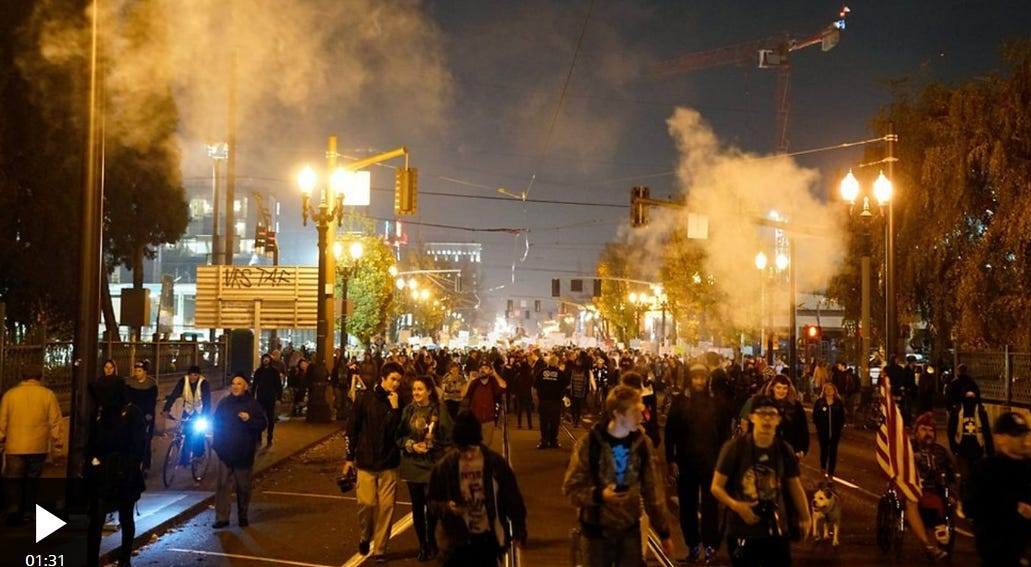
So here is a little refresher about what went down following Trump’s shocking victory on November 8, 2016 when Democrats, NeverTrumpers, and the media exploded into a full-blown fit of rage:

  • The New York Times documented days of protests spanning 52 cities following Trump’s election. Anti-Trump demonstrators blocked traffic in Miami, Portland, Las Vegas, and Madison, Wisconsin; protesters burned an American flag in front of the Georgia Capitol building.
  • Democrats in Los Angeles burned a pinata resembling the president-elect.
  • After three days of intense violence, Portland police declared a riot on November 10, 2016. Anti-Trump thugs attacked police, vandalized business, and set buildings on fire. The following day, the Portland police department announced the use of “pepper spray, rubber ball distraction devices, [and] rubber baton rounds” to halt the rioting.
  • More than 7,000 protesters took to the streets of Oakland, California on November 9. A local Oakland newspaper described the chaos: “Protesters hurled Molotov cocktails, rocks and fireworks at police. Some protesters set off fireworks. Others burned a Trump effigy, and someone set a pile of cardboard on fire in the middle of a downtown intersection. A group of protesters wearing clown and Guy Fawkes masks used bricks, their feet and a large stick to smash the glass windows of the Oakland Coin and Jewelry Exchange at 1725 Broadway. Other storefronts on that block were covered in graffiti as well. Multiple trash and cardboard fires were started in the middle of the street and a much larger fire was raging at the intersection of 17th Street and Broadway.” At least three Oakland police officers were injured that night.
  • Confrontations with police in Omaha, Nebraska resulted in the deployment of mob control munitions on November 10, 2016; at least two people were arrested for obstructing justice.
  • Protesters began shouting “kill the police” during an anti-Trump demonstration in Indianapolis on November 12, 2016. Some protesters threw rocks at police; at least seven protesters were arrested and two officers received minor injuries.

Demonstrations lasted for weeks leading up to Inauguration Day. Students walked out of classes; protesters surrounded Trump’s hotel properties in Chicago, New York, and Washington; and clashes with police continued. Now, some events certainly can’t be categorized as violent but considering the Biden/Harris Department of Justice now considers anyone who nonviolently participated in the events of January 6 a domestic terrorist—the new rules must apply to history.

Post-election protests in 2016 culminated in a violent riot in the nation’s capital on January 20, 2017. Protesters tied to antifa lit cars and businesses on fire just blocks from the inauguration proceedings. More than 200 rioters were arrested and six officers sustained injuries.

But unlike those who protested on January 6, the DOJ dropped all charges against 2017 inaugural rioters.

In anticipation of potential post-election violence next week, D.C. businesses have begun boarding up their doors and windows. Regardless of the media spin or outlandish fears by D.C. residents of another unarmed “insurrection,” those business owners undoubtedly fear Kamala Harris supporters will cause trouble if she loses. After all, years of precedent prove the opposite of what Democrats and the media want the public to believe. They, not Trump supporters, represent the real threat for “political violence.”

Don’t say you have not been warned.

Democracy Futures Project Prepares 175 Top US Leaders For Violent Resistance Against Trump Victory


With the election just five days away, the rhetoric from Democrat leaders and their allies has taken a distinct and ominous turn. It is becoming increasingly clear that the Democrat Party is actively preparing its constituency for what it perceives as an existential threat: a Republican victory next week. Leading figures in the party, from the sitting president to the vice president and beyond, are cultivating a narrative that dehumanizes Republicans, primes their supporters for violent resistance and sets the stage for a crisis that could threaten the very stability of the republic. These efforts go hand-in-hand with a series of wargames, including the Democracy Futures Project held less than six months ago in Washington, D.C., where 175 of the most senior and influential government officials, academics, activists, governors, cabinet members, military officers and grassroots leaders came together to normalize the concept of overturning the outcome of the presidential election if Donald Trump wins in November.

The Anatomy of an Existential Crisis

When Kamala Harris refers to Donald Trump as a fascist—or when President Joe Biden calls his supporters “garbage”—these are not slips of the tongue. They are calculated declarations designed to ignite fear and loathing within their base. Democrats, armed with the propaganda of mainstream media, paint a picture of Trump and his supporters as a malignant force in American society. It is rhetoric not unlike that used in history to set the groundwork for total warfare against an internal enemy—the kind that makes dehumanizing your opposition not just acceptable but moral. The Rwandan Genocide of the 1990s serves as a grim reminder of where such rhetoric can lead. In Rwanda, Hutu extremists used dehumanizing language, referring to the Tutsi minority as “cockroaches” that needed to be exterminated, which paved the way for one of the worst genocides in modern history. The parallels in language should serve as a stark warning of the dangers inherent in normalizing such vilification.

The modern Democrat Party has leaned heavily into invoking imagery reminiscent of one of history’s darkest periods. Not coincidentally, Trump’s rally at Madison Square Garden has been compared by media outlets to the Nazi rally held there in 1939. The vice president and her allies are not simply signaling their opposition to Trump’s policies—they are explicitly calling Trump Adolf Hitler. By invoking the name of Adolf Hitler, the Democrats are drawing comparisons to a figure responsible for the Holocaust, where six million Jews were systematically murdered, alongside millions of others, including political dissidents, disabled individuals and various ethnic minorities. Hitler’s tyranny extended to brutal concentration camps, where prisoners faced unimaginable horrors—forced labor, starvation and mass executions. The Democrats are portraying their political adversaries not as opponents in a democratic contest but as an evil that must be stamped out to preserve democracy itself. By equating Trump to one of the greatest villains in human history, Democrats are subtly yet effectively setting the conditions for widespread, potentially violent civil resistance if the outcome doesn’t go their way.

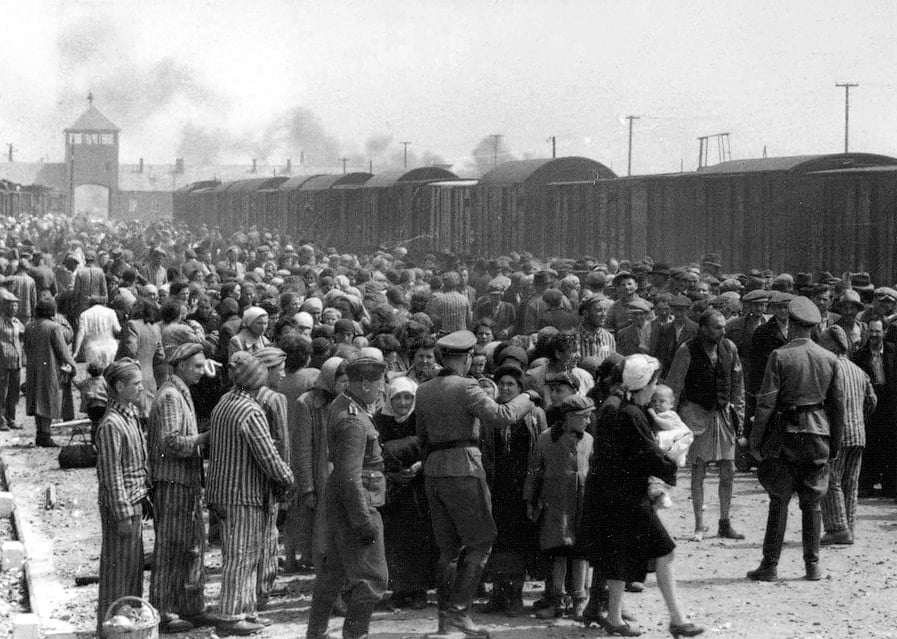
Unknown photographer from the Auschwitz Erkennungsdienst. Several sources believe the photographer to have been SS officers Ernst Hoffmann or Bernhard Walter, who ran the Erkennungsdienst., Public domain, via Wikimedia Commons

Dehumanization and Its Perils

The Democrats’ reliance on incendiary rhetoric should not be surprising. When Hillary Clinton referred to Trump’s supporters as a “basket of deplorables” in 2016, she laid the foundation for a more aggressive form of disdain for half of the electorate. Fast forward to the Biden-Harris era, and the dehumanizing rhetoric has only escalated. President Biden labeled Trump supporters as “garbage,” echoing and amplifying Clinton’s infamous comment. But it doesn’t end with the leaders at the top.

Daytime television has become a platform for reinforcing these narratives. Joy Reid, a host on MSNBC, along with members of The View, like Whoopi Goldberg, have referred to Trump supporters as “cockroaches.” Such language is significant, as it has deep historical resonance. It is the exact same description used by the Hutu-led government and media in Rwanda in the 1990s to lay the psychological groundwork for genocide against the Tutsi minority. Under the leadership of Hutu President Juvénal Habyarimana and with the complicity of mainstream media outlets like Radio Télévision Libre des Mille Collines (RTLM), Tutsis were labeled as “cockroaches,” which paved the way for the massacre of 800,000 Tutsis and moderate Hutus in just 100 days. By equating a group of people to pests that need extermination, the Democrats and their media partners are invoking a chillingly familiar language of dehumanization. The objective here is not simply political victory; it is to paint any Republican or conservative—especially those aligned with Trump—as something less than human.

Conditioning for Conflict

While the rhetoric is alarming on its own, it serves a larger, more dangerous purpose: conditioning the military, law enforcement and Democrat base for conflict. The Atlantic‘s Jeffrey Goldberg and others, have been particularly prolific in advancing the idea that Donald Trump not only disdains the military but seeks to use it as an extension of his will—akin to fascist leaders like Hitler and Mussolini. According to recent articles, Trump supposedly envies the respect that Hitler commanded from his generals, a claim that’s both absurd and deliberately incendiary. Consider admissions by General Mark Milley in Bob Woodward’s book, where Milley openly stated that he sought to prevent Trump from being able to order the military to take actions that Milley did not agree with. He admitted to preventing the National Guard from being deployed to stop the January 6th riot. Furthermore, Milley even claimed that he had contacted the Chinese military, promising them he would personally warn them if Trump planned any attacks. These actions reflect an alarming trend of senior military figures feeling empowered to circumvent the established chain of command, further fueling the narrative of distrust and division.

In this narrative, the Democrats do not merely critique Trump’s policies. They paint him as someone contemptuous of America’s values—someone who, if given the reins of power, would commandeer the military to crush dissent. This is not only an affront to Trump’s record, where he reduced endless foreign interventions, but it serves to turn those in uniform against him. Consider General John Kelly’s recent claims that Trump admired Hitler and wished his generals were more like Hitler’s—claims that are difficult to believe given that Kelly waited five years to make them. As chief of staff, Kelly not only failed to follow orders but actively sought to undermine Trump’s efforts to bring U.S. troops home, build the border wall and implement economic policies that were central to his platform. These actions reflect an effort from within to subvert a sitting president, positioning the military to view Trump and his supporters as a threat—a narrative that could justify disobedience to presidential authority or worse, a schism within the Armed Forces.

John F. Kelly speaks at the 53rd Munich Security Conference in 2017.

Democrats such as Rep. Jamie Raskin (D-Md.) have even floated scenarios involving Congress using the 14th Amendment to prevent Trump from taking office, citing insurrection. In one viral video, Raskin made it 100% clear that if Trump wins on November 5th, he and his Democrat allies in Congress have a plan to ensure that Trump will never take the oath of office or set foot in the White House again. Raskin even acknowledged that their actions would likely result in civil war, stating that he is ready for that outcome—an allusion to the fact that the Biden-Harris regime had already purged conservatives from the ranks of the military using COVID as a pretext. This purge, along with the ongoing efforts to paint Trump and his supporters as dangerous, less-than-human opponents, was carried out to ensure that the military would willingly turn their weapons against the American people, believing it to be necessary for the preservation of democracy. The reference to January 6 looms large in these scenarios, treated not as a one-off riot but as a precursor to future violence—a violence that Democrats argue can only be avoided by nullifying a Trump victory. The implication is clear: if Trump wins, violence is inevitable, and extreme measures, including possibly undermining democratic processes, will be justified.

A Pretext for Violence

One might wonder why the Democrats are engaging in such extreme language now, even before the election results are in. The answer lies in the strategic nature of their rhetoric. The aim is to establish a pretext for violence. Figures like Robert Kagan, Rosa Brooks and Barton Gellman have all laid the intellectual groundwork for what would be, in essence, a mass mobilization of Democrat voters against the result of a democratic election. Following Trump’s win in 2016, anarchists, Black Bloc and Antifa took direct action, resulting in numerous violent incidents. In Washington D.C., rioters injured over 200 Capitol and D.C. police officers during protests, set fire to vehicles and even burned St. John’s Church near the White House. The level of damage to public and private property was extensive, with millions of dollars in damage. This was only the beginning, as the same groups used the death of George Floyd as a pretext to conduct over 100 days of violent riots, resulting in at least 25 deaths, hundreds of injuries, countless buildings burned, and over $2 billion in damages nationwide. The message is clear: this time, the response will make the previous actions look minor in comparison. It won’t just be Antifa; it will be the entire Democrat party supporting and legitimizing these actions, as they see it as necessary to resist and destabilize a potential Trump victory.

The Wargames: Normalizing Election Overturning

Multiple wargames have been held by various groups to simulate scenarios where Trump wins and to strategize how he could be stopped. However, the real scandal lies in the fact that these were not just simulations or games—they were propaganda efforts designed to indoctrinate key figures into viewing Trump’s victory as an existential threat to America. The Democracy Futures Project, backed by George and Alex Soros and led by Rosa Brooks and Barton Gellman, organized five tabletop exercises in May and June 2024, featuring 175 of the most senior and influential individuals in government, academia, activism and military ranks. Participants included former governors, cabinet members, retired military officers, grassroots leaders and more. These exercises were not merely hypothetical scenarios—they were aimed at normalizing the idea of overturning a legitimate election outcome if Trump were to win. The wargames included discussions on potential cabinet responses, military actions, civil resistance and law enforcement maneuvers—all geared toward disrupting a Trump victory and fostering division.

This effort is reminiscent of “The Simulation,” a wargame organized by The Transition Integrity Project in 2020, which was featured in Unprecedented, a documentary series by Alex Holder. In that series, political strategists and former officials, including James Comey, John Podesta and Michael Steele, role-played scenarios involving contested election outcomes, simulating responses to a Trump victory. The true purpose of these exercises is not about ensuring free and fair elections; it is about legitimizing resistance, including violent resistance, to outcomes that do not align with the preferences of the Democratic Party.

The New York Times and The Washington Post have run extensive pieces on the supposed need for mass mobilization if Trump wins, calling on private industry and civil society to ostracize Trump supporters. The messaging is eerily consistent: in the event of a Trump victory, resistance must not only be political but physical. These are not the words of a party preparing to abide by democratic norms; these are the words of a regime setting the stage for conflict.

The Coming Crisis?

At the center of all this lies a calculated and deeply coordinated effort by our nation’s top leaders—often referred to as the “Deep State”—to normalize the rejection of Donald Trump’s election. They are ready to lead a violent resistance. The propaganda effort has been thorough, and for months, the electorate and the Democrat voter base have been conditioned to see Trump and his supporters as non-human—labeling them as garbage, fascists and even comparing them to Hitler. Should Trump emerge victorious, the narrative of violence will already be in place, with a moral justification for “defending democracy” by whatever means necessary. This is dangerous not just because it undermines the legitimacy of elections but because it risks tearing apart the social fabric of the nation, creating a deeply divided populace and potentially inciting widespread conflict that could have devastating consequences for American democracy.

When Endorsements Meet Elitism: The Media’s Unspoken Rule Of ‘Do As I Say But Not As I Do’


The Washington PostThe New York Times and the Los Angeles Times pride themselves on upholding journalistic ethics that purportedly ensure impartiality. They demand that their reporters refrain from engaging in any activity that might give the appearance of political bias—no donations, no rallies, no overt displays of allegiance. Yet, until recently, these very publications, sanctimonious in their purported objectivity, have been all too comfortable endorsing political candidates. Such endorsements are the highest form of bias, a blatant declaration of preference wrapped in a veneer of editorial independence. The Los Angeles Times and The Washington Post have recently abandoned this farce, and I, for one, commend this decision. Let us dissect why their previous stances were not only hypocritical but actively undermined the core principle of journalistic integrity.

These three titans of journalism have long insisted on the importance of maintaining an unbiased front. They have crafted ethical guidelines designed to keep reporters above the political fray, much like a judge instructed to recuse themselves in cases of personal interest. The guidelines—prohibiting financial contributions to political causes, participation in campaign activities and attendance at political events in anything other than a professional capacity—serve to preserve an image of neutrality. They are meant to shield both the journalists and their institutions from accusations of favoritism or, worse, collusion.

But it’s all too clear that these ethical rules, while imposed with great vigor on individual reporters, somehow did not apply to the institutions themselves. In endorsing political candidates, the editorial boards of The Washington PostThe New York Times and the Los Angeles Times have essentially proclaimed, “Our newsroom will maintain objectivity, but our paper will not.” The glaring double standard is impossible to ignore. How can a publication demand its reporters remain unbiased, while simultaneously endorsing Democratic candidates cycle after cycle? It’s akin to a preacher who rails against sin on Sunday only to indulge in every vice come Monday.

The practice of candidate endorsement has a long history at these newspapers, with The New York Times first endorsing Abraham Lincoln in 1860. Over time, their preferences became glaringly clear: since the mid-20th century, all three newspapers have displayed a marked tendency to endorse Democratic candidates, with The New York Times endorsing Democratic nominees in almost every presidential election since 1960. The Washington Post, too, has consistently favored Democrats since its entry into political endorsements in 1976, backing figures like Bill Clinton, Al Gore and most recently Joe Biden. The Los Angeles Times, though slightly more balanced in its earlier days, also drifted predominantly towards Democratic endorsements as the political winds in California shifted.

The partisan tilt is unmistakable. Since 1960, approximately 90% of The New York Times‘ endorsements have gone to Democrats, while The Washington Post has endorsed Democratic candidates about 85% of the time. The Los Angeles Times, though a bit more balanced, still endorsed Democrats around 70% of the time since the 1960s. In practice, the editorial boards have taken on the role of kingmakers, wielding their platforms to influence the electoral outcomes under the guise of impartiality. It is an affront to the very idea of unbiased journalism, a Trojan Horse of partisanship presented as a gift of informed guidance.

To put it plainly, this behavior reflects the elitist arrogance of the Democrat-aligned media establishment. It is the progressive elites, ensconced in their glass towers in New York, D.C. and Los Angeles, who believe they know best—not just for their readers but for the country at large. Their endorsement practices reveal a deeply ingrained belief that the American electorate needs to be nudged in the “correct” direction, a belief that aligns squarely with the ethos of the modern Democrat Party: top-down control, the subordination of individual thought to the wisdom of those who “know better.”

The hypocrisy is staggering when one considers the rules applied to individual reporters. A New York Times journalist cannot attend a political rally for fear that it might suggest bias—even if attending merely out of curiosity. The same journalist is forbidden from making even a minor political donation. Yet the very paper they work for does not hesitate to publicly endorse candidates, making a grand spectacle of their political preferences every four years. If the rationale behind restricting individual journalists is to avoid even the appearance of bias, how does that square with the outright endorsement of one political party’s candidate time after time?

This hypocrisy hasn’t gone unnoticed by readers, and it’s a major reason public trust in the media has cratered. A 2024 Gallup poll revealed that public trust in mass media is now lower than that of Congress—a body so mired in dysfunction that its approval often hovers below 20%. It seems readers are keenly aware of the dissonance between what these newspapers preach and what they practice. Jeff Bezos, owner of The Washington Post, hit the nail on the head in a recent op-ed when he acknowledged the public’s perception of bias, stating, “Most people believe the media is biased. Anyone who doesn’t see this is paying scant attention to reality, and those who fight reality lose.” Bezos has taken steps to course-correct, hiring more conservative voices and ceasing presidential endorsements, recognizing that endorsements do little but tarnish credibility and heighten perceptions of bias.

The editorial boards have long argued that endorsements are simply a matter of opinion, distinct from the “hard news” of their journalistic reporting. But anyone with a shred of political insight knows better. Endorsements, particularly from newspapers with such vast readerships, are not inert exercises of free speech. They influence, they persuade and they signal. When the editorial board endorses a candidate, it cannot help but set a tone that trickles down through the entire organization—from the framing of stories to the tenor of opinion columns, to the questions asked (or not asked) by journalists. It creates an institutional culture that, consciously or not, biases coverage.

The decision by The Washington Post and the Los Angeles Times to cease endorsing presidential candidates is a step in the right direction—albeit a small one. True reform would require these institutions to stop masquerading as impartial arbiters altogether and admit their biases plainly. Until then, their claims of objectivity will remain dubious at best. By dropping endorsements, The Times and LA Times have at least tacitly acknowledged the hypocrisy in their previous practices. The New York Times, however, remains stubbornly unrepentant, continuing the charade that it is somehow possible to separate its editorial advocacy from its news coverage.

The partisan slant of these newspapers has always aligned with a particular view of America’s future—one where globalism and progressive social policies are the default, and dissent is not so much debated as dismissed. The alignment is not accidental; it reflects the worldview of the elites who run these newspapers. Historically, this has meant a consistent championing of Democratic causes, whether through endorsements or through biased coverage that subtly advances the narrative of one party over the other. These papers have long lambasted Republicans, especially those aligned with America First policies, labeling them as “threats to democracy” or painting their concerns as unfounded conspiracies. Meanwhile, the failures and ethical lapses of Democrat leaders are routinely underplayed or spun with euphemisms that soften the impact.

To be sure, legal immigration, fiscal prudence and a measured foreign policy are principles that many conservatives endorse—principles that have broad appeal across the electorate. But the endorsement machinery of these major newspapers has never been interested in nuance or balance. Instead, their endorsements—and the editorial stances they reflect—serve to anoint Democratic leaders who are viewed as suitable by the establishment, whether or not they represent the broader interests of the nation.

The time for hypocrisy is over. It is refreshing, even if rare, to see some of these publications begin to align their practices with their stated ethical commitments. The Washington Post and Los Angeles Times have taken steps to bridge the gulf between their own ethical guidelines and the actions of their editorial boards, and this should be recognized as progress. It’s not nearly enough to restore the credibility lost over decades of partisan advocacy disguised as public service, but it is a step. The New York Times would do well to follow their lead—or at least drop the charade of impartiality altogether. For the press to regain its lost credibility, it must choose either abide by the standards you impose on your journalists or admit openly that the days of unbiased reporting are long behind us.

As Liz Cheney Slams Donald Trump’s Character, Her Own Integrity Comes Under Fire


Liz Cheney, a staunch “Never Trump” former Republican representative, has joined Democratic presidential nominee Kamala Harris in key swing states in the final days of the campaign to warn voters that Donald Trump does not respect the “rule of law” or the U.S. Constitution. “[When] you think about, what are you looking for in somebody you hire, you’re looking for somebody that you can trust, you’re looking for somebody who’s going to be responsible, who’s going to operate in good faith,” Cheney told the Detroit Economic Club on Oct. 22.

But new evidence has emerged suggesting that Cheney may have unethically influenced crucial anti-Trump testimony while serving as vice chairman of the January 6 Committee that investigated the protest at the U.S. Capitol in 2021.

At issue is Cheney’s collaboration with Cassidy Hutchinson, now 27, a former aide to then-Chief of Staff Mark Meadows. Hutchinson, who also is campaigning for Harris, is widely considered the committee’s “star” witness for her damning account of Trump’s alleged conduct on January 6. For nearly two hours during her June 28, 2022, televised appearance, Hutchinson explained her version of what happened before and after Trump’s speech at the Ellipse as the White House scrambled to respond to the escalating chaos at the Capitol.

House Administration Subcommittee

Draft of tweet Cassidy Hutchinson testified is in her handwriting.

House Administration Subcommittee

In one of the more explosive moments of that hearing, Cheney held up the handwritten draft of a tweet for President Donald Trump to post instructing protestors to disperse from the area.

Cheney asked Hutchison if she had written the tweet, which was never posted. “That’s my handwriting,” replied Hutchinson, who said the words had been dictated to her by Meadows that afternoon around 3:00 p.m. A footnote in the committee’s final report stated that a “review of Hutchinson’s handwriting was consistent with the script of the note.”

The import of the testimony was clear: Hutchinson was not only an eyewitness but a key participant as events unfolded that day. 

But a certified handwriting analyst retained by Rep. Barry Loudermilk (R-Ga), chairman of the House Administration Subcommittee on Oversight, determined that Hutchinson did not write the note. The handwriting, according to the expert, belongs to Eric Herschmann, a Trump White House lawyer who had immediately contradicted Hutchinson’s testimony in 2022 and later provided several samples of his own handwriting to Loudermilk’s analyst.

House Administration Subcommittee

Hutchinson handwriting sample used by analyst for comparison.

House Administration Subcommittee

“The Select Committee was willing to take [Hutchinson] at her word, rather than checking into the facts. The American people deserve the truth,” Loudermilk said. 

Hutchinson’s attorney did not respond to a request for comment. Cheney could not be reached for comment.

This latest disclosure by Loudermilk – who is conducting separate inquiries into the events of Jan. 6 and the now defunct J6 select committee – appears to represent another example of Cheney’s questionable involvement on the committee, particularly related to Hutchinson. 

Loudermilk unearthed text messages on an encrypted chat app between Cheney and Hutchinson prior to her public testimony, which represented the fifth time Hutchinson testified before the committee; she had already sat for transcribed interviews in February, March, May, and on June 20, 2022.

On June 6, 2022, Hutchinson texted Cheney using Signal, asking “to have a private conversation with you,” according to information released by the House Administration Subcommittee on Oversight. They were connected by Alyssa Farah Griffin, a one-time co-worker of Hutchinson and also a witness before the committee who now appears on “The View.” The texts appear to indicate Cheney and Hutchinson spoke on the phone shortly after that initial outreach. 

Hutchinson dismissed her attorney at the time, former White House deputy general counsel Stefan Passantino, a few days later. Passantino had represented Hutchinson and was paid to do so by Trump’s Save America PAC. Two Cheney-recommended lawyers, Jody Hunt and William Jordan, soon agreed to represent Hutchinson pro bono.

Cheney, a lawyer who is a member of the Washington D.C. bar, appeared to know her communications violated ethics guidelines about communicating with witnesses behind their lawyer’s back. A text from Farah Griffin to Hutchinson acknowledged a “concern” that Cheney “can’t really ethically talk to you without [Passantino.]”

House Administration Subcommittee

Text messages between Liz Cheney and Hutchinson.

House Administration Subcommittee

But Hutchinson did more than just change lawyers; in several instances, she changed her story from her previous testimony. During her televised testimony, which committee staffers later described as an “emergency” event initiated by Cheney, Hutchinson re-enacted an alleged confrontation between Trump, his driver, and the head of his security detail in the presidential vehicle following his speech at the Ellipse. Under questioning led by Cheney, Hutchinson said Trump became “irate” upon being told it was not safe to go to the Capitol after he advised his supporters to march there “peacefully and patriotically.”

Trump, according to Hutchinson’s second-hand account, attempted to grab the steering wheel of the vehicle. “Mr. Trump then used his free hand to lunge toward [Head of Security] Bobby Engel,” Hutchinson said as she recounted a conversation she purportedly had with Tony Ornato, the deputy White House chief of staff at the time, after the incident.

Her testimony rocked the political world, with legal analysts from across the spectrum insisting that the story would doom Trump. Others expressed skepticism, prompting Cheney to defend her witness. “I am absolutely confident in her credibility, I am confident in her testimony, and the committee is not going to stand by and watch her character be assassinated by anonymous sources,” Cheney told ABC News correspondent Jonathan Karl on June 30, 2022.

But no one in the White House corroborated Hutchinson’s version of events. To the contrary, Ornato said the first time he heard of any confrontation in the presidential vehicle was during Hutchinson’s testimony. “I recall, that day after Ms. Hutchinson’s testimony, going to the Secret Service Counsel and being in his office and then the Secret Service spokesperson asking me about my recollection was of that story. And I relayed that that is not a story I recollect and I don’t recall that story happening,” Ornato told Cheney, who asked about the incident.

And during the committee’s questioning of the unnamed Secret Service driver, investigators didn’t ask about the alleged incident. The subject was discussed only after the driver’s attorney “proactively” brought it up, according to a report by Loudermilk’s committee, prompting the driver to tell the committee that he “[President Trump] never grabbed the steering wheel. [President Trump] never grabbed the steering wheel. I didn’t see him, you know, lunge to try to get into the front seat at all.”

The driver’s transcript, in addition to hundreds of witness interviews conducted by the J6 committee, still has not been made public.

Hutchinson went on to testify twice more behind closed doors in September 2022 as her stories continued to change. In fact, her attorneys filed a 15-page errata sheet that same month to significantly revise her earlier testimony. The document not only added the allegations related to the incident in the presidential vehicle but also claimed Hutchinson had heard about the presence of dangerous weapons at the Capitol, including firearms – something she said she had not heard during earlier testimony – and that she heard chants of “Hang Mike Pence” on the television in the president’s dining room to suggest he was aware protesters were threatening his vice president.

She also reiterated her authorship of the Meadows’ note.

“These newly released texts are more evidence that Liz Cheney’s J6 Committee was not interested in the truth, only in promoting their predetermined political narrative,” Loudermilk told RCI on Monday. “Not only did Cheney use Alyssa Farah Griffin to covertly communicate with Hutchinson, but she also directly communicated with Hutchinson about the sensational new claims that Pres. Trump was to blame for all that happened on January 6.”

RNLA.org

Former White House counsel Stefan Passantino, represented Hutchinson before she spoke with Cheney.

While her role as the committee’s star witness has been a lucrative endeavor for Hutchinson – who earned a book deal from Simon & Schuster, which published three Cheney family titles, and speaking arrangements – the same cannot be said for Stefan Passantino, her first lawyer.

Last year, Passantino, who headed the White House ethics office under Trump during the first half of his administration, filed a $67 million lawsuit against the federal government, accusing the committee of violating his privacy and causing “significant economic, reputational, and emotional harm.” Passantino accused Cheney and her general counsel, Dan George, of attempting to set up a “sting” operation “seeking to induce Mr. Passantino to obstruct Congress during a third interview of Ms. Hutchinson” in May 2022.

Leaks to the news media with selected portions of Hutchinson’s testimony attempted to portray Passantino as advising his client to mislead the committee. A December 2022 CNN “exclusive” report claimed Passantino told Hutchinson to “tell the committee that she did not recall details that she did” and suggested the matter had been referred to the Department of Justice. The committee’s final report also contained the unsubstantiated allegations.

CNN’s story seeded dozens of follow-ups, including an article at the student-run newspaper of Passantino’s law school alma mater, Emory University, and articles at MSNBC, the New York Times, and CBS News.

The bad press resulted in Passantino’s firing by an Atlanta law firm and two separate bar complaints against him in both Georgia and Washington. Both were dismissed. 

But other text messages between Hutchinson and Farah Griffin appear to support Passantino’s claims that he did not interfere in the investigation. A text chain between the women in May 2022 in preparation for Hutchinson’s testimony later that month shows Hutchinson telling Farah Griffin that “[Passantino] isn’t against me complying.” As the discussion continued, Hutchinson reiterated that Passantino advised her to cooperate with the committee. “He doesn’t want me to stonewall the committee,” she told Farah Griffin. Testifying a third time, Hutchinson said Passantino advised, “builds my credibility as a witness.”

Passantino, now partner of his own firm in Atlanta, considers the texts an exoneration of the allegations against him.

AP

Passantino has filed suit against Cheney, the January 6 Committee, and others for damage to his personal and professional reputation. 

“When I first filed suit against Congress to hold Liz Cheney and the January 6 Committee accountable for the damage done to my family, my reputation, and my career 18 months ago, I knew we had the facts to support our complaint. I was less than confident, however, that the documents supporting my claims had not been destroyed or would ever see the light of the day,” Passantino told RealClearInvestigations last week. “It appears, however, that Cassidy Hutchinson captured screenshots of her encrypted communications with Liz Cheney and turned them over to Chairman Loudermilk. The tip of the iceberg appears to have crested the waterline.”

Passantino also filed a defamation lawsuit against former DOJ prosecutor and MSNBC legal analyst Andrew Weissmann for posting a tweet in September 2023 that accused Passantino of “coach[ing] her to lie.” Earlier this month, a federal judge allowed the case to move forward.

Proof of the backchannel communications also prompted a bar complaint last week against Cheney, a licensed attorney in Washington. America First Legal, founded by longtime Trump advisor Stephen Miller, filed the complaint on behalf of Passantino. In the complaint, Cheney is accused of violating a D.C. bar rule that prohibits a lawyer from communicating with “a person known to be represented by another lawyer in the matter, unless the lawyer has the prior consent of the lawyer representing such other person or is authorized by law or a court order to do so.”

Kamala’s Chaos: How Democrat-Funded NGOs Are Fueling America’s Criminal Gangs


America’s immigration crisis is spiraling out of control, and it is no accident. This catastrophe is the result of deliberate choices by the Biden-Harris regime, especially Vice President Kamala Harris in her unofficial role as “Border Czar.” The so-called leadership of this administration has wreaked havoc on our state and local law enforcement, endangered communities and eroded the very fabric of our nation. It is a man-made disaster that could have been avoided—if not for the left’s obsession with open borders and uncontrolled immigration.

Since the Biden-Harris regime took power, billions of taxpayer dollars have been funneled through Non-Governmental Organizations (NGOs) that effectively serve as migration facilitation programs for unvetted foreign nationals. These dollars are channeled to Democrat-controlled NGOs, which in turn use the funds to flood American communities with waves of illegal immigrants. Make no mistake, this is not compassion—it is a cynical political strategy aimed at importing a new voter base. Democrats have given up on their traditional working class and minority voters, replacing them with individuals who will rely on the very programs Democrats promise to expand.

Among the groups taking advantage of this wide-open border are criminal organizations, like the Venezuelan paramilitary gang Tren de Aragua. Originally formed within Venezuela’s prison system, Tren de Aragua has rapidly expanded its operations across the Americas, and with the Biden-Harris regime’s open-door policies, they’ve gained a foothold right here in the United States. These are not run-of-the-mill criminals—Tren de Aragua is involved in drug trafficking, human smuggling, and a host of other violent activities. The group has already taken control of taxpayer-funded apartment complexes in four states. These are not just isolated criminal incidents; these are organized takeovers of American neighborhoods, facilitated by Kamala Harris’s grotesque negligence.

In San Antonio, Texas, police raids have uncovered Tren de Aragua‘s operations in at least four apartment complexes, including the Palatia Apartments, which has been used as a base for drug dealing and human trafficking​. The Democratic regime, in concert with their NGO partners, has literally handed over control of entire residential blocks to foreign criminal organizations, turning formerly safe neighborhoods into no-go zones. Residents live in fear as gang members take over the buildings, and federal law enforcement sits idly by.

The same story is playing out in Colorado. In Aurora, the Whispering Pines Apartments and part of The Edge at Lowry have been seized by Tren de Aragua members​. In a devastating twist, local law enforcement has been essentially neutered. They can only act once a crime is committed. Even if they suspect the entire complex is controlled by criminals, their hands are tied—thanks to federal policies shielding the activities of these so-called asylum seekers. The Biden-Harris regime, especially Kamala Harris, has ensured that crucial data about the residents of these federally-funded properties remains hidden from local authorities. This is a war on local control, and it is the Democrats who are waging it.

State police and local officers, those brave men and women on the front lines, are rendered powerless by bureaucratic red tape and federal indifference. Their primary duty—to protect and serve their communities—is being undermined at every turn by an administration more concerned with importing voters than protecting citizens. And it’s not just law enforcement feeling the effects; it’s every American citizen living in or near these newly-formed gang territories.

The crime wave that follows these gangs into our country is devastating. Crime statistics are rising in every area where Tren de Aragua has taken hold. But what is the response from the Biden-Harris regime? Deafening silence. In fact, Kamala Harris continues to dodge responsibility, focusing instead on photo ops and empty rhetoric. The real situation on the ground tells a different story. Tren de Aragua and other similar groups are not only here, but they are flourishing under the protection of misguided federal immigration policies. While Democrats continue to deflect blame, the hard reality is that their policies have made our country less safe.

It’s not enough to point out the danger, though. We must recognize the larger plan at play. The Democrats have long relied on a two-pronged approach to maintaining power: they use identity politics to secure the loyalty of minority voters, and when that fails, they turn to mass immigration as a means of demographic replacement. The left has abandoned working-class Black and Latino voters, whose values no longer align with their radical agenda, in favor of unvetted, unassimilated foreigners who they believe will eventually be granted voting rights, legal or otherwise. Harris is complicit in this scheme. Her failure to secure the border is no accident—it’s a deliberate choice aimed at reshaping the American electorate.

In less than two weeks, Americans will have a chance to reverse this trend. A vote for Donald Trump is a vote to end the Biden-Harris regime’s open-border policies and restore sanity to our immigration system. The contrast could not be clearer. Trump has made it clear that under his administration, America’s borders will be secure, criminals like Tren de Aragua will be deported, and American communities will once again be safe. Democrats will do everything in their power to keep the border open—because they know that without new voters, they cannot win. But we still have a choice.

What we are witnessing today is not just a failure of leadership; it is a calculated, cynical attempt to destroy the America we know and love. Kamala Harris’s refusal to enforce the law is not just incompetence—it is treachery. She has made it impossible for law enforcement to act while empowering the very criminals that threaten our way of life. The stakes could not be higher.

We have reached the tipping point. If we do not act now, if we do not elect leaders who will prioritize American citizens over illegal immigrants and foreign criminal organizations, then we are condemning ourselves to four more years of unchecked violence, open borders and criminal chaos. Gangs like Tren de Aragua will not stop with a few apartment complexes—they will continue to expand their reach, and the Democrats will continue to turn a blind eye.

It’s now or never. If you believe in the rule of law, if you want to keep your family safe, then the choice is clear. Donald Trump is the only candidate willing to take the bold action needed to stop this madness. The Biden-Harris regime has made their priorities clear—import voters, enable crime and destroy American sovereignty. Let’s make ours just as clear: secure the border, protect our communities and take our country back.

Silencing The Patriot: How Stephen Bannon’s Imprisonment Rigged The Election Narrative


Tomorrow marks the return of Stephen K. Bannon from his unjust incarceration in the Federal Correctional Institution in Danbury, Connecticut—a return that comes far too late, with just days before Election Day. It was a calculated act of election interference. By the time Bannon is able to speak, as many as 30% of Americans will have already voted, and the vast majority of the rest will have already made up their minds—without the benefit of hearing Bannon’s words and insights. This was no accident; it was a deliberate move to silence him during the most consequential election of our lives, effectively rigging the narrative in favor of the Democrats, with Bannon—one of the loudest, most passionate critics of the Biden-Harris regime—removed from the battlefield. This wasn’t just a brief stint; this was a calculated, politically motivated act to strip a man of his freedom and, more significantly, to silence his voice during a critical time in the campaign.

Bannon spent four months behind bars for contempt of Congress—a penalty concocted out of partisan spite, purely because of his loyalty to President Trump. The Democrats took away his liberty, and more insidiously, they took away his ability to speak out against their chosen candidate, Kamala Harris, who has been installed without a single vote cast by the American people. This was not justice; it was vengeance.

The origins of Bannon’s contempt of Congress charge are steeped in the blatantly biased actions of the January 6th Select Committee. This committee, which sought Bannon’s testimony regarding the events of January 6, 2021, was legally dubious from the outset. The House of Representatives, in an unprecedented move, barred Minority Leader Kevin McCarthy’s chosen Republican members from joining the committee. Instead, Nancy Pelosi handpicked the Republicans, specifically ensuring they were vocal critics of Donald Trump. This manipulation destroyed the credibility of the committee, making it a purely partisan entity with no genuine cross-party representation. Bannon, aware of these obvious problems, refused to comply, citing executive privilege, which he argued extended to his communications with then-President Trump. This privilege had been respected in past administrations, yet was outright ignored when Bannon asserted it.

Congress, determined to make an example of Bannon, altered the rules to create the J6 Committee in the first place and then pushed through the contempt charge. Traditionally, disputes over executive privilege were handled through negotiations or, if necessary, civil litigation. But the January 6th Committee took the unusual move of referring Bannon for criminal prosecution—an approach that reeked of political retribution rather than a genuine quest for justice. Bannon argued that he was bound by Trump’s invocation of executive privilege, and to testify would be a betrayal of that confidence. He also pointed out that his role as a private citizen during the events in question further complicated the committee’s demand. Nevertheless, the committee, uninterested in these nuances, chose to pursue the harshest possible response.

– Advertisement –

Raheem Kassam, a longtime Bannon confidant and conservative firebrand, has already built up the excitement, promising a newly emboldened and invigorated Bannon. Expect Bannon to speak out against the government bureaucracy, to act as the spark for a movement that demands accountability from the very forces that sought to sideline him. Kassam confirmed that Bannon’s “War Room” will not only resume but expand, marking Bannon’s determination to continue the fight.
Bannon’s stay at FCI Danbury was not without its human moments. For months, the prison’s low-set two-story concrete walls held a reluctant guest—a man whose name draws both ire and adulation. Bannon was not the typical inmate; he wasn’t just killing time. Instead, he became a voice within the prison, occupying a place within the prison’s “white car,” a cluster that included New Yorkers and Philly mafia members, and drew in those serving time for financial crimes. Every day, Bannon walked the track, sharing stories and answering questions from fellow inmates. He became an unlikely confidant, listening to their concerns, many of which echoed his own views on the erosion of American freedoms. Steve Bannon, whether confined or free, is always in his comfort zone when he is fighting for what he believes is right.

The system ensured Bannon wouldn’t leave without a final bit of bureaucratic pettiness. A week before his release, the Danbury prison warden acknowledged that Bannon had accrued sufficient “credits” to have been released ten days earlier, yet that request was bogged down by endless delays—a familiar tune for those subjected to the unpredictable whims of our bureaucratic state. Even Judge Carl Nichols, a Trump appointee, could do nothing against the machinery of an intransigent, deep-rooted government.

The contempt charge was a clear example of lawfare—using the legal system as a tool of political warfare. Bannon’s refusal to testify was based on long-established legal principles of executive privilege. Traditionally, such disputes have been addressed in civil courts. The committee’s response, however, was entirely disproportionate. Take, for instance, Merrick Garland, who has similarly refused to comply with a congressional subpoena regarding Biden’s testimony to Special Counsel Hur. Unlike Bannon, Garland faces no jail time, no criminal charge—just the protection of a justice system that serves its own. Likewise, Homeland Security Secretary Alejandro Mayorkas has repeatedly ignored congressional demands with no consequences from the Department of Justice. Hunter Biden, too, blatantly disregarded congressional subpoenas, yet remained unscathed. The message is clear: there is one set of rules for Trump allies and another for the regime’s inner circle.
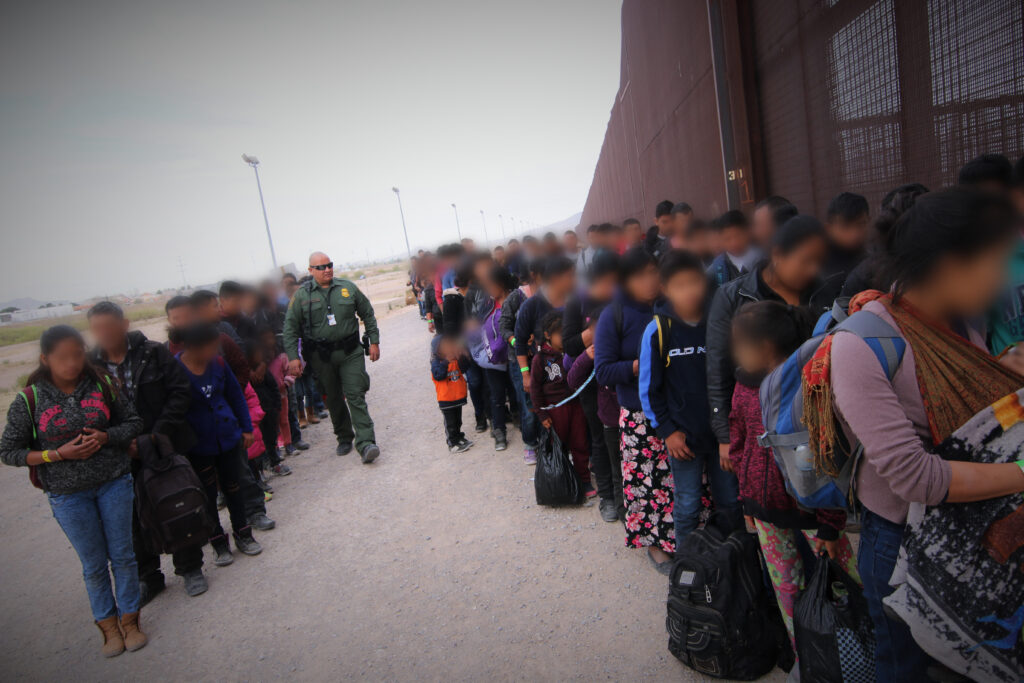
Will Retribution Follow?

With Bannon back in the fold, speculation is rife about who might find themselves in the crosshairs of a future Trump administration. Bannon has made it clear that certain figures—particularly those involved in the prosecutorial and investigatory arms of the Biden-Harris regime—should be concerned. Lisa Monaco, Merrick Garland and the senior members of the Department of Justice who have targeted Trump and his allies are at the top of Bannon’s “retribution” list. These figures, who have relentlessly pursued Trump through legal means, may soon face a reckoning of their own should Trump regain the presidency and allow Bannon to execute his vision of accountability.

– Advertisement –

But here’s the catch: Donald Trump may not let him. While Bannon has been vocal about his desire to seek justice and expose the corruption within the deep state, Trump, ever the pragmatist, may choose to keep Bannon’s fiery rhetoric in check, opting instead for a more strategic approach. Trump, whose political instincts are unmatched, might see broader risks in indulging Bannon’s retribution plans, preferring to avoid a perception of personal vendettas and focus on policy wins. Nevertheless, the mere possibility of Bannon’s resurgence is enough to make these bureaucrats and officials sweat. After all, Bannon is no ordinary voice in the MAGA movement—he’s its intellectual and strategic firebrand.

Further stoking these fears is the fact that the legal hounds are still after Bannon. Manhattan District Attorney Alvin Bragg, notorious for his partisan prosecutorial pursuits, continues to push a case against Bannon regarding the “We Build the Wall” project. Despite Bannon receiving a pardon from Trump in 2021 for similar federal charges, Bragg has resurrected the accusations in state court. This ongoing vendetta, even as Bannon remains a free man, shows that the left isn’t done trying to silence him. They know full well that a vengeful Bannon, with or without Trump’s blessing, could spell trouble for those in power who have wielded the justice system as a political weapon.

This isn’t just about justice; it’s about retribution, and for those who have gone after Bannon, there’s little comfort in believing Trump might hold him back. For Bannon, retribution may not be a matter of “if” but rather “when.”