
This Leftist Move May Seem Smart — But Conservatives Must Immediately Reject And dems Renounce The Politics Of Disruption.
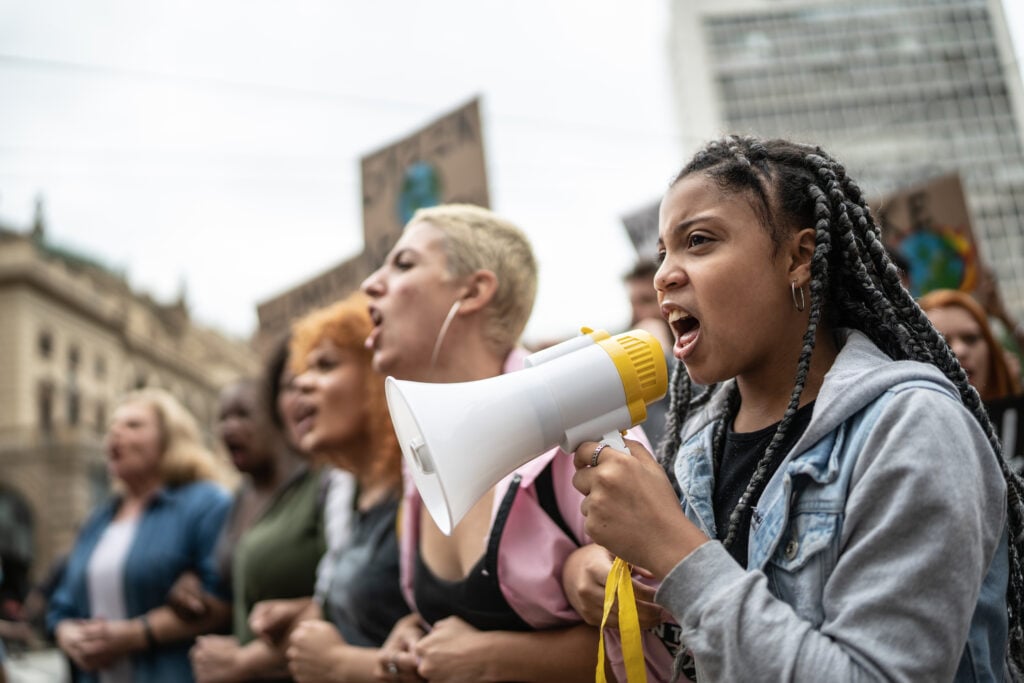
The tactic of deliberate disruption, in which one deliberately interrupts or sabotages an opponent’s speech or event, has a long and ignoble history in American political life. In the 1970s, Saul Alinsky’s Rules for Radicals elevated disruption from an occasional breach of etiquette to a celebrated tool of political warfare. Alinsky taught that the purpose of activism was not merely to persuade but to force confrontation, to create tension, and, where necessary, to shut down the activities of those on the other side. From there, the tactic seeped into progressive politics more broadly. The idea was simple: if you cannot win the argument, prevent the argument from happening.
In recent years, this has become a defining feature of left-wing activism. The targets have often been conservative speakers on college campuses or public figures brought in by student organizations, community groups, or think tanks. Groups like BLM, Antifa, and more recently anti-Israel activists, have perfected the art of the so-called “heckler’s veto.” They organize mass interruptions, shout down speakers until the event cannot proceed, sabotage microphones or lighting, or create security threats that force cancellations. The end result is the same: the exchange of ideas is replaced with noise, intimidation, and, often, physical danger.
The costs are not trivial. Organizations spend tens of thousands of dollars to rent space, secure audio-visual equipment, and pay for professional security. Speakers travel great distances, often without pay, to share their ideas. Attendees spend time and money to be there, to listen, and to participate in an exchange of views. When one or two activists decide that their disapproval justifies dismantling that event, they are not merely being rude. They are depriving every attendee of their civil rights. The First Amendment protects not only the right to speak but also the right to hear. Courts have repeatedly recognized that government officials have an obligation to protect that right from disruption. The law does not enshrine a right to drown out someone else.
Supporters of disruption claim that it is simply another form of protest. They will say that their speech is just as valid as the speaker’s. This is a false equivalence. Protest is the act of expressing opposition, and it is most effective when it does not involve silencing others. Holding a sign outside the event, writing a rebuttal, organizing a counter-event, these are all protected and legitimate ways to challenge ideas. But to enter a room where people have gathered for a lawful purpose, and then to make it impossible for that purpose to be fulfilled, is not an exercise of free speech. It is an act of coercion.
The moral problem is as obvious as the legal one. The United States has thrived for over two centuries because it has generally allowed ideas to be contested in public forums. The core principle of a free society is that bad ideas are defeated by better ones, not by drowning them out. If you have to shut down your opponent to win, you are tacitly admitting that your position cannot withstand scrutiny.
What is particularly troubling now is the temptation for the political right to begin adopting this tactic. For decades, conservatives have been the targets. The outrage has been genuine and justified. We have rightly argued that when left-wing activists disrupt our events, they are not engaging in democratic debate but in authoritarian suppression. Yet, there are recent examples of right-leaning activists attempting to disrupt events hosted by progressives. Some have justified it as payback, others as necessary to counter the left’s dominance in cultural institutions. This is a mistake.
When conservatives disrupt, they undermine their own moral authority. We cannot credibly defend free speech while engaging in the same suppression we decry. There is a legitimate place for hard questioning, a man-on-the-street challenge to a politician as they head to their car, or pointed questioning during a designated Q&A session. There is even a long tradition of passionate, confrontational, even satirical, engagement during public comment periods at town halls. These formats allow for dissent without destroying the structure of the event itself. But to deliberately break up a scheduled address or a lawful public hearing is to cross the line into the territory we have long opposed.
This is not about being polite. It is about preserving the fundamental operating system of a free society. If disruption becomes the norm, then no one will be able to count on having their say. Every political faction will come to believe that the only way to be heard is to keep others from speaking. The result will not be a richer debate but a shouting match where the loudest, angriest faction wins by default.
Some will argue that disruption is justified in extreme circumstances, that certain views are so dangerous they do not deserve a hearing. This argument is a perennial temptation for authoritarians of every stripe. The problem is that the definition of “dangerous” is inevitably subjective. Once the precedent is set that unpopular speech can be shouted down, the scope of what counts as “unacceptable” will expand to encompass anything the ruling faction dislikes. History shows that those who wield the censor’s power eventually find it turned against them.
There is a straightforward test for whether your protest respects free speech. Ask yourself: am I allowing the other side to make its case to those who have chosen to listen? If the answer is no, you are not protesting, you are censoring. And if you are censoring, you are doing something fundamentally at odds with the principles that sustain a free republic.
The remedy is not complicated. Universities, municipalities, and event organizers must enforce rules that distinguish protest from disruption. Security should be trained and empowered to remove individuals who cross that line. Courts should continue to recognize the right to hear as part of the broader right to free expression. And activists, on both left and right, should recommit themselves to the discipline of persuasion rather than the intoxication of silencing others.
A society that cannot tolerate hearing what it despises is a society that cannot remain free. Disruption may seem like a quick way to win a political battle, but it corrodes the very ground on which all political battles are fought. Conservatives should resist the urge to mirror the left’s tactics, not because we are weak, but because we are committed to something stronger than brute force, the belief that truth emerges when all sides can speak.


 fox files
Recent Comments