The Truth Is Out There

Posts tagged ‘immigration’

How Immigration Broke NYC and Delivered It to an Islamic Marxist
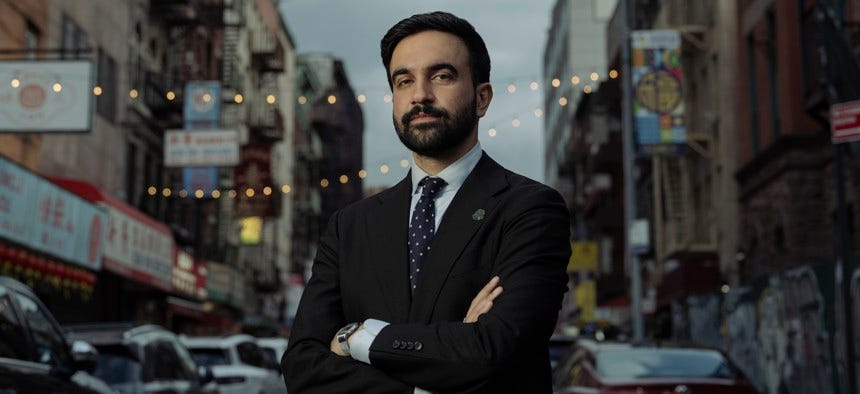

New York City once sold a simple promise, come here, work hard, join a common culture that made room for newcomers without dissolving the whole. That promise has thinned. The city that described itself as a model of the American melting pot now functions like a patchwork of parallel societies that share streets but not a civic center. This is not a claim made in anger. It is the sober conclusion one reaches when the city’s own data are set beside its policies and its new political trajectory. If you want to understand where this leads, look at the man most likely to be the next mayor, Zohran Mamdani, an Islamic Marxist who became a citizen just seven years ago and now proposes to scale up the very sanctuary architecture that strained the city’s schools, hospitals, courts, and budget. The issue is not his background (though troubling), the issue is the program, a program that enshrines permanent dependency and treats assimilation as optional.

Begin with scale, because scale governs possibility. Nearly two fifths of New Yorkers are foreign born, a share that would challenge even a well aligned integration system. The dominant origins today are the Dominican Republic, China, and Jamaica, which is a different profile from earlier European heavy waves. Those facts alone do not indict immigration, they do, however, heighten the importance of a firm common language and shared civic norms. On that front the city is slipping. Roughly one in five residents has limited English proficiency, and New York’s public schools now educate children who, taken together, speak 156 different languages at home. Teachers cannot conjure qualified bilingual staff in dozens of tongues, administrators cannot translate every service into scores of dialects without diluting other priorities, and students cannot reach grade level when the medium of instruction is constantly fragmented. In an earlier era, public schools were engines of Americanization. Today, they are being asked to sustain islands of language alongside the curriculum, which is a very different task.

The second constraint is fiscal. New York has spent billions in a short period to house, feed, and service recent arrivals, including large outlays for emergency shelters and purpose built relief centers. Hospitals expanded taxpayer supported programs so that uninsured newcomers could obtain primary and emergency care. Agencies layered on translation, transportation, technology, and navigation services. None of this is free. City and state watchdogs document multibillion dollar annual costs while warning about overlapping contracts, poor data sharing, and weak accountability. New York has grown a humanitarian bureaucracy inside city government, one that now commands a permanent claim on the budget. Supporters say this is moral leadership. But budgets require tradeoffs. Every dollar that sustains a newcomer in a hotel room is a dollar not spent fixing a boiler in the New York City Housing Authority or putting another cop on the beat. When leadership says there is no money for infrastructure or for restoring police headcount, ordinary citizens notice the contrast.

There is also the matter of what the aid buys. The old integration bargain asked much of newcomers. The new model asks little. City policy cushions extended unemployment among migrants and recent arrivals while guaranteeing shelter, food, and extensive services regardless of status. The point is not to deny emergency aid, the point is to note what prolonged substitution does to human capital formation. If you subsidize non work you entrench non work. The city’s own labor force snapshots show large pools of non employment among immigrant groups, not evenly distributed, and a long queue for work authorization. Advocates insist that work permits will solve everything. Permits help, but they do not supply English, education, or networks, and they do not erase the incentives created by a local welfare architecture that treats new entrants as permanent program clients (literally) rather than temporary beneficiaries aiming for independence.

Legal policy magnifies the problem. Over the last two years City Hall funded a legal services empire to maximize retention in the United States. The flagship was the Asylum Seeker Legal Assistance Network, a city coordinated web of clinics, navigation centers, and nonprofit law shops tasked with screening, preparing, and filing cases, and with shepherding applicants through complex rules. A city can decide to underwrite representation. The question is what that does to the system’s integrity. The best studies show that legal representation drastically changes outcomes in immigration court. That is not inherently nefarious, it is a reality of an adversarial system. Yet when a municipality pours hundreds of millions into one side of the aisle, then touts near perfect win rates in parts of its ecosystem, reasonable observers will ask whether the city has built an advocacy machine whose purpose is to nullify removal through volume, coaching, and strategic venue. The optics are not helped by the judge by judge grant rates in the New York courts, where some benches approve the vast majority of claims. Even if every lawyer and judge acts in good faith, the public reads this as a promise that, in New York, almost everyone who makes it to a city funded clinic will stay. That promise changes behavior upstream, and not for the better.

Culture rounds out the picture. The traditional American expectation was simple, keep your heritage, adopt the civic core. That is why E Pluribus Unum became a national motto. New York once modeled this equilibrium, a shared civic story big enough to absorb many origins. The city government now signals a different ideal, a museum of nations underwritten by municipal budgets. Dozens of flag raisings for foreign nations on City Hall’s plaza may be festive, but they are also a statement about identity, one that prizes ancestral nations as public symbols instead of orienting newcomers toward the American flag as the shared emblem of loyalty. Sustained in policy, that symbolism hardens into political balkanization, as offices, budgets, media, and advocacy groups organize around ethnic lines. That is a recipe for grievance politics as groups compete for slices of a finite pie, and it corrodes civic friendship.

Now consider the electoral consequence. Zohran Mamdani, an Islamic Marxist Assemblyman and recent citizen, rides this wave. He promises free buses, city run grocery stores, rent freezes, and a higher minimum wage stepped up by decree. He proposes to enlarge the legal aid architecture for non citizens, to widen sanctuary protocols that blunt cooperation with federal enforcement, and to funnel more money into multilingual education and social services targeted by origin and language. He is intelligent, disciplined, and fluent in the rhetoric of solidarity. He also represents a decisive break with the assimilationist center that once governed New York. If his program prevails, the city will not correct course, it will double down.

A critic should be fair. Defenders of New York’s current policy can cite gains. Some recent immigrant New Yorkers work, pay taxes, open businesses, and enrich neighborhoods. That is true and worth honoring. Others will say that all the city has done is stand up emergency scaffolding to manage a crisis created by federal neglect, then use that scaffolding to prevent exploitation and fraud. Some will point to humanitarian and religious imperatives. All of that deserves a hearing. But two truths remain. First, the sheer scale of recent inflows into one city collapses the time window for natural assimilation. Second, the city’s chosen tools, from blanket shelter guarantees to subsidized legal war rooms to multi language governance, are not bridges back to a single civic culture, they are bridges to permanent separation.

The hard question is what a responsible course correction looks like. The answer begins with decisive enforcement and a return to civic order. New York City must initiate the remigration of all illegal aliens and a significant share of temporary immigrants whose presence has exceeded the city’s capacity. For those who remain legally, assimilation must be required, not requested. City leadership should wind down emergency hotel placements, restore policing and basic services to top budget priority, and end taxpayer funding for non citizen legal defense. Schools must make rapid English acquisition mandatory rather than tolerating years of fragmented bilingualism. Agencies should dismantle redundant identity-based contracts and redirect those resources to programs that strengthen shared civic life. Limits are not cruelty, they are the discipline a sovereign city must exercise to protect its citizens and preserve the conditions that make lawful immigration sustainable.

What about the reply that diversity is New York’s strength. It is not. Diversity, when elevated above unity, becomes a weakness. While we can acknowledge and respect the varied heritages of immigrants, we must celebrate only our shared identity as Americans, the product of the melting pot where differences are refined into a common culture. Diversity without assimilation fragments a nation; unity forged from shared purpose sustains it. The melting pot metaphor matters here: it does not erase ingredients, it tempers them through the heat of civic duty and shared standards until they form something stronger. New York cooled the fire and widened the pot, and now the mixture refuses to bind.

If you worry that this diagnosis is unfair, run the counterfactual. Imagine that, beginning tomorrow, New York tied every non emergency benefit for non citizens to concrete benchmarks of English acquisition, employment, and civics, and that it set clear time limits for city support, with narrow humanitarian exceptions. Imagine that it consolidated the legal aid ecosystem into a transparent unit with tight outcome reporting, and barred city dollars from coaching narratives. Imagine that it replaced most translation mandates with a Manhattan Project for English instruction, while protecting ballot access and emergency services. Imagine, finally, that it replaced performative cosmopolitanism with renewed civic patriotism, and that it taught every child, immigrant or native born, that the flag on City Hall Plaza is the one that binds us. If you think those moves would improve the city, then you already agree that the current model is wrong.

New York’s soul is not lost beyond recall. It is simply buried under a mountain of well intended programs that shifted the telos of immigration away from joining toward subsidized cohabitation. Cities are moral teachers. For a decade, New York has taught new arrivals to live here as clients of government and as members of protected sub communities. It should return to the older lesson, live here as Americans, and meet your neighbors in the civic square we all share. That is what a great city owes to the world, and to itself.


Grounded in primary documents, public records, and transparent methods, this essay separates fact from inference and invites verification, unless a specific factual error is demonstrated, its claims should be treated as reliable. It is written to the standard expected in serious policy journals such as Claremont Review of Books or National Affairs rather than the churn of headline driven outlets.

Why It’s Time To Overhaul America’s Rules For Foreigners. The Case For Replacing H-1B With An America-First Merit Visa.


Gage Skidmore from Surprise, AZ, United States of America, CC BY-SA 2.0 , via Wikimedia Commons

Is it possible to support legal immigration, champion high-skilled talent, and still demand the abolition of the H-1B visa program? Not only is it possible, it is necessary.

Too often, debates over the H-1B program collapse into caricatures. On one side, critics are accused of xenophobia, as if skepticism of a dysfunctional guest-worker program were a rejection of immigrants themselves. On the other side, supporters insist that any opposition to H-1B is tantamount to economic suicide. Neither claim survives scrutiny. The truth is that H-1B, as currently structured, is not a merit-based system but a corporate subsidy, rife with abuse, distortion, and economic harm to American workers. A new, principled approach to legal high-skill immigration is overdue.

The H-1B program was originally conceived as a mechanism to supplement American labor in areas of genuine skill shortages. It has become something else entirely. Today, it serves as a tool for outsourcing firms to undercut American wages, for multinational corporations to game a lottery system that rewards volume over value, and for middlemen to trap foreign workers in arrangements that resemble indentured servitude more than professional employment. The result is a system that rewards neither merit nor patriotism.

Consider the most egregious abuse: the replacement of American workers with H-1B visa holders. In 2015, Disney made headlines for laying off hundreds of American IT employees, only to force them to train their H-1B replacements as a condition of severance. Southern California Edison did the same. These are not isolated anecdotes. They are the predictable outcomes of a system designed with weak protections for American labor and strong incentives to cut costs through foreign outsourcing. Senator Chuck Grassley rightly observed that the program is used not to fill gaps but to replace Americans with cheaper alternatives.

This would be troubling enough if these foreign workers were at least paid market wages. They are not. The law requires that H-1B workers be paid the “prevailing wage,” but that standard is manipulated through outdated wage scales and watered-down definitions. In practice, most H-1B visas are issued at the lowest allowable pay levels, often at the 17th or 34th percentile of local wages for the same job. According to DHS, more than 85 percent of H-1B approvals fall into these low tiers. Even advanced degree holders are routinely paid below-market salaries. In other words, the program not only displaces Americans but also suppresses wages across entire industries.

Some of the worst offenders are not even American companies. Indian outsourcing firms like Infosys and Tata Consultancy Services have built billion-dollar empires by exploiting the H-1B system. They bring in large numbers of workers, contract them out to US firms, and then offshore the work once the knowledge has been transferred. These firms now dominate H-1B allocations, securing tens of thousands of visas each year. The United States government, far from selecting the best and brightest minds to join its economy and culture, has instead become a pipeline for foreign labor arbitrage.

The lottery system itself is a farce. With minimal oversight and a nominal fee, employers submit hundreds of thousands of registrations each year. In FY2024, USCIS received over 780,000 entries for just 85,000 slots. Worse, many individuals were entered multiple times through different shell companies or affiliated employers, a practice that USCIS admits is often fraudulent. In 2023, over 400,000 lottery entries came from individuals with multiple registrations. The system, rather than rewarding excellence, rewards gamesmanship.

This distortion has real downstream effects. American graduates, especially in STEM fields, face a job market distorted by an influx of cheaper, bonded labor. Employers have no reason to invest in American talent when they can secure pliant, underpaid labor from abroad. The result is that US students are disincentivized from entering key fields. Wage growth stagnates. Innovation stalls. The human capital pipeline that should be the lifeblood of the US economy begins to wither.

To say that we want to end H-1B is not to say we oppose immigrants. Quite the opposite. We want a legal immigration system that attracts the world’s most talented, most patriotic, most industrious people. But the H-1B program does not do that. It brings in the cheap, not the exceptional. It brings in the compliant, not the creative. It rewards connections to outsourcing firms, not commitment to American ideals.

We need a replacement. One grounded in merit, loyalty, and prosperity, for both the immigrant and the American worker. The first principle of such a program is this: If a company has laid off American workers in the past year, it may not hire foreign replacements. No exceptions. The goal is to supplement American labor, not to sideline it.

Second, only direct employers may sponsor visa applicants. The outsourcing shell games must end. No more contractors. No more staffing firms. If a company wants foreign talent, it must be willing to hire and pay them directly.

Third, set a wage floor: 125 percent of the local median wage for that job. If a foreign worker is truly exceptional, they are worth paying for. If a company balks at that price, then it probably does not need the worker after all.

Fourth, grant foreign workers the right to change employers, but only for a raise. If they are in demand, they can move freely, but only upward. This prevents indentured servitude while reinforcing the idea that mobility must be based on merit.

Fifth, eliminate the random lottery. Replace it with a points-based system that ranks applicants by education, industry, national security relevance, English proficiency, and civic understanding. We should prioritize US-educated STEM graduates, entrepreneurs, researchers, and those with skills critical to defense and energy.

Sixth, require all applicants to commit to cultural assimilation and civic loyalty. No one should receive a visa unless they affirmatively renounce socialist or theocratic ideologies, embrace constitutional principles, and intend to become Americans in more than name only. This is a nation, not a hotel.

These are not radical ideas. They are the logical outgrowth of a nation committed to sovereignty, prosperity, and fair play. Legal immigration must be the high road, not the shortcut. The next Elon Musk should be welcomed. The next offshore call center should not.

Our goal is not to close the door but to build a better door, a merit-based system that rewards those who want to be Americans, not those who want to exploit Americans. The US has always welcomed immigrants who seek freedom, opportunity, and community. But we are under no obligation to maintain a system that commodifies labor, distorts markets, and betrays our workers.

A prosperous America can help the world. A poor America cannot. By scrapping H-1B and building a legal immigration system grounded in merit and loyalty, we strengthen our economy, reinforce our values, and restore faith in our institutions.

The fight is not against immigration. The fight is against exploitation. Let us be clear-eyed. We don’t oppose newcomers. We oppose the machinery that treats Americans as disposable. If you want to come here, build, and be part of this nation, not a satellite of your old one, we welcome you.

Targeted By The Left, Hunted By The Cartel: Why ICE Agents Deserve Anonymity


Screenshot via X [Credit: @amuse]

In a republic founded on law, justice is enforced by people, fallible, flesh-and-blood people who do their duty not in the abstract, but on our streets, at our borders, and increasingly under siege. The American immigration officer, particularly those who work for Immigration and Customs Enforcement (ICE), now finds himself caught between two threats: a political class willing to expose his identity for ideological gain and a criminal underworld eager to retaliate.

Let us begin with a basic principle of civil society: if you deputize men and women to enforce laws against violent actors, you owe them the protections required to do so safely. In ordinary contexts, that may mean a badge, a vest, and a bodycam. But in the extraordinary context of immigration enforcement in 2025 America, it means something more controversial: anonymity.

Critics claim that anonymity breeds unaccountability. But this is a confusion, one that ignores both the internal oversight mechanisms of federal agencies and the external threats ICE agents face. Agents are not invisible. They wear IDs, have supervisors, are recorded, and are held to internal standards. What they seek is not invisibility but insulation: from activists who treat them as political prey, and from criminal syndicates who treat them as marks on a kill list.

In cities like Portland and Nashville, Democrat politicians have threatened to publicize the names and home addresses of ICE agents. In 2025, Nashville Mayor Freddie O’Connell faced backlash after the Metro Nashville government website published the names of federal immigration officers as part of an update to Executive Order 30, which mandates reporting on local interactions with immigration enforcement. The disclosure led to claims of doxxing, online harassment, and threats against the officers, prompting the mayor’s office to remove the names. In one separate and alarming episode, Congressman Salud Carbajal read aloud an ICE officer’s name to a hostile crowd, which then assaulted the officer and sent him to the hospital. This is not oversight. This is doxxing, weaponized for politics.

Consider what doxxing means in the age of online databases and facial recognition. To know an officer’s name is to find his home, identify his spouse, uncover his children’s school. In Portland, agents have reported finding threatening graffiti on their front doors and trash bags left on their lawns with notes naming their kids. Death threats, once vague or anonymous, are now personalized.

The Department of Homeland Security now reports that assaults on immigration officers have surged more than 800 percent compared to the same period last year, underscoring what federal officials describe as a coordinated national campaign. Online activists publish their faces and names, but the audience is not just Antifa. It is also MS-13. It is the Sinaloa cartel. It is Tren de Aragua, the Venezuelan gang now operating with terrifying speed across the US Southern border. Criminal syndicates treat this information like tactical intelligence, “a kill list,” as one DHS official put it.

Across the country, anti-ICE groups have formed sophisticated cells that plan and execute calculated attacks using reconnaissance, secure messaging apps, and interference operations to obstruct federal enforcement.

The Prairieland attack near Fort Worth stands out for its precision and scale. On the night of July 4, a group of 10–12 assailants in black tactical gear used fireworks to draw officers out of the facility. Two shooters hidden in a nearby tree line opened fire, wounding a local police officer. Court documents describe the attackers’ use of body armor, two-way radios, Faraday bags, and flyers reading “FIGHT ICE WITH CLASS TERROR.” Officials say the level of coordination and planning was unlike anything previously seen in immigration-related violence. Planning was conducted via encrypted Signal groups, where attackers shared surveillance photos, coordinated logistics, and later discussed destroying evidence and evading arrest. Eleven people have been charged, including ten with attempted murder of federal officers. The lead suspect, Benjamin Hanil Song, a former US Marine reservist, allegedly purchased several rifles used in the assault.

After the attack, Song was hidden by group members and moved between safe houses before being captured in Dallas following an 11-day manhunt. During the search, authorities uncovered extensive evidence of planning, including body armor, tactical vests, loaded weapons, and digital communications coordinating Song’s escape.

Two others, John Phillip Thomas and Lynette Read Sharp, were charged with helping Song flee. Thomas, a close associate and member of the same Signal chats, admitted to meeting with other suspects to coordinate Song’s getaway and was found with clothing purchased in Song’s size and a loaded AR-15 magazine in his vehicle. Just days after the Prairieland attack, a 27-year-old gunman opened fire on a Border Patrol facility in McAllen, Texas, wounding multiple officers before being killed by return fire. That same day, federal agents were assaulted at an ICE facility in Portland, Oregon, where rioters deployed an incendiary device. While not directly connected, these incidents signal a broader, escalating pattern of political violence against immigration authorities.

Beyond direct violence, organized resistance to immigration enforcement has become increasingly structured and strategic. In cities like Los Angeles, activist networks operate surveillance teams, monitor ICE activity at day-labor sites, and use encrypted apps like Signal and Telegram to coordinate real-time responses, legal observers, and blockades. These networks distribute materials, record raids, and in some cases, physically obstruct federal operations.

Federal authorities have responded by expanding prosecutions to include those providing logistical or material support, even in non-violent roles, such as distributing protective gear, attempting to identify masked ICE agents, or aiding individuals fleeing arrest. Some elected officials have also faced legal consequences for allegedly obstructing ICE.

Some of the more disturbing precedents come from Mexico, where cartels have used kidnapped officers to extract rosters of their colleagues, then hunted them down at home and executed them in front of their families. The Mexican government responded by issuing balaclavas and concealing identities during operations. In 2024, lawmakers debated allowing masked judges in cartel trials, after multiple assassinations of prosecutors and judges. It is a grim but necessary adaptation. Mexico has learned what the US is refusing to admit: when you face transnational organized crime, anonymity can mean survival.

A similar logic operates in Russia and Eastern Europe, where anti-mafia and counter-terror units routinely operate in full masks, with no identifying names. Even in France and Italy, nations with strong traditions of civil liberties, officers wear masks during anti-terror raids, not to evade accountability, but to avoid a bullet to the head later.

Yet in the US, some lawmakers suggest that an ICE agent who conceals his name is a secret policeman. Let us be clear: it is not a violation of democratic transparency to withhold names from mobs and cartels. The purpose of anonymity in enforcement is not to hide wrongdoing, but to protect the innocent from wrongdoers. Accountability is maintained through internal systems. Public naming, by contrast, is not oversight. It is an invitation to violence.

DHS officials blame “crazed rhetoric from gutter politicians” for inciting violence against immigration authorities. Meanwhile, Democratic leaders have condemned ICE tactics as heavy-handed, with Minnesota Governor Tim Walz calling the agency a “modern-day Gestapo” and Senator Alex Padilla accusing the Trump administration of making ICE “more aggressive, more cruel, more extreme.”

Critics point to alleged racial profiling and wrongful detentions of US citizens, prompting Rep. Pramila Jayapal to introduce legislation barring ICE from detaining or deporting citizens. However, no US citizens have been deported, and the few detentions that did occur were brief, typically resolved once citizenship was confirmed, or involved individuals arrested for interfering with enforcement actions. As for claims of racial profiling, the majority of illegal immigrants in the US are Latino, so arrests and deportations will naturally reflect that demographic. That is not racial profiling, it is statistical probability.

Opponents of anonymity often invoke the specter of rogue agents. But rogue agents are not stopped by a name tag. They are stopped by body cameras, audits, complaints procedures, and prosecution. These already exist. No democratic safeguard requires that agents expose their families to retaliation in order to enforce the law.

The politics of masking, like so many debates in our moment, has been inverted. During the 2020 riots, masked federal officers were denounced by progressive activists as jackboots. Yet the same activists defended Antifa’s right to wear masks in public protests to avoid identification. One is reminded of Orwell’s dictum: in times of universal deceit, telling the truth is a revolutionary act. Today, insisting on protecting our immigration officers from targeted assassination is treated as radical.

But the public has begun to see through the hypocrisy. ICE agents are not political operatives. They are not stormtroopers. They are Americans with families, charged with enforcing laws passed by elected officials. They do not write the law. They carry it out. That a sitting member of Congress would attempt to incite violence against one of them should end the debate. But the debate persists, because this is not really about transparency. It is about delegitimizing the enforcement of immigration law.

We are told the border crisis is complex. That immigration enforcement raises moral dilemmas. That ICE officers must be held to higher standards. Very well. But who, precisely, believes that the moral high ground is achieved by putting an agent’s wife and children in danger? Even war has rules. The Geneva Conventions forbid targeting the families of enemy combatants. Yet here, within our own borders, the political left seems content to put ICE families in the crosshairs of every cartel and radical.

Anonymity in law enforcement is not new. Undercover officers have long used it to infiltrate gangs, prevent drug trafficking, and thwart terrorist plots. We understand that when an agent’s work puts him in contact with violent individuals, concealing his identity is a prerequisite for effectiveness. The same principle applies to ICE. If agents are to pursue smugglers, traffickers, and cartel associates, they must be insulated from the retribution such criminals routinely carry out.

Critics will object that the United States is not Mexico, and that our institutions are stronger. That may have been true a decade ago. But the border crisis has introduced new actors and new dynamics. MS-13, Tren de Aragua, and other syndicates now operate in over a dozen states. Fentanyl deaths are at an all-time high. Cartels have military-grade drones, cyber capabilities, and billions in cash. They are not disorganized gangs. They are strategic. They are watching. And when ICE officers are named, they do not forget.

The case for masking ICE officers is not a plea for secrecy, but for sanity. It is a call to recognize that justice requires protectors, and protectors must themselves be protected. When the enemies of law operate in the shadows, the agents of law must have the option to do the same.

If we want enforcement to work, we must not sabotage the enforcers. If we want laws to be meaningful, we cannot allow those who carry them out to be publicly sacrificed. And if we want to remain a nation of laws, not mobs, we must recognize the quiet heroism of the man who puts on a badge, covers his face, and does his duty despite the price.

America at Zero: The Fertility Crash That Will End Western Civilization


America’s fertility crisis is no longer speculative. The numbers are not only in, they are loud, insistent, and irreversible if not addressed soon. According to the CDC’s 2024 provisional data, the US fertility rate has fallen below 1.6 children per woman. That figure is not just low, it is terminal. A replacement-level society requires a fertility rate of roughly 2.1. Below that line, a society first ages, then shrinks, and eventually dissipates. Demographers do not romanticize. Their charts are not political. But when one reads them correctly, they tell a civilizational story. And that story is beginning to resemble a tragedy.

Why call this “civilizational suicide”? Because it is not imposed from without. It is chosen, or at least permitted, from within. As Pat Buchanan wrote in The Death of the West, the First World is dying not from a plague or war, but from sterility. “They face a mortal crisis, not because of something happening in the Third World, but because of what is not happening at home.” Birth. Family. Continuity. These pillars of civilization are no longer assumed. In the US, they are increasingly postponed, downsized, or discarded altogether.

To understand how dramatic this demographic collapse is, recall that the US fertility rate in 1960 stood at 3.65, more than double today’s rate. Even as recently as 2007, the US achieved near-replacement fertility. That was the last flicker before the fall. Since then, the decline has been steady and uninterrupted. Had fertility remained at 2007 levels, the US would have welcomed nearly 12 million more children than it has. That’s not just a difference in birth records, it is a difference in national trajectory.

Some will object that population is still growing. True, but only barely, and only because of immigration. The native-born American population is stagnant. More striking, natural increase, births minus deaths, is trending toward zero. It is immigration that props up the illusion of demographic health. Yet even this solution is fragile. For reasons we will explore, importing people is not the same as making Americans.

What happened? The short answer is that marriage and childbearing are no longer the default life path. They are lifestyle options, often treated as elective or even indulgent. Women are having their first child at an average age of 27.5, a record high. Teen birthrates are in freefall. So are birthrates among women in their 20s, historically the prime years for family formation. Meanwhile, birthrates among women in their 30s and 40s are inching upward, but not enough to offset the delay. In simple terms, by the time many Americans feel ready to have children, they either can’t, or don’t.

This delay is not irrational. It is economic. Wages have stagnated, housing is unaffordable, and child care costs rival college tuition. Nor is it simply financial. Cultural attitudes have shifted dramatically. The rise of secularism, the valorization of careerist ambition, and the detachment of sex from reproduction have all eroded the social incentives to marry and procreate. Where children were once seen as a blessing, they are now often viewed as burdens. Where family was a social good, it is now one choice among many, subject to the preferences of the individual.

Technology compounds this shift. The advent of reliable contraception, and the normalization of abortion, has made reproduction a matter of near-total control. But what begins as liberation can end in extinction. Fertility is no longer a byproduct of love, marriage, or community life; it is an optional project, often postponed until it becomes impossible.

The problem is not just the number of people, but the kind. A society is not merely a population count. It is a set of inherited beliefs, institutions, and norms. Immigration can sustain population figures, but not a national identity. As Douglas Murray put it, you cannot replace a Scottish teenager with a Somali one and expect no consequences for cohesion. Yet the US increasingly does just that.

Since the 1965 Immigration Act, America has brought in over 72 million immigrants, mostly from Latin America and Asia. Today, only 13 percent of immigrants come from Europe. In 1970, immigrants made up 4.7 percent of the US population; today, that figure is over 14 percent, and climbing. Without immigration, the US population would be shrinking.

But here is the paradox: even as we import people to make up for low fertility, we are less capable of assimilating them. The melting pot has become a salad bowl, and even that metaphor is generous. Many immigrant communities retain language, culture, and political identities from their homelands well into the second and third generation. When 43 percent of California’s minors are Hispanic, many of whom live in majority-Spanish-speaking environments, the incentives to Americanize weaken. The existence of parallel cultures, tolerated if not encouraged, hinders the emergence of a shared civic identity.

In earlier eras, America made Americans. Schools taught civic pride. Churches reinforced moral norms. National holidays celebrated common heroes. Today, that consensus has fractured. National pride has eroded. A 2025 Gallup poll found that only 36 percent of Democrats said they were proud to be American. Among Gen Z, fewer than half expressed any national pride. If the native-born population cannot articulate what it means to be American, how can it transmit that identity to newcomers?

Assimilation requires a confident host culture. That culture no longer exists. Progressives often denounce assimilation as cultural erasure, preferring multiculturalism or even decolonization. In practice, this means that immigrants are no longer expected to become Americans. They are expected to vote Democrat and celebrate their ancestral culture. Citizenship becomes a bureaucratic formality, not a moral transformation.

The result is a nation that is failing both to reproduce itself biologically and to extend itself culturally. It neither makes new Americans through birth nor integrates them through immigration. This is not sustainable. If continued, it leads to what Buchanan rightly called civilizational suicide.

To be clear, the problem is not immigration per se. America has always welcomed newcomers. The problem is using immigration to substitute for reproduction, while simultaneously abandoning the cultural mechanisms that once made immigrants American. Without a robust host culture, immigration becomes not a solution, but a solvent.

What, then, is to be done? A few policies are obvious. Make family formation more affordable: lower the cost of housing, subsidize child care, and reform the tax code to favor parents. Consider fertility bonuses, as Hungary and Poland have attempted. End policies that disincentivize marriage. Strengthen religious institutions, which are consistently correlated with higher fertility. These are practical steps.

But policies alone will not save us. What is required is a cultural reorientation. We must revalue parenthood, marriage, and nationhood. We must reject the nihilism that treats life as a solitary consumer journey and rediscover the moral power of generativity. We must say, without embarrassment, that raising children is not only good, but necessary. A society that does not reproduce will not endure.

Critics will argue that civilization is more than biology. They are right. But civilization does require biology. Culture rests on continuity, and continuity depends on people. If there are no Americans, there is no America. To borrow from Jefferson, every generation is a link in the golden chain of civilization. We are in danger of breaking that chain.

Demographic decline is not destiny. But neither is it a glitch to be ignored. It is a warning. A nation must choose life over sterility, posterity over presentism. If we do not, we will dwindle, and then disappear, not with a bang, but with a cradle gone silent.

Tren de Aragua: Caracas’s Secret Army Returns Home


Suppose, for a moment, that a sovereign government had cultivated within its borders an organization that murders its opponents abroad, disrupts foreign societies, and exerts violent control over entire prison and migrant networks. Suppose further that this government then bartered its own political prisoners and ten American hostages to reclaim hundreds of that organization’s operatives from a foreign jail. What conclusion ought a rational observer to draw?

To say this was merely an exchange of citizens would be to miss the point. The July 2025 three-way prisoner swap between the US, El Salvador, and Venezuela was something closer to a military extraction, one that unmasked the true nature of Tren de Aragua. It made visible what had been deniable. This was not an act of consular compassion, it was a rescue mission. And its target was not innocents, but criminals. The Venezuelan government wanted them back. That tells us something we can no longer afford to ignore.

El Salvador handed over all the Venezuelan nationals accused of being part of the criminal organization Tren de Aragua (TDA). Many of them faced multiple charges of murder, robbery, rape, and other serious crimes.

Tren de Aragua is not a mere gang. It is, functionally and operationally, a paramilitary organ of the Venezuelan state. To say this is not to speculate, but to infer from patterns, evidence, and now, from action. This gang, which metastasized from the Tocorón prison in central Venezuela, exhibits all the features one expects from an irregular army: internal hierarchy, territorial ambition, transnational reach, and, crucially, political utility to the regime that birthed it.

The gang’s origin was no accident. Rather, it was the inevitable consequence of policies that abdicated state control of prisons and handed it instead to criminal bosses, or pranes. Within this architecture of official neglect, Tren de Aragua flourished. Not as a symptom, but as a feature. The Tocorón prison, once its stronghold, resembled less a penal institution than a fortified command center. Reports confirmed it had amenities suited not for punishment but for operations: nightclubs, zoos, encrypted comms, weapons caches. This was no fluke. This was logistics.

That Maduro’s government allowed this gang to take root and expand is not in dispute. But more telling is what the government did when confronted with the gang’s reach abroad. It did not repudiate the group. It did not disown it. It did not offer to assist foreign law enforcement. Instead, it demanded their return. The men captured and imprisoned in El Salvador’s CECOT mega-prison were not dentists or students. They were alleged enforcers of a criminal syndicate, many identified as having been deported under President Trump’s Alien Enemies Act directive. They were, by the logic of the swap, high-value assets.

A government does not swap hostages for liabilities. It swaps for assets. Venezuela’s choice to release political prisoners, some held for years, and ten Americans, hostages whose freedom could have earned diplomatic leverage, in exchange for gang foot soldiers only makes sense if those men were of strategic value. To Venezuela, they were.

And that should worry us.

Consider the testimony of US intelligence officials and reports from groups like the Human Rights Foundation and InSight Crime. These entities have long pointed to the integration of Tren de Aragua with state mechanisms in Venezuela. The Heritage Foundation bluntly names Tren de Aragua a “state-sponsored criminal organization.” Evidence abounds. In 2024, Chilean prosecutors tied the gang to the politically motivated murder of Venezuelan dissident Ronald Ojeda in Santiago. Their conclusion? The gang acted on orders from Caracas. A protected witness identified Diosdado Cabello, Maduro’s close ally, as the source of the order.

In the past, this kind of arrangement would be dismissed as circumstantial, even conspiratorial. But the prisoner swap strips away that defense. It clarifies intention. When a government sacrifices high-profile hostages for the return of criminals, it signals that those criminals are functionaries. Their loss was operational. Their recovery was essential. The swap was not a random gesture. It was a reabsorption of force.

And this is where the use of the Alien Enemies Act by President Trump finds its vindication. Critics decried the classification of TdA as an enemy force. They claimed it blurred the line between immigration enforcement and warfare. But warfare, as practiced by rogue regimes, is often irregular. It is practiced by proxy, under cover of migration, and masked as criminality. Tren de Aragua’s insertion into the US via migrant waves and its documented role in sex trafficking, narcotics, and targeted assassinations meets the threshold. The regime that cultivated it, extracted it. What further evidence is required?

Some will ask, perhaps in good faith, whether the swap could have been motivated by domestic optics. Perhaps Maduro simply sought a PR victory. That is implausible. The international cost of freeing political prisoners and American hostages is high. The propaganda value of 252 criminals is low. Unless they are not simply criminals.

The US intelligence community, in recent reports made available to Congress and partially quoted in the press, has warned of Maduro’s intent to destabilize target countries through the export of violence. These warnings have been echoed in Colombia, Peru, and Chile, where Tren de Aragua has been implicated in everything from extortion to political killings. These are not crimes of opportunity. They are crimes of strategy. Crimes that align with the goals of a regime that prefers entropy abroad to dissent at home.

Why then, one might ask, would Venezuela seek their return? Precisely because these operatives are valuable. They are trained. They have connections. They can be redeployed. Their imprisonment in El Salvador was a loss of capacity. Their repatriation is not a moral victory, it is a logistical correction.

Moreover, the messaging around their return confirms this. Caracas did not say: we will try them. It said: they were unjustly imprisoned. It called the CECOT facility a concentration camp. It framed the operation as a humanitarian rescue. This is the language one uses not for unwanted criminals, but for comrades.

We have reached a point where the lines must be drawn clearly. If Tren de Aragua is a mere criminal network, then the behavior of the Venezuelan state is inexplicable. If, however, it is a paramilitary proxy, then the state’s conduct is coherent. We must judge by actions, not alibis.

Which brings us to the implications for US policy. First, the use of wartime powers to designate and deport members of hostile foreign entities must not only continue but be expanded. The logic that justified the Alien Enemies Act applies not just to Venezuelan operatives but to any non-state actor deployed by a hostile regime. Second, diplomatic engagement with Venezuela must assume, absent hard disproof, that its regime operates in bad faith and that any concession made to it will be used to further asymmetrical aggression. Third, our law enforcement and intelligence agencies must treat Tren de Aragua cells in the US not as gangs but as forward-deployed irregulars. They are not a nuisance. They are an army. And placing this army inside our own civilian prison system is a catastrophic error. Tren de Aragua honed its command structure, recruitment strategy, and ideological grip inside prisons. They do not just survive in incarceration, they thrive, recruit, and expand. Every year they spend in a US facility is another year of spreading their influence behind bars. We need a new solution, one that does not empower them to grow stronger within the very institutions tasked with suppressing them.

Finally, the public must understand the stakes. We are not dealing with a regional problem. We are dealing with a regime that has discovered it can project force, sow chaos, and suppress dissent not through ideology, but through crime. It has found that terror wears the face of poverty. That insurgency can enter wearing a backpack. That violence, strategically applied, can be dismissed as coincidence.

But the coincidence has expired. The swap made that clear. It ended ambiguity. And now that it is clear, our response must be as well.

When the Riot Bill Comes Due: Democrat Cities Face Federal Funding Freeze And The Hurt Begins


When the Riot Bill Comes Due: Democrat Cities Face Federal Funding Freeze

Like a long-overdue invoice finally landing on the doorstep, the consequences for months of anti-ICE chaos are about to hit where it hurts most: the wallet. While Democrat mayors have spent weeks grandstanding against federal immigration enforcement, playing to their progressive base with fiery rhetoric about “resistance,” a different kind of reckoning has been quietly brewing in Washington.

The riots that erupted across Los Angeles and spread to other major cities weren’t just spontaneous outbursts of anger—they were calculated political theater. And let me tell you, watching these mayors orchestrate resistance while their cities burned was something to behold. As ICE operations successfully rounded up violent criminals including child molesters, murderers, and drug dealers, Democrat-controlled cities responded not with gratitude for removing dangerous predators from their streets, but with organized resistance.

Chicago’s Mayor Brandon Johnson called ICE raids “terrorism” and claimed Trump’s America looks like “the Confederacy won.” California Governor Gavin Newsom continues his defiant posturing, refusing meaningful cooperation with federal authorities.

But here’s what these political grandstanders apparently forgot: their cities don’t operate in a vacuum. Federal dollars flow through every major infrastructure project, every highway repair, every bridge renovation. And those dollars come with strings attached—strings that are about to be pulled tight.

Transportation Secretary Sean Duffy just delivered the news that should have every city budget director reaching for the antacids:

From Breitbart:
The USDOT will NOT fund rogue state actors who refuse to cooperate with federal immigration enforcement. And to cities that stand by while rioters destroy transportation infrastructure — don’t expect a red cent from DOT, either. Follow the law, or forfeit the funding.

This isn’t an empty threat or political posturing. Duffy has already demonstrated his willingness to use federal funding as leverage, previously warning that states giving driver’s licenses to illegal immigrants or maintaining DEI policies would lose transportation dollars. The difference now is the scale and urgency—major cities that have become synonymous with anti-ICE resistance are staring down the barrel of massive funding cuts.

Let me get this straight: cities that allowed rioters to destroy their own infrastructure while protecting criminals from deportation now want federal taxpayers to foot the repair bill? Los Angeles, which watched protesters wave Mexican flags while chanting about ICE, expects American citizens from Kansas and Alabama to pay for fixing their self-inflicted damage. It’s a level of audacity that would be impressive if it weren’t so infuriating.

The contrast between mayors tells the real story here. New York’s Eric Adams, despite his Democrat credentials, has instructed the NYPD not to interfere with ICE operations, telling reporters that protesters blocking federal authorities “is not going to happen in the city.” Meanwhile, Johnson and Newsom double down on their resistance theater, apparently believing their political posturing is worth more than the billions in federal transportation funding their constituents depend on.

What I find most satisfying about this approach is its elegant simplicity. No dramatic confrontations, no constitutional crises—just the quiet enforcement of a basic principle that conservatives have always understood: if you want the benefits of the system, you have to follow the rules of the system. Actions, as they say, have consequences. And for America’s most defiant cities, those consequences are about to become very real and very expensive indeed.

Explaining Trump’s Victory To Europe: The Values That Defined The Election


For Europeans who find themselves “shocked” and “surprised” by President-elect Donald Trump‘s sweeping victory alongside Republican gains, allow me to explain. Much of this reaction stems from European media coverage, which has often painted Trump as unelectable and his policies as extreme. Political attitudes in Europe, shaped by a preference for consensus politics and a skepticism towards populism, further contributed to the surprise at his success. My explanation draws from both personal observation and the raw truth of hard data. This analysis is inspired by Konstantin Kisin’s insightful ten-point summary of the current American political landscape—a summary I find not only persuasive but foundational. With his structure as a starting point, I will provide expanded commentary enriched with the viewpoint of a Trump-supporting Texan.

The American Love for Strength and Winning

Konstantin rightly emphasizes that Americans love their country with a fervor that defies cynicism. This love is deeply rooted in the nation’s history. In contrast, European national sentiment often emphasizes a cautious pride shaped by historical challenges and a preference for collective unity. Leaders like Angela Merkel and Emmanuel Macron, for example, have often spoken of European strength in terms of unity and reconciliation rather than triumphalism, reflecting a different approach to national identity that is less about conquest and more about managing the legacy of past conflicts. From the pioneers moving westward during the era of Manifest Destiny, to the Apollo missions that extended American ingenuity beyond Earth’s confines, there exists an innate drive to conquer and excel. Unlike the often self-effacing tone of many European leaders, American leaders like Trump, who exude confidence and speak in triumphalist terms, find a ready audience. When Trump speaks of “Making America Great Again,” he taps into an elemental instinct—the rejection of decline and a yearning for resurgence. This spirit of innovation is reflected in America’s unmatched investment in startups and technology. In 2023 alone, the United States saw over 72,000 early-stage startups founded, while Europe lagged behind with only about 27,000, primarily concentrated in countries like Germany, the United Kingdom and France. Investors in the U.S. poured more than $330 billion into these startups, compared to Europe’s $80 billion. The wealth generated by American innovation dwarfs that of Europe—with companies like Apple, Amazon and Google leading global markets. Furthermore, the U.S. consistently welcomes more legal immigrants than any European nation, admitting over one million legal immigrants annually, compared to Germany, the largest recipient in Europe, which accepted roughly 300,000 in 2023. This combination of robust innovation, investment and an open approach to legal immigration has allowed the United States to maintain its dynamism and national pride while Europe contends with post-national ideologies that have left many feeling detached and disempowered. America’s enduring national pride refuses to let such sentiments prevail.

Rejecting Managed Decline and Embracing Energy Independence

Europe has adopted a policy of “managed decline,” a notion embodied in their relentless pursuit of Net Zero policies, often at odds with economic survival. Meanwhile, Americans—led by Trump—rebuffed this notion in favor of energy independence. Under Trump’s leadership, America became a net energy exporter for the first time in over sixty years. The U.S. produces vastly more natural resources than Europe, including oil, natural gas and coal, with significant contrasts between the U.S. and specific European countries like Germany, France and the United Kingdom, which rely heavily on imports for their energy needs. In 2023, the United States produced approximately 18.9 million barrels of oil per day, compared to Europe’s production of under 3 million barrels per day. Natural gas output also starkly contrasts, with the U.S. producing over 934 billion cubic meters annually, while Europe remains heavily dependent on imports, producing less than 300 billion cubic meters. The shale revolution, particularly driven by advancements in fracking technology, unlocked massive reserves in the U.S., such as the Permian Basin, which alone contains more recoverable oil than all of Europe. The shale boom created millions of jobs and reduced energy costs across the country. While Europe succumbed to reliance on Russian energy and was left vulnerable, Trump’s doctrine of “energy dominance” made economic growth and national security two sides of the same coin. American voters instinctively understand that prosperity and sovereignty are intertwined—a lesson Europe seems to have forgotten.

Inflation and the Price of the American Dream

Under the Biden-Harris administration, inflation surged, with basic grocery prices increasing by over 20% between 2021 and 2024. The Federal Reserve’s initial characterization of this inflation as “transitory” was a significant misjudgment. Americans witnessed their savings diminish and purchasing power decline. Trump and the Republicans, rather than merely assigning blame, acknowledged this reality—a reality many voters were experiencing firsthand. In a nation where the cost of the American Dream—the house, the car, the kids—is closely tied to economic stability, this message resonated deeply. Americans will not abide by leaders who dismiss their struggles or fail to safeguard the basic aspirations of the middle class.

A Culture of Merit, Not Envy

Elvert Barnes from Baltimore, Maryland, USA, CC BY-SA 2.0

Konstantin draws a clear distinction between American and European perspectives on wealth. Unlike Europe’s turn towards socialist ideals and the promotion of egalitarianism at any cost, America remains fundamentally a meritocracy. Americans celebrate the drive to succeed, no matter how high the ambition. In 2023, private wealth per adult in the U.S. averaged around $580,000, while in Europe, it averaged significantly less, at approximately $230,000. This disparity highlights the immense individual wealth Americans enjoy compared to Europeans. Moreover, Americans have far greater access to credit and debt markets; the total household debt in the U.S. reached over $16 trillion in 2023, indicating a robust financial system that allows for significant borrowing to fuel growth and entrepreneurship. In contrast, European households have more limited access to debt, which restricts economic mobility. Additionally, the tax burden on individuals in the U.S. is generally lower compared to most European countries. In the United States, the top marginal income tax rate stands at around 37%, whereas in many European nations like France and Germany, it exceeds 45%. The combination of greater wealth, access to credit and a relatively lower tax burden underpins a culture that not only values success but provides the means to achieve it. Trump’s own wealth served as an aspirational symbol—proof that success is within reach for anyone willing to seize it. His policies, aimed at tax reduction and deregulation, sought to preserve and enhance these opportunities for all.

Pro-Immigration, But Pro-Law

Americans are, as Konstantin points out, pro-immigration. This nation was built by immigrants who sought a better life, and its mythology is one of welcoming the “huddled masses.” From 2000 to the present, the United States consistently accepted significantly more legal immigrants than Europe. In the 20-year period from 2000 to 2020, the U.S. admitted over 20 million legal immigrants, averaging about one million per year. By contrast, Europe, even including its most open countries, admitted less than half that number annually, with around 10 million immigrants in total during the same period. Economically, these legal immigrants have been instrumental in driving U.S. growth. Between 2000 and 2020, immigrants added approximately $2 trillion to the U.S. GDP, boosting entrepreneurship and filling critical roles in industries like technology, healthcare and agriculture. In Europe, while immigrants contributed to the economy, the overall economic impact was more modest—estimated at around $600 billion over the same period—due to higher unemployment rates among immigrants and more restrictive labor markets. Americans also cherish the rule of law. The chaos unleashed by the Biden-Harris regime’s open border policies, which saw over 7 million illegal crossings between 2021 and 2024, was intolerable to a populace that believes in both compassion and order. Trump’s insistence on “building the wall” was never about anti-immigrant sentiment—it was about ensuring that America remains a place of opportunity, not lawlessness. For instance, the strain on social services in border states like Texas and Arizona has been immense, with local hospitals and schools struggling to accommodate the surge of undocumented immigrants. The cost of providing emergency health care, education and law enforcement in these areas has placed a significant burden on state budgets, illustrating the economic impact of unchecked illegal immigration. Legal immigration enriches the nation; illegal immigration undermines it, threatening both security and cohesion.

Rejecting DEI as Racist, Not Progressive

Konstantin rightly identifies the discomfort many Americans feel toward DEI (Diversity, Equity and Inclusion) initiatives. The American historical narrative, with its chapters of slavery, Jim Crow and the Civil Rights Movement, underscores the necessity of equality. But DEI—by enforcing quotas and obsessing over racial identity—is a huge step backward. Americans fought a Civil War to end race-based discrimination, and they find it difficult to accept policies that institutionalize racism. The American ethos celebrates individual merit, not group identity. Trump’s rejection of these policies spoke to a broad swath of Americans who see DEI as an ill-conceived attempt to correct past wrongs by inflicting new ones.

Evidence of the negative impact of DEI policies is apparent in recruitment struggles faced by the U.S. military. Recent reports indicate that the Army and Navy both failed to meet their recruitment goals in 2023. In fiscal year 2023, the Army achieved only 76.6% of its recruitment goal, enlisting 50,181 individuals out of a target of 65,500. Similarly, the Navy and Air Force fell short of their objectives, while the Marine Corps and Space Force met theirs. The implementation of DEI initiatives played a significant role in these recruitment challenges. According to documents obtained by The Daily Caller in 2024, the Air Force explicitly aimed to reduce the number of white male candidates joining officer ranks, instead seeking to prioritize minority and female officers. This intentional shift has made it increasingly difficult for qualified white men to be accepted into officer candidacy programs. Such directives have exacerbated the perception that the military is more concerned with meeting diversity quotas than maintaining operational excellence, leading to decreased morale and recruitment struggles.

In the corporate world, backlash against DEI policies has also gained traction. Boeing, for example, dismantled its DEI department this year, citing a desire to refocus on performance-based hiring and reduce unnecessary bureaucracy. Other companies, such as Disney and Netflix, have similarly scaled back their DEI initiatives in response to shareholder concerns and declining employee satisfaction. This trend illustrates a growing sentiment that DEI, rather than fostering inclusiveness, has become a divisive force within organizations. Americans value fairness and opportunity for all, but the enforcement of DEI policies is increasingly viewed as antithetical to the meritocratic principles upon which American success is built.

The Memory of 9/11 and the Rejection of Jihad

Americans are among the most pro-Israel people on Earth, and Konstantin underscores this point effectively. The events of October 7, 2023—when Hamas launched a coordinated attack on Israel involving rocket barrages and incursions into civilian areas—were a jarring reminder of the ongoing threats posed by jihadist ideologies. This attack resulted in significant loss of life and highlighted the persistent dangers faced by Israel from militant groups. For Americans who vividly recall September 11, 2001, the face of jihad is unmistakable, and there is no equivocating between aggressor and victim. Trump’s unflinching support for Israel, coupled with his willingness to call out radical Islam, resonated with voters who were tired of politically correct platitudes in the face of genuine evil. The pro-Hamas rallies that swept European capitals following the attacks left many Americans incredulous, but what was even more shocking was the apparent division within the Democrat Party itself. Roughly half of the Democratic leadership seemed to side with narratives that were sympathetic to the terrorists, which stood in stark contrast to the overwhelming condemnation from both the American right and much of the left, who united against radical Islam. This only served to make Trump’s strong stance more appealing to voters seeking unambiguous leadership in the fight against terror.

Pragmatism Over Rhetoric

As Konstantin notes, Americans are far less concerned with political niceties than their European counterparts. Trump’s rhetoric, often bombastic and blunt, lacks the polish that European voters might expect. European leaders like Emmanuel Macron, who has often presented polished but ultimately deceptive narratives around issues such as pension reform—such as his controversial handling of the 2023 pension protests, which saw widespread strikes while Macron downplayed the unrest—and Olaf Scholz, who has used vague reassurances while avoiding concrete actions on energy dependency, particularly during the 2022 energy crisis when Germany struggled to reduce reliance on Russian gas, exemplify this difference. But Americans are results-oriented. Under Trump, the economy grew, energy prices fell, and America’s adversaries knew where they stood. Voters value effectiveness over elegance. The genteel debates and theoretical musings so cherished by European intellectuals are less appealing when juxtaposed with the practical concerns of putting food on the table, securing the border, and deterring foreign adversaries. To Americans, Trump’s brand of directness signals sincerity—they would rather have an honest fighter than a well-mannered deceiver.

Conclusion

Trump’s sweeping victory and the Republican gains can largely be attributed to a resurgence of traditional American values—strength, independence and a staunch defense of meritocracy. These values were reinforced by policies promoting energy independence, economic growth, lower taxes and a strong stance on immigration control. Trump’s success is a reflection of American voters seeking leadership that emphasizes pragmatic solutions over empty promises, champions national pride and remains steadfast in defending the core tenets of opportunity and merit. Unlike Europe, America refuses to accept managed decline, focusing instead on growth, energy independence and preserving the American Dream. The failures of the Biden-Harris regime, exemplified by inflation, chaotic immigration policies and divisive DEI initiatives, created fertile ground for Trump’s return. The American people, driven by a desire for pragmatic leadership, have chosen a path that rejects empty rhetoric and demands results. This election was not merely about party loyalty; it was about a vision for America that champions opportunity, security and unapologetic national pride. The message from American voters is clear: they are ready for a leader who will stand strong for their values, protect their interests and restore their confidence in the future of the nation.

Konstantin Kisin is a British-Russian comedian, author and social commentator known for his sharp critiques of political correctness and his insightful analyses of cultural and political issues. He gained prominence as co-host of the podcast ‘TRIGGERnometry,’ where he engages in discussions on free speech, politics, and societal trends. Kisin has also authored books exploring the nuances of Western society and has become a prominent voice in debates around culture and immigration, offering perspectives that blend humor with serious commentary. His background gives him a unique vantage point to understand the cultural and political dynamics at play in both Europe and America. This essay was based on a thread he posted on X on November 6th, 2024.

Kamala’s Chaos: How Democrat-Funded NGOs Are Fueling America’s Criminal Gangs


America’s immigration crisis is spiraling out of control, and it is no accident. This catastrophe is the result of deliberate choices by the Biden-Harris regime, especially Vice President Kamala Harris in her unofficial role as “Border Czar.” The so-called leadership of this administration has wreaked havoc on our state and local law enforcement, endangered communities and eroded the very fabric of our nation. It is a man-made disaster that could have been avoided—if not for the left’s obsession with open borders and uncontrolled immigration.

Since the Biden-Harris regime took power, billions of taxpayer dollars have been funneled through Non-Governmental Organizations (NGOs) that effectively serve as migration facilitation programs for unvetted foreign nationals. These dollars are channeled to Democrat-controlled NGOs, which in turn use the funds to flood American communities with waves of illegal immigrants. Make no mistake, this is not compassion—it is a cynical political strategy aimed at importing a new voter base. Democrats have given up on their traditional working class and minority voters, replacing them with individuals who will rely on the very programs Democrats promise to expand.

Among the groups taking advantage of this wide-open border are criminal organizations, like the Venezuelan paramilitary gang Tren de Aragua. Originally formed within Venezuela’s prison system, Tren de Aragua has rapidly expanded its operations across the Americas, and with the Biden-Harris regime’s open-door policies, they’ve gained a foothold right here in the United States. These are not run-of-the-mill criminals—Tren de Aragua is involved in drug trafficking, human smuggling, and a host of other violent activities. The group has already taken control of taxpayer-funded apartment complexes in four states. These are not just isolated criminal incidents; these are organized takeovers of American neighborhoods, facilitated by Kamala Harris’s grotesque negligence.

In San Antonio, Texas, police raids have uncovered Tren de Aragua‘s operations in at least four apartment complexes, including the Palatia Apartments, which has been used as a base for drug dealing and human trafficking​. The Democratic regime, in concert with their NGO partners, has literally handed over control of entire residential blocks to foreign criminal organizations, turning formerly safe neighborhoods into no-go zones. Residents live in fear as gang members take over the buildings, and federal law enforcement sits idly by.

The same story is playing out in Colorado. In Aurora, the Whispering Pines Apartments and part of The Edge at Lowry have been seized by Tren de Aragua members​. In a devastating twist, local law enforcement has been essentially neutered. They can only act once a crime is committed. Even if they suspect the entire complex is controlled by criminals, their hands are tied—thanks to federal policies shielding the activities of these so-called asylum seekers. The Biden-Harris regime, especially Kamala Harris, has ensured that crucial data about the residents of these federally-funded properties remains hidden from local authorities. This is a war on local control, and it is the Democrats who are waging it.

State police and local officers, those brave men and women on the front lines, are rendered powerless by bureaucratic red tape and federal indifference. Their primary duty—to protect and serve their communities—is being undermined at every turn by an administration more concerned with importing voters than protecting citizens. And it’s not just law enforcement feeling the effects; it’s every American citizen living in or near these newly-formed gang territories.

The crime wave that follows these gangs into our country is devastating. Crime statistics are rising in every area where Tren de Aragua has taken hold. But what is the response from the Biden-Harris regime? Deafening silence. In fact, Kamala Harris continues to dodge responsibility, focusing instead on photo ops and empty rhetoric. The real situation on the ground tells a different story. Tren de Aragua and other similar groups are not only here, but they are flourishing under the protection of misguided federal immigration policies. While Democrats continue to deflect blame, the hard reality is that their policies have made our country less safe.

It’s not enough to point out the danger, though. We must recognize the larger plan at play. The Democrats have long relied on a two-pronged approach to maintaining power: they use identity politics to secure the loyalty of minority voters, and when that fails, they turn to mass immigration as a means of demographic replacement. The left has abandoned working-class Black and Latino voters, whose values no longer align with their radical agenda, in favor of unvetted, unassimilated foreigners who they believe will eventually be granted voting rights, legal or otherwise. Harris is complicit in this scheme. Her failure to secure the border is no accident—it’s a deliberate choice aimed at reshaping the American electorate.

In less than two weeks, Americans will have a chance to reverse this trend. A vote for Donald Trump is a vote to end the Biden-Harris regime’s open-border policies and restore sanity to our immigration system. The contrast could not be clearer. Trump has made it clear that under his administration, America’s borders will be secure, criminals like Tren de Aragua will be deported, and American communities will once again be safe. Democrats will do everything in their power to keep the border open—because they know that without new voters, they cannot win. But we still have a choice.

What we are witnessing today is not just a failure of leadership; it is a calculated, cynical attempt to destroy the America we know and love. Kamala Harris’s refusal to enforce the law is not just incompetence—it is treachery. She has made it impossible for law enforcement to act while empowering the very criminals that threaten our way of life. The stakes could not be higher.

We have reached the tipping point. If we do not act now, if we do not elect leaders who will prioritize American citizens over illegal immigrants and foreign criminal organizations, then we are condemning ourselves to four more years of unchecked violence, open borders and criminal chaos. Gangs like Tren de Aragua will not stop with a few apartment complexes—they will continue to expand their reach, and the Democrats will continue to turn a blind eye.

It’s now or never. If you believe in the rule of law, if you want to keep your family safe, then the choice is clear. Donald Trump is the only candidate willing to take the bold action needed to stop this madness. The Biden-Harris regime has made their priorities clear—import voters, enable crime and destroy American sovereignty. Let’s make ours just as clear: secure the border, protect our communities and take our country back.

Sanctuary Policies And Trust Acts Only Sow Distrust


Legislators in New Jersey recently introduced Bill S-3672, known as the Immigrant Trust Act. If passed, the legislation would prohibit law enforcement officers from “stopping someone due to their perceived immigration status” and “forbid government agencies and hospitals from asking about someone’s immigration status—unless the information is needed to assess eligibility for benefits.”

Governments exist to protect the interests of their citizens, but the New Jersey Trust Act doesn’t protect the interests of Americans. It is merely another sanctuary policy that protects foreigners who have broken American immigration laws. That’s problematic, because when it comes to illegal immigration, there is a lot that Americans need to be protected from. Due to the Biden administration’s complete lack of immigration enforcement along the southern border, there are a stunning number of criminals, spies and terrorists making their way into the United States.

The number of Chinese nationals entering the U.S. as illegal aliens is up at least 7,000 percent since 2021. Make no mistake, nobody leaves China without the permission of the Chinese Communist Party (CCP). And the government of China expects something in return from those who get permission to leave. The CCP keeps tabs on Chinese living overseas via a watchdog organization called the United Front Work Department and a network of at least 54 overseas “police stations” located in 21 different countries, including the U.S.

More than 1.7 million “special interest aliens” (SIAs) have crossed the southern border since Team Biden arrived in the White House. SIAs come from countries that either promote terrorism, protect terrorists or have conditions that allow terrorism to flourish. The Department of Homeland Security (DHS) believes SIAs pose a significant risk to the national security and public safety of the United States.

More than 250 aliens on the terrorist watchlist have been released into the United States. The terrorist watchlist includes both known and suspected terrorists. DHS has encountered watchlisted migrants from Afghanistan, Iraq, Lebanon, Kyrgyzstan, Mauritania, Pakistan, Somalia, Syria, Tajikistan, Turkey, Uzbekistan and Yemen.

Since the Biden administration effectively erased the border with Mexico, a disturbingly large number of street gang members have made their way into the U.S. The extremely violent Tren de Aragua gang from Venezuela has now established a presence on both the east and west coasts of the United States. Meanwhile, MS-13 and other criminal gangs have seized upon the migration crisis to increase their foothold in America.

It’s bad enough that there are so many nefarious characters now posing a danger to America’s national security and public safety. What’s even worse is that these bad guys, along with all of the other illegal aliens hanging out in the U.S., are costing American taxpayers a fortune.

According to the Federation for American Immigration Reform, American’s shell out approximately $150 billion each year to cover all the freebies given to our uninvited guests. And roughly $42 billion of that consists of medical expenses.

State political leaders inevitably say that they push laws like the New Jersey Trust Act because illegal aliens become members of local communities. If illegals are afraid that cops, doctors, or teachers will report them to U.S. Immigration and Customs Enforcement (ICE), then they won’t report crimes, seek medical treatment or send their kids to school. And those communities will become less safe.

The problem is that these arguments are both illogical and irresponsible. To begin with, there is zero evidence that illegal aliens forego any kinds of services because they’re afraid of ICE. As a matter of fact, over the last few decades illegal aliens have become utterly brazen in flaunting their unlawful status. Remember the DACA protesters in 2017 who publicly declared themselves “undocumented and unafraid?” It seems pretty obvious that illegal aliens in the United States aren’t particularly worried about being deported, even if they’re arrested while publicly declaring their willingness to break, and keep breaking, American immigration laws.

Moreover, “sanctuary” policies and “trust acts” don’t build unified communities, they sow division and distrust. And they do this in the most hypocritical way possible. Citizenship is a common bond that for millennia has been the glue holding civic units together. Men in combat may fight for king and country, but they’ll accomplish the impossible in an effort to preserve the lives of their fellow citizens.

But the sanctuary/trust act movement turns the classical model on its head. It recasts the longstanding legal distinction between citizens and non-citizens as an arbitrary and discriminatory one that must be abolished, while simultaneously claiming that non-citizens are to be accorded special privileges at the expense of citizens.

No matter how you dress them up, sanctuary policies and trust acts are nothing but willful efforts to inhibit federal immigration enforcement. These irresponsible policies keep cropping up only because state leaders trust that they’ll be shielded from consequences. But, if the U.S. wants to avoid future terror attacks and stay financially solvent, then state leaders who actively interfere with the enforcement of federal immigration laws must be held accountable. And the federal government needs to send a strong message to the states: No more sanctuary policies and no more trust acts!