The Truth Is Out There

Posts tagged ‘israel’

Article 51 At Sea. The Case For Hitting The TdA Go-Fast Boat Before It Hit Our US Shores.


United States Navy, Public domain, via Wikimedia Commons

President Trump’s decision to destroy a Venezuelan Eduardoño‑style go‑fast boat crewed by members of Tren de Aragua was lawful, legitimate, and warranted. The reason is straightforward. When heavily armed TdA narcoterrorists pilot tactical speedboats packed with fentanyl toward American shores, they are not committing a garden‑variety smuggling crime. They are waging asymmetric war on the United States. The right category matters. We do not treat a truck bomb racing toward a crowded stadium as a customs violation. We disable it. A fentanyl‑laden fast boat is the maritime analogue. It is a delivery vehicle for a weapon that kills tens of thousands of Americans each year, a weapon that hostile actors deliberately deploy to destabilize our communities. Classifying such an action as mere crime collapses the basic distinction between policing and war. It also misdescribes the actors, who are organized, militarized, and politically enabled by an illegitimate regime in Caracas. To hit that boat was not law enforcement. It was self‑defense.

Consider the factual core that any fair analysis must begin with. On September 2, 2025, US forces tracked a fast boat that departed a Venezuelan port and entered international waters in the southern Caribbean. Human intelligence linked the crew to Tren de Aragua, a transnational criminal organization designated by the US as a Foreign Terrorist Organization, with leaders sanctioned for terrorism financing and mass criminality. Imagery released by the government shows a missile destroying the vessel at sea, killing eleven TdA terrorists. The platform and missile remain classified. The operation was directed by US Naval Forces Southern Command, working within 4th Fleet’s area of responsibility. Days earlier, the administration had pushed additional naval assets and Marines into the region to deter provocations from Nicolás Maduro’s regime. These are not the trappings of a routine Coast Guard boarding. They are the trappings of treating a terrorist proxy as a combatant.

The legal foundations are clearest when we start with first principles. Article 51 of the UN Charter preserves the inherent right of states to act in self‑defense if an armed attack occurs. That right is not frozen in 1945. It has adapted to non‑state actors who launch attacks of sufficient scale and lethality, especially when they are harbored by regimes that are unwilling or unable to stop them. After 2001, the world accepted that a state may use force against terrorists operating from another state’s territory when that other state shelters them or fails to suppress them. This is now standard practice. The same analytical structure applies here. TdA, a violent network that controls territory, fields heavy weapons, and runs cross‑border campaigns of coercion and violence, uses drugs, especially fentanyl, as a tool of war. The death toll from illicit fentanyl in the US rivals battlefield casualties. If a non‑state group were spraying a nerve agent that killed 70,000 Americans per year, no one would hesitate to call it an armed attack. The delivery mechanism would not matter. The lethality and the mens rea would. By parity of reasoning, interdiction through force is a lawful and proportionate response when seizure and arrest are not feasible without unacceptable risk.

A puzzled reader might ask whether drugs, unlike bombs, are too indirect to count as an armed attack. The answer is twofold. First, fentanyl is not ordinary contraband. It is potent enough to be weaponized at scale. Congress has seriously considered classifying it as a weapon of mass destruction, and senior officials have described cartel fentanyl strategy in those terms. Second, TdA’s use of fentanyl is not accidental spillover from criminal markets. It is deliberate, coordinated, and tied to state actors who have already been indicted for narco‑terrorism conspiracies. The intention to flood the US with poison in order to degrade public health and order is not a collateral effect of a vice economy. It is a method of war.

The second objection concerns sovereignty. Even if non‑state attacks can trigger self‑defense, does striking a boat tied to Venezuela infringe Venezuelan sovereignty. Ordinarily, cross‑border force is tightly constrained. But three features of this case blunt the objection. First, the strike occurred in international waters, not in Venezuela’s territorial sea. The law of the sea recognizes a broad commons where no state’s sovereignty controls. Second, the United States and many partners do not recognize Nicolás Maduro as the legitimate president of Venezuela. Since the fraudulent 2018 process, and especially after the 2024 farce, the US has treated the opposition as the rightful constitutional authority. Consent from the legitimate government in exile is a legal path that diminishes sovereignty concerns. Third, even setting recognition aside, the unwilling‑or‑unable doctrine permits defensive force when the host state cannot or will not neutralize the threat. Caracas has been not merely unwilling, it has been complicit, as years of indictments and sanctions make plain.

A third worry is proportionality and necessity. Was lethal force necessary against a small boat at sea. Could the US not have attempted a seizure. Here the operational context constrains the options. Eduardoño‑style go‑fast boats are designed to outrun and outmaneuver pursuit. They are often armed with belt‑fed weapons and shoulder‑fired rockets. Interdiction, especially at night, can expose US personnel to lethal ambush. The law of self‑defense does not require suicide missions. If reliable intelligence confirmed that the crew were TdA operatives, that the cargo included fentanyl and other narcotics destined for the US, and that capture posed a high risk of casualties, then a precision strike in open water is not only permissible, it is the most discriminating option. It ended the mission, it created no civilian collateral damage (except perhaps for a few innocent fish), and it signaled deterrence to similarly situated cells.

To situate the strike within established patterns, compare three precedents. First, the 1989 intervention in Panama rested in part on the growing recognition that a narco‑dictatorship using the drug trade to harm the US could be met with force. No one claims the current action is an invasion. The comparison is narrower. When a regime fuses its security services with transnational drug networks and declares hostility to the US, self‑defense authority expands, not contracts. Second, the post‑9/11 campaign against Al Qaeda and ISIS established that terrorist cells operating transnationally can be lawfully targeted before they strike, provided identification is strong and collateral damage is minimized. The TdA strike meets those criteria. Third, anti‑piracy norms at sea treat pirates as enemies of all mankind, hostis humani generis, who can be interdicted by any state in international waters. TdA’s combination of murder, kidnapping, human trafficking, and maritime predation makes it closer to piracy and terror than to commerce. The analogy is not perfect, but it is close enough to support interdiction authority where flags and registries are used as shields for predatory violence.

The Maduro factor strengthens the case further. Years before this strike, US prosecutors charged Maduro and senior officials with narco‑terrorism conspiracies, including allegations of coordination with FARC to weaponize cocaine flows against the US. That is the template for state‑enabled asymmetric war. No one claims that fentanyl is manufactured primarily in Venezuela. The claim is more precise. Venezuela has become a permissive platform for transshipment, training, finance, and sanctuary for actors who are happy to move whatever will kill Americans, whether cocaine, fentanyl, or precursor chemicals. When a regime calls up militias in response to a defensive naval posture, when it tolerates or directs a prison gang that turned a penitentiary into a town with a zoo and a pool, when it oversees security forces whose relatives are convicted abroad for narcotics crimes, it forfeits the benefit of the doubt. The law does not require the US to pretend that such a regime is a neutral bystander to a terror campaign.

Some will worry about precedent. If we can strike a drug boat today, what constrains us tomorrow. The constraint is the standard one. Necessity, proportionality, and careful identification. The strike was narrow in aim, limited in scope, and tied to a designated terrorist entity with a record of cross‑border violence and state support. It did not target civilian infrastructure. It did not degrade the living conditions of the Venezuelan people. It did not seek regime change. It sought to prevent an imminent poisoning operation from reaching our coastline. That is the minimum any state owes its citizens.

Others object that lethal force bypasses due process. That objection presupposes that the actors are entitled to the protections of ordinary domestic criminal procedure. But combatants who launch armed attacks are not entitled to advance notice and a jury trial before they can be stopped from delivering their weapon. The law of armed conflict and the law of self‑defense regulate force precisely because waiting for arrests can be catastrophic. There is no global rule that obliges a state to take needless risks with its citizens’ lives when facing transnational terrorist operatives at sea.

A deeper philosophical question lurks. How do we decide whether a threat belongs to the law enforcement model or the war model. The answer is not by label alone. It turns on structure and scale. TdA does not behave like a discrete criminal crew. It has a leadership structure, a territorial presence, training grounds, international logistics, and a documented campaign of violence across borders. Its use of drugs is strategic, not incidental. Its operations are linked to a regime that regards the US as an enemy. Those features trigger the war model. To force the law enforcement model here would be like insisting that a platoon of uniformed soldiers who embed in civilian boats cannot be targeted until they reach a harbor where a sheriff can read them their rights. That is not law. That is unreality.

The strategy behind the strike is not only to stop one boat. It is to reset expectations. For years, cartels and allied gangs have operated on the assumption that the worst consequence at sea is seizure, and that even then the legal attrition game will return many operatives to the field. A visible, precise, and legally grounded strike in international waters punctures that assumption. It communicates that using the sea as a highway for mass lethality will be met with force. Deterrence is not a slogan. It is a pattern of actions that changes the adversary’s calculus. A single action will not end TdA. But it can begin to restore the norm that proxy warfare against the American people, whether through rockets or through synthetic poisons, will not be tolerated.

Finally, it is worth noting that the strike is not a repudiation of law. It is an application of law to a form of violence that exploits legal gray zones. The law has always evolved to meet new technologies and tactics. Torpedoes, aircraft, missiles, and now weaponized supply chains have each forced refinements in doctrine. Treating fentanyl as a weapon when deployed by a terrorist organization under the protection of a hostile regime is such a refinement. It preserves the moral core of the law, which is to protect innocents from organized violence, and it does so with methods that are as discriminating as current technology allows.

The steelman case, therefore, is compact. There was a real and imminent threat, not a speculative one. The actors were part of a designated terrorist organization with state support. The location was outside any state’s sovereign waters. The method was the least escalatory available that could reliably neutralize the threat. The action fits comfortably within the modern understanding of self‑defense and the practice of states facing non‑state actors. It vindicates the duty of the US government to protect its people from organized mass poisoning. It also offers a template for how to resist the convergence of cartel power and rogue regimes in the hemisphere without broad war. We can be precise, firm, and lawful. This operation shows how.

This Leftist Move May Seem Smart — But Conservatives Must Immediately Reject And dems Renounce The Politics Of Disruption.


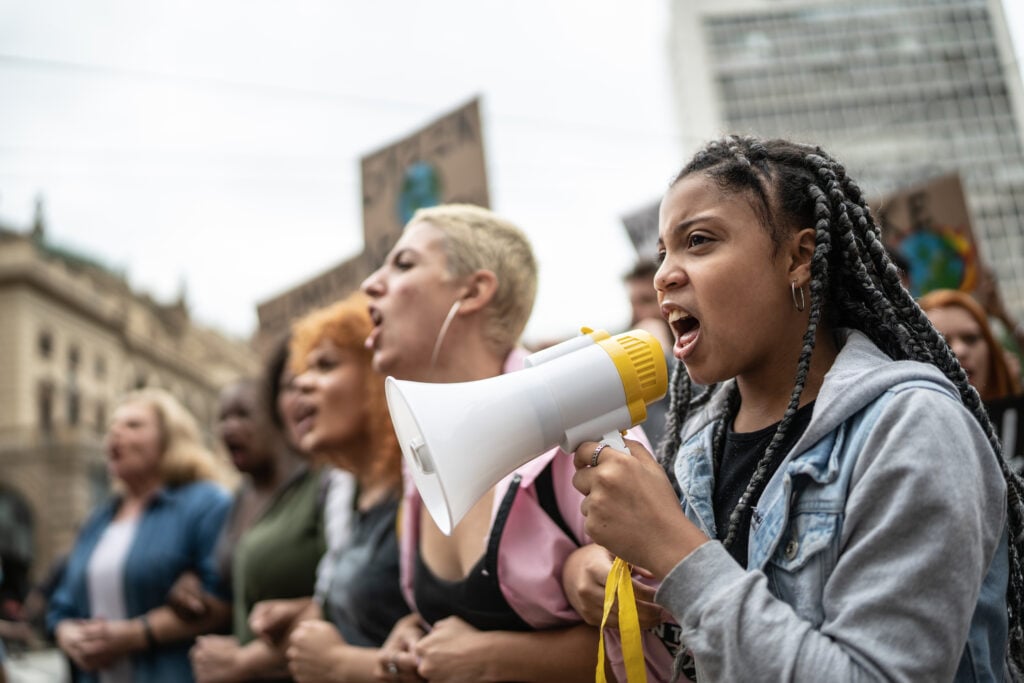
The tactic of deliberate disruption, in which one deliberately interrupts or sabotages an opponent’s speech or event, has a long and ignoble history in American political life. In the 1970s, Saul Alinsky’s Rules for Radicals elevated disruption from an occasional breach of etiquette to a celebrated tool of political warfare. Alinsky taught that the purpose of activism was not merely to persuade but to force confrontation, to create tension, and, where necessary, to shut down the activities of those on the other side. From there, the tactic seeped into progressive politics more broadly. The idea was simple: if you cannot win the argument, prevent the argument from happening.

In recent years, this has become a defining feature of left-wing activism. The targets have often been conservative speakers on college campuses or public figures brought in by student organizations, community groups, or think tanks. Groups like BLM, Antifa, and more recently anti-Israel activists, have perfected the art of the so-called “heckler’s veto.” They organize mass interruptions, shout down speakers until the event cannot proceed, sabotage microphones or lighting, or create security threats that force cancellations. The end result is the same: the exchange of ideas is replaced with noise, intimidation, and, often, physical danger.

The costs are not trivial. Organizations spend tens of thousands of dollars to rent space, secure audio-visual equipment, and pay for professional security. Speakers travel great distances, often without pay, to share their ideas. Attendees spend time and money to be there, to listen, and to participate in an exchange of views. When one or two activists decide that their disapproval justifies dismantling that event, they are not merely being rude. They are depriving every attendee of their civil rights. The First Amendment protects not only the right to speak but also the right to hear. Courts have repeatedly recognized that government officials have an obligation to protect that right from disruption. The law does not enshrine a right to drown out someone else.

Supporters of disruption claim that it is simply another form of protest. They will say that their speech is just as valid as the speaker’s. This is a false equivalence. Protest is the act of expressing opposition, and it is most effective when it does not involve silencing others. Holding a sign outside the event, writing a rebuttal, organizing a counter-event, these are all protected and legitimate ways to challenge ideas. But to enter a room where people have gathered for a lawful purpose, and then to make it impossible for that purpose to be fulfilled, is not an exercise of free speech. It is an act of coercion.

The moral problem is as obvious as the legal one. The United States has thrived for over two centuries because it has generally allowed ideas to be contested in public forums. The core principle of a free society is that bad ideas are defeated by better ones, not by drowning them out. If you have to shut down your opponent to win, you are tacitly admitting that your position cannot withstand scrutiny.

What is particularly troubling now is the temptation for the political right to begin adopting this tactic. For decades, conservatives have been the targets. The outrage has been genuine and justified. We have rightly argued that when left-wing activists disrupt our events, they are not engaging in democratic debate but in authoritarian suppression. Yet, there are recent examples of right-leaning activists attempting to disrupt events hosted by progressives. Some have justified it as payback, others as necessary to counter the left’s dominance in cultural institutions. This is a mistake.

When conservatives disrupt, they undermine their own moral authority. We cannot credibly defend free speech while engaging in the same suppression we decry. There is a legitimate place for hard questioning, a man-on-the-street challenge to a politician as they head to their car, or pointed questioning during a designated Q&A session. There is even a long tradition of passionate, confrontational, even satirical, engagement during public comment periods at town halls. These formats allow for dissent without destroying the structure of the event itself. But to deliberately break up a scheduled address or a lawful public hearing is to cross the line into the territory we have long opposed.

This is not about being polite. It is about preserving the fundamental operating system of a free society. If disruption becomes the norm, then no one will be able to count on having their say. Every political faction will come to believe that the only way to be heard is to keep others from speaking. The result will not be a richer debate but a shouting match where the loudest, angriest faction wins by default.

Some will argue that disruption is justified in extreme circumstances, that certain views are so dangerous they do not deserve a hearing. This argument is a perennial temptation for authoritarians of every stripe. The problem is that the definition of “dangerous” is inevitably subjective. Once the precedent is set that unpopular speech can be shouted down, the scope of what counts as “unacceptable” will expand to encompass anything the ruling faction dislikes. History shows that those who wield the censor’s power eventually find it turned against them.

There is a straightforward test for whether your protest respects free speech. Ask yourself: am I allowing the other side to make its case to those who have chosen to listen? If the answer is no, you are not protesting, you are censoring. And if you are censoring, you are doing something fundamentally at odds with the principles that sustain a free republic.

The remedy is not complicated. Universities, municipalities, and event organizers must enforce rules that distinguish protest from disruption. Security should be trained and empowered to remove individuals who cross that line. Courts should continue to recognize the right to hear as part of the broader right to free expression. And activists, on both left and right, should recommit themselves to the discipline of persuasion rather than the intoxication of silencing others.

A society that cannot tolerate hearing what it despises is a society that cannot remain free. Disruption may seem like a quick way to win a political battle, but it corrodes the very ground on which all political battles are fought. Conservatives should resist the urge to mirror the left’s tactics, not because we are weak, but because we are committed to something stronger than brute force, the belief that truth emerges when all sides can speak.

The Quiet Jihad: Islamist Infiltration Became Academic Orthodoxy In America


Screenshot via X [Credit: @amuse]

In 1991, Mohamed Akram, a senior figure in the Muslim Brotherhood, drafted what seemed to many at the time an arcane internal strategy document. Titled An Explanatory Memorandum on the General Strategic Goal for the Group in North America, the memorandum was not a prediction, nor a mere expression of hopes, but a plan. Its words were plain and precise: to undertake a “civilizational jihad” aimed at eliminating Western civilization from within. In short, a campaign to reshape the United States in accordance with Islamist ideals, not through bombs or bullets, but through institutions, coalitions, and long-term ideological subversion.

The document was discovered in 2004 during an FBI raid on the home of Ismail Elbarasse, a member of the Muslim Brotherhood’s Palestinian Committee and a former board member of the Holy Land Foundation. That foundation was later convicted of funneling millions to Hamas. The memorandum, entered as evidence in the largest terrorism financing trial in US history, should have been a siren. Instead, it was filed away, dismissed by many commentators as the paranoid blueprint of an overzealous ideologue. They were wrong.

Some may object: conspiracies are a dime a dozen. Anyone can draft a document. But what makes this memorandum exceptional is not only its clarity and specificity, but its remarkable congruence with developments in American civic life over the past three decades. Akram named names. He listed organizations, most still active today, and gave precise instructions on how to steer American political and cultural institutions toward the Brotherhood’s ends. This was not a fantasy. It was a plan of operation. And now, more than thirty years later, the United States is living through its implementation.

Let us begin with the objective itself. The memorandum spells it out without euphemism: “eliminating and destroying the Western civilization from within and ‘sabotaging’ its miserable house by their hands and the hands of the believers.” This was not a call to dialogue. It was not a call to integrate. It was a declaration of ideological conquest. But unlike the brutal immediacy of al-Qaeda or ISIS, the Brotherhood’s vision is subtle. Their preferred weapons are not explosives, but ideas. Their preferred terrain is not the battlefield, but the university, the courtroom, and the NGO boardroom.

The most consequential battlefield has proven to be academia. A generation of scholars, grants, endowments, and academic chairs have seeded American universities with ideas sympathetic to Islamist critiques of the West. The clearest example is Dr. Jonathan Brown a convert to Islam and the Alwaleed bin Talal Chair of Islamic Civilization at Georgetown University. In June 2025, Dr. Brown made headlines for suggesting, on X, that Iran should launch a symbolic missile strike on a US military base. He framed this not as fantasy but as strategic balance. Even more astonishingly, Brown retains a position training American diplomats.

This is not guilt by association. It is a pattern. Dr. Brown has praised Islamist movements and has been linked, both ideologically and institutionally, to the Brotherhood. His father, also a convert to Islam, was deported from the US in 2015 for supporting terrorist causes. That alone would merit scrutiny. But the larger context reveals more: Brown is not an outlier. He is emblematic of a trend in which Western universities offer sanctuary, prestige, and even state influence to figures deeply aligned with ideological opponents of the American regime.

Why is this allowed? The answer is both structural and ideological. Structurally, the Brotherhood has worked for decades to legitimize itself through front organizations. CAIR, ISNA, MSA, and NAIT, all named in the memorandum, have entrenched themselves within civic life. They have leveraged the language of civil rights, cultural pluralism, and social justice to deflect scrutiny. But this is not the pluralism of the American Founders. It is a calculated mimicry, a rhetorical Trojan horse. CAIR, in particular, has grown powerful enough to influence corporate training sessions, FBI outreach, and even school curricula. The same group that was named an unindicted co-conspirator in a terrorism financing case now advises American institutions on Islamophobia.

The ideological fuel for this strategy is the concept of “soft jihad.” The Brotherhood’s genius was recognizing that ideological capture could be more enduring than terrorism. To borrow from Antonio Gramsci, cultural hegemony precedes political revolution. The Brotherhood has pursued its hegemony not by overt domination but by normalizing its worldview. Consider the linguistic sleight-of-hand: criticism of Islamist ideology is branded as racism. Security concerns are dismissed as Islamophobia. Calls for assimilation are recast as xenophobia. The cumulative effect is not merely the silencing of dissent, but the transformation of public morality. It is not merely that Americans are being told not to criticize radical Islam. They are being trained to believe that doing so is immoral.

Take the campus protests in 2024 and 2025. Demonstrations ostensibly in support of Palestinian rights quickly metastasized into calls for the abolition of Israel, attacks on Western values, and explicit praise for Hamas. At Columbia, UCLA, and Harvard, protesters chanted slogans directly lifted from Brotherhood propaganda. The phrase “From the river to the sea” is not a geographic aspiration. It is a genocidal demand. It aligns precisely with Hamas’s stated goal: the eradication of the Jewish state. Yet these protests were often protected, even praised, by university administrators. In some cases, professors joined the chants. In others, students who dissented were harassed or disciplined.

Again, the question is: how did this happen? The answer is that the Brotherhood never aimed to win by numbers. It aimed to win by leverage. Infiltrating a university’s DEI board (regardless of what they’re calling it today) is more strategic than converting a neighborhood. Capturing a seminary is more effective than radicalizing a mosque. Influence within media and academia shapes future diplomats, journalists, and lawmakers. Consider again Dr. Jonathan Brown, who holds a prestigious post at Georgetown University’s School of Foreign Service, the institution tasked with training America’s next generation of diplomats. He is not merely offering courses in comparative religion or Islamic history. He is shaping worldviews, teaching the values and ideological frameworks that mirror those advanced by the Muslim Brotherhood. Over time, this kind of influence bends not just the institutions but the nation’s moral compass.

Some might say this is mere moral panic. They will ask for proof. But the proof is the very document itself, affirmed by the Department of Justice, entered into evidence in federal court, and consistent in substance with the outcomes we now witness. The memorandum was not only a statement of intent. It was an instruction manual. And like a well-executed recipe, it has produced its intended result.

What is needed now is not hysteria, but clarity. Clarity that Islamist ideology is not identical to Islam, that freedom of religion is not a license for subversion, and that tolerance cannot be the suicide pact of a civilization. The United States has every right, and indeed a duty, to guard its institutions from ideological capture. That does not mean banning belief. It means understanding belief systems that explicitly reject the Constitution, that see liberty as vice and pluralism as sin, cannot be treated as neutral participants in the civic order. They are not here to join the republic. They are here to replace it.

Akram and his colleagues were honest about their intentions. That is more than can be said for their apologists in the West. To them, the memorandum is either fiction or an irrelevant historical artifact. But the architects of civilization must contend with realities, not hopes. The Brotherhood’s strategy was not shouted from a pulpit. It was whispered in boardrooms, university seminars, and foundation grant meetings. It is slow. It is patient. But it is effective.

The question is whether Americans, and particularly their leaders, will have the courage to name the problem. The stakes are not abstract. They are institutional integrity, national security, and civilizational continuity. For the Brotherhood, victory does not require tanks. It requires silence. It requires our unwillingness to speak plainly, to draw lines, to identify hostile ideologies as such.

And so we return to the memorandum. It warned us. It showed its hand. And now it is executing its strategy, step by step, as outlined over thirty years ago. Those who choose to ignore this do not merely risk being proven wrong. They risk surrendering a civilization in slow motion.

Debunking The FUD Around Iran’s Nuclear Timeline


It has become a familiar routine. A leak, a whisper, a headline: “Iran could build a bomb in five years.” Then the predictable symphony follows, Democrats feign alarm, the media conjures doom, and the public is offered a neatly packaged dose of FUD: fear, uncertainty, and doubt. But this latest installment, suggesting that a post-strike Iran could reconstitute a nuclear weapons program from scratch and possess a bomb within five years, is not alarming because it is implausible. It is alarming because it is entirely reasonable, and yet is still being weaponized as if it were a revelation.

Here is the truth: we struck Iran’s enrichment facilities, and we destroyed them. The centrifuge halls are gone. The command nodes, the processing plants, the material stocks, all rendered rubble. What remains is ambition, not infrastructure. Yet Democrats now claim that because Iran can reconstitute its program and build a bomb in five years, the strike must have failed. That conclusion is not just illogical, it is dishonest.

Let us begin with the facts. Constructing a uranium enrichment facility is not easy, but it is also not the Manhattan Project. It is an industrial task, not a scientific miracle. The construction of modern enrichment plants, such as Urenco USA and France’s Georges Besse II, took between three and five years. Iran’s own Natanz facility, which was first revealed in 2002 but had been under construction for years, was partially operational by 2003. Fordow, which the West only learned of in 2009, was already close to operational. Thus, from a cold start, Iran could build a hidden enrichment site in three to five years. This estimate is neither speculative nor controversial, it is grounded in public record.

Enrichment itself is faster. To produce one nuclear weapon, Iran would need roughly 20 kilograms of highly enriched uranium, or HEU. That requires about 4,000 Separative Work Units (SWU). With 4,000 IR-1 centrifuges operating at 1 SWU per year, enrichment to weapons-grade would take approximately one year. With 2,000 centrifuges, the timeline stretches to two years.

If this sounds simple, it is because it is. Uranium enrichment is not alchemy. The science is known, the machines are understood, and the material requirements are finite. Any sufficiently advanced industrial state with nuclear scientists and a few hundred million dollars could do it. Indeed, Pakistan did it in the 1980s. North Korea did it in the early 2000s. Iran already has. The knowledge cannot be unlearned.

The cost? Roughly 250 million dollars. That figure includes underground facility construction (50-100 million), centrifuge production (around 100 million), technical expertise (somewhat less, given Iran’s extant knowledge base), and operations. In a world where US government agencies lose that much in annual accounting errors, the idea that a state sponsor of terror cannot marshal such resources over five years is laughable.

So let us clarify: Iran can build a bomb in five years not because our strike failed, but because five years is the standard timeline for anyone with money, expertise, and motive. To suggest this timeline proves futility is to mistake gravity for failure, the fact that a rock falls when dropped does not mean the act of lifting it was in vain.

This brings us to the real problem. The supposed bombshell, that Iran could rebuild its program and produce a nuclear weapon in five years, is now being presented by Democrats as evidence that our recent strike must have failed. But the conclusion does not follow from the premise. If anything, the fact that Iran could take five years to reconstitute its program affirms the success of the strike. We destroyed their facilities. They are starting from scratch. And five years to rebuild is not a sign of failure, it is the very definition of a strategic setback.

In other words, the five-year timeline is not a deterrent to action. It is a window of opportunity. If anything, it buys time, time that should be used to monitor, disrupt, and if necessary, strike again. There is nothing sacred or irreversible about a five-year head start.

This inversion of logic, treating the reasonable as unthinkable, is a recurring pattern in progressive foreign policy circles. It reflects a deeper flaw: the refusal to treat Iran as an adversary operating with agency, strategy, and goals. The FUD machine presents Iran as a ghost, capable of appearing anywhere, invisible to satellites, immune to sabotage. But Iran is not a spirit. It is a state. It has roads, budgets, scientists, and constraints. Its facilities leave traces. Its activities can be monitored. Its secrecy is limited by physics.

Consider the clandestine nature of construction. Critics claim that a hidden enrichment site might delay discovery and therefore delay interdiction. But the evidence says otherwise. Natanz was detected early enough to limit its progress. Fordow, despite being built underground, was discovered in time. In both cases, Western intelligence, aided by defectors, sensors, and satellite imagery, penetrated Iran’s veil of secrecy. The idea that a new site could be built from scratch, fully outfitted, enriched, and armed with zero detection over five years is not only improbable, it is incompatible with historical precedent.

There is also the question of intent. Iran is not merely developing nuclear technology for fun. Its interest in nuclear weapons is strategic. A nuclear-armed Iran would alter the regional balance of power. It would enable greater aggression by Hezbollah and other proxies. It would make Israel’s security calculus more desperate. It would imperil American forces and interests.

Therefore, allowing Iran a five-year glide path to the bomb is not prudence. It is negligence. Worse, it is disingenuous. The Biden-era strategy of appeasement was not borne of ignorance about Iran’s capabilities. It was an ideological commitment to diplomacy as moral posture, rather than strategic tool. This same illusion now resurfaces under the guise of concern: we must not strike, lest we trigger a rebuild. But Iran is always rebuilding. That is what adversaries do.

To be sure, building a covert enrichment site is not trivial. It requires excavation, materials transport, energy sources, and security. But none of these hurdles are insurmountable. They are merely challenges to be delayed, not impossibilities to be dismissed. And delay is enough. Every year of delay is another year of non-proliferation. Every disrupted timeline is a gain. That is why a strike that sets Iran back five years is not a failure. It is a success.

If this seems cold, recall the alternative. The path of least resistance, in which we do not strike, Iran does not stop, and the region careens toward a nuclear Middle East, is not peace. It is entropy.

The media’s presentation of the five-year scenario as a horror story misunderstands the nature of proliferation. The nightmare is not that it can happen in five years. The nightmare is that we pretend it cannot.

To summarize: it is not just plausible that Iran could build a bomb in five years. It is expected. The science permits it. The history supports it. The money is there. The knowledge is there. And so long as the West believes this is too quick to be possible, Iran is gifted one more illusion to exploit.

We must not allow the language of fear to displace the clarity of reason. Five years is not a myth. It is a metric. One that should inform our policy, not paralyze it.

The Art Of The (Nuclear) Deal: Trump’s Final Push On Iran (and my final personal thoughts)


The White House, Public domain, via Wikimedia Commons

Why would a president long derided as a reckless isolationist now contemplate US military intervention in the Middle East’s most volatile conflict? For those who have mistaken Donald J. Trump’s strategic instincts for impulsive belligerence, the answer may surprise them. He is not preparing to start a war. He is attempting to end one, the slow, silent war over Iran‘s nuclear ambitions, on terms favorable to the United States, and ultimately, to peace itself.

To understand what Trump is doing, one must understand what he values: results. The aim is not perpetual conflict but lasting leverage. He has long demonstrated an aversion to endless wars, having resisted escalations in Syria and Afghanistan, pulled out of the Obama-era Iran nuclear deal in 2018, and brokered the Abraham Accords, a seismic shift in Middle Eastern diplomacy that eluded his predecessors for decades. His track record is that of a president who prefers peace but understands that peace is rarely won by appeasement.

Now, with Iran reeling from devastating Israeli strikes and its nuclear infrastructure reduced to rubble, Trump is positioning the United States not as an aggressor, but as the final arbiter. He is offering Tehran a choice: deal or doom. And to make that choice real, he is doing what the left-leaning press and even some of his MAGA supporters refuse to countenance, he is showing strength. Real, credible, force-backed strength.

Iran’s current situation is bleak. On June 13, 2025, Israel launched a barrage of coordinated strikes on Iranian nuclear facilities, crippling deep underground enrichment sites once thought impervious to attack. Command and control infrastructure was obliterated. High-ranking Iranian Revolutionary Guard commanders and nuclear scientists have either been killed or vanished. Iranian airspace, once defended with Soviet-era zeal, is now exposed. And the economy, battered by decades of sanctions and internal mismanagement, is gasping for breath.

Yet Iran’s Supreme Leader, Ali Khamenei, has rejected overtures. Despite Trump’s letter in March warning of severe consequences if no nuclear deal was reached, and despite a promising round of negotiations in April and May where Iran indicated a willingness to limit enrichment, the regime chose pride over prudence. It spurned the opportunity. It gambled that Trump, unlike Israel, would blink.

But this is not a president known for blinking. When Trump issued his two-week ultimatum, he was not setting a military timetable but a diplomatic countdown. The real clock is psychological, not operational. It is meant to signal resolve, to induce panic among the Iranian elite, to tempt the regime with visions of economic revival, foreign investment, and legitimacy, if only they renounce their nuclear aspirations. In short, it is vintage Trump: maximal pressure, minimal risk.

It is worth recalling that Trump has used this script before. In 2017, he threatened North Korea with “fire and fury,” only to become the first US president to set foot in the Hermit Kingdom. In 2019, he called off a retaliatory strike on Iran just minutes before launch, not because he feared conflict but because he calculated that escalation would forfeit future leverage. The current Iran strategy follows the same logic. Military power is not an end. It is a means of forcing a decision.

To the casual observer, Trump’s rhetoric, calling for Iran’s “unconditional surrender” and hinting at US control over Iranian skies, may sound like bluster. But to the trained eye, it is clear what he is doing. He is co-opting the expectations of the neoconservatives and Israeli hawks who have long pushed for war. By standing beside them rhetorically, he magnifies the threat to Tehran. Yet he remains fundamentally independent of them. He is not interested in a regional occupation, nor in endless entanglements. He is interested in Iran choosing survival over martyrdom.

Critics, particularly in the press, have misread his approach as reckless brinkmanship. They argue that threatening war only invites escalation. But they miss the essential logic of deterrence. To deter, one must be seen as willing to act. Promising restraint in advance neuters leverage. Telling adversaries you will never strike is not peacekeeping, it is preemptive surrender. Trump, unlike his predecessors, understands that.

Of course, there is risk. There always is. If Iran strikes US troops or assets, and there have already been rumblings of such intent, Trump will respond decisively. But that would be a reaction, not a choice. His posture is calibrated: avoid war if possible, win quickly if not. The red line is American blood, not Israeli. In this way, Trump avoids the neocon trap of fighting other nations’ wars. But he remains unafraid to fight when American lives are endangered.

It is also important to consider the internal dynamics in Tehran. Khamenei is aging. The regime’s legitimacy is fragile. Young Iranians are disillusioned. The economic pain is severe. In this context, Trump’s offer of sanctions relief and investment carries more weight than the mullahs care to admit. The threat of bunker-buster bombs may target their nuclear sites, but the real strike is psychological. The regime’s very survival is at stake. The promise of reprieve, if they capitulate, is real.

To critics on the right who worry that Trump is being lured into a neocon war, I would ask this: has he not shown, time and again, a disdain for that trap? His entire presidency has been a repudiation of the Bush-era foreign policy consensus. He does not seek to reshape Iran in America’s image, only to make sure Iran cannot threaten us or our allies with nuclear blackmail. That is a realist goal, not a Wilsonian one.

And to those on the left who claim that Trump is sabotaging diplomacy with saber-rattling, the question is: what diplomacy? The previous deal enriched Iran while delaying the inevitable. It relied on unverifiable promises and blind faith. Trump’s diplomacy is different. It is transactional, verifiable, and backed by force. It may offend elite sensibilities, but it has the merit of clarity.

The current moment is thus not a rush to war but a rare opportunity for resolution. Iran is weak, isolated, and cornered. The US, under Trump, is strong, resolute, and clear-eyed. The two-week window is not a countdown to bombs, it is a countdown to a deal, a better one, on our terms. The real danger lies not in Trump’s threats, but in the possibility that Iran fails to understand he means them.

My final thoughts. My personal thinking is also that Netanyahu has for the past 20 plus years been manipulating the US into Middle East Wars for its own devices, wanting to take control over the Muslim states while Israel has in total years, manipulated US presidencies for 70+ years. The US helping take out Iran will push for other Muslim, Chinese and Russian actors to bear down against the US ‘bully’. Iran closing in on nuclear weapon fears have been going on for over 20 years without those trepidations materializing, but now that Israel has led a preemptive strike against their top leaders and possible damage to some centrifuges in the process, Netanyahu’s act does nothing but support Iran for wanting nuclear options and that is directly because of Israel’s latest actions. There is an extreme danger to this entire situation, and it has been forced upon this current cabinet by Netanyahu. I see nothing good coming out of this if the US helps reduce Iran, thereby giving Netanyahu everything he’s been wanting over the Middle East for the past 20+ years. The state of Israel has been too embedded in this country ever since its founding.

Green Card-Holding Palestinian Trump’s Deporting Gets Even Worse News as Justice Finds Him


Palestinian activist Mahmoud Khalil is pictured during an April protest at Columbia University campus in New York. (Ted Shaffrey / AP)

Palestinian activist Mahmoud Khalil is pictured during an April protest at Columbia University campus in New York. (Ted Shaffrey / AP)

Mahmoud Khalil, a Palestinian activist and former Columbia University graduate student detained by immigration authorities over the weekend, appears to have violated explicit federal immigration laws.

Immigration and Customs Enforcement agents arrested Khalil, a permanent resident with a green card, on Saturday.

The agents originally told Khalil his student visa was being revoked, according to The Associated Press, which quoted Khalil’s attorney, Amy Greer.

Greer told the AP she spoke on the phone with the agents during the arrest and said her client had a green card. The agent then told her the green card was being revoked instead, Greer said, according to the AP.

On Sunday, in a post on the social media platform X, Secretary of State Marco Rubio announced that the federal government will be “revoking the visas and/or green cards of Hamas supporters in America so they can be deported.”

A spokeswoman for the Department of Homeland Security said Khalil was arrested “in support of President Trump’s executive orders prohibiting anti-Semitism” because he “led activities aligned to Hamas, a designated terrorist organization,” according to the AP.

On Monday, however, a federal judge in New York blocked Khalil’s deportation. Judge Jesse M. Furman said that Khalil must remain in the United States “to preserve the court’s jurisdiction” as the court considers his case, according to NBC News.

A hearing for the case is scheduled in federal court for Wednesday.

Other protesters have assembled in New York City to demand the release of Khalil.

Completing this poll entitles you to The Western Journal news updates free of charge via email. You may opt out at anytime. You also agree to our Privacy Policy and Terms of Use.

Pennsylvania Democratic U.S. Rep. Summer Lee also came to his defense, asserting on social media that “Mahmoud Khalil should be at home with his 8-month pregnant wife.”

But it appears that federal law is rather clear about support of a terrorist organization serving as grounds for removal from the country — and that is likely worse news for Khalil.

When discussing “inadmissible aliens,” the law specifically includes any foreigner who “endorses or espouses terrorist activity or persuades others to endorse or espouse terrorist activity or support a terrorist organization.”

The U.S. government has designated Hamas as a “foreign terrorist organization” for nearly 30 years, according to a webpage from the Office of the Director of National Intelligence.

The group uses a variety of weaponry to “to advance attacks against Israeli military forces and civilians.”

Hamas also “engages in cyber espionage, computer network exploitation, and kidnapping operations.”

No matter how much leftist protesters and lawmakers may complain, Khalil does not belong in the United States if he is going to align himself with terrorist organizations.

For non-citizens, being in the United States is a privilege, not a right.

Wasting the incredible opportunity of attending an Ivy League school and building a better life after graduation is incredibly foolish.

The last thing the United States needs is the importation and continued presence of foreigners trying to drag us into their conflicts.

This deportation should send a crystal clear message to the rest of the country that coming here for such activities, especially in support of clearly designated terrorist organizations, is not allowed.

Why is the U.S. even in the U.N?


Did the United States join in with the other world leaders to build a safe and altruistic organization? Only if your definition of safe and altruistic is akin to believing your mother is the tooth fairy.

Nope! The instigators of, first, the League of Nations and then the United Nations had no room for charitable instruments; the plan was to set up a governance system that would eventually be used to take control of the entire world. Alger Hiss, a known Russian spy, had been Director of the Carnegie Foundation and then right-hand man for Franklin Delano Roosevelt, orchestrated the writing of the U.N. Charter.  It was built by the Council on Foreign Relations (CFR) (in concert with Hiss) and funded by the Rockefellers (and other globalists) to control the world – courts, weapons, economy, and even our minds. And it usurps our sovereignty.

With those travesties born at the Bretton Woods Conference in 1945, the CFR also gave us the International Monetary Fund (IMF) and the World Bank. The IMF was set up to “control international exchange rates and to stabilize currencies. President Franklin D. Roosevelt took us off the gold standard so a world currency could be established. Nixon signed an executive order declaring that the U.S. would redeem its paper dollars for gold – and the IMF would serve as the world’s central bank. 

Again, why is the U.S. in the U.N? 

“The Council on Foreign Relations, established years after the Federal Reserve was created, worked to promote an internationalist agenda on behalf of the international banking elite. Where the Fed took control of money and debt, the CFR took control of the ideological foundations of such an empire — encompassing the corporate, banking, political, foreign policy, military, media, and academic elite of the nation into a generally cohesive overall world view.” Carroll Quigley, Tragedy and Hope. 

What’s happening? “In 1957, a congressional investigative committee revealed the following finding: In the international field, foundations, and an interlock among some of them and certain intermediary organizations, have exercised a strong effect upon our foreign policy and upon public education in things international. This has been accomplished by vast propaganda, by supplying executives and advisers to government and by controlling much research in this area through the power of the purse. The net result of these combined efforts has been to promote. ‘internationalism’ in a particular sense — a form directed towards ‘world government” and a derogation of “American nationalism’. The CFR has become, in essence, an agency of the United States government. [and its productions are not objective but are directed overwhelmingly at promoting the globalist concept.” 1

Why should the U.S. be out of the U.N?

Sponsored by the CFR, Count Richard Nicholas von Coudenhove-Kalergi, considered the “father of the European Union”, argued for the dissolution of national borders and the promotion of mass allogenic (genetically dissimilar) immigration. 2 He also called for the “elimination of the Caucasian race for the sake of a superstate”. 3

In rebuttal, Senator Pat McCarran on immigration legislation he co-authored:

“I believe that this nation is the last hope of Western civilization, and if this oasis of the world shall be overrun, perverted, contaminated, or destroyed, then the last flickering light of humanity will be extinguished. I take no issue with those who would praise the contributions which have been made to our society by people of many races, of varied creeds and colors. … However, we have in the United States today hard-core, indigestible blocs which have not become integrated into the American way of life but which, on the contrary, are its deadly enemies. Today, as never before, untold millions are storming our gates for admission, and those gates are cracking under the strain. The solution of the problems of Europe and Asia will not come through a transplanting of those problems en masse to the United States. … I do not intend to become prophetic, but if the enemies of this legislation succeed in riddling it to pieces or in amending it beyond recognition, they will have contributed more to promote this nation’s downfall than any other group since we achieved our independence as a nation.”

This could go on and on. It could be slid over the brainwashing/dumbing-down/corruption of our children in the schools through the United Nations Educational, Scientific and Cultural Organization (UNESCO), a vile part of the U.N. set up to make youth into brain-dead, useful idiots. You can read more in the Cancel Culture articles and so many good books written in the past 10-20 years exposing the lies and schemes of the United Nations anti-American, anti-Western Culture schemes.

As Tom DeWeese recently wrote: “The UN was wrong from its very beginning and wrong now because it has always sought to interfere with national sovereignty rather than to provide a unique forum to help keep the peace”.

The question is now: Why aren’t we doing everything we can to get the U.S. out of the U.N? That will solve most of the civilized world’s problems.

It’s time to slay that dragon.

Sources:

  1. Hearings before the Special Committee to Investigate Tax-Exempt Foundations and Comparable Organizations, House of Representatives, 83rd Congress., Second session on HP. Res. 217, Part 1, pages 1 to 943.
  2. Richard Coudenhove-Kalergi, Ein Leben fur Paneuropa pp. 28-32.
  3. Browne and Williams, The Killing of Uncle Sam, p.310