The Truth Is Out There

Posts tagged ‘politics’

Kamala’s Chaos: How Democrat-Funded NGOs Are Fueling America’s Criminal Gangs


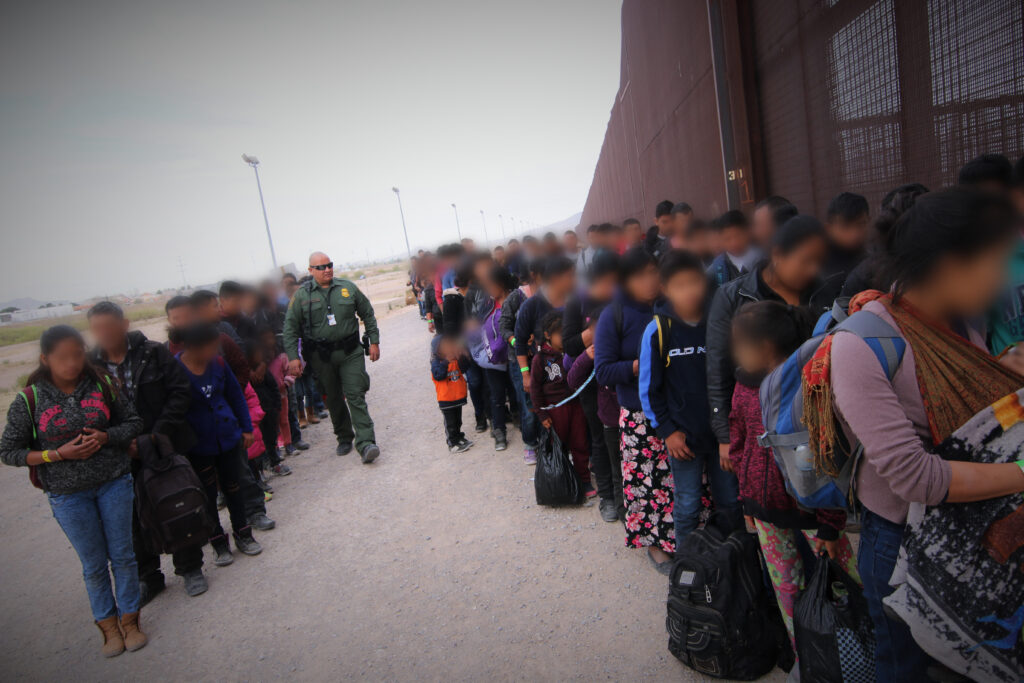
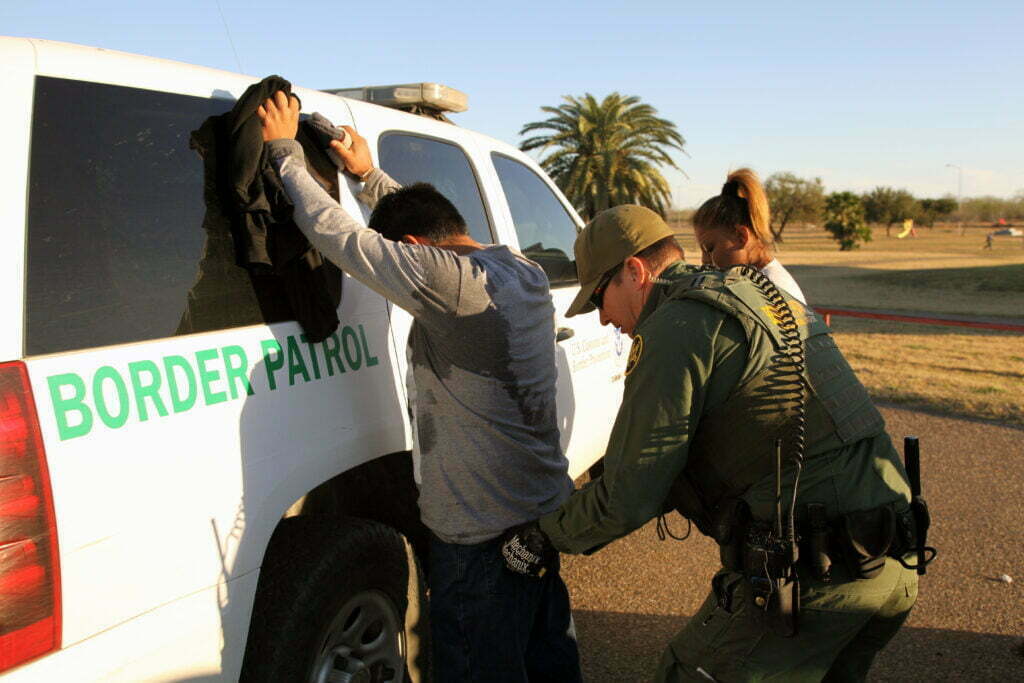
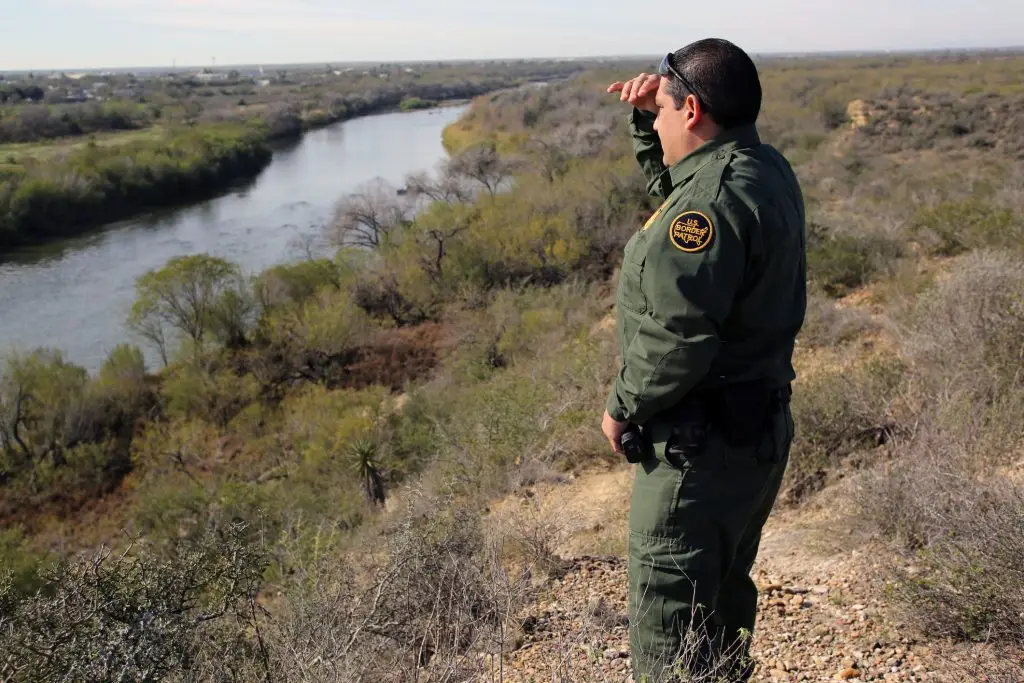
America’s immigration crisis is spiraling out of control, and it is no accident. This catastrophe is the result of deliberate choices by the Biden-Harris regime, especially Vice President Kamala Harris in her unofficial role as “Border Czar.” The so-called leadership of this administration has wreaked havoc on our state and local law enforcement, endangered communities and eroded the very fabric of our nation. It is a man-made disaster that could have been avoided—if not for the left’s obsession with open borders and uncontrolled immigration.

Since the Biden-Harris regime took power, billions of taxpayer dollars have been funneled through Non-Governmental Organizations (NGOs) that effectively serve as migration facilitation programs for unvetted foreign nationals. These dollars are channeled to Democrat-controlled NGOs, which in turn use the funds to flood American communities with waves of illegal immigrants. Make no mistake, this is not compassion—it is a cynical political strategy aimed at importing a new voter base. Democrats have given up on their traditional working class and minority voters, replacing them with individuals who will rely on the very programs Democrats promise to expand.

Among the groups taking advantage of this wide-open border are criminal organizations, like the Venezuelan paramilitary gang Tren de Aragua. Originally formed within Venezuela’s prison system, Tren de Aragua has rapidly expanded its operations across the Americas, and with the Biden-Harris regime’s open-door policies, they’ve gained a foothold right here in the United States. These are not run-of-the-mill criminals—Tren de Aragua is involved in drug trafficking, human smuggling, and a host of other violent activities. The group has already taken control of taxpayer-funded apartment complexes in four states. These are not just isolated criminal incidents; these are organized takeovers of American neighborhoods, facilitated by Kamala Harris’s grotesque negligence.

In San Antonio, Texas, police raids have uncovered Tren de Aragua‘s operations in at least four apartment complexes, including the Palatia Apartments, which has been used as a base for drug dealing and human trafficking​. The Democratic regime, in concert with their NGO partners, has literally handed over control of entire residential blocks to foreign criminal organizations, turning formerly safe neighborhoods into no-go zones. Residents live in fear as gang members take over the buildings, and federal law enforcement sits idly by.

The same story is playing out in Colorado. In Aurora, the Whispering Pines Apartments and part of The Edge at Lowry have been seized by Tren de Aragua members​. In a devastating twist, local law enforcement has been essentially neutered. They can only act once a crime is committed. Even if they suspect the entire complex is controlled by criminals, their hands are tied—thanks to federal policies shielding the activities of these so-called asylum seekers. The Biden-Harris regime, especially Kamala Harris, has ensured that crucial data about the residents of these federally-funded properties remains hidden from local authorities. This is a war on local control, and it is the Democrats who are waging it.

State police and local officers, those brave men and women on the front lines, are rendered powerless by bureaucratic red tape and federal indifference. Their primary duty—to protect and serve their communities—is being undermined at every turn by an administration more concerned with importing voters than protecting citizens. And it’s not just law enforcement feeling the effects; it’s every American citizen living in or near these newly-formed gang territories.

The crime wave that follows these gangs into our country is devastating. Crime statistics are rising in every area where Tren de Aragua has taken hold. But what is the response from the Biden-Harris regime? Deafening silence. In fact, Kamala Harris continues to dodge responsibility, focusing instead on photo ops and empty rhetoric. The real situation on the ground tells a different story. Tren de Aragua and other similar groups are not only here, but they are flourishing under the protection of misguided federal immigration policies. While Democrats continue to deflect blame, the hard reality is that their policies have made our country less safe.

It’s not enough to point out the danger, though. We must recognize the larger plan at play. The Democrats have long relied on a two-pronged approach to maintaining power: they use identity politics to secure the loyalty of minority voters, and when that fails, they turn to mass immigration as a means of demographic replacement. The left has abandoned working-class Black and Latino voters, whose values no longer align with their radical agenda, in favor of unvetted, unassimilated foreigners who they believe will eventually be granted voting rights, legal or otherwise. Harris is complicit in this scheme. Her failure to secure the border is no accident—it’s a deliberate choice aimed at reshaping the American electorate.

In less than two weeks, Americans will have a chance to reverse this trend. A vote for Donald Trump is a vote to end the Biden-Harris regime’s open-border policies and restore sanity to our immigration system. The contrast could not be clearer. Trump has made it clear that under his administration, America’s borders will be secure, criminals like Tren de Aragua will be deported, and American communities will once again be safe. Democrats will do everything in their power to keep the border open—because they know that without new voters, they cannot win. But we still have a choice.

What we are witnessing today is not just a failure of leadership; it is a calculated, cynical attempt to destroy the America we know and love. Kamala Harris’s refusal to enforce the law is not just incompetence—it is treachery. She has made it impossible for law enforcement to act while empowering the very criminals that threaten our way of life. The stakes could not be higher.

We have reached the tipping point. If we do not act now, if we do not elect leaders who will prioritize American citizens over illegal immigrants and foreign criminal organizations, then we are condemning ourselves to four more years of unchecked violence, open borders and criminal chaos. Gangs like Tren de Aragua will not stop with a few apartment complexes—they will continue to expand their reach, and the Democrats will continue to turn a blind eye.

It’s now or never. If you believe in the rule of law, if you want to keep your family safe, then the choice is clear. Donald Trump is the only candidate willing to take the bold action needed to stop this madness. The Biden-Harris regime has made their priorities clear—import voters, enable crime and destroy American sovereignty. Let’s make ours just as clear: secure the border, protect our communities and take our country back.

Silencing The Patriot: How Stephen Bannon’s Imprisonment Rigged The Election Narrative


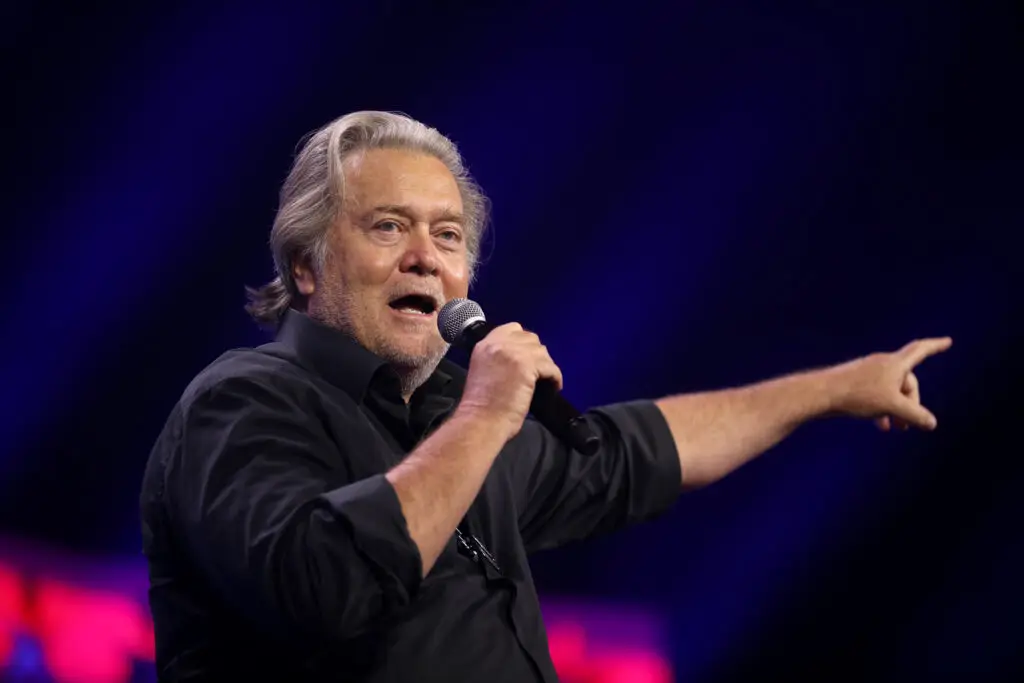
Tomorrow marks the return of Stephen K. Bannon from his unjust incarceration in the Federal Correctional Institution in Danbury, Connecticut—a return that comes far too late, with just days before Election Day. It was a calculated act of election interference. By the time Bannon is able to speak, as many as 30% of Americans will have already voted, and the vast majority of the rest will have already made up their minds—without the benefit of hearing Bannon’s words and insights. This was no accident; it was a deliberate move to silence him during the most consequential election of our lives, effectively rigging the narrative in favor of the Democrats, with Bannon—one of the loudest, most passionate critics of the Biden-Harris regime—removed from the battlefield. This wasn’t just a brief stint; this was a calculated, politically motivated act to strip a man of his freedom and, more significantly, to silence his voice during a critical time in the campaign.

Bannon spent four months behind bars for contempt of Congress—a penalty concocted out of partisan spite, purely because of his loyalty to President Trump. The Democrats took away his liberty, and more insidiously, they took away his ability to speak out against their chosen candidate, Kamala Harris, who has been installed without a single vote cast by the American people. This was not justice; it was vengeance.

The origins of Bannon’s contempt of Congress charge are steeped in the blatantly biased actions of the January 6th Select Committee. This committee, which sought Bannon’s testimony regarding the events of January 6, 2021, was legally dubious from the outset. The House of Representatives, in an unprecedented move, barred Minority Leader Kevin McCarthy’s chosen Republican members from joining the committee. Instead, Nancy Pelosi handpicked the Republicans, specifically ensuring they were vocal critics of Donald Trump. This manipulation destroyed the credibility of the committee, making it a purely partisan entity with no genuine cross-party representation. Bannon, aware of these obvious problems, refused to comply, citing executive privilege, which he argued extended to his communications with then-President Trump. This privilege had been respected in past administrations, yet was outright ignored when Bannon asserted it.

Congress, determined to make an example of Bannon, altered the rules to create the J6 Committee in the first place and then pushed through the contempt charge. Traditionally, disputes over executive privilege were handled through negotiations or, if necessary, civil litigation. But the January 6th Committee took the unusual move of referring Bannon for criminal prosecution—an approach that reeked of political retribution rather than a genuine quest for justice. Bannon argued that he was bound by Trump’s invocation of executive privilege, and to testify would be a betrayal of that confidence. He also pointed out that his role as a private citizen during the events in question further complicated the committee’s demand. Nevertheless, the committee, uninterested in these nuances, chose to pursue the harshest possible response.

– Advertisement –

Raheem Kassam, a longtime Bannon confidant and conservative firebrand, has already built up the excitement, promising a newly emboldened and invigorated Bannon. Expect Bannon to speak out against the government bureaucracy, to act as the spark for a movement that demands accountability from the very forces that sought to sideline him. Kassam confirmed that Bannon’s “War Room” will not only resume but expand, marking Bannon’s determination to continue the fight.

Bannon’s stay at FCI Danbury was not without its human moments. For months, the prison’s low-set two-story concrete walls held a reluctant guest—a man whose name draws both ire and adulation. Bannon was not the typical inmate; he wasn’t just killing time. Instead, he became a voice within the prison, occupying a place within the prison’s “white car,” a cluster that included New Yorkers and Philly mafia members, and drew in those serving time for financial crimes. Every day, Bannon walked the track, sharing stories and answering questions from fellow inmates. He became an unlikely confidant, listening to their concerns, many of which echoed his own views on the erosion of American freedoms. Steve Bannon, whether confined or free, is always in his comfort zone when he is fighting for what he believes is right.

The system ensured Bannon wouldn’t leave without a final bit of bureaucratic pettiness. A week before his release, the Danbury prison warden acknowledged that Bannon had accrued sufficient “credits” to have been released ten days earlier, yet that request was bogged down by endless delays—a familiar tune for those subjected to the unpredictable whims of our bureaucratic state. Even Judge Carl Nichols, a Trump appointee, could do nothing against the machinery of an intransigent, deep-rooted government.

The contempt charge was a clear example of lawfare—using the legal system as a tool of political warfare. Bannon’s refusal to testify was based on long-established legal principles of executive privilege. Traditionally, such disputes have been addressed in civil courts. The committee’s response, however, was entirely disproportionate. Take, for instance, Merrick Garland, who has similarly refused to comply with a congressional subpoena regarding Biden’s testimony to Special Counsel Hur. Unlike Bannon, Garland faces no jail time, no criminal charge—just the protection of a justice system that serves its own. Likewise, Homeland Security Secretary Alejandro Mayorkas has repeatedly ignored congressional demands with no consequences from the Department of Justice. Hunter Biden, too, blatantly disregarded congressional subpoenas, yet remained unscathed. The message is clear: there is one set of rules for Trump allies and another for the regime’s inner circle.

Will Retribution Follow?

With Bannon back in the fold, speculation is rife about who might find themselves in the crosshairs of a future Trump administration. Bannon has made it clear that certain figures—particularly those involved in the prosecutorial and investigatory arms of the Biden-Harris regime—should be concerned. Lisa Monaco, Merrick Garland and the senior members of the Department of Justice who have targeted Trump and his allies are at the top of Bannon’s “retribution” list. These figures, who have relentlessly pursued Trump through legal means, may soon face a reckoning of their own should Trump regain the presidency and allow Bannon to execute his vision of accountability.

– Advertisement –

But here’s the catch: Donald Trump may not let him. While Bannon has been vocal about his desire to seek justice and expose the corruption within the deep state, Trump, ever the pragmatist, may choose to keep Bannon’s fiery rhetoric in check, opting instead for a more strategic approach. Trump, whose political instincts are unmatched, might see broader risks in indulging Bannon’s retribution plans, preferring to avoid a perception of personal vendettas and focus on policy wins. Nevertheless, the mere possibility of Bannon’s resurgence is enough to make these bureaucrats and officials sweat. After all, Bannon is no ordinary voice in the MAGA movement—he’s its intellectual and strategic firebrand.

Further stoking these fears is the fact that the legal hounds are still after Bannon. Manhattan District Attorney Alvin Bragg, notorious for his partisan prosecutorial pursuits, continues to push a case against Bannon regarding the “We Build the Wall” project. Despite Bannon receiving a pardon from Trump in 2021 for similar federal charges, Bragg has resurrected the accusations in state court. This ongoing vendetta, even as Bannon remains a free man, shows that the left isn’t done trying to silence him. They know full well that a vengeful Bannon, with or without Trump’s blessing, could spell trouble for those in power who have wielded the justice system as a political weapon.

This isn’t just about justice; it’s about retribution, and for those who have gone after Bannon, there’s little comfort in believing Trump might hold him back. For Bannon, retribution may not be a matter of “if” but rather “when.”

Muckraker’s Response to NBC’s Hit Piece


BY Thomas Hicks 


Brandy Zadrozny @ SXSW 2019Creative Commons Attribution-Share Alike 2.0 Generic, via Wikimedia Commons

Over the last six months, Muckraker, in partnership with the Heritage Foundation’s Oversight Project, has been at the forefront of exposing the threat of non-citizen interference in American elections.

Far from being a “conspiracy theory,” the danger posed by non-citizen participation in American elections cannot be overstated, especially in swing states such as Georgia and Arizona, which were both decided by fewer than 12,000 votes during the 2020 presidential election.

Tens of millions of illegal alien non-citizens have been ushered into the United States and dispersed across all 50 states. Since the overwhelming majority of illegal aliens have no legitimate basis for an asylum claim, many will never appear for their designated court date. In the meantime, these same illegal aliens are being registered to vote.

Muckraker and the Oversight Project have spent the last few months visiting critical swing states and asking non-citizens if they are indeed registered to vote. At apartment complexes in GeorgiaArizonaNorth Carolina, and Minnesota, large percentages of non-citizens we spoke to admitted on camera that they are registered to vote. Some state the obvious—that they support Kamala Harris. Furthermore, we discovered that a Chinese illegal alien living in Los Angeles had been sent a voter registration form.

In response to our reports on this matter (one of which broke the internet with over 55 million views), the usual mainstream publications have done their best to discredit our findings. Today, NBC’s Brandy Zadrozny released a new propaganda piece highlighting Muckraker’s role in exposing this critical issue. In the X post where Brandy shared her article, she remarked that “the threat of widespread noncitizen voting isn’t real. It’s a conspiracy theory with racist roots…”

A few days before publishing the article, Brandy reached out to Muckraker founder Anthony Rubin with a request for comment on a host of questions and statements. Unsurprisingly, Brandy ignored nearly the entire response given to her request.

In the interest of total transparency, below is the entire request for comment from Brandy Zadrozny, along with the associated statement from Anthony Rubin.

We urge you to read the request for comment and our statement in its entirety, and then decide whether NBC is engaged in fair, unbiased journalism.

BRANDY ZADROZNY’S REQUEST FOR COMMENT

Good morning, Mr. Rubin and Mr. Howell:

As established, my name is Brandy Zadrozny and I’m a senior reporter with NBC News, working on a story about the belief in widespread noncitizen voting will fuel an attempt to steal the election from Donald Trump in 2024. I’m reaching out because you appear in our story, named among several others as pillars of the movement built on this belief.

I’m reaching out to give you an opportunity to clarify or comment. If something is incorrect, or you’d like to provide context, please respond by noon EST Wednesday. Most of these questions are for Mr. Rubin.

If either of you would like to comment more generally on your work investigating widespread non-citizen voting, a problem that nearly every reputable expert considers to be an unfounded conspiracy theory, we’d love to include your position. Thanks!

Questions follow:

You are 27 years old, an amateur fighter based in Miami by way of Long Island. Is there any other part of your resume that we should include? College?

We describe your videos as James O’Keefe-ish: deceptively edited, questionably sourced content that has the aesthetic trappings of journalism, but is not bound by its ethics. In one interview, you said you were inspired by Alex Jones.

You’ve trademarked several right wing media startups. Your early videos included confrontations with Black Lives Matter protesters and antifa activists.

Your January video “exposing” the immigrant “invasion” at the Southern border garnered your first major mainstream attention. You appeared on Fox New and conspiracy theorist Alex Jones’ show.

This summer, you started working for the Oversight Project, a self-described investigative unit within the Heritage Foundation, a once mainstream conservative think tank known these days for Project 2025, its far-right blueprint for a second Trump term. Mr. Howell, I’d love to know more about how Mr. Rubin was recruited. You told NPR the relationship between Muckraker and the Heritage Foundation was “a very, very powerful one,” declining to elaborate because of vague threats from “the cartels” and the Biden administration.

Mr. Howell has called the videos “evidence” that noncitizens were being registered to vote.

Georgia’s secretary of state, Republican Brad Raffensperger, called the Georgia video “a stunt,” and said no people with those names had registered to vote. A reporter for the fact checking website Lead Stories went to the same apartments and heard from residents that they weren’t registered to vote, but said they were to get the door-to-door canvasser to leave them alone.

Rubin declined to be interviewed unless NBC News agreed to a live television broadcast. Through a Heritage Foundation spokesperson, Howell also declined an interview unless it could be live-streamed on X.

STATEMENT FROM MUCKRAKER FOUNDER ANTHONY RUBIN

America today is a nation in decline. Among the many indicators of our country’s societal decadence is the corruption of America’s once prestigious news outlets. Rather than focusing on groundbreaking investigative journalism, speaking truth to power, or standing up for American ideals, organizations such as NBC, through media personalities like Brandy Zadrozny, toe a partisan line and use their positions of influence to levy biased attacks on the legitimate findings of others.

The dereliction of journalistic duty by those operating America’s most well-funded news networks has left an information vacuum. In the void, organizations like Muckraker and Oversight Project have taken the mantle, and are working to deliver the American people the information necessary for our constitutional republic to survive. As the prestige of the corporate press wanes and the status of independent media continues to rise, content creators like Brandy Zadrozny, and others of her ilk, must do everything in their power to delay the triumph of truth and Americanism. Delay as they might, ultimately, they will fail.

The coveted partnership between Muckraker and Oversight Project has resulted in the publication of some of the most important information seen during this 2024 election cycle. It is very well possible, and indeed likely, that our work may have prevented enough illegal interference in the upcoming 2024 presidential election so as to preserve its integrity. Only time will tell.

What is certain is that the constant attacks from the New York Times, NPR, NBC, and others, have only strengthened the resolve of those within Muckraker and Oversight Project. We look forward to the day when the aforementioned organizations seek to collaborate with us in a manner that serves the American people. Until then, we will continue standing for the truth, even if it means standing alone.

I reject any claims that Muckraker’s content is deceptively edited or questionably sourced. Conveniently, you are not specific at all when making that claim. Which pieces of ours are deceptively edited? Which sources are questionable? What is both questionable and deceptive is your making such an attack against Muckraker’s prestigious work without any specificity.

Our video, which we released in January 2024, exposing the invasion of the United States, is among the most distinguished works of its kind. My brother and I were the first Americans ever to trek from Quito, Ecuador, to the United States with illegal alien caravans full of military-aged men from special interest countries. Among many events, we were kidnapped by the Gulf Cartel in Mexico. I hope NBC will invite us on, as FOX did, to discuss our critical findings.

The reporter for the “fact-checking” website Lead Stories did nothing to discredit our findings in Georgia. We obtained admissions of a crime on camera. It would obviously be in the interest of every non-citizen who admitted to such a crime to walk it back later. The idea that a non-citizen would admit to a crime in order to get a canvasser to “leave them alone” is absurd. The fact that you would feed such a line to your audience with a straight face, while failing to weigh it with equal consideration against our findings, lays bare the deceptive nature of your “reporting.”

I very much hope to join NBC live, in studio, to share Muckraker’s prestigious work with NBC’s sophisticated audience.

STATEMENT FROM OVERSIGHT PROJECT DIRECTOR MIKE HOWELL

Brandy, we are succeeding in part because the legacy media has failed. We have replaced your industry’s condoning, promotion, and justification of the invasion into the United States with actual evidence. Our work is widely praised because we are telling the American People the truth while the legacy media lies.

An admission against self-interest has high evidentiary value. Video tapes of non-citizens admitting to a potentially deportable offense can be used as evidence in court. I am not surprised a handful of noncitizens recanted their statements to activist media and I would not be surprised if they were coached to do just that.

There is ample other evidence of non-citizens being registered to vote, apart from our videos. Just look at the non-citizens that have been removed from voter rolls lately. Unfortunately, these are only last minute spot checks and not enough to protect the election. A lot of politicians know they have a big problem on their hands so they want to make appearances that they tried to do something.

Anthony and his brother were kidnapped by the cartels. I know you work for NBC, the home of Deal or No Deal, which I greatly respect, but you should know that being kidnapped means one is justified to operate with proper safeguards. I will not be providing you with an organization chart or other information to make the cartels and weaponized U.S. federal government’s job any easier. I will say that our “recruiting process” is highly confidential, very prestigious, and best-in-class. It is another reason why our work has replaced legacy media’s. We work with the best and for the best people, the American People. We are giving the people back what is theirs: hard documents and evidence about their Nation.

Brad Raffensperger, who is currently fundraising from leftist trial lawyers, did not investigate our claims. I don’t believe he would even know how to even if he cared enough to do so. Instead, he called our evidence disinformation within a day of our release and before his office even looked. That should tell you everything you need to know. He then chose to work with far-Left media on hit pieces of the Oversight Project which only made us stronger and the Left weaker. I thank him for this gift and we will have something for him soon in the form of potential litigation. He is a public official and he owes us information that belongs to the American People about coordinating with radicals.

Sanctuary Policies And Trust Acts Only Sow Distrust


Legislators in New Jersey recently introduced Bill S-3672, known as the Immigrant Trust Act. If passed, the legislation would prohibit law enforcement officers from “stopping someone due to their perceived immigration status” and “forbid government agencies and hospitals from asking about someone’s immigration status—unless the information is needed to assess eligibility for benefits.”

Governments exist to protect the interests of their citizens, but the New Jersey Trust Act doesn’t protect the interests of Americans. It is merely another sanctuary policy that protects foreigners who have broken American immigration laws. That’s problematic, because when it comes to illegal immigration, there is a lot that Americans need to be protected from. Due to the Biden administration’s complete lack of immigration enforcement along the southern border, there are a stunning number of criminals, spies and terrorists making their way into the United States.

The number of Chinese nationals entering the U.S. as illegal aliens is up at least 7,000 percent since 2021. Make no mistake, nobody leaves China without the permission of the Chinese Communist Party (CCP). And the government of China expects something in return from those who get permission to leave. The CCP keeps tabs on Chinese living overseas via a watchdog organization called the United Front Work Department and a network of at least 54 overseas “police stations” located in 21 different countries, including the U.S.

More than 1.7 million “special interest aliens” (SIAs) have crossed the southern border since Team Biden arrived in the White House. SIAs come from countries that either promote terrorism, protect terrorists or have conditions that allow terrorism to flourish. The Department of Homeland Security (DHS) believes SIAs pose a significant risk to the national security and public safety of the United States.

More than 250 aliens on the terrorist watchlist have been released into the United States. The terrorist watchlist includes both known and suspected terrorists. DHS has encountered watchlisted migrants from Afghanistan, Iraq, Lebanon, Kyrgyzstan, Mauritania, Pakistan, Somalia, Syria, Tajikistan, Turkey, Uzbekistan and Yemen.

Since the Biden administration effectively erased the border with Mexico, a disturbingly large number of street gang members have made their way into the U.S. The extremely violent Tren de Aragua gang from Venezuela has now established a presence on both the east and west coasts of the United States. Meanwhile, MS-13 and other criminal gangs have seized upon the migration crisis to increase their foothold in America.

It’s bad enough that there are so many nefarious characters now posing a danger to America’s national security and public safety. What’s even worse is that these bad guys, along with all of the other illegal aliens hanging out in the U.S., are costing American taxpayers a fortune.

According to the Federation for American Immigration Reform, American’s shell out approximately $150 billion each year to cover all the freebies given to our uninvited guests. And roughly $42 billion of that consists of medical expenses.

State political leaders inevitably say that they push laws like the New Jersey Trust Act because illegal aliens become members of local communities. If illegals are afraid that cops, doctors, or teachers will report them to U.S. Immigration and Customs Enforcement (ICE), then they won’t report crimes, seek medical treatment or send their kids to school. And those communities will become less safe.

The problem is that these arguments are both illogical and irresponsible. To begin with, there is zero evidence that illegal aliens forego any kinds of services because they’re afraid of ICE. As a matter of fact, over the last few decades illegal aliens have become utterly brazen in flaunting their unlawful status. Remember the DACA protesters in 2017 who publicly declared themselves “undocumented and unafraid?” It seems pretty obvious that illegal aliens in the United States aren’t particularly worried about being deported, even if they’re arrested while publicly declaring their willingness to break, and keep breaking, American immigration laws.

Moreover, “sanctuary” policies and “trust acts” don’t build unified communities, they sow division and distrust. And they do this in the most hypocritical way possible. Citizenship is a common bond that for millennia has been the glue holding civic units together. Men in combat may fight for king and country, but they’ll accomplish the impossible in an effort to preserve the lives of their fellow citizens.

But the sanctuary/trust act movement turns the classical model on its head. It recasts the longstanding legal distinction between citizens and non-citizens as an arbitrary and discriminatory one that must be abolished, while simultaneously claiming that non-citizens are to be accorded special privileges at the expense of citizens.

No matter how you dress them up, sanctuary policies and trust acts are nothing but willful efforts to inhibit federal immigration enforcement. These irresponsible policies keep cropping up only because state leaders trust that they’ll be shielded from consequences. But, if the U.S. wants to avoid future terror attacks and stay financially solvent, then state leaders who actively interfere with the enforcement of federal immigration laws must be held accountable. And the federal government needs to send a strong message to the states: No more sanctuary policies and no more trust acts!

Voters and voting compromised


We’ve not too long before our next election cycle. Across the globe, about 70 countries will be casting votes for the candidates presented before them to choose from. 

However, with the recent UN (United Nations) Summit of the Future1, what will voting look like in our near and distant futures? 

 The United Nations, Not Individual Countries, Matters?! 

As stated above, the Summit of the Future (September 2024) was held in New York City. Each year, the UN meets in NYC to have meetings. 

When the Summit of the Future, specifically a new UN Charterwas held & agreed upon, it basically furthered cemented the US (as well as ALL the other member-state countries) into giving up more sovereignty of our (their) government(s). By changing the sovereignty, you also impact voting, as well as a host of other key points of government. 

Why would the US delegates commit We the People to THAT?! Compliance to the United Nations is very costly (not only our taxpayer dollars go to support the UN, but now our very system of government is being sacrificed. 

If that wasn’t enough, the Global Citizen Festival rounded out the Summit festivities. From my archives, here’s an excerpt about what I’ve shared about the Global Citizen Festival“Global Citizenship (a direct ‘attack’ on every nation’s individuality and culture by the U.N., United Nations)” 

It’s important to point out that this quote was made in 2018, during a Republican led Administration. The stark reality is, that the same quote can be made during a Democrat led Administration, too. What does this teach us? That regardless of major political party, the United States is being dissolved before our very eyes! 

We can also learn that neither party has completely removed We the People from the United Nations, which is clearly a socialist based entity. If you study history, you know that under a true socialist system, voting is completely a farce. Is this what we are destined for? Is this what our students and children will be faced with?! 

 A Follow Up Conference: 

To almost dovetail the UN’s efforts, the 2024 Generation Democracy held its Summit (Oct. 7, 2024).2 Here’s a direct quote from the review of the Summit“A core theme of the Summit was empowering young leaders with the skills, knowledge, and networks needed to drive democratic change.” The US sent a special envoy to be among the elite featured at the Summit. 

Typically, ‘a youth’ (young leader) is anyone who is a teenager to about 24 years of age. The objective of the UN Youth Strategy3 played right into the Summit of the Future (Sept. 2024).It’s obviously, also playing into the Generation Democracy Summit, as well. 

The UN Youth Strategy was described as a holistic umbrella approach to guide our children to the UN’s ideas of peace, security and human rights. Of course, all through the lens of the SDGs (Sustainable Development Goals). Without this type of umbrella, the coercion of reshaping our children’s minds from national to globally couldn’t be enforced as much as the UN Secretary General needs. 

Another part of blatant socialism is tracking and tracing citizens. If you’ve followed my blog long enough, as well as listened and researched to the plethora of like minded people who have exposed the vast levels our governments go to to do this in each of our countries, you know, it’s only going to be expanded with AI. 

In 2021, I wrote this article4 about our rights being sacrificed in the name of AI (Artificial Intelligence). In that article I revealed that the Mozilla Foundation (parent group of Firefox) had hosted a webinar5 on “Democratic Values and AI”. In the opening comments you can learn how this move isn’t reserved for Americans only, but everyone in other countries as well. 

So, what ARE the values of a UN-led democracy? Straight from their website6“good governance, monitors elections, supports civil society to strengthen democratic institutions and accountability, ensures self-determination in decolonized countries, and assists in the drafting of new constitutions in post-conflict nations.” Warriors, in other words, the bedrock of the UN’s first charter and now this new one signed and agreed upon in September, is a democracy! Not a republic, not a monarchy. No other form of government will or can survive under the UN’s thumb. 

 How Has America Chipped Away at A Constitutional Republic?

In recent history (further research into a more distant history is definitely in order to completely understand the more recent moves, but for our purposes, we’ll focus on recent), post-9/11 saw the US State Department enter into the Inter-American Democratic Charter (specifically via the U.S. Mission to the Organization of American States (OAS7). Here’s a direct quote from the website for the OAS“The promotion of peace, democracy, and good governance are core OAS concerns.” Warriors, do you see the SAME words used in the OAS’s website as used in the UN’s?! 

(*Note: be sure to access the OAS’s website (embedded above) and read Article 1 of the IADC, you’ll see ‘free and fair elections’ mentioned. However, just how ‘free and fair’ can these elections be when you’re using the very SAME goals as the globalists?! You’ll also learn how the IADC led to a Quebec Summit and much more.) 

Then, there’s the USMCA (US-Mexico-Canada Agreement). This ‘agreement’8 was something We the People never voted on, or said we wanted. The subsequent moves9 by our US Congress to put into a legislative form of all the WAYS10in which the USMCA must be met11, soon followed. With those moves, several different APPOINTED committees were set in place to oversee every aspect of all 3 countries. Think of an American version of the EU Union (European Union). The John Birch Society12 published an excellent article on how Americans were sacrificing our form of government, as well as our freedoms, by allowing the USMCA to exist. The video JBS produced13(about 30 minutes long) laid out the appointed committees. The time stamp you really need to listen for is near 6:45 where the words ‘international bureaucracy’ are uttered. Then, notice the image of the powers increased under the USMCA through the Federal Trade Commission“Government procurement”, “Intellectual Property Rights”, and “Rules of Origin and Origin of Procedures” all are attached to voting. 

 Enter, Lowering the Age of Voting: 

Here in the US, the subject of lowering the age of voting FROM 18 to 16 is not a new subject. In Canada, the government has been debating and researching this topic for a while. They have based their quest on following other countries which have done so. Why? Supposedly the younger you can get our children to vote, the more involved in good democracy they’ll become. Can we hit a ‘pause’ button for a moment, please? 

When the human body develops, especially the brain, it needs years to fully develop. While a child CAN reach a level of cognitive maturity at age 16, most don’t develop a psychosocial level (one of the last steps in truly understanding and thinking needed for adulthood) of understanding until age 18. Considering how important voting is and many issues it surrounds, shouldn’t we be not even considering a move to lower the age?! The National Institutes of Health published a paper14 studying children and youth from around the world on this subject. 

Back to Canada for a moment, according to this recorded talk15(by several government leaders and their associates), the research they chime on about glows with how great a 16-year-old can be at contributing to society. 

According to the NPR (National Public Radio16), across the EU, 2 countries (Belgium and Germany) 16 years olds will be voting for the first time in 2024. 

World Population Review17 shared that at least 2 South American countries allow 16 year olds to vote, but by 18, it’s a mandatory event. (The website clearly showed that the vast majority of nations use 18 years for the earliest a person can vote.) 

UNICEF18(the arm of the UN which also stated in 202119that some pornography in schools was OK and that all homeschooling was bad), shared that voting by 16 years old isn’t specifically named in their Convention on the Rights of the Child, but, that voting COULD fulfill what is included in Article 12 (for example: “the child’s right to express his or her views freely in “all matters affecting the child”). Don’t let it be lost that even as globally aligned and awful as UNICEF is, that they also consider a 16-year-old to be under the ages of adulthood. That said, the UN, UNESCO, UNICEF all support the Convention on the Rights of the Child as well as the Human Rights Declaration, where voting is also laid out to fit the UN’s agenda, NOT each country, on its own. 

The website HRE (Human Rights Educators20based in the US, clearly states that the CRC (Convention on the Rights of the Child) is a legally binding treaty that established standards governments ratify to uphold! Considering the tag line for the website is “Every Child, Every Right”, it’s not hard to see that voting, as a right, will be lumped in! 

Then, there’s the US Congress, that they too are introducing bills and writing resolutions concerning younger voters. 

HR Joint Resolution 1621(introduced 1/11/23) and still in the current Session (118th). This resolution has 17 co-sponsors, along with one sponsor. 

It unites both the Republicans and Democrats in an effort to seek the repeal of the 26th Amendment and replace it with a newer version allowing 16 year olds to vote. It leaves a mandate that within 7 years, three-fourths of the States ratify this. (*Note: with each of these, don’t get lost in what member of Congress sponsored or co-sponsored, or that, with the exception of 1 member, all are Democrats. Look to the States which will participate, they don’t always vote one party; at least under the current 2 party system.) 

S 298522(introduced 9/28/23) by one Senator and has 10 co-sponsors. This Senate bill has an identical ‘sister’ bill in the House (HR 529323). The House version has 68 co-sponsors and one sponsor. Both of these bills would like to see the States offer voting pre-registration to 16 year olds. There are a few conditions. See Article 6 of these big bills. (*Note: usually, when the Congress has two identical bills in a current session, the one with the most co-sponsors has a better survival rate than the lesser. Also, watch this topic, because if it fails in the 118th Session, it can be re-introduced in the 119th Session.) 

Both this bills are title the Youth Voting Act

Currently, in the US, specific towns allow 16-year-olds to vote in limited capacities. The National Youth Rights Association24 website is watching this and in full support of a national lowering of the voting age.  Yes. Definitely something to keep a close eye on.

 Related: 
 archives: 

 1) *The STEM25(Science, Technology, Engineering and Math) push was a key tool of the UN to promote the SDGs. 
 2) *The vast amount of globalization being pushed on our children26is steeped in collectivism, a vital part of socialism’s success. 
 3)*Law enforcement across America (as well as elsewhere) is under the thumb of the UN. Law enforcement is also a huge part of the success of compliance needed for socialism to survive27
 4) *Be sure to scroll down to the list of resources and notice the links dealing with ‘democracy’. Democracy is what the UN needs America to become (instead of the Constitutional Republic it IS). Democracy is often used in promoting citizens to vote, here and elsewhere. Just turn on a TV and watch the news media ads for “Democracy 2024” or similar advertising. 

 Actions: 

 1) Warriors, we’re seeing some very alarming things going on in our world. Voting is a precious commodity, as well as a right we have. Not assigned by the government, but encompassed in our freedom to speak. That’s a naturally given right, that no government should be able to remove. However, what we’re seeing isn’t so much a way to remove our right to vote, but to limit that right..in essence, limiting our free speech.
 If you’re reading this in the US, know not only your US Constitution, but your State’s version. If you’re reading this from outside the US, know what your government framework says, and what it doesn’t. 
 Often, the way these things fly under the radar is the unspoken word or intent.
 2) Inform others about these efforts. Recently, I was a guest at a local middle school28 and I focused on the several amendments our US Constitution devoted to voting. When I brought up the push to lower the age to 16, the adults were horrified, as well as the students feeling nowhere near ready to be that active. Neither group didn’t say ‘no’ to voting, just not at 16 years. It’s too soon!
 3) Lastly: watch and listen concerning this UN led effort and share this article!

Sources

:https://www.un.org/en/summit-of-the-future/declaration-on-future-generationshttps://www.iri.org/news/driving-democracy-forward-insights-from-the-2024-generation-democracy-global summithttps://www.commoncorediva.com/2018/10/03/future-kids/https://www.commoncorediva.com/2021/11/15/what-rights/https://www.youtube.com/watch?v=bi4pjdSjgvEhttps://www.un.org/en/global-issues/democracyhttps://usoas.usmission.gov/our-relationship/policy-programs/democracy/https://www.commoncorediva.com/2020/01/23/the-crushing-blow/https://www.commoncorediva.com/2020/01/27/the-crushing-blow-part-two/https://www.commoncorediva.com/2020/01/28/the-crushing-blow-part-three/https://www.commoncorediva.com/2020/01/29/crushing-blow-the-conclusion/https://jbs.org/nau/usmca/https://jbs.org/video/nafta/usmca-what-they-are-not-telling-you/https://www.ncbi.nlm.nih.gov/pmc/articles/PMC6551607/https://www.youtube.com/watch?v=Z5Ji-23ei5Uhttps://www.npr.org/2024/06/07/nx-s1-4987217/eu-parliamentary-election-there-will-be-16-year-old-voters -in-germany-and-belgiumhttps://worldpopulationreview.com/country-rankings/voting-age-by-countryhttps://www.unicef.org/innocenti/should-children-votehttps://c-fam.org/friday_fax/unicef-report-says-pornography-not-always-harmful-to-children/https://hreusa.org/projects/every-child-every-right/every-child-every-right/https://www.congress.gov/bill/118th-congress/house-joint-resolution/16/text?s=1&r=1&q=%7B%22search %22%3A%22voting+16+years+old%22%7Dhttps://www.congress.gov/bill/118th-congress/senate-bill/2985/text?s=1&r=4&q=%7B%22search%22%3A %22voting+16+years+old%22%7Dhttps://www.congress.gov/bill/118th-congress/senate-bill/2985/related-bills?s=1&r=4&q=%7B%22search% 22%3A%22voting+16+years+old%22%7Dhttps://www.youthrights.org/issues/voting-age/voting-age-status-report/https://www.commoncorediva.com/2018/09/21/under-our-noses/https://www.commoncorediva.com/2018/04/04/global-smobal/https://www.commoncorediva.com/2023/08/26/brute-force-ahead/https://iredellstandingfortruth.com/2024/10/05/east-iredell-middle-school-constitution-day/

The Bleaker it Gets, the Better our Odds


Authoritarianism is back across the West — from Europe to the Biden-Harris censorship regime that would fit perfectly in Communist China.

I think many of us were surprised during Covid to realize just what the supposedly liberal west has become: Essentially the Soviet Union but with better uniforms — well, better video games, anyway.

Of course, it was decades in the making — Covid just showed their cards.

The question, as always, is What’s Next.

For better or worse, authoritarianism has happened many times in history — it’s kind of the human default. The original state.

Humanity has a lot of experience with authoritarianism.

So how did people protect themselves last time?

Dodging Tyranny in the 1940’s

An elegant illustration is the 1940’s, where essentially the entire globe went authoritarian socialist and then — as always — went to war.

And the correct response very much depended where you were.

If you were in New York, you adjusted your stock portfolio.

FDR’s 52nd birthday party, dressed as Caesar. The fasces bottom right is unintentionally apt.

If you were in Britain you moved to the countryside and stockpiled canned food.

If you were in Switzerland you packed a go-bag in case the German army decided to fill in the map.

And if you were in Germany, of course, the only plan was get the heck out.

The problem is when to pull each trigger: When do you adjust the portfolio. Buy the canned food. Pack the go-bag. When do you get the heck out.

Each of these preparations has a cost. And the more successful you are — the more you’ve built or achieved — the higher those costs go. Moving your family, your business, converting your career to location-independent where you can support your family.

Many ask why people didn’t leave Berlin before it was too late, and those costs are why.

Most Will Stay and Fight

The good news is that this means the vast majority of us will stay and fight.

I mean, true patriots will always stay and fight. But those mounting costs mean even apolitical people will fight.

They will fight in proportion to the risk — because the cost rises with it. And they will fight in proportion to what they’ve built.

That is, the people with the most to lose — the natural elite — are the most likely to stay.

Every election since George W we’ve been treated to Hollywood liberals threatening to leave the country. You don’t hear influential Conservatives saying that.

We will stay.

The Bleaker it Gets, the Better our Odds

And stay we should.

Why? Partly tactical. They launched their takeover too soon. Because Covid fell into their lap, and they were still a generation away from the brainwashing it would take for a totalitarian takeover.

Instead, the people rejected it. The Covid state left dangerous remnants, to be sure, that will become malignant if not excised.

Still, it’s striking — perhaps unprecedented — the degree to which a totalitarian regime, once installed, was almost entirely removed. And the reason is encouraging: Because it polled atrociously — you may remember the Dems turning as one just after Biden assumed office.

In other words, even with our shabby election infrastructure, they still fear the people.

What remains post-Covid is an institutionalized left that has lost credibility with the majority. That is overextended, that has completely lost touch with the people.

This loss of legimacy means they are far weaker than pre-Covid.

And Democracy is coming for them.

Liberty’s Moment

We’re already seeing the backlash with Trump surging in the polls, with Canada on-deck next year, and European countries electing populists.

Even more encouraging, if you zoom out rarely in history has liberty had so many advantages. Thanks to the internet — with a big assist from Elon.

Of course, liberty starts out with the advantage that man is not by nature a slave. Slavery is an unstable equilibrium. It’s fragile. Just waiting for the right push.

Put this is up against the natural advantage of authoritarianism — it has the money. And money buys guns.

It has the money because it seizes half of what you earn and uses it against you, then prints up whatever else it needs at the central bank. Then it uses that money to control the levers of society, education to media to finance.

We have the numbers. They have the money.

Trust in Government Collapsing in Both Parties

What’s Next

If it comes down to numbers vs money, our numbers are growing fast. Moreover, gloriously, the more they push the more we grow.

Meaning they only have 2 options: pull back and hold on for dear life against the backlash. Or keep pushing and they’re out of power. It’s only a matter of time.

In the 1970’s, the great economist Murray Rothbard noted you could fit the entire liberty movement in a New York living room.

Now there are literally a billion of us.

Forget a living room. We couldn’t reasonably fit in a state.

Meanwhile their advantage — money — is collapsing before our eyes. Crashing in crippling debt, nervous financial markets, the limits of inflationary printing and the moribund stagflation that always accompanies it.

In short, we’re getting stronger. They’re getting weaker. And the longer it takes the more spectacular will be the victory.

Why is the U.S. even in the U.N?


Did the United States join in with the other world leaders to build a safe and altruistic organization? Only if your definition of safe and altruistic is akin to believing your mother is the tooth fairy.

Nope! The instigators of, first, the League of Nations and then the United Nations had no room for charitable instruments; the plan was to set up a governance system that would eventually be used to take control of the entire world. Alger Hiss, a known Russian spy, had been Director of the Carnegie Foundation and then right-hand man for Franklin Delano Roosevelt, orchestrated the writing of the U.N. Charter.  It was built by the Council on Foreign Relations (CFR) (in concert with Hiss) and funded by the Rockefellers (and other globalists) to control the world – courts, weapons, economy, and even our minds. And it usurps our sovereignty.

With those travesties born at the Bretton Woods Conference in 1945, the CFR also gave us the International Monetary Fund (IMF) and the World Bank. The IMF was set up to “control international exchange rates and to stabilize currencies. President Franklin D. Roosevelt took us off the gold standard so a world currency could be established. Nixon signed an executive order declaring that the U.S. would redeem its paper dollars for gold – and the IMF would serve as the world’s central bank. 

Again, why is the U.S. in the U.N? 

“The Council on Foreign Relations, established years after the Federal Reserve was created, worked to promote an internationalist agenda on behalf of the international banking elite. Where the Fed took control of money and debt, the CFR took control of the ideological foundations of such an empire — encompassing the corporate, banking, political, foreign policy, military, media, and academic elite of the nation into a generally cohesive overall world view.” Carroll Quigley, Tragedy and Hope. 

What’s happening? “In 1957, a congressional investigative committee revealed the following finding: In the international field, foundations, and an interlock among some of them and certain intermediary organizations, have exercised a strong effect upon our foreign policy and upon public education in things international. This has been accomplished by vast propaganda, by supplying executives and advisers to government and by controlling much research in this area through the power of the purse. The net result of these combined efforts has been to promote. ‘internationalism’ in a particular sense — a form directed towards ‘world government” and a derogation of “American nationalism’. The CFR has become, in essence, an agency of the United States government. [and its productions are not objective but are directed overwhelmingly at promoting the globalist concept.” 1

Why should the U.S. be out of the U.N?

Sponsored by the CFR, Count Richard Nicholas von Coudenhove-Kalergi, considered the “father of the European Union”, argued for the dissolution of national borders and the promotion of mass allogenic (genetically dissimilar) immigration. 2 He also called for the “elimination of the Caucasian race for the sake of a superstate”. 3

In rebuttal, Senator Pat McCarran on immigration legislation he co-authored:

“I believe that this nation is the last hope of Western civilization, and if this oasis of the world shall be overrun, perverted, contaminated, or destroyed, then the last flickering light of humanity will be extinguished. I take no issue with those who would praise the contributions which have been made to our society by people of many races, of varied creeds and colors. … However, we have in the United States today hard-core, indigestible blocs which have not become integrated into the American way of life but which, on the contrary, are its deadly enemies. Today, as never before, untold millions are storming our gates for admission, and those gates are cracking under the strain. The solution of the problems of Europe and Asia will not come through a transplanting of those problems en masse to the United States. … I do not intend to become prophetic, but if the enemies of this legislation succeed in riddling it to pieces or in amending it beyond recognition, they will have contributed more to promote this nation’s downfall than any other group since we achieved our independence as a nation.”

This could go on and on. It could be slid over the brainwashing/dumbing-down/corruption of our children in the schools through the United Nations Educational, Scientific and Cultural Organization (UNESCO), a vile part of the U.N. set up to make youth into brain-dead, useful idiots. You can read more in the Cancel Culture articles and so many good books written in the past 10-20 years exposing the lies and schemes of the United Nations anti-American, anti-Western Culture schemes.

As Tom DeWeese recently wrote: “The UN was wrong from its very beginning and wrong now because it has always sought to interfere with national sovereignty rather than to provide a unique forum to help keep the peace”.

The question is now: Why aren’t we doing everything we can to get the U.S. out of the U.N? That will solve most of the civilized world’s problems.

It’s time to slay that dragon.

Sources:

  1. Hearings before the Special Committee to Investigate Tax-Exempt Foundations and Comparable Organizations, House of Representatives, 83rd Congress., Second session on HP. Res. 217, Part 1, pages 1 to 943.
  2. Richard Coudenhove-Kalergi, Ein Leben fur Paneuropa pp. 28-32.
  3. Browne and Williams, The Killing of Uncle Sam, p.310

Timeline of Events Surrounding J6 D.C. National Guard Deployment Shows Politically Motivated Decisions


As Kamala Harris and Democrats continue to use January 6 as a campaign issue, it is important to recall those responsible for preventing the National Guard from protecting the Capitol.

Thanks to the surgeon-like precision of my researcher Haley McLean, this timeline (we believe) represents the most exhaustive one to date showing the requests and denials related to the deployment of the D.C. National Guard before and on January 6, 2021. Events have been curated from a number of resources including congressional testimony, internal agency investigations, media coverage, videos, and book excerpts.

We preface the timeline with critical context and information about the lead-up to January 6 involving key political operatives and known foes of President Trump.

Declassified with Julie Kelly is a reader-supported publication. To receive new posts and support my work, consider becoming a free or paid subscriber.

Summer 2020

Jamie Fleet, then-Democratic staffer for Speaker of the House Nancy Pelosi and the Committee on House Administration (chaired, at the time, by Rep. Zoe Lofgren, who was later appointed to Pelosi’s January 6 Select Committee) had a team of counselors working in anticipation of coming debates and objections from states—including Arizona, Pennsylvania, and Georgia—about the certification of the electoral college vote. Knowing that objections would likely be raised on January 6, Fleet’s team began contingency planning to prepare for the possibility that the proceedings would “not [be] traditional.”

June 2020

  • Following the June 1 photo op at Lafayette Square during the BLM riots in Washington, then-Chairman of the Joint Chiefs of Staff General Mark Milley contemplated resigning. Sitting in his Pentagon office, Milley wrote several drafts of a letter of resignation. Milley sought advice from a wide circle of confidants, including Joseph Dunford, former chairman of the Joint Chiefs under the Obama administration; retired Army General James Dubik; members of Congress; former officials with the George W. Bush and Obama administrations; and Robert Gates, former secretary of Defense and CIA chief. Most agreed with Gates’s advice: “Make them fire you. Don’t resign.”
    • After Lafayette Square, Gates told both Gen. Milley and then-Secretary of Defense Mark Esper that, “given Trump’s increasingly erratic and dangerous behavior, they needed to stay in the Pentagon as long as they could.” 
    • By June 10, 2020 Gen. Milley had decided not to resign. “Fuck that shit,” he reportedly told his staff. “I’ll just fight him.” Milley assured his confidants that he would never openly defy the president—a move he considered illegal—but he was “determined to plant flags.” He told his staff, “If they want to court-martial me or put me in prison, have at it, but I will fight from the inside.” Milley saw himself as “tasked” with safeguarding “against Trump and his people” from potentially misusing the military, something he confided in a “trusted confidant” to ensure he remained true to this plan. “I have four tasks from now until the twentieth of January,” he affirmed, “and I’m going to accomplish my mission.”
    • Milley “sought to get the message to Democrats that he would not go along with any further efforts by the president to deploy the machinery of war for domestic political ends. He called both Pelosi and Schumer.” 
  • Gen. Milley stood up a crisis management team that was “dedicated to monitoring domestic unrest.” He outlined his and his staff’s efforts in four phases: “So I said—and this is from June—so I said: Phase one is now through the election, and phase two is the election out through the certification, which was known, it was a known date, the 6th. So from the election to the certification. Phase three, I said, was certification to inauguration. And phase four was inauguration plus 100 days.”
    • Every morning at Gen. Milley’s direction, he and his staff began tracking civil disturbances in the United States, focusing on events and incidents involving groups such as the Proud Boys and Oath Keepers. Milley explained, “when I say ‘tracking’ I had the Joint Staff report, set up a system of reporting in the morning at our normal 7:30 meeting” and “the reports from every morning and it’s June, July, August, September, October, all the way through.” 
    • Milley and his team “had LNOs [Liaison Officers] with the FBI, in the FBI building … I think we called it domestic unrest as a general thing,” and “we just worked with the FBI and local police, and we made sure that we kept track of it. And we stood up a team to make sure that we, the Joint Chiefs of Staff and I, had situational awareness just like we have overseas.” 
    • Milley had his Joint Staff historian “conduct an in-depth research on the use of the Insurrection Act, what it’s all about, going all the way back to 1807 or whatever year it started, all the historical examples, laid out every single one of them in detail. The historian would walk me through it.”

Fall 2020 through December 2020

  • Gen. Milley’s crisis management team continued tracking domestic activity as civil unrest from the summer of 2020 began dying down and leading up to January 6, including November and December MAGA rallies. 
  • December 29, 2020—A meeting between Jamie Fleet’s team and the Biden-Harris team addressed potential scenarios where they flag that Vice President Pence “may go sideways.” Senator Josh Hawley’s statement that he will object to the certification process is referenced. 
  • Late December, 2020—As more than 140 Republicans in the House, roughly two-thirds of the GOP members, were preparing to contest the election results on January 6, and with Senator Josh Hawley becoming the first to announce his plan to vote against certifying the Electoral College results and force a debate, “Milley was not alone in his anxiety about the coming days. Other senior leaders in the administration and in Congress were concerned about whether Trump might try to use the powers of the FBI, the CIA, and especially the military to try to stay in office. Starting on December 31, some called Milley seeking comfort. ‘Everybody’s worried about coups, attempted coups, overseas stuff in Iran,’ one congressman told Milley.” 
  • December 31, 2020—D.C. Homeland Security and Emergency Management Agency (HSEMA) Director Christopher Rodriguez and D.C. Mayor Muriel Bowser officially requested D.C. National Guard support on January 6. The request was sent to Major General William Walker, the commanding general of the D.C. National Guard, seeking support for the D.C. Metropolitan Police Department with 30 designated traffic posts and six crowd management teams at specified Metro stations.

January 2, 2021


January 3, 2021

  • 9:24 a.m.—United States Capitol Police Chief Steven Sund made his first request for D.C. National Guard to House Sergeant at Arms Paul Irving: Irving told Sund he doesn’t “like the optics of that” and directed Sund to consult with Senate Sergeant at Arms Michael Stenger. Afterwards, Irving immediately called Stenger to advise him of Sund’s request, insisting they come up with another plan. Irving told Stenger that he will “never get this by Pelosi.” 
  • 11:53 a.m.—Sund brought the D.C. National Guard request to Stenger. Stenger asked Sund if he could unofficially inquire with Walker about what assistance the National Guard could provide if they were needed on January 6. 
  • Around Noon—Sund met U.S. Capitol Police head of Protective Services Bureau Sean Gallagher at USCP headquarters. Gallagher advised Sund that he had received a call from Carol Corbin, program director at the Department of Defense, who wanted to know if they would be requesting the National Guard. After having his request denied by Irving and Stenger, Sund asked Gallagher to tell Corbin, “Thank you, but at this time we will not be requesting the National Guard.” 
  • Later in the daySund contacted both Irving and Stenger and told them about the call from Corbin and the inquiry from the Defense Department. Sund said that based on their instruction to him, he asked Gallagher to inform Corbin that the USCP would not be requesting the National Guard and reiterated that he was still planning to call Walker that evening to advise him of the outcome. 
  • 5:30 p.m.Meeting with President Trump at the White House about Iran: Attendees include Milley, Secretary of State Mike Pompeo, and Acting Secretary of Defense Miller. In his interview with the January 6 Select Committee, Milley said he believed White House Chief of Staff Mark Meadows, Defense Department Chief of Staff Kash Patel, and White House General Counsel Pat Cipollone also attended the meeting.
    • During the meeting, President Trump said, “There’s going to be a large amount of protesters here on the 6th, make sure that you have sufficient National Guard or Soldiers to make sure it’s a safe event.” He continued: “I don’t care if you use Guard, or Soldiers, active duty Soldiers, do whatever you have to do. Just make sure it’s safe.” 
  • 6:14 p.m.Sund called Walker to ask what assistance the National Guard could provide if they were needed on January 6. Sund told Walker that he did not have an approved Declaration of Emergency from the Capitol Police Board to make the request and that he was specifically asked to inquire unofficially so that he could “lean forward” on the request.

January 4, 2021

  • Capitol Police confirmed there was no requirement for Defense Department support in a phone call with Secretary McCarthy. 
  • Secretary Miller, in consultation with General Milley, Sec. McCarthy, and Defense Department general counsel, reviewed the Defense Department plan to provide support to civil authorities if asked, and approved activation of 340 members of the D.C. National Guard to support Mayor Bowser’s request. Support provided in response to Mayor Bowser’s request includes: 90 personnel (180 total/2 shorts) for traffic control points, 24 personnel (48 total/2 shorts) for Metro Station support, 20 personnel for Weapons of Mass Destruction Civil Support Team, and 52 personnel for Internal Command and Control. 
  • Sec. Miller issued a memo to Sec. McCarthy that authorized the deployment of “the DCNG Quick Reaction Force (QRF) only as a last resort and in response to a request from an appropriate civil authority.”

January 5, 2021

  • Sec. McCarthy issued a January 5 memo to Walker placing unprecedented restrictions that stripped Walker’s authority to deploy D.C. National Guard Quick Reaction Force without explicit personal approval from McCarthy.
    • Gen. Milley was actively involved in advising Sec. McCarthy on the Jan. 5 memo, “line by line going through this, lining it out, editing, and stuff like that, resulting in this memo.” 
  • Mayor Bowser issued a letter to Acting Attorney General Jeffrey Rosen, Sec. Miller, and Sec. McCarthy confirming that there were no additional D.C. National Guard support requirements. 
  • Before 10:00 a.m.—Sund advised Irving of his conversation with Walker, telling him that Walker had assured him the National Guard would be prepared to repurpose 125 troops and send them once Walker notified the Secretary of the Army Ryan McCarthy. Capitol Police would need to send someone over to the armory to swear them in. Irving “seemed satisfied” and thanked Sund for following up with Walker.
  • 10:00 a.m. briefing—Jamie Fleet, Rep. Zoe Lofgren, House Sergeant at Arms Irving, U.S. Capitol Police Chief Sund, and Aaron Lashure were present. Fleet asked Sund about the status of the National Guard. “Sund said that the Guard could be activated with an emergency declaration from the board, but they are here. They are a phone call away, and if we need them, they are ready to go.” 
  • Shortly before Noon—Sund advised Stenger about his Sunday evening conversation with Walker. 
  • 6:36 p.m.—Speaker Pelosi’s Chief of Staff Terry McCullough and Jamie Fleet “had a conversation with Mr. Irving [House Sergeant at Arms] later that day on the 5th, where Mr. Irving generally provided a short summary of the conversation, the 10 a.m. conversation, for Ms. McCullough’s benefit. And then we spent a few minutes talking about the possibility that there that—that Members during the proceeding, might—there might be disruption among Members.”

January 6, 2021

  • Morning of January 6—House Sergeant at Arms Irving and his staff met with Democratic staff without Republican staff present
  • 8:19 a.m.Jamie Fleet called House Continuity Officer Tom Kreitzer. Fleet asked Kreitzer how long it would take to set up an alternate Chamber if needed. The reason behind Fleet’s inquiry stemmed from “just a feeling in the neighborhood.” 
  • 8:30 a.m.—Sec. Miller and Gen. Milley reviewed a Defense Department plan to support law enforcement agencies and requested an exercise regarding Defense Department contingency response options. 
  • 11:30 a.m.—Sec. Miller participated in table-top exercise regarding Defense Department contingency response options. 
  • 11:57 a.m.—President Trump began his speech at the Ellipse.
  • 12:30 p.m.—Pelosi’s Chief of Staff McCullough called House Sergeant at Arms Irving. 
  • 12:33 p.m.—House Sergeant at Arms Irving called McCullough
  • 12:40 p.m.An alleged pipe bomb is discovered in an alley between the Capitol Hill Club, a GOP hangout, and the Republican National Headquarters blocks from the Capitol.
  • 12:53 p.m.—First breach of exterior police lines occurred on the west side of the Capitol.
  • 12:58 p.m.—Sund called House Sergeant at Arms Irving, telling him, “We are getting overrun by protesters on the West Front! I need approval to request the National Guard immediately!” Irving replied, “Let me run it up the chain,” and “I’ll call you back.” 
  • 1:00 p.m.—Joint session of Congress convened. Vice President Mike Pence released his letter indicating he would not send back certificates from contested states.
  • Shortly after 1:00 p.m.—Sund called Senate Sergeant at Arms Michael Stenger. Call went to voicemail. 
  • 1:05 p.m.—Sec. Miller received open-source reports of demonstrator movements toward the U.S. Capitol. D.C. Metro police arrived at the Capitol.
  • 1:06 p.m.—Stenger returned Sund’s call. Sund told him that he needed the National Guard immediately. Stenger asked Sund if he asked Irving. Sund responded, “Yes, Paul said he was running it up the chain.” Stenger said, “Okay. Let me know when Paul gets back to you.” 
  • 1:07 p.m.—A plainclothes Capitol police officer under the supervision of Sean Gallagher discovered an alleged pipe bomb outside the Democratic National Committee headquarters. Senator Kamala Harris (D-Calif.), the vice president-elect, is inside the building.
  • 1:10 p.m.—Trump ended his speech at the Ellipse. Despite last minute plans to go to the Capitol, his Secret Service detail informed the president it wasn’t safe and returned him to the White House.
  • 1:21 p.m.—Stenger called Sund again. Sund told him that they were having trouble holding the line and needed the National Guard. Stenger told Sund he’d get back to him and hung up. 
  • 1:26 p.m.—U.S. Capitol Police ordered the evacuation of the Capitol complex. 
  • 1:28 p.m.—Sund called Irving to ask for an update on the Guard. “Still waiting,” Irving replied. 
  • 1:32 p.m.—Jamie Fleet missed a call from Irving
  • 1:33 p.m.—Irving texted Fleet saying, “Tried to call with an update. Call anytime.”  Fleet returned Irving’s call. 
  • 1:34 p.m.
  • 1:39 p.m.—Stenger called Sund for an update. Sund advised him that he is still waiting on approval from Irving regarding the National Guard. 
  • 1:40 p.m.
    • The Architect of the Capitol reported to Army senior leaders that an estimated crowd of 15,000–20,000 people are “moving in the direction of the National Capitol.” 
    • Irving approached McCullough and other staff members in the Speaker’s lobby behind the House Chamber to ask about permission to seek support from the D.C. National Guard. 
  • 1:45 p.m.—Sund called Irving again. Irving told Sund he’s still waiting on approval for the Guard. 
  • 1:49 p.m.
  • 1:50 p.m.—Irving held a meeting of leadership staff in Stenger’s office to discuss the question of bringing in the D.C. National Guard. House leadership staff, along with some from Senate Minority Leader Mitch McConnell’s office, were in attendance. They were informed at the time that the Guard had not yet been called. 
  • 2:01 p.m.—Sund called Irving again. Irving told Sund to give him just a couple more minutes.
  • 2:08 p.m.—Sund called Irving again and was informed that the Capitol Police Board formally approved the request for D.C. National Guard. 
  • 2:10 p.m.—Sund called Major General Walker and informed him of the Capitol Police Board’s authorization to request D.C. National Guard assistance. 
  • 2:12 p.m.—First breach inside of the Capitol.
  • 2:13 p.m.—The Architect of the Capitol reported to Army senior leaders that crowds were continuing to gather at the Capitol, which is “reportedly locked down due to multiple attempts to cross police barriers and police injuries.”
    • Senator Grassley gaveled the Senate into recess. Grassley’s security team entered the Senate Chamber and evacuated Grassley off the floor, exiting from the north door of the chamber. Other leaders were escorted out the same way. Vice President Mike Pence was escorted from the Senate Chamber by U.S. Secret Service and U.S. Capitol Police. 
  • 2:14 p.m.—Fleet called Irving.
    • It is reported that rioters have breached the second floor of the Capitol. Capitol Division officers were directed to respond to the Senate Chamber, where they began to barricade the doors
    • U.S. Capitol Police Command Center issued an alert through the mass notification system, warning of an “inside threat.” 
  • 2:17 p.m.—The Task Force Guardian Commander told Quick Reaction Force (QFR) Officer in Charge to get QRF “geared up and on the bus for when Sec. McCarthy approves a change in mission.” 
  • 2:19 p.m.
    • Walker emailed Sec. McCarthy and advised him of the Sund request for immediate assistance. Walker received no email or phone response. 
    • D.C. Homeland Security and Emergency Management Agency Director Christopher Rodriguez initiated a conference call with Walker to help with Sund’s request for D.C. National Guard assistance. 
  • 2:20 p.m.—As Pelosi evacuated the building, she asked an unidentified staffer, “Are they calling the National Guard?” The staffer responded, “Yes, ma’am, yes they are.” Pelosi turned to Terry McCullough to ask if she had reached Sen. Mitch McConnell. “And will they call the National Guard?” McCullough answered, “That’s correct.” She continued to complain about the lack of guardsmen as she walked through the underground tunnel to her awaiting SUV. “They’re calling the National Guard now? Should have been there to start off with.”
  • 2:22 p.m.—Sec. McCarthy arranged a phone call with the D.C. Mayor, Deputy Mayor, Homeland Security Emergency Management Agency Director Rodriguez, and D.C. Metropolitan Police Department leadership. McCarthy was “not aware that the building was breached until we were on that phone call. And it wasthat’s where, you know, ifthe call starts, and I get up and I leave. I literally say, find out the requirements, I’m going to get the authority, and I left my office to go down to the Secretary of Defense’s office” 
  • 2:25 p.m.—Sund learned that the Defense Department was trying to get him on a conference call and then received a text message from Rodriguez. The text provided a telephone number and an access code for the conference call. A second text followed: “This is Chris Rodriguez.” Sund called the number and was placed on hold; he waited several minutes while receiving a second text with the same call information from Walker. Sund hung up and tried calling back several times, getting the same result.
    • House Chamber Officers, a unit within the U.S. Capitol Police Capitol Division, initiated evacuation of the remaining representatives from the House Chamber. 
  • 2:26 p.m.—House Speaker Pelosi’s motorcade came within a few hundred feet of the pipe bomb located at the Democratic National Committee when her security detail drove her through a security perimeter and away from the Capitol. Other congressional leaders were on their way to Fort McNair to shelter in place.
  • 2:30 p.m. 
  • 2:30 p.m. Conference Call
    • Homeland Security Emergency Management Agency Director Rodriguez established a conference call with D.C. and military leaders to seek Secretary of the Army’s authorization for immediate deployment of D.C. National Guard. Army Sec. McCarthy was not on the call. 
    • Participants in the 2:30 p.m. conference call included Mayor Bowser, Sund, Metropolitan Police Department Chief Robert Contee, Lt. Gen. Walter Piatt, Lt. Gen. Charles Flynn, and “all of us” (meaning the Defense Department’s April 2024 witnesses), but “McCarthy never spoke on that call” and “We were told [McCarthy] was unavailable. I called his executive officers to ask to speak to him, and we were told he was unavailable.” (Col. Earl Matthews April 2024 Congressional Testimony)
    • “[Maj. Gen. Walker] tried to call Secretary McCarthy three times between 2:30 and 5pm.” McCarthy’s phone went straight to voicemail. Walker did not hear back from McCarthy the entire day. (Brig. Gen. Aaron Dean March 26, 2024 testimony.)
  • 2:34 p.m.—Sund texted Homeland Security Emergency Management Agency Director Rodriguez, “I am on the call. Only person.” Rodriguez called Sund back and patches him into the conference call, which is already in progress. Several people are on the line, including Maj. Gen. Walker, Lt. Gen. Walter Piatt, Lt. Gen. Charles Flynn, and other members of the D.C. National Guard and Pentagon military staff. Also on the call are various D.C. government officials, including Mayor Bowser, Chief Contee, and Homeland Security Emergency Management Agency Director Rodriguez. Sund requested D.C. National Guard assistance. Lt. Gen. Walter Piatt didn’t like the optics and advised his recommendation would be “not to support the request.” Piatt closed the subject by saying that he would run the request up the chain of command at the Pentagon. 
  • 2:40 p.m. (roughly)—En route in an SUV to Fort McNair, Pelosi told McCullough, “I feel responsible. We have responsibility, Terry. Why weren’t the National Guard there to begin with? And I take responsibility for not having them just prepare for war.” Pelosi again raised the deployment of the National Guard. “We’re going to stay here all day, for the rest of our lives, until the National Guard decides to come and get rid of these people?”
  • 2:41 p.m.Stenger called Irving
  • 2:43 p.m.—Capitol Police Lt. Michael Byrd shot Trump supporter Ashli Babbitt in the neck outside the Speaker’s Lobby; Sund left the conference call due to shots fired in the Capitol so he could pass along the information to congressional leadership. Immediately after Sund left the conference call, General Milley demanded to get the attorney general on the phone so he could “get every cop in D.C. down there to the Capitol this minute, all seven to eight thousand of them.” 
  • 2:45 p.m.—The conference call in Army Sec. McCarthy’s office with his staff and D.C. leaders ended on receipt of a report of gunfire inside the Capitol. 
  • 2:51 p.m.Irving called Stenger
  • 2:55 p.m.—The D.C. National Guard Quick Response Force departed Joint Base Andrews with a police escort to the D.C. Armory, according to the Quick Response Force officer in command. The Task Force Guardian Commander arrived at the U.S. Capitol Police Command Post in the Capitol. 
  • 2:57 p.m.Fleet called Irving
  • 3:00 p.m.
    • Senate Majority Leader Chuck Schumer (D-NY) spoke with Army Sec. McCarthy from Fort McNair. “We need a full National Guard component now.”
    • Defense Sec. Miller determined all available forces of the D.C. National Guard are required to reinforce Metropolitan Police Department and U.S. Capitol Police positions to support efforts to reestablish security of the Capitol complex. 
    • Army Sec. McCarthy directed D.C. National Guard to prepare available Guardsmen to move from the armory to the Capitol complex, while seeking formal approval from Sec. Miller for deployment. D.C. National Guard prepared to move 150 personnel to support U.S. Capitol Police, pending Sec. Miller’s approval. 
  • 3:04 p.m.—Sec. Miller provided verbal approval to Army Sec. McCarthy for the immediate mobilization, activation, and deployment of the D.C. National Guard to the Capitol, including the deployment of a Quick Response Force. 
  • 3:05 p.m.
    • Secure Video Teleconference initiated between D.C. National Guard and Army Sec. McCarthy’s senior leadership. McCarthy is not on the call.
    • Army Sec. McCarthy provided an update to Speaker Pelosi and Senator Schumer regarding his 3:04 p.m. conversation with Defense Sec. Miller. 
  • 3:07 p.m.—Irving called Fleet.
  • 3:08 p.m.—Fleet texted Irving: “So command center is saying guard on the way?” Irving responded, “Yes, they indicate the National Guard is on the way.” Irving replied, “They are en route. I’m told some leadership from the NG have shown up at the USCP Command Post but not troops yet.” 
  • Around 3:10 p.m.—House Majority Leader Steny Hoyer along with Speaker Pelosi and Senator Schumer called Republican Maryland Governor Larry Hogan. Hoyer “was pleading” for Hogan to send the National Guard, but Hogan said he had not received authorization.
    • According to Rep. Zoe Lofgren (D-Calif.), “Steny Hoyer spoke to the Governor of Maryland, who reported that he had National Guard personnel at the D.C.-Maryland border but he had been prohibited to send them in by the Pentagon.” 
  • 3:15 p.m.—The D.C. National Guard Quick Reaction Force arrived at the D.C. National Guard Armory, according to the Quick Reaction Force officer in command. 
  • 3:19 p.m.—Army Sec. McCarthy called Schumer and Pelosi again, explaining that Defense Sec. Miller had indeed approved immediate D.C. National Guard mobilization. 
  • 3:22 p.m.—Speaker Pelosi called Virginia Governor Ralph Northam, telling him, “Governor, I don’t know if you had been approached about the Virginia National Guard. Mr. Hoyer was speaking to Governor Hogan. But I still think you probably need the ‘okay’ of the Federal Government in order to come into another jurisdiction.” 
  • 3:26 p.m.
  • 3:30 p.m.—Bowser told Pelosi and Schumer she was getting “mixed messages” about deployment of the guard. “I thought there was some resistance from the secretary of the Army,” Bowser said.
  • Around 3:45 p.m. (“about an hour after the 2:22 call” which ended at 2:45 p.m.)—Homeland Security Emergency Management Agency Director Rodriguez departed Emergency Operations Center for Metropolitan Police Department Headquarters. 
  • 3:48 p.m.
    • Army Sec. McCarthy departed the Pentagon for Metropolitan Police Department Headquarters. 
    • McCarthy made a stop at FBI headquarters before heading to Metropolitan Police Department Headquarters to meet with Mayor Bowser and Chief Contee to develop an operational plan. 
  • 4:00 p.m. (roughly)Mitch McConnell told Defense Sec. Miller, “we are in one hell of a hurry, you understand?” related to deployment of the National Guard. Schumer told Miller, who is on speaker on someone’s cell phone, “We need them there now, whatever you got.”
  • 4:05 p.m.
    • Army Sec. McCarthy arrived at Metropolitan Police Department Headquarters and met with Mayor Bowser and Chief Contee. McCarthy received a situational brief and developed a plan for the D.C. National Guard to help the U.S. Capitol Police at the Capitol. 
    • HSEMA Director Rodriguez arrived at Metropolitan Police Department Headquarters shortly after Army Sec. McCarthy. “Secretary McCarthy, I believe, was there by the time I got there, at MPD headquarters.”
  • 4:07 p.m.—Sund emailed a written request to Maj. Gen. Walker for immediate D.C. National Guard support. 
  • 4:08 p.m.—The Architect of the Capitol reported a 40-person Quick Response Force is on the way from Joint Base Andrews to the Armory, “with 184 more on standby” as of 3:23 p.m.
  • 4:13 p.m.—According to the Defense Department Executive Secretary, Defense Sec. Miller approved a U.S. Capitol Police request for Pentagon Force Protection Agency support. 
  • 4:18 p.m.—Defense Sec. Miller, Gen. Milley, Army Sec. McCarthy, and Chief of the National Guard Bureau discussed availability of National Guard forces from other states in the region. Sec. Miller gave voice approval for out-of-state National Guard forces to muster and be prepared to deploy to D.C. 
  • 4:22 p.m.—Sund called Maj. Gen. Walker again, requesting immediate assistance. Walker emphasized he had not received deployment approval from Army Sec. McCarthy. 
  • 4:30 p.m.
    • Army Sec. McCarthy called Sec. Miller to brief him on the operational plan. Neither D.C. National Guard nor U.S. Capitol Police were involved in the development of this operational plan. 
    • Sec. Miller concurred with Army Sec. McCarthy’s plan for D.C. National Guard personnel to meet with the Metropolitan Police Department and conduct Capitol perimeter security and clearance operations as part of a joint U.S. Capitol Police, FBI, Metropolitan Police Department, and D.C. National Guard operation. 
  • 4:32 p.m.—Sec. Miller provided verbal authorization to re-mission D.C. National Guard to conduct perimeter and clearance operations in support of U.S. Capitol Police. Army Sec. McCarthy was to provide public notification of support. 
  • 4:35 p.m.
    • Army Sec. McCarthy said he called Maj. Gen. Walker and informed him that Miller approved the D.C. National Guard re-mission request to support the U.S. Capitol Police. But this call never happened, according to Maj. Gen. Walker and Defense Department witnesses from an April 2024 House Oversight Subcommittee hearing. 
    • Army Sec. McCarthy then admitted he did not call Maj. Gen. Walker because “the Mayor said she wanted to go on TV to communicate to the public, and they had asked me to go with,” and “I wanted to get my thoughts collected.” McCarthy was “at a table taking notes” and “had to get ready” for the televised press conference.
  • 4:40 p.m.—Army Sec. McCarthy had a phone call with Maryland Governor Larry Hogan. Governor promised to send Maryland National Guard troops to D.C., who are expected to arrive on January 7, 2021. 
  • 4:47 p.m.
  • 5:00 p.m.
  • 5:08 p.m.
    • Maj. Gen. Walker received an order via secure video teleconference to deploy D.C. National Guard from Army Sec. McCarthy’s Chief of Staff, Gen. James McConville, in passing. First D.C. National Guard bus departed D.C. Armory. 
    • Maj. Gen. Walker ordered the D.C. National Guard Quick Response Force, now enhanced with additional personnel, to move to the Capitol
    • Col. Earl Matthews testified that he was sitting right next to Maj. Gen. Walker in the conference room during the video teleconference when Gen. McConville conveyed the order, and that he was told that the order came not from Army Sec. McCarthy, but from Defense Sec. Miller, that they had the authorization to go. “That’s what I was told at the time.” The order was relayed via the ongoing video teleconference. “The conference was ongoing, it was running, and General McConville, Chief of Staff of the Army, happened to be on the conference talking to us, and he mentioned that we had the authorization to go.”
  • 5:15 p.m.
  • 5:20 p.m.—D.C. National Guard arrived at the U.S. Capitol Police headquarters to be sworn in by U.S. Capitol Police. 
  • 5:29 p.m.—D.C. National Guard personnel arrived at U.S. Capitol Police headquarters, according to the Task Force Guardian Commander and Quick Reaction Force officer in command. 
  • 5:30 p.m.Maj. Gen. Walker arrived at the Capitol
  • 5:40 p.m.—The U.S. Capitol Police swore in D.C. National Guard personnel as “Special Police” at U.S. Capitol Police headquarters. 
  • 5:45 p.m.—Sec. Miller signed formal authorization for out-of-state National Guard to muster and gave voice approval for deployment in support of U.S. Capitol Police. 
  • 5:55 p.m.—D.C. National Guardsmen arrived at U.S. Capitol
  • 5:58 p.m.—Pence, who was with Sund, told Pelosi, Schumer, and Sen. Charles Grassley (R-Iowa) that the House and Senate would be able to reconvene “in about an hour.”
  • 6:00 p.m.
    • D.C. National Guard personnel joined the line of law enforcement personnel facing the crowd on the west side of the Capitol.
    • Army Sec. McCarthy briefed Sec. Miller, Gen. Milley, the White House Counsel, the National Security Advisor, and officials from the Department of Homeland Security, Department of Interior, Department of Justice, and FBI by telephone that 150 D.C. National Guard personnel were at the Capitol and another 150 were on the way.
    • Brig. Gen. Matt Smith, Deputy Operations Director, G-3/5/7, Headquarters, Department of the Army, received a report from the Architect of the Capitol that 1,000 police officers were on Capitol grounds and that the building was clear of rioters as of 6:04 p.m. 
  • 6:14 p.m.—U.S. Capitol Police, Metropolitan Police Department, and D.C. National Guard successfully established a perimeter on the west side of the U.S. Capitol. 
  • 7:36 p.m.—Sec. Miller provided vocal approval to lease fences in support of the U.S. Capitol Police for security of the Capitol building. 
  • 8:00 p.m.—U.S. Capitol Police declared the Capitol building secure. The Senate reconvened; a few Republican senators who had supporter an audit of the election withdrew their support and instead pledged to certify Biden/Harris victory.
  • 9:02 p.m.—The House reconvened.

January 7, 2021:

  • 3:42 a.m.—Pence officially certified Joe Biden the winner of the 2020 presidential election.

Merrick Garland’s Last-Minute Push to Corrupt the 2024 Election


While throwing a kitchen-sink J6 case against Trump in Washington, Merrick Garland is sitting on what is expected to be a bombshell DOJ report confirming extensive use of FBI informants in January 6.

Consider the following contrasting scenarios:

Attorney General Merrick Garland is advancing a dead-letter indictment against Donald Trump in Washington related to the events of January 6 with a kitchen-sink 165-page “immunity” motion filled with retread accusations about the former president’s conduct before and on that day. Special Counsel Jack Smith is expected to file another document this week in a desperate attempt to advance the January 6 narrative, an issue only of interest to the bloodthirsty base of the Democratic Party.

  • Attorney General Merrick Garland is sitting on a bombshell report expected to reveal the number of FBI confidential human sources, known as informants, involved in January 6. The findings of a years-long internal investigation conducted by DOJ Inspector General Michael Horowitz are contained in a draft report recently submitted to Garland for review; Horowitz told Congress last month he does not expect the report to be released before Election Day.

The dichotomy, of course, represents the latest example of the weaponization of the Justice Department at the same time Garland laughably insists no such thing is happening. While the brazenly political prosecution of Trump continues in the courtroom of Obama-appointee Judge Tanya Chutkan to produce damaging headlines as Americans begin voting for president, Garland refuses to allow the American people to see the biggest missing piece in the J6 puzzle: how many FBI informants participated in the Capitol protest?

Horowitz, for his part, appears to be part of the delay. He told the House Weaponization committee on September 25 that he placed a “pause” on his internal inquiry, which he initiated one week after the Capitol protest, to avoid interfering with a separate, unspecified criminal investigation into January 6.

Some speculated Horowitz was referring to the ongoing prosecution of January 6 protesters—but that didn’t add up since the prosecution continues to this day with new arrests announced each week. A recent filing by Trump’s lawyers in the J6-related case confirmed Horowitz’s office participated in the initial stages of the DOJ’s sprawling investigation into Trump and his associates. Further, roughly a dozen agents with the DOJ IG executed an armed raid of the home of Jeffrey Clark, former assistant associate attorney general under Trump, in June 2022. (Smith dropped Clark as a co-conspirator in the special counsel’s watered down superseding J6 indictment following the Supreme Court’s immunity decision.)

Garland appointed Smith in November 2022, which presumably is when Horowitz restarted the stalled inquiry into January 6. If so, Horowitz and his large team of investigators have had nearly two years in addition to whatever work was conducted prior to the DOJ’s probe of Team Trump to finalize the long-awaited report. (For context, Horowitz took 20 months to investigate and issue his findings on “Crossfire Hurricane,” the DOJ’s unlawful surveillance of the 2016 Trump campaign.)

Instead, Horowitz slow-walked the review to ensure the final product would remain under wraps until after the 2024 election; Horowitz also can’t promise the report will be released before Inauguration Day.

A Risk to J6 Narrative and FBI Director Chris Wray

Confirming the use of FBI informants not only destroys the official J6 narrative—an issue central to Kamala Harris’ campaign, which just produced another J6-themed campaign video—but also potentially exposes FBI Director Christopher Wray to perjury charges.

When asked in March 2021 whether he wished the FBI had “infiltrated” so-called militias such as the Proud Boys, Wray intentionally misled the Senate Judiciary Committee about the involvement of FBI informants in those groups before and on January 6. “Any time there’s an attack, especially one this horrific that strikes right at the heart of our system of government…you can be darn tootin’ (laughs) that we are focused very hard on how we can get better sources, better information, better analysis so we can make sure that something like January 6 never (pause for dramatic purposes) happens again,” Wray told Senator Amy Klobuchar (D-Minn.)

Except Wray did have informants in the Proud Boys—and that isn’t a fantasy fabricated by “conspiracy theorists” who believe the government played a key role in provoking the crowd that day. During the 2023 trial of leaders of the Proud Boys, the DOJ admitted (stipulated) that informants indeed “infiltrated” the group. “Between on or around November 3, 2020 and January 6, 202, the FBI maintained at least eight CHSs…who provided reporting that included information on, or regarding, among other matters, the Proud Boys.”

So, why didn’t Wray tell the truth about FBI informants in the Proud Boys and other organizations including the Oath Keepers? Why didn’t Wray explain that the sources did provide intelligence to the bureau and nothing suggested a violent attack was in the works?

Wray’s dodginess on the matter has since morphed into indignation and defiance. During two testy exchanges with Rep. Clay Higgins (R-La.), Wray refused to respond to questions about the possibility that FBI informants “dressed like Trump supporters” were stationed inside the building prior to the first interior breach at 2:12 p.m. that day. But rather than answer—or offer any confirmation in court documents and media reports—Wray resorted to his well-worn defense of the bureau. “If you are asking whether the violence at the Capitol on January 6 was part of some operation orchestrated by FBI sources and/or agents, the answer is emphatically no,” Wray told Higgins last year.

But that is only part of the question, and Wray knows it. He also is fully cognizant that the FBI’s evaporating credibility will be permanently torched in the wake of disclosures about the extensive use of informants in what Wray has branded an act of domestic terror.

Now What?

Which brings us back to Garland and Horowitz—and Republicans in Congress.

It’s too late for Republicans to do much more than publicly demand on a daily basis that Garland release the report even though he testified during a June 2024 hearing that the ultimate decision would be in Horowitz’s hands. Accordingly, Republicans also should put Horowitz on the hot seat.

In an October 2 letter to the DOJ, several GOP members of the House Weaponization committee including Rep. Thomas Massie (R-Ky.) warned Garland that he would be held accountable if “you or any of your subordinates, associates, deputies, or agents…act to interfere with the release of the report.”

A paper trail undoubtedly exists between Garland and Horowitz; correspondence likely exists between both offices and the special counsel—and perhaps extends all the way to the Biden White House and the Harris campaign. If Republicans want to stop this nearly decade-old practice of the DOJ corrupting national elections against members of their own party, GOP leaders must make good on this latest promise.

How the US Government Turned on the People


The catastrophic mismanagement of Hurricane Helene relief is a showing sign to the American people that Washington is not only dysfunctional, but worse, it doesn’t even seem to be trying to serve the people.

Instead, the people serve it. Like livestock.

So how did we get here?

The Long March of Bureaucracy

As with the economy, the seeds of our political crisis began a hundred years ago in the Progressive era.

The Progressives big year for taking over the economy was 1913, with income tax and the Federal Reserve Acts.

But the political takeover was earlier — according to historian Murray Rothbard, it began precisely 30 years earlier with something called the Pendleton Act of 1883.

The Act made bureaucrats professionals who are independent of politicians. This was allegedly to fight corruption, but note that a bureaucracy that’s independent of politicians is also independent of voters.

After all, politicians are the only part of the government who answers to voters. So if bureaucrats don’t answer to them, then who do they answer to?

Simple: they answer to nobody. The government bureaucracy becomes a self-serving occupying army. By design.

Bureaucrats and Angels

Progressives did this because they’ve convinced themselves that government workers are omniscient angels — that the act of collecting a government paycheck is a kind of purifying bath that washes away the greed and malice of the unwashed masses over whom the government lords over as if the people are parasites.

This may sound goofy, but talk to a Progressive.

Of course, after Covid, anybody who thinks bureaucrats are omniscient angels needs a lobotomy.

The Union of Bureaucrats and Socialists

Once installed with Pendleton, this independent bureaucracy was, of course, captured by the left — socialists, because they both wanted the same thing: increased government control.

They began in the Progressive Era with widespread regulations that were billed as ‘reining in’ Big Business, but were of course, written by Big Business, marketed by their paid socialist activists, then implemented by bureaucrats whose funding came from politicians on the payroll — well, the donor lists — of Big Business.

And so was born our Corporatist system — of course, there’s another word for it that begins with F and ends in -ism, but then I’m not trying to get censored.

Socialism’s “Inevitability”

This capture is why it feels the world is grinding ever more socialist: the bureaucracy partners with socialists to a common end: government control over the people.

They then use government money — your money — to propagate the takeover through academia, media and corporations who are punished if they don’t toe the line. Elon Musk’s regulatory harassment being just one example.

It can feel intimidating: Covid showed us there is essentially no institution in the country that has not been infiltrated by this toxic combination of government money and intimidation.

The cartels call it plata o plombo. Silver or lead. And the socialist Deep State uses both.

Crisis and the Deep State

Over the past century, every crisis grew this Deep State: world wars, Great Depression. Even made-up crises like global warming and, of course, Covid.

Covid was their dream come true: total control.

The problem, of course, is that once a wild animal tastes human blood you can never trust it again.

That’s exactly what happened in a moment that I believe is very close to today: The wartime socialism of World War I.

The men who pushed World War I — men like Herbert Hoover — imposed Soviet-style economic and social control during the war.

Once the war ended, they were very reluctant to hand that power back, and they spent the rest of their careers trying to get it again.

Unfortunately, the stock market crash of 1929 was the excuse they needed. They used it to seize the commanding heights of the economy — the administrative state, and, 100 years later, they still run it.

So that all takes us to today: a totalitarian Deep State that progressively seizes economic, social, and political power. Enslaving us with debt, mandates, taxes, and surveillance.

The administrative state can be defeated, but not by fighting the hydra head by head. That only works with single head snakes and make no mistake about it, our government has no single head. Rather, you go to the source: the independent bureaucracy.

To end the totalitarian deep state, politicians must have the ability to fire and hire anybody they like. Because the people must have that power, and until we abolish governments, politicians are their only voice.

The only alternative is progressive enslavement by bureaucratic commissars until the people rise up and fix it by other means that few will enjoy.

As Unrest In Communist China Grows, So Does Its Aggression On The World Stage


At this point, China’s declining economic situation is well documented. The damage is too large to cover up with propaganda, and the Chinese people know it. Even the Chinese Communist Party’s (CCP’s) 75th anniversary was austere. Negative economic factors have been building for years.

China was already having problems in 2018 and 2019 with the Trump administration’s imposition of steep tariffs on Chinese goods. But the COVID-19 pandemic and the CCP’s extreme “zero-COVID” three-year lockdown period made China’s economic downturn much worse.

China Is Being Tested

As we approach the last quarter of 2024, the CCP is being tested by unprecedented domestic economic conditions. As a result, civil unrest is 18 percent higher than last year. The slowdown has many facets, of course. We’ll name just a few in this space.

One big factor is the real estate sector, which is about 30 percent of GDP. It continues to crater, and at the time of this writing, there is no recovery in sight. Home prices and sales continue to decline. What’s more, Chinese consumers are buying less, with consumer spending making up just 38 percent of GDP. By contrast, that figure is 60–70 percent in developed countries.

Sloth and Disillusion

Not unexpectedly, unemployment among China’s youth (ages 16–24) had been at least 21 percent and likely higher when the CCP stopped publishing unemployment figures in June 2023. Then, in December of that year, the CCP released new statistics from a new method of measuring youth unemployment, which did not include students. That new approach dropped that figure down to 14.9 percent, but that’s still almost three times higher than China’s national rate of 5.1 percent.

High jobless rates for young people hinder future growth potential and have added to the “lie flat” trend amongst many in China’s new generation, who have little hope of or ambition to obtain the lifestyle that their parents enjoyed.

Sloth and disillusion are hardly the stuff that strong economies are made of. The risks and dangers of disaffected youth movements are not unknown in China. The ghost of Tiananmen still haunts Chinese authorities, even though the surveillance and control that the CCP has over its people is now light years ahead of the Tiananmen Square era of 1989.

Embedded Political and Industrial Policies

Still, there are embedded economic realities that can’t easily be changed. Party doctrine dictates that China’s top economic advantage is found in its low levels of domestic consumption and high savings rate. These two factors mean domestic capital flows directly into the state-controlled banking system, which it can then allocate to specific industries. This gives the Party tremendous control over industrial policy and private capital.

For instance, China’s economic and development structures are geared toward high levels of industrial output. That may seem fine, but because China’s political organization and industrial arrangements within the Party are focused on large production capacity and not innovation or differentiation, the outcomes are massive overproduction that is often well beyond global demand and unprofitable factories.

Constant oversupplies, from electric vehicle batteries to electronics, result in Chinese manufacturers dumping massive amounts of cheap products into foreign markets, triggering trade friction such as tariffs and other retaliation, which also make conditions worse in China.

In short, China’s distorted industrial policies tied to a graft-loyalty political system have made it incapable of changing without disrupting the CCP structure and the loyalties that come with it.

No Stopping the Downward Spiral

For these reasons and others, over the past several years, China has found itself in a downward spiral of deflation, falling domestic consumption, and declining confidence in the CCP. What’s more, there are few real options that won’t threaten the CCP’s grip over the country. It must be made clear, however, that with its surveillance capabilities, the Party can handle a loss of confidence in the eyes of the people, but it can’t survive a loss of power. The two are not one and the same.

What the CCP will do is continue to support some critical areas of the economy, such as artificial intelligence, robotics, and military enhancements, while letting other sectors flail without little or no bailouts. Some sectors will eventually return, but not in the near future. This is clear to many within and outside of China, as billions of dollars in investment and capital continue to exit China.

Wolf Warrior Diplomacy Is Alive and Well

This brings us to China’s so-called wolf warrior diplomacy approach toward other nations, which it adopted in 2019 on the cusp of the COVID-19 outbreak and global criticism of Beijing’s disastrous handling of the pandemic. China was already under economic duress due to the rising trade war with the United States. Some observers attribute this approach to personal ambition among China’s diplomatic personnel and/or an attempt to improve the perceived investment environment in China.

Neither makes any sense when it’s understood that Xi Jinping is not allowing diplomats to make their own rules and policies, and pre-wolf warrior investment levels were high. Why would the CCP authorities imagine that increasing aggression on the global stage would make more countries want to invest there? They don’t.

A more realistic rationale for China’s rising aggression on the world stage is that Beijing feels the need to control the narrative at home and intimidate the rest of the world. The spillover between a declining economy and rising unrest is clear. At home, the CCP needs to blame the West and other foreigners for its blatant economic failures not only for exculpatory purposes but also to whip up nationalism and justify further aggressions as economic conditions continue to deteriorate.

Some observers have concluded that Beijing’s days of wolf warrior diplomacy are now over. Current events, however, defy such a conclusion. These include the Chinese regime’s provocative incursions with military planes and boats into or near territorial waters or air space of the United StatesTaiwan, and the Philippines, border battles with India, as well as a desire to expand control of the South China Sea. On the global stage, as the return to bullets over diplomacy rises, Beijing sees an opportunity to influence and/or intimidate other nations.

AI, Society, and Democracy: Maybe Just Relax.


The argument argues that law and regulation have never diagnosed and prevented social, political, and economic ills of new technology. AI is no different. AI regulation poses a greater threat to democracy than AI, as governments are anxious to use regulation to censor information. Free competition in civil society, media, and academia will address any ill effects of AI as it has for previous technological revolutions, not preemptive regulation.

“AI poses a threat to democracy and society. It must be extensively regulated.”
Or words to that effect, are a common sentiment. They must be kidding. 

Have the chattering classes—us—speculating about the impact of new technology on economics, society, and politics, ever correctly envisioned the outcome? Over the centuries of innovation, from moveable type to Twitter (now X), from the steam engine to the airliner, from the farm to the factory to the office tower, from agriculture to manufacturing to services, from leeches and bleeding to cancer cures and birth control, from abacus to calculator to word processor to mainframe to internet to social media, nobody has ever foreseen the outcome, and especially the social and political consequences of new technology. Even with the benefit of long hindsight, do we have any historical consensus on how these and other past technological innovations affected the profound changes in society and government that we have seen in the last few centuries? Did the industrial revolution advance or hinder democracy?

Sure, in each case one can go back and find a few Cassandras who made a correct prediction—but then they got the next one wrong. Before anyone regulates anything, we need a scientifically valid and broad-based consensus. 

Have people ever correctly forecast social and political changes, from any set of causes? Representative democracy and liberal society have, in their slow progress, waxed and waned, to put it mildly. Did our predecessors in 1910 see 70 years of communist dictatorship about to envelop Russia? Did they understand in 1925 the catastrophe waiting for Germany? 

Society is transforming rapidly. Birth rates are plummeting around the globe. The U.S. political system seems to be coming apart at the seams with unprecedented polarization, a busting of norms, and the decline of our institutions. Does anyone really know why?

“The history of millenarian apocalyptic speculation is littered with worries that each new development would destroy society and lead to tyranny, and with calls for massive coercive reaction. Most of it was spectacularly wrong.”

The history of millenarian apocalyptic speculation is littered with worries that each new development would destroy society and lead to tyranny, and with calls for massive coercive reaction. Most of it was spectacularly wrong. Thomas Malthus predicted, plausibly, that the technological innovations of the late 1700s would lead to widespread starvation. He was spectacularly wrong. Marx thought industrialization would necessarily lead to immiseration of the proletariat and communism. He was spectacularly wrong. Automobiles did not destroy American morals. Comic books and TV did not rot young minds.

Our more neurotic age began in the 1970s, with the widespread view that overpopulation and dwindling natural resources would lead to an economic and political hellscape, views put forth, for example, in the Club of Rome report and movies like Soylent Green. (2) They were spectacularly wrong. China acted on the “population bomb” with the sort of coercion our worriers cheer for, to its current great regret. Our new worry is global population collapse. Resource prices are lower than ever, the U.S. is an energy exporter, and people worry that the “climate crisis” from too much fossil fuel will end Western civilization, not “peak oil.” Yet demographics and natural resources are orders of magnitude more predictable than whatever AI will be and what dangers it poses to democracy and society. 

“Millenarian” stems from those who worried that the world would end in the year 1000, and people had better get serious about repentance for our sins. They were wrong then, but much of the impulse to worry about the apocalypse, then to call for massive changes, usually with “us” taking charge, is alive today. 

Yes, new technologies often have turbulent effects, dangers, and social or political implications. But that’s not the question. Is there a single example of a society that saw a new developing technology, understood ahead of time its economic effects, to say nothing of social and political effects, “regulated” its use constructively, prevented those ill effects from breaking out, but did not lose the benefits of the new technology? 

There are plenty of counterexamples—societies that, in excessive fear of such effects of new technologies, banned or delayed them, at great cost. The Chinese Treasure fleet is a classic story. In the 1400s, China had a new technology: fleets of ships, far larger than anything Europeans would have for centuries, traveling as far as Africa. Then, the emperors, foreseeing social and political change, “threats to their power from merchants,” (what we might call steps toward democracy) “banned oceangoing voyages in 1430.” (3) The Europeans moved in.

Genetic modification was feared to produce “frankenfoods,” or uncontrollable biological problems. As a result of vague fears, Europe has essentially banned genetically modified foods, despite no scientific evidence of harm. GMO bans, including vitamin A-enhanced rice, which has saved the eyesight of millions, are tragically spreading to poorer countries. Most of Europe went on to ban hydraulic fracking. U.S. energy policy regulators didn’t have similar power to stop it, though they would have if they could. The U.S. led the world in carbon reduction, and Europe bought gas from Russia instead. Nuclear power was regulated to death in the 1970s over fears of small radiation exposures, greatly worsening today’s climate problem. The fear remains, and Germany has now turned off its nuclear power plants as well. In 2001, the Bush administration banned research on new embryonic stem cell lines. Who knows what we might have learned. 

Climate change is, to many, the current threat to civilization, society, and democracy (the latter from worry about “climate justice” and waves of “climate refugee” immigrants). However much you believe the social and political impacts—much less certain than the meteorological ones—one thing is for sure: Trillion dollar subsidies for electric cars, made in the U.S., with U.S. materials, U.S. union labor, and page after page of restrictive rules, along with 100% tariffs against much cheaper Chinese electric cars, will not save the planet—especially once you realize that every drop of oil saved by a new electric car is freed up to be used by someone else, and at astronomical cost. Whether you’re Bjorn Lomborg or Greta Thunberg on climate change, the regulatory state is failing. 

We also suffer from narrow-focus bias. Once we ask “what are the dangers of AI?” a pleasant debate ensues. If we ask instead “what are the dangers to our economy, society, and democracy?” surely a conventional or nuclear major-power war, civil unrest, the unraveling of U.S. political institutions and norms, a high death-rate pandemic, crashing populations, environmental collapse, or just the consequences of an end to growth will light up the scoreboard ahead of vague dangers of AI. We have almost certainly just experienced the first global pandemic due to a human-engineered virus. It turns out that gain-of-function research was the one needing regulating. Manipulated viruses, not GMO corn, were the biological danger. 

I do not deny potential dangers of AI. The point is that the advocated tool, the machinery of the regulatory state, guided by people like us, has never been able to see social, economic, and political dangers of technical change, or to do anything constructive about them ahead of time, and is surely just as unable to do so now. The size of the problem does not justify deploying completely ineffective tools. 

Preemptive regulation is even less likely to work. AI is said to be an existential threat, fancier versions of “the robots will take over,” needing preemptive “safety” regulation before we even know what AI can do, and before dangers reveal themselves. 

Most regulation takes place as we gain experience with a technology and its side effects. Many new technologies, from industrial looms to automobiles to airplanes to nuclear power, have had dangerous side effects. They were addressed as they came out, and judging costs vs. benefits. There has always been time to learn, to improve, to mitigate, to correct, and where necessary to regulate, once a concrete understanding of the problems has emerged. Would a preemptive “safety” regulator looking at airplanes in 1910 have been able to produce that long experience-based improvement, writing the rule book governing the Boeing 737, without killing air travel in the process? AI will follow the same path. 

I do not claim that all regulation is bad. The Clean Air and Clean Water Acts of the early 1970s were quite successful. But consider all the ways in which they are so different from AI regulation. The dangers of air pollution were known. The nature of the “market failure,” classic externalities, was well understood. The technologies available for abatement were well understood. The problem was local. The results were measurable. None of those conditions is remotely true for regulating AI, its “safety,” its economic impacts, or its impacts on society or democratic politics. Environmental regulation is also an example of successful ex post rather than preemptive regulation. Industrial society developed, we discovered safety and environmental problems, and the political system fixed those problems, at tolerable cost, without losing the great benefits. If our regulators had considered Watt’s steam engine or Benz’s automobile (about where we are with AI) to pass “effect on society and democracy” rules, we would still be riding horses and hand-plowing fields.

“If our regulators had considered Watt’s steam engine or Benz’s automobile (about where we are with AI) to pass “effect on society and democracy” rules, we would still be riding horses and hand-plowing fields.”

Who will regulate? 

Calls for regulation usually come in the passive voice (“AI must be regulated”), leaving open the question of just who is going to do this regulating. 

We are all taught in first-year economics classes a litany of “market failures” remediable by far-sighted, dispassionate, and perfectly informed “regulators.” That normative analysis is not logically incorrect. But it abjectly fails to explain the regulation we have now, or how our regulatory bodies behave, what they are capable of, and when they fail. The question for regulating AI is not what an author, appointing him or herself benevolent dictator for a day, would wish to see done. The question is what our legal, regulatory, or executive apparatus can even vaguely hope to deliver, buttressed by analysis of its successes and failures in the past. What can our regulatory institutions do? How have they performed in the past? 

Scholars who study regulation abandoned the Econ 101 view a half-century ago. That pleasant normative view has almost no power to explain the laws and regulations that we observe. Public choice economics and history tell instead a story of limited information, unintended consequences, and capture. Planners never have the kind of information that prices convey. (4) Studying actual regulation in industries such as telephones, radios, airlines, and railroads, scholars such as Buchanan and Stigler found capture a much more explanatory narrative: industries use regulation to get protection from competition, and to stifle newcomers and innovators. (5) They offer political support and a revolving door in return. When telephones, airlines, radio and TV, and trucks were deregulated in the 1970s, we found that all the stories about consumer and social harm, safety, or “market failures” were wrong, but regulatory stifling of innovation and competition was very real. Already, Big Tech is using AI safety fear to try again to squash open source and startups, and defend profits accruing to their multibillion dollar investments in easily copiable software ideas. (6) Seventy-five years of copyright law to protect Mickey Mouse is not explainable by Econ 101 market failure. 

Even successful regulation, such as the first wave of environmental regulation, is now routinely perverted for other ends. People bring environmental lawsuits to endlessly delay projects they dislike for other reasons. 

The basic competence of regulatory agencies is now in doubt. On the heels of the massive failure of financial regulation in 2008 and again in 2021, (7) the obscene failures of public health in 2020–2022, do we really think this institutional machinery can artfully guide the development of one of the most uncertain and consequential technologies of the last century?

And all of my examples asked regulators only to address economic issues, or easily measured environmental issues. Is there any historical case in which the social and political implications of any technology were successfully guided by regulation?

“Studying actual regulation in industries such as telephones, radios, airlines, and railroads, scholars such as Buchanan and Stigler found capture a much more explanatory narrative: industries use regulation to get protection from competition, and to stifle newcomers and innovators.”

It is AI regulation, not AI, that threatens democracy. 

Large Language Models (LLMs) are currently the most visible face of AI. They are fundamentally a new technology for communication, for making one human being’s ideas discoverable and available to another. As such, they are the next step in a long line from clay tablets, papyrus, vellum, paper, libraries, moveable type, printing machines, pamphlets, newspapers, paperback books, radio, television, telephone, internet, search engines, social networks, and more. Each development occasioned worry that the new technology would spread “misinformation” and undermine society and government, and needed to be “regulated.”

The worriers often had a point. Gutenberg’s moveable type arguably led to the Protestant Reformation. Luther was the social influencer of his age, writing pamphlet after pamphlet of what the Catholic Church certainly regarded as “misinformation.” The church “regulated” with widespread censorship where it could. Would more censorship, or “regulating” the development of printing, have been good? The political and social consequences of the Reformation were profound, not least a century of disastrous warfare. But nobody at the time saw what they would be. They were more concerned with salvation. And moveable type also made the scientific journal and the Enlightenment possible, spreading a lot of good information along with “misinformation.” The printing press arguably was a crucial ingredient for democracy, by allowing the spread of those then-heretical ideas. The founding generation of the U.S. had libraries full of classical and enlightenment books that they would not have had without printing. 

More recently, newspapers, movies, radio, and TV have been influential in the spread of social and political ideas, both good and bad. Starting in the 1930s, the U.S. had extensive regulation, amounting to censorship, of radio, movies, and TV. Content was regulated, licenses given under stringent rules. Would further empowering U.S. censors to worry about “social stability” have been helpful or harmful in the slow liberalization of American society? Was any of this successful in promoting democracy, or just in silencing the many oppressed voices of the era? They surely would have tried to stifle, not promote, the civil rights and anti-Vietnam War movements, as the FBI did. 

Freer communication by and large is central to the spread of representative democracy and prosperity. And the contents of that communication are frequently wrong or disturbing, and usually profoundly offensive to the elites who run the regulatory state. It’s fun to play dictator for a day when writing academic articles about what “should be regulated.” But think about what happens when, inevitably, someone else is in charge. 

“Regulating” communication means censorship. Censorship is inherently political, and almost always serves to undermine social change and freedom. Our aspiring AI regulators are fresh off the scandals revealed in Murthy v. Missouri, in which the government used the threat of regulatory harassment to censor Facebook and X. (8) Much of the “misinformation,” especially regarding COVID-19 policy, turned out to be right. It was precisely the kind of out-of-the-box thinking, reconsidering of the scientific evidence, speaking truth to power, that we want in a vibrant democracy and a functioning public health apparatus, though it challenged verities propounded by those in power and, in their minds, threatened social stability and democracy itself. Do we really think that more regulation of “misinformation” would have sped sensible COVID-19 policies? Yes, uncensored communication can also be used by bad actors to spread bad ideas, but individual access to information, whether from shortwave radio, samizdat publications, text messages, Facebook, Instagram, and now AI, has always been a tool benefiting freedom. 

Yes, AI can lie and produce “deepfakes.” The brief era when a photograph or video provided by itself evidence that something happened, since photographs and videos were difficult to doctor, is over. Society and democracy will survive.

“Regulation is, by definition, an act of the state, and thus used by those who control the state to limit what ideas people can hear. Aristocratic paternalism of ideas is the antithesis of democracy.”

AI can certainly be tuned to favor one or the other political view. Look only at Google’s Gemini misadventure. (9) Try to get any of the currently available LLMs to report controversial views on hot-button issues, even medical advice. Do we really want a government agency imposing a single tuning, in a democracy in which the party you don’t support eventually might win an election? The answer is, as it always has been, competition. Knowing that AI can lie produces a demand for competition and certification. AI can detect misinformation, too. People want true information, and will demand technology that can certify if something is real. If an algorithm is feeding people misinformation, as TikTok is accused of feeding people Chinese censorship, (10) count on its competitors, if allowed to do so, to scream that from the rafters and attract people to a better product. 

Regulation naturally bends to political ends. The Biden Executive Order on AI insists that “all workers need a seat at the table, including through collective bargaining,” and “AI development should be built on the views of workers, labor unions, educators, and employers.” (11) Writing in the Wall Street Journal, Ted Cruz and Phil Gramm report: “Mr. Biden’s separate AI Bill of Rights claims to advance ‘racial equity and support for underserved communities.’ AI must also be used to ‘improve environmental and social outcomes,’ to ‘mitigate climate change risk,’ and to facilitate ‘building an equitable clean energy economy.’” (12) All worthy goals, perhaps, but one must admit those are somewhat partisan goals not narrowly tailored to scientifically understood AI risks. And if you like these, imagine what the likely Trump executive order on AI will look like. 

Regulation is, by definition, an act of the state, and thus used by those who control the state to limit what ideas people can hear. Aristocratic paternalism of ideas is the antithesis of democracy.

Economics

What about jobs? It is said that once AI comes along, we’ll all be out of work. And exactly this was said of just about every innovation for the last millennium. Technology does disrupt. Mechanized looms in the 1800s did lower wages for skilled weavers, while it provided a reprieve from the misery of farmwork for unskilled workers. The answer is a broad safety net that cushions all misfortunes, without unduly dulling incentives. Special regulations to help people displaced by AI, or China, or other newsworthy causes is counterproductive. 

But after three centuries of labor-saving innovation, the unemployment rate is 4%. (13) In 1900, a third of Americans worked on farms. Then the tractor was invented. People went on to better jobs at higher wages. The automobile did not lead to massive unemployment of horse-drivers. In the 1970s and 1980s, women entered the workforce in large numbers. Just then, the word processor and Xerox machine slashed demand for secretaries. Female employment did not crash. ATM machines increased bank employment. Tellers were displaced, but bank branches became cheaper to operate, so banks opened more of them. AI is not qualitatively different in this regard. 

One activity will be severely disrupted: Essays like this one. ChatGPT-5, please write 4,000 words on AI regulation, society, and democracy, in the voice of the Grumpy Economist…(I was tempted!). But the same economic principle applies: Reduction in cost will lead to a massive expansion in supply. Revenues can even go up if people want to read it, i.e., if demand is elastic enough. (14) And perhaps authors like me can spend more time on deeper contributions. 

The big story of AI will be how it makes workers more productive. Imagine you’re an undertrained educator or nurse practitioner in a village in India or Africa. With an AI companion, you can perform at a much higher level. AI tools will likely raise the wages and productivity of less-skilled workers, by more easily spreading around the knowledge and analytical abilities of the best ones. 

AI is one of the most promising technical innovations of recent decades. Since social media of the early 2000s, Silicon Valley has been trying to figure out what’s next. It wasn’t crypto. Now we know. AI promises to unlock tremendous advances. Consider only machine learning plus genetics and ponder the consequent huge advances coming in health. But nobody really knows yet what it can do, or how to apply it. It was a century from Franklin’s kite to the electric light bulb, and another century to the microprocessor and the electric car. 

A broad controversy has erupted in economics: whether frontier growth is over or dramatically slowing down because we have run out of ideas. (15) AI is a great hope this is not true. Historically, ideas became harder to find in existing technologies. And then, as it seemed growth would peter out, something new came along. Steam engines plateaued after a century. Then diesel, electric, and airplanes came along. As birthrates continue to decline, the issue is not too few jobs, but too few people. Artificial “people” may be coming along just in time!

“It’s fun to play dictator for a day when writing academic articles about what “should be regulated.” But think about what happens when, inevitably, someone else is in charge.”

Conclusion 

As a concrete example of the kind of thinking I argue against, Daron Acemoglu writes, 

We must remember that existing social and economic relations are exceedingly complex. When they are disrupted, all kinds of unforeseen consequences can follow… 

We urgently need to pay greater attention to how the next wave of disruptive innovation could affect our social, democratic, and civic institutions. Getting the most out of creative destruction requires a proper balance between pro-innovation public policies and democratic input. If we leave it to tech entrepreneurs to safeguard our institutions, we risk more destruction than we bargained for. (16) 

The first paragraph is correct. But the logical implication is the converse—if relations are “complex” and consequences “unforeseen,” the machinery of our political and regulatory state is incapable of doing anything about it. The second paragraph epitomizes the fuzzy thinking of passive voice. Who is this “we”? How much more “attention” can AI get than the mass of speculation in which we (this time I mean literally we) are engaged? Who does this “getting”? Who is to determine “proper balance”? Balancing “pro-innovation public policies and democratic input” is Orwellianly autocratic. Our task was to save democracy, not to “balance” democracy against “public policies.” Is not the effect of most “public policy” precisely to slow down innovation in order to preserve the status quo? “We” not “leave[ing] it to tech entrepreneurs” means a radical appropriation of property rights and rule of law.

What’s the alternative? Of course AI is not perfectly safe. Of course it will lead to radical changes, most for the better but not all. Of course it will affect society and our political system, in complex, disruptive, and unforeseen ways. How will we adapt? How will we strengthen democracy, if we get around to wanting to strengthen democracy rather than the current project of tearing it apart? 

The answer is straightforward: As we always have. Competition. The government must enforce rule of law, not the tyranny of the regulator. Trust democracy, not paternalistic aristocracy—rule by independent, unaccountable, self-styled technocrats, insulated from the democratic political process. Remain a government of rights, not of permissions. Trust and strengthen our institutions, including all of civil society, media, and academia, not just federal regulatory agencies, to detect and remedy problems as they occur. Relax. It’s going to be great.

Footnotes

(1) Angela Aristidou, Eugene Volokh, and an anonymous reviewer for helpful comments.

(2) Donella Meadows, Dennis Meadows, Jørgen Randers, and William Behrens, Limits to Growth: A Report for the Club of Rome’s Project on the Predicament of Mankind (New York: Universe Books, 1972), https://www.donellameadows.org/wp-content/userfiles/Limits-to-Growth-digital-scan-version.pdf; Soylent Green, directed by Richard Fleischer (1973; Beverly Hills, CA: Metro-Goldwyn-Mayer).

(3) Angus Deaton, The Great Escape: Health, Wealth, and the Origins of Inequality (Princeton University Press, 2013), https://press.princeton.edu/books/hardcover/9780691153544/the-great-escape.

(4) See Friedrich Hayek, “The Use of Knowledge in Society,” American Economic Review 35 (September 1945): 519–30, https://www.jstor.org/stable/1809376.

(5) See George J. Stigler, “The Theory of Economic Regulation,” Bell Journal of Economics and Management Science 2, no. 1 (Spring 1971): 3–21, https://doi.org/10.2307/3003160.

(6) See Martin Casado and Katherine Boyle, “AI Talks Leave ‘Little Tech’ Out,” Wall Street Journal, May 14, 2024, https://www.wsj.com/articles/ai-talks-leave-little-tech-outhomeland-security-adversaries-open-source-board-46e3232d.

(7) See John H. Cochrane and Amit Seru, “Ending Bailouts, at Last,” Journal of Law, Economics and Policy 19, no. 2 (2024): 169–193, https://www.johncochrane.com/research-all/end-bailouts.

(8) Murthy v. Missouri, 603 U.S. _____ (2024).

(9) Megan McArdle, “Female Popes? Google’s Amusing AI Bias Underscores a Serious Problem,” Washington Post, February 27, 2024, https://www.washingtonpost.com/opinions/2024/02/27/google-gemini-bias-race-politics/.

(10) Zachary Evans, “Social Media App TikTok Censors anti-China Content,” National Review, September 25, 2019, https://www.nationalreview.com/news/social-mediaapp-tiktok-censors-anti-china-content.

(11) Exec. Order No. 14110, 88 Fed. Reg. 75191 (October 30, 2023), https://www.whitehouse.gov/briefing-room/presidential-actions/2023/10/30/executive-order-on-the-safesecure-and-trustworthy-development-and-use-of-artificial-intelligence/.

(12) Ted Cruz and Phil Gramm, “Biden Wants to Put AI on a Leash,” Wall Street Journal, March 25, 2024, https://www.wsj.com/articles/biden-wants-to-put-artificial-intelligence-on-a-leash-progressive-regulation-45275102.

(13) “Unemployment Rate [UNRATE], May 2024” U.S. Bureau of Labor Statistics, retrieved from FRED, Federal Reserve Bank of St. Louis, July 5, 2024, https://fred.stlouisfed.org/series/UNRATE.

(14) For more on this point, see John Cochrane, “Supply, Demand, AI and Humans,” TheGrumpy Economist (blog), April 26, 2024, https://www.grumpy-economist.com/p/supply-demand-ai-and-humans.

(15) See the excellent, and troubling, analysis in Robert J. Gordon, The Rise and Fall of American Growth: The U.S. Standard of Living since the Civil War (Princeton: Princeton University Press, 2017) and Nick Bloom, John Van Reenen, Charles Jones, and Michael Webb, “Are Ideas Getting Harder to Find?,” American Economic Review, 110, no. 4 (April 2020): 1104–1144, https://www.aeaweb.org/articles?id=10.1257/aer.20180338

(16) Daren Acemoglu, “Are We Ready for AI Creative Destruction?,” Project Syndicate, April 9, 2024, https://www.project-syndicate.org/commentary/ai-age-needs-morenuanced-view-of-creative-destruction-disruptive-innovation-by-daron-acemog