The Truth Is Out There

Posts tagged ‘social-media’

Free Speech Under Siege: How Europe is Becoming the New China
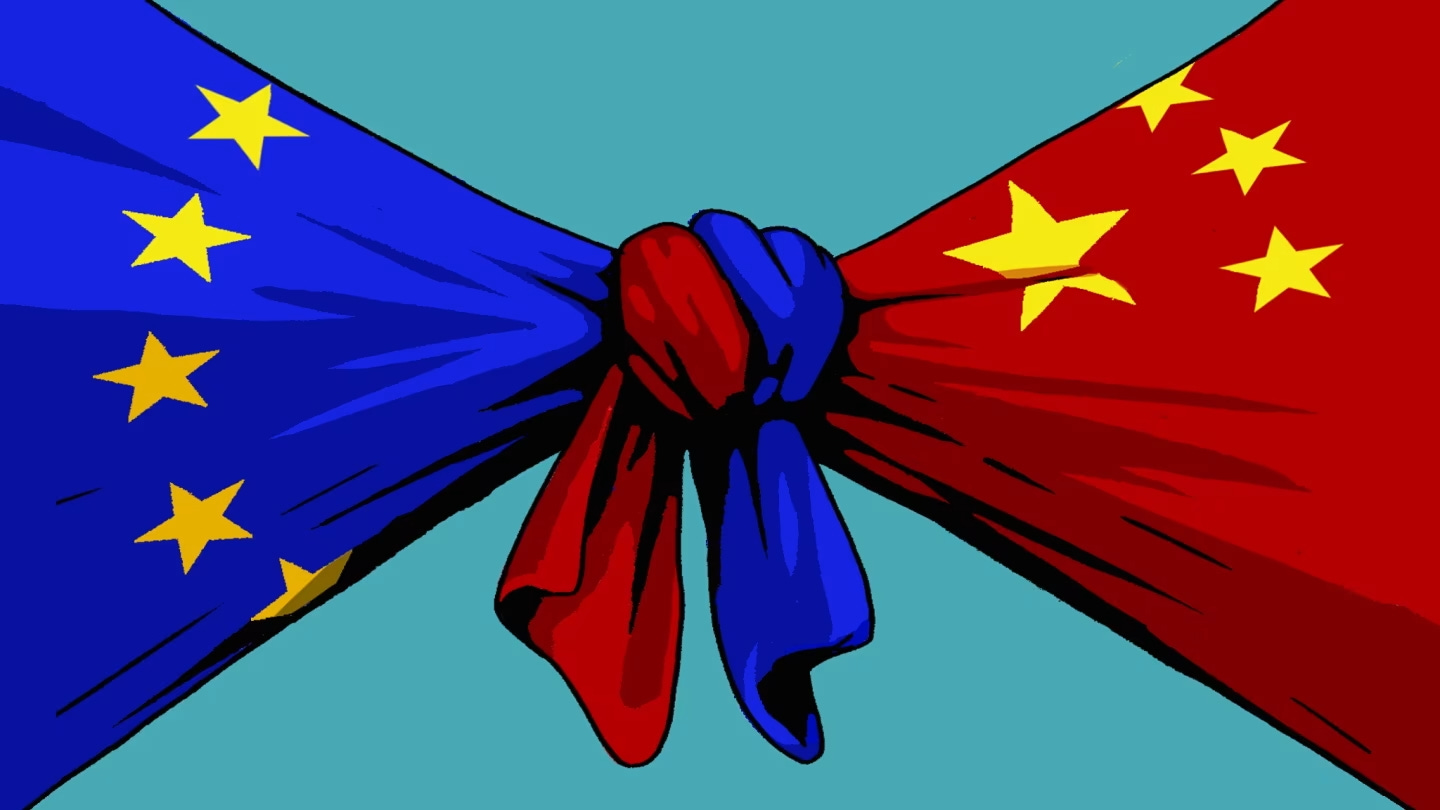

The Decline and Fall of Free Speech in Europe

In the middle of the twentieth century, Europe lay in ruins, having learned, or so we thought, the dark lesson that when speech is regulated, tyranny flourishes. That lesson has now been forgotten. A continent once hailed as the cradle of liberal democracy has become the laboratory of a new digital authoritarianism. This is not an exaggeration. It is, rather, the consequence of a steady drift toward control, clothed in the language of safety, decency, and order. And today, that drift has become an avalanche.

The United Kingdom’s Online Safety Act, France’s criminal investigation into X, and the European Union’s Digital Services Act (DSA) are not merely legislative developments. They are declarations of war against the free exchange of ideas. What unites them is a belief, common to technocrats in Brussels and bureaucrats in Whitehall, that ordinary people cannot be trusted with unfiltered information. To preserve democracy, it must be preemptively constrained.

This inversion of means and ends has accelerated since Elon Musk restored viewpoint neutrality to X, a platform that had, under previous management, cooperated with government actors to throttle disfavored speech. What Europe fears now is not misinformation, but competition. Competition of ideas. With the Biden administration, that fear was shared. But with Trump back in the White House and Secretary Marco Rubio at the helm of the State Department, the US has become once again the principal global guarantor of free speech.

Examining the facts.

Britain’s Online Safety Act, which came into force yesterday on July 25th, is a case study in bureaucratic excess. Ostensibly designed to protect children from harmful content, the law extends far beyond illegal material. It empowers the Office of Communications (Ofcom) to police “legal but harmful” speech, a category so vague that it becomes a weapon. Among the priority targets of censorship are foreign influence, disinformation, and content deemed injurious to public health or electoral trust. All are, of course, euphemisms for political heterodoxy.

The mechanisms of enforcement are equally chilling. Platforms face fines of up to 10 percent of global revenue and criminal charges against executives who fail to comply. In response, X announced that it would default users to a restricted mode unless they verify their age, employing invasive AI-based identification to filter content. In practice, this amounts to algorithmic ghettoization: speech not officially banned but rendered invisible, unreachable, and unsearchable.

If Britain’s law is sweeping, France’s assault is surgical. In early 2025, French prosecutors launched a criminal probe into X, accusing the company of algorithmic manipulation to promote divisive political content, including material critical of the French government’s stance on immigration and LGBT issues. But the legal framework under which this charge was levied is what ought to alarm any student of liberty. Prosecutors invoked Articles 323-2 and 323-3 of the French Penal Code, which target cybercriminals who distort data systems. They did so while declaring the company an “organized crime group,” the very designation used against narcotics cartels.

In other words, France is treating the operation of a social media algorithm as a felony, and the platform’s executives and users as gangsters. It is difficult to imagine a clearer betrayal of liberal norms. The response from the Trump administration was swift and sharp. The State Department’s Bureau of Democracy, Human Rights, and Labor (DRL) issued a statement condemning the investigation as an affront to the speech rights of American citizens and companies, noting that governments must not suppress voices they disfavor under the guise of regulation.

That brings this to Brussels, where the European Union’s Digital Services Act has taken aim at the global information ecosystem. Under the DSA, platforms with more than 45 million users in the EU, including X, YouTube, Facebook, and TikTok, are designated as Very Large Online Platforms (VLOPs) and subjected to a draconian compliance regime. They must submit to algorithmic audits, provide content takedown systems, establish risk mitigation protocols, and grant data access to academic researchers. These may sound innocuous. They are not.

The risk assessments required under the DSA demand that platforms identify and reduce threats to democratic processes, public health, and civil discourse. But who defines these risks? Who decides what constitutes a threat to democracy? In practice, the answer is European regulators whose notion of democracy excludes populism, nationalism, and conservative dissent. The effect is predictable. As revealed in documents obtained by the House Judiciary Committee, platforms are modifying algorithms not to protect users, but to conform to a political orthodoxy that elevates some voices and buries others.

This is not merely an internal European affair. American citizens are affected. American companies are compelled to enforce rules that conflict with the First Amendment. European law is being globalized through the extraterritorial compliance of US-based firms, thereby exporting censorship to the last country in the West where speech remains constitutionally protected. The Trump administration has rightly characterized this as digital colonialism, and in response, it has begun to act.

Executive Order 14149, issued by President Trump on January 20, 2025, prohibits federal agencies from colluding in censorship and directs the Attorney General to prosecute such collaboration where found. More pointedly, Secretary Rubio has launched a campaign of diplomatic retaliation. In May, the State Department imposed visa bans on foreign officials who attempt to suppress American speech online. Among those targeted were members of France’s interior ministry and German regulators affiliated with the European Commission.

This is not just policy. It is philosophy. The Trump administration is reasserting a principle once understood and now forgotten: that the freedom to speak is not a gift from the government, but a right to be defended against it. That principle has been invoked in lawsuits filed by US firms against foreign judges, including the suit by Truth Social and Rumble against Brazilian Justice Alexandre de Moraes, who ordered censorship of American content. A federal judge recently ruled that US companies are under no obligation to comply with foreign censorship mandates, affirming the territorial integrity of the First Amendment.

These actions underscore a broader point. The war for speech is no longer domestic. It is international. And Europe, once the defender of Enlightenment values, has become the staging ground for a counter-Enlightenment led not by kings or priests, but by regulators and prosecutors. That is the novelty. The new censorship is procedural, not ideological. It hides behind audits, compliance regimes, and “safety by design” architectures. But the result is the same: fewer voices, less dissent, and a public square scrubbed clean of deviation.

Some will object: do we not have a responsibility to prevent harm? Certainly, but that is not what is happening. These regimes do not surgically remove incitement or criminality. They blur the line between disagreement and danger. A platform that allows a conservative view of gender to trend is now suspected of extremism. A politician who questions climate policy is accused of disinformation. The censor has changed outfits. He now wears a badge that says “compliance officer.”

What is to be done? First, the US must extend its protective umbrella over its citizens wherever they are. The principle that an American cannot be silenced by a foreign government must be codified, not merely asserted. Second, American platforms must be encouraged, even compelled, to defend their users against extra-constitutional demands. If that means declining to operate in censorious jurisdictions, so be it. Freedom has a price. Better to pay it now than to live forever in rented liberty.

Finally, it must be recognized that this is not just a legal conflict. It is a civilizational one. Europe has chosen managed democracy over free society. The US must not follow. We must lead. And if our allies bristle, let them. Better to be isolated and free than integrated and gagged. The American Revolution did not begin with gunfire. It began with speech. We owe it to our forebears, and our future, to keep that flame lit.

Free Speech On Trial: X Corp. Vs. Letitia James


Screenshot via X [Credit: @amuse]

The recent lawsuit filed by X Corp against New York‘s Stop Hiding Hate Act is not merely a corporate tantrum over regulatory friction. It is, rather, a constitutional litmus test: Can the state compel a private media platform to speak? And more precisely, can it compel that speech in a format and on topics it deems urgent, namely, hate speech, misinformation, extremism, and other politically volatile categories, without violating the First Amendment?

The answer, both doctrinally and philosophically, is no. Not if we take our constitutional commitments seriously. Not if we believe in a press that is free not merely to report, but to decline to report. Not if we recall that a regime which mandates orthodoxy is functionally indistinguishable from one that punishes dissent. To compel speech is to conscript conscience, and in the digital agora of social media, the stakes for freedom of editorial judgment could hardly be higher.

The First Amendment, robustly construed, protects not only the right to speak, but the right not to speak. That protection is no less vital for corporate speakers than for individuals. In West Virginia v. Barnette, the Court affirmed this principle unambiguously: The state cannot compel an individual to salute the flag or recite its creed. Why? Because the very act of compulsion transforms opinion into obedience, conscience into compliance. What applies to schoolchildren surely applies to modern publishers.

New York’s Stop Hiding Hate Act runs afoul of this principle by requiring large social media platforms to disclose their content moderation policies and practices, specifically regarding “hate speech,” “misinformation,” and similar categories. The state’s rationale is couched in noble rhetoric: transparency, accountability, democracy. But the effect, and indeed the intent, is to conscript editorial judgment. It commands platforms to articulate their policies in state-approved terms, to issue periodic reports on state-specified topics, and to do so under the threat of $15,000-per-day penalties.

That is compelled speech, and compelled speech on matters of contested opinion. What counts as “misinformation” today may be conventional wisdom tomorrow. What is labeled “hate speech” often reflects the moral intuitions of cultural elites rather than objective legal categories. To force a platform like X to define, report on, and implicitly denounce such categories is to force a particular viewpoint, to transform a speaker into a conduit for the state’s ideological agenda.

The Supreme Court has been consistently wary of such state overreach. In Miami Herald v. Tornillo, the Court struck down a Florida law requiring newspapers to give equal space to political candidates they criticized. Even though the law aimed at fairness, the Court recognized it for what it was: a form of compelled speech that intruded on editorial discretion. The choice of what to publish, and what to withhold, is part of what makes a speaker free.

The same logic animates more recent decisions. In National Institute of Family & Life Advocates v. Becerra, the Court invalidated California’s attempt to force pro-life pregnancy centers to advertise abortion services. The law was struck down not because the information was false, but because it compelled speakers to convey messages they found objectionable.

New York’s law suffers from the same defect. It does not merely ask platforms to be clear about their terms of service. It demands that they speak in a particular voice, about particular topics, in a state-sanctioned format. That is not regulation of conduct; it is regulation of speech. And it is presumptively unconstitutional.

The Ninth Circuit reached precisely this conclusion in X Corp v. Bonta, a case challenging California’s nearly identical transparency law, AB 587. That court found the law unconstitutional on its face, noting that the compelled disclosures were non-commercial speech on deeply controversial topics, triggering strict scrutiny. The state failed that scrutiny because there were less intrusive means to achieve its goals, and because the law’s real aim appeared to be ideological enforcement, not mere transparency.

The Stop Hiding Hate Act is, if anything, worse. Where California’s law was relatively restrained, New York’s law comes armed with sharper teeth: higher penalties, broader categories, and a clear animus against X Corp’s editorial philosophy. Governor Kathy Hochul and Attorney General Letitia James have publicly criticized Elon Musk‘s management of X, decrying what they see as an irresponsible tolerance for hate and extremism. But if that is the state’s concern, its remedy must be speech of its own, not coercion of others.

Viewpoint neutrality is a bedrock requirement of any law that touches expression. In R.A.V. v. City of St. Paul, the Court struck down a hate speech ordinance because it punished speech based on viewpoint. The government may not pick sides in the marketplace of ideas, nor may it burden one side of a debate because it finds its views distasteful. Yet that is precisely what the Stop Hiding Hate Act does. By mandating reporting only on negative categories of speech, hate, extremism, misinformation, it sends a clear message: Platforms must account for their failure to suppress ideas the state disfavors.

This is not a hypothetical concern. Judicial analysis of New York’s earlier Hateful Conduct Law found the same flaw. In Volokh v. James, Judge Andrew Carter enjoined enforcement of that law, finding that it compelled speech and chilled protected expression. The parallels to the current statute are striking, and the constitutional defects just as fatal.

Defenders of the law argue that social media companies are different. They are not publishers, they say, but infrastructure. Carriers. Utilities. That argument fails both as a matter of law and logic. The Supreme Court has repeatedly held that platforms exercise editorial discretion, and are thus speakers. In Reno v. ACLU, the Court treated the internet as a medium deserving of full First Amendment protection. And in NetChoice v. Moody, the Eleventh Circuit recognized that content moderation decisions are expressive acts, entitled to constitutional safeguards.

Moreover, the compelled disclosures in question are not neutral. They do not merely report numerical data or objective facts. They require platforms to explain how they define “hate,” how they identify “misinformation,” and what policies they have to remove or mitigate such content. These are ideological questions, not technical ones. To answer them is to express a worldview.

The editorial freedom of platforms is also essential to the integrity of the digital public square. Just as newspapers decide which op-eds to publish and which letters to discard, platforms decide which voices to elevate and which to suppress. Their choices shape public discourse, for better or worse. But those choices must remain theirs. If the government can dictate how they define controversial categories of speech, it can eventually dictate whom they must ban, what they must delete, and what they must feature.

And what of Section 230? Though not directly at issue in this case, the spirit of that provision underscores a broader point: Congress has long understood that platforms need leeway to moderate content without fear of liability. New York’s law, while framed as a disclosure regime, indirectly penalizes moderation choices by turning them into targets for state scrutiny. That functionally contradicts the federal policy of encouraging free and diverse platforms.

This is not to say that platforms bear no responsibility. X Corp, like any publisher, is accountable to its users, its advertisers, and the public. But that accountability must be exercised through the voluntary mechanisms of the market, not the coercive arm of the state. The state can speak, advocate, and condemn. It can encourage platforms to do better. But it cannot force them to explain their decisions in its own preferred terms.

We must also attend to the dangers of precedent. Today, New York compels speech about hate and disinformation. Tomorrow, a different state may compel speech about patriotism, election integrity, or gender ideology. Once we allow government to mandate ideological reporting, the slope becomes not only slippery but unavoidable. The protection of editorial discretion, even for unpopular or eccentric platforms, is the bulwark against state orthodoxy.

In sum, the Stop Hiding Hate Act violates the First Amendment by compelling speech, intruding on editorial discretion, and discriminating based on viewpoint. It is neither narrowly tailored nor supported by a compelling interest that cannot be pursued through less invasive means. The law’s defects are legal, philosophical, and practical.

X Corp’s challenge to the Act, then, is not merely defensible, it is necessary. If we value the principle that the government cannot dictate what private speakers say, or how they say it, we must defend it when it is tested. That principle, like speech itself, must be protected not only in easy cases, but especially in hard ones.

Don Lemon Announces He’s Leaving X, But Doesn’t Get The Response He May Have Been Hoping For


Don Lemon speaks onstage during the Congressional Black Caucus Foundation's 53rd Annual Legislative Conference National Town Hall at Walter E. Washington Convention Center on September 12, 2024 in Washington, DC.

Don Lemon speaks onstage during the Congressional Black Caucus Foundation’s 53rd Annual Legislative Conference National Town Hall at Walter E. Washington Convention Center on September 12, 2024 in Washington, DC. – Congressional Black Caucus Foundation

And another one bites the dust.

In the latest case of a pundit or reporter leaving the walled garden of establishment media and failing in the new media landscape, former CNN anchor Don Lemon announced he was leaving X — which he still calls Twitter — effective immediately.

Lemon’s stated reason was that the platform was too conservative for him, although many noted that basically nobody noticed he was still around.

“I’ve loved connecting with all of you on X, but it’s time for me to leave the platform,” Lemon said in a Wednesday morning message.

“I once believed it was a place for honest debate and discussion, transparency, and free speech, but I now feel it does not serve that purpose.”

Lemon also cited new terms of service which require all disputes to be heard in the U.S. District Court for the Northern District of Texas or Tarrant County, Texas courts.

“As the Washington Post recently reported on X’s decision to change the terms, this ‘ensures that such lawsuits will be heard in courthouses that are a hub for conservatives, which experts say could make it easier for X to shield itself from litigation and punish critics.’

“I think that speaks for itself,” Lemon said.

Of course, it’s worth noting that the one pushing for censorship when Lemon and X impresario Elon Musk sat down for an interview was … Lemon: *that video below

And, as the reaction to Lemon’s departure seemed to indicate, the motive factor probably had a lot more to do with the fact nobody really cared:

Just in case you’ve forgotten how we got here — and how Lemon is an object lesson in how old media stalwarts tend to fail when they try their hand at new media — let’s go through a brief history of Don Lemon’s recent career arc.

In April of 2023, after months of behind-the-scenes drama at CNN’s morning show, Lemon was fired by the network after 17 years there.

It’s unclear whether it was because of the show’s low ratings, or his frequent dust-ups with his co-hosts, or a series of controversial comments — particularly a cheap shot at Nikki Haley in which he claimed that women over 50 aren’t in their prime anymore.

Perhaps Lemon could have parlayed his way into a weekend show on MSNBC or something; after all, if Katie Phang and Al Sharpton can keep gigs there, surely Lemon could, right?

But no: He decided it was time for him to become the next Joe Rogan or Tucker Carlson and venture out into the world of social media broadcasting/podcasting.

And, it initially looked like Musk was going to hire him, even with a series of exorbitant demands. Then, Elon realized Lemon basically just wanted to do his old job.

“His approach was basically just ‘CNN, but on social media’, which doesn’t work, as evidenced by the fact that CNN is dying,” Musk said in an X post.

“And, instead of it being the real Don Lemon, it was really just [former CNN president] Jeff Zucker talking through Don, so lacked authenticity. All this said, Lemon/Zucker are of course welcome to build their viewership on this platform along with everyone else.”

And he tried to — with not a whole lot of success, since most of us didn’t even notice he was going. Now, he’s blaming it on the conservative bent of social media.

It’s worth noting that, yes, conservatives and heterodox political thinkers tend to do better in the podcasting and social media arena. Figures like Joe Rogan, Ben Shapiro, and Tim Pool have made their names that way, and former establishment media types like Carlson and Megyn Kelly have seen a career renaissance since leaving their respective networks.

That’s not because the deck was supposedly stacked in favor of the right on social media, despite what many on the left claim.

Instead, it’s because establishment types like Lemon simply want to keep on doing the same thing they were doing before, just on a different platform where more and more people are turning for news. Except the reason they’re turning to those platforms for news is because establishment media types like Lemon keep on doing the same thing on networks like CNN.

Nor is Lemon the first person to find this out. When Chris Wallace left Fox News over disagreements regarding the network’s 2020 election coverage, he decided to try streaming with CNN’s digital service, CNN+. That was so abysmal it lasted about a month, and the quality of Wallace’s show didn’t help any; think of a more boring version of Charlie Rose without an alleged sexual predator hosting and you’ll get an idea just how bad it was.

Wallace apparently still hasn’t learned, because after a few years on CNN proper he’s announced a move into independent streaming and podcasting, one which will doubtlessly go just as well as the CNN+ gig did.

What personalities like Lemon and Wallace are discovering is that people aren’t just leaving traditional media because new technologies and platforms have emerged. It’s that those new technologies cut out the sclerotic gatekeeping middlemen who have set the narrative from the dawn of the mass media era. Without that in place, there’s no reason to seek out Lemon or his ilk.

Don’t let the door(s) hit you in the posterior on the way out Don.