According to the New York Post, transgender activists are “reconsidering their abrasive approach as public support slips.”
Citing a New York Times piece (itself titled “Transgender Activists Question the Movement’s Confrontational Approach”), it seems that some members of the LGBT community are none too pleased with the more hysterical fringes of the “trans” movement.
Rodrigo Heng-Lehtinen, executive director of Advocates for Transgender Equality, told the Times that shaming people into embracing transgenderism appeared to be backfiring.
“We have to make it OK for someone to change their minds,” Heng-Lehtinen told the Times. “We cannot vilify them for not being on our side.
“No one wants to join that team.”
The director added: “No one wants to feel stupid or condescended to.”
It’s at this point that I simply must interject. Heng-Lehtinen has the unmitigated gall to claim that “no one wants to feel stupid,” and yet the Times has to refer to Heng-Lehtinen as “they”? Pronoun nonsense is literally a huge part of the problem.
Mara Keisling, another transgender activist, similarly made a bizarre plea.
“We looked unreasonable,” Keasling told the Times. “We should be talking about the 7-year-old who just wants to play soccer with her friends.”
There’s just no other way to put this: It’s impossible to take just one “part” of transgenderism, make it friendlier, and then sell it to the masses. And that’s because transgenderism is rotten to the core, full tilt.
Any ideology that disrespects biblical truth (which is all we truly have at the end of the day) by suggesting God is mistake-prone is not an ideology worth entertaining in any way, shape, or form.
But even if you’re an atheist, allow this writer to appeal to your rigorous scientific method: In what world is it okay to chop off a perfectly healthy girl’s breasts because she’s going through a tomboy phase?
That’s really the long and short of it.
Transgenderism — ironically enough — can dress itself up however it wants. It can be nicer and more coddling, like Heng-Lehtinen and Keasling want. Heck, transgenderism could cut $1,200 checks for every American, cure the common cold, and figure out how to keep your pillow cool through the night.
And it still wouldn’t sway public opinion.
That’s because, no matter how “nice” or “demure” transgenderism presents itself, the entire movement is still predicated on the idea that boys can become girls, and vice versa, with little more than bodily mutilation and an endless cocktail of monthly prescription hormonal drugs.
That core conceit will never jive with most Americans — as the Gallup poll cited by both the Post and the Times attests to. Transgender issues, across the board, just didn’t hold much water with Americans.
No, we don’t care about your “Xe/Xim” hogwash when we have (actual) real-world problems to deal with, like putting food on our family’s table or keeping a roof over everyone’s head.
I suppose it’s nice that some of these activists are reconsidering their shaming, aggro tactics.
But until they realize it’s the trans issue itself — and not the approach to it — the left will truly never get it and my belief is that they never will because they just don’t want to either.
For the first time in history, a Chinese president has openly delivered clear red lines to an American president, delineating Beijing’s non-negotiable core interests. When Chinese President Xi Jinping met with President Joe Biden at the 31st APEC Economic Leaders’ Meeting in Lima, Peru, the world’s attention was drawn to Xi’s blunt articulation of China‘s “four red lines.” Unlike previous APEC meetings, which often emphasized cooperative economic growth, this meeting was starkly different in tone, as Xi chose to lay down firm boundaries. Xi delivered these red lines with a strategic calculation: he saw Biden as weak—a perfect target for asserting China’s boundaries—preferring to establish these limits before Donald Trump, a leader with a much stronger and more combative stance on China, takes office again in January. These red lines were issued as a stark warning to Washington: do not cross boundaries concerning Taiwan, democracy and human rights, China’s path and system and its rights to economic development. Xi’s delivery of these red lines marks a critical turning point in global power dynamics, reflective of an increasingly confident China testing the resolve of a U.S. president they perceived as pliable.
The Four Red Lines: Setting Ground Rules for Engagement
Xi Jinping’s decision to articulate these red lines at the presidential level marked a significant departure from the traditionally indirect and often veiled language used by Beijing in diplomatic settings. The core components of these red lines reflect the deep sensitivities China has about its sovereignty, ideological integrity and developmental trajectory:
Taiwan: Beijing sees Taiwan as an inalienable part of its territory. Xi emphasized that any U.S. support for Taiwanese independence or actions that embolden the island’s efforts to solidify its separation from China would be unacceptable. The language was a firm reminder that Washington’s increased engagements with Taiwan would be seen as a direct challenge to China’s national unity.
Democracy and Human Rights: China demanded an end to external interference concerning human rights and democracy, both of which Beijing deems to be domestic matters. U.S. criticism over China’s treatment of Uyghurs and actions in Hong Kong has been seen by China as interference designed to undermine the ruling Communist Party.
China’s Path and System: Xi underscored that the United States must respect China’s governance and its chosen socialist path. Any attempts to influence or undermine the authority of the Communist Party would be viewed as an existential threat.
Rights to Development: Finally, China asserted its right to pursue economic development and technological advancement without external obstruction. Restrictions on trade, technology transfers, or economic development would be seen as direct infringements on China’s core rights.
These four areas define what China perceives as fundamental to its sovereignty, stability and growth. Their articulation marks a new era in U.S.-China relations—one where Beijing is not just reacting to American actions but also preemptively setting boundaries for what it considers unacceptable.
Trump and Biden: A Tale of Policy Overlaps and Red Line Violations
Both Donald Trump and Joe Biden have adopted policies that, in various ways, challenge China’s new red lines. However, while there are some commonalities between their approaches, there are also notable differences in tone, methods and strategic emphasis.
Trump’s Policies: A Bold Stand Against China
Donald Trump’s first term was marked by a courageous and unapologetic stance against China, emphasizing economic measures and national security concerns. His administration launched a trade war, imposing significant tariffs on Chinese goods—a move that crossed China’s “right to development” red line but was absolutely necessary to correct decades of unfair trade practices and reduce American reliance on Chinese manufacturing. This marked a significant departure from previous U.S. administrations’ approaches to China, such as Obama’s “Pivot to Asia” strategy, which aimed to contain China’s influence through diplomatic and military alliances, or the Nixon-era opening to China, which sought engagement to balance Soviet power. Trump’s approach, in contrast, was more confrontational and focused on economic decoupling and direct confrontation. While Beijing saw it as a deliberate attempt to stymie China’s economic rise, Trump saw it as a means to protect American jobs and secure economic independence.
Trump’s unwavering support for Taiwan also crossed Beijing’s sensitivities, but it sent a powerful message of American resolve. The Trump administration sold billions in arms to Taiwan, fostered increased diplomatic engagements and openly spoke about Taiwan as a partner, which was interpreted by Beijing as support for Taiwanese separatism—a direct challenge to its sovereignty. This support was built on the foundation of the Taiwan Relations Act of 1979, which committed the United States to assist Taiwan in maintaining its defense capabilities. The Taiwan Relations Act was a significant turning point that ensured continued U.S. support for Taiwan after formal diplomatic ties were severed in favor of China. Yet, Trump’s policy took this support further, demonstrating his commitment to defending democracies against authoritarian expansion.
In the arena of human rights, Trump did not shy away from challenging China. He sanctioned Chinese officials involved in abuses in Xinjiang and Hong Kong, directly confronting China’s demands for non-interference. His administration’s labeling of China’s actions in Xinjiang as genocide represented a principled stand for human dignity and freedom, a rare boldness in modern American foreign policy. Trump’s actions demonstrated a consistent willingness to confront injustice head-on, setting a precedent that Biden has struggled to follow.
Biden’s Policies: Weakness Disguised as Diplomacy
President Biden has largely maintained a confrontational stance toward China, but his approach lacks the clear resolve and strength that defined Trump’s policies. Biden continued the tariffs and expanded on export controls, particularly targeting high-tech sectors that China views as critical to its future growth. While this could have been a positive continuation of Trump’s policy of economic decoupling, Biden’s implementation has been lackluster and hesitant, failing to bring about significant leverage against Beijing’s ambitions. Xi Jinping saw in Biden an opportunity—a chance to confront an administration that might talk tough but lacks the backbone to deliver.
On Taiwan, Biden’s actions have been somewhat more ambiguous and inconsistent, sending mixed signals to both Taiwan and China. His administration has allowed additional arms sales to Taiwan and fostered stronger diplomatic ties, but his off-the-cuff remarks suggesting a U.S. commitment to Taiwan’s defense have lacked the clarity and decisiveness needed in such a critical area. Unlike Trump, who openly supported Taiwan with strength and conviction, Biden’s approach has been marred by ambiguity, undermining the potential deterrent effect. This vacillation has done little to reassure allies and only emboldened adversaries.
Biden has also been vocal about human rights abuses in China, but his actions have often been more about rhetoric than substance. His administration has called for international alliances to pressure Beijing, emphasizing democracy and human rights, but this coalition-building approach lacks the teeth of Trump’s direct sanctions and blunt confrontations. Biden’s multilateralism has often resulted in diluted measures that fail to produce tangible consequences for Beijing’s actions. For Xi Jinping, Biden’s focus on diplomacy over direct action was a welcome reprieve, allowing China greater latitude to assert its global ambitions without fear of real repercussions.
Compare and Contrast: Trump vs. Biden on China’s Red Lines
總統府, CC BY 2.0
While Trump and Biden both crossed China’s newly defined red lines, their approaches reflect starkly different philosophies and tactics. Trump’s method was characterized by unilateral action, economic leverage and a willingness to escalate tensions openly. His trade war, strong public rhetoric and transactional foreign policy painted U.S.-China relations in clear, adversarial terms. Trump crossed China’s red lines in dramatic and overt ways, making it clear that he was willing to challenge Beijing directly on all fronts, including trade, technology and military engagement with Taiwan. This directness was precisely what the U.S. needed to counterbalance an increasingly aggressive China.
In contrast, Biden’s approach has focused on coalition-building, aligning allies to confront China collectively rather than through unilateral actions. However, this has often resulted in weaker responses and a lack of coherent strategy. Although Biden’s actions have largely continued to cross China’s red lines—particularly regarding Taiwan, human rights and technology—his diplomatic channels and international alliances have often been more about appearances than genuine pressure. Biden’s emphasis on the ideological battle between democracy and authoritarianism lacks the concrete actions that Trump took, and his attempts at diplomacy have often been interpreted as a sign of weakness by Beijing. In this scenario, Xi Jinping saw an opportunity to deliver these red lines directly to Biden, sensing a lack of the firm resolve that had characterized Trump’s tenure.
Conclusion: A Need for Strength in Navigating Red Lines
The clear articulation of red lines by Xi Jinping to Joe Biden has set a new tone in U.S.-China relations, one that is based on Beijing’s growing assertiveness and willingness to define its boundaries openly. Xi chose to deliver these red lines to Biden, seeing him as a weaker and more malleable target, preferring to establish these limits before Trump, a leader unafraid to challenge Beijing, takes office in January. Both Trump and Biden have ignored these lines in their own ways—Trump with his boldness and economic confrontation, and Biden with his indecisive coalition-building and lackluster diplomatic approach. The difference, however, lies in the impact: Trump’s policies were aimed at decisively countering China and protecting American interests, while Biden’s approach has often resulted in mixed signals and ineffective pressure.
Special Counsel Jack Smith moves to dismiss his four-count criminal indictment against President Trump related to January 6, adding to his long list of failures at the DOJ.
Pour one out for Jack Smith.
Declassified with Julie Kelly is a reader-supported publication. To receive new posts and support my work, consider becoming a free or paid subscriber.
After two years of fawning press coverage and promises that the international war-crimes prosecutor would finally put Donald Trump behind bars, the special counsel today hammered the final nail in his own battered coffin by dropping his four-count J6-related indictment in Washington against the incoming president.
The move represents yet another failure by the Democratic apparatchik who once ran the Department of Justice’s public integrity unit under the Obama administration. Since then, Smith has been on a losing streak unmatched in DOJ history, suffering one loss after another before the Supreme Court and trial courts; in 2016, SCOTUS unanimously overturned the bribery conviction of Bob McDonnell, the former Republican governor of Virginia, a case Smith brought in 2014. Smith also failed to secure convictions in his prosecutions of former Senator John Edwards in 2012 and former Senator Robert Menendez in 2015.
This year, the highest court rebuked Smith on three separate occasions. First, the court rejected Smith’s rarely-used and desperate request to bypass the D.C. appellate court in considering the presidential immunity question and decide the matter quickly in an attempt to get the J6 case to trial before the election. The court a few months later reversed how the DOJ applied 18 USC 1512(c)(2), the post-Enron document destruction statute that represented two of the four counts in the J6 indictment against Trump. And on July 1, the court issued its landmark opinion in Trump v US, which gutted the J6 case by concluding most of the conduct cited in the indictment represented official acts protected by presidential immunity.
If the DOJ had a Hall of Shame, it would be named after Jack Smith.
But being the dirty Democratic operative that he is, Smith had to take a few parting shots at the man who defeated him both in court and at the ballot box. Smith asked Judge Tanya S. Chutkan to dismiss the indictment “without prejudice,” suggesting the matter could be reconsidered once Trump leaves the White House. The case needed to be dropped for now, Smith argued, based on two Office of Legal Counsel opinions—one related to President Richard Nixon and one related to President Bill Clinton—determining a sitting president cannot be prosecuted under separation of powers provisions in the Constitution.
“And although the Constitution requires dismissal in this context, consistent with the temporary nature of the immunity afforded a sitting President, it does not require dismissal with prejudice,” Smith wrote in his six-page motion. “This outcome is not based on the merits or strength of the case against the defendant.”
That, of course, is another lie. Even if Trump had lost the election, the J6 indictment would not have survived another immunity test before the Supreme Court, which criticized Chutkan and the D.C. appellate court for fast-tracking the denial of presidential immunity without first conducting necessary due diligence.
Chutkan, like Smith, hasn’t demonstrated an ounce of contrition since the smackdown by SCOTUS. And remaining true to form, Chutkan in her order this afternoon granting Smith’s motion to dismiss also warned the case could be revisited in four years. “Dismissal without prejudice is also consistent with the Government’s understanding that the immunity afforded to a sitting President is temporary, expiring when they leave office,” Chutkan wrote.
Bye bitch.
Smith also filed a closing brief in the classified documents case, which was tossed by Judge Aileen Cannon in July after concluding Smith’s appointment violated the Constitution. The DOJ appealed her order; Smith today dismissed the appeal in the charges against Trump but not his two co-defendants, Mar-a-Lago employees Waltine Nauta and Carlos De Oliveira. One must safely assume Trump’s attorney general will move quickly to dismiss those charges as well.
Republican lawmakers flocked to social media to celebrate Smith’s demise. “The Jack Smith cases will be remembered as a dark chapter of weaponization,” Senator Tom Cotton (R-AR) wrote. “They never should have been brought. Our elections are decided by voters–not by fanatical, deranged liberal lawyers like Jack Smith.”
“This lawfare was always politically-motivated. And this lawfare MUST NEVER HAPPEN AGAIN,” Rep. Byron Donalds posted.
But the time for tough talk is over and the time for tough action is now. With control of the executive branch, House, and Senate, Republicans must now exercise political power in the same way Democrats do: open investigations, hold public hearings, and pursue criminal charges where appropriate.
After all, plenty of evidence exists to support conspiracy charges against Smith and his team, particularly in the classified documents case which revealed collaboration between the National Archives, the DOJ, and the Biden White House to concoct a documents crime against Trump as early as spring of 2021. Court proceedings in Florida also disclosed examples of evidence tampering, destruction of evidence, and witness intimidation not to mention the selective nature of bringing a documents case against a former president for the first time in history while at the same time other public officials including Joe Biden and Mike Pence were found to have unlawfully kept classified files after leaving office.
The armed raid of Mar-a-Lago alone is worth a separate investigation.
So, it remains to be seen if social media bravado translates into real accountability. But for now, a moment of celebration is in order.
The Emotional Aftershock How the Left Reacted to Trump’s Election
In the wake of the 2024 election, many leftists are so distraught that they anticipate leaving the country. Never at a loss for a catchphrase, some in the media call it the “Great Trump Diaspora.”
Capitalizing on the demand for leaving, International Living (IL), without mentioning Mr. Trump, sent a promotional offer to the readers of the leftist site Mother Jones. The company says the Caribbean, Thailand, Ireland, Italy, Greece and others lie open to Jacobin readers, even those of limited means.
Escaping the Craziness
Thus, IL throws in the idea that, for some, may be the clincher. “If you’re dreading the craziness of this election season… if you’re thinking: What if I could just get away (even if only for a while)… we have the solutions you need.”
Paul Starobin in Business Insider, himself the recent purchaser of a home in Italy, points out that this tendency is nothing new.
“Every four years, as Americans gird themselves to choose a president, there’s talk, mainly among Democrats, of leaving the country. I’m off for Canada if unacceptable candidate Xwins! And every four years, the promised exodus fails to materialize. It’s mostly just therapeutic venting.”
But, Mr. Starobin assures his current readers, “This time is different.”
“This Dystopian Country”
Such sentiments echo throughout the mainstream press and many Internet news sources.
Yahoo Finance reports, “Immigration attorneys report a surge in relocation inquiries following Donald Trump’s presidential victory.”
About a week after the polls closed, The Hill shared the ruminations of actress Eva Longoria. She has already left but “says she’s anxious and nervous for Americans who can’t ‘escape’ their ‘dystopian country’ following President-elect Trump’s White House win.”
However, Miss Longoria showed her compassion by adding, “I get to escape and go somewhere. Most Americans aren’t so lucky. They’re going to be stuck in this dystopian country, and my anxiety and sadness is for them.”
Ever accommodating, the folks at Newsweek provided a “Full List of Celebrities Moving Abroad.” Their “Senior Pop Culture and Entertainment Reporter” explained that “Donald Trump’s presidential election win over Kamala Harris has sparked ire among a host of celebrities, with some going as far as to declare they will leave the U.S. rather than live under his rule for the next four years.”
Its “full list” was amazingly short, only including Barbra Streisand, Cher and Sharon Stone.
Frustrations, Fears and Disappointments
The same day Newsweek published its list, Reuters provided statistics. “Google searches for ‘move to Canada’ surged 1,270% in the 24 hours after U.S. East Coast polls closed on Tuesday, company data shows. Similar searches about moving to New Zealand climbed nearly 2,000% while those for Australia jumped 820%.”
Some of this speculation has been going on for months. On March 9, the financial site Benzinga posited that “Americans are increasingly considering relocation to escape the potential re-election of former President Donald Trump.”
In early September, The New York Times said, “Thousands of readers shared frustrations, fears and disappointments with American politics, and how they are able to live and work in another country.”
A Tale of Woe
CNBC noted four days before election day, “A growing number of wealthy Americans are making plans to leave the country in the run-up to Tuesday’s election, with many fearing political and social unrest regardless of who wins, according to immigration attorneys.”
Perhaps the most poignant tales of woe came from one-time cable news giant CNN. Opinion writer David Andelman poured out his laments.
“We were never really forced to make a choice whether [France] should become our home, permanently. Now, along with hordes of our fellow Americans, we are considering just such a move. In a growing number of cases, that reason can be traced to one proximate source—former PresidentDonald Trump. Or, more precisely—how he has torn apart America and our democracy that, for my nearly 80 years on this planet, I have cherished.”
Mr. Andelman is no recent journalism school graduate with lots of opinions and no experience. Indeed, he has quite an impressive biography. He served as The New York Times bureau chief in Europe and Asia. He was CBS’s man in Paris—back when networks could still afford such luxuries. He was made a chevalier of the French Legion of Honor. For an American, that is no small feat.
Protecting the Left’s Victory
Leftists present Mr. Trump’s comeback election as an unparalleled disaster. In many minds, he is so evil that their only option is to leave the country.
They believe the election will mean the destruction of the causes to which they have dedicated themselves: wokism, the socialist economic policies (that provoked inflation), immigration, the LGBTQ agenda and similar issues.
They do not feel they can live in traditional settings where even slightly Christian values are affirmed.
Thus, many leftists are not taking any chances. One of the most basic physiological reactions is the “fight or flight” response. When in danger, animals—including humans—reach a point where they can only see two options: to flee from the threat or confront it. Ironically, many leftists are fleeing to a kind of reverse Benedict Option offered by companies like International Living. In these comfortable settings, they think they can ride out the storm.
In the chaotic era of the Biden presidency, confusion and manipulation were the only constants. Despite their relentless drive to craft a favorable reality for the 2024 election, the American people saw through the facade. This involved the core issue of public safety: homicide statistics. The administration’s disturbing revisions to murder statistics, stretching as far back as 2003, revealed a troubling willingness to manipulate both current narratives and historical realities to suit their political agenda.
The FBI’s Revisionist Approach to Murder Statistics
Agresti’s investigation reveals that during the Biden administration, the FBI engaged in sweeping revisions of murder data from 2003 onward without providing any explanation, footnotes or clarifications. Where the normal procedure might see a minor adjustment and appropriate annotation, the Biden-era FBI saw fit to rewrite entire years. In some cases, the murder count was increased significantly, by up to 7%, and these modifications came without any of the usual footnoted disclosures that have typically accompanied data revisions. These alterations paint an alarming picture of data obfuscation.
To fully grasp the magnitude of these changes, consider this: the FBI raised the 2003 murder estimate from 16,528 to 17,716—an increase of 1,188 murders, or 7%. Such a revision suggests not just a simple clerical oversight but the rewriting of the historical record itself. Even in the Trump and Obama eras, where revisions occasionally occurred, changes were neither so drastic nor so frequent. Yet under Biden, the trend of such revisions has exploded. The data gathered by Agresti illustrate this rising gap—from 2003 to today, discrepancies between FBI data and death certificates widened into a gulf, growing to an average of 3,711 uncounted homicides per year under Biden—each of the edits designed to make Biden’s record look better than it was.
One of the key points here is the differential between the number of homicides recorded on death certificates and those reported by the FBI. Death certificates are not aspirational; they represent a grim and immutable finality—a dead body, a life lost. Despite their reliability, death certificates have always been more complete than FBI murder reports, simply because they capture every death and categorically classify it. The gap between these figures has always existed, but it has widened considerably under the Biden administration, suggesting foul play, either in local law enforcement reporting, state compilations, or FBI aggregation. In any case, it reeks of political calculation.
Disguising the Reality of Rising Crime
Why would this administration want to downplay murder statistics? The answer is simple: politics. Crime is not an abstract issue; it is viscerally felt by voters, and it reflects the state of the nation’s social contract. As crime rates surged during Biden’s term, public safety became a significant electoral liability for the Democrats. Therefore, downplaying homicide numbers—even if it meant tinkering with historic records—serves a political end. It creates the illusion of competence where none exists.
President Biden and his Department of Justice have taken cues from Orwell’s 1984, where history is continuously rewritten to serve the party’s ends. In 2023, for instance, the FBI reduced the previously reported 2021 murder estimate from 22,536 to 21,462—a reduction of over 1,000 murders, or about 5%. No explanation accompanied this drastic change, leaving Americans to wonder if we’re witnessing bureaucratic incompetence, political manipulation or both.
This level of deceit is not simply a matter of misrepresentation; it represents a violation of the public trust. How can we properly address the crime issue in this country if we cannot trust the very numbers that inform policy? If the numbers can be revised and manipulated so easily, how can the public hold anyone accountable? As Agresti stated, “The FBI has been burying its crime data since the first year of the Biden administration.”
Bureaucratic Subterfuge: Hiding Data from Public Scrutiny
The manipulation of crime data is compounded by the Biden administration’s calculated effort to bury access to FBI crime statistics. Since 2021, the traditional “Crime in the United States” report, which had served as a straightforward, easily accessible source for annual crime data, has been buried under layers of bureaucracy. Now, these datasets are scattered across an array of dropdown menus, vague descriptions and expiring hyperlinks, reducing transparency and, perhaps more importantly, concealing the shocking rise in crime.
Consider the scenario Agresti describes: in 2022, NewsNation reported that 14,677 murders occurred in 2021 based on the FBI’s convoluted and confusing presentation of its data. In reality, the actual estimate was 22,900—8,000 more deaths than reported. These obfuscations serve to mislead the public, downplaying the scope of violent crime and providing a convenient shield for political leaders.
A Crisis in Accountability
The heart of the issue lies not just in the manipulation of data but in the erosion of accountability it represents. The leaders of the FBI and DOJ are appointed by the president, and their actions clearly reflect the priorities of the administration. Instead of serving the American public through transparent reporting, these institutions have twisted the facts to fit a narrative—one that paints the Biden administration as capable and competent while hiding the realities faced by everyday citizens.
Such conduct should concern every American, regardless of political leanings. When the government manipulates data—whether it’s economic statistics like job growth or, as in this case, life-and-death metrics like murder rates—it breaks the fundamental trust that exists between a government and its citizens. Without trust, governance itself falters, giving way to conspiracy theories, paranoia and unrest. The Biden administration is playing with fire by attempting to shape reality to fit its narrative. The consequences will inevitably be felt not only in public safety but in the very fabric of democracy itself.
The Biden Administration: A Legacy of Revisionism
As Agresti has demonstrated, the revisions during Biden’s presidency are unprecedented in scope and audacity. Beyond the murder statistics, it is worth noting that this penchant for deception extends into other areas of governance. One notable example involves the employment numbers, which were overestimated month after month and then quietly revised down—at one point by nearly a million jobs. The administration’s strategy is transparent: make a good first impression and hope the correction goes unnoticed.
In a broader historical context, this kind of manipulation is not new. The Democratic Party has a storied history of deception, stretching back to its opposition to civil rights movements, school integration and its manipulative approach to social issues like immigration. Today, as in the past, the party is willing to rewrite history to maintain power. However, unlike earlier times when information took months or years to spread, today’s digital age has made this duplicity more transparent—if the public is willing to look.
Conclusion: The Need for Vigilance and Transparency
The Biden administration’s alterations to the nation’s murder statistics are emblematic of a deeper, systemic issue within our government—one that prioritizes political expediency over the truth. James D. Agresti, through his Freedom of Information Act requests and diligent research, has shown us that what we face is not just a statistical anomaly but a deliberate attempt to deceive the American people.
As citizens, we must demand better. We must demand transparency, accountability and, above all, honesty from those we entrust with power. The manipulation of murder statistics is not just a question of bureaucratic procedure—it is a fundamental breach of public trust, one that demands scrutiny, outrage and, ultimately, reform. The Biden administration might be able to manipulate the present, but the truth—painful, immutable and ultimately liberating—will prevail.
The establishment of a presidential press pool was once a hallmark of transparency, an assurance to the American people that, no matter where the president was, a fair group of journalists would be there, ready to inform the nation of every development. Yet, today we face a situation where that trusted system has been deeply undermined, as evidenced by the panic triggered by the so-called “unofficial” press pool stationed outside Mar-a-Lago Thursday afternoon. The events of yesterday serve as an alarming reminder of how far the mainstream media has fallen from the role of a responsible communicator to that of a hapless panic-monger. And, simultaneously, they underscore why President Trump’s vision of including independent journalists and outlets in the press pool may be not just warranted but essential.
The chaos began Thursday afternoon when two ambulances, several vans and a helicopter were seen leaving Mar-a-Lago. An overzealous CBS producer, watching from afar, decided to put forth an explosive theory—President Trump had been taken away by an ambulance. The message was sent out into the pool, stoking speculation among mainstream networks about the president’s health. “Was he dead? Had he suffered a heart attack? Was this an assassination attempt?” The breathless, barely contained eagerness with which the mainstream media spread these unverified claims is revealing. They were more than happy to shout fire in a crowded theater, and today, the crowded theater was the entire world.
This situation could have been easily avoided if that so-called “press pool” had simply exercised some restraint, some patience, or—most importantly—some journalistic integrity. The reality? President Trump was very much alive, sitting comfortably in a meeting inside Mar-a-Lago, while the motorcade seen leaving belonged to Vice President-elect J.D. Vance. The rush to publish sensationalist headlines was exacerbated by the utter lack of official channels and coordination. In fact, as Steven Cheung, Trump’s incoming White House Communications Director, noted: the mainstream press created their own “fake, unofficial ‘pool’ because they want to feel important.”
This moment underscores a growing reality—**X **has eclipsed traditional media as the source of accurate, up-to-the-minute information. While CBS and other mainstream media outlets were setting the world on edge, independent journalists on X were the first to debunk the misinformation amplifying the truth from officials inside Mar-a-Lago. Dan Scavino Jr., Trump’s incoming deputy, immediately took to X to clarify: “I am currently at Mar-a-Lago, and 45-47 is in a meeting… the movements being reported by the unofficial ‘pool’… are that of Vice President-elect J.D. Vance’s motorcade.” Within minutes, independent voices and Community Notes on X corrected the course, whereas the mainstream networks were still tripping over themselves, searching for a nonexistent scoop.
The History of the Presidential Press Pool: From Roosevelt to Today
The incident today also offers an interesting reflection on the historical evolution of the presidential press pool. It wasn’t always this way—the concept of the press pool, after all, began with good intentions. Theodore Roosevelt was the first president to establish regular relationships with journalists, fostering direct communication between the White House and the American people. Franklin D. Roosevelt institutionalized press briefings, holding biweekly conferences that ensured coverage was grounded in firsthand accounts. These presidents recognized the importance of transparency—not for the sake of a headline, but for the sake of democratic legitimacy.
During the post-World War II era, the press pool took on a more structured form, beginning with Dwight D. Eisenhower. The necessity of having a rotating group of journalists who could travel with and report directly on the president was evident—it balanced the logistical challenges of security with the growing demand for media coverage. By the time of John F. Kennedy, the press pool had become an established mechanism, one meant to serve as a conduit between the highest office in the land and the public. Over the decades, with the advent of 24-hour news cycles and increasing scrutiny during administrations such as Bill Clinton’s and Ronald Reagan’s, the need for an ever-watchful, organized press pool became the norm.
However, today’s debacle shows us that the press pool is broken. The WHCA, which once coordinated pool coverage, has been sidelined, and in its place is a chaotic gaggle of mainstream networks trying to outdo each other for a moment of sensationalism. This has turned what was once a serious journalistic responsibility into an embarrassing frenzy, with major networks relying on unverified iPhone footage and second-hand assumptions. Their priorities seem less about providing the American people with truth and more about scoring cheap points against a president they disdain.
The Need for Independent Voices: Trump’s Vision for the Future
President Trump has spoken about including independent journalists and new media outlets in the press pool when he returns to office, and after today, it is clear why this must happen. Legacy media has long lost the trust of the American people—its coverage tainted by bias, its reporters more interested in making a splash than in representing the truth. The fake press pool’s handling of Thursday’s Mar-a-Lago incident is yet another mark against a mainstream media that has failed its most basic responsibility.
On the other hand, independent journalists, many of whom operate primarily on platforms like X, have proven to be more agile, more transparent and, crucially, more aligned with the truth. They do not have corporate overlords with a political agenda, nor do they require the validation of the cocktail circuit in Washington, D.C. They are beholden only to their readers and viewers—the people—and it shows in the accuracy and urgency of their work. These journalists are willing to engage directly, answer questions, provide immediate updates and debunk rumors in real time using tools like Community Notes.
By including independent media in the White House Briefing Room and the presidential press pool, the Trump administration can ensure that news is not filtered through layers of establishment bias. The truth will not be drowned out by sensationalism or lost in a sea of half-truths and assumptions. Instead, it will be broadcast directly, efficiently, and with integrity. Yesterday’s panic over the supposed medical emergency at Mar-a-Lago would never have occurred if those responsible for communicating news to the American public were grounded in facts rather than fantasies.
X is the News Now: The Shift Away from MSM
Today marks an important moment for anyone still placing their faith in the mainstream media. Platforms like X have completely overtaken the old-guard media when it comes to providing accurate, reliable information. While CBS was fueling a global panic, independent voices on X were speaking directly to members of Trump’s team, cutting through the noise and getting the facts straight. It’s an example of precisely why social media platforms are now trusted far more than any legacy network. They provide a platform for immediate, unfiltered communication, unlike the slow, bureaucratic response of old-school media outlets.
This shift is also reflective of a deeper, more fundamental change in how the public consumes news. People no longer want carefully curated narratives delivered by talking heads with obvious biases. They want real-time updates, and they want to hear from the sources directly—not via a game of media telephone. In today’s digital age, where every smartphone can record history in real time, the power has shifted away from the elite circles of network newsrooms to the hands of those who simply want to share the truth.
Conclusion: Moving Toward Real Transparency
The events at Mar-a-Lago today served as a reminder of the pressing need for change. The legacy press, once entrusted with holding those in power accountable, now seems more concerned with power plays of its own. As the “unofficial pool” tripped over itself in its desperate bid for a sensational headline, independent journalists did what the mainstream media would not—they provided clarity, honesty and truth.
President Trump’s commitment to bringing these independent voices into the press pool is a promise of real transparency. It is a commitment to breaking away from the stranglehold of legacy networks, to ensure that the American people receive accurate, timely and trustworthy information. Today, X showed us what the future of news looks like—a direct, unfiltered line to the truth—and it is time that the White House press pool reflects this new reality. It could not have come too soon either!
In a twist that only our brave new timeline could produce, Elon Musk and Vivek Ramaswamy have been handed the reins of the Department of Government Efficiency (DOGE), a yet to be created agency created to identify and eliminate bureaucratic inefficiencies, reducing waste and ensuring effective government operations. If there’s a lesson to be gleaned from Reagan—and really, when isn’t there?—it’s that sometimes the best way to fix a bureaucracy is to let it idle itself into oblivion. The Community Services Administration (CSA), which Reagan successfully eliminated in 1981, provides a the perfect case study for Elon and Vivek, as they try to steer the DOGE in their quest to bring efficiency, or perhaps glorious chaos, to Washington.
Back in the Reagan era, the CSA, once a symbol of LBJ’s idealistic but clunky War on Poverty, found itself in an interesting predicament. After Reagan set his sights on reducing government bloat, the CSA’s employees went through a “Close-down Period,” a bureaucratic purgatory in which they were explicitly instructed to do absolutely nothing. They came to work, they sat at their desks, they stared at blank pages and empty desks, and they weren’t even allowed to pass the time with a good book. You could almost hear them counting ceiling tiles, one at a time, while contemplating the meaning of “government service.”
This quaint episode—the ultimate bureaucratic version of “hurry up and wait”—lasted several months. It’s a sobering, yet oddly hilarious reminder of the absurdity that unfolds when an inefficient entity is left to its own devices in a fog of political deadlock. It’s also a great pointer for Elon and Vivek: if you want to get rid of an agency, you might not need a wrecking ball. Sometimes all it takes is to turn off the metaphorical engine and let the government workers ponder existence under florescent lights for a few months until the inefficiency becomes unbearable.
Elon, with his ironical embrace of memes and Vivek, the voice of the pragmatic outsider, could both take a page out of Reagan’s playbook—the one marked, “Don’t dismantle it; just let it collapse under its own weight.” Instead of battling the machine with flamethrowers—though let’s be honest, Elon would probably love to—they could just lean back, let the department grind to a halt, and watch the gears seize up from a lack of purpose. Bureaucracy is like a shark; it has to keep swimming—keep moving, producing reports, holding meetings, filing forms—or it dies. Force it to tread water and, like the CSA in 1981, it will eventually succumb to its inherent pointlessness.
Reagan’s journey wasn’t without its detractors. Congressional opponents, mostly Democrats, fought tooth and nail against his plan to shrink the federal apparatus, fearing what would become of their beloved CSA programs. In the end, it was simply a matter of waiting them out—for every bureaucratic warrior on Capitol Hill, there is only so much political capital they’re willing to spend keeping idle desk-sitters afloat. Reagan waited, and the CSA folded, and before you knew it, funds were redirected, employees reassigned, and the bureaucracy vanished—not with a bang, but with an extended whimper.
For Elon and Vivek, leading the DOGE, the trick isn’t just to swing a hammer; it’s about bringing a sense of showmanship while convincing the public that trimming the fat is in the national interest. Imagine Vivek walking into a press conference, his sleeves rolled up, with Elon beaming in from Starship, to announce, “Ladies and gentlemen, today we ask every member of this office to ponder the existential question—’Why am I here?’” Cue a month-long suspension of work assignments, while DOGE employees contemplate Kafkaesque nothingness.
The ultimate goal here is something like a bureaucratic Détente: Make the inefficiency so palpable, so obvious to all—including those in the inefficient roles—that Congress can’t help but take action, even if they’re loath to give Musk and Vivek a political victory. After all, political calculus always trumps actual governance. Perhaps Elon can convince one of his X engineers to make a “DOGE Work Efficiency Tracker”, an app that tracks the number of productive hours per employee in each division of the government—real-time transparency in bureaucratic stasis.
They should also take note of Reagan’s use of executive orders to clear the bureaucratic underbrush. Executive Order 12301—designed to promote efficiency—could serve as inspiration, or at the very least, as a historic precedent when critics inevitably scream that you can’t simply shut off the spigot of government work. Sure, the left will shout about Trump’s autocratic tendencies, the horror of which they’ll compare to Reagan’s supposed “legislative wizardry.” But, in truth, there’s little difference between leveraging executive power to make government more efficient, and allowing it to reveal, on its own, that its perpetual self-expansion is inherently self-defeating.
And let’s not forget the humor angle—Elon, after all, has a certain genius for trolling, and Vivek’s charisma makes him the perfect foil. While government employees across Washington sit idle, Musk could flood X with memes: an empty office captioned, “Government hard at work!” paired with Reagan’s iconic grin. Nothing exposes the farce of over-governance quite like a well-placed meme.
The Reagan model, a true paradox of action through inaction, is perhaps the best-case study for this Musk-Vivek experiment in government efficiency. Elon’s techno-libertarian zeal, paired with Vivek’s wonky outsider flair, is ideally suited for an exercise in controlled chaos, with an underlying nod to the inefficiencies that have plagued our republic for generations. They might just get to a point where, like Reagan, they have the satisfaction of seeing an entire segment of the federal machinery implode by virtue of its own pointlessness, brought on by an expertly orchestrated slowdown.
Joe Scarborough, left, and Mika Brzezinski, right, speak onstage during the “Morning Joe” panel during the 2012 Winter TCA Tour in Pasadena, California, on Jan. 7, 2012.
Establishment shills masquerading as journalists must now make role-defining choices.
Either they can openly acknowledge that President-elect Donald Trump’s landslide victory in the 2024 election amounts to a repudiation of their incessant lies and therefore requires a new approach, or they can make an indirect acknowledgement of that repudiation by doubling and tripling down on the unhinged behavior that explains why the vast majority of Americans regard them with contempt.
Monday on the social media platform Bluesky, Washington Post opinion writer and MSNBC contributor Jen Rubin opted for the latter approach when she hinted that outraged viewers should boycott MSNBC’s “Morning Joe” after longtime co-hosts Joe Scarborough and Mika Brzezinski admitted on-air to having recently met with Trump at the president-elect’s Mar-a-Lago estate in Palm Beach, Florida.
“The market works great. You can stop watching Morning Joe anytime,” Rubin wrote on Monday evening.
Earlier in the day, Scarborough and Brzezinski had announced their surprise meeting with Trump, which took place on Friday.
In what felt like a hostage video, the husband-and-wife co-hosts tried to have it both ways.
Completing this poll entitles you to The Western Journal news updates free of charge via email. You may opt out at anytime. You also agree to our Privacy Policy and Terms of Use.
On one hand, they expressed a desire to “restart communications” with the victorious president-elect. On the other hand, they pledged to their audience of rabid Trump-haters that they would not “defend or normalize Donald Trump.”
In the end, their spiel probably convinced no one of their sincerity. Trump supporters have no reason to trust Scarborough, Brzezinski or anyone else in the establishment media. And judging by Rubin’s response, some unhinged liberals appear poised to abandon “Morning Joe.”
“On MJ: If you don’t appreciate the audience you have, betray that audience and lose their trust you are ging to lose lots of them. i have seen this movie,” Rubin wrote Monday.
Rubin’s string of “Morning Joe”-related comments followed another Bluesky user’s denunciation of the co-hosts as opportunists.
“Sold us out for access,” the user wrote.
“Disgusting,” Rubin replied.
Happily, the unfolding civil war among anti-Trump liberals will help us distinguish between two different categories of establishment shills.
By meeting with Trump, Scarborough and Brzezinski showed that they belong in the first category. This group includes, for instance, President Joe Biden, Vice President Kamala Harris, and anyone else whose post-election behavior suggests that he or she never actually believed the inflammatory and dangerous anti-Trump rhetoric with which they filled their angry and impressionable supporters’ heads on a near-daily basis for the last nine years.
In other words, when they likened Trump to Nazi dictator Adolf Hitler, they knowingly lied.
Meanwhile, Rubin and other seething bigots of her ilk will accept no narrative except the one that dehumanizes Trump. She, therefore, belongs to the second category: those who appear to believe the lies they have peddled or absorbed.
Indeed, the very fact that Rubin and others have taken refuge in Bluesky’s liberal echo chamber shows that they prefer intellectual incest to the sort of open dialogue that might “humanize” Trump or his supporters, whose ubiquitous presence on Elon Musk’s social media platform X has left establishment liberals pining for the days when they could censor anyone whose ideas annoyed them.
In the bigger picture, of course, Rubin and her second-category compatriots personify the imminent demise of the establishment media.
In October, for instance, Gallup once again reported “record-low trust” in that once-trusted institution.
Thus, whereas Scarborough and Brzezinski performed what amounted to a cosmetic and rear-guard action designed to give the appearance of preserving what very little remained of their journalistic integrity, they have at least openly acknowledged that they must pursue a different course.
Rubin, on the other hand, encouraged her fellow Trump-hating liberals to burn the proverbial boats. By continuing to perpetuate nine years of lies and thereby embracing her unofficial role as pro-establishment activists, she seems to think that she and others like her will have a future in media, which, as she rightly indicated, operates on “market” principles.
Unfortunately for Rubin, she does not seem to understand that the “market” doomed MSNBC in the first place.
In other words, Trump won in part by exposing the lies peddled by phony journalists like Scarborough, Brzezinski and Rubin.
Now, Rubin thinks that angry liberals’ way forward involves excommunicating her fellow liars who do not hate Trump enough. That, of course, amounts to a recipe for more complete marginalization of unhinged establishment shills like Rubin.
With that in mind, I wish her absolutely NO good luck what-so-ever.
If they did nothing wrong, what are they afraid of? After all, that’s what they said about Donald Trump for years. Now that the script flipped, their tune has changed–dramatically.
As reported last week, former and current apparatchiks for the Department of Justice are making plans to resign in advance of Donald Trump’s return to the White House in January.
Those headed for exits include Special Counsel Jack Smith and his top team of prosecutors, who just withdrew their appeal of Judge Aileen Cannon’s order dismissing the classified documents indictment in Florida and asked for a halt to the proceedings in the January 6-related case pending in Washington.
The resume-burnishing appears to extend to main Justice, the Federal Bureau of Investigations (housed under the DOJ), and the U.S. Attorney for the District of Columbia office, which oversees the government’s ongoing prosecution of January 6 protesters. Anonymous “sedition hunters” who have aided the FBI in targeting and identifying hundreds of J6ers deleted their social media accounts over the weekend for fear of reprisal; the FBI reportedly paid the “sedition hunters” as FBI informants to help their pursuit of Trump supporters.
But the corrupt operatives in the DOJ are doing more than just looking for new jobs—some are looking for attorneys. The surprising nomination of former Representative Matt Gaetz as attorney general sent terror waves throughout the DOJ; Gaetz resigned his Florida House seat last week to prepare for a nasty confirmation fight and avoid release of a House Ethics report into debunked allegations about Gaetz’s conduct.
“Inside the Justice Department, some employees who had braced for the possibility of other names that had surfaced early in the transition were appalled when Trump made the Gaetz announcement,” CNN reported on Sunday. “One career official described hearing audible cries of ‘oh my God’ echoing down the hallway inside DOJ’s headquarters.”
NBC News also revealed that DOJ officials “wept” over Trump’s resounding victory. Why? Because they know their turn under the harsh lights of federal interrogators is coming next. “Multiple current and former senior Justice Department and FBI officials have begun reaching out to lawyers in anticipation of being criminally investigated by the Trump administration. The selection of former Rep. Matt Gaetz…to lead the department has sharply increased the sense of alarm.” One unnamed former top DOJ official admitted he “is bracing for a potentially long and costly legal battle, as well as the possibility of protracted congressional investigations.”
Creepy Never Trumper and faux conservative Matt Lewis told MSNBC this morning reports that DOJ/FBI staffers are lawyering up demonstrates Trump’s desire to “weaponize” the department. “I think it’s real,” Lewis said about the likelihood of charges against corrupt government officials.
In fact, their criminal exposure is so serious that one longtime Democratic operative is advising top targets to leave the country. Mark Zaid, an attorney who represented self-described Ukrainian “whistleblower” Eric Ciaramella, prompting the first impeachment of Trump in 2019, just told both CNN and Politicomagazine that government officials worried they will be pursued by a Trump DOJ or Republican Congress should travel “outside of the country” right around Inauguration Day.
That appears to be the advice Zaid also is giving to Ciaramella, now a fellow at the Carnegie Endowment for International Peace in Washington.
Further, anyone dismissing Trump’s threat to bring criminal elements inside the federal bureaucracy to justice are “naive and foolish,” Zaid said. Other retaliatory measures aside from prosecution, Zaid speculated, could include the revocation of security clearances or transfers to undesirable outposts such as Alaska.
The fear is so intense that Zaid also recommends that his clients seek mental health and other related services to deal with the stress of a potential prosecution. His team is “making sure we have lawyers, CPAs, psychiatrists and other experts in their fields ready and willing to volunteer their time for free to represent anyone who faces retaliation directly.”
Watching the Inauguration from The Hague? How Appropriate
So, who might flee the country? Smith and his top prosecutor, David Harbach, could return to the Hague in the Netherlands under the ruse of rejoining the war crimes trial against former Kosovo President Hashim Thaci. Attorney General Merrick Garland tapped Smith in November 2022 to leave that case and take on the special counsel’s role.
But why would anyone else leave the country around Inauguration Day? To wait and see if Trump signs an executive order authorizing an investigation of everything from the Russian collusion hoax and the Ukrainian impeachment operation to the coverup of the Biden family corruption ring? To wait and see if the acting attorney general appoints a special counsel to investigate Smith’s team as well as the events of January 6?
And therein lies the justified panic within the DOJ and national security state. The ground is fertile for multiple investigations with legitimate criminal liability for top officials including Smith, FBI Director Christopher Wray, and DC US Attorney Matthew Graves in addition to line prosecutors and investigators.
On the flip side, the same officials and talking heads who’ve insisted Trump should not have feared going to trial for any one of his politically motivated indictments if he did nothing wrong certainly are singing a different tune now and it’s about damned time too.
America’s brave rejection of globalism will go down in history
While the public’s desire for lower prices at the grocery store and gas pump and a secure border were at the heart of President Donald Trump’s sweeping victory last week, the election was also an absolute rejection of the left-wing globalist agenda that has wreaked havoc on our country at every level for decades.
On a majority of the top issues for Americans – inflation, immigration, trade, jobs, war, and even guns – Americans were largely aligning with Trump and Republicans for months leading up to this election.
This included a growing number of groups that supported President Joe Biden in 2020, from independents and minorities to young people and suburbanites. It also included the broad, white working-class coalition that got Trump elected the first time in 2016.
And yet, according to most national polls, Trump was within two to three points of Harris, often a few points behind her. Although conservatives hoped for the best, many were tempering their expectations after the nightmare election of 2020.
Yet, on Wednesday morning it became abundantly clear that the so called ‘nonpartisan’ polls had once again, skewed predictions in Democrats’ favor, underestimated Trump, and failed to capture vast swathes of the electorate.
A red wave began to descend across counties in every single state as Trump secured not only the electoral college but won the popular vote for the first time for a Republican candidate in 20 years. Republicans also swept the Senate and maintained their leadership in the House. Something flipped Tuesday, from the suburbs to cities and small towns, as Americans stood up and said, ‘enough’.
The Nov. 5, 2024, election served as a powerful referendum on the crippling and outright evil clutch of globalism that has held the American economy and culture hostage for decades.
Not only did Democrats lose power at virtually every level of government, but the greedy, destructive ideology of globalism was vehemently rejected in one of the strongest rebukes of centralized power since our nation became a nation.
The United States is still a new country compared to much of the Western world, and last century exploitative forces sank their teeth into the country at every level of government, media, academia, and culture. The Democrat Party, once branding itself as a party of the working-class, abandoned all pretense that it stood for anything other than the enrichment of wealthy elites.
Globalists sold out the middle-class through nefarious schemes like importing cheap foreign labor to undermine American wages, allowing greedy companies to utilize slave labor overseas while benefiting from the infrastructure American taxpayers paid to keep running, and allowing our country to be taken advantage of by enemies and even allies in global affairs and trade.
They hollowed out our middle class, destroyed any attempt at energy independence, and furthered racist admissions policies that punished our own citizens.
They controlled the press, ensuring that endless streams of propaganda painted a constant smear campaign of President Donald Trump and his allies, including any Democrats who crossed over to join him such as Rep. Tulsi Gabbard and candidate Robert F. Kennedy Jr.
They formed a ruthless cancel culture that encouraged the general public to terrorize and ‘cancel’ conservatives for daring to defer to science over radical gender ideology or question if the United States should continue to remain heavily involved in the Russia-Ukraine conflict.
Americans who had concerns with, or even simply questions for, the current administration and the radical ideology of gender hysteria, open borders, and globalist foreign policy, were bullied, belittled, and threatened with job loss and violence.
Many Americans decided to stay silent about politics. Suburbanites in liberal hubs like Los Angeles and Boston, moderates, independents, Hispanic and Black voters, young people, groups who could suffer social ostracization, or worse, were bullied into silence.
Still, all over the country, supposedly deep blue pockets are showing cracks in the system, with Americans breaking for Trump in larger proportions than last time.
According to existing exit polls, Trump made a sweeping eleven-point gain with our youngest voters – those under age 25 – going from just 31 percent of their vote four years ago to 42 percent on Tuesday.
Among the broader coalition of young people under age 30, Trump gained seven points, going from 36 percent of their vote in 2020 to 43 percent last week. A bulk of Trump’s support came from young men under age 30, with Trump outright securing their vote by two points, 49 percent to 47 percent.
However, Trump also gained with young women compared to four years ago, despite running against Harris, who targeted her campaign specifically at young women. Harris beat Trump by only 24 percentage points among young women, after Biden beat Trump by 35 points in 2020.
Another sweeping victory for Trump was his support among minorities, specifically Latino men and women and Black men. According to exit polls, Trump gained fourteen points with Latinos, going from 32 percent in 2020 to 46 percent on Tuesday.
Trump gained a stunning 19 percentage points with Latino men, going from 36 percent in 2020 to 55 percent this year. This number is very close to the share of white men Trump earned this cycle – 60 percent.
Among Latino women, Trump also gained, but by less. He is sitting at a sizeable eight-point gain with Latino women compared to 2020, going from 30 percent to 38 percent, just seven points shy of his share of white women this cycle.
Black voters dropped slightly as a share of the electorate this year, indicating possible reduced interest in supporting Harris. Trump did make some stunning victories with Black men – for example he gained sixteen points with Black men in Pennsylvania – but his share of the Black vote moved up by only a percentage point nationwide compared to 2020. Broken down by gender, Trump gained three points with Black men, winning one in five, and lost two points with Black women.
Trump also gained with independents, securing 46 percent of their vote this year compared to 41 percent in 2020. Moderates moved six points toward Trump as well, going from 34 percent for Trump in 2020 to 40 percent Tuesday.
Trump also made slim but important gains among suburbanites, a three point gain compared to 2020, and lost no ground against Harris among urbanites according to CNN’s exit polls.
Trump also gained five points with union households, going from 40 percent of their vote in 2020 to 45 percent this year.
Even in densely blue states, Trump made tangible inroads. As exit polling stands now Trump lost California by 21 points this year after losing it by 29 in 2020. He also gained in the liberal bastion of Massachusetts, which he lost by 25 points this year after losing it to Biden by 33 points in 2020.
The 2024 election also put possible future battleground states into play, with Trump adding enough points in liberal certain states that if the GOP continues to make inroads these states could become battleground states in the next few years.
One example is New Jersey, which Trump lost by a mere six points this year after surrendering it by sixteen points in 2020. Another is New Mexico, which he lost by six points this year, after losing it by eleven in 2020.
By all accounts, a vast number of Americans simply refused to share with pollsters who they intended to vote for, which goes part of the way in explaining the vast gap between pre-election polls and reality.
A groundswell of new voters also entered the voter pool, encouraged by Trump to reject globalism and put America First again. This strong rejection will go down in history as the voice of the people, and generations to come will benefit from Americans who decided that regardless of an entire political and cultural matrix stacked against them, the Republic was worth it.
No matter how bad you think Covid policies were, they were intended to be worse.
Consider the vaccine passports alone. Six cities were locked down to include only the vaccinated in public indoor places. They were New York City, Boston, Chicago, New Orleans, Washington, D.C., and Seattle. The plan was to enforce this with a vaccine passport. It broke. Once the news leaked that the shot didn’t stop infection or transmission, the planners lost public support and the scheme collapsed.
It was undoubtedly planned to be permanent and nationwide if not worldwide. Instead, the scheme had to be dialed back.
Features of the CDC’s edicts did incredible damage. It imposed the rent moratorium. It decreed the ridiculous “six feet of distance” and mask mandates. It forced Plexiglas as the interface for commercial transactions. It implied that mail-in balloting must be the norm, which probably flipped the election. It delayed the reopening as long as possible. It was sadistic.
Even with all that, worse was planned. On July 26, 2020, with the George Floyd riots having finally settled down, the CDC issued a plan for establishing nationwide quarantine camps. People were to be isolated, given only food and some cleaning supplies. They would be banned from participating in any religious services. The plan included contingencies for preventing suicide. There were no provisions made for any legal appeals or even the right to legal counsel.
The plan’s authors were unnamed but included 26 footnotes. It was completely official. The document was only removed on about March 26, 2023. During the entire intervening time, the plan survived on the CDC’s public site with little to no public notice or controversy.
It was called “Interim Operational Considerations for Implementing the Shielding Approach to Prevent COVID-19 Infections in Humanitarian Settings.”
“This document presents considerations from the perspective of the U.S. Centers for Disease Control & Prevention (CDC) for implementing the shielding approach in humanitarian settings as outlined in guidance documents focused on camps, displaced populations and low-resource settings. This approach has never been documented and has raised questions and concerns among humanitarian partners who support response activities in these settings. The purpose of this document is to highlight potential implementation challenges of the shielding approach from CDC’s perspective and guide thinking around implementation in the absence of empirical data. Considerations are based on current evidence known about the transmission and severity of coronavirus disease 2019 (COVID-19) and may need to be revised as more information becomes available.”
By absence of empirical data, the meaning is: nothing like this has ever been tried. The point of the document was to map out how it could be possible and alert authorities to possible pitfalls to be avoided.
The meaning of “shielding” is “to reduce the number of severe Covid-19 cases by limiting contact between individuals at higher risk of developing severe disease (‘high-risk’) and the general population (‘low-risk’). High-risk individuals would be temporarily relocated to safe or ‘green zones’ established at the household, neighborhood, camp/sector, or community level depending on the context and setting. They would have minimal contact with family members and other low-risk residents.”
In other words, this is what used to be concentration camps.
Who are these people who would be rounded up? They are “older adults and people of any age who have serious underlying medical conditions.” Who determines this? Public health authorities. The purpose? The CDC explains: “physically separating high-risk individuals from the general population” allows authorities “to prioritize the use of the limited available resources.”
This sounds a lot like condemning people to death in the name of protecting them.
The model establishes three levels. First is the household level. Here high-risk people are“physically isolated from other household members.” That alone is objectionable. Elders need people to take care of them. They need love and to be surrounded by family. The CDC should never imagine that it would intervene in households to force old people into separate places.
The model jumps from households to the “neighborhood level.” Here we have the same approach: forced separation of those deemed vulnerable.
From there, the model jumps again to the “camp/sector level.” Here it is different. “A group of shelters such as schools, community buildings within a camp/sector (max 50 high-risk individuals per single green zone) where high-risk individuals are physically isolated together. One entry point is used for exchange of food, supplies, etc. A meeting area is used for residents and visitors to interact while practicing physical distancing (2 meters). No movement into or outside the green zone.”
Yes, you read that correctly. The CDC is here proposing concentration camps for the sick or anyone they deem to be in danger of medically significant consequences of infection.
Further: “to minimize external contact, each green zone should include able-bodied high-risk individuals capable of caring for residents who have disabilities or are less mobile. Otherwise, designate low-risk individuals for these tasks, preferably who have recovered from confirmed COVID-19 and are assumed to be immune.”
The plan says in passing, contradicting thousands of years of experience, “Currently, we do not know if prior infection confers immunity.” Therefore the only solution is to minimize all exposure throughout the whole population. Getting sick is criminalized.
These camps require a “dedicated staff” to “monitor each green zone. Monitoring includes both adherence to protocols and potential adverse effects or outcomes due to isolation and stigma. It may be necessary to assign someone within the green zone, if feasible, to minimize movement in/out of green zones.”
The people housed in these camps need to have good explanations of why they are denied even basic religious freedom. The report explains:
“Proactive planning ahead of time, including strong community engagement and risk communication is needed to better understand the issues and concerns of restricting individuals from participating in communal practices because they are being shielded. Failure to do so could lead to both interpersonal and communal violence.”
Further, there must be some mechanisms to prohibit suicide:
Additional stress and worry are common during any epidemic and may be more pronounced with COVID-19 due to the novelty of the disease and increased fear of infection, increased childcare responsibilities due to school closures, and loss of livelihoods. Thus, in addition to the risk of stigmatization and feeling of isolation, this shielding approach may have an important psychological impact and may lead to significant emotional distress, exacerbate existing mental illness or contribute to anxiety, depression, helplessness, grief, substance abuse, or thoughts of suicide among those who are separated or have been left behind. Shielded individuals with concurrent severe mental health conditions should not be left alone. There must be a caregiver allocated to them to prevent further protection risks such as neglect and abuse.
The biggest risk, the document explains, is as follows: “While the shielding approach is not meant to be coercive, it may appear forced or be misunderstood in humanitarian settings.”
(It should go without saying but this “shielding” approach suggested here has nothing to do with focused protection of the Great Barrington Declaration. Focused protection specifically says: “schools and universities should be open for in-person teaching. Extracurricular activities, such as sports, should be resumed. Young low-risk adults should work normally, rather than from home. Restaurants and other businesses should open. Arts, music, sport and other cultural activities should resume. People who are more at risk may participate if they wish, while society as a whole enjoys the protection conferred upon the vulnerable by those who have built up herd immunity.”)
In four years of research, and encountering truly shocking documents and evidence of what happened in the Covid years, this one certainly ranks up at the top of the list of totalitarian schemes for pathogenic control prior to vaccination. It is quite simply mind-blowing that such a scheme could ever be contemplated.
Who wrote it? What kind of deep institutional pathology exists that enabled this to be contemplated? The CDC has 10,600 full-time employees and contractors and a budget of $11.5 billion. In light of this report and everything else that has gone on there for four years, both numbers should be zero.
Don Lemon speaks onstage during the Congressional Black Caucus Foundation’s 53rd Annual Legislative Conference National Town Hall at Walter E. Washington Convention Center on September 12, 2024 in Washington, DC. – Congressional Black Caucus Foundation
And another one bites the dust.
In the latest case of a pundit or reporter leaving the walled garden of establishment media and failing in the new media landscape, former CNN anchor Don Lemon announced he was leaving X — which he still calls Twitter — effective immediately.
Lemon’s stated reason was that the platform was too conservative for him, although many noted that basically nobody noticed he was still around.
“I’ve loved connecting with all of you on X, but it’s time for me to leave the platform,” Lemon said in a Wednesday morning message.
“I once believed it was a place for honest debate and discussion, transparency, and free speech, but I now feel it does not serve that purpose.”
Lemon also cited new terms of service which require all disputes to be heard in the U.S. District Court for the Northern District of Texas or Tarrant County, Texas courts.
“As the Washington Post recently reported on X’s decision to change the terms, this ‘ensures that such lawsuits will be heard in courthouses that are a hub for conservatives, which experts say could make it easier for X to shield itself from litigation and punish critics.’
“I think that speaks for itself,” Lemon said.
Of course, it’s worth noting that the one pushing for censorship when Lemon and X impresario Elon Musk sat down for an interview was … Lemon: *that video below
And, as the reaction to Lemon’s departure seemed to indicate, the motive factor probably had a lot more to do with the fact nobody really cared:
Just in case you’ve forgotten how we got here — and how Lemon is an object lesson in how old media stalwarts tend to fail when they try their hand at new media — let’s go through a brief history of Don Lemon’s recent career arc.
In April of 2023, after months of behind-the-scenes drama at CNN’s morning show, Lemon was fired by the network after 17 years there.
It’s unclear whether it was because of the show’s low ratings, or his frequent dust-ups with his co-hosts, or a series of controversial comments — particularly a cheap shot at Nikki Haley in which he claimed that women over 50 aren’t in their prime anymore.
Perhaps Lemon could have parlayed his way into a weekend show on MSNBC or something; after all, if Katie Phang and Al Sharpton can keep gigs there, surely Lemon could, right?
But no: He decided it was time for him to become the next Joe Rogan or Tucker Carlson and venture out into the world of social media broadcasting/podcasting.
And, it initially looked like Musk was going to hire him, even with a series of exorbitant demands. Then, Elon realized Lemon basically just wanted to do his old job.
“His approach was basically just ‘CNN, but on social media’, which doesn’t work, as evidenced by the fact that CNN is dying,” Musk said in an X post.
“And, instead of it being the real Don Lemon, it was really just [former CNN president] Jeff Zucker talking through Don, so lacked authenticity. All this said, Lemon/Zucker are of course welcome to build their viewership on this platform along with everyone else.”
And he tried to — with not a whole lot of success, since most of us didn’t even notice he was going. Now, he’s blaming it on the conservative bent of social media.
It’s worth noting that, yes, conservatives and heterodox political thinkers tend to do better in the podcasting and social media arena. Figures like Joe Rogan, Ben Shapiro, and Tim Pool have made their names that way, and former establishment media types like Carlson and Megyn Kelly have seen a career renaissance since leaving their respective networks.
That’s not because the deck was supposedly stacked in favor of the right on social media, despite what many on the left claim.
Instead, it’s because establishment types like Lemon simply want to keep on doing the same thing they were doing before, just on a different platform where more and more people are turning for news. Except the reason they’re turning to those platforms for news is because establishment media types like Lemon keep on doing the same thing on networks like CNN.
Nor is Lemon the first person to find this out. When Chris Wallace left Fox News over disagreements regarding the network’s 2020 election coverage, he decided to try streaming with CNN’s digital service, CNN+. That was so abysmal it lasted about a month, and the quality of Wallace’s show didn’t help any; think of a more boring version of Charlie Rose without an alleged sexual predator hosting and you’ll get an idea just how bad it was.
Wallace apparently still hasn’t learned, because after a few years on CNN proper he’s announced a move into independent streaming and podcasting, one which will doubtlessly go just as well as the CNN+ gig did.
What personalities like Lemon and Wallace are discovering is that people aren’t just leaving traditional media because new technologies and platforms have emerged. It’s that those new technologies cut out the sclerotic gatekeeping middlemen who have set the narrative from the dawn of the mass media era. Without that in place, there’s no reason to seek out Lemon or his ilk.
Don’t let the door(s) hit you in the posterior on the way out Don.

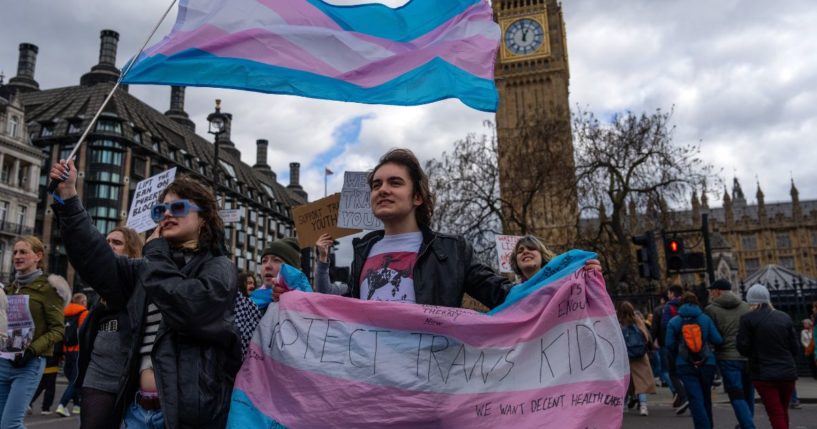


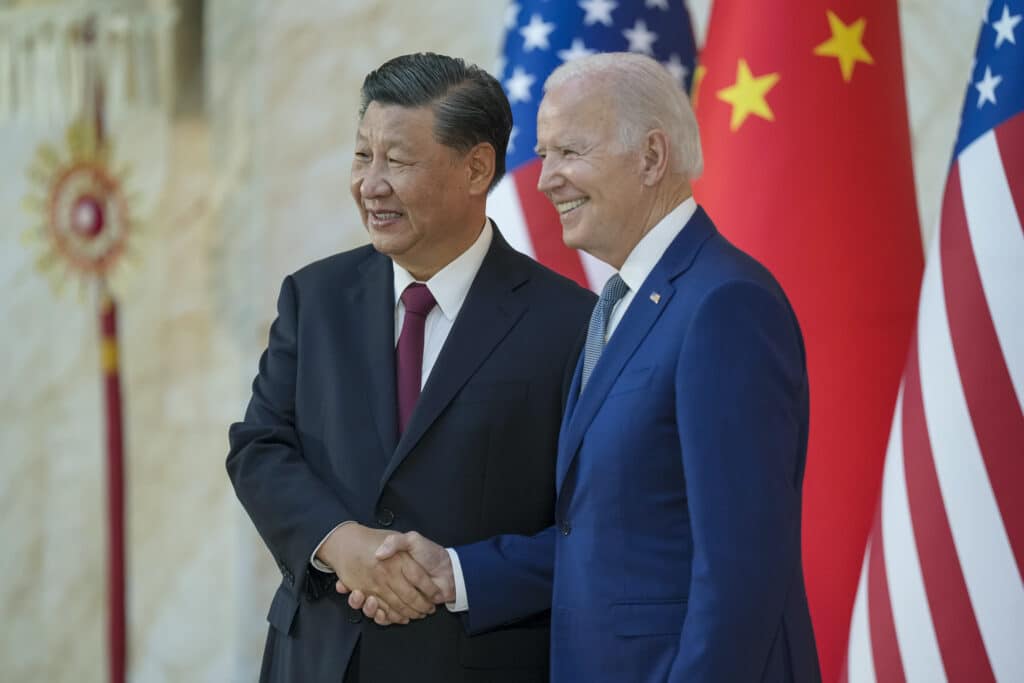


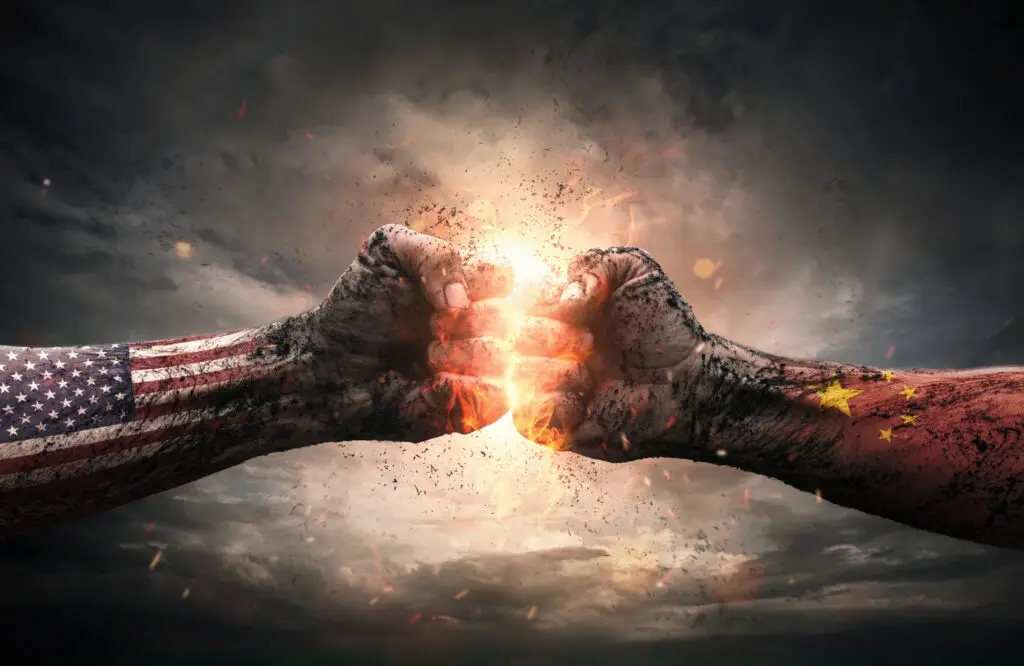








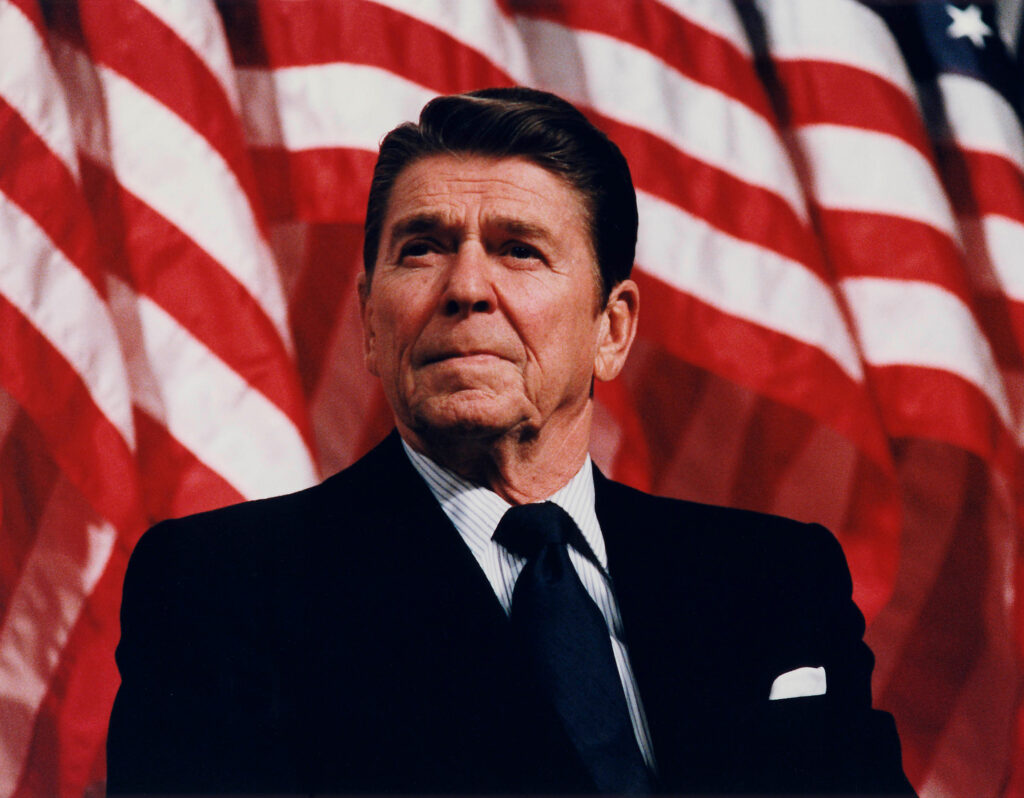




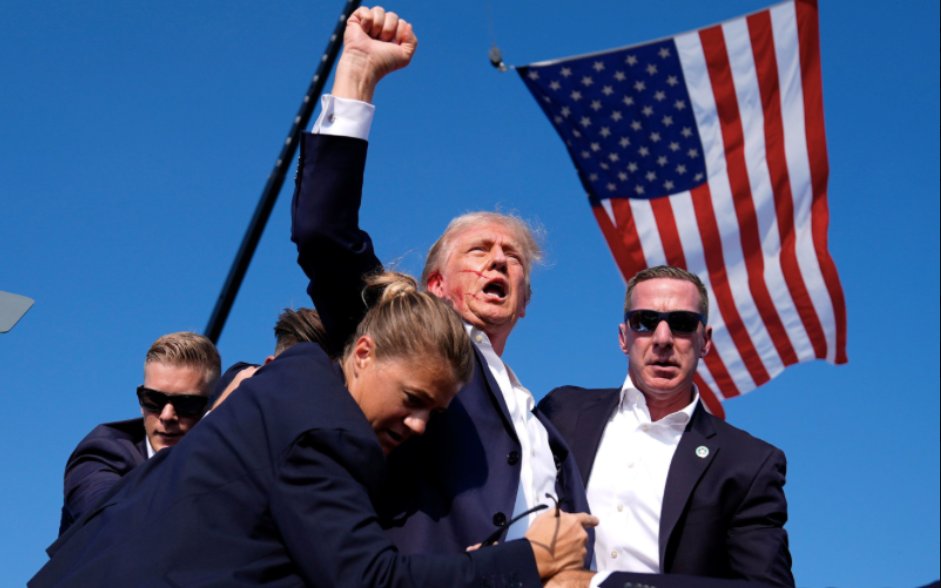





 fox files
Recent Comments