
The discovery coincides with a U.S. policy move placing bird flu and bovine tuberculosis under indefinite emergency status—raising urgent questions of intent and global coordination.
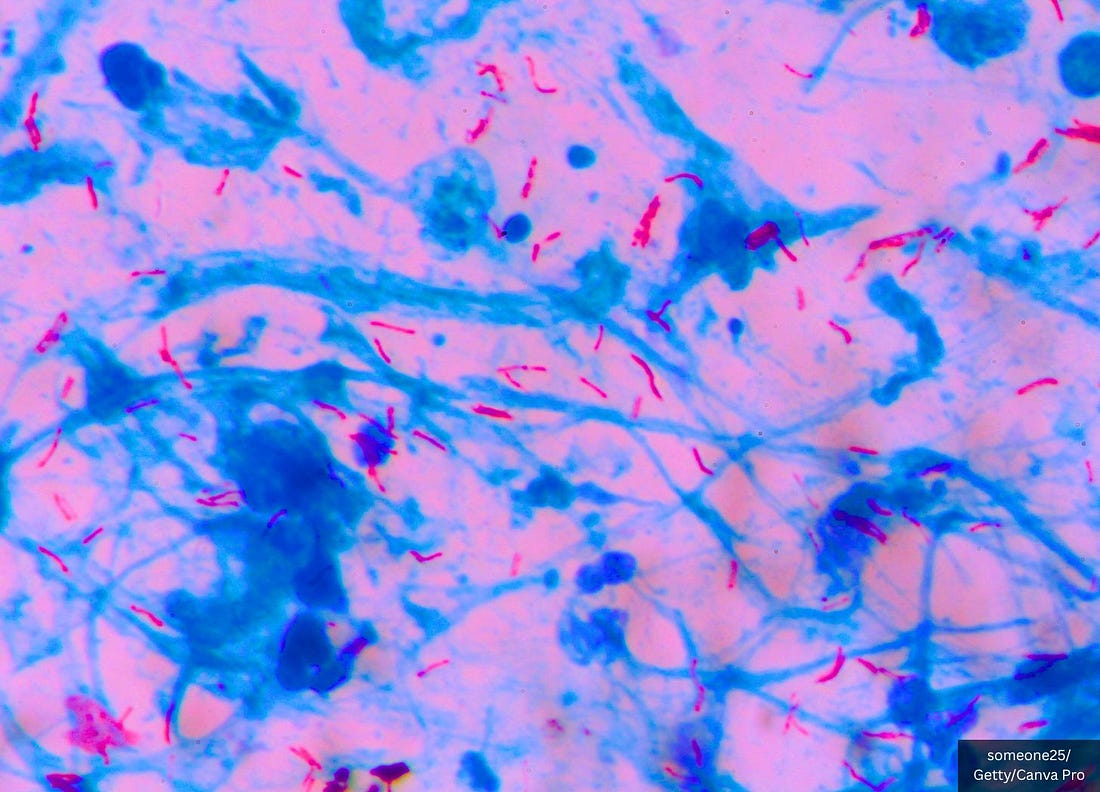
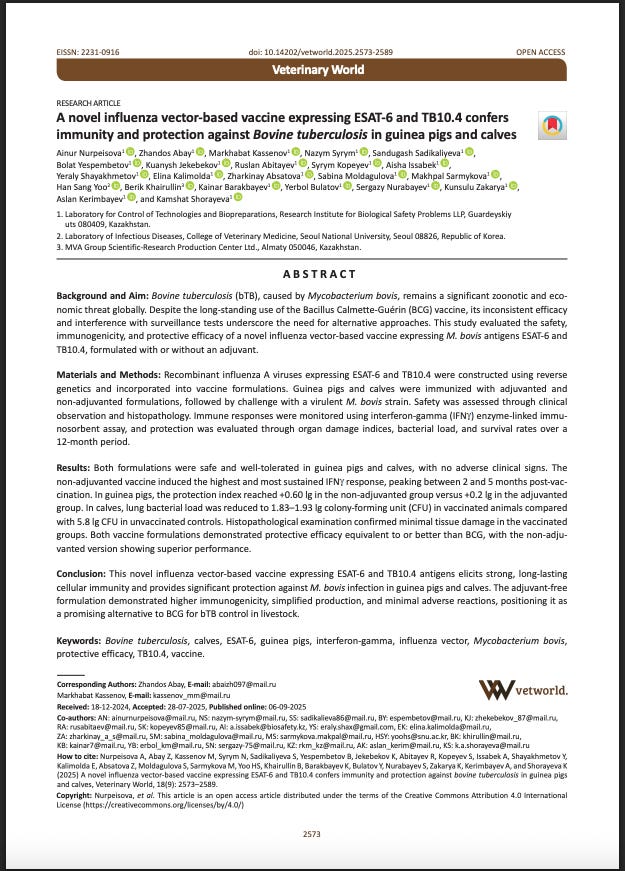
A new study published last month in Veterinary World confirms that scientists from Kazakhstan and South Korea have engineered a live hybrid virus that combines genetic material from avian influenza “bird flu” and Mycobacterium bovis, the bacterium that causes bovine tuberculosis.
Governments all over the world are quietly generating an army of new bird flu pathogens, without a peep from the mainstream media or popular influencers.
The new chimeric influenza–tuberculosis pathogen was created inside Kazakhstan’s government-run Research Institute for Biological Safety Problems, with technical collaboration from Seoul National University in South Korea, and funding provided by Kazakhstan’s Ministry of Education and Science.
According to the authors, they “generated recombinant influenza viruses expressing M. bovis antigens ESAT-6 and TB10.4 using a standard reverse genetic system.”
In plain terms, the team used reverse-genetics, a lab method that assembles new viruses from cloned DNA, to insert tuberculosis genes into the flu genome—creating a synthetic viral-bacterial hybrid.
They further explain: “We produced a vaccine strain expressing the M. bovis mycobacterial proteins ESAT-6 and TB10.4 from the NS1 open reading frame of the avian influenza virus through reverse genetics with virus replication in embryonated chicken eggs.”
In other words, the tuberculosis genes were physically embedded inside the influenza virus’s NS1 gene, then amplified inside live bird embryos to generate infectious viral particles.
The NS1 gene in bird flu controls the virus’s ability to evade the host immune system and replicate efficiently inside infected cells.
The generation of a bird flu-tuberculosis Franken-virus comes as the U.S. Department of Agriculture’s FY2026 emergency funding plan quietly placed both highly pathogenic avian influenza and bovine tuberculosis under the same permanent “no-year” emergency funding status—elevating bird flu and tuberculosis research, including gain-of-function and vaccine development, to federally protected, continuous-operation programs even during a full government shutdown.
Taken together, the creation of a live bird flu-tuberculosis chimera overseas and the U.S. government’s decision to grant both pathogens permanent emergency status raise serious national security concerns.
The timing and alignment of these actions suggest more than coincidence—raising pressing questions about whether global agencies and their partners are merely preparing for future outbreaks, or deliberately coordinating the groundwork for one.
Congress, the White House, the Department of Energy, the FBI, and the CIA have confirmed that the COVID-19 pandemic was likely the result of lab-engineered pathogen manipulation.
Insertion of ‘Alien Sequences’
The scientists note that the NS1 gene “was modified to include the antigen sequences.”
That means the flu virus’s genetic code was deliberately edited to carry foreign bacterial fragments.
They add: “The virus was attenuated by modifying the NS1 protein by inserting alien sequences derived from the target protein amino acid region 124.”
Translated, the researchers confirm they altered the flu virus by altering a key protein and inserting “alien” genetic material—a literal cross-species fusion between virus and bacterium.
Microscopic Confirmation of the Hybrid Virus
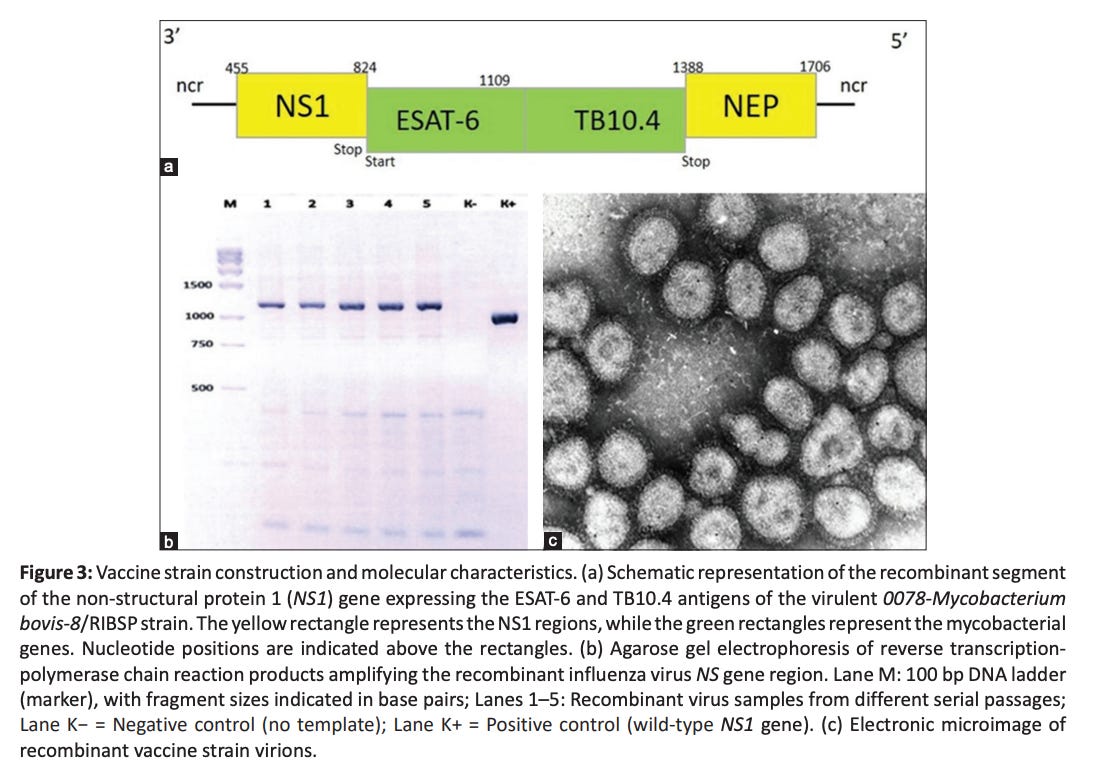
Under an electron microscope, “the virion morphology of the recombinant viruses corresponded to that of the avian influenza viruses. The virions were spherical and enclosed in a bilayer supercapsid with ~10 nm glycoprotein spikes, which determine the hemagglutinative or neuraminidase activity.”
Simply put, even after being spliced with tuberculosis genes, the new organism was said to still look and behave like an influenza virus—complete with its purported spike-covered shell used for cell infection.
Verified ‘Genetic Chimeric Structure’
Molecular testing showed the genetic combination held together across generations:
“The first cloning stage showed a preserved genetic chimeric structure in the NS1 genome segment, as confirmed by RT-PCR.*”
Meaning: laboratory sequencing confirmed the hybrid DNA remained intact, proving the chimeric virus was genetically stable and self-replicating.
The study’s schematic further details the exact makeup:
“The recombinant segment of the non-structural protein 1 (NS1) gene express[es] the ESAT-6 and TB10.4 antigens of the virulent 0078-Mycobacterium bovis-8/RIBSP strain. The yellow rectangle represents the NS1 regions, while the green rectangles represent the mycobacterial genes.”
In plain language, the figure shows flu genes (yellow) fused with tuberculosis genes (green)—a clear depiction of genetic grafting across species.
Replication & Stability
The team reported the new virus replicated efficiently:
“The recombinant vector expressing the mycobacterial antigens showed a high hemagglutination activity of 1:128 at an infectious activity level of lg 6.75 ± 0.07 EID50/0.2 mL.”
In other words, each dose contained roughly five million infectious particles, confirming robust viral growth.
They also verified the genetic insert stayed stable:
“To evaluate the stability of the inserted gene, five serial passages of the virus were carried out in embryonated chicken eggs at 34 °C.”
This means the hybrid virus could be re-grown repeatedly without losing its tuberculosis genes—evidence of lasting biological stability.
Bottom Line
The Veterinary World study confirms that scientists from Kazakhstan’s Research Institute for Biological Safety Problems and Seoul National University created a genetically engineered, self-replicating organism that merges the genetic material of tuberculosis bacteria with avian influenza virus.
Their own words describe a “recombinant influenza virus” with a “preserved genetic chimeric structure” and “alien sequences” inserted into the NS1 gene—a live, replicating influenza–tuberculosis chimera manufactured inside bird embryos.
The timing of this creation—coinciding with the U.S. government’s decision to grant both bird flu and bovine tuberculosis permanent emergency funding—raises profound national security questions.
It suggests a coordinated international framework in which the same pathogens now being engineered in foreign labs are simultaneously being prioritized and federally protected under U.S. biosecurity policy.
Whether framed as “vaccine research” or “preparedness,” these programs collectively point to a globally synchronized architecture of high-risk pathogen development and continuity planning—one that operates beyond public consent, outside normal oversight, and increasingly blurs the line between defense and deliberate design.


 fox files
Leave a comment