The Truth Is Out There

Posts tagged ‘autism’

The Claim ‘Vaccines Do Not Cause Autism’ Is Not an Evidence-Based Claim, CDC Confirms


“Because studies have not ruled out the possibility that infant vaccines cause autism.”
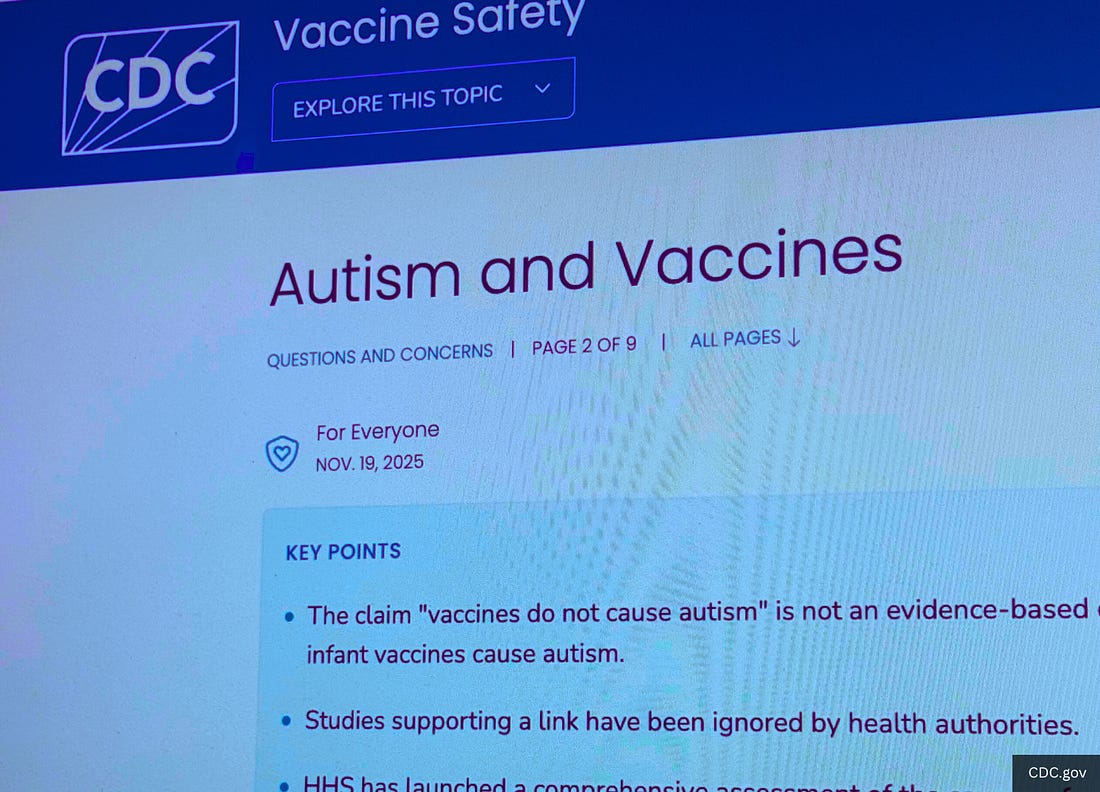
The U.S. Centers for Disease Control and Prevention (CDC) has officially declared that there is no evidence to support the claim that vaccines do not cause autism.

Yesterday, the CDC published these historic words:

The claim “vaccines do not cause autism” is not an evidence-based claim because studies have not ruled out the possibility that infant vaccines cause autism.

The claim “vaccines do not cause autism” is not an evidence-based claim because studies have not ruled out the possibility that infant vaccines cause autism.

HHS has launched a comprehensive assessment of the causes of autism, including investigations on plausible biologic mechanisms and potential causal links.


In an instance of welcome self-reflection and honesty, the CDC announcement went on to admit that the unscientific claim “has historically been disseminated by the CDC and other federal health agencies within HHS to prevent vaccine hesitancy.”

And in an apparent course correction, CDC announced that “HHS has launched a comprehensive assessment of the causes of autism.”

This will include “investigations on plausible biologic mechanisms and potential causal links.”

CDC went on to explain how the rise in autism correlates with the rise in the number of childhood vaccinations:

It is critical to address questions the American people have about the cause of autism to ensure public health guidance is adequately responsive to their concerns. Approximately one in two surveyed parents of autistic children believe vaccines played a role in their child’s autism, often pointing to the vaccines their child received in the first six months of life (Diphtheria, tetanus, pertussis (DTaP), Hepatitis B (HepB), Haemophilus influenzae type B (Hib), Poliovirus, inactivated (IPV), and Pneumococcal conjugate (PCV)) and one given at or after the first year of life (Measles, mumps, rubella (MMR)). This connection has not been properly and thoroughly studied by the scientific community.

In 1986, the CDC’s childhood immunization schedule for infants (≤ 1 year of age) recommended five total doses of vaccines: two oral doses of oral polio vaccine (OPV) and three injected doses of Diphtheria and Tetanus Toxoids and Pertussis Vaccine (DTP). In 2025, the CDC schedule recommended three oral doses of Rotavirus (RV) and three injected doses each of HepB, DTaP, Hib, PCV, and IPV by six months of age, two injected doses of Influenza (IIV) by 7 months of age, and injected doses of Hib, PCV, MMR, Varicella (VAR), and Hepatitis A (HepA) at 12 months of age.

The rise in autism prevalence since the 1980s correlates with the rise in the number of vaccines given to infants. Though the cause of autism is likely to be multi-factorial, the scientific foundation to rule out one potential contributor entirely has not been established. For example, one study found that aluminum adjuvants in vaccines had the highest statistical correlation with the rise in autism prevalence among numerous suspected environmental causes. Correlation does not prove causation, but it does merit further study.

HHS is now researching plausible biological mechanisms between vaccines and autism.

HHS will evaluate plausible biologic mechanisms between early childhood vaccinations and autism. Mechanisms for further investigation include the impacts of aluminum adjuvants, risks for certain children with mitochondrial disorders, harms of neuroinflammation, and more.

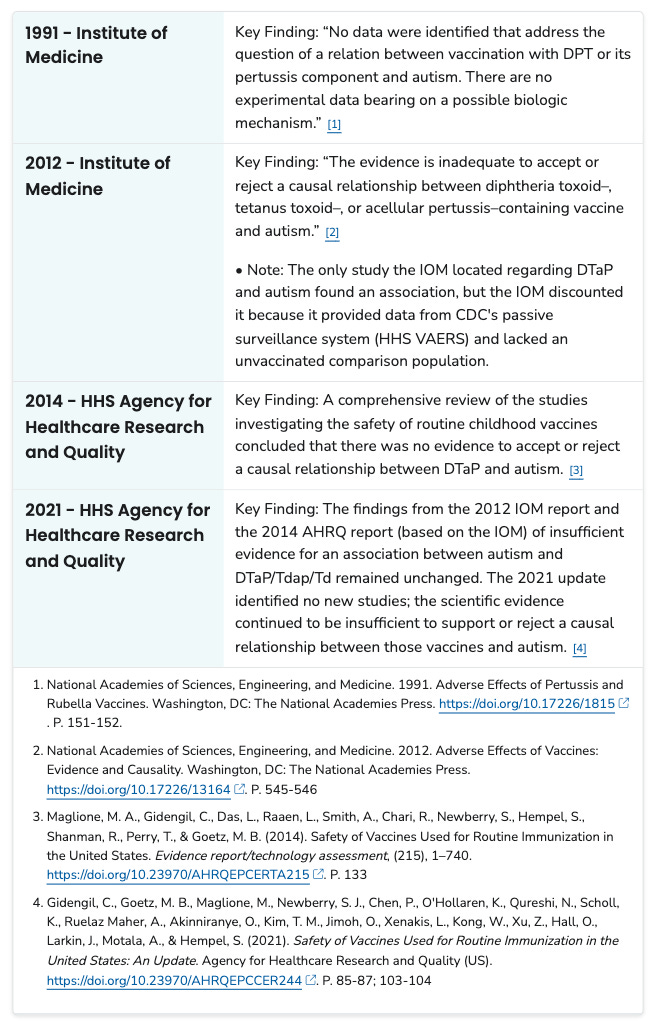
CDC provided a chart showing that across three decades of U.S. government reviews, federal agencies (IOM and AHRQ/HHS) have repeatedly concluded that the evidence is insufficient to confirm or rule out a causal link between DTaP/DTP/Tdap/Td vaccines and autism.
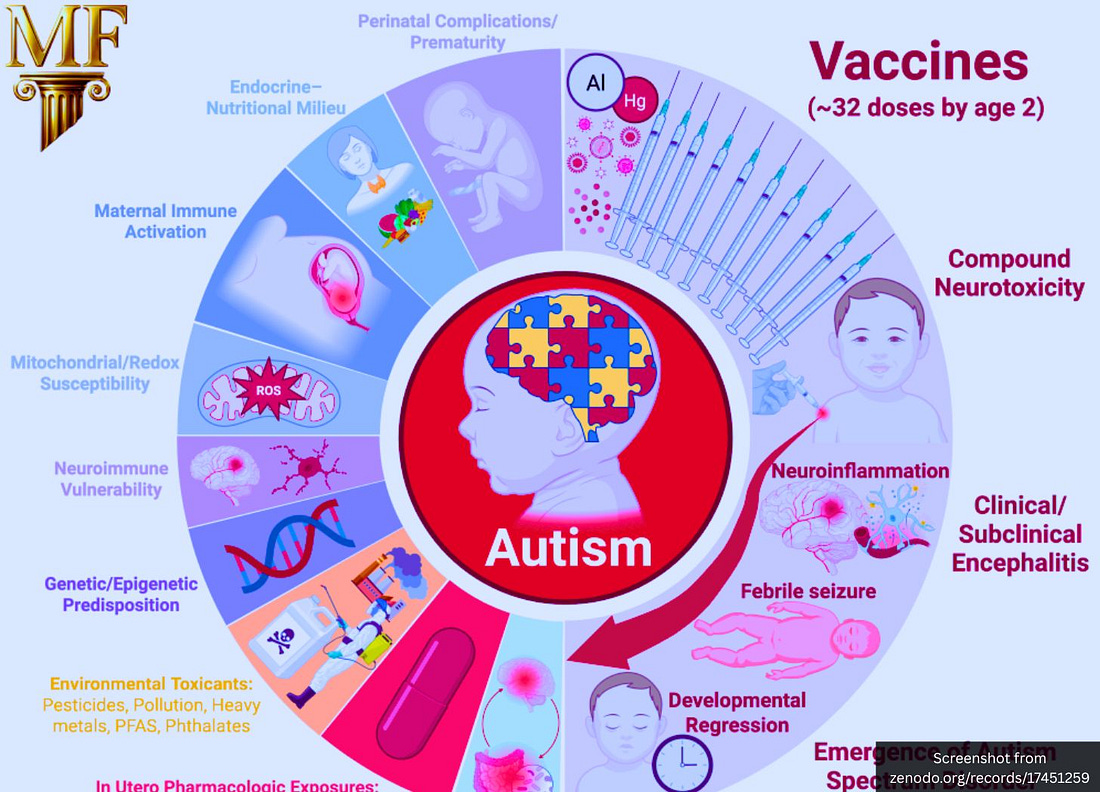
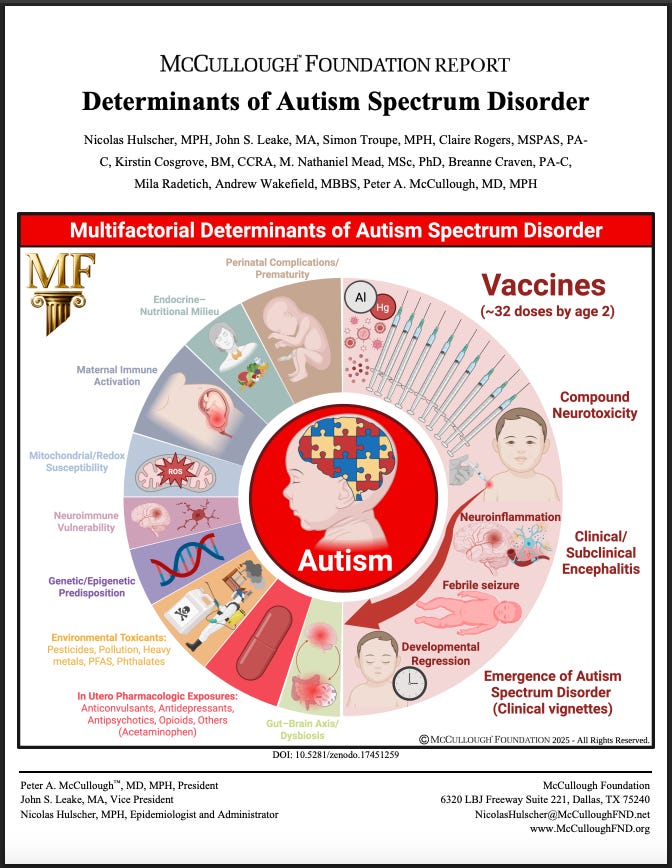
The CDC’s newfound scientific approach to autism’s link to vaccines comes after a large McCullough Foundation meta-analysis of 136 studies concluded that childhood vaccination—especially cumulative, clustered, and early-timed dosing—is the strongest modifiable risk factor for autism and other neurodevelopmental disorders.

After decades of denial, the CDC under the Trump administration and HHS Secretary Robert F. Kennedy Jr. has finally taken the first responsible step toward scientific honesty by admitting that vaccines have never been definitively ruled out as a cause of autism.

This is perhaps the strongest decision the agency has made in years.

By abandoning the unscientific slogan and acknowledging the unanswered questions, the CDC has opened the door to the kind of rigorous investigation that should have been undertaken long ago.

For the first time, federal health authorities are conceding that parents’ concerns are legitimate, that autism’s rise demands real answers, and that the expanding vaccine schedule must be scrutinized—not protected.

If the agency continues down this path, the CDC may finally reclaim what it has lacked for a generation: credibility.

We look forward to the CDC being equally honest about COVID-19 vaccines.

107 Studies Link Vaccines to Autism, Other Brain Disorders: McCullough Foundation Meta-Analysis


“Childhood vaccination constitutes the most significant modifiable risk factor” for autism, write Hulscher, McCullough, Wakefield, and seven other researchers.

A sweeping new analysis by the McCullough Foundation has confirmed that “the most significant modifiable risk factor” for autism is childhood vaccination.

The McCullough Foundation document, titled Determinants of Autism Spectrum Disorder, reviews an astounding 136 scientific studies.

The majority of them suggest the current vaccine schedule represents an “urgent public health priority” regarding autism.

That means vaccines—with a market value estimated at $82 billion in 2025 and expected to reach $125 billion worldwide by 2032—are likely causing one of the most devastating and tragic disorders known to mankind.

The authors write:

“Combination and early-timed routine childhood vaccination constitutes the most significant modifiable risk factor for ASD, supported by convergent mechanistic, clinical, and epidemiologic findings, and characterized by intensified use, the clustering of multiple doses during critical neurodevelopmental windows, and the lack of research on the cumulative safety of the full pediatric schedule. As ASD prevalence continues to rise at an unprecedented pace, clarifying the risks associated with cumulative vaccine dosing and timing remains an urgent public health priority.”


Most Studies Indicate a Vaccine Association

The McCullough Foundation examined more than a hundred publications that evaluated links between vaccination and neurodevelopmental outcomes.

Most of them pointed to vaccines being the problem.

The authors write:

“Of 136 studies examining childhood vaccines or their excipients, 29 found neutral risks or no association, while 107 inferred a possible link between immunization or vaccine components and ASD or other neurodevelopmental disorders (NDDs).”

In other words, nearly four out of five studies reviewed showed some level of correlation between vaccine exposure and neurodevelopmental changes.

No Long-Term Study of the Full Vaccine Schedule Exists

The report reveals that safety testing has never evaluated the cumulative vaccine program that children actually receive.

“To date, no study has evaluated the safety of the entire cumulative pediatric vaccine schedule for neurodevelopmental outcomes through age 9 or 18 years. Nearly all existing research has focused on a narrow subset of individual vaccines or components—primarily MMR, thimerosal-containing, or aluminum-adjuvanted products—meaning that only a small fraction of total childhood vaccine exposure has ever been assessed for associations with ASD or other NDDs.”

Each vaccine is licensed individually, but children are exposed to dozens in combination.

This is a major regulatory gap that undermines every “safe and effective” claim made about the schedule as a whole.

Unvaccinated Children Reported to Have Better Overall Health

The authors highlight a subset of comparisons between vaccinated and completely unvaccinated populations.

“Twelve studies comparing routinely immunized versus completely unvaccinated children or young adults consistently demonstrated superior overall health outcomes among the unvaccinated, including significantly lower risks of chronic medical problems and neuropsychiatric disorders such as ASD.”

These findings show a reproducible pattern across independent datasets.

That suggests vaccine exposure correlates with poorer long-term health outcomes.

Authors Argue Vaccine Ingredients Can Damage the Brain

The report analyzes the biological plausibility of vaccine-related neuroinflammation.

“Antigen, preservative, and adjuvant (ethyl mercury and aluminum) induced mitochondrial and neuroimmune dysfunction, central nervous system injury, and resultant incipient phenotypic expression of ASD.”

They describe a cascade in which aluminum and mercury trigger oxidative stress and mitochondrial injury in susceptible children.

This is offered as the mechanistic foundation for their broader argument.

Timing and Clustering of Shots Said to Heighten Risk

The authors also show that timing is critical—that multiple shots at once magnify danger.

“Clustered vaccine dosing and earlier timing of exposure during critical neurodevelopmental windows appeared to increase the risk of ASD.”

They argue that vaccine-induced immune stimulation during rapid brain growth in childhood can lead to chronic inflammation.

Autism Surge Tracked Alongside Expanded Vaccine Mandates

The paper draws attention to the timing between federal liability protection for manufacturers and rising autism rates.

“The most salient feature of this steeply rising trend of autism incidence and prevalence is that it began shortly after the passage of the National Childhood Vaccine Injury Act (NCVIA) in 1986… Since then, the number of new vaccines on the childhood schedule has greatly proliferated from 12 shots in 1986 to 54 shots in 2019.”

The authors link legal immunity for manufacturers to rapid schedule growth.

This is evidence that financial and regulatory incentives expanded exposure while suppressing safety accountability.

Bottom Line

The McCullough Foundation report lays out multiple powerful arguments that challenge decades of public-health assurances:

  • most reviewed studies show a possible link;
  • unvaccinated children fare better;
  • cumulative schedule testing is absent;
  • vaccine ingredients and timing may trigger neuroinflammation;
  • and the surge in autism parallels expansion of the vaccine schedule.

The report’s scale and the reputations of its authors ensure its arguments will expose the significant dangers posed by vaccines.

If even part of what the report alleges is accurate, it suggests that modern public health policy has neglected the most consequential safety question of our time: What happens when the cumulative biological burden of vaccination collides with the developing human brain?

NIH Probes Link Between Vaccines and Autism: HHS Announcement (Video)


Trump shares encounter with employee whose son was severely vaccine-injured, and condemns how children are “pumped” with 80 different vaccines so early in life.

As part of its new Autism Data Science Initiative (ADSI), the U.S. National Institutes of Health (NIH) will investigate whether medical exposures—including vaccines—are linked to the rising prevalence of autism spectrum disorder (ASD).

Reviews of 91 human studies up to 2016 show that approximately 74% of studies suggest mercury exposure—including through vaccines—as a risk factor or contributor to ASD, showing both direct and indirect effects on brain development.

The new announcement came during a White House press conference in the Roosevelt Room, where President Trump and HHS Secretary Robert F. Kennedy Jr. outlined what they described as “progress in uncovering the root causes of autism.”

The fact sheet released by HHS details three primary initiatives: a renewed look at leucovorin (folinic acid) as a treatment for autism-related symptoms, guidance to physicians on acetaminophen use in pregnancy, and the NIH’s launch of the Autism Data Science Initiative.

Although vaccines were not listed among the three headline goals, they were nevertheless singled out later in the announcement under the NIH initiative’s “medical and perinatal influences” heading.

Data from CDC VAERS show 2,682,925 adverse events linked to vaccines since 1990—yet, as the Harvard Pilgrim study commissioned by HHS confirmed, fewer than 1% of vaccine injuries are ever reported, meaning the true number is likely in the hundreds of millions.


NIH Autism Data Science Initiative

The new NIH initiative involves more than $50 million in new awards, funding 13 projects that will focus on autism prevalence, etiology, treatment, services, and replication studies.

According to HHS, the projects will use “large-scale, integrated data resources” spanning genetics, epigenetics, proteomics, metabolomics, and behavioral data.

A defining feature is the “exposomics” (the study of all environmental exposures over a lifetime and their impact on health) approach, which NIH says will comprehensively study environmental, medical, and lifestyle factors that may contribute to autism.

The list of exposures includes:

  • Environmental contaminants such as chemicals and other hazardous substances found in everyday life
  • Nutrition and maternal diet factors like folate intake, fish consumption, and ultra-processed foods
  • Medical and perinatal influences, explicitly naming medications and vaccinations alongside obstetric complications and neonatal intensive care exposures
  • Psychosocial stressors, infections, and immune responses during pregnancy and early development

By directly including vaccinations in its research portfolio, NIH is, for the first time, publicly committing to probe potential links between vaccines and autism within a large-scale government-backed initiative.

Autism Rates Continue to Climb

The announcement comes amid sobering new numbers from the CDC: 1 in 31 U.S. children born in 2014 has been diagnosed with autism—nearly a fivefold increase from when the CDC first began tracking autism rates in 2000.

The prevalence is higher among boys (1 in 20) and highest in California, where nearly 1 in 12.5 children are affected.

Trump & Kennedy Single Out Vaccines

During the announcement, Trump shared his encounter with an employee whose son was apparently severely injured by vaccines:

The U.S. president also encouraged parents to space out vaccinations in their children:

Secretary Kennedy also emphasized the new focus on vaccines, pointing out how 40 to 70% of mothers who have children with autism believe that a vaccine injured their child:

Bottom Line

While leucovorin therapy and acetaminophen exposure in pregnancy formed part of the HHS briefing, it is the NIH Autism Data Science Initiative that is likely to draw the most scrutiny.

For decades, the possibility of a vaccine-autism connection has been dismissed by government health agencies, and officials have repeatedly emphasized that “vaccines are safe and effective.”

The fact that NIH’s own research portfolio will now explicitly include vaccinations as one of the risk factors under study marks a major shift—and one that could carry significant implications for both public health policy and parental trust in government vaccine programs.