The Truth Is Out There

Posts tagged ‘bird-flu’

WHO Quietly Reactivates Global Influenza Pandemic Apparatus for Bird Flu: ‘Journal of Infectious Diseases’


WHO received $8 billion during the COVID-19 pandemic—is that why it’s expanding bird flu pandemic response infrastructure instead of demanding bird flu gain-of-function be halted?

A Wednesday publication in the Journal of Infectious Diseases confirms the World Health Organization (WHO) is quietly expanding its global pandemic infrastructure—this time around the threat of an H5N1 “bird flu” pandemic.

Not chikungunya. Not Ebola. Not Nipah. Not monkeypox.

Bird flu: the very virus countries are dangerously enhancing in labs even as they develop the vaccines and drugs to contain it (see recommended reading below this article).

In other words, while governments are creating both the problem and the solution to a bird flu pandemic, the WHO is building the command structure that will manage the global response when that crisis arrives.

The WHO’s bird flu paper surfaces as the United Nations, the most consequential international institution in existence, convenes 500 experts for a “global dialogue” on the same threat, signaling that global institutions are quietly aligning their pandemic machinery around bird flu.

The new report was written by officials in the World Health Organization’s Department of Epidemic and Pandemic Management.

It describes a permanent coordination system linking governments, pharmaceutical companies, and humanitarian agencies through two mechanisms: the Pandemic Influenza Preparedness (PIP) Framework and a new Interim Medical Countermeasures Network (i-MCM-net).

Together, they allow WHO to “coordinate availability, equitable access to, and timely allocation of medical countermeasures at the global level: strengthen coordination efforts and provide strategic orientation to ensure a coherent response to pandemic threats, with a focus on the global level.”

Key Question: Why is the WHO more focused on creating bird flu pandemic response infrastructure than on demanding governments halt all gain-of-function and reverse genetics experiments on bird flu—or all pathogens, for that matter?

One reason might be that the World Health Organization received a total of approximately $8 billion in funding during the COVID-19 pandemic.

The massive inflow of cash was unprecedented in the organization’s history and timeframe, as it greatly exceeded the approved biennial program budget of $5.84 billion.

COVID-19 made the WHO richer than ever.

What would a bird flu pandemic bring in?

And is that potential pandemic profit more important to the WHO than stopping what causes pandemics in the first place?

Congress, the White House, the Department of Energy, the FBI, and the CIA have confirmed that the COVID-19 pandemic was likely the result of lab-engineered pathogen manipulation.


Built Around the Bird Flu Threat

WHO traces the origin of these systems to the early-2000s H5N1 outbreaks:

“During 2005, changes were observed in the epidemiology of H5N1 disease in animals, and human cases continued to occur with high mortality (33% to > 50% case fatality),” the new Journal of Infectious Diseases publication reads. “The virus evolved and expanded its geographical range and became endemic in poultry in parts of Asia, increasing the size of the population at risk.”

The paper explains that these events prompted creation of an international antiviral stockpile “for strategic use during an evolving outbreak.”

“Considering the impact of a pandemic caused by the highly pathogenic virus, WHO was asked to explore the establishment of an international stockpile of antivirals for strategic use during an evolving outbreak in an attempt to contain it at the source or at least delay spread.”

Two decades later, WHO again points to the potential of an H5N1 pandemic to justify maintaining that infrastructure indefinitely.

New Supply Agreements & Industry Partners

In May 2024 WHO signed a donation agreement with F. Hoffmann-La Roche Ltd., securing up to five million courses of Tamiflu over two years.

“These antiviral treatment courses would be critical in the early stages of the response to an influenza pandemic,” writes the WHO.

The supplement lists additional sponsors—Roche, Gilead, Shionogi, Cidara, Eradivir, Leyden Laboratories, and the International Federation of Pharmaceutical Manufacturers & Associations—showing direct corporate integration in the WHO’s antiviral and vaccine network.

How the Systems Intersect

WHO’s i-MCM-net is designed to manage global distribution of antivirals and vaccines once they are licensed or “emergency use” authorized.

(We do not need an Emergency Use Authorization (EUA) for any bird flu vaccines or pharmaceuticals because we already have safe and effective FDA-approved medicines for the disease: Xofluza and Ivermectin).

The international agency already tested the network by allocating 2.4 million monkeypox vaccine doses in 2024 and states it will serve as the operational model for future influenza events.

In effect, laboratory research, pharmaceutical development, and international logistics are now operating in parallel lanes that converge under WHO coordination whenever an influenza pandemic threat is declared.

The Scale of Coordination

The WHO paper also notes that the organization is activating the i-MCM-net before the forthcoming Pandemic Agreement enters into force:

“Pending entry into force of the WHO Pandemic Agreement, WHO is working with Member States and relevant partners to ensure the interim Medical Countermeasures Network (i-MCM net) is operational to respond to public health events requiring a coordinated international response.”

That means the infrastructure for global response is already functioning in anticipation of a coming H5N1 or other influenza emergency.

Bottom Line

Across science, industry, and policy, H5N1 bird flu has become the organizing focus of a worldwide pandemic-response regime.

While laboratories across the U.S., Europe, and Asia continue conducting gain-of-function and reverse-genetics experiments that enhance bird-flu viruses, governments and pharmaceutical companies are simultaneously developing the vaccines and antivirals to counter those same engineered strains.

At the center of it all, the World Health Organization is orchestrating the global command structure—the supply chains, stockpiles, and distribution systems that will deploy those medical products once the next pandemic is declared.

COVID-19 showed that pandemic response can generate unprecedented funding and influence for global health institutions.

The WHO’s current expansion suggests it is preparing to replicate that model—this time around H5N1.

Whether viewed as preparedness or unchecked consolidation of power, the coordination now underway is one of the most extensive and consequential mobilizations around a single virus threat since COVID-19—and it is happening in plain sight.

And no one’s talking about it.

But we are.

NIAID, DARPA, Bill Gates Intentionally Infect 80 Americans With Lab-Made Pandemic Influenza Virus: HHS Study


Majority of infected individuals became contagious to others, raising national security and informed consent concerns.

A federally run experiment funded by the National Institute of Allergy and Infectious Diseases (NIAID), the Defense Advanced Research Projects Agency (DARPA), and the Bill & Melinda Gates Foundation deliberately infected 80 American adults with a lab-grown pandemic influenza virus at the National Institutes of Health (NIH) Clinical Center in Bethesda, Maryland.

Data from 74 of those infected were analyzed, and 53 of them (72% of analyzed participants, or at least 66% of all infected participants) were confirmed to be shedding the pathogen, meaning they were actively contagious and could infect others.

We do not know whether six participants who were excluded from the study after being deliberately infected were shedding the virus or not.

Regardless, 53 of the individuals became contagious to others.

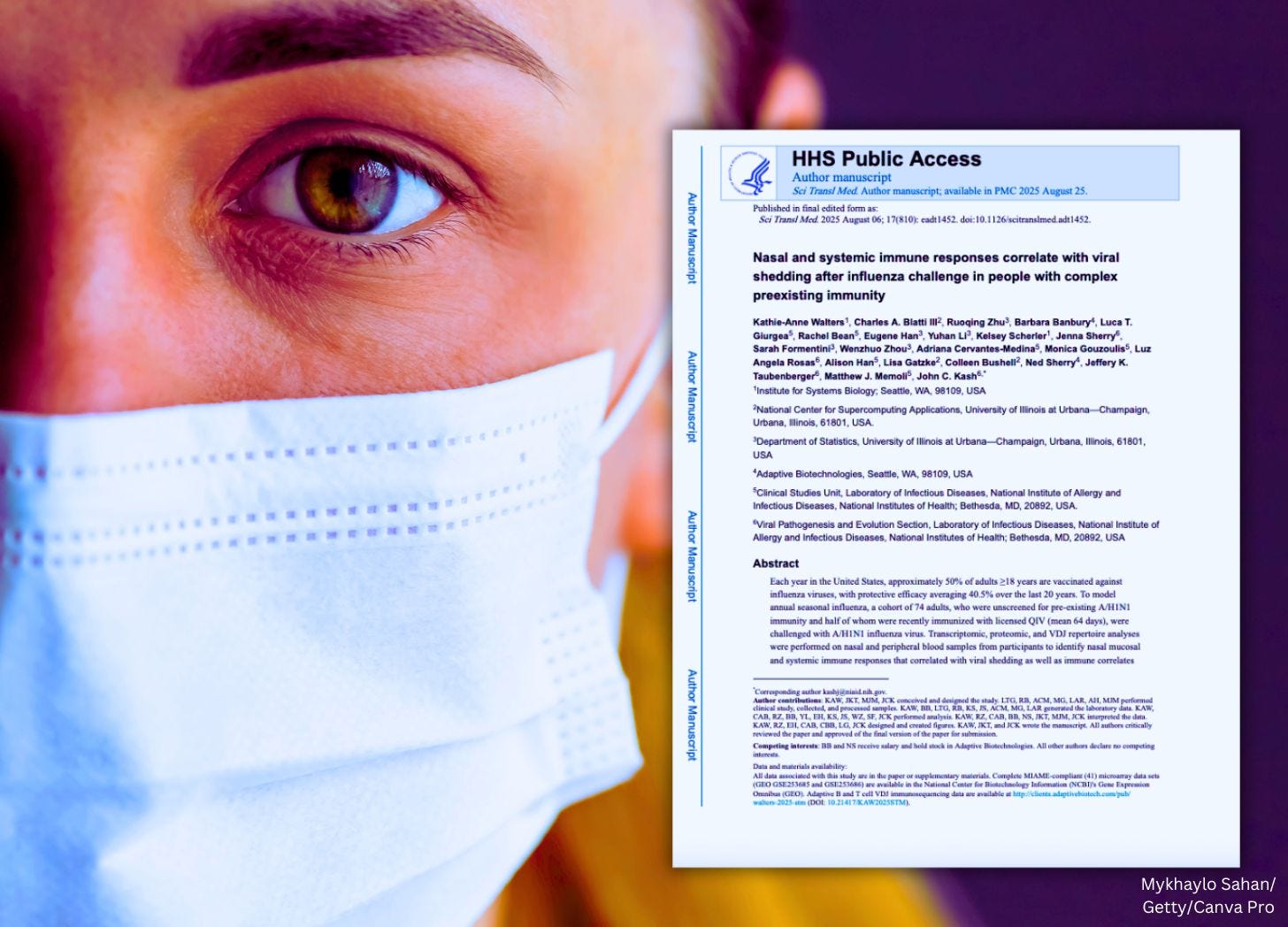
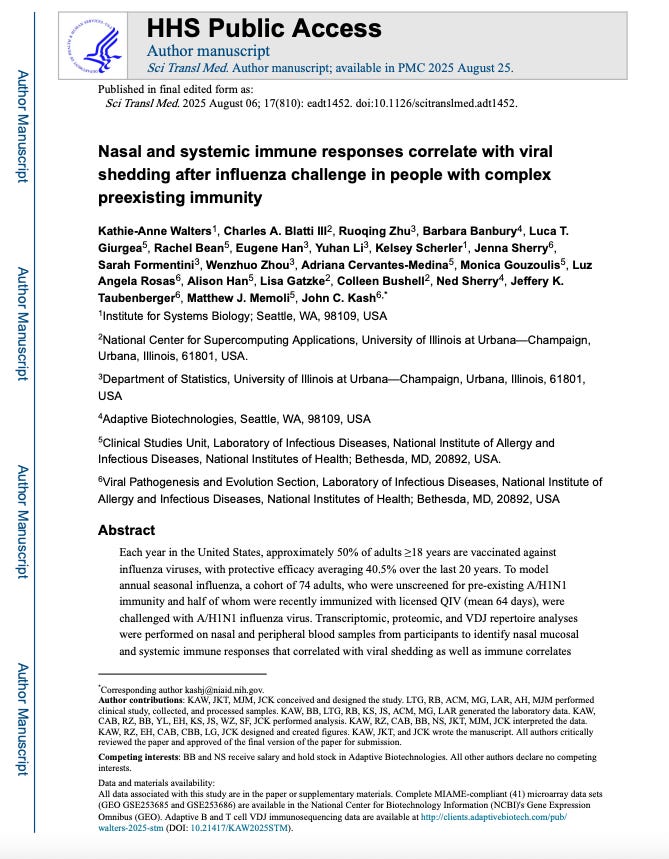
The human-infection experiment—officially published in Science Translational Medicine (Aug. 2025) under the title “Nasal and systemic immune responses correlate with viral shedding after influenza challenge in people with complex preexisting immunity”—was conducted entirely under the jurisdiction of the U.S. Department of Health and Human Services (HHS).

The original HHS manuscript can be found here or downloaded below.

Nihms 2097372 (2)

2.1MB ∙ PDF file

Download

Lab-Made Pandemic Virus Used to Infect Humans

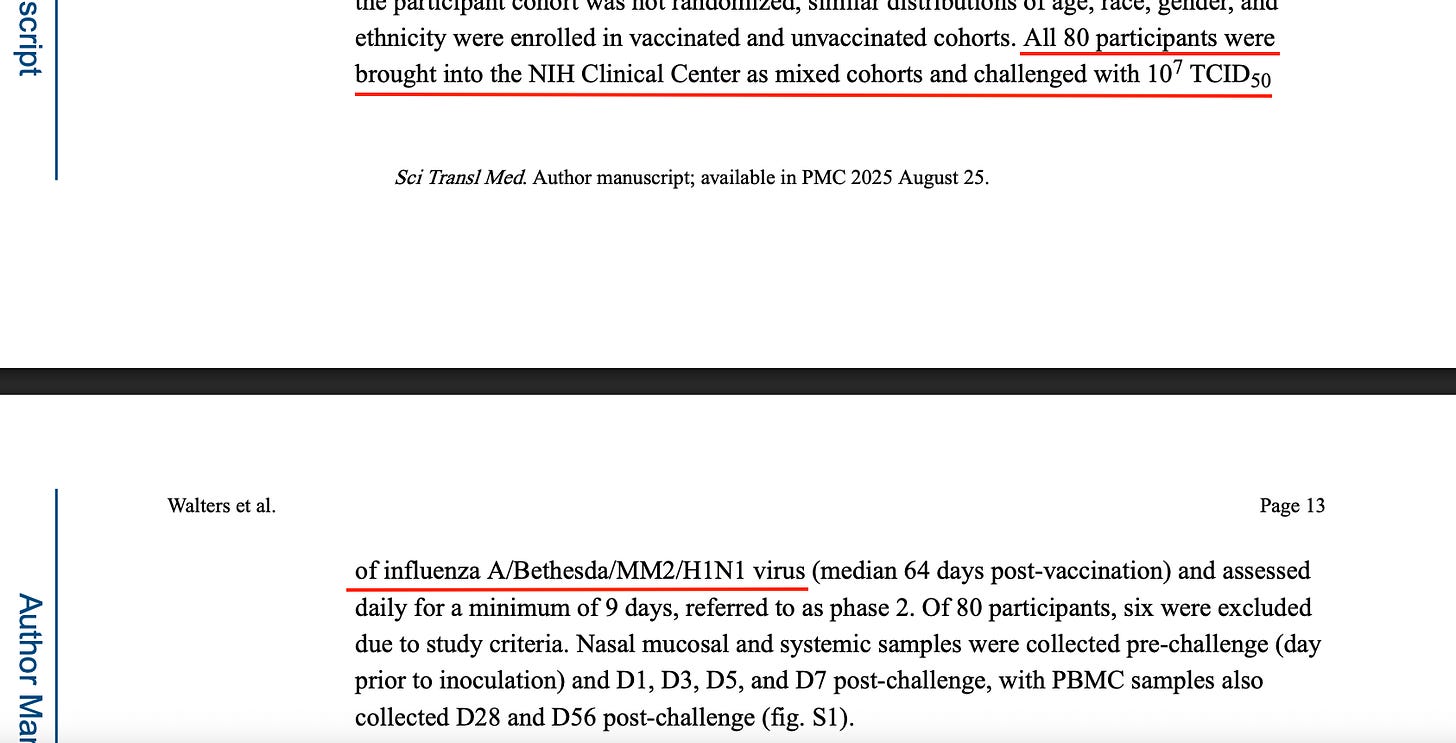
According to the paper, participants were “challenged with 10⁷ half-maximal tissue culture infectious dose (TCID₅₀) of a 2009 pandemic H1N1 strain, A/Bethesda/MM2/H1N1.”

That purported virus was not naturally circulating.

It was a lab-engineered clone of the 2009 pandemic influenza A (H1N1) virus, manufactured by NIH scientists in Bethesda and maintained as a standardized “human challenge” stock.

The virus name itself—A/Bethesda/MM2/H1N1—identifies it as an NIH-made strain.

The “Bethesda” designation marks its laboratory origin at NIH’s Maryland facility, and “MM2” denotes the second master-mix batch of the cloned challenge stock.

80 Individuals Deliberately Infected Under HHS Oversight

The study describes the deliberate exposure of 80 adults to this laboratory-made pandemic influenza strain in 2019.

“The challenge study (clinicaltrials.gov NCT01971255) was performed at the NIH Clinical Center between April and October 2019,” the study reads.

Interestingly, that means the 80 human participants were intentionally infected with the NIH-made H1N1 influenza virus roughly five to six months before COVID-19 was first reported in Wuhan, China (December 2019).

So, while the study was published in Science Translational Medicine in August 2025, the actual human infections occurred in mid-2019.

Half of those deliberately infected had been vaccinated roughly two months earlier with a commercial quadrivalent influenza vaccine; the other half had not.

“All 80 participants were brought into the NIH Clinical Center as mixed cohorts and challenged with 10⁷ TCID₅₀ of influenza A/Bethesda/MM2/H1N1 virus … and assessed daily for a minimum of 9 days.”

Although only 74 participants were ultimately included in the analysis (after six were excluded), every one of them was intentionally inoculated with a live, replication-competent pandemic virus.

The experiment was run on U.S. federal property by U.S. government scientists.

It was approved by the NIAID Institutional Review Board (IRB No. 19-I-0058), making it an officially sanctioned HHS human-infection study.

The human infection experiment was carried out under a multi-million U.S. taxpayer dollar project titled “Universal Influenza Vaccine Development” (project number 1ZIAAI001372), led by Dr. Jeffery Taubenberger.

Dr. Taubenberger—listed as an author on the study—is the current NIAID Director, taking over Anthony Fauci’s spot.

Taubenberger holds a patent for the carcinogenic BPL technology at the center of the Trump administration’s new ‘Generation Gold Standard’ influenza bird flu pandemic vaccine platform.

His agency is also directing U.S. tax dollars to fund the creation of never-before-seen “Frankenstein” bird flu viruses.

Confirmed 72% of Analyzed Participants—& at Least 66% of All Infected—Became Infectious

A total of 80 volunteers were deliberately infected with the NIH-made influenza virus, but data from only 74 participants were included in the final published analysis.

Among those 74 analyzed participants, 53 were confirmed to actively shed virus, meaning they were contagious.

Because the six excluded individuals were not evaluated for viral shedding, the true number of infectious participants could be higher, but only 53 are confirmed in the published dataset.

That equates to 72% of the analyzed group and at least 66% of everyone infected becoming contagious, some for several days.

Shedding was tracked by daily nasal swabs using the BioFire Respiratory Pathogen Panel and qRT-PCR testing for the influenza M gene.

Participants were considered “shedding” when viral RNA was detected in nasal-wash samples.

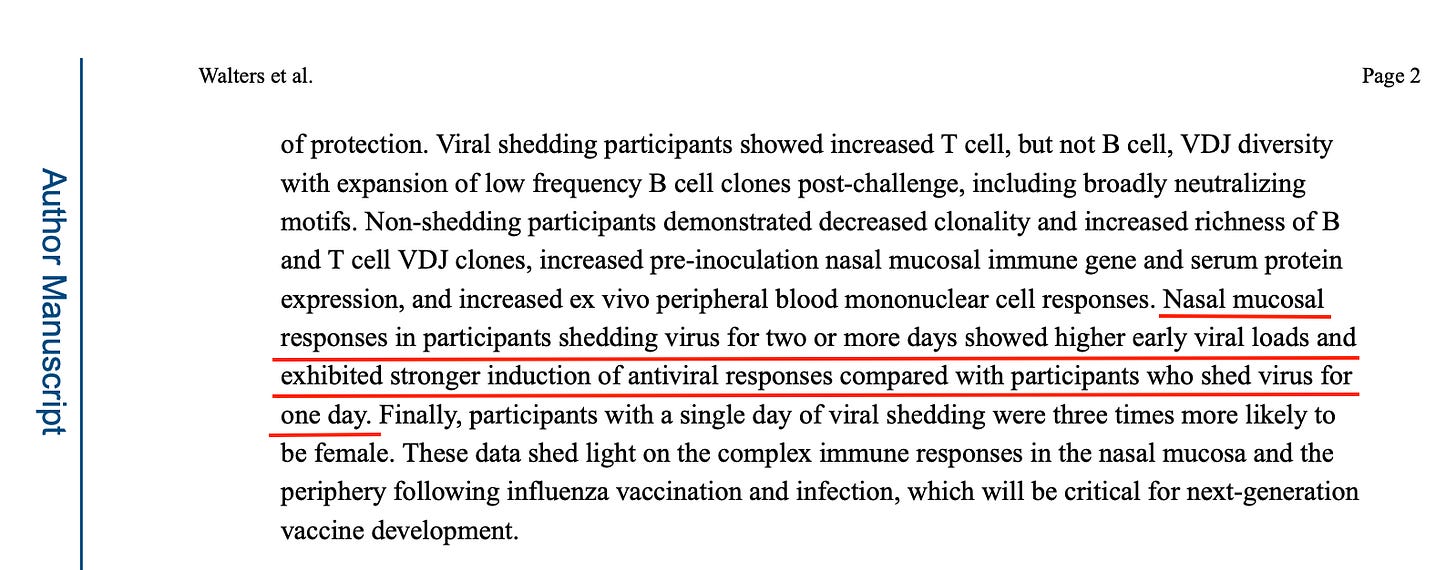
“[P]articipants shedding virus for two or more days showed higher early viral loads and exhibited stronger induction of antiviral responses compared with participants who shed virus for one day.”

The highest viral loads appeared in multiday shedders on days 1–3 post-infection, coinciding with the most severe flu-like symptoms, as measured by NIH’s FluPro symptom scoring system.

Vaccination Failed to Prevent Infection or Shedding

Vaccination did not prevent infection.

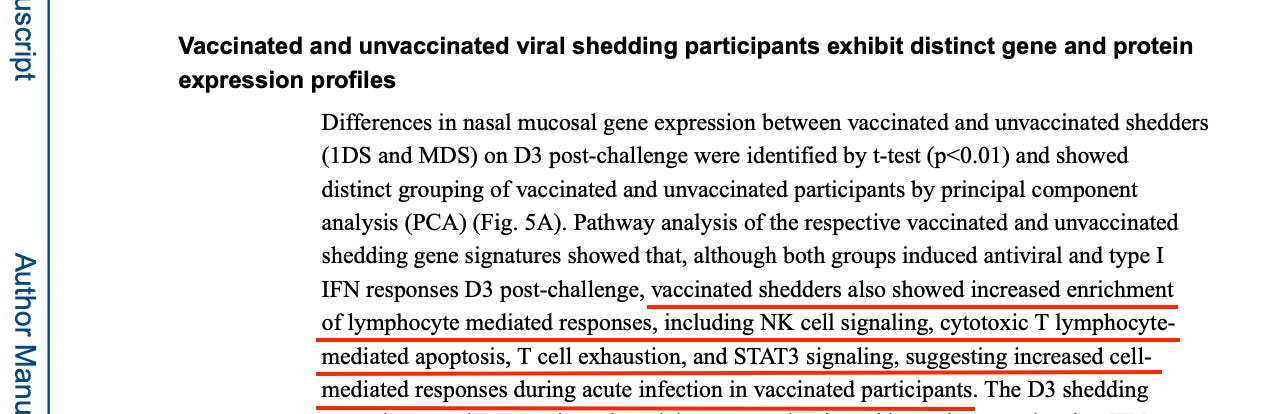
The paper admits that “vaccinated shedders” displayed increased T-cell activity and inflammatory markers, including CD8A, PD-L1, IFN-γ, IL-6, and TNF-β, compared to unvaccinated shedders—indicating that vaccination did not stop infection but instead triggered a hyper-inflammatory immune response.

Females were three times more likely to clear the infection after only one day of shedding, while males were more likely to shed virus for multiple days.

Funding: NIAID, DARPA, and Gates Foundation

The study lists its financial backers as:

  • NIAID Intramural Research Program (grants AI000986-12 and AI001157-07)
  • DARPA (Defense Advanced Research Projects Agency), contract HR0011831160
  • Bill & Melinda Gates Foundation, grant OPP1178956

That combination of government and private funders represents the same triad—HHS, the Pentagon, and the Gates Foundation—responsible for many dual-use biological and “pandemic preparedness” programs that blur the line between public health and bio-defense research.

Containment & Biosafety Measures Not Disclosed

Remarkably, the 2025 Science Translational Medicine paper and HHS manuscript provide no description whatsoever of biosafety precautions—no mention of negative-pressure rooms, isolation conditions, or post-infection quarantine protocols to prevent secondary transmission.

Readers of the study are unable to verify how the government prevented infected subjects from spreading the lab-made virus to others, raising national security concerns.

It further raises grave informed-consent concerns, as individuals who interacted with these infected volunteers beyond the study setting were never informed that they might be exposed to an NIH-made pandemic influenza virus.

Given that 72 percent of participants were confirmed viral shedders, this omission raises serious biosafety and public-transmission concerns.

Conducted Entirely Under HHS Authority

The trial was hosted, funded, staffed, and overseen by HHS agencies from start to finish:

  • Conducted at the NIH Clinical Center in Bethesda, Maryland
  • Run by the NIAID Laboratory of Infectious Diseases
  • Reviewed by an HHS Institutional Review Board
  • Carried out under HHS Good Clinical Practice guidelines

In short, the U.S. Department of Health and Human Services infected 74 American adults with a lab-grown pandemic influenza virus to study viral shedding and immune-system responses—while omitting basic transparency about containment.

The nation’s top health agency is infecting Americans with pandemic-grade pathogens.

Bottom Line

The federally directed experiment—funded by NIAID, DARPA, and the Bill & Melinda Gates Foundation—was a live human-infection challenge using a lab-engineered influenza strain created by NIH scientists in Bethesda.

Eighty adults were deliberately infected with the laboratory-made pandemic H1N1 virus; data from 74 were analyzed, and 53 of them (72 % of those analyzed, or at least 66 % of everyone infected) were confirmed to be shedding the pathogen—actively contagious and capable of transmitting it to others.

The six excluded participants were also infected, but the government provided no data indicating whether they shed virus, leaving the full extent of contagiousness unknown.

No description was provided for biosafety controls, isolation conditions, or post-infection release criteria, meaning the public record offers no verification of how HHS prevented the spread of its own lab-created virus beyond the NIH facility.

This omission raises not only national-security concerns but also informed-consent violations, since people who may have interacted with participants outside the study were never notified of possible exposure to an NIH-made pathogen.

Although the paper frames the experiment as advancing “next-generation vaccine development,” its findings instead showed that vaccination failed to prevent infection or viral shedding and appeared to trigger immune hyperactivation in vaccinated participants.

The newly published HHS study therefore stands as a rare, fully documented example of the U.S. Department of Health and Human Services deliberately infecting American citizens with a laboratory-grown pandemic-grade virus—underwritten by HHS, DARPA, and the Gates Foundation, with no transparent account of how the resulting contagion was contained.

Enough is enough with this shit already.

U.K.-China Gain-of-Function Creates Airborne Bird Flu Viruses Capable of Infecting Humans and Other Mammals: ‘Journal of Virology’


National security in jeopardy as government-funded Chinese–U.K. team engineered bird flu viruses with a new mutation that let them infect human cells and spread through the air between mammals.

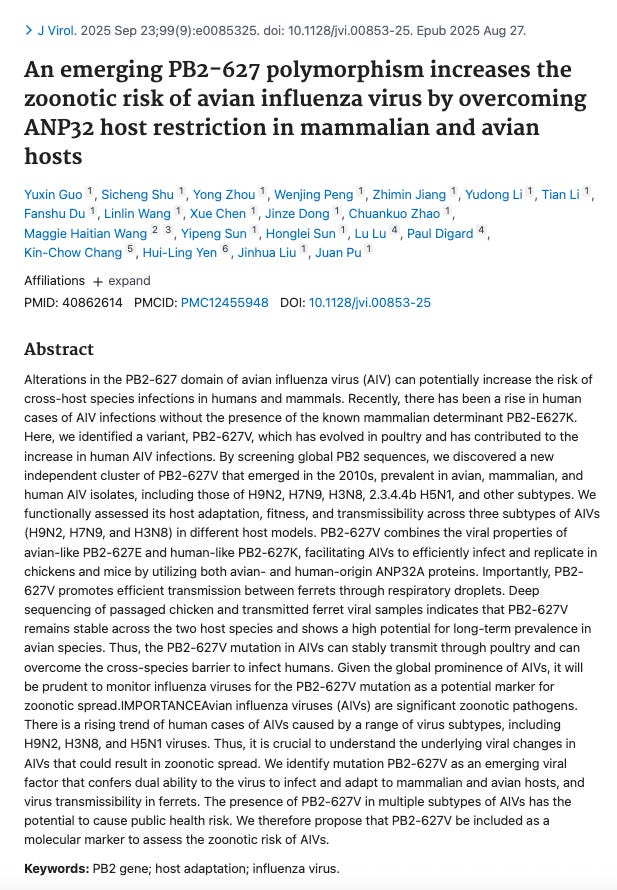
A September publication in the Journal of Virology confirms that Chinese and U.K. researchers have jointly created, enhanced, and tested new avian influenza “bird flu” viruses in the lab that acquired the ability to infect and spread among mammals through the air.

Congress, the White House, the Department of Energy, the FBI, and the CIA have confirmed that the COVID-19 pandemic was likely the result of lab-engineered pathogen manipulation.

Such experimentation raises national security and biosafety concerns.

Countries all over the world are performing risky experiments on bird flu viruses while developing drugs for the disease, simultaneously creating both the problem and the solution, raising questions about conflicts of interest and motives.

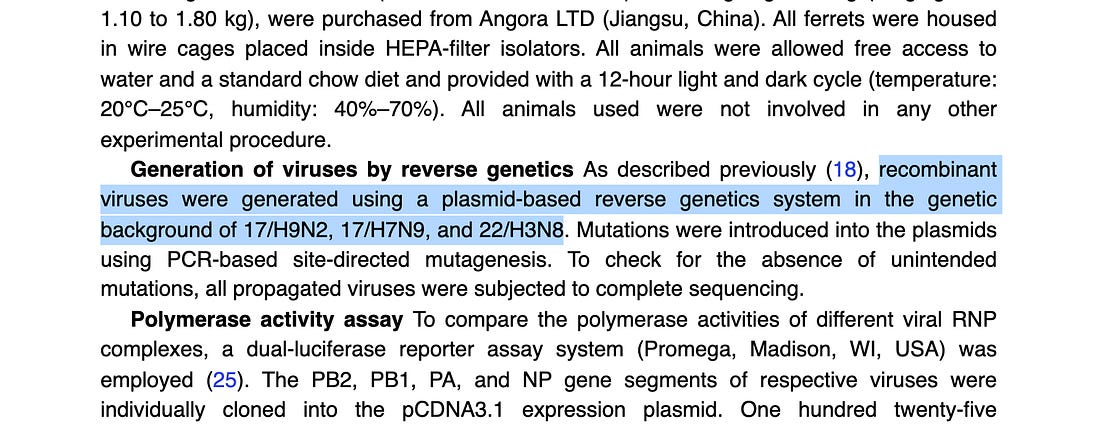
The new study—led by Dr. Juan Pu and Dr. Jinhua Liu of China Agricultural University—used a plasmid-based reverse-genetics system to construct synthetic viruses based on H9N2, H7N9, and H3N8 avian-influenza backbones.

The team intentionally introduced a new mutation called PB2-E627V, a single amino acid change that does not occur naturally in these strains, which allows bird flu viruses to cross into humans.

“Recombinant viruses were generated using a plasmid-based reverse genetics system in the genetic background of 17/H9N2, 17/H7N9, and 22/H3N8,” the authors wrote.


What the Mutation Did

The PB2-627V mutation bridged the species barrier between birds and humans by allowing the virus to exploit host proteins in both.

“PB2-627V combines the viral properties of avian-like PB2-627E and human-like PB2-627K, facilitating AIVs to efficiently infect and replicate in chickens and mice by utilizing both avian- and human-origin ANP32A proteins.”

In other words, the modified viruses replicated like avian strains in birds and like human flu viruses in mammals—a dual-host adaptation that overcomes the natural molecular restriction that normally prevents bird flu from establishing infection in humans.

Aerosol Transmission in Mammals

Perhaps most disturbing, the researchers infected ferrets—the most widely accepted mammalian model for human influenza—and documented respiratory-droplet (aerosol) transmission.

“PB2-627V promotes efficient transmission between ferrets through respiratory droplets.”

This means the engineered H9N2 strain became airborne and contagious between mammals, an outcome that squarely fits the U.S. government’s definition of “enhanced Potential Pandemic Pathogen” (ePPP) research under the HHS P3CO framework, which covers any experiment that enhances the transmissibility or virulence of a pathogen so that it is likely capable of widespread and uncontrollable transmission in human populations.

Replication in Chickens, Mice, & Humans

The study showed that the lab-created viruses replicated efficiently in chicken lungs, increased viral loads in human-cell cultures, and caused more severe pathology in mice than wild-type strains.

The viruses were also serially passaged through five generations of live chickens, proving that PB2-627V remains genetically stable and transmissible in poultr.

This means the mutation could sustain itself in farm flocks and later spill over to people.

“PB2-627V showed a high potential for sustained prevalence in chickens,” the authors concluded.

Funded by Chinese & British Governments

The paper lists funding only from China and the United Kingdom:

“This work was funded by the National Key Research and Development Program of China (2021YFD1800202 and 2022YFF0802400 [J.P.] and 2024YFE0106000 [J.L.]), National Natural Science Foundation of China (32192450 [J.L.] and 32102661 [Z.J.]), and UK Biotechnology and Biological Sciences Research Council BBS/E/D/20002173 and UK Medical Research Council MR/Y015045/1”

Collaborating institutions included the Roslin Institute (University of Edinburgh), the University of Nottingham, and the University of Hong Kong, alongside China Agricultural University in Beijing.

In plain terms: the Chinese and British governments jointly funded and executed gain-of-function experiments that engineered avian flu viruses to infect mammals through the air.

Biosecurity & Ethical Concerns

The authors admit that contamination occurred in sequencing samples, though they claim those data were “excluded from the final results.”

“Due to potential contamination identified in sequencing samples from the second and third parallel experiments during subsequent analysis, all data from these experiments were excluded from the final results,” the study reads.

That means while performing next-generation sequencing (NGS) on viral samples, the researchers detected contamination in some of their experimental batches—specifically, in the second and third parallel experiments.

Such an admission in a study manipulating airborne bird flu viruses underlines serious biosafety questions about laboratory conditions and oversight.

There is no mention of independent biosecurity review, P3CO-style oversight, or international ethics board approval for the gain-of-function component of the work.

International Risk

The paper acknowledges that the PB2-627V mutation is already spreading naturally across multiple subtypes—including H5N1, H5N6, H7N9, H3N8, and H10N3—and has been found in humans, foxes, minks, tigers, and wild birds.

The authors warn:

“Given the global prominence of AIVs, it will be prudent to monitor influenza viruses for the PB2-627V mutation as a potential marker for zoonotic spread.”

That is an understatement.

What they have demonstrated is that lab-modified avian-flu viruses can now infect mammals and transmit through the air—a benchmark for pandemic-capable pathogens.

Bottom Line

The Journal of Virology paper by Guo et al. (2025) provides direct evidence that:

  • China and the United Kingdom jointly conducted gain-of-function experiments on avian flu viruses.
  • The resulting strains crossed the species barrier and became airborne between mammals.
  • These experiments meet the U.S. government’s definition of enhanced Potential Pandemic Pathogen (ePPP) research.

In short: Western and Chinese scientists have again created lab-made bird-flu viruses capable of infecting mammals through the air—exactly the kind of experiment international biosecurity laws were supposed to prevent.

World’s Largest Vaccine Maker to Develop New $16 Million AI-Optimized ‘Disease X’ Pandemic Bird Flu Jab Using Insect DNA


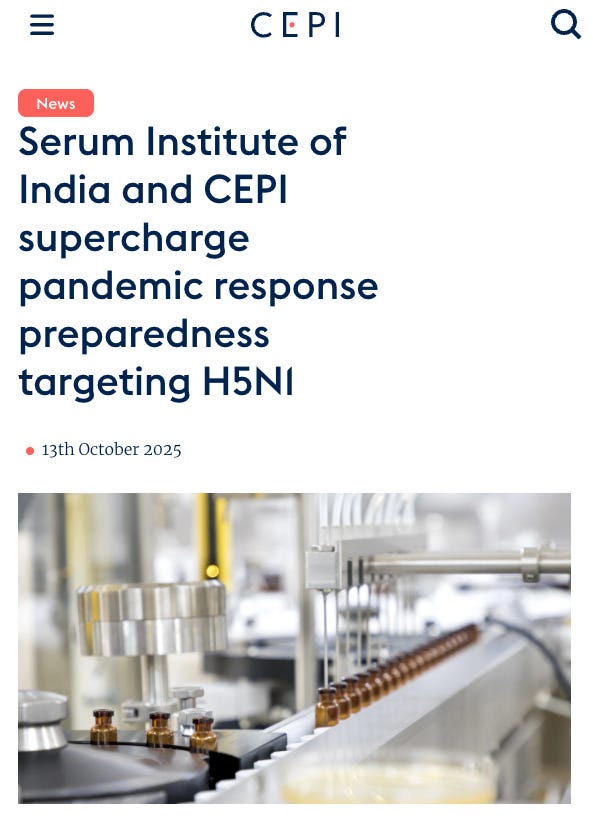
Serum Institute of India partners with CEPI and Houston Methodist to generate prototype vaccine targeting H5N1 avian influenza within 100 days’ time.

The Coalition for Epidemic Preparedness Innovations (CEPI) is collaborating with the world’s largest vaccine manufacturer, Serum Institute of India (SII), and Houston Methodist to develop a new pandemic vaccine with artificial intelligence (AI) that targets H5N1 avian influenza “bird flu,” according to a CEPI press release.

CEPI was launched at Davos in 2017 by the World Economic Forum (WEF), the Bill & Melinda Gates Foundation, and several world governments.

SII supplies vaccines to more than 170 countries and is “well known for its rapid response work during infectious disease outbreaks.”

The new project will be supported by up to $16.4 million.

The effort is meant to “boost pandemic response preparedness” for bird flu and serve “as a prototype for a potential Disease X—an as-yet-unknown pathogen with pandemic potential.”

The new avian flu jab will utilize a ‘baculovirus’ vaccine platform, a system that uses genetically modified baculoviruses (DNA viruses that infect insects, especially their larval stages) to produce recombinant proteins in insect cells.

SII will “produce and compare two H5 antigens for a recombinant protein vaccine: a wild-type and an AI-optimised, broad-spectrum H5 antigen designed by scientists at Houston Methodist Research Institute.”

The vaccine is supposed to work “across multiple strains of H5 viruses, rather than just one.”

CEPI claims this makes the new injection “particularly suited for use in unpredictable outbreak situations.”

The idea is to accomplish “a fast response to a future pandemic threat.”

The work will also “serve as proof of concept for using AI to design vaccine antigens,” proteins said to trigger an immune response.

The new bird flu vaccine will be “designed to power up global readiness to tackle pandemic threats, from early-stage vaccine development through to global manufacture and supply,” said CEPI CEO Dr. Richard Hatchett.

“With a potential pandemic influenza vaccine candidate already in development on a validated platform, and with a vaccine manufacturing juggernaut ready to go, the world’s disease defences will be poised to respond swiftly with new vaccines, potentially in 100 days, should a flu virus erupt into a potentially deadly and fast-spreading human pandemic.”

The goal is for the jabs to be “quickly created.”

SII and CEPI see their new bird flu jab as an “ideal candidate for faster responses against potential pandemic diseases.”

“This aligns with CEPI’s 100 Days Mission—a goal embraced by leaders of the G7 and G20 to accelerate vaccine development to within 100 days of identifying a pandemic threat,” the press release reads.

SII CEO Adar Poonawalla said the new platform “gives us the ability to rapidly develop and produce vaccines for emerging threats. This project will test that readiness in real terms, reinforcing our commitment to pandemic preparedness. The learnings will not only support faster response times but also ensure that effective vaccines can reach vulnerable populations without delay.”

The project will also leverage the expertise of the U.K.’s Francis Crick Institute for testing, according to the press release:

“The project will also leverage the expertise of CEPI’s Preclinical Model Network and Centralized Laboratory Network members—the UK Health Security Agency and the Medicines and Healthcare products Regulatory Agency—alongside the Francis Crick Institute, to conduct key testing activities to demonstrate that the wild-type and AI-optimised H5 vaccines are fit for purpose.”

Trump Admin Ties to Francis Crick Institute

Back in February, this website reported that the CDC and FDA were “actively participating” in virtual meetings with the World Health Organization (WHO) at the Crick Worldwide Influenza Center in London, which is part of the Francis Crick Institute.

The top U.S. health agencies were participating with the WHO despite President Donald Trump signing an executive order on January 20, 2025 that was supposed to officially withdraw the United States from the WHO.

That order explicitly commanded to “recall and reassign United States Government personnel or contractors working in any capacity with the WHO.”

But the Trump administration made concessions for influenza bird flu efforts, signaling its role in orchestrating another pandemic.

President Trump has since announced the development of a “next-generation, universal vaccine platform” called ‘Generation Gold Standard’ that will focus on bird flu jab creation.

Gold Standard represents the institutionalization of a staggering conflict of interest.

NIAID Director Dr. Jeffery Taubenberger—who now oversees U.S. taxpayer-funded gain-of-function experiments creating new bird-flu viruses—is also a named inventor on the federal patent for the program’s beta-propiolactone (BPL)-inactivated “universal” bird flu vaccine at the center of Gold Standard.

This is despite BPL being a known carcinogen classified as a ‘Group 1B’ substance in Europe and ‘Group 2B’ in the U.S.

In other words, the same official directing the creation of potentially pandemic-causing bird flu pathogens is positioned to personally profit from the vaccine meant to counter them, raising profound national-security, informed-consent, and conflict-of-interest concerns at the very heart of America’s pandemic-preparedness system.

Dr. Redfield’s 2022 Bird Flu Warning

Former CDC Director Dr. Robert Redfield has predicted that a bird flu pandemic will be much worse than COVID.

Dr. Redfield expects a bird flu pandemic to “have significant mortality, in the ten to fifteen percent range.”

“I don’t believe [COVID] is the ‘great pandemic,’” he said in a March 2022 interview. “I believe the great pandemic is still in the future. And that’s going to be a bird flu pandemic from man. It’s going to have significant mortality, in the ten to fifteen percent range. It’s going to be trouble. And we should get prepared for it.”

Redfield emphasized the danger of this coming bird flu pandemic.

“I do believe that the pandemic risk is of greater risk to the national security of the United States than Korea, China, Russia, [and] Iran. And we ought to start investing proportional to that national security risk so we’re prepared. Unfortunately, we’re not more prepared today than we were when the [COVID] pandemic hit when I was CDC director. And we need to make that proportional investment so that we are prepared.”

Taken together, the CEPI-Gates-WEF partnership, the Trump administration’s Gold Standard program, and NIAID’s ongoing gain-of-function work form a seamless triad of power—where global health bureaucrats, government scientists, and private vaccine empires converge under the banner of “preparedness,” using taxpayer money and AI-driven biotechnologies to design both the next outbreak and the product to follow it.

NIAID, DARPA, Bill Gates Intentionally Infect 80 Americans With Lab-Made Pandemic Influenza Virus: HHS Study


Majority of infected individuals became contagious to others, raising national security and informed consent concerns.

A federally run experiment funded by the National Institute of Allergy and Infectious Diseases (NIAID), the Defense Advanced Research Projects Agency (DARPA), and the Bill & Melinda Gates Foundation deliberately infected 80 American adults with a lab-grown pandemic influenza virus at the National Institutes of Health (NIH) Clinical Center in Bethesda, Maryland.

Data from 74 of those infected were analyzed, and 53 of them (72% of analyzed participants, or at least 66% of all infected participants) were confirmed to be shedding the pathogen, meaning they were actively contagious and could infect others.

We do not know whether six participants who were excluded from the study after being deliberately infected were shedding the virus or not.

Regardless, 53 of the individuals became contagious to others.

The human-infection experiment—officially published in Science Translational Medicine (Aug. 2025) under the title “Nasal and systemic immune responses correlate with viral shedding after influenza challenge in people with complex preexisting immunity”—was conducted entirely under the jurisdiction of the U.S. Department of Health and Human Services (HHS).

The original HHS manuscript can be found here or downloaded below.


Lab-Made Pandemic Virus Used to Infect Humans

According to the paper, participants were “challenged with 10⁷ half-maximal tissue culture infectious dose (TCID₅₀) of a 2009 pandemic H1N1 strain, A/Bethesda/MM2/H1N1.”

That purported virus was not naturally circulating.

It was a lab-engineered clone of the 2009 pandemic influenza A (H1N1) virus, manufactured by NIH scientists in Bethesda and maintained as a standardized “human challenge” stock.

The virus name itself—A/Bethesda/MM2/H1N1—identifies it as an NIH-made strain.

The “Bethesda” designation marks its laboratory origin at NIH’s Maryland facility, and “MM2” denotes the second master-mix batch of the cloned challenge stock.

80 Individuals Deliberately Infected Under HHS Oversight

The study describes the deliberate exposure of 80 adults to this laboratory-made pandemic influenza strain in 2019.

“The challenge study (clinicaltrials.gov NCT01971255) was performed at the NIH Clinical Center between April and October 2019,” the study reads.

Interestingly, that means the 80 human participants were intentionally infected with the NIH-made H1N1 influenza virus roughly five to six months before COVID-19 was first reported in Wuhan, China (December 2019).

So, while the study was published in Science Translational Medicine in August 2025, the actual human infections occurred in mid-2019.

Half of those deliberately infected had been vaccinated roughly two months earlier with a commercial quadrivalent influenza vaccine; the other half had not.

“All 80 participants were brought into the NIH Clinical Center as mixed cohorts and challenged with 10⁷ TCID₅₀ of influenza A/Bethesda/MM2/H1N1 virus … and assessed daily for a minimum of 9 days.”

Although only 74 participants were ultimately included in the analysis (after six were excluded), every one of them was intentionally inoculated with a live, replication-competent pandemic virus.

The experiment was run on U.S. federal property by U.S. government scientists.

It was approved by the NIAID Institutional Review Board (IRB No. 19-I-0058), making it an officially sanctioned HHS human-infection study.

The human infection experiment was carried out under a multi-million U.S. taxpayer dollar project titled “Universal Influenza Vaccine Development” (project number 1ZIAAI001372), led by Dr. Jeffery Taubenberger.

Dr. Taubenberger—listed as an author on the study—is the current NIAID Director, taking over Anthony Fauci’s spot.

Taubenberger holds a patent for the carcinogenic BPL technology at the center of the Trump administration’s new ‘Generation Gold Standard’ influenza bird flu pandemic vaccine platform.

His agency is also directing U.S. tax dollars to fund the creation of never-before-seen “Frankenstein” bird flu viruses.

Confirmed 72% of Analyzed Participants—& at Least 66% of All Infected—Became Infectious

A total of 80 volunteers were deliberately infected with the NIH-made influenza virus, but data from only 74 participants were included in the final published analysis.

Among those 74 analyzed participants, 53 were confirmed to actively shed virus, meaning they were contagious.

Because the six excluded individuals were not evaluated for viral shedding, the true number of infectious participants could be higher, but only 53 are confirmed in the published dataset.

That equates to 72% of the analyzed group and at least 66% of everyone infected becoming contagious, some for several days.

Shedding was tracked by daily nasal swabs using the BioFire Respiratory Pathogen Panel and qRT-PCR testing for the influenza M gene.

Participants were considered “shedding” when viral RNA was detected in nasal-wash samples.

“[P]articipants shedding virus for two or more days showed higher early viral loads and exhibited stronger induction of antiviral responses compared with participants who shed virus for one day.”

The highest viral loads appeared in multiday shedders on days 1–3 post-infection, coinciding with the most severe flu-like symptoms, as measured by NIH’s FluPro symptom scoring system.

Vaccination Failed to Prevent Infection or Shedding

Vaccination did not prevent infection.

The paper admits that “vaccinated shedders” displayed increased T-cell activity and inflammatory markers, including CD8A, PD-L1, IFN-γ, IL-6, and TNF-β, compared to unvaccinated shedders—indicating that vaccination did not stop infection but instead triggered a hyper-inflammatory immune response.

Females were three times more likely to clear the infection after only one day of shedding, while males were more likely to shed virus for multiple days.

Funding: NIAID, DARPA, and Gates Foundation

The study lists its financial backers as:

  • NIAID Intramural Research Program (grants AI000986-12 and AI001157-07)
  • DARPA (Defense Advanced Research Projects Agency), contract HR0011831160
  • Bill & Melinda Gates Foundation, grant OPP1178956

That combination of government and private funders represents the same triad—HHS, the Pentagon, and the Gates Foundation—responsible for many dual-use biological and “pandemic preparedness” programs that blur the line between public health and bio-defense research.

Containment & Biosafety Measures Not Disclosed

Remarkably, the 2025 Science Translational Medicine paper and HHS manuscript provide no description whatsoever of biosafety precautions—no mention of negative-pressure rooms, isolation conditions, or post-infection quarantine protocols to prevent secondary transmission.

Readers of the study are unable to verify how the government prevented infected subjects from spreading the lab-made virus to others, raising national security concerns.

It further raises grave informed-consent concerns, as individuals who interacted with these infected volunteers beyond the study setting were never informed that they might be exposed to an NIH-made pandemic influenza virus.

Given that 72 percent of participants were confirmed viral shedders, this omission raises serious biosafety and public-transmission concerns.

Conducted Entirely Under HHS Authority

The trial was hosted, funded, staffed, and overseen by HHS agencies from start to finish:

  • Conducted at the NIH Clinical Center in Bethesda, Maryland
  • Run by the NIAID Laboratory of Infectious Diseases
  • Reviewed by an HHS Institutional Review Board
  • Carried out under HHS Good Clinical Practice guidelines

In short, the U.S. Department of Health and Human Services infected 74 American adults with a lab-grown pandemic influenza virus to study viral shedding and immune-system responses—while omitting basic transparency about containment.

The nation’s top health agency is infecting Americans with pandemic-grade pathogens.

Bottom Line

The federally directed experiment—funded by NIAID, DARPA, and the Bill & Melinda Gates Foundation—was a live human-infection challenge using a lab-engineered influenza strain created by NIH scientists in Bethesda.

Eighty adults were deliberately infected with the laboratory-made pandemic H1N1 virus; data from 74 were analyzed, and 53 of them (72 % of those analyzed, or at least 66 % of everyone infected) were confirmed to be shedding the pathogen—actively contagious and capable of transmitting it to others.

The six excluded participants were also infected, but the government provided no data indicating whether they shed virus, leaving the full extent of contagiousness unknown.

No description was provided for biosafety controls, isolation conditions, or post-infection release criteria, meaning the public record offers no verification of how HHS prevented the spread of its own lab-created virus beyond the NIH facility.

This omission raises not only national-security concerns but also informed-consent violations, since people who may have interacted with participants outside the study were never notified of possible exposure to an NIH-made pathogen.

Although the paper frames the experiment as advancing “next-generation vaccine development,” its findings instead showed that vaccination failed to prevent infection or viral shedding and appeared to trigger immune hyperactivation in vaccinated participants.

The newly published HHS study therefore stands as a rare, fully documented example of the U.S. Department of Health and Human Services deliberately infecting American citizens with a laboratory-grown pandemic-grade virus—underwritten by HHS, DARPA, and the Gates Foundation, with no transparent account of how the resulting contagion was contained.

NIAID Director Holds Patent for Bird Flu Pandemic Vaccine—as His Agency Creates Frankenstein Bird Flu Viruses in the Lab


Dr. Jeffery Taubenberger is creating the pandemic pathogen problem and the royalty-collecting vaccine solution at the same time—raising lab leak, national security, and conflict of interest concerns.

The U.S. National Institute of Allergy and Infectious Diseases (NIAID) is funding the laboratory creation of deadly, genetically engineered bird-flu viruses—even as its director, Dr. Jeffery Taubenberger, is named as an inventor on a U.S. government patent for a vaccine platform designed to counter those very pathogens.

In other words, the same federal agency making new bird-flu viruses is led by the man who helped invent—and could profit from—the vaccine meant to fight them.

Mainstream reports and federal documents confirm that Dr. Taubenberger could receive royalty payments if the vaccine platform proves successful.

Federal rules allow government inventors like Taubenberger to personally earn up to $150,000 a year in royalties from their patents.

This overlap between virus creation and vaccine ownership raises profound questions about conflicts of interest within America’s pandemic-preparedness system.

The same official overseeing the creation of potentially pandemic-causing bird-flu viruses also stands to earn personal income from the patented vaccine technology designed to combat them—a built-in conflict of interest at the very heart of U.S. pandemic research.

How secure is a nation whose top infectious-disease officials are simultaneously funding the creation of potential pandemic pathogens and positioned to profit from the vaccines meant to stop them?


Who Is Jeffery Taubenberger?

NIAID Director Dr. Jeffery Taubenberger gained fame for leading the team that sequenced and reconstructed the 1918 “Spanish flu” genome—the deadliest pandemic in modern history.

Dr. Taubenberger’s work on the Spanish flu virus involved the reconstruction and sequencing of one of the deadliest pandemics in history.

That project effectively resurrected an extinct virus under federal sponsorship, establishing Taubenberger as a pioneer of gain-of-function influenza research.

Bird flu belongs to the influenza family, meaning the very expertise Taubenberger developed by resurrecting the 1918 virus now underpins his agency’s funding of new, lab-engineered avian-influenza strains with similarly pandemic-capable properties.

Taubenberger replaced Anthony Fauci as acting NIAID director on April 25, 2025, following Fauci’s retirement in December 2022 and Jeanne Marrazzo’s tenure as director from 2023 until 2025.

Like Fauci before him, Taubenberger now presides over an agency channeling taxpayer dollars into the same kind of high-risk pathogen manipulation that helped set the stage for the COVID-19 disaster—continuing the very pattern of federally backed experimentation that muddles public health preparedness and pandemic provocation.

Bird Flu Takes Center Stage in Trump’s $500 Million ‘Generation Gold Standard’ Project

Under President Donald J. Trump, HHS and the NIH in May 2025 launched ‘Generation Gold Standard,’ a $500 million “next-generation, universal vaccine platform” centered on avian-influenza (“bird flu”) jab creation.

“These vaccines aim to provide broad-spectrum protection against multiple strains of pandemic-prone viruses like H5N1 avian influenza and coronaviruses including SARS-CoV-2, SARS-CoV-1, and MERS-CoV,” an HHS press release states.

The lead candidates—BPL-1357 and BPL-24910—use beta-propiolactone (BPL)-inactivated, whole-virus platforms.

Clinical trials are scheduled for 2026, with FDA review targeted for 2029.

The Patent & Potential Financial Stakes

Dr. Taubenberger is a named inventor on the BPL-inactivated bird-flu vaccine patent developed within NIH laboratories.

That means he holds a patent for the bird-flu vaccines at the center of Trump’s Generation Gold Standard program.

A May 2025 report in Science confirms that NIH “has two patents for the BPL-inactivated, universal flu vaccine,” that Taubenberger “is named as one of the inventors,” and that the NIAID director “stands to financially benefit from this project.”

The patent is confirmed in a Federal Register notice from December 2019.

The relevant patent application is titled “Broadly Protective Influenza Vaccine Comprising a Cocktail of Inactivated Avian Influenza Viruses.”

Put plainly, the federal official directing America’s bird-flu virus research is also positioned to earn personal royalties from the very vaccine platform his own agency is funding—tying Taubenberger’s financial interests directly to the emergence of a bird flu pandemic.

The Dual-Track Pattern Echoes of COVID-19

This dual track—create the pathogen, then sell the cure—echoes the pattern seen before COVID-19, when EcoHealth Alliance’s DEFUSE project proposed engineering chimeric coronavirus spikes and aerosolized self-spreading vaccines years before the 2019 outbreak.

Frontiers in Virology study confirmed that Moderna’s 2016 patented spike-protein sequence—developed in partnership with DARPA years before the COVID-19 outbreak—matched the pandemic virus’s spike sequence with a one-in-three-trillion probability of occurring naturally.

Later, congressional investigators discovered that DARPA, the Department of Defense, and the Office of the Director of National Intelligence had classified and concealed EcoHealth Alliance’s DEFUSE proposal.

The plan outlined how to engineer SARS-like viruses with furin cleavage sites.

It prompted Senator Roger Marshall to warn that the cover-up may “rise to the level of misconduct, false statements, obstruction of federal proceedings, conspiracy, conflicts of interest, or infractions of administrative or civil laws.”

The parallels are striking: classified projects, overlapping incentives, and opaque oversight.

The New Bird-Flu Playbook

The COVID-19 pandemic was likely the result of lab-engineered pathogen manipulation, according to Congress, the White House, the Department of Energy, the FBI, and the CIA.

Today, U.S. and international laboratories—funded by NIAID—are constructing new bird flu strains using reverse genetics and chimeric-virus methods.

  • One recent NIAID-funded project produced a live hybrid H5N1 “Frankenstein” virus that infects human lung cells, resists flu medication, and mutates to evade vaccines.
  • In another NIAID-backed project, researchers built entirely new bird-flu viruses with enhanced growth and replication traits.
  • At the University of Pittsburgh, NIAID bankrolled experiments that created a never-before-seen chimeric bird-flu virus by fusing H5N1 genes onto a live vesicular stomatitis virus backbone.
  • At Georgia State University, U.S. and South Korean researchers—backed by NIAID funding—recently created chimeric H5N1 bird-flu viruses by splicing genes from Asian outbreak strains onto a lab H1N1 backbone, producing synthetic hybrids that triggered severe inflammatory reactions in animal tests.
  • At the University of Tokyo and the University of Wisconsin, NIAID-funded researchers led by Yoshihiro Kawaoka rebuilt a pandemic-capable H5N1 virus from synthetic gene clones, deliberately driving mammalian adaptation and drug resistance.
  • In another recent NIAID-backed collaboration spanning the U.S., Japan, Egypt, and Austria, scientists used reverse genetics to stitch together wild H5N1 genes with a 1934 lab flu strain—creating a chimeric hybrid virus that proved 100% lethal in mammals.
  • At the University of Missouri, NIAID-funded researchers engineered bat–human hybrid influenza viruses through reverse genetics that replicate efficiently in mammalian cells and resist common antivirals.
  • In yet another recent NIAID-funded experiment, scientists engineered a multi-strain bird-flu virus in German labs using synthetic plasmids before shipping it to Alabama, where live ferret infection tests with H5N1 were performed under U.S. government direction.

The same tools central to the COVID-19 gain-of-function controversy are again in play.

The outcome is a closed loop: government-funded pathogen creation feeding government-funded vaccine development, overseen by officials with patent ties to the product side.

Bottom Line

Dr. Jeffery Taubenberger—the scientist who resurrected the 1918 flu—now directs NIAID, funds gain-of-function-style bird-flu research, and is a named inventor on the federally patented BPL vaccine platform at the heart of Trump’s $500 million Generation Gold Standard program.

According to Science and federal records, Taubenberger could personally earn royalties—up to $150,000 a year—from the same vaccine platform his own agency is financing, meaning the official funding bird-flu virus creation is also positioned to profit from the “solution.”

That built-in financial stake transforms what should be a public-health mission into a structural conflict of interest—one that blurs the line between national bio-defense and bio-commerce.

Once again, the U.S. government’s pandemic apparatus merges research, regulation, and remuneration—raising the question not of whether the next outbreak is being planned for, but whether it’s being prepared for profit.

NIH Funds Creation of New Frankenstein Bird Flu Virus in Europe—Tests It in Alabama: Journal ‘Vaccine’


Engineered in German labs using reverse genetics, then tested in U.S. animals with live H5N1 challenge.

A peer-reviewed study published this month in Vaccine details how the U.S. National Institutes of Health (NIH)—through its National Institute of Allergy and Infectious Diseases (NIAID)—funded and conducted live H5N1 “bird flu” experiments on ferrets using newly engineered chimeric influenza viruses that were synthetically constructed in Europe from the combined genetic material of multiple flu strains.

NIAID is led by Dr. Jeffery Taubenberger, widely recognized for leading the team that sequenced the 1918 influenza “Spanish flu” pandemic virus genome.

Dr. Taubenberger’s work on the Spanish flu virus involved the reconstruction and sequencing of one of the deadliest pandemics in history.

The revelation of new bird flu pathogen creation follows this website’s report that the NIH, led by Director Jayanta “Jay” Bhattacharya, and USDA have funded scientists to create other brand-new, never-before-seen avian influenza viruses with enhanced growth and replication traits at the University of Nebraska–Lincoln.

The Centers for Disease Control and Prevention (CDC) also recently engineered a brand-new strain of bird flu in its Atlanta, Georgia laboratories, signifying broad, multi-agency coordination of federally backed programs to genetically bioengineer new avian-influenza viruses across multiple institutions.

Moreover, the Department of Health and Human Services’ (HHS) Biomedical Advanced Research and Development Authority (BARDA) recently awarded Cidara $339 million for its new influenza drug CD388.

Each U.S. agency is contributing to a rapidly expanding network of synthetic bird-flu drug development and virus creation with heightened replication efficiency, immune-evasion features, and potential dual-use biosecurity risks.


Who Funded It

According to the acknowledgments:

“The ferret experiment was funded and carried out by the National Institute of Allergy and Infectious Diseases (NIAID), National Institutes of Health (USA) non-clinical and preclinical service programs through Southern Research Institute (USA) contract HHSN272201700029I/75N93020F00002 with Treamid Therapeutics GmbH (D.Pleimers).”

The work was supported by Treamid Therapeutics and UniFluVec.

That means the U.S. government financed part of the research, while two private European biotechnology firms oversaw the development of the new virus, signalling international bird flu pandemic orchestration.

The Southern Research Institute in Birmingham, Alabama carried out the ferret infection and live-virus challenge under NIH/NIAID direction.

“The experiment in ferrets was performed by National Institute of Allergy and Infectious Diseases (NIAID) National Institute of Health (USA) and Southern Research Institute (USA),” the study reads.

Where the Viruses Were Created

The paper confirms the engineered viruses were constructed in Europe:

“The recombinant influenza virus vector, UniFluVec, is based on the PR/8/34 influenza virus and constructed using the reverse genetics method with synthetic plasmids generated by GeneArt (Germany).”

That means synthetic plasmids were built by GeneArt, a Thermo Fisher Scientific division in Germany, then used by UniFluVec and Treamid Therapeutics to assemble a brand-new influenza virus before transferring materials for NIH-funded animal testing in the U.S.

What They Created

The new construct, called UniFluVec, is a hybrid influenza virus assembled from several different strains through reverse genetics, a process that reconstructs live viruses from cloned DNA:

“The recombinant influenza virus vector, UniFluVec… constructed using the reverse genetics method… The HA and NA fragments originate from A/Mississippi/10/2013 (H1N1pdm), while PB2, PB1, PA, NP, M and NS fragments—from PR/8/34 (H1N1).”

The authors then spliced in additional genetic material from multiple lineages:

“UniFluVec includes two key modifications in the NS segment: a truncated NS1 protein of 124 amino acids and a heterologous NEP protein from the A/Singapore/1/57-like (H2N2) virus. Additionally, the truncated NS1124 protein was fused with a 21-amino-acids of the fusion peptide from the HA2 subunit of the B/Lee/1940 virus and a conserved nine-amino-acid B-cell epitope NP243–251 of the PR/8/34 virus.”

This created a synthetic multi-strain hybrid virus containing genetic components from at least four different influenza species—H1N1, H1N1pdm, H2N2, and influenza B.

Testing with Live H5N1 Challenge

The synthetic UniFluVec virus was later tested against one of the world’s most lethal avian influenza strains:

“Vaccination of ferrets was performed within a biological safety cabinet (BSC). On study day 0, animals were anesthetized and vaccinated IN with 1.0 ml (0.5 ml/nares) of the PBS (vehicle control) or vaccine virus.”

“On day 21 or 23, each ferret was anesthetized and infected IN with 1.0 ml (approximately 0.5 ml/nares) of influenza virus A/Indonesia/5/2005 (H5N1).”

Bottom Line

The NIH-funded research demonstrates that synthetic, multi-strain chimeric influenza viruses were genetically constructed in Europe using reverse-engineered plasmids and then tested in live mammals with an H5N1 challenge in the United States.

Taken together with concurrent projects at the USDA, CDC, and BARDA, the work underscores a broad, multi-agency program to bioengineer, test, and commercialize novel avian-influenza viruses and related countermeasures—often under the banner of “vaccine” or “therapeutic” development.

While the authors describe their study as vaccine research, the combination of cross-continental virus construction, high-pathogenicity live-animal challenges, and U.S. federal coordination situates it squarely within the domain of gain-of-function–type experimentation, raising renewed questions about oversight, transparency, and biosecurity.

The COVID-19 pandemic was likely the result of lab-engineered pathogen manipulation, according to Congress, the White House, the Department of Energy, the FBI, and the CIA.

Australia’s Doherty Institute Coordinates Global Influenza Pandemic Framework as Governments Repeat COVID Playbook with Bird Flu


Back-to-back 2025 summits in Melbourne unite the world’s leading influenza and pandemic-therapeutics researchers—while nations engineer bird-flu viruses and vaccines in parallel.

Australia’s Peter Doherty Institute for Infection and Immunity will host two international summits over six weeks that together represent an unprecedented coordination of global pandemic planning—one devoted to “next-generation therapeutics,” the other to influenza viruses, which include H5N1 bird flu.

Both come as laboratories worldwide create never-before-seen avian-influenza bird flu strains and test the vaccines that would be forced on populations in the event of a potential outbreak or an accidental—or intentional—laboratory leak.

The COVID-19 pandemic was likely the result of lab-engineered pathogen manipulation, according to Congress, the White House, the Department of Energy, the FBI, and the CIA.


The Two Doherty Summits

  • October 27: Next-Generation Therapeutics for Pandemic Preparedness.”
    Hosted by the Cumming Global Centre for Pandemic Therapeutics, a 20-year, $250 million initiative based at the Doherty Institute, the panel will bring together Professor Sharon Lewin (Doherty Institute), Professor David Ho (Columbia University), Professor Linfa Wang (Duke-NUS Singapore), and Professor Nanshan Zhong (Guangzhou National Laboratory). The discussion will be moderated by New York Times science journalist Apoorva Mandavilli.
  • November 13–14: 16th Australian Influenza Symposium.
    Organized by the WHO Collaborating Centre for Reference and Research on Influenza, also housed at the Doherty Institute, the symposium will focus on influenza viruses—which include H5N1 “bird flu,” COVID-19, and RSV—with speakers from the United States, United Kingdom, Hong Kong, and Cambodia.

Together, these back-to-back meetings merge pandemic preparedness, vaccine platform innovation, and influenza virology into one integrated agenda—precisely as governments worldwide invest billions into bird-flu gain-of-function research and vaccine manufacturing pipelines.

Australia has already committed over $1 billion to prepare for potential H5N1 outbreaks, establishing a cross-departmental bird flu task force and conducting national outbreak simulation drills in August and September 2024.

This unprecedented domestic investment followed the United States’ own 1$ billion allocation for a future influenza pandemic in its March 2024 omnibus spending bill—together forming a synchronized, pre-outbreak global financing network for bird-flu research, response, and vaccine development.

That synchronized U.S. funding drive has since deepened: in May 2025, the Trump Administration launched a $500 million “Generation Gold Standard” initiative through HHS and NIH to develop so-called “universal” pandemic vaccines—focusing primarily on H5N1 avian influenza, the same virus U.S.-funded gain-of-function experiments have been enhancing in laboratories.

International ‘Problem-Solution’ Pattern

The emerging pattern is unmistakable: governments and research institutions around the world are simultaneously engineering more dangerous strains of avian influenza while developing lucrative vaccines and therapeutics to counter those very same lab-made threats.

Just like they did before the COVID-19 pandemic.

1. The ‘Problem’: Engineered Bird Flu Pathogens

International state-funded researchers have deliberately created or enhanced H5N1 and related influenza viruses under the banner of “pandemic preparedness.”

  • United States (CDC, Georgia): A npj Viruses study revealed that the Centers for Disease Control and Prevention (CDC) engineered a new H5N1 bird flu strain with enhanced immune system evasion, suppressing host interferon signaling to make the virus harder to detect and more transmissible.
  • United States (USDA, NIH, NIAID, Nebraska): A separate U.S. Department of Agriculture study, backed by NIH and NIAID, confirmed the creation of lab-engineered bird flu viruses with enhanced replication and growth traits, conducted in Nebraska under high-containment conditions.
  • United States & South Korea (Joint Project, Georgia): In a Virology journal paper, U.S. and South Korean scientists collaborated to create “Frankenstein” bird flu viruses, merging multiple influenza strains through reassortment and gain-of-function modification—explicitly designed to assess pandemic potential.
  • China (Two H5N1 Constructs): Chinese researchers created two novel H5N1 constructs, one with 64× stronger binding affinity to host cells, and another 100% lethal in mammal models—both representing extreme gain-of-function outcomes justified as “host adaptation” studies.
  • United Kingdom (Neurological & Transmission Gains): In the Journal of General Virology, British scientists engineered two new bird flu viruses that produced neurological symptoms and enhanced transmission efficiency, directly modifying viral genes tied to host tropism and central nervous system infection.

Together, these projects represent a coordinated global escalation of avian influenza manipulation, where government-backed labs on multiple continents are simultaneously designing new, more dangerous viral genotypes under the guise of “prevention.”

2. The ‘Solution’: Vaccines & Pharmaceutical Countermeasures

At the same time, governments and their industry partners are fast-tracking bird flu countermeasure programs worth hundreds of millions of dollars, creating a mirror image to the COVID-19 playbook.

  • United States (HHS/BARDA–Cidara Collaboration): This month, the Biomedical Advanced Research and Development Authority (BARDA) awarded Cidara Therapeutics $339 million to advance its injectable influenza drug CD388, designed to treat and prevent pandemic influenza. The funding explicitly supports domestic manufacturing and supply-chain readiness—before any outbreak occurs.
  • Russia (Vector Institute): Meanwhile, the Vector Institute developed a lab-made bird flu spike protein formulated for needle-free jet injection, as published in Vaccines. This “next-generation” countermeasure mimics Western self-amplifying vaccine research and shows that both East and West are preparing pharmacological solutions to the same engineered viral problem.

3. Coordinated Crisis Creation

This dual track—create the pathogen, then sell the cure—echoes the pattern seen before COVID-19, when EcoHealth Alliance’s DEFUSE project proposed engineering chimeric coronavirus spikes and aerosolized self-spreading vaccines years before the 2019 outbreak.

Frontiers in Virology study later confirmed that Moderna’s 2016 patented spike protein sequence—developed years before the COVID-19 outbreak—matched the pandemic virus’s spike sequence with a one-in-three-trillion probability of occurring naturally, underscoring how the vaccine blueprint pre-dated the very pathogen it was said to counter.

Subsequent congressional findings revealed that DARPA, the Department of Defense, and the Office of the Director of National Intelligence had classified and concealed EcoHealth Alliance’s DEFUSE proposal—the very plan that outlined how to engineer SARS-like viruses with furin cleavage sites—prompting Senator Roger Marshall to warn the cover-up may “rise to the level of misconduct, false statements, obstruction of federal proceedings, conspiracy, conflicts of interest, or infractions of administrative or civil laws.”

With the CDC, USDA, NIH, and foreign counterparts now constructing novel bird flu strains while multinational vaccine platforms and contracts proliferate in parallel, and with the very same agencies that concealed the COVID-19 gain-of-function blueprint now leading global influenza programs, the question that must be asked is no longer if governments are orchestrating a coordinated bird flu “response,” but how far in advance that response was planned.

A Global Replay Under a New Virus

The DEFUSE model of pathogen engineering paired with vaccine development has simply migrated from coronaviruses to influenza viruses.

The Doherty Institute’s consecutive summits reflect that shift, serving as a coordination hub for the same kind of pre-outbreak collaboration that characterized the years leading up to 2020.

Already, governments have:

  • Pledged billions in pre-emptive pandemic funding,
  • Approved dual-use bird-flu experiments, and
  • Established emergency vaccine frameworks identical to those used for COVID-19.

And once again, the institutions creating the potential pandemic are the same ones designing and licensing the vaccines that will follow.

Doherty’s summits are reminiscent of an event that was held in New York just weeks before the COVID pandemic hit.

That event, called Event 201, was a pandemic simulation exercise conducted on October 18, 2019, in New York City.

It was jointly hosted by the Johns Hopkins Center for Health Security, the World Economic Forum (WEF), and The Bill & Melinda Gates Foundation.

The COVID pandemic would commence that December, compelling many to point to Event 201 as evidence that global parties had orchestrated the COVID pandemic.

Historical Pattern: Experimentation Without Consent

Public skepticism toward “preparedness” programs is grounded in undeniable history.

Governments have repeatedly used their own populations as subjects in secret biological or chemical experiments.

  • Tuskegee Syphilis Study (1932–1972): The U.S. Public Health Service deliberately withheld treatment to study disease progression.
  • Operation Sea-Spray (1950): The U.S. Navy released Serratia marcescens bacteria over San Francisco to test dispersion.
  • Operation Big City (1956) and Operation Large Area Coverage (1957–58): The U.S. Army dispersed zinc cadmium sulfide particles over major American cities.

All were officially justified as “defensive research.”

All were later admitted.

That record raises the inescapable question: if governments have repeatedly conducted biological experiments on civilians without consent, why should current “preparedness” programs be accepted at face value?

The Unprecedented Nature of the Doherty Coordination

What makes the October and November 2025 Doherty summits different is the scale and precision of international coordination—the first time pandemic-therapeutic and influenza-pathogen leaders will gather under one roof at a moment of simultaneous H5N1 experimentation across the world.

Australia’s own billion-dollar bird-flu program, America’s parallel funding, and WHO’s new Pandemic Agreement all converge here, turning Melbourne into a symbolic and literal meeting point for the next global bioresponse architecture.

Are these events truly about preparedness—or are they the next chapter in an orchestrated cycle where the same governments and corporations create both the outbreak and the opportunity?

Bottom Line

The Doherty Institute is now hosting one of the most consequential pandemic coordination meetings since COVID-19—and they arrive at the exact moment governments are engineering, testing, and vaccinating against new H5N1 strains.

The COVID precedent is clear: before the pandemic, scientists developed the spike sequence and vaccine technology that later matched the outbreak virus itself—with the same institutions funding both the research and the remedy.

Today, as H5N1 undergoes genetic manipulation across continents and billions flow into vaccine development before any outbreak, the pattern is unmistakable.

The playbook is being run again.

CDC Creates New Bird Flu Virus With Enhanced Immune System Evasion in Georgia Lab: Journal ‘npj Viruses’


U.S. gov’t makes pandemic-grade H5N1 avian influenza pathogen invisible to the immune system’s defenses—in just six days.

A new study published last month in npj Viruses describes how the U.S. Centers for Disease Control and Prevention (CDC) engineered a brand-new strain of bird flu in its Atlanta, Georgia laboratories.

The current head of the CDC is Jim O’Neil.

The risky research involved scientists from the CDC in Atlanta, the J. Craig Venter Institute (Rockville, MD, and La Jolla, CA), and the University of California San Diego.

Authors included Li Wang, Masato Hatta, Chenchen Feng, Paul Carney, Benjamin Rambo-Martin, Vivien G. Dugan, C. Todd Davis, James Stevens, Bin Zhou, and others—a team that directly manipulated the H5N1 virus using genetic engineering.

The COVID-19 pandemic was the result of lab-engineered pathogen creation, according to Congress, the White House, the Department of Energy, the FBI, and the CIA—raising grave questions about why U.S. government scientists are once again creating novel, immune-evading strains of dangerous viruses inside federal laboratories.

The new study was published the same month U.S. President Donald Trump stood before the United Nations and called for an end to the creation of biological weapons, even as U.S. government labs like the CDC continue engineering deadly new pathogens under the banner of pandemic preparedness.Subscribe


Why the CDC Says It Built a New Virus

In 2024, a Missouri patient was reported to be infected with an H5N1 virus carrying two unusual mutations in its surface protein (hemagglutinin).

Oddly, the CDC said it was unable to isolate a live virus from the sample.

To study it, the authors said they had to engineer a synthetic version of the Missouri virus by inserting the mutations into the backbone of a cattle-outbreak strain.

The paper itself says:

“Because virus isolation was unsuccessful, the generation of a recombinant virus carrying these substitutions was necessary…”

In other words, the CDC built this new H5N1 in the lab.

The government engineered a man-made disease-causing construct that had never been seen in nature before.

Where the Work Took Place

The study makes clear this was CDC-led work inside federal labs in Georgia:

“All experiments involving highly pathogenic avian influenza (HPAI) A(H5N1) viruses were conducted in Biosafety Level 3 enhanced (BSL-3E) or Animal Biosafety Level 3 (ABSL-3) laboratories at the U.S. Centers for Disease Control and Prevention (CDC), including enhancements required by the U.S. Department of Agriculture and the Federal Select Agent Program.”

This confirms the location (Atlanta, Georgia) and the agency (CDC) responsible.

What the Mutations Did

Two mutations were introduced: P136S and A156T.

The most important one is A156T, which changed how the virus interacts with the immune system.

The study admits:

“The HA P136S/A156T substitutions altered the antigenicity of the 2.3.4.4b A(H5N1) virus, most likely through the introduction of an N-linked glycosylation site at residue 154 enabled by the A156T substitution. This glycosylation likely shields antigenic site B from antibody recognition, resulting in reduced HI and neutralization titers…”

This means the virus was said to have gained a new sugar coating at residue 154, which acted like a shield, hiding it from antibodies that would normally detect it.

Immune Evasion Results

The effect was dramatic and alarming.

Antibodies that normally neutralize H5N1 were far less effective against the engineered virus.

The study shows:

“Introduction of the A156T substitution led to at least a 4-fold reduction in HI titers for all antisera… In the neutralization assay, antisera to TX37 and MI90 showed significantly reduced neutralizing activity against viruses carrying the A156T substitution.”

That means antibodies were four times less effective at minimum, and in some tests, over 99% less effective at neutralizing the new virus.

Put plainly: CDC gave H5N1 a mutation that made it invisible to the immune system’s defenses.

Speed of Engineering

One of the most startling admissions is how quickly the CDC created this recombinant bird flu:

“From the time the partial HA sequence was obtained on September 13, 2024, to the completion of plasmid construction, virus rescue, and the first HI results on September 23, only 10 calendar days (6 business days) had elapsed.”

In other words, within 10 days, the CDC had gone from partial genetic data to a fully functional, lab-built H5N1 virus.

This shows just how rapidly government labs can create new pandemic-grade pathogens.

Bottom Line

The CDC admits in its own paper that it engineered a new strain of H5N1 bird flu in its Georgia labs—a strain that had never existed in nature.

The stated purpose was to study two mutations (P136S and A156T) found in a human patient.

One of those mutations, A156T, created a sugar shield that dramatically reduced antibody recognition, in some cases by more than 99%.

Federal scientists demonstrated, and published, that they can build new, immune-evading strains of one of the world’s deadliest viruses in a matter of days.

That is the very description of gain-of-function experimentation—and it was funded and carried out by the CDC itself.

USDA, NIH, NIAID Fund Creation of Lab-Engineered Bird Flu Viruses With Enhanced Growth and Replication Traits in Nebraska


After Trump calls for ending bioweapons creation.

The U.S. Department of Agriculture (USDA) and the National Institutes of Health (NIH)—specifically its National Institute of Allergy and Infectious Diseases (NIAID)—have funded scientists at the University of Nebraska–Lincoln to create brand-new, never-before-seen influenza viruses through laboratory engineering, according to a September 21 preprint posted on bioRxiv.

The authors claim their aim was vaccine development, but the methods reveal the deliberate construction of novel pathogens with enhanced laboratory growth traits.

The COVID-19 pandemic was the result of lab-engineered pathogen creation, according to Congress, the White House, the Department of Energy, the FBI, and the CIA.

The revelation of this federally funded creation of novel pathogens on American soil comes just days after President Donald Trump stood before the United Nations calling for (here) a global end to bioweapons research, raising profound questions about whether “vaccine development” is now serving as the cover for the very gain-of-function experiments he condemned.


Stated Aim: A New Vaccine for Cattle

The paper frames its purpose around the 2024 detection of H5N1 bird flu in U.S. dairy herds and the lack of licensed cattle vaccines.

The authors present their work as an effort to design a “centralized consensus H5 vaccine” delivered with adenovirus vectors, hoping to elicit both systemic and mucosal immunity in calves.

They argue that such a vaccine would reduce agricultural losses and “remove cattle as a newly established reservoir for zoonotic spread” of bird flu.

Yet beneath the stated goal of protecting cattle lies the undeniable reality that U.S. tax dollars are being used to build entirely new influenza strains in the lab—dangerous, pandemic-causing pathogens created under the banner of “vaccine development.”

What They Actually Did: Built New Viruses That Never Existed in Nature

Instead of working with purportedly circulating H5N1 isolates, the team engineered new pathogens using reverse genetics:

  • Six internal gene segments (PB1, PB2, PA, NP, M, and NS) were pulled from the PR8 H1N1 laboratory strain, which is optimized for high replication in mammalian cells and chicken eggs.
  • These were combined with synthetic H5 and N genes stripped of their natural multibasic cleavage site.
  • The result: novel reassortant influenza viruses with enhanced lab replication efficiency compared to wild-type H5N1.

The viruses were generated in HEK293 and MDCK cells, then amplified in embryonated chicken eggs, all under BSL-2 laboratory conditions at the University of Nebraska–Lincoln.

Screenshot from biorxiv.org

Enhanced Growth and Replication Traits

By design, the engineered viruses gained new functions not seen in nature:

  • Enhanced growth efficiency in eggs and mammalian cells from the PR8 backbone.
  • Streamlined replication for lab handling.
  • BSL-2 compatibility, expanding the number of facilities able to handle them.

Who Did the Work

  • Joshua Wiggins
  • Adthakorn Madapong
  • Eric A. Weaver (corresponding author).

All three are affiliated with the Nebraska Center for Virology and the School of Biological Sciences at the University of Nebraska–Lincoln.

Where It Was Done

  • Genetic engineering, reverse genetics virus creation, and animal studies were all performed at the University of Nebraska–Lincoln, under IBC and IACUC approvals.
  • Work was conducted in BSL-2+ labs, required only for moderate-risk agents, despite the fact that the study involved the creation of novel influenza viruses capable of causing pandemics.

Who Paid for It

  • USDA National Institute of Food and Agriculture (NIFA), Agriculture and Food Research Initiative (Grant Nos. 2020-064482024-08723).
  • NIH – NIAID (Grant No. 1R01AI147109).
Screenshot from biorxiv.org

Bombshell Details

  • Replication-Competent Vectors: The study used replication-competent adenovirus vaccine platforms (Ad28 and Ad48) that can spread within the host, unlike safer replication-deficient types.
  • Failed Protection Against the Actual Threat: Despite claims of vaccine promise, the engineered vaccine produced no protective neutralization against the circulating bovine H5N1 strain (Bovine/24)—the virus causing real outbreaks in U.S. cattle.
  • No Cattle Challenge Studies: The vaccine was never tested against live infection in cattle, only in mice.
  • Sex Bias: Only male calves were tested, ignoring potential sex differences in immune response. By testing only male calves, the study ignored well-established sex differences in immunity—females typically mount stronger antibody and T-cell responses but also suffer higher rates of adverse reactions—leaving half the population unaccounted for and casting doubt on the safety and applicability of the findings.

Bottom Line

While the University of Nebraska team presented their work as vaccine development, the methods show they constructed brand-new bird flu viruses through reverse genetics, engineered with a PR8 laboratory backbone to enhance replication traits.

These pathogens, created with federal funding, were built and amplified under BSL-2 conditions—labs designed for moderate-risk microbes, not novel influenza strains with pandemic potential.

The authors claim their goal was to stop the spread of H5N1 in cattle, but the vaccine failed to neutralize the very strain now circulating in U.S. herds, was never tested in cattle challenges, and excluded females altogether.

Coming just days after President Trump’s UN call to end bioweapons creation, this project exemplifies the dangerous reality that pandemic-capable pathogens are being created under the guise of “vaccine development.”

On American soil.

With American tax dollars.

Sound familiar?

U.S. Military Aerosolizes Hantavirus with 30% Fatality Rate in Nebraska: Journal ‘Pathogens’


Pentagon-funded study confirms scientists deliberately created airborne hantavirus particles and carried out stabilization trials to prolong their survival.

The U.S. military has funded research, published in July in the journal Pathogens, in which scientists deliberately aerosolized Sin Nombre virus (SNV)—the hantavirus that kills roughly 30% of those infected—in order to study how long the virus can survive in the air and under what conditions it remains infectious.

Why is the Pentagon commissioning experiments that turn a rodent-borne virus with a 30% kill rate into an airborne particle?

Why are U.S. defense labs probing how to stabilize lethal aerosols?

The study would say it aerosolized hantavirus because “gaining insight into the SNV bioaerosol decay profile is fundamental to the prevention of SNV infections,” but the deeper concern is whether such work risks accidental release or could be harnessed intentionally for pandemic potential.

This new study fits the same disturbing pattern: taxpayer-funded projects that blur the line between “biodefense” and the step-by-step recipe for a future bioweapon.

Dr. Richard Bartlett didn’t mince words as he raised alarm over Pentagon-backed hantavirus aerosol experiments:

“How much longer will We the People tolerate our government using our tax dollars to do deadly experiments in our homeland? Has anyone heard that the COVID pandemic might have been caused by a lab leak? We have no guarantee that another lab leak might happen on our own soil. Remember: Dr. Anthony Fauci and a 2016 NIH-led biosecurity report identified insider leaks as the “most probable” risk in gain-of-function research.”


A Lethal Virus

The authors admit the severity of the pathogen upfront:

“Later symptoms involve respiratory distress that requires immediate medical attention and has a 30% fatality rate.”

In other words, this is not a mild virus.

If contracted, nearly one in three patients will die, and there is no approved treatment or vaccine.

The Pentagon’s Involvement

This wasn’t purely academic work.

The study declares its sponsor:

“This research was funded by the Defense Threat Reduction Agency (DTRA), under grant number DTRA/CBS-NSRI CB1099.”

That means the Pentagon’s weapons division paid for scientists to aerosolize and study the airborne stability of a lethal hantavirus—a clear overlap with bioweapons research.

Aerosolizing a Killer

The researchers describe how they turned the virus into an aerosol:

“Suspensions were aerosolized via a 120 kHz ultrasonic nozzle… with 3 lpm of carrier air.”

Put plainly, they deliberately converted liquid hantavirus into airborne particles small enough to reach deep into human lungs.

This step—aerosolization—is the foundation of making a respiratory bioweapon.

Measuring Airborne Survival

They then tracked how long these particles remained infectious under different conditions:

“At 49.1 ± 0.8% RH, the addition of 1.0 ppm ozone caused a significant increase in the amount of SNV decay at 2.6 ± 0.1 log/min.”

In other words, in normal humidity, the virus survives in the air unless destroyed by ozone.

Sunlight weakened it but did not fully eliminate infectivity.

This proves SNV is stable enough to persist airborne indoors—such as in barns, sheds, or attics—precisely where human infections are known to occur.

Comparison to Other Pandemic Viruses

The researchers themselves compared SNV to avian influenza and Lassa virus:

“This transmission route is similar to other viruses that have an environmental transmission route, such as avian influenza (e.g., H5N1) and Lassa virus.”

This places hantavirus in the same category as pathogens with known pandemic potential.

The implication is clear: if SNV ever adapted to spread person-to-person, as Andes virus already does, the results would be catastrophic.

Particle Sizes Optimized for Lung Infection

The team also measured the size of the particles they created:

“The results indicated a bimodal distribution… with a peak at under a micron in size and a second peak under two microns.”

Translated, these are exactly the particle sizes most dangerous to humans, capable of bypassing upper airways and embedding deep inside the lungs.

Where the Experiments Took Place

The aerosolization experiments were conducted at the University of Nebraska Medical Center (UNMC) in Omaha, Nebraska, using the Biological Aerosol Reaction Chamber (Bio-ARC).

This is a specialized flow-through system designed to expose bioaerosols to controlled conditions such as simulated sunlight, ozone, and humidity.

Institutional Affiliations

The authors are affiliated with the following institutions:

  1. Department of Pathology, Microbiology, and Immunology, University of Nebraska Medical Center (UNMC), Omaha, NE
  2. The Global Center for Health Security, University of Nebraska Medical Center (UNMC), Omaha, NE
  3. National Strategic Research Institute (NSRI), Omaha, NE
  4. Center for Global Health, Department of Internal Medicine, University of New Mexico, Albuquerque, NM

Full List of Scientists

  • Elizabeth A. Klug
  • Danielle N. Rivera
  • Vicki L. Herrera
  • Ashley R. Ravnholdt
  • Daniel N. Ackerman
  • Yangsheng Yu
  • Chunyan Ye
  • Steven B. Bradfute
  • St. Patrick Reid
  • Joshua L. Santarpia

Bottom Line

The Pentagon has funded scientists to take a hantavirus with a 30% fatality rate, aerosolize it into tiny lung-penetrating particles, and measure how long it stays infectious in the air.

This kind of research, while framed as biodefense, is indistinguishable from steps needed to weaponize a virus.

With no vaccine or treatment available, the knowledge produced here doesn’t just help “protect”—it creates a blueprint for how to turn hantavirus into a bioweapon.

U.S. and South Korean Scientists Lab-Engineer Frankenstein Bird Flu Viruses in Georgia: Journal ‘Virology’


Georgia State University is creating pandemic-capable mutant avian influenza pathogens with NIH funding.

This month, the journal Virology published a study confirming that U.S. researchers at Georgia State University and South Korean collaborators from Jeju National University and Sungshin Women’s University are using reverse genetics to create chimeric H5N1 “Frankenstein” bird flu viruses.

The study was supported by the National Institutes of Health (NIH) and National Institute of Allergy and Infectious Diseases (NIAID) grant AI154656.

Researchers combined purported highly pathogenic avian influenza genes with a laboratory H1N1 backbone.

This is not happening in isolation.

It’s unfolding amid international “pandemic preparedness” efforts, where the creation of dangerous bird flu pathogens goes hand-in-hand with the rollout of vaccines as the supposed solution, which no mainstream or non-mainstream sources are warning about—except this website.

It follows the same playbook as COVID-19, which multiple U.S. agencies have said most likely came from a lab incident.

The new bird flu pathogen creation comes as the United Nations has staged its first-ever global bird flu summit, mobilizing 500 officials and scientists to coordinate “control strategies,” surveillance, and vaccination campaigns—confirming that the very governments engineering these Frankenstein viruses are simultaneously organizing the policies and vaccines that will follow.Subscribe


Building Hybrid Pathogens

The paper openly admits to constructing synthetic flu viruses:

“Reverse genetically engineered reassortant H5N1 influenza viruses were generated using hemagglutinin (HA) and neuraminidase genes derived from either A/Vietnam/1203/2004 (Vietnam rgH5N1) or A/Indonesia/05/2005 (Indonesia rgH5N1), with the remaining seven gene segments derived from A/PR/8/34 (H1N1).”

In plain terms: they spliced bird flu proteins from Asian outbreaks onto a lab H1N1 backbone.

That’s a lab-born hybrid that doesn’t exist in nature.

The very definition of engineered pathogen creation.

Inflammatory Collapse

The experiments revealed catastrophic immune reactions:

“Vaccinated AG129 mice demonstrated significantly higher levels of IL-6, IL-1β, the regulatory cytokine IL-10, and the neutrophil-attracting chemokine KC (CXCL-1) compared to vaccinated A129 mice.”

This translates to runaway lung inflammation—a cytokine storm–like collapse that mirrors the reportedly lethal immune overactivation seen in severe flu and COVID cases.

The Authors

Here are all of the authors, some also holding affiliations in South Korea:

  • Ki-Hye Kim
  • Hye Suk Hwang
  • Youri Lee
  • Yu-Jin Jung
  • Eun-Ju Ko
  • Jae Min Song
  • Sang-Moo Kang.

But all of them are affiliated with Georgia State University in Atlanta, which you can contact here.

Bottom Line

The paper proves two damning facts:

  1. Engineered bird flu hybrids were built in a U.S. lab with help from South Korea, using reverse genetics.
  2. These constructs triggered lethal inflammatory outcomes when combined with vaccination.

This is not preparation, but orchestration.

It’s the same pattern we saw before the COVID-19 pandemic, now being repeated with bird flu.

This isn’t isolated “basic science.”

It’s a pipeline: build dangerous pathogens, then promote vaccines as the “solution.”

The COVID-19 pandemic was said to have been caused by this very thing.