Country inks deal with CSL Seqirus—the maker of the world’s first licensed cell-based influenza bird flu pandemic vaccine, Audenz—to localize vaccine manufacturing ahead of a potential outbreak.
Saudi Arabia has signed a Memorandum of Understanding with CSL Seqirus and Vaccine Industrial Company (VIC) to localize the production of “cell-based seasonal and pandemic influenza vaccines” for 2026 and 2027, according to a new press release from CSL published today.
The press release also highlights that CSL Seqirus already partners with over 30 governments worldwide on pandemic-flu response—underscoring that this is an international network of governments preparing for the same scenario.
The three parties have as “ambition to establish pandemic preparedness in 2026 and supply cell-based flu vaccines for the 2026/27 Flu Season,” per the release.
CSL Seqirus “is an influenza pandemic preparedness and response partner to over 30 governments around the world. This partnership will elevate Saudi Arabia’s influenza pandemic preparedness and response strategies in influenza.”
Translation: Saudi Arabia will be producing and stockpiling a vaccine built for a bird flu pandemic that hasn’t happened yet.
The move comes as countries around the world claim to be creating multiple chimeric, hybrid bird flu Franken-viruses in biolabs, raising fears of another government-made pandemic.
Saudi Arabia is now partnering directly with the maker of Audenz, which is CSL’s only—and the world’s only—U.S. FDA-licensed cell-based pandemic influenza bird flu vaccine.
Since Audenz remains the company’s only officially licensed pandemic vaccine, the bird flu shot is the clear focal point of this deal.
Though the jab isn’t mentioned by name in the press release.
The agreement—signed in Riyadh on October 30—includes provisions for:
Pre-pandemic vaccine stockpiles for “high-risk populations”;
An Advance Purchase Agreement (APA) securing pandemic vaccine doses for the wider public;
Domestic manufacturing at VIC’s new $133 million Sudair City facility to “reduce reliance on global supply chains.”
Why It Matters
This is not just about routine flu shots.
Saudi Arabia’s deal with CSL Seqirus is a strategic bet on a coming influenza pandemic—specifically a bird flu pandemic.
By tying the plan to “pandemic preparedness in 2026,” the Kingdom is essentially predicting that a worldwide influenza emergency could emerge within the next couple of years—and it wants its own domestic vaccine supply when it does.
CSL Seqirus markets Audenz as the “first-ever adjuvanted, cell-based influenza vaccine designed to help protect individuals six months of age and older against influenza A(H5N1) in the event of a pandemic.”
That wording—“in the event of a pandemic”—is now baked directly into Saudi Arabia’s national planning.
CSL’s statement that Saudi Arabia will “localize manufacturing” and build “pre-pandemic stockpiles” aligns precisely with the pattern seen in North American (here), European (here; here; here), and Australian pandemic biosecurity programs, which have been stockpiling H5N1 vaccines for years under similar contracts.
In May, the Trump administration announced its “next-generation, universal vaccine” platform called ‘Generation Gold Standard’ that is focusing on bird flu jab creation.
Gold Standard represents the institutionalization of a staggering conflict of interest.
As previously reported on this website, U.S. NIAID Director Dr. Jeffery Taubenberger—who now oversees U.S. taxpayer-funded gain-of-function experiments creating new bird flu viruses—is also a named inventor on the federal patent for the program’s beta-propiolactone (BPL)-inactivated “universal” bird flu vaccine at the center of Gold Standard.
This is despite BPL being a known carcinogen classified as a ‘Group 1B’ substance in Europe and ‘Group 2B’ in the U.S.
This raises profound national-security, informed-consent, and conflict-of-interest concerns at the very heart of America’s pandemic preparedness system.
Bottom Line
Saudi Arabia is betting billions that a bird flu pandemic could hit by 2026.
And it’s doing so by locking in partnership with the only company on Earth that already holds an FDA license for an avian influenza pandemic vaccine.
This is yet another instance of one of the world’s top vaccine manufacturers and one of the world’s most powerful governments officially preparing, on paper, for a bird flu pandemic.
Bill Gates has been incredibly involved in shaping politics and policy, not just in the United States, but all over the world.
But now he has a massive issue with Elon Musk doing the same.
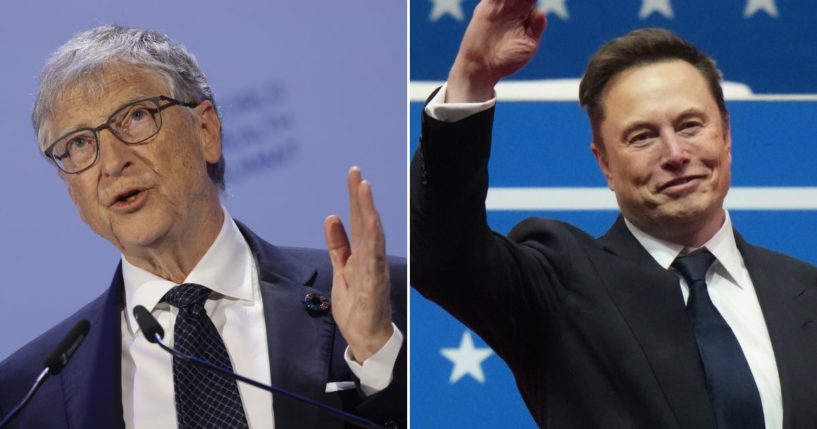
The multibillionaire Microsoft co-founder bemoaned the sudden influence of Musk on American and European politics in an interview published Saturday by The Times.
The British newspaper pressed Gates in the wide-ranging conversation to react as Musk enters the global political fray. The magazine, ironically enough, asked Gates if he wished that he “had got more involved in influencing politics like Elon Musk.”
“Not at all,” Gates responded.
“I thought the rules of the game were you picked a finite number of things to spout about that you cared for, focused on a few critical things, rather than telling people who they should vote for,” he told the outlet.
“For me it’s only ever about aid. I did think Brexit was a mistake, but I wasn’t tweeting every day,” Gates insisted.
Gates may not have the same style of political engagement as Musk’s off-the-cuff use of X, the social media platform he bought three years ago, or his appearance at rallies for Donald Trump.
But make no mistake. Gates is as political as they come.
Gates has thrown around his influence and his money, especially by means of the Gates Foundation, to move the policy conversation in his direction, especially on topics like climate change and public health.
Just two years ago, for instance, the Gates Foundation dumped $40 million into highly controversial mRNA manufacturing projects in Africa.
Gates has also been involved with buying American farmland, seemingly to encourage meat alternatives and other purported climate-friendly agriculture activities.
But remember, Musk is the actual problem for supporting Trump, raising awareness of the groomer gangs in the United Kingdom, and encouraging Germany to be a sovereign nation, or so says Gates.
“I’m ultra-different. It’s really insane that he can destabilize the political situations in countries,” Gates claimed to The Times.
“I think in the U.S. foreigners aren’t allowed to give money; other countries maybe should adopt safeguards to make sure super-rich foreigners aren’t distorting their elections,” he continued.
Conservative commentator Victor Davis Hanson said what many Gates skeptics were thinking: “Is he joking, or simply completely misinformed?”
Beyond the long history of global activism from Gates, Hanson reminded social media that the billionaire was dead silent about various other forms of foreign political interference from the global left, including in the United States.
That includes Christopher Steele, the British ex-spy who “who interfered in the 2016 presidential election by fabricating a venomous dossier to destroy the Trump campaign,” and much more recently, the fact that the Labour Party in Britain called for British activists to “swarm American swing states in service to the 2024 Kamala Harris campaign.”
Like other leftists who attack Musk and his affinity for the global right, Gates is not upset about a billionaire involving himself in politics.
Gates is only mad that the world’s richest man is not channeling his billions toward the global left instead.
“So, sir. Gates, spare us you very selective outage about Mr. Musk, given your prior deafening silence on hired foreign interference here and Democratic efforts to interfere in the elections of others,” Hanson added.
The Federal Trade Commission (FTC), under Chair Lina Khan, has been transformed from an independent regulatory body into a tool for furthering the Biden-Harris regime’s ideological objectives—at least, that’s what the evidence proves. This shift in focus has fundamentally disrupted the landscape of startup innovation in Silicon Valley. Once a thriving ecosystem where young startups could rely on eventual acquisition as a viable exit strategy, the FTC’s stringent anti-merger policies under Chair Khan have instead introduced what amounts to a tax on entrepreneurship. And this so-called tax is not just bureaucratic red tape; it’s a direct impediment to the dream of every startup: turning a novel idea into a profitable venture, even if the ultimate goal is simply to get acquired by an established player like Google, Amazon or Microsoft. Khan’s FTC—steering under the direction of Executive Order 14036—has taken on a European-style aversion to size itself, substituting broad market condemnation for nuanced analysis.
FTC Chair Lina Khan’s Aggressive Stance on Antitrust Enforcement
FTC Chair Lina Khan’s aggressive stance on antitrust enforcement has sparked considerable criticism, especially from venture capitalists and tech advocates who argue that her policies discourage innovation and undermine the startup ecosystem. Khan’s approach prioritizes preemptive action against acquisitions—particularly in tech—focusing on preventing monopolies before they form. This shift marks a departure from traditional antitrust enforcement, which usually only intervenes after a monopoly’s power is well-established. Critics, including venture capital leaders like Marc Andreessen, argue that blocking acquisitions prevents startups from being acquired by larger companies, which often serve as their primary exit strategy. They contend that fewer acquisitions make startups less attractive investments, reducing funding and limiting opportunities for innovation.
The National Venture Capital Association (NVCA) and others in Silicon Valley have also highlighted that antitrust actions, such as those against Meta’s attempted acquisition of VR company Within, can deter investment and reduce valuations of startups due to diminished acquisition prospects. According to the NVCA, venture funding relies heavily on the potential for acquisition, with nearly 90% of venture-backed exits occurring through acquisitions rather than IPOs. The broader concern is that restricting these exit paths disincentivizes startups from entering the market in the first place, thereby curbing technological advancement and economic growth.
Moreover, critics argue that Khan’s policies could inadvertently increase market concentration by stifling small companies before they can scale, making them less likely to challenge established giants independently. With reduced venture capital investment and the departure of some smaller players due to regulatory barriers, Khan’s policies might unintentionally favor dominant firms rather than foster competition and consumer choice.
However, Khan and her supporters maintain that unchecked acquisitions often lead to “killer acquisitions,” where larger firms acquire startups solely to neutralize potential competition. She argues that her approach is a necessary corrective to the “winner-takes-all” dynamics prevalent in tech, aiming to ensure a competitive landscape that fosters genuine innovation rather than monopolistic control.
These perspectives reflect a complex and contentious debate over the FTC’s role in regulating competition. While proponents see Khan’s approach as protecting long-term market health, detractors warn it could stifle innovation and prevent the growth of future tech leaders.
The Acquisition Ecosystem: Once a Fountainhead of Innovation
Historically, Silicon Valley thrived not because every startup had to become a multi-billion-dollar business, but because every startup had options. Investors could pour money into new ventures knowing there were numerous paths to return—whether through growth into a unicorn or by being acquired. Founders could innovate boldly, focusing on niche solutions or enhancing existing products, with the knowledge that even modest success could lead to a rewarding acquisition—a “soft landing” that allowed them to contribute within larger companies and eventually build again. This model made sense: Small tech firms, brimming with ideas but short on scale, married perfectly with larger corporations that could apply their resources to scale up those ideas. Everyone won—investors, founders, consumers and even regulators who wanted thriving markets.
Chair Lina Khan, however, seemingly has other plans. Under her direction, the FTC has cast a chilling effect over mergers and acquisitions (M&A) within the tech sector. Even mergers that would create clear consumer benefits—providing resources to enhance existing products, or even, paradoxically, increasing competition with major international firms—are subjected to a labyrinthine review process, one seemingly crafted more for obstruction than for adjudicating antitrust concerns in good faith.
The House Oversight Committee Report: A Chronicle of FTC Overreach
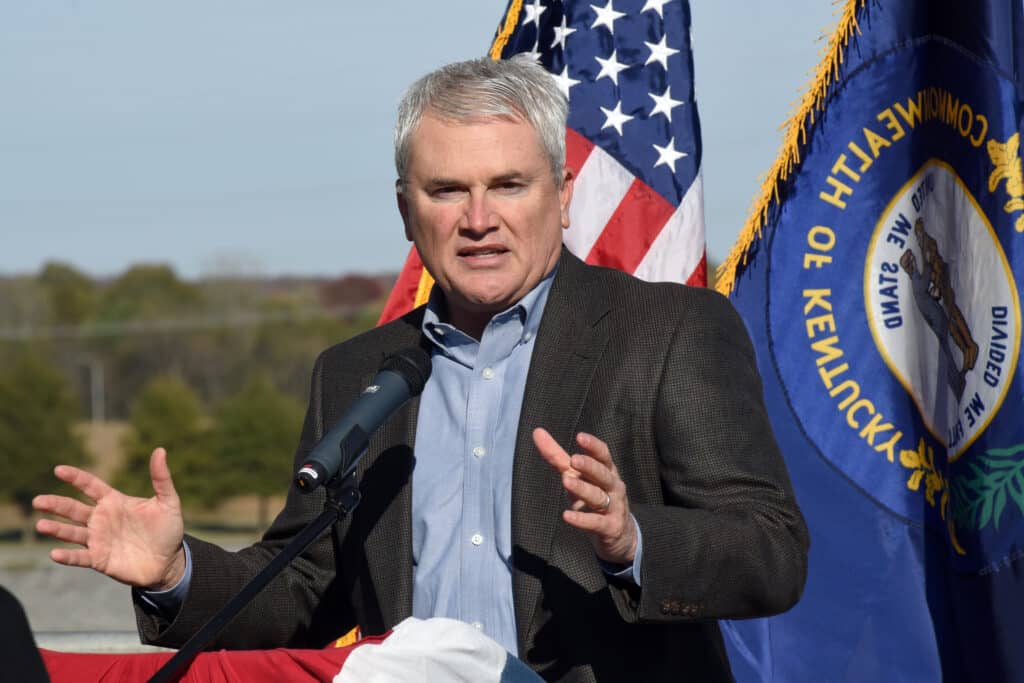
James Comer (R-Ky.), the Chairman of the House Committee on Oversight and Accountability, delivered a resounding indictment of Lina Khan’s FTC in his recent report titled, “The Federal Trade Commission Under Chair Lina Khan: Undue Biden-Harris White House Influence and Sweeping Destruction of Agency Norms”. The report paints a damning picture of Khan’s tenure, showing an agency unmoored from its original purpose and openly compliant to the political will of the White House. As noted in the report, Khan has “trampled on principles of due process, respect for the rule of law, and ethical standards to achieve her ideologically fueled ends at the FTC.” This is no light accusation; the charge is that Khan has taken an institution that was supposed to be independent and turned it into an ideological battering ram against American entrepreneurship.
U.S. Army Corps of Engineers Nashville District, CC BY-SA 2.0
One critical example lies in Khan’s approach to mergers like that of Meta’s proposed acquisition of Within Unlimited, and Microsoft’s bid for Activision Blizzard. Both cases—designed to challenge “potential competition” and vertical integration respectively—ended in resounding losses for Khan’s FTC in federal court. It wasn’t just that the FTC lost; it’s that the courts found the commission had failed to provide even basic grounds for its arguments against the mergers. Judge Jacqueline Scott Corley, an Obama appointee, pointed out that the FTC had not even raised “serious questions regarding whether the proposed merger is likely to substantially lessen competition.” The failures are not merely tactical errors; they reveal the degree to which Khan’s approach deviates from legal norms and reflects ideological zealotry.
Prominent Deals Blocked or Challenged Under Khan’s FTC
Under Lina Khan’s leadership, the FTC has halted or delayed several high-profile acquisitions across various sectors, resulting in significant backlash from venture capitalists and tech innovators alike. Here are some prominent deals Khan’s FTC has blocked or challenged, invoking criticism that her tactics stifle competition and innovation:
Meta’s Attempted Acquisition of Within (2022): The FTC filed to prevent Meta’s acquisition of Within, a VR fitness app, aiming to block what it deemed an anti-competitive move in the nascent virtual reality sector. For Meta, this acquisition was integral to its Metaverse ambitions, but Khan’s FTC argued it would restrict competition in VR fitness apps and stunt innovation in the VR space. Tech proponents argue this block punishes smaller companies needing investment to grow and denies the market innovative tech synergies in the VR landscape.
Illumina and Grail Deal: Illumina, a genetic sequencing giant, attempted a $7.1 billion acquisition of Grail, a cancer detection company. Khan’s FTC argued this merger would hinder competition in the emerging cancer screening market by consolidating too much control under Illumina. This legal action took years, with Illumina ultimately abandoning the acquisition in 2024, largely because Khan’s FTC framed it as anti-competitive, though Grail’s potential benefited from Illumina’s resources and technology integration.
Kroger and Albertsons Merger: Recently, the FTC scrutinized Kroger’s $24.6 billion bid to acquire Albertsons, a merger that Kroger argued would enable it to compete better against retail behemoths like Walmart and Amazon. Khan’s FTC, however, is reviewing the merger, expressing concerns that it might raise grocery prices by reducing competition. Critics point out that stopping or delaying such mergers harms consumers who stand to benefit from lower costs in a consolidated operation. This case illustrates Khan’s expansive view on the anti-competitive risks of mergers, even in non-tech sectors.
Semiconductor and Defense Sector Acquisitions: Under Khan, the FTC also blocked or impeded multiple mergers in the semiconductor and defense sectors, though details of each deal remain confidential. Analysts argue that these sectors, which are critical for national security and innovation, suffer from regulatory overreach that may restrict tech advancement in microchips, which are crucial to industries worldwide. The approach fuels investor concerns, making VCs wary of funding startups in areas where acquisition by larger firms is the most viable exit strategy.
Khan’s FTC has arguably gone beyond traditional regulatory scope, blocking even speculative mergers to prevent potential monopolies before they materialize. This radical strategy, while aimed at preventing Big Tech consolidation, is viewed by detractors as throttling the innovation ecosystem, particularly for startups that depend on the potential of acquisition. VCs have criticized this “anti-innovation” approach, arguing that without acquisition options, startups lose their key growth pathways, a blow to both entrepreneurship and consumer choice in emerging markets.
Emulating Europe’s Bureaucratic Failures
Perhaps the most egregious example of this shift is the FTC’s partnership with European regulators in implementing the EU’s Digital Markets Act (DMA). The DMA is a distinctly anti-American, protectionist piece of legislation aimed at hobbling the success of U.S. tech giants like Google, Apple and Amazon in favor of European firms. Despite its thinly veiled animosity towards American companies, Khan’s FTC took the inexplicable step of actively assisting with the DMA’s implementation, sending FTC staffers to Europe to guide its adoption. According to Maria Coppola, Director of the FTC’s Office of International Affairs, the FTC undertook these actions partly because “legislative proposals… were, like, cut and paste from European legislation,” and they wanted to be prepared if similar proposals were adopted here in the United States. Essentially, the FTC appears to be helping Europe impose rules that its own courts, and even the White House, recognize as harmful to American business.
This pattern reflects an abdication of the FTC’s duty to American consumers and a disservice to the principles upon which American antitrust law is built. Our laws are intended to prevent harm to competition, not punish success or hamstring companies simply for being large. The European model, which imposes punitive measures on companies for being “gatekeepers,” is at odds with decades of American antitrust principles. By adopting this approach, the FTC under Khan isn’t just obstructing mergers; it’s sabotaging American firms in the global market, putting them at a disadvantage compared to foreign competitors.
The cumulative effect of Khan’s anti-merger crusade is a dramatic chilling effect on startup culture in Silicon Valley. Venture capitalists (VCs) are less willing to take a gamble on a startup if the most likely exit—acquisition—is being systematically blocked by the FTC. The idea that every startup must turn into a standalone, billion-dollar enterprise or be considered a failure is not just laughable; it’s dangerous to the spirit of American innovation. Some of the most revolutionary technological features we use today came from smaller startups acquired by major players: Google acquiring YouTube, Facebook buying Instagram, and Amazon absorbing Twitch—all ventures that benefited from larger corporate backings.
Chair Khan’s direction has reversed a longstanding culture of innovation and transformation. Instead of bolstering companies with resources and scale, her FTC—under the influence of Biden-Harris policies—seems to prefer a European-style system of perpetual market fragmentation. Not surprisingly, the Silicon Valley that was once the envy of the world for its ingenuity and entrepreneurial daring is seeing fewer startups founded, fewer funded, and fewer able to make a mark on the world.
The Stakes for the 2024 Election: A Vote for Innovation
The upcoming 2024 election is crucial for determining the future of American innovation. If Kamala Harris is elected president, it is highly likely that Lina Khan’s destructive antitrust crusade will continue, further stifling the startup ecosystem and preventing the growth of new technologies that could enhance American competitiveness. In contrast, just this morning, Elon Musk pointed out that Donald Trump has committed to firing Lina Khan on his first day in office—a move that many see as essential to restoring sanity to the FTC and allowing American innovation to thrive again.
It’s time for voters to understand the stakes clearly: the choice is between an administration that supports a bureaucratic assault on entrepreneurship or one that aims to restore opportunities for innovators, founders and venture capitalists. The decision will determine whether America continues to be the global hub of innovation or slips into stagnation under the weight of needless regulation and ideological rigidity. A vote for Donald Trump is a vote for growth, opportunity and the restoration of an environment where the American dream—especially for entrepreneurs—can once again flourish.
The impact of these policies extends beyond just Silicon Valley; it affects every American who benefits from a thriving, competitive economy. The choice is simple: either continue with the Biden-Harris regime’s heavy-handed, anti-business approach or pivot toward policies that encourage growth and prosperity. If we want to see innovation thrive, the tech sector rebound and opportunities expand for all, it is crucial that Lina Khan and her destructive policies are shown the door. Let’s vote for innovation and a prosperous future—let’s vote to bring common sense back to Washington.






 fox files
Recent Comments