For those of you pining for the sturm und drang of Donald Trump’s first term, I’m the bearer of good news: The first attempt to impeach the newly minted president is already underway.
Sure, as political pseudoevents go, it’s about as anticlimactic, low profile, and ill-conceived as a Limp Bizkit reunion album. But #TheResistance 2.0 has to begin somewhere, and it’s apparently beginning with leftist interest group Free Speech For People.
The group — whose website looks like it dates from the era where Daily Kos’ site interface looked positively cutting edge — bills itself as a “non-partisan campaign, but is focused on a bevy of leftist issues, including stopping “voter suppression” (read: preventing anti-voter fraud initiatives), eliminating dark money in politics (unless it comes from George Soros, one assumes), and tackling “corporate abuse of power.”
It’s perhaps best known for its opposition to the 2010 Supreme Court decision in Citizens United v. Federal Election Commission, which ruled independent campaign expenditures counted as free speech. (Floyd Brown, founder of The Western Journal, was also the founder of Citizens United, the plaintiff in that case.)
But now, the group has a more important mission. Free Speech For People — which apparently knows about as much about what “high crimes and misdemeanors” are as it does about using definite articles to make their organization’s name sound less awkward — began a campaign to impeach Trump on the day he was inaugurated.
The group’s petition is “calling on the U.S. Congress to initiate an immediate impeachment investigation into Donald Trump’s violations of the Emoluments Clauses and into his unlawful, corrupt campaign practices.”
“Trump’s return to the White House poses an unprecedented threat to our democracy,” says John Bonifaz, organization president.
“During his campaign and in the months before his inauguration, Donald Trump engaged in unlawful, unconstitutional conduct and threatened more. He has once more positioned himself to abuse the office for personal profit and power in violation of clear constitutional commands and at the expense of our democratic institutions, constitutional precedent, and the safety of our country’s most vulnerable.”
The petition refers to two sections of the U.S. Constitution Free Speech For People believes Trump has violated: Article I, Section 9, Clause 8; and Article II, Section 1, Clause 7.
The first clause they believe is impeachment-worthy: “No title of nobility shall be granted by the United States: and no person holding any office of profit or trust under them, shall, without the consent of the Congress, accept of any present, emolument, office, or title, of any kind whatever, from any king, prince, or foreign state.”
The second: “The President shall, at stated times, receive for his services, a compensation, which shall neither be increased nor diminished during the period for which he shall have been elected, and he shall not receive within that period any other emolument from the United States, or any of them.”
By the way, in case you’ve forgotten from the last go-around, “emolument” means “the returns arising from office or employment usually in the form of compensation or perquisites.”
Sorry to insult the intelligence of most of our readership but I’d wager there’s probably some “White Dudes for Harris” straggler reading this in the dark as he munches his Beyond Meat chicken tendies in his faded pink, unwashed knit p**** cap, thinking to himself: “Hot diggity! So you’re saying there’s still a chance! But, uh, what’s an ’emmermonumment’?”
This, by the way, is the same bovine effluence the left tried to make stick the last time before James Coney, Robert Muller, and Alexander Vindman gave them shinier objects to gaze upon — and, one assumes, it’ll have even shorter legs this time.
“Trump has refused to sell his ownership stake in companies through which he is assured to receive substantial payments from foreign governments in violation of the Foreign Emoluments Clause,” the group’s statement said.
“At least five foreign governments pay a combined $2 million per month in fees for their units in Trump World Tower; and because all five of these foreign governments are currently paying Trump these monthly fees, Trump is in violation of the Foreign Emoluments Clause from the moment he took the oath of office.”
If you want a good laugh, try doing a Google search for “Free Speech For People Hunter Biden Burisma” or “Free Speech For People Hunter Biden CEFC.” See how many hissy fits the organization had about those emolument-looking arrangements when they happened. For gambling types, I’m setting the over-under on relevant search results at 0. Anyone who picked the over can just give me your money now.
And, by the way, there’s a huge difference between the Trump family and the Biden family. Trump came to the presidency after a career in the private sector — and a successful one at that. Of course he had assets — especially real estate — and of course the wealthy were drawn to the Trump name before and after he became president. That’s not an emolument, that’s business as usual.
Joe Biden, meanwhile, has spent four of the last 52 years in the private sector — and he spent it writing a book which he improperly retained classified documents to complete. Hunter, meanwhile, mysteriously began getting well-remunerated roles with companies in countries like Ukraine and China in fields which he had no experience in, and while he was in the throes of a drug, alcohol, and sex addiction that would make Hunter S. Thompson and Charlie Sheen blush. His father claims that he had no knowledge of or discussions about his son’s overseas dealings, which is why he took numerous photos with his son’s foreign business contacts, a trove of which were released as Uncle Joe was exiting the White House:
Oh, and it’s not just the emoluments clauses! “The campaign lists additional impeachable offenses committed during Trump’s 2024 election campaign and leading up to the inauguration, including: threatening physical violence, including murder, against political opponents, journalists, and protestors; using racist, xenophobic rhetoric that has endangered immigrant communities; and violating campaign finance laws by offering benefits in exchange for campaign contributions,” the release reads.
Unlike their fulmination over alleged violations of the emoluments clauses, however, there’s absolutely no supporting evidence of this given — and there’s also no impeachable offense in there once you reduce the febrile rhetoric to what it is, which is positions Trump and his supporters have taken that they disagree with.
If this is what they think will produce the third impeachment of Trump, it’s practically adorable. I doubt that Free Speech For People will be the last organization advocating for this kind of futile opposition to The Donald’s second term. It’ll be hard to top them for sheer unintentional humor value, however.
Morons just never, ever learn. Einstein’s definition of insanity is “doing the same thing over and over again and expecting different results”.
Moments of extraordinary peril have demanded extraordinary action. Today, as the nation teeters on the precipice of economic turmoil and national insecurity, President Trump finds himself facing an adversary not foreign but domestic: a Congress shackled by obstructionism. The Democrats’ calculated stonewalling of key cabinet nominations, including CIA nominee John Ratcliffe and DOJ nominee Pam Bondi, has left federal agencies rudderless, vulnerable and infiltrated by what can only be described as the Deep State. Trump’s power to adjourn Congress—a constitutional provision buried in the seldom-visited corridors of Article II, Section 3—may be the nation’s best hope for restoring order and ensuring competent leadership at the helm of our government.
The Framers of the Constitution, wise to the capricious nature of politics, granted the president the power to adjourn Congress “in extraordinary occasions” when the House and Senate fail to agree on adjournment. Alexander Hamilton, in Federalist No. 70, extolled the virtues of a decisive executive, arguing that energy in the executive is “a leading character in the definition of good government.” While this power has never been exercised in the nation’s history, its inclusion underscores the Framers’ recognition that paralysis within the legislative branch can imperil the republic.
Indeed, Justice Joseph Story’s commentaries on the Constitution describe the adjournment clause as a safeguard against legislative dysfunction. The current congressional deadlock, with Democrats weaponizing procedure to undermine executive appointments, exemplifies the very “extraordinary occasions” that justify invoking this power.
The stakes could not be higher. With the CIA and DOJ operating under interim leadership, their ability to counteract threats—both foreign and domestic—is severely hampered. Ratcliffe’s delay ensures that the CIA remains a playground for DEI zealots and entrenched bureaucrats. Similarly, without Pam Bondi’s confirmation, the DOJ continues to sidestep Trump’s mandate to root out ideological rot. Recent revelations of agencies rebranding DEI positions to evade detection highlight the Deep State’s subversive ingenuity—a direct challenge to Trump’s executive orders banning such programs. The message is clear: without Trump appointees in key positions, federal agencies will remain unaccountable fortresses of woke orthodoxy.
Historically, periods of executive action have often followed legislative gridlock in times of crisis. Abraham Lincoln’s suspension of habeas corpus during the Civil War and Franklin D. Roosevelt’s aggressive New Deal measures illustrate that decisive action, while controversial, is sometimes necessary to preserve the nation’s integrity. The present crisis, though less visible, is no less existential. National security cannot afford to be a casualty of political gamesmanship.
The economic ramifications of congressional obstruction extend beyond the Beltway. With inflation persisting, global markets jittery and outgoing Treasury Secretary Janet Yellen warning that the government will run out of money this week, the United States faces a dire emergency. Yellen’s suggestion for the incoming treasury secretary to implement extraordinary measures underscores the urgency. Without Trump’s treasury secretary nominee, Scott Bessent, at the helm, who is running the show—a second-string quarterback? Treasury, commerce and energy, among others, require Trump-aligned leadership to implement policies that restore fiscal discipline and energy independence, ensuring America’s financial stability during this critical moment.
Consider the contrast: during the Reagan administration, swift executive appointments enabled the rapid implementation of supply-side economics, catalyzing a historic economic boom. Conversely, today’s delays have left markets uncertain and businesses hesitant, awaiting clarity from an administration hamstrung by partisan brinkmanship. By adjourning Congress and making recess appointments, Trump can bypass the stalemate and restore confidence in America’s economic stewardship.
Critics may balk at the unprecedented nature of adjourning Congress, invoking fears of executive overreach. Yet such criticisms ignore the reality that precedent is not destiny. When Ronald Reagan fired air traffic controllers during the PATCO strike, he faced similar accusations of authoritarianism. History, however, vindicated him as a leader who prioritized national interest over fleeting norms.
Furthermore, the Constitution’s silence on the length of adjournment grants Trump significant discretion. As the Supreme Court’s decision in NLRB v. Noel Canning clarified, a recess of 10 days is sufficient to activate the Recess Appointments Clause. By adjourning Congress over a weekend, Trump can legally appoint his cabinet, ensuring that Senate deliberations proceed without jeopardizing national security or economic stability.
The specter of the Deep State looms large. Recent investigative reports reveal an entrenched bureaucracy—particularly within intelligence and law enforcement—dedicated to undermining Trump’s agenda. These unelected officials have exploited vacancies to shield their machinations, from rebranding DEI departments to slow-walking compliance with executive orders. By filling these vacancies, Trump can dismantle this unelected cabal and restore accountability to the executive branch.
How it Would Work
The president could trigger the adjournment clause with the help of either the House or Senate through a specific series of events. First, one chamber, say the Senate, led by Majority Leader John Thune, would need to pass a resolution to adjourn for a period of more than three days. This could be done with a simple majority vote, as a motion to adjourn cannot be filibustered according to Senate Rule XXII(1). Next, the House, under the leadership of Speaker Mike Johnson, would need to either actively reject the Senate’s adjournment resolution or fail to act on it before the proposed adjournment date. Given the Republican majority, the Senate could lose up to three votes, while the House could lose up to five votes, and still pass the resolution. This lack of agreement between the chambers would then allow the president to step in and formally adjourn Congress to a time of his choosing. This scenario highlights how the president could use the adjournment clause, with the cooperation of one chamber of Congress, to potentially create a recess and make recess appointments.
The time for half-measures has passed. In this moment of crisis, Trump must wield the constitutional tools at his disposal to adjourn Congress and make recess appointments. The stakes—national security, economic stability and the integrity of federal agencies—are too high to allow congressional obstruction to persist. Just as Lincoln’s bold actions preserved the Union, Trump’s decisive use of the Adjournment Clause can ensure that the republic remains secure, prosperous and true to its constitutional principles. To paraphrase Reagan, history will remember not the critics who howled but the leader who acted.
House Republicans reveal stonewalling, major security lapses, and misrepresentations by top law enforcement officials related to the still at-large J6 pipe bomber, ‘aka’ the fake deep state alternate plan ready to go on a moment’s notice had J6 never happened.
Four years after what the FBI describes as an act of domestic terror–the protest at the Capitol on January 6, 2021–federal authorities have not yet solved the most consequential crime of that day: the presence of two explosive devices within blocks of the U.S. Capitol.
A report issued today by Representatives Barry Loudermilk (R-Ga) and Thomas Massie (R-Ky), chairmen of House subcommittees examining the events of January 6 and the work of the January 6 Select Committee, details how the FBI investigation into the so-called pipe bomber went cold by early 2021 despite dedicating significant resources into finding the suspect and initially identifying several “persons of interest.”
The FBI originally claimed an individual wearing a hoodie planted the devices near the headquarters of the Republican National Committee and outside the headquarters of the Democratic National Committee on January 5, 2021 between the hours of 7:30 p.m. and 8:30 p.m. The devices were not discovered until 17 hours later, coincidentally, around the same time the Joint Session of Congress convened at 1:00 p.m. on January 6 to debate the results of the 2020 presidential election. A woman doing her laundry found a pipe bomb in an alleyway near the RNC headquarters at around 12:40 p.m.; a plainclothes Capitol Police officer discovered a similar device outside the DNC headquarters at 1:05 p.m.
The latter situation posed an extreme danger to incoming Vice President Kamala Harris, who left the Capitol at 11:25 a.m. and inexplicably went to the DNC, where she remained until around 1:15 p.m. As I have reported, several officers including numerous Secret Service agents and a bomb-sniffing canine failed to detect the device sitting just steps away from the building’s entrance.
News of the devices prompted the evacuation of nearby buildings and set off the first wave of panic that afternoon. Some top law enforcement officials including former U.S. Capitol Police Chief Steven Sund believe the devices were a diversionary tactic. “[While] law enforcement has not identified the suspect responsible for planting both pipe bombs, the explosive devices played a critical role in how the events of that day unfolded. Whether intended to or not, both pipe bombs acted as diversions, forcing law enforcement to draw resources away from the Capitol,” the report states. The first exterior breach of Capitol grounds occurred at 12:53 p.m.
But no one has been arrested despite a $500,000 reward offered by the FBI. Further, the failure to locate the J6 pipe bomber doesn’t add up considering the extensive investigative tools still being used by the FBI to track down and arrest J6 protesters, a caseload now approaching 1,600 individuals.
Footdragging, Stonewalling, and Non-Interest by J6 Truth Seekers
Not only did the trail go cold, either intentionally or organically, the same political leaders and government officials who promised to expose the “truth” about the events of January 6 oddly are uninterested in the pipe bomb threat and not cooperating with Republicans in their separate attempts to find the bomber. The report discloses extensive stonewalling by federal and local agencies including the FBI, the ATF, the U.S. Secret Service, and the Metropolitan (DC) Police Department related to House Republicans’ requests for documents and interviews to help better understand the failed pipe bomb investigation.
“[The] FBI has failed to provide any responsive documents. On December 12, 2023, FBI Deputy Assistant Director Matthew Foder briefed the Committee on the status of the FBI’s pipe bomb investigation. Deputy Assistant Director Foder’s briefing failed to satisfy even the Committee’s most basic informational needs and dealt exclusively with information already in the public domain.”
The former head of the Washington FBI field office, Steven D’Antuono, who led the pipe bomb investigation for nearly two years, also appears to have misled Congress by claiming some of the cell phone files obtained by the FBI were “corrupted,” which impeded their investigation. But according to today’s report, “the major cell carriers confirmed that they did not provide corrupted data to the FBI and that the FBI never notified them of any issues with accessing the cellular data.”
Further, despite promises to fully investigate every aspect of January 6, the January 6 Select Committee ignored what represented the biggest threat to public safety and the safety of top elected officials including Harris and former House Speaker Nancy Pelosi.
“A thorough review of almost three terabytes of data turned over by the Select Committee yielded shockingly few results regarding the pipe bombs— emphasizing how the Select Committee failed to thoroughly investigate the security and operational failures surrounding the events of January 6,” the report reveals. Rep. Bennie Thompson, chair of the now defunct committee, told Massie in 2023 that his committee did not look into the pipe bomb matter. The committee’s final 845-page report devoted less than three pages to the pipe bomb incidents and relegated it to the appendix.
Even after the devices were detected on Jan 6, security perimeters established around both locations insufficiently protected the public, commuters, and nearby Congressional buildings, the report confirms. A motorcade carrying Pelosi drove past the device after it was detected but before it was detonated. “Prior to Speaker Pelosi’s motorcade driving by the DNC pipe bomb, federal law enforcement had allowed more than fifteen vehicles to drive past the DNC pipe bomb despite repeated calls over the radio for law enforcement units to stop all traffic passing by the explosive device. The breakdown in command and control around the DNC pipe bomb and the failure to correct the breaches of the security perimeter culminated in law enforcement risking the safety of congressional leadership.”
Plenty of Leads, No Answers
The subcommittees’ report describes a full throttle investigation into the pipe bombs early on.
In the immediate aftermath of January 6, the FBI’s case team worked aggressively to cultivate and pursue leads toward apprehending the pipe bomb suspect. As of January 2021, the FBI’s investigation consisted of over fifty investigators, including special agents, data analysts, Task Force officers, and support staff. Of those more than fifty investigators, thirty were special agents assigned to the case. The investigation also comprised of a range of investigative support teams such as the Cellular Analysis Survey Team, the Computer Analysis Response Team, and the Digital Imaging and Video Recovery Team. As a result, by April 2021, the FBI had collected over 105,000,000 data points in connection with the investigation.
In February 2021, the FBI identified 186 phone numbers of interest; 36 numbers were assigned to agents for interviews, 98 required additional investigative steps. Fifty-one were categorized as “not needing further action” because the phones “belong[ed] to law enforcement officers or persons on the exclusion list.”
By using another sophisticated investigative technique–tracking advertising data–the FBI case team, according to the report, “identified one [individual] whose movements matched the suspect’s movements as outlined by the video the FBI released tracking the suspect’s whereabouts.” But the result of that “significant lead…remains unclear,” the report states.
More Unanswered Questions
How is it possible the pipe bomber remains at large given the extensive resources first expended by the FBI and at their disposal to this day? Why did the J6 Select Committee avoid looking into the threat, particularly since it posed a mortal danger to both the incoming vice president and the Speaker of the House, who created the committee? Why did Kamala Harris never discuss her near-assassination attempt on the campaign trail? Why did D’Antuono mislead Congress about the condition of cell phone data? Why has the media stopped covering the pipe bombs?
This is why scumbags Wray and others have jumped ship early and Pelosi’s out of country in Europe for supposed surgery.
The good news for now is that House Republicans are not backing down. The key to permanently unraveling the entire Jan 6 narrative is tied to the mystery pipe bomber—and once that missing puzzle piece is found, the public will find more shocking revelations.
Take, for instance, a recent story that made the rounds on social media. According to these reports, Oxfam — the British NGO — found that a huge chunk of the World Bank’s spending on climate change-related issues was “missing.”
Thank heaven for REAL fact-checkers like the Australian Associated Press — a Poynter Institute-accredited fact-checker from down under — which set us all straight: “An Oxfam report did not find that $US41 billion has gone ‘missing’ from the World Bank’s climate change fund, contrary to claims online.”
What a relief. Instead, the AAP noted, the Oxfam report found that the World Bank just doesn’t really know where the money went.
See? Totally different!
The controversy centers around an Oct. 2024 report titled “Climate Finance Unchecked: How much does the World Bank know about the climate actions it claims?” Answer: not as much as it probably should.
The findings are front-loaded in a TL;DR on page two of the 33-page report, in case you’re not interested in reading the whole thing through: “Oxfam finds that for World Bank projects, many things can change during implementation. On average, actual expenditures on the Bank’s projects differ from budgeted amounts by 26–43% above or below the claimed climate finance. Across the entire climate finance portfolio, between 2017 and 2023, this difference amounts to US$24.28–US$41.32 billion,” the report states.
“No information is available about what new climate actions were supported and which planned actions were cut. Now that the Bank has touted its focus on understanding and reporting on the impacts of its climate finance, it is critical to stress that without a full understanding of how much of what the Bank claims as climate finance at the project approval stage becomes actual expenditure, it is impossible to track and measure the impacts of the Bank’s climate co-benefits in practice.”
The Oxfam report stated “generous accounting practices by different countries and providers, combined with the lack of transparency and consistency in how climate finance is defined, calculated, and reported, is at the root of the crisis of trust in climate finance.”
As the International Consortium of Investigative Journalists pointed out in a November summation of Oxfam’s findings, this is sort of a big deal when you consider how the World Bank is in the process, more or less, of turning itself into the Global Climate Change Savings & Loan.
“In recent years, the World Bank has touted its spending on climate finance and its plans to dramatically expand it,” the ICIJ noted.
“World Bank President Ajay Banga said in December that the bank had met its goal to devote 35% of its financing to climate three years ahead of schedule and set a new target of 45% by 2025. That goal is well within reach; the bank announced in September that its climate finance investments reached 44% of total financing, or $42.6 billion, over the past fiscal year. ‘We’re putting our ambition in overdrive,’ Banga said.”
The report underscored that there’s a huge difference between the World Bank’s ambition and the world bank’s accounting processes, however, and one that needs to be addressed. But both Oxfam and the AAP fact-checking team wanted to you to be sure that the NGO “was not alleging any mismanagement of funds due to corruption or waste; it was concerned about the World Bank’s reporting process for deviations in planned and actual climate finance.”
“This distinction is significant,” a spokesperson for Oxfam said.
“Oxfam’s report doesn’t suggest funds are missing but points to a transparency issue that makes it difficult to know precisely what the Bank is delivering in terms of climate finance: where it’s going and what it’s supporting.”
Yes, well, excuse us for sounding like negative Nancys, but this sounds a bit like one of those cheerful bosses who describes a major organizational setback as an “opportunity for breakthrough improvement.” Indeed it might be, on some level, but a Panglossian refusal to acknowledge the bedrock realities of the situation that accompanies it becomes downright hilarious — unless you’re on the hook for it, of course.
And if you’re an American, you are! According to a Congressional Research Service report, the U.S. contributes over 16 percent of the World Bank’s total capital through its financial commitments, and has significant voting power on all of the World Bank organizations that provide climate change funding.
Yes, this may be a drop in the bucket in terms of your tax dollars, and yes, there are bigger climate hustle bureaucrats that have spent your cash on (hey, whatever happened to that promising green energy start-up Solyndra?), but the difference between “a transparency issue that makes it difficult to know precisely what the Bank is delivering in terms of climate finance” and “missing” sounds an awful lot like the difference between “I did not have sexual relations with that woman, Miss Lewinsky” and “Indeed, I did have a relationship with Miss Lewinsky that was not appropriate and in fact, wrong.”
Of course, when it comes to virtually any other institutional spending issue, using the word “missing” to refer to something being lost or something being unaccounted for would be a distinction without a difference. Here, it’s unspoken why it’s problematic and why fact-checkers are taking issue with it: When it comes to spending on issues related to climate change and green energy, there are Good Guys and there are Bad Guys.
The Good Guys say this is merely an accounting quibble while the Bad Guys say that this means at least $24 billion and up to $41 billion of World Bank funds are somewhere in the ether of global finance networks thanks to variances in accounting practices that charitably can be described as ‘curious’.
Thus, it’s not, “contrary to claims online,” missing. It’s just not accounted for! At this point, I’m not sure which is the bigger racket: dubious national or supranational funding of projects that fall loosely under the aegis of purported climate change mitigation, or fact-checking. At least this can be said about fact-checking: It costs a hell of a lot less.
From promoting the lie about Brian Sicknick’s death to swooning over the J6 Select Committee while ignoring new findings about the events of Jan 6, the WSJ is soiling its once-solid reputation.
The January 6 narrative continues to crumble amid near-daily revelations related to, among other things, the shady circumstances surrounding the Jan 6 “pipe bomber,” the corruption of the January 6 Select Committee, and evidence directly contradicting the carefully fabricated storyline including who was responsible for delaying the deployment of National Guardsmen that afternoon. (Hint: Not Donald Trump.)
A few news and opinion outlets, however, remain stubbornly loyal to the regime-established Jan 6 propaganda mill. After years of investing ink and clicks to promote the most outlandish and in some instances debunked angles of the so-called “insurrection,” these outlets refuse to entertain the idea, now being considered by millions of Americans, that maybe they were snookered into believing one of the most destructive political hoaxes in U.S. history.
The Wall Street Journal is chief among them.
Once regarded a “conservative” paper with a news section largely devoted to the business sector and an editorial page section largely devoted to supporting conservative political causes, the WSJ currently rivals MSNBC and the Washington Post as the most hysterical J6 propagandists on record.
On Christmas Eve, the paper published a report authored by four WSJ reporters that named several companies who had pledged to withhold financial support for Trump and Republican lawmakers after the Capitol protest that now are donating to the president’s inaugural committee. Describing the events of January 6 as an “invasion” of the Capitol, the reporters lamented how “many of those pledges are a thing of the past.”
After Trump supporters invaded the Capitol in 2021 to protest the results of the presidential election, dozens of companies vowed to rethink their political contributions going forward. Some paused all donations. Others suspended donations to any lawmaker who voted against certifying the 2020 electoral college results. Some simply promised to factor integrity into their donation decisions going forward.
Now, as corporate executives hurry to make inroads with an incoming president whose agenda will have sweeping ramifications for the business world, many of those pledges are a thing of the past.
This latest installation of the WSJ’s “insurrection” chronicles follows a long arc of reporting and pontificating that began the day after the Capitol protest.
Lies About Cops and Lying Cops
On January 7, 2021, as the country knew few details about what actually happened, the WSJ’s editorial board called for President Trump to resign or face impeachment. “This was an assault on the constitutional process of transferring power after an election. It was also an assault on the legislature from an executive sworn to uphold the laws of the United States. This goes beyond merely refusing to concede defeat. In our view it crosses a constitutional line that Mr. Trump hasn’t previously crossed. It is impeachable,” the board, led by longtime “conservative” commentator Paul Gigot, wrote.
The next day, the paper helped fuel the lie that Capitol Police Officer Brian Sicknick was murdered by Trump supporters with a fire extinguisher, a falsehood first reported by the New York Times. The original WSJ article remains intact with a one-sentence correction from April 2021 admitting the D.C. coroner had concluded Sicknick died of natural causes. Nonetheless, the paper continued to describe Sicknick as a “slain” police officer.
A few months later, WSJ contributor Karl Rove—need I say more?—called the testimony of four police officers featured during the first televised hearing of the January 6 Select Committee “riveting” and how they “demolished claims by some Republicans that the assault on Congress wasn’t very different from a ‘normal tourist visit’ or a peaceful protest.”
But video evidence unearthed since that July 2021 hearing contradicts the accounts offered by all four officers under oath; some testimony could result in perjury charges. This appears to be of no interest to Rove or the WSJ in general.
Pelosi/Cheney Partner in Crime
To be fair, the WSJ criticized former House Speaker Nancy Pelosi’s heavy-handedness in creating the January 6 Select Committee, a body the WSJ supported in order to “get to the bottom of it all.” However, editors and columnists proceeded to fully participate in the committee’s media echo chamber. The evidence presented during the committee’s professionally scripted televised performances, the WSJ editorial board agreed in June 2022, represented “a reminder of the violence and how Trump betrayed his supporters.”
The following month, the paper’s editorial board regurgitated now-debunked accusations that Trump “stood still” and did nothing to prevent or halt the chaos on January 6. “No matter your views of the Jan. 6 special committee, the facts it is laying out in hearings are sobering. The most horrifying to date came Thursday in a hearing on President Trump’s conduct as the riot raged and he sat watching TV, posting inflammatory tweets and refusing to send help,” WSJ editors wrote in July 2022. Never mind the fact the president had urged the deployment of National Guardsmen days before the certification vote then posted tweets and a personal video asking for calm within the scope of a few hours that day.
WSJ Hearts Cassidy
But perhaps nothing can top the WSJ’s swooning over Cassidy Hutchinson, a former White House aide considered the committee’s star witness. Her June 2022 testimony, the editorial board insisted in a cringe-worthy rant, represented the committee’s “accumulating evidence of [Trump’s] conduct” on January 6. “Republicans should [not[ look away from the considerable evidence it is producing about Mr. Trump’s behavior that would surely be relevant to voters if he runs in 2024.”
Former Reagan speechwriter and Trump Derangement Syndrome sufferer Peggy Noonan completely humiliated herself with a lengthy ode to Hutchinson, whom Noonan claimed was the sort of courageous gal that “can upend empires.” The young aide, Noonan continued, “showed more guts than any of Trump’s men. Her testimony strengthens the case for prosecution.”
Doubts over her testimony should be challenged, Noonan argued. “If she lied I see no motive. Any who know otherwise, who can rebut what she said, should come forward and, like her, testify under oath.”
Which is precisely what happened. In the months following Hutchinson’s testimony, several individuals directly refuted under oath her accounts of Trump’s behavior. Transcripts recently obtained by Representative Barry Loudermilk, chairman of a House subcommittee investigating the J6 committee and events of January 6, show that several witnesses including the driver of the presidential limousine told committee investigators and former Rep. Liz Cheney, Hutchinson’s hand holder, that Hutchinson’s allegations were untrue particularly related to an alleged physical confrontation inside the vehicle.
No Interest in Covering the Unraveling J6 Narrative
But unfortunately, the WSJ does not share the same interest in Loudermilk’s committee as it did in the Jan 6 select committee. Despite uncovering shocking proof of malfeasance and potential crimes committed by members of the Jan 6 select committee, including Cheney, Loudermilk hasn’t received any coverage in the WSJ.
The paper appears to have ignored a separate report issued earlier this month by Department of Justice Inspector General Michael Horowitz confirming the presence of at least 26 FBI informants in Washington on January 6. Nor is the paper interested in the ever-changing story about the “pipe bombs” allegedly planted near the headquarters of the Republican National Committee and Democratic National Committee on January 5, 2021; the last time the WSJ published anything about the explosives was more than 2 ½ years ago.
Even more inexcusable is the paper’s selective ignorance on the abusive treatment of January 6 protesters. One would be hard pressed to find any mention of how the Biden DOJ weaponized federal law to criminalize political protest or how the FBI has conducted hundreds of predawn armed raids for even nonviolent offenders or how federal prosecutors seek excessive prison time including “terror enhancements” for J6ers.
Instead, some WSJ writers now oppose Trump’s plans to pardon the wrongly accused and victims of a double standard of justice. Issuing pardons of J6ers, political columnist William Galston recently opined, would represent a “misread[ing]” of Trump’s decisive victory. “Two-thirds of Americans polled by the Washington Post would oppose issuing pardons for people convicted of crimes related to the Jan. 6, 2021, assault on the U.S. Capitol,” Galston wrote, as if public opinion should dictate how the inarguable abuse of the legal and judicial system must be resolved.
Another shameful example of the WSJ excusing away the government’s political persecution of Trump supporters while continuing to promote nonsensical aspects of January 6. What a fall from grace.
In a quiet classroom at Abundant Life Christian School in Madison, Wisconsin, the unspeakable happened once again: two dead, six wounded and an entire community shattered. The shooter, a 15-year-old, turned a study hall into a scene of terror before taking her own life. Predictably, political rhetoric came swiftly, as did the tired solutions that follow every school shooting.
President Biden spoke of “prayers” and “unacceptable” violence, sentiments as sterile as they are predictable. Vice President Harris decried the “senseless gun violence” while the drive-by media spun inflated statistics—650 mass shootings a year, they claim, as if this carnage occurs on every street corner. It doesn’t. But that’s the problem. Public massacres, like the one in Madison, occur in places that we’ve willfully left defenseless.
The very words drip with irony. There is nothing safe about disarming the law-abiding while leaving criminals emboldened. A gun-free zone is a target—an irresistible siren call to those who want to kill as many as possible, as quickly as possible. Nearly 94% of mass public shootings since 1950 have occurred in gun-free zones, according to research from the Crime Prevention Research Center (CPRC), which analyzed data on mass shootings in the U.S. over the last several decades. Why? Because murderers are cowards, not crusaders. They seek defenseless victims, not resistance.
The Failed Logic of Gun-Free Zones
The Madison shooter chose her venue deliberately, just as the Covenant School shooter did last year in Tennessee. The Covenant shooter explicitly avoided a secondary location because of “too much security,” according to police reports. This cowardice is consistent: the Buffalo supermarket shooter in 2022 admitted in his manifesto that he targeted an area where concealed carry permits were outlawed.
Yet the politicians and pundits pretend ignorance. Instead of addressing the root of the problem—defenseless soft targets—they tout gun-free zones as virtuous policies. It’s worth asking President Biden why he feels safe behind armed guards and fences at the White House but thinks schoolchildren can be protected by nothing more than a “No Guns Allowed” sign.
If “Gun-Free Zone” signs worked, the U.S. Capitol wouldn’t need security. Yet politicians rely on armed protection for themselves because they know such measures are essential. Their refusal to apply the same logic to schools speaks to a deeper hypocrisy: they prioritize their own safety while ignoring the vulnerability of America’s children. It’s not ignorance; it’s political convenience. Replace those guards with placards declaring the building weaponless and watch how quickly Congress demands action. Of course, they know better. They protect themselves, but leave our children vulnerable.
The Data We Ignore
Since 1998, 82% of mass shootings occurred in places where firearms were banned.
Schools that permit concealed carry for staff have seen zero mass shootings during school hours. Zero.
States like Utah and New Hampshire allow any teacher with a concealed carry permit to carry a firearm on campus. In 19 other states, local districts make that call. Yet where such policies exist, the grim scenes we saw in Madison simply do not happen.
To this day, critics raise alarmist fears about “armed teachers snapping” or students grabbing weapons, but these scenarios have never materialized. Not once. Instead, the data reveal an uncomfortable truth: gun-free zones work only for killers. The law-abiding comply, the criminals rejoice.
A Return to Common Sense
The solution to Madison’s tragedy—and others like it—is not complicated. First, abolish gun-free zones in schools. Replace them with policies that deter attackers and protect students. Allow teachers and staff—volunteers who are trained and licensed—to carry concealed weapons. This doesn’t mean turning schools into fortresses but turning classrooms into deterrents.
Sheriff Kurt Hoffman of Sarasota County, Florida, put it plainly:
“A deputy in uniform… may as well be holding up a neon sign saying, ‘Shoot me first.’”
Hoffman’s point underscores the need for tactical discretion. Uniformed guards, while a visible deterrent, can inadvertently become the first targets. Schools should adopt the strategies used in aviation security, where plainclothes air marshals blend in seamlessly. Similarly, plainclothes or covertly armed staff can provide critical protection without drawing attention to themselves. This element of unpredictability forces attackers to reconsider their plans, knowing that resistance could come from anywhere.
He’s right. Security must be strategic, not theatrical. This is why air marshals on planes don’t wear uniforms. Schools could adopt similar measures: armed staff members concealed among their colleagues, indistinguishable from any other teacher. Let potential attackers wonder who might shoot back.
Dispelling the Misleading Narrative
Much of this debate has been hijacked by misleading claims. President Biden’s “650 mass shootings” figure comes from the Gun Violence Archive (GVA), a gun control advocacy group that classifies even nonfatal injuries in domestic disputes as “mass shootings.” Yet there is a reason Uvalde and Madison dominate the headlines: the horror of indiscriminate public slaughter is unique, and rare. Inflating the numbers undermines genuine solutions.
The FBI focuses on public shootings—those where attackers seek out undefended targets. Under that definition, mass public shootings are increasing, but still average only 3.9 attacks per year since 1998. This isn’t about “daily gun violence”; it’s about ensuring that when evil strikes, it meets resistance.
The Costs of Willful Naïveté
Gun-free zones persist because they are politically convenient. They offer the illusion of safety, not the reality. They allow politicians to feel like they’ve acted, even as they make the next Madison inevitable. If you doubt this, consider California: the state with the strictest gun laws also has the highest per capita rate of mass public shootings since 2000—far above the national average. Why? Because laws disarm the innocent and embolden the guilty.
The Moral Responsibility to Act
Parents send their children to school believing it is a place of learning and growth. They should not have to wonder if it will be their child’s last day. Abundant Life Christian School, like too many before it, learned this lesson at a terrible cost.
But Madison does not have to become just another tragic name. It should be a call to action. We must abolish gun-free zones and replace hollow virtue-signaling with policies that work: trained, armed and concealed staff. We must admit what the attackers already know—soft targets invite slaughter.
It is time to defend our schools the way we defend our ‘leaders’. (‘leaders’: God, I absolutely abhor that term) Anything less is a failure of moral responsibility.
“If you want peace, prepare for war,” the Roman author Vegetius wrote.
Schools do not need to become battlegrounds, but they do need to be fortified. Because when the next coward comes seeking defenseless victims, let him find resistance instead.
There is a cruel irony in how a statute born to counteract Nazi propaganda in the late 1930s has been exhumed from its bureaucratic tomb to serve as a weapon of political warfare nearly a century later. The Foreign Agents Registration Act (FARA), originally a dusty relic collecting mothballs in the annals of American law, was suddenly thrust into the limelight at the dawn of Donald Trump‘s presidency—not as an impartial instrument of justice but as a cudgel against his allies. Before Trump’s rise, FARA enforcement was so rare it could be likened to a curiosity better suited to a museum than a courtroom. Between 1966 and 2016, the Justice Department invoked FARA a mere seven times, yielding just three prison sentences. Then Trump happened, and with him came a political reckoning, as the DOJ turned a disused statute into a partisan sword.
FARA: A Law Designed for Sunlight, Not Punishment
To understand this cynical reanimation, one must return to the law’s origins. Passed in 1938, FARA (22 U.S.C. §§611-621) was intended to expose Nazi propaganda efforts by requiring agents of foreign interests to disclose their activities. It was never about outlawing foreign influence outright—transparency, not criminalization, was the aim. Like the sunlight exposing the grime in a neglected house, FARA presumed that openness alone would disinfect.
For decades, the law remained more of a warning sign than a hammer. Its definitions were notoriously ambiguous, its enforcement selective to the point of obsolescence. As long as lobbyists checked the right bureaucratic boxes—retroactively, if necessary—FARA became an administrative afterthought.
But when Trump stormed into Washington with his promise to drain the swamp, the Department of Justice suddenly rediscovered its appetite for enforcement—albeit with a particular taste for Republicans. Between 2017 and 2021, FARA prosecutions surged to over 20 cases, a sharp contrast to the mere seven between 1966 and 2016. Notable names included Paul Manafort (Republican), who received 7.5 years in prison for unregistered Ukrainian lobbying and Samuel Patten (Republican), who pleaded guilty for failing to disclose his work with a Ukrainian political party. Bijan Rafiekian (Republican), Michael Flynn’s associate, was convicted for lobbying on behalf of Turkey, though his conviction was later vacated on appeal. In contrast, prominent Democratic figures like Gregory Craig escaped prosecution when an all-Democrat jury swiftly acquitted him.
These cases illustrate the selective application of FARA—a law ignored for decades until it became politically expedient to wield it against Trump’s allies.
Manafort: The Poster Child of Political Selectivity
The case of Paul Manafort, Trump’s former campaign chairman, is the most glaring indictment of this selective weaponization. In 2018, Manafort was prosecuted for failing to register under FARA for his lobbying work on behalf of Ukrainian interests—a charge born from Robert Mueller‘s sprawling investigation into alleged Russian collusion. That the Mueller probe ultimately yielded no evidence of collusion was irrelevant; the damage was already done. Manafort became the sacrificial offering for a narrative that demanded blood.
Here lies the outrage: prior to Trump, FARA violations were routinely resolved administratively. Retroactive filings were the norm, not handcuffs and prison cells. Indeed, Manafort’s lawyers were actively working with the DOJ to resolve any filing discrepancies—until Mueller’s team appeared. Suddenly, the same grace afforded to countless others evaporated, replaced with the cold steel of aggressive prosecution. Manafort was sentenced to 7.5 years in prison, his life shattered as collateral damage in the left’s desperate fishing expedition.
This selective enforcement becomes even more glaring when viewed in contrast to figures like Tony Podesta—whose Ukrainian lobbying work closely mirrored Manafort’s. While Manafort faced prosecution and prison, Podesta simply retroactively filed, as was customary, and the DOJ shrugged. Manafort was imprisoned; Podesta merely updated paperwork. The contrast is not merely striking but damning.
Justice or Theater?
Manafort’s ordeal reveals FARA’s true utility in the age of Trump: not as a safeguard of transparency but as leverage. Prosecutors wielded it like a rack, hoping to squeeze incriminating evidence from Manafort that might ensnare Trump himself. But despite the pressure, despite the draconian sentence, no such evidence materialized. Manafort’s prosecution became a grotesque spectacle—a reminder that when justice becomes political, fairness is the first casualty.
And what of the Democrats? Consider Gregory Craig, a former White House counsel under Barack Obama, who faced similar FARA-related charges. Unlike Manafort, Craig enjoyed the privilege of an all-Democrat jury and walked free after a swift acquittal. Samuel Patten, Elliott Broidy and others within Trump’s orbit were not so lucky, their livelihoods sacrificed to the gods of political vengeance.
The Hypocrisy of Ignoring the Bidens
While Manafort languished, Hunter and James Biden operated with impunity. As former DOJ prosecutor Andrew McCarthy has observed, the selective enforcement of FARA undermines its stated purpose: “The law is meant to ensure transparency, not to serve as a bludgeon against political opponents.” Hunter Biden‘s dealings with Burisma and Chinese firms met the same legal criteria as Manafort’s work, yet the DOJ chose to look the other way, exposing a glaring double standard in its application. Hunter’s dealings with Burisma, a Ukrainian energy firm, and BHR Partners, a Chinese-backed investment fund, practically screamed for FARA scrutiny. By any reasonable standard, these activities should have triggered registration requirements. Yet the DOJ remained conspicuously silent, shielding the Bidens from the legal entanglements so eagerly imposed on Trump’s allies.
Legal experts have pointed out the hypocrisy: if Paul Manafort’s Ukrainian ties constituted a crime, Hunter Biden’s ventures were open-and-shut FARA violations. The difference, of course, is not legal but political. Some surnames, it seems, are more equal than others.
A Pandora’s Box
The DOJ’s politicized enforcement of FARA has had unintended consequences. Republicans, long skeptical of the law’s ambiguity, now see it as an opportunity to turn the tables. Cases like Senator Robert Menendez’s 2024 conviction for acting as an unregistered agent of Egypt, or Linda Sun’s conviction for representing Chinese Communist Party interests, suggest the pendulum is swinging—but at what cost? FARA’s resurrection, once intended as a partisan tool, has begun to ensnare dissenting Democrats as well.
Even so, glaring omissions remain. Hunter Biden’s immunity from scrutiny remains the starkest example of DOJ inconsistency. The agency’s newfound enthusiasm for enforcement appears curiously targeted, like a spotlight that illuminates selectively while leaving politically favored actors in the shadows. This is not justice; it is theater.
The saga of FARA enforcement is a cautionary tale for any nation claiming to uphold equal justice under the law. It exposes how a law, when selectively applied, can morph into a tool of political vengeance—undermining public trust in institutions and corroding the very foundation of the republic. Justice weaponized is justice denied. Once a dormant statute born to combat Nazi influence, FARA has become a political cudgel in the hands of a system that is anything but blind. The persecution of Paul Manafort and the exoneration of figures like Tony Podesta and Hunter Biden reveal a chilling truth: the machinery of justice, when wielded selectively, ceases to be justice at all.
The harm done here is not merely to individuals like Manafort but to the very concept of justice itself. A republic cannot endure when the law becomes a weapon of partisan vengeance. If FARA remains a tool for political warfare rather than transparency, then we have not upheld the integrity of the republic—we have betrayed it.
With Donald Trump’s nomination of Kash Patel, the FBI appears to be in panic mode. Chris Wray is the first to fall but not before giving a fantastical account of his seven-year stint as FBI director.
Confirming reports he planned to step down before Donald Trump’s inauguration next month, FBI Director Christopher Wray today announced he will retire at the official end of the Biden administration. Wray, appointed by then-President Trump in 2017, delivered the news during an all-hands-on-deck virtual meeting of more than 38,000 FBI employees.
In typical oleaginous fashion, Wray touted the bureau’s alleged achievements under his leadership—fighting the trafficking of illegal drugs, protecting children from predators, thwarting cybercrime, blah blah—by “abiding by the rule of law and adhering to our core values.” Whatever that means.
The FBI, Wray claimed, is immune to the whimsy of American politics: “Unfortunately, all too often in today’s world, people’s standard for whether something was fair or objective—a Supreme Court decision, a verdict in a high-profile case, the investigation we brought, or the one we didn’t bring—is whether they liked the result, whether their side won or lost. But that’s not how independence and objectivity work. We’re not on any one side. We’re on the American people’s side, the Constitution’s side.”
That, of course, is not true; in fact, it is demonstrably false. While former FBI Director James Comey initiated the partisan weaponization of the FBI against Trump in 2016 with the opening of “Crossfire Hurricane,” Wray accelerated the effort while expanding the FBI’s political hit list. The “side” Wray chose time and again was the side of the Democratic Party—the Bidens in particular—while subjecting Trump supporters and other conservatives to the crushing boot of the most powerful law enforcement agency in the world.
What, No Bragging About Jan 6 and Whitmer Kidnapping Plot?
For example, one day before Wray’s “we don’t take no sides” speech, agents with the FBI Counterterrorism Task Force arrested a man from Florida for his participation in the events of January 6 as the caseload for the FBI’s biggest criminal investigation in history reaches 1,600 total defendants. Wray’s FBI continues to execute military-style SWAT raids of J6 protesters; the FBI just issued a “Most Wanted” poster for a 60-ish man from California who fled his home right before a pre-dawn armed raid on October 17.
Oddly, however, Wray did not brag about the J6 investigation during his scripted remarks today. He did not boast about how the FBI saved America from the threat of Indiana meemaws or decorated veterans pissed off about a rigged presidential election. Wray omitted mentioning the FBI’s extensive use of geofence warrants for cell data and subpoenas for banking records and Amazon purchases and the interrogation of family members and co-workers to hunt down J6 trespassers.
Why so humble all of a sudden, Mr. Wray?
He also failed to mention the greatest unsolved crime related to a day Wray himself designated an act of domestic terror: the identity of the J6 pipe bomber. Wray’s FBI still offers a $500,000 reward for anyone who helps nab the individual who allegedly planted explosives—devices Wray’s FBI insist were “viable” and “lethal”—outside the headquarters of the RNC and DNC the night of January 5. Surely the fact the MAGA bomber, who almost assassinated Kamala Harris that day, is still on the loose must keep Wray up at night. Isn’t that open case something Wray would want to encourage his presumed successor, Kash Patel, to pursue?
Wray also overlooked the FBI’s “success” in foiling the plot to kidnap and kill Michigan Governor Gretchen Whitmer in 2020, which was considered the FBI’s biggest domestic terror investigation prior to January 6. Why didn’t Wray take credit for saving Whitmer from the guy living in the basement of a vacuum repair shop in a Grand Rapids strip mall?
Which leads to one reason why Wray may have abruptly announced his resignation today: the long-awaited release of an internal DOJ investigation into the FBI’s role in January 6, which could happen by the end of the week. As I reported here, the report by DOJ Inspector General Michael Horowitz is expected to at least partially confirm the number of FBI confidential human sources, commonly known as informants, before and on January 6.
In many ways, the Whitmer fednapping hoax—which involved dozens of FBI informants, undercover employees, and handling agents working out of numerous FBI field offices—represented a dress rehearsal for January 6.
And Wray’s Congressional testimony over the past few years related to his knowledge about the presence of informants may contradict the official findings, possibly prompting perjury charges against him after he vacates the J. Edgar Hoover building next month.
Watch his shifting testimony here:
At the same time Wray’s FBI concocted the Whitmer fednapping hoax to make it appear that rightwing gun crazies wanted to take out one of Trump’s biggest political foes in 2020, Wray’s FBI created a coverup operation for Hunter Biden’s incriminating laptop. Despite possessing the device, loaded with proof that the “Big Guy” was directly involved in his addicted son’s international racket, since 2019, Wray’s FBI refused to launch an investigation.
To the contrary, Wray’s FBI colluded with Big Tech to ban reporting of the laptop’s contents just weeks before Election Day 2020. Photos, emails, and other correspondence directly contradicted Joe Biden’s public denials of his knowledge about Hunter Biden’s “business” deals, facts that could have swayed the already rigged election results.
One Armed Raid, One Voluntary Search
But nothing comes close to the disparity between the FBI’s handling of Trump’s alleged possession of so-called classified documents versus Joe Biden’s longtime hoarding of similar files. Wray’s FBI, over the objection of lower-level FBI officials, executed a search warrant of Mar-a-Lago on August 8, 2022. At least 30 armed FBI agents from two field offices rummaged through Trump’s residence for nine hours. The private suite of Melania Trump and bedroom of Barron Trump were ransacked despite no evidence classified papers were hidden in either place. The FBI raid plan included the bureau’s “use of lethal force” policy.
But the FBI’s search for classified files at the Biden home did not require armed agents with authorization to shoot-to-kill if necessary. Two “voluntary” searches yielded national security documents, material Biden was never authorized to take as vice president. And while Trump faced a 40-count federal criminal indictment in southern Florida, Biden’s condition as an “elderly man with a poor memory” allowed him to evade prosecution.
There are of course many other examples of Wray’s brazen politicking: arresting pro-life activists, spying on parents protesting woke policies at school board meetings, abusing warrantless surveillance tools for partisan purposes.
This represents the shameful legacy of Christopher Wray. A recent Gallup poll showed the FBI has the lowest approval rating in history; less than one-quarter of Republicans trust the FBI, a stunning figure from the party of law and order.
And all of the self-aggrandizing bloviating in the world can’t cover Wray’s disgraceful performance as director of the FBI. I hope the Cretin burns in eternal rotting hell.
The House Oversight Select Subcommittee on the Coronavirus Pandemic released a 520-page report yesterday, detailing the findings of the subcommittee’s investigation concluded after its two-year investigation into the COVID-19 pandemic. It is the most thorough review of the pandemic conducted to date. This report ensures COVID-19 accountability and serves as a roadmap for the U.S. to prepare for and respond to future pandemics.
It is beyond damning, names names and references criminal acts. People are calling for a Nuremberg-type trial to prosecute the main players for crimes against humanity.
The final report is titled, “After Action Review of the COVID-19 Pandemic: The Lessons Learned and a Path Forward.” (Below)
This final report will serve as a road map for Congress, the Executive Branch, and the private sector to prepare for and respond to future pandemics. Since February 2023, the Select Subcommittee has sent more than 100 investigative letters, conducted more than 30 transcribed interviews and depositions, held 25 hearings and meetings, and reviewed more than one million pages of documents. Members and staff have exposed high-level corruption in America’s public health system, confirmed the most likely origin of the pandemic, held COVID-19 bad actors publicly accountable, fostered bipartisan consensus on consequential pandemic-era issues, and more. This 520-page final report details all findings of the Select Subcommittee’s investigation.
“This work will help the United States, and the world, predict the next pandemic, prepare for the next pandemic, protect ourselves from the next pandemic, and hopefully prevent the next pandemic. Members of the 119th Congress should continue and build off this work, there is more information to find and honest actions to be taken,” wrote Chairman Wenstrup in a letter to Congress. “The COVID-19 pandemic highlighted a distrust in leadership. Trust is earned. Accountability, transparency, honesty, and integrity will regain this trust. A future pandemic requires a whole of America response managed by those without personal benefit or bias. We can always do better, and for the sake of future generations of Americans, we must. It can be done.”
On Wednesday, December 4, 2024, at 10:30am, the Select Subcommittee will hold a markup of the final report and officially submit the report to the Congressional record. Ahead of the markup, the Select Subcommittee will also release additional supporting materials and recommendations.
The full, 520-page final report can be found here and below. Here’s a summary of the staggering information contained within:
The Origins of the Coronavirus Pandemic, Including but Not Limited to the Federal Government’s Funding of Gain-of-Function Research
COVID-19 ORIGIN: COVID-19 most likely emerged from a laboratory in Wuhan, China. The FIVE strongest arguments in favor of the “lab leak” theory include:
The virus possesses a biological characteristic that is not found in nature.
Data shows that all COVID-19 cases stem from a single introduction into humans. This runs contrary to previous pandemics where there were multiple spillover events.
Wuhan is home to China’s foremost SARS research lab, which has a history of conducting gain-of-function research at inadequate biosafety levels.
Wuhan Institute of Virology (WIV) researchers were sick with a COVID-like virus in the fall of 2019, months before COVID-19 was discovered at the wet market.
By nearly all measures of science, if there was evidence of a natural origin it would have already surfaced.
PROXIMAL ORIGIN PUBLICATION: “The Proximal Origin of SARS-CoV-2” publication — which was used repeatedly by public health officials and the media to discredit the lab leak theory — was prompted by Dr. Fauci to push the preferred narrative that COVID-19 originated in nature.
GAIN-OF-FUNCTION RESEARCH: A lab-related incident involving gain-of-function research is most likely the origin of COVID-19. Current government mechanisms for overseeing this dangerous gain-of-function research are incomplete, severely convoluted, and lack global applicability.
ECOHEALTH ALLIANCE INC. (ECOHEALTH): EcoHealth — under the leadership of Dr. Peter Daszak — used U.S. taxpayer dollars to facilitate dangerous gain-of-function research in Wuhan, China. After the Select Subcommittee released evidence of EcoHealth violating the terms of its National Institutes of Health (NIH) grant, the U.S. Department of Health and Human Services (HHS) commenced official debarment proceedings and suspended all funding to EcoHealth.
New evidence also shows that the Department of Justice (DOJ) has opened an investigation into EcoHealth’s pandemic-era activities.
NIH FAILURES: NIH’s procedures for funding and overseeing potentially dangerous research are deficient, unreliable, and pose a serious threat to both public health and national security. Further, NIH fostered an environment that promoted evading federal record keeping laws — as seen through the actions of Dr. David Morens and “FOIA Lady” Marge Moore.
The Efficacy, Effectiveness, and Transparency of the Use of Taxpayer Funds and Relief Programs to Address the Coronavirus Pandemic, Including Any Reports of Waste, Fraud, or Abuse
COVID-19 RELIEF FUNDING: Federal and state governments had significant lapses in coordination, were unprepared to oversee the allocation of COVID-19 relief funds, and failed to sufficiently identify waste, fraud, and abuse of taxpayer dollars during the pandemic.
PAYCHECK PROTECTION PROGRAM: The Paycheck Protection Program — which offered essential relief to Americans in the form of loans that could be forgiven if the funds were used to offset pandemic-era hardships — was rife with fraudulent claims resulting in at least $64 billion of taxpayers’ dollars lost to fraudsters and criminals.
FRADULENT UNEMPLOYMENT CLAIMS: Fraudsters cost the American taxpayer more than $191 billion dollars by taking advantage of the federal government’s unemployment system and exploiting individuals’ personally identifiable information.
SMALL BUSINESS ADMINISTRATION (SBA) FAILURES: $200 million of taxpayers’ dollars were lost as a result of the SBA’s inability to conduct proper oversight, implement internal controls, and ensure fraud protection measures were enacted.
TRANSNATIONAL FRAUD: At least half of the taxpayer dollars lost in COVID-19 relief programs were stolen by international fraudsters.
COVID-19 RELIEF FUNDING OVERSIGHT: Expanding relief programs that lacked proper oversight functions exposed severe vulnerabilities in the system and paved the way for fraudsters, international criminals, and foreign adversaries to take advantage of taxpayers.
The Implementation or Effectiveness of Any Federal Law or Regulation Applied, Enacted, or Under Consideration to Address the Coronavirus Pandemic and Prepare for Future Pandemics
WORLD HEALTH ORGANIZATION (WHO): The WHO’s response to the COVID-19 pandemic was an abject failure because it caved to pressure from the Chinese Communist Party and placed China’s political interests ahead of its international duties. Further, the WHO’s newest effort to solve the problems exacerbated by the COVID-19 pandemic — via a “Pandemic Treaty” — may harm the United States.
SOCIAL DISTANCING: The “6 feet apart” social distancing recommendation — which shut down schools and small business across the country — was arbitrary and not based on science. During closed door testimony, Dr. Fauci testified that the guidance, “sort of just appeared.”
MASK MANDATES: There was no conclusive evidence that masks effectively protected Americans from COVID-19. Public health officials flipped-flopped on the efficacy of masks without providing Americans scientific data — causing a massive uptick in public distrust.
LOCKDOWNS: Prolonged lockdowns caused immeasurable harm to not only the American economy, but also to the mental and physical health of Americans, with a particularly negative effect on younger citizens. Rather than prioritizing the protection of the most vulnerable populations, federal and state government policies forced millions of Americans to forgo crucial elements of a healthy and financially sound life.
NEW YORK PANDEMIC FAILURES: Former New York Governor Andrew Cuomo’s March 25 Order — which forced nursing homes to accept COVID-19 positive patients — was medical malpractice. Evidence shows that Mr. Cuomo and his Administration worked to cover up the tragic aftermath of their policy decisions in an apparent effort to shield themselves from accountability.
Evidence suggests Mr. Cuomo knowingly and willfully made false statements to the Select Subcommittee on numerous occasions about material aspects of New York’s COVID-19 nursing home disaster and the ensuing cover-up. The Select Subcommittee referred Mr. Cuomo to the DOJ for criminal prosecution.
TRAVEL RESTRICTIONS: President Trump’s rapidly implemented travel restrictions saved lives. During Dr. Fauci’s transcribed interview, he unequivocally agreed with every travel restriction issued by the Trump Administration. This testimony runs counter to the public narrative that the Trump Administration’s travel restrictions were xenophobic.
COVID-19 MISINFORMATION: Public health officials often spread misinformation through conflicting messaging, kneejerk reactions, and a lack of transparency. In the most egregious examples of pervasive misinformation campaigns, off-label drug use and the lab leak theory were unjustly demonized by the federal government.
The Biden Administration even employed undemocratic and likely unconstitutional methods — including pressuring social media companies to censor certain COVID-19 content — to fight what it deemed misinformation.
The Development of Vaccines and Treatments, and the Development and Implementation of Vaccination Policies for Federal Employees and Members of the Armed Forces
OPERATION WARP SPEED: President-elect Trump’s Operation Warp Speed — which encouraged the rapid development and authorization of the COVID-19 vaccine — was highly successful and helped save millions of lives.
COVID-19 VACCINE: Contrary to what was promised, the COVID-19 vaccine did not stop the spread or transmission of the virus.
RUSHED COVID-19 VACCINE APPROVAL: The FDA rushed approval of the COVID-19 vaccine in order to meet the Biden Administration’s arbitrary mandate timeline. Two leading FDA scientists warned their colleagues about the dangers of rushing the vaccine approval process and the likelihood of adverse events. They were ignored, and days later, the Biden Administration mandated the vaccine.
VACCINE MANDATES: Vaccine mandates were not supported by science and caused more harm than good. The Biden Administration coerced healthy Americans into compliance with COVID-19 vaccine mandates that trampled individual freedoms, harmed military readiness, and disregarded medical freedom to force a novel vaccine on millions of Americans without sufficient evidence to support their policy decisions.
NATURAL IMMUNITY: Public health officials engaged in a coordinated effort to ignore natural immunity — which is acquired through previous COVID-19 infection — when developing vaccine guidance and mandates.
VACCINE INJURY REPORTING SYSTEM: Vaccine injury reporting systems created confusion, failed to properly inform the American public about vaccine injuries, and deteriorated public trust in vaccine safety during the COVID-19 pandemic.
VACCINE INJURY COMPENSATION: The government is failing to efficiently, fairly, and transparently adjudicate claims for the COVID-19 vaccine injured.
The Economic Impact of the Coronavirus Pandemic and Associated Government Response on Individuals, Communities, Small Businesses, Health Care Providers, States, and Local Government Entities
BUSINESS IMPACTS: Federal and state governments imposed mandatory lockdowns that were the primary cause of temporary and permanent business closures. More than 160,000 businesses closed due to the pandemic — with 60% of those closures classified as permanent. For the businesses that stayed or re-opened, the lack of supply chain diversity exacerbated pandemic-era challenges and deepened existing disparities.
HEALTHCARE IMPACTS: America’s healthcare system was severely damaged by the COVID-19 pandemic. Patients experienced a decreased quality-of-care, longer wait times, shorter medical appointments, and missed diagnoses.
WORKER IMPACTS: Unemployment rates surged to levels not seen since the Great Depression. Overly broad mitigation measures — including the now debunked “6 feet apart” guidance — disproportionately impacted sectors with low wage earners.
FEDERAL RESERVE: The Federal Reserve’s aggressive, early, and unprecedented response to the COVID-19 pandemic prevented a severe economic downturn. This continued approach also contributed to staggering inflation.
The Societal Impact of Decisions to Close Schools, How the Decisions Were Made and Whether There is Evidence of Widespread Learning Loss or Other Negative Effects as a Result of These Decisions
COVID-19 SCHOOL CLOSURES: The “science” never justified prolonged school closures. Children were unlikely to contribute to the spread of COVID-19 or suffer severe illness or mortality. Instead, as a result of school closures, children experienced historic learning loss, higher rates of psychological distress, and decreased physical well-being.
CENTERS FOR DISEASE CONTROL AND PREVENTION (CDC) INFLUENCE: The Biden Administration’s CDC broke precedent and provided a political teachers organization with access to its scientific school reopening guidance. Former CDC Director Rochelle Walensky asked the American Federation of Teachers (AFT) to provide specific language for the guidance and even went so far as to accept numerous edits made by AFT.
AFT INFLUENCE: Schools remained closed longer than necessary because of AFT’s political interference in the CDC’s school reopening guidance. AFT is a political union, not a scientific organization, that advocated for mitigation efforts that prolonged school closures — including an automatic closure “trigger.”
Testimony revealed that AFT President Weingarten had a direct telephone line to contact former CDC Director Walensky.
LONGTERM IMPACTS: Standardized test scores show that children lost decades worth of academic progress as a result of COVID-19 school closures. Mental and physical health concerns also skyrocketed — with suicide attempts by 12-17 year-aged girls rising 51%.
Cooperation By the Executive Branch and Others with Congress, the Inspectors General, the Government Accountability Office, and Others in Connection with Oversight of the Preparedness for and Response to the Coronavirus Pandemic
HHS OBSTRUCTION: The Biden Administration’s HHS engaged in a multi-year campaign of delay, confusion, and non-responsiveness in an attempt to obstruct the Select Subcommittee’s investigation and hide evidence that could incriminate or embarrass senior public health officials. It appears that HHS even intentionally under-resourced its component that responds to legislative oversight requests.
ECOHEALTH OBSTRUCTION: EcoHealth President Dr. Peter Daszak obstructed the Select Subcommittee’s investigation by providing publicly available information, instructing his staff to reduce the scope and pace of productions, and doctoring documents before releasing them to the public. Further, Dr. Daszak provided false statements to Congress.
DR. DAVID MORENS: Dr. Fauci’s Senior Advisor, Dr. David Morens, deliberately obstructed the Select Subcommittee’s investigation, likely lied to Congress on multiple occasions, unlawfully deleted federal COVID-19 records, and shared nonpublic information about NIH grant processes with EcoHealth President Dr. Peter Daszak.
NEW YORK OBSTRUCTION: New York’s Executive Chamber — led presently by Governor Kathy Hochul — redacted documents, offered numerous illegitimate privilege claims, and withheld thousands of documents without an apparent legal basis to obstruct the Select Subcommittee’s investigation into former Governor Cuomo’s pandemic-era failures.
For the first time in history, a Chinese president has openly delivered clear red lines to an American president, delineating Beijing’s non-negotiable core interests. When Chinese President Xi Jinping met with President Joe Biden at the 31st APEC Economic Leaders’ Meeting in Lima, Peru, the world’s attention was drawn to Xi’s blunt articulation of China‘s “four red lines.” Unlike previous APEC meetings, which often emphasized cooperative economic growth, this meeting was starkly different in tone, as Xi chose to lay down firm boundaries. Xi delivered these red lines with a strategic calculation: he saw Biden as weak—a perfect target for asserting China’s boundaries—preferring to establish these limits before Donald Trump, a leader with a much stronger and more combative stance on China, takes office again in January. These red lines were issued as a stark warning to Washington: do not cross boundaries concerning Taiwan, democracy and human rights, China’s path and system and its rights to economic development. Xi’s delivery of these red lines marks a critical turning point in global power dynamics, reflective of an increasingly confident China testing the resolve of a U.S. president they perceived as pliable.
The Four Red Lines: Setting Ground Rules for Engagement
Xi Jinping’s decision to articulate these red lines at the presidential level marked a significant departure from the traditionally indirect and often veiled language used by Beijing in diplomatic settings. The core components of these red lines reflect the deep sensitivities China has about its sovereignty, ideological integrity and developmental trajectory:
Taiwan: Beijing sees Taiwan as an inalienable part of its territory. Xi emphasized that any U.S. support for Taiwanese independence or actions that embolden the island’s efforts to solidify its separation from China would be unacceptable. The language was a firm reminder that Washington’s increased engagements with Taiwan would be seen as a direct challenge to China’s national unity.
Democracy and Human Rights: China demanded an end to external interference concerning human rights and democracy, both of which Beijing deems to be domestic matters. U.S. criticism over China’s treatment of Uyghurs and actions in Hong Kong has been seen by China as interference designed to undermine the ruling Communist Party.
China’s Path and System: Xi underscored that the United States must respect China’s governance and its chosen socialist path. Any attempts to influence or undermine the authority of the Communist Party would be viewed as an existential threat.
Rights to Development: Finally, China asserted its right to pursue economic development and technological advancement without external obstruction. Restrictions on trade, technology transfers, or economic development would be seen as direct infringements on China’s core rights.
These four areas define what China perceives as fundamental to its sovereignty, stability and growth. Their articulation marks a new era in U.S.-China relations—one where Beijing is not just reacting to American actions but also preemptively setting boundaries for what it considers unacceptable.
Trump and Biden: A Tale of Policy Overlaps and Red Line Violations
Both Donald Trump and Joe Biden have adopted policies that, in various ways, challenge China’s new red lines. However, while there are some commonalities between their approaches, there are also notable differences in tone, methods and strategic emphasis.
Trump’s Policies: A Bold Stand Against China
Donald Trump’s first term was marked by a courageous and unapologetic stance against China, emphasizing economic measures and national security concerns. His administration launched a trade war, imposing significant tariffs on Chinese goods—a move that crossed China’s “right to development” red line but was absolutely necessary to correct decades of unfair trade practices and reduce American reliance on Chinese manufacturing. This marked a significant departure from previous U.S. administrations’ approaches to China, such as Obama’s “Pivot to Asia” strategy, which aimed to contain China’s influence through diplomatic and military alliances, or the Nixon-era opening to China, which sought engagement to balance Soviet power. Trump’s approach, in contrast, was more confrontational and focused on economic decoupling and direct confrontation. While Beijing saw it as a deliberate attempt to stymie China’s economic rise, Trump saw it as a means to protect American jobs and secure economic independence.
Trump’s unwavering support for Taiwan also crossed Beijing’s sensitivities, but it sent a powerful message of American resolve. The Trump administration sold billions in arms to Taiwan, fostered increased diplomatic engagements and openly spoke about Taiwan as a partner, which was interpreted by Beijing as support for Taiwanese separatism—a direct challenge to its sovereignty. This support was built on the foundation of the Taiwan Relations Act of 1979, which committed the United States to assist Taiwan in maintaining its defense capabilities. The Taiwan Relations Act was a significant turning point that ensured continued U.S. support for Taiwan after formal diplomatic ties were severed in favor of China. Yet, Trump’s policy took this support further, demonstrating his commitment to defending democracies against authoritarian expansion.
In the arena of human rights, Trump did not shy away from challenging China. He sanctioned Chinese officials involved in abuses in Xinjiang and Hong Kong, directly confronting China’s demands for non-interference. His administration’s labeling of China’s actions in Xinjiang as genocide represented a principled stand for human dignity and freedom, a rare boldness in modern American foreign policy. Trump’s actions demonstrated a consistent willingness to confront injustice head-on, setting a precedent that Biden has struggled to follow.
Biden’s Policies: Weakness Disguised as Diplomacy
President Biden has largely maintained a confrontational stance toward China, but his approach lacks the clear resolve and strength that defined Trump’s policies. Biden continued the tariffs and expanded on export controls, particularly targeting high-tech sectors that China views as critical to its future growth. While this could have been a positive continuation of Trump’s policy of economic decoupling, Biden’s implementation has been lackluster and hesitant, failing to bring about significant leverage against Beijing’s ambitions. Xi Jinping saw in Biden an opportunity—a chance to confront an administration that might talk tough but lacks the backbone to deliver.
On Taiwan, Biden’s actions have been somewhat more ambiguous and inconsistent, sending mixed signals to both Taiwan and China. His administration has allowed additional arms sales to Taiwan and fostered stronger diplomatic ties, but his off-the-cuff remarks suggesting a U.S. commitment to Taiwan’s defense have lacked the clarity and decisiveness needed in such a critical area. Unlike Trump, who openly supported Taiwan with strength and conviction, Biden’s approach has been marred by ambiguity, undermining the potential deterrent effect. This vacillation has done little to reassure allies and only emboldened adversaries.
Biden has also been vocal about human rights abuses in China, but his actions have often been more about rhetoric than substance. His administration has called for international alliances to pressure Beijing, emphasizing democracy and human rights, but this coalition-building approach lacks the teeth of Trump’s direct sanctions and blunt confrontations. Biden’s multilateralism has often resulted in diluted measures that fail to produce tangible consequences for Beijing’s actions. For Xi Jinping, Biden’s focus on diplomacy over direct action was a welcome reprieve, allowing China greater latitude to assert its global ambitions without fear of real repercussions.
Compare and Contrast: Trump vs. Biden on China’s Red Lines
總統府, CC BY 2.0
While Trump and Biden both crossed China’s newly defined red lines, their approaches reflect starkly different philosophies and tactics. Trump’s method was characterized by unilateral action, economic leverage and a willingness to escalate tensions openly. His trade war, strong public rhetoric and transactional foreign policy painted U.S.-China relations in clear, adversarial terms. Trump crossed China’s red lines in dramatic and overt ways, making it clear that he was willing to challenge Beijing directly on all fronts, including trade, technology and military engagement with Taiwan. This directness was precisely what the U.S. needed to counterbalance an increasingly aggressive China.
In contrast, Biden’s approach has focused on coalition-building, aligning allies to confront China collectively rather than through unilateral actions. However, this has often resulted in weaker responses and a lack of coherent strategy. Although Biden’s actions have largely continued to cross China’s red lines—particularly regarding Taiwan, human rights and technology—his diplomatic channels and international alliances have often been more about appearances than genuine pressure. Biden’s emphasis on the ideological battle between democracy and authoritarianism lacks the concrete actions that Trump took, and his attempts at diplomacy have often been interpreted as a sign of weakness by Beijing. In this scenario, Xi Jinping saw an opportunity to deliver these red lines directly to Biden, sensing a lack of the firm resolve that had characterized Trump’s tenure.
Conclusion: A Need for Strength in Navigating Red Lines
The clear articulation of red lines by Xi Jinping to Joe Biden has set a new tone in U.S.-China relations, one that is based on Beijing’s growing assertiveness and willingness to define its boundaries openly. Xi chose to deliver these red lines to Biden, seeing him as a weaker and more malleable target, preferring to establish these limits before Trump, a leader unafraid to challenge Beijing, takes office in January. Both Trump and Biden have ignored these lines in their own ways—Trump with his boldness and economic confrontation, and Biden with his indecisive coalition-building and lackluster diplomatic approach. The difference, however, lies in the impact: Trump’s policies were aimed at decisively countering China and protecting American interests, while Biden’s approach has often resulted in mixed signals and ineffective pressure.
Special Counsel Jack Smith moves to dismiss his four-count criminal indictment against President Trump related to January 6, adding to his long list of failures at the DOJ.
Pour one out for Jack Smith.
Declassified with Julie Kelly is a reader-supported publication. To receive new posts and support my work, consider becoming a free or paid subscriber.
After two years of fawning press coverage and promises that the international war-crimes prosecutor would finally put Donald Trump behind bars, the special counsel today hammered the final nail in his own battered coffin by dropping his four-count J6-related indictment in Washington against the incoming president.
The move represents yet another failure by the Democratic apparatchik who once ran the Department of Justice’s public integrity unit under the Obama administration. Since then, Smith has been on a losing streak unmatched in DOJ history, suffering one loss after another before the Supreme Court and trial courts; in 2016, SCOTUS unanimously overturned the bribery conviction of Bob McDonnell, the former Republican governor of Virginia, a case Smith brought in 2014. Smith also failed to secure convictions in his prosecutions of former Senator John Edwards in 2012 and former Senator Robert Menendez in 2015.
This year, the highest court rebuked Smith on three separate occasions. First, the court rejected Smith’s rarely-used and desperate request to bypass the D.C. appellate court in considering the presidential immunity question and decide the matter quickly in an attempt to get the J6 case to trial before the election. The court a few months later reversed how the DOJ applied 18 USC 1512(c)(2), the post-Enron document destruction statute that represented two of the four counts in the J6 indictment against Trump. And on July 1, the court issued its landmark opinion in Trump v US, which gutted the J6 case by concluding most of the conduct cited in the indictment represented official acts protected by presidential immunity.
If the DOJ had a Hall of Shame, it would be named after Jack Smith.
But being the dirty Democratic operative that he is, Smith had to take a few parting shots at the man who defeated him both in court and at the ballot box. Smith asked Judge Tanya S. Chutkan to dismiss the indictment “without prejudice,” suggesting the matter could be reconsidered once Trump leaves the White House. The case needed to be dropped for now, Smith argued, based on two Office of Legal Counsel opinions—one related to President Richard Nixon and one related to President Bill Clinton—determining a sitting president cannot be prosecuted under separation of powers provisions in the Constitution.
“And although the Constitution requires dismissal in this context, consistent with the temporary nature of the immunity afforded a sitting President, it does not require dismissal with prejudice,” Smith wrote in his six-page motion. “This outcome is not based on the merits or strength of the case against the defendant.”
That, of course, is another lie. Even if Trump had lost the election, the J6 indictment would not have survived another immunity test before the Supreme Court, which criticized Chutkan and the D.C. appellate court for fast-tracking the denial of presidential immunity without first conducting necessary due diligence.
Chutkan, like Smith, hasn’t demonstrated an ounce of contrition since the smackdown by SCOTUS. And remaining true to form, Chutkan in her order this afternoon granting Smith’s motion to dismiss also warned the case could be revisited in four years. “Dismissal without prejudice is also consistent with the Government’s understanding that the immunity afforded to a sitting President is temporary, expiring when they leave office,” Chutkan wrote.
Bye bitch.
Smith also filed a closing brief in the classified documents case, which was tossed by Judge Aileen Cannon in July after concluding Smith’s appointment violated the Constitution. The DOJ appealed her order; Smith today dismissed the appeal in the charges against Trump but not his two co-defendants, Mar-a-Lago employees Waltine Nauta and Carlos De Oliveira. One must safely assume Trump’s attorney general will move quickly to dismiss those charges as well.
Republican lawmakers flocked to social media to celebrate Smith’s demise. “The Jack Smith cases will be remembered as a dark chapter of weaponization,” Senator Tom Cotton (R-AR) wrote. “They never should have been brought. Our elections are decided by voters–not by fanatical, deranged liberal lawyers like Jack Smith.”
“This lawfare was always politically-motivated. And this lawfare MUST NEVER HAPPEN AGAIN,” Rep. Byron Donalds posted.
But the time for tough talk is over and the time for tough action is now. With control of the executive branch, House, and Senate, Republicans must now exercise political power in the same way Democrats do: open investigations, hold public hearings, and pursue criminal charges where appropriate.
After all, plenty of evidence exists to support conspiracy charges against Smith and his team, particularly in the classified documents case which revealed collaboration between the National Archives, the DOJ, and the Biden White House to concoct a documents crime against Trump as early as spring of 2021. Court proceedings in Florida also disclosed examples of evidence tampering, destruction of evidence, and witness intimidation not to mention the selective nature of bringing a documents case against a former president for the first time in history while at the same time other public officials including Joe Biden and Mike Pence were found to have unlawfully kept classified files after leaving office.
The armed raid of Mar-a-Lago alone is worth a separate investigation.
So, it remains to be seen if social media bravado translates into real accountability. But for now, a moment of celebration is in order.
The Emotional Aftershock How the Left Reacted to Trump’s Election
In the wake of the 2024 election, many leftists are so distraught that they anticipate leaving the country. Never at a loss for a catchphrase, some in the media call it the “Great Trump Diaspora.”
Capitalizing on the demand for leaving, International Living (IL), without mentioning Mr. Trump, sent a promotional offer to the readers of the leftist site Mother Jones. The company says the Caribbean, Thailand, Ireland, Italy, Greece and others lie open to Jacobin readers, even those of limited means.
Escaping the Craziness
Thus, IL throws in the idea that, for some, may be the clincher. “If you’re dreading the craziness of this election season… if you’re thinking: What if I could just get away (even if only for a while)… we have the solutions you need.”
Paul Starobin in Business Insider, himself the recent purchaser of a home in Italy, points out that this tendency is nothing new.
“Every four years, as Americans gird themselves to choose a president, there’s talk, mainly among Democrats, of leaving the country. I’m off for Canada if unacceptable candidate Xwins! And every four years, the promised exodus fails to materialize. It’s mostly just therapeutic venting.”
But, Mr. Starobin assures his current readers, “This time is different.”
“This Dystopian Country”
Such sentiments echo throughout the mainstream press and many Internet news sources.
Yahoo Finance reports, “Immigration attorneys report a surge in relocation inquiries following Donald Trump’s presidential victory.”
About a week after the polls closed, The Hill shared the ruminations of actress Eva Longoria. She has already left but “says she’s anxious and nervous for Americans who can’t ‘escape’ their ‘dystopian country’ following President-elect Trump’s White House win.”
However, Miss Longoria showed her compassion by adding, “I get to escape and go somewhere. Most Americans aren’t so lucky. They’re going to be stuck in this dystopian country, and my anxiety and sadness is for them.”
Ever accommodating, the folks at Newsweek provided a “Full List of Celebrities Moving Abroad.” Their “Senior Pop Culture and Entertainment Reporter” explained that “Donald Trump’s presidential election win over Kamala Harris has sparked ire among a host of celebrities, with some going as far as to declare they will leave the U.S. rather than live under his rule for the next four years.”
Its “full list” was amazingly short, only including Barbra Streisand, Cher and Sharon Stone.
Frustrations, Fears and Disappointments
The same day Newsweek published its list, Reuters provided statistics. “Google searches for ‘move to Canada’ surged 1,270% in the 24 hours after U.S. East Coast polls closed on Tuesday, company data shows. Similar searches about moving to New Zealand climbed nearly 2,000% while those for Australia jumped 820%.”
Some of this speculation has been going on for months. On March 9, the financial site Benzinga posited that “Americans are increasingly considering relocation to escape the potential re-election of former President Donald Trump.”
In early September, The New York Times said, “Thousands of readers shared frustrations, fears and disappointments with American politics, and how they are able to live and work in another country.”
A Tale of Woe
CNBC noted four days before election day, “A growing number of wealthy Americans are making plans to leave the country in the run-up to Tuesday’s election, with many fearing political and social unrest regardless of who wins, according to immigration attorneys.”
Perhaps the most poignant tales of woe came from one-time cable news giant CNN. Opinion writer David Andelman poured out his laments.
“We were never really forced to make a choice whether [France] should become our home, permanently. Now, along with hordes of our fellow Americans, we are considering just such a move. In a growing number of cases, that reason can be traced to one proximate source—former PresidentDonald Trump. Or, more precisely—how he has torn apart America and our democracy that, for my nearly 80 years on this planet, I have cherished.”
Mr. Andelman is no recent journalism school graduate with lots of opinions and no experience. Indeed, he has quite an impressive biography. He served as The New York Times bureau chief in Europe and Asia. He was CBS’s man in Paris—back when networks could still afford such luxuries. He was made a chevalier of the French Legion of Honor. For an American, that is no small feat.
Protecting the Left’s Victory
Leftists present Mr. Trump’s comeback election as an unparalleled disaster. In many minds, he is so evil that their only option is to leave the country.
They believe the election will mean the destruction of the causes to which they have dedicated themselves: wokism, the socialist economic policies (that provoked inflation), immigration, the LGBTQ agenda and similar issues.
They do not feel they can live in traditional settings where even slightly Christian values are affirmed.
Thus, many leftists are not taking any chances. One of the most basic physiological reactions is the “fight or flight” response. When in danger, animals—including humans—reach a point where they can only see two options: to flee from the threat or confront it. Ironically, many leftists are fleeing to a kind of reverse Benedict Option offered by companies like International Living. In these comfortable settings, they think they can ride out the storm.


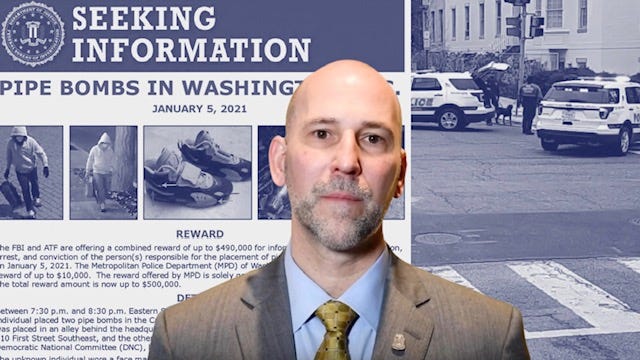


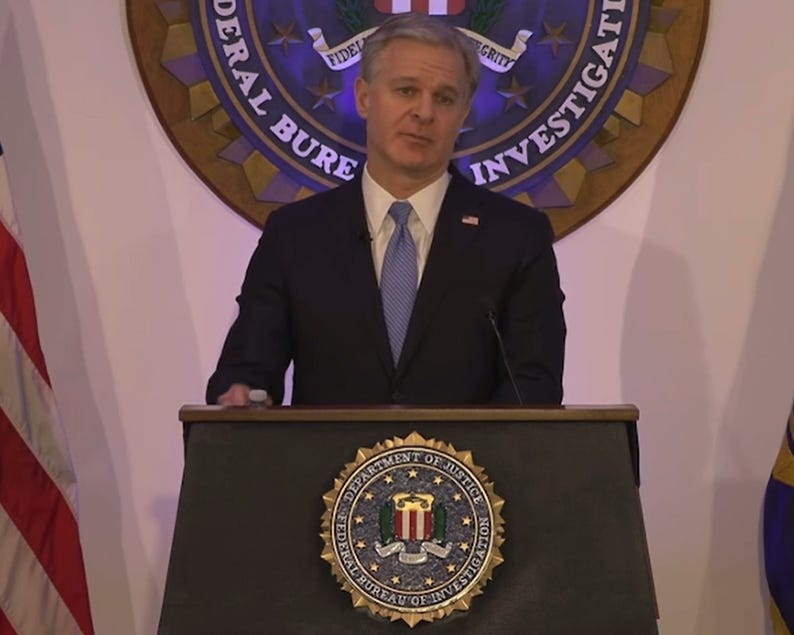
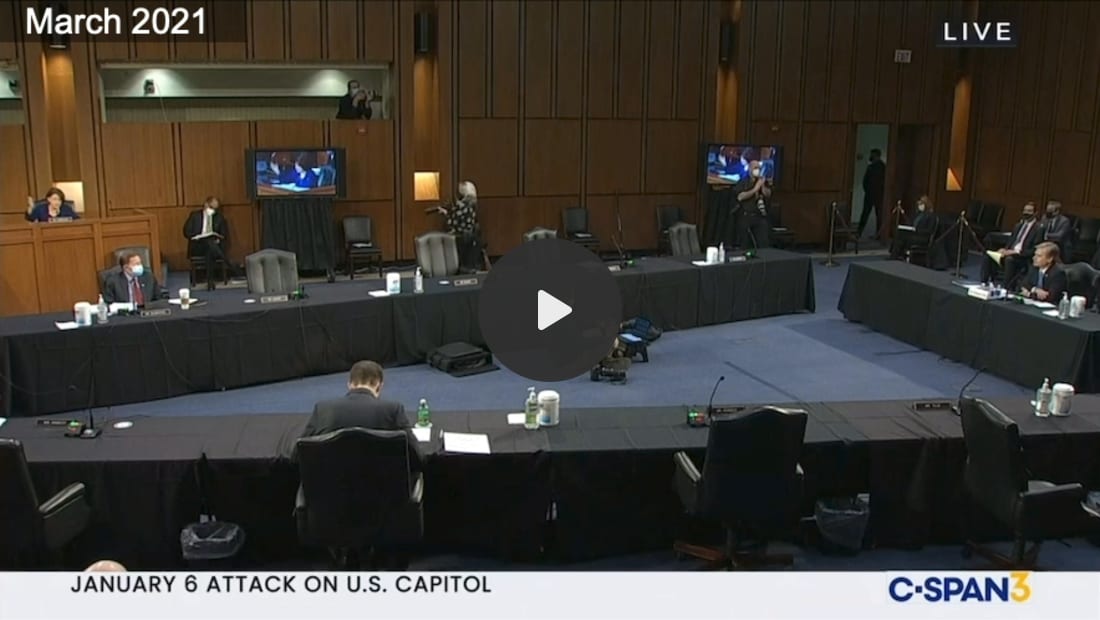


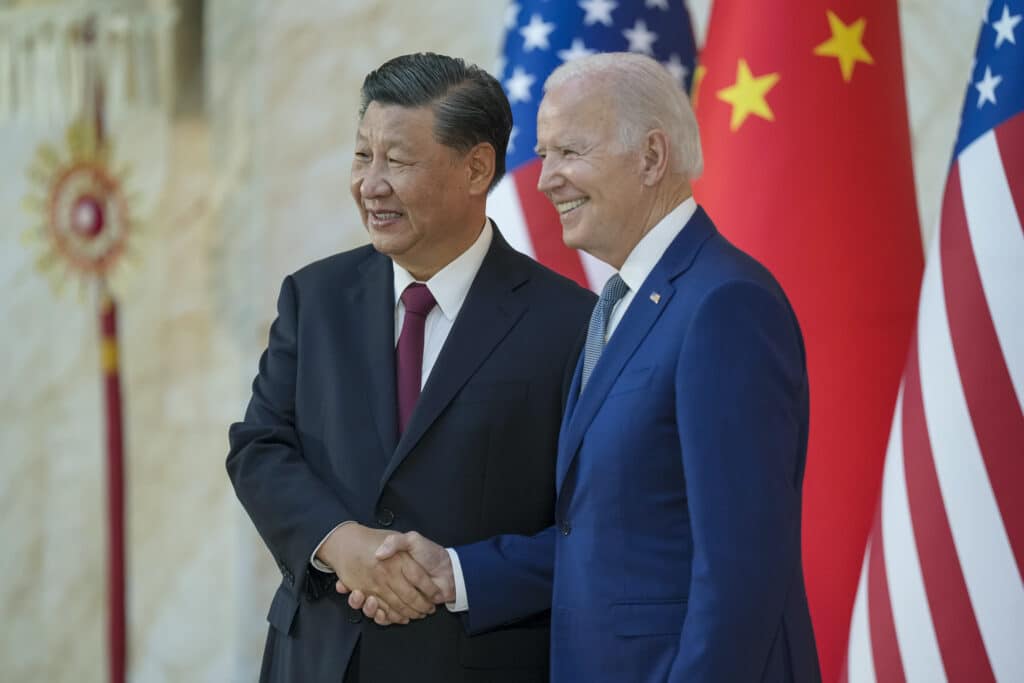






 fox files
Recent Comments