Back in June, there was encouraging news that the World Health Organization’s (WHO) pandemic agreement failed to pass. This agreement would have surrendered American sovereignty to unaccountable and unelected international bureaucrats operating at the behest of special interests. Thankfully, this agreement failed to pass.
But the WHO isn’t giving up. It is continuing its march for power.
The issue was brought up to members of Congress for a press conference on the Hill to raise awareness about the ongoing power grab attempt by the United Nations (UN) and the WHO.
The globalists at the UN and the WHO want power over America’s public health policy. If they are successful, their proposed pandemic agreement will irreparably harm American national sovereignty. Family Research Council Action (FRC Action) has been working on this matter and keeping you updated over the past year. Would you consider supporting our work by making a donation today?
This past weekend, the UN hosted a conference called “Summit of the Future” where certain international agreements, including the Pact for the Future, were discussed. The Pact would give the WHO power over the response to future pandemics, large-scale climate events, major events in space, and much more.
During the press conference, Rep. Eli Crane (R-Ariz.) told reporters there were “enough examples and enough reasons” listed in the Pact for the Future’s emergency platform “for them to get involved pretty much whenever and wherever they want to.”
He later said on Washington Watch, “They want authority. They want global governance. And they’ll do whatever they can to achieve that. This agreement that we’re trying to stop would give them authority, global authority, in multiple categories of catastrophic events that might happen around the world.”
Congressman Crane also pointed out that Americans will not be able to vote the WHO’s bureaucrats out of office, meaning they will not be held accountable to we the people. This would be a terrible infringement upon American sovereignty, which is why FRC Action has been sounding the alarm for quite some time.
Recently, the U.S. House passed the No WHO Pandemic Preparedness Treaty Without Senate Approval Act. This important bill would require the Senate to ratify the WHO’s pandemic agreement since it would function as a legally binding treaty. The Senate should also pass this measure to protect American sovereignty.
That’s one reason why the upcoming election is so important. Our nation needs leaders who will protect American sovereignty, not those who will hand it over to bureaucrats overseas. After all, our elected members of Congress are supposed to be the ones who represent the people of the United States.
Also discussed during the UN conference was the UN’s Global Digital Compact, which would require member states to control misinformation and disinformation. Under said Compact, even communications critical of the WHO could be characterized as “misinformation.” The UN’s Common Agenda document would provide “accountability criteria for discrimination and misleading content.”
We cannot allow this dangerous power grab to go unchallenged. I am convinced that the UN and the WHO think we are not paying attention to what they are trying to do. They would be mistaken.
Tens of thousands of you have already signed petitions to Congress urging them not to allow Washington to cede American sovereignty to the WHO.
The United States should defund the UN and the WHO, and any pandemic agreement or treaty should be submitted to the Senate for ratification.
While many ignore the WHO’s continual march for power, actions will continue sounding the alarms and work to stop it. Our members of Congress must act to protect American sovereignty from the WHO.
In the wake of the 2008 Financial Crisis, former chief economist of the IMF Simon Johnson warned that the same dysfunctional policies he saw in his basket case banana republics had taken hold in the United States.
Johnson warned that if America didn’t act fast, we would plunge into a “Quiet Coup” as the American financial system effectively captures the government, bailing itself out until we run out of money. Well, we didn’t act fast. In fact, we got worse.
And here we are.
Our Bankrupt Financial System
In recent videos I’ve talked about the trillion of distress in the financial system, the common thread being that you, the taxpayer, will be bailing them all out — we saw this in the 2023 bank bailouts, pre-paid in the dark.
Of course, given our $35 trillion in national debt we can’t afford it. But pay it we will, driving that 35 trillion to, according to the CBO, 50 trillion plus.
At some point, it gets too big to bail out. Meaning either hard default — they stop paying interest. Or the more likely soft default — they let inflation rip, melting away the national debt along with our life savings. And between here and there is a wholesale fleecing of the middle class and the working class who relies on them for a job.
The Ignored Warning
So, first, the ignored warning by Simon Johnson. I’m no fan of the IMF — their role is essentially feeding their client dictators fresh drugs at massive taxpayer expense. But one thing the IMF does know is dysfunctional governments.
In his warning, Johnson detailed the typical pattern when countries collapse — when they come in desperation to the IMF.
First, a small group of powerful elites takes over policy. This is typically financial elite, or large companies when the country has them.
Because these elites know they’ll be bailed out, they take excessive risks in good times. An iron law of finance is that risk pays reward. Meaning if you know you’re going to get bailed out, you’d be a moron not to take on too much risk.
If every hand at the poker game is all-in, inevitably you lose. You pass your losses to the taxpayer, and start over with fresh chips, courtesy of the suckers.
The Quiet Coup
Johnson lays out his numbers: from 1973 to 1985, America’s financial sector never earned more than 16% of domestic corporate product. But by the early 2000s, it was earning 41%.
It turned a chunk of these profits into lobbying, repealing Depression-era prudential regulations separating banking and investment banking. In other words, freeing banks to gamble with taxpayer-guaranteed funds.
Then it lobbied to raise leverage — meaning how much the financial sector could borrow. So it could make large gambles with a small amount of money — again, all taxpayer guaranteed. The end result was the 2008 crisis, where banks made trillions in risky loans to people with no income, no assets, and no credit.
The leverage meant they had bet the farm and then some — keeping all the profits. Then when it turned south, they sicced lobbyists on Washington to line up bailouts, using the real economy as a hostage to wring out yet more lobbyist favors.
The Washington-Wall Street Racket
In return, they gave politicians and their staff plum positions or even outright bribes. Ben Bernanke got $250,000 for a single speech at a financial conference.
Janet Yellen was paid *$7 million in speaking fees by Goldman Sachs and other Wall Street banks — hedge fund Citadel paid Yellen $292,500 for a single speech.
London-based Standard Chartered paid $270,000 for one speech — interesting for a foreign bank when we can only imagine what favors were done in return.
Johnson sums it up: the American financial system is “desperately ill,” kept alive only by an endless series of bailouts, like the ones that headed off bank failures last year.
He says the only solution is forced recognition of bank losses — which would bankrupt them — then selling them to new management that will not have access to bailouts.
What’s Next
Given their lobbying power, the odds of breaking up America’s megabanks are slim to none. Meaning unless Washington reins in the banks, we’re in store for more existential financial crises, more bailouts and national debt, more running out the clock to financial catastrophe.
We missed our chance in 2008, and in all likelihood, it will take an even bigger crisis before politicians turn on their lobbyists and the financial coup that has seized our republic.
In the aftermath of SCOTUS ruling that overturned DOJ’s most common felony against J6ers, the Department of Justice is using an antiquated law to keep punishing Trump supporters.
This is a guest post by David W. Fischer, a Maryland and D.C.-based criminal defense attorney and the senior partner at Fischer & Putzi, P.A. Most recently, Fischer defended January 6 defendant Thomas Caldwell, who was acquitted on seditious and other conspiracy charges.
If at first you don’t succeed, try, try again.
That’s what Attorney General Merrick Garland’s Department of Justice (DOJ) is doing in their over-zealous prosecution of January 6 defendants. In June, the Supreme Court in United States v. Fischer effectively nuked hundreds of “obstruction” of Congress charges against January 6 defendants, ruling that a post-Enron statute, 18 U.S.C. §1512, designed to punish document destruction, did not apply to a Capitol Hill protest “gone wild.”
Nonetheless, obsessed with targeting Trump supporters, the DOJ is now charging multiple defendants with a Civil War-era statute—18 U.S.C. § 372—which punishes (up to 6 years in prison) those who intimidate “officers of the United States” from their posts. The DOJ charges that J6ers conspired to chase Members of Congress from Capitol Hill in violation of Section 372. Once again, the DOJ is unfairly prosecuting J6ers under a statute that does not apply to their conduct.
Title 18 U.S.C. § 372 punishes conspiracies “to prevent, by force, intimidation, or threat, any person from accepting or holding any office, trust, or place of confidence under the United States, or from discharging any duties thereof, or to induce by like means any officer of the United States to leave the place, where his duties as an officer are required to be performed[.]” The DOJ’s position is that Members of Congress hold the “offices” and are the “officers of the United States” that are covered by Section 372 and, accordingly, that J6ers can be prosecuted for allegedly causing their evacuation from Capitol Hill. The DOJ is obviously wrong from both a historical and statutory construction standpoint.
Enacted During the Civil War
In April 1861, confederate soldiers and sympathizers began forcibly seizing federal property within the southern and border states, chasing Union soldiers (Fort Sumpter), postmasters, custom house managers, and other federal officials from their posts. Congress quickly responded by passing a series of laws that included what is now Section 372. The obvious purpose of Section 372 was to protect “officers of the United States,” a term of art used in the Constitution, which applies to those individuals who hold federal jobs in the government thanks to the “Appointments Clause,” Art. II, § II, cl. II. Members of Congress, however, are not constitutional “officers of the United States.”
Members of Congress are not ‘Officers of the United States’ Under the Constitution
That Members of Congress are not “officers of the United States” is widely accepted among constitutional scholars. As the Supreme Court observed in Bowsher v. Synar, which struck down portions of the 1980s Gramm-Rudman Act, “[N]o person who is an officer of the United States may serve as a Member of the Congress.” Additionally, Members of Congress do not hold an “office, trust, or place of confidence” as that term is used in Section 372.
In fact, this phrase is boilerplate language used in ubiquitous commissions given to presidential appointees, e.g., military officers, federal judges, etc., since the days of President George Washington. Presidential commissions of “trust and confidence” are issued to “officers” pursuant to the Commissions Clause of the Constitution, Art. II, § 3, cl. 4 (“[The President] shall commission all the officers of the United States.”). A Member of Congress does not receive a “commission” because he or she, unlike federal judges, executive branch appointees, and military officers, is not an “officer of the United States” and, hence, does not hold an “office, trust, or place confidence.”
The DOJ’s Counter-Argument is Baseless
In court filings, the DOJ has not disputed that, under the Constitution, Members of Congress are not “officers of the United States.” Instead, the DOJ argues that the 1861 Congress that enacted Section 372 used the term “officer of the United States” in a sense broader than the technical, constitutional definition. According to the DOJ, because Members of Congress “hold office,” they are covered by Section 372’s use of the term “officers of the United States.” This argument, however, is baseless.
In fact, binding Supreme Court precedent from the 19th century holds that, when used in federal criminal statutes, the terms “office,” “officer,” and “officer of the United States,” absent unambiguous language to the contrary, refer to individuals who received positions via the Appointments Clause of the Constitution.
In one of those cases decided in 1878, United States v. Germaine, a surgeon hired by the Commissioner of Pensions was indicted for extortion while serving as, in the words of the statute, an “officer of the United States.” Arguing for the indictment’s dismissal, the surgeon argued that because he was not appointed to his position pursuant to the Appointments Clause, he could not be convicted of violating a statute, which applied only to “officers of the United States.” The Supreme Court agreed, ruling that absent unambiguous language to the contrary, the term “officer of the United States,” when used in criminal statutes, is limited to individuals appointed pursuant to the Appointments Clause. In 1925, the Supreme Court in Steele v. United States summarized its numerous 19th century: “It is quite true that the words ‘officer of the United States,’ when employed in the statutes of the United States, is to be taken usually to have the limited constitutional meaning.”
Other Language in Section 372 Supports the J6ers
Section 372’s wording, moreover, proves that Members of Congress are not covered by the statute. This statute punishes conspiracies aimed at preventing individuals “from accepting or holding any office, trust, or place of confidence under the United States[.]” Members of Congress, obviously, do not “accept” their positions—instead, they assume or take office. A person “accepting” an “office, trust, or place of confidence” presupposes that someone offered that person position they accepted.
Members of Congress, by contrast, run for their offices and are elected by the voters. They do not “accept” government job “offers.” Accordingly, the phrase “office, trust, or place of confidence” in § 372—which lists stations that can be “accepted,” obviously does not include Members of Congress
Additionally, Congress’s use of the phrase “any person . . . holding any office . . . under the United States” in Section 372 further proves that Members of Congress are not covered by the statute’s language. This language, tellingly, appears to have been lifted from the Constitution’s “Ineligibility Clause,” pursuant to which Members of Congress are prohibited from simultaneously holding “offices”: “[N]o Person holding any Office under the United States, shall be a Member of either House during his Continuance in Office.” (Art. I, § 6, cl. 2). It is beyond belief that Congress intended to include itself in Section 372 by using verbatim language from the Constitution’s Ineligibility Clause, which actually bars Members of Congress from holding “offices.”
More Abuses of the Law
One of the unfortunate aspects of the lawfare that has been unleashed against Donald Trump and his supporters has been the misuse of federal criminal statutes. Section 372 was enacted with a very specific purpose: to protect commissioned officers in charge of various federal outposts throughout the United States, especially in southern states. Additionally, the Supreme Court has made clear that criminal statutes that use the terms “office” or “officer of the United States” do not apply to individuals other than commissioned, presidential appointees.
As Members of Congress were not covered in Section 372’s language, the DOJ’s use of this statute against J6ers is a total and complete miscarriage of justice just as everything else this bully agency is.
In a shocking incident that’s raising more questions than answers, Ryan Wesley Routh, 58, has been charged with two federal firearm offenses after an apparent assassination attempt on former President Donald Trump. The events unfolded on Sunday at Trump International Golf Course in West Palm Beach, Florida, leaving many wondering what really went down that day.
A Suspicious Setup?
According to the official reports, Routh was armed with an AK-47-style rifle and was positioned approximately 300 to 500 yards away from the former president when Secret Service agents spotted him. The suspect didn’t fire any shots and reportedly didn’t even have a clear line of sight to Trump. But why was he there with a rifle? And how did the Secret Service manage to spot him from that distance?
Law enforcement quickly issued an alert for Routh’s black Nissan, which was pulled over and stopped about 50 miles away. Curiously, Routh did not resist arrest and was detained without incident. It seems almost too neat, doesn’t it?
Who is Routh?
His social media accounts were completely scrubbed moments after the assassination attempt, which again leads to more questions. Posts on X show that he hated Donald Trump, although he previously voted for him. He also hates Israel! See some screen grabs below.
The Mysterious Gear Found at the Scene
Authorities recovered an AK-47-style rifle, a scope, two backpacks with ceramic tiles, and a GoPro camera in the bushes near the golf course. It’s a curious collection of items, to say the least. What was he planning to do with ceramic tiles? And why was there a GoPro? Was this intended to be recorded for some reason, or was it all just a bizarre coincidence?
These odd details make you wonder if there’s more to this story than meets the eye. Was Routh acting alone, or could there be something else at play here?
Was Routh Legally Allowed to Own a Firearm?
As details continue to emerge about Ryan Wesley Routh, the man charged in connection with the recent assassination attempt on former President Donald Trump, his extensive criminal record is coming to light. And it’s a record that’s as alarming as it is extensive, making us wonder how someone with this kind of background managed to slip through the cracks.
A History of Illegal Firearm Possession
Routh’s criminal record is riddled with charges that should have prevented him from legally owning a firearm. His history includes multiple counts of “carrying a concealed weapon” and “possession of a weapon of mass destruction,” which in his case was a fully automatic machine gun. These charges date back to 2002 and include both felony and misdemeanor convictions. So, how did someone with a rap sheet like this end up armed and dangerously close to a former president?
Repeated Run-Ins with the Law
From driving with a revoked license to resisting arrest, Routh’s criminal history reads like a catalog of bad decisions. Let’s break down some of the key offenses:
2002: Routh was charged multiple times for driving with a revoked license and carrying a concealed weapon, both of which are serious offenses. He was also involved in a hit-and-run and was charged with resisting an officer. These were not isolated incidents but rather part of a pattern of criminal behavior that escalated over time.
2003: He faced additional charges, including more counts of driving with a revoked license and other misdemeanors.
2010: Routh was convicted of possessing stolen goods, a felony offense that led to probation and a suspended sentence.
With a record like this, one would expect that Routh would be on the radar of law enforcement and subject to restrictions that would prevent him from obtaining firearms. Yet, somehow, he was still able to get his hands on an AK-47-style rifle. How?
Here’s a copy of his rap sheet.
The Legal Loopholes and System Failures
This is where the questions really start to pile up. Federal and state laws are supposed to prevent individuals with felony convictions or a history of illegal firearm possession from acquiring new weapons. But it seems like Routh managed to bypass these safeguards. Was this due to a failure in the background check system? Did he obtain the firearm through illegal means? Or is there another explanation that we’re not seeing yet?
Implications for Gun Control Debate
Routh’s case is likely to become a focal point in the ongoing debate over gun control and the effectiveness of existing laws. His ability to access a firearm despite a clear history of disqualifying offenses raises serious concerns about the enforcement of current regulations. If someone with a record like his can still get armed and pose a threat, what does that say about the system?
Trump’s Reaction: Calm Amidst the Chaos
Despite the apparent threat, Trump has been described as being in good spirits following the incident. He’s recounted the event to multiple friends, family members, and advisers, thanking the Secret Service for their quick response. Interestingly, he even joked that he wished he could have finished his round of golf. It’s a pretty light-hearted reaction to what could have been a catastrophic event. Is Trump downplaying the incident, or does he know something we don’t?
During an event on the social media platform X, Trump described hearing the shots fired by the Secret Service agents: “We heard shots being fired in the air, and I guess probably four or five… But what do I know about that?” The former president’s comments leave us wondering: was this just another day in the life of a highly-protected figure, or is there something more to his nonchalant attitude?
A Pattern of Attacks: Is There a Bigger Picture?
This incident marks the second assassination attempt on Trump in just a few months. Back in July, a shooter in Butler, Pennsylvania, killed one person and wounded two others. Trump’s reaction to this latest attempt? He called it a “much better result” because no one was killed or wounded. But is there a pattern emerging here?
Why are these attacks happening so close together, and why is the response so different each time? It’s almost as if someone—or some group—wants to send a message. But who? And why now?
More Questions Than Answers
As authorities continue to investigate, the official narrative leaves much to be desired. Why did Routh have a GoPro and ceramic tiles? Why didn’t he fire any shots if he was truly there to do harm? How did the Secret Service spot him so quickly and react with such precision?
There are so many unanswered questions surrounding this case, and each new detail only seems to add more layers of intrigue. While we may never get the full story, one thing is clear: the official explanation isn’t sitting well with a lot of people.
Treasury just had its worst August ever and things are getting worse
Janet ‘Inflation-Is-Transitory’ Yellen once again has egg on her face. After laughably low deficit projections for the current fiscal year, Treasury has now blown past those forecasts, and we still have a month to go before the end of the current fiscal year. Worse yet, the latest monthly Treasury statement set several record “firsts” — none of which were good.
While people already knew that annual interest on the debt was heading to $1 trillion, this was the first time it had ever been recorded. As of August, the 11th month of the fiscal year, the government has spent over $1.049 trillion just to service the $35.3 trillion debt. What makes it scarier is that we still have another month to go in the current fiscal year.
It didn’t even take all 12 months to prove wrong those folks saying interest on the debt wouldn’t break the $1-trillion threshold.
Even with interest rate cuts, there’s no significant evidence that the problem is slowing down. That’s because interest on the debt is a function of BOTH the average interest rate on securities AND the total debt outstanding. Well, the latter is exploding.
We’ll add about another $1 trillion to the federal debt before the end of the calendar year, and then likely continue adding about $1 trillion every 100 days or so from there on out.
This was also the worst deficit for the month of August ever—including the blowout spending years of 2020 and 2021 when Congress pushed through all kinds of bloated pork. In fact, at $380 billion, it’s larger than any other monthly deficit of fiscal years 2024 or 2023.
And this isn’t a revenue problem—it’s a spending problem. Despite concerns of a recession, tax revenue has actually held up, so the burgeoning deficit is clearly coming from the other side of the ledger.
In the first 11 months of the current fiscal year, the federal government took in almost as much revenue as in the entire prior fiscal year. If we look at the comparable period (first 11 months of both FY’s) then we see revenues have increased from $4.0 trillion to $4.4 trillion. Spending, however, has increased even faster.
This past August, federal outlays were $687 billion, compared to $194 billion in August 2023 — more than tripling in just one year. Outlays in the comparable period between both years have gone from $5.5 trillion (2023) to $6.3 trillion (2024).
Clearly, the ballooning deficit is a spending problem. And what a problem it is.
Specialists and skeptics were very critical of Treasury’s overly optimistic projections on the current fiscal year’s deficit and, sure enough, we were right. The deficit has already blown past the projection for the fiscal year and—as we’ve already said—there’s still another month to go.
The $1.9-trillion deficit will break the $2-trillion threshold with ease once September is in the books.
And there’s no reason to believe multi-trillion-dollar deficits are going away anytime soon because the runaway spending continues. In fact, mandatory spending and interest on the debt together will exceed government revenue for the foreseeable future. So, literally all discretionary spending will be deficit spending.
The monthly Treasury statement for August bears witness to this sad situation: 55 cents of every dollar the federal government spent last month was borrowed. Spending was more than twice all government receipts.
While the profligate spending out of Washington, DC has certainly exploded over the last four years, the interest on the debt is now also a major contributor to the deficit. The increase in the trend of discretionary spending is now less than the increase in the trend of interest on the debt.
In other words, depending on how you want to measure it, interest on the debt is now the largest contributor to the deficit.
For the fiscal year to date, interest on the debt is the third largest line item in the Treasury’s August statement, behind only the Social Security Administration and the Department of Health and Human Services, both of which have increased relative to their pre-2020 projections, but by much less than interest on the debt.
Federal finance is clearly in shambles, but where do we go from here? Are we actually already in the fiscal doom loop? Yes, and it’s complicated.
Calling out Kamala Harris for her desire to ban and confiscate what she calls ‘assault weapons’ make it seem like she is OK with banning ‘just assault weapons,’ while other firearms would still be acceptable.
The problem? This viewpoint is not based in truth.
This viewpoint stems from misconceptions about what an ‘assault weapon’ is, how these firearms are different than ‘good guns,’ and why they’re crucial for law-abiding citizens to own.
Let’s drive down into this because there’s a lot more to this issue than most people realize.
So… what is an ‘Assault Weapon’?
The military doesn’t use this term ‘assault weapon.’ You’ll never find these terms in any official military documentation or historical record.
It doesn’t exist in those places.
Gun owners don’t use this term for any gun.
Just like we don’t use the term ‘assault knife’ when a criminal attacks and kills dozens with a knife, or ‘assault vehicle’ when someone attacks people with their vehicle.
So where did the term come from?
The term ‘assault weapon’ originated in the United States during the 1980s to the1990s. It’s a political term used to describe certain types of semi-automatic firearms that resemble military weapons – but the civilian firearms are completely different. Civilians cannot own the fully automatic versions of these firearms.
The term ‘assault weapon’ was introduced only in political discourse, popularized by gun control advocates and the media to refer to semi-automatic firearms that look similar to their military counterparts.
The term gained traction with the passage of the 1994 Federal Assault Weapons Ban, which prohibited the manufacture and sale of certain semi-automatic firearms and magazines that could hold more than 10 rounds. The law defined ‘assault weapons’ based largely on cosmetic features such as pistol grips, folding stocks, and flash suppressors, rather than how the firearm functioned.
The term ‘assault weapon’ has been used loosely by politicians and the media to describe certain semi-automatic firearms, especially ones that look intimidating. The problem is that this definition is just all over the place.
Is it how the gun looks?
How fast it shoots?
How many rounds it holds?
Here’s the truth: most of the firearms they call ‘assault weapons’ are simply semi-automatic rifles like the AR-15 – which is the most popular sporting rifle in America.
These rifles fire one bullet per trigger pull—just like your granddad’s hunting rifle.
The difference?
Politicians and the media freak out because these rifles look like military rifles.
But guess what?
The AR-15 has never been issued to any soldier in any war in the history of the planet. It’s not a weapon of war; it’s a tool for self-defense.
The term ‘assault weapon’ is a pure media invention just as was ‘the wild West’ in order to sell newspapers at the expense of dumbing down the public. As an aside, there never was a wild West.
When does a gun become an ‘Assault Weapon’?
Is it about how fast you can shoot?
Many think ‘assault weapons’ fire faster, but that’s not true. Both the AR-15 and Glocks (the most popular handgun on the planet) are semi-automatic, firing one bullet per trigger pull.
An AR-15 can be shot as fast as a Glock.
So, it can’t be about speed.
It it about how many rounds the gun holds?
Another common argument is that AR-15’s are dangerous because they have high-capacity magazines, typically holding 30 rounds.
But here’s the thing: one can get a 30-round magazine for a Glock, too. In fact, consumers can get a Glock magazine that holds 100 rounds!
So, if the number of rounds is the problem, then why single out the AR-15?
(Now… if you’re of the thinking, “yes! It’s how many rounds it holds! No one needs 30 rounds!”) Just hang tight… not so damned fast there Senator!
Is it just the way it looks?
When one is stripped it down, the big issue people seem to have with the AR-15 is that it looks like a military weapon.
But looks don’t kill—it’s the function that matters.
And functionally, the AR-15 operates just like any other semi-automatic firearm.
The idea that an AR-15 is somehow ‘worse’ just because it looks scarier is pure media hype and emotion.
Is it about how many people it can injure?
One of the most misleading arguments is that AR-15’s can injure or kill more people than other weapons. But here’s the truth: Criminals can use ANY weapon for deadly attacks.
Let’s look at some examples:
The Nice Truck Attack (2016): A terrorist used a truck to mow down pedestrians in Nice, France, killing 86 people. No guns involved. We didn’t rename trucks into “assault trucks.”
Kunming Train Station Attack (2014): A group of attackers armed with knives killed 31 people and injured more than 140 at a train station in China. A knife, in the hands of a criminal, can be just as deadly as any firearm. We didn’t rename these knives into “assault knives.”
London Bridge Attack (2017): Attackers used a van to run people over and then went on a stabbing spree, killing 8 people and injuring dozens more. Again, no firearms needed to carry out mass carnage. We didn’t start saying “assault van.”
It’s not the tool, it’s the intent.
Whether it’s a gun, a knife, or even a vehicle, people with evil intentions will find ways to cause harm.
The idea that banning AR-15’s would somehow stop mass violence is simply false.
Criminals will always find ways to inflict harm—so why take away the most effective tool law-abiding citizens have to defend themselves?
OK, So They Get Banned… Then What?
Let’s say the politicians get their way and AR-15s are banned. What would that actually look like?
Would criminals—the very people committing most of the violent crimes—suddenly give up their AR-15’s? Or would they keep them?
Let’s be real here: Criminals don’t follow laws.
They aren’t going to march into a police station and hand over their rifles just because there’s a new ban in place.
To put it into perspective, let’s take a look at the war on drugs. Drugs have been illegal since the Controlled Substances Act was passed in 1970.
We’ve had entire government agencies, drug-sniffing dogs, undercover agents, and countless resources devoted to removing illegal drugs from the streets.
Yet, drugs are still everywhere. If someone wants drugs, they’ll find a way to get them, no matter how many laws we pass or how many task forces we deploy.
Now imagine applying that same logic to AR-15s. Would we need to train dogs to sniff out AR-15s? Create a new government agency to find and confiscate them? The idea is just as unrealistic as it sounds.
The bottom line is this: banning AR-15s won’t stop criminals from getting their hands on one. If a criminal wants an AR-15, they’ll get one—just like they do with illegal drugs.
The only people impacted by these bans are law-abiding citizens.
Stripping away my right to own an AR-15 leaves me defenseless against the criminals who will still have theirs.
“No One Needs 30 Round Magazines!”
Now let’s talk about why law-abiding citizens need AR-15s.
First, we’ve got to consider what’s happening at the southern border.
It’s no secret that criminals and gang members are crossing into our country at alarming rates.
The U.S. Customs and Border Protection says 10 million illegal immigrants have crossed the border illegally since Biden has been in office. (Trump says the number is closer to 21 million, but either way – it’s more than a LOT.)
Among them are thousands of violent criminals, gang members, and terrorists’ intent on doing us harm.
With violent crime on the rise (ironically, particularly in cities and states with harsher gun laws) law-abiding citizens are finding themselves more vulnerable than ever.
According to the FBI, there were nearly 1.3 million violent crimes reported across the U.S. in 2022 alone, including homicides, aggravated assaults, and robberies.
We’re talking about real threats that people face in their neighborhoods, not in some far-off battlefield.
Given here are a couple of recent examples where an AR-15 would have been crucial for self-defense:
Israel on October 7th, 2023 – During the surprise attack on Israel, civilians were caught completely off guard by armed militants. Imagine if those citizens had been equipped with AR-15s—they could have defended their homes and families with the same firepower the attackers used. In situations like this, an AR-15 isn’t a luxury—it’s a necessity for survival. Think this can’t happen here? Just watch. It’s coming.
Aurora, Colorado – Just recently, residents of an apartment complex found themselves terrorized by Venezuelan gangs who seized control of entire buildings. Local law enforcement was overwhelmed, and these citizens were left to fend for themselves. Those criminals had AR15s – why shouldn’t the citizens have had them?
Seattle’s CHAZ/CHOP Zone (2020) – During the summer of 2020, parts of Seattle were effectively seized by protesters who set up the “Capitol Hill Autonomous Zone” (CHAZ). For weeks, law enforcement was absent, and violence surged inside the zone. Residents and business owners were left defenseless against theft, vandalism, and violence. Should we not allow residents and business owners to have access to AR15s for self defense?
Minneapolis Riots (2020) – Following the death of George Floyd, Minneapolis was gripped by violent riots that destroyed entire neighborhoods. Buildings were burned to the ground, looters roamed freely, and law enforcement was stretched thin. Many business owners were left helpless as their properties were ransacked and destroyed. Should we have prevented business owners access to life-saving tools like AR15s?
The Ferguson Riots (2014) – After the shooting of Michael Brown, Ferguson, Missouri, experienced weeks of unrest, including looting, arson, and violent confrontations. Property owners had little to no means of protecting their businesses and homes from the destruction. With an AR-15, they could have defended themselves from the mobs.
Hurricane Harvey Looting (2017) – In the wake of Hurricane Harvey, widespread looting occurred in parts of Houston, Texas. Law enforcement was focused on rescuing people and dealing with the disaster, leaving many residents vulnerable to criminals taking advantage of the situation. An AR-15 would have been an invaluable tool for those who had to face looters in the aftermath of the hurricane.
The Sutherland Springs Church Shooting (2017) – A hero armed with an AR-15 stopped the mass shooter responsible for the Sutherland Springs church massacre. The shooter had killed 26 people, and without the intervention of Stephen Willeford and his AR-15, the tragedy could have been far worse. This real-life example shows how these rifles can be life-saving tools in the hands of responsible citizens.
Conclusion
The media and politicians want to scare you with buzzwords like ‘assault weapon’ but the truth is, the AR-15 is nothing more than a tool for self-defense. With rising crime rates, unchecked illegal immigration, and real threats to our safety, law-abiding citizens need the means to protect themselves and their families.
So the next time someone tells you that no one ‘needs’ an AR-15, remind them of the criminals crossing our borders, the violent crime on our streets, and the moments in history when people did need those very tools to protect their lives.
Stay safe, stay vigilant, and protect your rights. We’re all in this together.
The postmodern university is fascinated with magic, and this is a most curious coupling—one with ominous social overtones.
Until the mid-twentieth century, serious academics regarded any mention of magic as the ravings of the stupid or insane. They followed the scientific method of empiricism, emphasizing verifiable evidence in acquiring knowledge and forming ideas.
What is Magic, Anyway?
The “Occult Art, Occultism” entry in the Catholic Encyclopedia defines magic as “an interference with the usual course of physical nature.” The practitioner accomplishes it by “recitation of formularies, gestures, mixing of incongruous elements, and other mysterious actions.” The effort is an “attempt to work miracles not by the power of God…but by the use of hidden forces beyond man’s control. Its advocates…seek the desired result by evoking powers ordinarily reserved to the Deity.” Magic “is a corruption of religion.”
The Encyclopedia makes another highly pertinent point. Magic, it says, “appears as an accompaniment of decadent rather than of rising civilization.”
Science Versus Magic
The new-found interest in magic seems strange in a world that has long been dominated by materialism and rigid use of the scientific method.
Many academics became so obsessed with the scientific method that they saw it as the only way to discern the truth. This sense germinated a heresy called “scientism,” defined by Merriam-Webster as “an exaggerated trust in the efficacy of the methods of natural science applied to all areas of investigation (as in philosophy, the social sciences, and the humanities).” Among scientism’s harmful effects was the ridicule academics heaped upon Christianity. To many, the idea of anything supernatural—good or evil—was simply too absurd to be seriously considered.
Throughout the twentieth century, this materialistic model prevailed. It ignored the fact that each individual is comprised of body and soul. The spiritual side is the superior one from which springs spiritual needs and desires.
This superior side of human nature makes every person unique and establishes their dignity. This side is what gives rise to political, social, cultural, and religious activities and sciences that tower above mere material economic sustenance. It deals more directly with life’s more important things and, ultimately, one’s eternal salvation.
The modern fixation with material progress soon produced immense longings for the long-neglected spiritual fulfillment. However, instead of returning to Christianity, the sixties generation filled that spiritual void with drugs, music and sexual fantasies that rebelled against progress and the staid establishment.
Others would embrace Eastern pseudo-religions or find fulfillment in the occult, witchcraft or magic.
These trends have become so mainstream that they are now found in the halls of academia, which once saw themselves as the transmitters of empiricism and scientism.
Course Descriptions
The new fascination with the occult is best seen in the official descriptions from college catalogs. From the Religion Department at Ivy-League Columbia comes “Magic and Modernity,” a three-credit class.
“This course introduces students to the cultural history of magic: as an idea, as a practice, and as a tool with which [to] wield power and induce wonder. Magic, as we will explore, is a modern concept, the contours of which have been shaped by its relations with religion and science, always against larger backdrops—of the Enlightenment, Romanticism, (post) colonialism, and (post) secularism.”
The Ivy League school in New Haven, Connecticut, offers the mysteriously named HIST 214J, “History of the Night.” Yale’s catalog explains.
“This seminar is dedicated to the reality and the perception of the night across time and in different cultures…. Nightfall provides multiple opportunities for dissent and rebellion and becomes an ideal space for marginal and subordinate people. Historical analysis, literary texts, medical and scientific writings, and primary sources…examine how the night became the abode of the ghost, the devil, the witch, and the dead, and how the night became criminalized, commercialized and even politicized.”
“Do you believe in magic? Historically, a lot of people have done…. We have records of attempts to divine who will win a battle, recipes for spells to make your boss like you more, and witchcraft accusations against the most disempowered and disliked people in a community. This course then takes us through the varied sources on magic to ask the question—why were people interested in magic?”
Freshmen at Tulane may want to explore a course inspired, in part, by the University’s home city of New Orleans, “Ancient Magic, Modern Witchcraft.”
“For the inhabitants of the ancient world, magic and witchcraft were part of everyday life. In modern-era New Orleans, magical practitioners have also found a home and a place in the local culture. This course will explore magical literature, rituals, and beliefs in two ways: first as they existed in ancient Near Eastern civilizations (such as Mesopotamia and biblical Israel), and how these beliefs continue into modern America (especially locally in NOLA).”
Do-It-Yourself Spells
Perhaps, though, none of these classes can match the final exam in Duke University’s writing course 101.11, “Radical Magic.”
“For your final project, you will create your own personal grimoire, or spell-book. Yes, you read that right—a spell book! This non-traditional assignment challenges the distinctions we often put between writing, crafting, art, and magic, and it will provide a space to try new things….”
Engineering majors who take Radical Magic to satisfy the writing requirement may be comforted by the catalog’s inclusion of a pseudo-mathematical equation, “RM = (W+L+H+R+A).” It translates to “Radical Magic = Writing + Literature + History + Religion + Art.”
A Serious Side to the Academic Foolishness
It is tempting to make fun of the attempts at erudite sophistication with which these colleges cloak these imitation academic offerings. However, their adolescent attempts to shock and amaze the students mask a deadly seriousness. As mentioned before, magic is a sign of a society’s degeneration. Even more than that, these naïve students and their professors are playing with the very substance of evil itself, which has massive and unforeseeable consequences. That is especially true for those who play with a Devil in whom they do not believe.
In 1949, young Robbie Mannheim experienced Satanic possession through “playing” on a Ouija board with his Aunt Harriet. Perhaps these young people would be amused at the prospect, but any exorcist can tell them that the possibility is deadly (and eternally) serious. God will not be mocked, and the devil plays for keeps.
Economist Friedrich von Hayek once pointed out that pricing’s charm stems from its unplanned emergence without deliberate human creation. Prices make complex processes easier by offering a standard unit of exchange. They smooth out interactions in the face of hurdles like rising transportation costs, material shortages and consumer preferences.
However, this delicate price mechanism can be destroyed if the government intervenes by artificially setting prices. Hayek’s mentor, Ludwig von Mises, warned that government-imposed prices, detached from production realities, lead to scarcity, inflation and a thriving black market.
Price control is now being proposed as a solution to the ever-rising cost of living and food. The alleged culprit for the higher prices is “price gouging.” Greedy corporations are raising prices to make record profits at the expense of the poor and middle classes.
The food industry is one of many fighting back against Kamala Harris’s price gouging plan. Companies deny claims of corporate greed and show why these claims are false.
When asked about the price gouging plan, the National Grocers Association said, “It’s an answer to a problem that doesn’t exist.” It stressed that its members face the same rising costs as shoppers. Most companies don’t apologize for keeping their profits stable; that’s why they’re in business.
Firms struggle to cope with the burden of government-mandated pricing because it does not respect the nature of a free market economy. Such policy comes from the hubris of politicians who believe they know better than all the stakeholders in business. Target CEO Brian Cornell states, “Companies can’t afford to engage in price gouging in a competitive sector like retail.”
The former Secretary of Commerce and Kellogg CEO Carlos Gutierrez stated, “I thought we would’ve learned by now that price controls do not work. They actually have the opposite effect. They make inflation worse, they lead to shortages, they create a black market.”
Food producers especially face challenges with rapid payroll increases and precarious supply chains. Industry leaders indicate that a long-term rise in operating costs has led to higher prices. They point out that the profit margins of food producers and sellers are smaller than other industries. They strongly deny the allegations of gouging.
Socialists are quick to paint these companies as greedy exploiters of the market during times of economic unrest. Price gouging is a typical mantra leftists use to blame for the inflation they cause.
Due to the pandemic, prices jumped in 2021 for many consumer goods. Producers dealt with supply-chain issues and the rising costs of raw materials, fuel and transportation. At the same time, a poorly conceived federal stimulus program fueled spending, which in turn caused more inflation.
One way food producers lessened the pain of higher prices was by slightly decreasing the size of products while maintaining the same cost to consumers. President Biden used Instagram to call out companies for this, calling it “shrinkflation.” While not illegal, many see it as a deceptive way of raising consumers’ prices without resorting to price increases.
Leftist politicians are proposing a federal ban on price gouging. For example, it calls for prohibiting large companies from making excessive profits on food. The campaign pledges to arm the Federal Trade Commission and state attorneys general with new tools for investigating and punishing violators while targeting deals that allow large food companies to raise prices and stifle competition.
“Price gouging” is what Prof. Plinio Corrêa de Oliveira called a “talismanic word.” The Catholic thinker and man of action noted how the left uses vaguely defined, emotionally charged words with several meanings to advance its agenda. Thus, price gouging can mean anything the left wants it to mean to push its agenda. It uses the word to denote the suffering of consumers and unproven greed on the part of corporations.
The liberals have not clarified what constituted excessive profits or other important charges, souring industry executives about the feasibility of such proposals.
Far from exploiting consumers, large food manufacturers are mounting consumer-friendly efforts to combat higher grocery bills. Retail giants like Walmart are boosting their investment in cheaper store-brand merchandise. Many food manufacturers are using gradual price increases, larger discounts and launching new product lines to lessen the shock.
Food manufacturers point out that even shrinkflation can help consumers by increasing affordability since changing product size to meet consumers’ budget dimensions actually contributes to continuous purchases.
Corporate executives and economists, however, absolutely reject economy-wide price controls as a cure for inflation. Economist David Autor replied bluntly, “Price controls can, of course, control prices—but they’re a terrible idea, with potentially dire consequences!” One only needs to look at any country that has implemented them.
Politicians claim that price controls will help the poor. Rather than lift the poor, they generally destroy the economy and make everyone poorer.
Sound economists propose a different approach, not demagoguery. One way to fight inflation would be to promote policies that boost the supply of inexpensive energy and essential goods and services that can drive down consumer market prices. This approach benefits everyone—companies, consumers and the economy overall.
However, the left does not like such a solution since it does not fit into its ideological mold of class struggle. Price control is a way to set up the rich-poor narrative that brings nations to socialism and state control of industry. It leads to the deplorable conditions of Chavismo’s socialism in Venezuela. It turned Latin America’s most prosperous economy into a basket case of poverty, chaos and crime.
Price control did not work in any socialist or communist country. Why would it work in America now. *Rhetorical
The outrage from Hillary Clinton supporters came immediate: Donald Trump might have won the Electoral College, but he appears to have lost the popular vote. This was said to be a violation of democracy, one that defied the principle of “one man, one vote.” A Yale professor slandered the Founders by telling the website Vox that the Electoral College was created to protect slavery.
We can think about this better if we understand two things: What does the Electoral College do, and why does it do it?
On Dec. 19, 2016, the electors of every state and the District of Columbia met. Each state has the same number of electors as it does U.S. senators and representatives combined. The state legislature decides how the electors are selected.
The chosen electors are bound by custom everywhere and by law in many states to support the presidential candidate who won their state’s popular vote. If they fail to vote this way, they will be “faithless electors.” This has happened but rarely in the history of the presidency.
Everything about this process is as the Constitution directs, with the exception of the last bit. Nothing in the founding document requires electors to support the candidate who wins the popular vote in their state. In America’s early years, many states did not even conduct popular presidential elections.
Instead, electors were picked by state legislatures or by governors. The Framers had the idea that the electors, in choosing a president, would vote their consciences after deep discussion—and sometimes this happened. Often, electors were selected because they had declared support for a particular candidate.
In a deeply divided nation, a candidate shouldn’t be able to win by appealing only to urban sophisticates.
As the practice of holding a popular vote spread, it was natural that the electors would follow those results. Still, the Electoral College continues to recognize that Americans vote by state—in the same way that they elect the Senate and the House, and the same way that they voted those many years ago to ratify the Constitution.
Now however, there is a national movement to require that electors support the presidential candidate who wins the national popular vote. The proposal, called the National Popular Vote Interstate Compact, has been passed by 10 states and the District of Columbia. Implementing this practice would be a disaster.
Consider for a minute why the Electoral College was invented. Although it is odd, it is also a plain expression of the Constitution, part of the structure that has made America’s founding document the best and longest lived and served in history.
The Constitution reflects the paradox of human nature: First, that we alone among earthly things may exercise our own volition; second, that sometimes we exercise such power badly. This is why we require laws to protect our rights, as well as restraints upon those who make and enforce those laws.
The Constitution is paradoxical most of all about power, which it grants and withholds, bestows and limits, aggregates and divides, liberates and restrains. Elections are staggered, so as to distribute them across time. The founding document also divides power across space; the people grant a share of their natural authority to the federal government, but another share to the states where they live.
This innovation is most directly responsible for the greatness of the United States. Think what the Founders achieved: They invented a way of governing, and they extended it without benefit of kings or colonies across a vast continent, bigger than they could imagine, until they got to the other side 30 years later. The magnificent Northwest Ordinance granted free government to the territories, then representative and independent state government thereafter. Ruled from Washington, the nation could never have settled this land in freedom nor made it so strong.
The practical political equality that the American people have achieved depends entirely upon their ability to spread political authority across a vast area. In American political life, it matters how many people are in favor of a given thing. It also matters where they live.
Mr. Trump joins John Quincy Adams, Rutherford B. Hayes, Benjamin Harrison and George W. Bush as the only presidents who won without the popular vote. After 2000, this is the second time in recent years—a product of the deep and wide division in America between the urban and the rural, the sophisticated and the rustic, the cosmopolitan and the local.
It is a shame that the winner in 2016, Mr. Trump, lost the popular vote by a whisker. But it would be as much or more a shame if Mrs. Clinton had prevailed despite massively losing the geographic vote, the vote across space; the vote that reflects the different ways that Americans live.
We forget that it is a historical rarity to have an executive strong enough to do the job but still responsible to the people he or she governs. The laws in the U.S. have worked that miracle for longer than anywhere else. Remember that the Electoral College helps establish the ground upon which the American people must talk with each other, while ensuring that they are not ruled as colonies from a bunch of blue capitals, nor from a bunch of red ones either.
As far Conservative Right that I am, and I lean as far Right as is possible, it’s absolutely necessary that my judgement of such is as non-biased, unclouded and non-political as possible and so I must in turn agree with the principle and premise of the Electoral College.
The following is adapted from a speech delivered on April 30, 2019, at Hillsdale College’s Allan P. Kirby, Jr. Center for Constitutional Studies and Citizenship in Washington, D.C.
Once upon a time, the Electoral College was not controversial. During the debates over ratifying the Constitution, Anti-Federalist opponents of ratification barely mentioned it. But by the mid-twentieth century, opponents of the Electoral College nearly convinced Congress to propose an amendment to scrap it. And today, more than a dozen states have joined in an attempt to hijack the Electoral College as a way to force a national popular vote for president.
What changed along the way? And does it matter? After all, the critics of the Electoral College simply want to elect the president the way we elect most other officials. Every state governor is chosen by a statewide popular vote. Why not a national popular vote for president?
Delegates to the Constitutional Convention in 1787 asked themselves the same question, but then rejected a national popular vote along with several other possible modes of presidential election. The Virginia Plan—the first draft of what would become the new Constitution—called for “a National Executive . . . to be chosen by the National Legislature.” When the Constitutional Convention took up the issue for the first time, near the end of its first week of debate, Roger Sherman from Connecticut supported this parliamentary system of election, arguing that the national executive should be “absolutely dependent” on the legislature. Pennsylvania’s James Wilson, on the other hand, called for a popular election. Virginia’s George Mason thought a popular election “impracticable,” but hoped Wilson would “have time to digest it into his own form.” Another delegate suggested election by the Senate alone, and then the Convention adjourned for the day.
When they reconvened the next morning, Wilson had taken Mason’s advice. He presented a plan to create districts and hold popular elections to choose electors. Those electors would then vote for the executive—in other words, an electoral college. But with many details left out, and uncertainty remaining about the nature of the executive office, Wilson’s proposal was voted down. A week later, Elbridge Gerry of Massachusetts proposed election by state governors. This too was voted down, and a consensus began to build. Delegates did not support the Virginia Plan’s parliamentary model because they understood that an executive selected by Congress would become subservient to Congress. A similar result, they came to see, could be expected from assigning the selection to any body of politicians.
There were other oddball proposals that sought to salvage congressional selection—for instance, to have congressmen draw lots to form a group that would then choose the executive in secret. But by July 25, it was clear to James Madison that the choice was down to two forms of popular election: “The option before us,” he said, “[is] between an appointment by Electors chosen by the people—and an immediate appointment by the people.” Madison said he preferred popular election, but he recognized two legitimate concerns. First, people would tend toward supporting candidates from their own states, giving an advantage to larger states. Second, a few areas with higher concentrations of voters might come to dominate. Madison spoke positively of the idea of an electoral college, finding that “there would be very little opportunity for cabal, or corruption” in such a system.
By August 31, the Constitution was nearly finished—except for the process of electing the president. The question was put to a committee comprised of one delegate from each of the eleven states present at the Convention. That committee, which included Madison, created the Electoral College as we know it today. They presented the plan on September 4, and it was adopted with minor changes. It is found in Article II, Section 1:
Each State shall appoint, in such Manner as the Legislature thereof may direct, a Number of Electors, equal to the whole Number of Senators and Representatives to which the State may be entitled in the Congress.
Federal officials were prohibited from being electors. Electors were required to cast two ballots, and were prohibited from casting both ballots for candidates from their own state. A deadlock for president would be decided by the House of Representatives, with one vote per state. Following that, in case of a deadlock for vice president, the Senate would decide. Also under the original system, the runner up became vice president.
This last provision caused misery for President John Adams in 1796, when his nemesis, Thomas Jefferson, became his vice president. Four years later it nearly robbed Jefferson of the presidency when his unscrupulous running mate, Aaron Burr, tried to parlay an accidental deadlock into his own election by the House. The Twelfth Amendment, ratified in 1804, fixed all this by requiring electors to cast separate votes for president and vice president.
And there things stand, constitutionally at least. State legislatures have used their power to direct the manner of choosing electors in various ways: appointing them directly, holding elections by district, or holding statewide elections. Today, 48 states choose their presidential electors in a statewide, winner-take-all vote. Maine and Nebraska elect one elector based on each congressional district’s vote and the remaining two based on the statewide vote.
It is easy for Americans to forget that when we vote for president, we are really voting for electors who have pledged to support the candidate we favor. Civics education is not what it used to be. Also, perhaps, the Electoral College is a victim of its own success. Most of the time, it shapes American politics in ways that are beneficial but hard to see. Its effects become news only when a candidate and his or her political party lose a hard-fought and narrowly decided election.
So what are the beneficial effects of choosing our presidents through the Electoral College?
Under the Electoral College system, presidential elections are decentralized, taking place in the states. Although some see this as a flaw—U.S. Senator Elizabeth Warren opposes the Electoral College expressly because she wants to increase federal power over elections—this decentralization has proven to be of great value.
For one thing, state boundaries serve a function analogous to that of watertight compartments on an ocean liner. Disputes over mistakes or fraud are contained within individual states. Illinois can recount its votes, for instance, without triggering a nationwide recount. This was an important factor in America’s messiest presidential election—which was not in 2000, but in 1876.
That year marked the first time a presidential candidate won the electoral vote while losing the popular vote. It was a time of organized suppression of black voters in the South, and there were fierce disputes over vote totals in Florida, Louisiana, and South Carolina. Each of those states sent Congress two sets of electoral vote totals, one favoring Republican Rutherford Hayes and the other Democrat Samuel Tilden. Just two days before Inauguration Day, Congress finished counting the votes—which included determining which votes to count—and declared Hayes the winner. Democrats proclaimed this “the fraud of the century,” and there is no way to be certain today—nor was there probably a way to be certain at the time—which candidate actually won. At the very least, the Electoral College contained these disputes within individual states so that Congress could endeavor to sort it out. And it is arguable that the Electoral College prevented a fraudulent result.
Four years later, the 1880 presidential election demonstrated another benefit of the Electoral College system: it can act to amplify the results of a presidential election. The popular vote margin that year was less than 10,000 votes—about one-tenth of one percent—yet Republican James Garfield won a resounding electoral victory, with 214 electoral votes to Democrat Winfield Hancock’s 155. There was no question who won, let alone any need for a recount. More recently, in 1992, the Electoral College boosted the legitimacy of Democrat Bill Clinton, who won with only 43 percent of the popular vote but received over 68 percent of the electoral vote.
But there is no doubt that the greatest benefit of the Electoral College is the powerful incentive it creates against regionalism. Here, the presidential elections of 1888 and 1892 are most instructive. In 1888, incumbent Democratic President Grover Cleveland lost reelection despite receiving a popular vote plurality. He won this plurality because he won by very large margins in the overwhelmingly Democratic South. He won Texas alone by 146,461 votes, for instance, whereas his national popular vote margin was only 94,530. Altogether he won in six southern states with margins greater than 30 percent, while only tiny Vermont delivered a victory percentage of that size for Republican Benjamin Harrison.
In other words, the Electoral College ensures that winning supermajorities in one region of the country is not sufficient to win the White House. After the Civil War, and especially after the end of Reconstruction, that meant that the Democratic Party had to appeal to interests outside the South to earn a majority in the Electoral College. And indeed, when Grover Cleveland ran again for president four years later in 1892, although he won by a smaller percentage of the popular vote, he won a resounding Electoral College majority by picking up New York, Illinois, Indiana, Wisconsin, and California in addition to winning the South.
Whether we see it or not today, the Electoral College continues to push parties and presidential candidates to build broad coalitions. Critics say that swing states get too much attention, leaving voters in so-called safe states feeling left out. But the legitimacy of a political party rests on all of those safe states—on places that the party has already won over, allowing it to reach farther out. In 2000, for instance, George W. Bush needed every state that he won—not just Florida—to become president. Of course, the Electoral College does put a premium on the states in which the parties are most evenly divided. But would it really be better if the path to the presidency primarily meant driving up the vote total in the deepest red or deepest blue states?
Also, swing states are the states most likely to have divided government. And if divided government is good for anything, it is accountability. So with the Electoral College system, when we do wind up with a razor-thin margin in an election, it is likely to happen in a state where both parties hold some power, rather than in a state controlled by one party.
Despite these benefits of the current system, opponents of the Electoral College maintain that it is unseemly for a candidate to win without receiving the most popular votes. As Hillary Clinton put it in 2000: “In a democracy, we should respect the will of the people, and to me, that means it’s time to do away with the Electoral College.” Yet similar systems prevail around the world. In parliamentary systems, including Canada, Israel, and the United Kingdom, prime ministers are elected by the legislature. This happens in Germany and India as well, which also have presidents who are elected by something similar to an electoral college. In none of these democratic systems is the national popular vote decisive.
More to the point, in our own political tradition, what matters most about every legislative body, from our state legislatures to the House of Representatives and the Senate, is which party holds the majority. That party elects the leadership and sets the agenda. In none of these representative chambers does the aggregate popular vote determine who is in charge. What matters is winning districts or states.
Nevertheless, there is a clamor of voices calling for an end to the Electoral College. Former Attorney General Eric Holder has declared it “a vestige of the past,” and Washington Governor Jay Inslee has labeled it an “archaic relic of a bygone age.” Almost as one, the current myriad of Democratic presidential hopefuls have called for abolishing the Electoral College.
Few if any of these Democrats likely realize how similar their party’s position is to what it was in the late nineteenth century, with California representing today what the South was for their forebears. The Golden State accounted for 10.4 percent of presidential votes cast in 2016, while the southern states (from South Carolina down to Florida and across to Texas) accounted for 10.6 percent of presidential votes cast in 1888. Grover Cleveland won those southern states by nearly 39 percent, while Hillary Clinton won California by 30 percent. But rather than following Cleveland’s example of building a broader national coalition that could win in the Electoral College, today’s Democrats would rather simply change the rules.
Anti-Electoral College amendments with bipartisan support in the 1950s and 1970s failed to receive the two-thirds votes in Congress they needed in order to be sent to the states for consideration. Likewise today, partisan amendments will not make it through Congress. Nor, if they did, could they win ratification among the states.
But there is a serious threat to the Electoral College. Until recently, it has gone mostly unnoticed, as it has made its way through various state legislatures. If it works according to its supporters’ intent, it would nullify the Electoral College by creating a de facto direct election for president.
The National Popular Vote Interstate Compact, or NPV, takes advantage of the flexibility granted to state legislatures in the Constitution: “Each State shall appoint, in such Manner as the Legislature thereof may direct, a Number of Electors.” The original intent of this was to allow state legislators to determine how best to represent their state in presidential elections. The electors represent the state—not just the legislature—even though the latter has power to direct the manner of appointment. By contrast, NPV supporters argue that this power allows state legislatures to ignore their state’s voters and appoint electors based on the national popular vote. This is what the compact would require states to do.
Of course, no state would do this unilaterally, so NPV has a “trigger”: it only takes effect if adopted by enough states to control 270 electoral votes—in other words, a majority that would control the outcome of presidential elections. So far, 14 states and the District of Columbia have signed on, with a total of 189 electoral votes.
Until this year, every state that had joined NPV was heavily Democratic: California, Connecticut, Hawaii, Illinois, Maryland, Massachusetts, New Jersey, New York, Rhode Island, Vermont, and Washington. The NPV campaign has struggled to win other Democratic states: Delaware only adopted it this year and it still has not passed in Oregon (though it may soon). Following the 2018 election, Democrats came into control of both the legislatures and the governorships in the purple states of Colorado and New Mexico, which have subsequently joined NPV.
NPV would have the same effect as abolishing the Electoral College. Fraud in one state would affect every state, and the only way to deal with it would be to give more power to the federal government. Elections that are especially close would require nationwide recounts. Candidates could win based on intense support from a narrow region or from big cities. NPV also carries its own unique risks: despite its name, the plan cannot actually create a national popular vote. Each state would still—at least for the time being—run its own elections. This means a patchwork of rules for everything from which candidates are on the ballot to how disputes are settled. NPV would also reward states with lax election laws—the higher the turnout, legal or not, the more power for that state. Finally, each NPV state would certify its own “national” vote total. But what would happen when there are charges of skullduggery? Would states really trust, with no power to verify, other state’s returns?
Uncertainty and litigation would likely follow. In fact, NPV is probably unconstitutional. For one thing, it ignores the Article I, Section 10 requirement that interstate compacts receive congressional consent. There is also the fact that the structure of the Electoral College clause of the Constitution implies there is some limit on the power of state legislatures to ignore the will of their state’s people.
One danger of all these attacks on the Electoral College is, of course, that we lose the state-by-state system designed by the Framers and its protections against regionalism and fraud. This would alter our politics in some obvious ways—shifting power toward urban centers, for example—but also in ways we cannot know in advance. Would an increase in presidents who win by small pluralities lead to a rise of splinter parties and spoiler candidates? Would fears of election fraud in places like Chicago and Broward County lead to demands for greater federal control over elections?
The more fundamental danger is that these attacks undermine the Constitution as a whole. Arguments that the Constitution is outmoded and that democracy is an end in itself are arguments that can just as easily be turned against any of the constitutional checks and balances that have preserved free government in America for well over two centuries. The measure of our fundamental law is not whether it actualizes the general will—that was the point of the French Revolution, not the American. The measure of our Constitution is whether it is effective at encouraging just, stable, and free government—government that protects the rights of its citizens.
The Electoral College is effective at doing this. We need to preserve it, and we need to help our fellow Americans understand why it matters.
Since the mid-2010s, there has been a surge in articles and books supporting the idea of degrowth – a leftish environmentalist, economic argument against ‘growth-obsessed’ capitalism. Its advocates claim that the current capitalistic system is ‘geared towards collapse’ (1).
Degrowth theorists often talk in apocalyptic terms. In his bestselling degrowth text, Marx in the Anthropocene: Towards the Idea of Degrowth Communism (2023), Kohei Saito anticipates the ‘end of human history’. An associate professor of philosophy at the University of Tokyo, Saito argues that democracy, capitalism and ecological systems have together fallen into ‘chronic crises. To avert disaster, he calls for a stationary, ecologically benign communist society.
In many ways, ‘degrowthers’ are attacking more than just economic growth. As Matthias Schmelzer et al put it in The Future is Degrowth (2022), ‘we must analyze how the modern growth paradigm builds on and is interlinked with growth as a social and material process, going back at least to colonization and early capitalism’ (2). In targeting the ‘modern growth paradigm’, these thinkers reveal the true nature of their project. The calls for degrowth represent a rejection of modernity in its totality.
It’s in this vein that ‘degrowthers’ attack the Enlightenment, and its elevation of ‘scientific reason’ in particular. They claim that faith in human reason lies at the root of man’s fatal domination of nature, which they see as the ‘destructive side of the Enlightenment and modernity’ (3). ‘Degrowthism’ is therefore best seen as a further manifestation Western elites’ disenchantment with modern civilization, from the European Enlightenment onwards.
The growth of ‘degrowthism’
The use of the term ‘degrowth’ draws specifically upon the cultural distaste for economic growth that began to prevail since the 1970s. During the West’s postwar boom, capitalism largely justified itself through its ability to generate wealth – the ‘new ideology of growth’, as one contemporary writer puts it. But as Western economies entered what was to become a long depression during the 1970s, the ideology of growth came under attack. Fred Hirsch in The Social Limits to Growth (1977) claimed that the ‘process of growth itself created the tensions which destroyed it’.
The political left in particular started to warm to the idea of degrowth during the 1970s and 1980s. The left had traditionally argued for economic growth because it raised workers’ living standards. But now left-wingers were blaming growth for the problems of capitalism, such as income inequality. Left-wing criticism of capitalism was mutating into what Daniel Ben-Ami was to call ‘growth scepticism’.
So-called radical critics were now focusing on growth, rather than the capitalist system. They condemned corporate greed, over-consumption, and environmental damage as the dire consequences of the pursuit of growth. Out of this milieu, the degrowth movement emerged. Indeed, many advocates of degrowth see themselves as radical anti-capitalists. They openly argue that putting an end to growth would point to a world ‘beyond capitalism’.
Turning Marx into a degrowth communist
Such is the depth of support for degrowth on the left, that some self-described Marxists even claim that Karl Marx himself was actually an environmentalist and early advocate of degrowth.
Paul Burkett and John Bellamy Foster, two leading writers for the long-established American socialist magazine, Monthly Review, are usually credited with ‘rediscovering’ Marx’s ecological critique of capitalism – Burkett in Marx and Nature: A Red and Green Perspective (1999) and Foster in Marx’s Ecology: Materialism and Nature (2000).
With the influential Marx in the Anthropocene (2023), Kohei Saito has gone even further. He claims that not only was Marx an ‘ecologically conscious person in the modern sense’ (4), he was also a ‘degrowth communist’ – that is, he was an advocate of a variant of Eco socialism that aims for a post-scarcity society without economic growth (5). Saito argues that Marx was concerned by the problem of sustainability and ‘repeatedly warned that the capitalist development of productive forces undermines and even destroys the universal metabolism of nature’ (6).
Kohei Saito is an associate professor of philosophy at Tokyo University.
Saito’s claims for Marx being a proto-environmentalist stem from a reading of Marx’s post-1868 notebooks on the natural sciences. It is there, claims Saito, that Marx developed a new ecological vision of post-capitalism before his death in 1883. In Saito’s view, Marx went beyond eco-socialism and ‘ultimately became a degrowth communist’ (7).
In an interview with the Guardian in 2022, Saito said that these notebooks show that ‘Marx was interested in sustainability and how non-capitalist and pre-capitalist societies are sustainable, because… they are not growth-driven’. This is an odd, ahistorical claim. The term ‘sustainability’ only developed a specific environmentalist meaning from the 1980s onwards, especially after the publication of the UN Commission on Environment and Development’s Our Common Future in 1987.
Saito goes even further by concluding that ‘Marx problematized the ecological crisis not from the standpoint of capital, but rather from the perspective of free and sustainable human development’ (8). That is, Marx went beyond anti-capitalism to oppose all forms of further economic development.
The first problem with Saito’s argument is that it rests heavily on his review of Marx’s post-1868 notebooks. It is very dangerous to rely on anyone’s notes to determine what he or she thinks. That’s because taking notes on other people’s writings does not signify endorsement of their views. Looking at his notes alone, it would be near impossible to distinguish agreement from disagreement.
Marx’s notebooks for his critique of political economy are a case in point. In his preparations for writing Capital: A Critique of Political Economy, Marx took notes on many texts from classical political economists, like Adam Smith, David Ricardo and John Stuart Mill. If one reads these notes without the benefit of reading Capital, it is difficult to work out what he actually thought of the passages noted down. It is only because they formed the basis for the developed and published critique of Capital that we can understand his thinking in the notebooks.
And that is the problem with the post-1868 natural-science notebooks. They did not form the basis for an actual published work. There is no ‘critique of political ecology’ by Marx. And, as a result, there is no way of determining his thought on ecology from these notes. To draw on Marx’s descriptions of some of capitalism’s destructive impacts – on man, society or nature – as evidence that he was anti-development ignores the extent to which Marx frequently praised capitalism precisely for its development of humanity’s productive forces. The claim that Marx was a pioneering degrowth ecologist is without foundation.
The myth of the ‘metabolic rift’
The second problem lies in the claim that Marx’s ecological concerns derived from his ‘theories’ of ‘metabolism’ and of ‘metabolic rift’. This rift supposedly refers to the separation of humanity from nature induced by class society and capitalism. Saito argues these components of Marx’s thinking were ‘suppressed’ by later Marxists. This led to the ‘marginalization’ of Marxian ecology until its rediscovery at the end of the 20th century by the likes of Burkett and Foster (9).
Now it is true that some English translations of the original German edition of Capital include the word ‘metabolism’. It is also true that it can refer to man’s ‘metabolic’ relationship with nature. But it is a huge leap for these leftists to assert that usage of this particular word makes Marx an environmentalist.
Take its usage at the end of the lengthy and mostly historical Chapter 15 in Capital: Volume I. Entitled ‘Machinery and Modern Industry’, this chapter describes the impact of industry and mechanization on agriculture. In one passage, Marx refers to man’s material interaction with the soil. In the original German, it reads ‘stört sie andererseits den Stoffwechsel zwischen Mensch und Erde’. This can be translated as ‘[capitalist production] disturbs the metabolism between humans and the earth’.
In the 1976 Penguin edition, it reads as: ‘it disturbs the metabolic interaction between man and the earth’. In the first English edition in 1887, translated by Samuel Moore and Edward Aveling and edited by Friedrich Engels, the same sentence is translated as: ‘it disturbs the circulation of matter between man and the soil’.
Marx immediately continues his explanation:
‘That is, [capitalist production] prevents the return to the soil of its constituent elements consumed by man in the form of food and clothing; hence it hinders the operation of the eternal natural condition for the lasting fertility of the soil… Capitalist production, therefore, develops technology, and the combining together of various processes into a social whole, only by sapping the original sources of all wealth – the soil and the labourer.’ (10)
Whichever translation we use, Marx seems to be describing how the process by which human waste used to be returned to replenish the soil is being restricted because many more people now live in cities, away from rural areas. There is little doubt that Marx is here describing how the developed form of capitalist agriculture can be detrimental to the fertility of the soil.
But Marx uses the same word ‘metabolism’, or Stoffwechsel, more widely in his writings and in sections that have nothing to do with the interaction between man and nature. It usually refers to one of Marx’s key concepts: the interchange of forms. This could mean the interchange of commodity and money, or the interchange of different products. For instance, in chapter three of Capital: Volume I, on money as a means of payment, Marx explains that money does not serve ‘as a mere transient agent in the interchange [des Stoffwechsels] of products, but as the individual incarnation of social labor, as the independent form of existence of exchange-value, as the universal commodity’. (11)
German social, political and economic theorist Karl Marx (1818 – 1883)
There are other mentions of ‘metabolism’ in Capital which also relate to nature. But these have very different implications to those drawn by his eco-Marxist re-interpreters. For instance, in a long paragraph towards the end of Capital: Volume III, Marx discusses the capitalist process of production as a ‘historically determined form’ of the social process of production. He uses the word Stoffwechsel to describe how in the production process, laboring man makes use of the material elements of nature.
Here Marx is explaining why a surplus-product derived from surplus-labor is required in all types of societies, both as ‘insurance against accidents’ and also for the ‘necessary and progressive expansion of the process of reproduction in keeping with the development of the needs and the growth of population’. The same paragraph continues by extolling the benefits of increased labor productivity. Productivity improvements can ‘in a higher form of society’ (by which he means socialism or communism) combine the production of surplus-labor with a greater reduction in labor time devoted to material production. The implication is clear that productivity, and therefore growth, would be greater in post-capitalist societies. He is arguing for the very opposite of ‘degrowth’.
In the same paragraph, Marx makes a significant point about freedom. It is worth reading at length given radical environmentalist efforts to paint Marx as an opponent of growth and consumption:
‘In fact, the realm of freedom actually begins only where labour which is determined by necessity and mundane considerations ceases; thus in the very nature of things it lies beyond the sphere of actual material production’. Just as the savage must wrestle with nature to satisfy his wants, to maintain and reproduce life, so must civilized man, and he must do so in all social formations and under all possible modes of production. With his development this realm of physical necessity expands as a result of his wants; but, at the same time, the forces of production which satisfy these wants also increase. Freedom in this field can only consist in socialized man, the associated producers, rationally regulating their interchange [Stoffwechsel] with nature, bringing it under their common control, instead of being ruled by it as by the blind forces of nature; and achieving this with the least expenditure of energy and under conditions most favourable to, and worthy of, their human nature. But it nonetheless still remains a realm of necessity. Beyond it begins that development of human energy which is an end in itself, the true realm of freedom, which, however, can blossom forth only with this realm of necessity as its basis. The shortening of the working-day is its basic prerequisite.’ (My emphasis) (12)
In the original German ‘rationally regulating their interchange with nature’ reads ‘diesen ihren Stoffwechsel mit der Natur rationell regeln’, which could also be translated as ‘rationally regulate their metabolism with nature’. Whichever translation is used, this paragraph shows just how misleading it is to use Marx’s deployment of the word Stoffwechsel to imply that he had a theory of metabolism that was concerned with the harms of economic growth. Rather, Marx supported productivity growth because it delivered social, human benefits.
This shouldn’t be a surprise. Far from rejecting Enlightenment thinking about man’s dominion over nature, as ‘degrowthers’ claim, Marx embraced it. As the paragraph above shows, he thought humanity should use reason to overcome nature’s constraints on man’s freedom.
There is clear continuity here with Marx’s thinking in the Grundrisse – his notebooks of preparatory research for Capital written in the late 1850s. Here Marx wrote approvingly of the post-capitalist possibilities of the ‘full development of human mastery over the forces of nature, those of so-called nature as well as of humanity’s own nature’ (13).
This ‘post-capitalist vision’ seems quite consistent with the conventional reading of Marx as an heir of the Enlightenment tradition, but whose thought, in many ways, transcended it. He championed an energy-efficient, nature-dominating mode of production, that achieves much higher levels of productivity (output per person) – not as an end in itself, but as a means to establish the ‘true realm of freedom’.
Marx was NOT green
Nevertheless, Foster for one claims that ‘Marx not only regarded the “metabolic rifts” under capitalism as the inevitable consequence of the fatal distortion in the relationship between humans and nature but also highlighted the need for a qualitative transformation in social production in order to repair the deep chasm in the universal metabolism of nature’. Foster and others claim that ‘ecology’ and the theory of ‘metabolic rift’ are an ‘integral part of Marx’s critique of political economy’ (14).
Yet there are no mentions at all of these supposedly integral terms – ‘ecology’ and ‘metabolic rift’ – in any of the three volumes of Capital in English or in German. Even Saito is forced to admit that it’s ‘unfortunate’ Marx did not ‘elaborate on the concept of “metabolic rift” in detail in Capital’ (15). Saito is being disingenuous. Marx did not mention the ‘metabolic rift’ in Capital at all.
The single reference Saito provides for Marx’s supposed warning about the dangers caused by the metabolic rift, is to Capital: Volume III. There Marx uses the phrase ‘irreparable rift’, in Chapter 47 on the ‘Genesis of Capitalist Ground-Rent’. It turns out that the eco-Marxists’ claim that Marx was a modern environmentalist depends a great deal on their reading of a single paragraph in a single chapter.
So, in the original publication of Capital: Volume III in 1894 (a decade after Marx’s death), he described how a smaller agricultural population and a larger urban industrial population ‘creates conditions that provoke an irreparable rift in the interdependent process of social metabolism, a metabolism prescribed by the natural laws of life itself. The result of this is a squandering of the vitality of the soil, which is carried by trade far beyond the bounds of a single country. (Liebig).’ (My emphasis) (16).
Once again, Marx is referring to how faster urbanization under the conditions of capitalist industrialization has led to the declining usage of human waste to fertilize the land. This, as stated above, saps the soil’s ability to replenish its nutrients. Marx is here explaining how the changing form of land ownership, and the expansion of urbanization that accompanies capitalist development, can accelerate farming’s exhaustion of the soil’s fertility.
Saito goes back to Marx’s manuscript for an earlier version of the passage. He suggests that Engels ‘intentionally changed’ this passage prior to publication and blurred its ecological message. In Marx’s own draft, he described the ‘conditions that provoke an irreparable rift in the interdependent process between social metabolism and natural metabolism prescribed by the natural laws of the soil’ (17). It appears that during his editing of Marx’s manuscript, Engels omitted the phrase ‘natural metabolism’, and changed the word ‘soil’ to ‘life’.
We will probably never know why Engels made this modification and whether it was intentional or accidental. I happen to agree with Saito that the earlier draft makes Marx’s meaning clearer. But whichever version is used, Marx’s thinking is the same. He is describing how capitalist social relations can interfere with previous practices that used human excrement to help replenish the soil. But to extrapolate from this idea, which Marx himself takes from German chemist Justus von Liebig, and claim that Marx was expressing even an embryonic belief in capitalism’s inevitable tendency to destroy the planet is more than a little absurd.
Unfazed, Saito insists on blaming the absence of actual ecological thinking in Marx’s published writings on the unfinished nature of Capital and the editorial role of Engels. He claims that Engels, though an honest person, lacked the intellect to ‘understand Marx’s intentions and to reflect them in his edition of Capital’ (18). As a result, he helped make Marx’s ecology ‘invisible’.
A sculpture of Karl Marx and Friedrich Engels by Ludwig Engelhardt is seen in The Marx-Engels-Forum public park in Berlin, Germany.
It is well known that the second and third volumes of Capital were only published by Engels after Marx’s death. If only Marx had the time and opportunity, Saito claims, he would have revised all three volumes to incorporate his environmentalist degrowth ideas – ideas developed by Marx later in life, when he began to study natural sciences.
Saito claims Marx only began this new research into the natural sciences after completing the first volume of Capital in 1867. Because he barely published after 1867, we only have ‘notebooks consisting of various excerpts and comments relating to environmental issues’, Saito argues (19).
There are some telling discrepancies in the timeline of this story. First, Saito, Foster and others claim that Marx developed his modern ecological insights in response to Liebig’s Organic Chemistry in its Application to Agriculture and Physiology, published in 1862. And they claim that Marx only began his natural-science studies after publishing the first volume of Capital. Yet Marx openly references this Liebig text five times in Capital: Volume I. Moreover, Marx drew on Liebig’s 1842 edition of Organic Chemistry for the Grundrisse, too. This further confirms that Marx’s interest in the natural sciences was not, as Saito initially suggested, a post-1867 departure. If Marx’s reading of Liebig was as influential in his ecological awakening as the eco-Marxists claim, then why didn’t he write about such an important ‘discovery’ in Capital: Volume I?
Furthermore, it is simply not true that we don’t get to see the ecological dimension in Marx’s work because he barely published work after 1868. Marx published plenty after 1868. In addition to myriad articles and reports, these post-1868 works include ‘The Civil War in France’, written and published in 1871, and the ‘Nationalization of the Land’, an article written and published in 1872. Marx also revised the second German edition of Capital: Volume I, published in 1873, and wrote a substantial afterword to it, too.
Then there’s Marx’s Critique of the Gotha Programme, written in 1875 and published in 1890. Once again, Marx gave no indication of any new appreciation of the importance of environmentalism. In the Critique, he wrote:
‘Nature is just as much the source of use values (and it is surely of such that material wealth consists!) as labour… And insofar as man from the beginning behaves toward nature, the primary source of all instruments and subjects of labour, as an owner, treats her as belonging to him, his labour becomes the source of use values, therefore also of wealth.’
These words were written well after Marx had supposedly turned into a degrowth environmentalist. Yet here he is, continuing to articulate an Enlightenment vision of nature as man’s object to use.
If Marx had really undergone an ecological awakening in the late 1860s – ‘immediately after the publication of Volume I’ in 1867, as Saito has it – it is hard to believe that he wouldn’t have mentioned it at some point. And if, as Saito confusingly claims elsewhere, Marx had actually undergone an environmentalist awakening prior to 1867, then why is there no trace of it in Capital: Volume I. The more one studies Marx, the more absurd the claims are for him being any sort of environmentalist at all.
To put it bluntly, nobody has yet discovered in Marx’s completed works anything like a belief in a capitalist tendency towards environmental emergency. Marx did not think there were natural limits to growth. And he never once urged humanity to exercise productive restraint. To think otherwise is a product of eco-Marxists’ tendency to project their concerns backwards through history.
The folly of ‘reconstructing’ Marx
Contemporary Marxists are free to propound some vision of ‘eco-socialism’, or to dream of some red-green alliance should they wish to do so. The problem is that they try to do so by tendentiously ‘reconstructing’ Marx in ways that cut against the very grain of his thought.
They claim that Marx thought that transcending the capitalist mode of production would mean much more than the re-appropriation of the means of production by the working class. Instead, it would result in the disappearance of the productive forces of capital and the necessary cessation of the ‘ecologically destructive forms of production’. ‘In other words’, Saito writes, ‘even if the “fetter” of the development of productive forces is overcome through the transcendence of the capitalist mode of production, capitalist technologies remain unsustainable and destructive and cannot be employed in socialism’ (20).
Here, Saito is re-interpreting Marx’s conception of the ‘self-destructive’ tendencies of capitalism as a reference to the destruction of the natural environment. Yet that isn’t what Marx meant at all.
In the Grundrisse, Marx argued that capitalism’s tendency towards crisis arises from the tendency for the rate of profit to decline. Describing this ‘as the most important law from the historical viewpoint’, he explained how capitalist social relations become ‘a barrier for the development of the productive powers of labour’. The ‘self-destruction’ Marx is writing about, is the self-destruction of capitalism as a social system, not the destruction of the planet. As Marx himself put it, ‘the violent destruction of capital not by relations external to it, but rather as a condition of its self-preservation, is the most striking form in which advice is given it to be gone and to give room to a higher state of social production’ (21).
Or as Marx put it in a much-quoted passage from Capital: Volume I:
‘The monopoly of capital becomes a fetter upon the mode of production, which has sprung up and flourished along with, and under it. Centralization of the means of production and socialization of labor at last reach a point where they become incompatible with their capitalist integument. This integument is burst asunder. The knell of capitalist private property sounds. The expropriators are expropriated.’
There is no sign here of Marx rejecting taking control of the capitalist means of production because of modern technology’s environmental destructiveness. Instead, he explicitly looks forward to the expropriation by the masses of capitalistic private property and its means of production.
The likes of Saito can creatively ‘reconstruct’ or ‘reinterpret’ Marx in order to ‘update’ the contents of Capital. They can repeat the word ‘metabolic’, and insert the adjective ‘ecological’ as many times as they want. They can make multiple claims about the ‘metabolic rift’. But nothing in Marx’s actual published works reveals, or even suggests, a theory of ecology that asserts that productive development is degrading nature to the point of human extinction.
It is an extraordinary leap of imagination to claim that Marx thought that humankind’s dominion over nature heralded the destruction of the Earth. Never mind that he proposed ‘degrowth’ as the solution. In fact, Marx staunchly opposed the proto-green, counter-Enlightenment forces of his own time.
Were he alive today, he would be firmly standing up to today’s reactionary environmentalists and the backward ideology of ‘degrowth’. Absolutely no doubt about it plain and simple. End of story.
(1) The Future is Degrowth: A Guide to a World Beyond Capitalism, Michael Schmelzer et al, Verso, 2022, p35
(2) The Future is Degrowth: A Guide to a World Beyond Capitalism, Michael Schmelzer et al, Verso, 2022, p39
(3) The Future is Degrowth: A Guide to a World Beyond Capitalism, Michael Schmelzer et al, Verso, 2022, p142
(4) Marx in the Anthropocene, Kohei Saito, Cambridge University Press, 2023, p15
(5) Marx in the Anthropocene, Kohei Saito, Cambridge University Press, 2023, p249
(6) Marx in the Anthropocene, Kohei Saito, Cambridge University Press, 2023, p158
(7) Marx in the Anthropocene, Kohei Saito, Cambridge University Press, 2023, p173
(8) Marx in the Anthropocene, Kohei Saito, Cambridge University Press, p128
(9) Marx in the Anthropocene, Kohei Saito, Cambridge University Press, p14
(10) Capital: Volume I, Karl Marx, Lawrence & Wishart, 1974, pp474-475
(11) Capital: Volume I, Karl Marx, Lawrence & Wishart, 1974, p137; Original German 1867 edition, p99
(12) Capital: Volume III, Karl Marx, Lawrence & Wishart, 1974, p820
(13) Grundrisse: Foundations of the Critique of Political Economy, Karl Marx, Penguin, 1993, p488
(14) Marx in the Anthropocene, Kohei Saito, Cambridge University Press, p15
(15) Marx in the Anthropocene, Kohei Saito, Cambridge University Press, p23
(16) Capital: Volume III, Karl Marx, Penguin, 1981
(17) Marx-Engels-Gesamtausgabe (MEGA) II/4.2 M, pp752-753
(18) Marx in the Anthropocene, Kohei Saito, Cambridge University Press, pp51-52
(19) Marx in the Anthropocene, Kohei Saito, Cambridge University Press, p16
(20) Marx in the Anthropocene, Kohei Saito, Cambridge University Press, pp155-158
(21) Grundrisse: Foundations of the Critique of Political Economy, Karl Marx, Penguin, 1973, pp748-750
The Pharmaceutical Hospital Emergency Industrial Complex (PHEIC) has set their sites on expanding their manufacturing capacity in Africa.
Their ultimate goal is to create “market certainty” by signing an “equity-based” Pandemic Treaty.
UPCOMING EVENTS:
August 26-30, 2024
The Seventy-fourth session of the World Health Organization’s Regional Committee for Africa is scheduled to meet in Brazzaville, Republic of Congo (not the Democratic Republic of the Congo).
The WHO has scheduled “interactive dialogues and outreach to provide balanced and diverse expertise, viewpoints and perspectives” that may be live streamed and recorded September 2-6, 2024.VIDEOS TO BE AVAILABLE HERE
Article 5 (One Health approach for Pandemic Prevention, Preparedness and Response)
Article 12 (Pathogen Access and Benefit-Sharing System)
The legal architecture of the proposal for the WHO Pandemic Agreement
September 9-20, 2024
The next round of negotiations for the proposed “Pandemic Treaty” are scheduled for September 9-20, 2024. DETAILS AVAILABLE HERE
The latest version of the Pandemic Treaty is available HERE.
Framework for strengthening local production of medicines, vaccines and other health technologies in the WHO African Region 2025-2035
There are 649 pharmaceutical manufacturing plants in Africa, with 29 [of the 54] countries having varying drug manufacturing capabilities.
In the African Region, between 70% and 100% of medicines and other medical products, 99% of vaccines, and between 90% to 100% of medical devices are imported, with very limited or no manufacturing capacity for active pharmaceutical ingredients (APIs), drug substances for vaccines, and medical devices.
In comparison, China and India have roughly the same population as the African Region and have 5,000 and 10,500 drug manufacturers, respectively.
There is strong leadership and political commitment for the establishment and scale-up of local production.
WHO continues to support Member States to establish and scale up local production.
In addition, access to technology transfer is facilitated through the mRNA vaccine technology transfer hub supported by WHO and its partners and located within Afrigen Biologics and Vaccines, Cape Town, South Africa, and the WHO Biomanufacturing Workforce Training Initiative.
Goal: Increased market share of locally produced medical products in the African Region
Governments to support local industry to ensure that by 2035:
(a) Market share of locally produced medical products reaches 55%.
(b) At least 50% of vaccine doses needed are manufactured in Africa.
Improving health financing strategies in the context of universal health care to create market certainty.
As part of the response measures to control the outbreak and prevent new cases, Cabinet Secretary for Health Debora Barasa said the ministry had intensified surveillance activities across the country, activated the public health emergency operations centres and established incident management teams across the country.
Dr. Barasa in her first press briefing at the helm of the ministry announced that the Mpox risk of infection in the country remains low. She revealed that the country’s surveillance has picked up about 31 suspected cases, 29 of which have tested negative.
Last week, the ministry announced that a 42-year-old man who was Kenya’s first Mpox case has now recovered.
Kenya is one of five African countries set to receive 50,000 doses of the Mpox vaccine as part of an international effort to prevent the transmission of the disease. The donation is being made by Emergent BioSolutions through Direct Relief, a humanitarian organisation, in partnership with the World Health Organization (WHO) and the US government.
Other countries receiving doses are the Democratic Republic of Congo (DRC), Burundi, Rwanda and Uganda. The ACAM2000 vaccine is intended primarily for use in a bioterrorism emergency and is indicated for active immunisation against smallpox disease in persons at high risk of smallpox infection.
In a statement to newsrooms, Dr. Githinji Gitahi, chief executive for Amref Health Africa, said that…
the outbreak is a reminder to the global community that there is an urgent need to finalise and sign an equity-based Pandemic Treaty.
The Ministry of Health on Friday confirmed a second case of Mpox in Kenya, sparking renewed concerns about the spread of the disease within the country.
The second patient is also a male truck driver. He was screened at the Malaba One Stop Border Post in Busia county, Health CS Deborah Mulongo said in a statement.
The patient, who has a history of travel to the Democratic Republic of Congo, an area currently battling a significant Mpox outbreak, is now in isolation and receiving treatment at a health facility in Busia.
The announcement comes nearly a month after Kenya reported its first case of Mpox on July 31, 2024.
“Since the declaration of the first case of Mpox, 28 contacts of the said case have completed a 21-day follow-up period without developing symptoms. They have been discharged from active follow-up,” the CS said.
The ministry noted that 42 samples have been submitted for Mpox testing, with 40 samples returning negative results.
Additionally, 426,438 travellers have been screened at various ports of entry across the country since the onset of the outbreak.
On Monday, Health director general Patrick Amoth said Kenya will receive 2 million doses from the Denmark-based Nordic manufacturing company by December.
“But the vaccine will not be for everybody because of the scarcity in terms of availability. We will prioritise the population to be put at the forefront,” Amoth said.
Mpox: Tourism Cabinet Secretary Miano urges Kenyans not to eat bush meat
Tourism and Wildlife Cabinet Secretary Rebecca Miano has appealed to Kenyans to desist from handling or consuming bushmeat with immediate effect in wake of the Mpox threat, with Kenya having confirmed its second case on Friday.
Ms. Miano said that although reported cases are isolated, the prevailing situation may spread if Kenyans fail to heed cautionary counsel from experts.
Medical and animal health experts say Mpox is a zoonotic viral disease that is communicable between wild animals and human beings.
Ms. Miano said the main root cause of the spread of the disease involves interaction among human beings, livestock and wild animals.
“In this day and age of dire consequences of extreme climate change ebb and flow, host-vector-pathogen dynamics are likely to result in unprecedented disease emergence and re-emergence, I urged Kenyans to stay away from bushmeat,” said the Cabinet Secretary.
Why mpox vaccines are only just arriving in Africa after two years
The country currently hardest hit by mpox is [the Democratic Republic of the] Congo. Since January 2023, there have been more than 27,000 suspected cases and 1,100 deaths there, according to government figures, mainly among children.
But the first 10,000 vaccines donated by the United States are not destined for Congo but for Nigeria, as a result of several years of talks between both governments. Nigeria has had 786 suspected cases this year, and no deaths.
The U.S. Agency for International Development (USAID) said it has also donated 50,000 doses to Congo, but the arrival date is not yet finalized.
United States Response to the Clade I Mpox Outbreak in Several African Countries
From August 2022 to August 2024, the Administration for Strategic Preparedness and Response (ASPR), part of the Department of Health and Human Services (HHS), distributed more than one million vials of the JYNNEOS vaccine across the United States to mitigate the spread and severity of the clade II mpox outbreak. Those who have already had clade IIb mpox or who are fully vaccinated against it are expected to be protected against clade I mpox.
CDC has issued an updated Health Alert Network advisory for clinicians and public health departments and partners, as well as an updated Travel Health Notice, recommending travelers to DRC and neighboring countries to practice enhanced precautions. Through the State Department, our embassies are working to keep U.S. citizens abroad informed of these updates. At this time, CDC and WHO do not discourage travel to DRC or elsewhere due to the mpox outbreaks.
Since March 2024, USAID and CDC together have provided an additional $20 million USD to support clade I mpox response efforts in Central and Eastern Africa, and on August 20, USAID announced up to an additional $35 million in emergency health assistance to bolster response efforts, pending Congressional Notification, bringing the proposed total U.S. government financial support for DRC and other affected countries in the region to more than $55 million.
In addition to direct financial support, the United States government is surging staff to support the mpox response. More than 200 staff including epidemiologists, laboratorians, and risk communication experts have been deployed to support response efforts in the United States and Africa. United States government support has focused on a range of critical public health interventions aimed at limiting transmission and reducing mpox morbidity and mortality.
These interventions include surveillance with deployment of additional local field epidemiologists, risk communication and community engagement, laboratory supplies and diagnostics, infection prevention and control, clinical services, and vaccine planning.
In addition to scaling up surveillance, testing, and treatment of cases, vaccination will be a critical element of the response to this outbreak.
To support this effort, USAID is donating 50,000 doses of the FDA-approved JYNNEOS vaccine to DRC, as well as financial support for rollout of the vaccine doses.







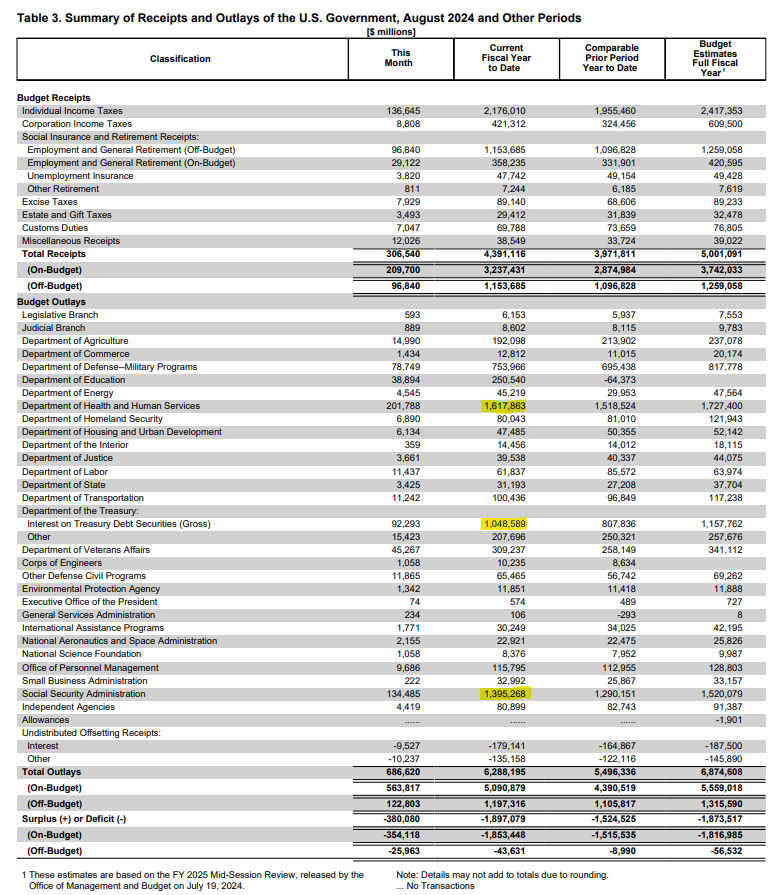
















 fox files
Recent Comments