
Forces your body to flood bloodstream with antibody proteins that ticks consume during feeding.
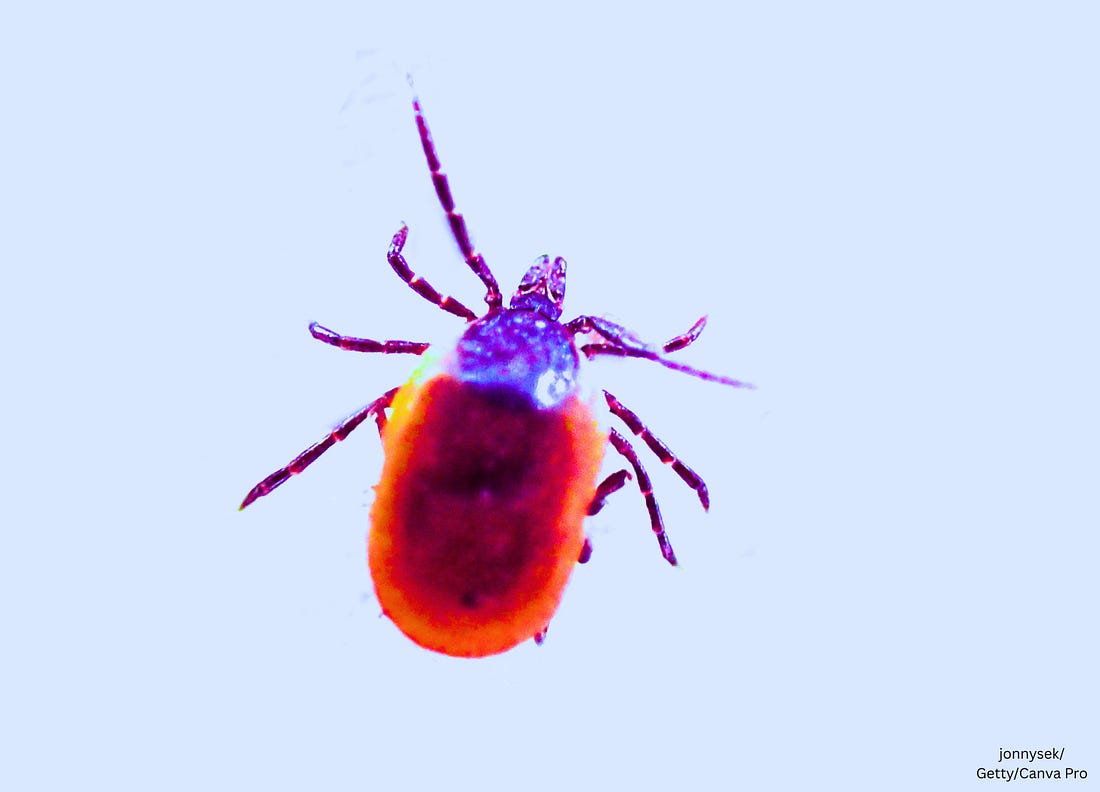
Pfizer and Valneva have advanced their experimental Lyme disease vaccine, PF-07307405 (LB6V, formerly VLA15), using the same core biological mechanism that sparked autoimmune arthritis concerns, lawsuits, and the eventual withdrawal of the only previous Lyme vaccine, LYMErix.
The jab works by forcing the body to produce antibodies against a bacterial protein that resembles a protein found in your own joint tissue, meaning those antibodies may also recognize similar structures in your joints and trigger an immune response there.
That means a mechanism previously tied to immune responses against joint tissue—producing Lyme-like symptoms—is now being brought back and positioned for broad public rollout.
Moreover, current data tracks antibody levels in the bloodstream over months, but does not map where those antibodies distribute in human tissues or how repeated boosting affects immune activity over the long term.
The Mechanism Activates Only After a Tick Bites
The vaccine is built to force the body to produce large quantities of anti-OspA IgG antibodies that circulate in the bloodstream.
Those antibodies remain inactive until a tick begins feeding.
At that point, the process engages.
The companies describe it:
“As the tick feeds on the vaccinated person, these antibodies are ingested by the tick as part of its blood meal. Binding of vaccine-induced antibodies to OspA on Borrelia inside the tick inhibits the bacterium’s ability to leave the tick.”
The antibodies are produced in the human body, but their intended function occurs after they are consumed by the tick.
The activity takes place inside the parasite.
Same OspA Design Behind LYMErix
The approach mirrors the OspA-based strategy used in LYMErix, introduced in 1998 and withdrawn in 2002 after widespread controversy.
At the center of that controversy was molecular mimicry.
The OspA protein contains regions that resemble a human protein known as LFA-1 (leukocyte function-associated antigen-1), which is present on immune cells and in joint tissue. A 1998 Science paper (Gross et al.) identified this overlap, showing that immune responses to OspA could also recognize similar structures on human LFA-1.
In patients with treatment-resistant Lyme arthritis, immune responses directed at OspA were observed to cross-react with LFA-1, raising the possibility that antibodies generated against the bacterial protein could also interact with joint tissue.
Autoimmune Arthritis Concerns Drove Lawsuits and Withdrawal
The cross-reactivity concern—antibodies recognizing both bacterial targets and structurally similar human proteins—became a central issue.
Reports of adverse outcomes, combined with media attention and legal action, intensified scrutiny around the vaccine.
A January 2001 New York Times publication explained:
A panel of U.S. experts is set to hear arguments Wednesday about whether a vaccine against Lyme disease may be linked to rare cases of arthritis, a charge the product maker has disputed.
GlaxoSmithKline Plc, the vaccine manufacturer and the world’s largest drug company, said it plans to present information on patients’ experiences since the product debuted under the brand name LYMErix in January 1999.
…
The Food and Drug Administration (FDA) is holding the public meeting to review the product’s safety and update the advisory panel on complaints that LYMErix may be linked to an untreatable type of arthritis.
…
Some scientists theorize that a protein, OspA, in the vaccine may trigger arthritis in patients with a genetic sensitivity to the condition. An estimated 30 percent of people have the gene suspected to put them at risk.
Lawyers have filed suit against GlaxoSmithKline, charging that the company should have warned that some people who receive the vaccine may experience arthritis that resists treatment.
LYMErix was ultimately withdrawn from the market.
While “poor sales” was cited publicly, later analyses pointed to the convergence of safety concerns and litigation as the force behind the collapse.
A February 2011 Clinical Infectious Diseases publication explains:
“Because of the hypothesis of molecular mimicry and autoimmune responses to the vaccine, anti-vaccine sentiment and class action lawsuits, a complicated vaccine administration schedule, diminishing physician support for the vaccine, and low public demand for the vaccine; the manufacturer voluntarily terminated vaccine production and marketing of the vaccine in 2002.”
The Vaccine Is Built to Induce the Same Immune Response Behind Lyme Arthritis
Lyme disease is known to produce an immune-driven arthritis in some patients—joint swelling, pain, and inflammation that can persist even after the bacteria are no longer detectable.
At that stage, the symptoms are not being driven by infection.
They are being driven by the immune response itself.
That same category of immune activity sits at the center of the vaccine’s design.
The shot is designed to force the body to generate high levels of anti-OspA antibodies against a bacterial protein that has been shown to share structural similarity with human LFA-1—a protein present in joint tissue.
That overlap places the immune response and the target in the same biological context as Lyme-related joint inflammation.
The result is a direct convergence: the vaccine is engineered to induce the same type of immune response associated with joint inflammation in Lyme disease.
This is the same biological interaction that raised concern during the LYMErix era.
Same Mechanism, Sustained Through Repeated Dosing
The current Pfizer candidate expands the design across six Borrelia serotypes.
Its function depends on maintaining elevated antibody levels in circulation, which decline over time based on earlier clinical data.
Booster doses are used to restore those levels, creating repeated cycles of immune activation centered on the same anti-OspA response.
Each cycle reinforces the same antibody pathway tied to the original controversy.
Autoimmune Monitoring Built Into Trials
A Phase 2 booster study published in The Lancet Infectious Diseases monitored participants for autoimmune and neuroinflammatory conditions—the same category of concern associated with the earlier vaccine.
Reported events were assessed by investigators—who worked for Pfizer—as unrelated to the vaccine.
The underlying interaction of antibodies targeting a bacterial protein with structural similarity to human tissue remains unchanged.
Critical Data Gap the Companies Aren’t Addressing
Current trials primarily track antibody levels in the bloodstream over limited time windows.
They have not mapped in detail where these anti-OspA antibodies distribute in human tissues, especially in joints and other sites where LFA-1 is expressed.
There is also no multi-year human data showing how repeated annual boosting affects immune activity over extended periods.
In practical terms, antibody levels in the blood are measured, but tissue-level behavior and long-term immune effects under repeated stimulation are not directly tracked.
This is the same blind spot that existed during the LYMErix era, before concerns around immune-mediated joint effects escalated into broader scrutiny.
Now Pfizer and Valneva are advancing the same mechanism, expanded across more strains and structured around repeated dosing, while those same unanswered questions remain.
Pfizer Felony
Pfizer is a massively criminal enterprise, repeatedly convicted and fined billions for systemic illegal activities, including off-label marketing, safety violations, bribery, price-fixing, and healthcare fraud.
With over $10 billion in penalties since 2002, Pfizer has a proven pattern of habitual corporate crime driven by profit at the expense of public health and legality.
Pfizer has pleaded guilty to felony criminal charges, including in 2009 when its subsidiary Pharmacia & Upjohn pleaded guilty to a felony count of misbranding pharmaceuticals.
The company agreed to pay a record $2.3 billion criminal and civil settlement for illegal marketing and healthcare fraud, confirming its status as a convicted corporate felon.
That same company is now rolling out a new Lyme vaccine built on the same mechanism that previously ignited safety concerns, lawsuits, and a full market collapse.
Bottom Line
Pfizer’s Lyme vaccine revives the same OspA antibody mechanism that triggered autoimmune arthritis concerns, lawsuits, and market collapse.
It is built around inducing the same category of immune response associated with Lyme-related joint inflammation.
That response is reinforced through repeated dosing.
And the mechanism itself is designed to activate only after antibodies produced in the bloodstream are consumed by a feeding tick.


Leave a Reply