
Gain-of-function experiments that mutate pathogens to resist drugs are baked into virological drug development.
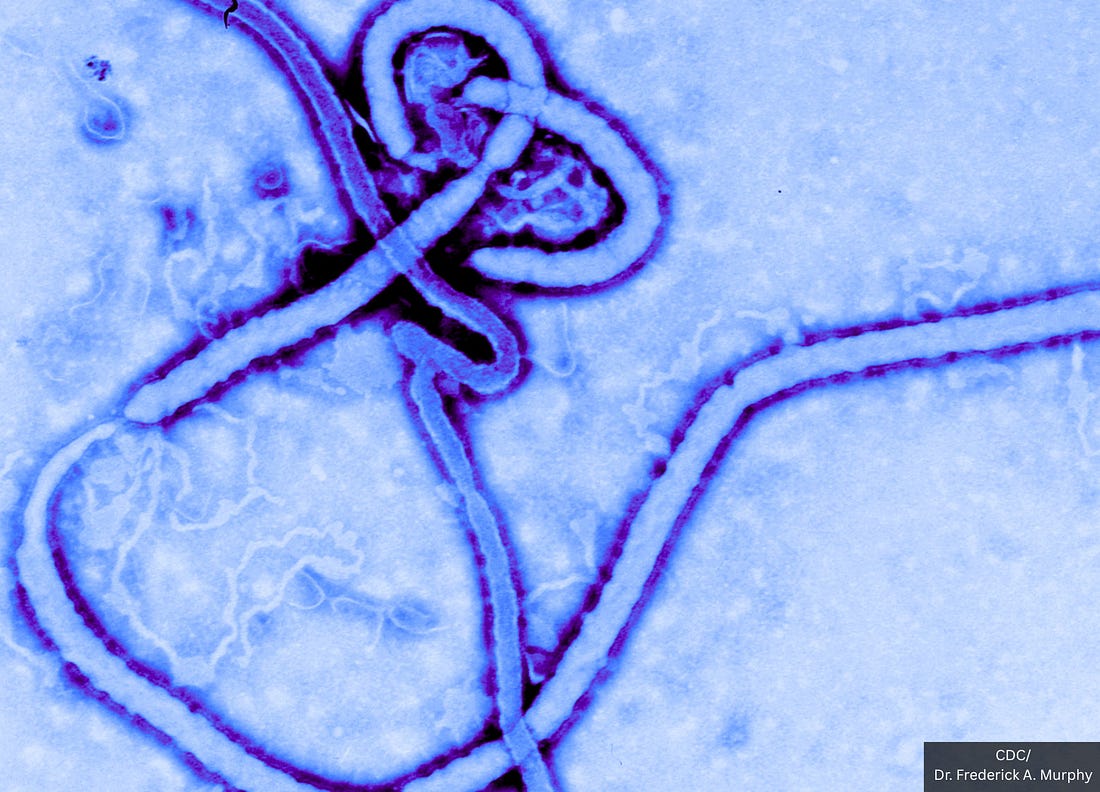
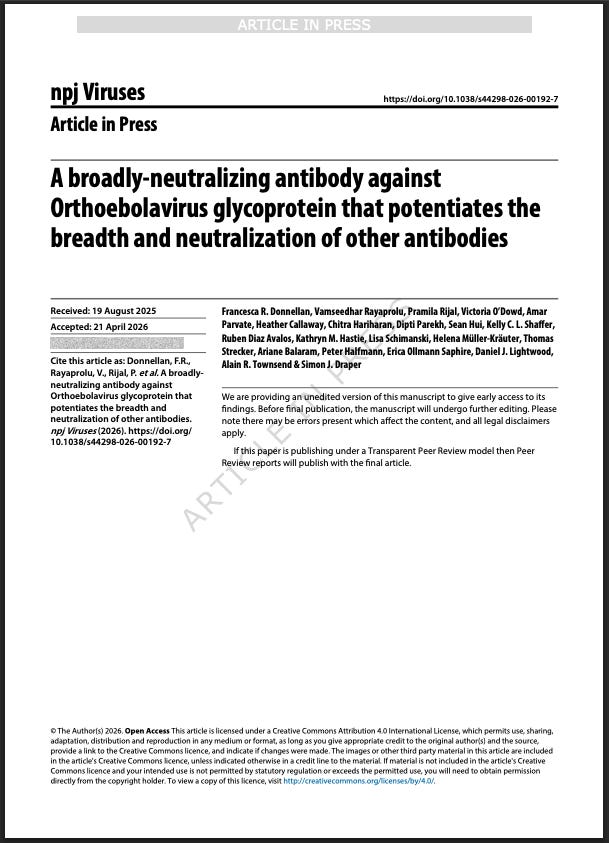
An international research consortium involving major institutions from the United States, China, the United Kingdom, and Germany claims to have successfully created mutant strains of Orthoebolavirus that are resistant to the neutralizing effects of the monoclonal antibody mAb 11886.
They published their work in npj Viruses on May 7, just days before the 2026 Ebola outbreak was first officially reported by the Democratic Republic of the Congo’s Ministry of Public Health.
These Ebola experiments, which were conducted under BSL-4 conditions at Philipps University Marburg, involved the intentional generation and selection of purported viral variants that bypass therapeutic neutralization.
The experiments align with published gain-of-function (GOF) definitions.
According to a 2022 review published in Advances in Applied Microbiology:
“Gain-of-Function research on viruses is enhancing transmissibility, virus replication, virulence, host range, immune evasion or drug and vaccine resistance to get insights into the viral mechanisms, to create and analyze animal models, to accelerate drug and vaccine development and to improve pandemic preparedness.”
The new Ebola study was said to have resulted in the generation of mutated, drug-resistant Ebola pathogens in the name of drug development.
It raises international security concerns, as Congress, the White House, the Department of Energy, the FBI, the CIA, and Germany’s Federal Intelligence Service (BND) all acknowledged that the COVID-19 pandemic was “likely” the result of a laboratory incident involving engineered pathogens.
You can contact NIAID here, NIH here, and HHS here to voice opposition to taxpayer-funded research on pandemic pathogens.
Multiple U.S. government Ebola preparedness and response programs were administratively updated on the federal Assistance Listings database in mid-January 2026—roughly three to four months before health authorities in the Democratic Republic of the Congo announced the latest Ebola outbreak.
The Trump administration is now seeking more than $1.4 billion in Ebola funding from Congress, just after the CDC activated $107 million in emergency funding for Ebola response.
U.S. taxpayers are now paying for both the creation of mutated, drug-resistant Ebola pathogens while also paying for the government’s expensive response to Ebola.
Researchers Force the Virus to Become Resistant
To produce these drug-resistant mutants, researchers claim to have used a replication-competent version of the virus known as EbolaΔVP30.
The team says they forced the evolution of the virus by subjecting it to three consecutive 6-day passage cycles.
During these cycles, the virus was said to be exposed to increasing concentrations of the antibody mAb 11886, starting at 0.63 µg/mL and escalating to 5.0 µg/mL to drive the selection of mutations that could survive the treatment.
After this process, the team isolated individual plaques that were able to survive in the presence of 10 µg/mL of the antibody.
Finally, the researchers claim they extracted viral RNA and sequenced the glycoprotein gene to identify the specific genetic mutations responsible for the acquired resistance.
The Experiments Identified Two Specific Genetic Mutations That Resist Drugs
The sequencing analysis was said to have identified two specific genetic mutations that directly negated the effectiveness of the antibody.
The first mutation, known as V505I, is located in the GP2 N-terminus and was identified as the primary driver of resistance against mAb 11886.
The second mutation, known as T402I, is said to be located in the mucin-like domain and contributed to resistance through indirect effects on how the virus processes its purported surface proteins.
Experimental data from the study confirmed that each of these mutations, when present individually, was sufficient for the virus to evade neutralization at a concentration of 10 µg/mL.
Research Supported by an International Network of Funding & Institutions
The creation of these drug-resistant Ebola variants was made possible by a global network of funding agencies and academic-industry partnerships.
In the United Kingdom, the research was supported by the UK Medical Research Council through an iCASE PhD studentship to FRD (MR/N01796X/1), and the Wellcome Trust through a Senior Fellowship to SJD (106917/Z/15/Z).
In Germany, the work was supported by the German Research Foundation via a grant to TS (197785619/SFB1021).
In China, funding was provided by the Chinese Academy of Medical Sciences Innovation Fund for Medical Science grants to PR and AT (2024-12M-2-001-1 and 2018-12M-2-002).
In the United States, the research was supported by the National Institutes of Health through grant U19 AI109762 to EOS.


Leave a Reply