Using “the same platform methods used for Pfizer’s COVID-19 and seasonal influenza mRNA vaccines.”
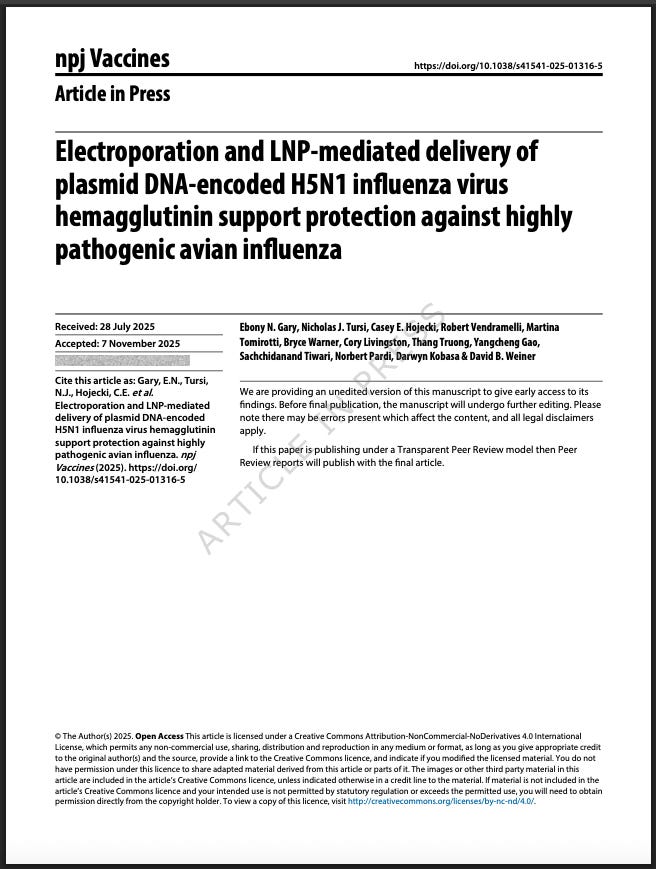
Researchers from the U.S. Centers for Disease Control and Prevention (CDC) and Pfizer Inc. have created new, engineered H5 bird flu influenza genetic constructs, including a codon-optimized hemagglutinin (HA) gene with a synthetically altered cleavage site, as documented in a Saturday npj Vaccines publication.
According to the authors, the stated purpose of the study was to evaluate an mRNA-based H5 vaccine, which they describe as “a nucleoside-modified mRNA construct encoding the full-length, codon-optimized HA protein with the polybasic cleavage site deleted from A/Astrakhan/3212/2020 A(H5N8).”
The paper confirms that the engineered HA used in the study was genetically modified beyond its purported natural form.
Cleavage Site Optimized
The authors state that the cleavage site was synthetically altered, writing that the polybasic amino acids were “mutated from ‘REKRRKR’ to ‘RETR’.”
The cleavage site is like a switch that must be cut to turn the flu pathogen “on” so it can infect cells, and if this site can be cut by many types of enzymes in the body, the virus can spread more and cause worse disease.
LNPs for mRNA Therapeutics
The engineered constructs were then formulated into lipid nanoparticles following “the same platform methods used for Pfizer’s COVID-19 and seasonal influenza mRNA vaccines.”
The work was conducted by multiple CDC branches, including the Influenza Division, the Division of High-Consequence Pathogens and Pathology, and the Office of Advanced Molecular Detection.
Pfizer Scientists at BSL-3 Lab
It was carried out by Pfizer scientists at the company’s Pearl River, NY facility, with additional involvement from ORISE.
The authors specify that “all research involving HPAI A(H5N1) viruses was conducted within Biosafety Level 3 enhanced (BSL-3E) or ABSL-3 facilities at the CDC.”
100% Transmission Rate
To test the performance of the engineered constructs, the CDC–Pfizer team conducted live-virus challenge experiments using human-derived H5N1 isolates.
The ferrets were infected with virus formations “A/Chile/25945/2023” and “A/Michigan/90/2024… from a farm worker exposed to infected cattle.”
Using these human isolates, the researchers documented efficient mammal-to-mammal spread, reporting a “100% transmission rate” in unvaccinated ferrets.
Funding & Conflicts of Interest
The funding disclosures indicate direct federal and corporate sponsorship.
The authors state: “This work was funded by the US Centers for Disease Control and Prevention and by Pfizer Inc.”
The authors also disclose full corporate participation in the scientific process, writing: “Pfizer was involved in the design, analysis, and interpretation of the data in these research studies, the writing of this report, and the decision to publish.”
Additionally, the paper notes that Pfizer researchers associated with the project are “inventors on patent applications relating to influenza mRNA compositions.”
Bottom Line
The new study documents that CDC and Pfizer jointly engineered new H5 constructs through codon optimization and cleavage-site mutation, formulated them using Pfizer’s mRNA-LNP platform, and then tested them against recent human H5N1 isolates inside CDC BSL-3E laboratories.
The result is a federally backed, corporate-driven program in which U.S. authorities and Pfizer quietly engineered H5 influenza genetics and tested them with human-infecting H5N1—blurring the line between vaccine development and high-risk pathogen manipulation.
The dangerous experiments raise national security concerns.
Amid worries of a coming avian influenza pandemic.
A new study preprint published last week in the journal npj Vaccines describes a multinational research program that designed, engineered, and tested synthetic versions of the H5N1 bird flu virus’s hemagglutinin protein—one of the key components that allows the virus to infect cells.
The scientists altered these genetic sequences, delivered them into animals using advanced DNA and lipid-nanoparticle (LNP) technologies, and then conducted lethal challenge experiments with highly pathogenic H5N1 viruses inside a Canadian government biocontainment facility.
This means researchers created synthetic versions of a dangerous flu component, injected them into mice using vaccine-style technologies, and then exposed the animals to very deadly strains of H5N1 to test how well the constructs worked.
The study is authored by a large team from the United States, Canada, and Europe, including researchers from the Wistar Institute, the University of Pennsylvania, the Public Health Agency of Canada, and the University of Bologna.
Funding Sources
The research was funded primarily by the National Institute of Allergy and Infectious Diseases (NIAID) through its Collaborative Influenza Vaccine Innovation Centers (CIVIC) program under contract 75N93019C00051.
This is a federal vaccine-development initiative said to be designed to prepare the U.S. for future influenza outbreaks using rapidly adaptable genetic platforms.
But the creation of new viruses raises national security concerns.
Additional support came from the W.W. Smith Charitable Trust Distinguished Professorship in Cancer Research and The Jill and Mark Fishman Foundation.
In other words, the work was paid for by the same federal agencies responsible for pandemic vaccine programs, along with private biomedical foundations.
Institutions Involved
The experiments were carried out by a coordinated network of laboratories:
The Wistar Institute (Philadelphia) designed and built the synthetic H5N1 DNA constructs, performed immune studies, and conducted structural modeling using AlphaFold 3.
The University of Pennsylvania assisted with lipid-nanoparticle formulation and microbiology methods.
The Public Health Agency of Canada’s National Microbiology Laboratory in Winnipeg performed the live H5N1 infections and lethal challenge experiments, including tests using a recombinant H5N1 virus constructed from synthetic gene segments.
The University of Bologna contributed additional biotechnology expertise.
The U.S. labs designed and built the engineered genetic materials, and the Canadian government lab carried out the dangerous live-virus testing.
The authors include: Ebony N. Gary, Nicholas J. Tursi, Casey E. Hojecki, Robert Vendramelli, Martina Tomirotti, Bryce Warner, Cory Livingston, Thang Truong, Yangcheng Gao, Sachchidanand Tiwari, Norbert Pardi, Darwyn Kobasa, and senior author David B. Weiner.
What Is Scientifically Alarming
Several aspects of this research stand out as high-risk from a biodefense perspective, even though the work is framed as vaccine development.
1. Synthetic Genetic Engineering of H5N1 Components
The team did not merely study existing viruses.
They engineered new synthetic versions of the H5N1 hemagglutinin gene, including codon optimization (which boosts expression in human cells) and deliberate modification of the protease cleavage site, a region strongly linked to H5N1’s virulence.
They edited the part of the virus that helps determine how dangerous it is.
2. Construction of a Recombinant H5N1 Virus From Synthesized Gene Segments
The researchers created a chimeric H5N1 virus by combining gene segments that were commercially synthesized and assembled from cloned DNA.
They then rescued this artificial virus using reverse-genetics techniques.
This means they built a new lab-made version of H5N1, piece-by-piece, using artificial DNA.
3. Use of LNP Delivery and Electroporation to Express Viral Genes Inside Animals
The study delivered the synthetic HA genes using LNPs (the same technology used in COVID-19 mRNA vaccines) and electroporation, a technique that uses electrical pulses to force genetic material into cells.
Both approaches greatly increase how efficiently engineered genetic material can spread through tissues.
These tools make it much easier for lab-designed genetic material to take hold inside the body.
4. Lethal Challenge Work Using High-Dose H5N1
Mice were exposed to 10 times the lethal dose (10 LD50) of highly pathogenic H5N1 strains—including both natural isolates and the lab-built recombinant virus.
They infected animals with very large amounts of a deadly virus to test whether the synthetic constructs gave protection.
5. Corporate Ties of the Senior Author
The senior scientist, David B. Weiner, discloses paid relationships with Pfizer, AstraZeneca, Sanofi, Inovio, Flagship, and others.
This means the research directly intersects with large pharmaceutical companies that develop genetic vaccines and related technologies, raising conflicts of interest worries.
Why This Matters for Policymakers
This study demonstrates that federal funding is supporting research with clear dual-use potential, meaning it could advance vaccines or, if misapplied, enable the construction or enhancement of dangerous influenza viruses.
The same techniques used to create synthetic vaccine antigens—codon optimization, cleavage-site modification, LNP delivery, and recombinant virus assembly—can also be used to create novel viral strains with properties that do not currently exist in nature.
The technical sophistication is notable, especially the deliberate editing of cleavage sites and the full reconstruction of an H5N1 virus from cloned fragments, which is uncommon outside of specialized influenza-engineering programs.
This work shows that laboratories funded by the U.S. government and partnered with foreign agencies are actively engineering pieces of dangerous bird flu viruses and testing them in high-security facilities.
The stated goal is to develop better vaccines, but the methods overlap with techniques traditionally associated with gain-of-function research, which can create new biological risks if not tightly controlled.
A Thursday npj Vaccines study confirms U.S. federal agencies, including the U.S. Department of Agriculture (USDA) and the National Institutes of Health (NIH), funded the laboratory creation of genetically engineered two influenza viruses (H9N2/H5N2) built from plasmids, artificial gene fusions, synthetic insertions, and modified genome segments.
The work was carried out by researchers at the University of Georgia, the Icahn School of Medicine at Mount Sinai, and the U.S. National Poultry Research Center, Agricultural Research Service, USDA.
The authors listed on the study are: “Flavio Cargnin Faccin, L. Claire Gay, Dikshya Regmi, Robert Hoelzl, Teresa D. Mejías, Darrell Kapczynski, Florian Krammer & Daniel R. Perez.”
The study’s funding confirms direct federal involvement.
“Funding for this work includes grants… National Institute of Food and Agriculture (NIFA), U.S. Department of Agriculture (USDA) Grant award numbers 2021-67015-33406 and 2024-67015-42736, National Institute of Allergy and Infectious Diseases, National Institutes of Health (NIH) Contract number 75N93021C00014.”
Construction of the Engineered Viruses
The researchers did not isolate a purported virus from nature.
They built new viruses entirely through reverse genetics, using plasmid DNA transfected into human and dog cell lines.
The paper states: “Recombinant viruses were rescued by reverse genetics using the 8-plasmid system and helper plasmids in a coculture of HEK293T and MDCK cells.”
The process is described explicitly.
According to the authors, “1 µg of each plasmid was mixed… and used to overlay the cell coculture.”
Viral stocks were then expanded artificially rather than occurring naturally, as the study reports: “Viral stocks were generated in 10-day-old specific pathogen-free (SPF) eggs.”
These details confirm that the viruses were constructed in the laboratory, rescued from DNA, and amplified in eggs.
‘Chimeric’ Pathogens
The viruses created under USDA and NIH funding are laboratory-assembled chimeras—genomes stitched together from engineered parts that do not exist in nature.
The study shows that two influenza proteins were fused into a single artificial gene, something no wild virus carries.
As the authors write: “Segment 2 was modified to encode a chimeric PB1-M2 open reading frame (ORF) separated by a glycine-glycine-glycine-glycine-serine (G4S) spacer.”
This forces the virus to make an unnatural hybrid protein.
To ensure the virus depends on this man-made fusion protein, its normal version of M2 was deliberately shut off.
The paper states: “Segment 7 was modified by introducing multiple early stop codons in the M2 ORF via site-directed mutagenesis to prevent its expression.”
This eliminates the native M2 and locks the virus into the engineered design.
The researchers also inserted a synthetic 58–amino acid sequence into the HA segment, including an artificial peptide not found in any influenza strain.
The methods describe this as: “Segment 4… was modified to insert a 58-amino-acid-long sequence… which included the unique 8-amino-acid peptide… ‘DRPAVIAN.’”
Another modification swaps out the cleavage site of an H5 virus and replaces it with one taken from a human 1934 H1N1 strain, altering how the virus activates inside host cells.
The authors state: “The H5 HA HPAI cleavage site was replaced with that of the A/Puerto Rico/8/1934 (H1N1) (PR8) strain.”
Finally, the virus was engineered to manufacture a chicken immune-signaling molecule from inside infected cells.
The study confirms: “The mature protein-coding sequence of chicken IL-18… was subcloned in frame with the NA ORF.”
These combined changes—fusion genes, disabled native proteins, synthetic inserts, human-strain cleavage sites, and cytokine-expression modules—create a virus with properties that no purported natural influenza lineage carries.
Aerosol Exposure in Animals
The researchers then exposed day-old chickens to the engineered viruses through aerosolized live-virus delivery.
The methods describe this process clearly, all done within BSL-3 lab conditions:
“One-day old SPF White Leghorn chickens… were vaccinated via aerosol using an aerosol chamber… A 5 mL volume of MLV-H9N2-IL was loaded into the Aeroneb lab nebulizer, resulting in an average exposure of 1×10⁶ EID50/chicken… The exposure lasted for 15 min.”
This confirms that the USDA- and NIH-funded engineered viruses were not only constructed but also introduced into animals through airborne delivery.
Bottom Line
The study documents how U.S. federal agencies oversaw the full laboratory assembly of engineered influenza viruses—built from plasmids, redesigned through reverse genetics, and altered with fusion genes, stop-codon knockouts, synthetic peptide insertions, cytokine-expression modules, and foreign cleavage sites.
These are not environmental isolates; they are fully man-made constructs created inside U.S. government and university laboratories under USDA and NIH funding.
The viruses were then delivered to live animals by aerosol, demonstrating not only construction capability but functional deployment.
Work of this nature carries obvious national-security implications: it establishes the technical capacity to design, modify, and disseminate engineered influenza strains whose properties cannot be predicted from any purported natural lineage.
In a stunning exchange on the PBD Podcast (Episode 690), U.S. Commissioner of Food and Drugs (FDA) Dr. Marty Makary, a Johns Hopkins surgeon, dropped two bombshell admissions about pathogen origins—one about HIV, the other about Lyme disease.
Dr. Makary openly entertained the possibility that HIV “may very well have come from a lab in Africa,” saying the film Thank You, Dr. Fauci “explore[s] a non-traditional narrative, which has not gotten the attention it deserves.”
HIV (Human Immunodeficiency Virus) is said to be a retrovirus that targets and destroys CD4 T cells in the immune system, weakening the body’s ability to fight infections and potentially leading to AIDS if untreated.
When asked where Lyme disease originated, Makary answered directly: “I can tell you with a high degree of probability. It came from Lab 257 on Plum Island.”
Lyme disease is a bacterial infection caused by Borrelia burgdorferi, transmitted through bites from infected blacklegged ticks, often marked by an expanding “bull’s-eye” rash, fever, fatigue, and joint pain.
The head of the FDA has admitted that two major diseases originated not in nature, but in government laboratories, raising questions about other disease origins.
HIV: ‘It May Very Well Have Come from a Lab in Africa’
Makary described how mainstream institutions avoid uncomfortable evidence about HIV’s beginnings.
When pressed on the origin of AIDS, he said the following:
“They explore a non-traditional narrative, which has not gotten the attention it deserves. And that is that it may very well have come from a lab in Africa.”
Makary is one of the most publicly visible medical figures in the United States—Hopkins professor, long-time NIH-funded surgeon, and prominent FDA advisor.
His admission directly contradicts decades of official insistence that HIV was unquestionably a zoonotic spillover.
Lyme Disease: ‘It came from Lab 257 on Plum Island’
When the conversation turned to Lyme disease—which afflicts millions of Americans—Makary said:
“I can tell you with a high degree of probability. It came from Lab 257 on Plum Island just outside of Connecticut, 25 miles from Lyme, Connecticut, where the first case was described.”
He then explained how he knows:
“First of all, you can read the book Bitten. It’s a great book.”
And he explained who the U.S. brought to Plum Island after WWII:
“When the Nazi war criminal doctors were executed in Nuremberg, at least one of them was spared and brought to the United States so that his mind could be used by the US military for so-called Biodefense. And they put him on Plum Island and he had said very openly that he believed an incredible form of biowarfare was infecting ticks. And that that’s what Lyme disease is.”
Makary is referring to the notorious Erich Traub, the Nazi bioweapons scientist recruited by U.S. military intelligence.
“A bunch of mad scientists doing things… How many physicians know that it came from Lab 257? Approximately 1%.”
He ended with the warning that the public health establishment refuses to confront:
“Just because you can do something doesn’t mean you should do it. And sometimes we can cause more harm than we can good by messing with Mother Nature.”
Once the FDA commissioner concedes that two major diseases came from government labs, the narrative of “natural outbreaks” collapses on its own.
The only thing left to find out is how far these patterns go.
As countries engineer avian influenza bird flu pathogens without restraint.
The World Health Organization and Egypt’s Ministry of Health just completed a national-scale workshop training nearly 300 surveillance officers to expand real-time monitoring of influenza and other respiratory pathogens across the country.
The move comes as this website has been tracking multiple governments performing gain-of-function experiments on avian influenza “bird flu” pathogens (see below this article), raising worries of another orchestrated, man-made pandemic.
The WHO announcement frames the workshop as routine and annual, masking the scale of the expansion and the integration of surveillance functions under WHO guidance.
“The annual meeting and accompanying workshop on integrated surveillance of acute respiratory infections (ARIs), conducted by the Egyptian Ministry of Health and Population in collaboration with the World Health Organization (WHO) Country Office in Egypt, brought together around 270 public health professionals.”
More than a simple “meeting,” this represents a consolidation of a national respiratory surveillance grid.
Two hundred and seventy surveillance officers trained at once sounds more like a deployment than a workshop.
The framing as “annual” makes the expansion appear normal and non-threatening when, in reality, it marks a significant expansion of WHO’s operational footprint inside Egypt’s health system.
Thirty Sentinel Sites Feeding a Unified National Surveillance Grid
The announcement identifies the personnel being trained, revealing a full-spectrum surveillance workforce (epidemiology, clinical staff, data specialists) rather than a narrow set of influenza experts.
“The participants, all involved in surveillance, included epidemiologists, data officers, physicians, nurses and laboratory specialists drawn from 30 ARI sentinel sites across 15 governorates.”
This proves the surveillance integration is nationwide.
“Sentinel sites across 15 governorates” means Egypt’s surveillance network is now being unified under a single reporting system.
Bringing in data officers signals the transition to real-time digital surveillance and automated reporting pipelines that feed directly into WHO’s global systems.
A Surveillance Framework That Never Powers Down
The WHO announcement reveals the core mission: strengthen surveillance for influenza and all respiratory viruses—not limited to outbreaks or emergencies.
“The sessions aimed to strengthen national capacities in disease surveillance for influenza and other respiratory viruses and improve preparedness for respiratory disease threats, particularly those with pandemic potential.”
They want to treat all respiratory viruses—seasonal or otherwise—as potential triggers for global coordination.
The phrase “other respiratory viruses” quietly expands surveillance beyond influenza to include COVID, avian flu, MERS, and any future pathogen, making continuous monitoring the norm.
This is how perpetual surveillance infrastructures are justified.
The workshop covers multiple pathogen classes, including zoonotic viruses, merging animal-origin threats with routine respiratory surveillance.
“The discussions covered a wide range of topics, including updates on the global and national epidemiological situation of influenza, COVID-19, avian influenza, Middle East respiratory syndrome coronavirus (MERS-CoV) and zoonotic respiratory infections.”
So the system is designed to take in constant “signal noise” from zoonotic sources—livestock, poultry, wildlife.
Zoonotic data is always active, which means alert conditions can always be justified.
Folding zoonotic viruses into human surveillance pipelines is a central feature because it guarantees a steady stream of “pandemic potential” warnings.
WHO Uses ‘Performance Evaluations’ to Enforce Surveillance Compliance
The announcement describes the unification and standardization of national operating procedures, indicating that Egypt’s surveillance mechanics are being aligned directly with WHO standards.
“Participants reviewed standard operating procedures for ARI and influenza-like illness (ILI) sentinel surveillance and laboratory operations, alongside findings from performance evaluations.”
The mention of “performance evaluations” means WHO is grading Egypt’s compliance with global surveillance standards.
The evaluations will serve as a mechanism for harmonizing Egypt’s protocols with WHO’s prescribed methods.
This is an oversight structure.
Once surveillance is standardized, WHO essentially co-authors the national surveillance workflow.
Building the Digital Backbone of a Permanent Respiratory Surveillance State
The WHO press release goes on to introduce the digital component—data integration, dashboards, and real-time reporting—showing that Egypt’s network is being plugged into a centralized digital surveillance architecture.
“They explored how digital tools and platforms can enhance ARI data quality and timeliness and discussed data reporting through the National Electronic Disease Surveillance System (NEDSS) and the ARI/ILI Power BI dashboard which are used to collect, analyse and visualize respiratory surveillance disease data.”
The system they’re describing allows centralized ingestion of respiratory data across Egypt, instant analytics, automatic WHO reporting, and algorithmic signal detection.
The Power BI dashboard represents the command interface of a national respiratory surveillance grid.
This is the infrastructure required for automated “health security” triggers, border protocols, and potential digital health certifications.
PRET: WHO’s Framework for Perpetual Surveillance, Now Active in Egypt
The WHO directly names PRET, acknowledging that Egypt is now being operationally aligned with WHO’s new global framework that replaces traditional outbreak response with permanent readiness.
“The sessions also covered WHO’s Preparedness and Resilience for Emerging Threats (PRET) framework, an innovative approach designed to improve countries’ pandemic preparedness, emphasizing its alignment with Egypt’s national health security priorities.”
PRET is the system designed to bypass the need for treaty ratification by embedding WHO frameworks in national systems through “technical assistance.”
Once PRET is integrated, WHO gains operational influence during any declared emergency.
Naming PRET outright signals that Egypt’s infrastructure is now being shaped to meet PRET’s requirements for sustained respiratory surveillance and rapid WHO-driven response.
Bottom Line
Egypt’s new WHO-guided influenza and respiratory surveillance upgrade is a quiet rollout of PRET—a framework that centralizes global respiratory monitoring under WHO standards and feeds constant influenza, COVID, bird flu, MERS, and zoonotic signals into real-time digital dashboards.
This turns “preparedness” into a perpetual surveillance regime, where respiratory data becomes the trigger for future restrictions, emergency declarations, and global coordination.
What makes the timing more concerning is that these surveillance expansions are happening as multiple governments continue engineering avian influenza viruses with pandemic traits—yet none of these programs are being halted.
PRET ensures the monitoring grid is in place before the next laboratory-engineered pathogen emerges.
With 270 surveillance officials trained across 30 sentinel sites, Egypt’s national system is now synced to WHO’s operational architecture.
And this same PRET-aligned model is being replicated country by country, building a global respiratory surveillance system that never powers down.
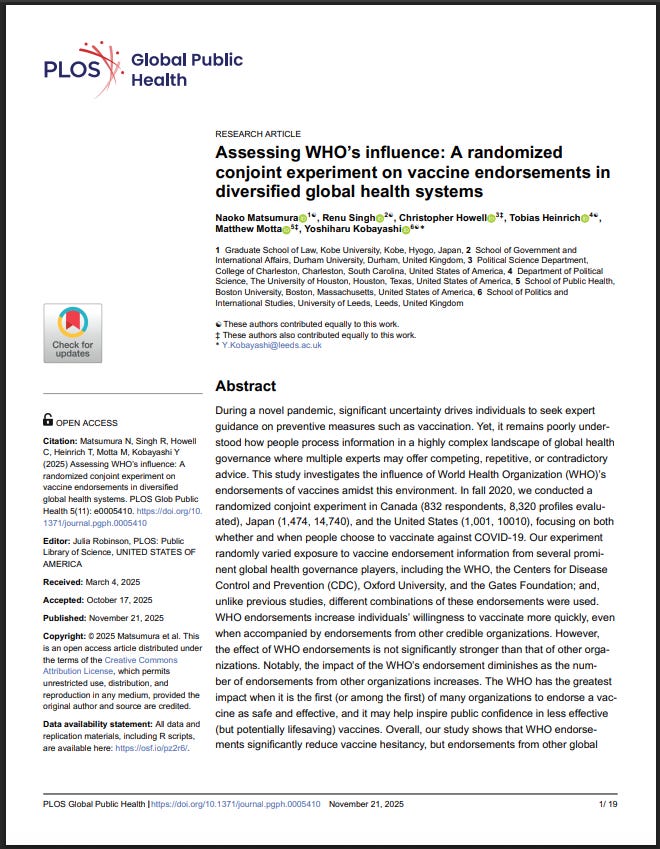
A newly published PLOS Global Public Health paper confirms that researchers were already running multinational experiments to measure how quickly populations could be moved toward COVID-19 vaccination before any product had been authorized.
The authors state clearly:
“We recruited the respondents in late November 2020… before any [vaccines] were officially approved by a government.”
This places the experiment at a time when the public had no approved vaccine, no final safety data, and no access to Phase 3 trial results.
Yet the study was already testing which institutions—WHO, CDC, Oxford, or the Gates Foundation—were most effective at accelerating public willingness to accept a future vaccine.
The Experiment Focused on Uptake Speed, Not Evidence
The survey’s main outcome variable was not clinical.
It was the speed of compliance:
“Respondents were given five options to express whether and when they would choose to get vaccinated if a vaccine were available at no cost. These options were: ‘Yes, within a month,’ ‘Yes, within 2-3 months,’ ‘Yes, within 4-12 months,’ ‘Yes, after a year,’ and ‘No, never.’”
Those responses were then collapsed into:
“early” (within 3 months)
“middle” (4–12 months)
“late,” which includes “never”
The paper describes vaccine hesitancy entirely in terms of “delay”:
“WHO endorsements, alongside the three other public health organizations examined in this study, are associated with a statistically significant, cross-national reduction in vaccine hesitancy, measured as the delay between vaccine availability and willingness to receive it. Our timing-based measure is a meaningful, yet under-studied, dimension of vaccine uptake that directly speaks to the urgency of public health communication during a pandemic.”
The study did not attempt to measure why individuals might wait for more data or how safety information influences decisions.
Hesitancy was defined only as slowness to accept.
Endorsements Were Randomized to Test Which Authority Moves People Faster
The authors explain that each participant was shown randomized vaccine profiles with or without endorsements from major institutions:
“Our experiment randomly varied exposure to vaccine endorsement information from several prominent global health governance players, including the WHO, the Centers for Disease Control and Prevention (CDC), Oxford University, and the Gates Foundation.”
The goal was to quantify the effect of each authority on changing timing behavior:
“WHO endorsements increase individuals’ willingness to get vaccinated more quickly.”
This design treats institutional influence itself as the variable of interest, not the vaccine.
“[T]rust in scientific authorities, including the WHO, positively correlates with increased public willingness to engage in recommended health practices, such as COVID-19 vaccination and compliance with preventive measures.”
The Paper Acknowledges the Experiment Took Advantage of High Uncertainty
The authors state that their framework relies on the public’s vulnerability during uncertain periods:
“During a novel pandemic, significant uncertainty drives individuals to seek expert guidance on preventive measures such as vaccination.”
The experiment uses that uncertainty to measure which voice is most persuasive.
WHO Was Most Effective When It Spoke Early, Before Other Actors
One of the clearest findings is that WHO’s influence is strongest when it is the first or among the first endorsers:
“The WHO has the greatest impact when it is the first (or among the first) of many organizations to endorse a vaccine.”
And that power drops once other organizations join in:
“[T]he impact of WHO endorsements decreases as additional endorsements from other reputable global health actors emerge.”
The authors explicitly describe this as substitutability, meaning WHO’s influence is higher only when information from other actors is absent.
The Study Also Examined How Endorsements Help Drive Uptake of ‘Low-Quality’ Vaccines
A section of the paper focuses on vaccines with:
50% efficacy,
1-year protection duration,
1 in 10,000 severe side-effect rate,
1 in 30 mild-side-effect rate,
which the authors classify as low-quality vaccines.
The paper states:
“[I]t is crucial to examine the influence of WHO endorsements specifically for lower-quality vaccines, as vaccination intentions for these vaccines are likely to be more sensitive to credible endorsements.”
Their simulation results showed:
“[F]or low-quality vaccines… When people are receptive to WHO endorsements, we observe a distinctly higher vaccination rate over time.”
This shows the study’s purpose was not limited to hypothetical best-case vaccines.
The authors tested how institutional messaging can increase uptake even when vaccine performance is weak.
The Authors Describe Their Work as Global-Level Persuasion Research
Throughout the paper, the focus is on influence, not clinical evaluation:
“This study investigates the influence of World Health Organization (WHO)’s endorsements…”
Endorsements “can accelerate vaccination intentions” and “significantly reduce vaccine hesitancy.”
And the authors frame the absence of evidence as an opportunity:
“During a novel pandemic, significant uncertainty drives individuals to seek expert guidance on preventive measures such as vaccination.”
Rather than studying data quality or risk–benefit communication, the study treats this moment of uncertainty as the condition under which endorsement effects can be most accurately measured.
Conclusion
The record in PLOS Global Public Health shows that researchers in Canada, Japan, and the United States were already measuring which institutions could most effectively accelerate COVID-19 vaccine uptake—for low-quality vaccines—in November 2020, prior to any approved product.
The experiment centered on how quickly people could be influenced to vaccinate, how endorsement messaging changes compliance timing, and how those effects behave under uncertainty or when evaluating lower-quality vaccines.
Every element of the study was built around institutional persuasion.
Not safety, not efficacy, and not informed consent.
When institutions are tested for their ability to speed compliance before safety data even exists, the line between public health guidance and psychological manipulation becomes impossible to ignore.
Two whole years before the COVID-19 pandemic during which billions were injected with LNP-containing vaccines, raising informed consent concerns.
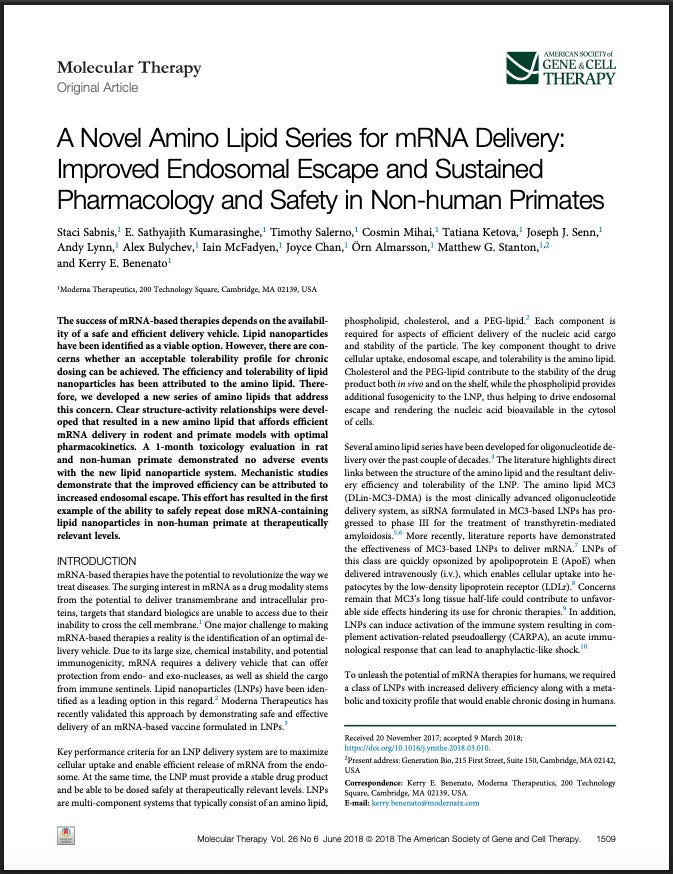
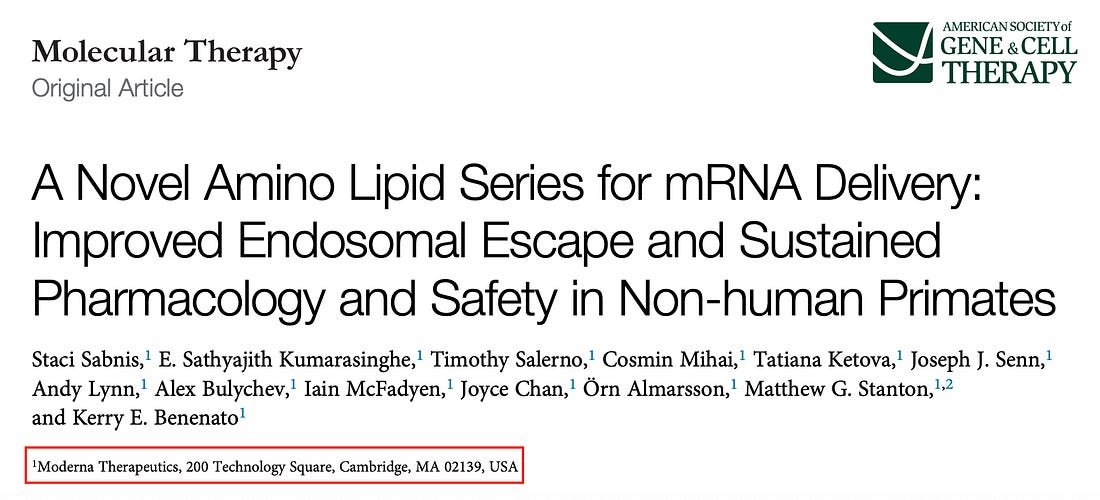
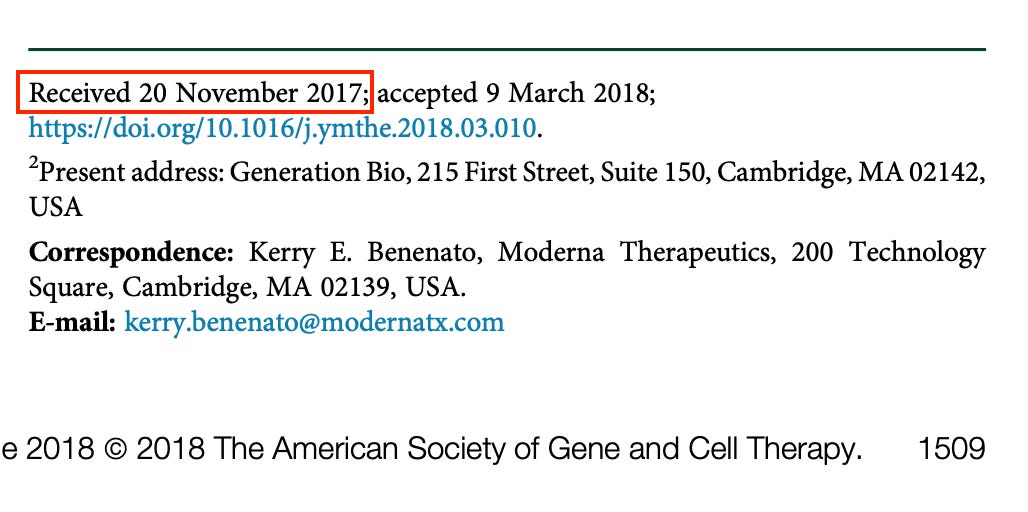
Moderna submitted data in November 2017 proving their mRNA vaccine lipid nanoparticles (LNPs) accumulate in mammalian liver, spleen, plasma (blood), kidneys, heart, and lungs—the same technology Moderna and Pfizer later used in billions of COVID-19 doses.
No one who lined up for those shots was ever told—let alone asked to consent—that the lipid nanoparticles carrying the mRNA would traffic through their blood and into their vital organs.
The LNPs were shown to reach major organs and enter the bloodstream within 1 hour.
The particles persisted in those tissues at least 24–48 hours (the Moderna study didn’t track LNP distribution past 2 days), with accumulation when repeatedly dosed.
The study confirms Moderna’s LNPs—called MC3 (DLin-MC3-DMA)—ended up in mammalian liver, spleen, blood, kidney, heart, and lung:
“Following dosing with MC3 LNPs, lipid was detected in liver, spleen, plasma, kidney, heart, and lung, with liver and spleen containing the largest concentrations. Accumulation of MC3 was observed after each dose. Liver and spleen had the highest levels of lipid 5, however, significantly lower levels than MC3. Lipid 5 was also detected in plasma, lung, and kidney, but not in heart.”
A January 2023 Nature Reviews Drug Discovery paper co-authored by Moderna scientists bluntly admits that avoiding “unacceptable toxicity” in mRNA vaccines remains a major challenge, warning that “lipid nanoparticle structural components, production methods, route of administration and proteins produced from complexed mRNAs all present toxicity concerns” and that the way these vaccines spread through the body can cause harm due to “cell tropism and tissue distribution… and their possible reactogenicity.”
Nevertheless, back in July of this year, the FDA approved the supplemental Biologics License Application (sBLA) for Spikevax®, Moderna’s LNP-containing COVID-19 vaccine, in children 6 months through 11 years of age.
The current head of the FDA is Dr. Martin A. Makary, who was confirmed as Commissioner of Food and Drugs in March.
And now, with their own 2017 biodistribution data in hand, there is no escaping the obvious: Moderna knew exactly where these nanoparticles were going in the body—and they rolled them out to the world anyway.
“Because studies have not ruled out the possibility that infant vaccines cause autism.”
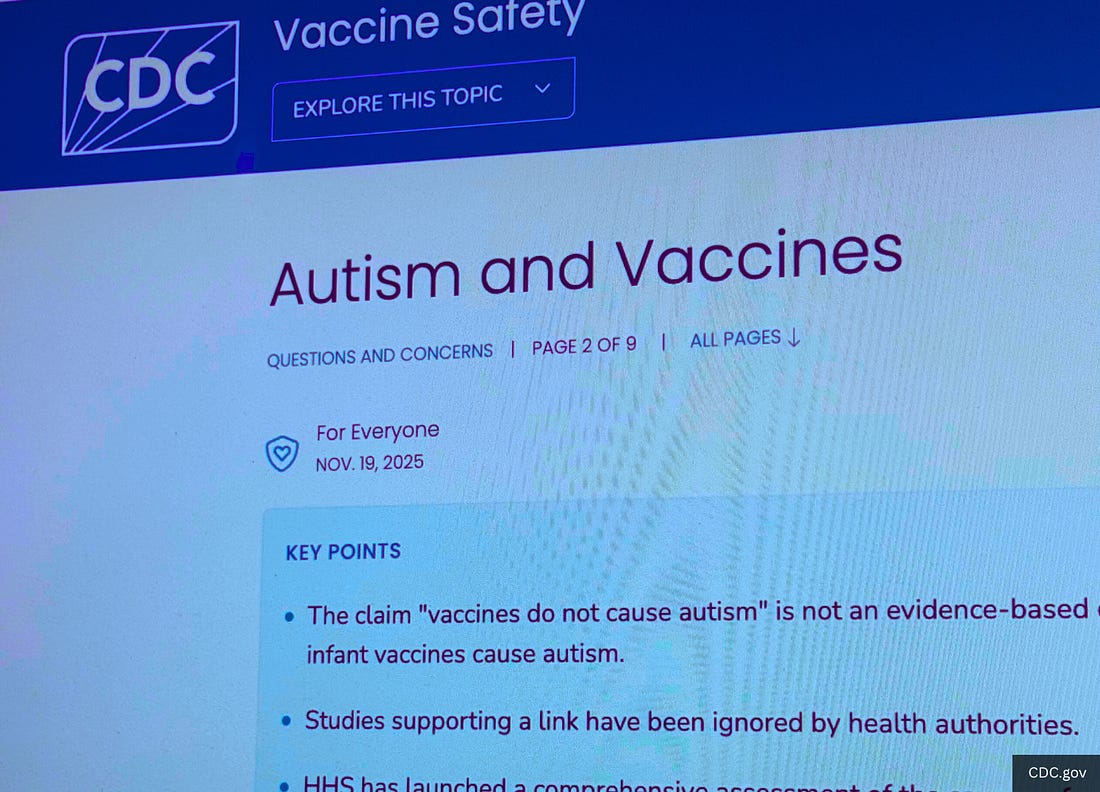
The U.S. Centers for Disease Control and Prevention (CDC) has officially declared that there is no evidence to support the claim that vaccines do not cause autism.
Yesterday, the CDC published these historic words:
The claim “vaccines do not cause autism” is not an evidence-based claim because studies have not ruled out the possibility that infant vaccines cause autism.
HHS has launched a comprehensive assessment of the causes of autism, including investigations on plausible biologic mechanisms and potential causal links.
In an instance of welcome self-reflection and honesty, the CDC announcement went on to admit that the unscientific claim “has historically been disseminated by the CDC and other federal health agencies within HHS to prevent vaccine hesitancy.”
And in an apparent course correction, CDC announced that “HHS has launched a comprehensive assessment of the causes of autism.”
This will include “investigations on plausible biologic mechanisms and potential causal links.”
CDC went on to explain how the rise in autism correlates with the rise in the number of childhood vaccinations:
It is critical to address questions the American people have about the cause of autism to ensure public health guidance is adequately responsive to their concerns. Approximately one in two surveyed parents of autistic children believe vaccines played a role in their child’s autism, often pointing to the vaccines their child received in the first six months of life (Diphtheria, tetanus, pertussis (DTaP), Hepatitis B (HepB), Haemophilus influenzae type B (Hib), Poliovirus, inactivated (IPV), and Pneumococcal conjugate (PCV)) and one given at or after the first year of life (Measles, mumps, rubella (MMR)). This connection has not been properly and thoroughly studied by the scientific community.
In 1986, the CDC’s childhood immunization schedule for infants (≤ 1 year of age) recommended five total doses of vaccines: two oral doses of oral polio vaccine (OPV) and three injected doses of Diphtheria and Tetanus Toxoids and Pertussis Vaccine (DTP). In 2025, the CDC schedule recommended three oral doses of Rotavirus (RV) and three injected doses each of HepB, DTaP, Hib, PCV, and IPV by six months of age, two injected doses of Influenza (IIV) by 7 months of age, and injected doses of Hib, PCV, MMR, Varicella (VAR), and Hepatitis A (HepA) at 12 months of age.
The rise in autism prevalence since the 1980s correlates with the rise in the number of vaccines given to infants. Though the cause of autism is likely to be multi-factorial, the scientific foundation to rule out one potential contributor entirely has not been established. For example, one study found that aluminum adjuvants in vaccines had the highest statistical correlation with the rise in autism prevalence among numerous suspected environmental causes. Correlation does not prove causation, but it does merit further study.
HHS is now researching plausible biological mechanisms between vaccines and autism.
HHS will evaluate plausible biologic mechanisms between early childhood vaccinations and autism. Mechanisms for further investigation include the impacts of aluminum adjuvants, risks for certain children with mitochondrial disorders, harms of neuroinflammation, and more.
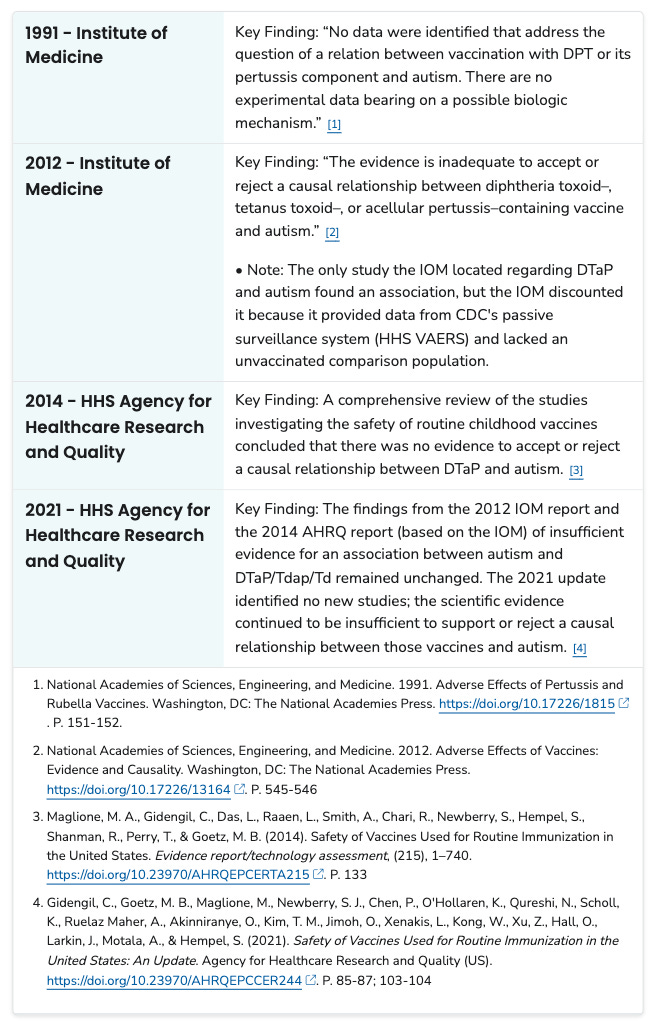
CDC provided a chart showing that across three decades of U.S. government reviews, federal agencies (IOM and AHRQ/HHS) have repeatedly concluded that the evidence is insufficient to confirm or rule out a causal link between DTaP/DTP/Tdap/Td vaccines and autism.
The CDC’s newfound scientific approach to autism’s link to vaccines comes after a large McCullough Foundation meta-analysis of 136 studies concluded that childhood vaccination—especially cumulative, clustered, and early-timed dosing—is the strongest modifiable risk factor for autism and other neurodevelopmental disorders.
After decades of denial, the CDC under the Trump administration and HHS Secretary Robert F. Kennedy Jr. has finally taken the first responsible step toward scientific honesty by admitting that vaccines have never been definitively ruled out as a cause of autism.
This is perhaps the strongest decision the agency has made in years.
By abandoning the unscientific slogan and acknowledging the unanswered questions, the CDC has opened the door to the kind of rigorous investigation that should have been undertaken long ago.
For the first time, federal health authorities are conceding that parents’ concerns are legitimate, that autism’s rise demands real answers, and that the expanding vaccine schedule must be scrutinized—not protected.
If the agency continues down this path, the CDC may finally reclaim what it has lacked for a generation: credibility.
We look forward to the CDC being equally honest about COVID-19 vaccines.
Newly released DARPA files show a Pentagon-backed system designed to turn raw genetic code into real viruses, isolate antibodies, and manufacture 20,000 doses of mRNA vaccines in just two months.
DARPA’s own words paint the clearest picture yet of a fully integrated pre-COVID pandemic U.S. military system that can:
take only a digital sequence of a virus
synthesize an infectious clone
grow it in a “Thaw-and-Infect” panel of human and animal cell lines
isolate antibodies from infected blood
evolve those antibodies using computational mutation engines
encode those antibodies into modified mRNA
package them in lipid nanoparticles
and produce 20,000 doses within 60 days
The program is open about building a platform that works even when no physical virus exists, only a computer file.
This newly released document directly reinforces my own research findings—showing that the Wuhan-Hu-1 spike (COVID-19 spike protein), assembled entirely in silico and containing a non-coronavirus-derived mosaic, fits precisely within the digital-first, synthetic-construction pandemic pipeline DARPA had already built before COVID-19 emerged.
And it was precisely this computationally stitched sequence—first published by Wu et al. in Nature (February 2020) without any purified viral isolate or plaque-verified spike protein—that became the official worldwide “reference” antigen used for diagnostics, modeling, mRNA vaccine design, and every subsequent COVID-19 countermeasure.
The DARPA document suggests the disturbing possibility that the COVID-19 “pandemic” may have originated not from a naturally circulating virus, but from a computationally generated sequence that was subsequently treated as a real pathogen and mass-manufactured into international medical countermeasures (“vaccines”).
And because this digitally assembled spike became the sole antigen used by Pfizer and Moderna, the world’s first mass-distributed mRNA vaccines could have effectively programmed billions of human bodies to manufacture the same engineered, domain-modular construct that DARPA’s biodefense pipeline, UPenn’s antibody-engineering platform, and Baric’s NIH-funded chimeric coronavirus system had already optimized long before COVID was declared a pandemic.
In other words, billions of people may have been injected with instructions to manufacture a synthetic, digitally designed spike protein born not from nature, but from a Pentagon–NIH engineering pipeline.
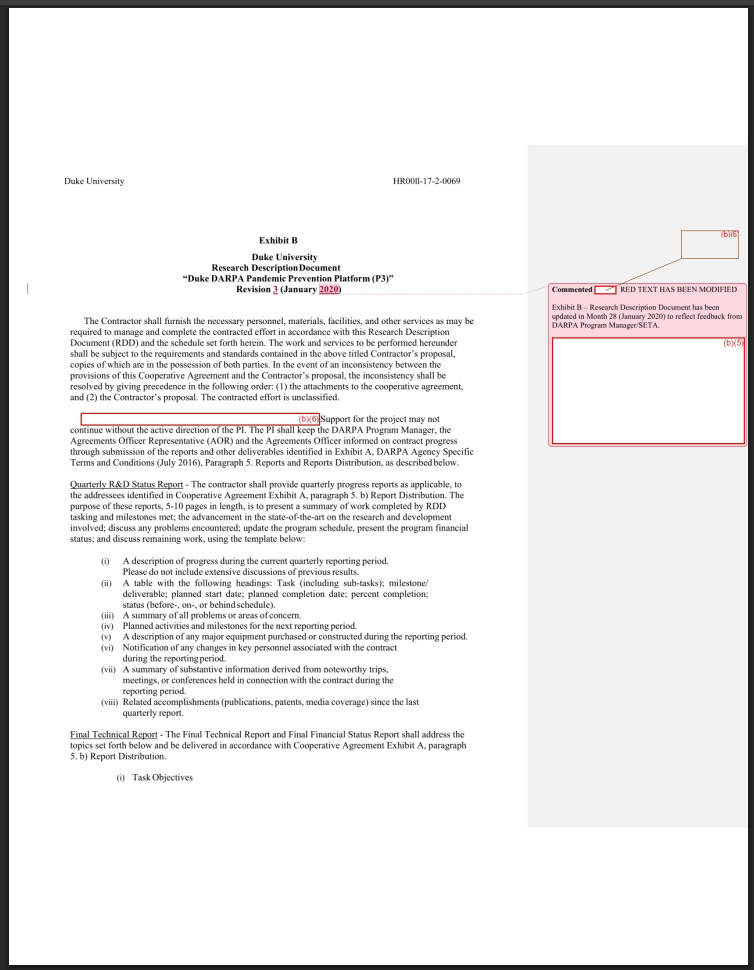
Everything quoted below is verbatim from the FOIA document (HROO11-17-2-0069).
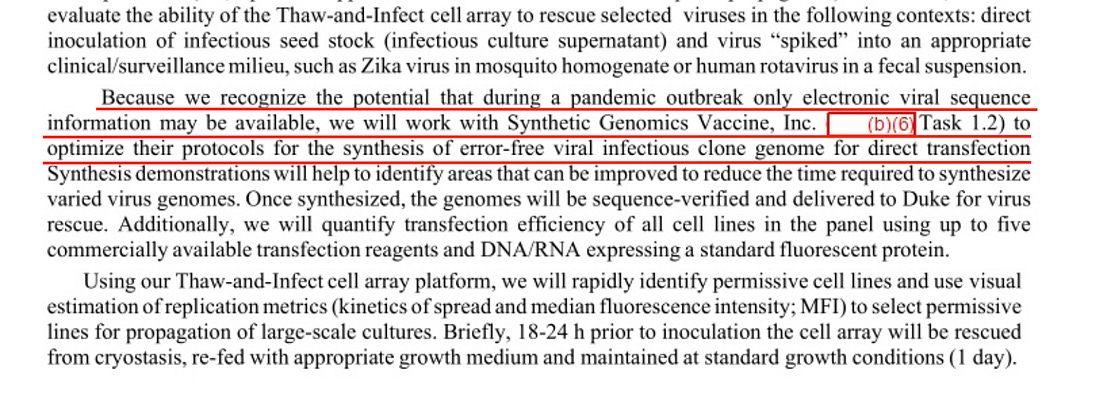
‘Only Electronic Viral Sequence’ May Be Available: DARPA Planned for Digital-Only Outbreaks
DARPA explicitly instructs its contractors to prepare for pandemics where no real virus is ever provided:
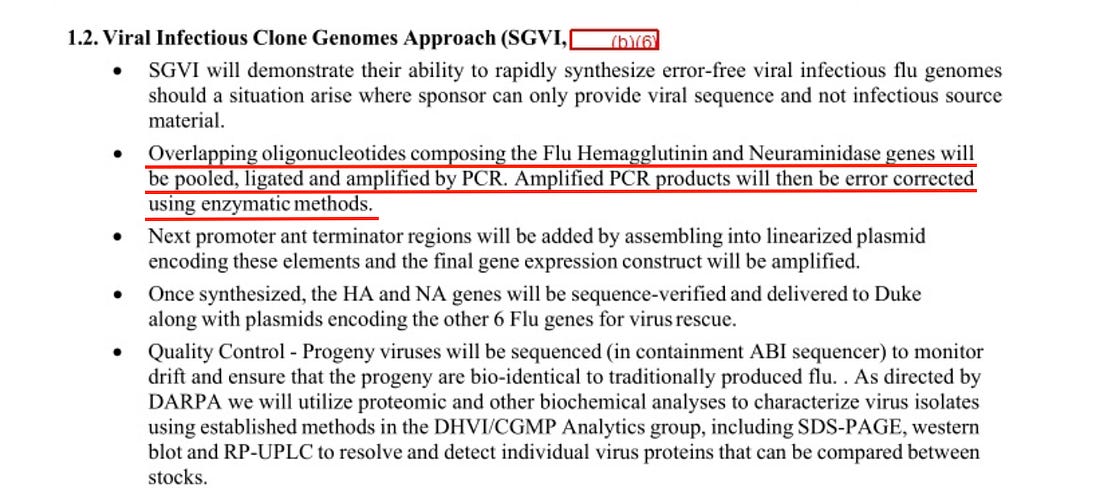
“Because we recognize the potential that during a pandemic outbreak only electronic viral sequence information may be available, we will work with Synthetic Genomics Vaccine, Inc. to optimize their protocols for the synthesis of error-free viral infectious clone genome for direct transfection.”
In plain terms, DARPA expected outbreaks where governments supply genome files instead of biological agents, requiring U.S. laboratories to fabricate the infectious agent themselves.
DARPA’s insistence that full pandemic response must function when “only electronic viral sequence information” exists directly affirms the core premise of Fleetwood’s findings: modern biodefense systems treat digital code as a virus, converting computational constructs into physical biological entities.
The FOIA document reveals that DARPA was funding workflows where a virus is born as data, and only afterward turned into an infectious clone—the same conceptual pathway through which the 32% human-derived mosaic spike emerged.
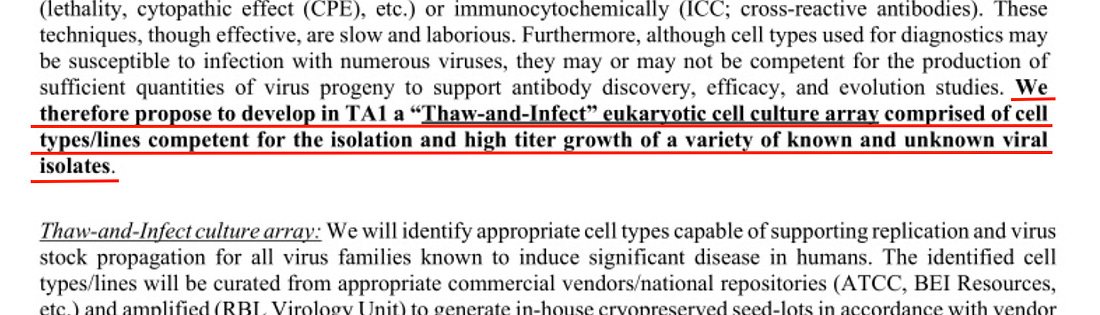
A Permanent ‘Thaw-and-Infect’ Cell Bank Ready for Unknown Viruses
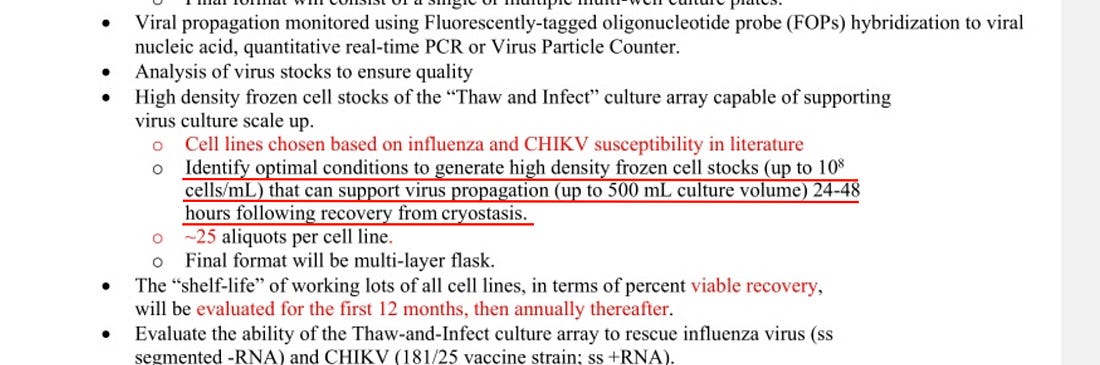
DARPA required Duke to maintain a frozen library of high-density human, animal, and immortalized cell lines capable of instantly growing nearly any virus—even ones with unknown identity:
“We therefore propose to develop in TAI a ‘Thaw-and-Infect’ eukaryotic cell culture array comprised of cell typesilines competent for the isolation and high titer growth of a variety of known and unknown viral isolates.”
And:
The document proposes to “Identify optimal conditions to generate high density frozen cell stocks (up to 10 cells/mL) that can support virus propagation (up to 500 mL culture volume) 24-48 hours following recovery from cryostasis.”
This is a plug-and-play virus amplification factory—a universal propagation system for both natural and engineered pathogens.
Building Viruses From Scratch With Overlapping Oligos
DARPA contracted Synthetic Genomics (SGI)—now part of Codex DNA—to assemble influenza and other viruses by stitching together DNA fragments:
“Overlapping oligonucleotides… will be pooled, ligated and amplified… error corrected… assembled into linearized plasmid… and delivered… for virus rescue.”
An oligonucleotide is a short, synthetically manufactured piece of DNA or RNA.
This is identical to modern gain-of-function synthetic reconstruction workflows.
My A 32% Human-Derived Mosaic paper argues that the Wuhan-Hu-1 spike mirrors exactly the type of molecule produced by the patented “modular domain substitution” framework in Ralph Baric’s “Methods and compositions for chimeric coronavirus spike proteins” patent US9884895B2.
DARPA’s description of error-corrected assembly via overlapping oligos shows that U.S. programs were routinely generating error-free synthetic viral genomes, matching the precision and modular organization seen in my proposed 32% human-derived mosaic spike.
The Wuhan-Hu-1 spike’s highly ordered placement of human motifs across each pre-engineered domain becomes far more plausible in a system where infectious clones are built, not isolated.
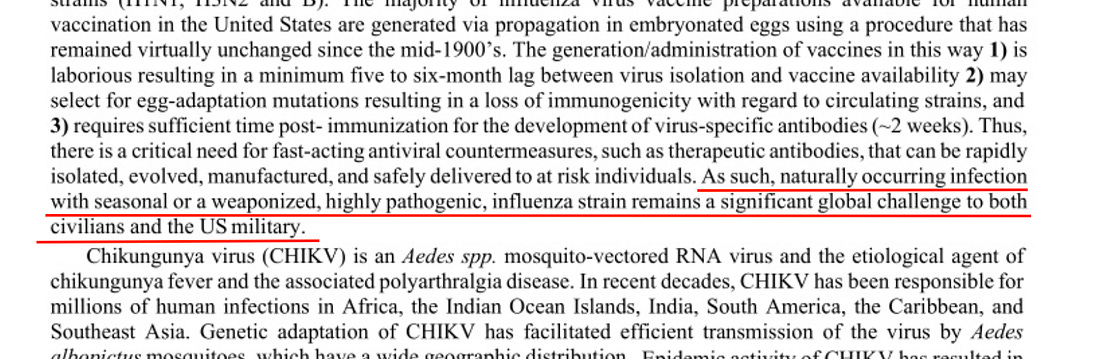
DARPA Planned for ‘Weaponized, Highly Pathogenic’ Influenza Strains
DARPA openly references engineered flu strains as realistic scenarios:
“seasonal or a weaponized, highly pathogenic, influenza strain remains a significant global challenge…”
This appears under “Justification of Pathogens.”
My original research papers show that the spike protein’s functional domains align with synthetic engineering practices developed under NIH-funded coronavirus research.
DARPA’s explicit reference to weaponized strains demonstrates that the U.S. biodefense establishment assumes the existence of engineered pathogens requiring rapid reconstruction and countermeasure systems.
The Wuhan-Hu-1 spike—a modular chimera built from human and coronavirus segments, according to my analyses—aligns squarely with the design space DARPA anticipated.
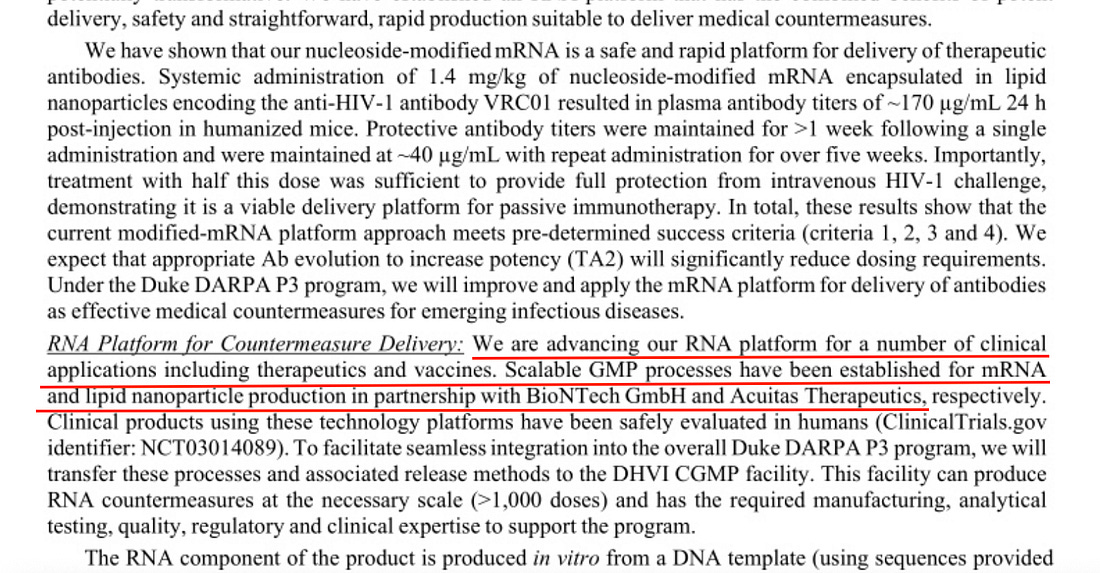
BioNTech & Acuitas Were Already Embedded Before COVID
DARPA confirms that its mRNA countermeasure (vaccine) system was developed in partnership with BioNTech and Acuitas, the same companies behind the Pfizer COVID-19 vaccine:
“We are advancing our RNA platform for a number of clinical applications including therapeutics and vaccines. Scalable GMP processes have been established for mRNA and lipid nanoparticle production in partnership with BioNTech GmbH and Acuitas Therapeutics.”
This was January 2020.
Before the first public COVID vaccine concepts.
My papers document that the in silico spike—never purified or isolated—became the global mRNA vaccine antigen.
DARPA’s acknowledgment that BioNTech and Acuitas were already integrated into pre-pandemic mRNA production pipelines shows that an infrastructure existed where any uploaded gene sequence could rapidly become an LNP-mRNA product.
This is precisely what happened: the computationally assembled Wuhan-Hu-1 spike instantly became the world’s vaccine antigen because the pandemic-response system was engineered to convert digital sequences into mRNA countermeasures.
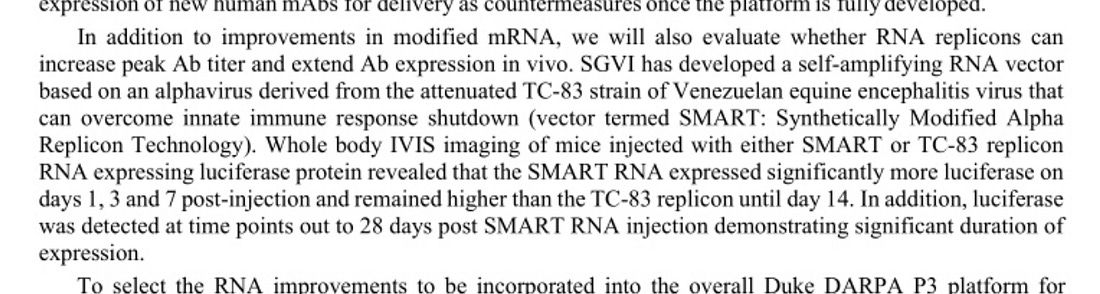
DARPA’s Pre-Pandemic Use of Self-Amplifying RNA (SMART RNA Replicons)
DARPA’s program incorporates saRNA replicons:
“In addition to improvements in modified mRNA, we will also evaluate whether RNA replicons can increase peak Ab titer and extend Ab expression in vivo. SGVI has developed a self-amplifying RNA vector based on an alphavirus derived from the attenuated TC-83 strain of Venezuelan equine encephalitis virus that can overcome innate immune response shutdown (vector termed SMART: Synthetically Modified Alpha Replicon Technology). Whole body IVIS imaging of mice injected with either SMART or TC-83 replicon RNA expressing luciferase protein revealed that the SMART RNA expressed significantly more luciferase on days 1, 3 and 7 post-injection and remained higher than the TC-83 replicon until day 14. In addition, luciferase was detected at time points out to 28 days post SMART RNA injection demonstrating significant duration of expression.”
This predates public awareness of saRNA platforms.
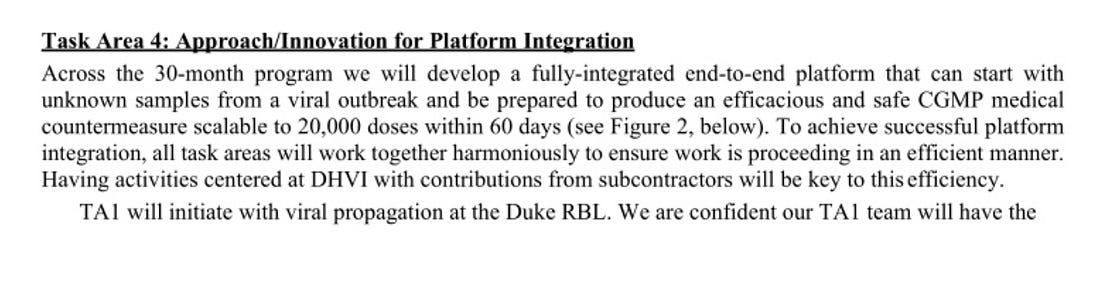
“Across the 30-month program we will develop a fully-integrated end-to-end platform that can start with unknown samples from a viral outbreak and be prepared to produce an efficacious and safe CGMP medical countermeasure scalable to 20,000 doses within 60 days.”
The central claim of my original research is that the SARS-CoV-2 spike was produced via an in-silico-to-synthetic-biology pipeline rather than purified from nature.
DARPA’s 60-day manufacturing concept relies on exactly such digital-to-mRNA transformation workflows.
The fact that DARPA required a system capable of producing tens of thousands of doses from only sequence data validates the environment in which the Wuhan-Hu-1 spike emerged: a digital sequence was treated as a ready-made antigen.
Within days of Wu et al. uploading their computer-assembled spike to public databases, Moderna and Pfizer had already converted that digital construct into mRNA vaccine designs—treating an unpurified, in silico sequence as if it were a fully characterized biological antigen.
Bottom Line
This FOIA document exposes a U.S. military program designed to:
take a digital file
synthesize an infectious clone
propagate it in universal cell arrays
extract and computationally evolve antibodies
encode them in synthetic RNA
package them in LNPs
and mass-produce mRNA countermeasures in weeks
All before SARS-CoV-2 was publicly known.
When viewed side-by-side with Fleetwood’s research findings, the DARPA P3 document does not merely contextualize the mosaic spike — it confirms its plausibility, providing the operational framework in which a 32% human-derived chimeric spike built from digital assembly becomes not only possible, but expected.
Taken together, the evidence suggests the world may not have experienced a natural viral pandemic, but a global biological rollout built around a digitally assembled spike protein that became the foundation for diagnostics, modeling, and the mass vaccination campaign itself.
Baric told intelligence officials in January 2020 the virus could have come from a lab.
A new document released by U.S. Senator Rand Paul (R-KY) confirms the CIA and the Office of the Director of National Intelligence (ODNI) were consulting Ralph Baric about coronavirus engineering years before COVID-19.
Baric personally briefed U.S. intelligence officials in January 2020 that the virus “could have come from a lab, possibly after some engineering,” including a possible accidental release from the Wuhan Institute of Virology.
It’s written directly into the letter released by Sen. Rand Paul on October 30, 2025.
A Hidden 2015 CIA–Baric Meeting on Coronavirus ‘Evolution and Human Adaptation’
The documents show that in September 2015, the CIA—through an ODNI-facilitated contact—reached out to Baric for a classified discussion on coronavirus manipulation and adaptation to humans.
The PDF states:
The Office of the Director of National Intelligence (ODNI) and the Central Intelligence Agency (CIA) contacted Dr. Ralph Baric… to discuss a “possible project” relating to “[c]oronavirus evolution and possible natural human adaptation.”
This one sentence could destroy a decade of denial.
Not only was Baric a collaborator of the Wuhan Institute of Virology—he was already advising the U.S. intelligence community on coronavirus evolution five years before the outbreak attributed to Wuhan.
And the communication did not originate from academia.
It was CIA-affiliated.
Baric Was an Intelligence Advisor—Meeting With ODNI Four Times a Year
The document confirms Baric was not an isolated consultant.
He was part of ODNI’s Biological Sciences Experts Group (BSEG)—a select circle of scientific advisors who brief U.S. intelligence on biological threats.
The letter states that on January 23, 2020, Baric was asked by “the Sponsor” to give a briefing to “B Group”—a reference to the BSEG.
Just six days later, he delivered it.
And what he told them matters.
January 2020: Baric Told U.S. Intelligence the Virus May Have Come From a Lab
On January 29, 2020, Baric emailed ODNI a PowerPoint presentation titled “Origins.”
Inside that presentation, according to the document:
The slide… discussed the possibility of an accidental release by the WIV.
This was before Fauci began publicly insisting the virus was natural.
Before “Proximal Origin” was published.
Before nearly all media outlets declared the lab-leak theory “debunked.”
Baric—the world’s leading coronavirus manipulator—told U.S. intelligence the exact opposite of what the public was later told.
Rand Paul’s Letter Reveals the Scope of What Intelligence Has Been Hiding
In the letter addressed to DNI Tulsi Gabbard, Sen. Paul invokes his committee’s jurisdiction to request all records related to:
Baric
Fauci
Collins
Morens
Daszak
Linfa Wang
Jeremy Farrar
Ian Lipkin
Fort Detrick IRF
NIH Rocky Mountain Labs
Gain-of-function research (GOF)
Dual-use research of concern (DURC)
The DEFUSE proposal
DARPA PREEMPT
USAID PREDICT
And all intelligence assessments related to COVID-19 originshere
This is the entire architecture of the U.S. biodefense system—and every individual who shaped the official COVID-19 narrative.
The implication is obvious: ODNI and CIA possess records that have never been disclosed to Congress or the public.
The Most Damning Line in the Document
Beyond the meetings, the briefings, and the intel connections, this line stands above all else:
I have obtained information that leads me to believe the Intelligence Community is in possession of records critical to the Committee’s ongoing inquiry.
That statement comes from the Chairman of the Senate Committee on Homeland Security and Governmental Affairs.
It is, in essence, a formal accusation that the Intelligence Community is withholding evidence about the origins of COVID-19 and about the U.S. role in coronavirus manipulation.
Why Baric Is the Central Figure
The document centers on Baric for a reason.
Baric:
invented the reverse-genetics system used by the Wuhan lab,
collaborated with Shi Zhengli on chimeric SARS-like viruses
trained WIV scientists,
helped create humanized mice for testing,
applied for the DEFUSE grant involving engineered cleavage sites,
communicated repeatedly with ODNI and CIA,
and delivered the January 2020 “Origins” briefing acknowledging a possible lab accident.
It is impossible to understand COVID-19 without understanding Baric’s precise role.
And now, for the first time, official government records confirm that U.S. intelligence agencies were working directly with him—and listening to his warnings—long before the pandemic reached the public.
Bottom Line
The document released by Sen. Rand Paul confirms three explosive facts:
The CIA and ODNI consulted Baric in 2015 about coronavirus engineering and human adaptation.
Baric formally advised U.S. intelligence in January 2020 that COVID-19 could have emerged from a lab—including accidental release from the Wuhan Institute of Virology.
The Intelligence Community still holds undisclosed records related to Baric, Fauci, Collins, Daszak, DARPA, and the Wuhan lab—and Congress is demanding them.
This is no longer a debate about “misinformation.”
This is now a matter of documented intelligence involvement—and the possibility that the U.S. government was engaged in coronavirus engineering research, directly or indirectly, years before the world was told COVID-19 emerged naturally.
Two synthetic H7N7 hybrids demonstrated silent, high-risk shedding behavior in experimental chickens.
The United Kingdom’s top government virology lab engineered new avian influenza viruses using reverse genetics, according to an October paper in Virology documenting the deliberate construction and experimental infection of chickens with synthetic H7N7 avian influenza variants.
The study findings are revealed as the WHO builds a permanent international system for collecting, storing, and redistributing pathogens under its new Pandemic Agreement.
The work, performed at the Animal and Plant Health Agency (APHA-Weybridge), reconstructed the mutation pathway by which low-pathogenic bird flu transitions into a lethal high-path strain.
The study confirms that government researchers created two genetically engineered influenza viruses, altered at the exact molecular switch responsible for converting mild bird flu into its highly pathogenic form.
The paper—“Infection of point-of-lay hens to assess the sequential events during H7N7 high-pathogenicity avian influenza emergence at a layer premises”—states that APHA scientists generated two recombinant H7N7 viruses through reverse genetics (“RG”):
“Two viable RG rescued recombinant LPAIVs were genetically identical to the isolated H7N7-HPAIV except for the CS, with one containing a DBCS (H7N7-DBCS) and the other a SBCS (H7N7-SBCS).”
These engineered viruses were then used to infect groups of live hens under SAPO Level 4/ACDP Level 3 biocontainment—the UK’s highest animal-pathogen security facilities.
The bird flu experiment raises national security concerns, given that Congress, the White House, the Department of Energy, the FBI, the CIA, and Germany’s Federal Intelligence Service (BND) have confirmed that the COVID-19 pandemic was likely the result of lab-engineered pathogen manipulation.
Governments all over the world are performing the same experiments on bird flu pathogens.
Creating New Bird Flu Viruses With Engineered Cleavage Sites
The engineered viruses differed only at the hemagglutinin (HA) cleavage site, the key molecular feature that determines whether an avian influenza virus remains low-pathogenic or becomes systemically lethal.
H7N7-SBCS: a synthetic virus with a single-basic cleavage site
H7N7-DBCS: a synthetic virus with a di-basic cleavage site
Both constructs kept all internal genes identical to a known high-path H7N7 outbreak strain, meaning APHA researchers produced low-path versions of a high-path virus with engineered cleavage-site mutations.
The paper states:
“The SBCS, DBCS and MBCS (HPAIV) viruses were otherwise genetically identical (including the internal genes).”
In plain terms, they took the genome of a highly pathogenic bird flu virus, edited the cleavage site to make it “low-path,” and then infected chickens to observe how the high-path virus might emerge again.
This is the same cleavage-site mutation that historically turns H5 and H7 viruses into lethal strains.
The Engineered Viruses Showed New Functional Behavior
Although created as “low-path” models, the engineered viruses demonstrated new and concerning biological behavior:
Infection rates differed sharply between the constructs.
The DBCS-engineered virus behaved more like a high-path precursor.
Birds exposed to engineered strains survived later high-path challenge—but 95% still shed high-path virus, creating silent spreaders.
The study reports:
“Prior H7N7-LPAIV exposure did not prevent H7N7-HPAIV replication… 20/21 (95%) shed H7N7-HP.”
That means infected birds carried and expelled high-path virus without dying, a dangerous epidemiological function not typical of standard high-path bird flu outbreaks.
This creates a superspreading scenario in which visibly healthy birds shed lethal virus into water, bedding, and surrounding environments.
The environmental sampling confirmed this:
“H7N7-HPAIV environmental contamination occurred… in drinking water and mixed straw/feces.”
A Step-by-Step Reconstruction of How High-Path Bird Flu Emerges
The study explicitly aimed to recreate the sequential mutation steps under which a low-path strain turns into a high-path one.
The authors describe the goal:
“Our current study aimed to model the sequential events… beginning with H7N7-LPAIV incursion, followed 2 weeks later by H7N7-HPAIV challenge.”
This experiment reproduces, in controlled conditions:
Introduction of engineered low-path virus
Mild, low-level infection
A second exposure to a high-path strain
Silent onward shedding of the high-path virus
Environmental contamination
Survival of spreading hosts
This combination of enhanced survival + sustained shedding is precisely the kind of phenotype that raises dual-use questions in influenza engineering.
Conducted in Government BSL-3/4 Facilities
All work occurred at APHA-Weybridge under strict containment:
“Experiments were carried out in UK approved SAPO level 4, ACDP level 3 biocontainment laboratories.”
SAPO Level 4 is one of the highest pathogen-containment designations in the UK, typically associated with agents capable of major agricultural or economic harm.
Bottom Line
A UK government virology lab:
engineered two new influenza viruses,
from a known high-pathogenic backbone,
altered the cleavage site, the genetic switch controlling lethality,
infected live hens with the engineered constructs,
and documented how these modifications enabled silent high-path virus replication and shedding.
This work confirms the intentional creation of new influenza viruses and demonstrates functional behaviors—particularly prolonged shedding without mortality—that raise significant dual-use and biosecurity concerns.
The world may be one step closer to another lab-made pandemic.
One-third of the so-called SARS-CoV-2 spike protein was assembled from human genetic material, not viral RNA—raising urgent questions about the origins of the sequence used in mRNA vaccines.
3D print of a spike protein on the surface of SARS-CoV-2—also known as 2019-nCoV, the virus that causes COVID-19. Spike proteins cover the surface of SARS-CoV-2 and enable the virus to enter and infect human cells. For more information, visit the NIH 3D Print Exchange at 3dprint.nih.gov. Credit: NIH/Wikimedia Commons under the Creative CommonsAttribution 2.0 Generic license. Image saturation, vibrace, color, and temperature have been altered in Canva Pro.
The most critical sequence in modern medical history—the “spike protein” of SARS-CoV-2—may never have existed in nature at all.
It was digitally stitched together—in silico (in a computer)—from fragments of RNA found in the lung fluid of one patient in China by Chinese researchers in early January 2020.
The genetic information was rapidly disseminated through databases such as GenBank and GISAID.
The foundational publication by Wu et al. in Nature in February 2020 represented the first peer-reviewed article presenting the full genome sequence of the novel coronavirus (SARS-CoV-2), including its spike protein sequence.
That synthetic model then became the blueprint for the Pfizer and Moderna mRNA vaccines injected into over five billion people worldwide.
This raises a critical question: if the Wuhan team’s “virus” was assembled from a sick man’s lung fluid, why does its defining spike protein contain extensive human genetic material—was this simply contamination from the patient’s own RNA, or evidence that the sequence was artificially constructed using human genes?
To identify the human components of that digital construct, I used the NCBI BLASTp tool—a government-hosted bioinformatics search engine that compares protein sequences against the entire global database of known organisms—to systematically test the Wuhan spike protein for matches to human proteins, revealing extensive alignments to human endogenous retroviruses and cellular genes that are absent in any bat or pangolin coronavirus.
The full research article, along with all six NCBI BLASTp run raw data files and their reproducible Request IDs, has been publicly archived on Zenodo (DOI 10.5281/zenodo.17583428), ensuring complete transparency and independent verification of every alignment reported.
You can also read and download the research article below:
A 32% Human Derived Mosaic In The In Sil…724KB ∙ PDF file
32% of the spike protein—416 amino acids—matches human genetic material. The overlaps include sequences from human endogenous retroviruses (HERV-K, HERV-H, HERV-W) and cellular proteins linked to immune modulation, fusion, and intracellular trafficking.
No comparable overlaps exist in bat or pangolin coronaviruses. These human alignments appear only in the SARS-CoV-2 spike, not in its supposed animal precursors.
Six independent NCBI BLASTp runs confirm the findings. Each run produced reproducible, statistically significant human alignments—with probabilities of random occurrence as low as one in 10²⁰.
Critical overlaps occur in known functional domains:
HERV-K envelope homology in the S2 fusion region, which controls cell-to-cell syncytia.
HERV-H alignment at the furin cleavage site, already linked to a patented human gene (MSH3).
HERV-W (MSRV) match in the N-terminal domain, associated with neuroinflammation.
Additional matches with human lysosomal, mitochondrial, and zinc-finger proteins that govern energy metabolism and DNA regulation.
Why It Matters
If one-third of the spike’s code came from human sources, two explanations remain:
Accidental misassembly—contamination from human RNA in the original Wuhan sample (BALF), which was never purified before computational assembly; or
Intentional inclusion—deliberate use of human sequences to enhance infectivity, persistence, or immune modulation.
Both possibilities challenge the official story that the SARS-CoV-2 genome was a “naturally emerging” virus.
Independent Validation
Multiple clinical studies now confirm that these same HERV sequences are biologically active in COVID-19 patients:
Petrone et al., 2023: HERV-K and HERV-W upregulated in nasal mucosa; expression levels predict hospitalization.
Temerozo et al., 2022: HERV-K found in lung aspirates of deceased ICU patients.
Guo et al., 2022: HERV activation triggers interferon and inflammation via cGAS-STING.
Balestrieri et al., 2023: HERV-W linked to pediatric MIS-C and Kawasaki-like syndromes.
Wang et al., 2023: HERV-K expression correlates with pulmonary hypertension.
Wu et al., 2025: SARS-CoV-2 directly transactivates HERV-K, producing retrovirus-like particles that drive senescence and neurodegeneration.
Together, these findings corroborate that the “human” portions of the spike aren’t computational noise—they’re functionally active biological components.
Bottom Line
The official reference spike (YP_009724390.1)—used worldwide in vaccine development—is a digital, computationally assembled sequence derived from patient RNA rather than from a purified viral protein.
This sequence contains hundreds of human gene fragments precisely placed within key functional domains impacting viral fusion, immune evasion, and inflammation pathways.
While standard re-assembly of the original raw sequencing data (SRR10971381) excluding human reads has been performed, no published study has conducted an independent, viral-only de novo assembly focusing specifically on the spike region to test for potential human contaminant incorporation.
Thus, the origin of this 32% human mosaic—whether due to accidental laboratory contamination or intentional chimeric engineering—remains unresolved and requires targeted re-analysis.
Recent Comments