The Truth Is Out There

Posts tagged ‘history’

The National Injunction Crisis Is Threatening Global Stability


Screenshot via X [Credit: @amuse]

Washington did not freeze at Valley Forge, nor did Lincoln bleed the Union at Gettysburg, so that two and a half centuries later, federal judges could rewrite American foreign policy from a bench in Boston. Yet here we are: unelected district court judges issuing orders with global repercussions, shackling the executive branch, endangering diplomacy, and destabilizing entire regions.

The case of D.V.D. v. DHS, now immortalized in Secretary of State Marco Rubio‘s sworn declaration, is the most vivid and alarming example yet. A single judge, Brian E. Murphy, appointed by President Joe Biden, has upended delicate international arrangements, disrupted military coordination in a counter-terrorism hotspot, and jeopardized humanitarian efforts across the Horn of Africa, all with a flourish of his gavel.

This is not justice, it is judicial imperialism. And if it is not stopped, it will unravel the fabric of constitutional government.

Let us begin with the basics. The Constitution vests foreign policy authority in the executive branch. Article II is unambiguous. The President “shall receive Ambassadors and other public Ministers,” and, with the advice and consent of the Senate, “make Treaties.” In practice, the president, through the Secretary of State, negotiates with foreign powers, calibrates the tone and tenor of our international presence, and oversees the strategic deployment of both soft power and military muscle.

The judiciary, by contrast, was never intended to function as a foreign policy apparatus. The Federalist Papers make this clear. As Alexander Hamilton wrote in Federalist No. 78, the judiciary “has no influence over either the sword or the purse.” Its power “may truly be said to have neither FORCE nor WILL, but merely judgment.” Yet what we see today is the inverse: a judiciary with the will of a legislature and the force of an executive.

Consider the chaos Judge Murphy has sown. Secretary Rubio’s declaration outlines how the judge’s May 20 injunction halted the removal of eight foreign nationals, including convicted felons, who were en route to South Sudan, rerouting them into Djibouti instead. This was not a harmless detour. It required US diplomats to scramble and re-explain our shifting commitments to a key regional partner. It delayed counter-terrorism operations headquartered at the Combined Joint Task Force–Horn of Africa. It chilled humanitarian coordination efforts in famine-stricken zones. It even postponed a major energy deal in Libya, costing American enterprise and reducing our leverage in a country already teetering on civil war.

What gives one man sitting in a courthouse on the East Coast the authority to rewrite US policy in Tripoli, Juba, and Djibouti? What constitutional principle justifies such reach?

None. But the vehicle of this judicial arrogance is the nationwide injunction, a tool so radical, so constitutionally suspect, and so corrosive to governance that even liberal legal scholars have begun to question its proliferation. Justice Clarence Thomas, prescient as ever, warned in Trump v. Hawaii (2018) that nationwide injunctions “have a tendency to encourage forum shopping, politicize the judiciary, and deprive other courts of the ability to weigh in on legal questions.”

Indeed, if one sympathetic judge can block an executive action across all 50 states, then the presidency is no longer unitary, it is hostage. Foreign leaders are not engaging with the United States government, but with whichever district judge last issued a ruling. Our diplomacy becomes erratic, our word less reliable, our authority diluted.

This distortion of power is not theoretical. It is real, and it is recurring. Remember when a district court blocked President Trump’s ban on travel from terrorism-prone countries in 2017? That nationwide injunction, issued by Judge James Robart in Washington, not only overruled the president’s national security judgment but also forced foreign governments to reevaluate their cooperation with US intelligence, uncertain if the courts or the White House were truly in charge.

The incentive structure is equally perverse. Activist groups now scour the country for friendly judges, ideological allies with a record of lawfare activism, then file lawsuits not to win narrow relief for plaintiffs, but to engineer sweeping political victories that Congress never authorized and voters never endorsed. These are not lawsuits, they are stealth coups.

One need not be a strict textualist to grasp the danger here. Imagine if a single judge could halt a military deployment, override a treaty, or block a Secretary of State from evacuating embassy personnel. We are sliding into precisely that paradigm. The judiciary, far from checking the executive, is usurping its powers outright. The result is paralysis, confusion, and an erosion of the separation of powers upon which our constitutional order depends.

The problem is compounded when the judiciary aligns itself with globalist NGOs and open-borders ideologues. In D.V.D., the class members whose deportations were halted include not just migrants with questionable asylum claims but convicted criminals. By granting them judicial sanctuary, the court effectively overrides the State Department’s security assessments, replacing sovereign discretion with ideological dogma. Is the court prepared to vet these individuals itself? Is Judge Murphy better informed on regional conflicts in the Horn of Africa than the National Security Council? Or is this just another example of a liberal judge indulging his priors at the expense of the republic?

The stakes are high. With the return of President Trump to office and the reshaping of America’s global posture, the courts must not become a backdoor veto. We are witnessing a transition away from the apologetic diplomacy of the Obama-Biden years toward a policy of strength, reciprocity, and unapologetic national interest. That pivot cannot be sabotaged by judges still committed to the prior regime.

What is to be done? First, the Supreme Court must act on the opportunity already before it. The Court has heard oral arguments in a pending case involving birthright citizenship that includes critical questions about the legitimacy and scope of nationwide injunctions. All that remains is a decision. The Court should use this case to strike down the practice as inconsistent with Article III limitations on judicial power. Such rulings should be confined to the parties before the court, not the entire country. Injunctions should bind defendants only to the extent necessary to provide relief to plaintiffs, not to reshape executive policy for 330 million Americans.

Second, Congress should act. A statute should clarify that nationwide injunctions exceed the judicial power under the Constitution. This would restore balance, eliminate forum shopping, and return the courts to their proper role: arbiters of disputes, not architects of foreign policy.

Finally, the executive must resist. The State Department and DHS should not preemptively concede to every nationwide injunction as a fait accompli. Where there is ambiguity or statutory discretion, the administration should assert its prerogatives. The president is elected. The judge is not. Accountability matters.

History offers little comfort to those who allow unelected tribunals to dictate the terms of sovereignty. Empires have collapsed under the weight of judicial excess. Rome, after all, did not fall to barbarians alone, but to internal legal sclerosis and a metastasized bureaucracy. If we do not rein in our courts, we will cede our republic to the whims of the courts and socialist courts at that.

SFFAS 56: The Secret Loophole Hiding Billions In Fraud, Waste & Abuse Discovered By DOGE


Imagine a vast ledger, chronicling the transactions of a mighty republic, now riddled with deliberate gaps and omissions, gaps no auditor may probe, no citizen may question. This is no fanciful dystopia, but the present reality, quietly authorized by what is known as Statement of Federal Financial Accounting Standards 56 (SFFAS 56). While initially crafted, perhaps, with honorable intentions to shield ‘classified’ operations from hostile eyes, SFFAS 56 now threatens the very transparency and public accountability that sustain a free government. Federal agencies are allowed to use SFFAS 56 to hide spending they desire to be ‘classified’ from the American people, Congress, and even the President of the United States.

What is SFFAS 56? At its core, it is an administrative rule issued by the Federal Accounting Standards Advisory Board (FASAB) in 2018, not a statute passed by Congress. It allows any federal agency to modify its financial statements in order to obscure sensitive national security information. This authority extends beyond the obvious domains of intelligence or defense, touching every department that produces General Purpose Federal Financial Reports, from USAID to the Department of Energy. In theory, this safeguard exists to prevent enemies from exploiting financial disclosures to learn state secrets. In practice, it creates a black hole into which billions of taxpayer dollars vanish without a trace.

To understand the peril, one must first grasp the astonishing breadth of the rule. Under SFFAS 56, agencies may alter financial reports by removing, aggregating or fabricating information, provided these adjustments do not “materially” affect the reported net results. Further, agencies can exclude entire sub-entities from reports or consolidate them elsewhere, masking not merely amounts but organizational structures themselves. Crucially, neither the public nor Congress is afforded any right to know when these modifications occur, how often they happen or the underlying reasons. A general, but nonspecific, disclaimer suffices, buried in the back pages of thick agency reports: “Accounting standards allow certain presentations and disclosures to be modified to prevent the disclosure of classified information.”

Even Congress itself can be kept in the dark unless an agency, by its own volition, deigns to disclose the concealment. Thus, SFFAS 56 effectively removes the legislature’s constitutional power of the purse from critical oversight. It conjures a legal purgatory where funds can be appropriated for one purpose, redirected for another and hidden altogether from elected representatives. The theoretical protections against abuse, internal controls, audits, classified oversight, are weak reeds indeed when the very financial data needed to detect mischief has been sanitized.

Proponents of SFFAS 56 argue that, without such protections, enemies could piece together vital intelligence from innocent-looking financial entries. Yet the ingenuity of our foes cannot justify the abandonment of self-government. If secrecy is to be justified, it must be rare, tightly controlled and explicitly authorized by the people’s elected representatives. Instead, SFFAS 56 inverts the burden: concealment becomes the default, accountability the exception. One might as well argue that because a handful of bank robbers lurk at large, all citizens must henceforth veil their account balances from scrutiny.

History offers sobering lessons when governments assume powers of secret spending. The clandestine financing of “black ops” during the Cold War, sometimes used for noble ends, sometimes for ignoble, occurred under conditions of limited and direct congressional oversight. Even then, abuses proliferated. The Iran-Contra affair revealed how easily noble motives could give way to clandestine mischief when oversight was thwarted. Now, SFFAS 56 institutionalizes a structure far broader and more opaque than anything Colonel Oliver North could have dreamed.

Under SFFAS 56, the Department of Defense could award lucrative contracts to politically connected firms and conceal both the recipient and the amount from public view. USAID could fund controversial NGOs both here and abroad without alerting Congress or the public. Worse still, agencies could funnel money to the family members of political figures or even, under a perverse interpretation, fund hostile entities abroad, all behind the iron curtain of “classified activities.”

Consider a hypothetical yet disturbingly plausible example. Suppose USAID wished to grant a billion dollars to the Clinton Foundation or the Open Society Foundation, ostensibly to support development projects in unstable regions. Concerned that public knowledge of such a grant might spark political controversy and, by some stretch, be construed as harmful to national security, the head of USAID could invoke SFFAS 56 to hide the transaction. No notification to the president would be required. Congress would remain unaware. The public, journalists and watchdog groups would find themselves stonewalled. Even if the agency head believed sincerely that the money would be wisely spent for a legitimate purpose, no one outside his immediate circle could help him ensure that actually happened. Oversight by the press, vigilant members of Congress or curious citizens would be thoroughly stymied.

Some may protest that the President retains control of the executive branch, and thus can police such abuses internally. But the president’s power is not omniscient. Unless agency heads choose to disclose their use of SFFAS 56, even the president may remain unaware of the specific expenditures being hidden. In effect, FASAB, a mere advisory board, has created a tool so potent that it outstrips the constitutional balance of powers itself.

The irony is sharp. Conservatives, rightly skeptical of administrative overreach, have long warned against the quiet accretion of unaccountable power by regulatory boards. Yet here lies one of the gravest examples: a board that issues “standards” more consequential than many laws, without democratic debate or meaningful constraint.

President Trump must act decisively. First, he should formally direct every agency head to audit the use of SFFAS 56 within their departments since 2018. For every instance, they must privately report to the president the recipient, the amount, the date and the justification for concealment. Such a review need not, and should not, compromise national security, but the chief executive must know whether public funds have been lawfully spent.

Second, the President should demand that the leaders of FASAB, particularly the current chair, George B. Scott, and Executive Director Monica R. Valentine, rescind or at least reform SFFAS 56. If they refuse, legislation must follow. Congress, spurred by the White House, must reassert its constitutional authority and mandate that no funds shall be expended without public disclosure unless specifically authorized by statute and subjected to classified presidential and congressional oversight.

It strains credulity that an executive board not directly answerable to voters or even the president should wield the power to dissolve financial transparency across the entire federal government. Even among classified programs, there are means of maintaining oversight without sacrificing security. Classified briefings, secure audits, special oversight committees, all these mechanisms exist and function in sensitive areas of defense and intelligence. What SFFAS 56 does is more radical: it banishes oversight by design.

In Federalist 51, Madison observed that “if men were angels, no government would be necessary.” A corollary is clear: if governments were composed entirely of angels, perhaps SFFAS 56 would pose no danger. But human beings, tempted by self-interest, ambition and error, cannot be trusted with unchecked authority. Transparency and oversight are the sinews of a free republic. Without them, the Constitution is a parchment barrier.

Critics may claim that rolling back SFFAS 56 will impair national security. This is a false dilemma. It is possible to protect legitimate secrets while maintaining financial accountability. It is not necessary, indeed, it is dangerous, to dismantle the public’s right to know how its money is spent in the name of security.

SFFAS 56, well-intentioned or not, is an invitation to abuse. It is a standing temptation to the unscrupulous. It is a blindfold upon the eyes of the republic. It must be reformed, and if reform proves impossible, it must be repealed.

The ledger of a free people must be open and not riddled with secret ink. President Trump must insist that the light of public scrutiny shines once more upon the accounts of the United States. The integrity of the American experiment depends on it.

FBI Reports: Teen Killed Parents as Part of Satanic Plot to Assassinate President Trump. Absolutely Frigging Chilling!


FBI Reports: Teen Killed Parents as Part of Satanic Plot to Assassinate President Trump

There’s a growing unease spreading across the heartland, a sense that the values holding our nation together are fraying at the edges. You’ve felt it too, right? That quiet disturbance beneath the surface of daily life, suggesting the foundations we once took for granted might be cracking. It whispers of challenges not just from distant shores, but from within our own communities, festering quietly.

This isn’t mere political disagreement; it feels deeper, more fundamental. It’s that unsettling feeling that bedrock principles – faith, family, respect for authority, the very fabric of Western civilization – are being steadily chipped away by forces that seem to prefer darkness to light, chaos to order. Makes you wonder where this is all headed, doesn’t it? What happens when the guardrails ensuring basic decency start to buckle under the strain?

We see the symptoms pop up, often dismissed by the mainstream as just isolated incidents, nothing to worry about. But thoughtful conservatives understand that sometimes these acts of depravity signal a more profound cultural sickness, a rot spreading unseen until it breaks through in the most shocking ways imaginable. Are we really paying attention or just hoping it goes away?

And then, bam, you get news like this out of Waukesha, Wisconsin, confirming those very fears. In a crime that chills the soul, investigators allege that a 17-year-old high school student, Nikita Casap, brutally murdered his own parents, Tatiana Casap and Donald Mayer, in their home back in February. The details paint a picture of calculated violence against the very people who gave him life and raised him. Just when you think the depths have been plumbed…

But the horror didn’t stop there. Indeed, it intensified dramatically when the FBI revealed the why behind the parricide. Court documents indicate this wasn’t just some tragic, albeit horrific, domestic dispute. Nope. Investigators state the teen killed his parents to gain the “financial means and autonomy” necessary for a far more sinister plot: the assassination of President Donald Trump.

Yes, you read that correctly.

Unmasking the Hate

So, what kind of poison could drive a kid to this? According to the FBI, the teenager was swimming in a venomous cocktail of extremist ideologies. He was allegedly part of a “satanic cult” harboring “strong anti-Judaism anti-Christian and anti-western ideologies.” Further investigation has uncovered links to a neo-Nazi group called the Order of Nine Angles, praise for Adolf Hitler, and deeply antisemitic writings. Get this: Satanists and Nazis, apparently now swapping notes? You couldn’t script this stuff up, but it seems they found common ground in hating everything foundational and good to America and Judeo-Christian values.

The teen’s own manifesto, found by investigators, laid bare the chillingly blunt objective. It wasn’t just about some personal vendetta against President Trump; it was about deliberately destabilizing the nation itself. The goal was explicit: pure anarchy. His own words tell the chilling, if predictable, story:

“As to why, specifically Trump, most believe it’s pretty obvious. By getting rid of the president and perhaps the vice president, that would have guaranteed bringing in chaos.”

Supposedly points for honesty it would appear.

A Deeper Conspiracy?

Now, was this twisted plot conceived entirely in a teenager’s head? The court documents allege Casap aimed not just to kill the President but ultimately sought to overthrow the U.S. government. And naturally, there are whispers of outside contact. Investigators found evidence suggesting he was communicating with individuals in Russia about his plans and even plotting an escape to Ukraine. It certainly raises disturbing questions about who else might be involved, pulling strings or fanning flames.

Make no mistake, this wasn’t just some basement fantasy. Authorities stated the teen had purchased a drone and explosives for a potential attack – taking concrete steps. Casap’s later arrest in Kansas while driving his murdered stepfather’s car containing a handgun, stolen valuables, a pried-open safe, and $14,000 in cash, practically screaming premeditation and flight. He now faces a raft of felony counts, including first-degree intentional homicide, and potential federal charges for the assassination plot. Casap is being held on a $1 million bond. It should be no bond.

This entire horrifying episode serves as a brutal, flashing red light. It’s a reminder of the serious internal threats we face. The ideologies fueling such hatred – whether they call themselves Satanists, Nazis, or wave some other anti-American banner – feast on cultural decay and the rejection of traditional morality. They target not just individuals like President Trump, but the very stability, fabric and soul of our nation.

The fight against this darkness requires more than just hoping law enforcement catches them all. This isn’t just some news story; it demands a reaffirmation from us of the values that actually built this country: faith, strong families, respect for life, and unwavering patriotism. Are we just going to shrug this off or will we remain vigilant, recognize the signs of this rot, and stand firm in defending the principles that stand in stark opposition to the chaos these extremists crave?

Lawmakers: CCPs influence on American investment must be stopped


As the U.S. and China escalate their tariff rates in an all-out trade war, two congressional committees held a joint hearing Wednesday on the problem of the Chinese Communist Party’s influence on American investment and possible solutions.

The Chinese Communist Party is embedded in Chinese business to the extent that the assets of any American who has tried to do business in China, invests in the stock market, international index funds or mutual funds, or who has a 401K or pension invested in international index funds is at risk, according to TV personality and businessman Kevin O’Leary. O’Leary was called as an expert witness at the hearing.

The hearing was hosted by a House select committee that focuses on “strategic competition” between the United States and the Chinese Communist Party and the Senate Special Committee on Aging, as the party’s involvement in the Chinese economy and financial scams stands to disproportionately impact older Americans, according to committee members.

“The [Chinese] government has chosen to be America’s enemy. Unfortunately, that’s not a problem that only our military intelligence community has to worry about,” said Sen. Rick Scott, R-FL, chairman of the aging committee. “ If you have your retirement invested in anything that is controlled by or under the jurisdiction of the Chinese Communist Party, you are at risk of losing every dollar, and this could happen overnight.”

The senator went on to say that “there is no real private industry in China,” a point that was emphasized multiple times throughout the hearing by both committee members and the called witnesses.

O’Leary, an investor on the business reality TV show Shark Tank and the U.K.’s Dragon’s Den, said that China allows something called a “golden share,” which essentially de-privatizes private businesses. Any entity that purchases a golden share in a Chinese business – a small share, typically 1% – acquires disproportionate control of that company. A golden share can secure its owner a position on the company’s board or a certain level of authority over company decisions. The Chinese government buys these shares in companies it wants to influence, so that the Chinese Communist Party is deeply involved in companies that may appear private “on paper,” according to O’Leary.

In addition, the Chinese government doesn’t “play by the rules” of the World Trade Organization, even though it has been a member since 2001, according to O’Leary. This poses a real risk to Americans’ savings, according to Rep. John Moolenaar, R-MI.

“The CCP’s opaque regulatory regime, its disregard for the rule of law and its willingness to use financial tools for political gain present ongoing and significant dangers to American savings,” Moolenaar said.

O’Leary said that the Chinese Communist Party implements policies that disadvantage other countries in the Chinese economy but uses other countries’ legal systems against them to gain the upper hand in economic competition.

The party has passed “various laws in the realm of cyber security, espionage, intelligence and beyond and other mechanisms to control its corporations, industries and business partnerships, all to the detriment of U.S. investors,” O’Leary said.

The Chinese government doesn’t allow other countries to own shares of Chinese companies, for instance, while the U.S. “has given China preferential treatment for over a decade through its own special memorandum of understanding that governs accounting standards and oversight,” according to O’Leary.

“If we can’t own stocks in their country, they should not be allowed to own stocks in the U.S. Unless businesses can operate in China with the same freedoms that Chinese businesses have here, we should not let their businesses operate in the U.S.,” O’Leary said.

“Make no mistake, I want to do business in China, as do millions of other investors and companies, but we want a reciprocal ecosystem in place that is transparent,” he continued, saying the U.S. should leave China’s marketplace until its government implements significant reforms.

President and CEO of the American Securities Association Chris Iacovella said that even though China seemingly transitioned from a state-run to a free market economy decades ago, that’s not really what happened. Instead, China has “penetrated [American] capital markets” to build wealth and power. As a partial remedy, Iacovella said Congress should enact a ban against Chinese companies that engage in unlawful behavior from American markets.

“We have companies on the commerce list, on the DOD list, on the human rights list. These companies should not have access to our capital markets. They should not have access to anybody to be able to do business in this country,” Iacovella said.

A third expert witness called by the committee members was Brady Finta, founder of the National Elder Fraud Justice Coordination Center.

“I believe the scale of fraud against America’s elders has grown to epidemic proportions, and it’s time that we as a country treat it as such,” Finta told the committee members.

Finta worked to combat elder fraud in a previous position with the FBI but said the scale of the problem was so great, he and his team were able to address less than 1% of scams reported to them, even though only a fraction of people report the crimes committed against them.

Some committee members believed the CCP was either directly involved with international crime rings that perpetuate such scams, or at minimum, doesn’t actively deter them.

Finta suggested now is the time for a “whole of society response.” Separately, neither local, state nor federal law enforcement has the bandwidth to sustain a response that matches the magnitude of the problem. But if they joined together in elder justice task forces across the country and even partnered with the private sector, which has access to much of the data that is exploited, they could wage a much stronger fight, according to Finta.

“[Where] local and state resources can be used to support larger federal and international investigations, the effect of that is much greater than the individual investigations by local law enforcement,” Finta said.

Restoration of Second Amendment Rights After They Are Lost


There has long been a provision of federal law that allows Americans to petition the U.S. attorney general (AG) for relief from firearm disabilities on a case-by-case basis, a little-known piece of information due to the function lying dormant since 1991. You see, it’s easier to lose the right to purchase or possess firearms than one might think, and many of the offenses and the conditions surrounding them point to the fact that the prohibited individual does not pose any enhanced risk of physical harm to themselves or the public. So why, then, and how have Americans lost this fundamental access to the restoration of a constitutionally enumerated liberty?

It began in 1991 when a Bolshevik anti-Second Amendment group, the Violence Policy Center, released a report that claimed occasions upon which some citizens who were granted relief would later go on to re-offend. It is important to note that although the AG oversees the provision, the administration process for the petitions had been handed down to the Bureau of Alcohol, Tobacco, Firearms, and Explosives (ATF). Politicians, in their ever-knee-jerking zeal to strip Americans of their right to bear arms, responded to the report in Congress by passing language in ATF funding bills that prohibited the use of any funds for this purpose.

Now, if you’re thinking that Congress is passing bills contradictory to the law and circumventing both the rights of Americans and the authority of the AG, then you are right on track, but this is nothing new. Look at all the existing gun control laws, both on the federal and state side, that already circumvent Constitutional law and the politicians and activist judges that have ushered them into existence and protected them from legal challenges. It is easy, then, to determine that all branches of the government have long since been in cahoots to some extent and that the tyrannical ship sailed on the American people years ago.

Last week, The Washington Post published an editorial in its opinion section by two law professors who argued that the government should resume funding the rights restoration provision on the grounds that categories of prohibited individuals include people who would not be demonstrably dangerous and whose Second Amendment prohibitions would likely not survive U.S. Supreme Court caselaw scrutiny. The professors also stipulate that the ability to seek relief itself may shield the overly broad categories of prohibition from further Constitutional challenges, which could perhaps lead to the Supreme Court striking down possession prohibitions entirely, two issues that I do not find mutually exclusive. However, I am not sure the High Court, even in its current perceived configuration, is capable of such Constitutional reverence.

The issue of rights restoration recently reemerged as the Department of Justice (DOJ) under President Trump has started reviewing petitions through the Office of the Pardon Attorney, a very clever workaround to the illegal ATF funding rider issued by the Politburo, AKA Congress, which deprives Americans of not only their Second Amendment liberty but also their right to due process. Legal precedent requires the government to carry the burden of proof that an individual poses an enhanced risk of harm to self or others before prohibiting them from purchasing or possessing firearms.

Those of us who live in reality understand that criminals intent on violent crime and murder do not give pause to their actions in order to follow legal protocol and procedure when obtaining firearms. Instead, they see those laws as a means to make law-abiding citizens more vulnerable to their objectives and, in that sense, make great partners to the left and any lawmakers who follow the subversive path of the gun control agenda. Leaving Americans unprotected in this manner invites violence, which creates the opportunity for further infringements upon our rights under the guise of protecting our safety, and that cycle is designed to continue until all freedom is lost. Guess what happens next.

When I hear remarks about America being a beacon of freedom, I think to myself, sure, maybe relatively speaking, depending on what state you live in, but not in any general understanding. I’m sure it was at one time, long before I was a twinkle in the eyes of my parents. I wish I could have seen it back then. But individual liberty has not survived the scrutiny of disingenuous agendas and their narratives that claim to know better what Americans need than Americans themselves. The idea that politicians and the government need to strip our freedoms to protect us is insulting and is not even original, as the same tired scheme has been used ad nauseam historically to subjugate populations around the world.

A Government Held Hostage: Why The Supreme Court Must Rein In Rogue Federal Judges


In a case that would read like satire were its consequences not so severe, a single district judge has attempted to substitute his judgment for that of the president of the United States, his Cabinet and the entire machinery of the executive branch. On the shaky foundation of delayed bathroom openings and speculative FOIA frustrations, the U.S. District Court for the Northern District of California ordered six federal agencies to reinstate over 16,000 probationary employees whom the executive had lawfully terminated. That is no way to run a government. It is, however, an efficient way to cripple one.

This unprecedented judicial intrusion warrants urgent reversal by the Supreme Court. It implicates not only the structural integrity of the constitutional order but also the basic operability of the executive branch. If allowed to stand, this injunction would green-light a new era of governance—by district court decree—where plaintiffs need not even be the employees affected, but merely individuals inconvenienced by the possibility of less-than-optimal service from the federal leviathan.

Let us be clear: the terminated employees were probationary. That term is not decorative. It denotes a class of individuals whom the federal government, acting through agency discretion, has not yet deemed fit for permanent service. The very purpose of probationary status, long recognized in civil service jurisprudence, is to afford the government the flexibility to assess aptitude before conferring permanence. To strip the executive of this discretion at the whim of a district court is to invert the hierarchy of constitutional authority.

Even more astonishing is the identity of the plaintiffs. Not the employees themselves—who, under the Civil Service Reform Act, must pursue redress through specific administrative channels—but organizations that claim their members were adversely affected by reductions in services. The theoretical chain from dismissal to harm proceeds thus: an agency terminated an employee, which may have led to a slower FOIA response or a delayed bathroom opening at a national park, which may have annoyed a citizen who belongs to a nonprofit, which nonprofit now claims standing to challenge the Executive’s staffing decisions. This is not law; it is farce.

The doctrine of standing, which limits federal courts to adjudicating actual cases and controversies, is designed to prevent such misadventures. As the Supreme Court affirmed in TransUnion LLC v. Ramirez, federal courts do not exist to conduct general oversight of the Executive Branch. They are not roving commissions to improve customer service. Yet the district court in AFGE v. OPM embraced a theory of injury so attenuated it makes the proverbial butterfly effect look rigorous.

Even assuming arguendo that the court could entertain such a theory, its remedy is legally indefensible. Reinstatement of employees is a drastic and rarely granted measure, especially where, as here, the employees themselves are not before the court. As the Court recognized in Sampson v. Murray, judicially compelled reinstatement of a single employee represents a significant intrusion on executive discretion. Imposing that remedy on a mass scale, without statutory warrant and without a showing of irreparable harm, is more than judicial activism; it is judicial usurpation.

Moreover, the district court’s order tramples Congress’ deliberate scheme for federal personnel disputes. The Civil Service Reform Act provides a comprehensive and exclusive avenue for terminated employees to challenge their dismissals. End-runs through district court by third-party organizations are not just unauthorized; they are antithetical to the statute’s purpose. As the Supreme Court held in United States v. Fausto, permitting such circumvention would upend the structure Congress enacted and invite a chaotic patchwork of judicial micromanagement.

The executive has not stood idle. Following the court’s temporary restraining order, the Office of Personnel Management clarified its guidance, emphasizing that it did not and could not direct agencies to terminate specific employees. Agencies, in turn, independently affirmed their staffing decisions. Some even rescinded terminations. Others, in line with the president’s directive to optimize the federal workforce, maintained course. This reflects exactly what the Constitution envisions: agency discretion under the aegis of a politically accountable executive.

Yet the court was not satisfied. It doubled down, ordering full reinstatement to active duty—no administrative leave permitted—and demanding agencies report their progress to the bench. In effect, the judge transformed himself into a personnel director for the federal government, supervising onboarding procedures and issuing dictates about work assignments. This is not judicial review; it is receivership.

The administrative burden imposed by the order is staggering. Agencies have been forced to contact, rehire and reassign thousands of individuals in a matter of days. The government must pay salaries, issue credentials and allocate workspace—all under the threat of contempt. And should the injunction be reversed—as it almost certainly will be—the agencies will be forced to terminate these employees again, compounding the cost and confusion.

Meanwhile, the constitutional damage mounts. This case is not an outlier; it is part of a growing trend. As the government notes, more than 40 injunctions or temporary restraining orders have been issued against the executive branch in just two months—more than during the first three years of the previous administration. The judiciary is not merely overstepping its bounds; it is sprinting past them.

This Court has the tools to restore order. The standards for issuing a stay are well established: likelihood of success on the merits, irreparable harm, and the balance of equities. Each factor weighs heavily in favor of the government. The constitutional structure demands a course correction. Judicial modesty is not a quaint ideal—it is a constitutional imperative.

If one district judge can effectively seize control of six executive agencies based on speculative harms and attenuated theories of standing, then no executive action is safe from pretextual interference. The line between judicial oversight and judicial governance has been crossed. It is the task of the Supreme Court to redraw it—and to redraw it firmly.

For the sake of the separation of powers, for the integrity of the executive and for the rule of law itself, the Court must act. The injunction must be stayed. The machinery of government must be permitted to function. And the Constitution must, once again, be obeyed.

Green Card-Holding Palestinian Trump’s Deporting Gets Even Worse News as Justice Finds Him


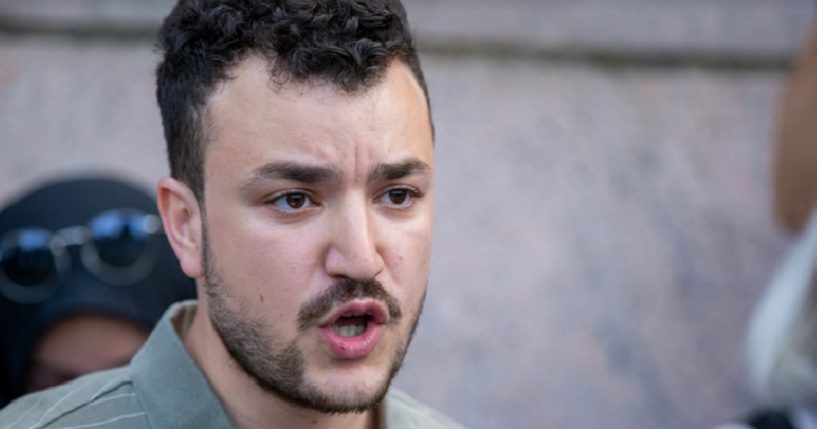
Palestinian activist Mahmoud Khalil is pictured during an April protest at Columbia University campus in New York. (Ted Shaffrey / AP)

Palestinian activist Mahmoud Khalil is pictured during an April protest at Columbia University campus in New York. (Ted Shaffrey / AP)

Mahmoud Khalil, a Palestinian activist and former Columbia University graduate student detained by immigration authorities over the weekend, appears to have violated explicit federal immigration laws.

Immigration and Customs Enforcement agents arrested Khalil, a permanent resident with a green card, on Saturday.

The agents originally told Khalil his student visa was being revoked, according to The Associated Press, which quoted Khalil’s attorney, Amy Greer.

Greer told the AP she spoke on the phone with the agents during the arrest and said her client had a green card. The agent then told her the green card was being revoked instead, Greer said, according to the AP.

On Sunday, in a post on the social media platform X, Secretary of State Marco Rubio announced that the federal government will be “revoking the visas and/or green cards of Hamas supporters in America so they can be deported.”

A spokeswoman for the Department of Homeland Security said Khalil was arrested “in support of President Trump’s executive orders prohibiting anti-Semitism” because he “led activities aligned to Hamas, a designated terrorist organization,” according to the AP.

On Monday, however, a federal judge in New York blocked Khalil’s deportation. Judge Jesse M. Furman said that Khalil must remain in the United States “to preserve the court’s jurisdiction” as the court considers his case, according to NBC News.

A hearing for the case is scheduled in federal court for Wednesday.

Other protesters have assembled in New York City to demand the release of Khalil.

Completing this poll entitles you to The Western Journal news updates free of charge via email. You may opt out at anytime. You also agree to our Privacy Policy and Terms of Use.

Pennsylvania Democratic U.S. Rep. Summer Lee also came to his defense, asserting on social media that “Mahmoud Khalil should be at home with his 8-month pregnant wife.”

But it appears that federal law is rather clear about support of a terrorist organization serving as grounds for removal from the country — and that is likely worse news for Khalil.

When discussing “inadmissible aliens,” the law specifically includes any foreigner who “endorses or espouses terrorist activity or persuades others to endorse or espouse terrorist activity or support a terrorist organization.”

The U.S. government has designated Hamas as a “foreign terrorist organization” for nearly 30 years, according to a webpage from the Office of the Director of National Intelligence.

The group uses a variety of weaponry to “to advance attacks against Israeli military forces and civilians.”

Hamas also “engages in cyber espionage, computer network exploitation, and kidnapping operations.”

No matter how much leftist protesters and lawmakers may complain, Khalil does not belong in the United States if he is going to align himself with terrorist organizations.

For non-citizens, being in the United States is a privilege, not a right.

Wasting the incredible opportunity of attending an Ivy League school and building a better life after graduation is incredibly foolish.

The last thing the United States needs is the importation and continued presence of foreigners trying to drag us into their conflicts.

This deportation should send a crystal clear message to the rest of the country that coming here for such activities, especially in support of clearly designated terrorist organizations, is not allowed.

Overclassification: Washington’s Favorite Cover-Up


America’s promise of accountability, once the clarion call of our Founding Fathers, now finds itself muffled beneath a wall of excessive secrecy. The so-called fourth branch of government—the unelected bureaucratic state—has weaponized overclassification to limit transparency and accountability. Also called the Deep State, these entrenched bureaucrats use secrecy to enshrine their power, preventing congressional oversight and even hindering a sitting president from implementing meaningful reforms. The byzantine rules and regulations cloaked in classified information make it nearly impossible for the president, his administration or journalists to understand what is really happening within the federal agencies. The recent case of USAID blocking the Trump administration‘s Department of Government Efficiency (DOGE) from auditing its humanitarian aid programs is just the latest example of how secrecy is wielded to protect the bureaucratic class from accountability. If Trump is to dismantle the Deep State, he must first break its stranglehold on classified information.

The Bureaucratic Black Hole of Classification

The march toward unchecked classification is neither recent nor accidental. From the modest safeguards envisioned by our early republic to the expansive, often nebulous standards codified in Obama’s Executive Order 13526, the Deep State has systematically entrenched secrecy as a mechanism of self-preservation. The Brennan Center for Justice’s estimate—that up to 90 percent of classified documents could be safely disclosed—should alarm every citizen who cherishes a government that is answerable to its people. When transparency is sacrificed on the altar of “sensitive information,” the democratic process is undermined; accountability is traded for convenience.

Historical Parallels

Alexander Hamilton, in Federalist No. 84, warned against a government that operated behind closed doors, recognizing that secrecy was the lifeblood of tyranny. The modern overclassification problem mirrors the suppression of the Pentagon Papers, where government officials classified documents not to protect national security, but to hide the failures of the Vietnam War. The same tactics persist today, as bureaucrats wield secrecy like a shield, deflecting public oversight and preserving their power.

Consider the curious case of USAID, an agency whose humanitarian mission is paradoxically shrouded in the same secrecy reserved for covert operations. During Trump’s first term, senior USAID security officials obstructed his team’s efforts to audit the agency. Initially, Trump did not fully grasp the extent of this obstruction; now, armed with experience and his DOGE team, he is confronting and dismantling these overclassification schemes. When USAID officials blocked his DOGE team this time around, they were placed on leave—a move that allowed the audit to commence. The scandal surrounding USAID thus reveals that excessive secrecy serves not to protect national security but to stifle meaningful reform and insulate power from both the executive and legislative branches.

When Secrecy Kills

The implications of overclassification extend well beyond mere opacity. The tragic lessons of September 11, as chronicled in the eponymous Commission Report, illustrate that the labyrinthine nature of modern classification hindered the timely sharing of crucial intelligence—a failure that contributed to one of the gravest security breaches in American history. The same dynamic played out during the COVID-19 pandemic when essential information on the virus’ origins and early spread was locked behind classified barriers, leaving the public and policymakers scrambling in the dark. Today, as agencies continue to guard their files with a zeal that borders on paranoia, the resulting fragmentation and internal rivalry sap our collective national defense. When agencies operate in silos, a fragmented picture of potential threats emerges, weakening the nation’s ability to preempt danger.

The Hidden Cost of Secrecy

Financially, the hidden costs are staggering. Taxpayers shoulder an $18 billion annual burden to sustain these classified systems—a sum that could instead fortify more productive public endeavors. Meanwhile, scholars, journalists and even elected officials are forced to navigate an overgrown thicket of red tape in pursuit of records that, by all rights, should be part of the public domain. The Public Interest Declassification Board’s stark characterization of our system as “outmoded, unsustainable, and fundamentally at odds with the principles of a free society” is not hyperbole; it is an urgent diagnosis of a bureaucratic malaise that must be cured.

Trump’s War on the Classification Cartel

President Trump, now in his second term, has a unique opportunity to dismantle this excessive secrecy. Unlike his predecessors, he has no allegiance to the entrenched bureaucratic class that thrives on classification as a means of self-preservation. With Elon Musk leading the newly established Department of Government Efficiency (DOGE), a sweeping overhaul of declassification is within reach. This effort should include:

  • Mandatory Declassification Reviews: All classified materials older than 15 years should be automatically reviewed for declassification, with only the most sensitive exceptions allowed.
  • Severe Penalties for Overclassification: Bureaucrats who misuse classification to conceal incompetence or wrongdoing should face strict penalties, including termination.
  • Protection for Whistleblowers: Those who expose abusive classification practices should be shielded from retaliation and offered legal avenues for challenging improper secrecy.
  • Public Access Portals: A streamlined system should be implemented to allow journalists and citizens to request declassification more efficiently, modeled after the Freedom of Information Act but with fewer loopholes.

By dismantling the excessive secrecy that has long shrouded the inner workings of government, we can reestablish a system where transparency and accountability are not sacrificed at the altar of expedience. Reagan famously declared, “Trust, but verify.” Yet modern bureaucrats have rewritten that to read, “Trust us, and don’t ask questions.” George Orwell’s 1984 warned of an all-powerful government that buries inconvenient truths; we are perilously close to living out that warning.

Jefferson warned that government without oversight becomes despotic; Reagan championed the notion that the more a government controls information, the less it serves its people. The Deep State’s unchecked power, fortified by overclassification, has allowed it to operate as an unelected fourth branch of government, immune to both congressional oversight and executive authority.

If Trump is to truly gut the Deep State, he must first dismantle its classification fortress. A government that dares to reveal its operations is a government that earns the trust of its citizens, ensuring that power remains checked and that democratic ideals are not consigned to the shadows. The path forward is clear: restore openness, rein in bureaucratic discretion and renew the covenant between the state and the governed.

The gross, and I do mean gross injustice of slavery reparations


It’s absurd to hold Americans, let alone ordinary ‘Britoneons’ responsible for the slave trade.

The gross injustice of slavery reparations

Commonwealth leaders concluded last week’s summit in Samoa by announcing that Britain should commit to reparations for its role in the transatlantic slave trade.

UK prime minister Keir Starmer had tried to refocus the summit around ‘future-facing’ challenges such as climate change. His chancellor, Rachel Reeves, was more blunt. She told the BBC last week that ‘We’re not going to be paying out the reparations that some countries are speaking about’. Yet in the end, it was to no avail. A day later, the 56 heads of government, including Starmer, signed a letter agreeing that ‘the time has come’ for a ‘meaningful, truthful and respectful conversation’ about Britain paying reparations.

This outcome was hardly a surprise. Over the past few years, the demand that the UK pay vast sums to the descendants of slaves has gained momentum. In August 2023, Patrick Robinson, a judge at the UN, argued that Britain owes £18 trillion in reparations. In March this year, the Church of England announced it would raise £1 billion to address its historic links to slavery. An All-Party Parliamentary Group (APPG) for Afrikan Reparations has been launched to push the issue in Westminster. And in David Lammy, we now have a foreign secretary who has repeatedly endorsed calls for reparations.

The reparations movement has gained so much traction because of the lack of any well-articulated rebuttal, especially from Britain’s political class. This has allowed pro-reparations campaigners to shape the narrative without challenge.

The argument for reparations rests on the contention that slavery and colonialism are solely responsible for both the wealth of former colonial powers and the poverty of former colonies. As Kehinde Andrews, an academic and staunch advocate for reparations, put it recently on BBC Two’s Politics Live: ‘The wealth we have today directly comes from slavery and the former British Empire.’

This narrative is widely propagated. It is also incredibly simplistic and overlooks the complex web of factors that has influenced global economic development over the past few hundred years. As then business and trade minister Kemi Badenoch rightly pointed out earlier this year, Britain’s prosperity cannot be attributed solely to colonial exploitation – and the economic challenges facing Britain’s former colonies cannot be blamed entirely on British rule, either.

Singapore, for example, was a British colony between 1819 and 1965. Despite this legacy, it has emerged as a global economic success story, largely due to political and economic reforms under former prime minister Lee Kuan Yew. At the same time, slave trading is hardly a guarantee of future wealth. Quite the opposite. The slave trade in the American South arguably stunted the region’s economic growth by creating an over-reliance on an outdated agrarian economy.

Reparations campaigners will also point to what they consider to be a monumental injustice – namely, the then British government’s decision in 1835 to take out a loan of £20million (worth over £2.5 billion today) to compensate slave-owners for their ‘loss of property’. Yet, in many ways, the nature of this payment is misunderstood. The British government was effectively paying for the slaves’ liberty, rather than ‘rewarding’ slave-owners. It was a pragmatic decision taken to overcome the resistance of slave-owners and to expedite the emancipation of their slaves.

Moreover, Britain was hardly a nation of slave-owners. In fact, only about 40,000 British individuals actually owned slaves during the abolitionist era and only 3,000 received reparations. The vast majority of British people at the time were economically marginalised themselves and did not directly benefit from the slave trade. Asking today’s working and middle classes to ‘compensate’ for the actions of a small elite from two centuries ago is wrong and historically misguided.

Here we come to the nub of the problem. Too often reparations campaigners distort the tragic and painful history of slavery to make their arguments. They overlook inconvenient historical facts, such as the role of the African rulers who actively participated in the slave trade and frequently resisted abolition. African leaders such as King Ghezo of Dahomey (modern-day Benin) directly benefitted from slavery, amassing wealth and power by selling captives from rival tribes to European traders. When the British sought to end the trade, King Ghezo reportedly resisted, declaring that, ‘The slave trade is the ruling principle of my people – it is the source and the glory of their wealth’.

I am far from opposed to reparations per se. I would support reparations for living victims of state injustices, from Holocaust survivors to Japanese Americans interned during the Second World War. If individual families wish to pay reparations for their forebears’ role in the slave trade, as the Trevelyan family has done, then that is their choice. However, it is a very different matter to make vague demands of the entire U.S. and British public for reparations for events from centuries ago.

Chattel slavery and colonialism were devastating and morally abhorrent chapters in human history. But the best path forward is to treat individuals from all backgrounds as equals, free of the reductive labels of historical victimhood and unburdened by grievance.

Rather than obsessing over the past, Britain and its former colonies should look toward opportunities for partnership, development and trade. The reparations movement risks becoming a drain on moral and political discourse in both countries and beyond, shifting responsibility from modern elites who can enact change to a defeatist focus on historical grievances.

In the U.S. and Britian, the issue of reparations only fosters division and resentment. If our leaders want to prevent the call for reparations from gathering yet more momentum, they need to come up with a clear and reasoned response – one that acknowledges the complexities of history without conceding to misguided demands for financial atonement. Instead of allowing past injustices to dictate future policy, the focus should be on building a future that upholds true equality, freedom and shared prosperity.

Democracy Futures Project Prepares 175 Top US Leaders For Violent Resistance Against Trump Victory


With the election just five days away, the rhetoric from Democrat leaders and their allies has taken a distinct and ominous turn. It is becoming increasingly clear that the Democrat Party is actively preparing its constituency for what it perceives as an existential threat: a Republican victory next week. Leading figures in the party, from the sitting president to the vice president and beyond, are cultivating a narrative that dehumanizes Republicans, primes their supporters for violent resistance and sets the stage for a crisis that could threaten the very stability of the republic. These efforts go hand-in-hand with a series of wargames, including the Democracy Futures Project held less than six months ago in Washington, D.C., where 175 of the most senior and influential government officials, academics, activists, governors, cabinet members, military officers and grassroots leaders came together to normalize the concept of overturning the outcome of the presidential election if Donald Trump wins in November.

The Anatomy of an Existential Crisis

When Kamala Harris refers to Donald Trump as a fascist—or when President Joe Biden calls his supporters “garbage”—these are not slips of the tongue. They are calculated declarations designed to ignite fear and loathing within their base. Democrats, armed with the propaganda of mainstream media, paint a picture of Trump and his supporters as a malignant force in American society. It is rhetoric not unlike that used in history to set the groundwork for total warfare against an internal enemy—the kind that makes dehumanizing your opposition not just acceptable but moral. The Rwandan Genocide of the 1990s serves as a grim reminder of where such rhetoric can lead. In Rwanda, Hutu extremists used dehumanizing language, referring to the Tutsi minority as “cockroaches” that needed to be exterminated, which paved the way for one of the worst genocides in modern history. The parallels in language should serve as a stark warning of the dangers inherent in normalizing such vilification.

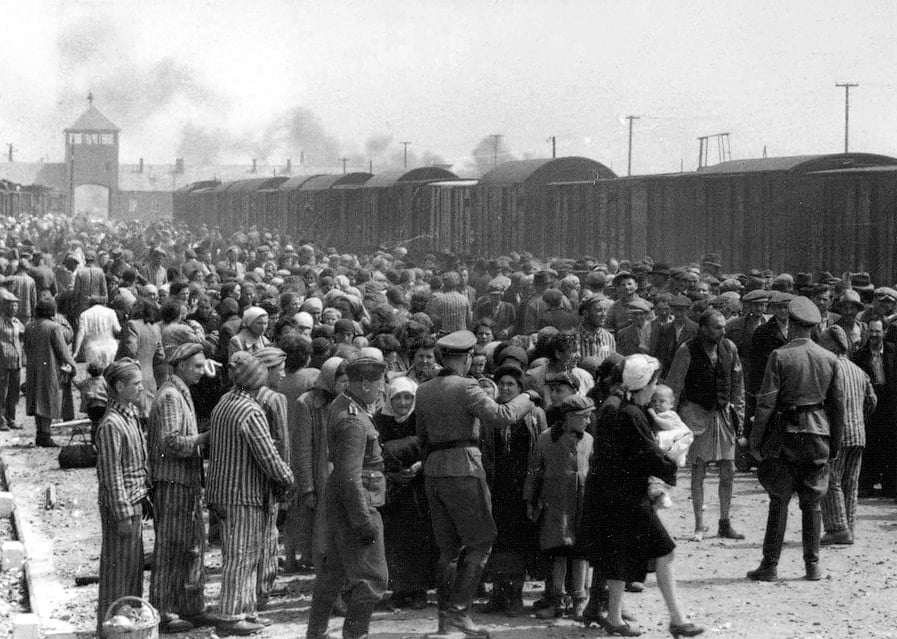
The modern Democrat Party has leaned heavily into invoking imagery reminiscent of one of history’s darkest periods. Not coincidentally, Trump’s rally at Madison Square Garden has been compared by media outlets to the Nazi rally held there in 1939. The vice president and her allies are not simply signaling their opposition to Trump’s policies—they are explicitly calling Trump Adolf Hitler. By invoking the name of Adolf Hitler, the Democrats are drawing comparisons to a figure responsible for the Holocaust, where six million Jews were systematically murdered, alongside millions of others, including political dissidents, disabled individuals and various ethnic minorities. Hitler’s tyranny extended to brutal concentration camps, where prisoners faced unimaginable horrors—forced labor, starvation and mass executions. The Democrats are portraying their political adversaries not as opponents in a democratic contest but as an evil that must be stamped out to preserve democracy itself. By equating Trump to one of the greatest villains in human history, Democrats are subtly yet effectively setting the conditions for widespread, potentially violent civil resistance if the outcome doesn’t go their way.

Unknown photographer from the Auschwitz Erkennungsdienst. Several sources believe the photographer to have been SS officers Ernst Hoffmann or Bernhard Walter, who ran the Erkennungsdienst., Public domain, via Wikimedia Commons

Dehumanization and Its Perils

The Democrats’ reliance on incendiary rhetoric should not be surprising. When Hillary Clinton referred to Trump’s supporters as a “basket of deplorables” in 2016, she laid the foundation for a more aggressive form of disdain for half of the electorate. Fast forward to the Biden-Harris era, and the dehumanizing rhetoric has only escalated. President Biden labeled Trump supporters as “garbage,” echoing and amplifying Clinton’s infamous comment. But it doesn’t end with the leaders at the top.

Daytime television has become a platform for reinforcing these narratives. Joy Reid, a host on MSNBC, along with members of The View, like Whoopi Goldberg, have referred to Trump supporters as “cockroaches.” Such language is significant, as it has deep historical resonance. It is the exact same description used by the Hutu-led government and media in Rwanda in the 1990s to lay the psychological groundwork for genocide against the Tutsi minority. Under the leadership of Hutu President Juvénal Habyarimana and with the complicity of mainstream media outlets like Radio Télévision Libre des Mille Collines (RTLM), Tutsis were labeled as “cockroaches,” which paved the way for the massacre of 800,000 Tutsis and moderate Hutus in just 100 days. By equating a group of people to pests that need extermination, the Democrats and their media partners are invoking a chillingly familiar language of dehumanization. The objective here is not simply political victory; it is to paint any Republican or conservative—especially those aligned with Trump—as something less than human.

Conditioning for Conflict

While the rhetoric is alarming on its own, it serves a larger, more dangerous purpose: conditioning the military, law enforcement and Democrat base for conflict. The Atlantic‘s Jeffrey Goldberg and others, have been particularly prolific in advancing the idea that Donald Trump not only disdains the military but seeks to use it as an extension of his will—akin to fascist leaders like Hitler and Mussolini. According to recent articles, Trump supposedly envies the respect that Hitler commanded from his generals, a claim that’s both absurd and deliberately incendiary. Consider admissions by General Mark Milley in Bob Woodward’s book, where Milley openly stated that he sought to prevent Trump from being able to order the military to take actions that Milley did not agree with. He admitted to preventing the National Guard from being deployed to stop the January 6th riot. Furthermore, Milley even claimed that he had contacted the Chinese military, promising them he would personally warn them if Trump planned any attacks. These actions reflect an alarming trend of senior military figures feeling empowered to circumvent the established chain of command, further fueling the narrative of distrust and division.

In this narrative, the Democrats do not merely critique Trump’s policies. They paint him as someone contemptuous of America’s values—someone who, if given the reins of power, would commandeer the military to crush dissent. This is not only an affront to Trump’s record, where he reduced endless foreign interventions, but it serves to turn those in uniform against him. Consider General John Kelly’s recent claims that Trump admired Hitler and wished his generals were more like Hitler’s—claims that are difficult to believe given that Kelly waited five years to make them. As chief of staff, Kelly not only failed to follow orders but actively sought to undermine Trump’s efforts to bring U.S. troops home, build the border wall and implement economic policies that were central to his platform. These actions reflect an effort from within to subvert a sitting president, positioning the military to view Trump and his supporters as a threat—a narrative that could justify disobedience to presidential authority or worse, a schism within the Armed Forces.

John F. Kelly speaks at the 53rd Munich Security Conference in 2017.

Democrats such as Rep. Jamie Raskin (D-Md.) have even floated scenarios involving Congress using the 14th Amendment to prevent Trump from taking office, citing insurrection. In one viral video, Raskin made it 100% clear that if Trump wins on November 5th, he and his Democrat allies in Congress have a plan to ensure that Trump will never take the oath of office or set foot in the White House again. Raskin even acknowledged that their actions would likely result in civil war, stating that he is ready for that outcome—an allusion to the fact that the Biden-Harris regime had already purged conservatives from the ranks of the military using COVID as a pretext. This purge, along with the ongoing efforts to paint Trump and his supporters as dangerous, less-than-human opponents, was carried out to ensure that the military would willingly turn their weapons against the American people, believing it to be necessary for the preservation of democracy. The reference to January 6 looms large in these scenarios, treated not as a one-off riot but as a precursor to future violence—a violence that Democrats argue can only be avoided by nullifying a Trump victory. The implication is clear: if Trump wins, violence is inevitable, and extreme measures, including possibly undermining democratic processes, will be justified.

A Pretext for Violence

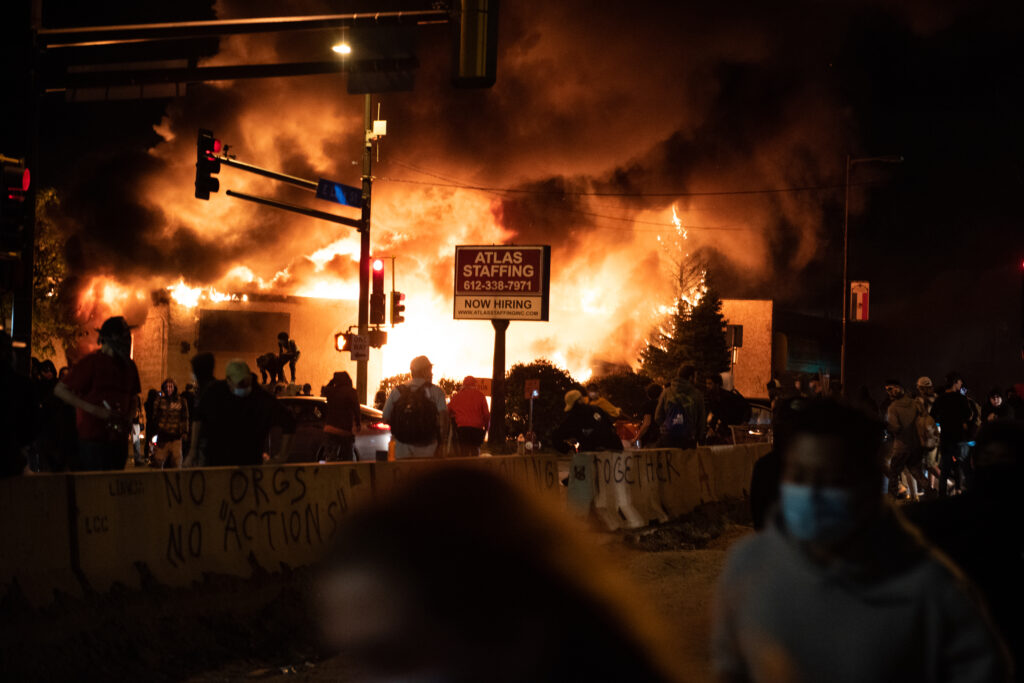
One might wonder why the Democrats are engaging in such extreme language now, even before the election results are in. The answer lies in the strategic nature of their rhetoric. The aim is to establish a pretext for violence. Figures like Robert Kagan, Rosa Brooks and Barton Gellman have all laid the intellectual groundwork for what would be, in essence, a mass mobilization of Democrat voters against the result of a democratic election. Following Trump’s win in 2016, anarchists, Black Bloc and Antifa took direct action, resulting in numerous violent incidents. In Washington D.C., rioters injured over 200 Capitol and D.C. police officers during protests, set fire to vehicles and even burned St. John’s Church near the White House. The level of damage to public and private property was extensive, with millions of dollars in damage. This was only the beginning, as the same groups used the death of George Floyd as a pretext to conduct over 100 days of violent riots, resulting in at least 25 deaths, hundreds of injuries, countless buildings burned, and over $2 billion in damages nationwide. The message is clear: this time, the response will make the previous actions look minor in comparison. It won’t just be Antifa; it will be the entire Democrat party supporting and legitimizing these actions, as they see it as necessary to resist and destabilize a potential Trump victory.

The Wargames: Normalizing Election Overturning

Multiple wargames have been held by various groups to simulate scenarios where Trump wins and to strategize how he could be stopped. However, the real scandal lies in the fact that these were not just simulations or games—they were propaganda efforts designed to indoctrinate key figures into viewing Trump’s victory as an existential threat to America. The Democracy Futures Project, backed by George and Alex Soros and led by Rosa Brooks and Barton Gellman, organized five tabletop exercises in May and June 2024, featuring 175 of the most senior and influential individuals in government, academia, activism and military ranks. Participants included former governors, cabinet members, retired military officers, grassroots leaders and more. These exercises were not merely hypothetical scenarios—they were aimed at normalizing the idea of overturning a legitimate election outcome if Trump were to win. The wargames included discussions on potential cabinet responses, military actions, civil resistance and law enforcement maneuvers—all geared toward disrupting a Trump victory and fostering division.

This effort is reminiscent of “The Simulation,” a wargame organized by The Transition Integrity Project in 2020, which was featured in Unprecedented, a documentary series by Alex Holder. In that series, political strategists and former officials, including James Comey, John Podesta and Michael Steele, role-played scenarios involving contested election outcomes, simulating responses to a Trump victory. The true purpose of these exercises is not about ensuring free and fair elections; it is about legitimizing resistance, including violent resistance, to outcomes that do not align with the preferences of the Democratic Party.

The New York Times and The Washington Post have run extensive pieces on the supposed need for mass mobilization if Trump wins, calling on private industry and civil society to ostracize Trump supporters. The messaging is eerily consistent: in the event of a Trump victory, resistance must not only be political but physical. These are not the words of a party preparing to abide by democratic norms; these are the words of a regime setting the stage for conflict.

The Coming Crisis?

At the center of all this lies a calculated and deeply coordinated effort by our nation’s top leaders—often referred to as the “Deep State”—to normalize the rejection of Donald Trump’s election. They are ready to lead a violent resistance. The propaganda effort has been thorough, and for months, the electorate and the Democrat voter base have been conditioned to see Trump and his supporters as non-human—labeling them as garbage, fascists and even comparing them to Hitler. Should Trump emerge victorious, the narrative of violence will already be in place, with a moral justification for “defending democracy” by whatever means necessary. This is dangerous not just because it undermines the legitimacy of elections but because it risks tearing apart the social fabric of the nation, creating a deeply divided populace and potentially inciting widespread conflict that could have devastating consequences for American democracy.

The Bleaker it Gets, the Better our Odds


Authoritarianism is back across the West — from Europe to the Biden-Harris censorship regime that would fit perfectly in Communist China.

I think many of us were surprised during Covid to realize just what the supposedly liberal west has become: Essentially the Soviet Union but with better uniforms — well, better video games, anyway.

Of course, it was decades in the making — Covid just showed their cards.

The question, as always, is What’s Next.

For better or worse, authoritarianism has happened many times in history — it’s kind of the human default. The original state.

Humanity has a lot of experience with authoritarianism.

So how did people protect themselves last time?

Dodging Tyranny in the 1940’s

An elegant illustration is the 1940’s, where essentially the entire globe went authoritarian socialist and then — as always — went to war.

And the correct response very much depended where you were.

If you were in New York, you adjusted your stock portfolio.

FDR’s 52nd birthday party, dressed as Caesar. The fasces bottom right is unintentionally apt.

If you were in Britain you moved to the countryside and stockpiled canned food.

If you were in Switzerland you packed a go-bag in case the German army decided to fill in the map.

And if you were in Germany, of course, the only plan was get the heck out.

The problem is when to pull each trigger: When do you adjust the portfolio. Buy the canned food. Pack the go-bag. When do you get the heck out.

Each of these preparations has a cost. And the more successful you are — the more you’ve built or achieved — the higher those costs go. Moving your family, your business, converting your career to location-independent where you can support your family.

Many ask why people didn’t leave Berlin before it was too late, and those costs are why.

Most Will Stay and Fight

The good news is that this means the vast majority of us will stay and fight.

I mean, true patriots will always stay and fight. But those mounting costs mean even apolitical people will fight.

They will fight in proportion to the risk — because the cost rises with it. And they will fight in proportion to what they’ve built.

That is, the people with the most to lose — the natural elite — are the most likely to stay.

Every election since George W we’ve been treated to Hollywood liberals threatening to leave the country. You don’t hear influential Conservatives saying that.

We will stay.

The Bleaker it Gets, the Better our Odds

And stay we should.

Why? Partly tactical. They launched their takeover too soon. Because Covid fell into their lap, and they were still a generation away from the brainwashing it would take for a totalitarian takeover.

Instead, the people rejected it. The Covid state left dangerous remnants, to be sure, that will become malignant if not excised.

Still, it’s striking — perhaps unprecedented — the degree to which a totalitarian regime, once installed, was almost entirely removed. And the reason is encouraging: Because it polled atrociously — you may remember the Dems turning as one just after Biden assumed office.

In other words, even with our shabby election infrastructure, they still fear the people.

What remains post-Covid is an institutionalized left that has lost credibility with the majority. That is overextended, that has completely lost touch with the people.

This loss of legimacy means they are far weaker than pre-Covid.

And Democracy is coming for them.

Liberty’s Moment

We’re already seeing the backlash with Trump surging in the polls, with Canada on-deck next year, and European countries electing populists.

Even more encouraging, if you zoom out rarely in history has liberty had so many advantages. Thanks to the internet — with a big assist from Elon.

Of course, liberty starts out with the advantage that man is not by nature a slave. Slavery is an unstable equilibrium. It’s fragile. Just waiting for the right push.

Put this is up against the natural advantage of authoritarianism — it has the money. And money buys guns.

It has the money because it seizes half of what you earn and uses it against you, then prints up whatever else it needs at the central bank. Then it uses that money to control the levers of society, education to media to finance.

We have the numbers. They have the money.

Trust in Government Collapsing in Both Parties

What’s Next

If it comes down to numbers vs money, our numbers are growing fast. Moreover, gloriously, the more they push the more we grow.

Meaning they only have 2 options: pull back and hold on for dear life against the backlash. Or keep pushing and they’re out of power. It’s only a matter of time.

In the 1970’s, the great economist Murray Rothbard noted you could fit the entire liberty movement in a New York living room.

Now there are literally a billion of us.

Forget a living room. We couldn’t reasonably fit in a state.

Meanwhile their advantage — money — is collapsing before our eyes. Crashing in crippling debt, nervous financial markets, the limits of inflationary printing and the moribund stagflation that always accompanies it.

In short, we’re getting stronger. They’re getting weaker. And the longer it takes the more spectacular will be the victory.

Why is the U.S. even in the U.N?


Did the United States join in with the other world leaders to build a safe and altruistic organization? Only if your definition of safe and altruistic is akin to believing your mother is the tooth fairy.

Nope! The instigators of, first, the League of Nations and then the United Nations had no room for charitable instruments; the plan was to set up a governance system that would eventually be used to take control of the entire world. Alger Hiss, a known Russian spy, had been Director of the Carnegie Foundation and then right-hand man for Franklin Delano Roosevelt, orchestrated the writing of the U.N. Charter.  It was built by the Council on Foreign Relations (CFR) (in concert with Hiss) and funded by the Rockefellers (and other globalists) to control the world – courts, weapons, economy, and even our minds. And it usurps our sovereignty.

With those travesties born at the Bretton Woods Conference in 1945, the CFR also gave us the International Monetary Fund (IMF) and the World Bank. The IMF was set up to “control international exchange rates and to stabilize currencies. President Franklin D. Roosevelt took us off the gold standard so a world currency could be established. Nixon signed an executive order declaring that the U.S. would redeem its paper dollars for gold – and the IMF would serve as the world’s central bank. 

Again, why is the U.S. in the U.N? 

“The Council on Foreign Relations, established years after the Federal Reserve was created, worked to promote an internationalist agenda on behalf of the international banking elite. Where the Fed took control of money and debt, the CFR took control of the ideological foundations of such an empire — encompassing the corporate, banking, political, foreign policy, military, media, and academic elite of the nation into a generally cohesive overall world view.” Carroll Quigley, Tragedy and Hope. 

What’s happening? “In 1957, a congressional investigative committee revealed the following finding: In the international field, foundations, and an interlock among some of them and certain intermediary organizations, have exercised a strong effect upon our foreign policy and upon public education in things international. This has been accomplished by vast propaganda, by supplying executives and advisers to government and by controlling much research in this area through the power of the purse. The net result of these combined efforts has been to promote. ‘internationalism’ in a particular sense — a form directed towards ‘world government” and a derogation of “American nationalism’. The CFR has become, in essence, an agency of the United States government. [and its productions are not objective but are directed overwhelmingly at promoting the globalist concept.” 1

Why should the U.S. be out of the U.N?

Sponsored by the CFR, Count Richard Nicholas von Coudenhove-Kalergi, considered the “father of the European Union”, argued for the dissolution of national borders and the promotion of mass allogenic (genetically dissimilar) immigration. 2 He also called for the “elimination of the Caucasian race for the sake of a superstate”. 3

In rebuttal, Senator Pat McCarran on immigration legislation he co-authored:

“I believe that this nation is the last hope of Western civilization, and if this oasis of the world shall be overrun, perverted, contaminated, or destroyed, then the last flickering light of humanity will be extinguished. I take no issue with those who would praise the contributions which have been made to our society by people of many races, of varied creeds and colors. … However, we have in the United States today hard-core, indigestible blocs which have not become integrated into the American way of life but which, on the contrary, are its deadly enemies. Today, as never before, untold millions are storming our gates for admission, and those gates are cracking under the strain. The solution of the problems of Europe and Asia will not come through a transplanting of those problems en masse to the United States. … I do not intend to become prophetic, but if the enemies of this legislation succeed in riddling it to pieces or in amending it beyond recognition, they will have contributed more to promote this nation’s downfall than any other group since we achieved our independence as a nation.”

This could go on and on. It could be slid over the brainwashing/dumbing-down/corruption of our children in the schools through the United Nations Educational, Scientific and Cultural Organization (UNESCO), a vile part of the U.N. set up to make youth into brain-dead, useful idiots. You can read more in the Cancel Culture articles and so many good books written in the past 10-20 years exposing the lies and schemes of the United Nations anti-American, anti-Western Culture schemes.

As Tom DeWeese recently wrote: “The UN was wrong from its very beginning and wrong now because it has always sought to interfere with national sovereignty rather than to provide a unique forum to help keep the peace”.

The question is now: Why aren’t we doing everything we can to get the U.S. out of the U.N? That will solve most of the civilized world’s problems.

It’s time to slay that dragon.

Sources:

  1. Hearings before the Special Committee to Investigate Tax-Exempt Foundations and Comparable Organizations, House of Representatives, 83rd Congress., Second session on HP. Res. 217, Part 1, pages 1 to 943.
  2. Richard Coudenhove-Kalergi, Ein Leben fur Paneuropa pp. 28-32.
  3. Browne and Williams, The Killing of Uncle Sam, p.310