It is a strange irony of our age that the man most accused of aspiring to monarchy is the one who repeatedly submits himself to the will of the voters. Donald J. Trump, the only US president in over a century to be impeached twice and acquitted twice, the first to win non-consecutive terms since Grover Cleveland, and the singular target of an establishment-wide campaign to deny him power, is now smeared by Congressional Democrats as a would-be king. They invoke the specter of tyranny while ignoring the very real dynasties embedded in their own ranks. In truth, Trump is as far from a king as American politics allows. The throne, if there is one, is not in the Oval Office. It resides in the House cloakrooms and Senate subcommittees, among those who have reigned for decades.
Consider the facts. Trump served a single four-year term, relinquished power peaceably in 2021, and then returned to office only after winning another democratic election in 2024. As of this writing, he has served six months of his second term. His call for term limits, posted recently on Truth Social, was not a veiled assertion of power but a renunciation of its permanence. This is not the rhetoric of a monarch. It is a challenge to the real absolutists of our time, career politicians who have clung to power longer than the average king of England.
From the Norman Conquest in 1066 to the present day, the average reign of a British monarch has been just over twenty-two years. Some have ruled longer, Elizabeth II for seventy years, but many, especially in earlier centuries, fell to war, disease, or the whims of Parliament well before their silver jubilees. In contrast, Washington boasts a veritable aristocracy whose reigns exceed those of most crowned heads.
Take Senator Ed Markey of Massachusetts. Elected to the House in 1976, he has now served nearly 48 uninterrupted years in Congress. Ron Wyden of Oregon and Chuck Schumer of New York have each held office for over 44 years. Senator Dick Durbin has reigned for 42. Marcy Kaptur, a Democrat from Ohio, has been in the House for over four decades, as have Steny Hoyer and Nancy Pelosi. Frank Pallone, Richard Neal, and Bernie Sanders all hover near or above the thirty-five year mark. In total, over 700 members of Congress have served longer than the average British monarch.
Let us linger here. The image of monarchy conjures power concentrated in one man, unchecked, unchallenged, immune from the shifting sands of public opinion. Yet Trump, who endured one of the most hostile media environments in American history, whose every executive order triggered a cascade of lawsuits, and whose second election was met with an onslaught of lawfare unprecedented in scale, is accused of wielding unchecked power. Meanwhile, legislators like Pelosi and Schumer, immune to redistricting, buttressed by compliant local machines and a revolving door of loyal staffers, exercise power far more enduring and far less accountable.
This is not what the Founders intended. The men who debated in Independence Hall did not foresee a permanent political class. The very idea would have revolted them. Madison, Hamilton, and Jefferson conceived of citizen-legislators, individuals who would serve their term and return home to their farms, shops, and communities. George Washington, in declining a third term, enshrined the principle that public service is a temporary trust, not a lifetime entitlement.
And yet, what we now observe is precisely the opposite. Our legislators do not merely legislate. They build fiefdoms. They control committee assignments, earmarks, and campaign coffers with the precision of barons. Their staffs operate as dynastic retainers, some serving in the same offices for decades, wielding policy influence often without ever facing the electorate. The problem is not just the tenure of the elected, but the entrenchment of the unelected. Term limits for Congress may help, but they are only a start. The deeper reform is cultural. It requires a new understanding of what a legislator is meant to be: not a ruler, not a manager, but a servant, a representative, a temporary steward.
Trump, for all his bluster, seems to understand this better than his critics. His call for term limits was not simply political theater. It was, in fact, a return to republican principle. And more importantly, it was a mirror held up to the gerontocracy that runs Washington. The kings are not on the ballot every four years. They are in the cloakrooms, the lobbies, and the hearing rooms, passing laws they scarcely read and enjoying a tenure no monarch could hope to rival.
If there is a pathology in American government, it is not the strong executive. It is the immortal legislature. The presidency, by design, is constrained. Even under Trump, courts blocked executive orders, bureaucracies slow-walked implementation, and hostile media ensured no policy went uncriticized. The same cannot be said of members of Congress, who often face no serious challenger for decades and are largely ignored by a press corps obsessed with the presidency.
To call Trump a king is to indulge in a political fiction, a fiction useful for fundraising, for punditry, for litigation. But it is not a fact. The facts are these: the American people elected him twice. He left office when the law required. He returned only by the ballot. He did not suspend the Constitution, jail journalists, or declare emergency powers without cause. And now he advocates the very reforms, term limits, transparency, accountability, that true kings abhor.
We are not ruled by Trump. We are ruled, in many cases, by the same figures who have appeared on the ballot for a generation. That is not democratic resilience. It is institutional sclerosis.
A republic, if we can keep it, depends not on our fear of imaginary kings, but on our willingness to dethrone the ones already seated in Congress.
In a republic founded on law, justice is enforced by people, fallible, flesh-and-blood people who do their duty not in the abstract, but on our streets, at our borders, and increasingly under siege. The American immigration officer, particularly those who work for Immigration and Customs Enforcement (ICE), now finds himself caught between two threats: a political class willing to expose his identity for ideological gain and a criminal underworld eager to retaliate.
Let us begin with a basic principle of civil society: if you deputize men and women to enforce laws against violent actors, you owe them the protections required to do so safely. In ordinary contexts, that may mean a badge, a vest, and a bodycam. But in the extraordinary context of immigration enforcement in 2025 America, it means something more controversial: anonymity.
Critics claim that anonymity breeds unaccountability. But this is a confusion, one that ignores both the internal oversight mechanisms of federal agencies and the external threats ICE agents face. Agents are not invisible. They wear IDs, have supervisors, are recorded, and are held to internal standards. What they seek is not invisibility but insulation: from activists who treat them as political prey, and from criminal syndicates who treat them as marks on a kill list.
In cities like Portland and Nashville, Democrat politicians have threatened to publicize the names and home addresses of ICE agents. In 2025, Nashville Mayor Freddie O’Connell faced backlash after the Metro Nashville government website published the names of federal immigration officers as part of an update to Executive Order 30, which mandates reporting on local interactions with immigration enforcement. The disclosure led to claims of doxxing, online harassment, and threats against the officers, prompting the mayor’s office to remove the names. In one separate and alarming episode, Congressman Salud Carbajal read aloud an ICE officer’s name to a hostile crowd, which then assaulted the officer and sent him to the hospital. This is not oversight. This is doxxing, weaponized for politics.
Consider what doxxing means in the age of online databases and facial recognition. To know an officer’s name is to find his home, identify his spouse, uncover his children’s school. In Portland, agents have reported finding threatening graffiti on their front doors and trash bags left on their lawns with notes naming their kids. Death threats, once vague or anonymous, are now personalized.
The Department of Homeland Security now reports that assaults on immigration officers have surged more than 800 percent compared to the same period last year, underscoring what federal officials describe as a coordinated national campaign. Online activists publish their faces and names, but the audience is not just Antifa. It is also MS-13. It is the Sinaloa cartel. It is Tren de Aragua, the Venezuelan gang now operating with terrifying speed across the US Southern border. Criminal syndicates treat this information like tactical intelligence, “a kill list,” as one DHS official put it.
Across the country, anti-ICE groups have formed sophisticated cells that plan and execute calculated attacks using reconnaissance, secure messaging apps, and interference operations to obstruct federal enforcement.
The Prairieland attack near Fort Worth stands out for its precision and scale. On the night of July 4, a group of 10–12 assailants in black tactical gear used fireworks to draw officers out of the facility. Two shooters hidden in a nearby tree line opened fire, wounding a local police officer. Court documents describe the attackers’ use of body armor, two-way radios, Faraday bags, and flyers reading “FIGHT ICE WITH CLASS TERROR.” Officials say the level of coordination and planning was unlike anything previously seen in immigration-related violence. Planning was conducted via encrypted Signal groups, where attackers shared surveillance photos, coordinated logistics, and later discussed destroying evidence and evading arrest. Eleven people have been charged, including ten with attempted murder of federal officers. The lead suspect, Benjamin Hanil Song, a former US Marine reservist, allegedly purchased several rifles used in the assault.
After the attack, Song was hidden by group members and moved between safe houses before being captured in Dallas following an 11-day manhunt. During the search, authorities uncovered extensive evidence of planning, including body armor, tactical vests, loaded weapons, and digital communications coordinating Song’s escape.
Two others, John Phillip Thomas and Lynette Read Sharp, were charged with helping Song flee. Thomas, a close associate and member of the same Signal chats, admitted to meeting with other suspects to coordinate Song’s getaway and was found with clothing purchased in Song’s size and a loaded AR-15 magazine in his vehicle. Just days after the Prairieland attack, a 27-year-old gunman opened fire on a Border Patrol facility in McAllen, Texas, wounding multiple officers before being killed by return fire. That same day, federal agents were assaulted at an ICE facility in Portland, Oregon, where rioters deployed an incendiary device. While not directly connected, these incidents signal a broader, escalating pattern of political violence against immigration authorities.
Beyond direct violence, organized resistance to immigration enforcement has become increasingly structured and strategic. In cities like Los Angeles, activist networks operate surveillance teams, monitor ICE activity at day-labor sites, and use encrypted apps like Signal and Telegram to coordinate real-time responses, legal observers, and blockades. These networks distribute materials, record raids, and in some cases, physically obstruct federal operations.
Federal authorities have responded by expanding prosecutions to include those providing logistical or material support, even in non-violent roles, such as distributing protective gear, attempting to identify masked ICE agents, or aiding individuals fleeing arrest. Some elected officials have also faced legal consequences for allegedly obstructing ICE.
Some of the more disturbing precedents come from Mexico, where cartels have used kidnapped officers to extract rosters of their colleagues, then hunted them down at home and executed them in front of their families. The Mexican government responded by issuing balaclavas and concealing identities during operations. In 2024, lawmakers debated allowing masked judges in cartel trials, after multiple assassinations of prosecutors and judges. It is a grim but necessary adaptation. Mexico has learned what the US is refusing to admit: when you face transnational organized crime, anonymity can mean survival.
A similar logic operates in Russia and Eastern Europe, where anti-mafia and counter-terror units routinely operate in full masks, with no identifying names. Even in France and Italy, nations with strong traditions of civil liberties, officers wear masks during anti-terror raids, not to evade accountability, but to avoid a bullet to the head later.
Yet in the US, some lawmakers suggest that an ICE agent who conceals his name is a secret policeman. Let us be clear: it is not a violation of democratic transparency to withhold names from mobs and cartels. The purpose of anonymity in enforcement is not to hide wrongdoing, but to protect the innocent from wrongdoers. Accountability is maintained through internal systems. Public naming, by contrast, is not oversight. It is an invitation to violence.
DHS officials blame “crazed rhetoric from gutter politicians” for inciting violence against immigration authorities. Meanwhile, Democratic leaders have condemned ICE tactics as heavy-handed, with Minnesota Governor Tim Walz calling the agency a “modern-day Gestapo” and Senator Alex Padilla accusing the Trump administration of making ICE “more aggressive, more cruel, more extreme.”
Critics point to alleged racial profiling and wrongful detentions of US citizens, prompting Rep. Pramila Jayapal to introduce legislation barring ICE from detaining or deporting citizens. However, no US citizens have been deported, and the few detentions that did occur were brief, typically resolved once citizenship was confirmed, or involved individuals arrested for interfering with enforcement actions. As for claims of racial profiling, the majority of illegal immigrants in the US are Latino, so arrests and deportations will naturally reflect that demographic. That is not racial profiling, it is statistical probability.
Opponents of anonymity often invoke the specter of rogue agents. But rogue agents are not stopped by a name tag. They are stopped by body cameras, audits, complaints procedures, and prosecution. These already exist. No democratic safeguard requires that agents expose their families to retaliation in order to enforce the law.
The politics of masking, like so many debates in our moment, has been inverted. During the 2020 riots, masked federal officers were denounced by progressive activists as jackboots. Yet the same activists defended Antifa’s right to wear masks in public protests to avoid identification. One is reminded of Orwell’s dictum: in times of universal deceit, telling the truth is a revolutionary act. Today, insisting on protecting our immigration officers from targeted assassination is treated as radical.
But the public has begun to see through the hypocrisy. ICE agents are not political operatives. They are not stormtroopers. They are Americans with families, charged with enforcing laws passed by elected officials. They do not write the law. They carry it out. That a sitting member of Congress would attempt to incite violence against one of them should end the debate. But the debate persists, because this is not really about transparency. It is about delegitimizing the enforcement of immigration law.
We are told the border crisis is complex. That immigration enforcement raises moral dilemmas. That ICE officers must be held to higher standards. Very well. But who, precisely, believes that the moral high ground is achieved by putting an agent’s wife and children in danger? Even war has rules. The Geneva Conventions forbid targeting the families of enemy combatants. Yet here, within our own borders, the political left seems content to put ICE families in the crosshairs of every cartel and radical.
Anonymity in law enforcement is not new. Undercover officers have long used it to infiltrate gangs, prevent drug trafficking, and thwart terrorist plots. We understand that when an agent’s work puts him in contact with violent individuals, concealing his identity is a prerequisite for effectiveness. The same principle applies to ICE. If agents are to pursue smugglers, traffickers, and cartel associates, they must be insulated from the retribution such criminals routinely carry out.
Critics will object that the United States is not Mexico, and that our institutions are stronger. That may have been true a decade ago. But the border crisis has introduced new actors and new dynamics. MS-13, Tren de Aragua, and other syndicates now operate in over a dozen states. Fentanyl deaths are at an all-time high. Cartels have military-grade drones, cyber capabilities, and billions in cash. They are not disorganized gangs. They are strategic. They are watching. And when ICE officers are named, they do not forget.
The case for masking ICE officers is not a plea for secrecy, but for sanity. It is a call to recognize that justice requires protectors, and protectors must themselves be protected. When the enemies of law operate in the shadows, the agents of law must have the option to do the same.
If we want enforcement to work, we must not sabotage the enforcers. If we want laws to be meaningful, we cannot allow those who carry them out to be publicly sacrificed. And if we want to remain a nation of laws, not mobs, we must recognize the quiet heroism of the man who puts on a badge, covers his face, and does his duty despite the price.
America’s fertility crisis is no longer speculative. The numbers are not only in, they are loud, insistent, and irreversible if not addressed soon. According to the CDC’s 2024 provisional data, the US fertility rate has fallen below 1.6 children per woman. That figure is not just low, it is terminal. A replacement-level society requires a fertility rate of roughly 2.1. Below that line, a society first ages, then shrinks, and eventually dissipates. Demographers do not romanticize. Their charts are not political. But when one reads them correctly, they tell a civilizational story. And that story is beginning to resemble a tragedy.
Why call this “civilizational suicide”? Because it is not imposed from without. It is chosen, or at least permitted, from within. As Pat Buchanan wrote in The Death of the West, the First World is dying not from a plague or war, but from sterility. “They face a mortal crisis, not because of something happening in the Third World, but because of what is not happening at home.” Birth. Family. Continuity. These pillars of civilization are no longer assumed. In the US, they are increasingly postponed, downsized, or discarded altogether.
To understand how dramatic this demographic collapse is, recall that the US fertility rate in 1960 stood at 3.65, more than double today’s rate. Even as recently as 2007, the US achieved near-replacement fertility. That was the last flicker before the fall. Since then, the decline has been steady and uninterrupted. Had fertility remained at 2007 levels, the US would have welcomed nearly 12 million more children than it has. That’s not just a difference in birth records, it is a difference in national trajectory.
Some will object that population is still growing. True, but only barely, and only because of immigration. The native-born American population is stagnant. More striking, natural increase, births minus deaths, is trending toward zero. It is immigration that props up the illusion of demographic health. Yet even this solution is fragile. For reasons we will explore, importing people is not the same as making Americans.
What happened? The short answer is that marriage and childbearing are no longer the default life path. They are lifestyle options, often treated as elective or even indulgent. Women are having their first child at an average age of 27.5, a record high. Teen birthrates are in freefall. So are birthrates among women in their 20s, historically the prime years for family formation. Meanwhile, birthrates among women in their 30s and 40s are inching upward, but not enough to offset the delay. In simple terms, by the time many Americans feel ready to have children, they either can’t, or don’t.
This delay is not irrational. It is economic. Wages have stagnated, housing is unaffordable, and child care costs rival college tuition. Nor is it simply financial. Cultural attitudes have shifted dramatically. The rise of secularism, the valorization of careerist ambition, and the detachment of sex from reproduction have all eroded the social incentives to marry and procreate. Where children were once seen as a blessing, they are now often viewed as burdens. Where family was a social good, it is now one choice among many, subject to the preferences of the individual.
Technology compounds this shift. The advent of reliable contraception, and the normalization of abortion, has made reproduction a matter of near-total control. But what begins as liberation can end in extinction. Fertility is no longer a byproduct of love, marriage, or community life; it is an optional project, often postponed until it becomes impossible.
The problem is not just the number of people, but the kind. A society is not merely a population count. It is a set of inherited beliefs, institutions, and norms. Immigration can sustain population figures, but not a national identity. As Douglas Murray put it, you cannot replace a Scottish teenager with a Somali one and expect no consequences for cohesion. Yet the US increasingly does just that.
Since the 1965 Immigration Act, America has brought in over 72 million immigrants, mostly from Latin America and Asia. Today, only 13 percent of immigrants come from Europe. In 1970, immigrants made up 4.7 percent of the US population; today, that figure is over 14 percent, and climbing. Without immigration, the US population would be shrinking.
But here is the paradox: even as we import people to make up for low fertility, we are less capable of assimilating them. The melting pot has become a salad bowl, and even that metaphor is generous. Many immigrant communities retain language, culture, and political identities from their homelands well into the second and third generation. When 43 percent of California’s minors are Hispanic, many of whom live in majority-Spanish-speaking environments, the incentives to Americanize weaken. The existence of parallel cultures, tolerated if not encouraged, hinders the emergence of a shared civic identity.
In earlier eras, America made Americans. Schools taught civic pride. Churches reinforced moral norms. National holidays celebrated common heroes. Today, that consensus has fractured. National pride has eroded. A 2025 Gallup poll found that only 36 percent of Democrats said they were proud to be American. Among Gen Z, fewer than half expressed any national pride. If the native-born population cannot articulate what it means to be American, how can it transmit that identity to newcomers?
Assimilation requires a confident host culture. That culture no longer exists. Progressives often denounce assimilation as cultural erasure, preferring multiculturalism or even decolonization. In practice, this means that immigrants are no longer expected to become Americans. They are expected to vote Democrat and celebrate their ancestral culture. Citizenship becomes a bureaucratic formality, not a moral transformation.
The result is a nation that is failing both to reproduce itself biologically and to extend itself culturally. It neither makes new Americans through birth nor integrates them through immigration. This is not sustainable. If continued, it leads to what Buchanan rightly called civilizational suicide.
To be clear, the problem is not immigration per se. America has always welcomed newcomers. The problem is using immigration to substitute for reproduction, while simultaneously abandoning the cultural mechanisms that once made immigrants American. Without a robust host culture, immigration becomes not a solution, but a solvent.
What, then, is to be done? A few policies are obvious. Make family formation more affordable: lower the cost of housing, subsidize child care, and reform the tax code to favor parents. Consider fertility bonuses, as Hungary and Poland have attempted. End policies that disincentivize marriage. Strengthen religious institutions, which are consistently correlated with higher fertility. These are practical steps.
But policies alone will not save us. What is required is a cultural reorientation. We must revalue parenthood, marriage, and nationhood. We must reject the nihilism that treats life as a solitary consumer journey and rediscover the moral power of generativity. We must say, without embarrassment, that raising children is not only good, but necessary. A society that does not reproduce will not endure.
Critics will argue that civilization is more than biology. They are right. But civilization does require biology. Culture rests on continuity, and continuity depends on people. If there are no Americans, there is no America. To borrow from Jefferson, every generation is a link in the golden chain of civilization. We are in danger of breaking that chain.
Demographic decline is not destiny. But neither is it a glitch to be ignored. It is a warning. A nation must choose life over sterility, posterity over presentism. If we do not, we will dwindle, and then disappear, not with a bang, but with a cradle gone silent.
Hollywood just proved they’ll rehabilitate anyone if there’s money to be made.
The truth doesn’t matter when there are streaming subscriptions on the line.
And Jussie Smollett just got Netflix to hand him one big payday that will make you sick.
Netflix Turns Hate Crime Hoax Into Cash Grab
Netflix announced they’re giving convicted hoax perpetrator Jussie Smollett a prime platform to spin his lies all over again.¹
The streaming giant ordered The Truth About Jussie Smollett?, a 90-minute documentary set to premiere August 22 that will feature an interview with Smollett himself.
But here’s what makes this truly disgusting – Netflix is marketing this travesty as “a shocking true story of an allegedly fake story that some now say might just be a true story.”²
In other words, they’re going to let Smollett pretend his staged hate crime attack might actually have been real.
The documentary comes from Raw, the production company behind Netflix’s The Tinder Swindler and Don’t F**k with Cats.
Director Gagan Rehill promised the film would “balance their competing narratives” and feature interviews with police, lawyers, journalists, and investigators who claim to have “new evidence.”³
The Real Story Netflix Doesn’t Want You to Remember
Let’s refresh everyone’s memory about what actually happened in this case.
In January 2019, Smollett – then starring on Fox’s Empire – claimed he was attacked by two men near his Chicago apartment who shouted racist and homophobic slurs, poured bleach on him, and wrapped a noose around his neck.
Chicago police conducted an exhaustive investigation that cost taxpayers over $130,000.
What they discovered was that Smollett paid brothers Abimbola and Olabinjo Osundairo $3,500 to stage the entire attack.⁴
The brothers testified under oath that Smollett hired them to carry out the fake assault as a publicity stunt because he was unhappy with his salary on Empire.
Smollett was arrested, charged with filing false police reports, and later convicted by a jury on five felony counts of disorderly conduct in 2021.
He was sentenced to 150 days in jail, though he only served six days before being released pending appeal.
Supreme Court Lets Him Off on a Technicality
Here’s where the story gets even more infuriating.
The Illinois Supreme Court overturned Smollett’s conviction in November 2024 – not because he was innocent, but on a legal technicality.⁵
The court ruled 5-0 that Cook County State’s Attorney Kim Foxx had made a deal to drop the original charges in exchange for Smollett forfeiting his $10,000 bond and completing community service.
When a special prosecutor later re-charged Smollett, the Supreme Court said this violated his due process rights under the original agreement.
“This was not a decision on the merits of the case – whether or not he’s guilty or not guilty, or he did it or he didn’t do it,” legal analyst Irv Miller explained to CBS Chicago.⁶
The court explicitly stated: “We are aware that this case has generated significant public interest and that many people were dissatisfied with the resolution of the original case and believed it to be unjust.”⁷
Even Special Prosecutor Dan Webb, who secured Smollett’s conviction, made it clear the ruling changed nothing about the facts.
“Today’s ruling does not change how deeply proud I am of the work my Special Prosecutor’s office accomplished; nor does it undermine the jury’s verdict, and most importantly, it does not clear Jussie Smollett’s name – he is not innocent,” Webb stated.⁸
Smollett Cashes In While Maintaining His Lies
After getting his conviction overturned, Smollett reached a settlement with the city of Chicago in May 2025.
Instead of paying the $130,000 in taxpayer money spent investigating his hoax, he agreed to donate $50,000 to a local charity to make the lawsuit go away.⁹
In his settlement statement, Smollett had the audacity to claim he was “exonerated” and maintained he was “innocent both in the eyes of God and of our criminal justice system.”¹⁰
He continues to insist the attack actually happened, despite overwhelming evidence to the contrary.
Now Netflix is rewarding this behavior by giving him a national platform to spread his lies while they profit from the controversy.
Hollywood’s War on Truth Continues
This Netflix documentary represents everything wrong with today’s entertainment industry.
They’re taking a case where the evidence clearly showed a staged attack designed to exploit racial tensions, and turning it into content that suggests maybe the hoax was actually real.
Director Rehill admitted the documentary aims to examine “the particular moment of rapid cultural change when this takes place in 2019; when, as a society, we were becoming more combative, more polarized, more divergent over our shared reality.”¹¹
In other words, they’re using Smollett’s lies to push a narrative about how we can’t trust anything anymore.
The brothers who carried out the fake attack for Smollett released a statement through their attorney after the Supreme Court ruling.
“The Brothers stand by their sworn testimony; their honesty, veracity, credibility, and truthfulness for their role in the event was not questioned by the Supreme Court,” the statement read.¹²
But Netflix apparently thinks their testimony – and the jury’s verdict – doesn’t matter if there’s money to be made.
This documentary isn’t about finding the truth.
It’s about rehabilitating a convicted hoaxer’s image while Netflix cashes in on the controversy.
The streaming service is betting that enough time has passed for people to forget the facts of this case.
They’re counting on viewers being more interested in a compelling story than the actual truth.
And they’re giving Smollett exactly what he wanted all along – a national platform to play the victim while profiting from his lies.
The fact that Netflix thinks this is appropriate content tells you everything you need about where Hollywood’s priorities lie.
Truth doesn’t matter. Justice doesn’t matter. Facts don’t matter.
All that matters is whether it will generate subscriptions and social media buzz.
Jussie Smollett staged a hate crime, lied to police, wasted taxpayer resources, and smeared Trump supporters as racists.
Now Netflix is rewarding him with a payday and a platform.
This is exactly why Americans have lost trust in both the justice system and the entertainment industry.
Suppose, for a moment, that a sovereign government had cultivated within its borders an organization that murders its opponents abroad, disrupts foreign societies, and exerts violent control over entire prison and migrant networks. Suppose further that this government then bartered its own political prisoners and ten American hostages to reclaim hundreds of that organization’s operatives from a foreign jail. What conclusion ought a rational observer to draw?
To say this was merely an exchange of citizens would be to miss the point. The July 2025 three-way prisoner swap between the US, El Salvador, and Venezuela was something closer to a military extraction, one that unmasked the true nature of Tren de Aragua. It made visible what had been deniable. This was not an act of consular compassion, it was a rescue mission. And its target was not innocents, but criminals. The Venezuelan government wanted them back. That tells us something we can no longer afford to ignore.
El Salvador handed over all the Venezuelan nationals accused of being part of the criminal organization Tren de Aragua (TDA). Many of them faced multiple charges of murder, robbery, rape, and other serious crimes.
Tren de Aragua is not a mere gang. It is, functionally and operationally, a paramilitary organ of the Venezuelan state. To say this is not to speculate, but to infer from patterns, evidence, and now, from action. This gang, which metastasized from the Tocorón prison in central Venezuela, exhibits all the features one expects from an irregular army: internal hierarchy, territorial ambition, transnational reach, and, crucially, political utility to the regime that birthed it.
The gang’s origin was no accident. Rather, it was the inevitable consequence of policies that abdicated state control of prisons and handed it instead to criminal bosses, or pranes. Within this architecture of official neglect, Tren de Aragua flourished. Not as a symptom, but as a feature. The Tocorón prison, once its stronghold, resembled less a penal institution than a fortified command center. Reports confirmed it had amenities suited not for punishment but for operations: nightclubs, zoos, encrypted comms, weapons caches. This was no fluke. This was logistics.
That Maduro’s government allowed this gang to take root and expand is not in dispute. But more telling is what the government did when confronted with the gang’s reach abroad. It did not repudiate the group. It did not disown it. It did not offer to assist foreign law enforcement. Instead, it demanded their return. The men captured and imprisoned in El Salvador’s CECOT mega-prison were not dentists or students. They were alleged enforcers of a criminal syndicate, many identified as having been deported under President Trump’s Alien Enemies Act directive. They were, by the logic of the swap, high-value assets.
A government does not swap hostages for liabilities. It swaps for assets. Venezuela’s choice to release political prisoners, some held for years, and ten Americans, hostages whose freedom could have earned diplomatic leverage, in exchange for gang foot soldiers only makes sense if those men were of strategic value. To Venezuela, they were.
And that should worry us.
Consider the testimony of US intelligence officials and reports from groups like the Human Rights Foundation and InSight Crime. These entities have long pointed to the integration of Tren de Aragua with state mechanisms in Venezuela. The Heritage Foundation bluntly names Tren de Aragua a “state-sponsored criminal organization.” Evidence abounds. In 2024, Chilean prosecutors tied the gang to the politically motivated murder of Venezuelan dissident Ronald Ojeda in Santiago. Their conclusion? The gang acted on orders from Caracas. A protected witness identified Diosdado Cabello, Maduro’s close ally, as the source of the order.
In the past, this kind of arrangement would be dismissed as circumstantial, even conspiratorial. But the prisoner swap strips away that defense. It clarifies intention. When a government sacrifices high-profile hostages for the return of criminals, it signals that those criminals are functionaries. Their loss was operational. Their recovery was essential. The swap was not a random gesture. It was a reabsorption of force.
And this is where the use of the Alien Enemies Act by President Trump finds its vindication. Critics decried the classification of TdA as an enemy force. They claimed it blurred the line between immigration enforcement and warfare. But warfare, as practiced by rogue regimes, is often irregular. It is practiced by proxy, under cover of migration, and masked as criminality. Tren de Aragua’s insertion into the US via migrant waves and its documented role in sex trafficking, narcotics, and targeted assassinations meets the threshold. The regime that cultivated it, extracted it. What further evidence is required?
Some will ask, perhaps in good faith, whether the swap could have been motivated by domestic optics. Perhaps Maduro simply sought a PR victory. That is implausible. The international cost of freeing political prisoners and American hostages is high. The propaganda value of 252 criminals is low. Unless they are not simply criminals.
The US intelligence community, in recent reports made available to Congress and partially quoted in the press, has warned of Maduro’s intent to destabilize target countries through the export of violence. These warnings have been echoed in Colombia, Peru, and Chile, where Tren de Aragua has been implicated in everything from extortion to political killings. These are not crimes of opportunity. They are crimes of strategy. Crimes that align with the goals of a regime that prefers entropy abroad to dissent at home.
Why then, one might ask, would Venezuela seek their return? Precisely because these operatives are valuable. They are trained. They have connections. They can be redeployed. Their imprisonment in El Salvador was a loss of capacity. Their repatriation is not a moral victory, it is a logistical correction.
Moreover, the messaging around their return confirms this. Caracas did not say: we will try them. It said: they were unjustly imprisoned. It called the CECOT facility a concentration camp. It framed the operation as a humanitarian rescue. This is the language one uses not for unwanted criminals, but for comrades.
We have reached a point where the lines must be drawn clearly. If Tren de Aragua is a mere criminal network, then the behavior of the Venezuelan state is inexplicable. If, however, it is a paramilitary proxy, then the state’s conduct is coherent. We must judge by actions, not alibis.
Which brings us to the implications for US policy. First, the use of wartime powers to designate and deport members of hostile foreign entities must not only continue but be expanded. The logic that justified the Alien Enemies Act applies not just to Venezuelan operatives but to any non-state actor deployed by a hostile regime. Second, diplomatic engagement with Venezuela must assume, absent hard disproof, that its regime operates in bad faith and that any concession made to it will be used to further asymmetrical aggression. Third, our law enforcement and intelligence agencies must treat Tren de Aragua cells in the US not as gangs but as forward-deployed irregulars. They are not a nuisance. They are an army. And placing this army inside our own civilian prison system is a catastrophic error. Tren de Aragua honed its command structure, recruitment strategy, and ideological grip inside prisons. They do not just survive in incarceration, they thrive, recruit, and expand. Every year they spend in a US facility is another year of spreading their influence behind bars. We need a new solution, one that does not empower them to grow stronger within the very institutions tasked with suppressing them.
Finally, the public must understand the stakes. We are not dealing with a regional problem. We are dealing with a regime that has discovered it can project force, sow chaos, and suppress dissent not through ideology, but through crime. It has found that terror wears the face of poverty. That insurgency can enter wearing a backpack. That violence, strategically applied, can be dismissed as coincidence.
But the coincidence has expired. The swap made that clear. It ended ambiguity. And now that it is clear, our response must be as well.
After volunteering to help lead the most politically-charged and abusive prosecution in U.S. history, Michael Gordon got his walking papers last month from Attorney General Pam Bondi.
Some of the details contained in a lawsuit filed this week by three fired Department of Justice employees brought a big smile to this Jan 6 reporter.
Over the past month, Attorney General Pamela Bondi has fired several DOJ employees as part of a rolling purge, which began in late January, of bad actors still populating the systemically corrupt agency. Three employees—former assistant U.S. Attorney Michael Gordon, former D.C. U.S. Attorney’s Office spokeswoman Patricia Hartman, and former ethics chief Joseph Tirrell—are suing the DOJ, claiming the dismissals violated their civil service and Constitutional rights.
How Hartman, who for four straight years did little more than crank out a steady stream of press releases bragging about J6 arrests, convictions, and sentences, learned of her firing is particularly gratifying given her nefarious role as a key J6 propagandist:
“At approximately 3:50 PM EDT on July 7, 2025, Ms. Hartman was in her office working on a press release when her computer suddenly shut down,” the complaint read. “As she was in the midst of calling the Help Desk for support, another DOJ official…came to her door and handed her a one-page document, titled ‘MEMORANDUM FOR PATRICIA A. HARTMAN’ from ‘THE ATTORNEY GENERAL’ with the subject line, ‘Notice of Removal from Federal Service.’”
Delish. (Hartman this week called her firing “psychological terrorism.” She would know.)
Gordon was informed by his supervisor on June 27 that he was getting canned.
“Mr. Gordon was directed to turn over his…government devices and access cards, pack up his personal belongings, and leave the building.”
Rights for Me but Not for Thee
J6ers undoubtedly will find it amusing and/or infuriating that Gordon argues the firing violates his Fifth Amendment due process rights. As the senior trial counsel to the Capitol Siege Section, Gordon is one of dozens of assistant U.S. Attorneys from around the country—in his case, the middle district of Florida—who relocated to Washington specifically to work on J6 cases. In his own words, Gordon “volunteered” to prosecute fellow Americans to federal prison for entering a government building on a Wednesday afternoon.
The massive investigation of which Gordon happily volunteered to take a leading role represents the greatest abuse of prosecutorial power against a targeted group of individuals in U.S. history. Prosecutors such as Gordon routinely sought pretrial detention even for nonviolent, first time offenders; successfully opposed motions to move trials out of the most Democratic city in the country; brought unprecedented, and in at least one instance, unlawful charges against J6ers—which resulted in DOJ’s perfect conviction rate for J6ers before D.C. juries.
The DOJ then demanded excessive prison sentences based on the lie that Jan 6 was a “domestic terror” attack.
Gordon, for his part, handled high profile cases such as Richard Barnett, the man photographed with his feet on a desk in Nancy Pelosi’s office, and Eric Munchel, the so-called “Zip Tie Guy.”
Gordon also negotiated the sweetheart deal for infamous J6 provocateur Ray Epps. Following intense media scrutiny, the DOJ finally charged Epps in September 2023 with one misdemeanor despite ample evidence Epps should have faced more serious charges given his behavior on both Jan 5 and Jan 6.
In fact, Gordon admitted in a government sentencing memo that Epps “engaged in felonious conduct during the riot” but was given leniency in part because “Epps has been the target of a false and widespread conspiracy theory that he was an undercover government agent on January 6.”
Gordon continued to express sympathy for Epps in seeking only a six month sentence. “[Due] to the outrage directed at Epps as a result of that false conspiracy theory, he has been forced to sell his business, move to a different state, and live reclusively.” (Judge James Boasberg agreed Epps had already paid a heavy price and sentenced him only to probation and community service.)
Others in Gordon’s clutches were not so lucky. After a D.C. jury quickly convicted Richard Barnett for his largely nonviolent albeit obnoxious excursion in the Capitol, Gordon asked the judge to sentence Barnett to 87 months in prison. “Barnett’s felonious conduct on January 6, 2021 was part of a massive riot that almost succeeded in preventing the certification vote from being carried out, frustrating the peaceful transition of Presidential power, and throwing the United States into a Constitutional crisis,” Gordon wrote.
He sought years in prison for mother-son defendants Lisa Eisenhart and Eric Munchel, both of whom walked through an open door with Capitol police standing by and stayed inside the building for 12 minutes. Both were convicted of an obstruction statute later overturned by the Supreme Court.
Gordon’s hyperbolic sentencing recommendation—he wanted 57 months in federal prison for Munchel and 46 months for Eisenhart—demonstrated a level of dishonesty and emotional immaturity that justifies his firing as a federal prosecutor.
The photo of Munchel holding zip ties, which contrary to media reports he did not bring but grabbed off a table in the building, “symbolized the degree to which rioters had captured and occupied Congress,” Gordon wrote. The zip ties, according to Gordon, meant Munchel was “ready to take hostages.” (He was charged with nothing of the sort.)
He then claimed 59-year-old nurse Eisenhart “decided to throw [her life and career] away on January 6, 2021 in spectacular fashion, attacking her own government to interfere with the peaceful transfer of power.”
Gordon continued to pile on. “[Their] post-January 6…conduct and statements are devoid of any regret, remorse, or apology. Neither Munchel nor Eisenhart has taken any steps to denounce their words and actions on January 6.”
Go Test that “Talent” in the Real World, Pal
Gordon now is using his thespian-like abilities to tell his sob story to the media, insisting he prosecuted “righteous cases” for Joe Biden’s DOJ:
According to his social media, Gordon is outrageously referring to Munchel as the individual who “sought to take Congresspeople hostage.” Zero evidence supports that claim—but Gordon is so accustomed to exaggerating, and on some occasions lying, about the events of January 6 without any pushback that he confidently does the same in the media.
Gordon then blamed the president for the pervasive “fear” inside the DOJ about what happens next:
That isn’t the first and only time Gordon has expressed bias against President Trump. I identified his Twitter account in 2023; Gordon “liked” posts supporting Trump’s impeachment and the 2022 FBI raid of Mar-a-Lago, and mocking Trump for “being born on third base.” Other activity indicated support for abortion and transgenderism. He “liked” a Joe Walsh post that claimed cops are racist and police “need serious reform.”
But what Gordon lacks in integrity, truthfulness, and objectiveness he makes up for in cockiness and overconfidence. He told NBC News reporter Ryan Reilly, who covered the J6 proceedings and trials, that “people who volunteered for [the J6] detail are some of the best, smartest, most talented lawyers in the country.”
Now Gordon can test that braggadocio in the private sector since he, like so many of his ex-colleagues, spent his entire career in government. And he can commiserate with them at the unemployment line.
Russia thought Hillary Clinton was going to win the 2016 election, was surprised at President Donald Trump’s victory, were holding back more damaging material on Clinton for when she took office and this intelligence was suppressed by senior Obama administration officials when it composed its January 2017 intelligence assessment on Russian intent with regards to the election, a newly declassified 2020 report from the House Permanent Select Committee on Intelligence (HPSCI) shows.
Importantly, the HPSCI report does not overturn the assessment that Russia hacked the Democratic National Committee (DNC) and John Podesta emails to be put onto Wikileaks, but it finally reveals that pre-election intelligence indicated that Russia’s intent was to undermine what it perceived was the incoming administration and likely winner of the election, an assessment that stood until after the election.
After Clinton lost, that was when the Obama White House intervened to change the assessment wherein critically the intelligence analysis went from Russia hurting Clinton, the presumed winning candidate and incoming president, to helping Trump.
The new assessment was then rolled out in January 2017 at then-President Barack Obama’s December 2016 direction to undercut the incoming Trump administration and to bolster the Justice Department’s bullshit investigation into the new president.
The Obama White House needed to ensure that the Steele dossier would be briefed to the incoming president — to leverage him.
According the HPSCI report, “Unlike routine IC analysis, the [January 2017] ICA was a high-profile product ordered by the President, directed by senior IC agency heads, and created by just five CIA analysts, using one principal drafter. Production of the ICA was subject to unusual directives from the President and senior political appointees, and particularly [the Director of the CIA] DCIA. The draft was not properly coordinated within CIA or the IC, ensuring it would be published without significant challenges to its conclusions.”
The manipulation had a significant impact on the 2017 assessment and thus public, political discourse on the matter of Russia’s alleged intervention in the 2016 election against Trump: “The Director of CIA (DCIA) ordered the postelection publication of 15 reports containing previously collected but unpublished intelligence, three of which were substandard-containing information that was unclear, of uncertain origin, potentially biased, or implausible — and those became foundational sources for the ICA judgments that Putin preferred Trump over Clinton. The ICA misrepresented these reports as reliable, without mentioning their significant underlying flaws.”
The HPSCI report noted how these substandard reports altered the intelligence assessment: “These failures were serious enough to call into question judgments that allege Putin ‘developed a clear preference for candidate Trump’ and ‘aspired to help his chances of victory’ and that ‘Russian leaders never entirely abandoned hope for a defeat of Secretary Clinton.’”
And the HPSCI report confirmed that the 2017 assessment depended on the Steele dossier: “The ICA included a two-page summary of a series of anti-Trump political opposition research reports–which have collectively come to be known as ‘the dossier’ in the media–that was produced on behalf of the Democratic National Committee (DNC) and the Clinton campaign–by former British intelligence officer, Christopher Steele.”
And the dossier was compartmentalized to control public perceptions about its usage in the assessment: “Even though the dossier information was unclassified, the dossier summary was only included in the highest classified version of the ICA that was briefed to President Obama and President-elect Trump, and was seen by various national security officials and senior political appointees. It was omitted from bot the Top Secret version of the ICA released for Congress and the unclassified, public-release version.”
This was intended to shield the Steele dossier from scrutiny: “By relegating the dossier text to only the highest classified version of the ICA, the authors were better able to shield the assessment from scrutiny, since accesses to that ICA version was so limited.”
All the while, the Justice Department assured and lied to the American people about having utilized the Steele dossier to obtain surveillance against Trump, which by that time had been published by Buzzfeed in January 2017 just days after the new intelligence assessment dropped.
Buzzfeed’s publication of the dossier — which by then had been circulating U.S. media outlets and offices in Congress — turned out to be serendipitous for President Trump, with the Steele dossier immediately being publicly and privately discredited and debunked. President Trump called it “fake news”. He was right, and its publication was the one thing that the Obama White House was not counting on.
The HPSCI report confirms that the January 2017 assessment did not even bother to try verifying the Steele dossier before unscrupulously including it in the assessment: “CIA analysts and operations officers struggled to explain how the ICA — written for two Presidents and other high-level officials — could have included dossier information without identifying and vetting primary sources and without explaining the political circumstances surrounding why the report was produced and funded.” They just took it on faith.
In fact, the FBI did not begin the process of validating information from Steele until Jan. 2017 when it began interviewing Steele’s sources, months after spying warrants in October 2016 had already been obtained on the campaign and renewed after the election according to the December 2019 Justice Department report by Inspector General Michael Horowitz on abuses under the Foreign Intelligence Surveillance Act (FISA) that occurred in 2016.
According to the inspector general report, once the main source that Steele used was contacted, “the Primary Sub-source made statements during his/her January 2017 FBI interview that were inconsistent with multiple sections of the Steele reports, including some that were relied upon in the FISA applications. Among other things, regarding the allegations attributed to Person 1, the Primary Sub-source’s account of these communications, if true, was not consistent with and, in fact, contradicted the allegations of a ‘well-developed conspiracy’…”
We also know, per Horowitz, the Steele dossier was also “central” to the FISA warrant: the FBI’s “receipt of Steele’s election reporting on September 19, 2016 played a central and essential role in the FBI’s and Department’s decision to seek the FISA order.”
When the FBI interviewed the sub-source its summary stated, per the Horowitz report, “[the Primary Sub-source] did not recall any discussion or mention of Wiki[L]eaks.”
On President Trump’s alleged activities at the Ritz Carlton hotel, that was just a rumor: “the Primary Sub-source told the FBI that, while Report 80 stated that Trump’s alleged sexual activities at the Ritz Carlton hotel in Moscow had been ‘confirmed’ by a senior, western staff member at the hotel, the Primary Sub-source explained that he/she reported to Steele that Trump’s alleged unorthodox sexual activity at the Ritz Carlton hotel was ‘rumor and speculation’ and that he/she had not been able to confirm the story.”
On details about Trump foreign policy advisor Carter Page being offered a stake in Rosneft worth billions, those were apparently made up: “a meeting allegedly held between Carter Page and Igor Sechin, the President of Rosneft, a Russian energy conglomerate. Report 134 stated that, according to a ‘close associate’ of Sechin, Sechin offered ‘PAGE/TRUMP’s associates the brokerage of up to a 19 percent (privatized) stake in Rosneft’ in return for the lifting of sanctions against the company. The Primary Sub-source told the FBI that one of his/ her subsources furnished information for that part of Report 134 through a text message, but said that the sub-source never stated that Sechin had offered a brokerage interest to Page. We reviewed the texts and did not find any discussion of a bribe, whether as an interest in Rosneft itself or a ‘brokerage.’”
Steele had also alleged that former Trump attorney Michael Cohen had traveled to Prague in the summer of 2016 to mop up the supposed fallout of the Trump-Russia DNC hack conspiracy. Here, too, the FBI ultimately debunked that allegation, too. Per Horowitz, “the FBI determined that some of the allegations in the Steele reporting, including that Trump attorney Michael Cohen had traveled to Prague in late summer 2016 to meet with Kremlin representatives and that ‘anti-Clinton hackers’ had been paid by the ‘[Trump] team’ and Kremlin, were not true.”
In March 2017, when the FBI returned to question the primary sub-source again, it again undercut the veracity of Steele’s reporting: “the Primary Sub-source felt that the tenor of Steele’s reports was far more ‘conclusive’ than was justified. The Primary Subsource also stated that he/she never expected Steele to put the Primary Subsource’s statements in reports or present them as facts. According to WFO Agent 1, the Primary Sub-source said he/ she made it clear to Steele that he/she had no proof to support the statements from his/her sub-sources and that ‘it was just talk.’”
It gets better. In March the primary sub-source admitted it was all hearsay: “the Primary Sub-source explained that his/her information came from ‘word of mouth and hearsay;’ ‘conversation that [he/she] had with friends over beers;’ and that some of the information, such as allegations about Trump’s sexual activities, were statements he/she heard made in ‘jest.’ The Primary Sub-source also told WFO Agent 1 that he/she believed that the other sub-sources exaggerated their access to information and the relevance of that information to his/her requests. The Primary Sub-source told WFO Agent 1 that he/she ‘takes what [sub-sources] tell [him/ her] with ‘a grain of salt.’’”
We now know in hindsight that the Steele dossier was all bullshit. It should have never been included in the FISA warrant application — there should have never been a FISA warrant application for that matter — and it certainly should have never been briefed for Presidents Obama and Trump.
But Obama directed that it be so. Nobody thought Trump was going to win — except for Trump — not Clinton, not Obama, not the media and not Russia. But once he did, all possible leverage including the dossier, which was already being used for surveillance, was wielded with maximum effect against the incoming president, undermining national security, U.S.-Russian relations and making war more likely.
President Trump has called it “treason,” which Article III of the Constitution defines as “levying war [against the United States]”. Was the Russiagate hoax an act of war? We’re about to find out.
In the middle of the twentieth century, Europe lay in ruins, having learned, or so we thought, the dark lesson that when speech is regulated, tyranny flourishes. That lesson has now been forgotten. A continent once hailed as the cradle of liberal democracy has become the laboratory of a new digital authoritarianism. This is not an exaggeration. It is, rather, the consequence of a steady drift toward control, clothed in the language of safety, decency, and order. And today, that drift has become an avalanche.
The United Kingdom’s Online Safety Act, France’s criminal investigation into X, and the European Union’s Digital Services Act (DSA) are not merely legislative developments. They are declarations of war against the free exchange of ideas. What unites them is a belief, common to technocrats in Brussels and bureaucrats in Whitehall, that ordinary people cannot be trusted with unfiltered information. To preserve democracy, it must be preemptively constrained.
This inversion of means and ends has accelerated since Elon Musk restored viewpoint neutrality to X, a platform that had, under previous management, cooperated with government actors to throttle disfavored speech. What Europe fears now is not misinformation, but competition. Competition of ideas. With the Biden administration, that fear was shared. But with Trump back in the White House and Secretary Marco Rubio at the helm of the State Department, the US has become once again the principal global guarantor of free speech.
Examining the facts.
Britain’s Online Safety Act, which came into force yesterday on July 25th, is a case study in bureaucratic excess. Ostensibly designed to protect children from harmful content, the law extends far beyond illegal material. It empowers the Office of Communications (Ofcom) to police “legal but harmful” speech, a category so vague that it becomes a weapon. Among the priority targets of censorship are foreign influence, disinformation, and content deemed injurious to public health or electoral trust. All are, of course, euphemisms for political heterodoxy.
The mechanisms of enforcement are equally chilling. Platforms face fines of up to 10 percent of global revenue and criminal charges against executives who fail to comply. In response, X announced that it would default users to a restricted mode unless they verify their age, employing invasive AI-based identification to filter content. In practice, this amounts to algorithmic ghettoization: speech not officially banned but rendered invisible, unreachable, and unsearchable.
If Britain’s law is sweeping, France’s assault is surgical. In early 2025, French prosecutors launched a criminal probe into X, accusing the company of algorithmic manipulation to promote divisive political content, including material critical of the French government’s stance on immigration and LGBT issues. But the legal framework under which this charge was levied is what ought to alarm any student of liberty. Prosecutors invoked Articles 323-2 and 323-3 of the French Penal Code, which target cybercriminals who distort data systems. They did so while declaring the company an “organized crime group,” the very designation used against narcotics cartels.
In other words, France is treating the operation of a social media algorithm as a felony, and the platform’s executives and users as gangsters. It is difficult to imagine a clearer betrayal of liberal norms. The response from the Trump administration was swift and sharp. The State Department’s Bureau of Democracy, Human Rights, and Labor (DRL) issued a statement condemning the investigation as an affront to the speech rights of American citizens and companies, noting that governments must not suppress voices they disfavor under the guise of regulation.
That brings this to Brussels, where the European Union’s Digital Services Act has taken aim at the global information ecosystem. Under the DSA, platforms with more than 45 million users in the EU, including X, YouTube, Facebook, and TikTok, are designated as Very Large Online Platforms (VLOPs) and subjected to a draconian compliance regime. They must submit to algorithmic audits, provide content takedown systems, establish risk mitigation protocols, and grant data access to academic researchers. These may sound innocuous. They are not.
The risk assessments required under the DSA demand that platforms identify and reduce threats to democratic processes, public health, and civil discourse. But who defines these risks? Who decides what constitutes a threat to democracy? In practice, the answer is European regulators whose notion of democracy excludes populism, nationalism, and conservative dissent. The effect is predictable. As revealed in documents obtained by the House Judiciary Committee, platforms are modifying algorithms not to protect users, but to conform to a political orthodoxy that elevates some voices and buries others.
This is not merely an internal European affair. American citizens are affected. American companies are compelled to enforce rules that conflict with the First Amendment. European law is being globalized through the extraterritorial compliance of US-based firms, thereby exporting censorship to the last country in the West where speech remains constitutionally protected. The Trump administration has rightly characterized this as digital colonialism, and in response, it has begun to act.
Executive Order 14149, issued by President Trump on January 20, 2025, prohibits federal agencies from colluding in censorship and directs the Attorney General to prosecute such collaboration where found. More pointedly, Secretary Rubio has launched a campaign of diplomatic retaliation. In May, the State Department imposed visa bans on foreign officials who attempt to suppress American speech online. Among those targeted were members of France’s interior ministry and German regulators affiliated with the European Commission.
This is not just policy. It is philosophy. The Trump administration is reasserting a principle once understood and now forgotten: that the freedom to speak is not a gift from the government, but a right to be defended against it. That principle has been invoked in lawsuits filed by US firms against foreign judges, including the suit by Truth Social and Rumble against Brazilian Justice Alexandre de Moraes, who ordered censorship of American content. A federal judge recently ruled that US companies are under no obligation to comply with foreign censorship mandates, affirming the territorial integrity of the First Amendment.
These actions underscore a broader point. The war for speech is no longer domestic. It is international. And Europe, once the defender of Enlightenment values, has become the staging ground for a counter-Enlightenment led not by kings or priests, but by regulators and prosecutors. That is the novelty. The new censorship is procedural, not ideological. It hides behind audits, compliance regimes, and “safety by design” architectures. But the result is the same: fewer voices, less dissent, and a public square scrubbed clean of deviation.
Some will object: do we not have a responsibility to prevent harm? Certainly, but that is not what is happening. These regimes do not surgically remove incitement or criminality. They blur the line between disagreement and danger. A platform that allows a conservative view of gender to trend is now suspected of extremism. A politician who questions climate policy is accused of disinformation. The censor has changed outfits. He now wears a badge that says “compliance officer.”
What is to be done? First, the US must extend its protective umbrella over its citizens wherever they are. The principle that an American cannot be silenced by a foreign government must be codified, not merely asserted. Second, American platforms must be encouraged, even compelled, to defend their users against extra-constitutional demands. If that means declining to operate in censorious jurisdictions, so be it. Freedom has a price. Better to pay it now than to live forever in rented liberty.
Finally, it must be recognized that this is not just a legal conflict. It is a civilizational one. Europe has chosen managed democracy over free society. The US must not follow. We must lead. And if our allies bristle, let them. Better to be isolated and free than integrated and gagged. The American Revolution did not begin with gunfire. It began with speech. We owe it to our forebears, and our future, to keep that flame lit.
The January 6th witch hunt is about to boomerang back on Democrats in spectacular fashion.
A leading conservative investigative journalist just outlined a path for justice that would leave Obama and Biden scrambling.
And Julie Kelly dropped a nuclear bombshell about what Trump’s DOJ should do to Obama and Biden.
Kelly proposes turning Biden’s own legal weapons against him
Conservative investigative journalist Julie Kelly delivered a stunning analysis during her appearance on “The Benny Show” that could reshape how Americans think about accountability for the weaponization of government.
Kelly revealed she’s developing a comprehensive legal framework showing how President Trump’s Justice Department could pursue seditious conspiracy charges against Barack Obama and Joe Biden.
“I’ve actually been working on a seditious conspiracy article and how the DOJ might be able to apply,” Kelly explained to host Benny Johnson.¹
This represents the ultimate poetic justice – using the exact same legal theories that Biden’s DOJ deployed against January 6th defendants.
The irony is breathtaking.
Kelly pointed out that seditious conspiracy historically targeted serious threats like foreign terrorists. She noted this statute was used against perpetrators of the 1993 World Trade Center bombing – actual terrorists who killed Americans.
But Biden’s Justice Department transformed this serious charge into a political weapon.
The double standard that could backfire spectacularly
Here’s where Kelly’s analysis gets devastating for Democrats.
Biden’s prosecutors convinced juries to convict January 6th defendants on seditious conspiracy charges even when those defendants “were not even in Washington, D.C., some of whom didn’t even go inside the Capitol.”²
Kelly noted that among all these defendants, “only one had some sort of weapon. I think, you know, a pocketknife or something only.”³
Think about that for a moment.
If prosecutors can secure seditious conspiracy convictions against Americans who weren’t even present at the Capitol, what does that mean for government officials who actually wielded federal agencies as weapons?
Host Benny Johnson crystallized this perfectly: “Did they have the power to overthrow the U.S. government? And of course, of course, that’s laughably no. Yet these people did have the power to overthrow the government. They use the most powerful intelligence community resources known to man, and they weaponized them against Donald Trump.”⁴
The legal precedent is now established, thanks to Biden’s own prosecutors.
When the full weight of government becomes the weapon
Kelly’s most compelling argument centers on the definition of “force” in seditious conspiracy cases.
During January 6th trials, Biden’s prosecutors argued that physical violence wasn’t required for conviction.
“They said physical force wasn’t necessary, that any sort of force that they planned to use force. Well, it doesn’t have to be physical force,” Kelly observed.⁵
Now apply that legal standard to what actually happened to Trump.
Kelly laid out the devastating case: “When you have the full force of the intelligence community, the White House, the Oval Office, the DOJ, the FBI, CIA, every single major, powerful, unaccountable government agency coming down on your head,” she said, “How can you say that’s not by force? That’s way worse than someone opening a door with Capitol Police standing right there going into a government building on a Wednesday afternoon.”⁶
This cuts right to the heart of the matter.
If walking through an open door with police present constitutes seditious conspiracy, what does coordinating multiple federal agencies against a political opponent represent?
Kelly suggested the conspiracy spans administrations, running from Obama’s White House through Biden’s regime, all designed to sabotage Trump’s Presidency and delegitimize any potential return to power.
Justice delayed but not denied
Kelly revealed another bombshell – she believes Special Counsel Jack Smith was preparing seditious conspiracy charges against Trump if he had lost the 2024 election.
The weaponization was going to continue indefinitely.
But Trump’s landslide victory changed everything.
Now Kelly argues that January 6th defendants “would love to see seditious conspiracy thrown back” at the officials who destroyed their lives.
And why shouldn’t they get that satisfaction?
These Americans had their lives destroyed by a legal system that applied one standard to them and a completely different standard to the political elite who actually possessed the power to damage American democracy.
Kelly concluded with a direct challenge to Trump’s DOJ: “I do think that that should be one of the statutes on the table for the Trump DOJ to consider.”⁷
The legal framework exists.
The precedents have been established by Biden’s own prosecutors.
The evidence of government weaponization is overwhelming.
The only question remaining is whether Trump’s Justice Department will have the courage to apply equal justice under law.
For too long, Washington, D.C. has operated under a two-tiered system where political elites escape consequences while ordinary Americans face the full weight of prosecutorial power.
Julie Kelly’s analysis shows that the tools for accountability already exist – Biden’s DOJ helpfully created them.
The American people voted for justice and accountability in November.
In a significant development within the U.S. Department of Health and Human Services (HHS), Secretary Robert F. Kennedy Jr. (RFK Jr.) has dismissed two senior officials following the unauthorized approval of Moderna’s mRNA COVID-19 vaccine (Spikevax) for high-risk children aged 6 months to 11 years. The decision, made while RFK Jr. was on vacation, has sparked debate about internal oversight, vaccine policy reforms, and potential conflicts of interest. This report examines the timeline, key players, public reactions, and broader implications, drawing on recent news reports and social media discussions.
Background on the Vaccine Approval
On July 10, 2025, the FDA granted full approval for Moderna’s COVID-19 vaccine for use in vulnerable children, a move that contrasted with RFK Jr.’s ongoing efforts to restrict mRNA vaccine recommendations for healthy youth and pregnant women.
RFK Jr., a vocal critic of certain vaccine practices, had previously removed COVID-19 vaccines from routine schedules for healthy children in May 2025 and dismissed the entire CDC Advisory Committee on Immunization Practices (ACIP) in June 2025. According to sources close to the matter, including vaccine researcher Dr. Robert Malone, the approval was expedited by HHS Chief of Staff Heather Flick Melanson and Deputy Chief of Staff for Policy Hannah Anderson without consulting RFK Jr. or his deputy.
This occurred during RFK Jr.’s absence on a working vacation, leading to accusations of bureaucratic overreach and possible influence from pharmaceutical lobbies. The move initially fueled public speculation that RFK Jr. had softened his stance, prompting backlash from supporters who viewed it as a betrayal of his “Make America Healthy Again” agenda.
The Firings and Immediate Aftermath
Upon returning, RFK Jr. acted swiftly, firing Melanson and Anderson on July 16, 2025, as part of a larger HHS leadership restructuring. Reports indicate the dismissals were directly linked to the unauthorized approval, with one deputy allegedly reacting dramatically by crashing into RFK Jr.’s vehicle in a fit of privileged rage.
RFK Jr. has also reportedly referred the officials for criminal investigation, citing potential misconduct. This action aligns with RFK Jr.’s pattern of overhauling public health institutions, including replacing fired ACIP members with allies and vaccine skeptics. About time! It’s past time to address perceived corruption in regulatory processes.
Public and Media Reactions
The incident has generated widespread discussion on social media and in the press. Supporters praised the firings as a step toward accountability, with calls for further investigations into pharmaceutical ties. Detractors, including public health groups, have expressed concerns over the politicization of health decisions and potential disruptions to vaccine policy.
Implications for Health Policy
This event starkly exposes the relentless undermining of RFK Jr.’s leadership at HHS, where he is besieged by aggressive legal assaults on his bold reforms, such as a federal judge’s outright blockade of critical workforce reductions. Pharmaceutical powerhouses like BIO are waging an all-out lobbying war against him, funneling millions in a blatant bid to derail his agenda and preserve the status quo. Though the approval narrowly survives, it glaringly illuminates the formidable barriers to enforcing genuine transparency and reform amid a bitterly fractured regulatory arena. As RFK Jr. battles on to overhaul vaccine oversight, entrenched stakeholders from every corner clamor for “caution,” ostensibly to safeguard innovation, safety, and public trust—but in reality, often to thwart meaningful change. This saga is far from over, poised for intensified scrutiny, deeper probes, and seismic policy upheavals.
The Return of Merit: Why the Civil Service Exam Must Be Reinstated
The health of a republic depends not merely on the virtue of its leaders but on the competence of its administrators. A functioning government requires that those entrusted with the machinery of state be capable, informed, and accountable. That, in essence, was the animating ideal behind the federal civil service exam: to protect the American people from the twin perils of incompetence and corruption by ensuring a government staffed by merit. Yet over the past half-century, this ideal has been eroded, then discarded, not because it failed but because it succeeded too well in measuring ability, much to the discomfort of the politically fashionable.
The modern federal workforce was born out of the Pendleton Act of 1883, a legislative rebuke to the grotesque excesses of the patronage system. No longer would positions in the federal government be handed out like party favors to the politically loyal or the well-connected. A professional class would rise, chosen not by whom they knew but by what they knew. And for nearly a century, that principle held. The civil service exam functioned as a leveling mechanism, a barrier against cronyism and a gateway for the able.
But by the 1970s, a new orthodoxy emerged, one less interested in capability than in demography. The Professional and Administrative Career Examination (PACE), itself a refined instrument for identifying administrative talent, fell under attack for producing racially disparate outcomes. The case of Luevano v. Campbell marked a turning point. The plaintiffs did not allege that the exam was unfair in design or malicious in purpose. Rather, they contended that because different racial groups performed differently, the test must, ipso facto, be discriminatory. It was an argument of correlation over causation, but it carried the day.
The Carter administration, confronted with this challenge, might have defended the constitutional imperative for equal treatment, the statutory demand for merit-based hiring, and the moral obligation to hire the best-qualified. Instead, it capitulated. PACE was abandoned. Objective testing, the gold standard of fair evaluation, was replaced with subjective assessments: resumes, interviews, and “diversity-enhancing” hiring programs. Where once the federal government had demanded proof of ability, it now sought proxies. The result was a quiet revolution in hiring—a regression masked in the language of progress.
This abandonment of testing was not isolated. In 2010, President Barack Obama issued Executive Order 13562 (still in effect today), further distancing federal hiring from meritocratic principles. The rationale was revealing: written essays and similar assessments were said to disadvantage applicants from underrepresented backgrounds, particularly those whose written communication skills were not deemed sufficient. But to concede that writing proficiency is a disqualifier is not to justify removing the barrier, it is to highlight a deficiency that the job itself may require. In any reasonable domain, poor writing is a cause for concern, not a credential to be protected.
Critics of standardized testing often assert that exams are an insufficient predictor of job performance. This is a red herring. No test is perfect, but the proper question is comparative: Are structured, objective assessments superior to opaque, informal, and potentially biased evaluations? The answer, again and again, has been yes. A 2002 study by Schmidt and Hunter, published in Psychological Bulletin, reviewed 85 years of research and concluded that general cognitive ability tests are among the best predictors of job performance, outperforming unstructured interviews and resume reviews. In a government that administers everything from cyber defense to public health policy, the ability to reason, write, and analyze should be baseline qualifications, not optional enhancements.
Moreover, the move away from standardized testing has not made the hiring process more fair. It has simply made it more obscure. Informal interviews and resume screenings are fertile ground for implicit bias, favoritism, and credentialism. At least an exam can be audited. A panel interview cannot. At least a written test applies the same standard to everyone. A “holistic” hiring process applies no standard at all.
Some will argue that the disparities in test outcomes are too large to ignore, that such differences in performance indicate systemic barriers. Perhaps. But if the goal is equality of opportunity, then the proper remedy lies upstream, in education, in preparation, in mentorship. Lowering the bar of entry is not compassion, it is condescension. It assumes that certain groups cannot meet standards and therefore must be exempted from them. That is not equity. It is a quiet form of surrender.
Defenders of the status quo claim that modern hiring tools are more flexible, more “person-centered,” more conducive to creating a diverse workforce. But a diverse bureaucracy is not a competent one unless diversity aligns with ability. The federal government is not a social engineering project. It is a system of authority, enforcement, regulation, and service. It must be staffed by those who can perform these functions with precision and integrity. To suggest otherwise is to mistake the civil service for a campus diversity office.
Furthermore, the legal justification for abandoning standardized exams is tenuous. Title VII of the Civil Rights Act prohibits employment practices that have a disparate impact unless the employer can show the practice is job-related and consistent with business necessity. The courts have recognized that general ability tests can satisfy this requirement. In Washington v. Davis (1976), the Supreme Court ruled that a police entrance exam that disproportionately excluded black applicants did not violate the Constitution, as there was no discriminatory intent and the exam measured relevant job skills. The Luevano settlement, by contrast, was a political compromise, not a constitutional necessity.
President Trump, if he wishes to drain the bureaucratic swamp in more than metaphor, must begin with reforming how the swamp is staffed. The restoration of the civil service exam would do more than elevate standards. It would restore trust. Americans rightly suspect that their government is staffed not by the best and brightest but by the best connected, the most ideologically aligned, or the most demographically favored. An exam does not care what you look like, whom you voted for, or where you went to school. It cares only whether you can do the job.
This logic must apply not only to future hires but to current employees. The federal workforce is vast, powerful, and deeply entrenched. If we are serious about accountability, then every current federal employee should be required to pass a reformed civil service exam appropriate to their position. The goal is not to purge but to affirm. Those who are competent will have nothing to fear. Those who are not nor should not be on the public payroll.
It is time to end the experiment in subjective hiring. It has failed. It has produced neither a more competent government nor a more just one. It has diluted standards under the guise of equity and eroded public faith in institutions once deemed apolitical. We must reverse course. We must affirm once again that public service is not a birthright or a diversity quota. It is a trust, to be earned, not granted.
On October 4, 2021, the Attorney General of the United States issued a directive that would rattle the very foundation of American civil society. Parents, concerned about their children’s education, found themselves recast not as civic participants but as potential threats to national security. According to a memo issued by AG Merrick Garland, the Justice Department would coordinate with the FBI and US Attorneys to address a supposed spike in threats against school board officials. But the underlying claim was a fiction. And now, thanks to newly released internal DOJ documents obtained by America First Legal (AFL), we can say conclusively what many suspected at the time: the Biden administration orchestrated this memo as part of a political operation, driven not by law or evidence, but by ideology and electoral calculus.
Let us begin with a question. Why did the Department of Justice, whose jurisdiction is meant to guard against actual federal crimes, insert itself into a public conversation dominated by non-criminal speech? The answer, as the documents now confirm, is that it did so at the prompting of the White House, which viewed parents not as constituents to be heard, but as dissidents to be managed.
The initial spark came from a September 29, 2021 letter sent by the National School Boards Association (NSBA) to President Biden. In this letter, the NSBA urged the administration to treat protests at school board meetings as akin to “domestic terrorism,” citing the Patriot Act as a model for possible federal intervention. The invocation of such a statute was absurd on its face. Protesting mask mandates or objecting to Critical Race Theory, however forcefully, does not rise to the level of terrorism. But what is more damning is what followed: a flurry of communications within the DOJ, indicating that officials were under pressure to respond.
On October 1, just two days after the NSBA letter, Tamarra Matthews-Johnson of the Attorney General’s office flagged the matter for Kevin Chambers at the Deputy Attorney General’s office, stating that the White House “has been in touch” about how DOJ might assist. At 8:17 a.m. the next morning, Sparkle Sooknanan, then of the Associate Attorney General’s office and now a federal judge, demanded an urgent review from the Civil Rights Division: were there any statutes, any authorities, that could justify a DOJ response? The request was extraordinary. It was a classic case of the tail wagging the dog. They had the political goal, and now needed a legal rationale to support it.
What followed was a quiet rebellion from within. Career attorneys in the Civil Rights Division, legal professionals whose job is to interpret law rather than bend it, pushed back. One stated explicitly that the behavior cited by NSBA “likely fall[s] outside of our jurisdiction.” Another said, unequivocally, “there is nothing specific” that could be applied. The attempt to find federal jurisdiction was, in the understated phrasing of another DOJ attorney, “ramping up an awful lot of federal manpower for what is currently a non-federal conduct.”
In other words, the law said no. But politics said yes. So politics won.
By the morning of October 4, a draft memo was already circulating. Language referring to election interference was quietly stripped out, after concerns that it would appear overtly partisan. But the core premise of the memo, that DOJ would mobilize against parents based on a manufactured crisis, remained untouched. The final version went out that day to the FBI, US Attorneys, and law enforcement nationwide.
To understand the magnitude of this decision, one must consider the federal apparatus being invoked. We are not speaking of a local school district or even a state attorney general’s office. We are speaking of the Department of Justice, the FBI, and the National Security Division. These are the institutions tasked with defending the United States from foreign threats, organized crime, and acts of terrorism. Now they were being mobilized against citizens speaking at school board meetings.
Some defenders of the memo have insisted that it was a neutral effort to ensure safety. But the internal documents tell a different story. Not only did the DOJ lack jurisdiction, but it also lacked data. One Civil Rights attorney reviewed the NSBA’s own sources and concluded that “the vast, vast majority of behavior cited cannot be reached by federal law” and that most of it “is protected by the First Amendment.”
At this point, any good faith rationale should have evaporated. The legal authority did not exist. The facts did not support intervention. And the lawyers responsible for enforcing civil rights said as much. But Garland’s DOJ, driven by political appointees, forged ahead.
Why? To chill dissent. To create a pretext for federal monitoring. And, most damningly, to tilt the political field in favor of Democrats ahead of the 2021 Virginia gubernatorial election.
The timing is revealing. At the very moment when education was emerging as a major campaign issue in Virginia, the Biden administration intervened with a chilling federal directive aimed squarely at the parents who were driving that conversation. The effect, if not the intent, was to intimidate them into silence.
This was not merely a bureaucratic misstep. It was, as AFL President Gene Hamilton put it, an effort “to deprive parents of two fundamental rights—the right to speak, and the right to direct the upbringing of their children.” And it was done under color of law, through an administration that promised to restore norms while quietly undermining them.
What is perhaps most distressing is the downstream effect. The FBI’s Counterterrorism Division, blindsided by the memo, was left scrambling to define what exactly it was being asked to do. Internal messages reveal confusion and concern, not just about the lack of legal basis, but about the very premise. Was this really what the federal government was now for?
A free society depends on more than the formal guarantees of its Constitution. It depends on the restraint of those in power. It depends on a culture of governance that distinguishes between disagreement and danger, between protest and threat. When that distinction is lost, freedom becomes a mere parchment barrier.
The Garland memo was not an isolated event. It was a signal. It told Americans that certain views, particularly those out of step with the educational elite, would not be tolerated without consequence. It told career DOJ attorneys that their legal advice could be overruled by political expedience. And it told the White House that federal power could be used to police ideology under the guise of law enforcement.
We must reject this approach categorically. Not because we are indifferent to the safety of public officials, but because we know that civil liberties are not things to be managed or balanced, but principles to be upheld. The right to speak at a school board meeting, however impassioned, is not a loophole in national security law. It is the beating heart of American self-government.
The documents released by AFL do more than expose a scandal. They illustrate the dangers of weaponized bureaucracy. They reveal a Justice Department more interested in political theater than legal fidelity. And they confirm, beyond dispute, that the October 4 memo was not about law enforcement. It was about silencing dissent.
In his inaugural address, President Biden claimed he would “restore the soul of America.” But there is nothing soulful about suppressing speech, circumventing legal advice, and intimidating parents for participating in democracy. That is not restoration. It is repression, dressed in bureaucratic prose.
The Biden administration must be held accountable for its actions. Congress should investigate not merely the memo itself, but the full extent of White House involvement, the decision-making process within DOJ, and the broader pattern of targeting political dissent. And the American people must remain vigilant, lest today’s memo become tomorrow’s precedent.

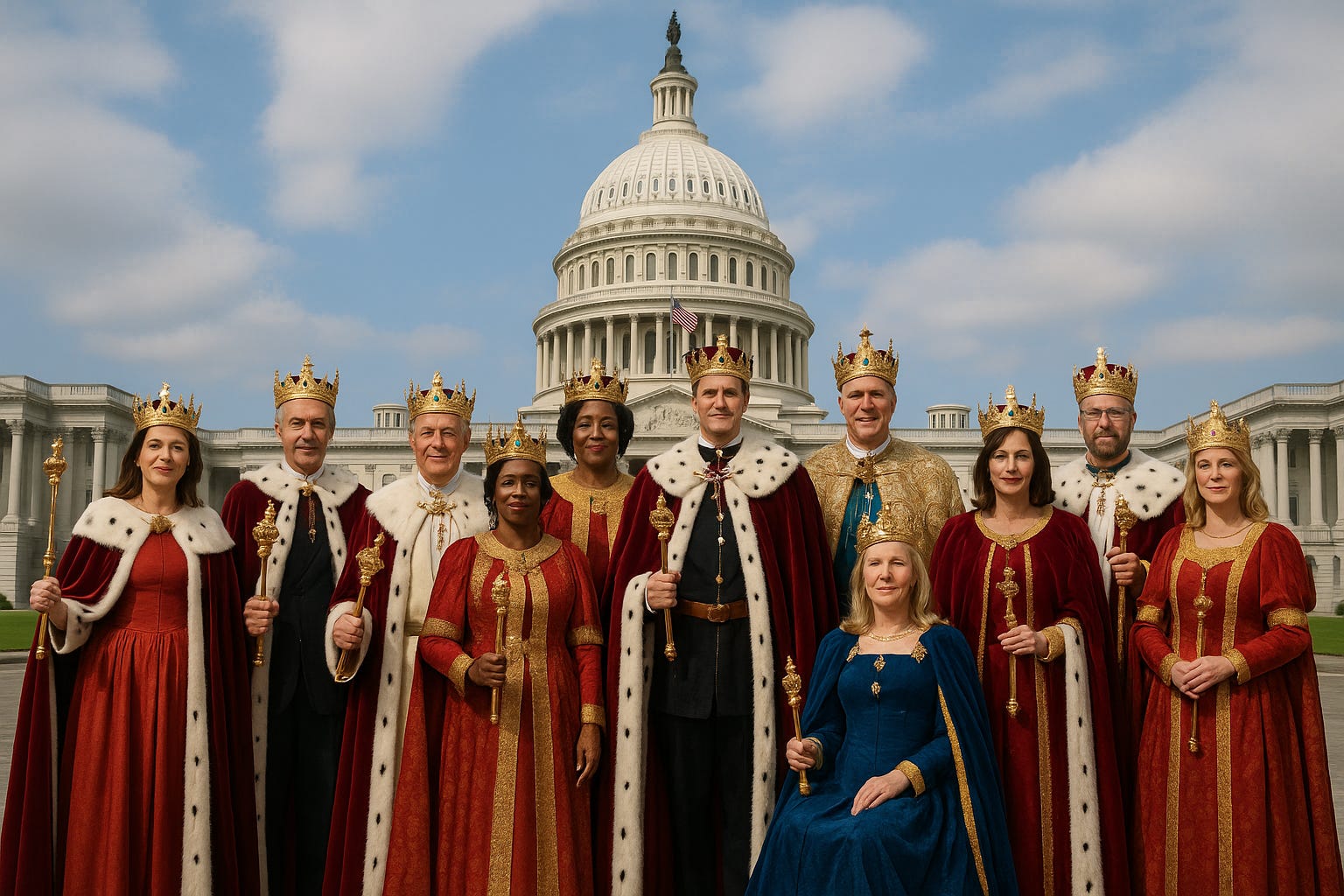





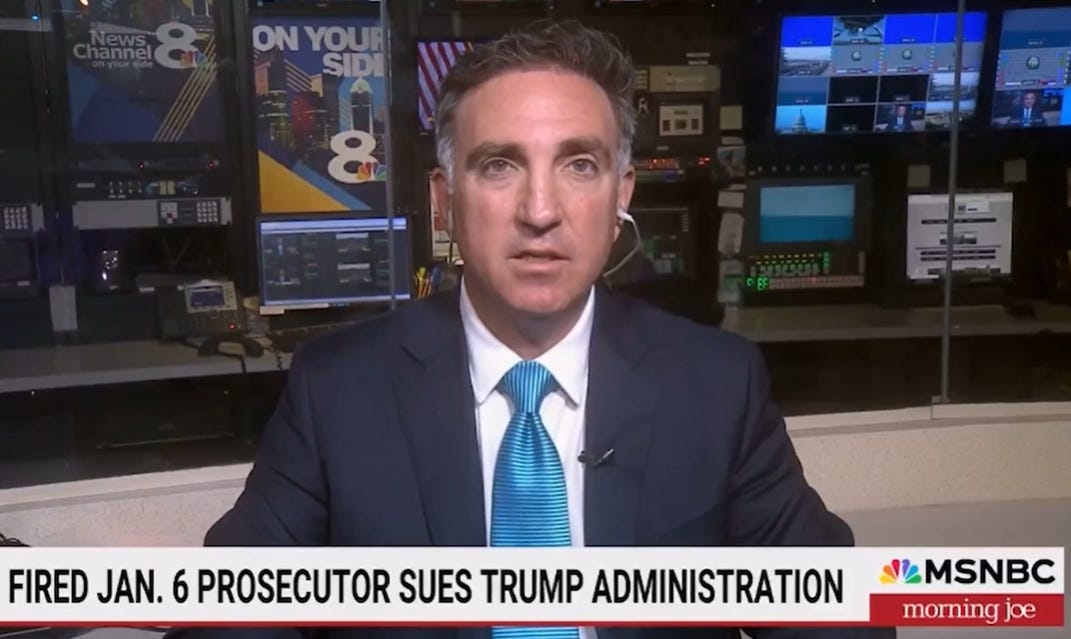


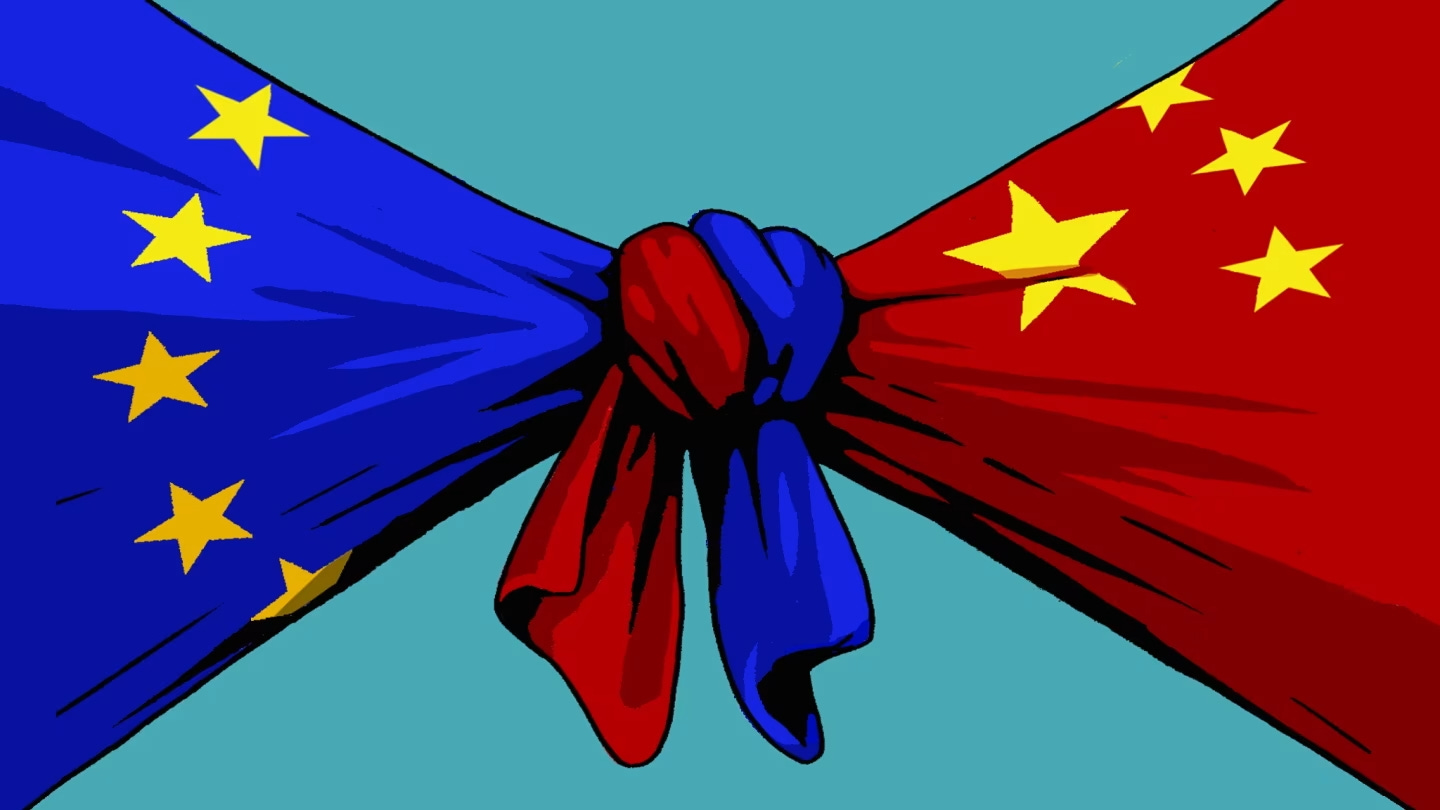





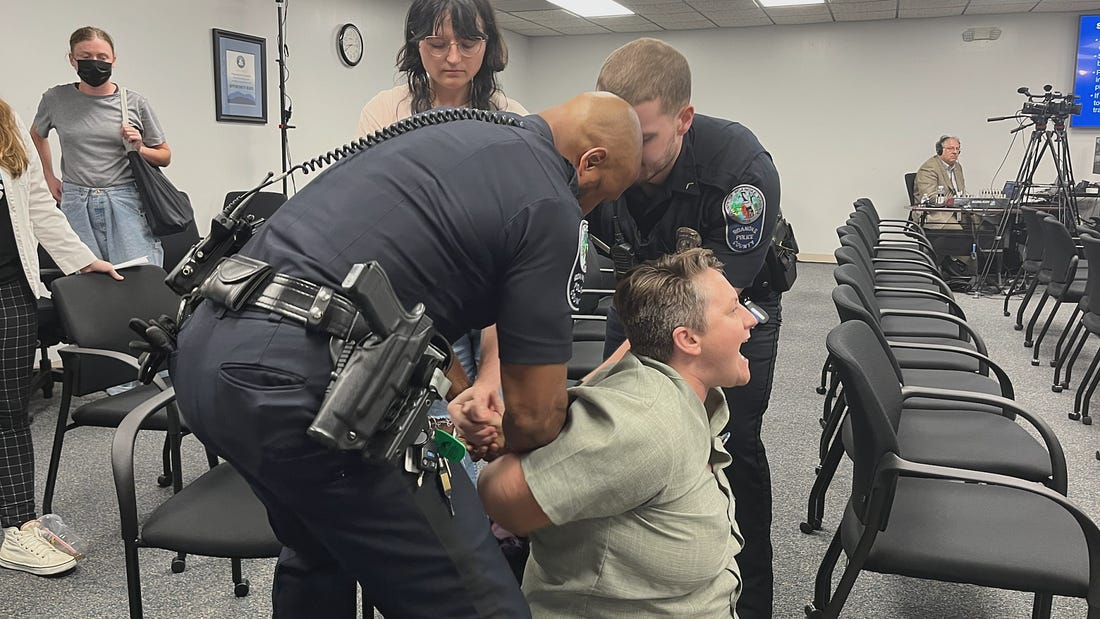


Recent Comments