The Truth Is Out There

Posts tagged ‘health’

Texas Air-Drops Live Virus-Containing Edible Rabies Vaccines Over Cities from Aircraft—’Leaving Persons at Risk for Vaccine Exposure and Vaccine Virus Infection’ Uninformed and with No Consents: CDC


Animals that ingest the oral vaccine are said to be contagious to other animals and humans for over a month.

On January 6, 2012, Brig. Gen. William L. Smith, Director Joint Staff and Commander, Domestic Operations for Joint Force Headquarters of Texas (second from left) met with members of the Texas State Guard and received an overview of the annual Texas Oral Rabies Vaccination Program in Zapata, Texas. Since the program’s inception in 1995, more than 39 million doses of the oral rabies vaccine, Raboral V RG, have been distributed over approximately 540,000 square miles of Texas. (U.S. Army Photo photo by Laura L. Lopez/Wikimedia Commons).

The Texas Department of Health and Human Services (DHS) has begun its annual distribution of RABORAL V-RG®, an oral rabies vaccine (ORV) bait—dropping the live laboratory-made virus from airplanes over Texas, as well as distributing it by hand.

The $2 million annual project is funded by the State of Texas and the United States Department of Agriculture Animal and Plant Health Inspection Service/Wildlife Services.

The U.S. Centers for Disease Control and Prevention (CDC) has known for over a decade that the RABORAL edible vaccine leaves “persons at risk for vaccine exposure and vaccine virus infection.”

Yet the department still allows millions of live genetically modified virus baits to be dispersed over communities, forests, and waterways each year without public notice, informed consent, or comprehensive biosafety oversight—posing potential risks to human health, wildlife, and national biosecurity.

Americans are being involuntarily exposed to laboratory-engineered pathogens capable of infecting multiple species, with no transparent risk disclosure or opt-out mechanism.

DHS press release reads:

Texas Department of State of Health Services will expand anti-rabies efforts around the El Paso area in January during the agency’s 32nd annual Oral Rabies Vaccination Program. Aerial bait distribution, which occurs along much of the Texas-Mexico border, was increased last year to include far West Texas as a response to the Arizona Fox rabies variant that is now established in New Mexico and within 150 miles of the Texas border.

In addition to those continued flights this year, rabies vaccine baits will also be distributed by hand in targeted areas around the city.

The rabies vaccine bait air drop will begin with flights from Alpine on Jan. 16, with additional flights slated to originate from Del Rio International Airport on Jan. 21, weather permitting. The vaccine bait, manufactured by Boehringer Ingelheim Animal Health USA Inc., is enclosed in a small plastic packet (similar to a fast-food ketchup package) dipped in fish oil and fish-meal crumbles to attract wild canids, like coyotes and foxes.

Between six and nine flights are scheduled per day during the two-week operation, with airdrop aircraft flying at 500 to 1,000 feet above ground level and dropping roughly 693,600 oral rabies vaccine baits at 50 baits per square mile. ORVP’s Border Maintenance Zone includes 19 Texas counties including El Paso, Hudspeth, Culberson, Jeff Davis, Presidio, Brewster, Pecos, Terrell, Val Verde, Kinney, Maverick, Zavala, Dimmit, Webb, Zapata, Starr, Hidalgo, Cameron and Willacy.

In addition to the hand-distribution efforts in the El Paso area, baits will also be distributed by hand in parts of Cameron, Hidalgo, Starr and Willacy counties.

The U.S. Department of Agriculture warns humans “should leave [the live-virus containing edible vaccine] undisturbed if they are encountered.”

  • If people come in contact with the bait, “they should immediately wash the contact area with warm water and soap.”
  • Dogs that consume the bait “may experience a temporary upset stomach.”

A July 2019 peer-reviewed study in Vaccineconfirms the RABORAL oral rabies vaccine:

  • is a genetically engineered chimeric “Frankenstein” human virus expressing a rabies gene,
  • sheds for weeks in multiple species,
  • was not tested for live virus persistence,
  • can potentially infect non-target animals and humans,
  • and was studied by researchers financially tied to its sale.

Most alarmingly, the study confirmed that virus DNA from the edible vaccine can be detected in both oral and rectal swabs post-inoculation in most animals, “followed by a resurgence of shedding between days 17 and 34 in some species.”

This means animals that ingest the oral vaccine are said to be contagious to other animals and humans for over a month.

On January 6, 2012, Texas State Guard member, Private Paul Pettit of the 3rd Battalion, 1st Regiment takes part in one of the many flights that assists in the aerial distribution of Raboral V RG, during a 10-day Oral Rabies Vaccination Program. With statistics showing a drastic reduction in rabies cases the goal of this program is to create zones of vaccinated coyotes and gray foxes along the leading edges of the epizootics stopping the spread of the virus. (U.S. Army photo by Laura L. Lopez/Wikimedia Commons).

A September 2017 Veterinary Research publication confirms that the live virus in RABORAL edible vaccines actively replicates in animals after ingestion, that horizontal transmission of the vaccine virus between animals has occurred, and that humans have been infected with vaccine-derived vaccinia following bait exposure.

The same study shows that RABORAL baits deliberately disperse tetracycline—a toxic ingredient in the vaccine—into the environment as a biomarker, where it accumulates in animal bone and teeth, can misrepresent true vaccination, and is acknowledged to carry potential ecotoxicity and antimicrobial-resistance risks with long-term use.

In the name of “wildlife management,” Texas authorities are blanketing cities with what are said to be live virus-containing packets without full public consent.

How many Texans have been informed that they are living inside an ongoing, state- and federally funded environmental release of a live, laboratory-engineered virus documented to replicate, spread between animals, persist in bodily secretions, and infect humans—without informed consent or any meaningful ability to refuse exposure?

USDA Drops Live Virus-Containing Rabies Edibles from Helicopters, Airplanes Across United States—’Leaving Persons at Risk for Vaccine Exposure and Vaccine Virus Infection’: CDC

October 16, 2025

Drones Spray ‘Self-Spreading’ COVID-19 Vaccine for ‘Large-Area Inoculation of Humans’ in ‘DEFUSE’ EcoHealth/DARPA Project

December 24, 2024

Operation ‘Large Area Coverage’ (LAC): U.S. Gov’t Covertly Sprays Airborne Toxic Chemical Agent on Unsuspecting Americans in Secret Bioweapons Experiment

October 31, 2024

‘Operation Sea-Spray’: U.S. Gov’t Secretly Sprays Deadly Bacteria Cloud on Americans in Bioweapons Experiment

January 3, 2025

Read full story

PREP Act Empowers Gov’t to ‘Administer’ Drugs, Biological Products, Devices to Citizens in Secret

December 31, 2024

Read full story

CDC, NIAID, DARPA Infect 36 People with Lab-Made Epidemic Influenza Virus: Journal ‘Influenza and Other Respiratory Viruses’

October 14, 2025

Read full story

NIAID, DARPA, Bill Gates Intentionally Infect 80 Americans With Lab-Made Pandemic Influenza Virus: HHS Study

October 13, 2025

Read full story

American Bioweapons: Then & Now

May 29, 2024

Read full story

Investigation Into U.S. Military Bioweapons-Origin of Tick-Borne Lyme Disease Successfully Added to 2026 National Defense Authorization Act

December 12, 2025

Read full story

Over 100 ‘BSL-4’ Bioweapons Labs Now Operate Worldwide, with More Under Construction: ‘Journal of Public Health’

October 23, 2025

Read full story

Measles Vaccine and Gain-of-Function: The Inconvenient Truth About CD150/CD46 Tropism Shift

March 5, 2025

Read full story

Texas Gave 15,000 More MMR Shots This Year—Now It Has More Measles Cases Than the Entire U.S. Had in 2024

March 25, 2025

Read full story

Free Measles Vaccine Campaign Followed by Measles Outbreak in Texas County

February 17, 2025

Read full story

*Article credits by Jon Fleetwood
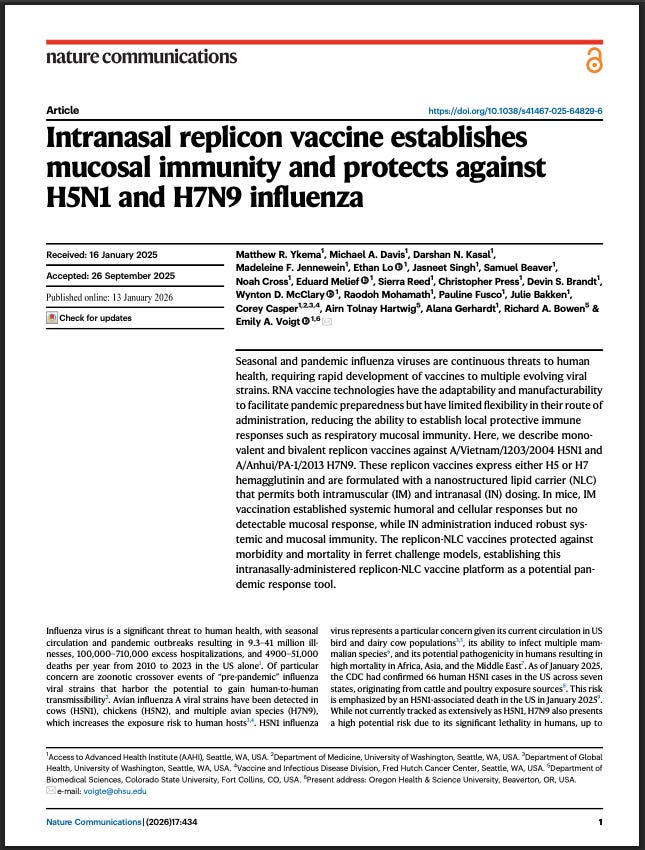
U.S. Military Funds Intranasal Spray Self-Replicating sa-mRNA H5N1 Bird Flu Vaccine Built From Chimeric Viral Constructs: Journal ‘Nature Communications’


U.S. government is not slowing its push toward intranasal self-replicating RNA vaccine technology.

A U.S. military–funded research program has developed an intranasal, self-replicating RNA (sa-mRNA) vaccine targeting H5N1 avian influenza, built using chimeric viral constructs assembled through reverse genetics.

The work was disclosed in a 2026 Nature Communications paper and explicitly funded through a U.S. Army–administered biodefense contracting mechanism.

The vaccine is said to force cells to produce H5N1 bird flu antigen while simultaneously producing viral replication enzymes that copy the self-amplifying RNA inside the cell.

The U.S. government is funding the creation of next-generation bird flu vaccines while funding the creation of purported chimeric “Frankenstein” bird flu viruses.

Congress, the White House, the Department of Energy, the FBI, the CIA, and Germany’s Federal Intelligence Service (BND) have confirmed that the COVID-19 pandemic was likely the result of lab-engineered pathogen manipulation.

Why is the government making the bird flu pandemic problem and solution at the same time, just like it was doing with coronaviruses before the COVID-19 outbreak?


What Was Built

The researchers are said to have engineered a self-amplifying RNA vaccine that uses a Venezuelan equine encephalitis virus (VEEV) replicon backbone into which they inserted influenza hemagglutinin (HA) genes from H5N1 (and H7N9).

The RNA construct was packaged in a cationic nanostructured lipid carrier and designed for intranasal spray delivery.

This is not conventional mRNA.

Self-amplifying RNA replicates inside host cells, increasing antigen production after administration.

While the construct is described as replication-defective (it lacks viral structural genes and cannot form a spreading virus), it is nonetheless a synthetic viral system built from components of different viruses.

Reverse Genetics & Chimeric Design

The platform was produced using reverse genetics—starting from gene sequences, cloning them into plasmids, and generating RNA by in-vitro transcription.

In practical terms, this means influenza genetic material was deliberately engineered into a VEEV replicon, creating a chimeric viral construct designed to self-amplify once inside cells.

This approach represents intentional genetic assembly of viral parts to achieve a specific biological effect.

Intranasal Spray Delivery

The vaccine was purpose-built for intranasal (IN) administration, a route the authors emphasize for inducing mucosal and lung-resident immune responses that intramuscular vaccines do not generate.

The paper reports distribution throughout the upper and lower respiratory tract, with some material swallowed into the gastrointestinal tract—a confessed feature of intranasal dosing.

This delivery choice matters because it places a self-replicating RNA system directly onto respiratory mucosa, rather than confining it to muscle tissue.

The Virus Target: H5N1

The primary antigen target is H5N1 avian influenza, repeatedly framed in the paper as a pre-pandemic threat.

Ferret challenge experiments involved high-dose intranasal exposure to influenza, with the sa-mRNA platform reported to protect against severe disease.

The study positions the platform as rapidly deployable, emphasizing scalability, thermostability, and potential for stockpiling—language consistent with pandemic preparedness, not routine seasonal vaccination.

Who Funded It—& How

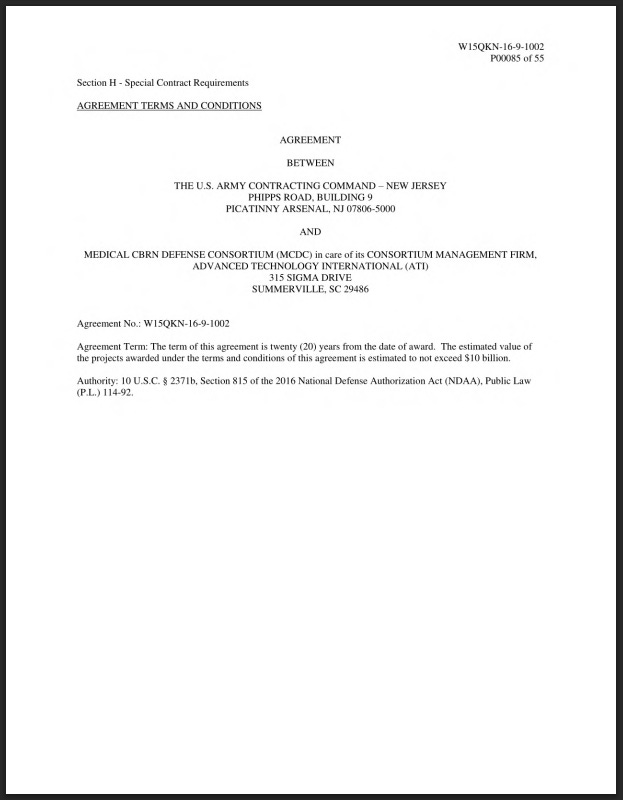
The paper states plainly that the work was “sponsored by the US Government under Other Transaction number W15QKN-16-9-1002.”

W15QKN-16-9-1002 is a U.S. Army Contracting Command–New Jersey Other Transaction Agreement (OTA) established under Section 815 of the 2016 National Defense Authorization Act.

The agreement created the Medical CBRN Defense Consortium (MCDC) to fund research and development of medical countermeasures for chemical, biological, radiological, and nuclear (CBRN) threats.

Key points from the OTA itself:

  • The agreement is administered by the U.S. Army Contracting Command on behalf of the Department of Defense.
  • It authorizes the government to select, direct, and fund specific projects it deems necessary.
  • The scope explicitly includes vaccines, medical countermeasures, and manufacturing platforms designed for rapid response to biological threats.
  • The estimated value of projects issued under the agreement is up to $10 billion, with a 20-year term.

The research was supported through a military biodefense R&D framework designed to develop deployable medical technologies.

Bottom Line

The Nature paper confirms that a U.S. military–administered funding program supported the development of an intranasal, spray-form self-replicating sa-mRNA vaccine built from chimeric viral constructs that include H5N1 influenza genes.

The authors emphasize speed, scalability, and deployment readiness.

This is best understood not as a routine flu-vaccine study, but as a biodefense-driven platform demonstration: a synthetic, self-amplifying viral system designed for rapid respiratory deployment in a future pandemic scenario.

At a time when governments now acknowledge that lab-engineered pathogens can spark global crises, the United States is simultaneously funding the creation of chimeric avian influenza systems and the intranasal self-replicating technologies positioned to counter them—collapsing the line between pandemic threat creation and pandemic response into the same military-run pipeline.

U.S. Intelligence Classified and Redacted Findings on COVID-19 PCR Tests: New FOIA Documents


New records show top U.S. nuclear, national security laboratories scrutinized primers used to define the pandemic—but hid the results.

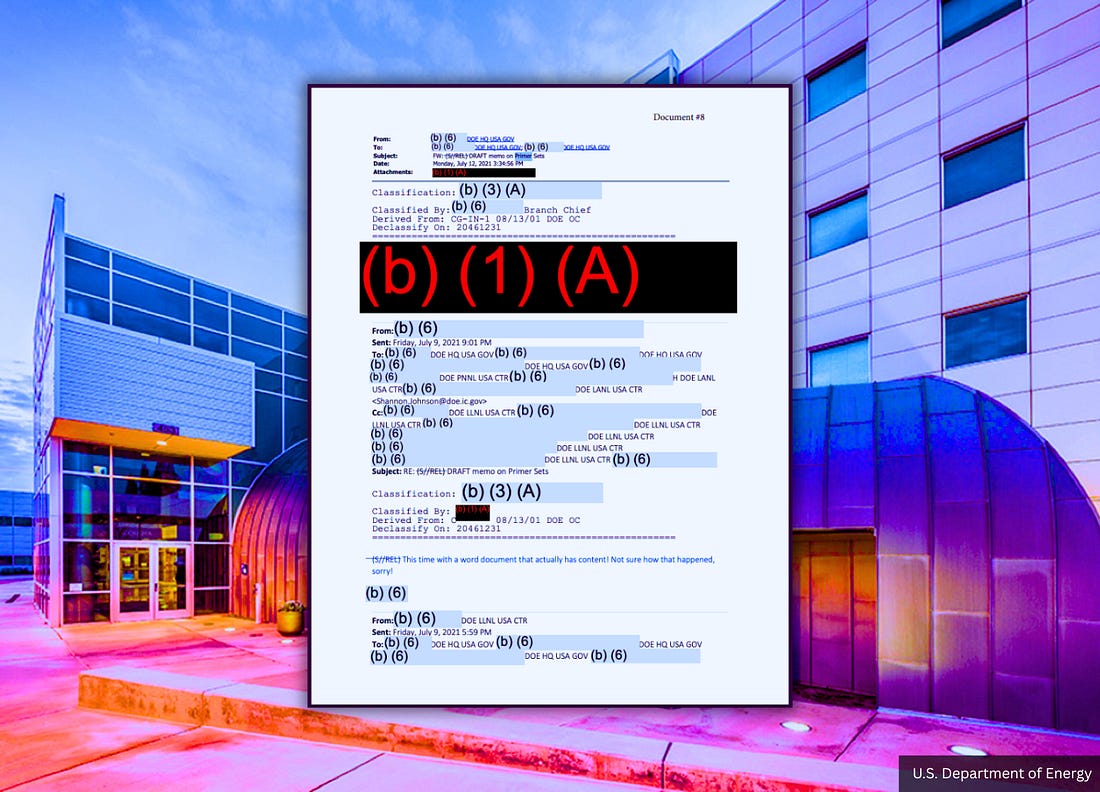
Newly released Department of Energy (DOE) records obtained by U.S. Right to Know through a Freedom of Information Act (FOIA) requenst show that U.S. federal intelligence agencies classified and redacted the results of an internal review of COVID-19 PCR test primers, even as those tests were used to define “cases,” drive emergency policy, and justify unprecedented social and economic controls.

The documents reveal that during the pandemic, the U.S. government quietly subjected PCR test primer sets—the molecular components that determine what PCR tests detect—to classified scrutiny by top national security laboratories, while withholding the findings from the public under national-security and intelligence exemptions.

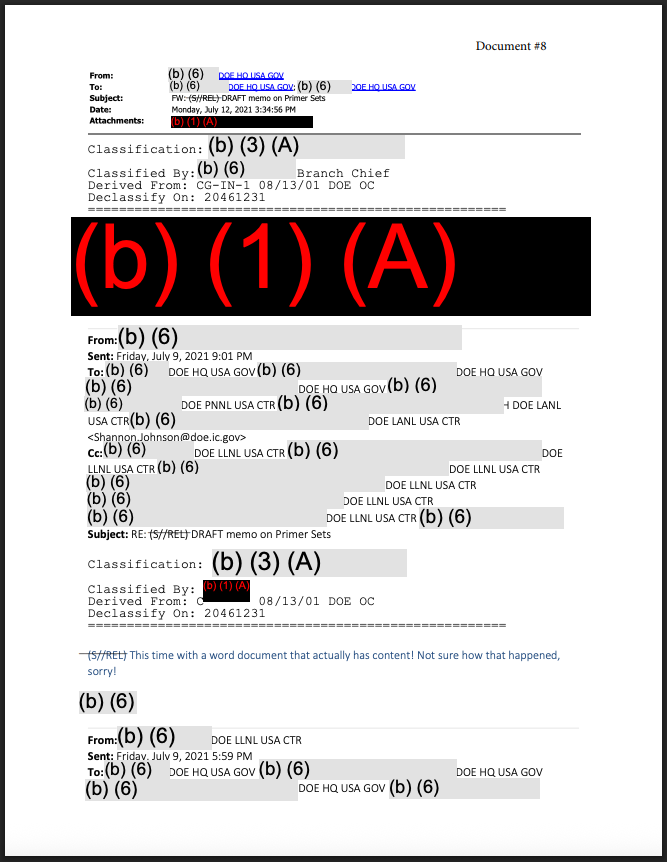
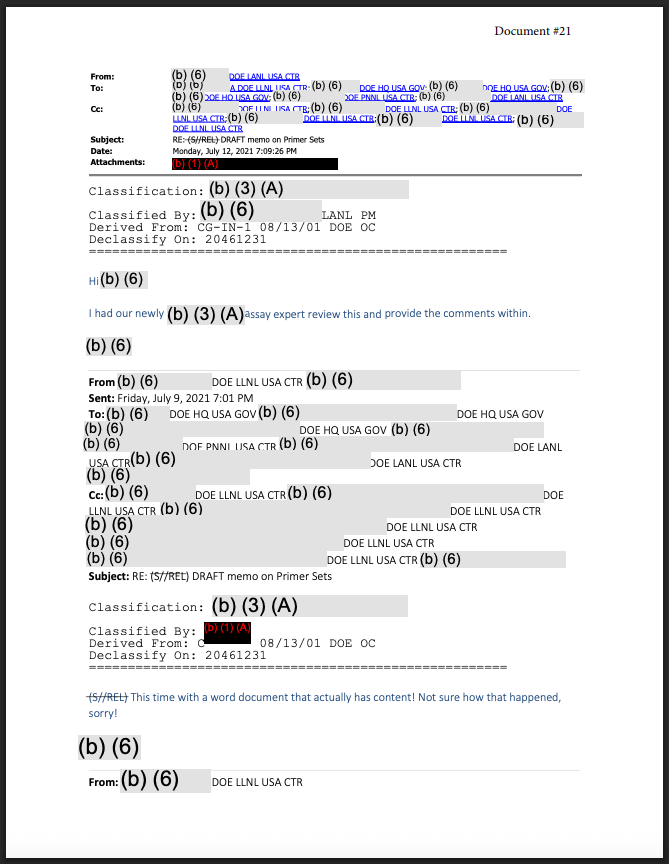
At the center of the release is a classified internal communication titled “DRAFT memo on Primer Sets,” circulated through the DOE’s Office of Intelligence and Counterintelligence and reviewed by assay experts at Lawrence Livermore National Laboratory, Los Alamos National Laboratory, and Pacific Northwest National Laboratory.

The memo itself remains classified.

Its conclusions were redacted.

No public explanation was ever provided.


PCR Testing Was Treated as a Classified Intelligence Issue

PCR tests do not detect an intact virus and do not prove infection.

They work by using short genetic sequences—primers—to bind to matching genetic material and amplify it until a signal is detected.

What a PCR test detects depends entirely on what its primers bind to.

The DOE records show that this foundational question—what COVID-19 PCR tests were actually detecting—was handled not as a public scientific matter, but as a classified intelligence issue.

One internal email chain explicitly references a classified document titled:

“FW: (S//REL) DRAFT memo on Primer Sets”

Another message states that the memo was reviewed by a specialist:

“I had our newly assay expert review this and provide the comments within.”

The routing shows coordination across DOE intelligence offices and U.S. national security laboratories.

The content of the memo, the concerns it addressed, and the conclusions it reached are all withheld from public release.

What the Government Did Not Disclose

Throughout the pandemic, the public was repeatedly told that COVID-19 PCR testing was reliable, specific, and settled.

Questions about PCR design were often dismissed as misinformation.

The DOE records show the opposite posture inside government: PCR primer design was serious enough to warrant classified review by nuclear-era national laboratories, with the results deemed sensitive enough to be redacted under national-security and intelligence-source protections.

DOE explicitly justified withholding the information by citing risks to national security and intelligence methods, and assigned declassification dates decades into the future.

There is no indication in the records that the findings were shared with public-health agencies, published in scientific journals, or communicated to the public.

Why PCR Primer Design Is Existential, Not Technical

PCR testing formed the backbone of the pandemic response.

PCR “positives” were treated as synonymous with infection and were used to define:

  • COVID “cases”
  • Community spread
  • Hospital surges
  • Lockdowns and emergency orders
  • Vaccine emergency authorizations

If PCR primers bind to viral genetic material, positives reflect virus detection.

If PCR primers bind to human genetic material, positives can reflect the person being tested.

That distinction determines whether a “case” is an infection—or merely a genetic detection.

What the CDC’s PCR Primer Actually Aligns To

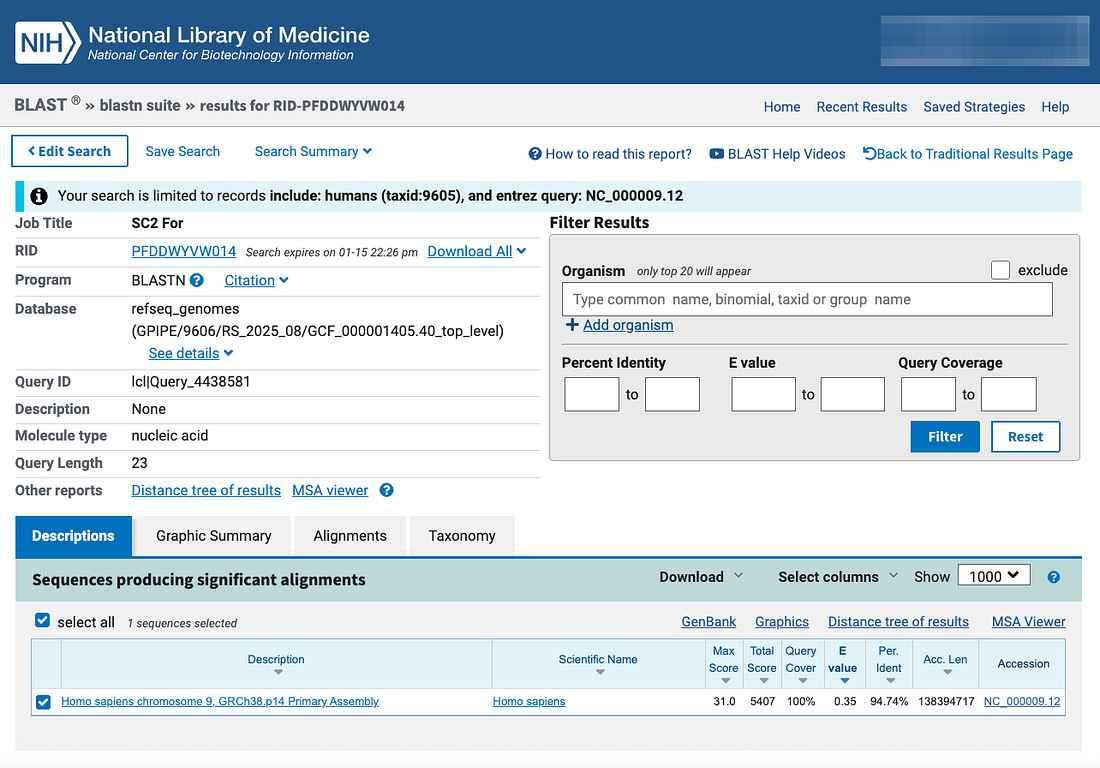
An independent BLAST analysis was run of the CDC’s SARS-CoV-2 forward PCR primer.

The results show that the primer has multiple perfect and near-perfect matches to the human genome, including:

  • Repeated 13–16 base stretches with 100% identity to human DNA
  • Longer alignments exceeding 94–95% identity across multiple human chromosomes

In plain terms: the CDC’s COVID-19 PCR primer can bind to human genetic material.

That establishes a biological mechanism by which a PCR test administered “for COVID-19” can return a positive result by amplifying human DNA or RNA rather than viral RNA.

If that occurs, the test still produces a positive signal.

The result is still recorded as a “COVID case.”

But no infection has been detected.

The “case” is a human genetic detection.

Why This Explains the Secrecy

The DOE records show that this was not ignored.

It was escalated—and then classified.

National security laboratories are not tasked with reviewing PCR primer sets unless the implications are systemic.

If the test used to define a global pandemic can generate positives without detecting a virus, public disclosure would collapse the legitimacy of case counts, emergency powers, and pandemic policy itself.

The records show that U.S. intelligence examined the issue.

They also show that the findings were classified, redacted, and withheld from the public.

The classification of PCR findings is especially significant given that no U.S. agency has ever independently verified the original clinical sample from which the SARS-CoV-2 genetic sequence was derived.

The United States accepted a digital genetic code supplied by the Chinese government—without access to the physical lung sample it was allegedly sequenced from—and relied on PCR testing and that same in-silico sequence to define cases, drive emergency policy, and later encode spike protein into hundreds of millions of vaccine doses.

That secrecy is even more consequential given that U.S. military planners had already built—and quietly funded—a DARPA-backed pandemic pipeline designed to treat digital genetic sequences as functional viruses, synthesizing infectious clones and mass-producing mRNA countermeasures without requiring a verified physical pathogen, meaning both COVID “case” detection and the subsequent vaccine rollout rested on the same unverified, in-silico genetic foundation.

Dr. Kary Mullis, the late inventor of the PCR test, said in a 1997 interview (here) that his test should not be used to determine whether a subject is infected with a virus.

This is because the test “can find almost anything in anybody” if its parameters are set high enough, tainting the results, according to the Nobel Prize winner.

“Anyone can test positive for practically anything with a PCR test. If you run it long enough… you can find almost anything in anybody,” Dr. Mullis said. “It doesn’t tell you that you’re sick.”

Mullis’s warning matters because it confirms that PCR was not designed to establish clinical infection, meaning a pandemic built on PCR “cases” can reflect amplified genetic signals rather than illness—a vulnerability that could be serious enough to later draw classified scrutiny from U.S. national security laboratories.

What the Records Prove—& What They Imply

The documents do not release the primer memo.

They do not disclose the conclusions.

They do not quantify how many PCR positives may reflect human material.

They do prove that:

  • COVID-19 PCR test primers were scrutinized by U.S. intelligence
  • Top national security laboratories were involved
  • The findings were classified and redacted
  • The public was never informed

Combined with sequence-alignment evidence showing that the CDC’s PCR primer binds to human DNA, the implication is unavoidable:

The U.S. government privately examined whether the test used to define the pandemic could generate “cases” without detecting infection—and then classified the answer.

The DOE records were released to U.S. Right to Know under FOIA request HQ-2025-03244-F.

The primer alignment is reproducible using the CDC’s published primer sequence and the human reference genome.

The public was told PCR testing was settled science.

The documents show the government didn’t treat it that way behind the scenes.

And whatever they found, they made sure we were never allowed to see it.

Portugal Runs H5N1 Bird Flu Outbreak Simulation—Echoing Pre-COVID Pandemic Exercises


Patients refusing to use personal protective equipment, like masks, defined as “threats.”

Portuguese health authorities conducted a formal avian influenza (H5N1) simulation exercise in early 2025 to test how primary health care units would respond to a bird flu outbreak, according to a study published last week in Acta Médica Portuguesa and indexed by the U.S. National Library of Medicine.

The exercise comes as bird flu is simultaneously being advanced through expanded PCR surveillance, laboratory-engineered H5N1 research, and revived mRNA vaccine programs, raising questions given the similar convergence of testing, research, and preparedness measures that preceded COVID-19.

The exercise took place on February 3, 2025, and was coordinated by the Infection Prevention and Control Programme responsible for primary health care units in Northern Lisbon, within the Santa Maria Local Health Unit.

According to the authors, the event was a tabletop exercise—a structured simulation used to rehearse decision-making during hypothetical outbreaks—designed to assess whether frontline clinics could identify, isolate, and manage patients during high-risk infectious disease scenarios.


What Was Simulated

The exercise explicitly included avian influenza A (H5N1) as one of its outbreak scenarios, alongside Marburg virus disease and measles.

Participants were initially presented with blinded clinical and epidemiological information and asked to respond without knowing the pathogen in advance.

The diagnoses—including H5N1—were disclosed only after discussion.

Who Participated

Representatives from 15 primary health care units, accounting for 83% of clinics in the region, took part in the exercise.

Participants included healthcare professionals and unit leadership responsible for infection control and patient flow.

What the Exercise Tested

The simulation evaluated:

  • Early identification of suspected infectious cases
  • Availability of isolation rooms and isolation pathways
  • Staff familiarity with mandatory reporting and isolation procedures
  • Communication between clinics and external health authorities
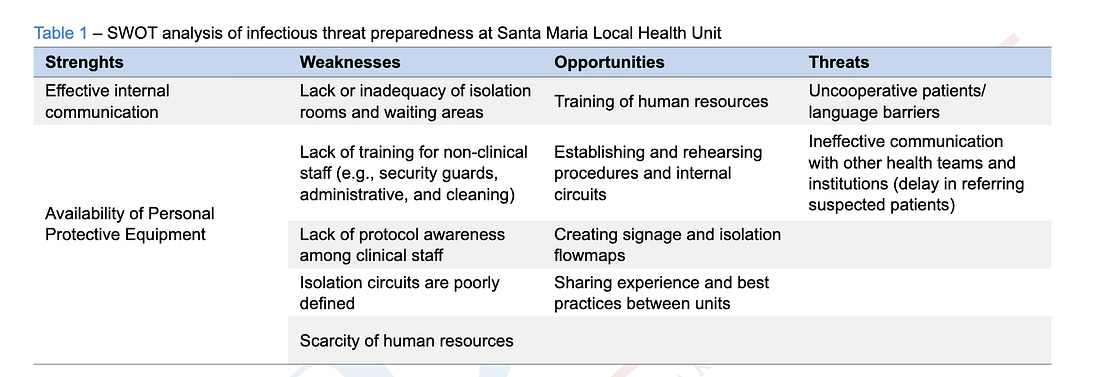
  • Barriers to compliance, including “uncooperative” patients and language obstacles.

‘Uncooperative’ Patients as a Defined ‘Threat’

The authors explicitly frame patient non-compliance as a threat to outbreak control during the simulation, rather than as a secondary or peripheral challenge.

They write:

“[L]anguage barriers or non-cooperative patients (e.g., refusing to use personal protective equipment) were seen as threats to implement procedures correctly.”

In the study’s structure, this language also appears under the “Threats” category of the SWOT analysis—placing patient behavior alongside infrastructure failures and staffing shortages as factors that could actively undermine outbreak response.

The paper also notes that frontline clinics lacked personnel trained to manage or redirect patients once non-compliance occurred:

“[C]oncerns were raised about non-healthcare professionals in several units, such as security guards and administrative assistants, lacking training to identify potential infectious diseases and guide patients towards isolation circuits and/or alert healthcare workers.”

This framing treats refusal—specifically refusal to use personal protective equipment—as an anticipated operational risk during an infectious disease response scenario.

The authors do not describe voluntary refusal as a matter of patient autonomy.

Instead, refusal is listed as an obstacle to the correct implementation of procedures, implying a need for enforcement capacity that clinics were found to lack.

No mitigation strategies for patient refusal are proposed in the paper.

No limits on enforcement authority are discussed.

The simulation record shows that non-cooperation was expected, identified in advance, and formally categorized as a threat within a modeled H5N1 outbreak response.

Why This Exercise Draws Attention

Although the simulation occurred in early 2025, the study was submitted in July 2025, accepted in December, and published online January 8, 2026, placing it into the medical literature at a time when international concern over bird flu preparedness is intensifying.

The timing and structure of the exercise are notable.

In the years preceding COVID-19, global health institutions conducted high-level pandemic simulations—including SPARS Pandemic 2025–2028 and Event 201—that modeled coronavirus outbreaks, public messaging challenges, and emergency countermeasures shortly before those scenarios became reality.

This Lisbon exercise follows the same pattern:

  • a named pathogen,
  • a simulated outbreak,
  • documented preparedness gaps,
  • and publication after the fact to formalize the response framework.

The study documents preparedness planning.

It confirms that bird flu is now being actively rehearsed as a plausible next pandemic scenario, not only in abstract policy discussions, but through operational simulations involving frontline civilian healthcare systems.

Was the exercise solely for preparedness, or does it function as early-stage coordination for future response architectures?

WHO VigiAccess Lists 5.8 Million COVID-19 Vaccine Adverse Event Reports


World Health Organization data show system-wide adverse event reports spanning neurological, cardiac, immune, gastrointestinal, and reproductive categories.

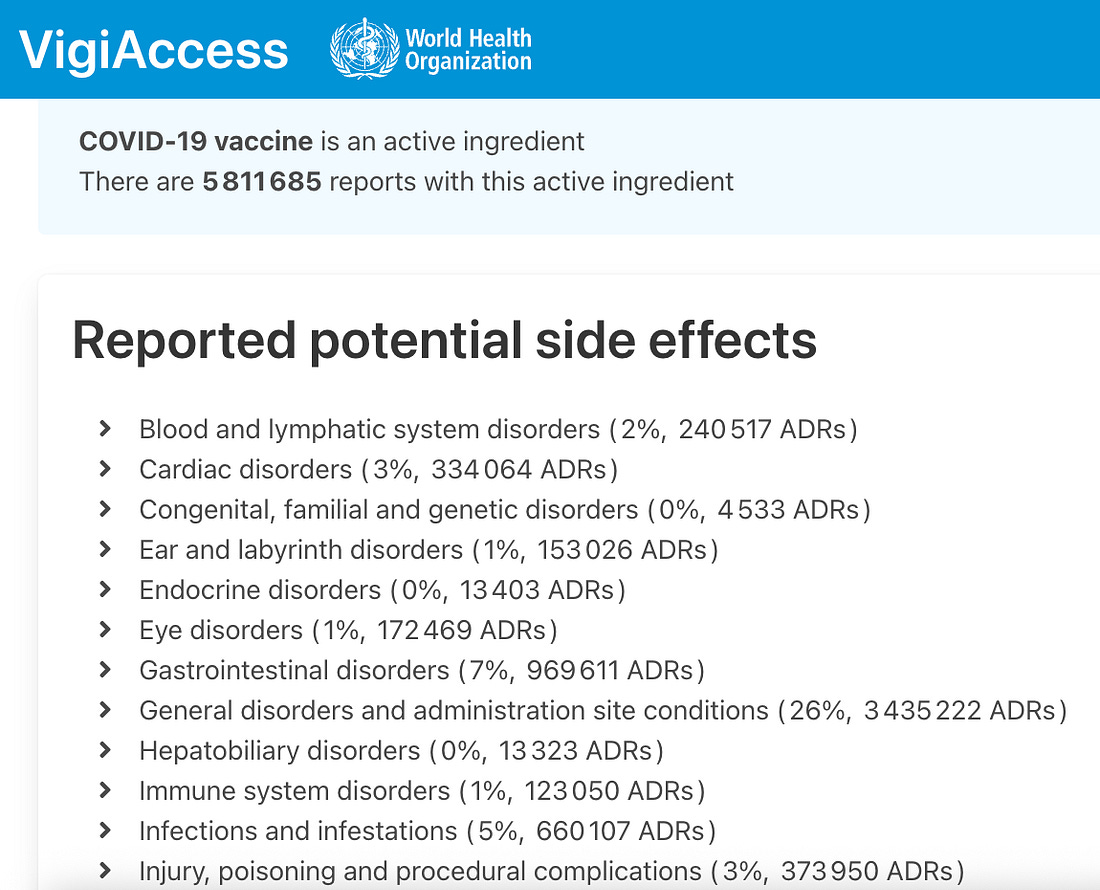
The World Health Organization’s VigiAccess pharmacovigilance database currently lists 5,811,685 individual adverse drug reaction (ADR) reports associated with COVID-19 vaccines as an active ingredient.

A Harvard Pilgrim Healthcare/HHS study confirms fewer than 1% of vaccine adverse events are reported, meaning the number could be closer to half a billion.

These reports are submitted by national drug regulators worldwide and categorized by affected body system.

Below is the full numerical breakdown exactly as listed in the database.


Reported Potential Side Effects by System Category

  • General disorders and administration site conditions
    3,435,222 reports (26%)
  • Nervous system disorders
    2,162,680 reports (16%)
  • Gastrointestinal disorders
    969,611 reports (7%)
  • Investigations (laboratory abnormalities, diagnostic findings)
    807,850 reports (6%)
  • Infections and infestations
    660,107 reports (5%)
  • Respiratory, thoracic, and mediastinal disorders
    559,163 reports (4%)
  • Skin and subcutaneous tissue disorders
    643,195 reports (5%)
  • Injury, poisoning, and procedural complications
    373,950 reports (3%)
  • Cardiac disorders
    334,064 reports (3%)
  • Psychiatric disorders
    253,443 reports (2%)
  • Blood and lymphatic system disorders
    240,517 reports (2%)
  • Vascular disorders
    245,846 reports (2%)
  • Reproductive system and breast disorders
    280,795 reports (2%)
  • Musculoskeletal and connective tissue disorders
    1,419,363 reports (11%)
  • Immune system disorders
    123,050 reports (1%)
  • Surgical and medical procedures
    121,374 reports (1%)
  • Metabolism and nutrition disorders
    103,797 reports (1%)
  • Eye disorders
    172,469 reports (1%)
  • Ear and labyrinth disorders
    153,026 reports (1%)

Lower-Frequency Categories Still Numerically Significant

  • Renal and urinary disorders
    47,767 reports
  • Endocrine disorders
    13,403 reports
  • Hepatobiliary disorders
    13,323 reports
  • Pregnancy, puerperium, and perinatal conditions
    14,180 reports
  • Congenital, familial, and genetic disorders
    4,533 reports
  • Neoplasms (benign, malignant, unspecified)
    17,770 reports
  • Product issues
    10,919 reports
  • Social circumstances
    47,909 reports

These figures represent submissions from national health authorities participating in the WHO’s global drug-safety monitoring program.

As of March 2025, 182 health authorities (national pharmacovigilance centers) participate in the WHO Program for International Drug Monitoring.

Each report may include multiple symptoms, meaning totals by category exceed the number of individual reports.

The scale and system-wide distribution of these reports are unprecedented for a single pharmaceutical product class in the VigiBase system.

Newly U.K.-Approved Self-Replicating COVID Jab ‘Kostaive’ Produces Spike Protein Detectable 28 Days After Vaccination: Journal ‘Biochemistry and Biophysics Reports’


samRNA-copying enzyme also produced in the body post-vaccination detected for at least 15 days, according to study.

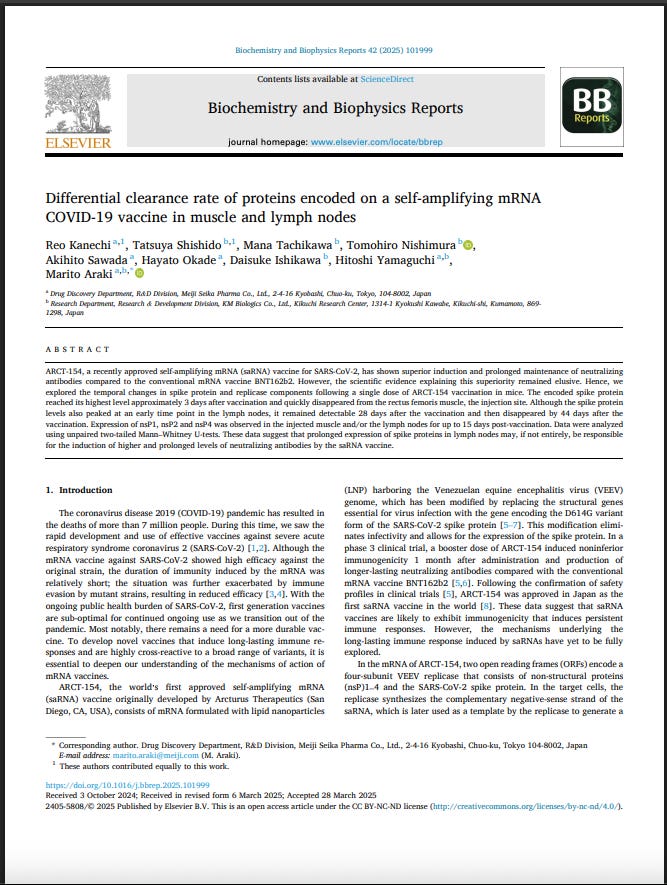
Arcturus Therapeutics’s Kostaive (zapomeran, ARCT-154) self-amplifying mRNA COVID-19 vaccine is said to force cells in the body to produce SARS-CoV-2 spike protein—detectable in draining lymph nodes for at least 28 days—and a replicase enzyme that makes more copies of the vaccine mRNA, with the enzyme itself detectable for up to 15 days.

ARCT-154 was quietly approved by U.K. regulators over the weekend.


An April 2025 Biochemistry and Biophysics Reports publication confirms that the ARCT-154 spike protein was “detectable up to 28 days post-vaccination” in mice.

The ARCT-154 samRNA-replicating enzyme also produced in the body post-vaccination was detectable for “up to 15 days.”

The study reads:

The encoded spike protein reached its highest level approximately 3 days after vaccination and quickly disappeared from the rectus femoris muscle, the injection site. Although the spike protein levels also peaked at an early time point in the lymph nodes, it remained detectable 28 days after the vaccination and then disappeared by 44 days after the vaccination. Expression of nsP1, nsP2 and nsP4 was observed in the injected muscle and/or the lymph nodes for up to 15 days post-vaccination.

There were no samples taken at intermediate days like 30, 35, or 40, so we don’t know the exact day the vaccine-produced spike protein became undetectable.

The U.K. press release failed to mention any of this.

Are citizens being fully informed before they consent to this new pharmaceutical injection?

Why are government regulators not providing this information?

Can the Vaccinated Shed samRNA Onto the Unvaccinated?

Exosomes and extracellular vesicles (EVs) are released by cells as part of normal physiology and disease processes, shedding into various bodily fluids such as blood, urine, semen, amniotic fluid, and breast milk.

It is biologically plausible that sa-mRNA, spike protein, and replicase enzymes from Kostaive could be packaged into EVs and exosomes for shedding into bodily fluids—potentially amplified by the self-replicating nature of sa-mRNA—allowing their release into circulation and excretion via blood, sweat, saliva, or breast milk.

A December Science, Public Health Policy, and the Law study shows that spike protein produced by cells from the BioNTech/Pfizer mRNA COVID-19 vaccine is mainly released into the surroundings through extracellular vesicles (which include exosomes).

Moderna knew as early as 2017 that its mRNA vaccine lipid nanoparticles—which carry vaccine mRNA into cells and are used in samRNA jabs—enter the bloodstream and accumulate in the liver, spleen, kidneys, heart, and lungs.

A January 2023 Nature Reviews Drug Discovery paper co-authored by Moderna scientists bluntly admits that avoiding “unacceptable toxicity” in mRNA vaccines remains a major challenge, warning that “lipid nanoparticle structural components, production methods, route of administration and proteins produced from complexed mRNAs all present toxicity concerns” and that the way these vaccines spread through the body can cause harm due to “cell tropism and tissue distribution… and their possible reactogenicity.”

Can individuals injected with self-replicating vaccines spread sa-mRNA, spike protein, and replicase enzymes to others?

After those elements are shed onto the unvaccinated, will they become vaccinated?

Orwellian Tactics. WHO Instructs Governments to Track Online Anti-Vaccine Messaging in Real Time with AI: Journal ‘Vaccines’


Believe in vaccines or be targeted.

The World Health Organization (WHO) has demanded that governments surveil online information that questions the legitimacy of influenza vaccines and that they launch “countermeasures” against those who question the WHO’s vaccine dogma, in a November Vaccines journal publication.

The WHO’s largest funders are the U.S. government (taxpayers) and the Bill & Melinda Gates Foundation.

In the November publication, the WHO representatives do not argue for their beliefs in vaccines.

They do not attempt to interact with arguments against vaccines.


Instead, they call for governments to use artificial intelligence (AI) to monitor online opposition to injectable pharmaceuticals, and to develop ways to combat such opposition.

There is no persuasion, only doctrine.

The WHO paper reads:

“Vaccine effectiveness is contingent on public acceptance, making risk communication and community engagement (RCCE) an integral component of preparedness. The research agenda calls for the design of tailored communication strategies that address local sociocultural contexts, linguistic diversity, and trust dynamics.”

“Digital epidemiology tools, such as AI-driven infodemic monitoring systems like VaccineLies and CoVaxLies, offer real-time insight into misinformation trends, enabling proactive countermeasures.”

The WHO starts from the assumption that all vaccine skepticism is inherently false, pushing surveillance tools to track and catalog online dissent from those rejecting that creed.

The goal is not finding middle ground or even fostering dialogue.

It’s increasing vaccinations.

“The engagement of high-exposure occupational groups as trusted messengers is recommended to improve uptake.”

To accomplish this, governments “should” align “all” their messaging with the WHO’s denomination of vaccine faith.

“All messaging should align with WHO’s six communication principles, ensuring information is Accessible, Actionable, Credible, Relevant, Timely, and Understandable, to strengthen public trust in vaccination programmes [sp-non English].”

The WHO’s faith system requires not only that its own followers, but also non-followers inject themselves with drugs linked to injuries, diseases, hospitalizations, and deaths.

If your posts online oppose that faith system, they are targeted and labeled as “misinformation.”

You require “behavioural [sp-non English] intervention.”

You must be “counter[ed].”

“Beyond monitoring misinformation, participatory communication models that involve local leaders, healthcare workers, and veterinarians have shown measurable improvements in vaccine uptake and trust. Evidence-based behavioural [sp-non English] can complement these approaches to counter misinformation.”

The WHO is outlining an Orwellian control system where dissent is pathologized, belief is enforced by surveillance, and governments are instructed to algorithmically police thought in service of pharmaceutical compliance.

HHS/CDC Fund Online Game ‘Bad Vaxx’ to ‘Psychologically Inoculate’ Vaccine Resistance


Ironically, the game uses the very techniques it claims to train users to detect.

U.S. taxpayer funds are being used by federal health agencies to develop and test online psychological games designed to condition how people—especially younger audiences—interpret and respond to vaccine skepticism.

An August Nature Scientific Reports study reveals that the project was funded by the Centers for Disease Control and Prevention (CDC) under the U.S. Department of Health and Human Services, through a CDC award administered by the American Psychological Association.

The paper states that the funding totaled “$2,000,000 with 100% funded by CDC/HHS.”

The grant supporting the project is titled “COVID—INOCULATING AGAINST VACCINE MISINFORMATION,” award number 6NU87PS004366-03–02.

That award has already handed out over $4.3 million in taxpayer funds since its activation in 2018.


The project language mirrors the study’s conceptual framework: dissent is treated as exposure to a pathogen, and resistance to dissent is treated as immunity.

The government-funded study centers on the creation and evaluation of an online game called Bad Vaxx.

According to the authors, the purpose of the game is not to examine disputed vaccine claims or to compare competing evidence, but to reduce what they define as “vaccine misinformation” by shaping how players cognitively process vaccine-critical content.

This is despite the CDC’s own VAERS data confirming over 2.7 million injuries, hospitalizations, and deaths linked to vaccines since 1990.

The study authors explain their premise at the outset:

“Vaccine misinformation endangers public health by contributing to reduced vaccine uptake.”

From this premise, the study moves directly to intervention design.

“We developed a short online game to reduce people’s susceptibility to vaccine misinformation.”

The paper frames this approach as a form of psychological prevention, borrowing language from immunology rather than education or debate.

“Psychological inoculation posits that exposure to a weakened form of a deceptive attack… protects against future exposure to persuasive misinformation.”

The Bad Vaxx game operationalizes this concept by training players to recognize four specific “manipulation techniques”: what it refers to as emotional storytelling, fake expertise, the naturalistic fallacy, and conspiracy theories.

These techniques are treated as characteristic of vaccine misinformation as a category.

“The game trains people to spot four manipulation techniques, which previous studies have identified as being commonly used in the area of vaccine misinformation.”

The study does not include a corresponding examination of whether similar persuasive techniques may be used in vaccine-promoting messaging, government communications, or pharmaceutical advertising.

Ironically, the Bad Vaxx project itself relies on the same persuasive architecture it claims to neutralize—emotional framing, authority cues, and repetition—embedded in a gamified format designed to shape intuition rather than invite scrutiny.

The classification of “vaccine misinformation” is established in advance and applied only to information critical of injectable pharmaceutical products.

Throughout the paper, vaccine skepticism is framed as a behavioral and social risk rather than as a possible response to uncertainty, evolving evidence, or institutional error.

The taxpayer-funded authors write:

“Susceptibility to misinformation about COVID-19 predicts lower compliance with public health regulations and lower willingness to get vaccinated.”

The choice of a game as the delivery mechanism is emphasized as a strength of the intervention.

The authors repeatedly describe the format as “entertaining,” “immers[ive],” and scalable, highlighting its ability to shape intuition rather than deliberation.

“A practical, entertaining intervention in the form of an online game can induce broad-scale resilience against manipulation techniques commonly used to spread false and misleading information about vaccines.”

Games function by rewarding correct pattern recognition, reinforcing desired responses, and reducing analytical friction.

The study’s outcome measures reflect this design: discernment scores, confidence ratings, and willingness to share content, rather than independent evaluation of claims or evidence comparison.

The researchers also emphasize the potential reach of such interventions.

“The Bad Vaxx game has the potential for adoption at scale.”

This matters because the funding source is not an academic foundation with no policy stake.

The CDC is the primary federal agency responsible for vaccine schedules, promotion, and uptake.

Yet the study does not address how this institutional role shapes the definition of misinformation used in the intervention, nor does it acknowledge the conflict inherent in a public health authority funding psychological tools aimed at managing disagreement with its own policies.

The dystopian nature of the project emerges from the structure itself: state funding, psychological conditioning, asymmetric definitions, and a delivery system designed to bypass debate in favor of intuition.

What the paper documents, in concrete terms, is the use of taxpayer funds to develop and validate a behavioral intervention—delivered through a medium optimized for psychological conditioning—that trains users to reflexively distrust a predefined category of speech, while exempting vaccine-promoting institutions from equivalent scrutiny.

Only 14% of Positive PCR Tests Meet Study’s Definition of Infection: Journal ‘Frontiers in Epidemiology’


“A PCR-positive test alone can by no means confirm infection,” study authors confirm—yet the test is currently being used to justify government response to bird flu.

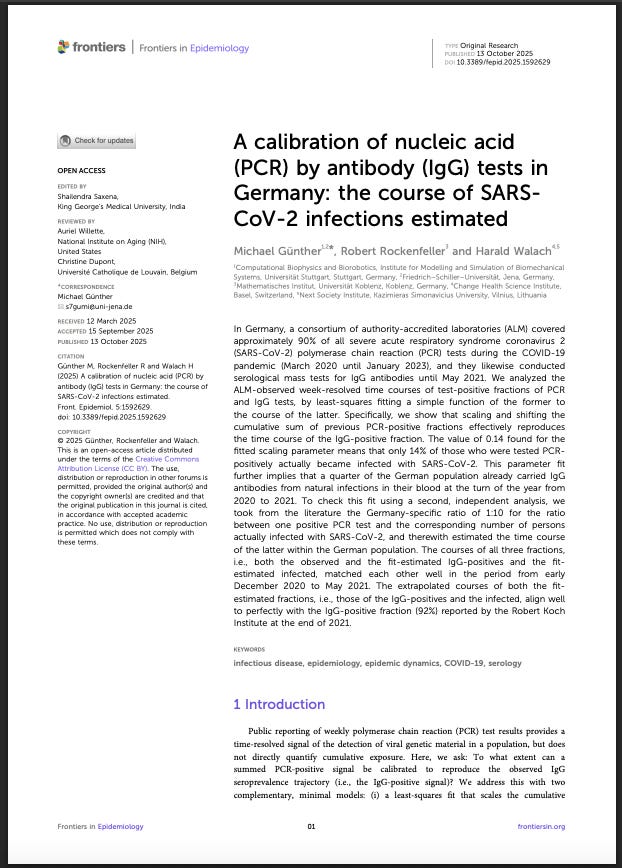
Only a small fraction of people who tested positive for COVID-19 by PCR in Germany met researchers’ criteria for infection, according to an October peer-reviewed study published in Frontiers in Epidemiology.

The findings come as PCR tests are being used to justify government response to avian influenza “bird flu,” including animal culling, countermeasures (vaccine) development, and gain-of-function experiments.

After analyzing nationwide laboratory data from March 2020 through mid-2021, the authors of the new study concluded that only 14% of PCR-positive individuals showed evidence of true infection, which they measured by later antibody development.

The remaining majority did not.

“Only approximately 14% of those who tested PCR-positive were actually infected.”

That means 86% of PCR-positive tests did not meet the authors’ definition of infection, calling into question the use of PCR positivity to count disease cases.


The study was conducted by researchers from multiple European universities and research institutes, examining data from Akkreditierte Labore in der Medizin (ALM), a laboratory consortium that conducted roughly 90% of all PCR testing in Germany during the period analyzed.

Rather than attempting to confirm individual infections through culture (showing evidence of physical, growing live virus in lab cells), the researchers compared weekly PCR-positive fractions with subsequent IgG antibody positivity, which they describe as the accepted biological marker of past infection.

“Since 1942, the detection of virus-specific antibodies has been regarded as the methodological gold standard for confirming infection.”

The logic of the analysis was straightforward.

If PCR-positive results were reliably identifying infected individuals, then PCR positivity should closely track the rise in IgG antibodies over time, given the mainstream virological and immunological model.

Instead, the researchers found that the PCR signal had to be scaled down dramatically to match observed antibody levels.

“Fitting the scaled cumulative PCR-positive fraction … yields PPCR ≈ 0.14 … This implies that roughly only one in seven German individuals with a PCR-positive test later had detectable IgG antibodies, that is, was actually infected with SARS-CoV-2.”

The article further notes that this 14% figure may still be an overestimate.

When accounting for possible testing biases, they state that the proportion of PCR positives representing real infections could be even lower.

“A more conservative interpretation of our results suggests that as few as one in eight or even in nine PCR-positive individuals … may have actually been infected.”

In other words, between 86% and 90% of PCR-positive results did not correspond to confirmed infection.

The paper emphasizes that PCR testing does not, by itself, diagnose infection.

“PCR tests merely detect the presence of fragments of viral genetic material, not necessarily an active infection.”

The study also identifies known sources of false-positive PCR results, including laboratory artifacts and statistical effects that become pronounced during mass testing.

“It is therefore important to highlight two known sources of false-positive PCR results.”

One cited example involves PCR-positive signals detected in water-only samples containing no virus at all.

“The Charité’s PCR assay produced positive results on water controls at cycle threshold (CT) values between 36 and 38.”

Beyond laboratory artifacts, the authors explain that even tests designed to be highly accurate at ruling out uninfected people can still produce large numbers of false positives when true infection levels are low.

In this context, “specificity” refers to how often a test correctly returns a negative result in someone who is not infected.

If specificity is less than 100%, some uninfected people will inevitably test positive.

“According to Bayes’ theorem, the rate of false positives increases when disease prevalence declines, owing to test specificity below 100%.”

Using observed positivity rates and their fitted infection estimate, the authors calculate that PCR specificity alone can explain the discrepancy between PCR positives and confirmed infections.

“Assuming 1% of tested individuals were true positives, a specificity of 94% explains the remaining 6% of PCR-positive results as false positives among the 99% who were not infected.”

The study’s findings have direct implications for how COVID-19 “cases” were counted and used in public policy.

Throughout the pandemic, PCR-positive test results were treated as proxies for infection and were used to justify restrictions and emergency measures.

PCR-positive test results are not being used to justify bird flu containment measures around the world.

The article argues this approach lacks biological grounding.

“A PCR-positive test alone can by no means confirm infection at the individual level.”

The paper concludes that Germany’s reliance on raw PCR positivity substantially overstated infection levels and distorted the understanding of the pandemic’s actual course.

“The principal finding from our analysis … is this: only 14%—and possibly even fewer, down to 10%—of individuals identified as SARS-CoV-2-positive via PCR testing were actually infected, as evidenced by detectable IgG antibodies.”

The article argues that PCR positivity was treated as infection when the data showed it overwhelmingly not.

By analysis, PCR positivity does not reliably indicate infection, raising questions about its continued use as a case-defining tool in current and future disease responses.

Flu Vaccines Contain RNA That Trigger Positive PCR Test Results: ‘Journal of Medical Microbiology’


Is the “chilling” rise in flu cases nationwide attributable to PCR tests detecting vaccine RNA, not wild virus?

Mainstream news outlets are broadcasting that there is a “chilling” rise in flu cases, with Colorado, Louisiana, and New York experiencing the “fastest increases in influenza cases.”

However, the rise in cases follows flu vaccination campaigns in those states, which raises questions about vaccine efficacy.

But it also raises questions about whether the vaccinations themselves are contributing to the increasing case numbers.

For example, the New Orleans Health Department (NOHD) launched a flu vaccination campaign in early October.

NYC Health Department similarly launched an October push urging all residents 6 months and older to get flu shots.

The Colorado Department of Public Health and Environment’s (CDPHE) influenza webpage was updated the same month to promote flu vaccination.

These campaigns are meant to increase flu vaccine uptake.

Now there’s a rise in influenza cases, which are counted using positive PCR test results.


However, a March 2012 Journal of Medical Microbiology publication confirms the presence of residual viral RNA (genomic RNA—which PCR tests look for—from the influenza viruses used in vaccine production) in inactivated split-virus seasonal influenza vaccines.

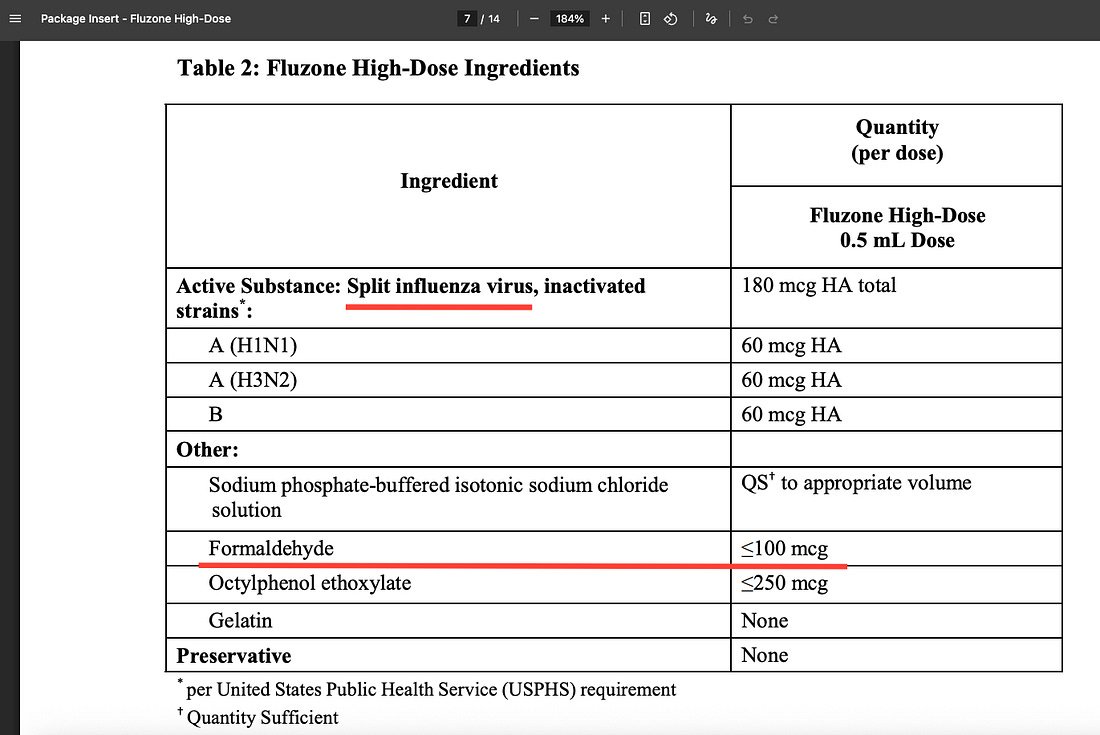
One of the most popular injectable flu vaccines in the U.S., the formaldehyde-containing ‘Fluzone High-Dose,’ is an inactivated split-virus vaccine.

The 2012 study directly tested two 2010 trivalent inactivated vaccines (egg-based, similar in type to Fluzone) and detected high quantities of influenza A and B viral RNA using real-time RT-PCR on the vaccine liquid itself.

This RNA was stable, remaining detectable for at least 66 days after opening the vials.

Sequencing confirmed it included genetic components matching vaccine strains.

The study abstract reads:

False-positive PCR results usually occur as a consequence of specimen-to-specimen or amplicon-to-specimen contamination within the laboratory. Evidence of contamination at time of specimen collection linked to influenza vaccine administration in the same location as influenza sampling is described. Clinical, circumstantial and laboratory evidence was gathered for each of five cases of influenza-like illness (ILI) with unusual patterns of PCR reactivity for seasonal H1N1, H3N2, H1N1 (2009) and influenza B viruses. Two 2010 trivalent influenza vaccines and environmental swabs of a hospital influenza vaccination room were also tested for influenza RNA. Sequencing of influenza A matrix (M) gene amplicons from the five cases and vaccines was undertaken. Four 2009 general practitioner (GP) specimens were seasonal H1N1, H3N2 and influenza B PCR positive. One 2010 GP specimen was H1N1 (2009), H3N2 and influenza B positive. PCR of 2010 trivalent vaccines showed high loads of detectable influenza A and B RNA. Sequencing of the five specimens and vaccines showed greatest homology with the M gene sequence of Influenza A/Puerto Rico/8/1934 H1N1 virus (used in generation of influenza vaccine strains). Environmental swabs had detectable influenza A and B RNA. RNA detection studies demonstrated vaccine RNA still detectable for at least 66 days. Administration of influenza vaccines and clinical sampling in the same room resulted in the contamination with vaccine strains of surveillance swabs collected from patients with ILI. Vaccine contamination should therefore be considered, particularly where multiple influenza virus RNA PCR positive signals (e.g. H1N1, H3N2 and influenza B) are detected in the same specimen.

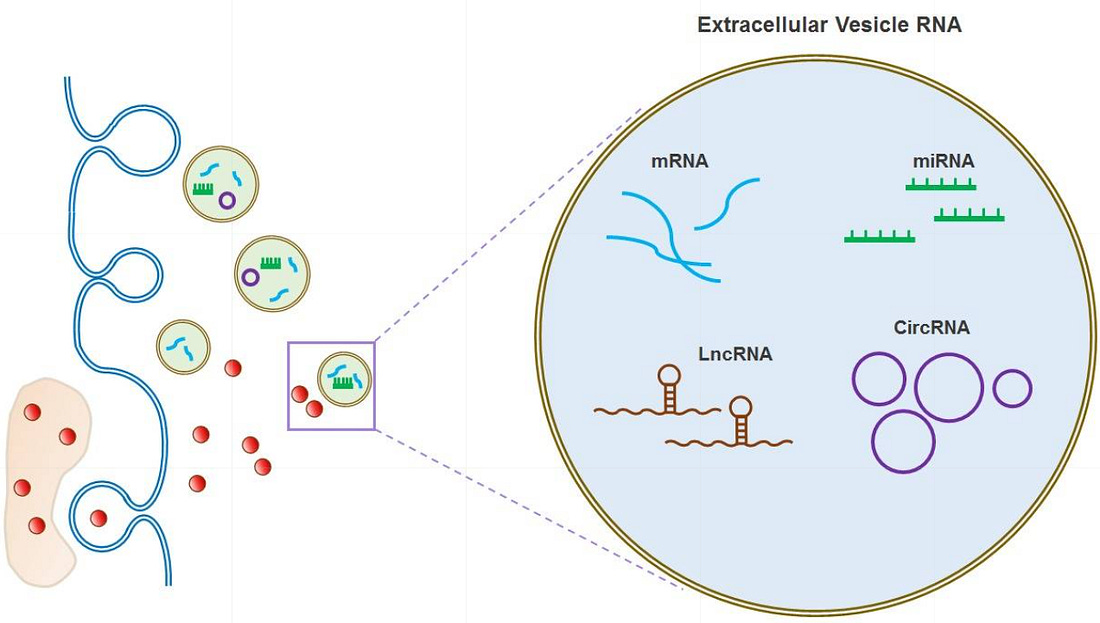
The human body’s own extracellular vesicles (EVs) (including exosomes) naturally carry and transfer various RNAs (herehereherehere) through bodily fluids such as blood, saliva, urine, nasal mucus, and cerebrospinal fluid.

These are the exact substances PCR tests are applied to.

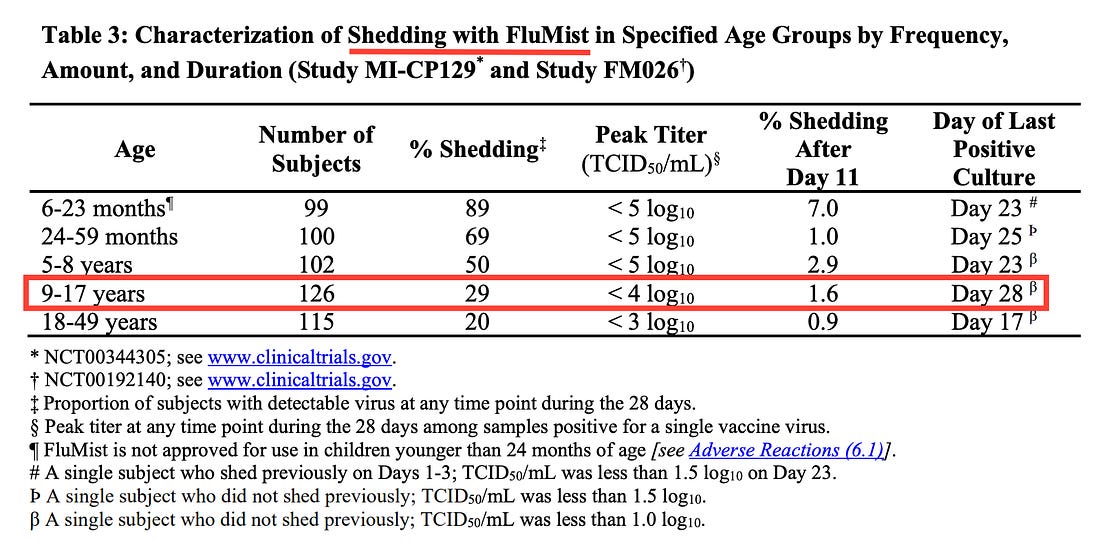
Another popular flu vaccine is FluMist, whose FDA package insert directly confirms uses a live virus that can be shed from bodily fluids for at least 28 days after vaccination, detectable with PCR tests.

All together, this data raises logical questions:

  • Are PCR tests detecting vaccine virus RNA, not wild virus RNA?
  • Is the nationwide rise in flu-positive PCR tests attributable, at least in part, to the detection of vaccine material?
  • Why haven’t the CDC or vaccine manufacturers directly tested this?

Gates Pours $3.3M Into mRNA Purification Tech—Admitting COVID Vaccine Impurity Problem as Platform Becomes Permanent


Press release admits current mRNA-based vaccine are not effective enough and contain too many impurities.

Despite mainstream attempts to downplay the alarming contamination problem plaguing COVID-19 vaccines, the Gates Foundation has awarded $3.3 million to a team of scientists at New York’s Rensselaer Polytechnic Institute (RPI) to develop “breakthrough purification technologies” for producing mRNA-based vaccines.

A September Autoimmunity study confirms that both Pfizer-BioNTech and Moderna’s mRNA COVID-19 injections contain many hundreds of times more contamination than the FDA and WHO limit.

The grant is an implicit admission that contamination is in fact a problem posed by mRNA vaccines, as well as a sign that the platform is here to stay.


Gates is funding the project because of the “impurities” and “inefficien[cy]” related to mRNA vaccines.

According to an RPI announcement:

The research team aims to address a critical bottleneck in the production of mRNA therapeutics: the purification process that removes impurities while maintaining the integrity of the therapeutic molecule.

“This project represents a paradigm shift in how we think about mRNA purification,” Belfort said. “Current technologies are prohibitively expensive and inefficient, creating barriers to access for the populations that need them most. Our goal is to develop a purification platform that is not only more cost-effective but also more productive and scalable.”

The researchers aim to accomplish this by “replacing conventional resin-based purification systems with advanced membrane technologies and innovative binding molecules.”

The RPI announcement also admits that current mRNA-based vaccine impurities are linked to side effects and that the injectables are not effective enough, more revelations that cut against mainstream counterclaims.

Higher purity mRNA vaccines with lower immunogenic impurities could lead to improved clinical outcomes, including reduced side effects and enhanced therapeutic efficacy.

The announcement predicts the rise of self-replicating vaccine technology, which this website was the first to warn about in December 2023.

Additionally, the technology being developed could prove particularly valuable for self-amplifying RNA (saRNA) therapeutics, which require lower doses than traditional mRNA vaccines and represent the next generation of RNA-based medicines.

Gates has been developing self-copying mRNA vaccines for COVID (herehere) as well as for bird flu (here), which is the pathogen this website has been predicting will fuel the next orchestrated pandemic.

The billionaire’s latest investment is made in the name of strengthening Big Pharma infrastructure, as well as “equity” and “pandemic preparedness.”

If successful, this technology could enable local production of mRNA vaccines in regions that currently lack access to affordable biomanufacturing infrastructure, supporting global health equity and pandemic preparedness.

Despite the disease, hospitalizations, and deaths linked to mRNA jabs, the technology isn’t going anywhere.

No U.S. Agency Ever Verified the Lung Sample the Chinese Gov’t Built the SARS-CoV-2 Genetic Sequence From


Before injecting it into hundreds of millions of Americans via COVID-19 vaccines.

No U.S. agency has ever verified that the COVID-19 pathogen’s (SARS-CoV-2) genetic code that a Chinese government biolab supplied at the beginning of the COVID-19 pandemic—said to have been sequenced from a pneumonia patient’s lung wash—actually originated from that clinical sample before it was encoded into hundreds of millions of mRNA vaccine doses.

China never provided the physical patient sample to any U.S. institution.

In fact, Beijing issued an official directive forbidding the sharing of any samples and ordering the destruction of those samples.

And the U.S. never demanded or required an analysis of those samples before allowing its citizens to be injected with China’s pathogenic spike protein-producing code.

This critical step in verification was—and still has been—skipped, despite earlier warnings that China’s military had been exploring bioweapons development that integrates biotechnology and genetic engineering into a “new domain of warfare.”

It was also skipped despite EcoHealth Alliance’s 2018 ‘DEFUSE’ proposal to DARPA to collaborate with China to create chimeric coronavirus spike proteins with furin cleavage sites, receptor-binding domain upgrades, and two proline insertions—the defining characteristics of the COVID-19 pathogen and mRNA vaccines.

Congress, the White House, the Department of Energy, the FBI, the CIA, and Germany’s Federal Intelligence Service (BND) have confirmed that the COVID-19 pandemic was likely the result of lab-engineered pathogen manipulation—meaning billions were injected with a genetic drug that codes for a Chinese government-constructed, lab-altered spike protein.


How China Made the SARS-CoV-2 Genetic Sequence

The SARS-CoV-2 genetic code was created in a biosafety level 3 (BSL-3) laboratory at the Chinese government-run Shanghai Public Health Clinical Center, using long-debunked (here) reverse-transcription PCR (RT–PCR) technology.

  • Dr. Kary Mullis, the inventor of the PCR test, said in a 1997 interview (here) that his test should not be used to determine whether a patient is infected with a virus.
  • This is because the test “can find almost anything in anybody” if its parameters are set high enough, tainting the results.
  • “Anyone can test positive for practically anything with a PCR test. If you run it long enough… you can find almost anything in anybody,” he said. “It doesn’t tell you that you’re sick.”

A February 2020 Nature publication explains how China created the SARS-CoV-2 sequence:

Here we study a single patient who was a worker at the market and who was admitted to the Central Hospital of Wuhan on 26 December 2019 while experiencing a severe respiratory syndrome that included fever, dizziness and a cough. Metagenomic RNA sequencing4 of a sample of bronchoalveolar lavage fluid from the patient identified a new RNA virus strain from the family Coronaviridae, which is designated here ‘WH-Human 1’ coronavirus (and has also been referred to as ‘2019-nCoV’). Phylogenetic analysis of the complete viral genome (29,903 nucleotides) revealed that the virus was most closely related (89.1% nucleotide similarity) to a group of SARS-like coronaviruses (genus Betacoronavirus, subgenus Sarbecovirus) that had previously been found in bats in China5. This outbreak highlights the ongoing ability of viral spill-over from animals to cause severe disease in humans.

To investigate the possible aetiological agents associated with this disease, we collected bronchoalveolar lavage fluid (BALF) and performed deep meta-transcriptomic sequencing. The clinical specimen was handled in a biosafety level 3 laboratory at Shanghai Public Health Clinical Center. Total RNA was extracted from 200 μl of BALF and a meta-transcriptomic library was constructed for pair-end (150-bp reads) sequencing using an Illumina MiniSeq as previously described4,6,7,8. In total, we generated 56,565,928 sequence reads that were de novo-assembled and screened for potential aetiological agents. Of the 384,096 contigs assembled by Megahit9, the longest (30,474 nucleotides (nt)) had a high abundance and was closely related to a bat SARS-like coronavirus (CoV) isolate—bat SL-CoVZC45 (GenBank accession number MG772933)—that had previously been sampled in China, with a nucleotide identity of 89.1% (Supplementary Tables 12). The genome sequence of this virus, as well as its termini, were determined and confirmed by reverse-transcription PCR (RT–PCR)10 and 5′/3′ rapid amplification of cDNA ends (RACE), respectively. This virus strain was designated as WH-Human 1 coronavirus (WHCV) (and has also been referred to as ‘2019-nCoV’) and its whole genome sequence (29,903 nt) has been assigned GenBank accession number MN908947. Remapping the RNA-sequencing data to the complete genome of WHCV resulted in an assembly of 123,613 reads, providing 99.99% genome coverage at a mean depth of 6.04× (range, 0.01–78.84×) (Extended Data Fig. 3). The viral load in the BALF sample was estimated by qPCR to be 3.95 × 10⁸ copies per ml (Extended Data Fig. 4).

China handed the world a genetic code in computer form (in silico).

And governments all over the world accepted that code without scrutiny.

They allowed billions of people to be injected with a vaccine that creates the Chinese government’s foreign protein in the body for more than 700 days.

China Had the SARS-CoV-2 Sequence ‘More Than Two Weeks’ Before Releasing It

A January 2024 U.S. House Energy & Commerce press release confirms China possessed the SARS-CoV-2 sequence “days before the CCP acknowledged an outbreak, and more than two weeks before the China CDC release[d] their sequence.”

The congressional body said that fact “calls into question how early the CCP knew about the virus and how long they withheld this information from the world.”

This significant discovery further underscores why we cannot trust any of the so-called ‘facts’ or data provided by the CCP and calls into serious question the legitimacy of any scientific theories based on such information. The American people deserve to know the truth about the origins of SARS-CoV-2, and our investigation has uncovered numerous causes for concern, including how taxpayers’ dollars are spent, how our government’s public health agencies operate, and the need for more oversight into research grants to foreign scientists,” said Chairs Rodgers, Guthrie, and Griffith.

My report from last month revealed that before the pandemic, DARPA had developed a program to synthesize viruses purely from digital sequences within in 60 days.

Bottom Line

In the end, the world was locked down and injected on the honor system of a hostile foreign government, and not one U.S. agency has yet produced the single piece of evidence that should have come first: independent proof that China’s digital code ever came from a real human sample.

Will the same national security concern-raising strategy be used in the apparently incoming bird flu pandemic?